
In light of my great respect for the fine art of Kaiseki, Yuki’s mom decided that she wanted to take me out for another style. That woman loves me! Frankly, I can’t blame her. At any rate, a friend of hers had recommended Ushiyama in the Meguro neighborhood of Tokyo, so we gave it a shot last night. And what a shot it was! Slam dunk!

It started off with a plate of carrots, shiitake, and mibuna with grated apple. Who would have thought of putting grated apple on mushrooms? Ushiyama, that’s who. I’m damn he did, it was amazing!

After that came a dish of four. I ate them clockwise from bottom left. Ama ebi (sweet shrimp), raw sardines with thinly sliced onion that’s been soaked in cold water to remove the sharpness, warm salted ginko nuts skewered on pine needles on top of seitan (wheat gluten) cakes on top of grilled sweet potato that was shaped like a ginko leaf, and uni in a lily blossom. No, I did not eat the maple leaf in the center of the plate nor the pine needles.
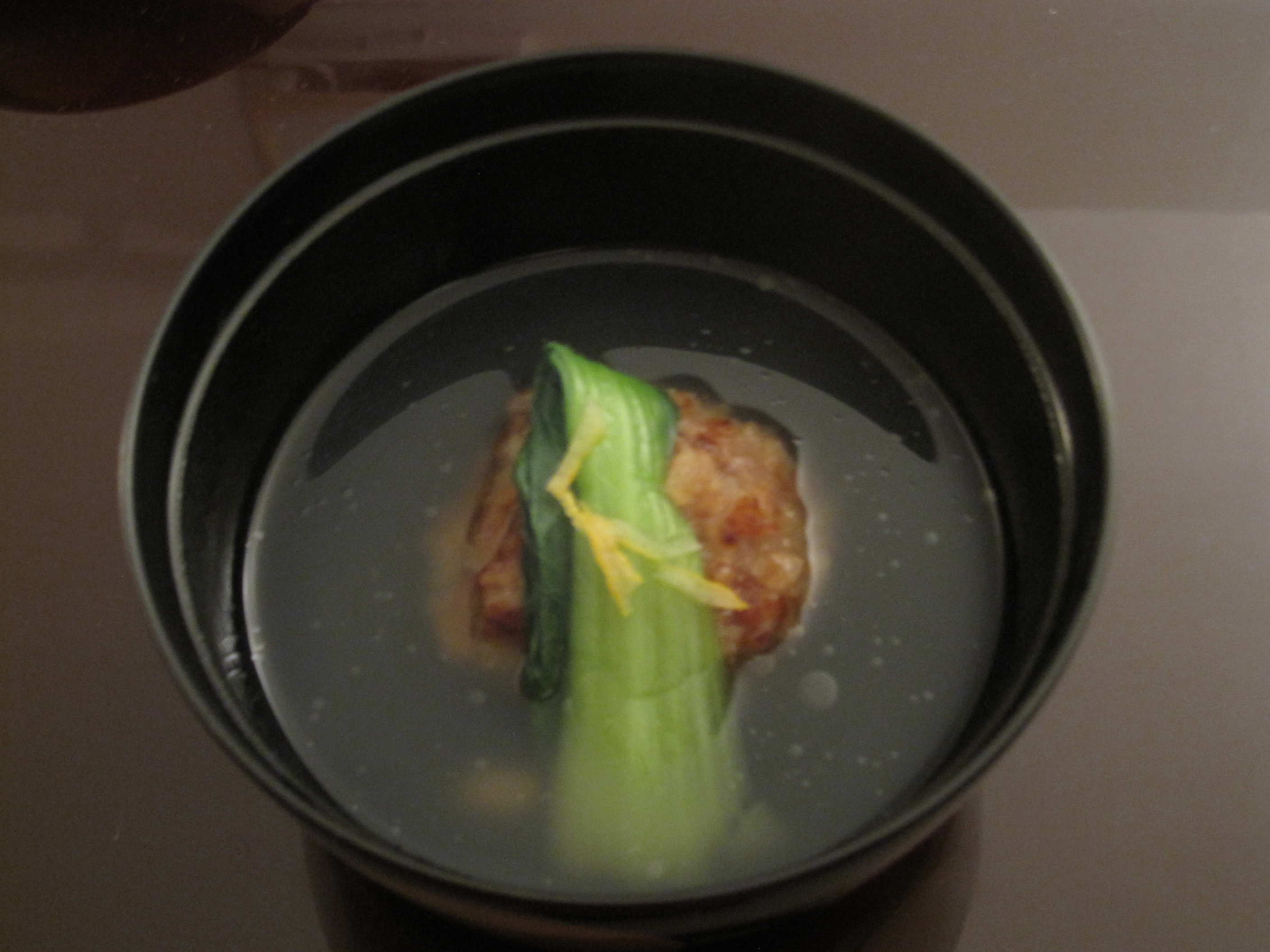
Next was the soup course. I heavily bonito flaked dashi broth that was nice and smokey with a rinkon (lotus root) and mochi dumpling and a bok choy leaf with some yuzu zest. It ranks right up there with the best soups I’ve ever eaten, next to the one I ate a few years ago at Iron Chef Michiba’s restaurant.

After the soup course was the sashimi course. It consisted of suzuki (sea bass), melt-in-your-mouth tuna, and ika (squid). It must be ika season because the ika I’ve eaten on this trip is by far the softest and sweetest I’ve ever had.
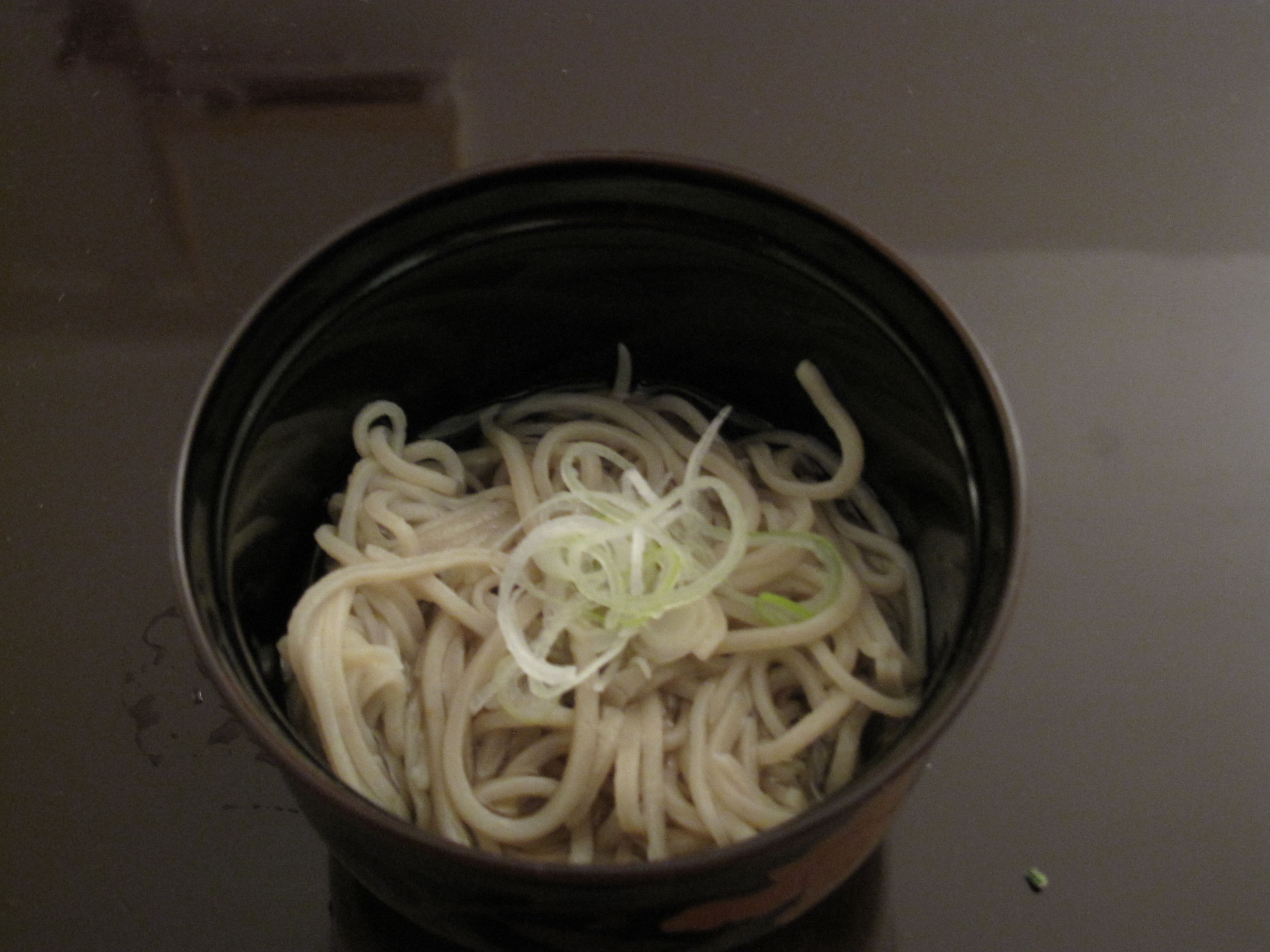
Then they served us home-made soba noodles in a light soy-dashi with some thinly sliced negi (green onions) on top. I’m telling you, there is absolutely nothing like top quality freshly made soba noodles. I don’t know if I can go back to store-bought dried soba when I get home. I mean, of course I can, but it just won’t be the same. So chewy and clean tasting.
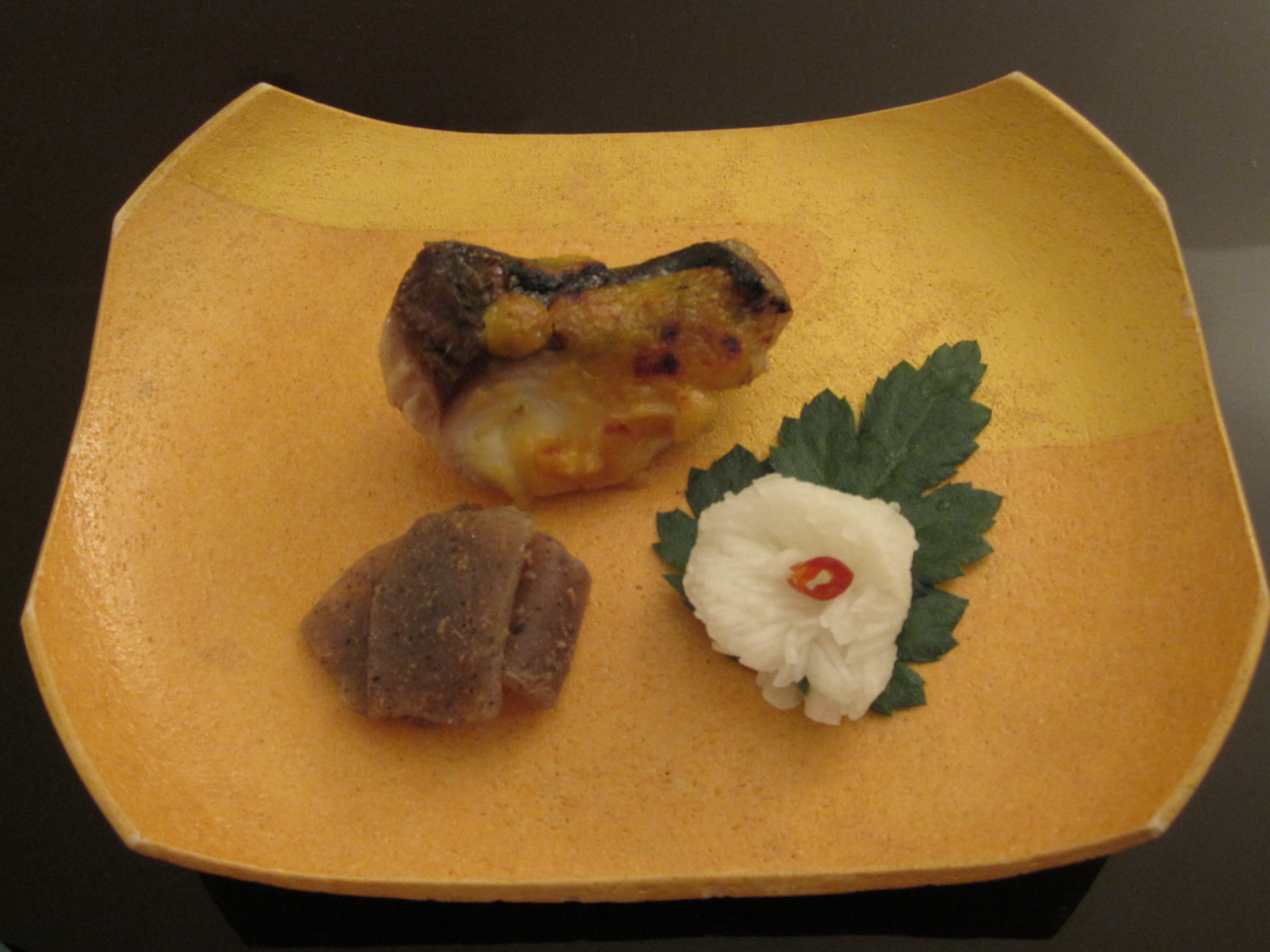
Next up was the grilled course. Sawara (a cousin of the spanish mackerel) grilled with yuzu-miso and served with yuzu-miso konnyaku and daikon that was cut into a flower with a small slice of red pepper. I’ve never had yuzu-miso before, I’m a huge fan!

After that was the simmered course which was kinmedai (splendid alfonsino) in a ginger sauce. It was served with spinach and daikon radish with chawanmushi in the middle.

For the fried course we got a dish with some tempura. Shishito pepper and ebi imo (a kind of yam) served in a light dashi with momiji oroshi and chopped chives.

Then came the rice and miso course. The rice was a glutinous rice with chirimenjako (baby sardines simmered in saltwater, dried in the sun, and covered in a sweet soy marinade), sliced shiso, and served on top of a cherry leaf. The miso had mizuna greens in it. There was also some lightly pickled cucumber and daikon on the side (yes Nick, I even ate the pickles!).

Finally, for dessert we got sweet potato mousse. It was so soft and lightly sweet, it was really more like a light sweet potato cheesecake. Served with a sweet potato chip on top.
This Kaiseki was Kyoto-style which is considered to be the most sophisticated and delicate of all styles. Hard to argue as the food was simply magnificent! Plus, all of that food for only $50 per person! I challenge anyone to find a deal half that good for a meal of that quality prepared with that caliber anywhere in the states. Thanks so much for bringing me here Tamiko!!!


 Dan Bites