Feeds:
Posts
Comments

Archive for the ‘swine’ Category

The other night I made a Japanese classic with some of my own additions. I made Shogayaki, ginger pork. Typically made with just thinly sliced pork, ginger, soy sauce, mirin, and sake, I added a few vegetables into the mix instead of serving vegetables separately. This is an easy dish to make and very flavorful.

We picked up some really nice Kurobuta (Berkshire) sidebelly while at Mitsuwa. It came thinly sliced which is prefered for this dish. It doesn’t necessarily have to be thinly sliced, nor does it have to be belly. You could get some nice chops and cut them thinly yourself, just try to make them no thicker than about 1/8 inch. I cut the pork sliced in half since they were as long as bacon. That wasn’t necessary, just what I felt like doing.

For vegetables I sliced half an onion, cut a carrot into half moons, sliced half of a yellow bell pepper, and slices a bunch of mushrooms.
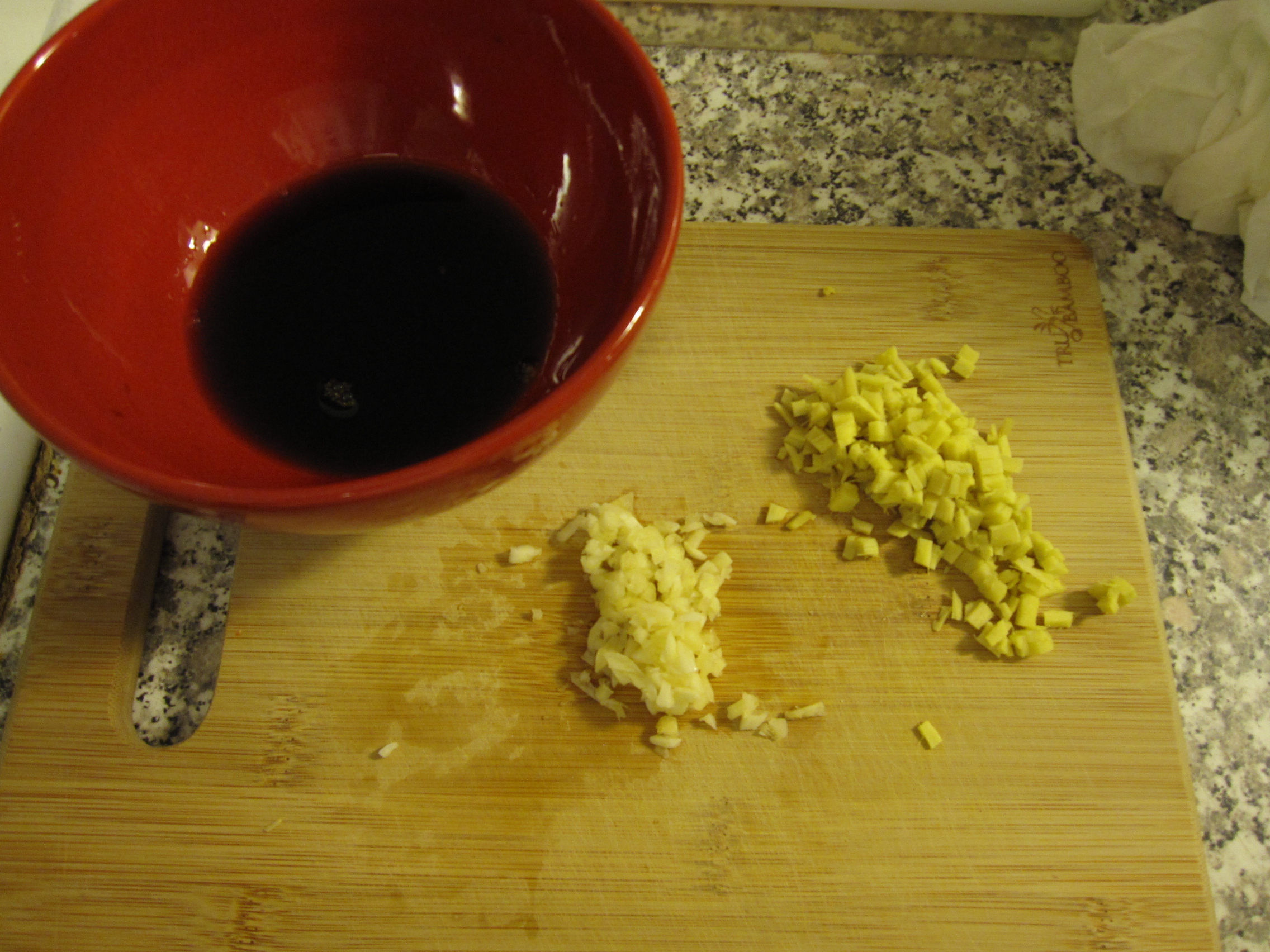
For flavorings I, obviously from the title, used some minced ginger, a couple of minced garlic cloves, and a sauce of 3 tablespoons soy, 2 tablespoons sake, and 1 tablespoon mirin.

I started by tossing the ginger and garlic into a hot pan with 2 tablespoons of sesame oil and 2 tablespoons of soy oil. I let that go for just a few minutes until it became fragrant.
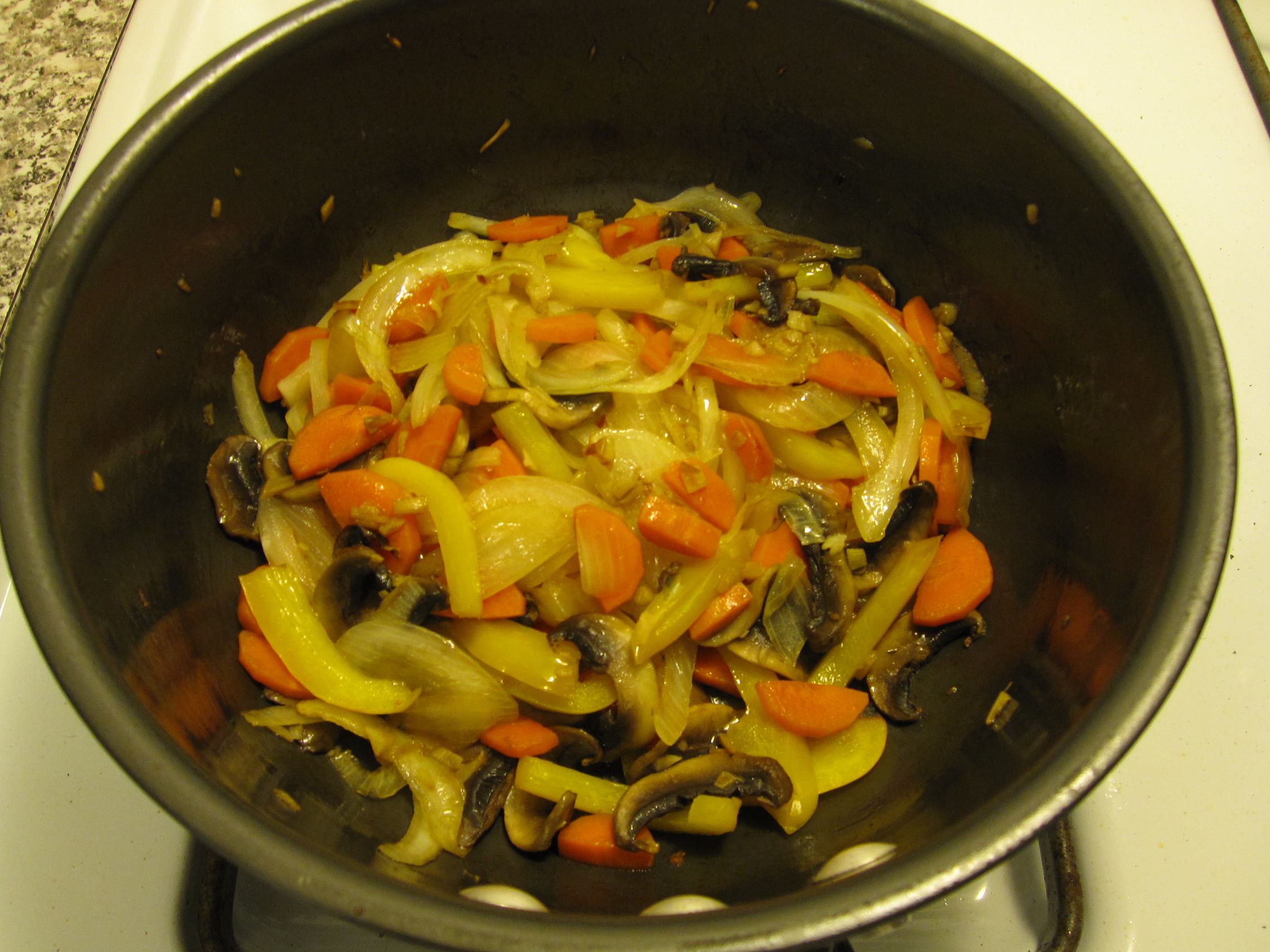
Then I added the onions for a few minutes. Followed by the carrot for a few minutes. Then the pepper for a few more minutes. And finally the mushrooms for another few minutes.
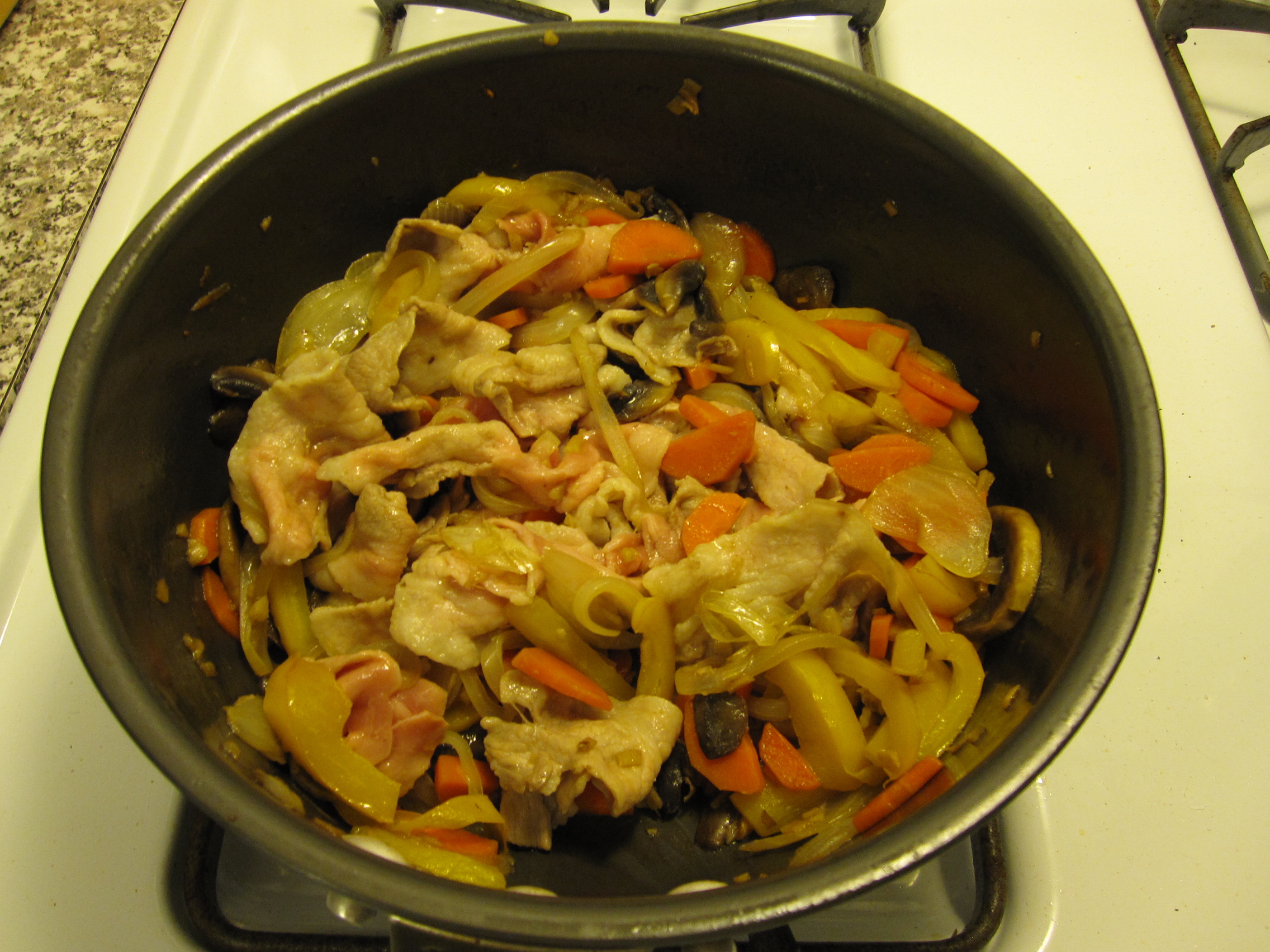
Once the vegetables were mostly cooked I added the pork. I mixed it all together and let it go for, you guessed it, a few minutes.

Then I dumped in the sauce along with some black pepper. I covered the pan and turned the heat down to medium once the sauce started to boil a little. Every few minutes I stirred everything around. After about 15 minutes I uncovered the pan and let the sauce reduce a little. I served it once the pork and vegetables were evenly coated by the slightly thickened sauce.
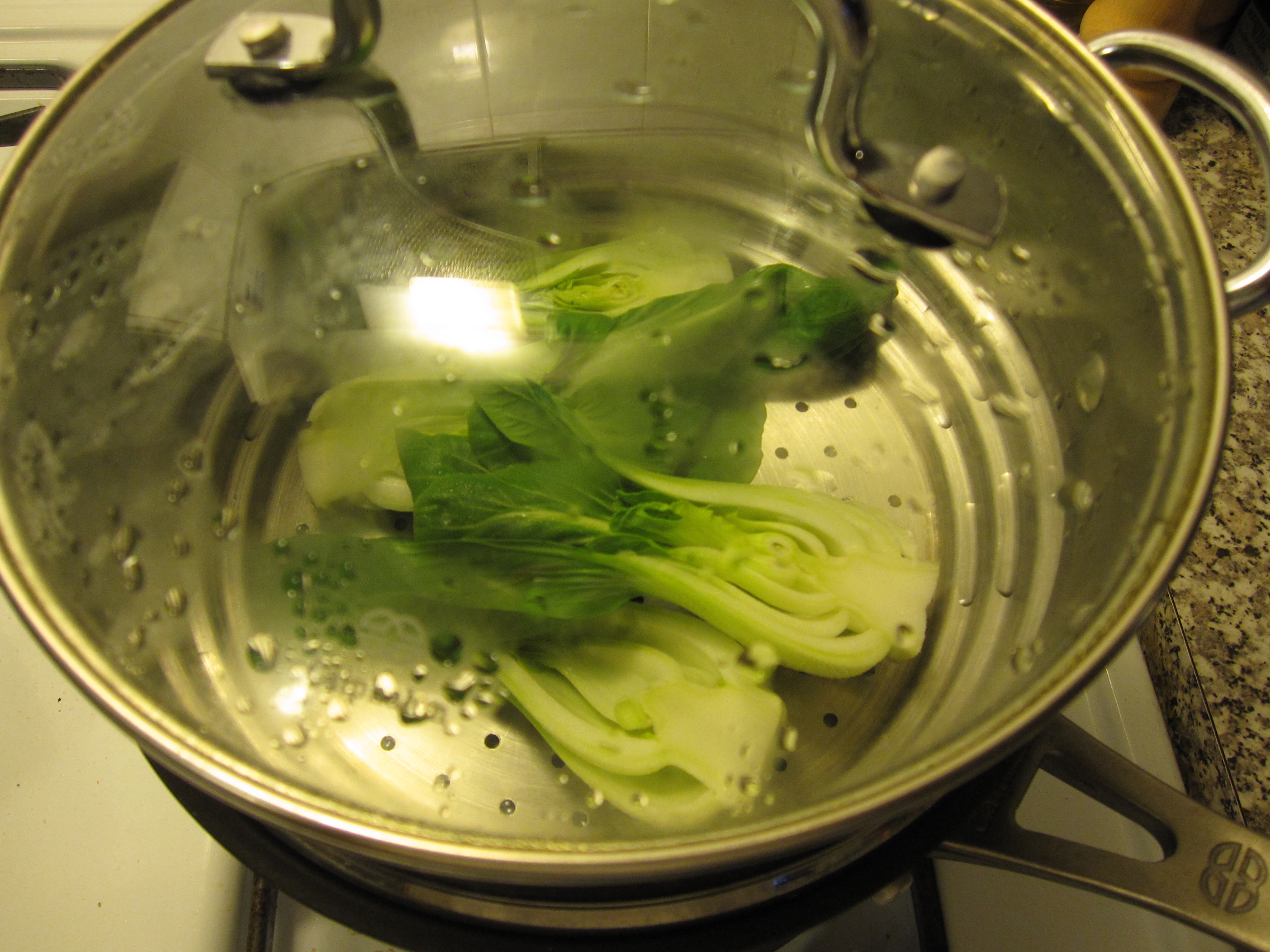
While the sauce was thickening I put a couple of baby bok choy that I had cut in half into the steamer. I let them steam for about 6 minutes. They were served next to the shogayaki with some white rice.

Read Full Post »

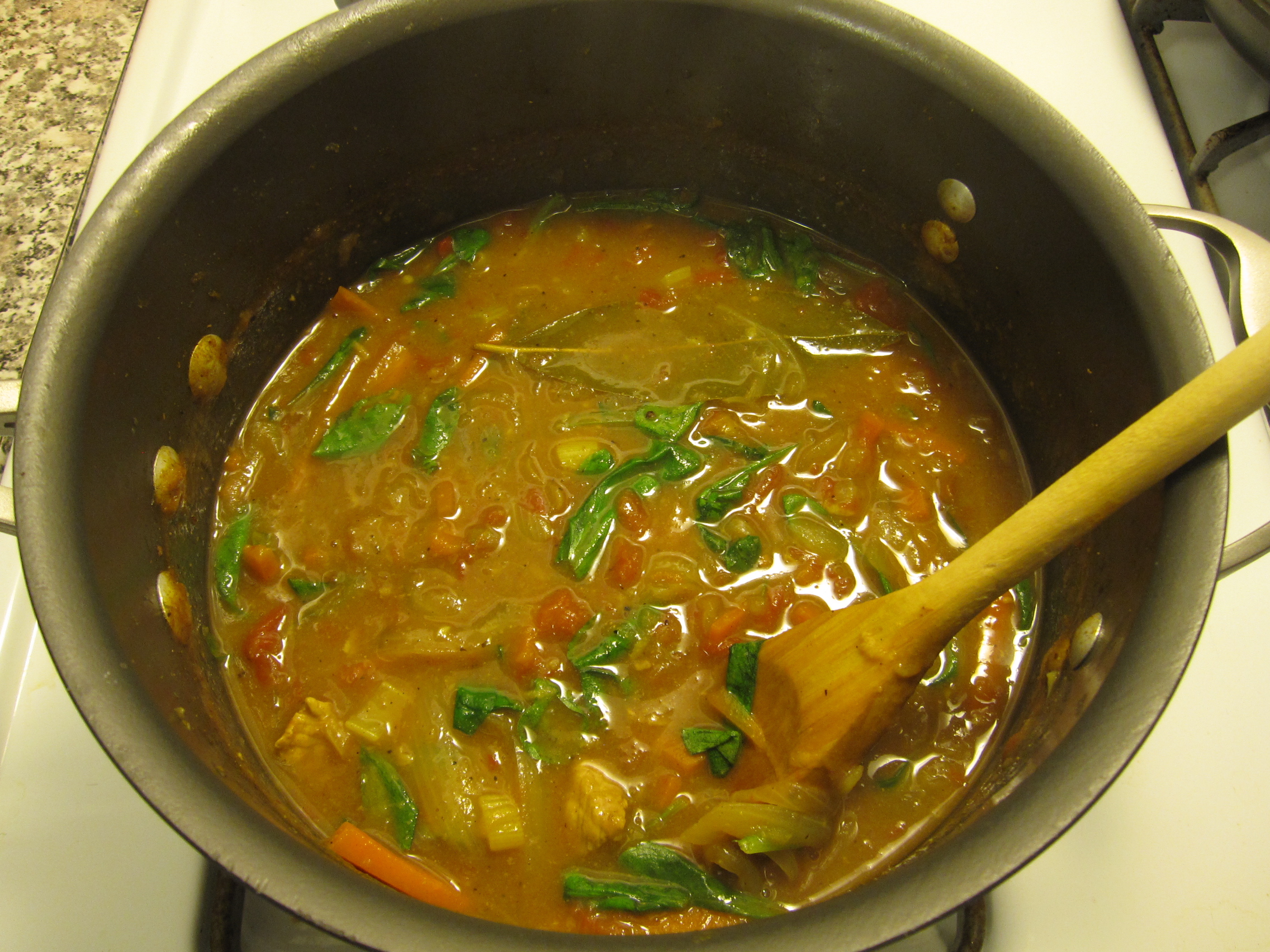
Alright, so I didn’t cook last night, nor did I post anything yesterday. In light of that here’s what I made Wednesday night, a Pork Curry. This recipe came from my father-in-law in Japan. He was very excited when he sent it over and translated it into English for me. Some of the measurements that I used are a little different from his since he’s on the Metric System. I also did a couple of things different. Overall my dish was pretty true to his recipe.

To start, I sautéed a sliced onion, a shredded carrot, and two ribs of celery chopped in some soy oil with garlic and ginger. Uichiro adds a little butter, I didn’t because I’ve been eating a lot of butter lately. I need to keep my girlish figure.

Once the vegetables were sweated down for about 7 minutes I added about 2/3’s of a pound of pork chops that I had sliced to about 1/4 inch width. I let the pork cook just until the exterior turned white but the insides were still uncooked. Then I added 2 tablespoons of curry powder, about a teaspoon of black pepper, 5 tablespoons of flour, 1 tablespoon of garam masala, and 1 teaspoon of turmeric. I stirred that all in and sautéed for a few more minutes. Then I poured in 50 ml of white wine and let it boil down.

Once the wine had boiled down I added three cups of water, a 14 oz can of diced tomatoes (Uichiro chopped 1 cup of fresh tomatoes), 1 tablespoon of soy sauce, 1 tablespoon of Worcestershire sauce, once chicken bouillon cube, a bay leaf, salt, and pepper. Once that all came to a boil I covered it and turned the heat down to med-low. That simmered for about 40 minutes.

After the 40 minutes I took a half an apple and grated it into. This adds a lot of sweetness as well as some starch to help the flour thicken it up a bit. I also added a large pinch of sugar to help balance out the spice.

To add a green element to the curry I threw some mache leaves in right after turning off the heat. Uichiro didn’t do that. It really didn’t need it, I just wanted to add the color.

Overall, I have to say, it’s another winner from Uichiro. Next time I think I’ll use about a half cup less water, but otherwise it was delicious. I am disappointed that he didn’t have a cool name for the dish though. He calls his meatloaf “cool breeze amongst the pine trees”. I have no idea why, but it is a damn good meatloaf!

Read Full Post »

Whole Foods had these fantastic looking bone-on pork chops for sale yesterday. With the weather being nice and all, I thought “I gots to grill me some of those!”

To start, I made a marinade for the chops. I grated an inch of ginger and two garlic cloves into my baking dish (I wasn’t baking at all, but it fit the chops in an even layer). To that, I added 5 tablespoons of soy sauce, 3 of sake, and 1 of apple cider vinegar. I mixed in about 1 tablespoon of sesame oil and some fresh cracked black pepper. I coated the chops, covered with plastic, and marinated in the fridge for about an hour.

For veggies, I did some sauteing in butter. I melted 2 tablespoons of butter and then threw in 3 crushed garlic cloves and let cook down for a few minutes. Then I added a chopped carrot. A few minutes later I threw in a red bell pepper that I sliced as well as 8 chopped green onions. Then, a few more minutes and I added some green beans and shiitake. I let it all cook together for a few minutes and then added a few tablespoons of soy sauce. I let the soy coat all of the veggies and then covered it and turned the heat down to med-low. I let the veggies sort of steam in the soy butter while I grilled the chops.

Since the chops were bone-on, the meat stayed a lot juicier than a boneless chop. I do want to mention that I took them out of the fridge about a half hour prior to throwing them on the grill to bring them back to room temp.

Some white rice and we were ready for dinner.

Read Full Post »

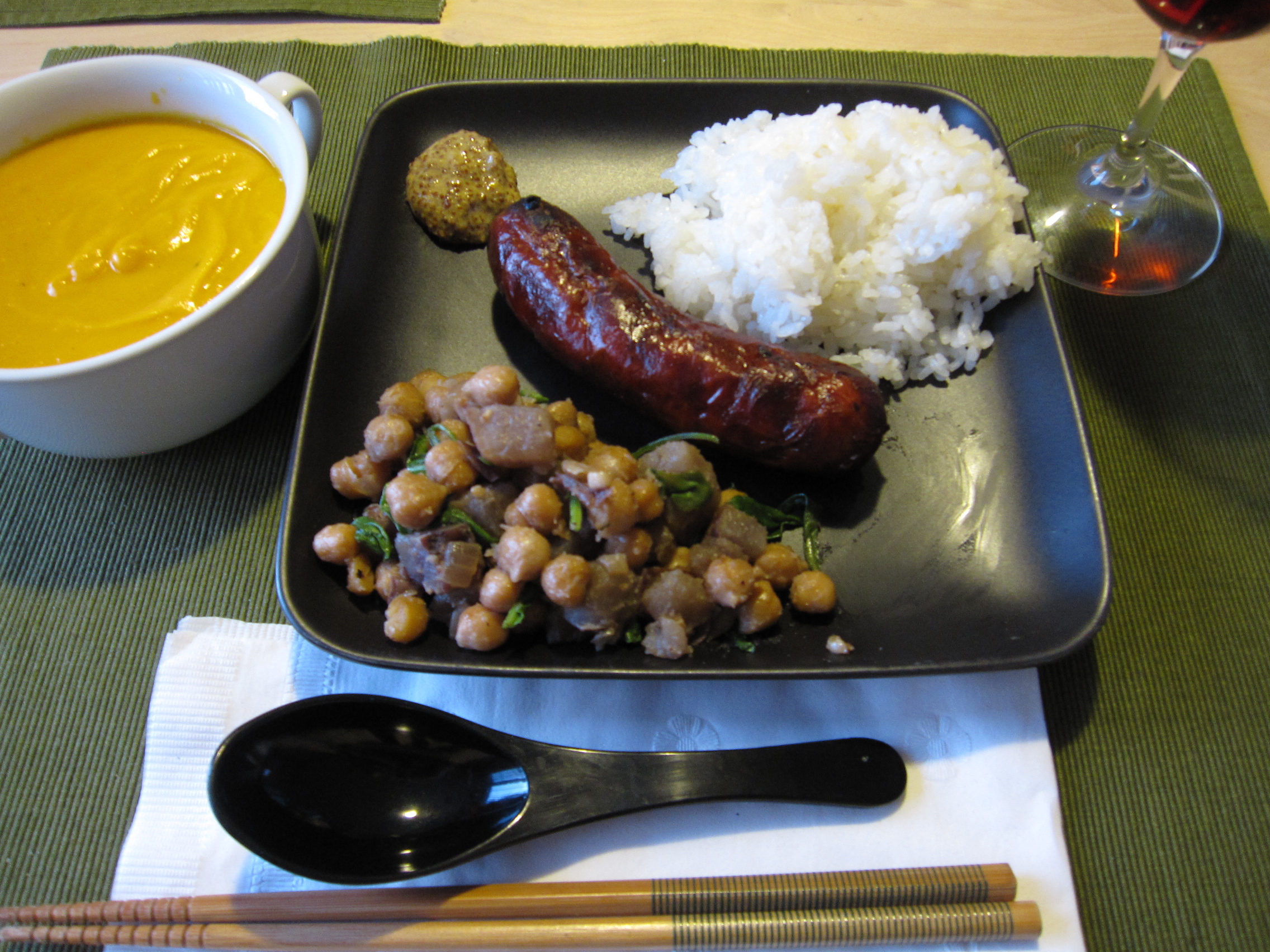
I stopped by Andy’s Deli the other day, easily one of my favorite grocers in Chicago. While there, I really had no choice but to pick up some of their smoked kielbasa sausages. So friggin good! They have the best kielbasa in town. To serve with grilled kielbasa I made a carrot soup, some white rice, some chickpeas, and no kielbasa would be complete without a dollop of mustard. I used my favorite Boetjes.

For the carrot soup I chopped up three large carrots, half of an onion, 1 celery rib, and 3 cloves of garlic. I sautéed it all in olive oil for about 10 minutes. Then I poured in about 1.75 cups of chicken stock, half a teaspoon of turmeric, half a teaspoon of cumin, half a teaspoon of paprika, and salt. I brought that to a boil, lowered the heat to medium, covered, and let simmer until the veggies were soft (about 15 minutes or so).

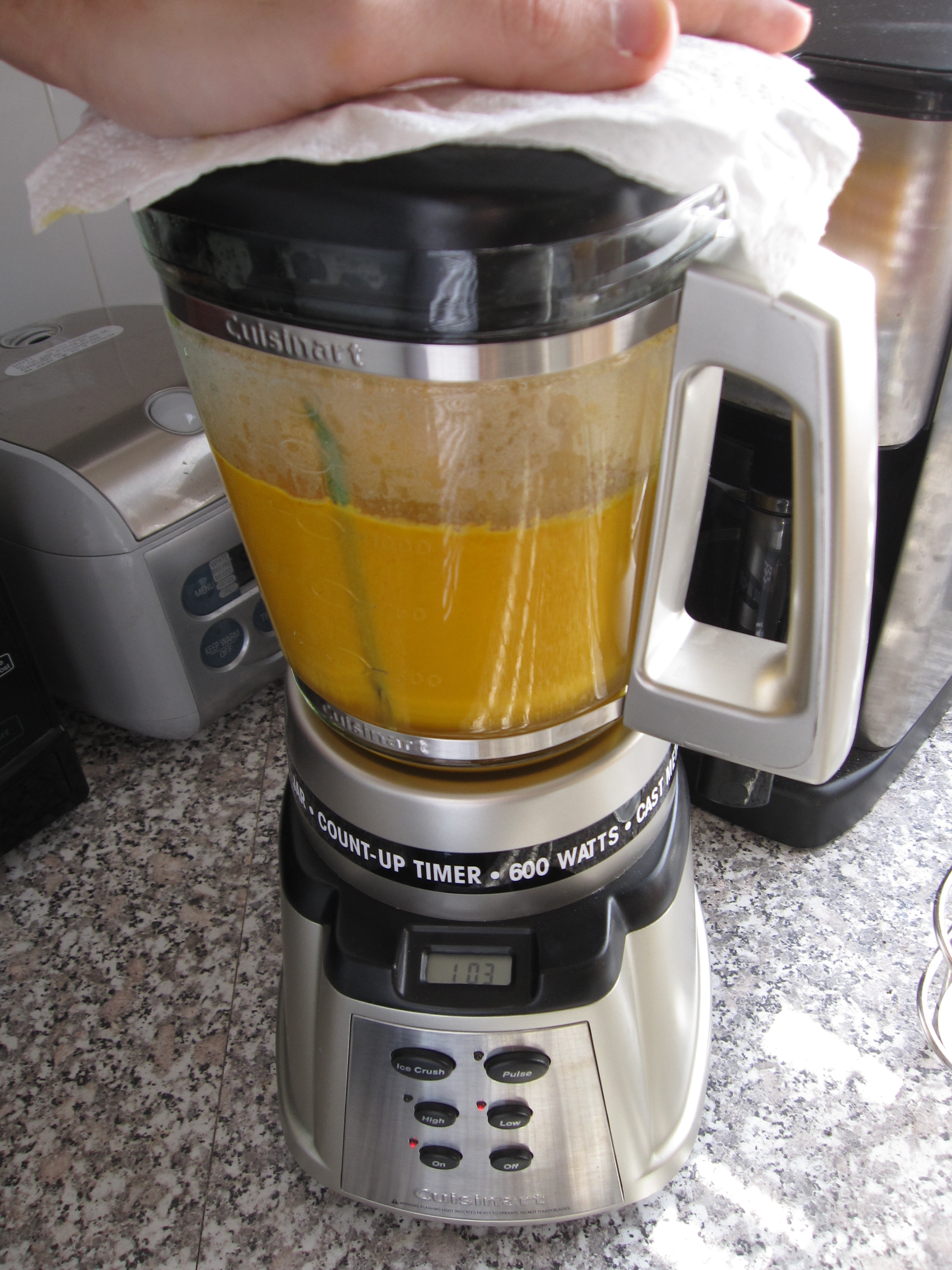
After letting the veggies cool down a bit I dumped them all into the blender and pureed it. While it was blending I poured about a half cup of olive oil in to make the soup silkier. I put it all back into the pot, tasted for seasoning, and added pepper. When it came time to serve I simply reheated it.

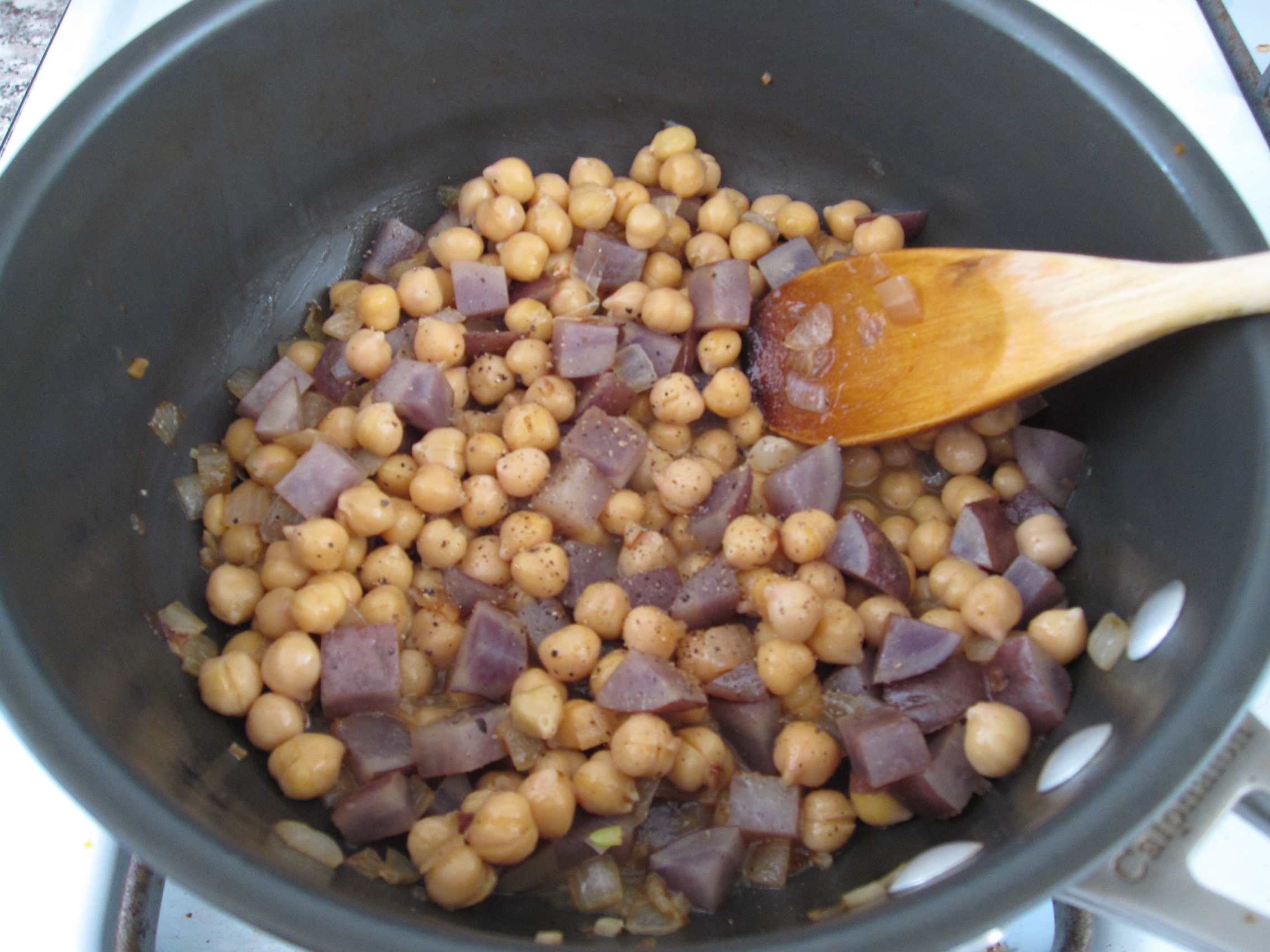
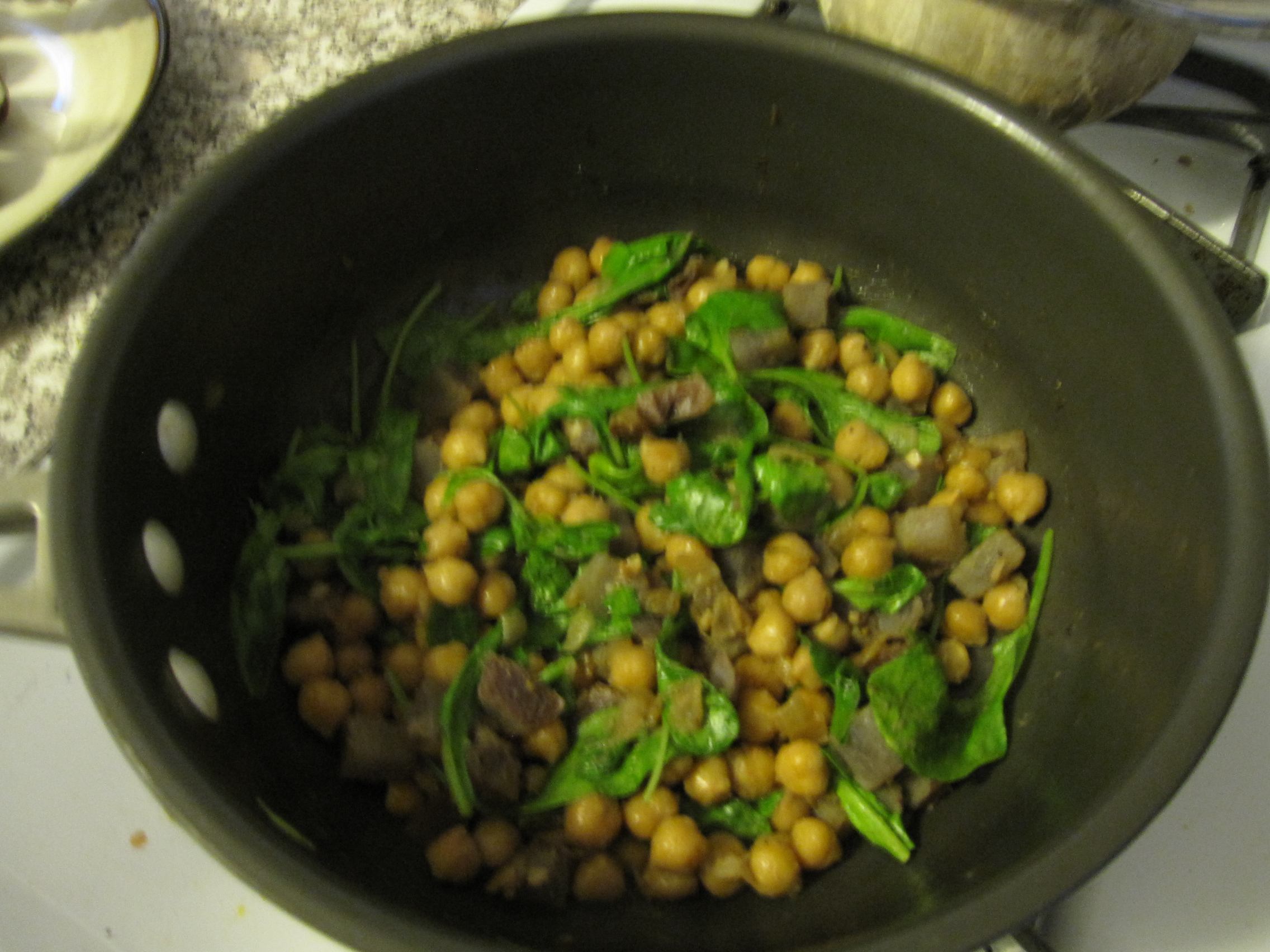
To make the chickpeas I started by sautéing a quarter of an onion small diced in butter and olive oil with 2 minced garlic cloves. I had a couple of purple potatoes left from the other night so I diced them up and added them. I didn’t stir too much because I wanted the potatoes to get a little crisp. Once they were I added about a quarter cup of chicken stock, salt, and pepper.

Once the stock had reduced by about half I added one can of drained chickpeas. I let that cook for about 10 minutes over medium-low heat. The chickpeas just needed to be heated through.

Once they were I threw a bunch of baby arugula in, turned off the heat, adjusted the seasoning, and let it sit until the kielbasa were cooked.

I threw the kielbasa on the grill. They were smoked so I only needed to char them for texture and to heat them through. Once they were ready dinner was served.

Read Full Post »

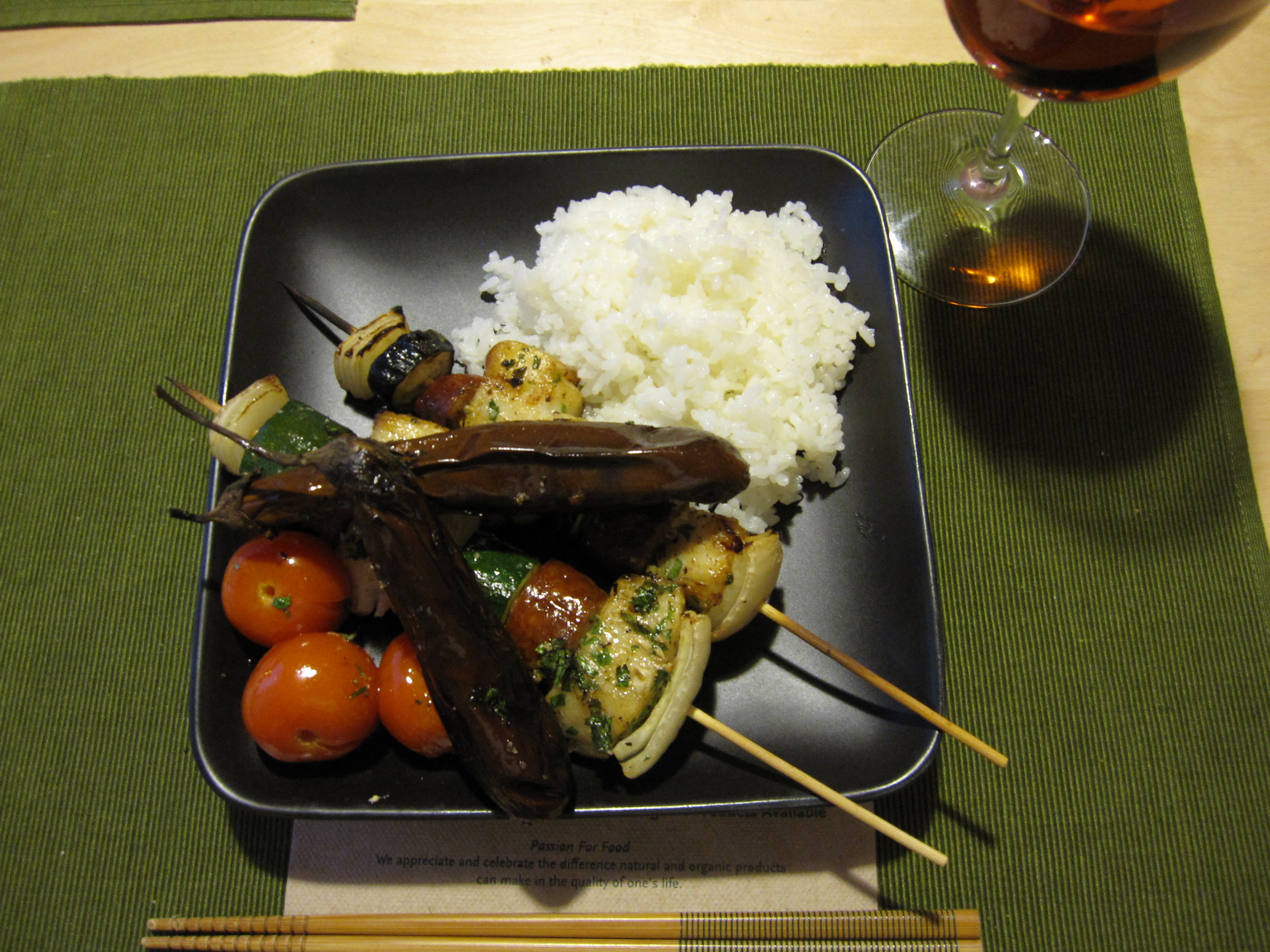
Well, last night was another beautiful night to fire up the grill, so fire up the grill I did. I still had a couple of the chorizo (the ones that taste more like andouille) in my fridge, so I decided to skewer them withe some white fish. At the Whole Foods, Sea Bass looked the freshest.

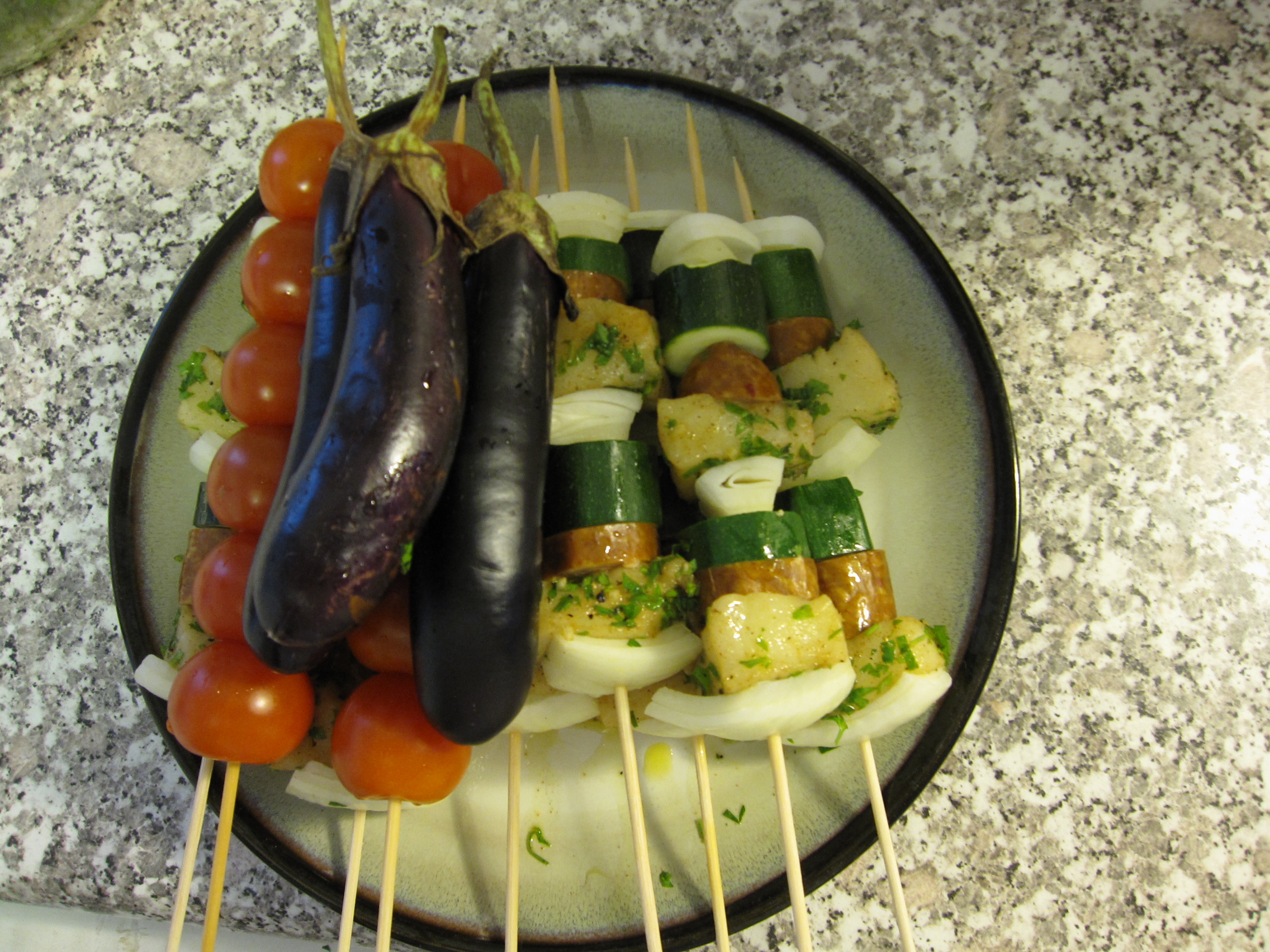
First, I cut the fish into chunks and marinated them in olive oil, a bunch of chopped parsley, a teaspoon of paprika, and some black pepper. I never salt marinades for fish because the salt will draw out the moisture. I want my fish moist and succulent! I covered the marinading fish with wrap and set it in the fridge for about an hour. Since I have bamboo skewers, I put a bunch in water to soak during that time.

I cut up the chorizo, an onion, and some zucchini into good-sized chunks. When I took the fish out of the fridge I alternated all of the ingredients so that there were two of each on every skewer. Then I took some large cherry tomatoes and skewered them on separate pieces of bamboo. I also picked up some Japanese Eggplants. I didn’t skewer or cut them, I grilled them whole. I drizzled the remaining marinade on the tomatoes and eggplants.

After I put everything on the grill I realized that I had forgotten to add salt. So, I salted everything on the grill.

It was pretty windy last night, I mean, I am in the windy city. I had to constantly move things around the grill because the wind was affecting my grill’s hotspots. I was able to control it pretty well though. Everything cooked perfectly.

I served the food with some white rice.

Read Full Post »

So, I had planned on making sort of an easy-to-make paella for dinner last night, but the chorizo I bought tasted more like andouille than chorizo. No worries, it’s just as easy to make a gumbo. So that’s what I did.

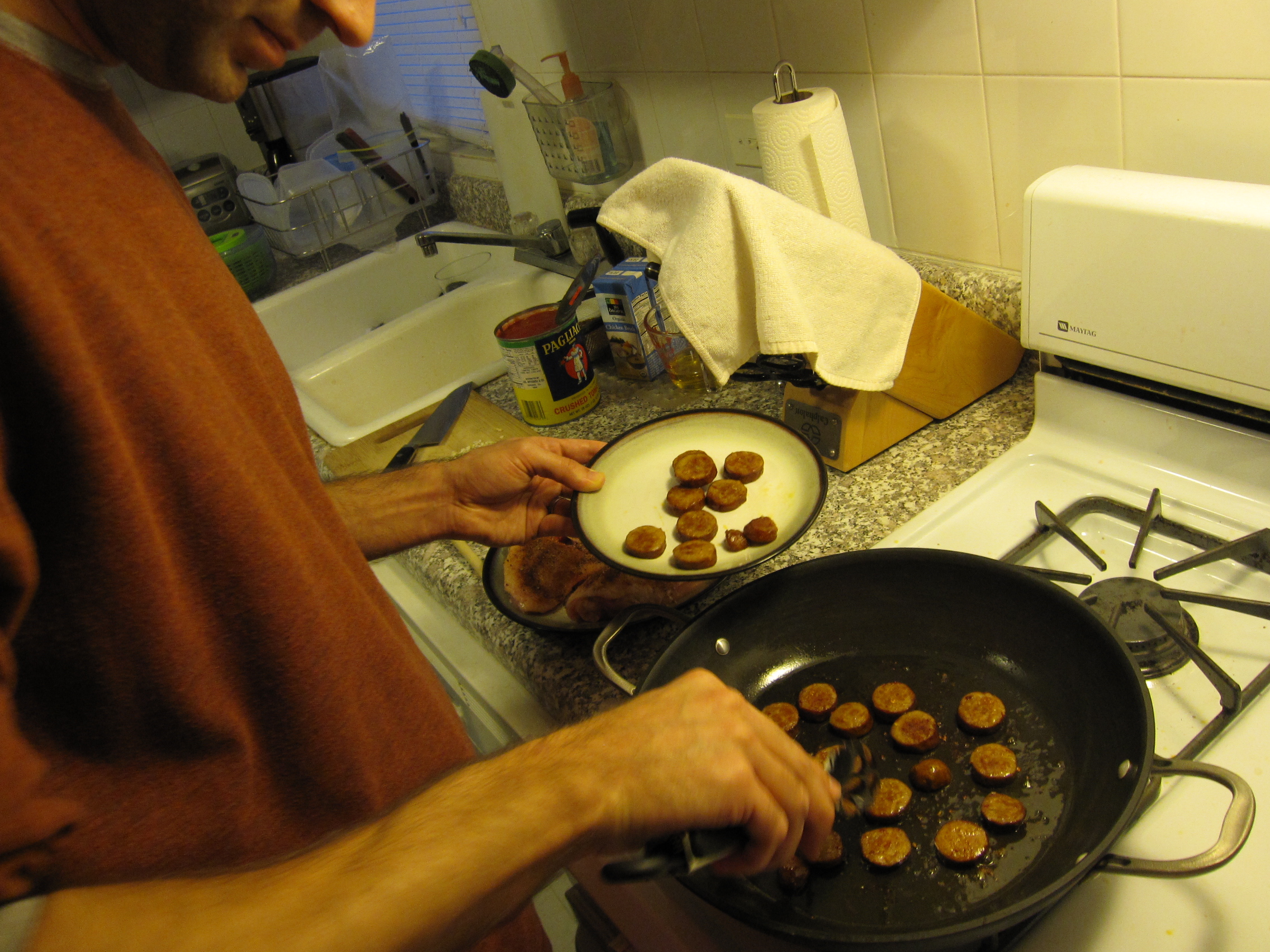
I started off by thinly slicing about 4oz’s of chorizo and cooking them in a hot pan without any oil. I wanted two things, first was a nice brown crusty surface, second was some melted tasty pig fat in my pan.

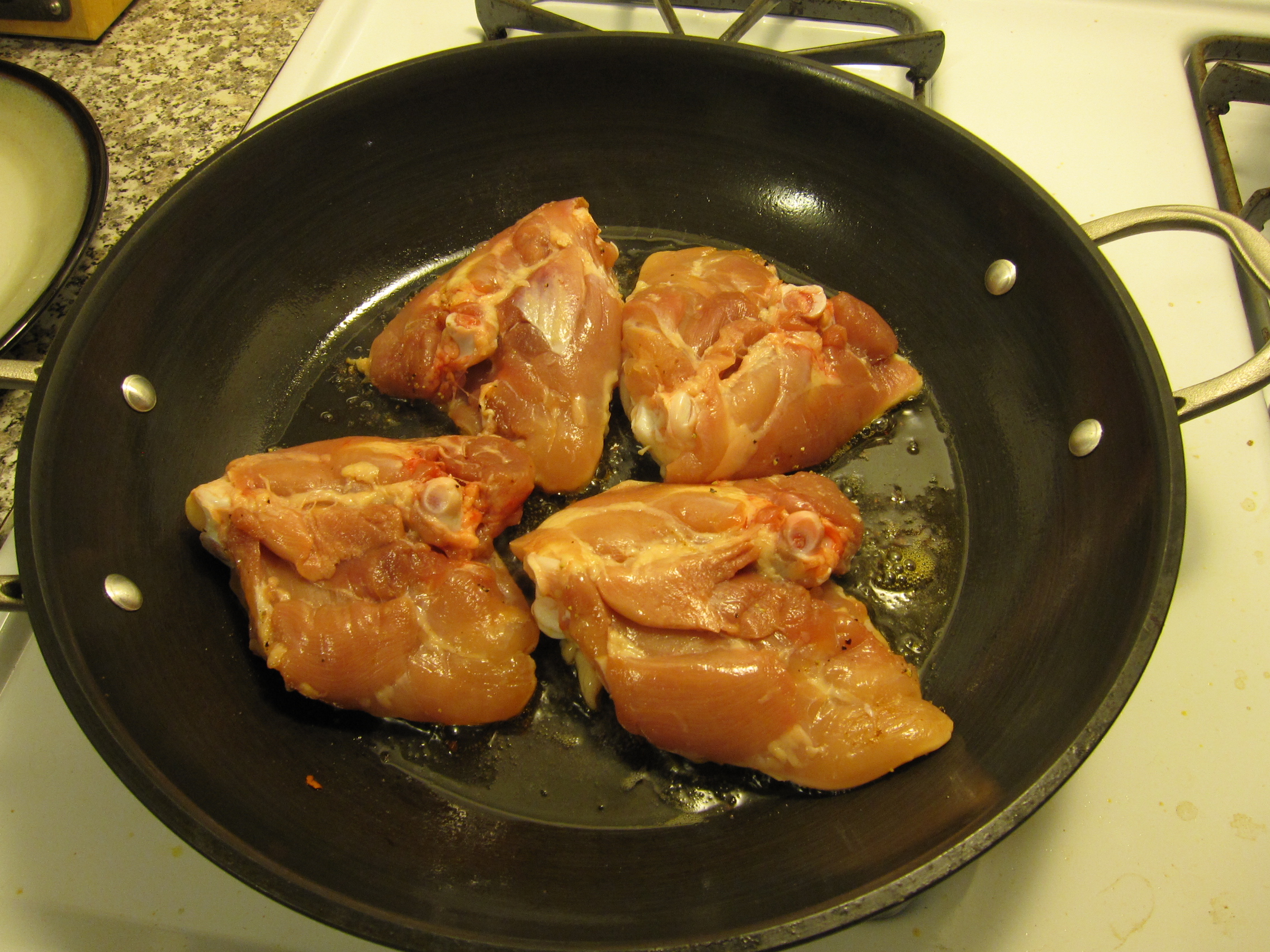
Once the chorizo was browned I added 4 meaty chicken thighs skin side down. Before doing this I generously seasoned the chicken with salt, pepper, and smoked paprika. I only cooked the skin side of the chicken for the same reasons I cooked the chorizo. Crispy skin and animal fat. Now I have no need to add any oil.

I threw in a small onion that I had diced along with 4 minced garlic cloves. I let those cook in the animal fat for about 7 minutes, or just when they started to turn translucent.

Then I added a yellow bell pepper that I chopped along with 1.5 cups of Thai Red Rice. I stirred that all together and let it saute for about 3 minutes.

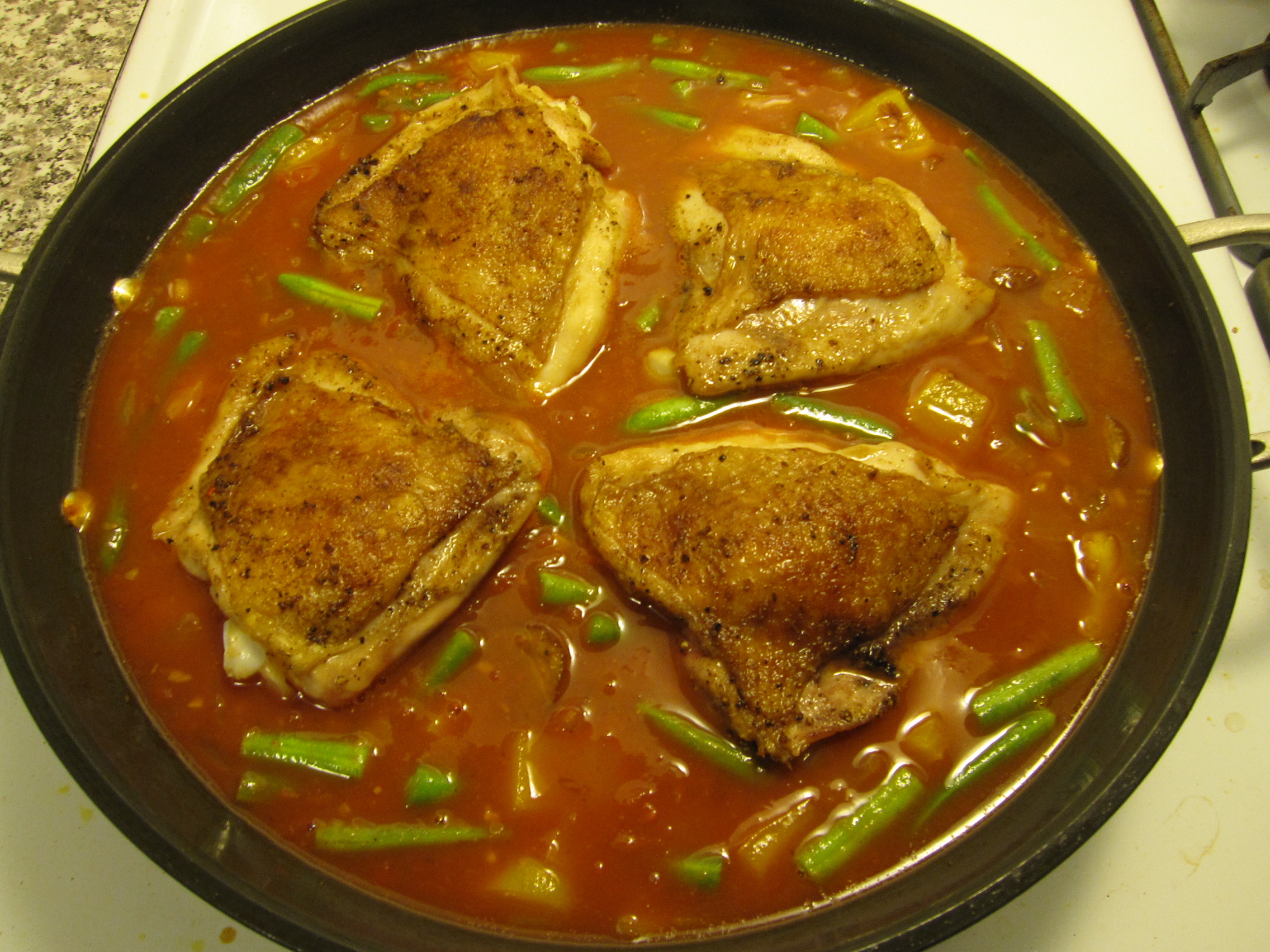
Then I added a half cup of dry white wine that had some saffron strands soaking in it for about an hour. I scraped up all of the burnt bits on the bottom of the pan and stirred them into the dish (the burnt parts have tons of flavor!). Then added a 14 oz can of crushed tomato to form a base for the sauce, as well as 1.5 cups of chicken stock and a bunch of green beans that I cut up. After that I mixed in the cooked chorizo and laid the chicken pieces on top. I covered the pan and threw it in a 400 degree oven for 25 minutes.

After the 25 minutes I took it out, put the chicken on a plate, added salt and pepper, stirred everything around, put the chicken back on top, covered it, and threw it back into the oven for another 10 minutes.

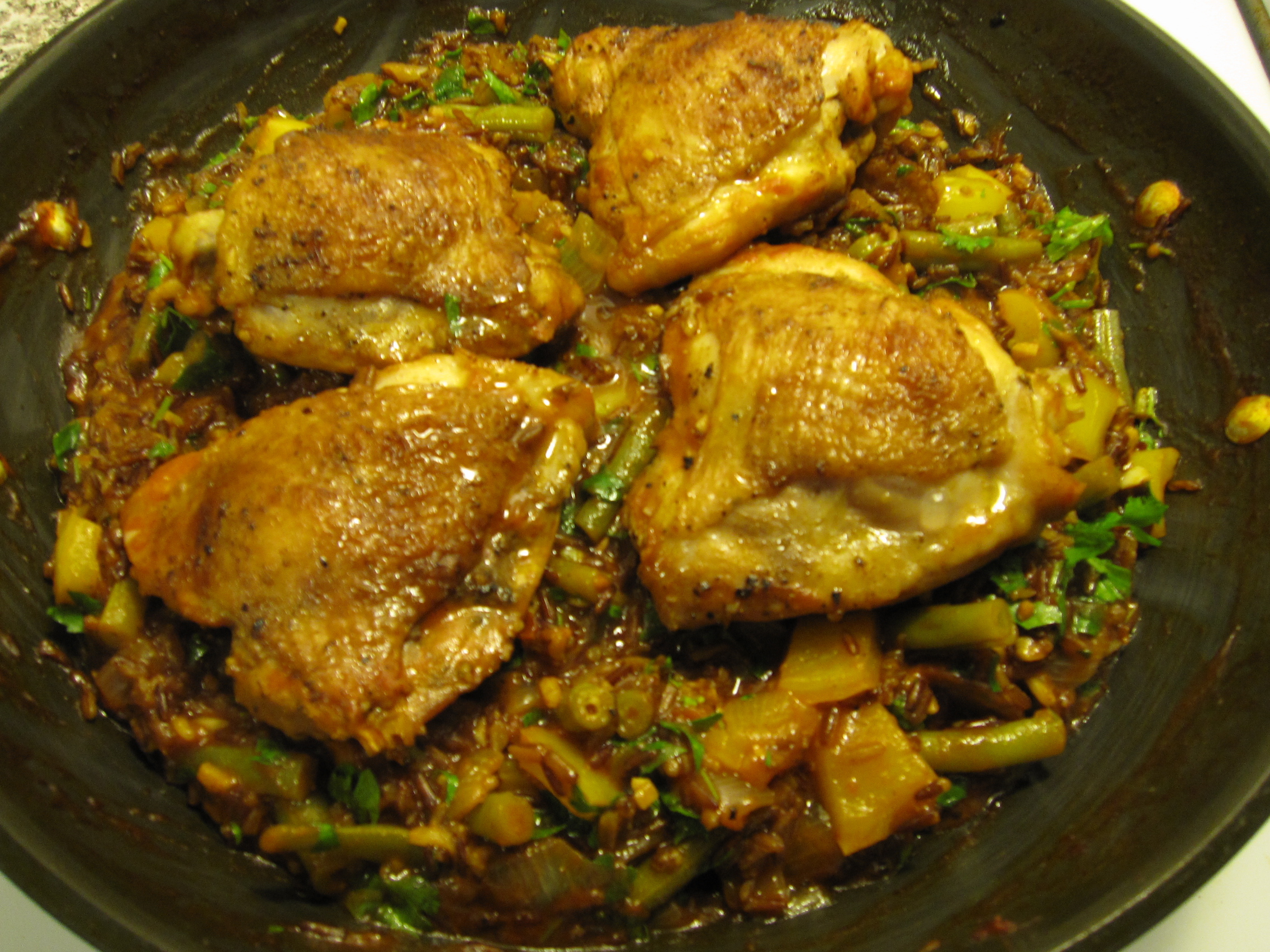
When I took it out again I took the chicken back off and mixed in a bunch of chopped parsley. To serve, I laid a bed of fresh baby spinach on the plate, put a pile of the gumbo on top, then a piece of chicken on top of that, and garnished with parsley. I drank it all down with the rest of the wine that I used in the sauce.

Read Full Post »

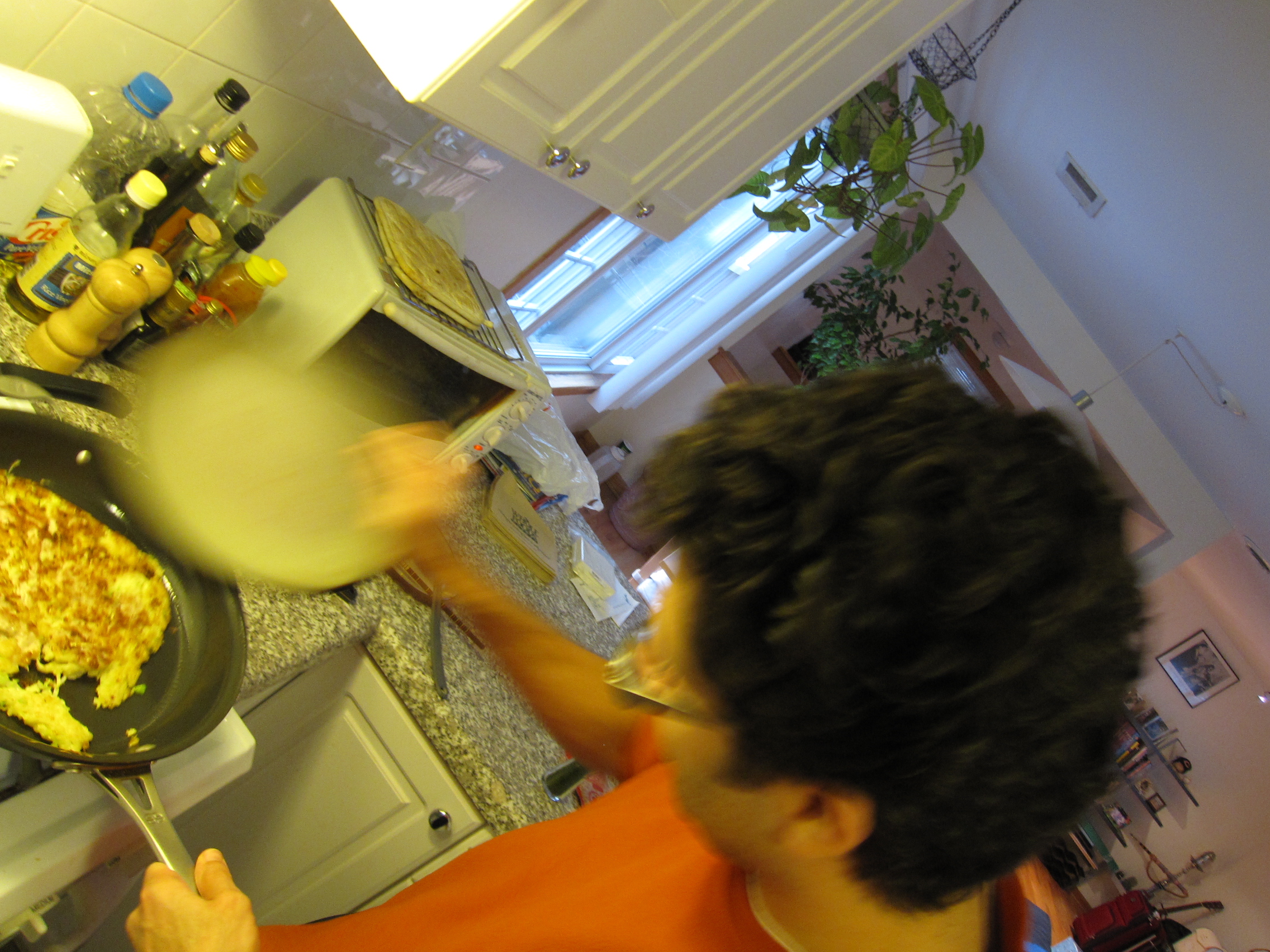
Last night we made Okonomiyaki for dinner. Well, Yuki made it, I was her sous chef. She also made a Korean spiced soup to get more vegetables into the meal. That and she loves soup.

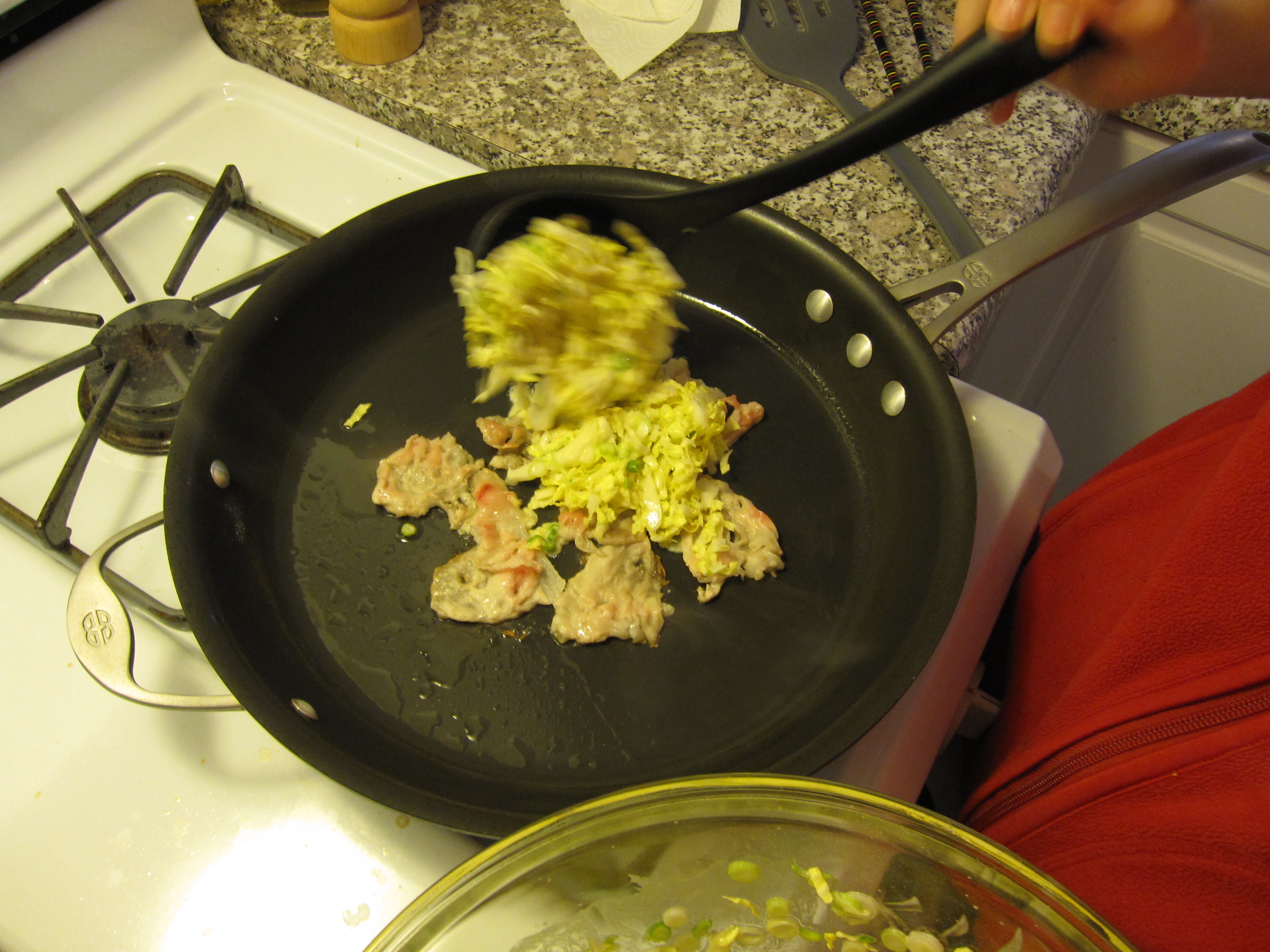
To start off she cooked thin slices of Kurobuta Pork that we got at Mitsuwa in a little sesame oil. Any pork will do as long as it’s thinly sliced. You can also bacon or any bacon-like substance. Or, no meat at all.

Then, she poured the batter on top to make a pancake. I’m not real sure what kind of flour she used, we have a few different kinds on our pantry, but all-purpose will do, about a cup. She mixed it with about 3/4 cup water and a couple of eggs. Then she mixed in a bunch of thinly sliced green onions and a cup of thinly sliced Napa Cabbage.

Instead of making 4 smaller ones, we made two big ones. I had to use a plate to get that thing flipped over when it was time to cook the other side. It’s ready to flip when the bottom is a nice golden brown color.

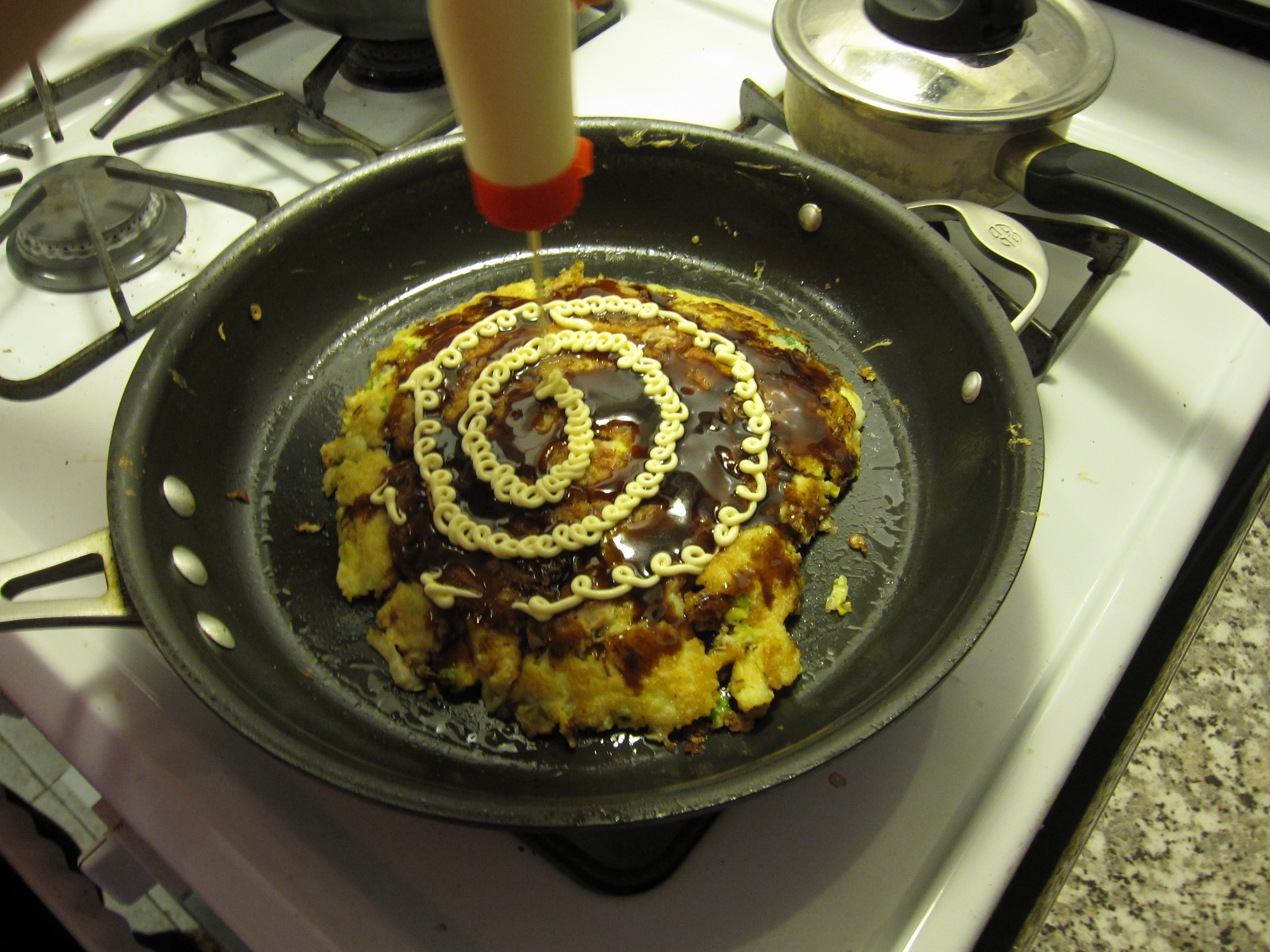
While the bottom is cooking you pour the on top. First pour on Bulldog Sauce. A popular sauce in Japan commonly used on Tonkatsu, fried pork cutlet. Then squeeze on some mayonnaise.

Feel free to paint your okonomiyaki with the sauces.

Then top it with a bunch of katsuo-bushi, dried bonito flakes.

Finally, top it off with some ao-nori, ground seaweed.

For the soup, Yuki started by boiling some light dashi broth. She added some green onions, thinly sliced carrot, enoki mushrooms, aburage, broccoli, komatsuna (Japanese Mustard Spinach), and small diced tofu. Once everything was cooked  she swirled in a couple of tablespoons of tobanjan paste (Korean hot chili paste). It was that simple.

Read Full Post »

Enough Koshar….I need some PIG!!! Last night was absolutely gorgeous out. A little windy, but otherwise Spring is here to stay. Combine the weather with two Passover Seders and I really had no choice but to grill up some sort of swine. I picked up some pork tenderloin for the occasion.

I marinated it in a mix of 5 tablespoons of soy sauce, 3 tablespoons of sake, 3 tablespoons of cider vinegar, an inch of grated ginger, 4 grated garlic cloves, and 1 tablespoon of ground coriander seeds. I covered it and left it in the fridge for about 3 hours.

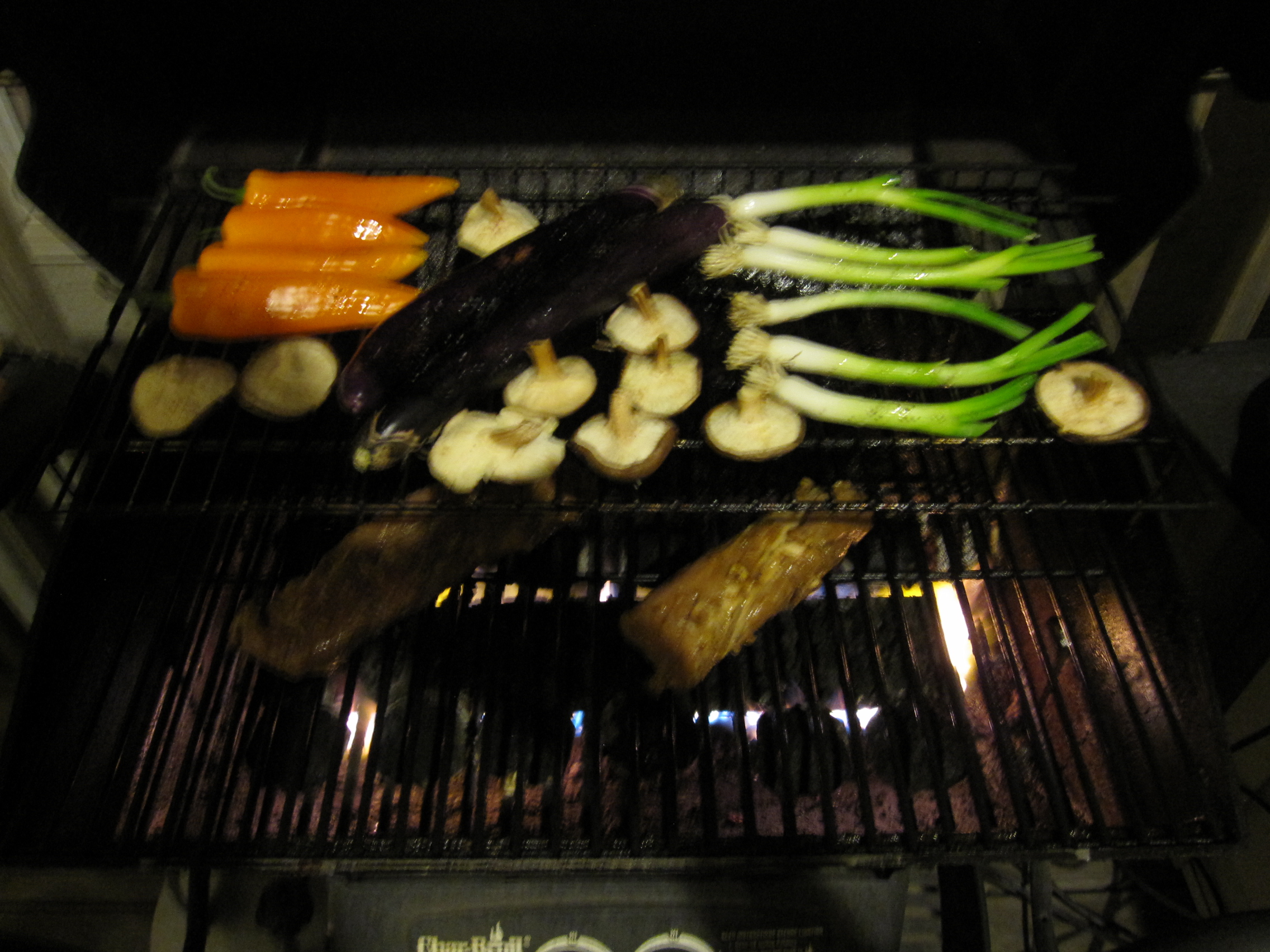
For vegetables I took two whole Japanese eggplants, 4 orange sweet peppers, a bunch of fat green onions, and a bunch of fresh shiitake mushrooms. I simply drizzled them all with a little olive oil, salt, and pepper. You’ll see me do that a lot with the grill as I really don’t think you need to do anything when you have good fresh produce and a hot grill.

Before grilling everything I took the marinated pork out of the fridge and let it rest to room temperature for about a half hour.

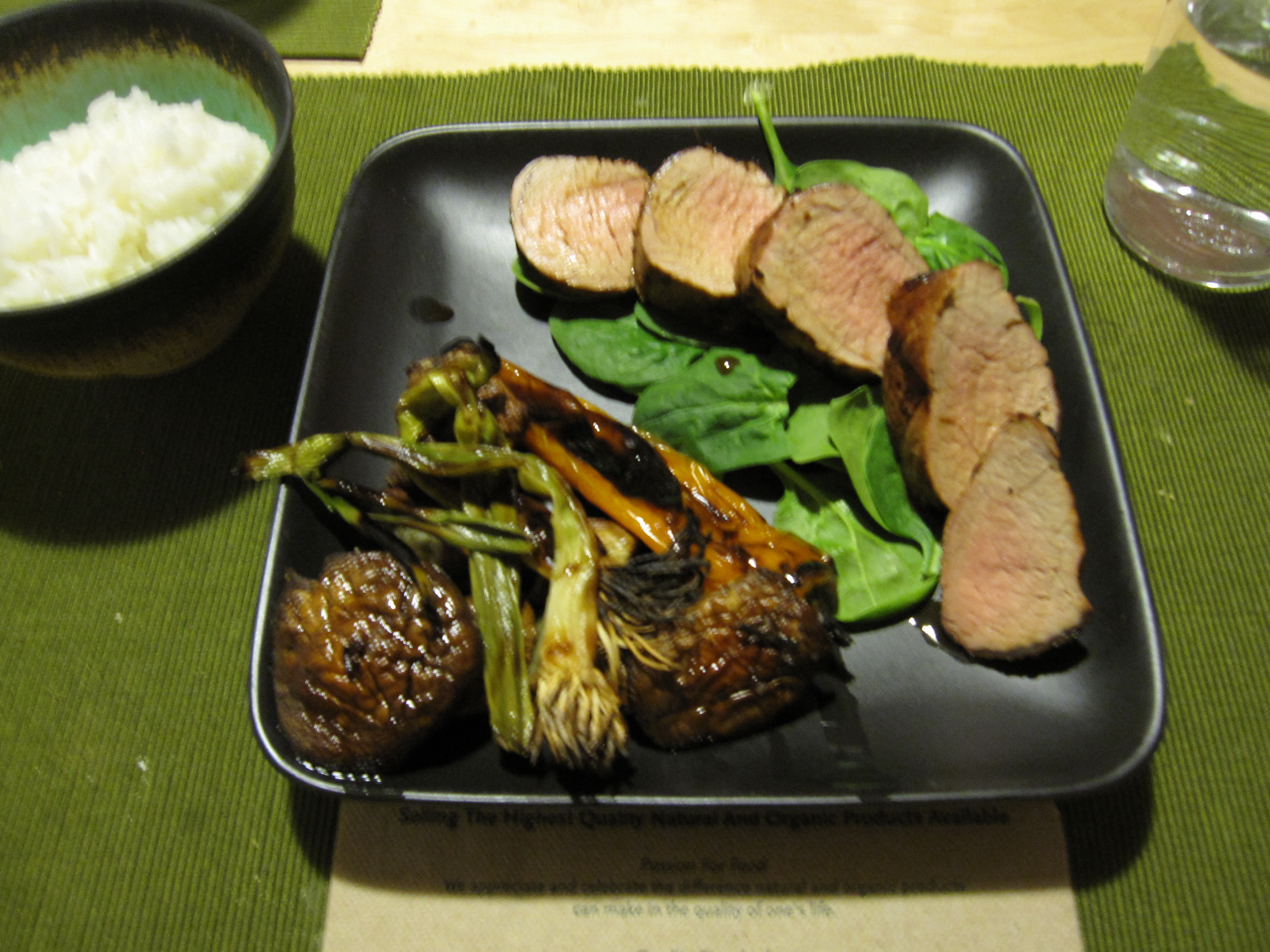
I grilled it all up. After letting the pork rest for about 10 minutes I sliced it and served on top of some fresh baby spinach with the grilled veggies and some white rice.
When you have a good fresh tenderloin you shouldn’t cook it all the way through. I got this one at Whole Foods so I’m not overly concerned with getting sick or anything from it. Leave it a little pink and you’ll enjoy one of the greatest textures of flesh out there. You can’t beat a nice medium-medium rare pork tenderloin.

Read Full Post »

Yuki requested a simple, lightly flavored dinner last night, so to please my wife I made a Japanese-style line up of chow. I made Hijiki Rice, Miso Soup, and Pork-stuffed Aburage.

For the rice, I made two cups in our rice cooker. I simply washed the rice and added a little less water than necessary to cook it. To get the liquid up to the right amount I topped it off with some soy sauce, no more than about a quarter cup. Then I added a couple tablespoons of dried hijiki seaweed (available at more and more groceries), about a half teaspoon of dashi-no-moto (dried, instant dashi, also available at more and more groceries), as well as half of a large carrot diced. That’s it, turn it on and let it cook.

The miso soup was also simple. I brought two and a half cups of water to a boil with 6 green onions chopped to inch-long pieces. Once it started to boil I added 6 baby bok choy and 6 quartered shiitake mushrooms. I let that boil for about 10 minutes, turned off the heat, and added a half teaspoon of dashi-no-moto along with 2 tablespoons of soy sauce. I put that aside until dinner time.
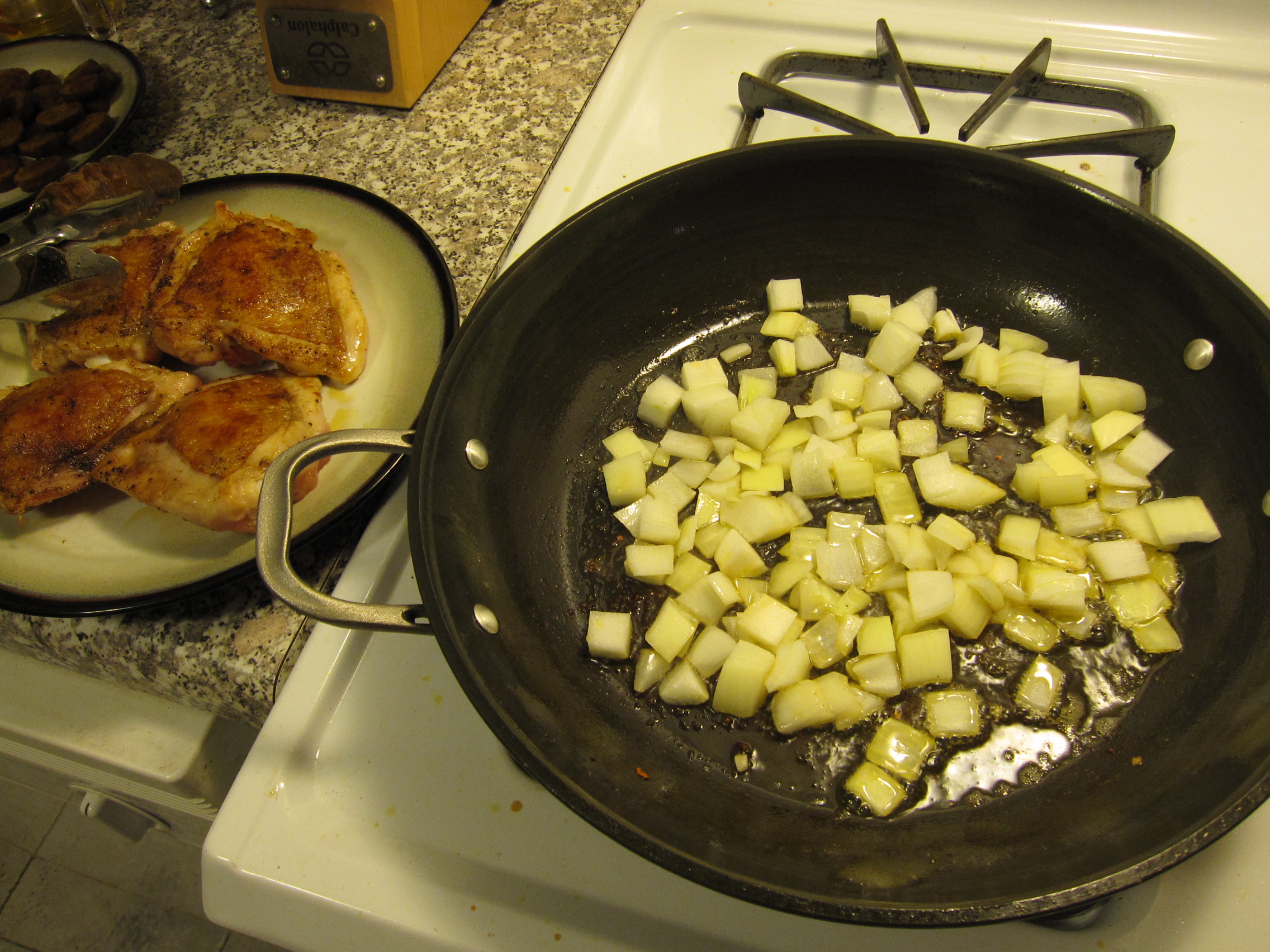
Before making everything I cooked up the ground pork. I sautéed a chopped clove of garlic with a half-inch of chopped ginger in some oil for a few minutes. Then I added about a quarter of an onion, small diced, and let that cook for a few minutes. After that I added a half pound of ground pork and cooked that all the way through. Once the pork was mostly cooked I added 1.5 teaspoons of soy sauce, 1 teaspoon of sake, a half teaspoon of mirin, and some black pepper. I let that liquid boil down and then took off the heat to cool.

To prepare the aburage I first layed them in a colander, boiled some water, and then dumped the water on them to rinse off the excess oil that they come in. Then I squeezed all of the water off. I took my sharpest knife and carefully slit open one side and then gently used my fingers to open them up. After that I just spooned the ground pork mixture and then set aside.

Once the rice was ready I put the soup back on some heat and put the aburage under the broiler. Just before the soup started to boil I added some diced tofu and some wakame seaweed. Then Yuki whisked in a couple tablespoons of miso. When the aburage was heated through, about 5 minutes, I took them out and layed them on beds of arugula and drizzled with ponzu sauce.

Dinner was served!

Read Full Post »

After making a run to Mitsuwa for some Japanese ingredients (some staples in our kitchen) I let Yuki do the cooking last night. She made a dish called Jjigae Don. Well, that’s what she calls it anyway. Jjigae is an old Korean recipe (you see Ira, Yuki doesn’t have anything against Korea), a stew typically made with kimchi. She didn’t use any kimchi but did use Tobanjan, a Korean fermented chili paste.

First, she made a broth out of miso, tobanjan, and dashi. She simmered some green onions, carrot slices, and baby bok choy until soft and tender. Then she took those vegetables out and cooked some thinly sliced kurobuta pork. By thinly sliced I mean deli meat thin. You can purchase it that way at Mitsuwa and some other Asian grocery stores. It’s typically marked for use in Shabu-shabu or dishes like that. The pork cooks quickly since it’s so thin. Be careful not to cook it more than a minute or two because the meat will get tough if overcooked. Once the pork was cooked she took it out and then cooked some shimeji mushrooms in the broth.

While all of this was going on we had pressed the water out of a package of silken tofu. Once the tofu was firm enough we cut (she did the cooking I did most of the cutting, I’m her sous chef as I love to use the hand-carved Japanese steel she got me for my birthday a few years ago) it into smaller pieces and then cooked it in the broth.

After everything was cooked we put some rice in the bottom of our bowls and then topped it with all of the ingredients. While we did that Yuki cooked some shungiku in the broth. You have to cook that last as it turns the broth a darker color. That way the veggies and meat keep their natural colors. Once the shungiku was cooked that went in the bowl with everything else.

No extra fats, just the natural fat from top quality pork, were added to this dish. Along with the variety of fresh vegetables and white rice this is an extremely healthy dish. Absolutely delicious as well.

Read Full Post »

« Newer Posts - Older Posts »