Feeds:
Posts
Comments

Posts Tagged ‘onion’

Last night I made another Japanese flavored spaghetti dish using sake hogushi and aonori. Sake hogushi is simply cooked salmon that’s been flaked into small “crumbs” and jarred. Aonori is a type of nori, Japanese algae, that’s been ground into a powder. The two ingredients can be used in a variety of ways like being sprinkled on white rice, mixed into cream sauces or dressings, or used like I did last night to name a few. Great ingredients to have on hand and available at any Asian grocer.

First thing I did was get my side vegetables ready. I had three beefsteak tomatoes and 1 large Japanese eggplant. I sliced the top off the tomatoes, sliced the eggplant in half length-wise, and then cut the eggplant into 2-3 inch pieces. I coated the tops of the vegetables with panko, then drizzled some olive oil on top, then sprinkled some aonori on top of that. I roasted them in a 350 degree oven for about 35-40 minutes, just enough time for me to get the rest of dinner ready.

To make the spaghetti I used butter, the sake hogushi, half on onion sliced, 7 button mushrooms sliced, and 4 garlic cloves. In a large hot skillet I poured about 2 tablespoons of olive oil and then melted 1 tablespoon of butter in that. I added the onion and let it sweat for about 4 minutes. Then, I added the garlic and mushrooms. At the same time I cooked my noodles in boiling water until al dente. The garlic and mushrooms needed about 5 minutes which was about the same amount of time the noodles took. After draining the noodles (I reserved about 1/3 cup of the water) I added about 1/4 cup of soy sauce along with 1/2 cup of the sake hogushi to the onions, garlic, and mushrooms. I let the soy come to boil for about 2 minutes and then added the noodles and reserved water with some black pepper. I let the noodles coat with the sauce and most of the liquid boil off then turned off the heat and covered the skillet.

Then, I took two baby bok choy that I had seperated the leaves of and put them in my steamer for about 4 minutes. That’s just enough time to cook the stems without having the leaves wilt too much.

To serve, I put the baby bok choy on the plate then the spaghetti on top of that. I sprinkled it with some aonori and then put a tomato and some eggplant on the side.

Read Full Post »

Yesterday I saw some really nice coho salmon on sale that just came in that morning. Since I haven’t cooked salmon in a while I took that as a sign that it’s time to do it up again. I decided to keep it very simple and use some Japanese flavors to appease my wife.

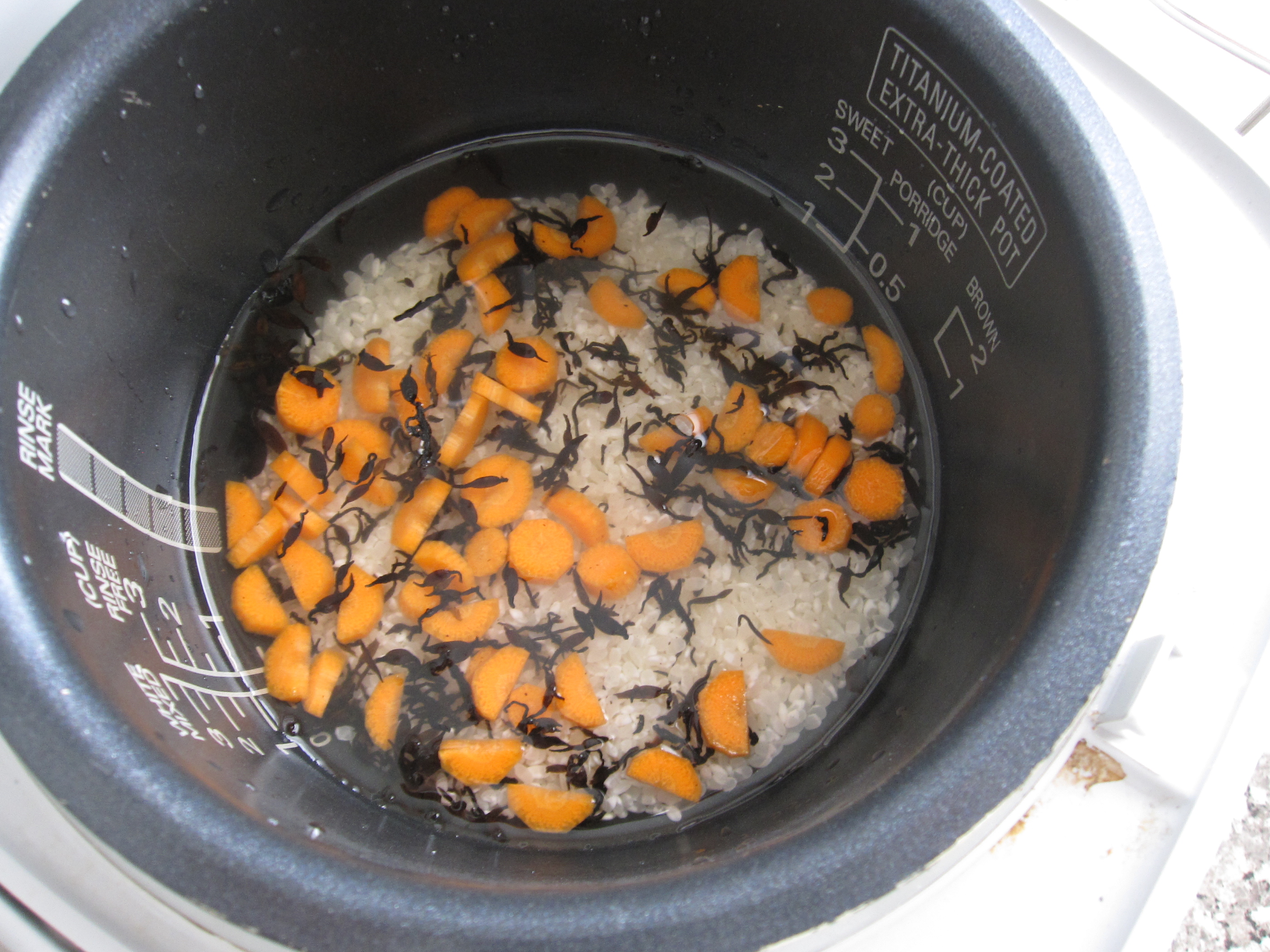
After lunch I got the rice ready. I rinsed 1 cup of rice and threw it in the rice cooker like normal, then added a couple of large pinches of dried hijiki seaweed and a diced carrot. I let it sit for about a half hour to let the hijiki re-hydrate and flavor some of the water. Then I turned on the machine and let the rice cook. When it was finished I turned it off, mixed everything together, and let it cool to room temperature.

Closer to dinner time I made my teriyaki sauce. In a small saucepan I gently heated 3 tablespoons each of soy sauce, sake, and mirin along with 1 tablespoon of sugar. I let it heat just until the sugar was completely dissolved and turned off the heat before it came to a boil. I let that cool to room temperature.

Here’s my 20 ounce filet of coho salmon. I cut it into 4 equal portions and marinated it in the teriyaki sauce for about 45 minutes at room temperature.

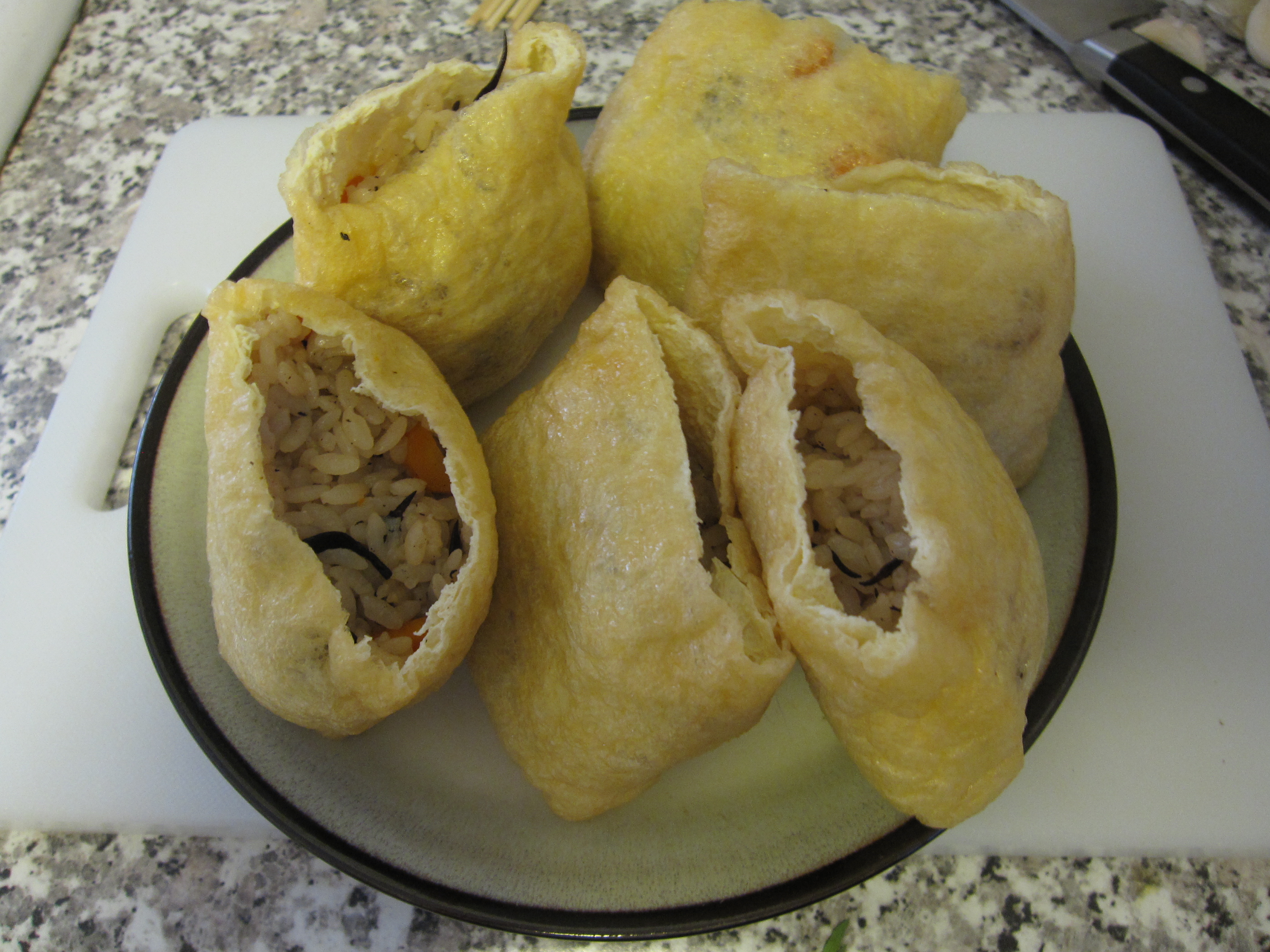
While the salmon was marinating I got the abura-age ready. I had a pack of three here. I cut them in half and rinsed them off with some boiling water. They very oily and the boiling water rinsed a majority of that oil off. Then the packages open up nicely for easy stuffing.

I stuffed them equally with the rice mixture and then sealed them. I didn’t have any toothpicks, so I cut down some bamboo skewers to do the job. In a saute pan I brought 1/4 cup of water to boil with 1/4 cup of seasoned soy. The soy is seasoned with a little dashi and mirin. Once lightly boiling I put the packets in, covered it, and turned the heat to low. This lets the broth flavor penetrate while heating up the rice. I let it go for about 10 minutes then turned off the heat and let it sit until everything was ready.

I also placed the salmon under the broiler, starting with the skin-side up. About 5 minutes later I turned it over, basted the top with the marinade left in the dish, and let it broil for another 5 minutes.

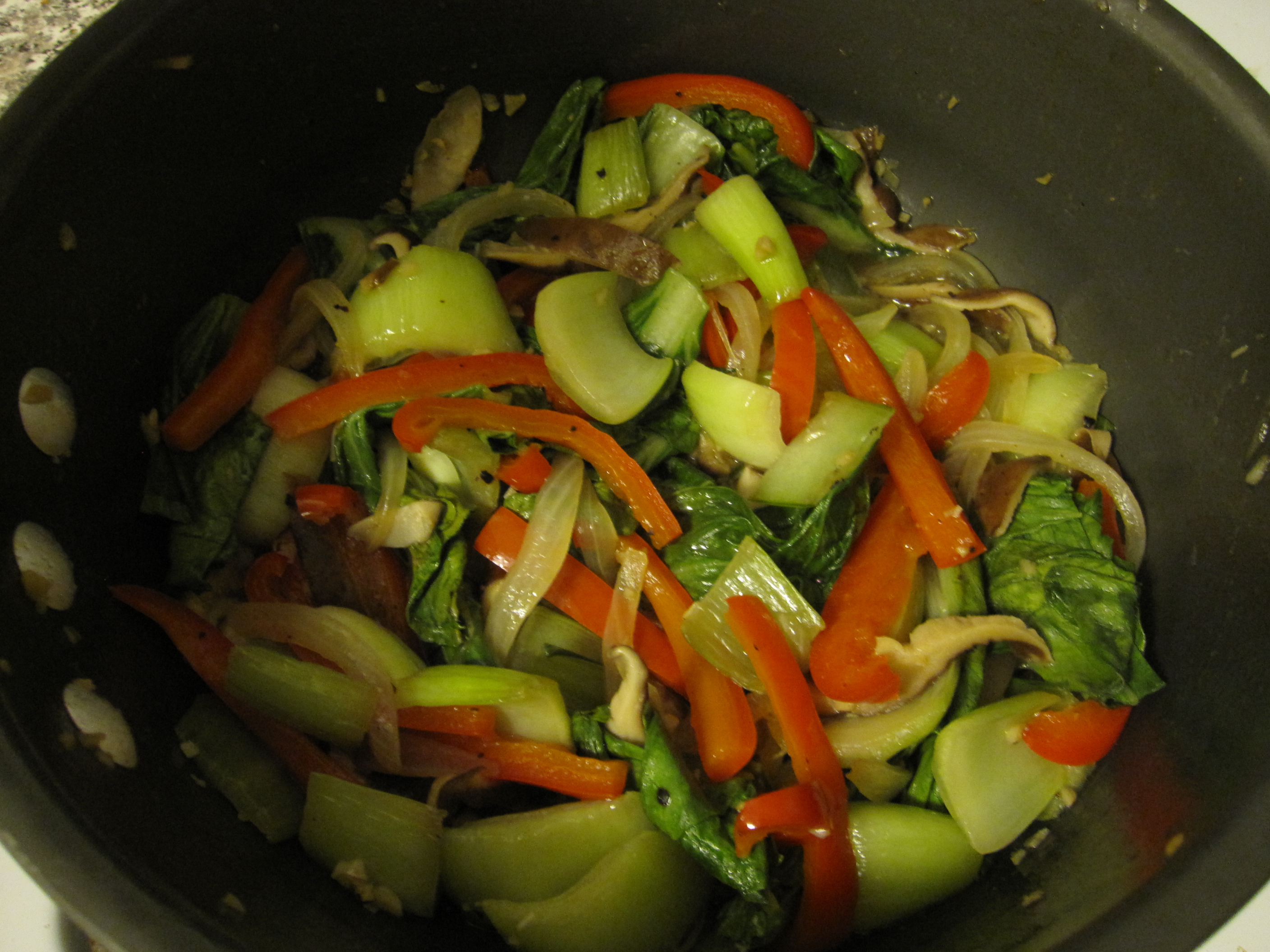
Before cooking the salmon and abura-age I got my vegetables ready. I had two large heads of baby bok choy that I separated the leaves from the stems and chopped them all down, 1/2 onion sliced, 3 garlic cloves minced, 1 package of shiitake sliced, and 1/2 a large red bell pepper sliced.

While the salmon was broiling and the abura-age packets absorbing tasty fluids I heated up a pan and poured in 2 tablespoons of sesame oil and tossed in the onions to let them saute for about 4 minutes. Then I added the peppers and garlic. After another few minutes I added the shiitake and bok choy stems for about 4 more minutes. I seasoned with pepper and poured in about 3 tablespoons of soy sauce. Once the soy boiled off I added the bok choy leaves, stirred them in, covered the pan, and turned off the heat. I just wanted the leaves to wilt a little.

I timed it all so everything would be finished at the same time. I plated it up and scarfed it down.

Read Full Post »

So, my little brother took us out to eat at Essence Of India last night, so no Meatless Monday. We did get vegetarian samosas and a chickpea and spinach dish though, so we did partially do Meatless Monday (not inlcuding our lamb and chicken). Since I’ve already blogged about that joint a while back here’s what I made for dinner this past Friday, kefta kabobs.

I used a 1/4 onion, a piece of ginger, 1 garlic clove, 1 tablespoon of paprika, 1 teaspoon of cumin, 1 teaspoon of dried basil, 1 teaspoon of dried oregano, and 3/4 pound of ground lamb.

In a glass bowl I plopped the lamb meat and grated the onion, ginger, and garlic on top. In a small sauce pan I heated up 2 tablespoons of olive oil and put all of the dried spices in. I let them cook in the oil for about 1 minute. Then I turned off the heat and let the spice mix cool for about 5 minutes. After that, I poured it on the meat and seasoned with salt and pepper. That all got mixed together in order to mix the flavors evenly throughout the meat. I formed 4 oblong “sausages” out of the meat and then put it in the fridge for about a half hour to let the meat firm up.

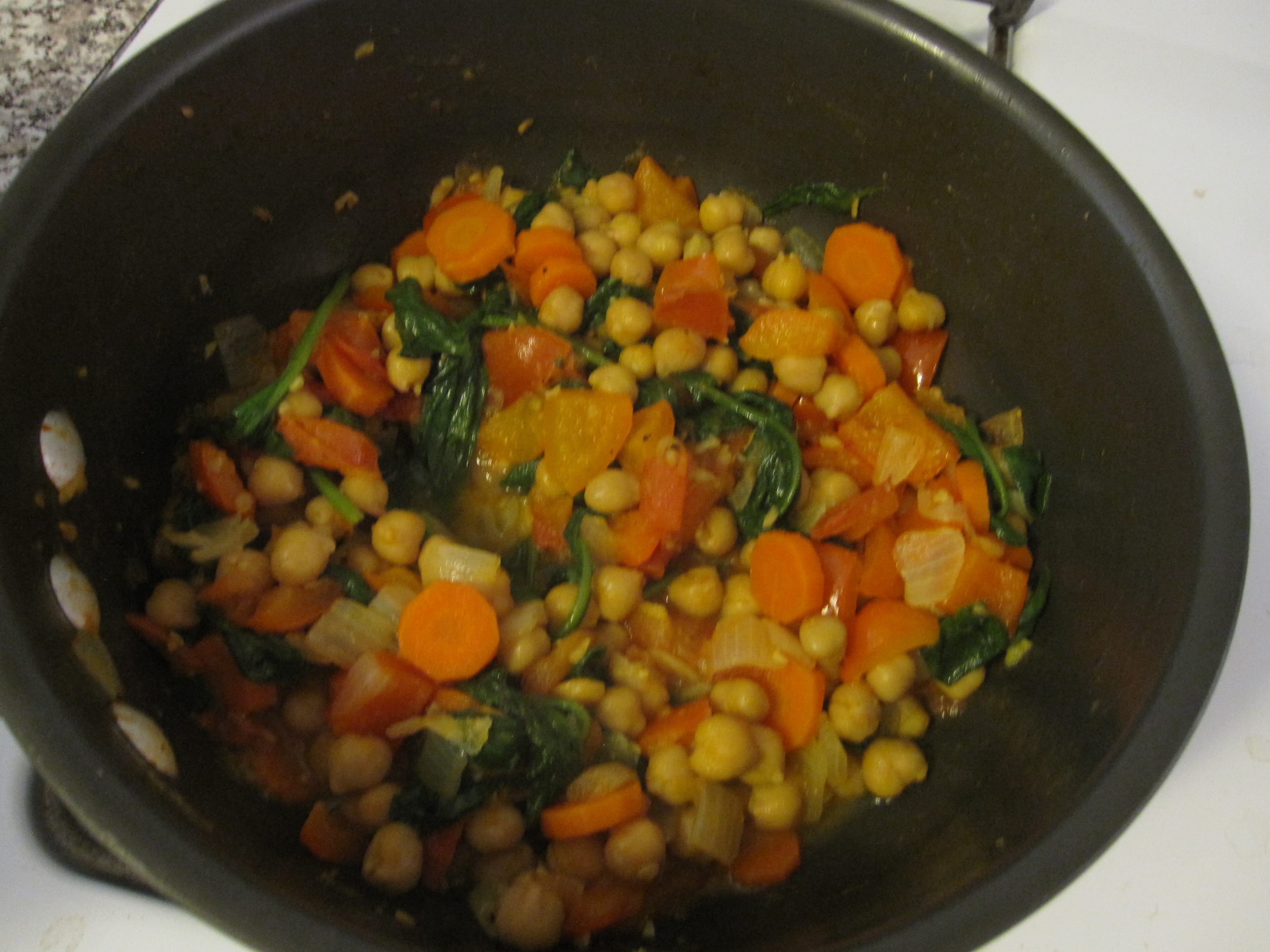
On the side I made some chickpeas with vegetables. I used 3 plum tomatoes chopped, 2 garlic cloves minced, the other 1/4 of onion diced, 1 red bell pepper diced, 1 14 ounce can of chickpeas, 1 large handful of baby spinach, and 1/2 teaspoon each of cumin, cayenne, and turmeric.

In a heated pan I poured about 2 tablespoons of olive oil and then tossed in the onion, carrot, and bell pepper. I let them sweat for about 6 minutes and then added the garlic. About a minute later I added the tomatoes with all of their juices and let them break down for about 4 minutes. Then the chickpeas went it along with the spices with salt and pepper. Once the chickpeas were heated through, about 4-5 more minutes, I added the spinach. I turned off the heat and covered it. The residual heat wilted the spinach and keeping it covered gave me enough time to grill the kefta.

While the grill was heating up I took 4 bamboo skewers that were soaking in water for an hour and pushed them through the cold kefta. I oiled the grill and then cooked the kefta for about 4 minutes on all four sides.

Instead of regular white rice to go with everything I used basmati rice. I used chicken stock instead of water along with a pinch of turmeric for color. I would have used saffron, but I’m out. I chopped up some cilantro and garnished the plate.

Read Full Post »

The Top Chef finale was on the other night and I noticed something from watching it this season…every time someone made a pea puree they won the challenge. With that in mind I decided to make my own pea puree to eat while watching the finale. Instead of using green peas though I used edamame.

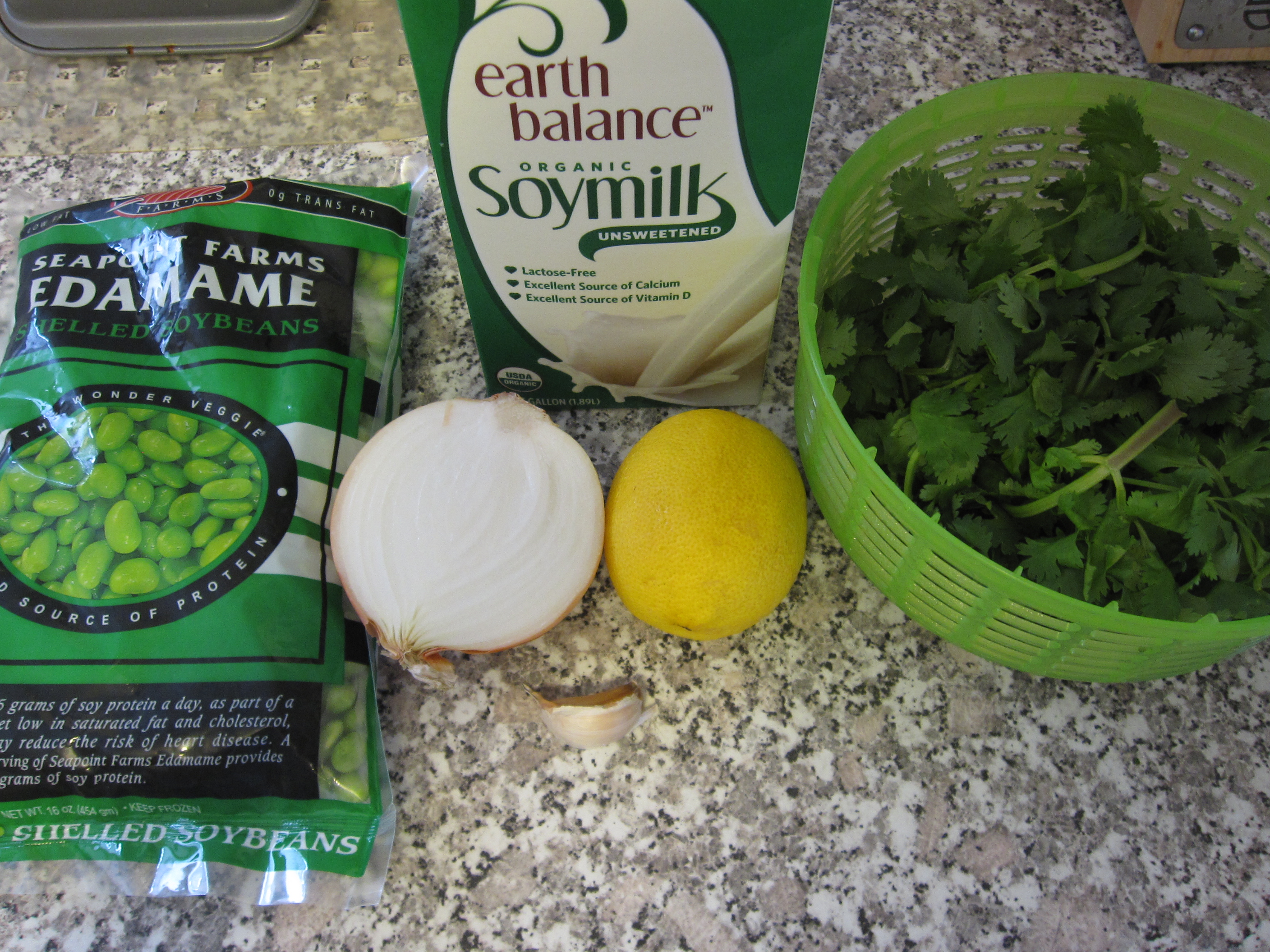
To make the puree I started with 1 cup of frozen shelled edamame, 1/2 onion diced, 1 lemon zested and juiced, 1 garlic clove minced, 1/3 cup soy milk, and a handful of cilantro.

In a heated pot I poured about 1 tablespoon of vegetable oil and tossed the onion in. I let the onion sweat over medium heat for about 5 minutes and then added the garlic. About 1 minute later I added the edamame (it was still frozen when I added it). It only took about 6-7 minutes for the edamame to heat through, at which point I turned off the heat and let it cool down for about 10 minutes.

I put the edamame mixture in my blender and added the cilantro, soy milk, 1/4 of the lemon zest, and half of the lemon juice. While blending it I noticed that it needed a little more liquid to get a nice smooth puree. After tasting it, I decided to add about 1/4 cup of orange juice instead of more soy milk, it needed a little sweetness to it. Once I got the thick, smooth texture I wanted I seasoned it with salt and pepper and poured it back into the pot. I gently re-heated it when it came time to serve.

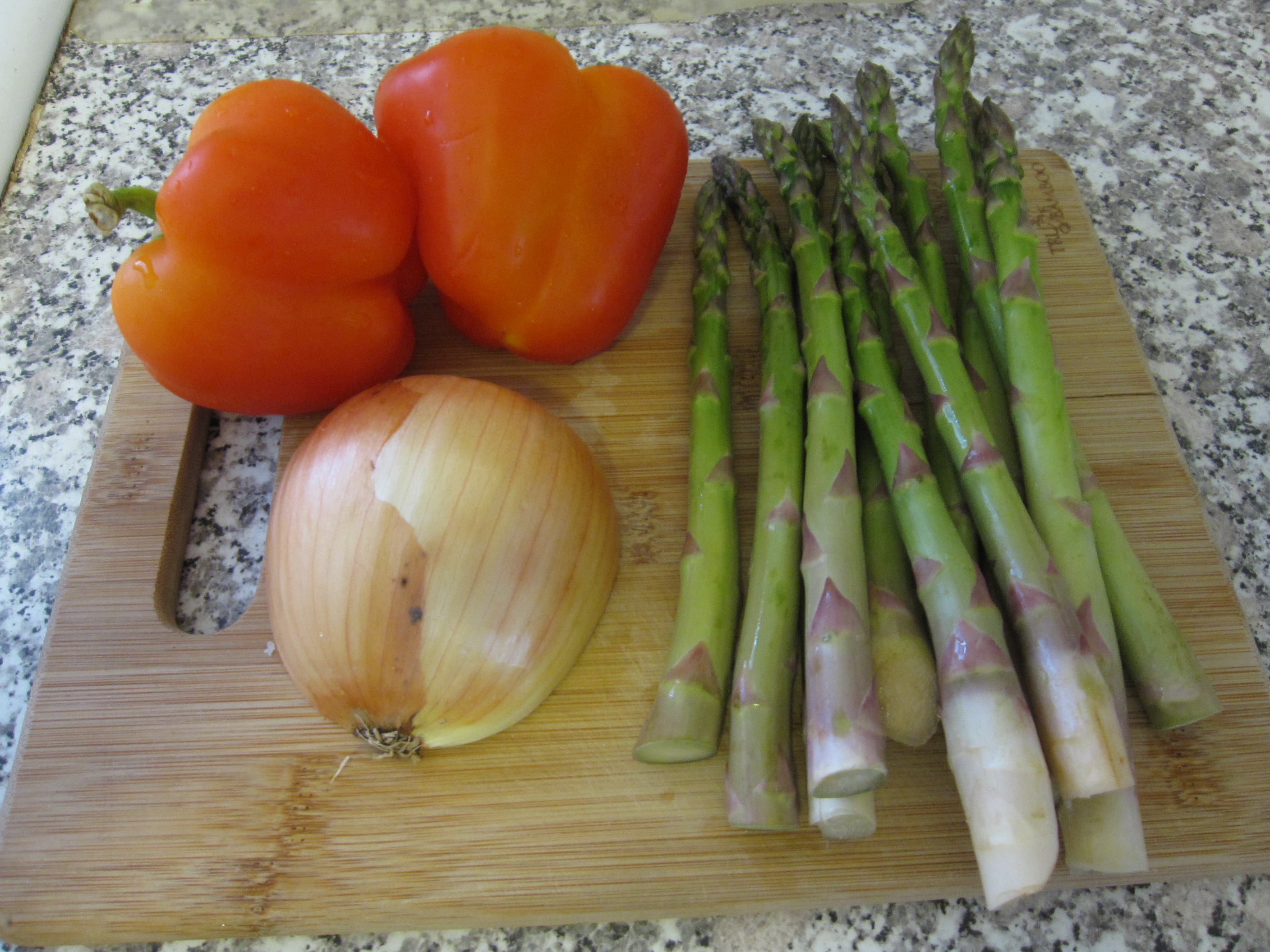
Before cooking the halibut I got some vegetables ready. I sliced one red bell pepper (decided to only use one of them, I’ll use the other one tonight) and the half of the onion from the puree. I also cleaned up some asparagus.

I simply laid the vegetables on a roasting tray, drizzled some olive oil on top, seasoned with salt and pepper, and then sprinkled about another quarter of the lemon zest on top. This all went into an 350 degree oven for about a half hour.

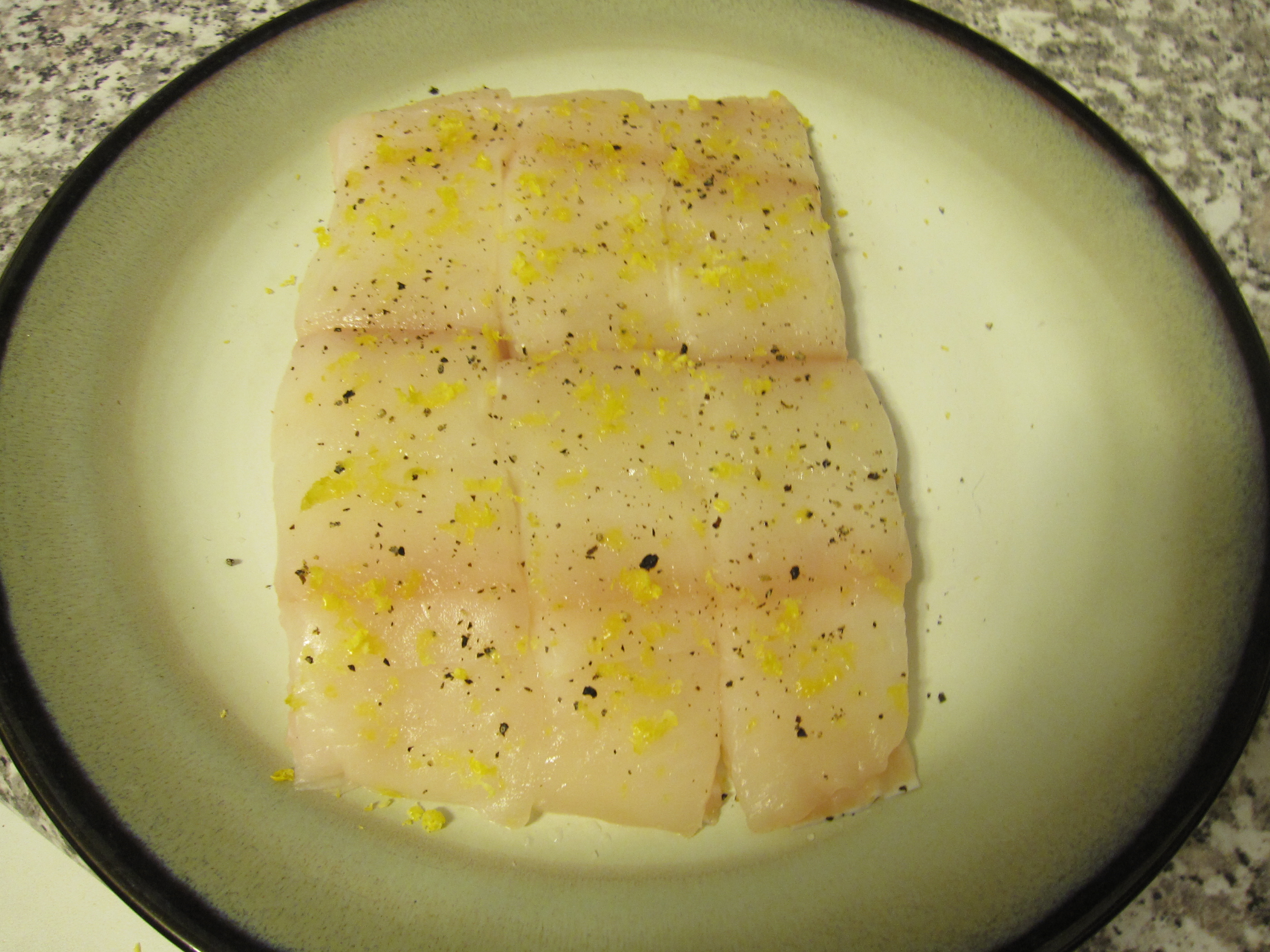
For the halibut I used three 4-5 ounce filets (I still had meatloaf leftovers for my lunch so I only needed lunch leftovers for Yuki) and seasoned them with salt, pepper, and the 3rd quarter of lemon zest.

In a large skillet over high heat I poured in about 1 tablespoon of vegetable oil and then dropped 1 tablespoon of butter in. I laid the filets in skin-side down and let them go for 5-6 minutes, until the skin was golden brown and crispy and released from the pan with ease. If the fish doesn’t release easily then it’s not ready. Once it was ready I flipped it over and let the other side go for about 5 minutes until it released easily.

To serve, I laid the halibut on top of some puree, laid the vegetables all around, and then sprinkled everything with the rest of the lemon zest and juice. White rice on the side.

Read Full Post »

One of the great things about meatloaf is that you can do pretty much anything you like with it. You can use any kind of ground meat, vegetables, sauces, etc. It’s also extremely simple to make. I have some rosemary still growing on my back porch and with the weather starting to cool down here I figured I should use it up before my plant dies. With that in mind I decided to make a very straight-forward meatloaf and use up the rosemary, although I still have some left that needs to be used within the next week or so.

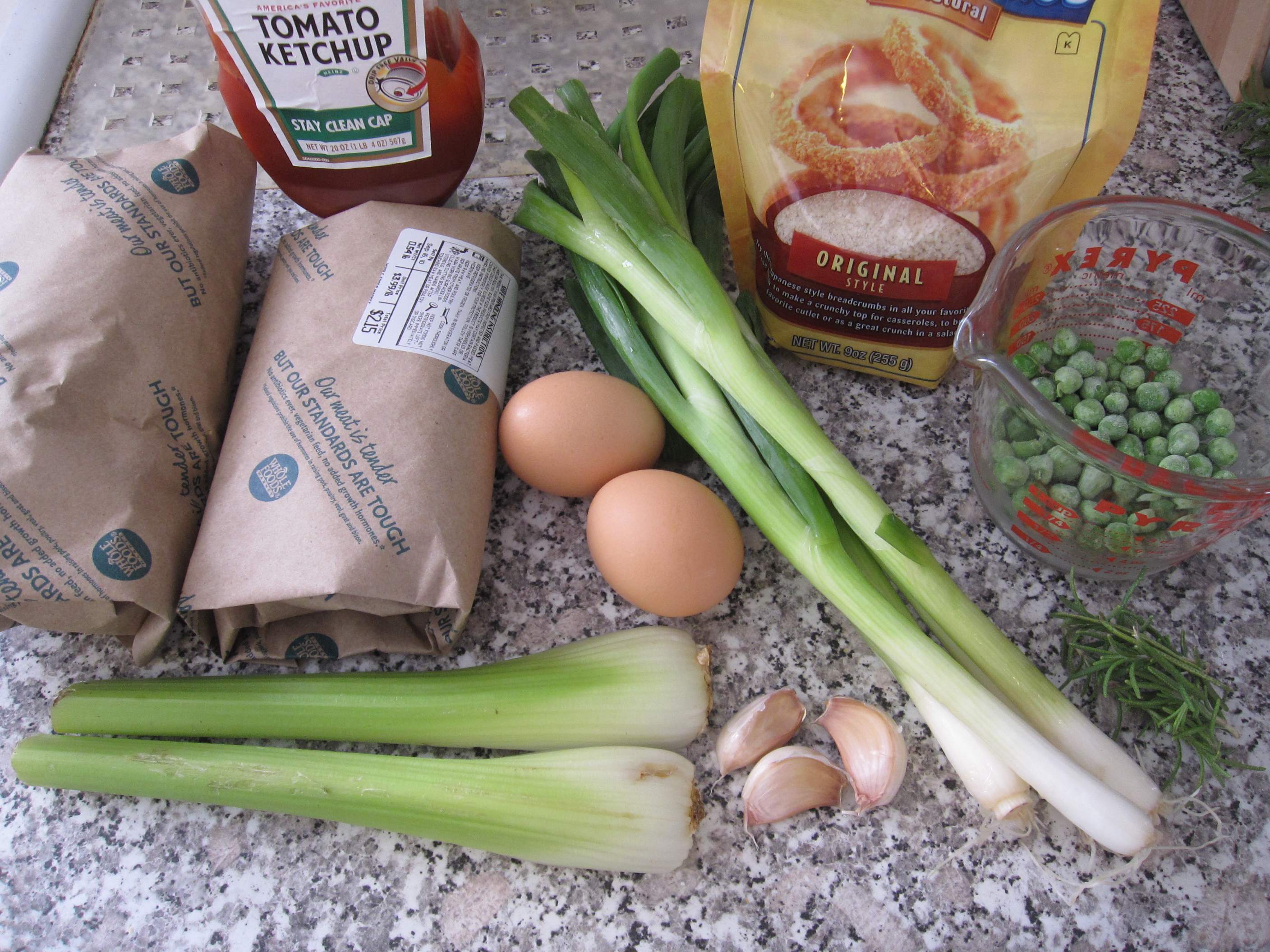
My ingredient list includes 1.5 pounds of ground beef (20% fat), 1/5 pound of ground pork, 2 small celery ribs diced, ketchup, 2 eggs beaten, 3 cloves of garlic minced, a bunch of green onions sliced, panko, 1/2 cup of frozen peas, and a bunch of rosemary chopped.

In a large glass bowl I mixed together the ground meats with the celery, eggs, garlic, green onions, peas, rosemary, and some salt and pepper. Once it was all good and mixed I let it sit for about 15 minutes to let the flavors settle.


Once the meatloaf settled a little I shaped it into a loaf and put it into a loaf pan. I squeezed some ketchup on top and brushed it to cover the entire top surface. Then I sprinkled some panko over the ketchup. I put it in a 350 degree oven and let it cook for about an hour.

For some side vegetables I used 1.5 carrots chopped, 1/2 onion sliced, a bunch of haricots vert, and some more chopped rosemary.

I simply laid vegetables out in a roasting pan, drizzled them with olive oil, and seasoned them with salt, pepper, and the rosemary. I put them in the oven for about a half hour.

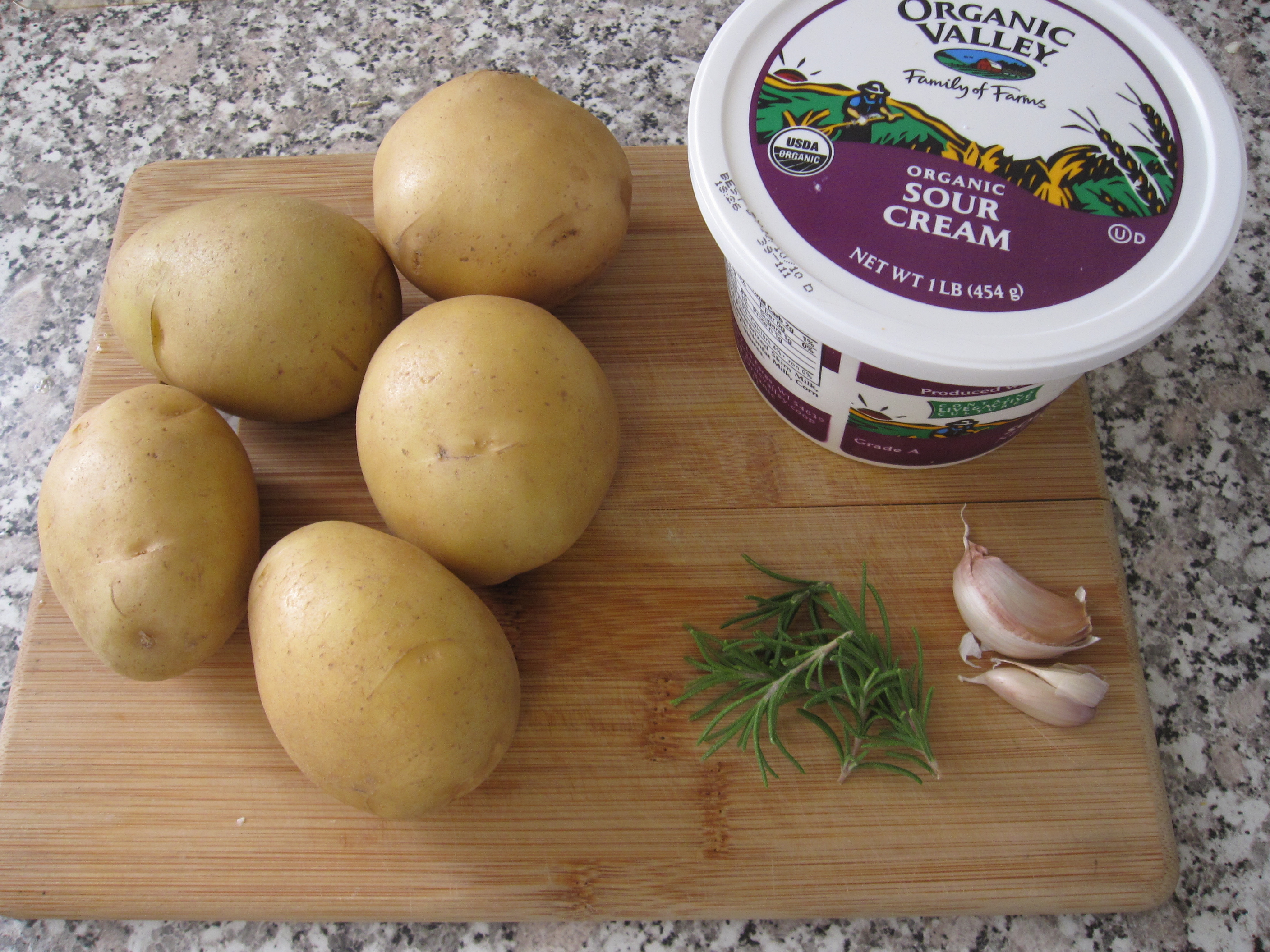
Once I got the vegetables in the oven I boiled some water and salted it. I took 5 good-sized Yukon Gold potatoes and skinned them then chopped them into quarters and dropped them in the boiling water along with 2 garlic cloves cut in quarters as well. I let them boil for about 10-15 minutes. Before draining them I reserved a cup of the water. After draining them I put the potatoes and garlic back into the pot, scooped about 1/3 cup of sour cream in, about 1/2 cup of the reserved water (didn’t need the rest but had it there in case I wanted to thin out the mashed potatoes), salt, pepper, and more chopped rosemary. With my potato masher I mashed it all up till they were smooth and creamy.

Read Full Post »

The other day Yuki requested macaroni and cheese. I thought that was weird because that’s not her favorite dish as a main, she prefers it as a side. Then she went on about how she misses her parents gratin. I have to agree, they make delicious gratin, especially with oysters. So, I found a recipe on Food and Wine’s website by Jeremy Fox that looked interesting using a carrot and cheddar sauce. It looked to me more like a side, so I put my own twist on it to make it a more fulfilling main.
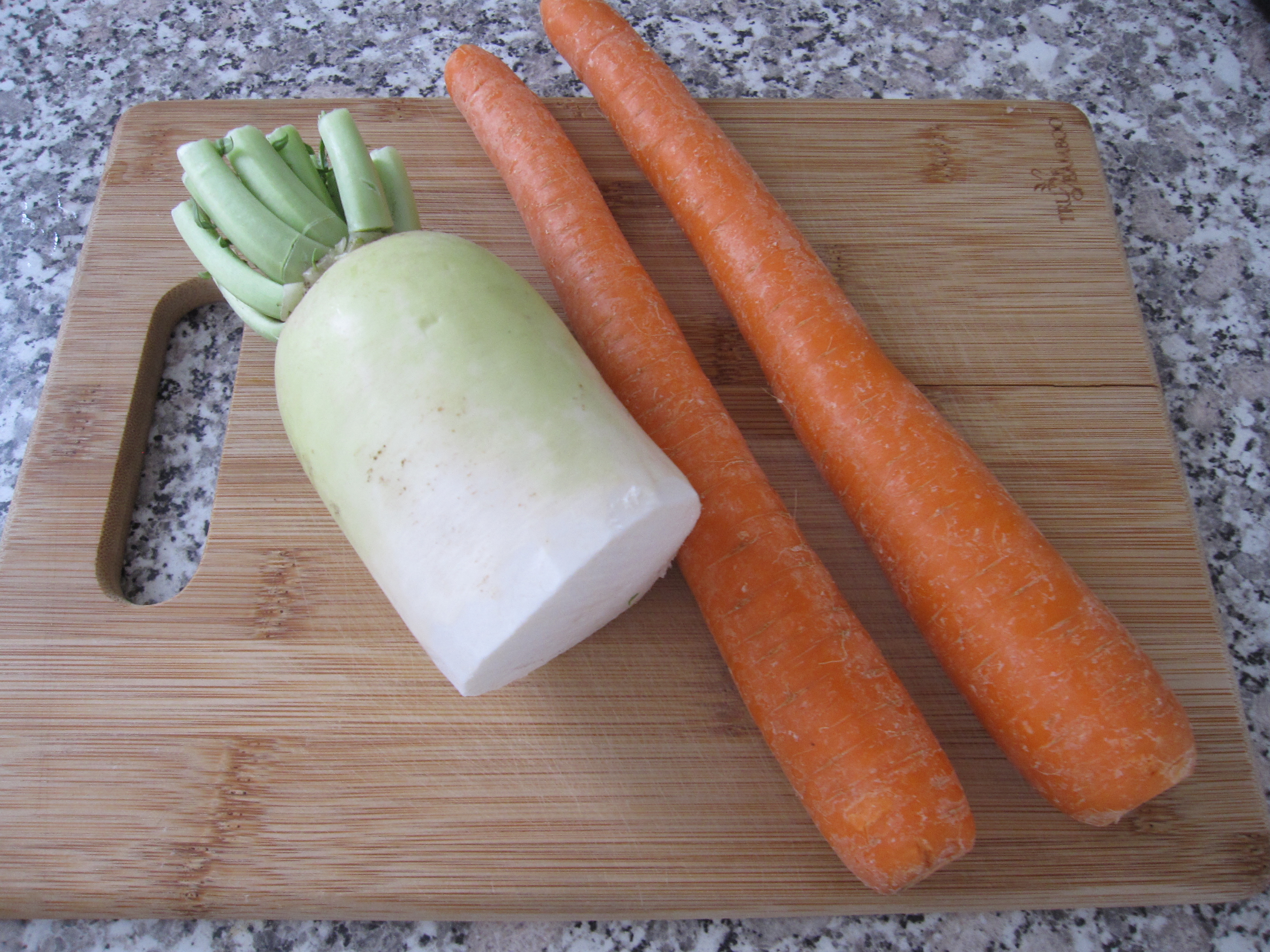
The ingredients I used were 1 Valencia orange, 3 ounces medium cheddar cheese, 1/4 onion, 9 ounces serpentini pasta, a sprig of rosemary from my back porch, 3/4 pound carrots (turned out to be 2.5 carrots), and 3/4 pound ground turkey thigh.

I pretty much followed Jeremy Fox’s recipe in the beginning. I sliced the carrots and simmered them for a half hour with the zest and juice from the orange as well as 1/4 cup of water. Then I discarded the zest and puree’d the carrots into a smooth paste. During that time I boiled the pasta until it was al dente, then reserved 1 cup of the boiling liquid and drained the pasta. Then I added my own touch.

I diced the onion and sautéed it in olive oil for about 4 minutes and then added the turkey meat. I broke the turkey meat up as it cooked through, about 6 or 7 minutes. Once it was cooked through I got back to the recipe on hand and added the pasta, the reserved cup of water, and the carrot puree. I mixed it all together and let it thicken for about 5 minutes. I added 3/4’s of the cheese after grating it and mixed it in well. Then I seasoned it with salt, white pepper, and the rosemary. Once everything was well mixed I poured it into my glass baking dish.

I topped it with the rest of the cheese and then some panko. That all went into a 350 degree oven for 20 minutes and was left to rest for about 5 minutes before I cut it up and served it.

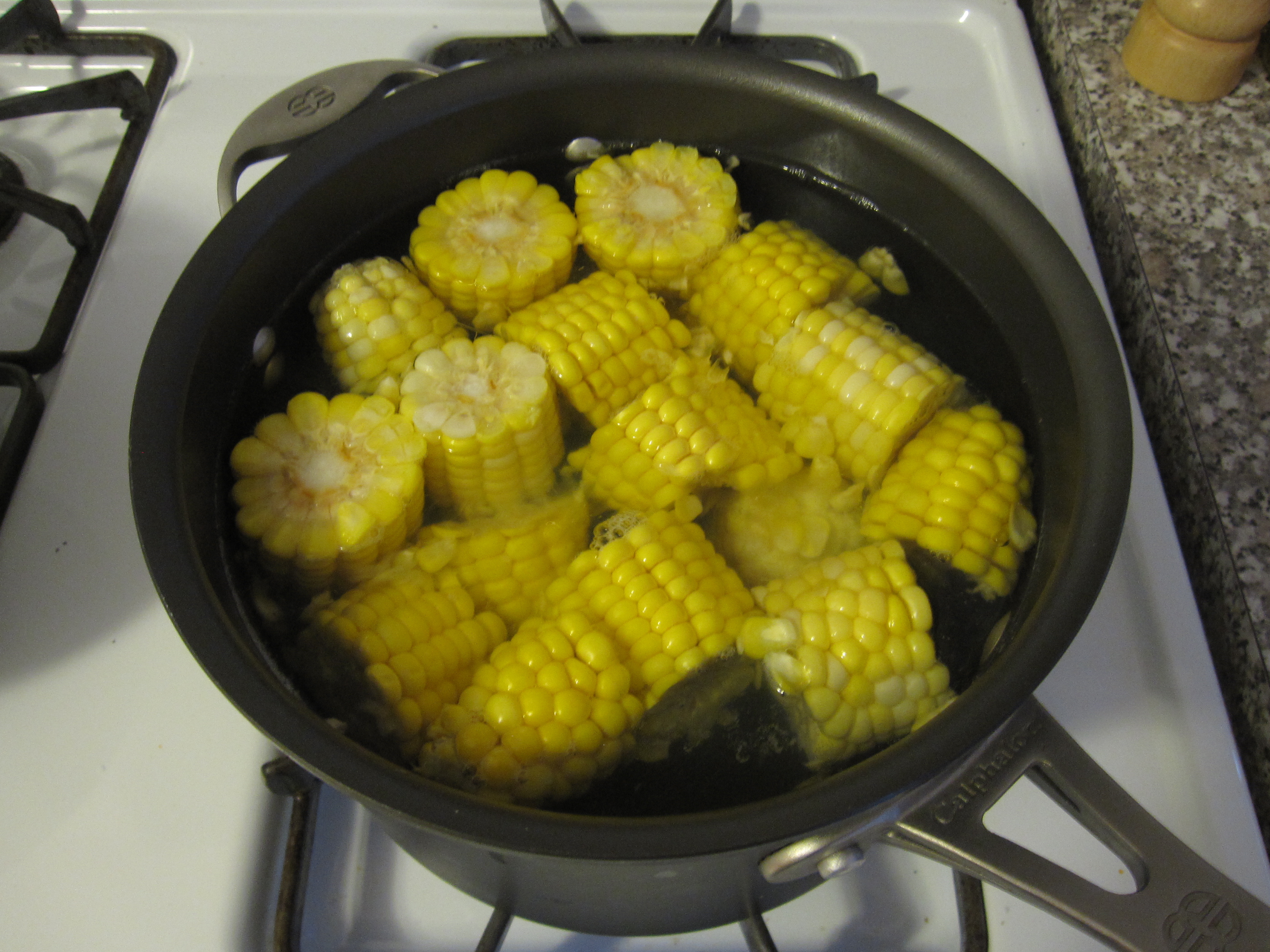
While the macaroni was cooking we made a side to go with it. I cleaned 3 ears of corn and chopped them into 2 inch pieces. I tossed them into boiling water and let them par-cook for about 3 minutes. Then I drained them and cut the kernels from the core.

In a heated pot Yuki melted some butter and added two minced garlic cloves. After a minute she added the corn and some halved haricots vert. She sautéed it all together for about 7 minutes and seasoned with salt and pepper.

I also made up a simple salad. Torn iceberg lettuce, sliced tomatoes, sliced cucumber, and shiitake vinaigrette.

Read Full Post »

I still had some of the shiso pesto I made a few days ago in my fridge. I decided to use it as a marinade for a beautiful pork tenderloin, one of our favorite cuts of carcus.

In a non-reactive baking dish I marinated a 1.5 pound tenderloin in the shiso pesto. I really rubbed it in there. I covered it and let it sit in the fridge for about 3 hours. Every hour I took it out and turned it over to keep it nice and coated.

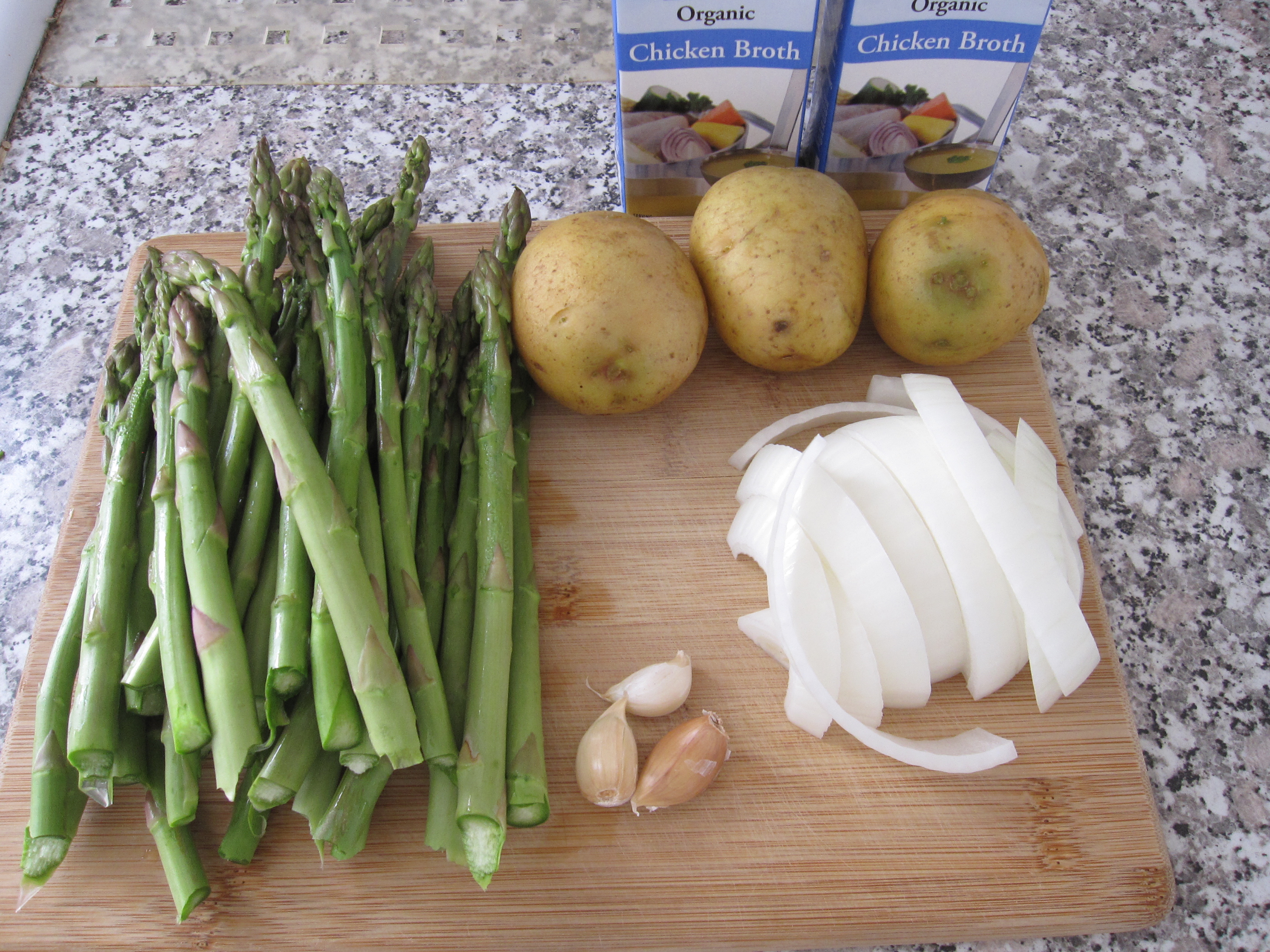
While the pork was marinating I made some asparagus soup. I took a bunch of asparagus and reserved ten of the tips. The rest I chopped up along with 3 cloves of garlic, 3 yukon gold potatoes, and half an onion.

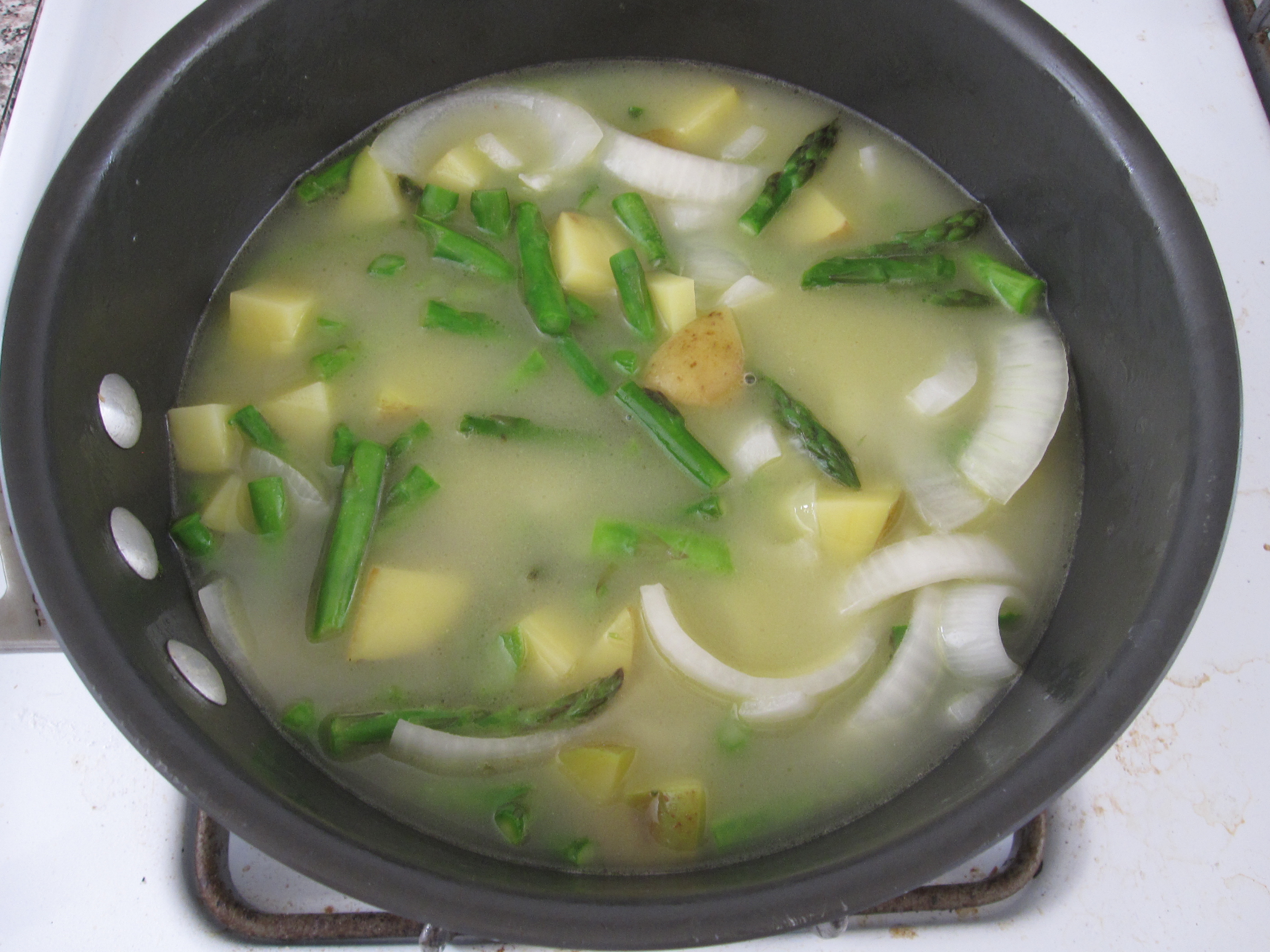
In a heated pot I poured in about 3 tablespoons of olive oil and tossed all of the vegetables in. I kind of stir-fryed them for about 7 minutes and then poured in two cups of chicken stock. I seasoned with a little salt, let it come to a boil, then covered it up and turned the heat to medium so that it could simmer for about 10 minutes. I didn’t want to overcook the vegetables, I just wanted them softened so that I could puree them. After the 10 minutes were up I turned off the heat and let it cool down for about a half hour. Then, I poured it all into my blender and pureed it nice and smooth. I poured it back into the pot, seasoned with pepper, and set it aside until dinner, at which time all I had to do was re-heat it gently and garnish with the reserved asparagus tips.

Then, I took the last half of my daikon and two carrots and chopped them up. In a small baking pan I tossed them with some olive oil, salt, and pepper.

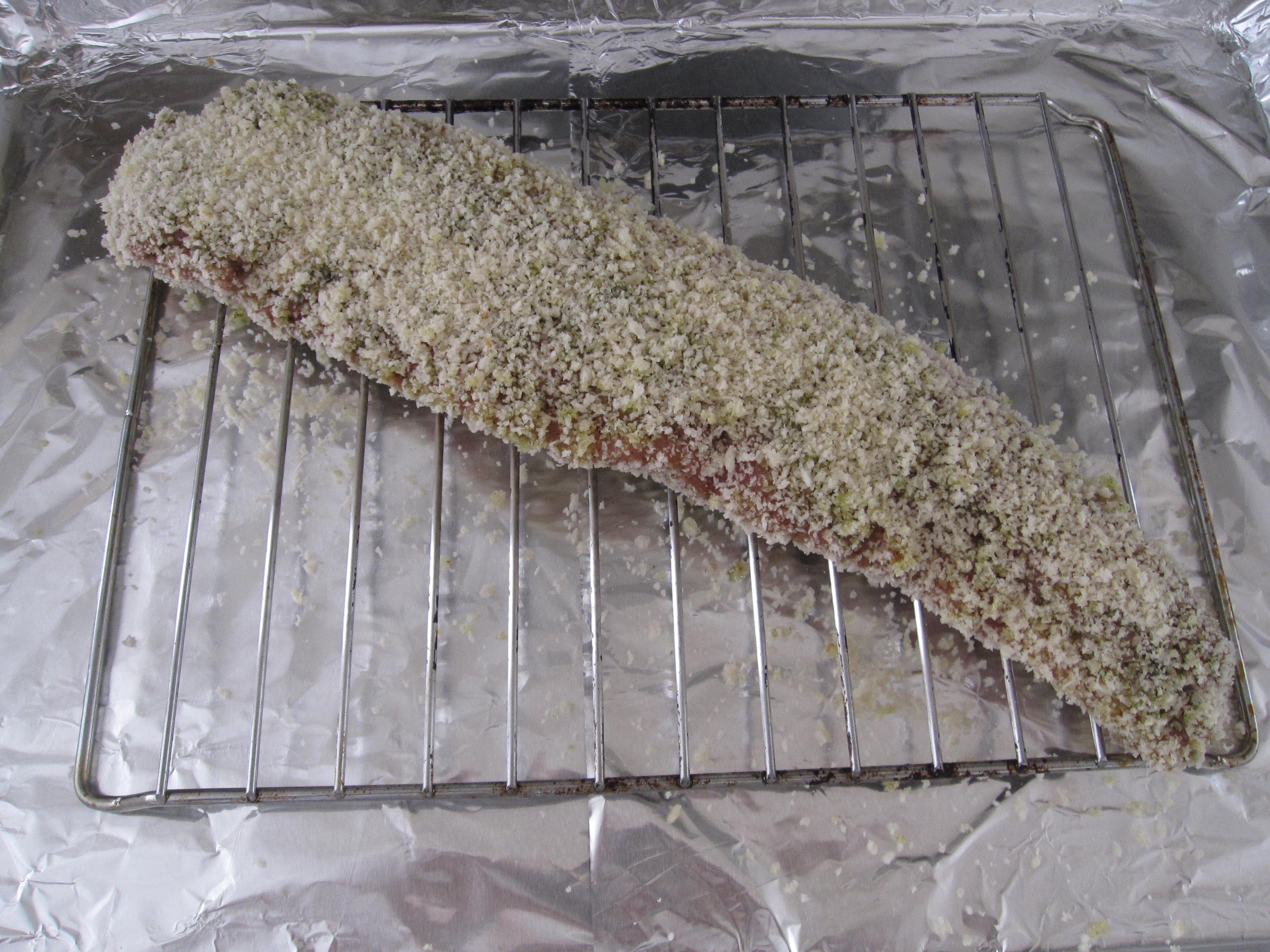
I poured some panko on a plate and then rolled the marinated pork loin all over it to crust the entire thing. I put a rack over some foil on a baking sheet and laid the crusted loin on top. I used a rack so that I’d get some convection in the oven, keeping all of the panko nice and crispy, even on the bottom.

I heated my oven to 375 degrees and put the loin and the daikon and carrots in. I let them all roast for about 55 minutes.

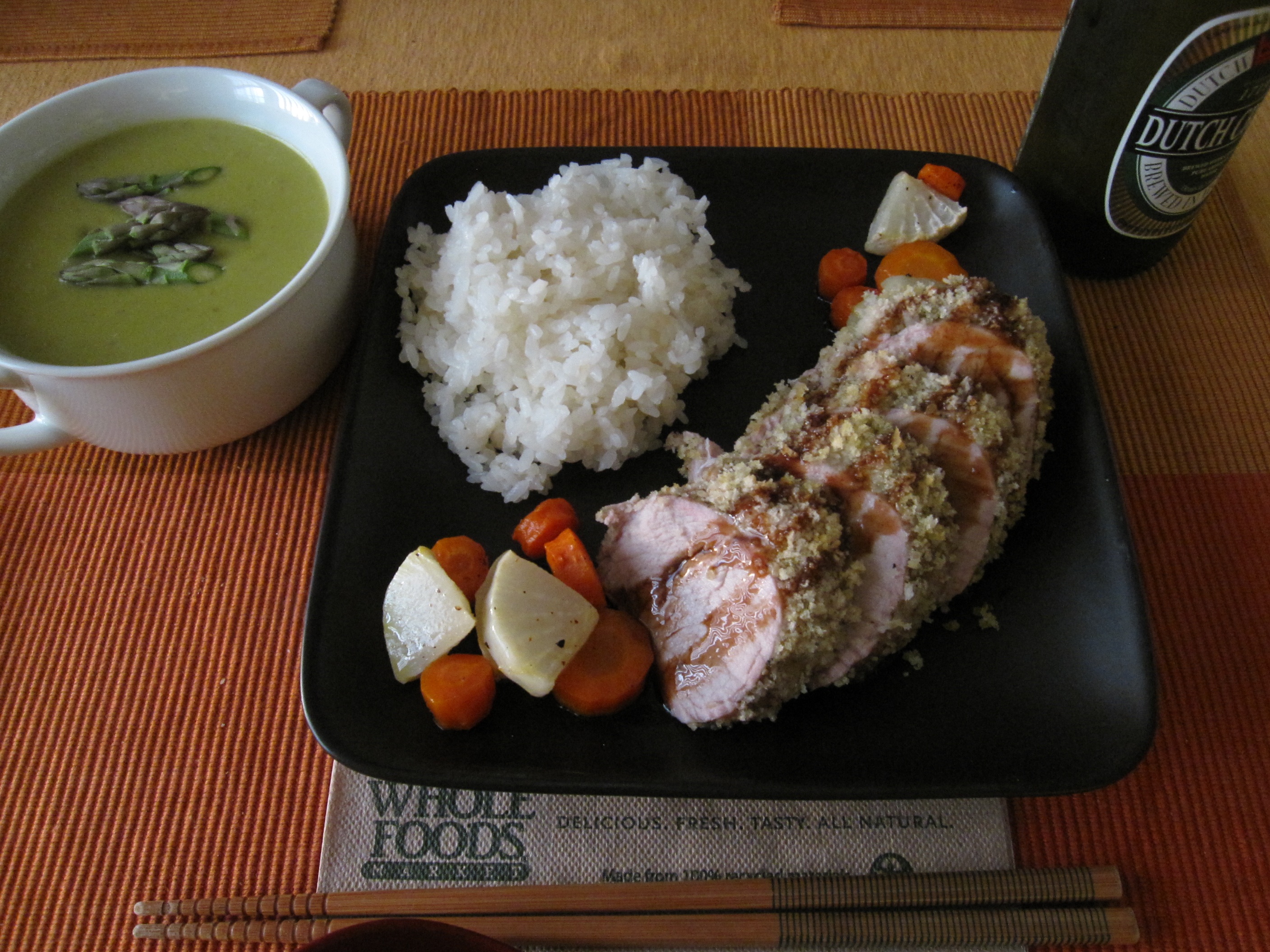
When I took everything out I let the pork rest for about 10 minutes before slicing to allow the juices to redistribute throughout the meat. In the meantime, I plated up the white rice and vegetables and heated the soup. After slicing and plating the pork I drizzled a little Bull-Dog sauce on top.

Read Full Post »

After Tuesday night’s overly complex debacle of a meal we wanted something clean and simple for dinner last night. Yuki had requested my matzo ball soup, so that’s what I gave her. (feel free to insert any number of jokes)

The ingredients I use for my chicken soup are 1 diced onion, 3 medium carrots chopped, 3 stalks of celery chopped, 5 garlic cloves peeled but left whole, and 1.5 pounds of skin-on bone-in chicken thighs.

There are two basic ways to make chicken soup. One is to throw all of the ingredients into a stockpot, cover it with cold water, and bring it all to a slow simmer for a couple of hours, usually with a whole bird instead of just thighs (I think white meat in chicken soup is a waste as it doesn’t have nearly as much flavor as dark meat). That’s they way my dad makes it and his soup tastes pretty good. I do it a little different.

I heat up my stock pot and pour in about 3 tablespoons of olive oil. Then I dump in the onion, carrots, and celery and let them sweat for about 5 minutes. I don’t want them too translucent, I just want the sweetness drawn out a little. After the veggies are slightly cooked I lay the thighs in skin-side down. A minute or two later I pour in 2 quarts of hot water, add the garlic, a bay leaf, and a couple pinches of salt.

After it’s been at a low boil for a few minutes a foamy grit will surface. I take a large spoon and skim that off. I do that 6 or 7 times. This gives the broth some clarity. The muck isn’t bad for you, it’s just bitter and unnecessary. Skimming broth is the key to a clean soup. Once the foam stops surfacing I turn the heat to medium-low, cover the pot, and let it slowly simmer for about 2 hours.

Once the soup has cooled a little I take out the chicken, skin it, and shred the meat. At this point the chicken should be relatively flavorless as hopefully all of the taste is in the broth. I like to put the chicken back in for the substance.

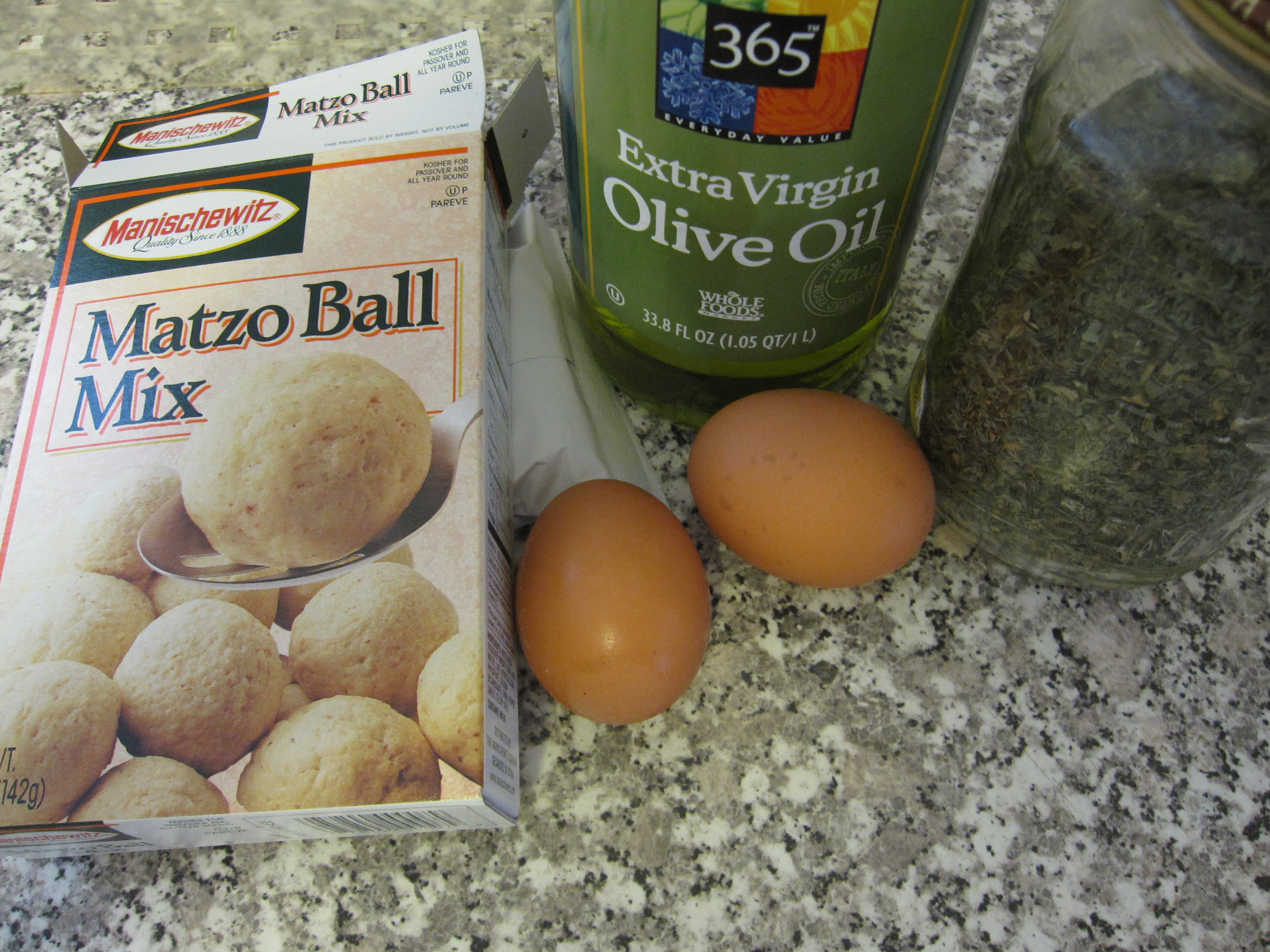
There’s absolutely nothing wrong with using the Matzo Ball Mix for your mazto balls. While it isn’t that difficult to do it from scratch, the mix ensures the perfect texture every time. You just need one packet of mix, two eggs, and two teaspoons of oil. I also add a tablespoon of dried oregano for a little more flavor.

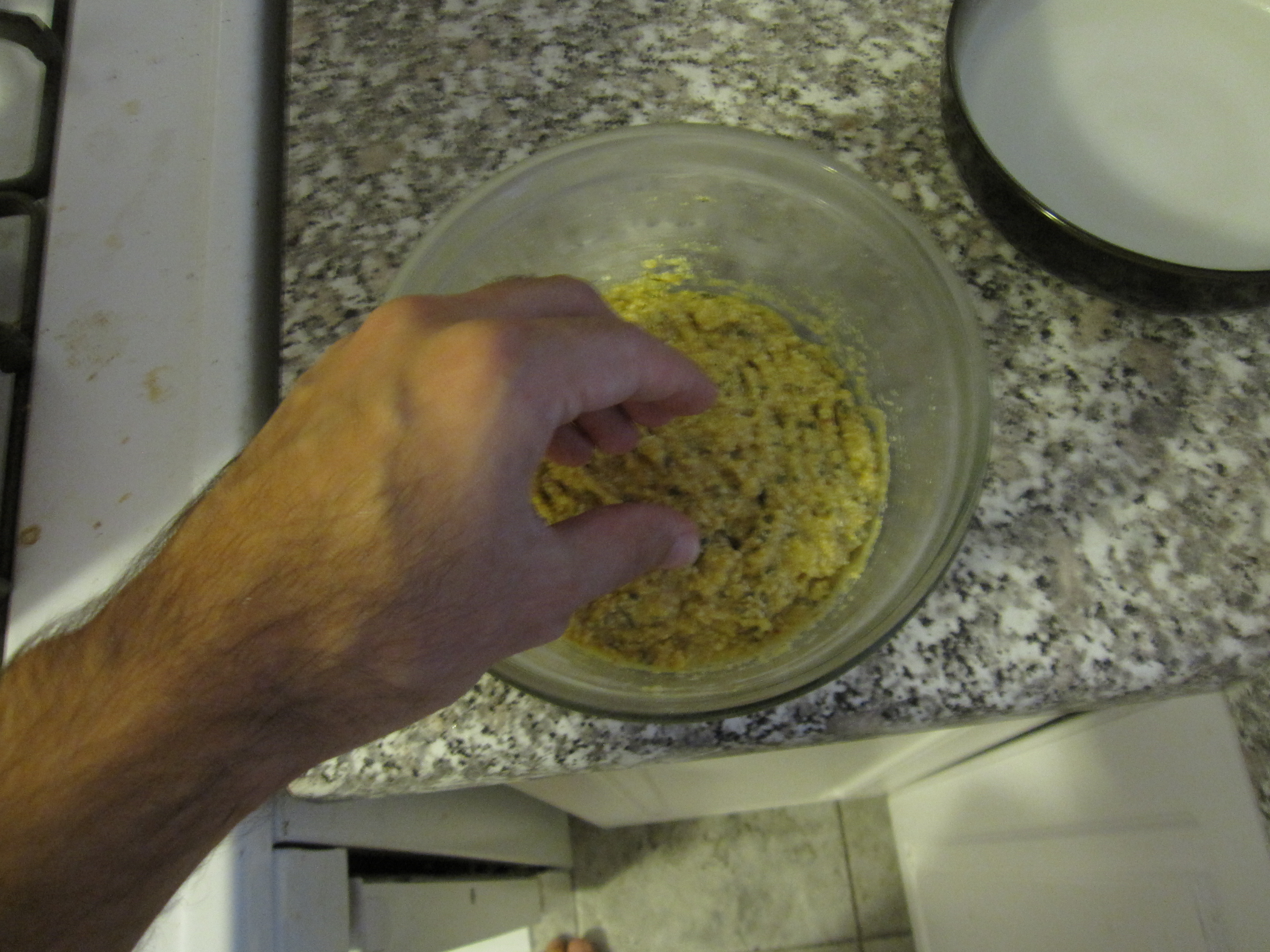
Mix everything in a bowl and put it in the fridge for 15 minutes to harden up a tad. While it’s in the fridge bring the soup to a light boil again. The package says to boil them separately in water, but matza balls should absorb some of the broth flavors.

Keeping your fingers wet, the mix is sticky, form balls about the size of a quarter and drop them into the boiling soup. There’s absolutely no need to make them any bigger. They do expand as they cook and if you make them too big the soup flavor won’t penetrate all the way through. I’ve never understood why some people make their balls so damn big. Maybe to compensate I guess. At any rate, that’s it. Let the balls cook for about 15 minutes and the soup is ready.

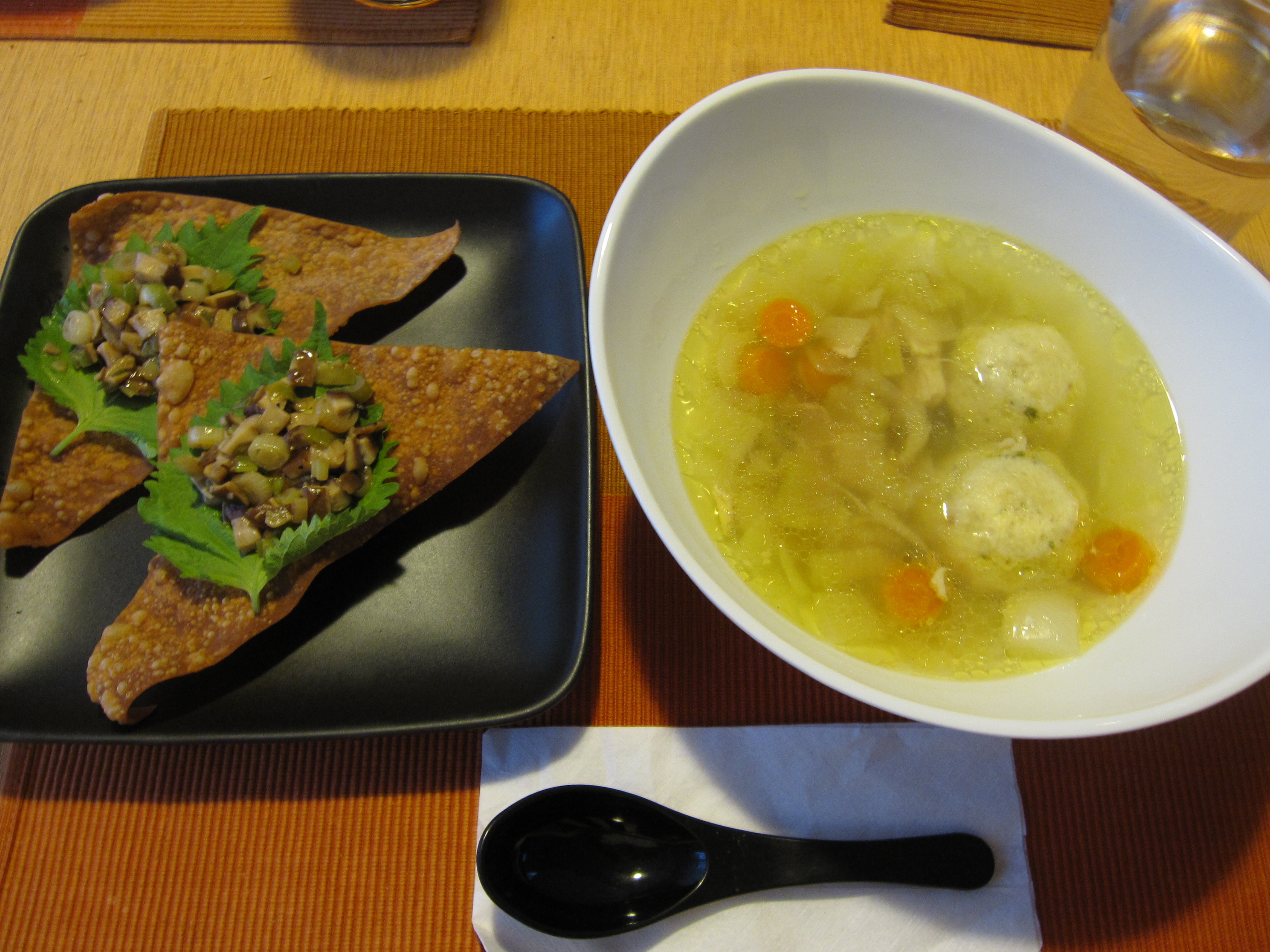
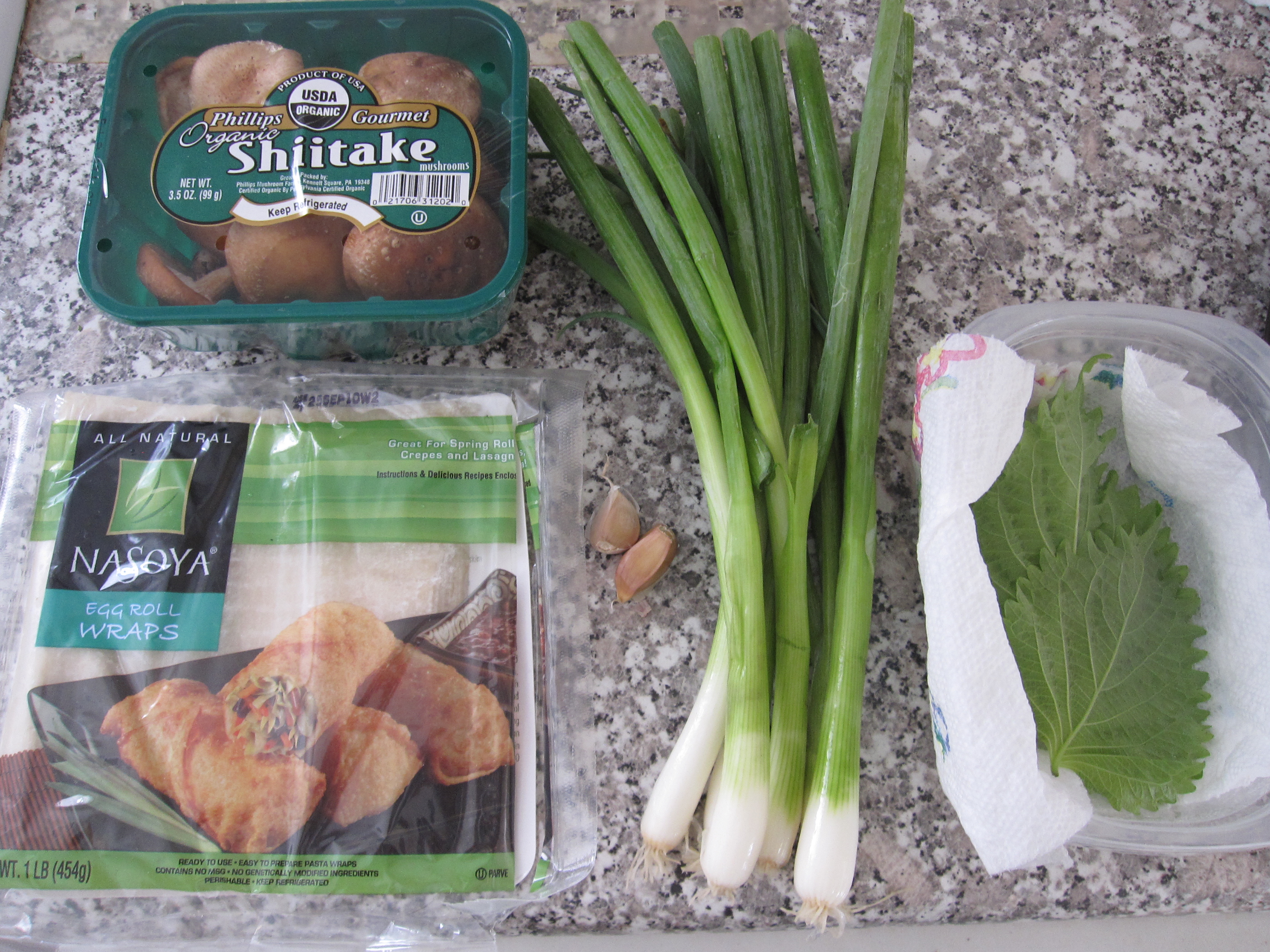
I made my wonton crisps while the soup was simmering. I used 1 package of shiitake small diced, 5 eggroll wraps cut in half diagonally, 2 cloves of garlic minced, 6 green onions sliced, and some fresh shiso leaves (the same ones our friends gave us, they are pretty damn delicious!).

I heated some oil to 375 degrees in my little Cuisinart deep fryer and fried up the skins. I let them drain on paper towels while I prepared the mushrooms.

In a heated pot I poured in 2 tablespoons of sesame oil and added the garlic. I let the garlic go for about 45 seconds and then I threw in the shiitake and green onions. I sort of stir-fried them for about 5 minutes and then poured in 1.5 tablespoons of soy sauce and a pinch of black pepper. I let the soy sauce absorb into the shiitake for about 3 minutes and then turned of the heat.

To serve, I laid the crisps down on a plate. On top of them I placed one shiso leaf. Then I spooned some shiitake mixture on top of that. That’s all she wrote, a great Jewish-Japanese dinner.

Read Full Post »

A couple of our friends are growing their own shiso. apparently their plant is going haywire and they have too much shiso for their own usage, so they gave us a bunch. I do mean a bunch! I only used half of it for the pesto. Does anyone want some? I have a feeling you’ll see at least one more shiso recipe on this blog sometime this week.

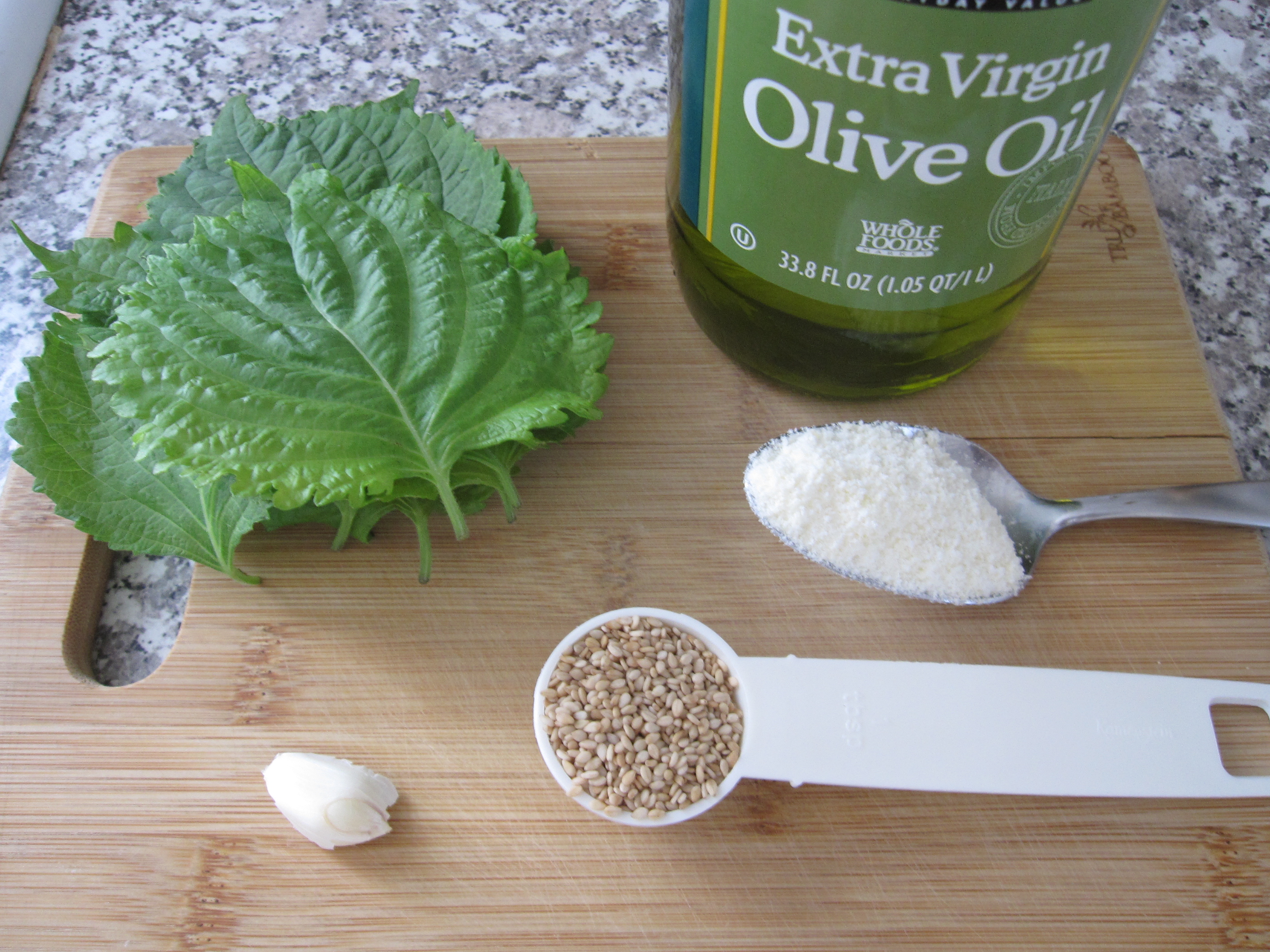
I made the pesto much like I would a regular pesto, but with a few changes. I used about 1/2 ounce of shiso leaves, one clove of garlic, 1 tablespoon of sesame seeds, 1 tablespoon of parmesan cheese, and about 1/4 cup of olive oil. I put it all in my little food processor and whipped it all up.

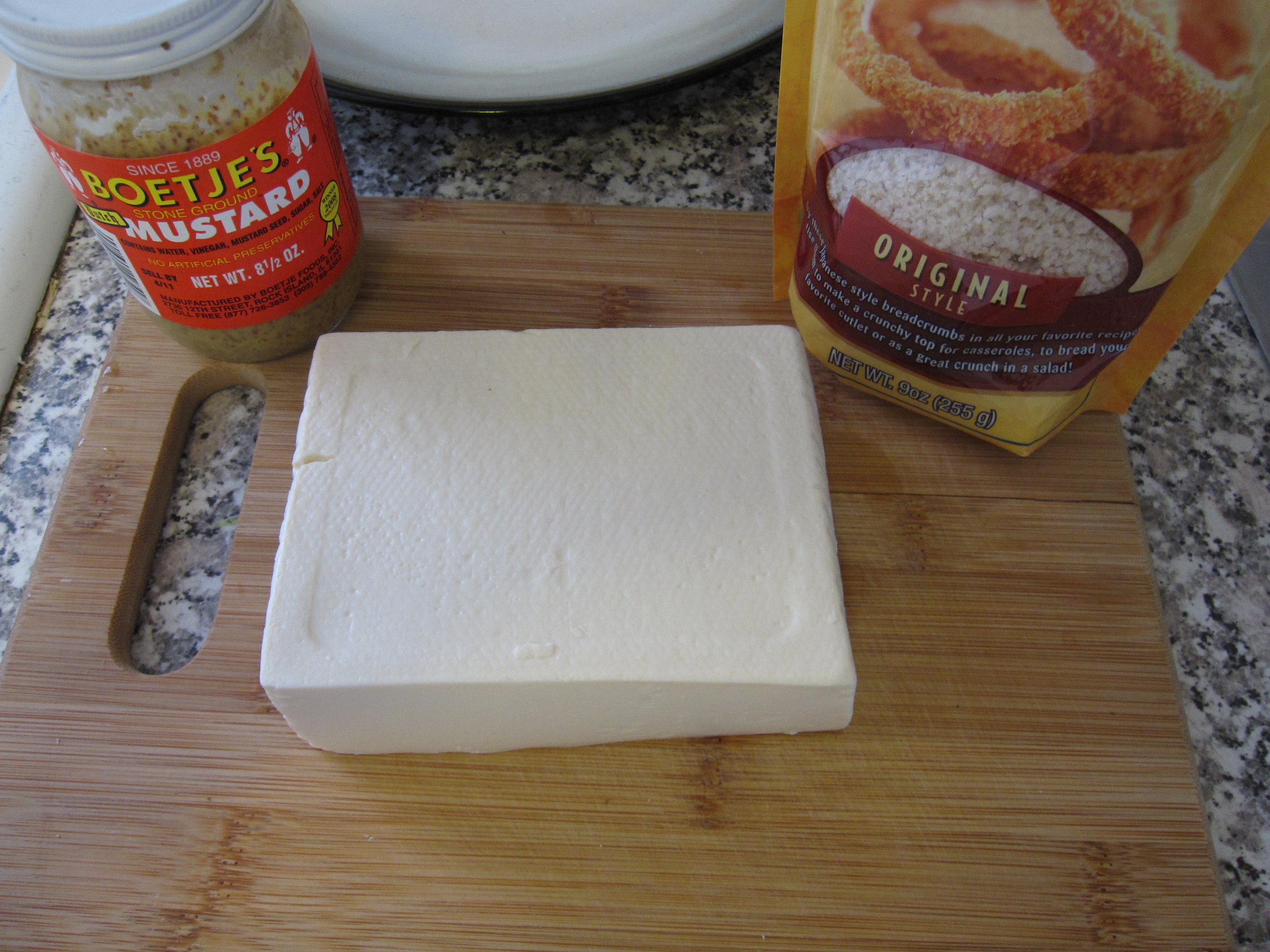
For the tofukatsu I used mustard, 1 block of silken tofu, and some panko. I pressed the water out of the tofu in the fridge for about an hour. Then, I cut it in half. I sliced the halves into 4 equal pieces to look like cutlets.

I poured some panko on a plate and then spread a thin layer of mustard on top of each tofu cutlet. I pressed the tofu, mustard side down, on the panko and spread another thin layer of mustard on the other side then flipped and pressed again. I wanted both sides of the tofu crusted in panko. In a large skilled heated to high I poured in a few tablespoons of peanut oil. I like to shallow fry in peanut oil because it has a high smoking point and doesn’t really have that strong of a flavor. I fried the tofu in two batches so as to not overcrowd the skillet. After both sides were nice and golden I laid them on a wire rack to let any excess oil drip off.

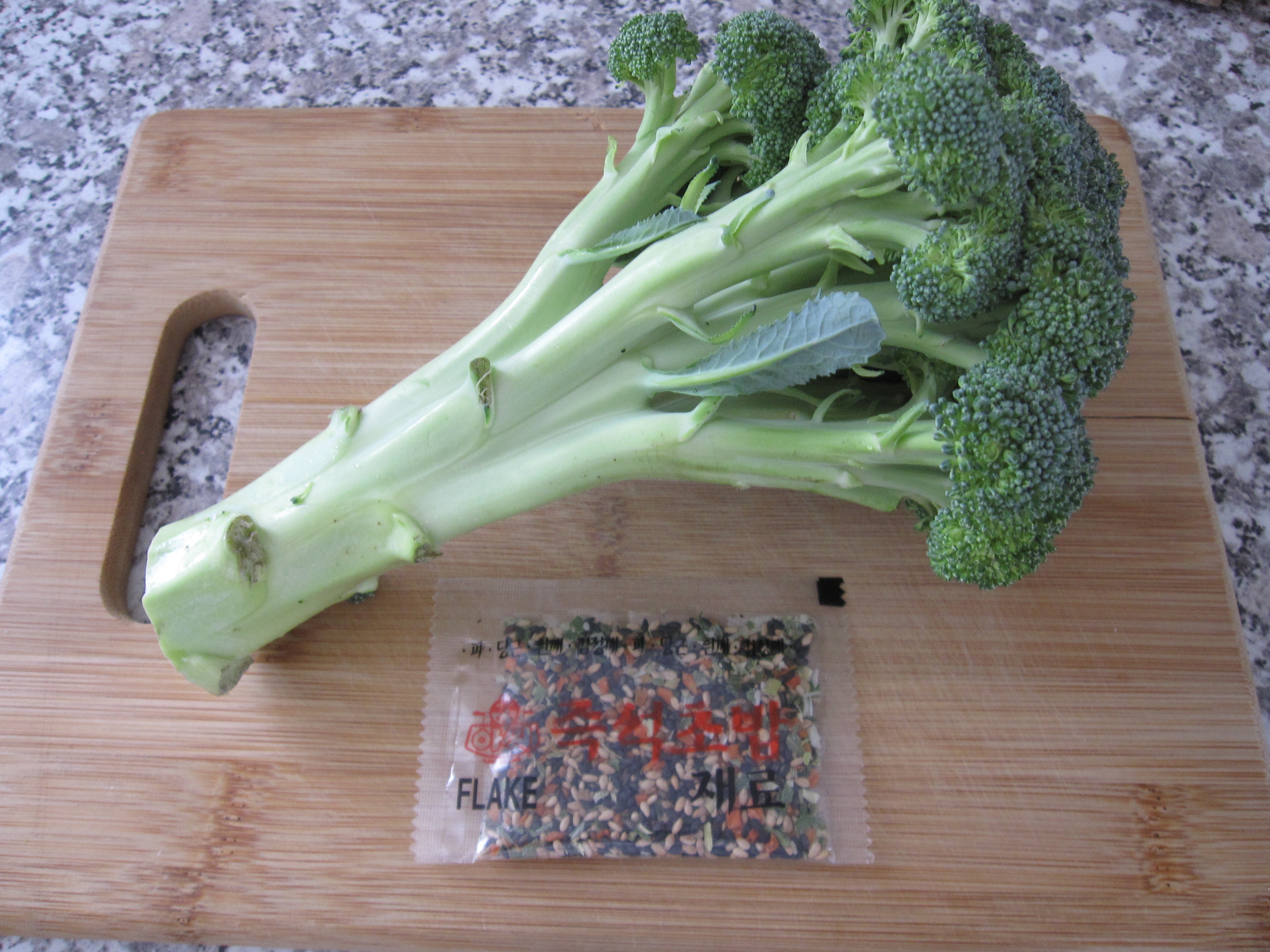
I made a couple of sides to go with the tofukatsu. One was a simple steamed head of broccoli. I cut the broccoli down into bite-sized pieces, florets and stem and them steamed it for about 4 minutes. I had a packet of mixed sesame seeds with dried carrot so I decided to sprinkle that on instead of salt and pepper.

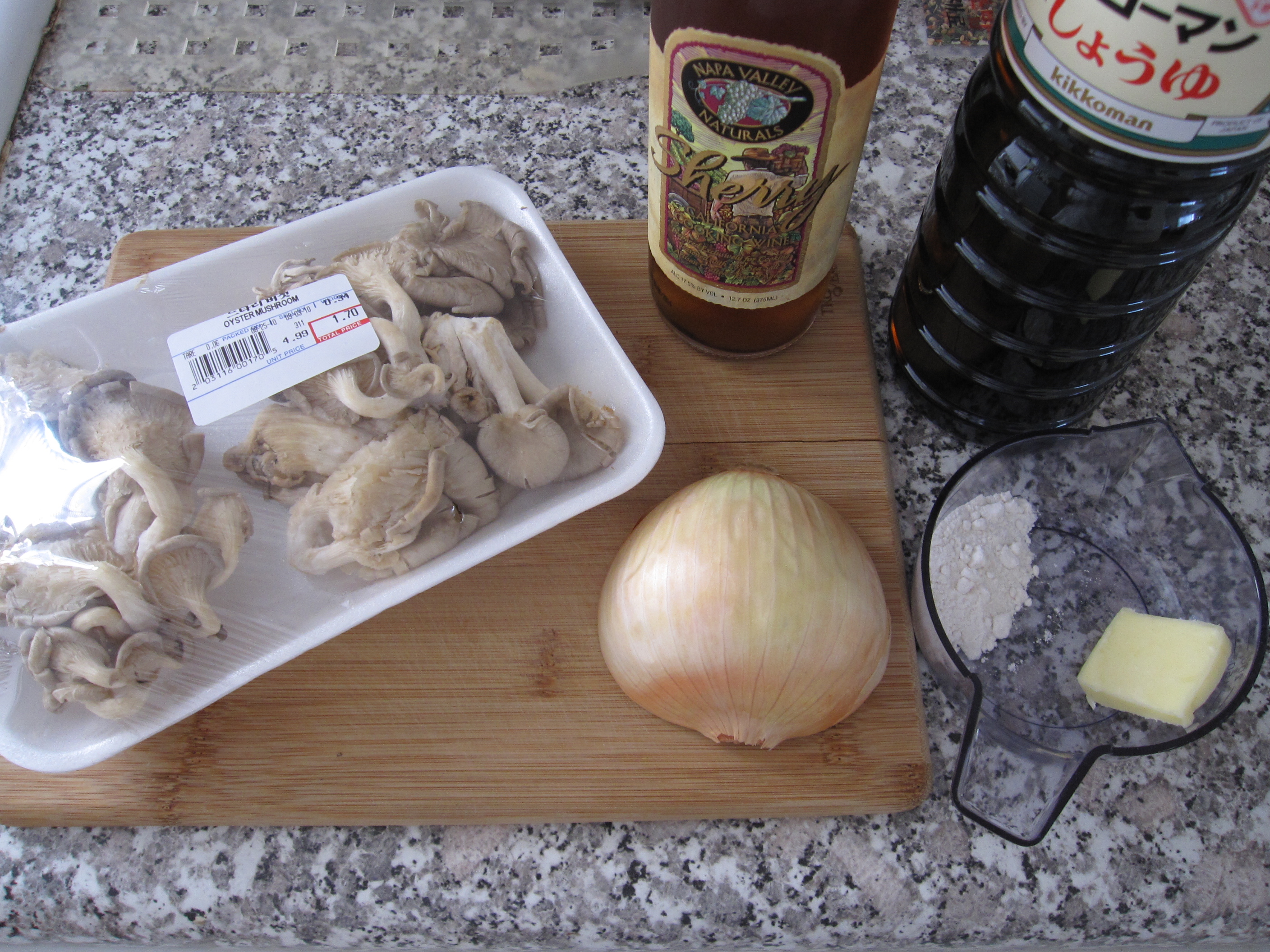
I had about 1/2 pound of oyster mushrooms in my fridge, so I decided to saute them with 1 teaspoon of sherry, 1 tablespoon of soy sauce, 1 tablespoon of flour, 1/2 tablespoon of butter, and I was going to use 1/2 onion.

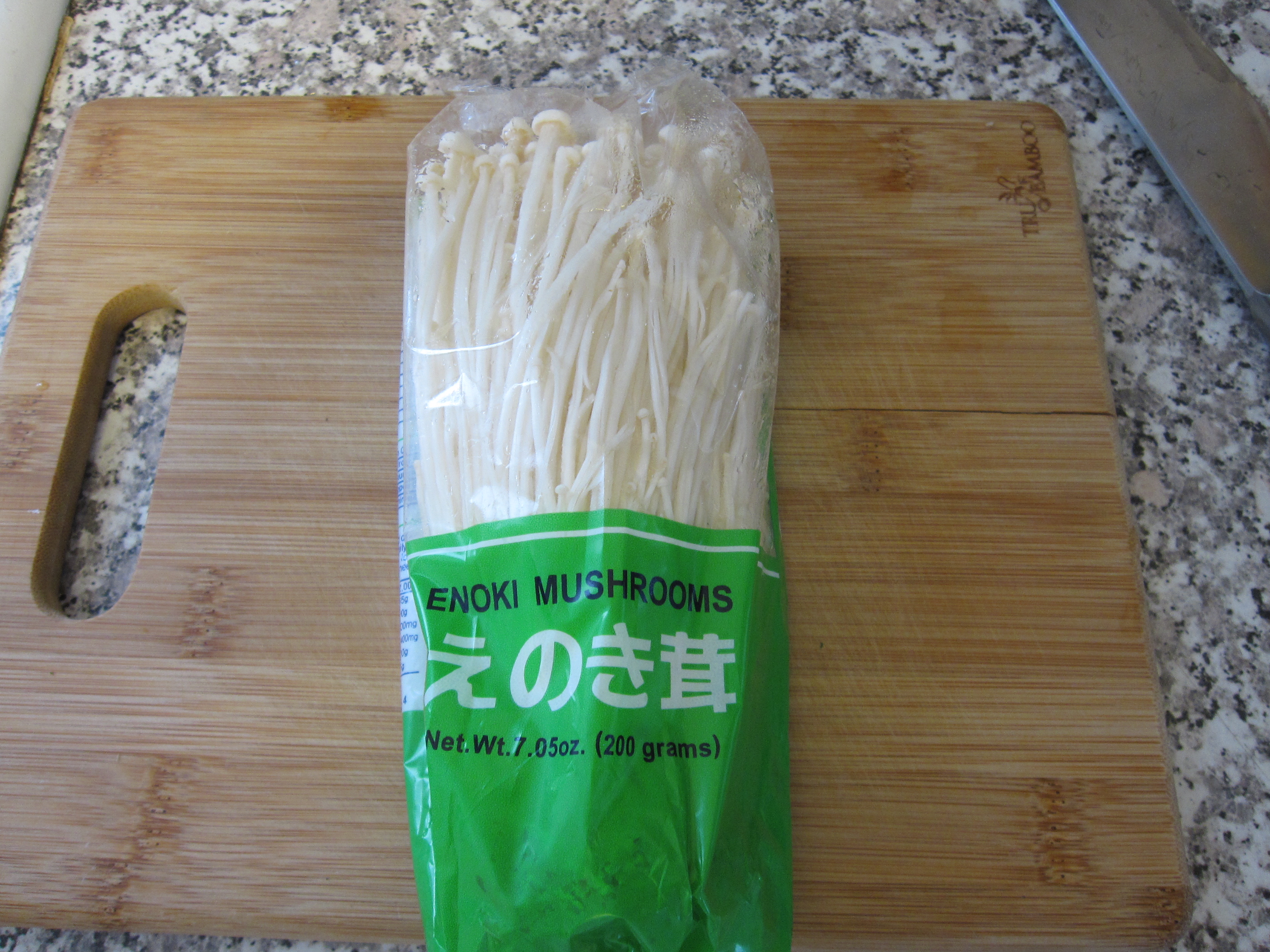
For whatever reason I wasn’t feeling the onion. No rhyme or reason, I just decided not to use the onion and instead use the enoki mushrooms that were in my fridge. I also grated a clove of garlic at the last minute too.

In a hot pan I poured in about 2 tablespoons of sesame oil and put the grated garlic in for about 30 seconds. Then, I threw in all of the mushrooms, both oyster and enoki. I let them saute for about 4 minutes and then poured in the sherry and soy sauce. Once the liquid was almost completely boiled off, about 2 minutes, I poured in the flour and butter and stirred that all in. The flour thickened up the last bit of liquid while the butter made it all silky and smooth, as butter always does.

Finally, I took a daikon radish and skinned about half of it. I grated the part that I skinned and served it just as it is.

To serve everything, I had some white rice and then put some broccoli next to it and then two pieces of tofukatsu next to that. I poured a little of the pesto on top of the tofukatsu. The grated daikon went on the plate as well. It was a little sharp, so we poured a few drops of soy sauce on it. In a separate plate I laid some mushrooms down. Next to them I put some kimchi cucumbers that we picked up at the Assi Plaza. I’m not a big fan of cucumbers, but these kimchi ones are so damn good they just might make me a believer. Bon apetit!

Read Full Post »

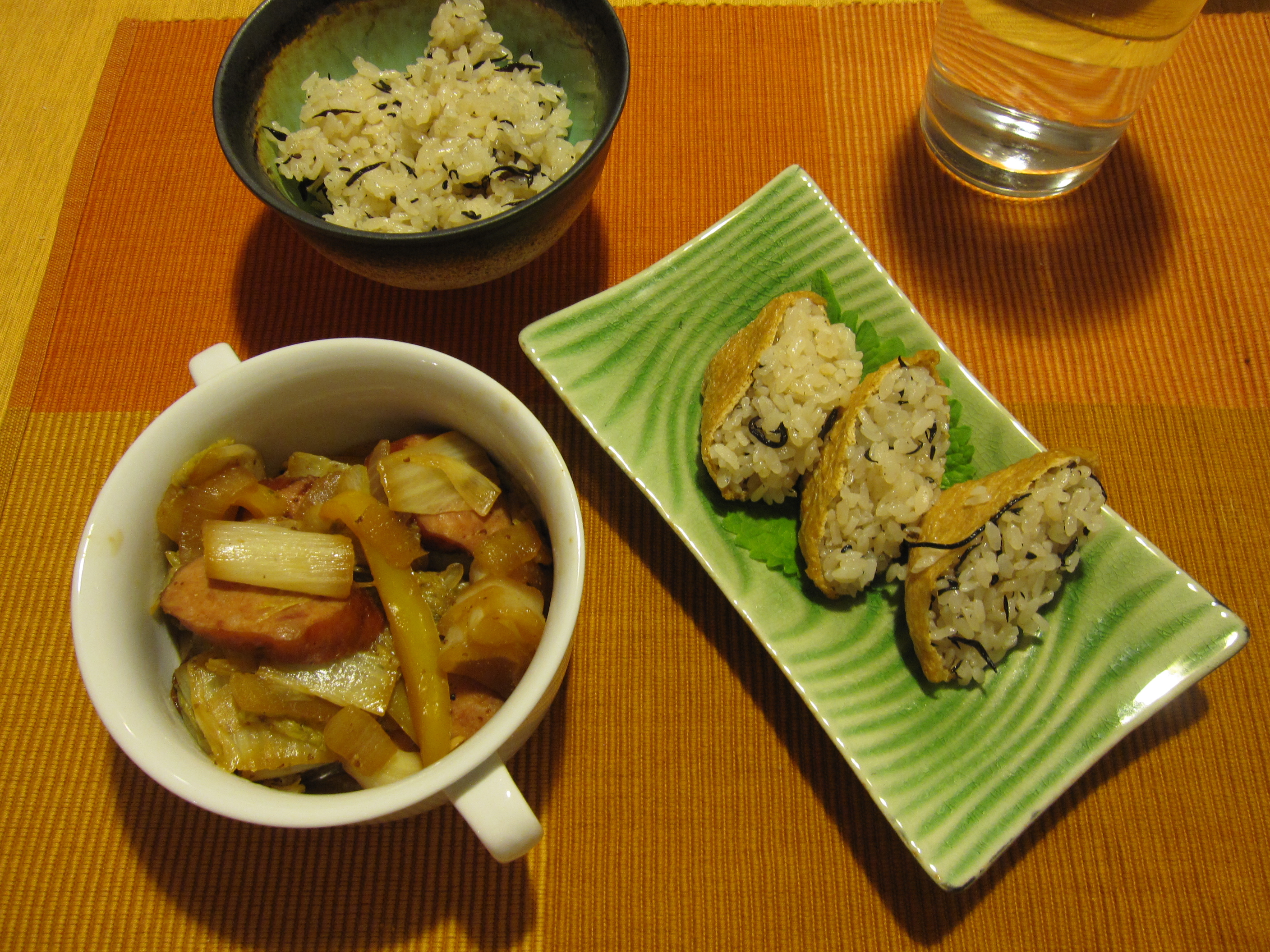
Yuki and I picked up some pre-flavored aburaage (deep-fried tofu) for inarizushi at the Assi Plaza the other day. So, last night for dinner she made some sushi rice with hijiki to stuff into them and I made a quick stew with a couple of kielbasa that I picked up from Andy’s last week. I mean really, what matches sushi better than Polish sausage?

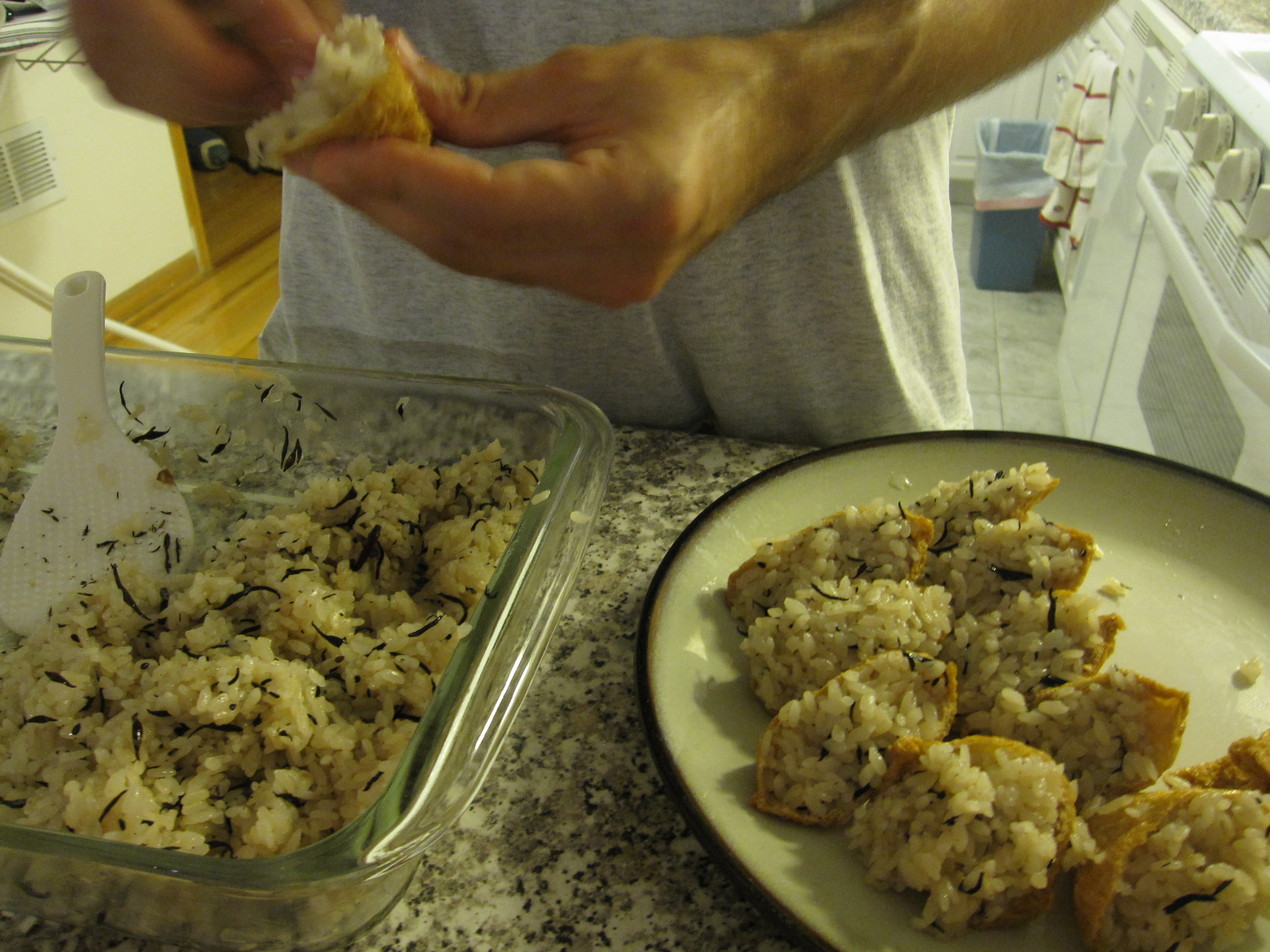
Inarizushi is really simple to make. Yuki measured out the rice to make 2 cups in our rice cooker. After she poured in the water the put about 2 tablespoons of dried hijiki in and let it sit for about 30 minutes before turning the cooker on. Once the rice was cooked she dumped it into a large glass baking dish. I stirred it around while she fanned it to release the excess moisture. Then, she poured in a mixture containing 4 tablespoons of rice vinegar, 2 tablespoons of sugar, and a pinch of salt. I mixed that all in until the rice was cooled to room temperature. Prior to that Yuki took the aburaage and boiled it for a few minutes. Aburaage is covered in oil and by boiling it you can remove most of the oil. Then, it’s simply a matter of stuffing the rice into the packets, a job that fell into my hands. Make sure to keep a bowl of water nearby to keep your fingers wet otherwise the rice will stick and you’ll never get the aburaage filled.

For the kielbasa I sliced up half an onion, 1 yellow bell pepper, 3 cloves of garlic, half a long napa cabbage, and the two kielbasa. In a pot I heated up a tablespoon of olive oil and tossed in the onion, pepper, and garlic. I let those saute down for about 5 minutes and then added the kielbasa, I let that cook for about 4 minutes. Then I tossed in the cabbage and let it wilt down for about 4 minutes. I poured in 1/4 cup dry white wine and let it boil for a few minutes until it evaporated. Finally, I poured in a mixture of 1/4 cup soy sauce and 2 tablespoons of mustard. I let that boil down for about 5 minutes and that was it, just a little black pepper to season.

To serve, we put a shiso leaf underneath the inarizushi. We also served the extra rice because we made more than we could stuff into the aburaage.

Read Full Post »

« Newer Posts - Older Posts »