Feeds:
Posts
Comments

Posts Tagged ‘salad’

So, I’m sittin here at mi mama’s casa in Merida, Mexico. For whatever reason, I can’t seem to get this Chiles Rellenos I ate in Cozumel the other day out of my taste buds. It was hands down the best damn Chiles Rellenos one could digest! Not wanting to spend a ton of pesos at extremely subpar, boring restaurants on the tourist strip of Cozumel I asked Donna of Aqua Safari (the hotel/dive shop that we stayed and dove with, and will again hopefully in the near future) where she goes to eat. I figured that she’s been there long enough to know all of the good spots where we can get the local flair. I figured correctly, as I usually do. She sent us to Sabores. It’s literally the home of a mother and her son and daughter that doubles as one of the best Mexican restaurants I’ve ever come across.
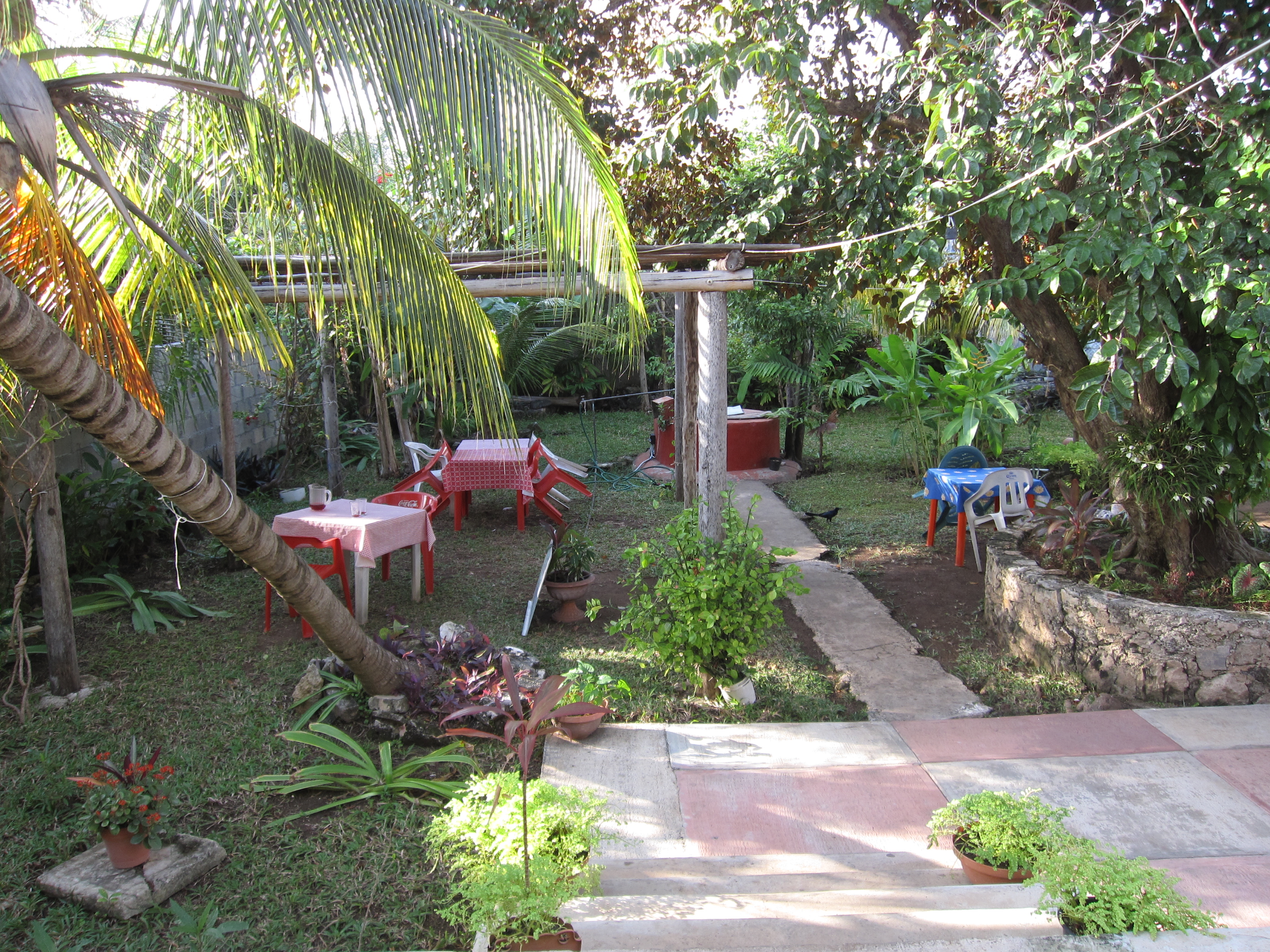
We walked into the house and straight back to their garden patio. As you can see, it was a little tropical paradise. Palm trees, a little canopy, and a few tables all graced by some beautiful birds there to pic up any crumbs. I guess humans aren’t the only ones who enjoy Sabores.

When we sat down they immediately brought us a pitcher of this red drink. I thought to myself, “this is the first time I’ve ever been served Kool-Aid at a restaurant…weird!” Turns out it was Jamaica, a common drink in the Yucatán made with hibiscus. It does taste similar to Kool-Aid, but it’s much better for you as it isn’t processed artificially sweetened dye. We also had a choice of two soups. I got the Sopa Pasta and Yuki got the Sopa Verduras. Same great broth, chicken consomme, but mine had noodles while hers had vegetables. If I were a bettin man, and I am, I’d bet that’s how they got their names.

Once we finished our soup they brought us their dry-erase menu board. Note, the dollar signs are pesos and not dollars. At about 12-13 pesos to the dollar you can do the math, or let a calculator do the math for you. All you really need to know is that there is no possible way to get home cooked food of this quality for anywhere near this price in Chicago, or on Cozumel’s tourist strip for that matter.
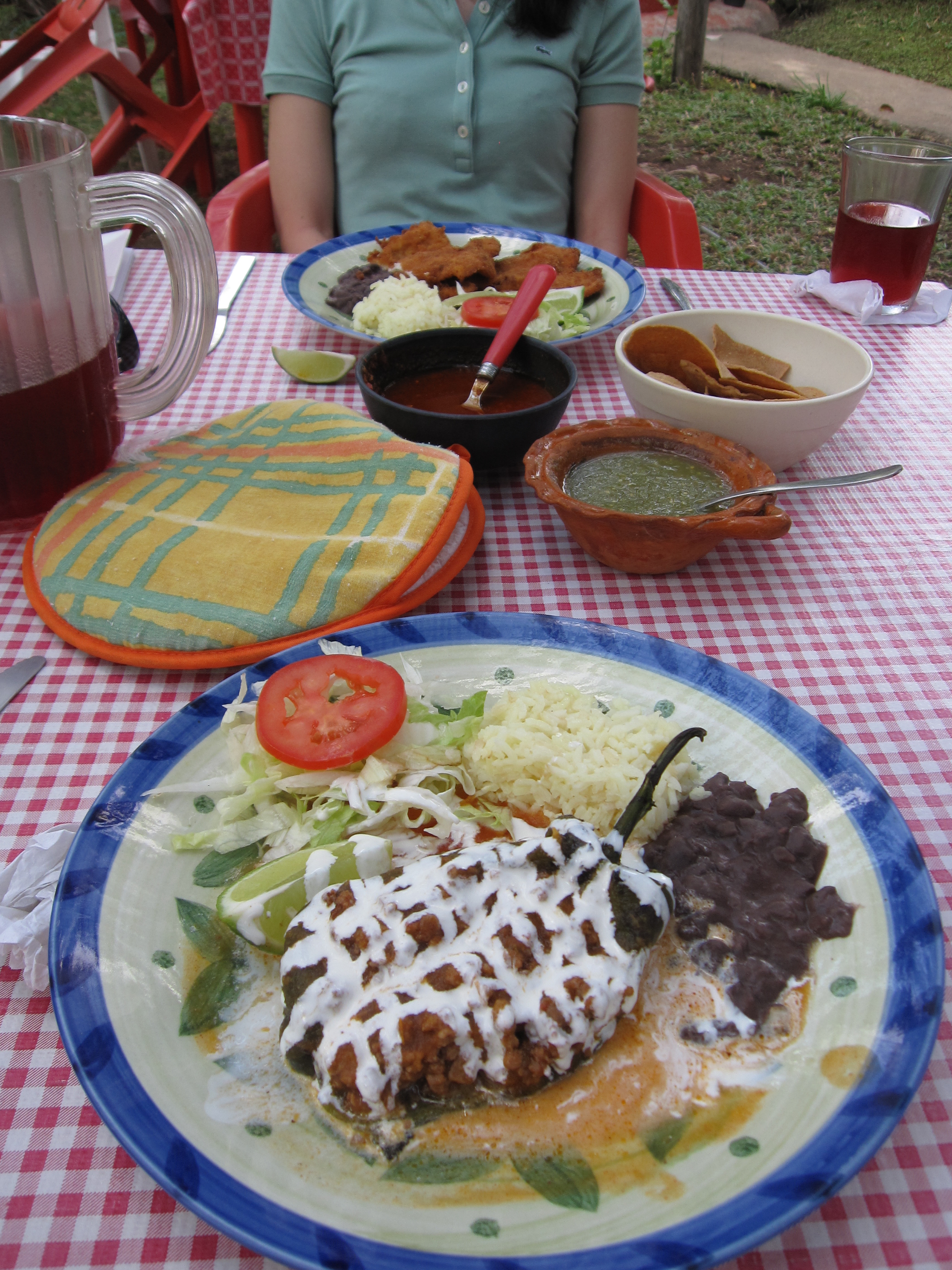
Here’s the Chiles Rellenos. Man, just looking at this picture makes me crave it again! I got con carne option. Perfectly seasoned ground beef stuffed into the roasted poblano and drizzled with Mexican crema. Delicious chunky refried frijoles negros, rice, slice of lime, and a small salad on the side to help push the food through my tracts. Yuki got the pollo milanesa, thin chicken breasts breaded and deep fried, to perfection I might add. Not oily at all, but nice and crisp while the meat stayed juicy. Along with the usual condiments of salsa verde, salsa rojo, and tortillas we were set! Until dessert at least.

What true Mexican meal is complete without flan? Not this one! The best flan ever! Creamy, but light and not heavy. Just a touch of lime to balance the caramel. It was outstanding.

Everything was top-notch. You could really taste that this food was cooked in someone’s home, and cooked with care. Next time I’m in Cozumel I am definitely heading back to Sabores. If you know what’s good for you, especially what’s good for your taste buds and stomach, you will too if you ever go to Cozumel.

Read Full Post »

Last Friday night we checked out another Ethiopian joint with a couple of friends. This time we went to Abyssinia, which funny enough, is literally next door to Ras Dashen. While they both serve typical Ethiopian dishes they could not be more different in atmosphere.

Ras Dashen has live music on Friday nights. You can hear live music in Abyssinia, but it isn’t being played there. It’s the music from Ras Dashen! Abyssinia is a very cozy ma and pa type of restaurant while Ras Dashen is a little more lively and urban hip. I can’t really say which atmosphere I prefer because they both have their charms.

On to the food. The main difference is that Abyssinia doesn’t offer appetizers, salads, or soups. They basically just serve breakfast and lunch/dinner entrees. That was a little disappointing because I wanted to compare Sambusas with Ras Dashen. Oh well, what can you do? 

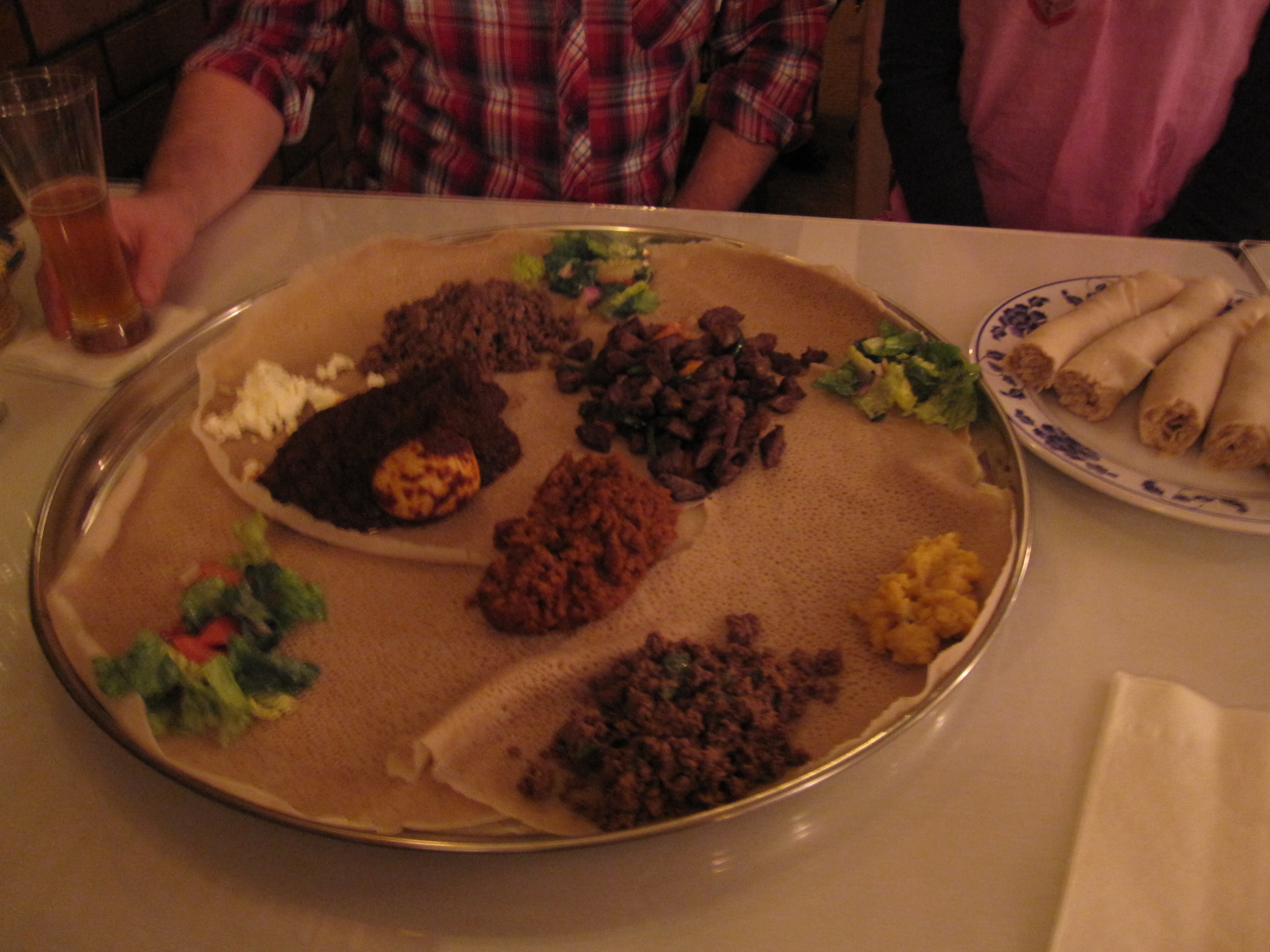
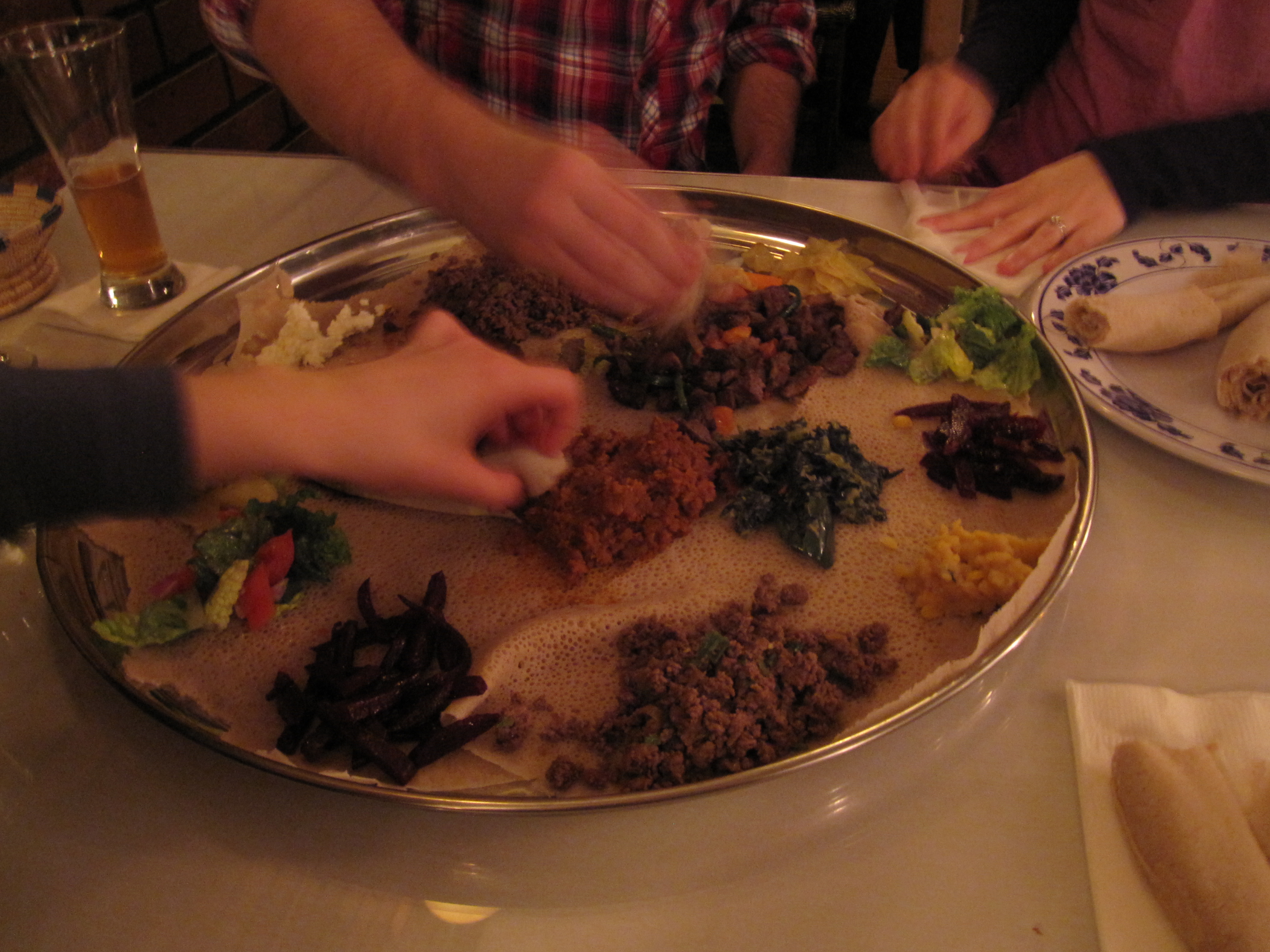
True to Ethiopian style everything was served family style on top of Injera. We ordered the Doro Wat, Miser Wat, Derek Yebeg, and a ground beef special that’s on their physical menu but not their digital menu from their website. They actually gave us two portions of the ground beef. The sides were some yellow lentils and a few little salads. Extra Injera on the side of course.

The food took about 20 minutes or so to come out. That was fine with us as everything was being freshly prepared. Not to mention the delicious Ethiopian beer we were drinking, that tided us over for a bit. Abraham, the owner, came out and gave us some collard greens, goat cheese (tasted much like feta), and some warm beets because of the wait. Super nice guy, he has a true heart of hospitality. If my grandma was an Ethiopian man she’d be him.

Anyway, the food was awesome! Everything was friggin fantastic. The Miser Wat may very well be the best pile of lentils I’ve ever passed through my tracts. I think I liked the Doro Wat a little better at Ras Dashen, but everything else was better here. Not by much mind you, as I’d go back to either place over and over again. The only real criticism I can give about Abyssinia’s food is that the lamb chunks in our Derek Yebeg were a little dry and not real tender. I think they just cut the pieces a little too small. It did have a wonderful flavor though.

There were also plenty of leftovers as Ethiopian food is much more filling than it looks. We split the leftovers with our friends and had plenty for lunch the next day. I’m sure it was the same for them. So we basically got two meals each at extremely reasonable prices.

It’s hard to say which is the best Ethiopian in Chicago. If you want live music head to Ras Dashen. If you only want to hear the bass from the live music head to Abyssinia. Otherwise you can’t go wrong with either.

Read Full Post »

So, Yuki and I took a few days to visit some of the early temples and castles in the Kansai region of Japan. Most of the structures we saw date back to the 8th century and are truly amazing! Besides the structures there were also tons of great sculptures from the same time period. However, as you all know, this blog isn’t about architecture, it’s about food. This post is to let you know about the incredible Kaiseki we ate our last night in Nara at the Ryokan (traditional Japanese Inn) we stayed at, Yoshino.

Kaiseki is the classic multi-course meal that progresses through various cooking techniques using regional, seasonal ingredients. It’s the highest art form you can find in food anywhere in the world. Focus on the subtleties of each ingredient to draw out natural flavors and not cover then with heavy sauces (sorry Frenchies, but the Japanese have your asses kicked in food culture!).

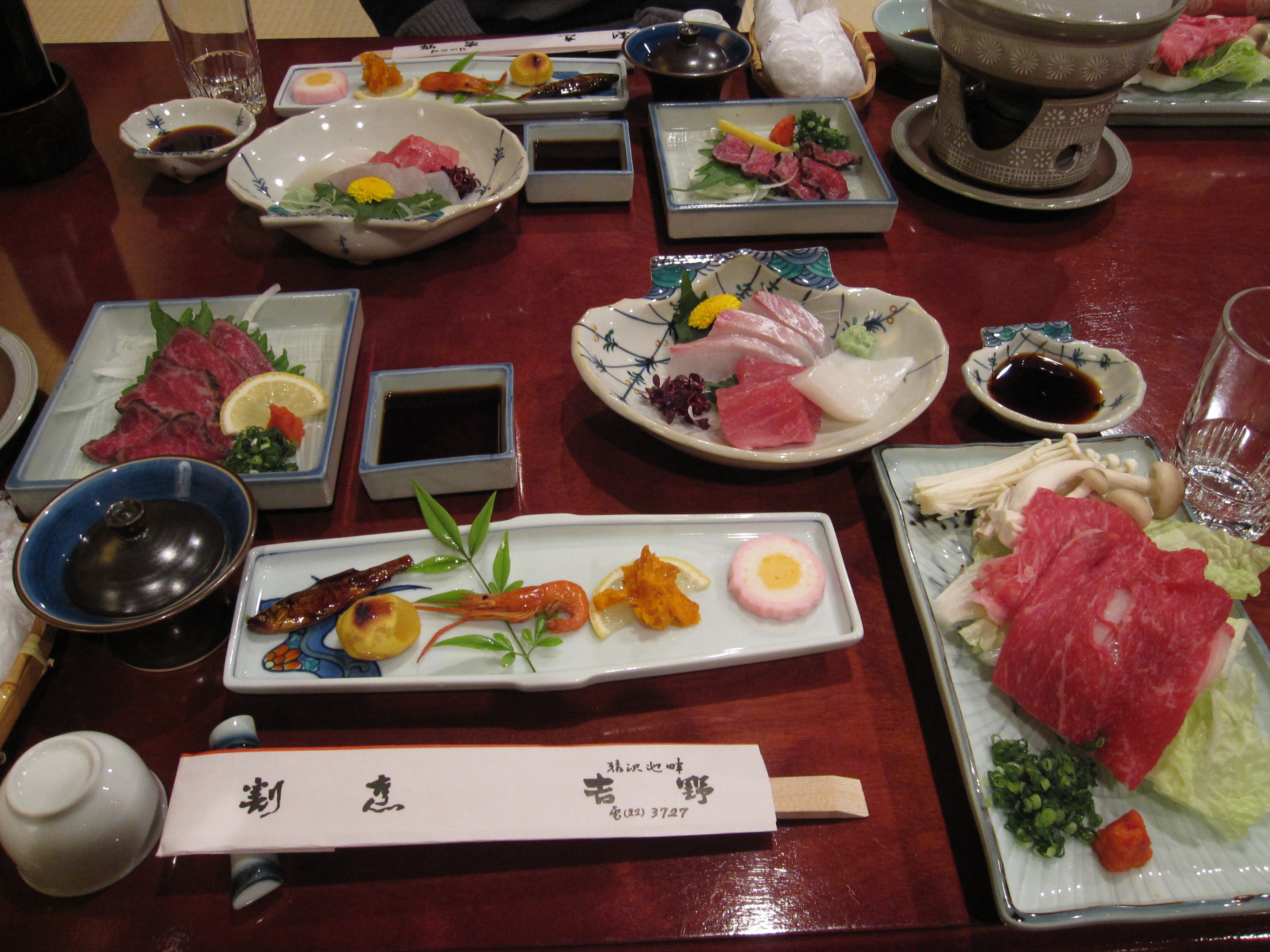
It started with that dish in the middle of the picture above. From left to right was a little fish grilled in a sweet soy marinade, a roasted chestnut, ama ebi (sweet shrimp), some sort of seafood that had a jellyfish-like texture in a miso sauce (I have absolutely no idea what it was, but it sure tasted good!), then a three-colored fish cake.

After that they brought out this dish. It was obviously a shrimp, but I’m not quite sure what else there was. I think it was a gratin made with the roe of the shrimp. Also on the plate as a macaroni salad and some lettuce with a tomato.

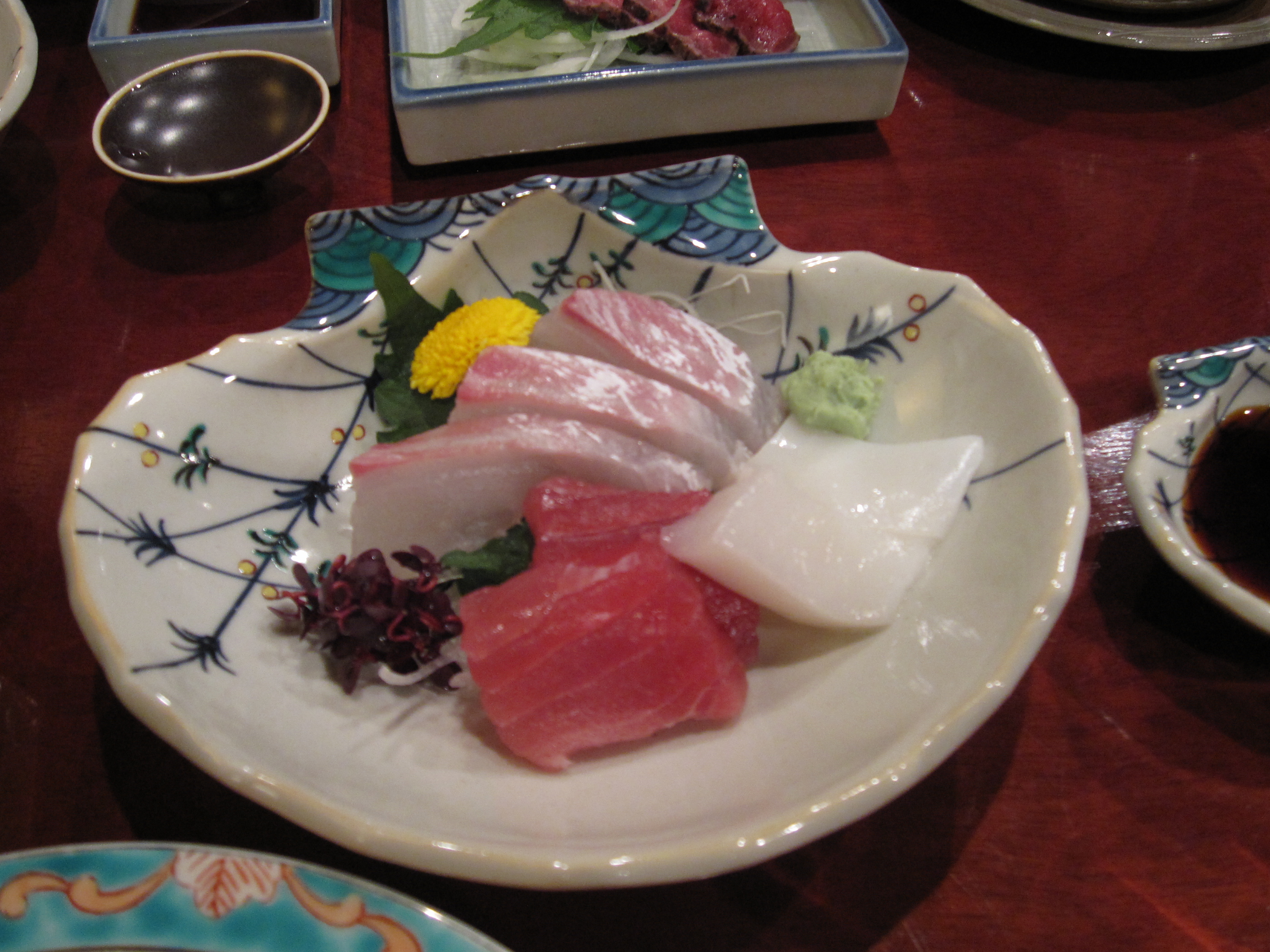
Then we moved on to the sashimi plate. It had some fantastic Chu-Toro (tuna), Tai (snapper), and the star of the plate….Ika (squid). In the States when you order Ika it’s usually very thin and a little rubbery. Not these two slices. They were about a half centimeter thick, squid steaks! Rubbery? Hell no! Each chew and the squid literally melted away in our mouths. Hands down the best squid I’ve ever eaten.

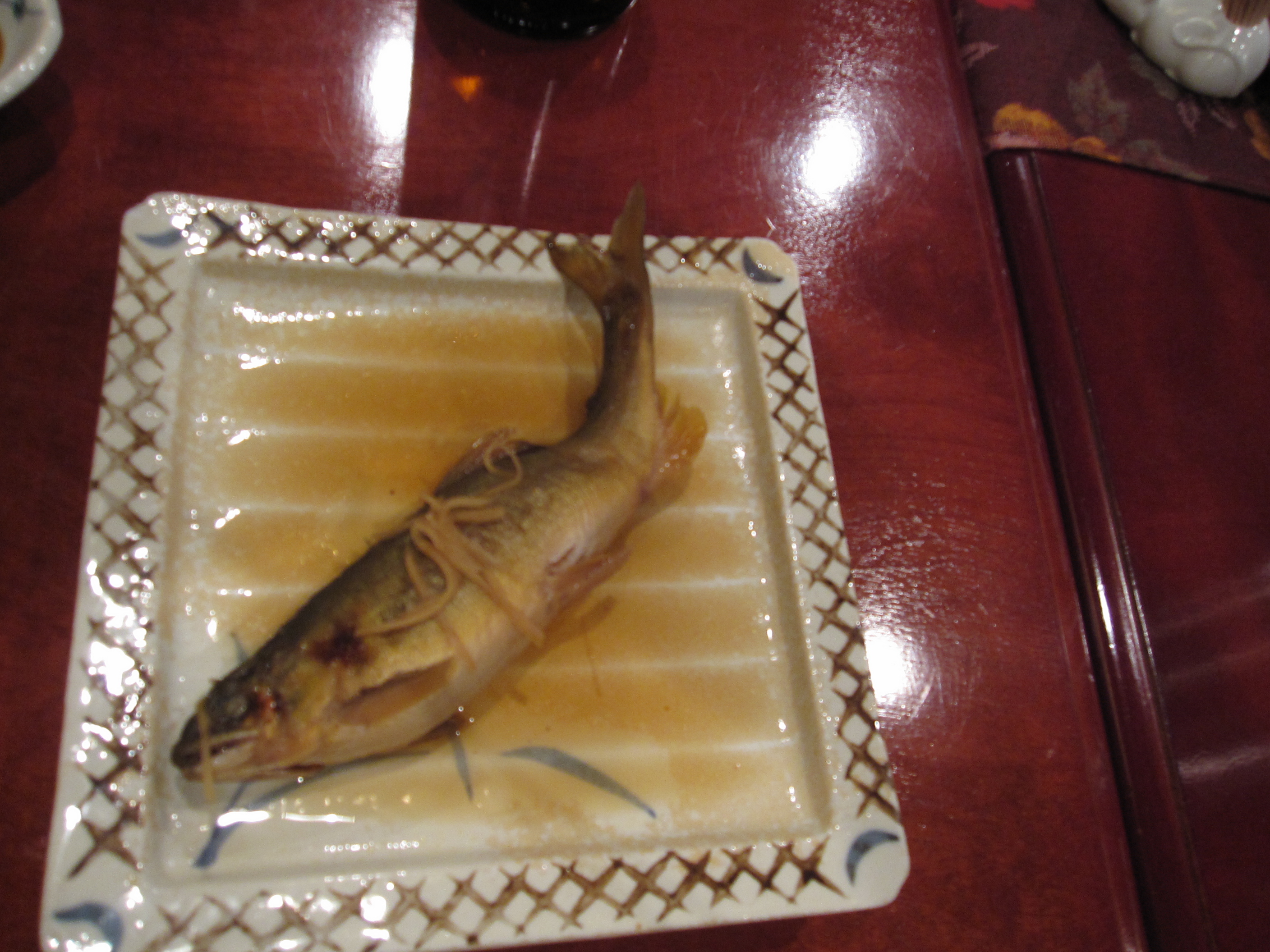
Then they brought us a plate of steamed Ayu (sweet fish). It’s a river fish that eats moss attached to stones giving it a really fresh and clean taste. It was served with a light ginger sauce. The thing that makes Ayu special is that it’s eaten when the belly is full of fish roe. There isn’t much meat, so it’s like dipping chopsticks into a bowl of fresh water caviar.

Being the meatavore that I am, the next plate was what I was most looking forward to….Beef Tataki. Lightly seared beef to give a little texture to the soft raw meat laden with mouth-watering fat. The dipping sauce is a soy-dashi mix. You see the little mound of reddish gew on the side of the dish? That’s a mix of togarahsi (Japanese red pepper) and yuzu (a small citrus fruit). You mix that into the sauce like you would wasabi for sushi, along with thinly sliced chives. With the tataki there was a small dish of sliced cucumber and I think seaweed in a vinegar sauce that cleansed the palette from the fatty beef.

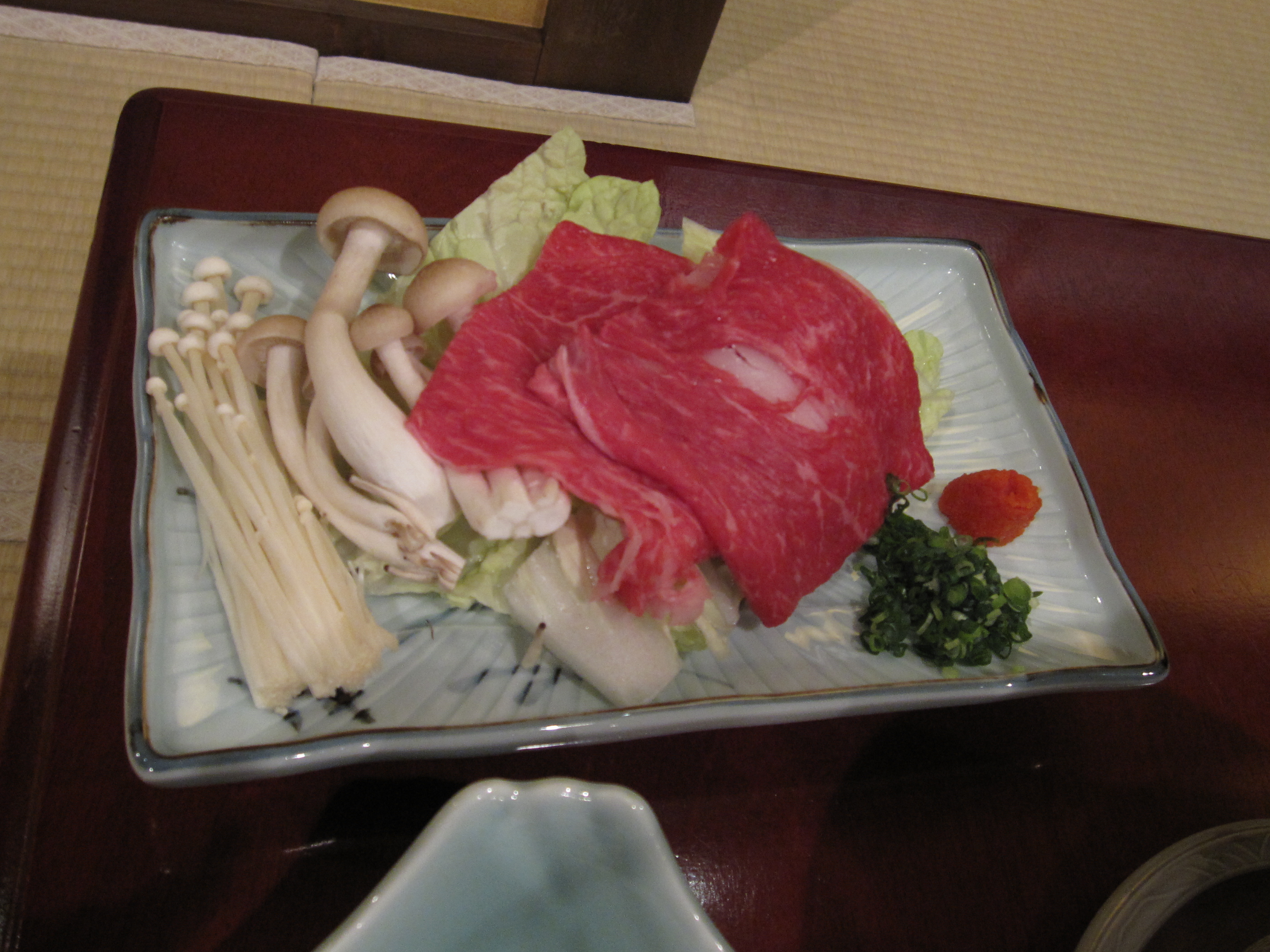
Then we ate the Shabu-shabu. Unfortunately I forgot to get a picture of the individual hotpots we used, but here’s the ingredients. The broth was a light sake base, in it we added cabbage, enoki mushrooms, and shimeji mushrooms. Once they were cooked, we sloshed the thinly sliced beef around to cook it and then dipped it all in a light soy with more of the togarashi yuzu and chives.

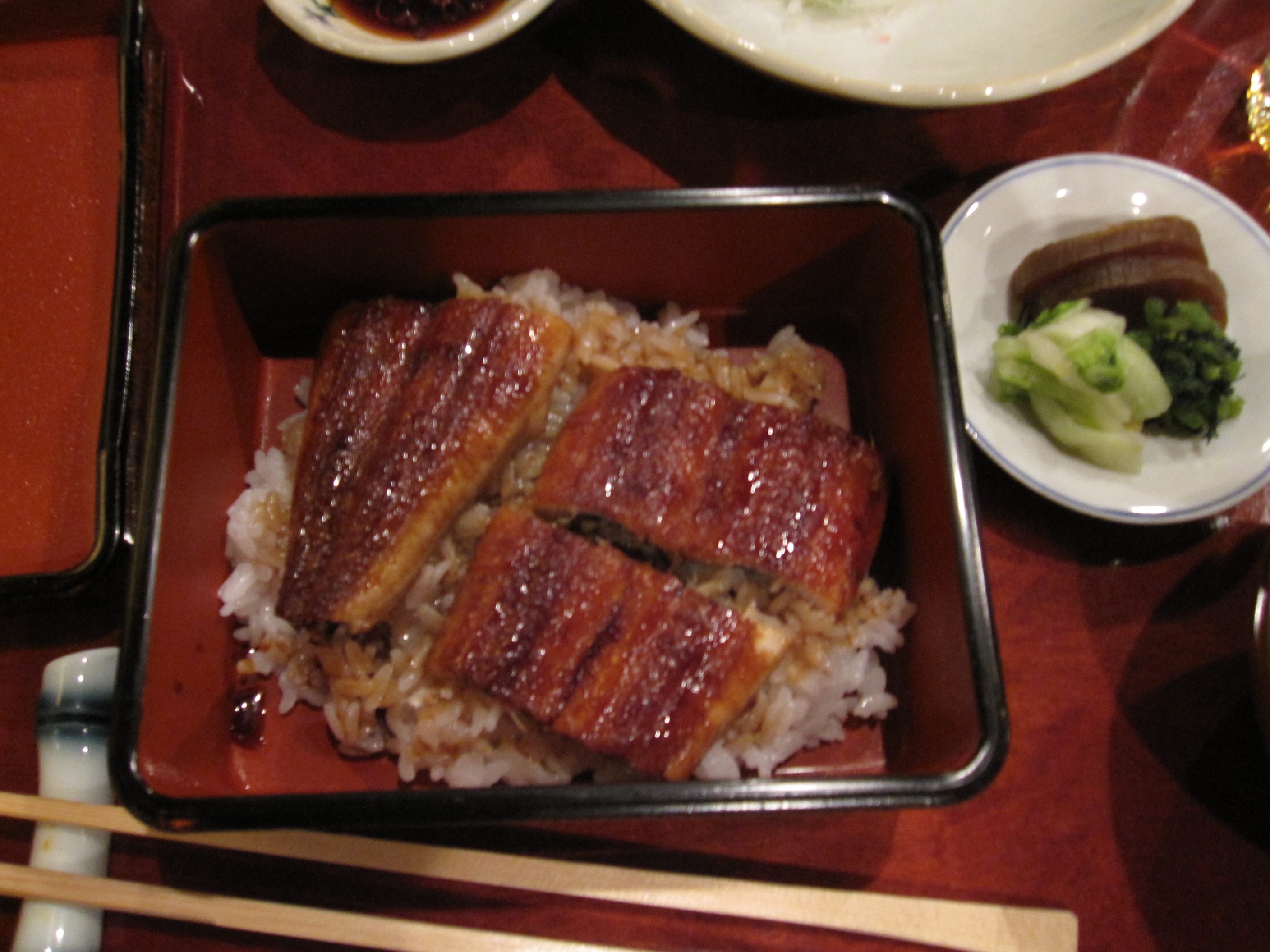
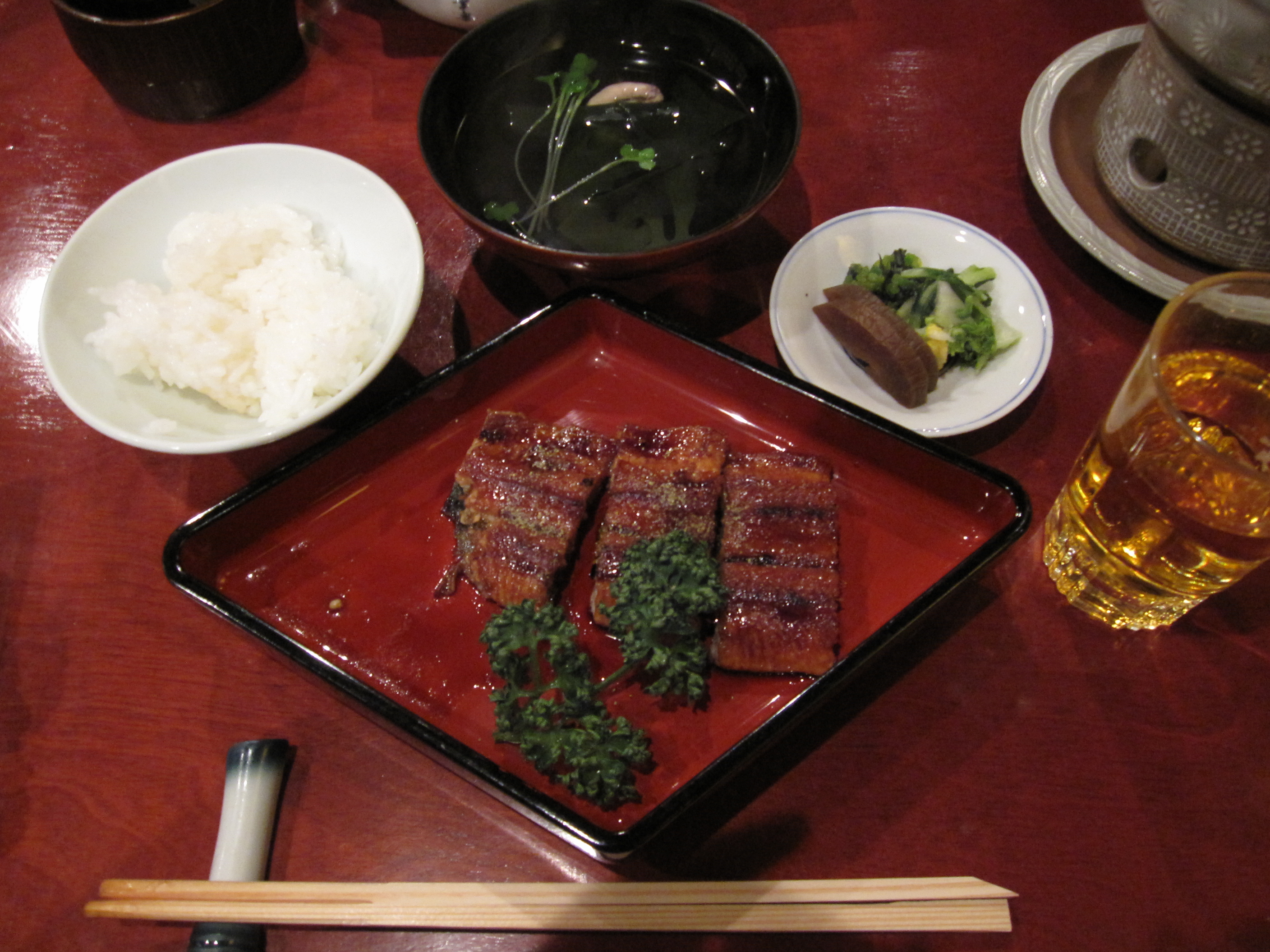
After that we got two different preparations of Unagi. To be honest, I have absolutely no clue what the difference was. One was served on top of rice, the other with rice on the side. All I can tell you is that you will never find eel of that quality anywhere in the States. It tasted like they just caught it that morning. Best eel ever! Both came with a little dish of Japanese pickles. They were probably damn good pickles, but I don’t like pickles so I let Yuki eat mine.

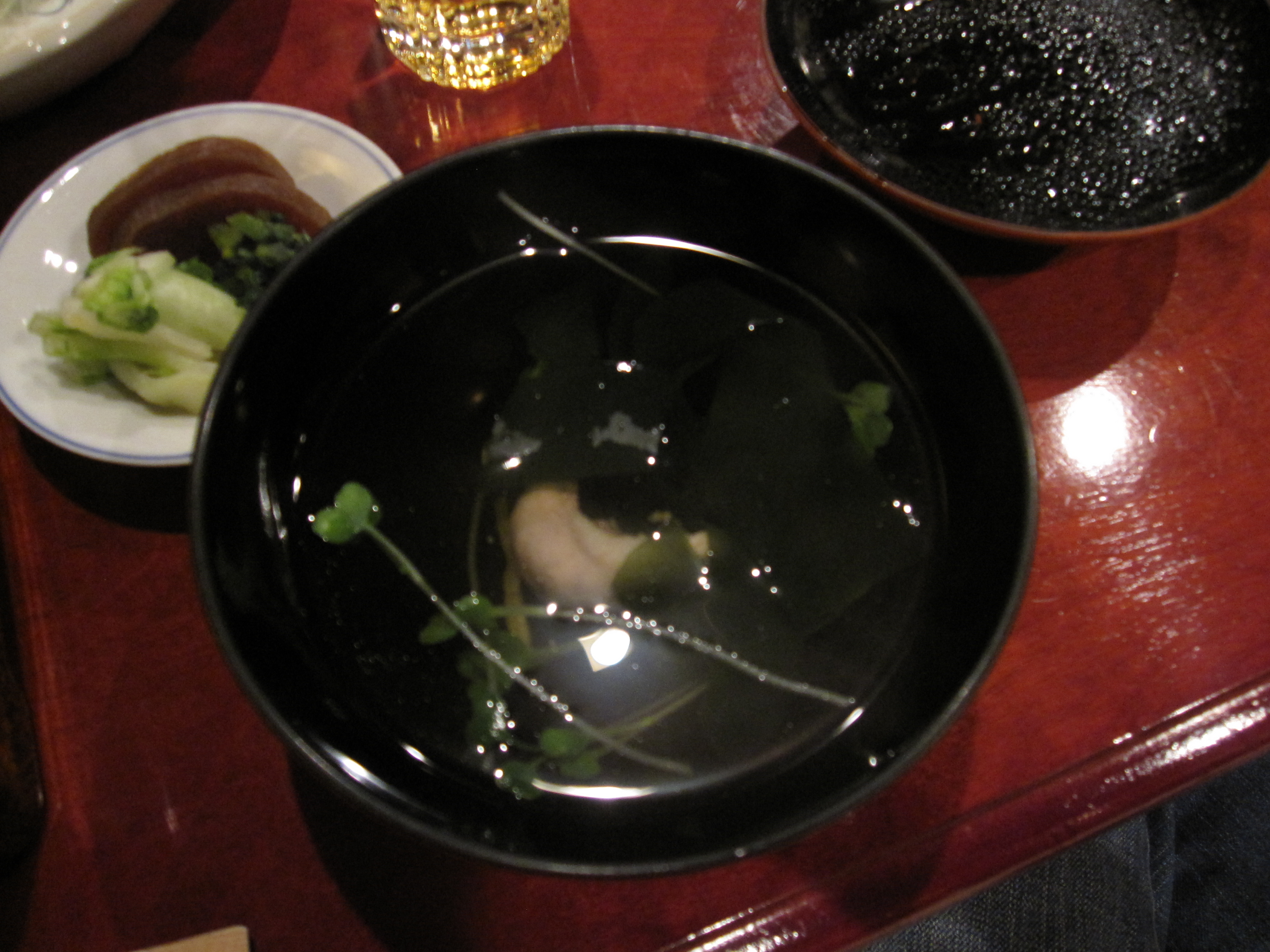
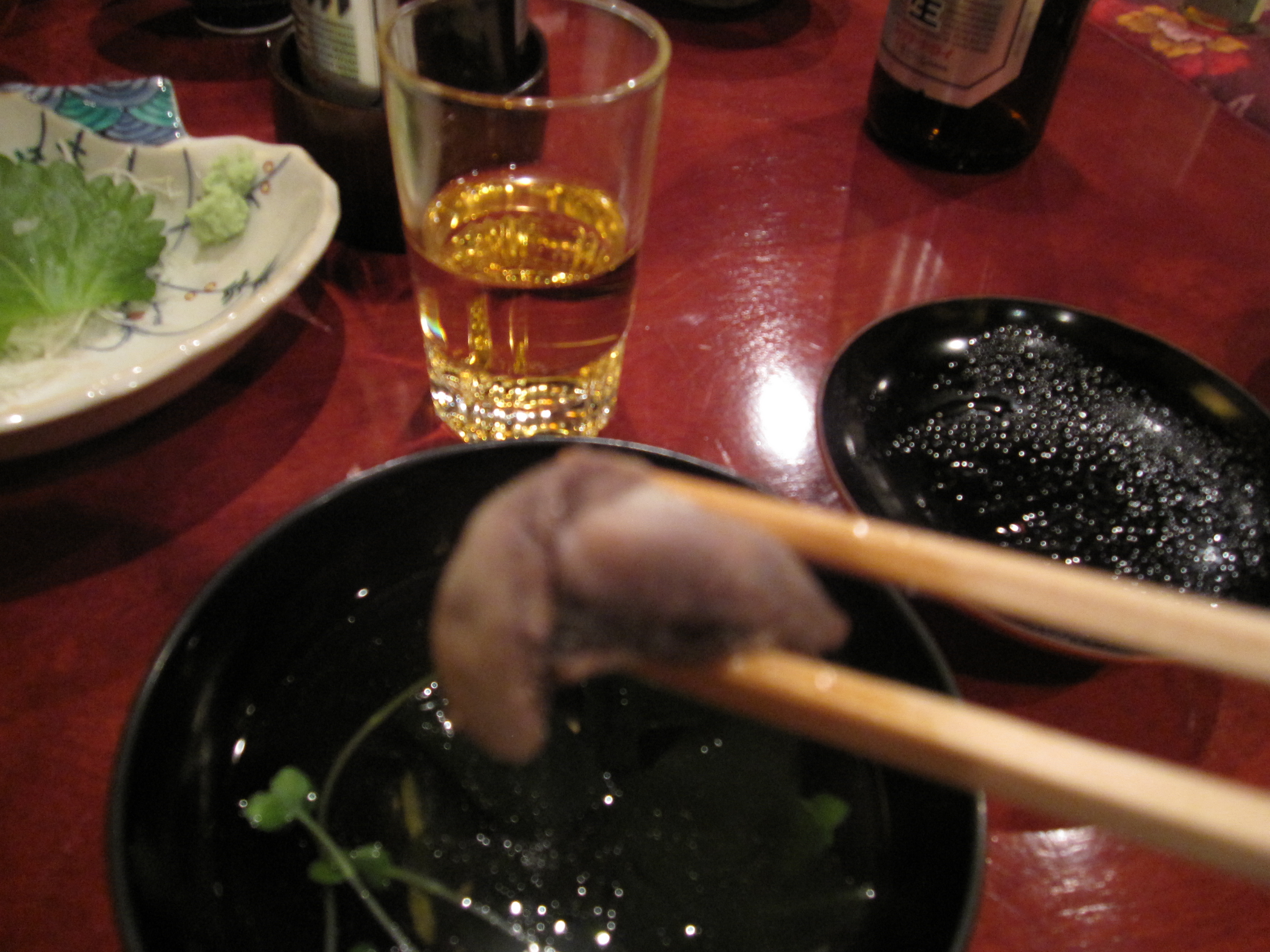
After the Unagi was a clear broth soup with an ingredient we couldn’t figure out. At first, we thought it was some sort of mushroom. It wasn’t. Then we thought it might be shiroko, fish sperm sack. It wasn’t that either. We finally found out that it was eel liver, probably from the Unagi we just ate. It had kind of a crunchy yet soft texture. Not something you’ll find on any old menu.

Finally, to finish things off was a plate with fresh persimmons and grapes. persimmons are in season right now and are everywhere while Japanese grapes are absolutely huge compared to what we get.

All in all this was my 5th Kaiseki. I wish I could afford to eat like this every night as there is always something unusual and strange to the western palette. If any of you get to Japan I highly recommend splurging at least once to experience the delicate yet sophisticated Japanese cuisine at it’s finest.

Read Full Post »

IMG_0590

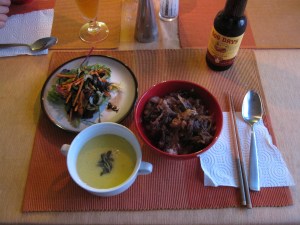
Here’s my first attempt at making Gyu-don, Japanese simmered thinly sliced beef with onions on rice. It’s surprisingly simple to make, yet full of flavor and easy on the wallet.

The trick is to get the beef sliced as thin as deli meat. You can get it at Mitsuwa, but I’m not sure where else to get good quality meat in this fashion. I’m sure it’s available. I do know that it’s near impossible to get such even thin slices at home with a knife no matter how sharp it is.

So, take put a little oil in a medium-sized pot and cook some ginger and garlic for a minute or two. Then add an onion thinly sliced and sweat it for a few minutes. Add a couple cups of water, a quarter cup each of soy sauce and mirin, a few pinches of sugar and let it come to a simmer. Then add your beef and let it cook until the liquid is reduced by 3/4’s.

All you have to do then is put some white rice in a bowl and top it with some Gyu-don.

I served it with a simple corn soup garnished with Thai basil and a salad that Yuki made. She tossed some mixed greens, julienned carrots, celery, and cucumber (I left the cucumber out of mine, vile phalis!) in a homemade hijiki vinaigrette. All washed down with a cold beer.

Read Full Post »

IMG_0618

Here’s one of my favorites. It’s healthy, delicious, and cheap.

Season boneless, skinless chicken thighs with olive oil, cumin, paprika, salt, and pepper. Grill them!

Sautee onions with garlic, zucchini, eggplant, carrots, and a can of chickpeas. Season the veggies with cumin, paprika, salt, and pepper as well. Mix a little soy sauce (about 2-3 tbsp) with some chicken stock (about 1/4 cup) and dump into the veggies to add a little moisture as well as a little more depth to the flavor. If I had some fresh parsley I would have added it once taking the veggies off the heat, but I forgot to pick some up. I did squeeze a little lemon juice in it as well as on top of the chicken once taken off the grill.

Serve with white rice and you’re good to go. If  you want, you can also serve it with a salad. A simple lettuce and tomato salad would do the trick, as would something more Middle Eastern like Tabbouleh.

All in all, this dish costs about $4.50 per person ($4.75 with salad).

Read Full Post »

« Newer Posts