Feeds:
Posts
Comments

Posts Tagged ‘bean sprouts’

Friday night, to me, was the perfect night for grilling. Mid-60’s, clear skies, light breeze. Unlike summer, which I still grill quite a bit, it wasn’t too hot to stand over a hot grill. In light of that, I had to get something on the grill. With organic air-chilled split chicken breasts on sale my mind was made up for me.

I had two big breasts that I slashed the flesh 4 times in each. I did this for two reasons, to allow the marinade to penetrate more meat and to allow them to grill more evenly since they were pretty meaty in the middle. For the marinade, in my small processor I processed up 3 garlic cloves, 2 green onions, 1 inch of ginger, and 2 tablespoons each of soy sauce, mirin, sake, and shiro miso. I rubbed it all into the chicken, covered it, and let it sit in the fridge for an hour.
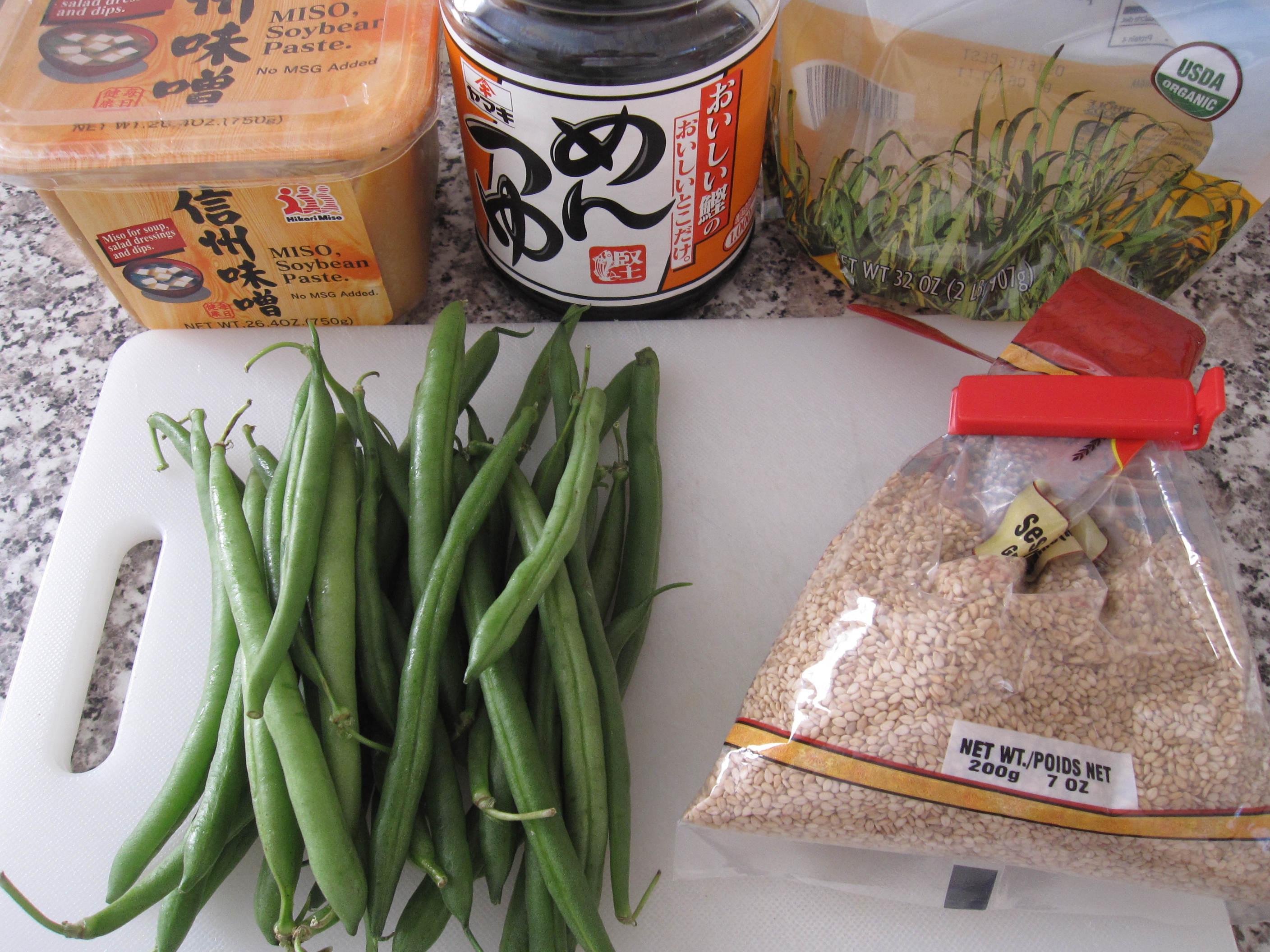
For my side I made haricots vert in miso-sesame dressing. I cleaned up 6 ounces of haricots vert and set them aside. I took 1 tablespoon of sesame seeds and dumped them into a hot skillet and let them toast until they turned a nice golden color and started to release their aroma, about 1-2 minutes. Then I ground them with my pestle and mortar and added a big pinch of sugar, 1.5 tablespoons of seasoned soy sauce (contains mirin and dashi), and 1/2 tablespoon of shiro miso. I mixed that all together and set it aside. Later on, right after taking the chicken off the grill, I steamed the haricots vert for about 4 minutes and then tossed them with the dressing.

I also made some miso soup. I boiled about 2 cups of water and added two skinned and diced yukon gold potatoes, 2 green onions sliced, and three shiitake sliced. While they were boiling I took a bunch of salted wakame and soaked it in water while also cleaning 3 ounces of bean sprouts. I also set aside 1/4 cup of the seasoned soy sauce and a large spoonful of shiro miso.

While the potatoes were cooking in the miso soup I got the grill ready and grilled up the chicken. I got the skin nice and crisp while the meat stayed juicy.

Just before taking the chicken off I poured the seasoned soy into the miso soup and added the sprouts and wakame. Right after taking the chicken off I mixed the miso into the soup and then, like I said earlier, steamed the haricots vert. I took some shichimi togarashi and crushed black and white sesame seeds and sprinkled them all over the chicken. I served everything with white rice.
Read Full Post »

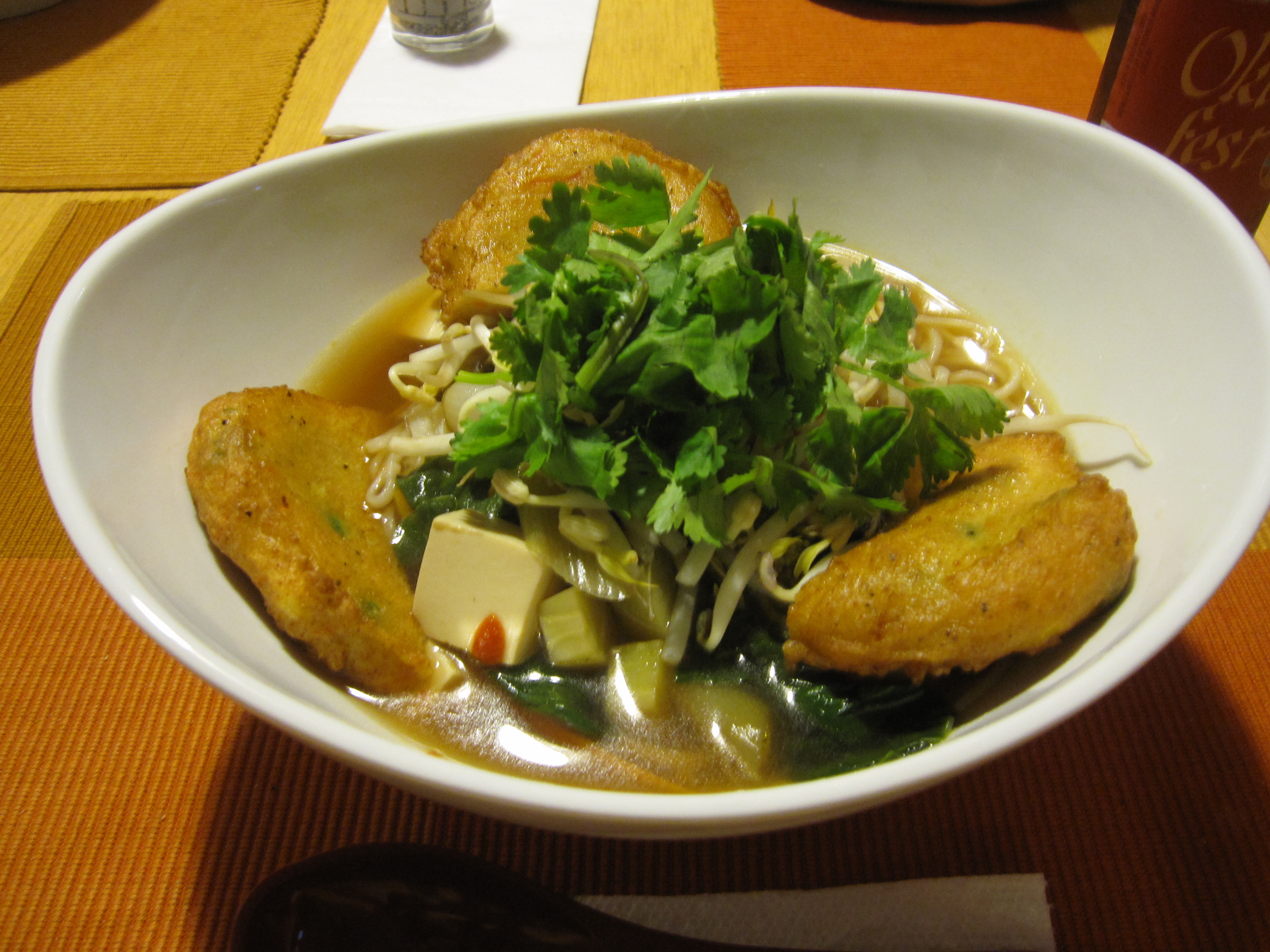
Last night I made some noodle soup using Vietnamese rice noodles, pho-like broth, and Japanese fish cakes. Not sure what to call this dish, so I’ll just call it Japanese Pho. It was very simple to make and actually tasted really really good.

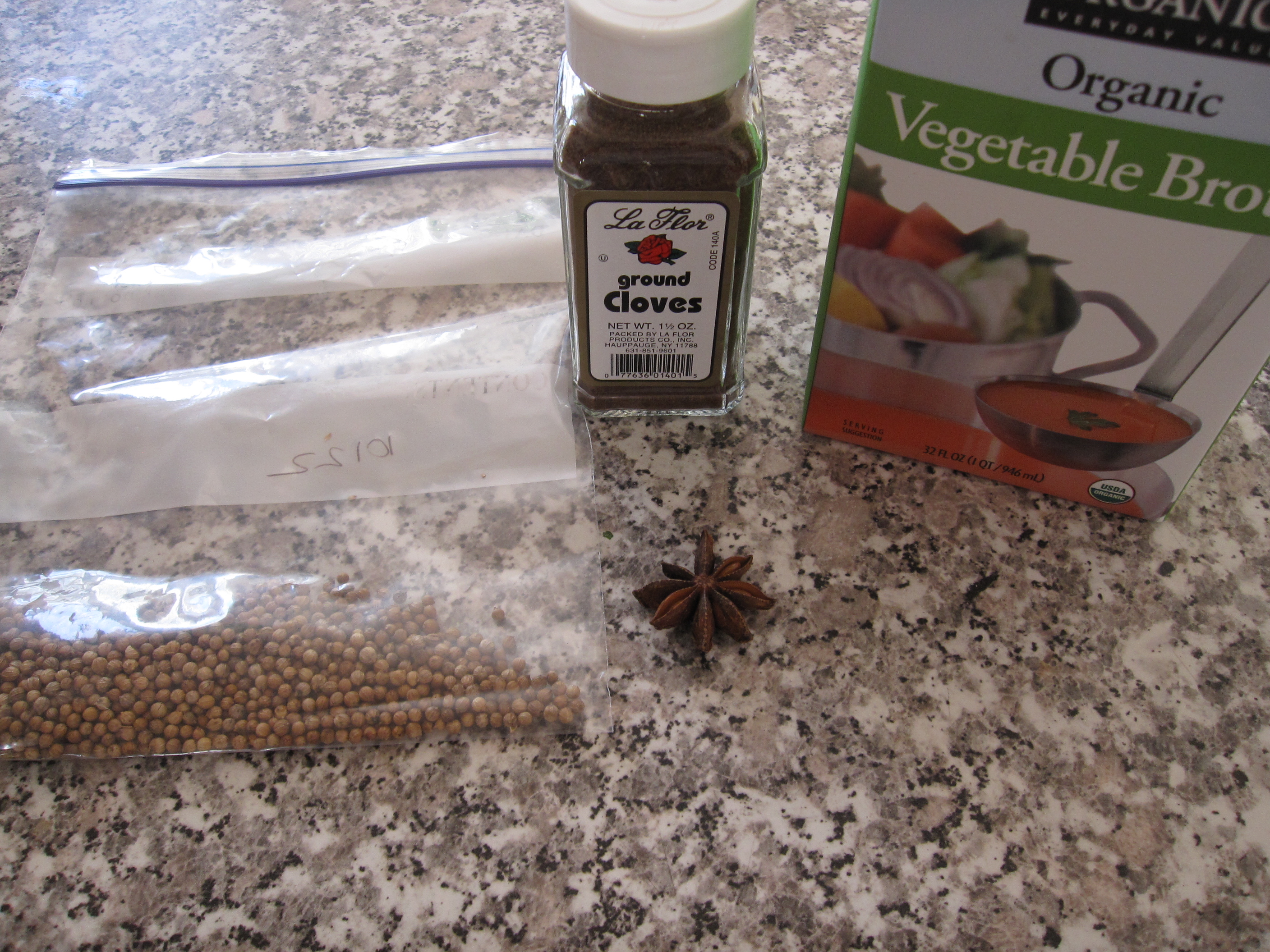
First thing I did was make the broth base. I crushed 1 teaspoon of coriander seeds and 1 star anise with my pestle and mortar. Once they were ground to an almost fine powder I added 1 teaspoon of ground cloves. I wish I had some ginger, I would have bashed that up and added it as well. At any rate, I had 3 cups of vegetable broth in my fridge that needed to be used up so I poured that into a pot, dumped the spices in, and let it boil for about 10 minutes. After that I turned off the heat and let it sit while I prepped the rest of the dish.

My ingredient list included 4 green onions sliced into inch length pieces, a small head of broccoli chopped up, two small carrots cut into thin strips, 2/3’s of a pack of shiitake sliced, half a cube of silken tofu diced, about half a container of baby spinach, about 4-5 ounces of bean sprouts, and 3 fish cakes from the Tensuke Market (these fish cakes had slivers of carrot and peas in them, one of my favorites).

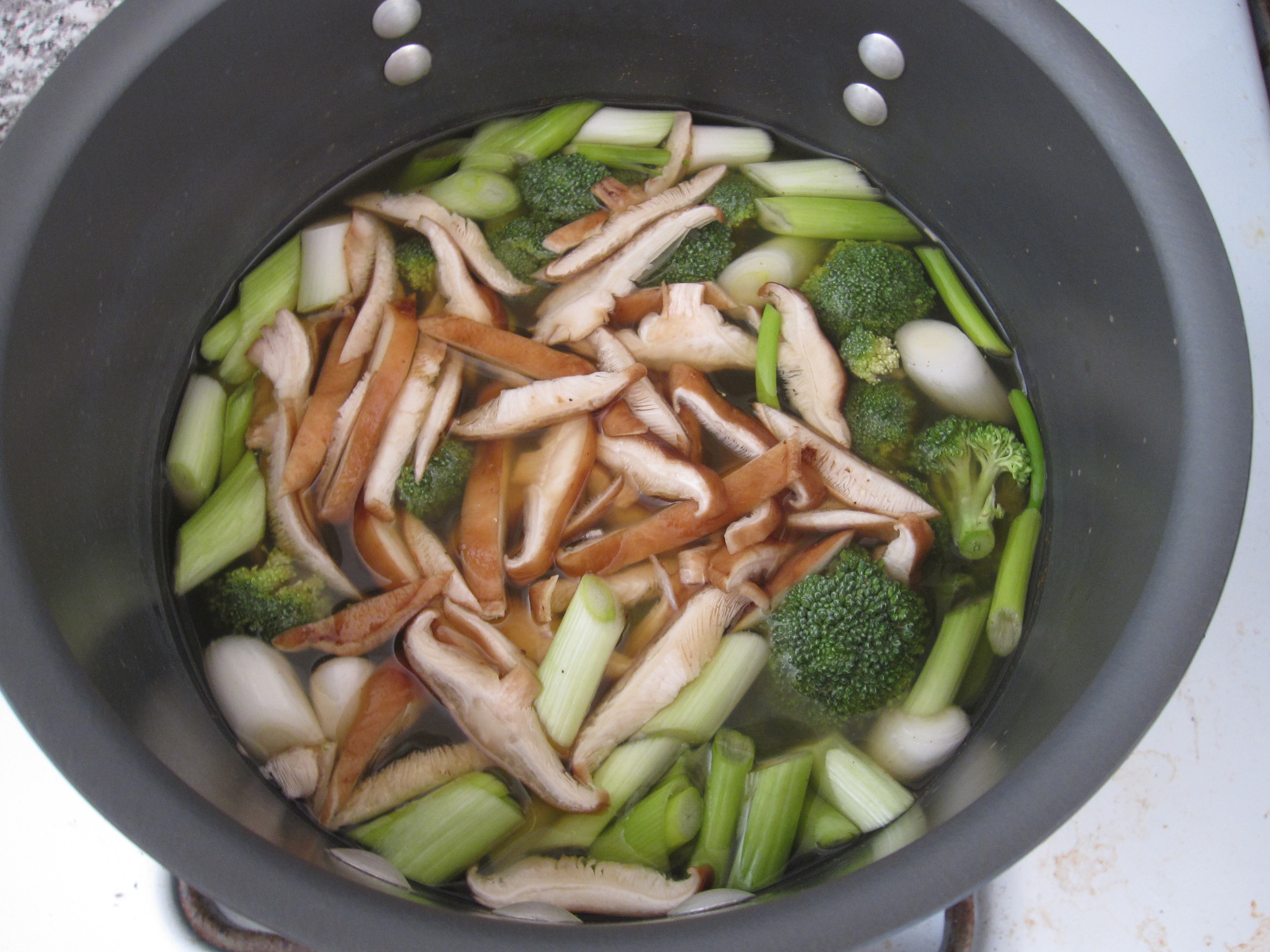
In a clean pot I strained the broth base discarding the grit. I made sure to press the grit though to make sure I got all of the flavorful liquid. To that I added about 3 cups of water, 1/4 cup soy sauce, 1/2 teaspoon of dashi-no-moto, and 3 tablespoons of sesame oil. Then I tossed in the green onions, shiitake, and broccoli. I brought all of that up to a boil and let it go for about 7 minutes while toasting the fish cakes. After that I added the carrots, tofu, and baby spinach for about 3 minutes. That was it, I turned off the heat.

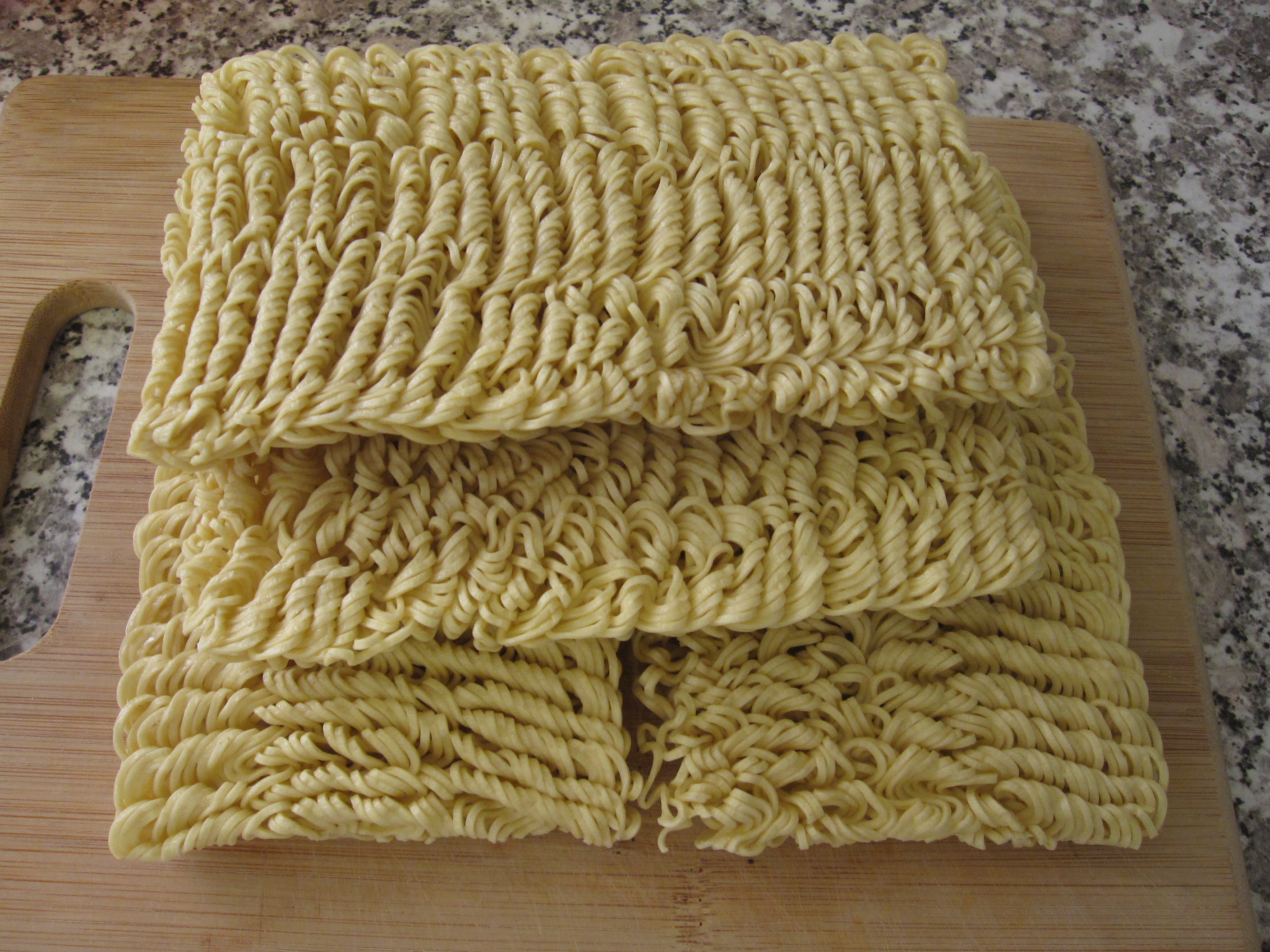
While the soup was cooking I boiled some rice noodles in a separate pot with just plain water. I did that according to package instructions and then drained.

In my serving bowls I first put in the noodles. Then I ladled the soup on top and squeezed in some sriracha. On top of the soup I put in some bean sprouts and garnished those with some cilantro. I placed the halved fish cakes around the edge.

Read Full Post »

Meatless Monday last night ended up being Yakisoba. Yakisoba is a traditional noodle dish (even though it’s origins are from China, it has become a staple of Japanese cuisine much like Ramen) that is typically served with various vegetables and pork. I omitted the pork to accommodate Meatless Monday.

First thing I did was get the protein ready. I made a thin omelet of two eggs and a little cream. In my heated large skillet I poured a tablespoon each of soy oil and sesame oil. I swirled that around to coat the entire pan and then poured in the scrambled eggs. I swirled the eggs around to make a thin omelet, much like a crepe in appearance. I turned the heat down so it wouldn’t burn. Once the bottom was cooked and the top set I carefully flipped it over to get a little crust on both sides. Then I slid it out of the pan and onto a cutting board, cut it in half, then made thin “noodles” out of it. I set this aside because this was my garnish.

For my vegetables I used 6 green onions, 1 carrot, some haricots vert, 6 ounces of bean sprouts, 1 red bell pepper, 6 cremini mushrooms (I wanted to use shiitake, but I had cremini in my fridge already), some ginger and a few cloves of garlic. I sliced everything thinly so that they would mix in well with the noodles.

The noodles I used are called Chuka Soba, which translates to Chinese Noodles. They’re wheat noodles, but honestly, you could use a chow mein or ramen noodle if you wanted and get the same results. I cooked the noodles according to package instructions.

Using the same skillet I used for the egg I heated another tablespoon each of soy and sesame oils. I threw the garlic and ginger in for about a minute and then added the haricots vert, carrot, bell pepper, and green onions. I let those cook for about 6 minutes before adding the mushrooms. I let the mushrooms cook for about 4 minutes and then seasoned with a little salt and pepper. Then I poured in about 2 tablespoons of sake and let that boil off. After that I added the sprouts and then about 1/3 cup of Bull-Dog Sauce. I don’t know if you can get Bull-Dog Sauce at many places. We get ours at Mitsuwa, but you may be able to find it in ChinaTown or some other Asian Grocers.  

Once the sauce was mixed in well with the vegetables I tossed the noodles in and let them fry a little while mixing everything together. It’s important to keep the heat on to dry the sauce up a little while the noodles absorb it. This gives a nice texture to the noodles.

To serve I simply used my tongs and put a big pile of everything on a plate. Then I topped it with some of the sliced eggs and drank a cold beer. For the leftovers today I sliced some Black Forest Ham and added it to the mix. Since it’s not Meatless Tuesday I’m cool with that.

Read Full Post »

For Meatless Monday last night I made a Cambodian-style noodle soup. It’s very similar to Vietnamese Pho, but the broth is slightly different. Pho usually has star anise and cinnamon in the broth, I didn’t use either of those. Stylistically though, their very similar. And why not? They are neighboring countries after all.

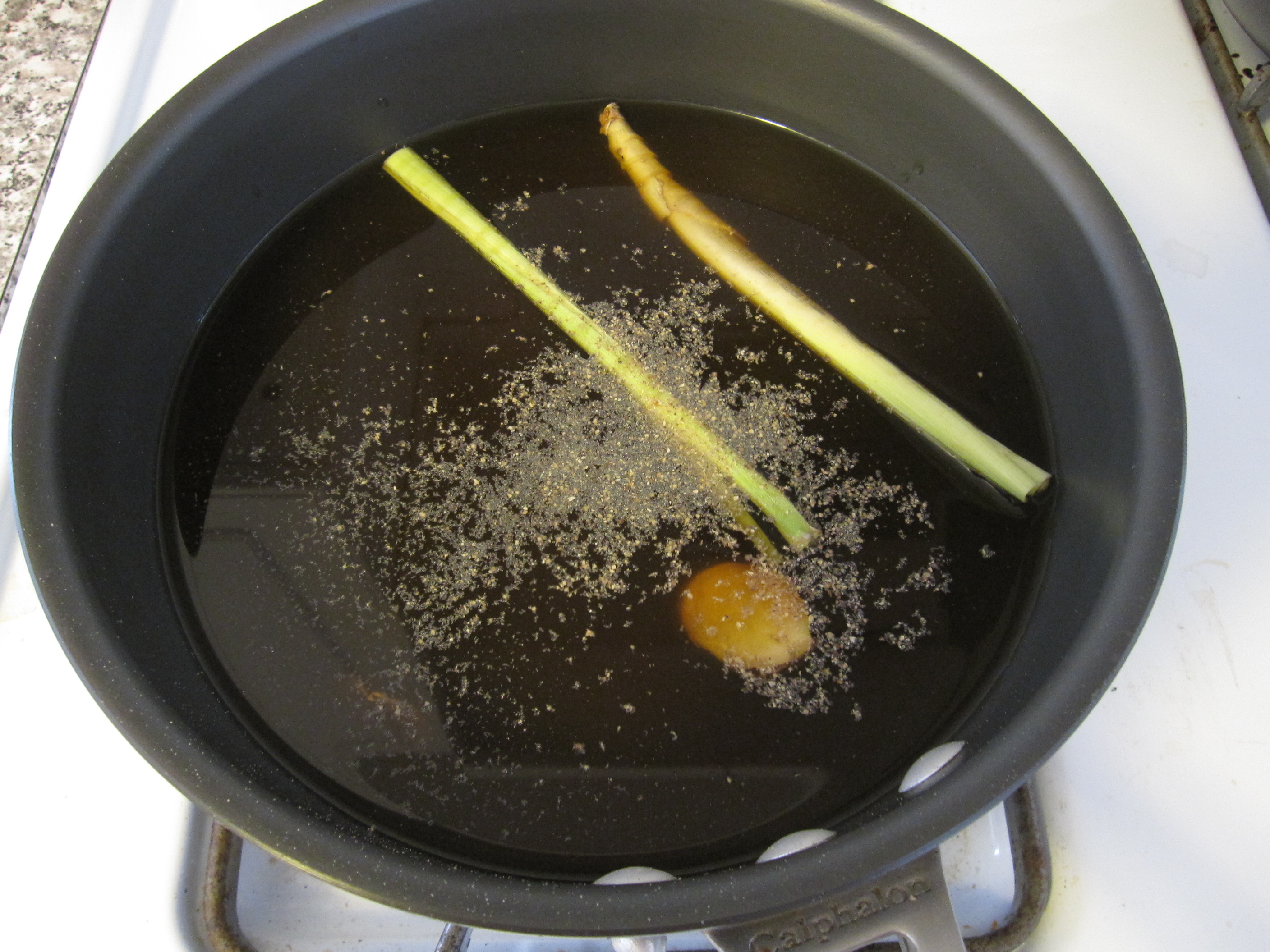
To get the Cambodian flavor I used ginger and lemongrass. I left the skin on the ginger and the tough outer layers of the lemongrass in tact. The ginger was sliced and those marks you see on the lemongrass are from banging it with the back of my knife. That loosens up the fibers and helps release the oils.

I put them in a sauce pan along with 1 quart of vegetable stock, 1/4 cup of soy sauce, 1 cup of water, and a lot of fresh cracked white pepper. I brought that all to a boil and let the flavors steep for about 20 minutes. Then I strained the broth into a large bowl and let it sit until later on in the cooking.

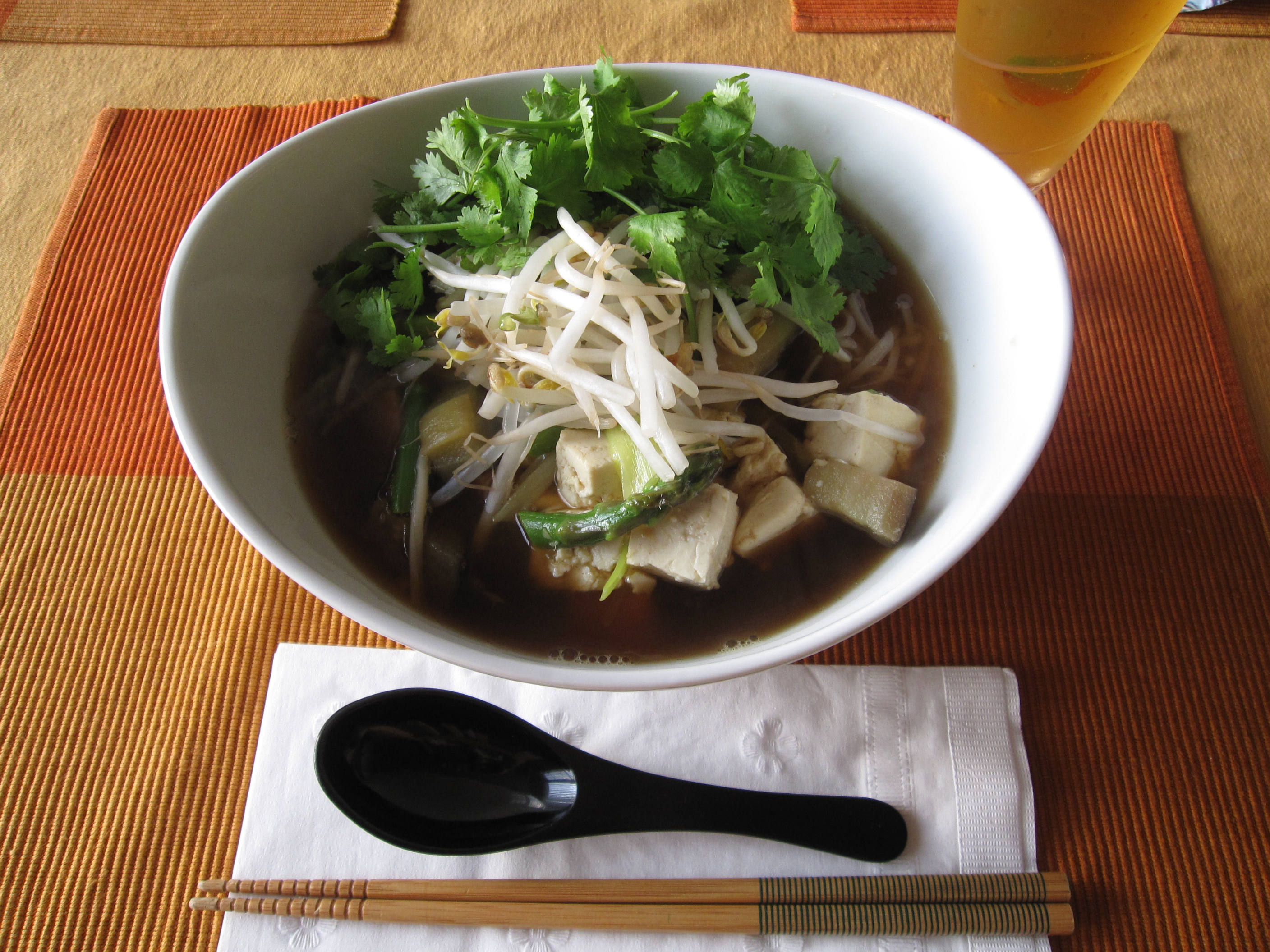
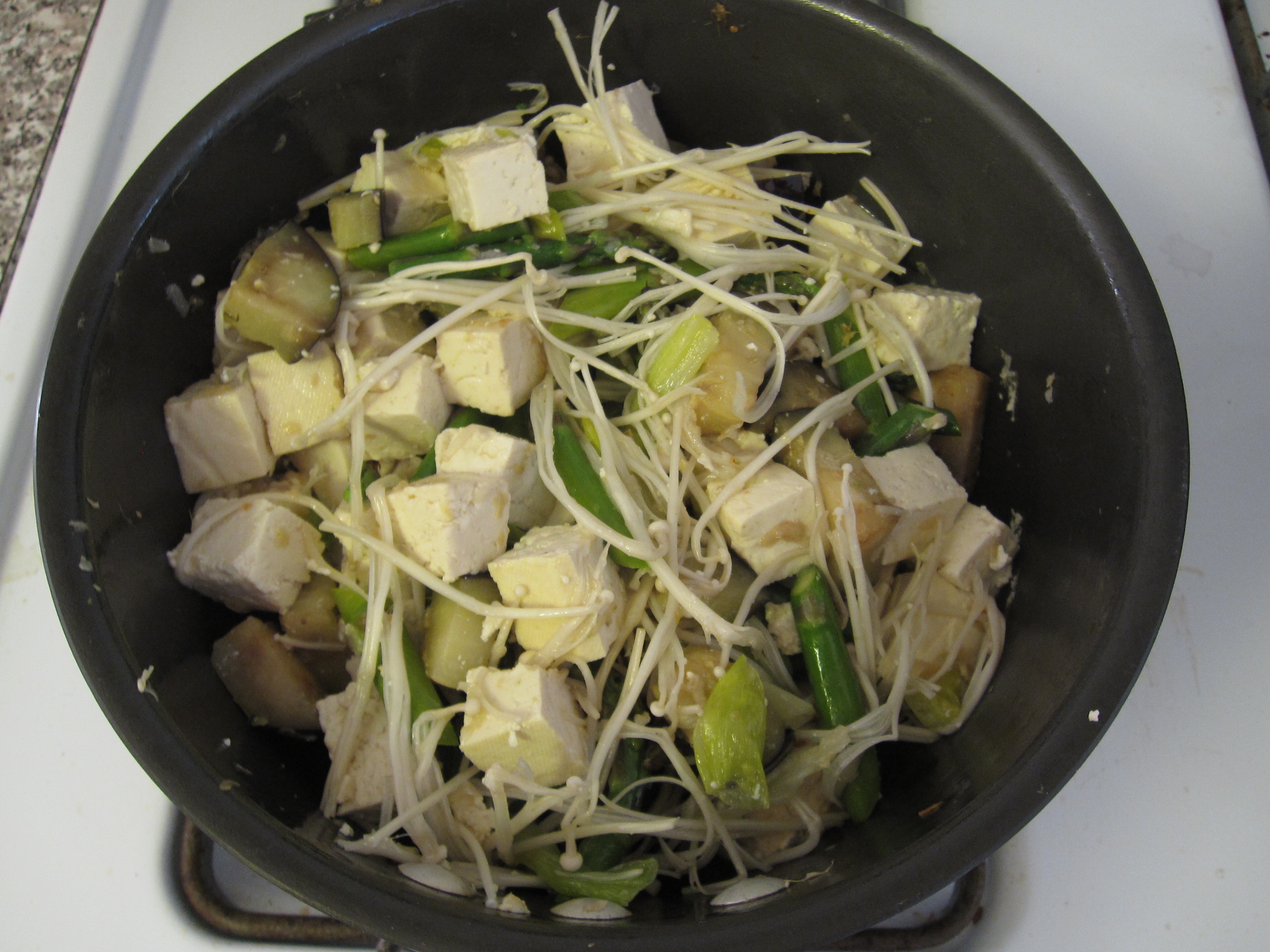
My ingredient list included bean sprouts, enoki mushrooms (not Cambodian, but nevertheless delicious and healthy), fresh made tofu from the HMart that I cubed, ginger and garlic that I minced, asparagus that I cut up (again, not Cambodian), half of an eggplant diced, green onions that were sliced about 2 inches in length, and rice noodles.

I started by heating up about 1/4 cup of soy oil and a few tablespoons of sesame oil. I let the ginger and garlic go until they were fragrant, about 1 minute, then added the green onion and asparagus. Once they started to slightly soften I added the eggplant. That took about 5 minutes until it was mostly cooked through. Then I added the tofu and enoki. Those both heat through relatively quickly, about 2 minutes. After all of those vegetables were heated I poured the broth in and let it come to a boil, then turned the heat down and let it simmer, covered, for only about 5 minutes.

During that time I cooked the noodles according to package instructions. Once cooked through I drained them thoroughly and divided them up into the serving bowls and ladled the soup on top. I topped all of that with the bean sprouts, some cilantro, and a squeeze of lime juice.

Half-way through eating I realized that something was missing….SRIRACHA!!! I took my sriracha out, squeezed a little into the broth, and all was good.

Read Full Post »

Last night we went to Millennium Park to see Tony Allen play for free. Beautiful night and fantastic music! However, because of this, I didn’t do much for Meatless Monday. Nothing worth blogging about anyway. Instead, here’s a dish that Yuki made the other night. Thinly sliced strip steak in Korean chili sauce.

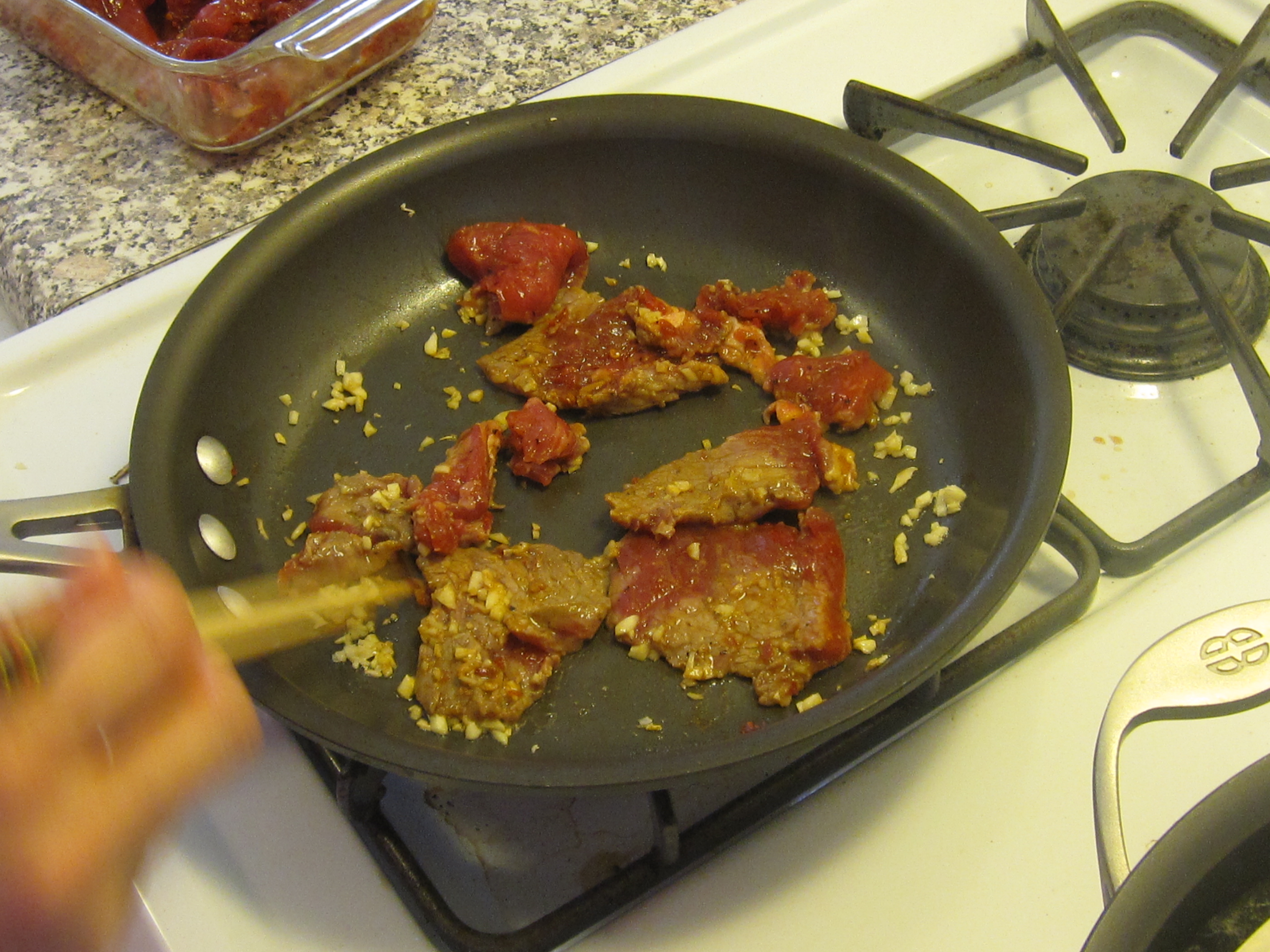
She thinly sliced a strip steak that weighed about 3/4’s of a pound. Then she marinated it in a mix of soy sauce, mirin, sake, sesame oil, a touch of salt, black pepper, and toban djan. Toban djan is a wonderful Korean chili paste that most grocers have in their Asian section. I have no idea what measurements she used since I was busy prepping vegetables, but I would imagine about a tablespoon or so of each liquid is pretty close. That marinated for about a half hour or so while we got everything else ready.

For vegetables we used some green beans, green onions, shiitake, alfalfa sprouts (Stanley’s didn’t have any bean sprouts), napa cabbage, and some fresh corn. The corn was simply boiled while the rest of the veggies were sautéed with the beef.

She sautéed the beef first with some diced garlic in sesame oil in small batches until they were partially cooked. Then she set the beef aside and threw the veggies in.

First was the green onions for a few minutes, followed by the green beans, then the shiitake, and finally the cabbage. She let them cook together for about 5 minutes or so with about a quarter cup of sake added.

Then she put the beef back in and added the sprouts. That went for another 5-7 minutes before it was ready (had to let the sake reduce) to be mauled by my molars.

While all of that was going on the corn was boiling in some salt water. When it was done all I did was melt a little butter on it and sprinkle it with some salt. I was surprised at how good the corn was. I know it’s not our good Midwestern corn yet, that won’t be ready for a couple of months yet. This probably came from Georgia, but it was quite tasty.

Also, true to a dish by Yuki, there was white rice on the side.

Read Full Post »

Okaka mayo, a really fun sauce to say. It’s also a delicious, very Japanese, sauce that’s easy to make. This is a dish that Yuki made the other night.

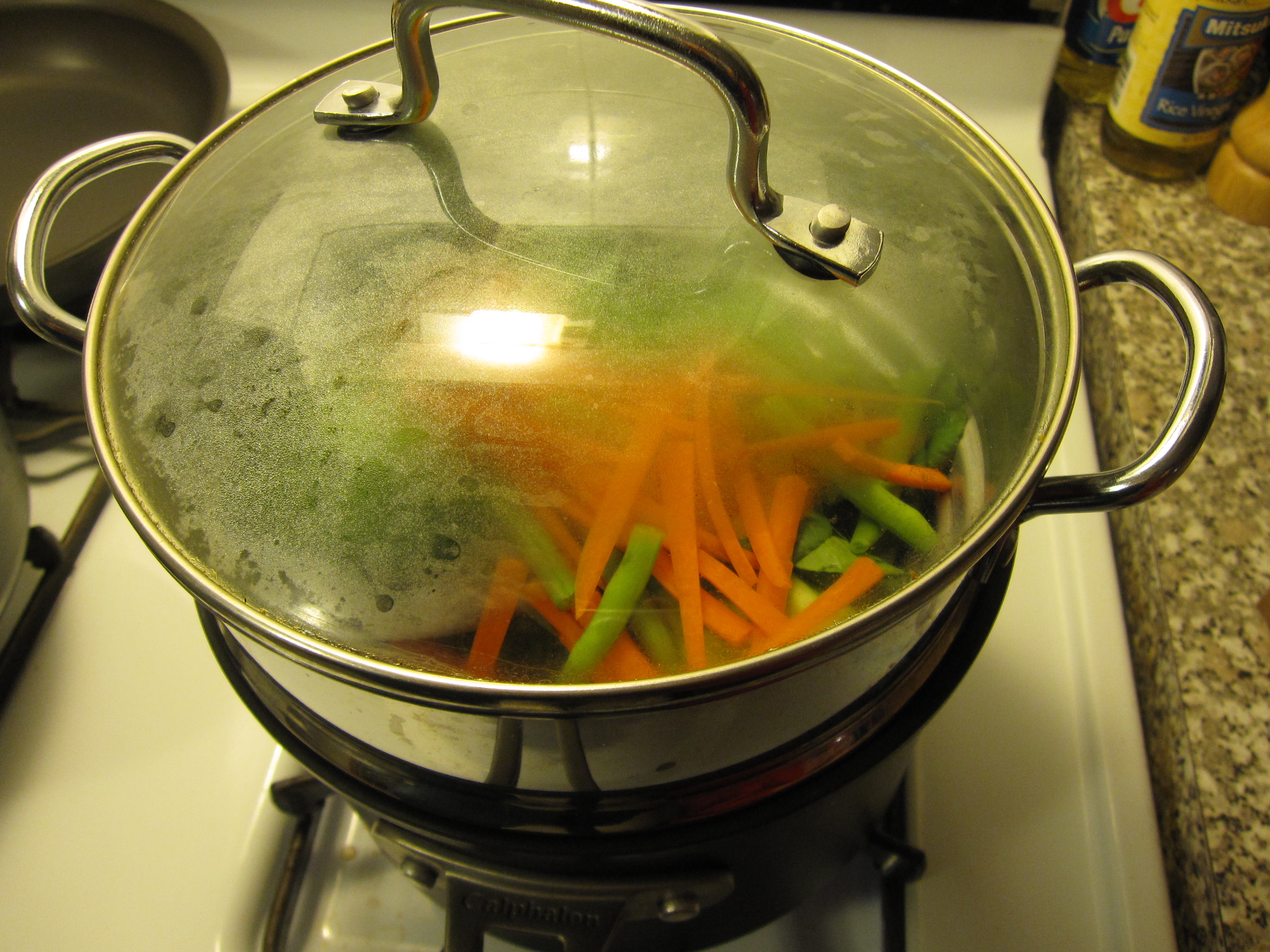
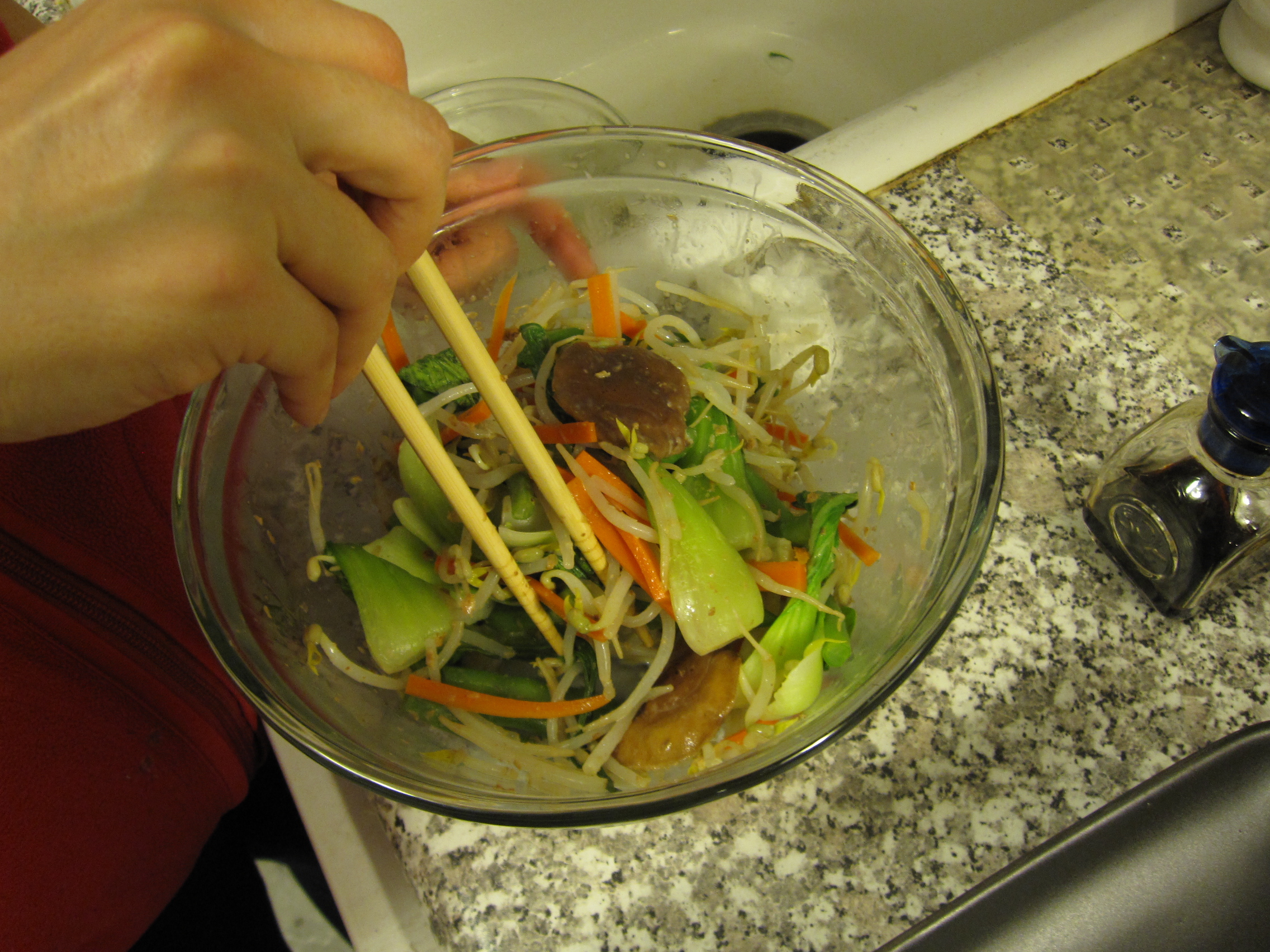
To start, Yuki steamed some vegetables. Once the steamer got going she put in a couple of baby bok choy, a carrot cut into match sticks, and a handful of green beans.

A few minutes later she threw in some bean sprouts and some fresh shiitake caps. She let everything steam for about 5 minutes or so, just so that the veggies are al dente.

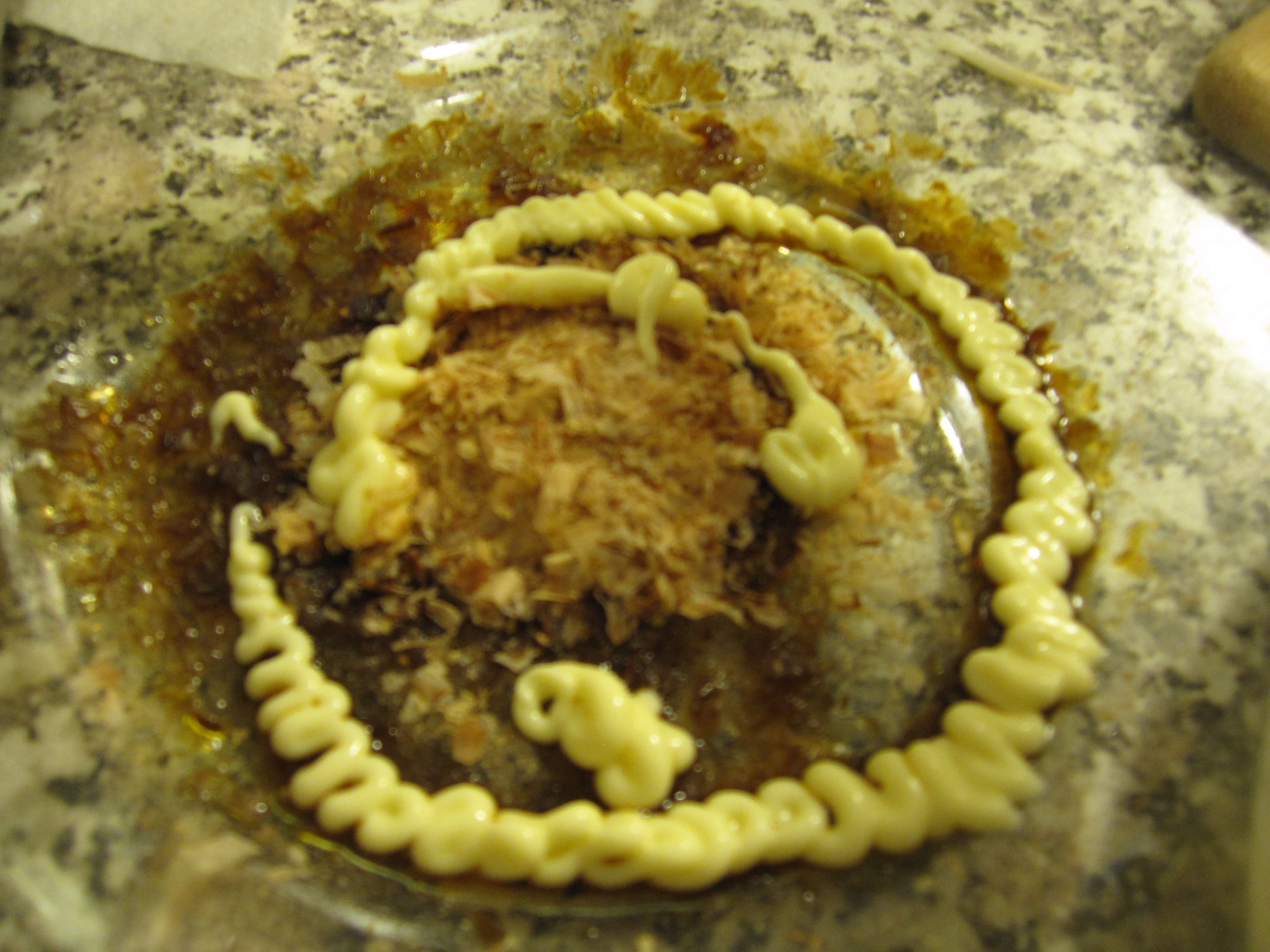
While the veggies were steaming she mixed up the okaka mayo. Okaka is a sauce that is often used for onigiri. It’s simply a mixture of soy sauce and bonito flakes (available at most grocers these days in the Asian section). To that, she squirted in some mayonnaise and mixed it all up in a bowl large enough to hold all of the vegetables. I have no idea what the measurements were. Just taste it and adjust according to your preference.

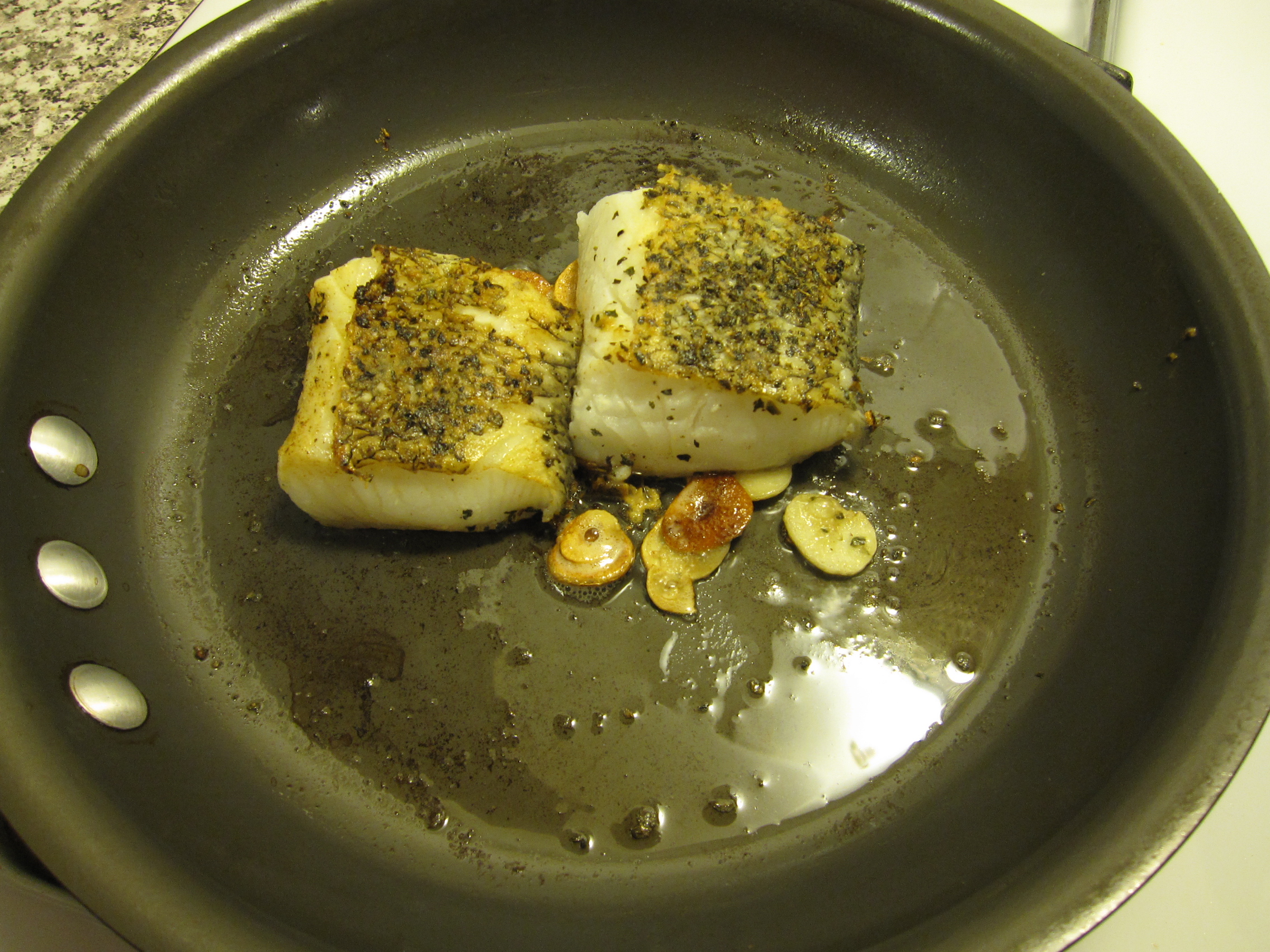
Then, she got the sea bass going. In a saute pan she melted some butter and added some sliced garlic. She let the garlic cook a little in order for its flavor to absorb into the butter. The sea bass was seasoned with salt, pepper, and dried basil. She cooked it skin-side down first in order to get a nice crisp skin. After a few minutes she flipped it over to cook the top. In total, the fish only needs about 8-10 minutes of cooking. Sea bass stays moist, but you still don’t want to overcook it. It will continue to cook for a few minutes inside after you take it off the heat.

While the fish was cooking she tossed the steamed vegetables in the okaka mayo.

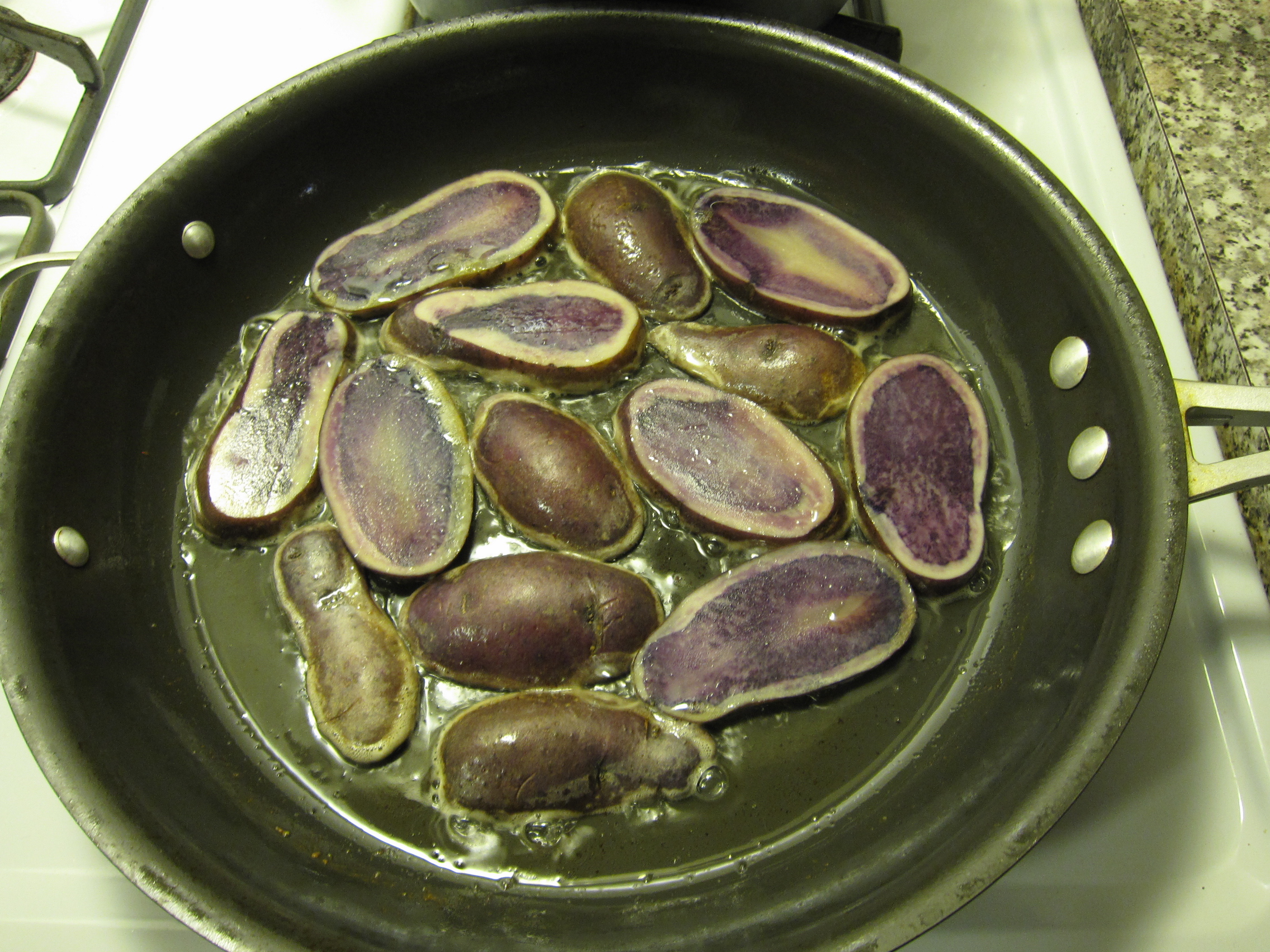
While she was doing all of that, I was charged with the difficult task of potatoes. I melted some butter in a large skillet and let it get ridiculously hot. Then I added thin sliced purple potatoes in a single layer. The hot butter gave it a really nice crust. After about 3 or 4 minutes I turned each slice over and turned the heat down to medium. This allowed the inside to cook while also crisping up the bottom of each slice. While that was going on I sprinkled a little salt and pepper on top of everything.

Everything was served with white rice. It was extremely tasty!

Read Full Post »

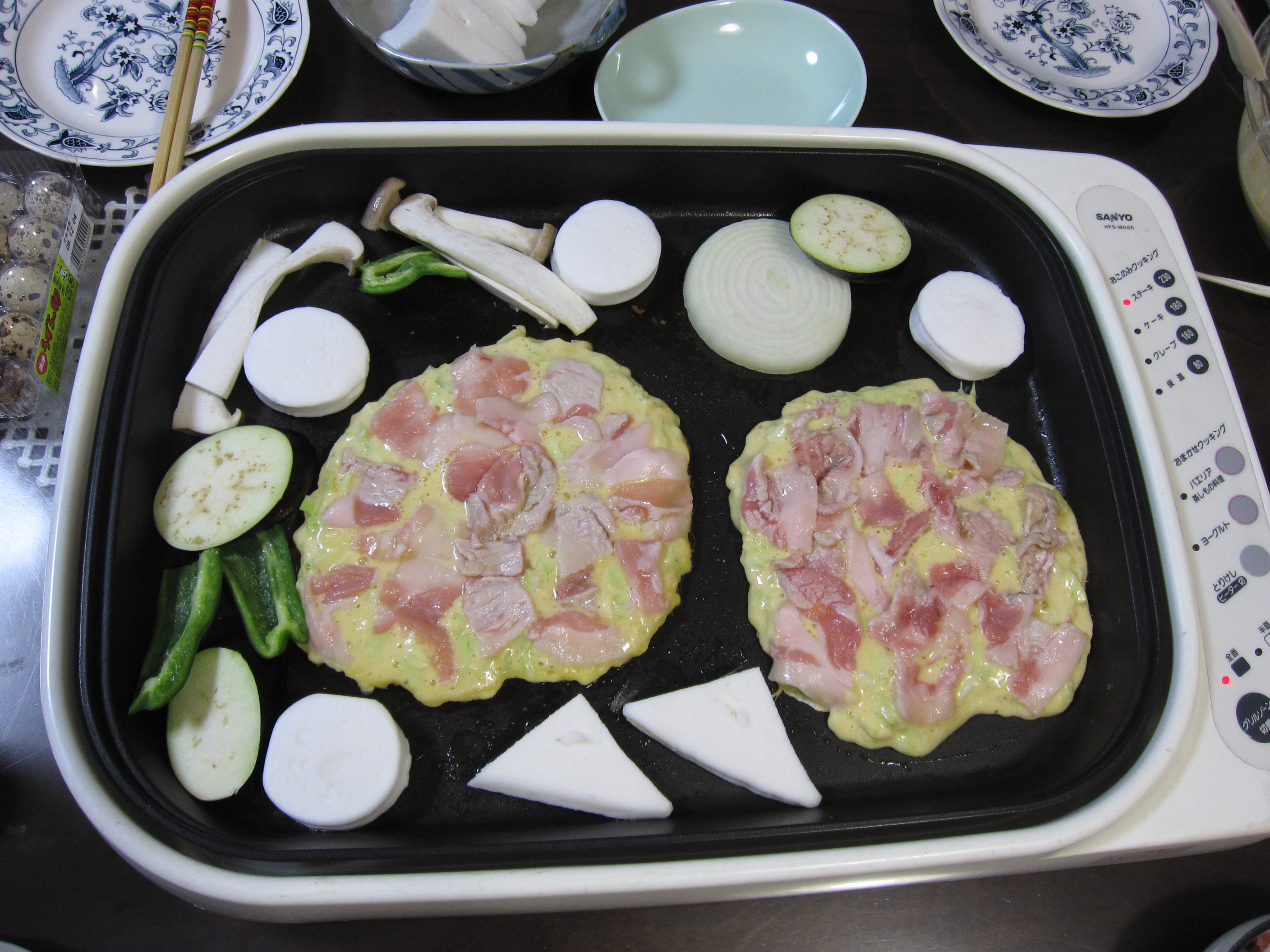
Alright, here’s Uichiro’s famous Kawabata-style Okonomiyaki. Okonomiyaki is Japan’s version of a pancake of sorts. It’s base ingredients are eggs, flour, and shredded cabbage. Not entirely sure if Uichiro uses water or dashi, or what else he puts in his mix (highly guarded secret but I’m sure there are green onions in it) but it sure is tasty.

You start off by getting out the old table-top griddle. Once its hot add a little oil and pour some of the batter to form a pancake. Next to it lay out some sliced pork and start cooking it a little.

Once the batter starts to cook lay the pork slices on top.

While the okonomiyaki cooks grill various veggies. We had eggplant, green peppers, onion rings with quail eggs, kabocha, matsutake mushrooms, and various mochi cakes. Once the bottom is done you carefully flip the okonomiyaki to cook the other side.

Once it’s fully cooked spoon on top some bull dog sauce (a semi-sweet vegetable and fruit sauce), mayonnaise, shredded ao nori, bonito flakes, and pickled ginger on the side. Since it’s family-style you just cook and grab as you go. It’s a ton of fun and extremely tasty.

And if you aren’t full yet, don’t worry as yakisoba is up next. Once the batter is finished cook up the rest of the pork and veggies, add some bean sprouts and noodles, then eat it up.

Please, no dessert.

Read Full Post »

We spent an afternoon at Himeji Castle before exploring some of the Nara Prefecture. If you only see one castle in Japan, you’d better make it Himeji. It is absolutely pristine. Easily the best preserved structure built in the 1300’s that I’ve ever been to. It is the quintessential Japanese Castle.

At any rate, it’s located about a 10 minute walk down the main street from the Shinkansen. We arrived about lunch time figuring that there’d be plenty fo food options along that 10 minute walk. Right we were. We decided to veer off onto a side street where a retail arcade was as there’s always cheap delicious food options a plenty in retail arcades. Instead of eating at one of those establishments we wandered into a typical hole-in-the-wall Japanese staple, their alter-ego of Chicago’s taquerias. We filled ourselves with Ramen Noodles.

This was a very typical ma and pa ramen shop that you find everywhere in Japan. You walk in and are greeted by ma and pa themselves, “Irrashaemase!” There’s a vending-like machine near the door with the menu on it. It basically consists of a few different Ramen broths with a handful of different additions to choose if you so desire. Put your money in, press the buttons for what you want, and out comes your little order ticket.

Then, you walk in to see that there’s only 8-10 chairs along the bar. Grab a seat. Every few seats are trays of condiments, things like soy sauce, togarashi, toothpicks, boxes of tissue for the runny nose the hot ramen will give you. There’s also little spickets of hot water with tea cups and green tea for you to make as you like along with a cold water dispenser. Hand the ticket across the bar and ma and pa make your food.

I ordered the Bakabuta Ramen and Yuki got the Miso Ramen with mushrooms. Both were miso broth with loads of bean sprouts, bamboo shoots, green onions, and black woodear mushrooms. Both came with a slice of roasted pork. “Buta” in Japanese means pig, so mine had extra pork. Two big pieces of fall off the bone sweet fatty pork. Each bite coated your lips with fatty goodness. Yuki’s had extra woodear mushrooms as well as what I think were eryngii mushrooms. If I’m wrong Yuki will correct me after she reads this and I’ll correct the blog.

Since we both love pork and mushrooms we arranged a deal. I gave her some pork, she gave me a few more mushrooms. A fair trade I think.

It’s too bad that 25 cent packages of dried ramen noodles killed the idea here in America. A nice big bowl of fresh ramen like this is fast, cheap, filling but not overly heavy, and healthy. In fact, just thinking about it makes me crave some ramen. I think I’ll make some for dinner tonight.

Read Full Post »

« Newer Posts