Feeds:
Posts
Comments

Posts Tagged ‘ginger’

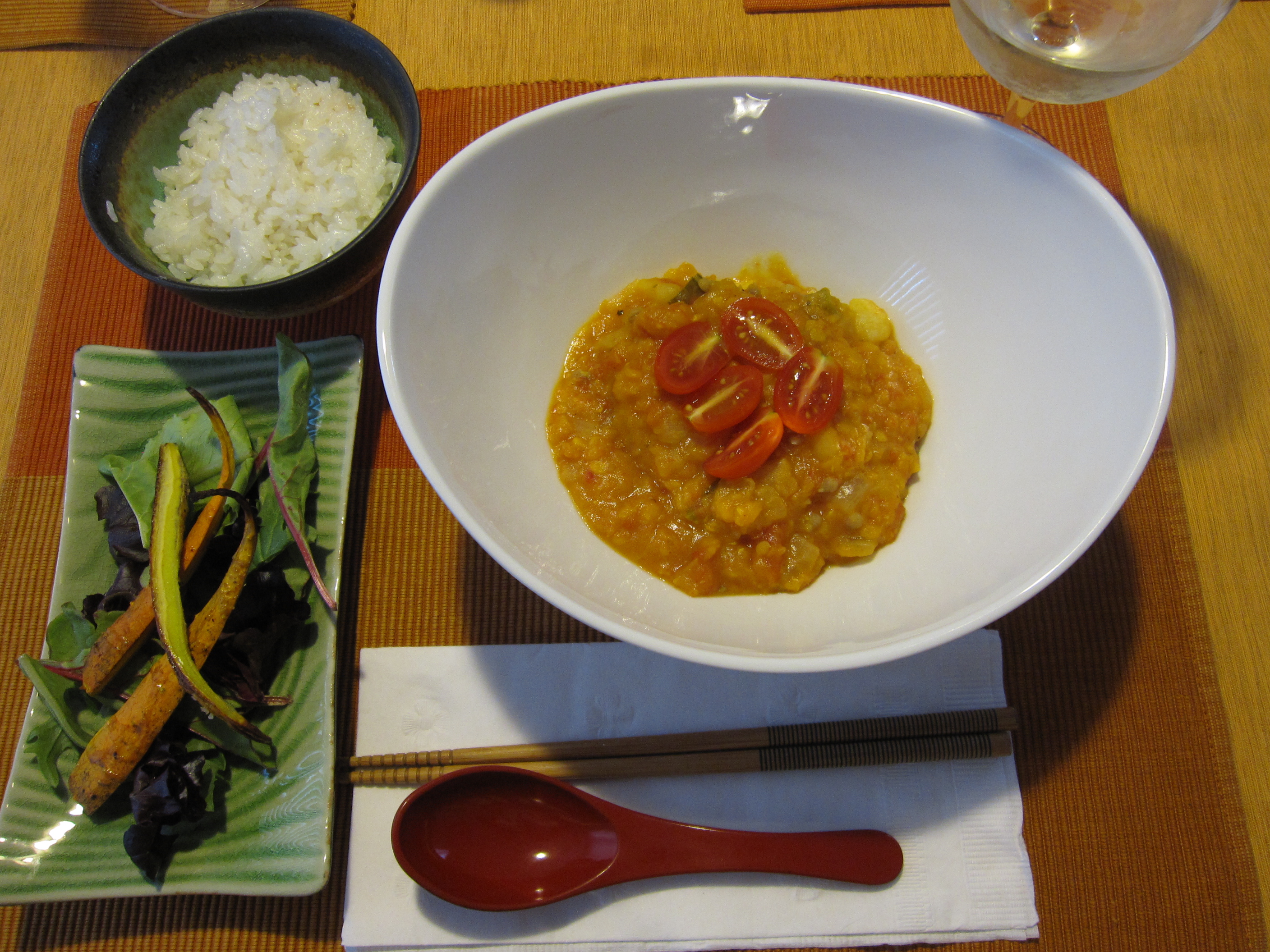
For Meatless Monday last night I made a Dahl, an Indian-style lentil stew. I had a handful of okra left from the farmer’s market this weekend, so I decided that this would be a good way to use them up.

My ingredient list included the okra (cut into 1/2 inch slices), 1/3 cup of red lentils, a 14 oz can of diced tomatoes, one medium onion diced, an inch of ginger, two garlic cloves, and one medium russet potato that I skinned and diced. I also used one cup of water and about a teaspoon of turmeric along with salt and pepper.
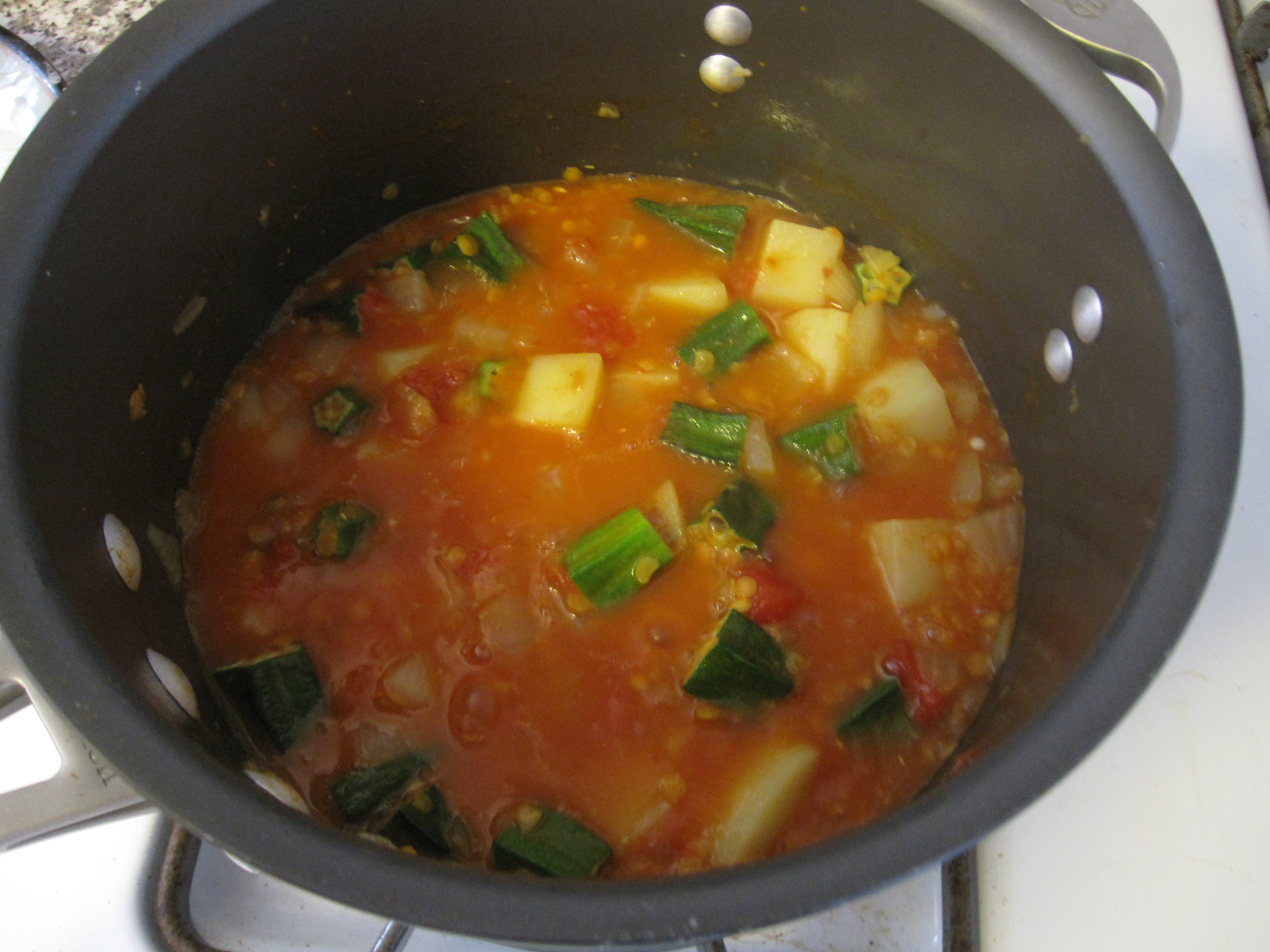
Over med-high heat I melted about a tablespoon of ghee and grated the ginger and garlic into it. Once they became fragrant, about 30 seconds or so, I added the onions. Those sautéed for about 5 minutes and then I added the potato. A few minutes later I stirred in the lentils just until they were fully coated with the ghee and then I poured in the water. I let the water come to a boil and then scraped up the garlic and ginger that stuck to the bottom of the pan. Then I added the turmeric, salt, and tomatoes and let that all come to a boil. Once boiling, I turned the heat down to med-low, stirred in the okra, covered the pan, and let it all simmer for about 30 minutes. After that, I added some black pepper and adjusted my salt. A garnish of halved cherry tomatoes and it’s ready to eat.

Besides the okra, I also had a few baby carrots from the farmer’s market that I needed to use up. Even though their skin was purple, the flesh was either orange or yellow. They were so tender and sweet, possibly the best carrots I’ve ever cooked with. I didn’t want to take away from their natural sweetness so I kept it really simple. After skinning them I quartered them length-wise. I drizzled some olive oil all over them, then sprinkled some cumin, salt, and pepper. I put them in the oven at 375 degrees for about 15-20 minutes. To serve, I just layed them on top of a mixed green salad.

As happens more often than not in my kitchen, white rice was served on the side.
Read Full Post »

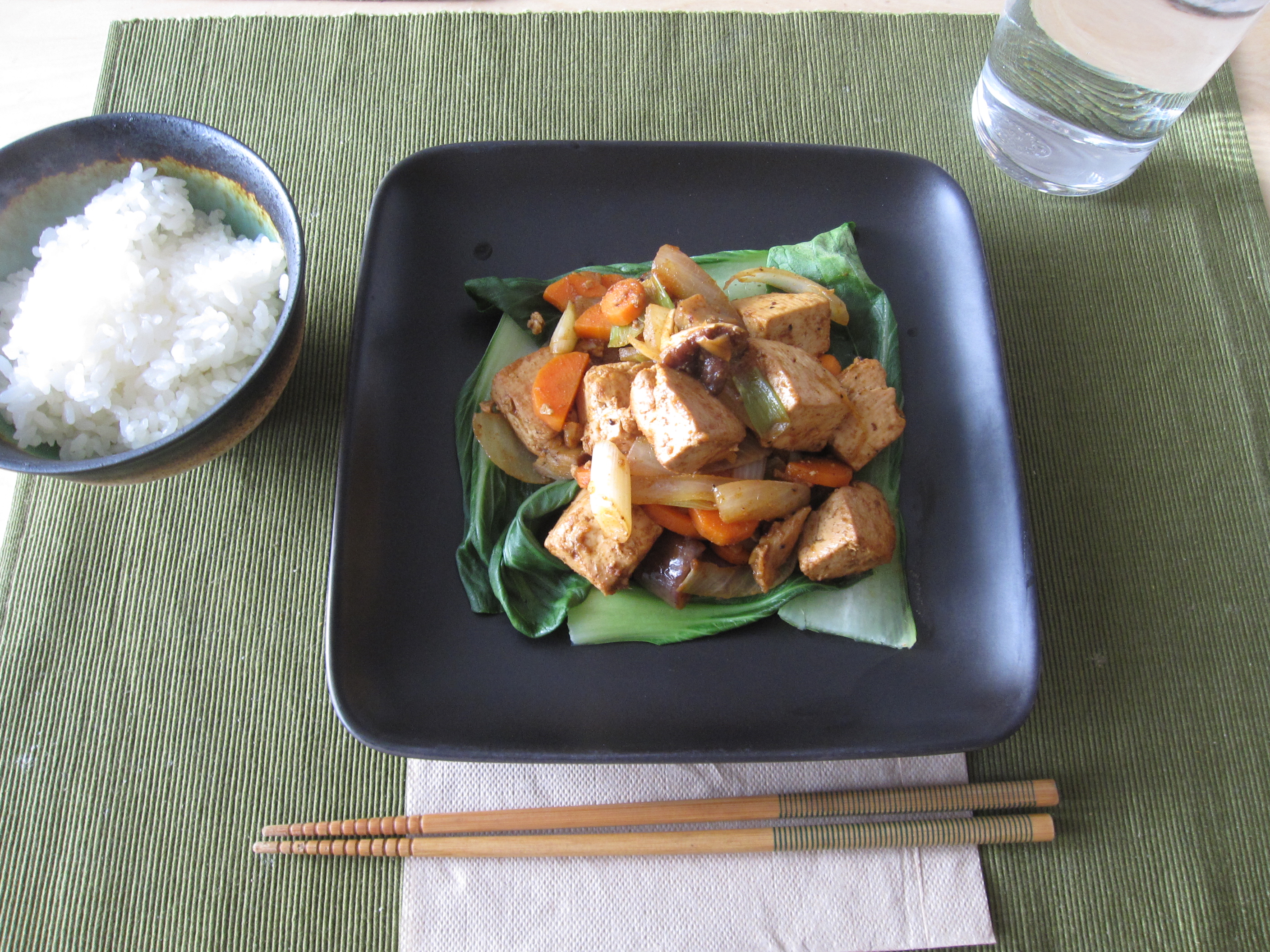
Feeling relatively uninspired for Meatless Monday last night I decided to clear some of the older veggies out of my fridge. The best way to do that is a simple stir-fry. Instead of meat I just added some cubed tofu.

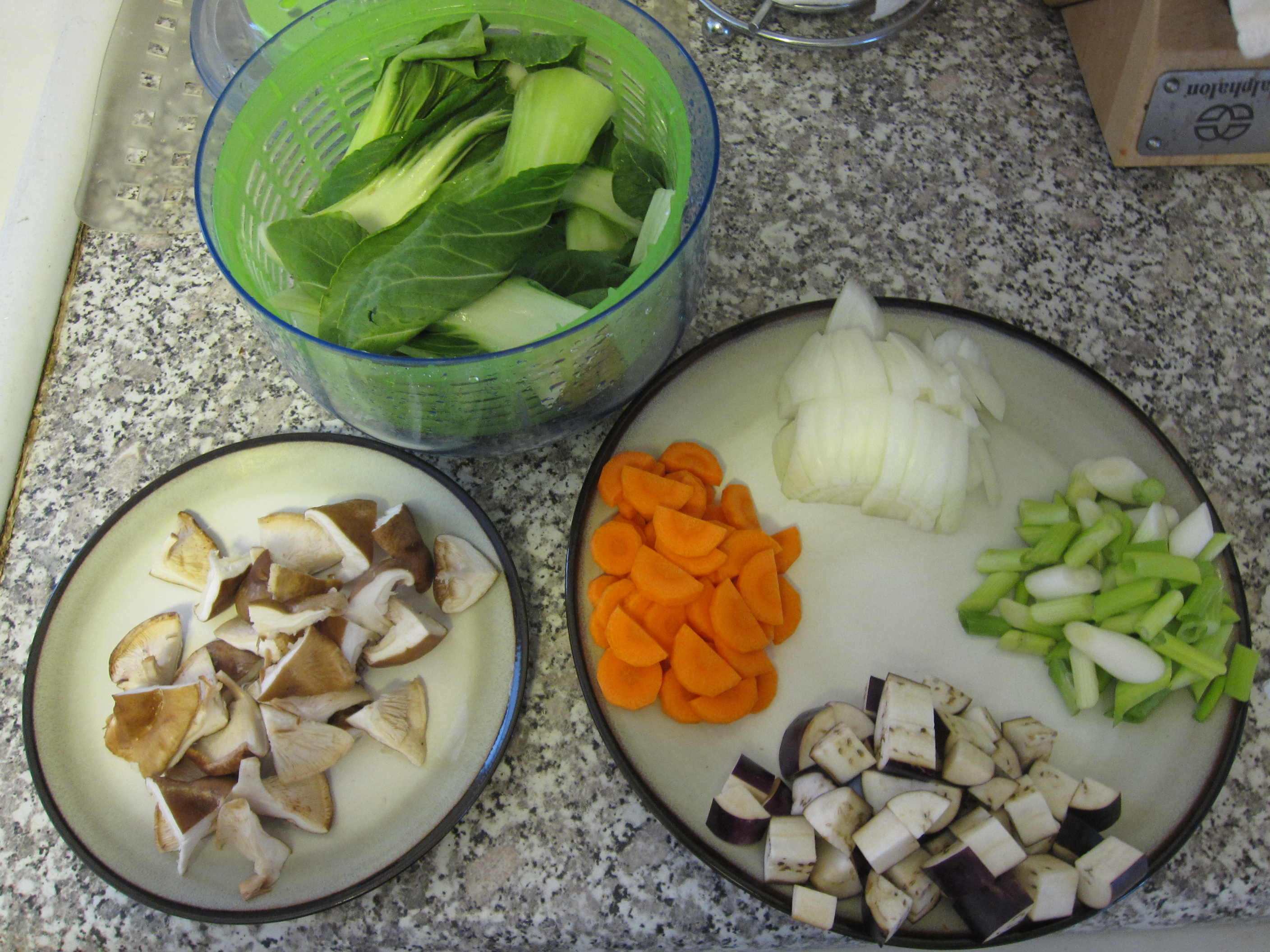
I halved and quartered some shiitake depending on their size, separated and cleaned up some baby bok choy, chopped up a carrot, half an onion, 6 green onions, and a chinese eggplant.

I mixed together 1 tablespoon of paprika, 2 teaspoons of cumin, a pinch of sugar, and a pinch of cayenne. After pressing the liquid out of the tofu in the fridge for about an hour I cubed it and tossed it in the spice mix. Then, in a hot pan, I stir-fried the tofu in soy oil for about 5 minutes. After that I put the tofu back into a bowl, wiped out the pan, and then cooked the veggies.

I started by adding some minced garlic and ginger to some hot soy oil. Then every few minutes I added another vegetable. I started with the onion, then carrot, green onion, shiitake, and eggplant. Once all the veggies were in I seasoned with salt and pepper. Then I tossed the tofu back in and added the juice of one lime and 2 tablespoons of honey (I had mixed the two together beforehand in order to get the honey fully integrated). I let that cook down for about 3 minutes or so before it was ready to serve.

I steamed the baby bok choy for about 4 minutes.

To serve, I laid the baby bok choy down on the plate and then topped it with the stir-fry. White rice was on the side.

Read Full Post »

After years of wondering why there was no Indian food in Wicker Park one finally opened up a few months ago at 1414 N Milwaukee, a nice 15 minute walk from my place. It’s called Cumin. They claim to be modern Nepalese/Indian, and while there really isn’t anything modern about it, it was damn tasty!

They have nice paintings of Himalayan villages on the walls and a pretty nice bar. Tables were a little too close together when getting up to leave or go to the bathroom, but were otherwise spaced alright while eating. The two-top tables were too small though. There was barely enough room for our food and didn’t leave us any elbow room. Overall, we weren’t uncomfortable though.

Once we ordered they brought out the pappdom and sauces. The standard tamarind, cilantro, and chutney. The tamarind sauce was excellent! One of the best I’ve ever had.

For an appetizer we got the “true national dish” of Nepal (according to the menu), chicken momo. It’s basically just a regular dumpling filled with seasoned ground chicken. Amongst the seasonings were turmeric, ginger, and cumin. It was delicious! Very simple, very fresh, full of flavor.

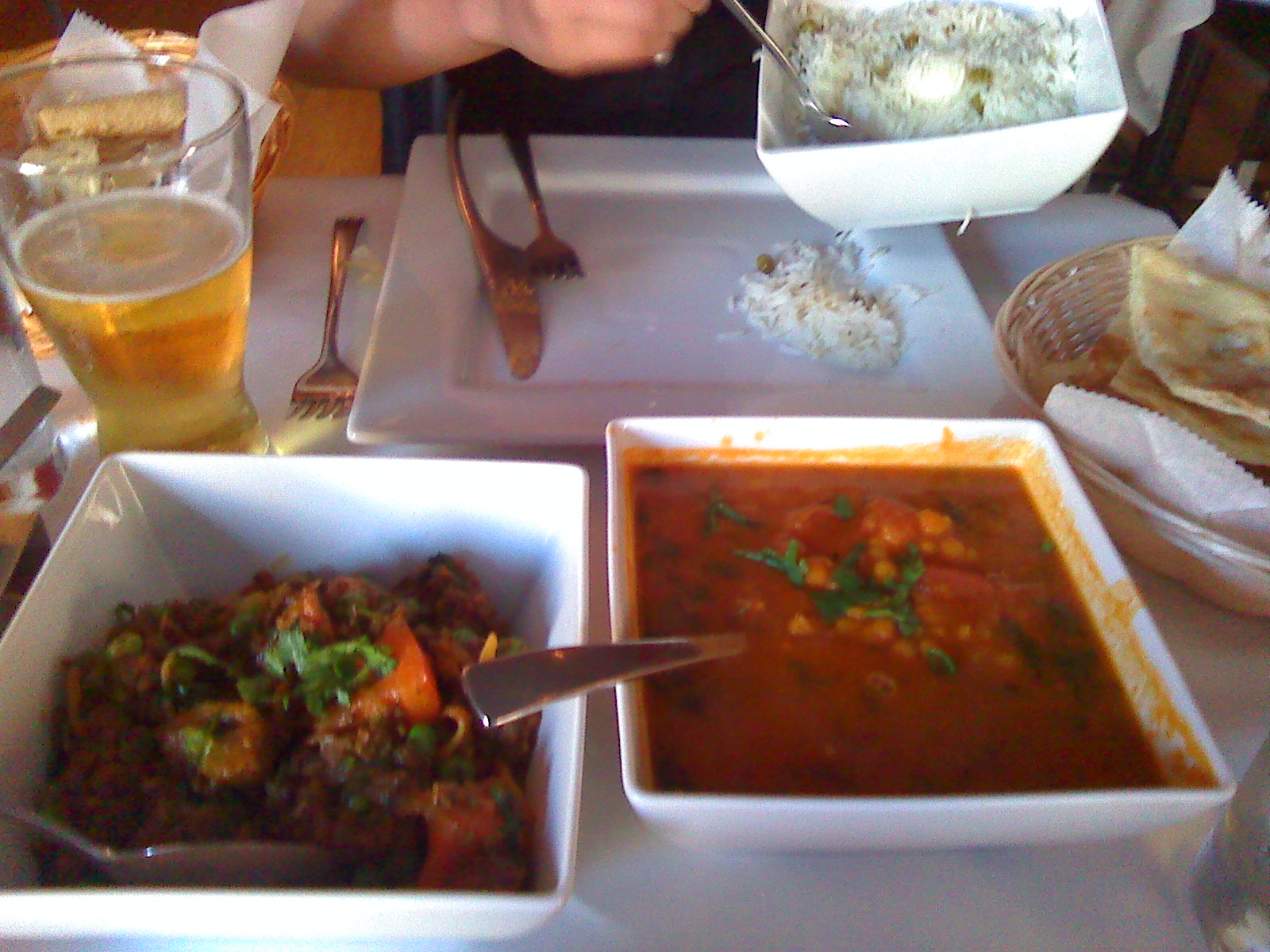
We shared two entres along with some Indian rice and some naan. We got lamb keema matar and jhaneko dal. The lamb dish was ground lamb cooked with peas, big slivers of ginger, carrots, onion, and tomato. The dal was a Nepalese lentil dish stewed with onion and cumin. Both dishes were excellent!

The appetizers range from $4-10 while the entres start at $11 and top out at $20 for seafood. They average about $12-14 though, so this restaurant is not overpriced at all. It’s priced in line with a typical Indian restaurant. The quality of food is fantastic as well. The ingredients were all fresh and nicely prepared.

I won’t go as far as saying that Cumin is my new favorite Indian restaurant, because it isn’t. However, having one of its caliber so close is music to my tongue.

Read Full Post »

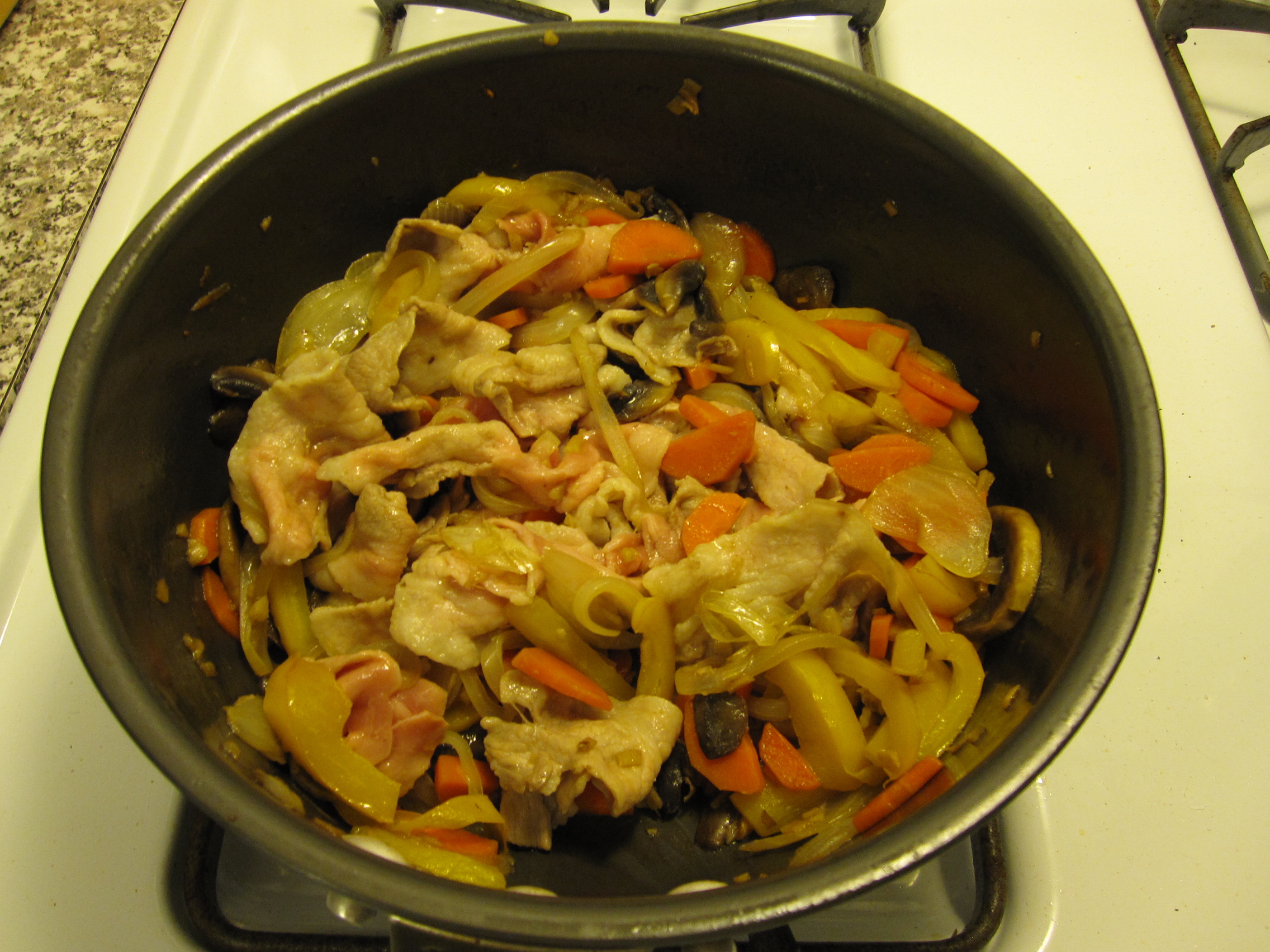
The other night I made a Japanese classic with some of my own additions. I made Shogayaki, ginger pork. Typically made with just thinly sliced pork, ginger, soy sauce, mirin, and sake, I added a few vegetables into the mix instead of serving vegetables separately. This is an easy dish to make and very flavorful.

We picked up some really nice Kurobuta (Berkshire) sidebelly while at Mitsuwa. It came thinly sliced which is prefered for this dish. It doesn’t necessarily have to be thinly sliced, nor does it have to be belly. You could get some nice chops and cut them thinly yourself, just try to make them no thicker than about 1/8 inch. I cut the pork sliced in half since they were as long as bacon. That wasn’t necessary, just what I felt like doing.

For vegetables I sliced half an onion, cut a carrot into half moons, sliced half of a yellow bell pepper, and slices a bunch of mushrooms.

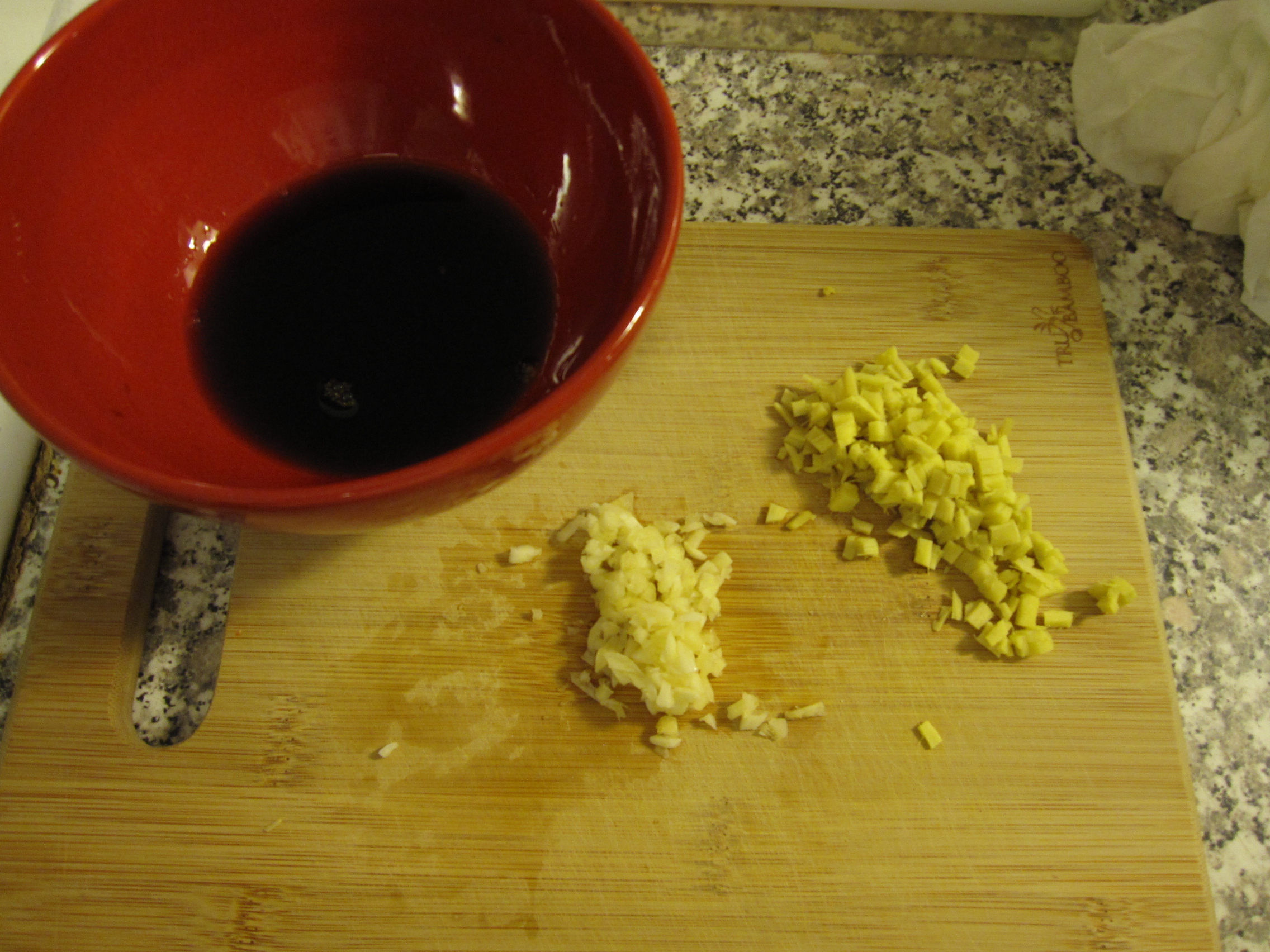
For flavorings I, obviously from the title, used some minced ginger, a couple of minced garlic cloves, and a sauce of 3 tablespoons soy, 2 tablespoons sake, and 1 tablespoon mirin.

I started by tossing the ginger and garlic into a hot pan with 2 tablespoons of sesame oil and 2 tablespoons of soy oil. I let that go for just a few minutes until it became fragrant.

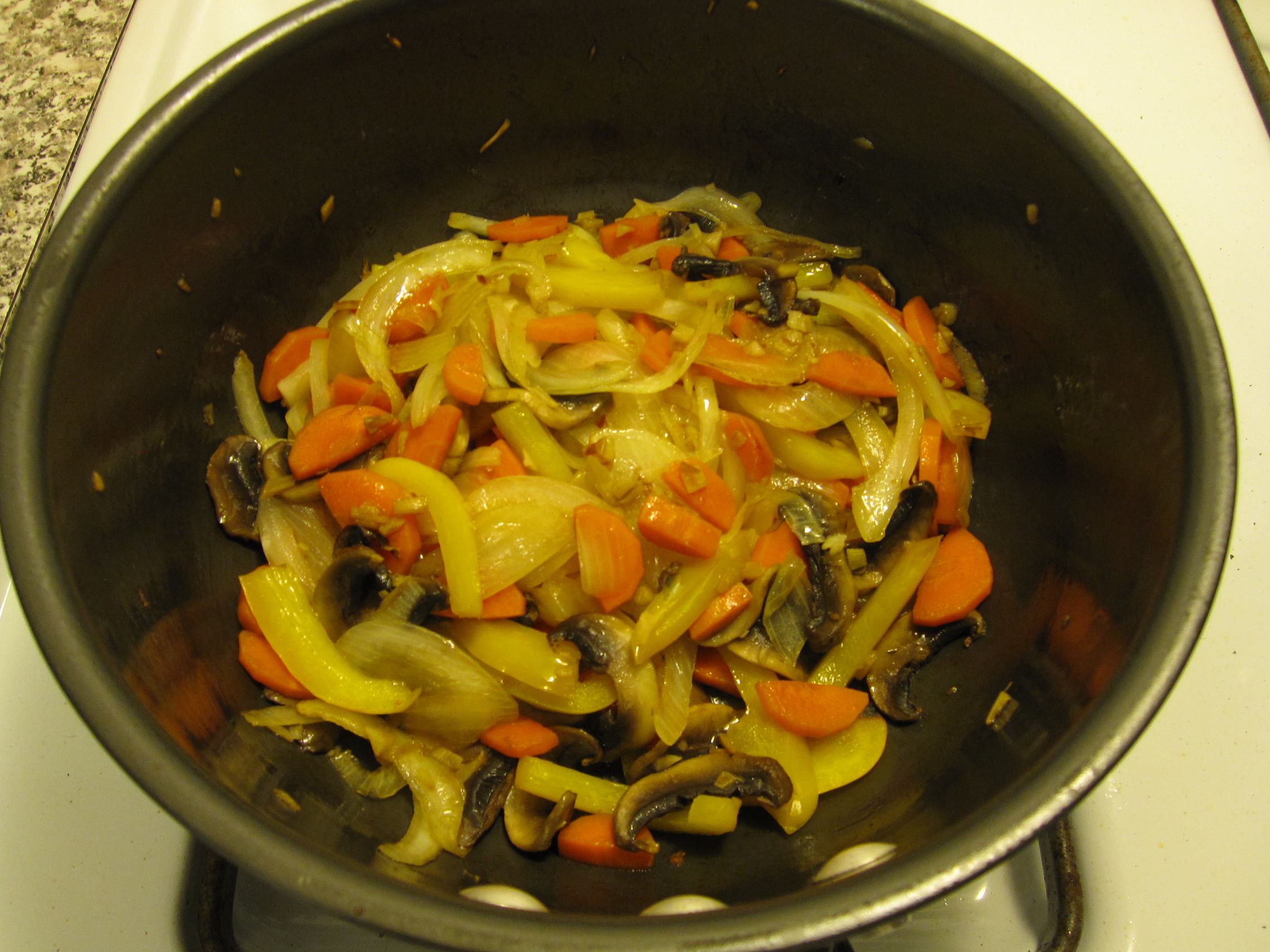
Then I added the onions for a few minutes. Followed by the carrot for a few minutes. Then the pepper for a few more minutes. And finally the mushrooms for another few minutes.

Once the vegetables were mostly cooked I added the pork. I mixed it all together and let it go for, you guessed it, a few minutes.

Then I dumped in the sauce along with some black pepper. I covered the pan and turned the heat down to medium once the sauce started to boil a little. Every few minutes I stirred everything around. After about 15 minutes I uncovered the pan and let the sauce reduce a little. I served it once the pork and vegetables were evenly coated by the slightly thickened sauce.

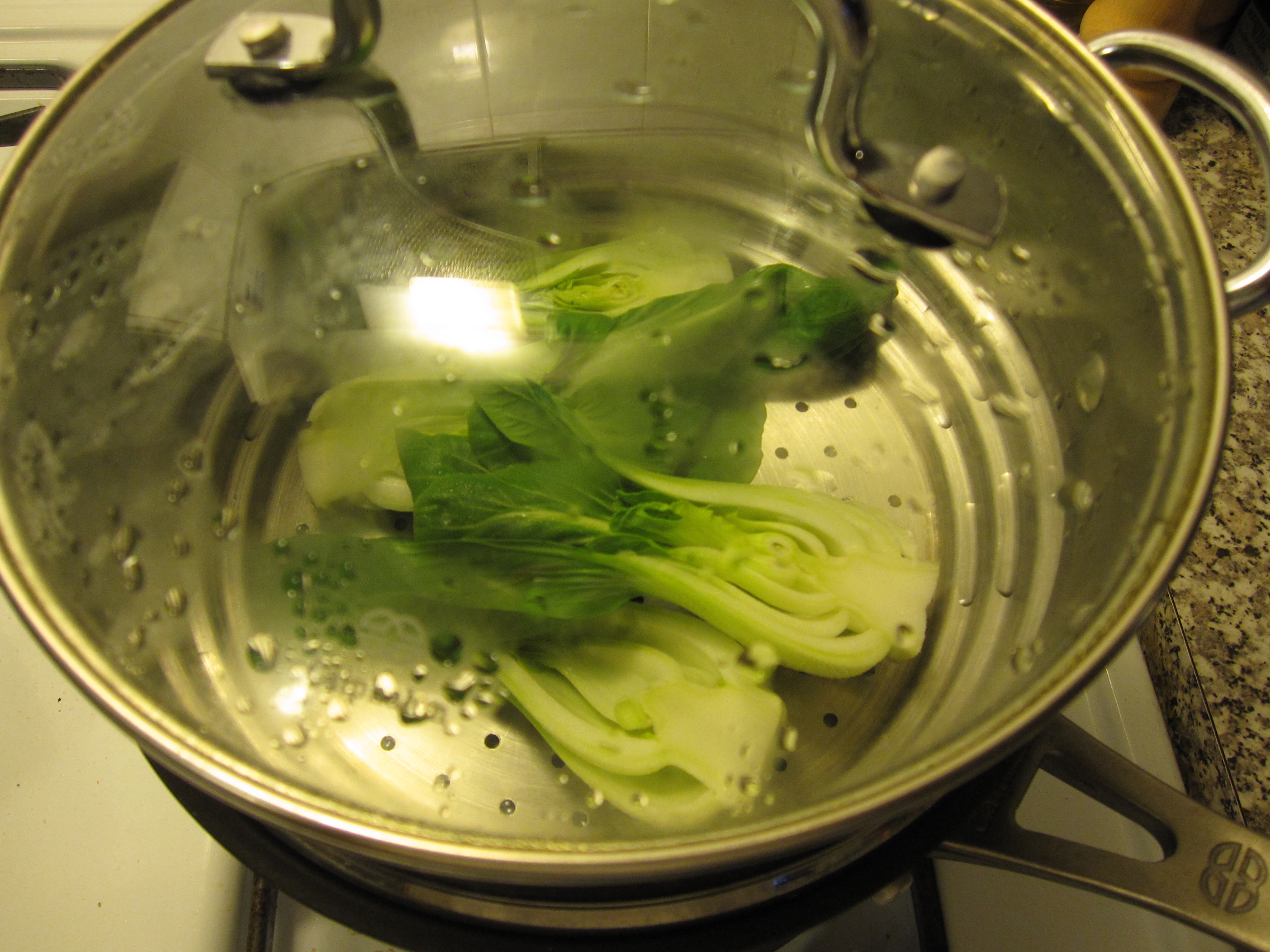
While the sauce was thickening I put a couple of baby bok choy that I had cut in half into the steamer. I let them steam for about 6 minutes. They were served next to the shogayaki with some white rice.

Read Full Post »

Last night’s Meatless Monday certainly wasn’t the prettiest of all plating, but I do have to say, my fried rice was excellent!

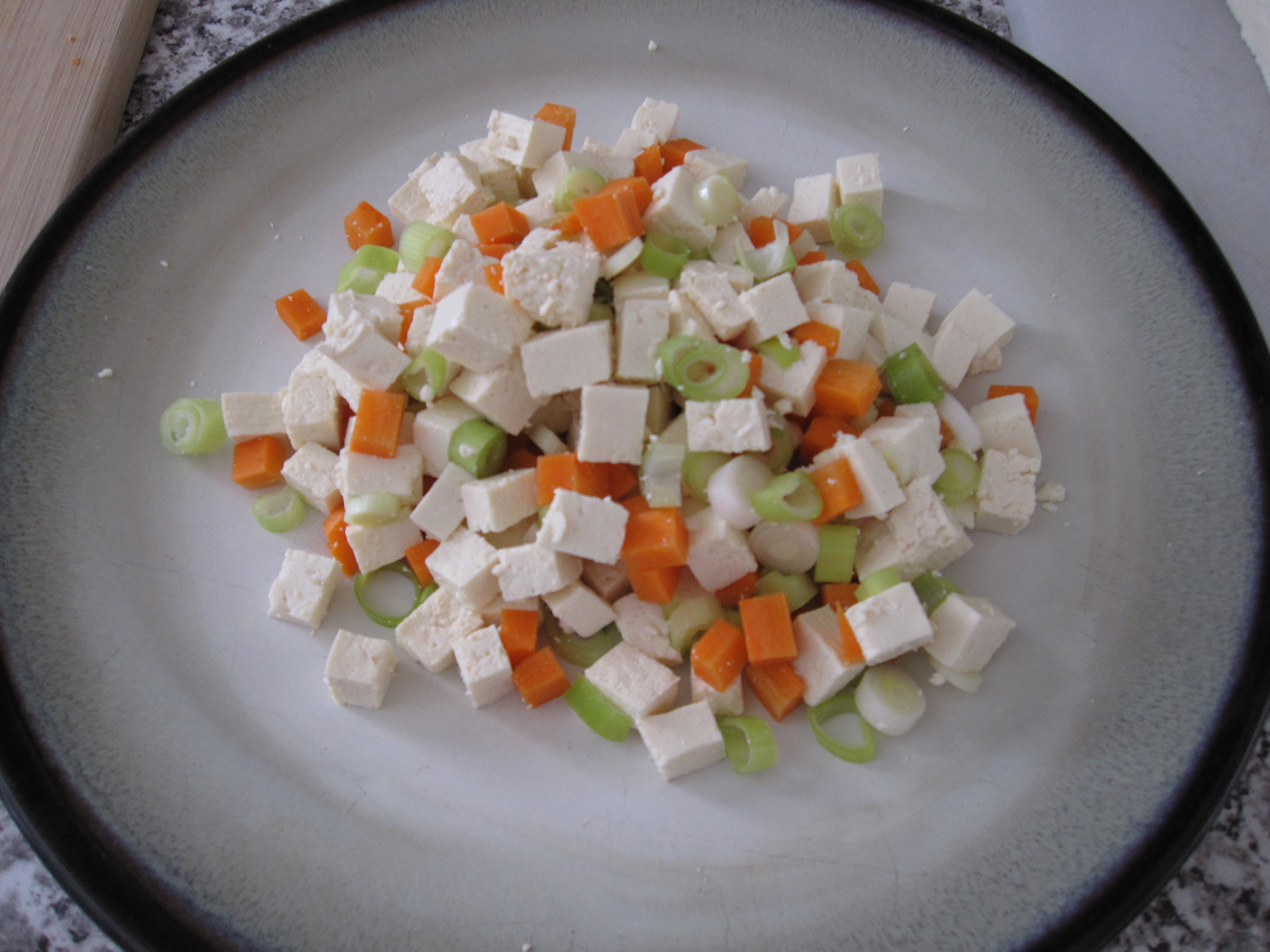
First things first, making the shumai. I simply took a half a piece of tofu and mixed it together with a small carrot and three green onions that were all small diced. I folded it all into some wonton wrappers and then set everything aside to steam later. When it came time to steam them, I let them go for about 10 minutes or so. That left the carrots a little al dente to leave a little texture. For service, I drizzled the shumai with some ponzu.

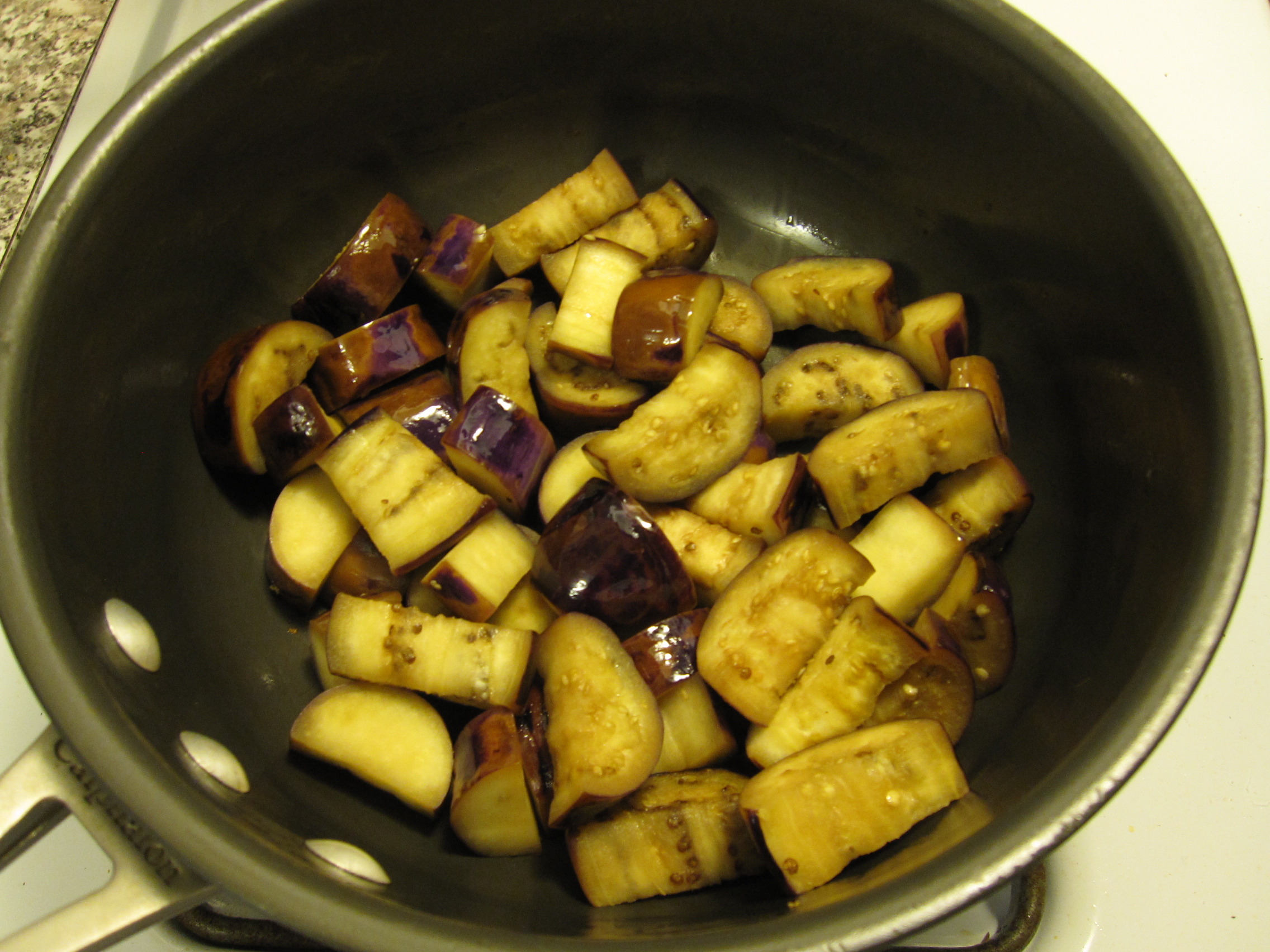
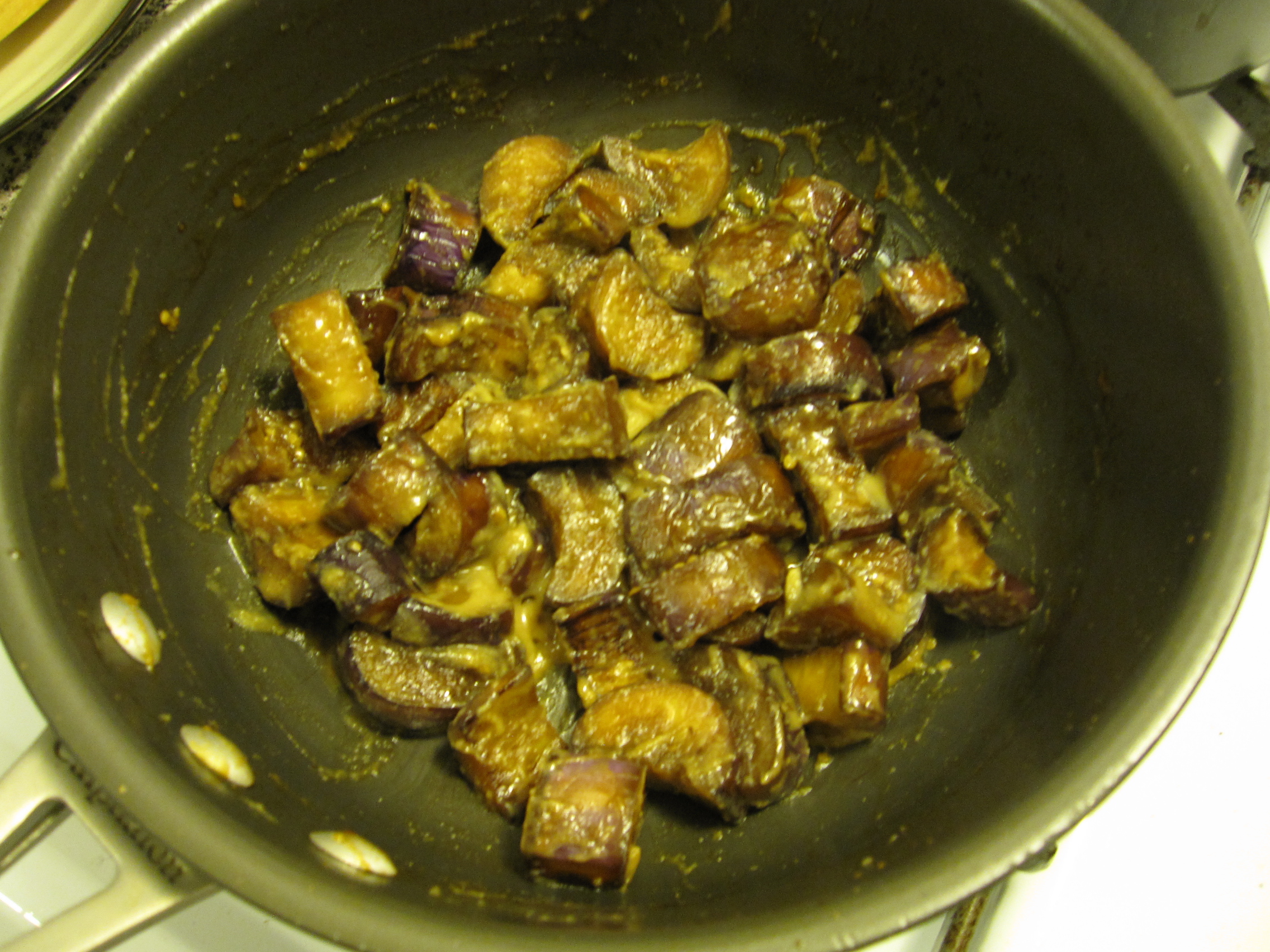
The miso eggplant is a classic Japanese home dish called nasu-miso. To start, I took two large Chinese eggplants, chopped them up into bite-sized pieces, then sprinkled them with salt in a colander. I let them sit for about a half hour to allow the bitter juices to drip out. Then I rinsed them off and squeezed them dry.

In a really hot pan I heated up about 5 tablespoons of sesame oil. As soon as the oil was smoking hot I added the eggplant. I wanted to wait until the oil was super hot so that the eggplant didn’t absorb it all. I fried the eggplant for about 8 minutes and then added a mix consisting of 3 tablespoons of sake, 1 tablespoon of mirin, 2 tablespoons of soy sauce, and 1 tablespoon of sugar. I let that boil down for a couple of minutes.

Once the liquid almost evaporated and absorbed, I added 2 tablespoons of miso that I diluted with 3 tablespoons of water. I mixed that all around and let it cook for about 2 more minutes before serving.

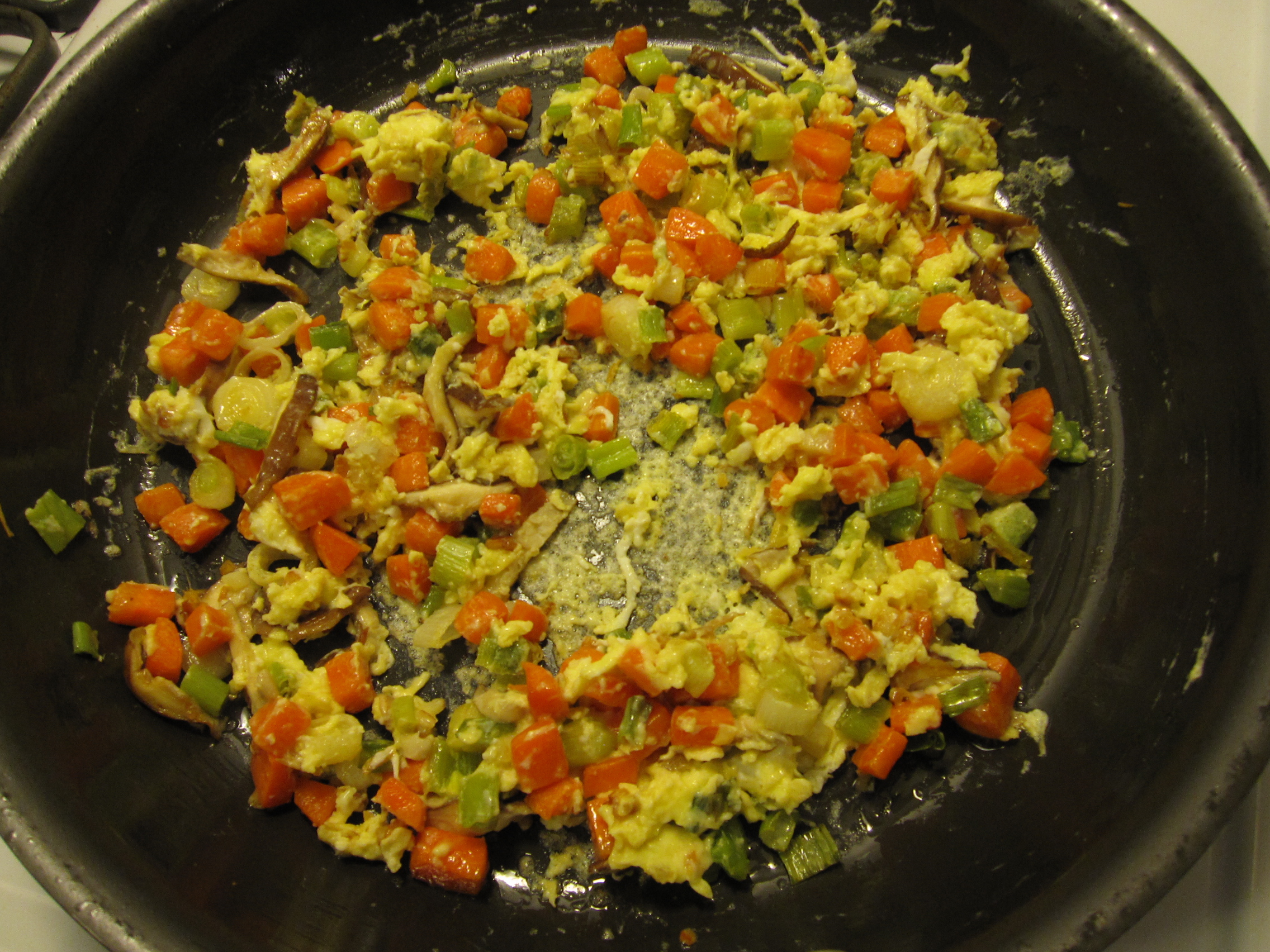
To make the fried rice I started by sauteing some ginger and garlic in peanut oil. After a few minutes when they became really aromatic I threw in a diced carrot and 7 chopped green onions. I let that all cook for about 7 minutes and then threw in a bunch of thinly sliced shiitake. That went for another 4 minutes.

Typically, when I make fried rice, I will first make some scrambled eggs and set them aside to add right about this point. I forgot to do that. So, I just dumped two scrambled eggs on top of the veggies and fried them. I still works, but it’s not how fried rice is usually made.

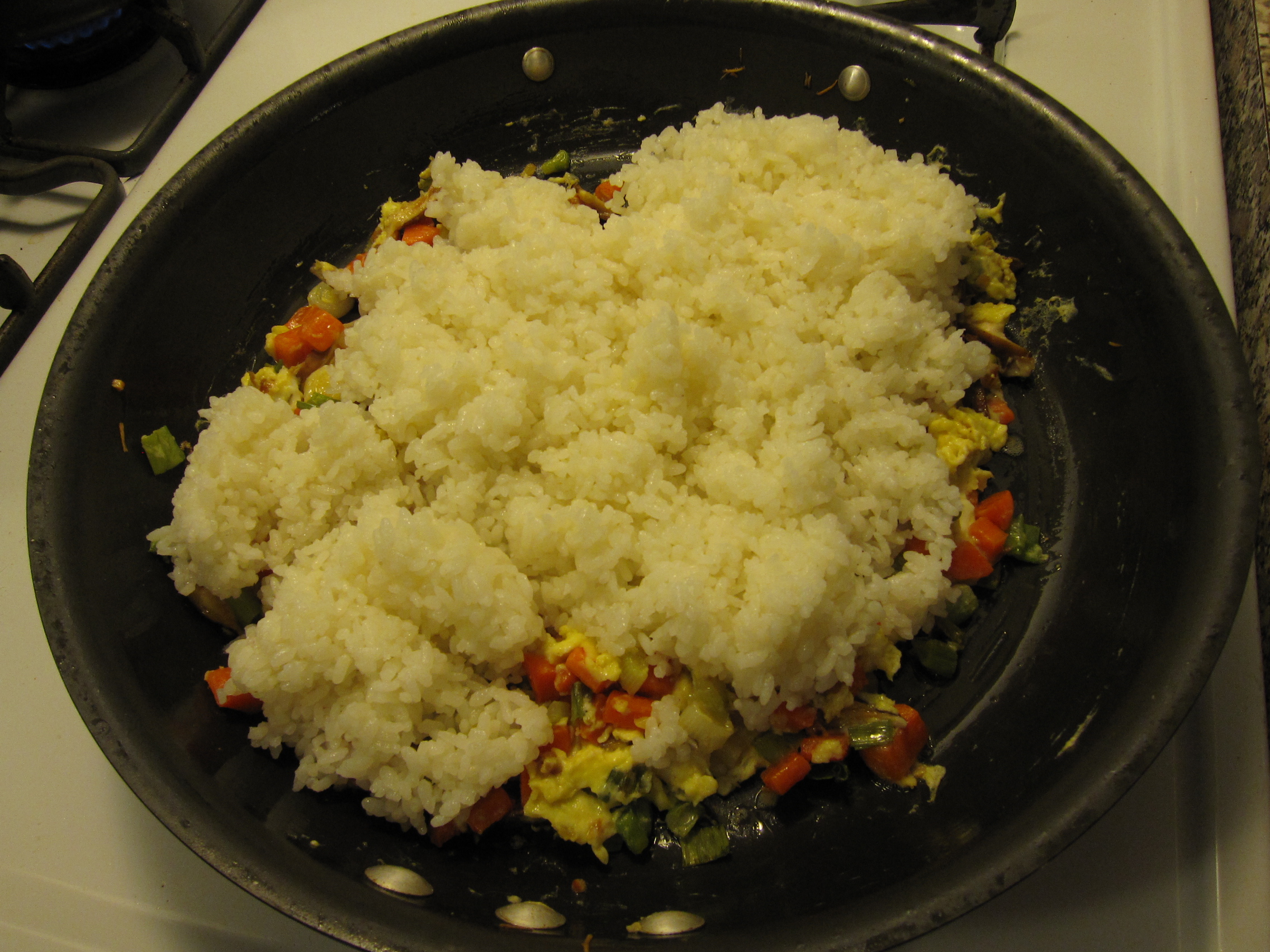
Once the egg was cooked I threw in 2 cups of rice that I had made earlier in the day and let cool. With a wooden spoon I continuously broke up the rice and stirred it all in to get an even mix and to allow all of the rice to fry a little bit.

Once the rice is was all broken up I added a few tablespoons of soy sauce along with some black pepper and mixed it in really well. Then I tasted it for seasoning only to see that I needed a little more soy. So, I added a little more soy. It’s always best to start with less than you think you need. You can always add more, you can’t take any back at this point. At any rate, the rice turned out fantastic!

Oh, right before serving the rice I mixed in a bunch of chopped chives. We were at my buddy’s new place out in Jefferson Park and they have tons of chives growing in their backyard. So they gave us some for our cooking pleasure.

Read Full Post »

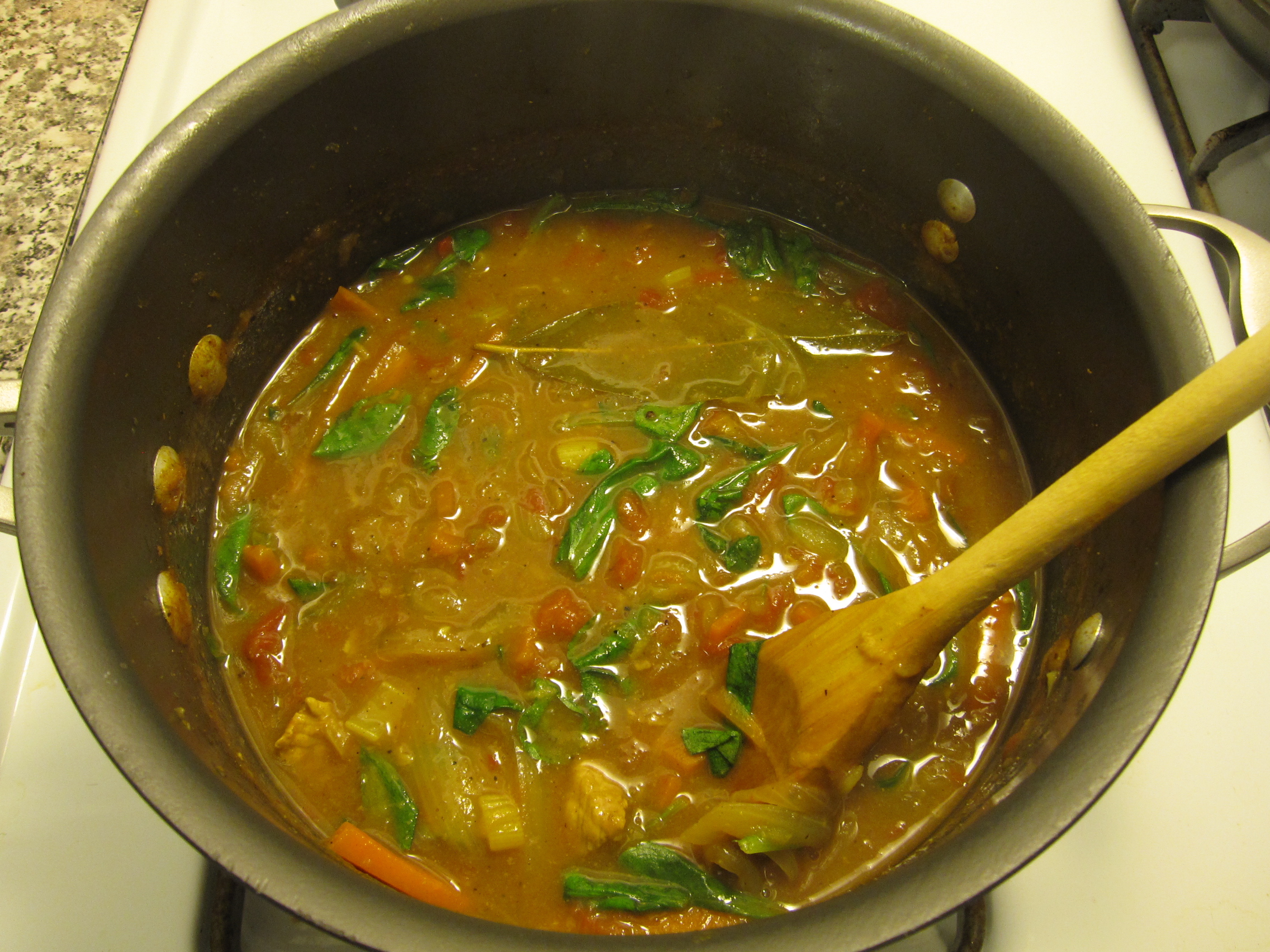
Alright, so I didn’t cook last night, nor did I post anything yesterday. In light of that here’s what I made Wednesday night, a Pork Curry. This recipe came from my father-in-law in Japan. He was very excited when he sent it over and translated it into English for me. Some of the measurements that I used are a little different from his since he’s on the Metric System. I also did a couple of things different. Overall my dish was pretty true to his recipe.

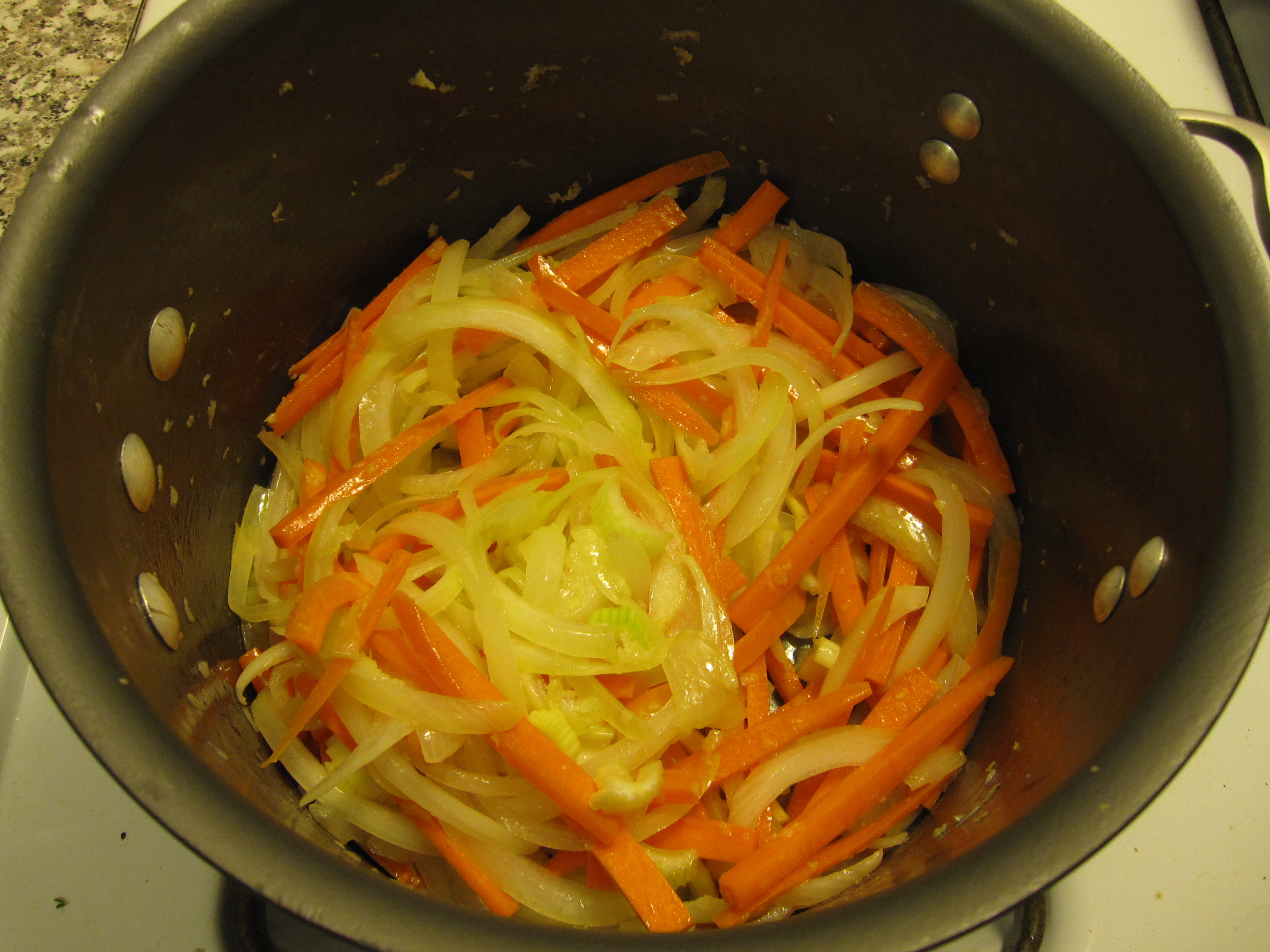
To start, I sautéed a sliced onion, a shredded carrot, and two ribs of celery chopped in some soy oil with garlic and ginger. Uichiro adds a little butter, I didn’t because I’ve been eating a lot of butter lately. I need to keep my girlish figure.

Once the vegetables were sweated down for about 7 minutes I added about 2/3’s of a pound of pork chops that I had sliced to about 1/4 inch width. I let the pork cook just until the exterior turned white but the insides were still uncooked. Then I added 2 tablespoons of curry powder, about a teaspoon of black pepper, 5 tablespoons of flour, 1 tablespoon of garam masala, and 1 teaspoon of turmeric. I stirred that all in and sautéed for a few more minutes. Then I poured in 50 ml of white wine and let it boil down.

Once the wine had boiled down I added three cups of water, a 14 oz can of diced tomatoes (Uichiro chopped 1 cup of fresh tomatoes), 1 tablespoon of soy sauce, 1 tablespoon of Worcestershire sauce, once chicken bouillon cube, a bay leaf, salt, and pepper. Once that all came to a boil I covered it and turned the heat down to med-low. That simmered for about 40 minutes.

After the 40 minutes I took a half an apple and grated it into. This adds a lot of sweetness as well as some starch to help the flour thicken it up a bit. I also added a large pinch of sugar to help balance out the spice.

To add a green element to the curry I threw some mache leaves in right after turning off the heat. Uichiro didn’t do that. It really didn’t need it, I just wanted to add the color.

Overall, I have to say, it’s another winner from Uichiro. Next time I think I’ll use about a half cup less water, but otherwise it was delicious. I am disappointed that he didn’t have a cool name for the dish though. He calls his meatloaf “cool breeze amongst the pine trees”. I have no idea why, but it is a damn good meatloaf!

Read Full Post »

Last night was Yuki’s turn to make dinner. She made one of her specialties, vegetable soup with chicken-stuffed cabbage rolls.

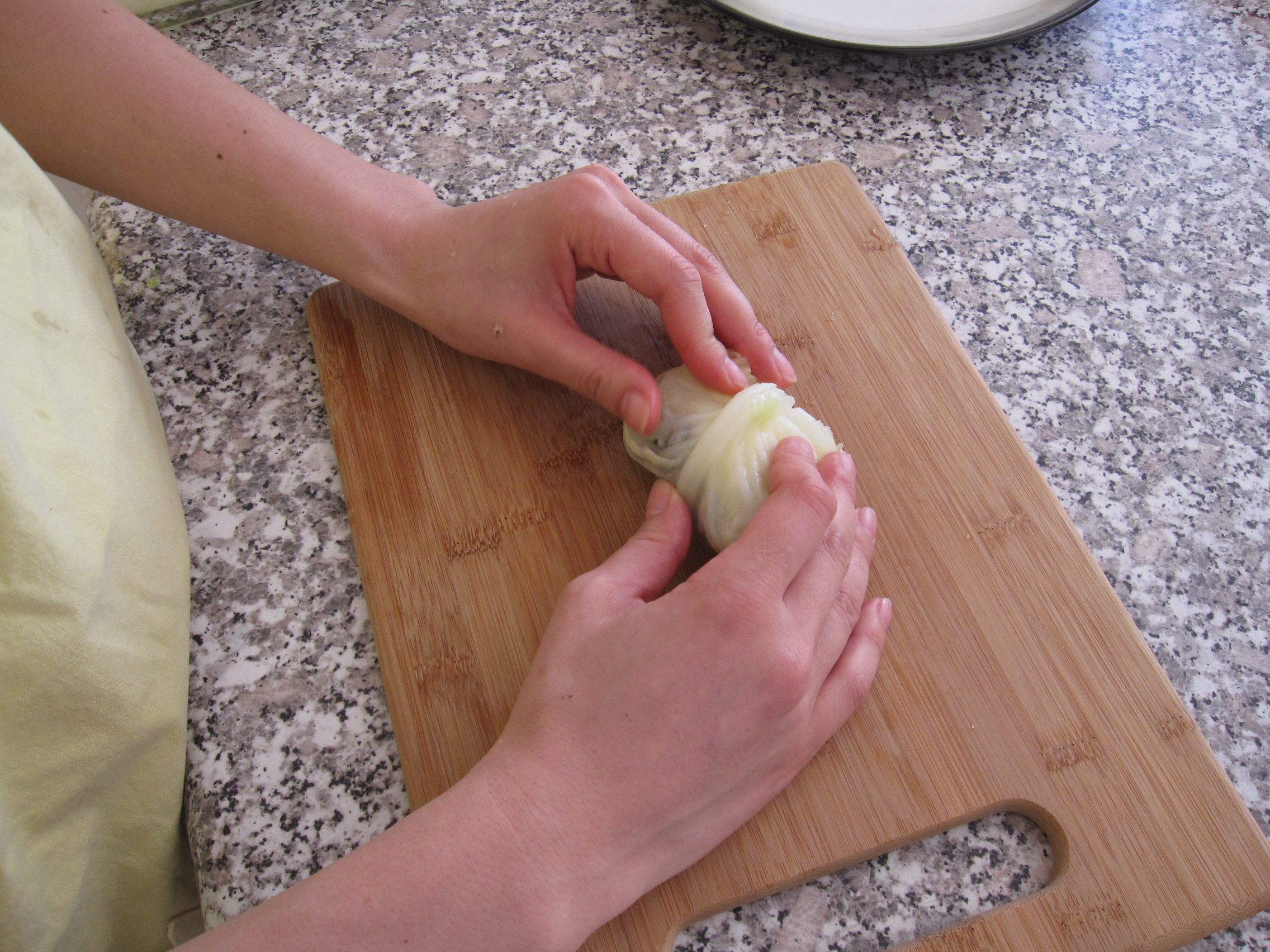
First thing she did was to take a head of cabbage and plunge it into boiling water for a few minutes. She didn’t want to cook the cabbage, just make the leaves pliable for rolling, so they don’t break. Then she pulled apart the leaves and separated them.

For the chicken filling she put some ground thigh meat in a bowl. To that I grated some ginger and garlic and she chopped up some cilantro and put that in as well. She also soaked some hijiki seaweed in warm water for about 20 minutes. Once it was soft, she drained it (reserving the liquid) and tossed that into the meat as well. Some salt and pepper and I mixed it all up.

She laid the cabbage leaves down, one at a time, and I dropped a spoonful-sized ball of the meat mixture in the middle. Then she rolled them up and set aside.

For the broth she added the reserved hijiki water to some chicken stock and brought it to a boil. Then she added some green onions, carrots, broccoli, and the cabbage rolls. The leftover cabbage leaves that weren’t rolled were cut up and thrown into the soup as well. She let it simmer over medium heat for about a half hour or so.

That’s it. Simple, healthy, and delicious. White rice on the side, but bread would work too.

Read Full Post »

Whole Foods had these fantastic looking bone-on pork chops for sale yesterday. With the weather being nice and all, I thought “I gots to grill me some of those!”

To start, I made a marinade for the chops. I grated an inch of ginger and two garlic cloves into my baking dish (I wasn’t baking at all, but it fit the chops in an even layer). To that, I added 5 tablespoons of soy sauce, 3 of sake, and 1 of apple cider vinegar. I mixed in about 1 tablespoon of sesame oil and some fresh cracked black pepper. I coated the chops, covered with plastic, and marinated in the fridge for about an hour.

For veggies, I did some sauteing in butter. I melted 2 tablespoons of butter and then threw in 3 crushed garlic cloves and let cook down for a few minutes. Then I added a chopped carrot. A few minutes later I threw in a red bell pepper that I sliced as well as 8 chopped green onions. Then, a few more minutes and I added some green beans and shiitake. I let it all cook together for a few minutes and then added a few tablespoons of soy sauce. I let the soy coat all of the veggies and then covered it and turned the heat down to med-low. I let the veggies sort of steam in the soy butter while I grilled the chops.

Since the chops were bone-on, the meat stayed a lot juicier than a boneless chop. I do want to mention that I took them out of the fridge about a half hour prior to throwing them on the grill to bring them back to room temp.

Some white rice and we were ready for dinner.

Read Full Post »

Yuki did the cooking last night. There’s a popular bento dish called Sanshoku Bento, or three-color bento. It’s basically rice topped with some sort of ground meat, scrambled eggs, and some sort of vegetable. Hence, the name three-color. Drawing off of that, she ended up doing Yonshoku, or 4 colors.

For the meat we picked up some really good ground beef. Whole Foods had 85% grass-fed on sale, so we took advantage of that. She cooked it up with some garlic, ginger, sugar, soy, sake, mirin, and a little sesame oil. Not sure what measurements she used though.

For the eggs she simply scrambled a couple.

We had a Chinese eggplant in the fridge that needed to be used up, so she cooked it in soy, sake, and mirin.

For the green she used two vegetables. First, she boiled some broccoli. Then she wilted down some spinach in a little bit of soy sauce.

Not wanting to waste the broccoli water, she added the spinach juice to it and then boiled some mushrooms, carrot slices, green onion, and wakame in it for about 10 minutes or so. Then she added a little soy sauce and just a touch of sesame oil. Just before serving she mixed in about a tablespoon of miso.

Read Full Post »

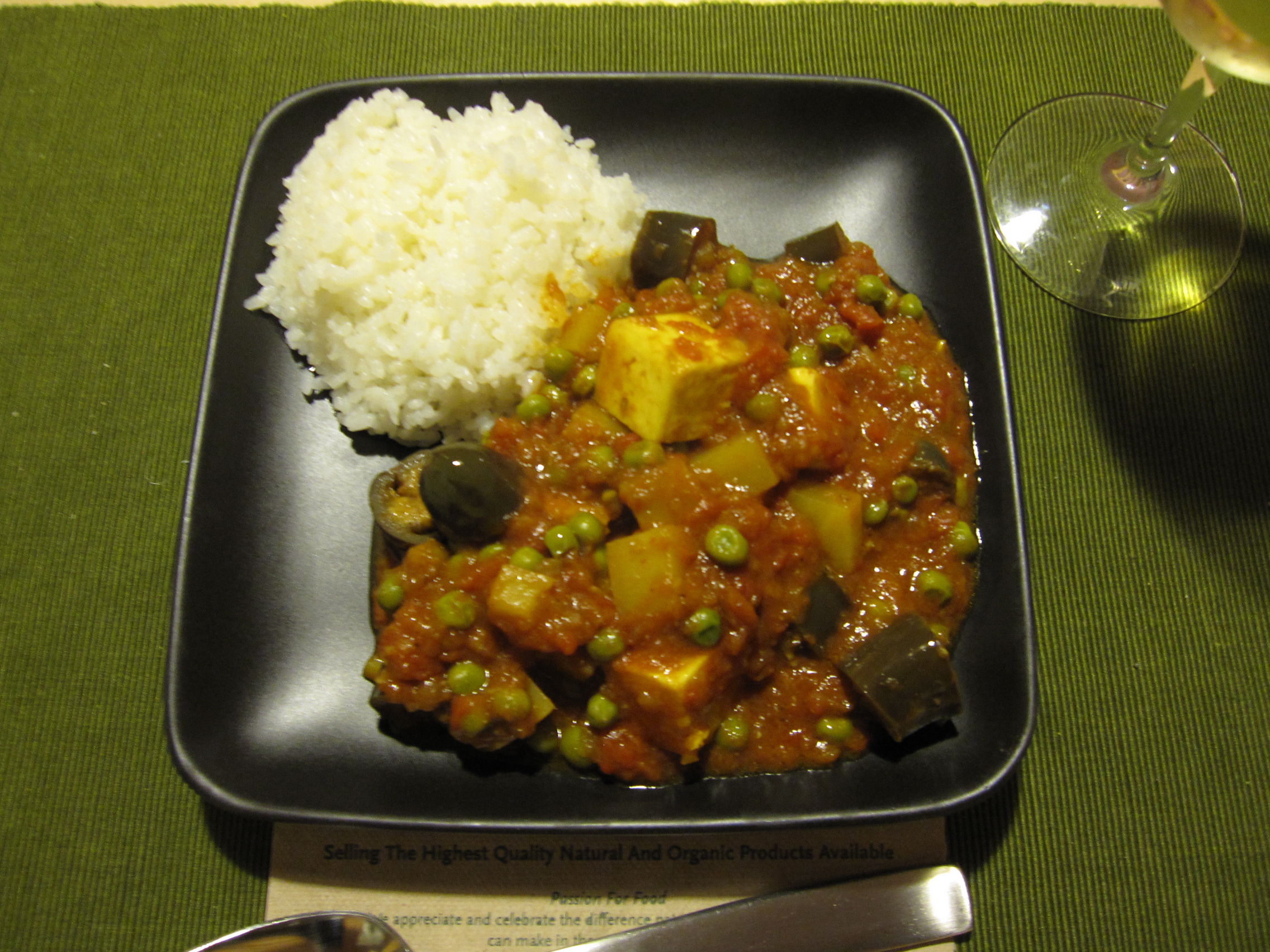
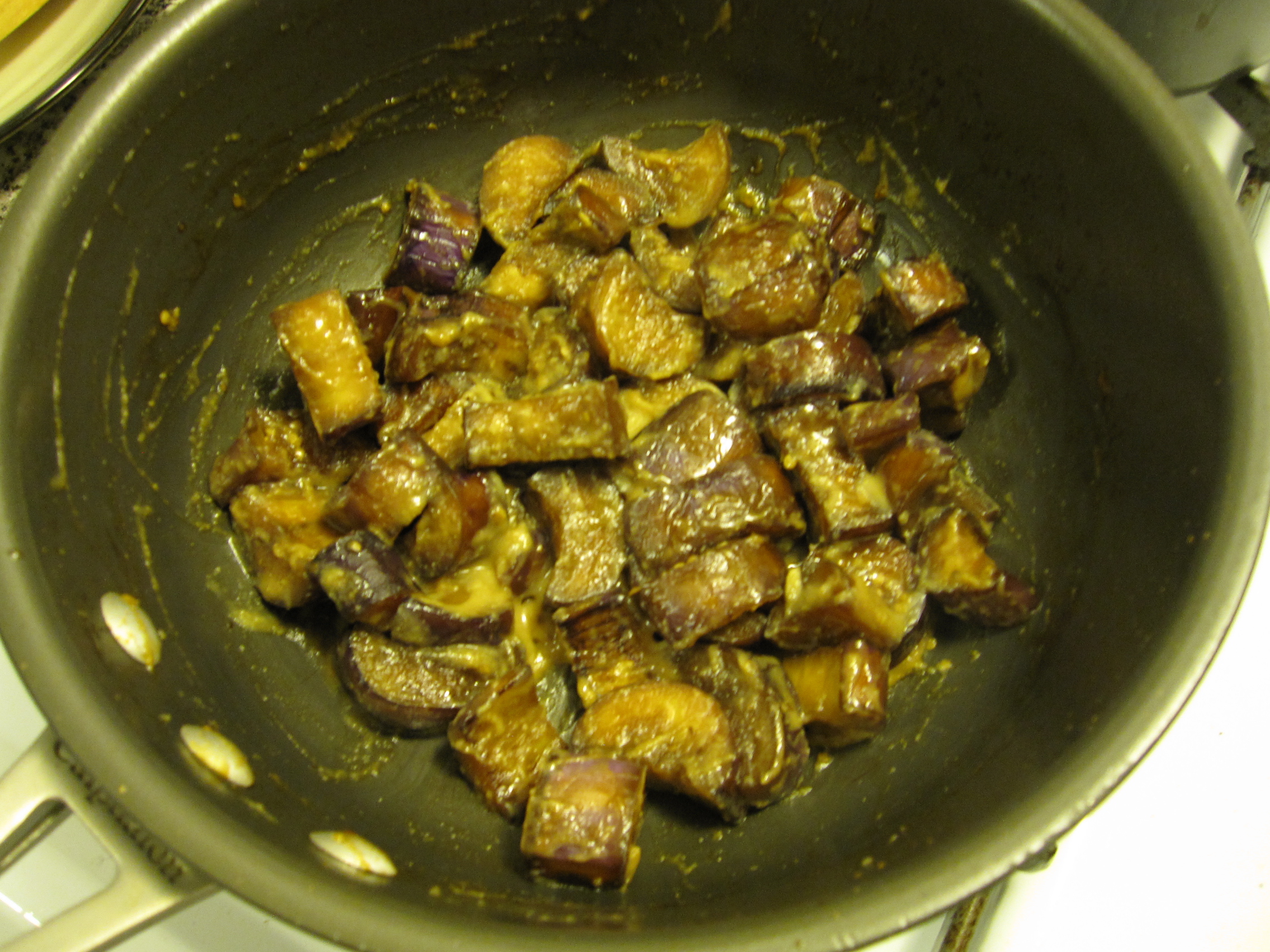
I made a vegetarian curry for Meatless Monday last night. For the protein I used paneer, but since it’s expensive ($8.99 for 8oz!) I decided to add a bunch of this really nice Japanese Eggplant they had at the store (only $2.99 a pound). I know eggplant isn’t protein, but it helped add substance to the dish while cutting the cost.

I started by melting 3 tablespoons of ghee in a medium-high pan. I added a teaspoon of ground cumin and let it cook for a minute. Then I added an inch of grated ginger and 4 minced garlic cloves. Once those became fragrant but not burned I added a small onion that I had roughly chopped and then put in a processor to finely mince it to the point just before it became liquidy. I let the onion cook for about 6 or 7 minutes before stirring in 2 teaspoons of freshly ground coriander seed. Then I added a large russet that I had peeled and small diced. That went for about five minutes before I added one 28oz can of diced tomatoes. To that I added 1 teaspoon of turmeric and 1 teaspoon of garam masala.

Once that all got to a slight boil I threw in five 5-6 inch Japanese Eggplants that were cut into chunks. Then I turned the heat down to medium-low, covered it, and let it stew for about 15 minutes.

Once the eggplant and potato were cooked through I added the block of paneer that I had cut into smaller chunks, about 3/4 inch cubes, and 3/4’s cup of peas. I just needed to the paneer and peas to heat through, so I let them sit in the simmering stew for about 8 minutes uncovered which also allowed it to thicken up a bit.

I wish I had some naan, but I did make some white rice to serve with it.

Read Full Post »

« Newer Posts - Older Posts »