Feeds:
Posts
Comments

Posts Tagged ‘pork’

Belly Shack has been open for, I don’t know, a little more than a year now. I remember freezing my nads off with my buddy Nick early last winter walking 2 blocks from his place for our first taste. I’ve been there at least a half-dozen times since. But this weekend Yuki and I met up with one of our friends there and they both wondered why I haven’t blogged about it yet. So ladies, here it is, my blog about Belly Shack.

Located right under the Western “L” stop this is Chef Bill Kim’s second joint. Like its counterpart, Urban Belly, Chef Kim fuses Asian and Latin seamlessly. It’s also similar to Urban Belly in that it is counter service, communal dining, and recycled fixtures. They differ in that Urban Belly is based on ramen noodles while Belly Shack is sandwiches.

During this trip I ordered the special that they had running, a pulled pork sandwich with pickles. I’m not a big pickle guy, so Yuki polished those off for me. The sandwich was fantastic though. Pulled pork served with sautéed mushrooms, bean sprouts, melted cheese, cilantro, salsa verde, and Korean chili paste. My only problem with it was that they cut the pita bread and served it like a Western-style sandwich. With all of the juice it was a sloppy sandwich. It would have been better served Middle Eastern-style stuffed into the pita. Oh well, still a delicious sandwich well worth gorging on.

Yuki ordered our favorite sandwich on their menu and one of the best sandwiches in all of Chicago, the Asian Meatball. Juicy, tender meatballs of pork and beef served inside a pita with somen noodles, bean sprouts, mint, and Korean chili paste. Just thinking about this sandwich makes my mouth water.

Our friend ordered the Korean BBQ Beef. Extremely tender beef that just falls apart. The beef has sliced scallions and fried garlic chips on top along with some ssam paste. Next to it is kimchi and some flat bread. For this dish you make your own little sandwiches, much more Asian in presentation. I have no beef with this dish, it was outstanding.

She also ordered the Togarashi Fries. French fries topped with togarashi and lime zest served with a curry mayonnaise.

Belly Shack isn’t the cheapest sandwich in town at $9 a pop, but you’ll be hard-pressed to find a more flavorful, well prepared one. This place is definitely worth the visit.

Read Full Post »

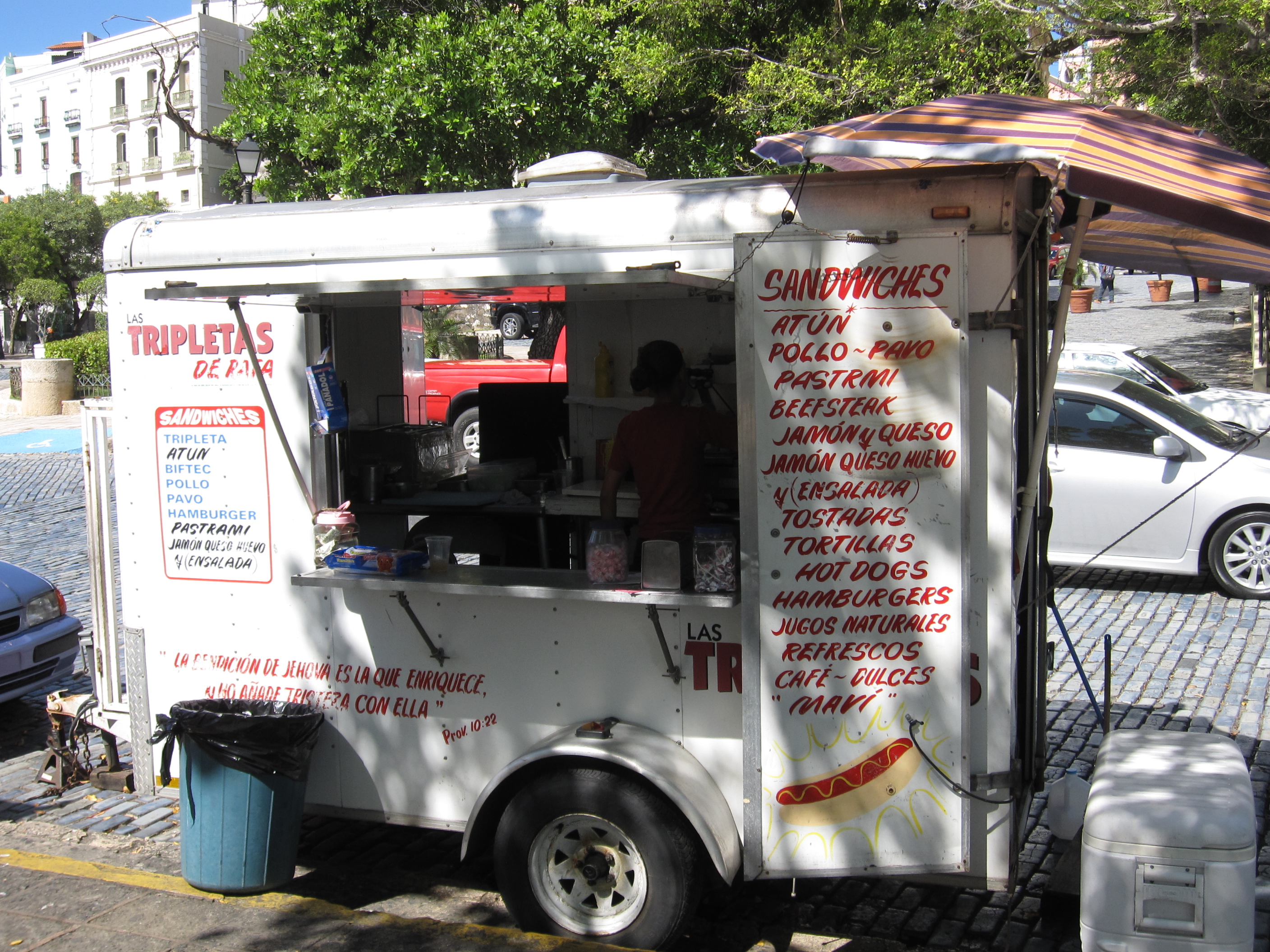
The food in San Juan, Puerto Rico is very expensive for what you get. I guess that’s expected in such a touristy city. That’s especially true when walking the streets of Old San Juan. While that part of town isn’t without its charm, rustic old world food certainly isn’t its draw. We found that the best way to fill your belly without emptying your wallet is to find a good kiosk and get your hands on a tripleta sandwich, a similar morsel to the Cuban sandwich.

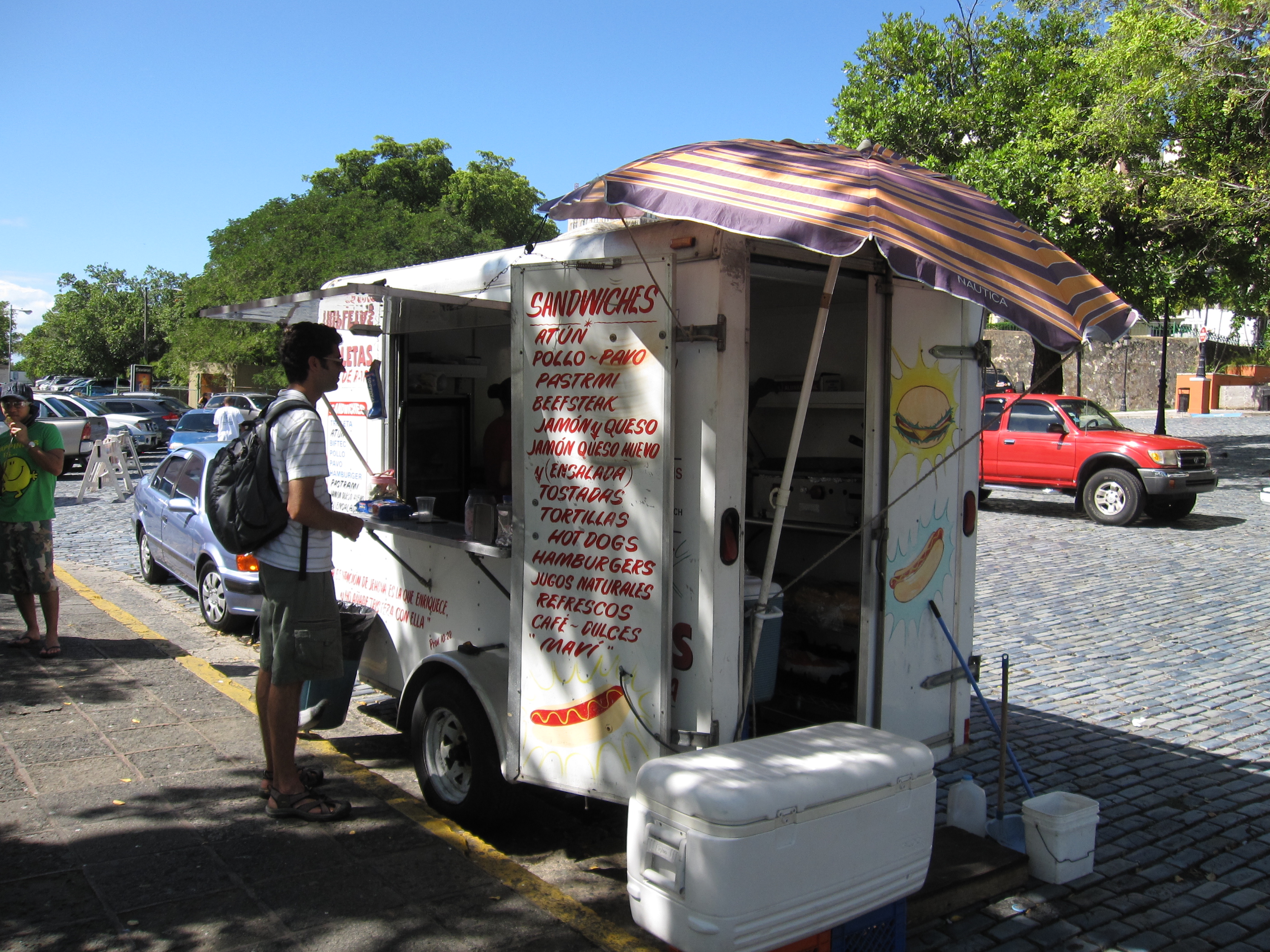
We found this Las Tripletas kiosk on the south end of Old San Juan on the cobblestone street near the cruise docks. While I was ordering the sandwich artist told me that his tripleta was much better than any Cuban I’d ever eat. When I asked why he said because his pork was wet and juicy while most Cubans had dry pork. Nothing better than a wet sloppy pork sandwich. Well, almost nothing, I can think of a few things but that’s another conversation.

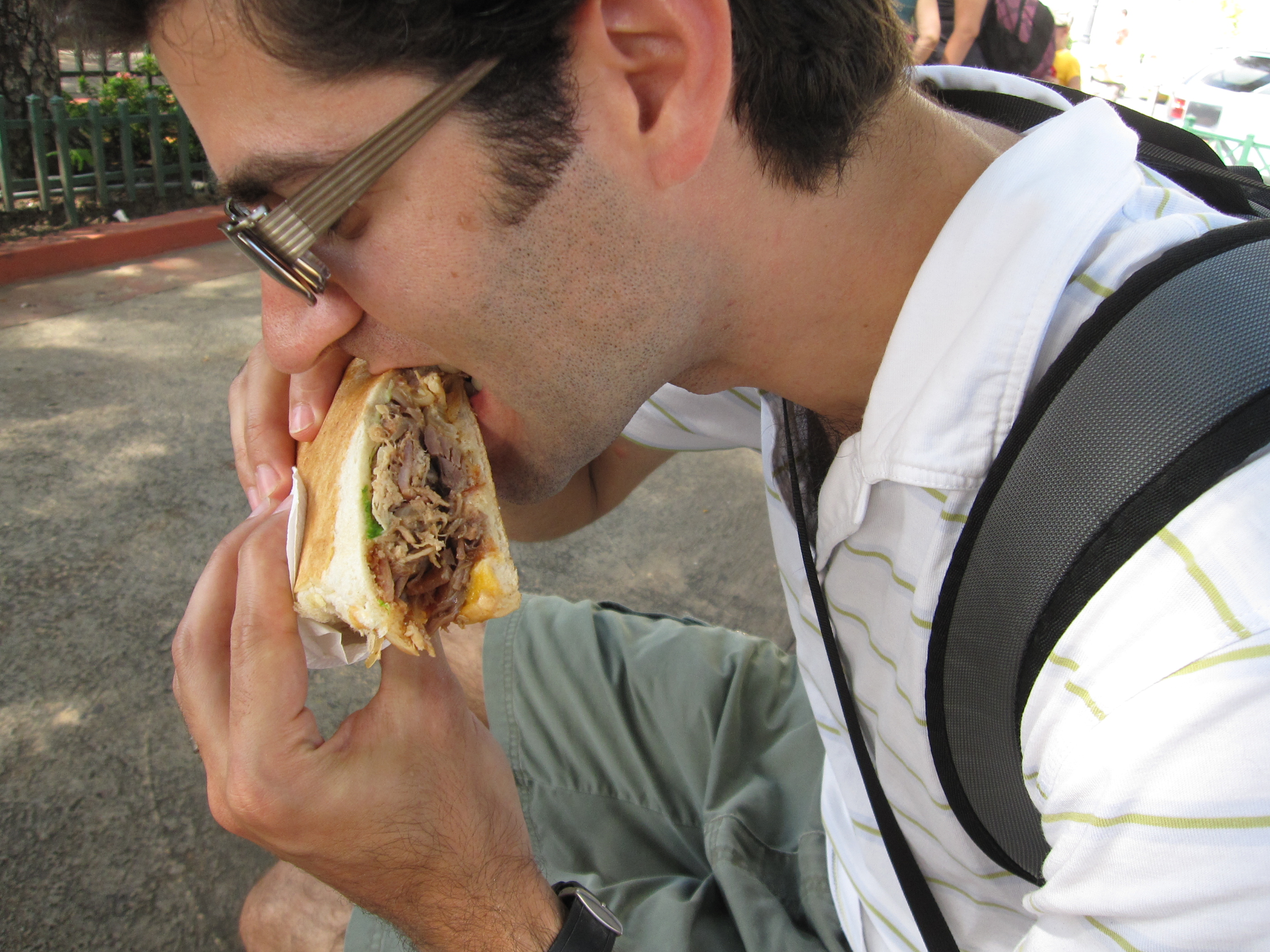
Quite spacious for a little kiosk. My man here layered the lettuce, tomato, turkey, ham, and pork on the pan de agua (typical Puerto Rican baguette), then squirted some mayo all over and pressed it on his griddle panini-style.

It was a damn good, juicy pork sandwich. Not bad for $5.50.

Read Full Post »

There are few things more satisfying in life than sinking your teeth into something truly special. Living in a fast food nation this is something that is harder and harder to come by. Yuki and I were just in Puerto Rico for 10 days, and due to American influence it’s also hard to come by there. If you look though, you can still find moment of culture, that moment of awe, that moment of pure bliss. For us, that moment was found in Guavate, better known as “The Pork Highway”.

Nestled in the mountains about 45 minutes south of San Juan, Guavate has become a destination unlike any other. I was first alerted to it by Andrew Zimmern’s Bizarre Foods Episode in Puerto Rico. As a fellow Jew who appreciates the fine art of lechon, suckling pig slowly and expertly roasted on an open fire, I knew I had to get me some.

After turning off Hwy 52 on Rt 184, we kept winding around the mountains looking for this juicy animal. We’d go by a lechonaria here, a lechonaria there, but nothing that resembled what could be called “The Pork Highway”. And then, about 15 minutes later…Xanadu! We had found the object of our desire. A strip with 7 or 8 lechonarias in full bloom. We had told ourselves that we weren’t going to just end up at the one Andrew featured, we would head to the one with the most action, the one that locals were eating at. Of course, that ended up being the one Andrew was at, El Rancho Original. More aptly put, hog heaven!

We got in line as our taste buds were salivating. The line was pretty long, but it moved quickly. El Rancho Original is cafeteria-style, so you just order what you want then pick it up at the register. All the while they have live music and a dance floor that is always packed with people, especially old people gettin down.

When we got up to order I just had to marvel at that pig on a spit with the master hacking it up with a machete. We speak very little Spanish, so they had to get a lady over who spoke more English to take our order. It all worked out as we got what we wanted. We grabbed our food, walked past the dancing into the back cafeteria, and proceeded accordingly.

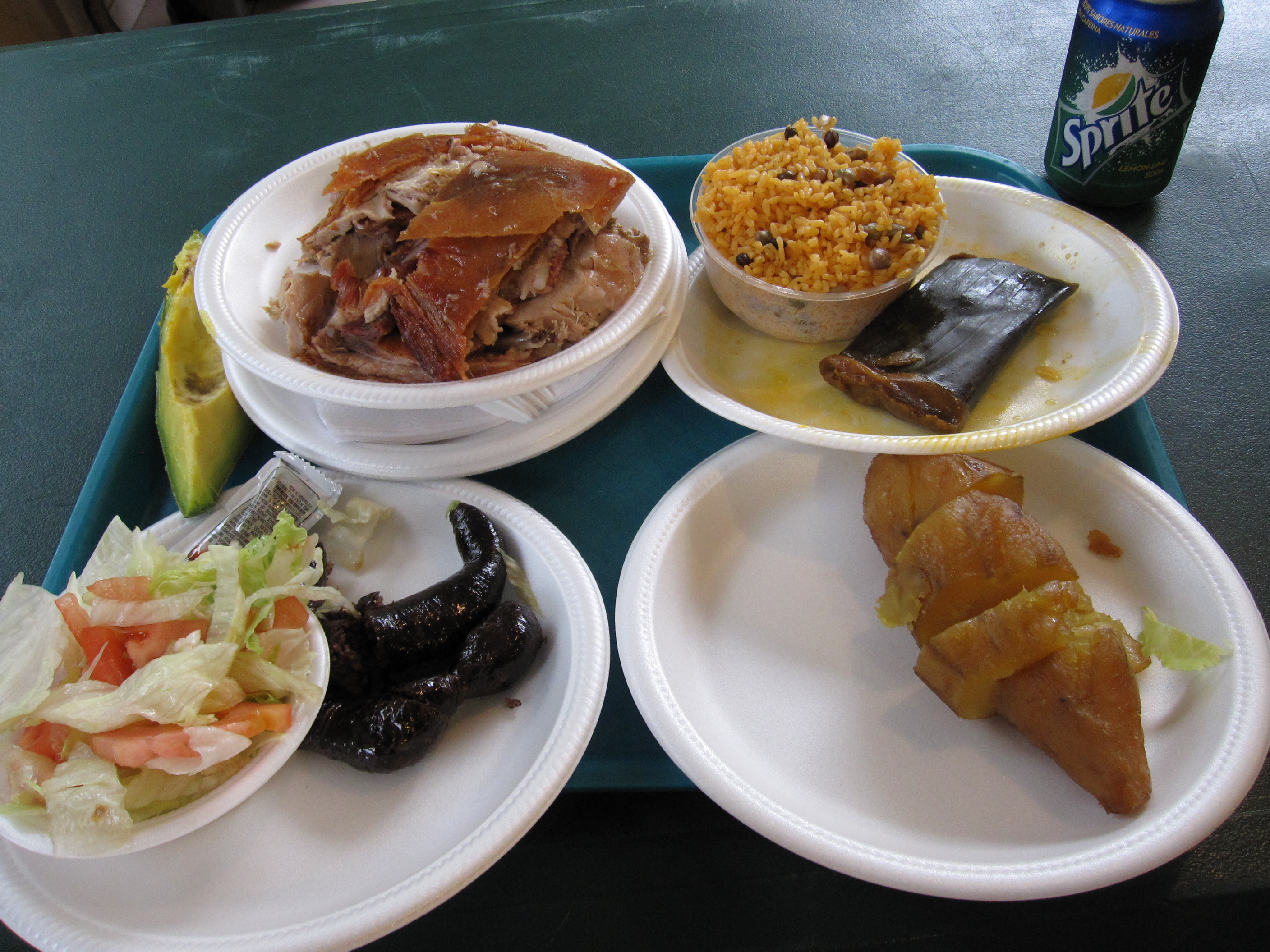
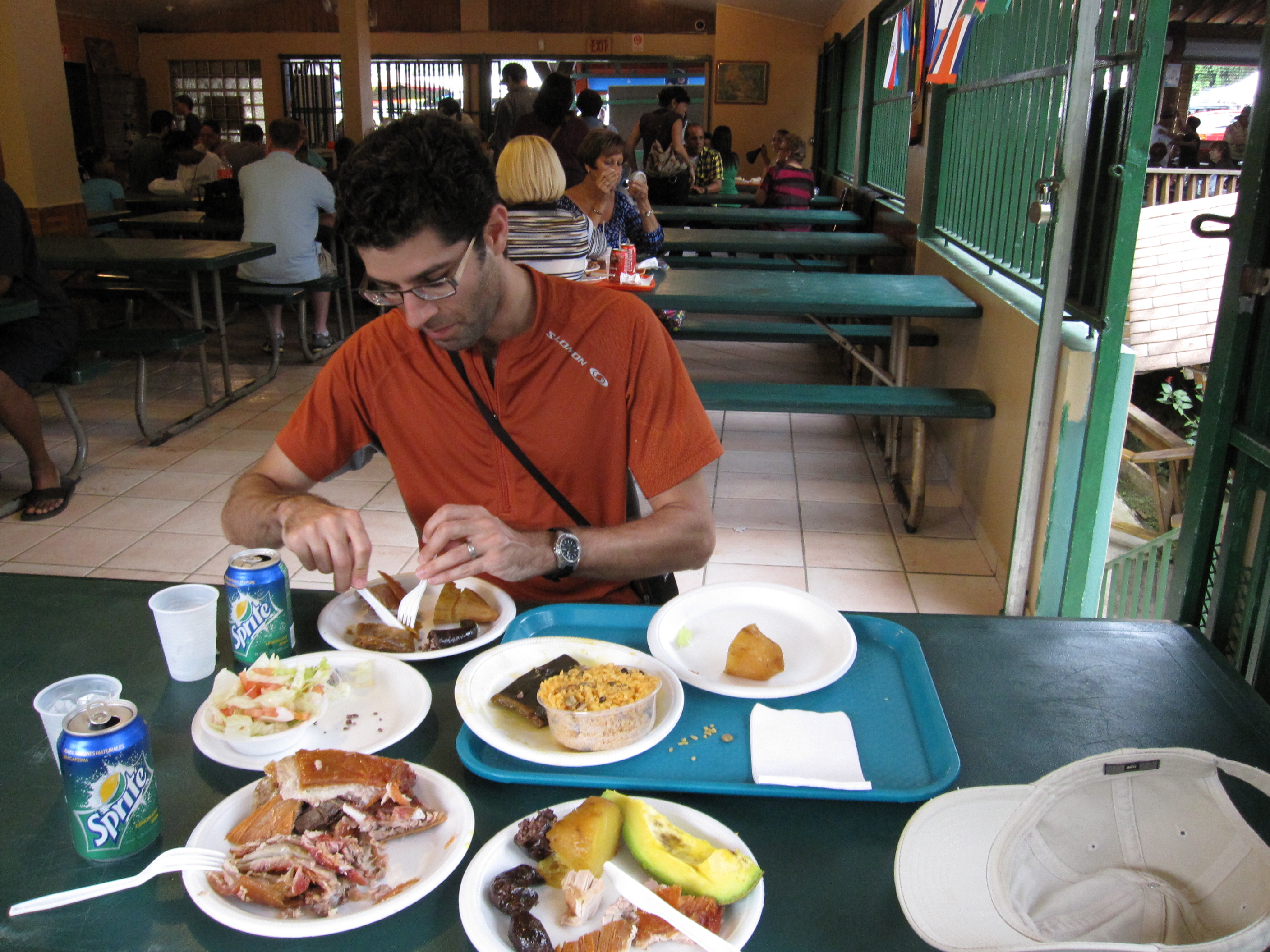
We ordered a plate full of lechon (of course), some rice and beans, this tamale-like thing of mashed pineapple and pork, a salad of lettuce and tomato to help our bowels process this overload of nutrient information, some morcilla (blood sausage, basically pigs blood with rice and spices stuffed into its intestines and grilled), sweet potato, and a big slice of avocado. It may not look like much in the photo, but believe me, it was a lot of food for two people. All for only $21! I dare you to find a deal like that in Chicago.

Mmmmmmm, crispy skin. Or, as Yuki likes to call it “meat candy”.

This spread was so good! It really was the best pig I’ve ever eaten. My older brother is going to be mad at me for saying this, but Jews are CRAZY!!! Along with every other culture and being who deprives themselves of such pleasure. Call me a hedonist, but that pig sure is tasty! If I could eat El Rancho Original’s lechon every day three times a day I would, as long as there was some beef and scallops peppered in there.

Pork coma. You know, a good nap is a necessary part of life.

Once the pork coma wears off you really have no choice but to start shaking your hips and moving various body parts to the rhythms of old world latin music. Or, maybe all of our bodies were just convulsing from pork overdoses. All I know is that Guavate is one of the last true Puerto Rican experiences left in this world. Something not to be missed if you’re ever in our 51st state, or commonwealth, or whatever it is.

Read Full Post »

One of the great things about meatloaf is that you can do pretty much anything you like with it. You can use any kind of ground meat, vegetables, sauces, etc. It’s also extremely simple to make. I have some rosemary still growing on my back porch and with the weather starting to cool down here I figured I should use it up before my plant dies. With that in mind I decided to make a very straight-forward meatloaf and use up the rosemary, although I still have some left that needs to be used within the next week or so.

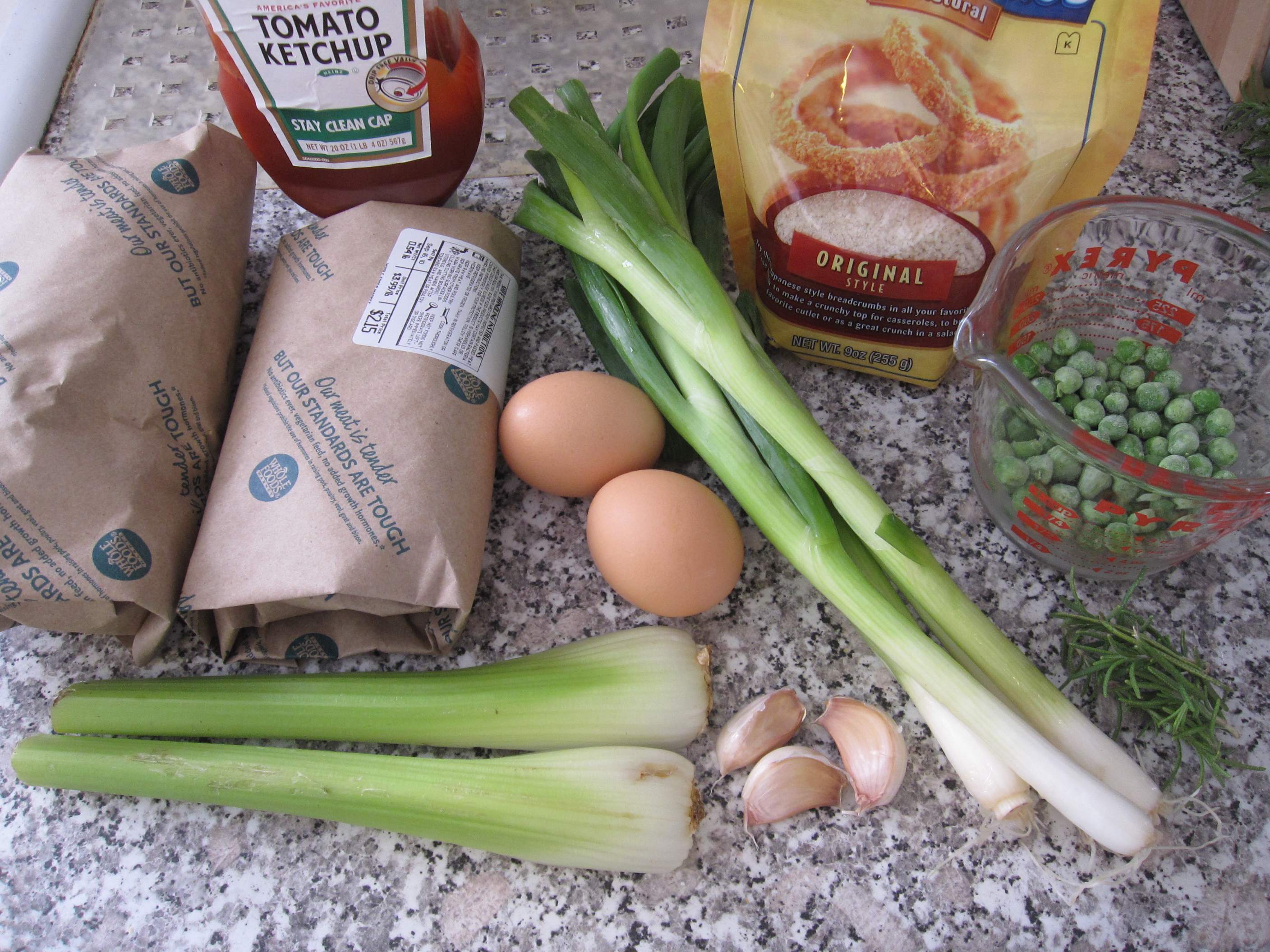
My ingredient list includes 1.5 pounds of ground beef (20% fat), 1/5 pound of ground pork, 2 small celery ribs diced, ketchup, 2 eggs beaten, 3 cloves of garlic minced, a bunch of green onions sliced, panko, 1/2 cup of frozen peas, and a bunch of rosemary chopped.

In a large glass bowl I mixed together the ground meats with the celery, eggs, garlic, green onions, peas, rosemary, and some salt and pepper. Once it was all good and mixed I let it sit for about 15 minutes to let the flavors settle.


Once the meatloaf settled a little I shaped it into a loaf and put it into a loaf pan. I squeezed some ketchup on top and brushed it to cover the entire top surface. Then I sprinkled some panko over the ketchup. I put it in a 350 degree oven and let it cook for about an hour.

For some side vegetables I used 1.5 carrots chopped, 1/2 onion sliced, a bunch of haricots vert, and some more chopped rosemary.

I simply laid vegetables out in a roasting pan, drizzled them with olive oil, and seasoned them with salt, pepper, and the rosemary. I put them in the oven for about a half hour.

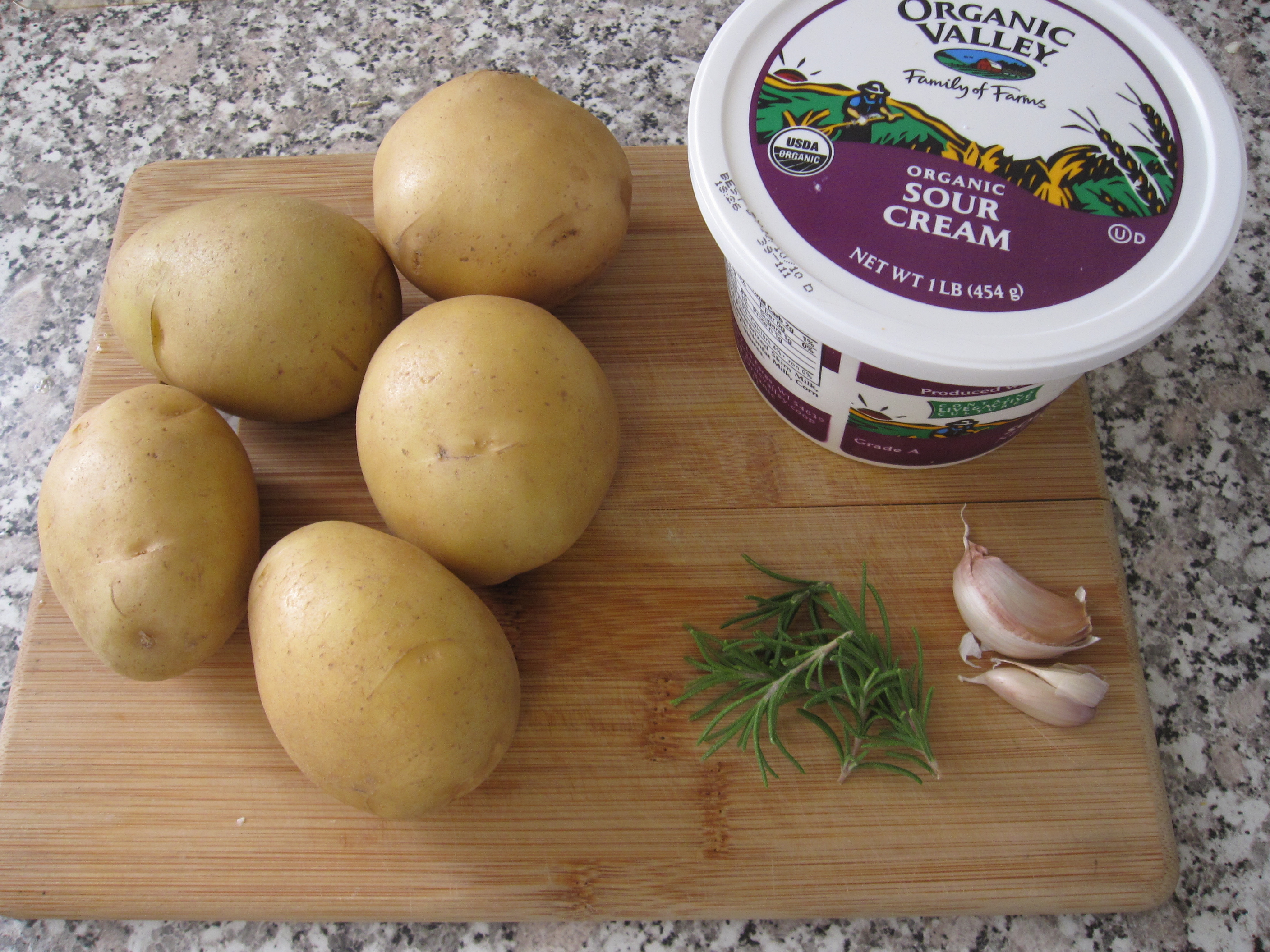
Once I got the vegetables in the oven I boiled some water and salted it. I took 5 good-sized Yukon Gold potatoes and skinned them then chopped them into quarters and dropped them in the boiling water along with 2 garlic cloves cut in quarters as well. I let them boil for about 10-15 minutes. Before draining them I reserved a cup of the water. After draining them I put the potatoes and garlic back into the pot, scooped about 1/3 cup of sour cream in, about 1/2 cup of the reserved water (didn’t need the rest but had it there in case I wanted to thin out the mashed potatoes), salt, pepper, and more chopped rosemary. With my potato masher I mashed it all up till they were smooth and creamy.

Read Full Post »

Meatless Monday last night ended up being Yakisoba. Yakisoba is a traditional noodle dish (even though it’s origins are from China, it has become a staple of Japanese cuisine much like Ramen) that is typically served with various vegetables and pork. I omitted the pork to accommodate Meatless Monday.

First thing I did was get the protein ready. I made a thin omelet of two eggs and a little cream. In my heated large skillet I poured a tablespoon each of soy oil and sesame oil. I swirled that around to coat the entire pan and then poured in the scrambled eggs. I swirled the eggs around to make a thin omelet, much like a crepe in appearance. I turned the heat down so it wouldn’t burn. Once the bottom was cooked and the top set I carefully flipped it over to get a little crust on both sides. Then I slid it out of the pan and onto a cutting board, cut it in half, then made thin “noodles” out of it. I set this aside because this was my garnish.

For my vegetables I used 6 green onions, 1 carrot, some haricots vert, 6 ounces of bean sprouts, 1 red bell pepper, 6 cremini mushrooms (I wanted to use shiitake, but I had cremini in my fridge already), some ginger and a few cloves of garlic. I sliced everything thinly so that they would mix in well with the noodles.

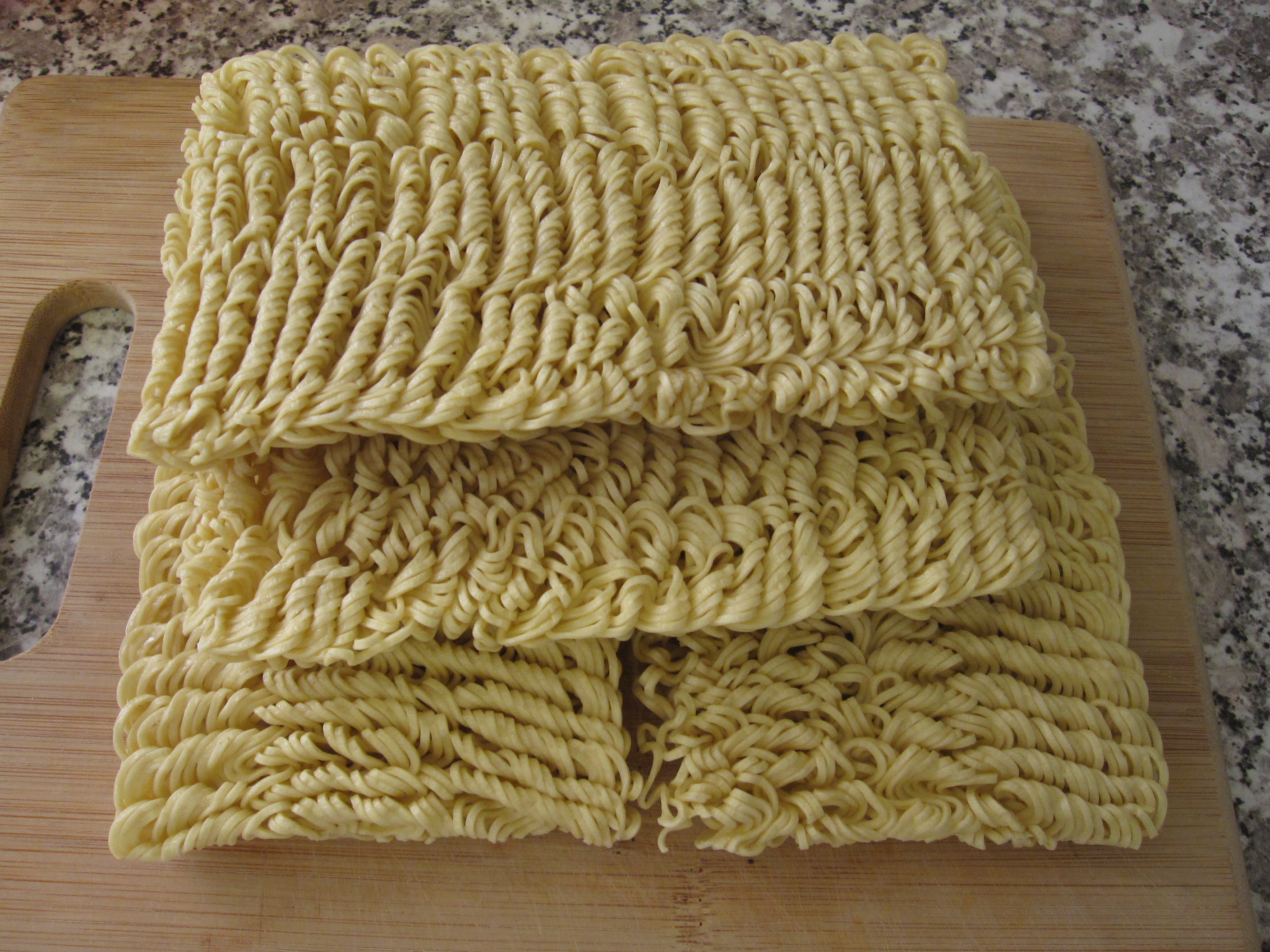
The noodles I used are called Chuka Soba, which translates to Chinese Noodles. They’re wheat noodles, but honestly, you could use a chow mein or ramen noodle if you wanted and get the same results. I cooked the noodles according to package instructions.

Using the same skillet I used for the egg I heated another tablespoon each of soy and sesame oils. I threw the garlic and ginger in for about a minute and then added the haricots vert, carrot, bell pepper, and green onions. I let those cook for about 6 minutes before adding the mushrooms. I let the mushrooms cook for about 4 minutes and then seasoned with a little salt and pepper. Then I poured in about 2 tablespoons of sake and let that boil off. After that I added the sprouts and then about 1/3 cup of Bull-Dog Sauce. I don’t know if you can get Bull-Dog Sauce at many places. We get ours at Mitsuwa, but you may be able to find it in ChinaTown or some other Asian Grocers.  

Once the sauce was mixed in well with the vegetables I tossed the noodles in and let them fry a little while mixing everything together. It’s important to keep the heat on to dry the sauce up a little while the noodles absorb it. This gives a nice texture to the noodles.

To serve I simply used my tongs and put a big pile of everything on a plate. Then I topped it with some of the sliced eggs and drank a cold beer. For the leftovers today I sliced some Black Forest Ham and added it to the mix. Since it’s not Meatless Tuesday I’m cool with that.

Read Full Post »

The other night I made a Japanese classic with some of my own additions. I made Shogayaki, ginger pork. Typically made with just thinly sliced pork, ginger, soy sauce, mirin, and sake, I added a few vegetables into the mix instead of serving vegetables separately. This is an easy dish to make and very flavorful.

We picked up some really nice Kurobuta (Berkshire) sidebelly while at Mitsuwa. It came thinly sliced which is prefered for this dish. It doesn’t necessarily have to be thinly sliced, nor does it have to be belly. You could get some nice chops and cut them thinly yourself, just try to make them no thicker than about 1/8 inch. I cut the pork sliced in half since they were as long as bacon. That wasn’t necessary, just what I felt like doing.

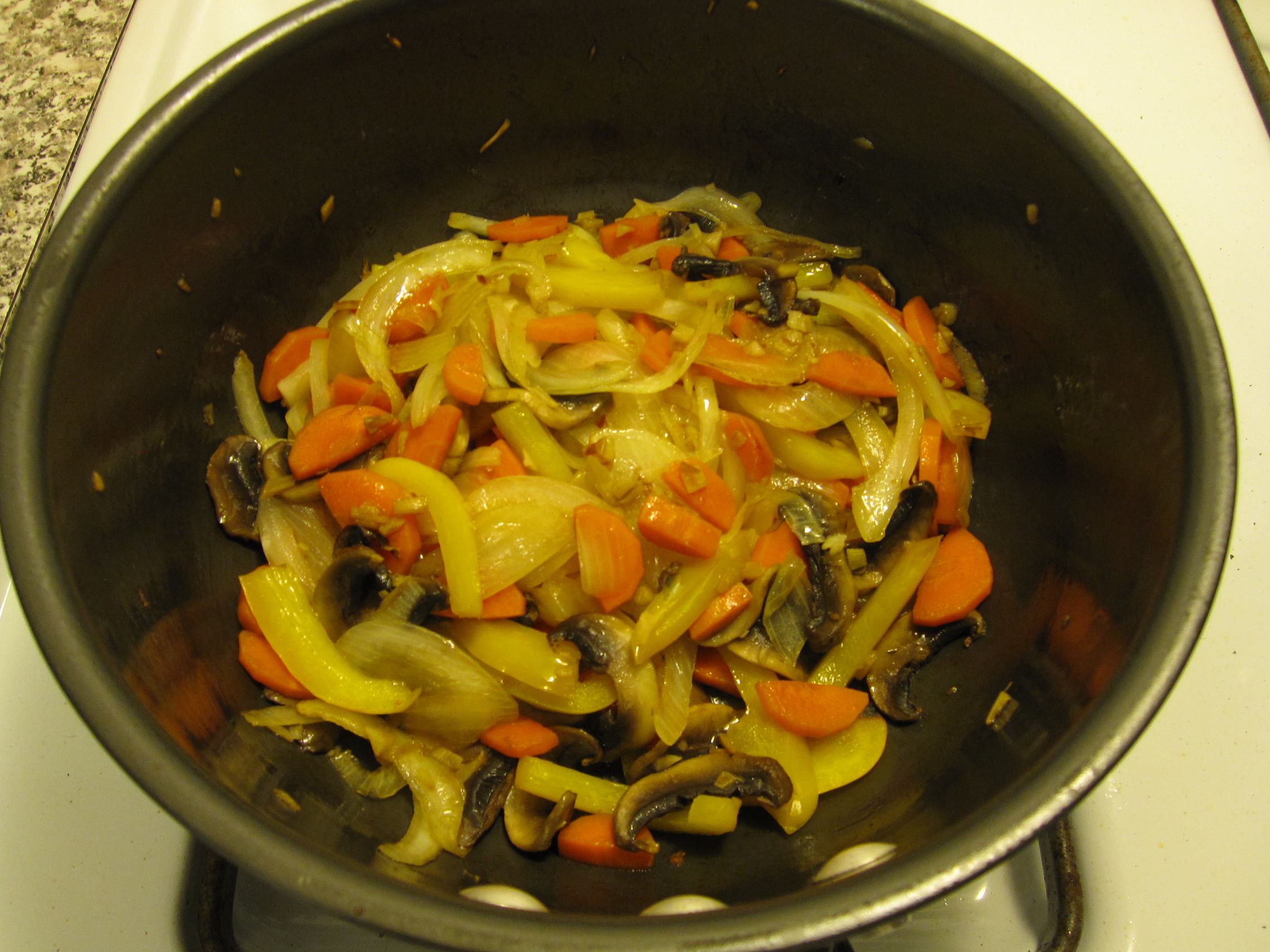
For vegetables I sliced half an onion, cut a carrot into half moons, sliced half of a yellow bell pepper, and slices a bunch of mushrooms.

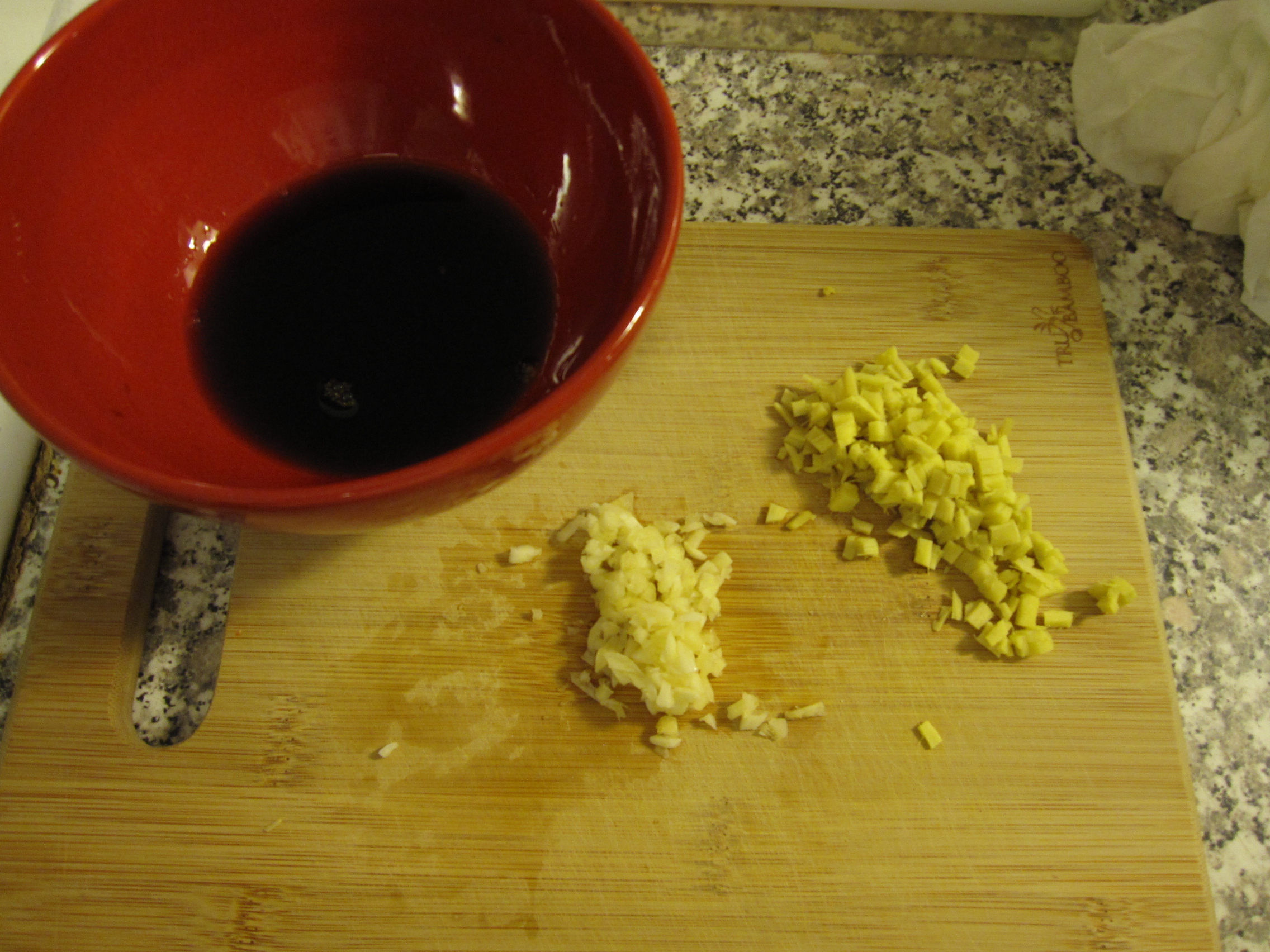
For flavorings I, obviously from the title, used some minced ginger, a couple of minced garlic cloves, and a sauce of 3 tablespoons soy, 2 tablespoons sake, and 1 tablespoon mirin.

I started by tossing the ginger and garlic into a hot pan with 2 tablespoons of sesame oil and 2 tablespoons of soy oil. I let that go for just a few minutes until it became fragrant.

Then I added the onions for a few minutes. Followed by the carrot for a few minutes. Then the pepper for a few more minutes. And finally the mushrooms for another few minutes.

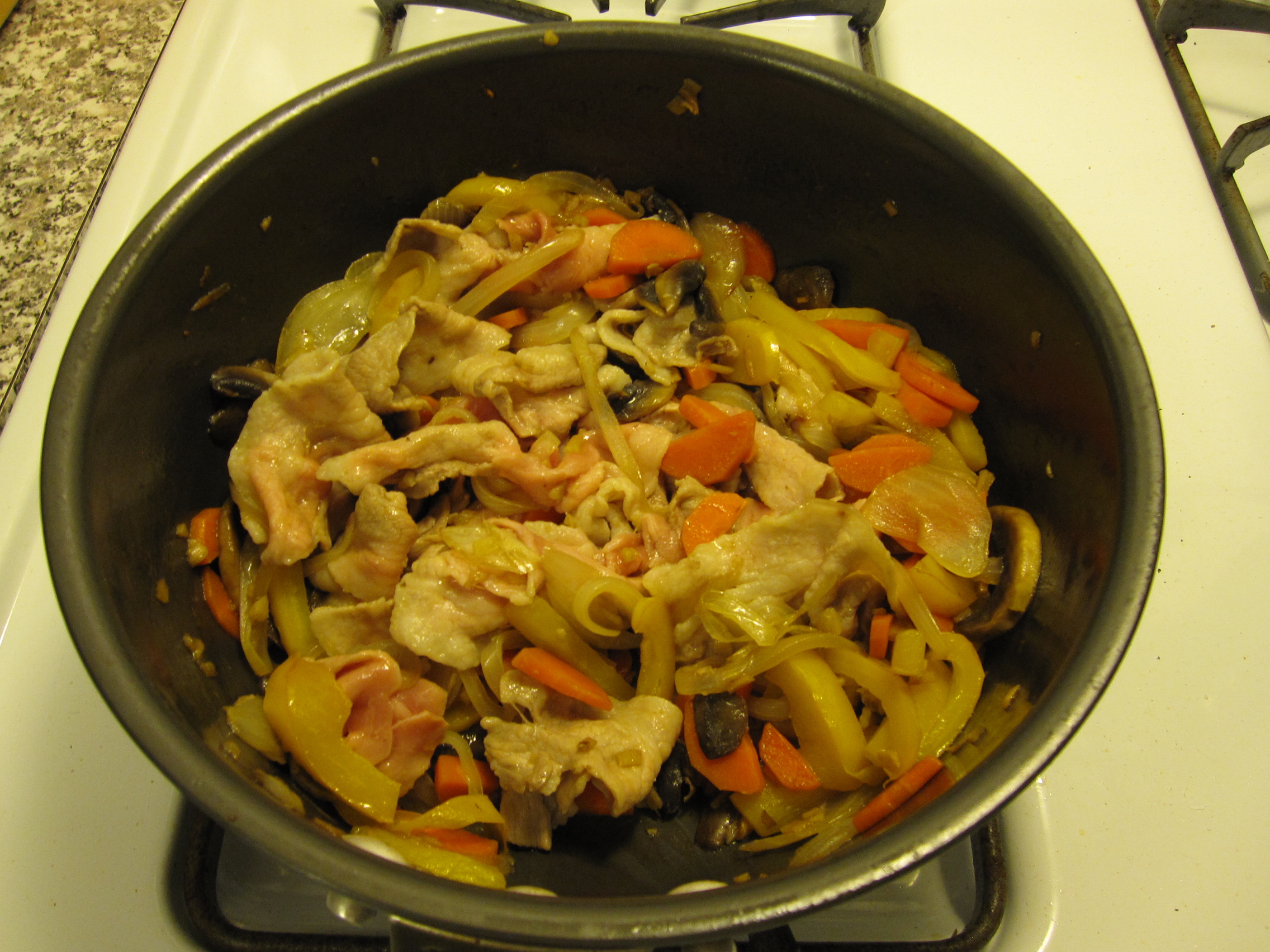
Once the vegetables were mostly cooked I added the pork. I mixed it all together and let it go for, you guessed it, a few minutes.

Then I dumped in the sauce along with some black pepper. I covered the pan and turned the heat down to medium once the sauce started to boil a little. Every few minutes I stirred everything around. After about 15 minutes I uncovered the pan and let the sauce reduce a little. I served it once the pork and vegetables were evenly coated by the slightly thickened sauce.

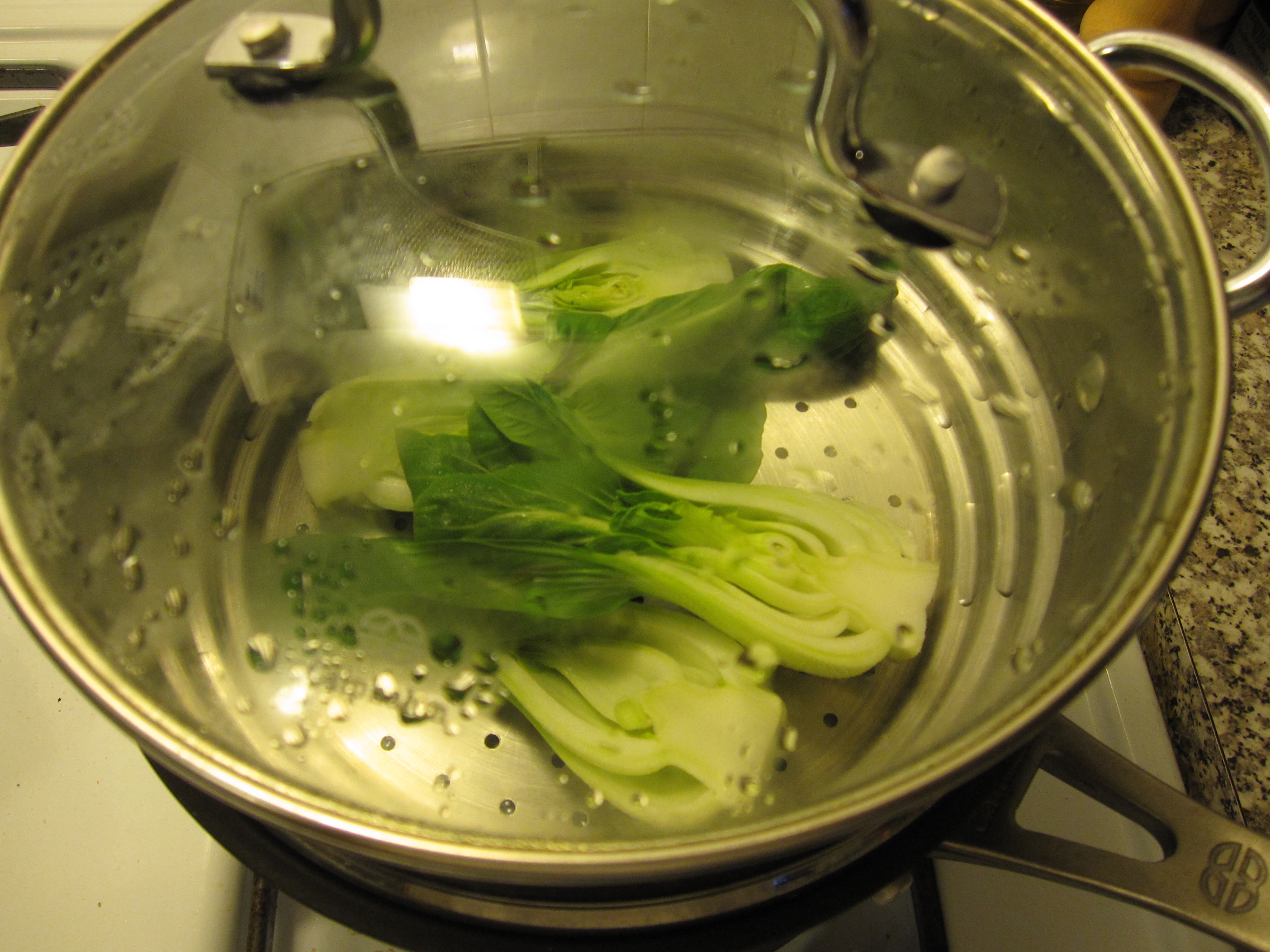
While the sauce was thickening I put a couple of baby bok choy that I had cut in half into the steamer. I let them steam for about 6 minutes. They were served next to the shogayaki with some white rice.

Read Full Post »

Last night we made Okonomiyaki for dinner. Well, Yuki made it, I was her sous chef. She also made a Korean spiced soup to get more vegetables into the meal. That and she loves soup.

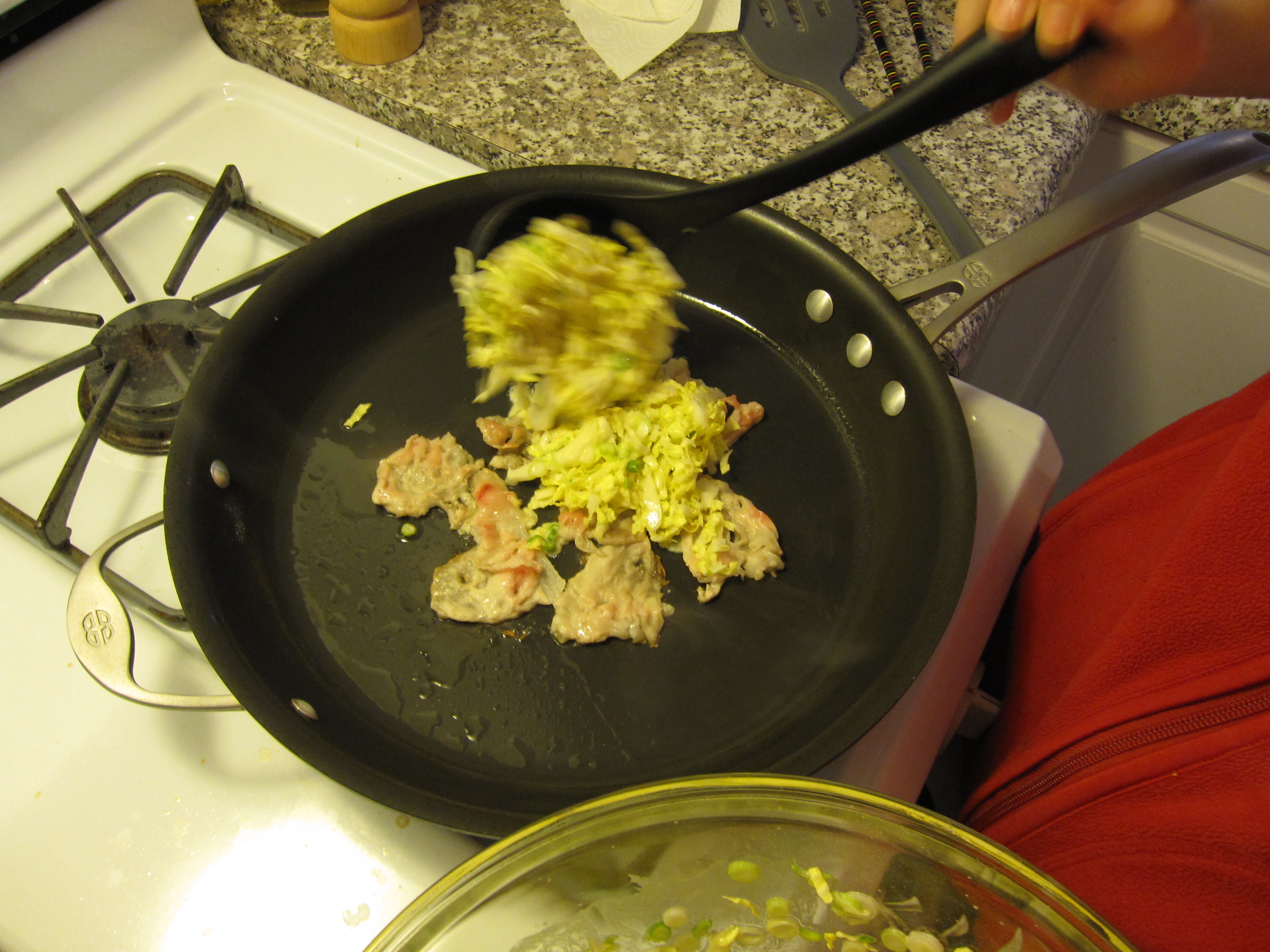
To start off she cooked thin slices of Kurobuta Pork that we got at Mitsuwa in a little sesame oil. Any pork will do as long as it’s thinly sliced. You can also bacon or any bacon-like substance. Or, no meat at all.

Then, she poured the batter on top to make a pancake. I’m not real sure what kind of flour she used, we have a few different kinds on our pantry, but all-purpose will do, about a cup. She mixed it with about 3/4 cup water and a couple of eggs. Then she mixed in a bunch of thinly sliced green onions and a cup of thinly sliced Napa Cabbage.

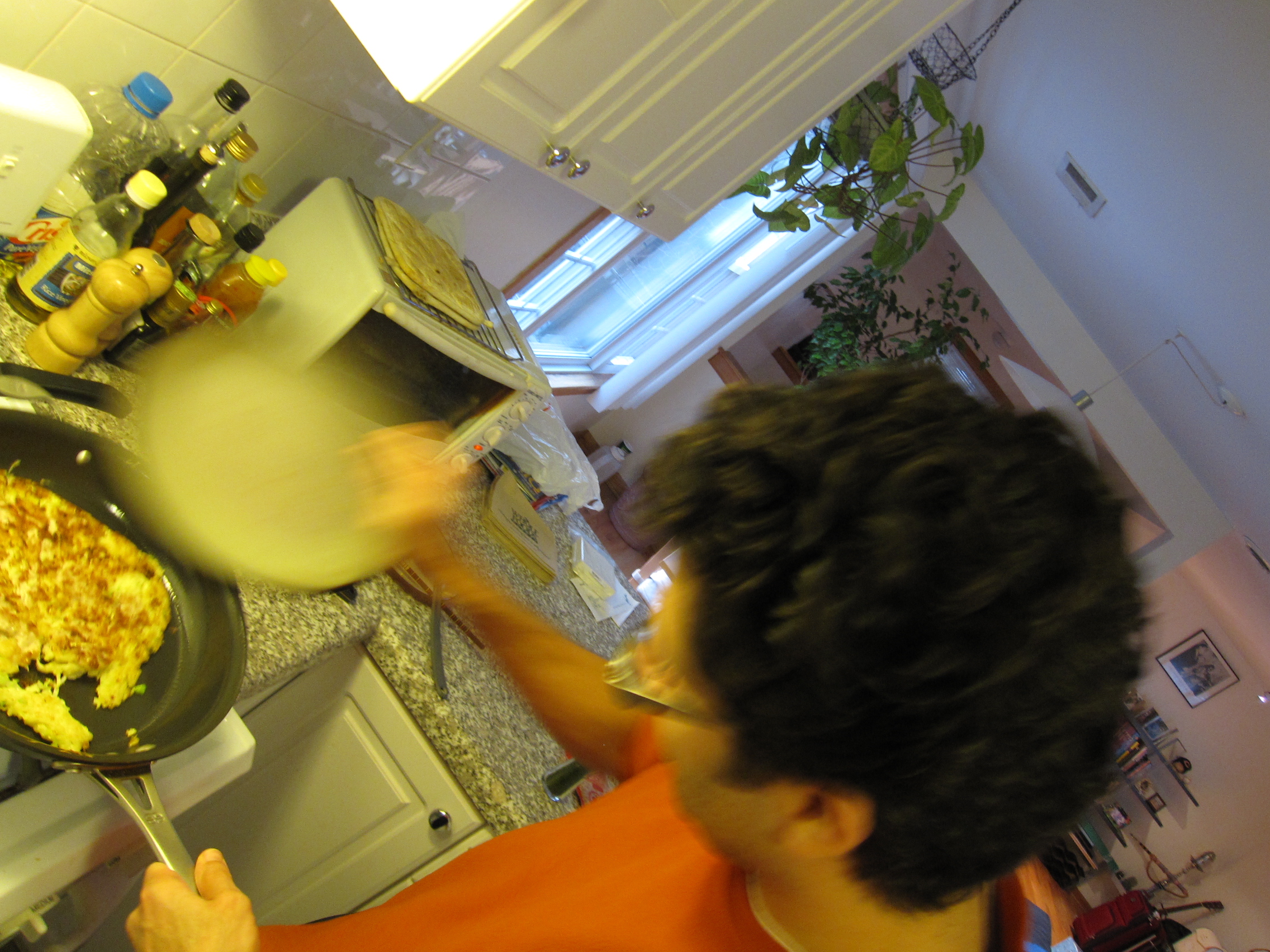
Instead of making 4 smaller ones, we made two big ones. I had to use a plate to get that thing flipped over when it was time to cook the other side. It’s ready to flip when the bottom is a nice golden brown color.

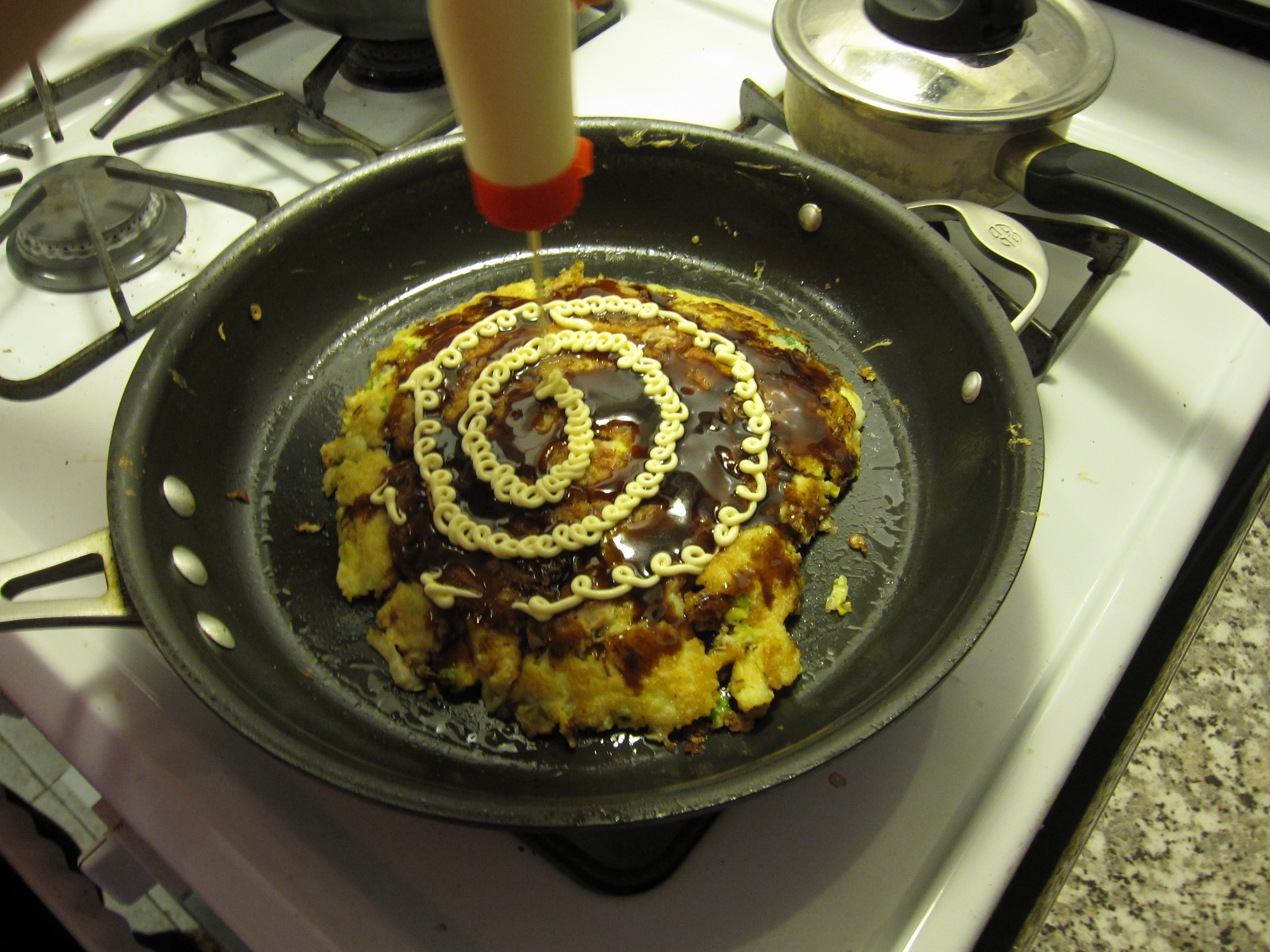
While the bottom is cooking you pour the on top. First pour on Bulldog Sauce. A popular sauce in Japan commonly used on Tonkatsu, fried pork cutlet. Then squeeze on some mayonnaise.

Feel free to paint your okonomiyaki with the sauces.

Then top it with a bunch of katsuo-bushi, dried bonito flakes.

Finally, top it off with some ao-nori, ground seaweed.

For the soup, Yuki started by boiling some light dashi broth. She added some green onions, thinly sliced carrot, enoki mushrooms, aburage, broccoli, komatsuna (Japanese Mustard Spinach), and small diced tofu. Once everything was cooked  she swirled in a couple of tablespoons of tobanjan paste (Korean hot chili paste). It was that simple.

Read Full Post »

Yuki requested a simple, lightly flavored dinner last night, so to please my wife I made a Japanese-style line up of chow. I made Hijiki Rice, Miso Soup, and Pork-stuffed Aburage.

For the rice, I made two cups in our rice cooker. I simply washed the rice and added a little less water than necessary to cook it. To get the liquid up to the right amount I topped it off with some soy sauce, no more than about a quarter cup. Then I added a couple tablespoons of dried hijiki seaweed (available at more and more groceries), about a half teaspoon of dashi-no-moto (dried, instant dashi, also available at more and more groceries), as well as half of a large carrot diced. That’s it, turn it on and let it cook.

The miso soup was also simple. I brought two and a half cups of water to a boil with 6 green onions chopped to inch-long pieces. Once it started to boil I added 6 baby bok choy and 6 quartered shiitake mushrooms. I let that boil for about 10 minutes, turned off the heat, and added a half teaspoon of dashi-no-moto along with 2 tablespoons of soy sauce. I put that aside until dinner time.

Before making everything I cooked up the ground pork. I sautéed a chopped clove of garlic with a half-inch of chopped ginger in some oil for a few minutes. Then I added about a quarter of an onion, small diced, and let that cook for a few minutes. After that I added a half pound of ground pork and cooked that all the way through. Once the pork was mostly cooked I added 1.5 teaspoons of soy sauce, 1 teaspoon of sake, a half teaspoon of mirin, and some black pepper. I let that liquid boil down and then took off the heat to cool.

To prepare the aburage I first layed them in a colander, boiled some water, and then dumped the water on them to rinse off the excess oil that they come in. Then I squeezed all of the water off. I took my sharpest knife and carefully slit open one side and then gently used my fingers to open them up. After that I just spooned the ground pork mixture and then set aside.

Once the rice was ready I put the soup back on some heat and put the aburage under the broiler. Just before the soup started to boil I added some diced tofu and some wakame seaweed. Then Yuki whisked in a couple tablespoons of miso. When the aburage was heated through, about 5 minutes, I took them out and layed them on beds of arugula and drizzled with ponzu sauce.

Dinner was served!

Read Full Post »

Alright, back to the Land of the Rising Sun. Better known as Japan. Yuki was at a gathering with a bunch of her friends one of the Saturday nights we were there last November. Instead of hanging out with her parents, whom I love to spend time with, I met up with an ex-coworker of hers that I am also friends with, Reiko-chan, who moved back to Tokyo. We decided to meet up at the Ebisu train station and then head to one of the many Izakaya in that neighborhood. Izakaya are Japanese-style bars. Much different from what we’re used to they usually have a great chef that focuses on creative small bites that match with different types of alcohol. I had done some research and found this great little Izakaya called Ippo that focused on seafood and sake, my drink of choice.

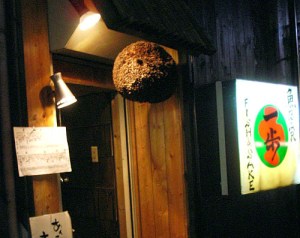
Ippo is an extremely hard place to find. We walked all over the neighborhood for about 30 minutes trying to find it. Since Reiko is Japanese, and being Japanese speaks Japanese, I left it to her to ask various retail stores for directions. No one seemed to know exactly where it was even though we had an address. About to give up and go to a different Izakaya, I turned around and noticed the big Fugu hanging in front of the door. Finally! I needed some sake!
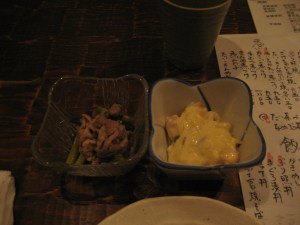
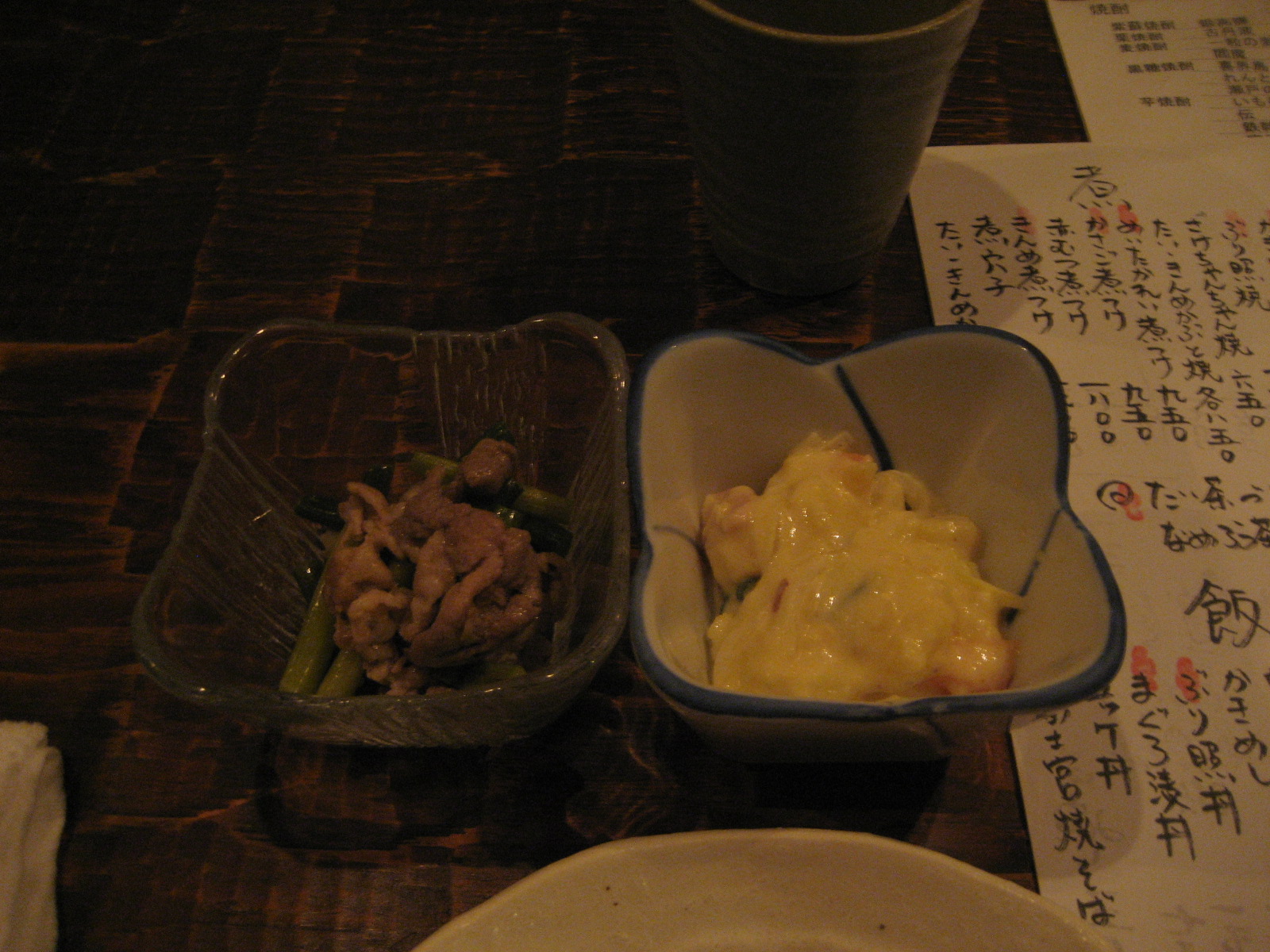
When we sat down the bartender handed us each a couple of little starters. One was a cold pork and green bean salad, the other was a macaroni salad in a mayonnaise dressing. Nice little starters, good with either a beer or sake.

Speaking of sake, their list was over fifty long, all written in Japanese. I had no idea where to start. Luckily, one of the bartenders lived in Las Angeles for a while and spoke fluent English. He also knew that sake list off the back of his hand. There were all varieties of sake from brewers both large and small as well as from every region of Japan that produces it. I honestly can’t remember what all I drank, but throughout the night I ended up putting back 4 cups of different sake, all delicious in their own way. Some more floral, some herbal, some sweeter, all fantastic selections. When I say 4 cups I don’t mean those little sake cups we’re used to getting at sushi joints, I mean 4 12oz cups filled to the rim! Love it!
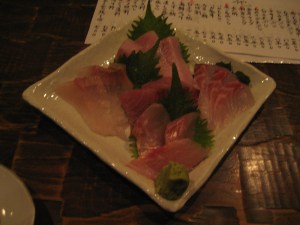
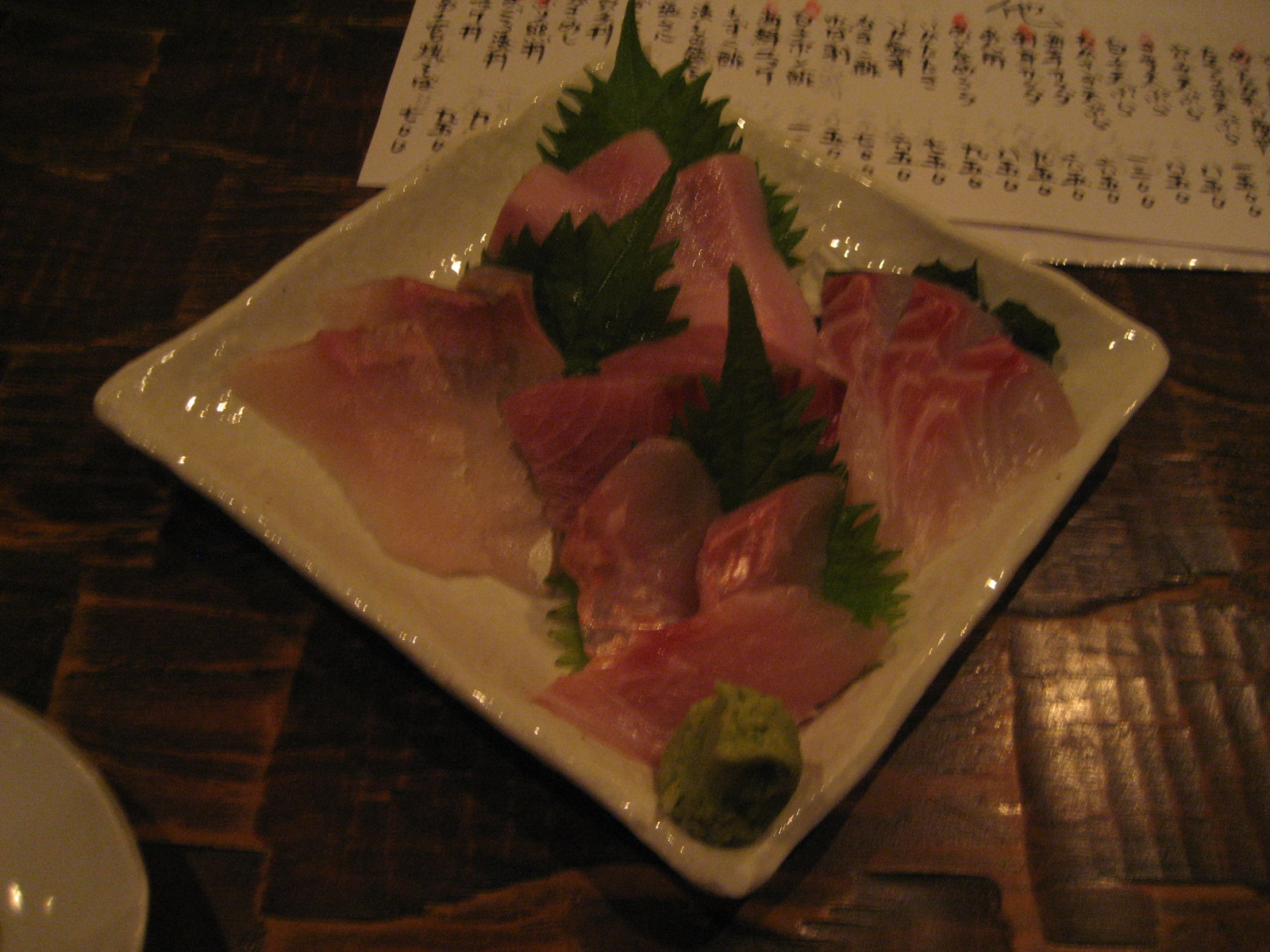
We started off with a plate of sashimi. I don’t know all of the different types, some of the communication was lost in translation, but there were two kinds of tuna and three different kinds of hamachi. I do remember that they were all fresh as can be (they get their fish every morning from the Tsukiji Market) and cut by a chef who knows how to cut a piece of fish. You can’t get sashimi that good here in Chicago.

After the sashimi we got a plate of the house specialty, Namero. It’s basically a tartare of mackerel in miso, ginger, and scallions. Mackerel is a strong-tasting fish with a lot of natural oil, but this was incredible! The miso and ginger masked the strong fishy smell and fit the flavors perfectly. I can see why this is a house specialty as it was probably the best match with sake I’ve ever had.

Then we got the Daigaku Imo, candied sweet potatoes. These were prepared different than normal though. They’re usually deep fried and then coated in a sweetened soy sauce with black sesame seeds. Here, they lightly coated them in batter that had black seseame seeds mixed in before frying, basically tempura style. The were sweet enough that they didn’t need any added sugar. Served only with some grated daikon they were a great snack to eat at a bar.

Kaki was next up. Some of the biggest, juiciest oysters I’ve ever seen on a plate! Removed from the shells and grilled all the chef did was add some herbs to them. With a squeeze of lemon they’re ready to go. If you’re a fan of oysters, you’d love these. If you hate oysters, you’d still probably love these.
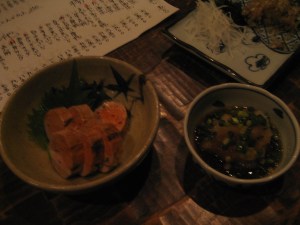
After the Kaki we ordered up some Ankimo. Steamed monkfish liver served with grated daikon, ponzu, and green onions this is one of the great delicacies of Japanese cuisine. It’s called the foie gras of the sea, but in all honesty, I think foie gras should be called the ankimo of the land. It’s so soft and creamy. If not for the next dish I’d call it Japan’s greatest contribution to the world of food.

Here it is, one of the greatest things in the world. An item that will make most Americans sick to their stomach but makes my mouth water…Shirako. The king of seafood. Meaning “white children” in Japanese, shirako is the soft roe of male fish, usually monkfish, cod, or fugu (pufferfish). Basically, it’s the male fish’s genitalia. You read that right, it’s a fish sperm sack! You may be wincing at the thought of eating that, but think about it, you eat caviar don’t you? Well, this is the male counterpart to caviar. It’s extremely soft and delicate with a slightly sweet briny taste that literally melts in your mouth (and it’s not sticky!). Ippo serves it raw with ponzu, scallions, and sesame seeds. It can also be steamed. Any way you look at it, I luz me some fish balls!

My experience at Ippo really makes me sad that we have nothing like this in Chicago, or really anywhere in America for that matter. Sure, there are a handful of Izakaya-style bars throughout the country (mostly on the west coast), but nothing quite like Ippo. Just a long bar in a hidden space that serves up some of the best quality seafood and sake one could ever ask for. Why are we stuck with bars that serve nothing but big greasy burgers (not that there’s anything wrong with that), frozen wings, and chicken fingers? Let’s get some creativity into the American bar scene! Great chefs don’t need to be in a white cloth atmosphere to shine. We’d all be better off for it there were Izakayas scattered throughout the country.

Read Full Post »

I’ve long been a believer that the only way to truly understand a different culture is to head straight over to the local markets. So, our first morning in Merida, Mexico, a few weeks ago with my mom and step-dad (they live in Merida) we stopped at the San Benito Market.

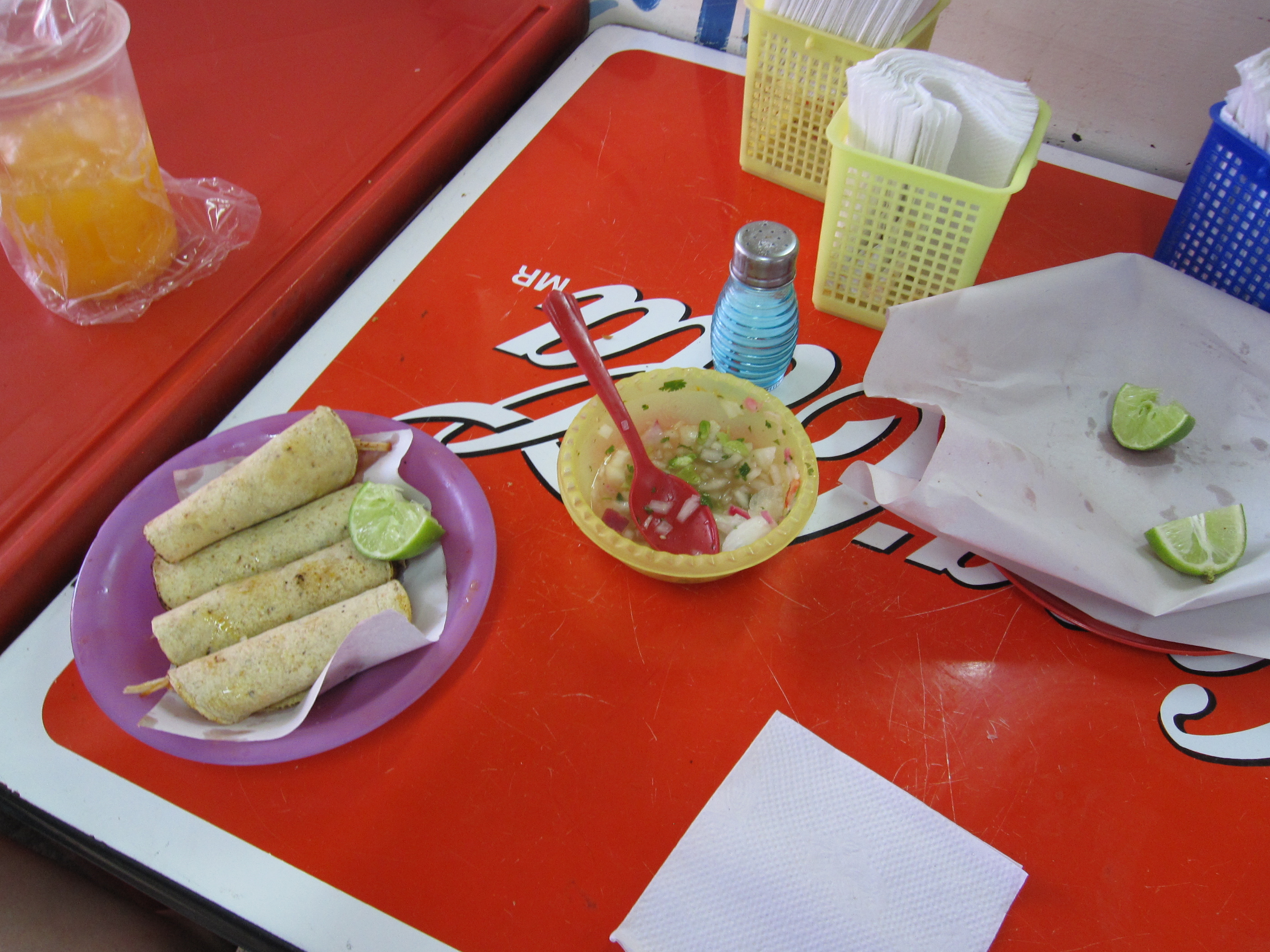
What I love about the San Benito Market is that it’s not a food market, it’s not a textiles market, it’s not an appliance market….it’s all of the above! Whatever you need to buy you can get at San Benito. Need some produce? They’ve got everything from hundreds of different chilis to pineapples to freshly butchered meats. Need clothes and footwear? Take your pick! How about kitchen knives and other little chochkies? Sure. You can even buy a pet bird there. However, to me, the absolute best part of the market are the food stalls. With so much to choose from, various tacos, tamales, empanadas, sopas, etc., we decided that it’s best to just sample as many different tacos as our bellies could stomach.

The first stop was this stall that served up some outstanding carnitas.

Fresh slices of pork fried up on his hot slate to tasty perfection! Garnish with some onions, cilantro, carved up radishes, and salsa verde and you’re ready for all sorts of goodness. I really could have just ordered more of these, but there were more items on my menu to digest. So,…..

…it was off to this stand for a choice of more carnitas or…

…these achiote turkey tacos. I had to go for the turkey since I just downed a couple of carnitas. These were served with pico de gallo and lime wedges. Wow! I have never had pulled turkey so good. Screw Thanksgiving with its roasted bird, I want these little morsels instead. 

After walking around a bit more something caught my eye.

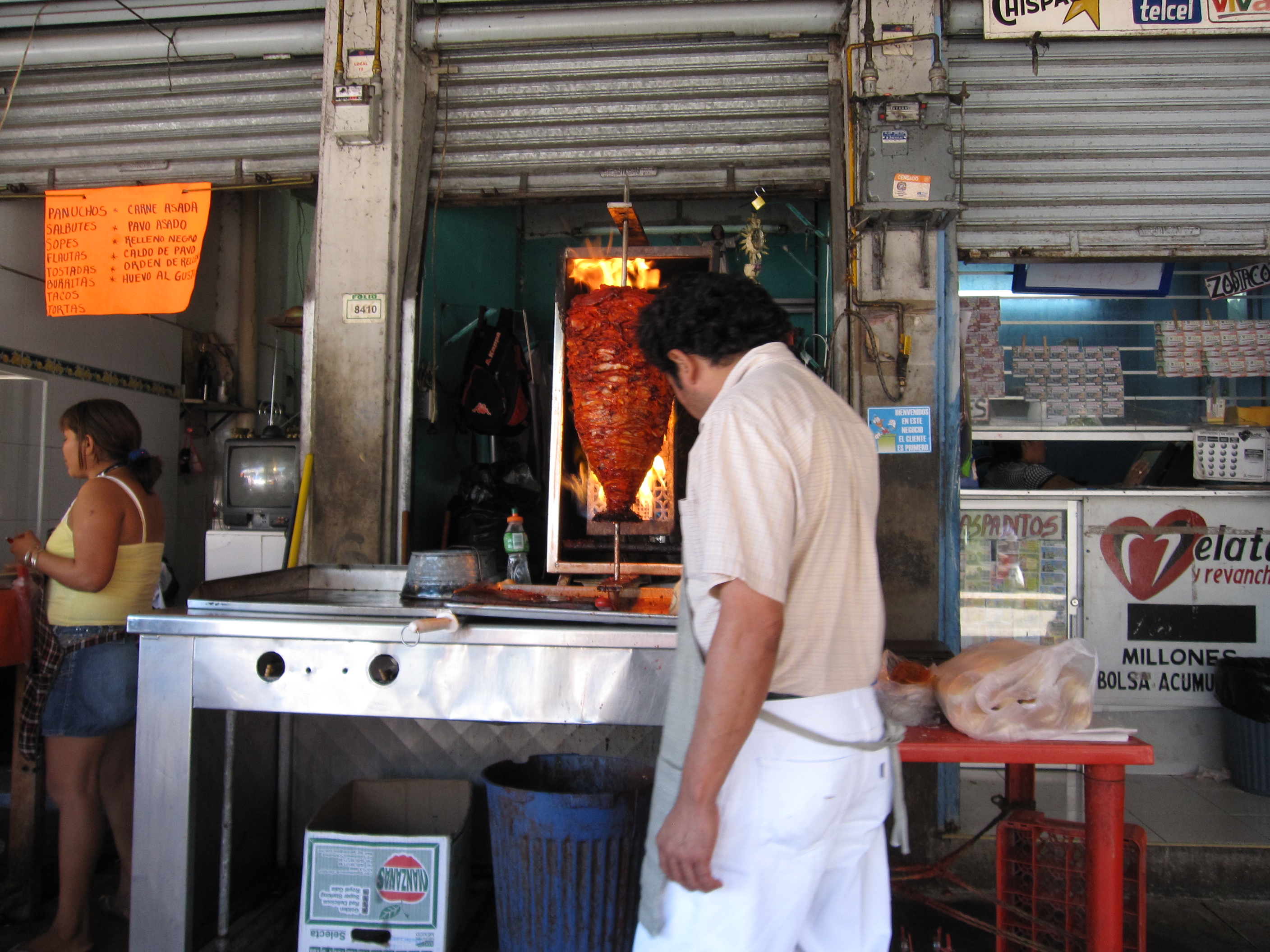
How on Earth could I walk past something like this without giving it a try? Influenced by Lebanese immigrants from three hundred years ago Tacos al Pastor are truly a thing of beauty. Juicy pieces of pork marinated in a red chili sauce, piled on top of each other, and roasted upright on a spit much like a gyro or schwarma. These are the kings of tacos.

I actually ate this guy’s pastor because the other one would have taken too long to cook. I had to have one and I had to have it quick!

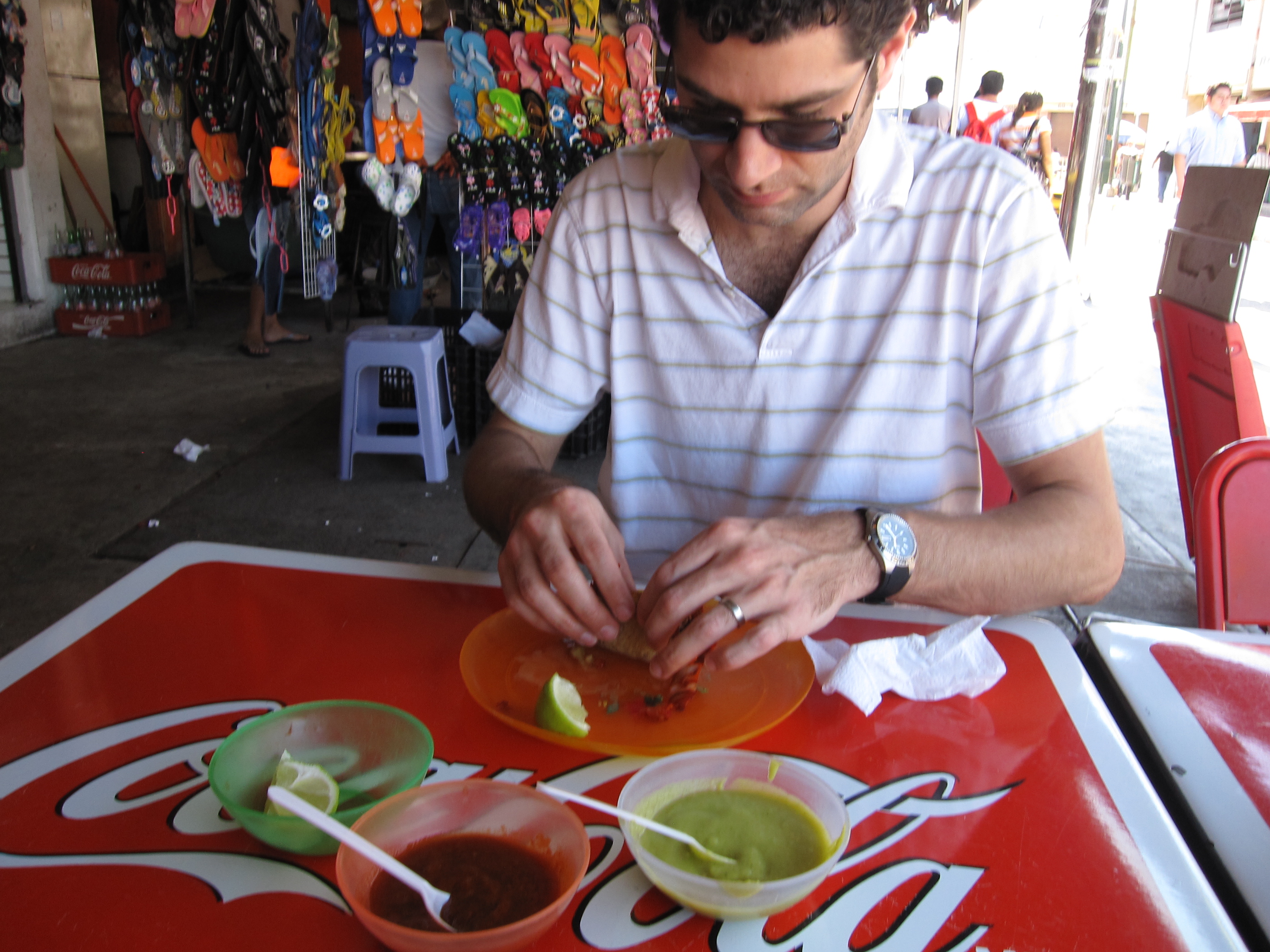
Typically served with a slice of pineapple, instead, this guy served his with a creamy avocado salsa, chipotle salsa, and lime. MMMMMMM! That was it, the piece de resistance! Sorry La Pasadita, I love you, but you just don’t quite hold up to the genius of meat cooked on a spit and served in a tortilla.

Everything was washed down with some Jugo de Mango. The juice carts serve their juices with a plastic bag on top. This serves two purposed. First, the bag keeps the flies out of the sweet nectar. Second, it somehow keeps the drink cold so that the ice doesn’t melt, even though it’s 90 degrees outside. Genius!

Surprisingly, I was not met by old Montezuma himself. Either he took the day off or my stomach is stronger than it used to be. Just goes to show that street food in markets like San Benito are every bit as sanitary as a regular restaurant. Plus, you get the added bonus of auto emissions to help give the food that indefinable taste. The Japanese call it umami, I call it delicious!

Read Full Post »

« Newer Posts - Older Posts »