Feeds:
Posts
Comments

Posts Tagged ‘seaweed’

Last night was Yuki’s turn to make dinner. She made one of her specialties, vegetable soup with chicken-stuffed cabbage rolls.

First thing she did was to take a head of cabbage and plunge it into boiling water for a few minutes. She didn’t want to cook the cabbage, just make the leaves pliable for rolling, so they don’t break. Then she pulled apart the leaves and separated them.

For the chicken filling she put some ground thigh meat in a bowl. To that I grated some ginger and garlic and she chopped up some cilantro and put that in as well. She also soaked some hijiki seaweed in warm water for about 20 minutes. Once it was soft, she drained it (reserving the liquid) and tossed that into the meat as well. Some salt and pepper and I mixed it all up.

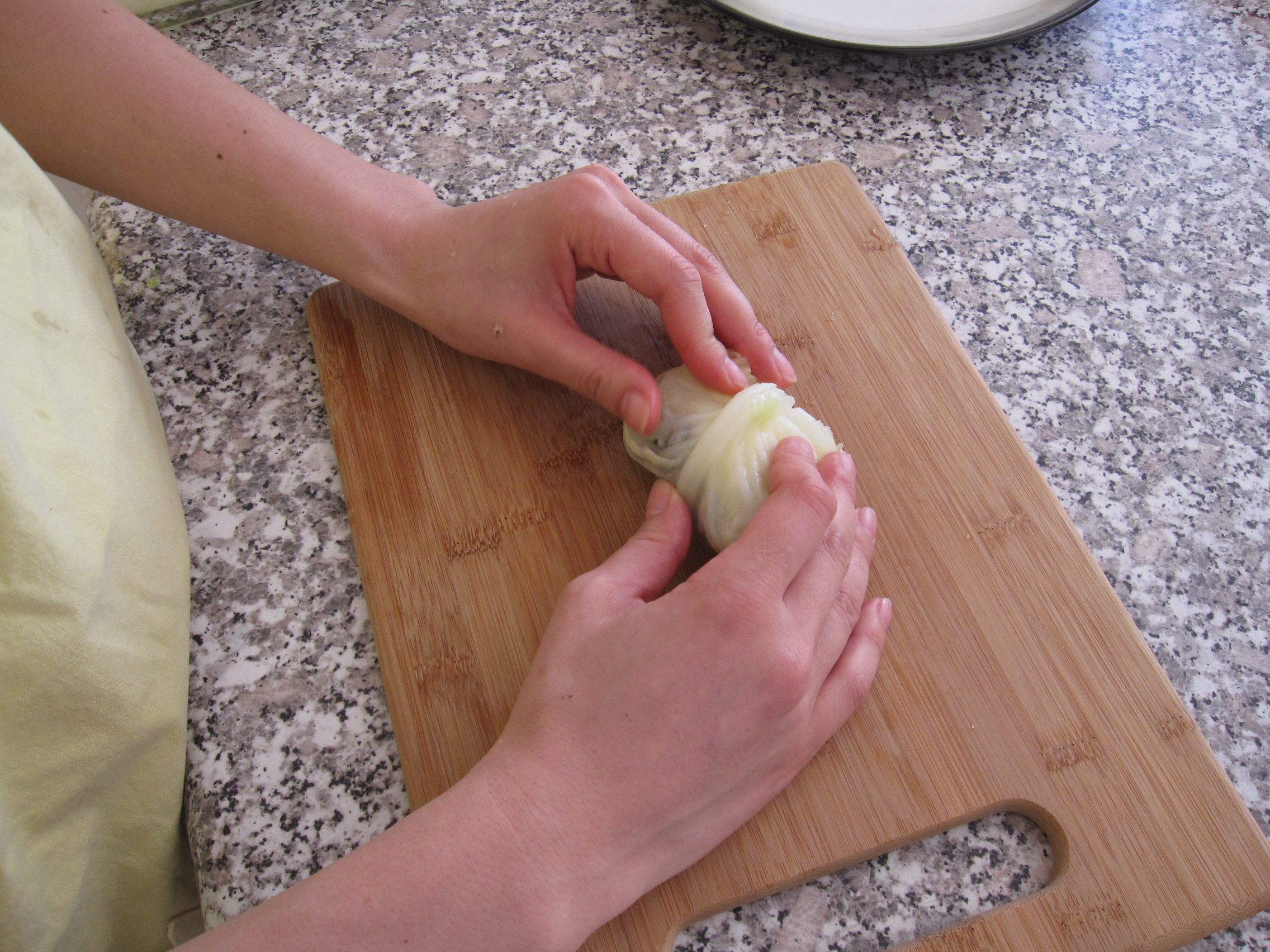
She laid the cabbage leaves down, one at a time, and I dropped a spoonful-sized ball of the meat mixture in the middle. Then she rolled them up and set aside.

For the broth she added the reserved hijiki water to some chicken stock and brought it to a boil. Then she added some green onions, carrots, broccoli, and the cabbage rolls. The leftover cabbage leaves that weren’t rolled were cut up and thrown into the soup as well. She let it simmer over medium heat for about a half hour or so.

That’s it. Simple, healthy, and delicious. White rice on the side, but bread would work too.

Read Full Post »

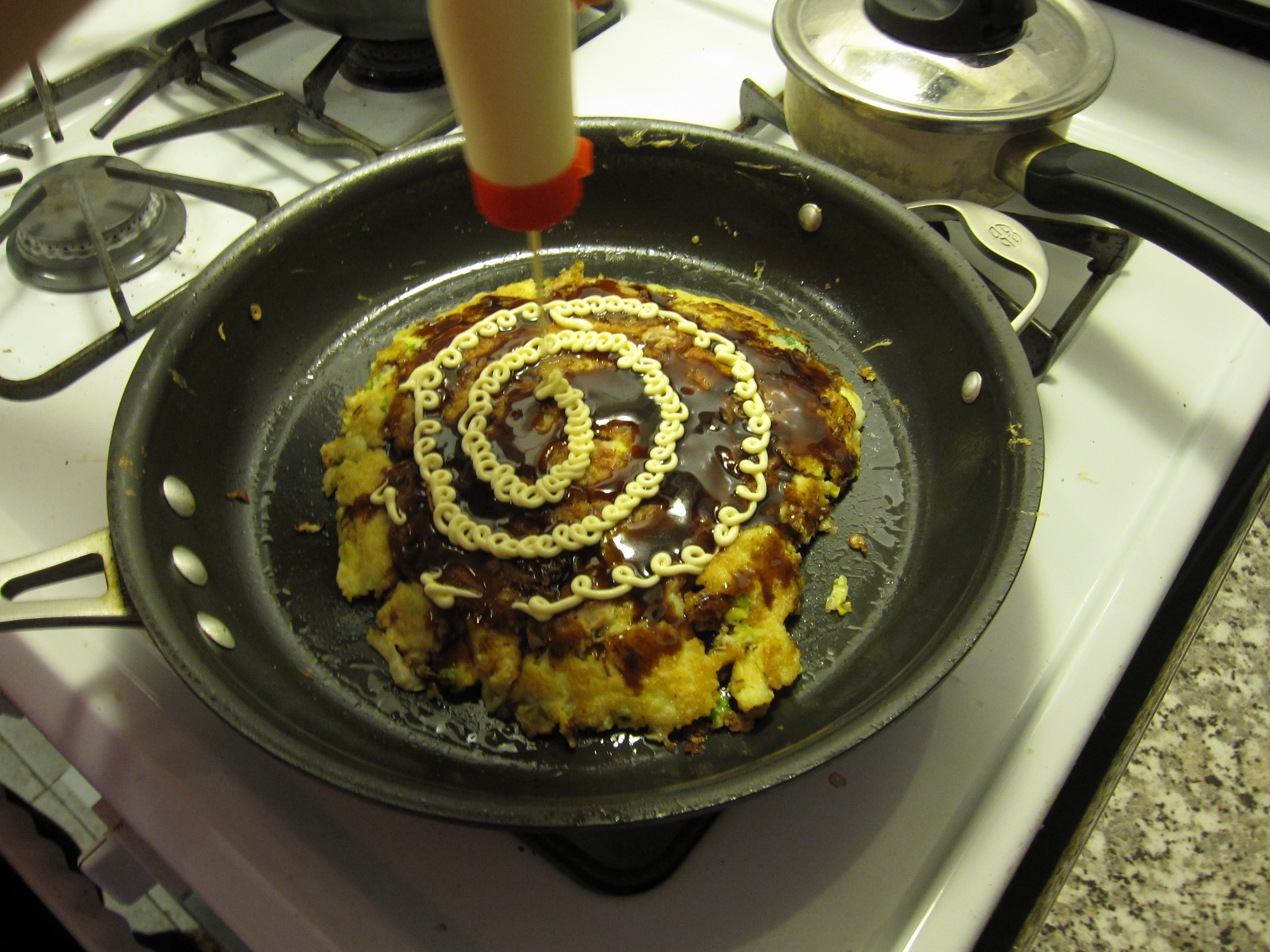
Last night we made Okonomiyaki for dinner. Well, Yuki made it, I was her sous chef. She also made a Korean spiced soup to get more vegetables into the meal. That and she loves soup.

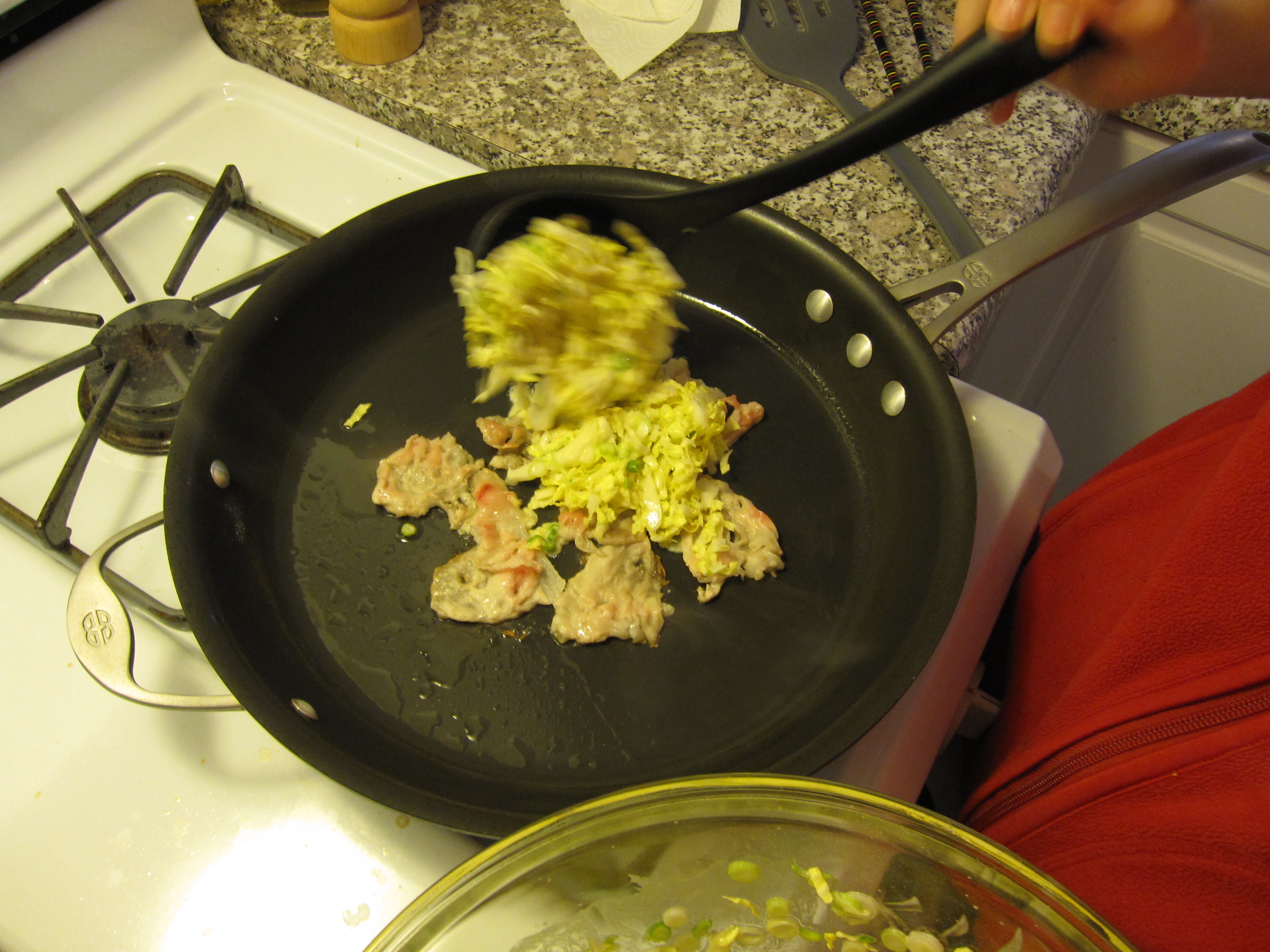
To start off she cooked thin slices of Kurobuta Pork that we got at Mitsuwa in a little sesame oil. Any pork will do as long as it’s thinly sliced. You can also bacon or any bacon-like substance. Or, no meat at all.

Then, she poured the batter on top to make a pancake. I’m not real sure what kind of flour she used, we have a few different kinds on our pantry, but all-purpose will do, about a cup. She mixed it with about 3/4 cup water and a couple of eggs. Then she mixed in a bunch of thinly sliced green onions and a cup of thinly sliced Napa Cabbage.

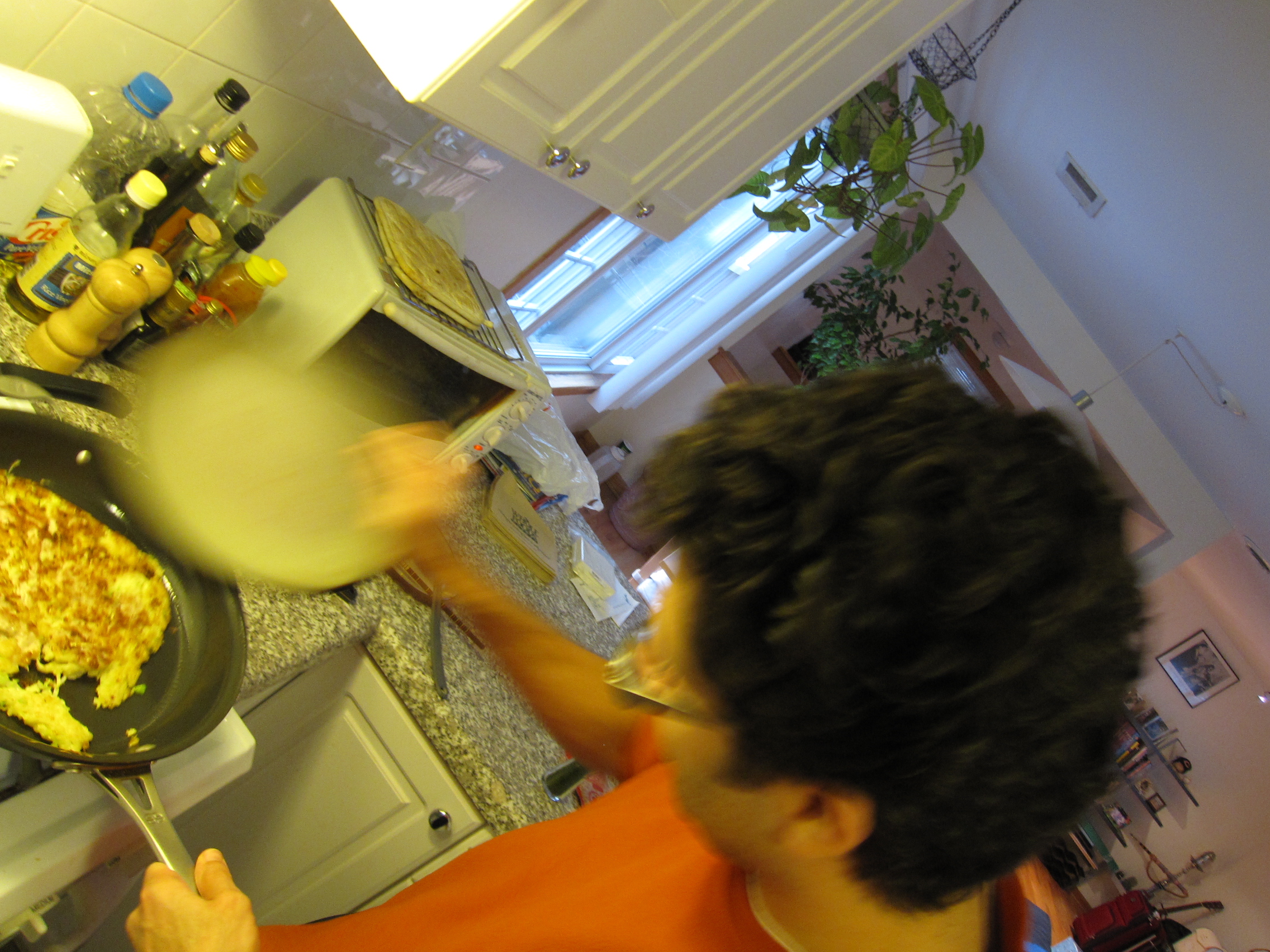
Instead of making 4 smaller ones, we made two big ones. I had to use a plate to get that thing flipped over when it was time to cook the other side. It’s ready to flip when the bottom is a nice golden brown color.

While the bottom is cooking you pour the on top. First pour on Bulldog Sauce. A popular sauce in Japan commonly used on Tonkatsu, fried pork cutlet. Then squeeze on some mayonnaise.

Feel free to paint your okonomiyaki with the sauces.

Then top it with a bunch of katsuo-bushi, dried bonito flakes.

Finally, top it off with some ao-nori, ground seaweed.

For the soup, Yuki started by boiling some light dashi broth. She added some green onions, thinly sliced carrot, enoki mushrooms, aburage, broccoli, komatsuna (Japanese Mustard Spinach), and small diced tofu. Once everything was cooked  she swirled in a couple of tablespoons of tobanjan paste (Korean hot chili paste). It was that simple.

Read Full Post »

So, Yuki made dinner for Meatless Monday this week. As you can see from the pic, she cooks a totally different style than me. She prefers numerous different plates with different items while I usually cook more of a one-pot gig. But, with it being Presidents Day and a day off work it was her turn.

Starting with the top left dish, she simmered some daikon radish. For the broth, she boiled niboshi (small dried sardines) in water to extract that flavor into a deliciously light dashi. Then she simmered the daikon until they were softened, but still retained some texture. She topped the daikon with yuzu-miso and some sliced green onion.

The top right dish is sato imo, a hairy potato that made my fingers itch when I peeled it. It’s worth it though as it has a more pronounced earthiness in its flavor than the potatoes we’re used to here in the States. She first had boil them in some vinegar. These potatoes are very slimy and by boiling them in vinegar the slime is removed. After they were boiled she sautéed them in olive oil with some onions and garlic. Then she added some ponzu and a little mayonnaise.

The bottom bowl is harusame soup. She used konbu dashi for the broth, a very typical broth for Japanese soups. The noodles are harusame, made from mung bean starch. Also in it were some enoki mushrooms, shiitake, wakame seaweed, sliced aburage (deep fried tofu skin), baby bok choy, and an egg that was poached in the dashi.

She also made dessert, shiratama dango. They’re little dumplings made out of mochi rice flour. Simply add water to the flour, roll the dough into little balls, and boil them till they float. They’re usually grilled afterword to make them a little more savory before adding various sweet sauces. We used three of the more common sauces. On the left is azuki bean paste, the middle is mitarashi (a sweetened and thickened soy sauce with mirin, sugar, and corn starch), and the right is kinako (soy flour mixed with sugar).

Read Full Post »

A good buddy of mine, Jason Meyer, gave us a couple of tables he made a while back. He’s a very talented sculptor/furniture maker/badass dancer that I used to work with at Bin36 back in the day. In order to show gratitude Yuki and I invited he and his fiancée over for dinner the other night. We figured that he gave us something that he made so we should do the same.

We started off with some Lemongrass Corn Soup with Avocado garnish. The soup was actually purchased and I didn’t make it (shhh, don’t tell Jason). It did taste exactly like something I would make though. Had I made it I would have simmered some corn and onion in vegetable stock with some lemongrass until the kernels were nice and soft. Then I would have discarded the lemongrass and blended the rest of the ingredients until smooth and strained it back into the pot. A little salt and pepper and there you go. I did make the rest of the meal. Well, that’s not entirely true as Yuki did some of it.

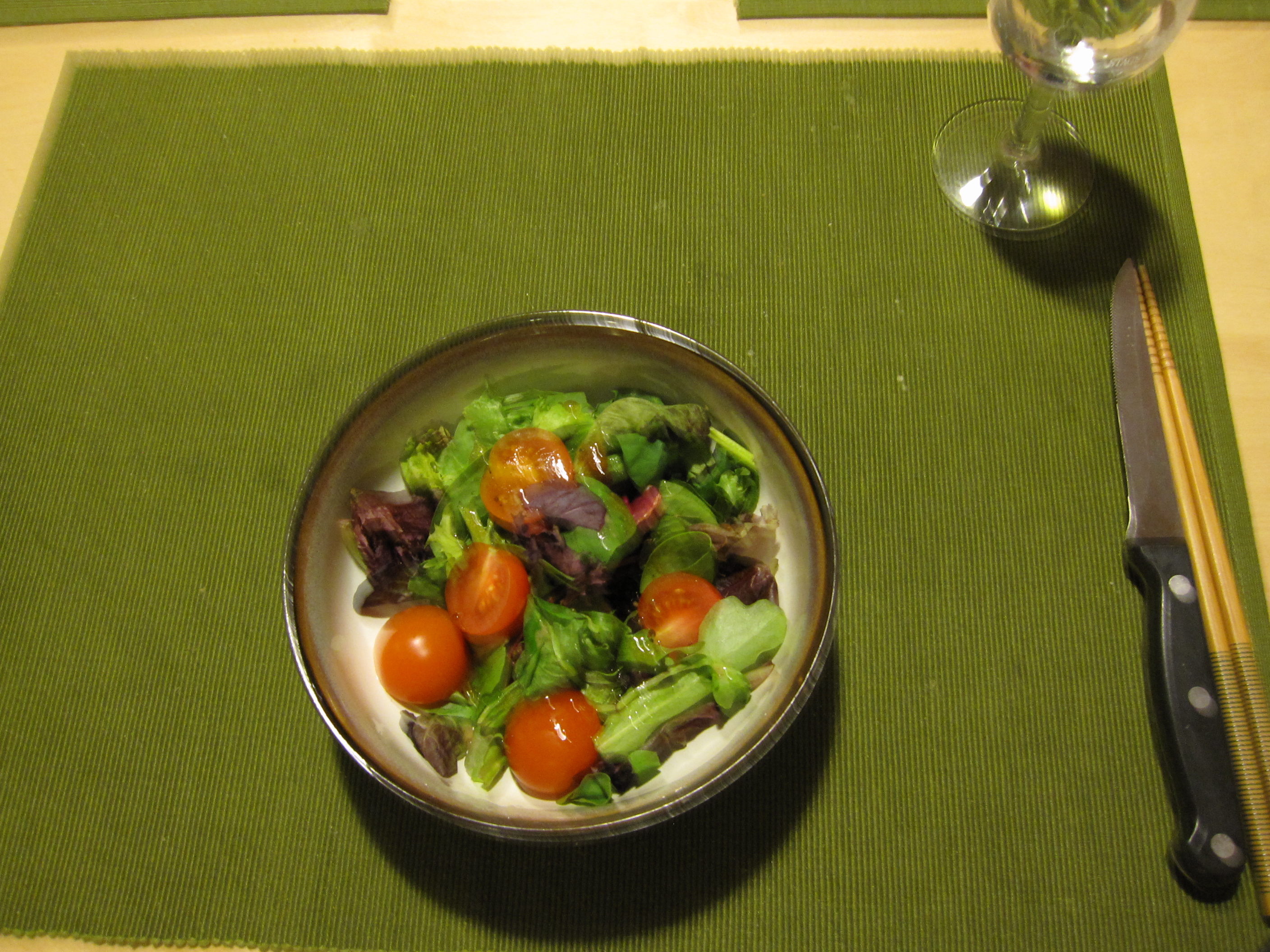
Then I served a simple salad. Mixed greens with cherry tomatoes and a sesame vinaigrette. Vinaigrettes are easy to make. This one had soy sauce, sesame oil, a touch of rice wine vinegar, salt, and pepper.

Next was the main course. I went to Olympic Meats for some good strip steaks. The steaks were pan-fried in nothing but olive oil. No salt or pepper added. Once I got a nice seer on each side and they were cooked about medium rare or so I put them on plate to rest. While they were resting I doused them with a sauce I had made. The sauce consisted of grated ginger and garlic, soy sauce, lime juice, red pepper flakes, and pepper. No salt since there was plenty of soy. I made the sauce way in advance to let the rawness of the ginger and garlic mellow out a little in the lime juice. By pouring it on the steaks while they rested it allowed the flavors infuse into the meat and keep them nice and juicy. I served the steaks on top of baby spinach with roasted yellow peppers and shiitake.

On the side was some hijiki rice that Yuki made. In the rice cooker she added to the rice some diced carrot, hijiki seaweed, cooking sake, soy, and konbu dashi. It’s one of my favorites as hijiki adds a wonderful flavor to almost anything. Plus, it’s extremely healthy as most seaweed is.

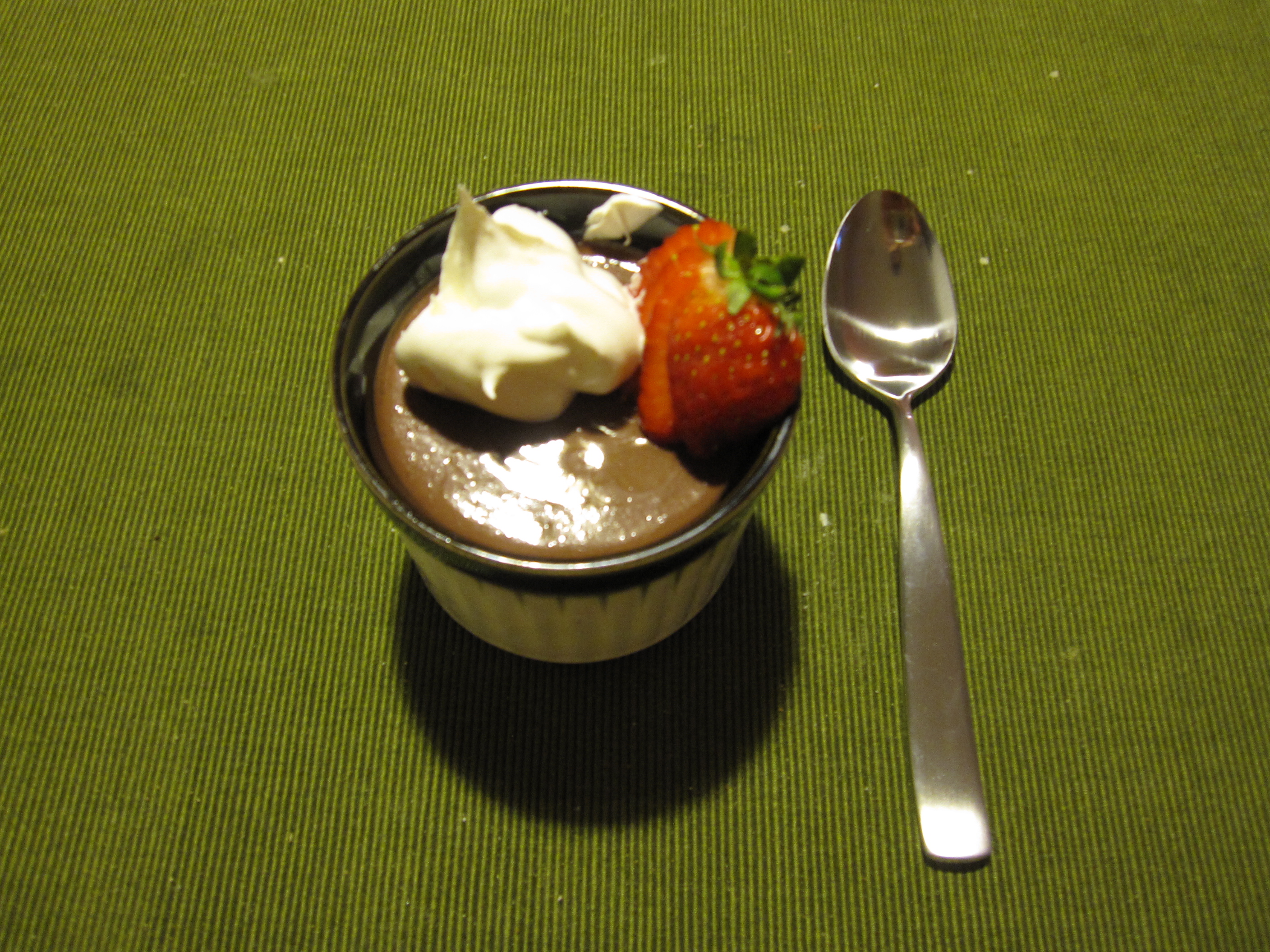
For dessert I made some Mexican Chocolate Pots de Cremes. What better to follow Asian flavors than Mexican chocolate? I made these the day before to let them set in the fridge overnight. I used egg yolks, heavy cream, whole milk, Mexican chocolate, and bittersweet chocolate. You first have to heat the cream and milk without boiling it, just a slow simmer for a few minutes. Then you incorporate the egg yolks, beaten, very slowly constantly mixing so that the eggs don’t scramble. Once it’s thick enough to coat the back of the spoon add the chocolates in pieces so that they melt completely. Once you have a nice smooth thick custard pour it into your serving dishes, cover, and chill for at least 4 hours and preferably overnight. To serve, I sliced some strawberries and added a little whipped cream.

Jason brought a bottle of Prosecco that we enjoyed with the soup and salad. After that we opened up a special bottle of Sake that we brought back from our last trip to Japan. Everything worked out extremely well. Portions were perfectly sized as none of us were hungry afterwords yet we weren’t stuffed either. I hope they enjoyed because it would be a disaster if I had to make them a table!

Read Full Post »

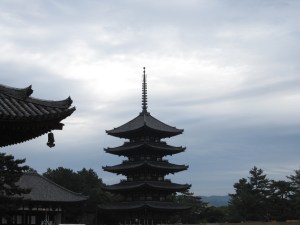
So, Yuki and I took a few days to visit some of the early temples and castles in the Kansai region of Japan. Most of the structures we saw date back to the 8th century and are truly amazing! Besides the structures there were also tons of great sculptures from the same time period. However, as you all know, this blog isn’t about architecture, it’s about food. This post is to let you know about the incredible Kaiseki we ate our last night in Nara at the Ryokan (traditional Japanese Inn) we stayed at, Yoshino.
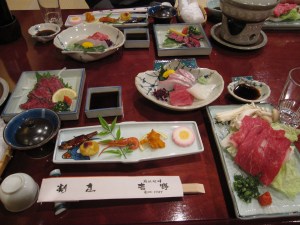
Kaiseki is the classic multi-course meal that progresses through various cooking techniques using regional, seasonal ingredients. It’s the highest art form you can find in food anywhere in the world. Focus on the subtleties of each ingredient to draw out natural flavors and not cover then with heavy sauces (sorry Frenchies, but the Japanese have your asses kicked in food culture!).

It started with that dish in the middle of the picture above. From left to right was a little fish grilled in a sweet soy marinade, a roasted chestnut, ama ebi (sweet shrimp), some sort of seafood that had a jellyfish-like texture in a miso sauce (I have absolutely no idea what it was, but it sure tasted good!), then a three-colored fish cake.
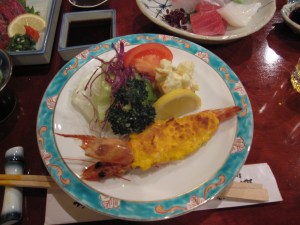
After that they brought out this dish. It was obviously a shrimp, but I’m not quite sure what else there was. I think it was a gratin made with the roe of the shrimp. Also on the plate as a macaroni salad and some lettuce with a tomato.
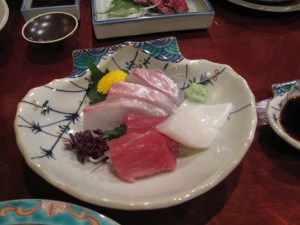
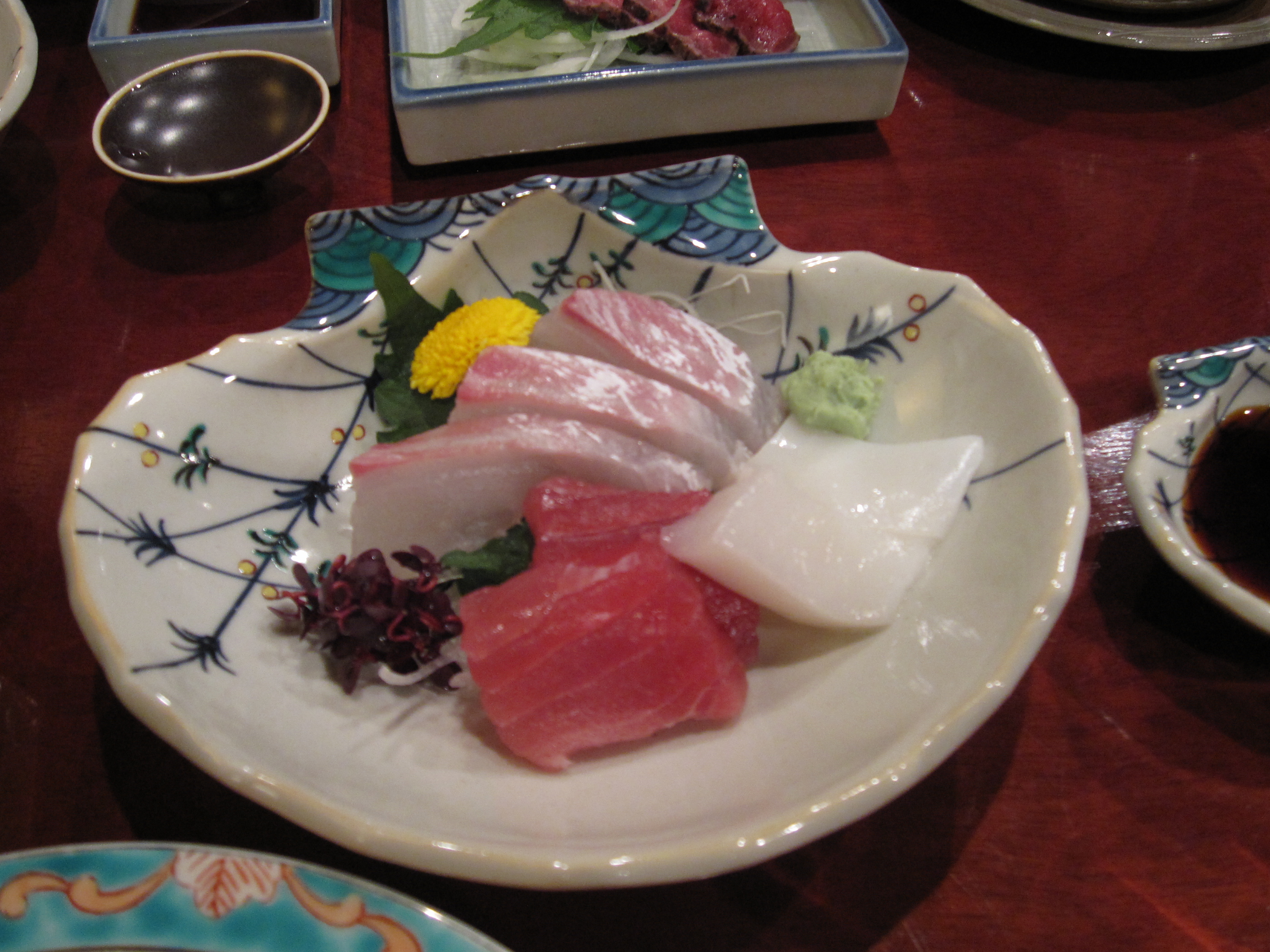
Then we moved on to the sashimi plate. It had some fantastic Chu-Toro (tuna), Tai (snapper), and the star of the plate….Ika (squid). In the States when you order Ika it’s usually very thin and a little rubbery. Not these two slices. They were about a half centimeter thick, squid steaks! Rubbery? Hell no! Each chew and the squid literally melted away in our mouths. Hands down the best squid I’ve ever eaten.

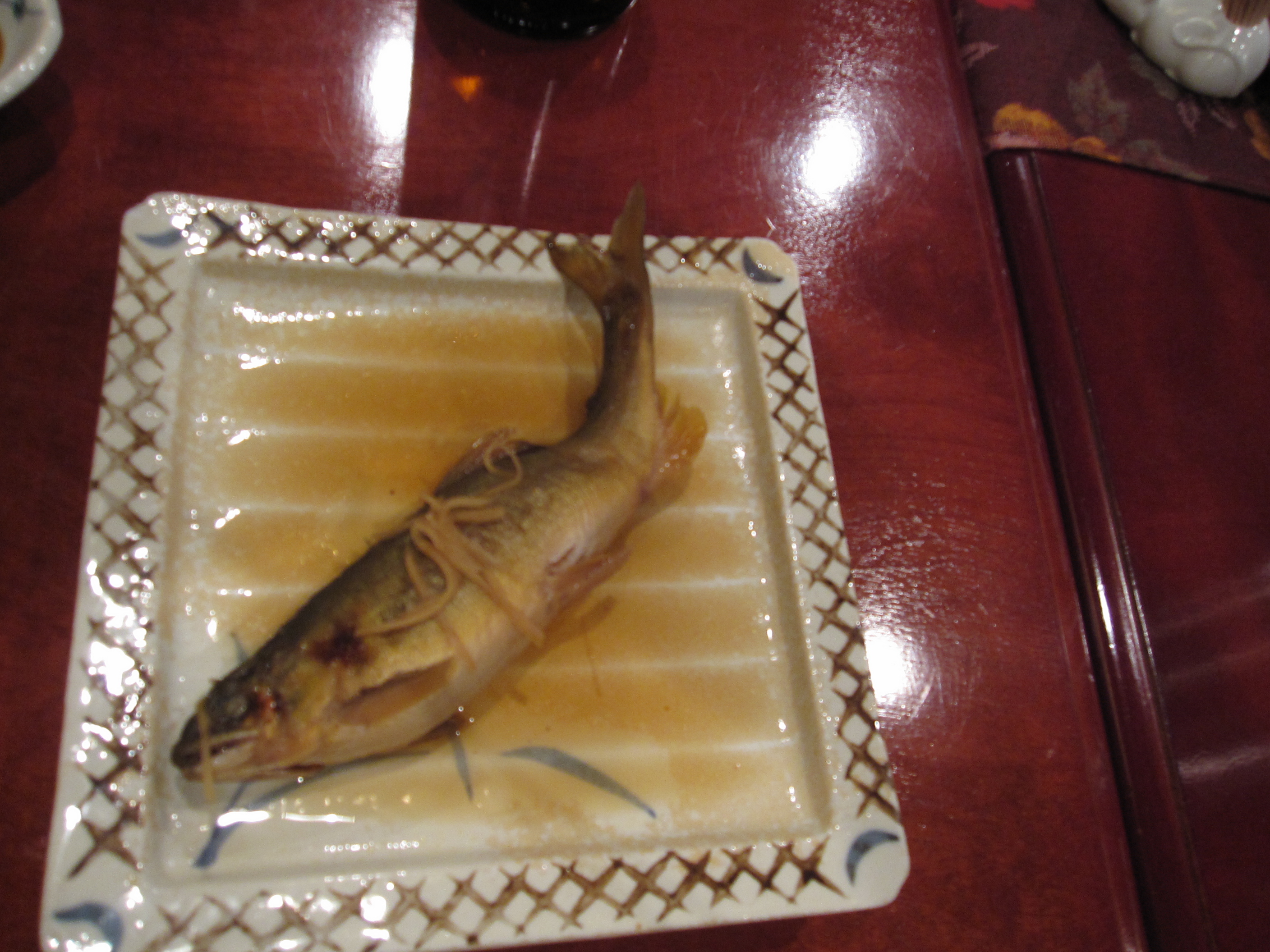
Then they brought us a plate of steamed Ayu (sweet fish). It’s a river fish that eats moss attached to stones giving it a really fresh and clean taste. It was served with a light ginger sauce. The thing that makes Ayu special is that it’s eaten when the belly is full of fish roe. There isn’t much meat, so it’s like dipping chopsticks into a bowl of fresh water caviar.

Being the meatavore that I am, the next plate was what I was most looking forward to….Beef Tataki. Lightly seared beef to give a little texture to the soft raw meat laden with mouth-watering fat. The dipping sauce is a soy-dashi mix. You see the little mound of reddish gew on the side of the dish? That’s a mix of togarahsi (Japanese red pepper) and yuzu (a small citrus fruit). You mix that into the sauce like you would wasabi for sushi, along with thinly sliced chives. With the tataki there was a small dish of sliced cucumber and I think seaweed in a vinegar sauce that cleansed the palette from the fatty beef.
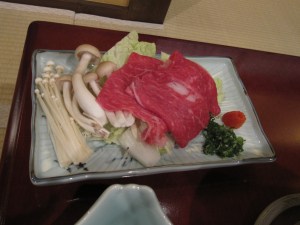
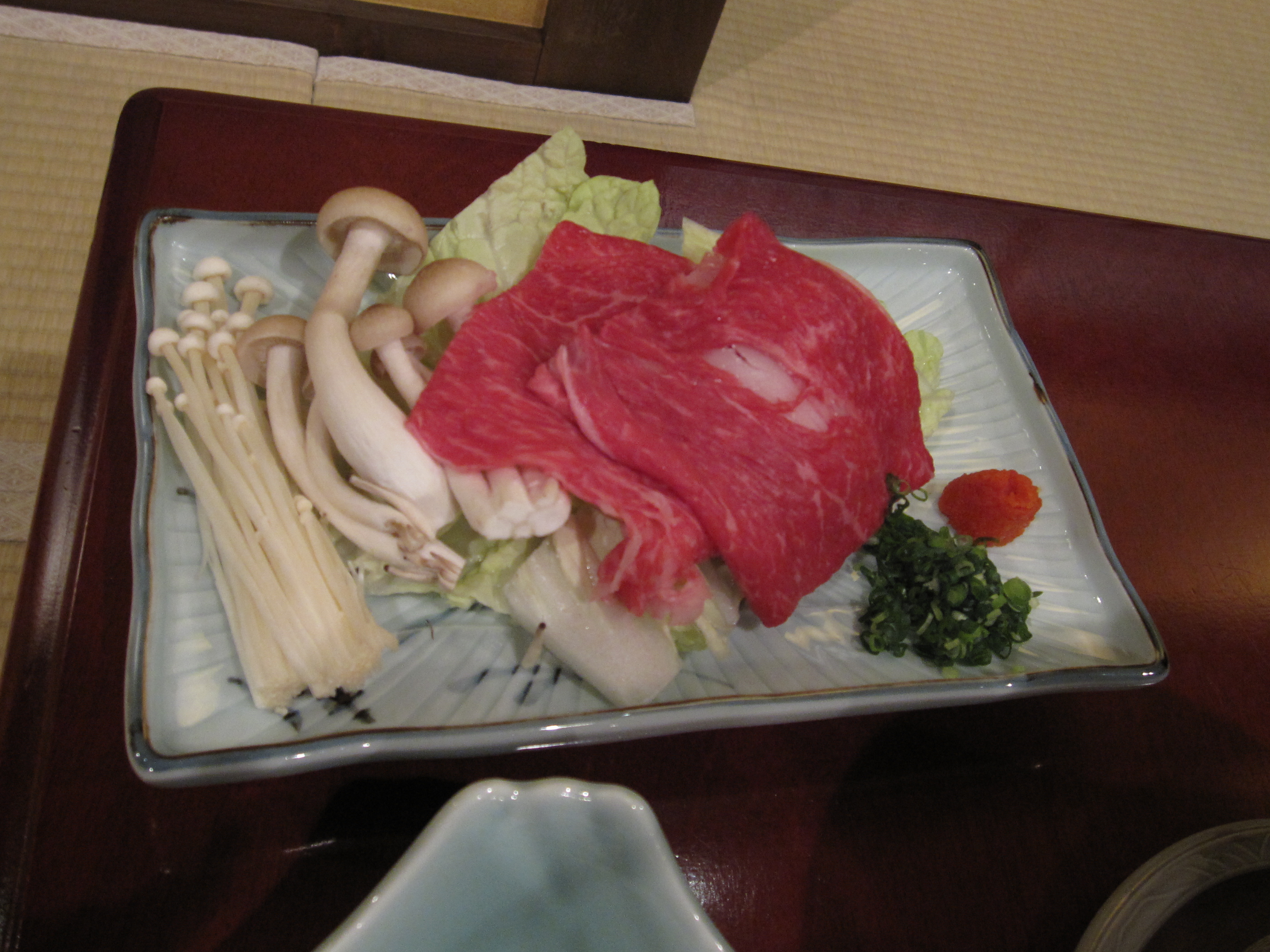
Then we ate the Shabu-shabu. Unfortunately I forgot to get a picture of the individual hotpots we used, but here’s the ingredients. The broth was a light sake base, in it we added cabbage, enoki mushrooms, and shimeji mushrooms. Once they were cooked, we sloshed the thinly sliced beef around to cook it and then dipped it all in a light soy with more of the togarashi yuzu and chives.
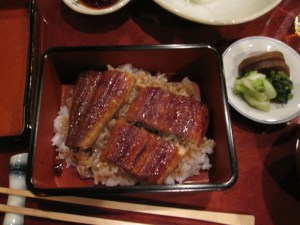
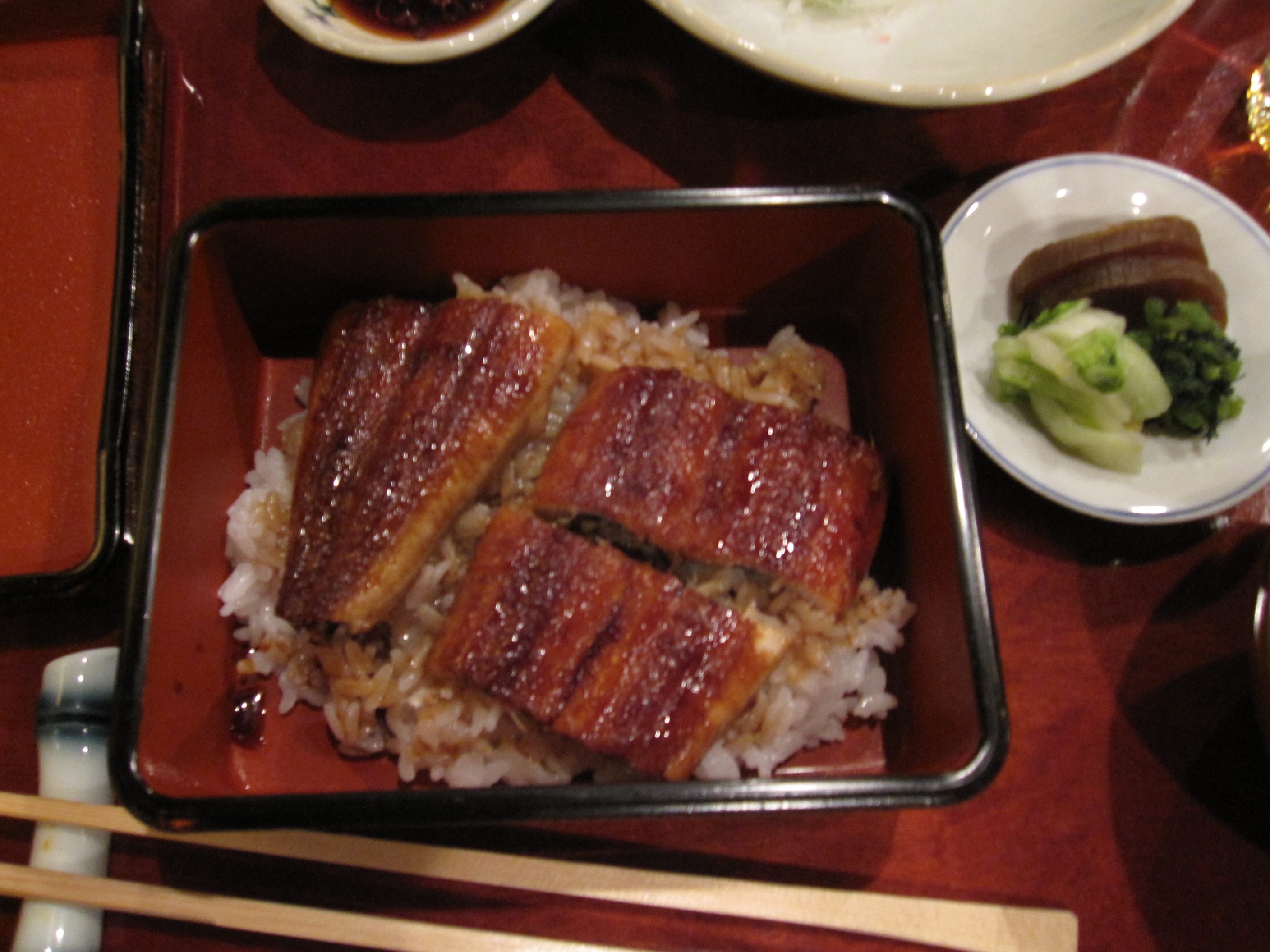
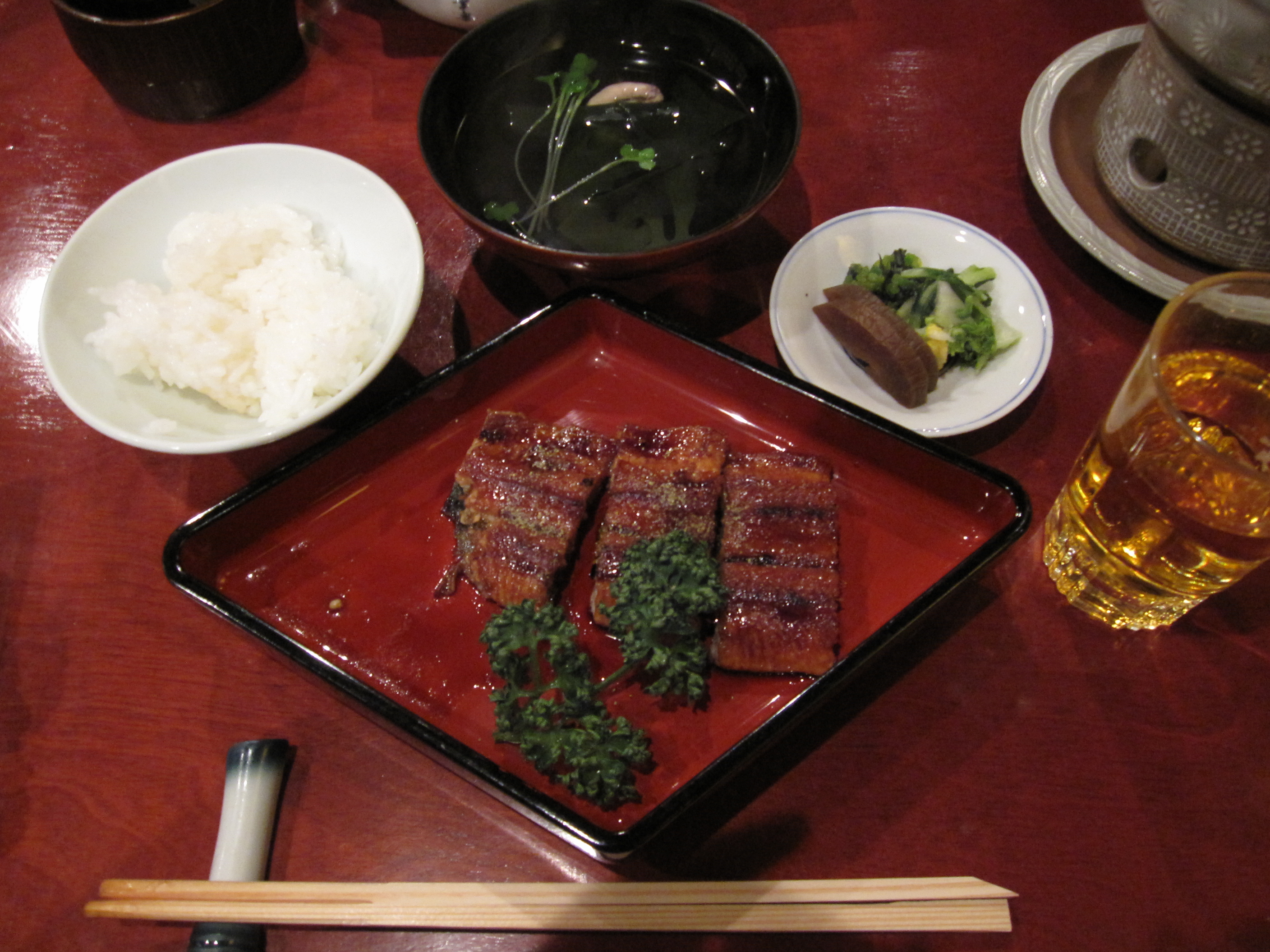
After that we got two different preparations of Unagi. To be honest, I have absolutely no clue what the difference was. One was served on top of rice, the other with rice on the side. All I can tell you is that you will never find eel of that quality anywhere in the States. It tasted like they just caught it that morning. Best eel ever! Both came with a little dish of Japanese pickles. They were probably damn good pickles, but I don’t like pickles so I let Yuki eat mine.

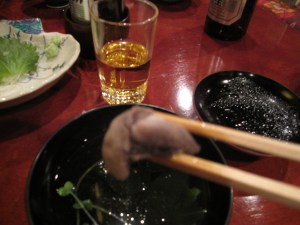
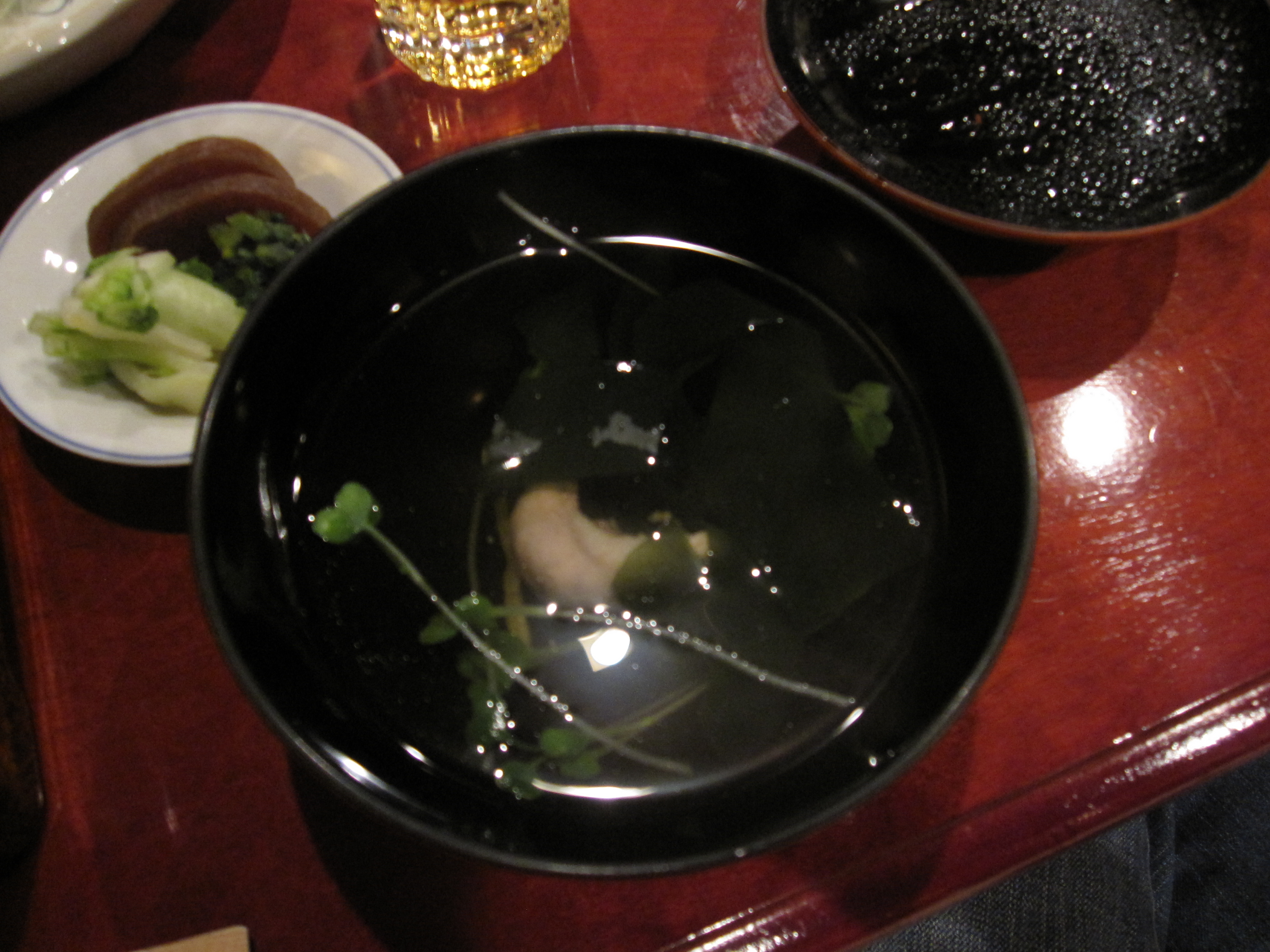
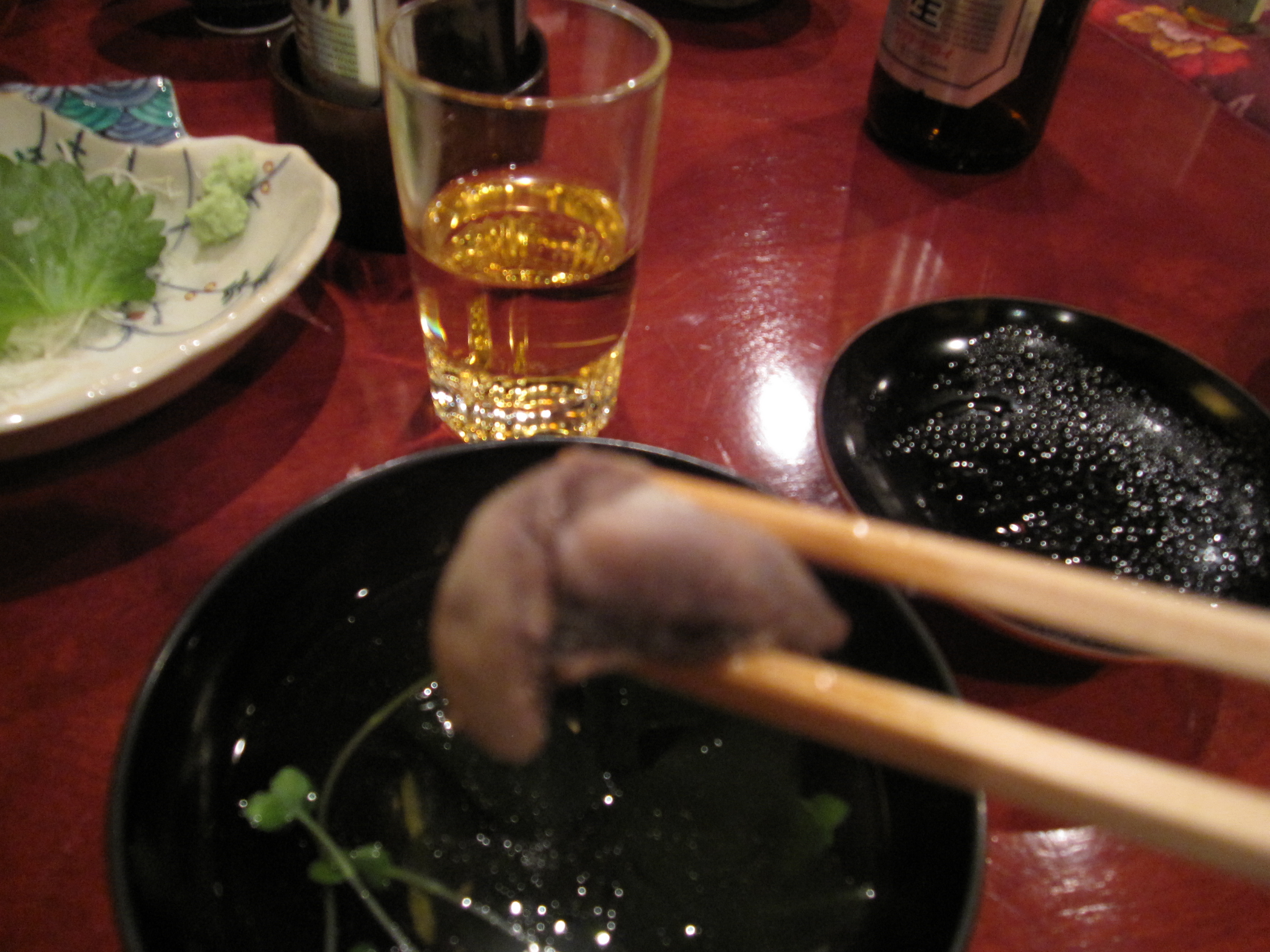
After the Unagi was a clear broth soup with an ingredient we couldn’t figure out. At first, we thought it was some sort of mushroom. It wasn’t. Then we thought it might be shiroko, fish sperm sack. It wasn’t that either. We finally found out that it was eel liver, probably from the Unagi we just ate. It had kind of a crunchy yet soft texture. Not something you’ll find on any old menu.
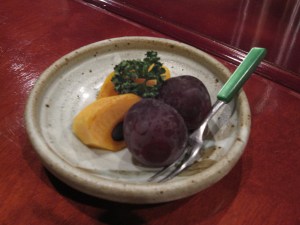
Finally, to finish things off was a plate with fresh persimmons and grapes. persimmons are in season right now and are everywhere while Japanese grapes are absolutely huge compared to what we get.

All in all this was my 5th Kaiseki. I wish I could afford to eat like this every night as there is always something unusual and strange to the western palette. If any of you get to Japan I highly recommend splurging at least once to experience the delicate yet sophisticated Japanese cuisine at it’s finest.

Read Full Post »

IMG_0607

Here’s a simple grilled fish dish. I got some fantastic fresh Halibut at Isaacson’s for $12.50 a pound. My wife and I each eat about 6oz so that’s about $4.70 per person. I marinated it in soy, mirin, sake, garlic, ginger, and fresh thai basil from my porch. Also a touch of olive oil to keep it nice and moist when it’s grilled.

For veggies we got some mixed organic potatoes that almost taste like plantains when grilled with olive oil, salt, and pepper. I also olive oiled, salt, and peppered some fresh organic hericot verts, spanish onions, and carrots. All of the veggies came from the Farmer’s Market and Stanley’s.  In total, we each ate about $2.50 in veggies.

Some white rice with grated nori seaweed (the kind that wraps sushi rolls) and seasame and a glass of white wine completed the meal.

The best part is that there were no dishes to clean up since everything was cooked on the grill.

Read Full Post »
« Newer Posts