Feeds:
Posts
Comments

Posts Tagged ‘soy sauce’

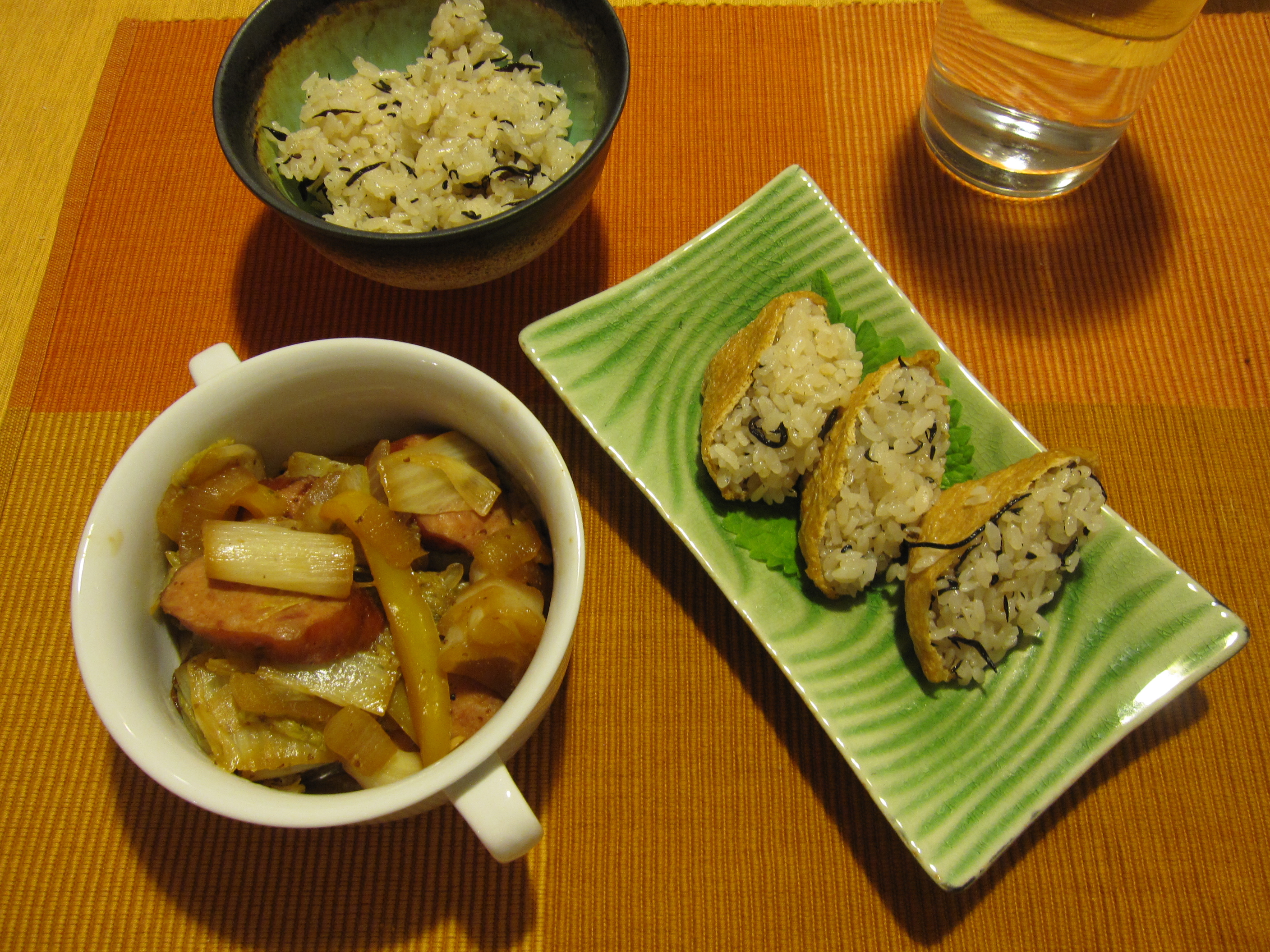
Yuki and I picked up some pre-flavored aburaage (deep-fried tofu) for inarizushi at the Assi Plaza the other day. So, last night for dinner she made some sushi rice with hijiki to stuff into them and I made a quick stew with a couple of kielbasa that I picked up from Andy’s last week. I mean really, what matches sushi better than Polish sausage?
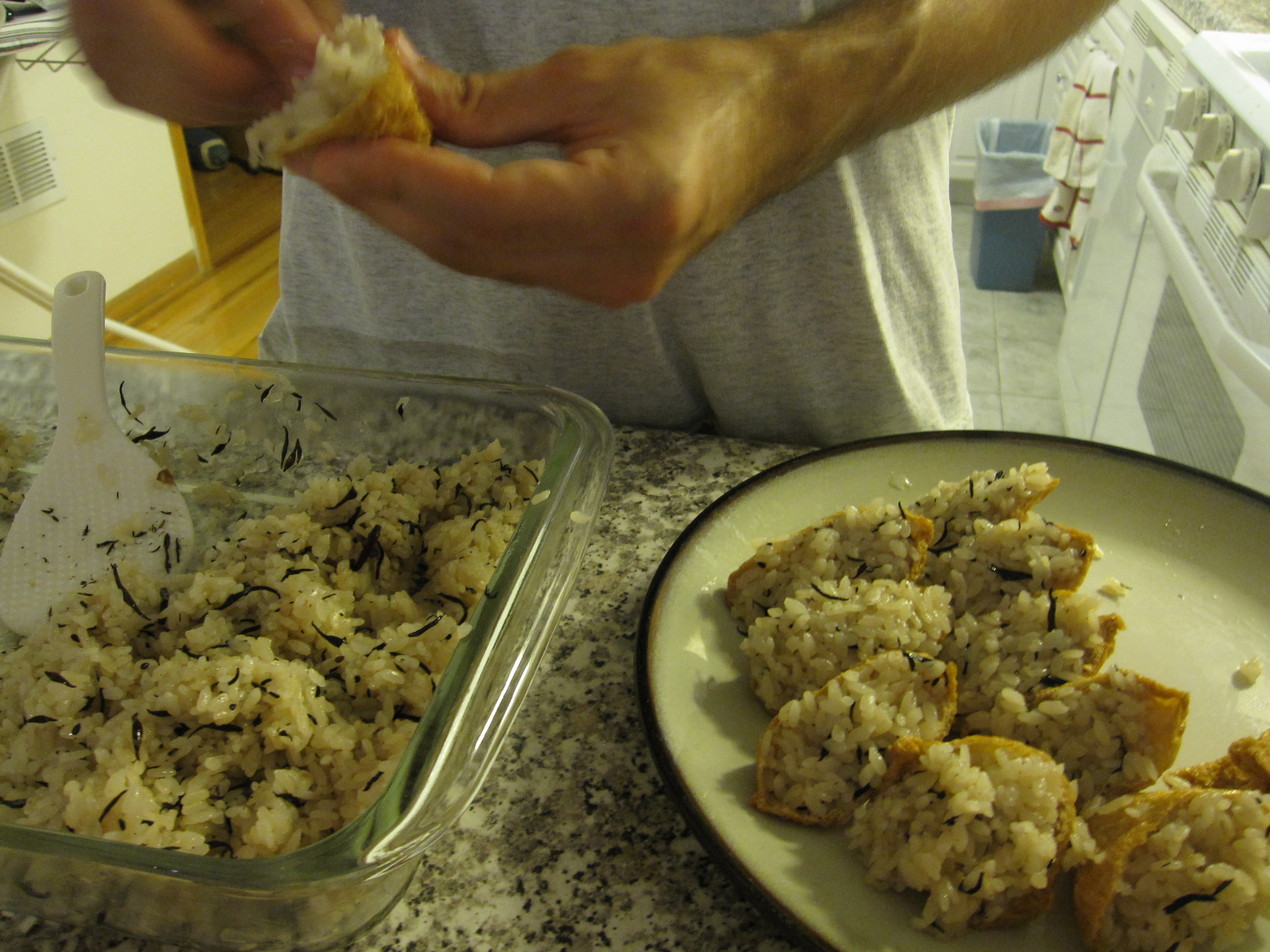
Inarizushi is really simple to make. Yuki measured out the rice to make 2 cups in our rice cooker. After she poured in the water the put about 2 tablespoons of dried hijiki in and let it sit for about 30 minutes before turning the cooker on. Once the rice was cooked she dumped it into a large glass baking dish. I stirred it around while she fanned it to release the excess moisture. Then, she poured in a mixture containing 4 tablespoons of rice vinegar, 2 tablespoons of sugar, and a pinch of salt. I mixed that all in until the rice was cooled to room temperature. Prior to that Yuki took the aburaage and boiled it for a few minutes. Aburaage is covered in oil and by boiling it you can remove most of the oil. Then, it’s simply a matter of stuffing the rice into the packets, a job that fell into my hands. Make sure to keep a bowl of water nearby to keep your fingers wet otherwise the rice will stick and you’ll never get the aburaage filled.

For the kielbasa I sliced up half an onion, 1 yellow bell pepper, 3 cloves of garlic, half a long napa cabbage, and the two kielbasa. In a pot I heated up a tablespoon of olive oil and tossed in the onion, pepper, and garlic. I let those saute down for about 5 minutes and then added the kielbasa, I let that cook for about 4 minutes. Then I tossed in the cabbage and let it wilt down for about 4 minutes. I poured in 1/4 cup dry white wine and let it boil for a few minutes until it evaporated. Finally, I poured in a mixture of 1/4 cup soy sauce and 2 tablespoons of mustard. I let that boil down for about 5 minutes and that was it, just a little black pepper to season.

To serve, we put a shiso leaf underneath the inarizushi. We also served the extra rice because we made more than we could stuff into the aburaage.
Read Full Post »

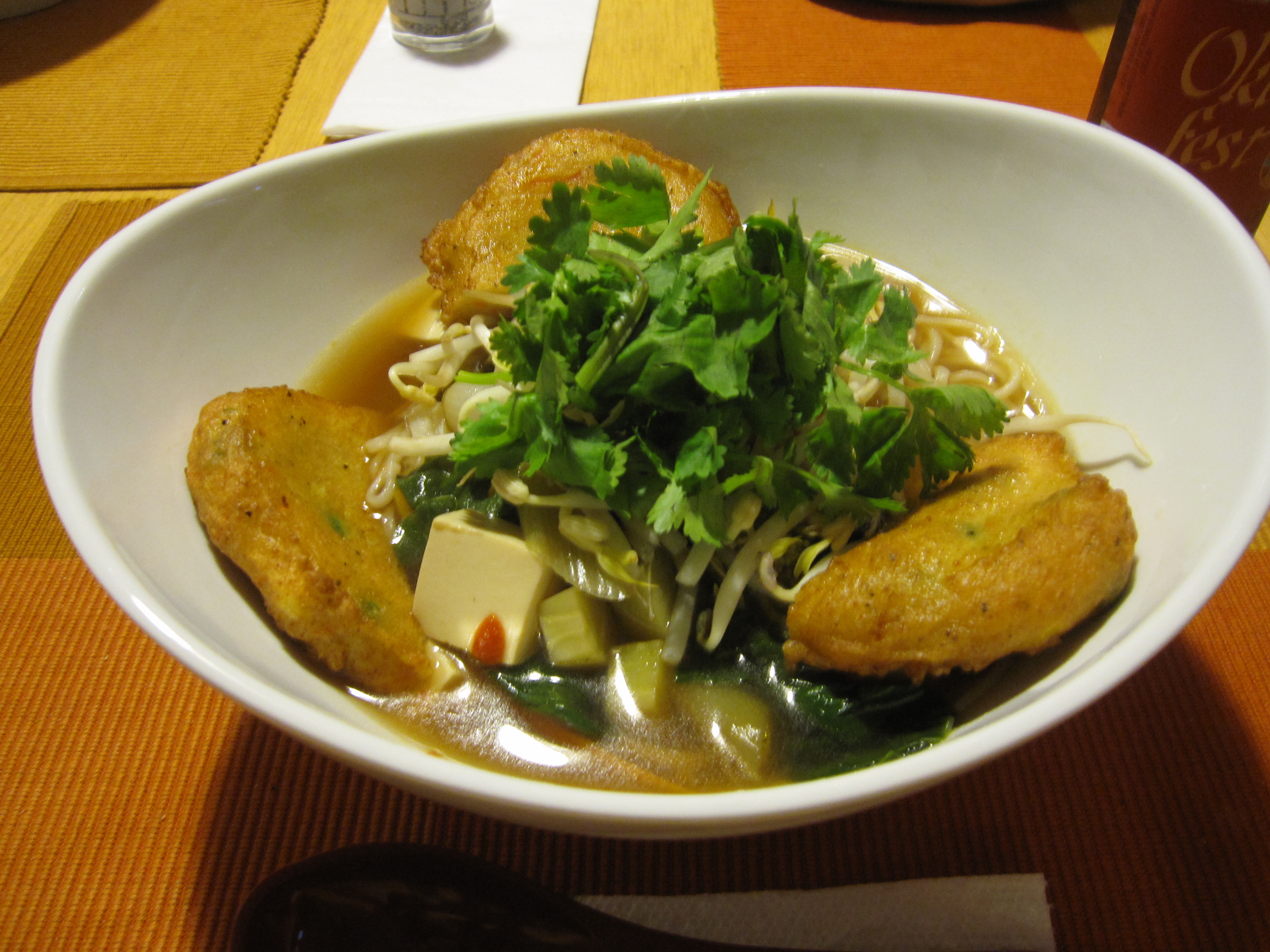
Last night I made some noodle soup using Vietnamese rice noodles, pho-like broth, and Japanese fish cakes. Not sure what to call this dish, so I’ll just call it Japanese Pho. It was very simple to make and actually tasted really really good.

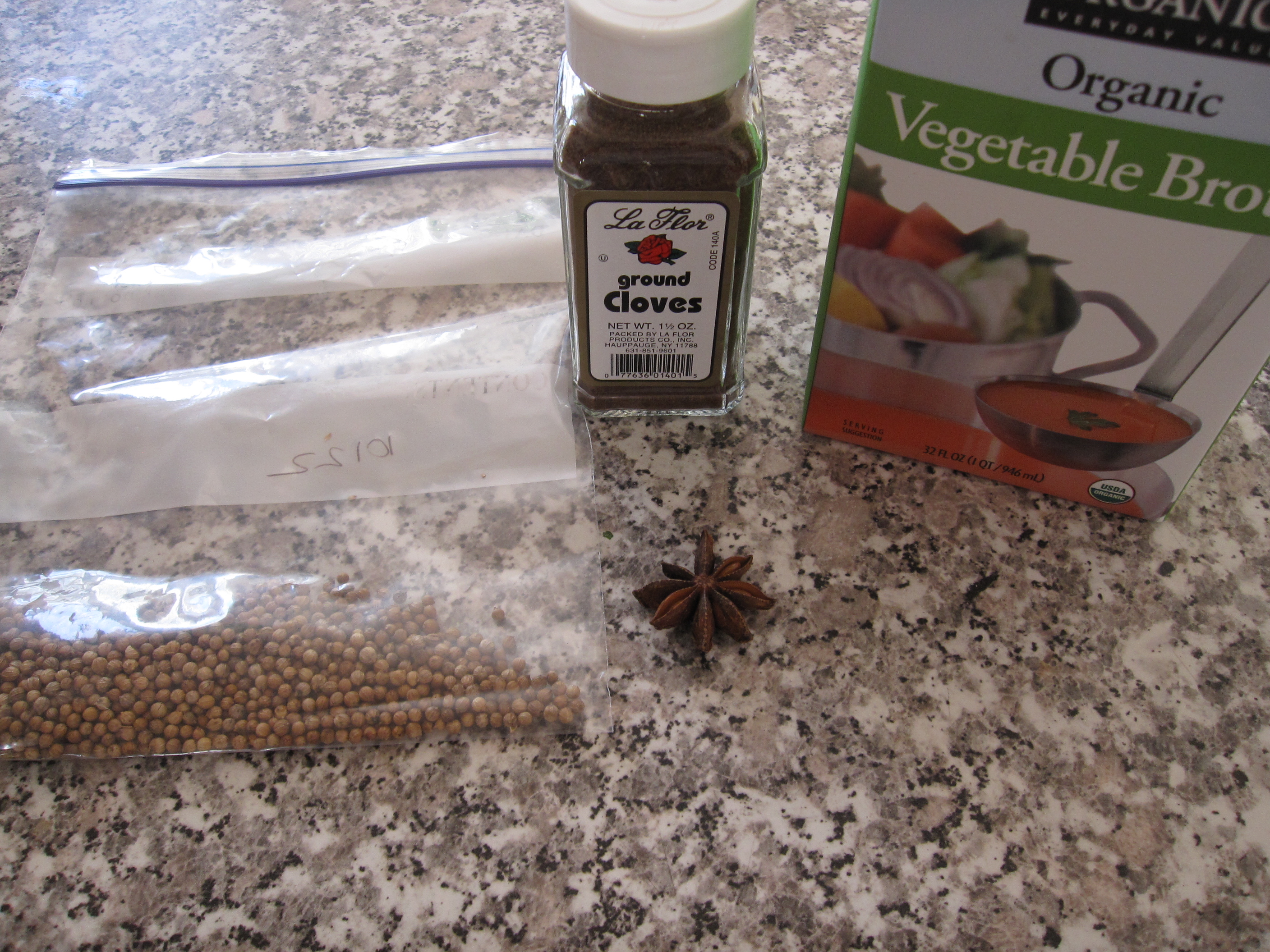
First thing I did was make the broth base. I crushed 1 teaspoon of coriander seeds and 1 star anise with my pestle and mortar. Once they were ground to an almost fine powder I added 1 teaspoon of ground cloves. I wish I had some ginger, I would have bashed that up and added it as well. At any rate, I had 3 cups of vegetable broth in my fridge that needed to be used up so I poured that into a pot, dumped the spices in, and let it boil for about 10 minutes. After that I turned off the heat and let it sit while I prepped the rest of the dish.

My ingredient list included 4 green onions sliced into inch length pieces, a small head of broccoli chopped up, two small carrots cut into thin strips, 2/3’s of a pack of shiitake sliced, half a cube of silken tofu diced, about half a container of baby spinach, about 4-5 ounces of bean sprouts, and 3 fish cakes from the Tensuke Market (these fish cakes had slivers of carrot and peas in them, one of my favorites).

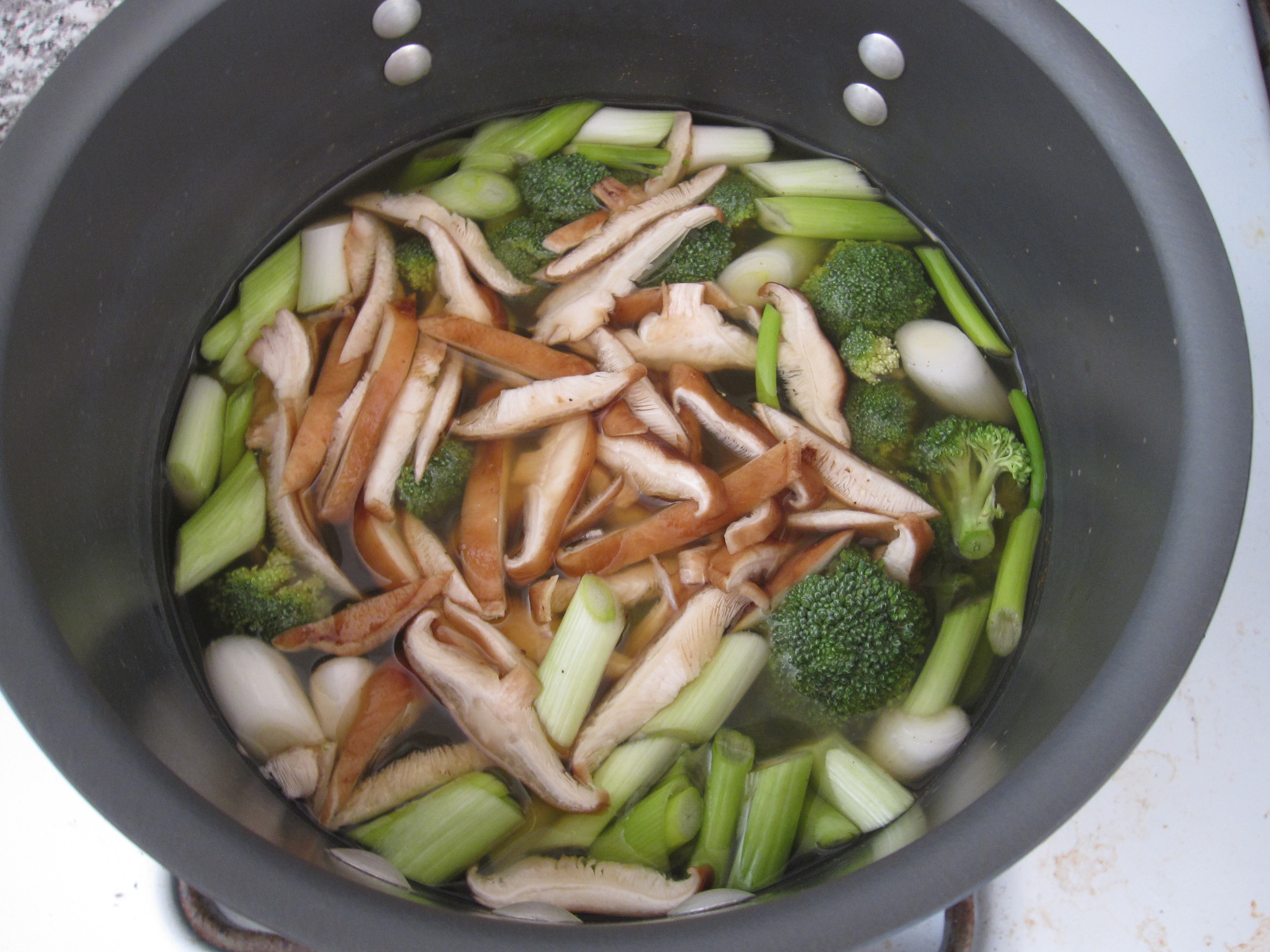
In a clean pot I strained the broth base discarding the grit. I made sure to press the grit though to make sure I got all of the flavorful liquid. To that I added about 3 cups of water, 1/4 cup soy sauce, 1/2 teaspoon of dashi-no-moto, and 3 tablespoons of sesame oil. Then I tossed in the green onions, shiitake, and broccoli. I brought all of that up to a boil and let it go for about 7 minutes while toasting the fish cakes. After that I added the carrots, tofu, and baby spinach for about 3 minutes. That was it, I turned off the heat.

While the soup was cooking I boiled some rice noodles in a separate pot with just plain water. I did that according to package instructions and then drained.

In my serving bowls I first put in the noodles. Then I ladled the soup on top and squeezed in some sriracha. On top of the soup I put in some bean sprouts and garnished those with some cilantro. I placed the halved fish cakes around the edge.

Read Full Post »

Last night Yuki and I went to Millenium Park for another one of their Made In Chicago: World Class Jazz shows. Besides listening to some killer guitar by Alfonso Ponticelli we ate some killer skirt steak sandwiches that I made earlier in the day, along with some potato salad.

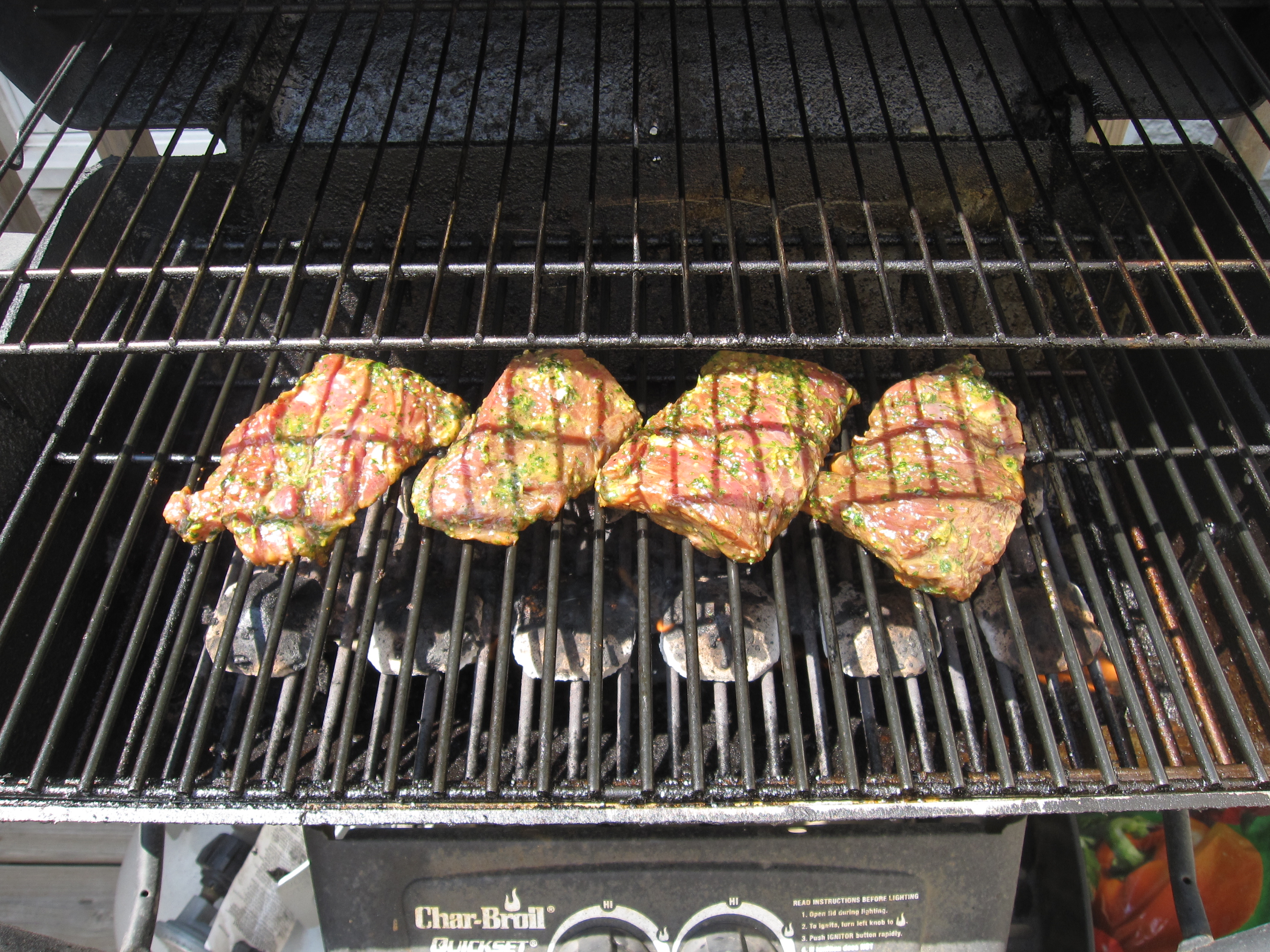
For the steak I took a big handful of cilantro, 1/4 cup of sesame oil, 1/4 cup of soy sauce, 1 tablespoon of ginger, and two cloves of garlic. I processed it all into a nice marinade along with some black pepper. I picked up a 1.5 pound skirt steak and cut it into 4 equal pieces. I laid the steak in a glass baking dish and covered it in the marinade. I wrapped it in plastic and put it in the fridge for about 3 hours. I took it out and let it come to room temperature for about a half hour before grilling it.

I brought my grill up to high heat and grilled the steak for about 7 minutes on each side. That made it somewhere between medium-rare and medium. I let it sit for a few hours to cool down in its own juices while I went back to my computer to do some work.

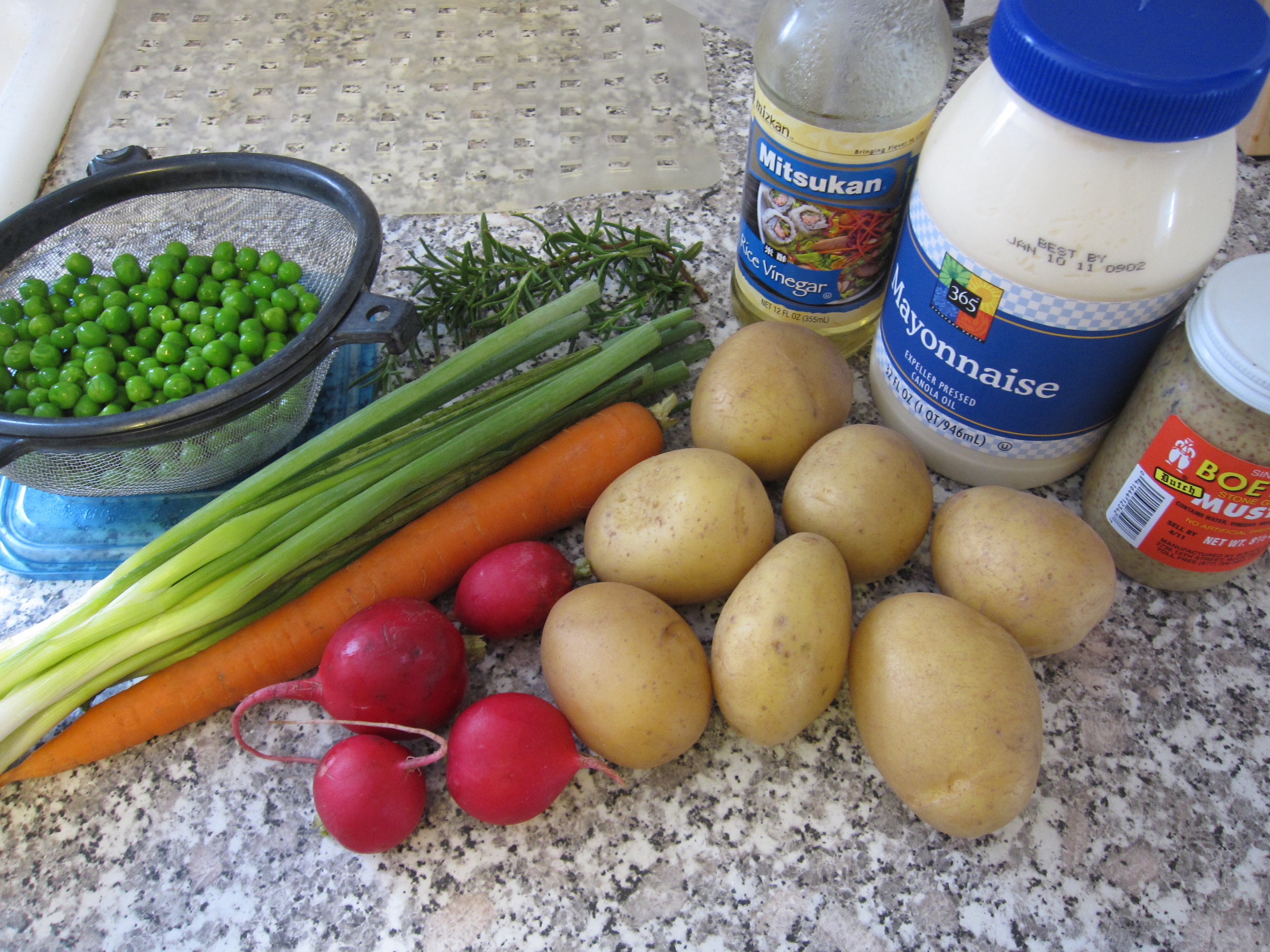
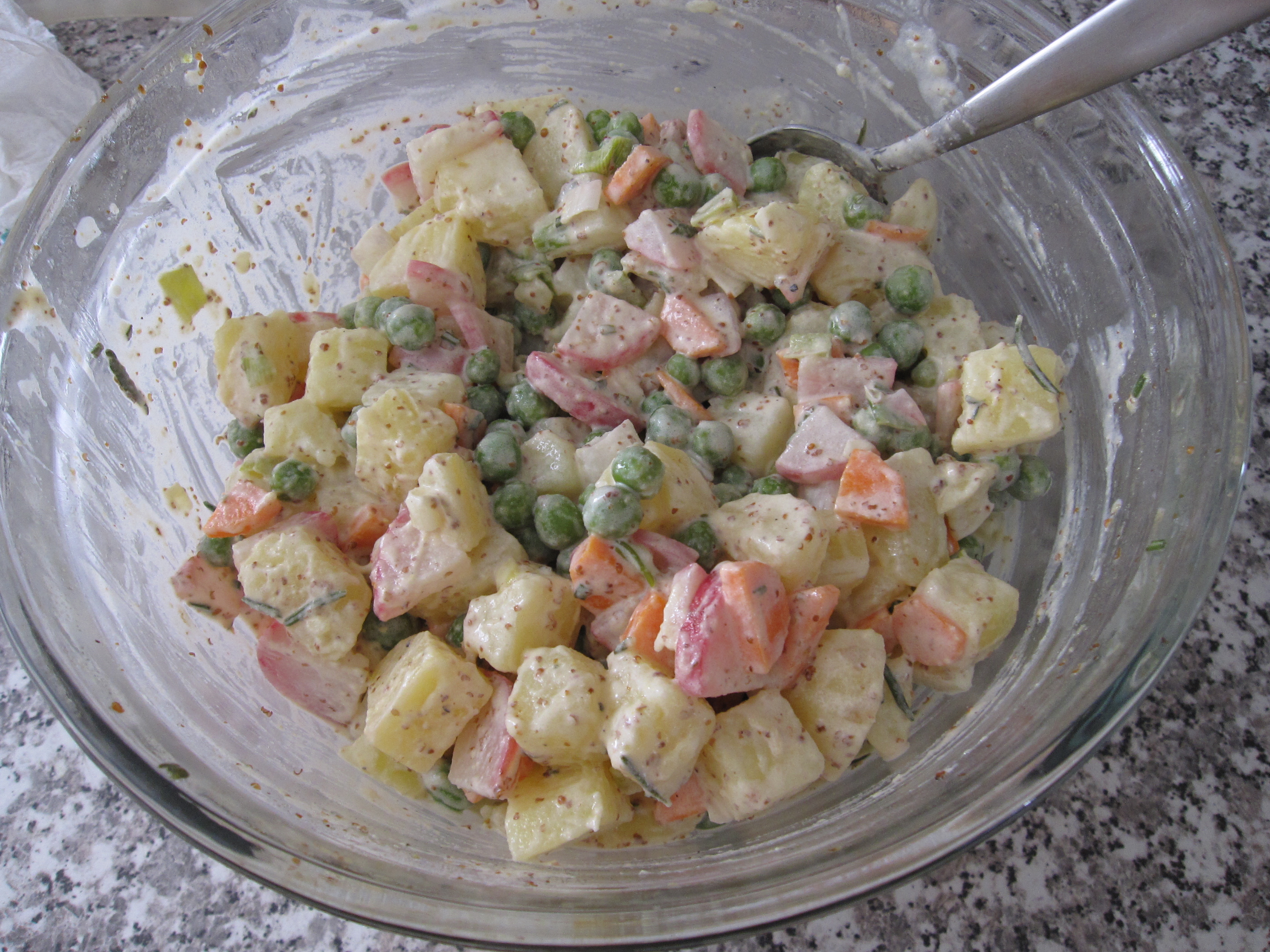
For the potato salad I defrosted about 1/3 cup of frozen organic peas and chopped up a bunch of green onions, a carrot, 4 radishes, and 7 yukon gold potatoes that were skinned before getting chopped up. For the dressing I mixed together a branch of rosemary from my back porch that I gave the once over with my knife, 2 tablespoons of rice wine vinegar, 1/4 cup of mayonnaise, 3 tablespoons of mustard (my favorite brand of Boetje’s of course), and a pinch of salt and pepper.

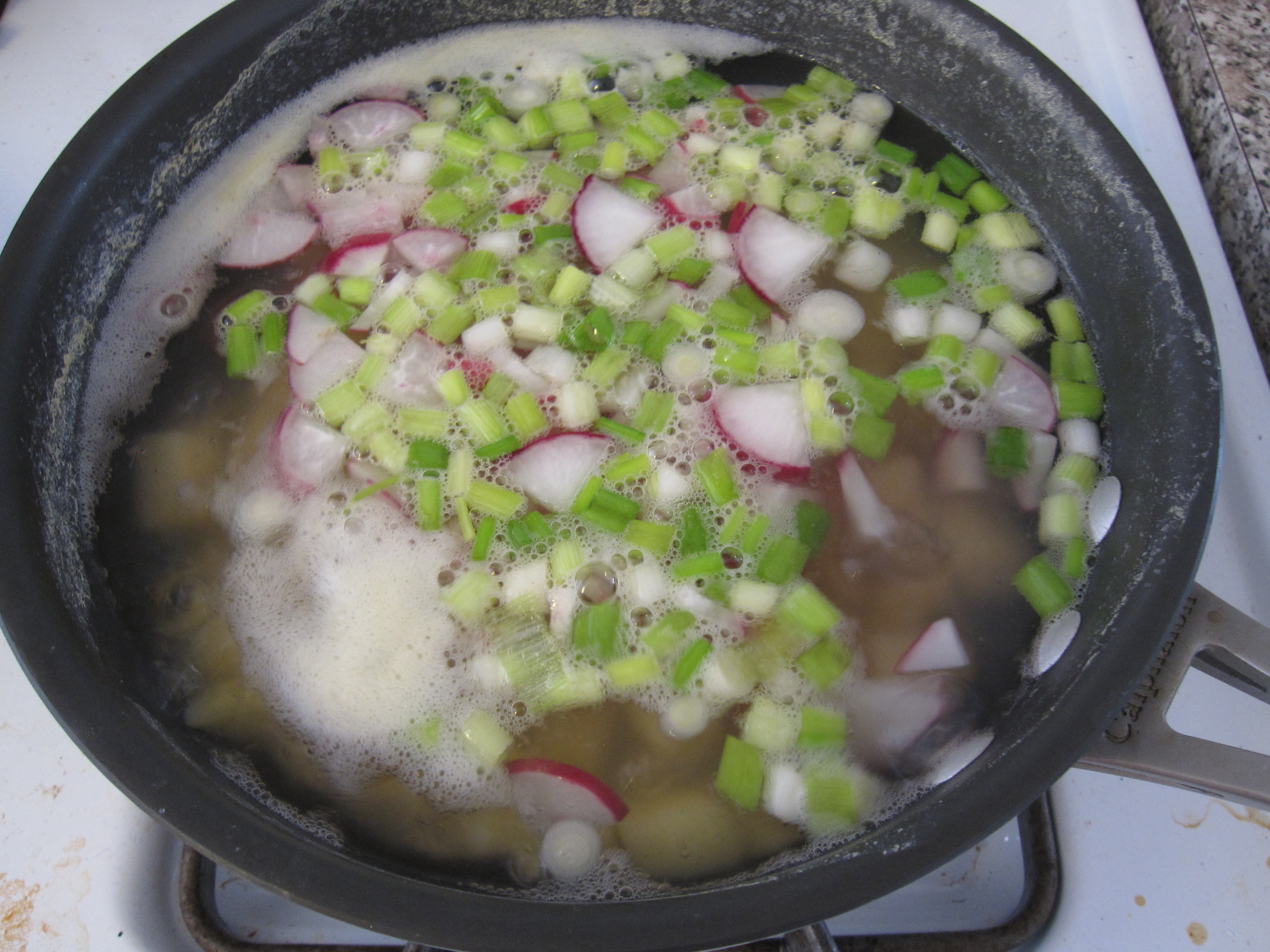
In a pot of boiling water I dumped the skinned diced potatoes and let them cook for about 10 minutes until they were soft but held their shape (may take a little longer depending upon how big the chunks are). After 10 minutes I added the green onions, radishes, and carrot for about 2 minutes. I didn’t want to cook the vegetables, I just wanted to take away the sharpness and rawness of them while keeping the texture. Then I strained everything into a colander.

In a large glass bowl I put the peas and then strained vegetables and potatoes. While still warm I poured the dressing on top and stirred it all around. I like dressing it while still warm so that the potatoes absorb some of the dressing.

To put together the sandwiches I toasted some ciabatta rolls. On the bottom I laid some baby spinach and tomato slices. I sliced up two of the steak portions and laid them on top. I covered the steak with cilantro. On the top bun I spread some mustard and mayonnaise. It was outstanding!

Read Full Post »

I needed to use up the rest of the coconut milk I had from the other night so I decided to use it as a marinade for some chicken. I really wanted to grill the chicken, but the wind kept putting out my burner, one of the downfalls of a gas grill. If I ever have a metal balcony instead of a wood one I’m getting me one of those big green egg grills! No worries though, I just threw the chicken in the oven as that sure beats raw poultry.

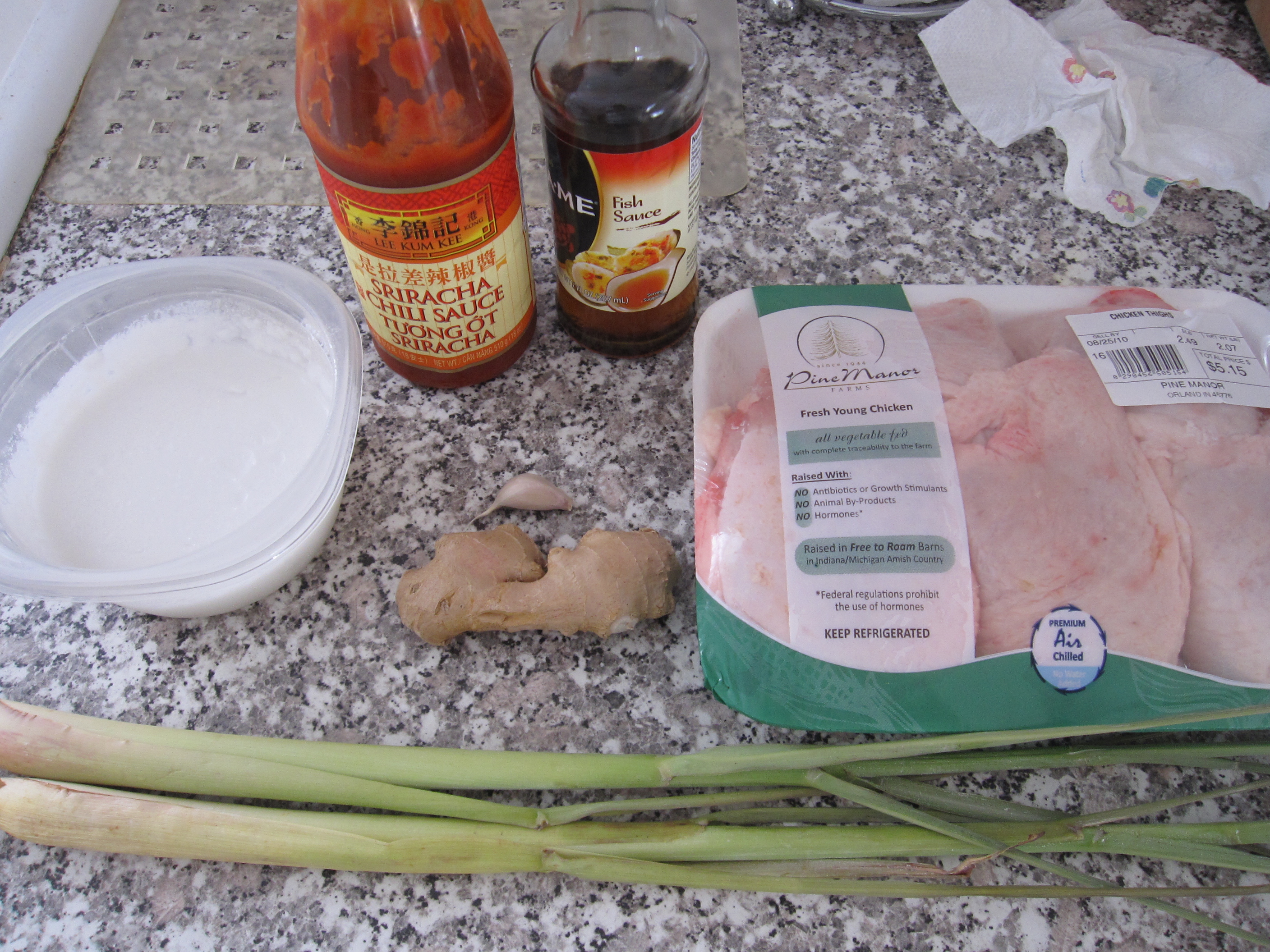
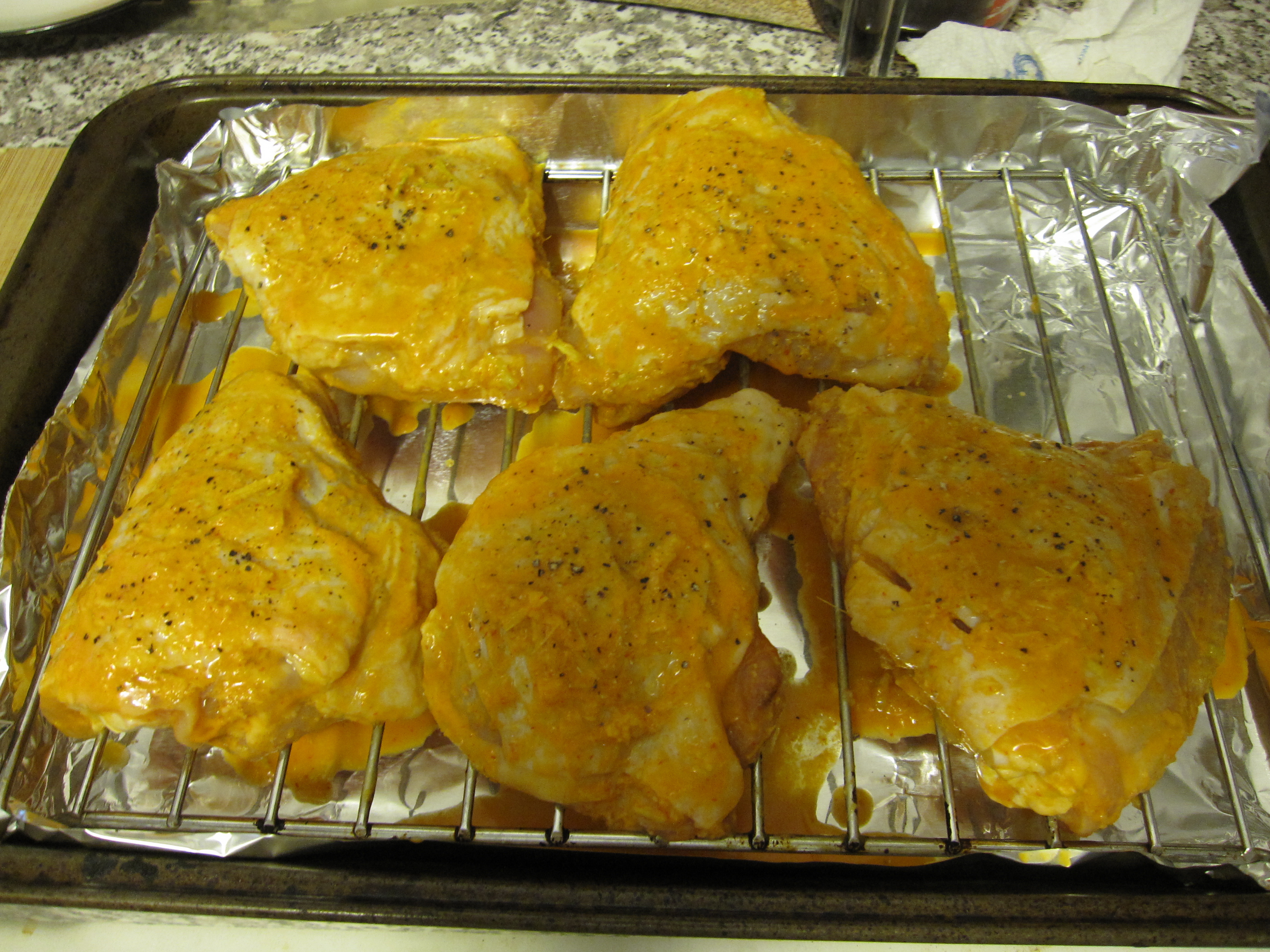
For the marinade I had about 1/2 cup left of the coconut milk. I poured it into my blender and added two chopped up lemongrass stalks (just the non-fibrous center), 2 tablespoons of sriracha, 1 tablespoon of fish sauce, 1 garlic clove, and 1 tablespoon of ginger. I blended it all up and poured it over 2 pounds of skin-on bone-in chicken thighs. Prior to pouring the marinade over I did score the skin with three slashes so that the marinade would penetrate the skin nicely. I covered it and let it sit in the fridge for about 4 hours. I took it out about 45 minutes prior to cooking and cracked a little black pepper on top just before going under the heat.


Since the wind didn’t cooperate with me last night I heated my oven to 425 degrees and cooked the chicken on the upper 3rd for about 15 minutes. Then, I turned the oven to the broiler setting and let the skin get nice and crisp for about 5 more minutes.

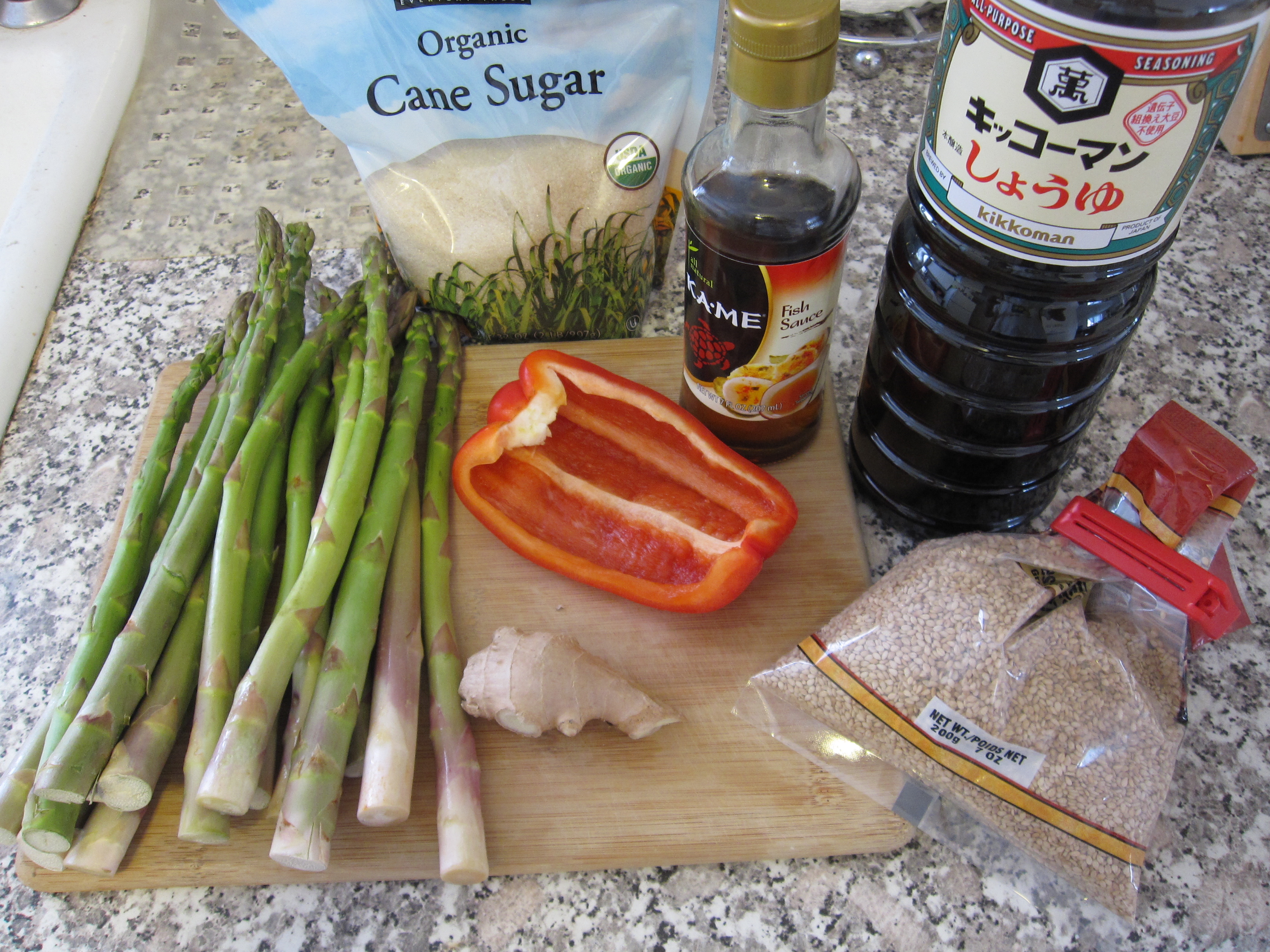
For my side I made some Thai flavored asparagus. For the flavoring I used 1 teaspoon of cane sugar, 1 inch of ginger cut into slivers, 1/3 red bell pepper small diced, 1 tablespoon fish sauce, 1 tablespoon soy sauce, 3 cloves of garlic minced (didn’t make it into the pic) and 2 tablespoons of sesame seeds. First, I mixed together the sugar, fish sauce, soy sauce and 3 tablespoons of water. I set that aside.

In a skillet large enough to handle the asparagus in one layer I heated up 2 tablespoons of sesame oil and added the garlic, ginger, and sesame seeds. I let them sizzle for about a minute or two and then added the asparagus and red pepper. I rolled it around to make sure the asparagus was completely coated with all of the flavors. After 4 or 5 minutes I poured in the liquid and let that boil off for about 3 minutes. That’s all I did for this side.

I also made some miso soup. In a pot I poured in about 4-5 cups of water and brought it to a boil with 1/2 an onion sliced, the rest of my shiitake sliced, and a few pinches of dashi-no-moto. I let it boil for about 15 minutes until the onion was softened. Then I threw in a large handful of baby spinach and let that boil for another few minutes. Finally, I took two large tablespoons of shiro miso and mixed that in.

Besides the asparagus and miso soup I served some Thai Red Rice instead of regular white rice.

While this was one of the tastiest marinades I’ve whipped up in a while I did forget two things. I wanted to squeeze some lemon juice on the chicken as soon as I took it out of the oven and I wanted to garnish with some cilantro. I guess I’ll use that lemon and cilantro some other time.

Read Full Post »

Mapo tofu is a Szechuan dish typically made with ground pork. However, last night being Meatless Monday, I diced up some shiitake mushrooms to take the place of the meat.

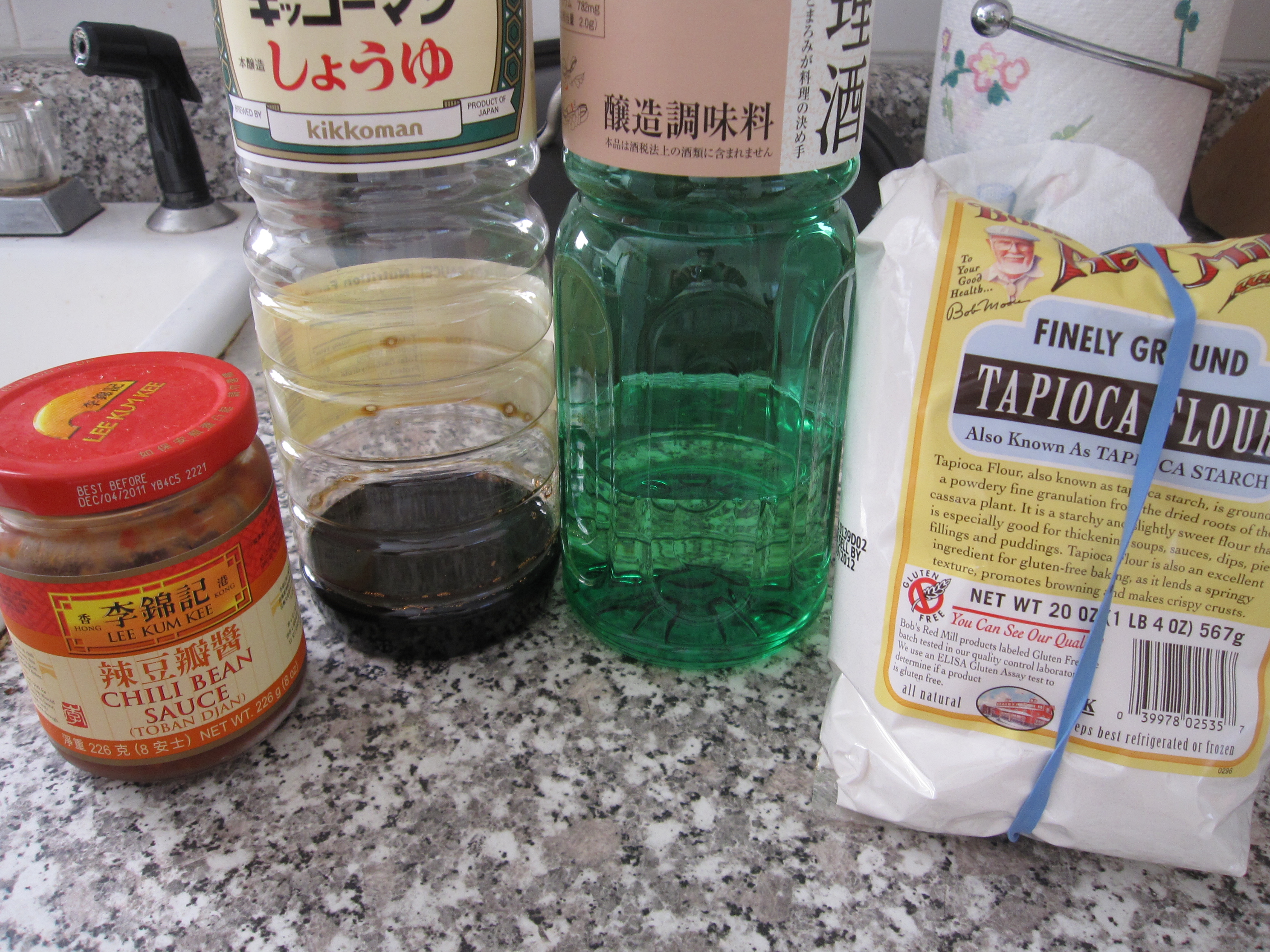
To start, I made the sauce. I used 2 heaping tablespoons of toban djan (a szechuan chili and fermented bean sauce, its spicy but this dish is supposed to be very hot), 1/4 cup of soy sauce, 1/8 cup of sake, and 2 teaspoons of tapioca flour to thicken it up a bit. I mixed it all together and set it aside.

I used a 3.5 oz package of shiitake, about 6 oz of haricots vert cut into thirds, a carrot cut into matchsticks about 2 inches long, 8 green onions chopped into 1 inch pieces, 3 minced garlic cloves, 2 tablespoons minced ginger, 1 red bell pepper cut into thin slices and then halved, and 1 package of firm tofu. I prefer silken tofu, but there wasn’t any at the store. Oh well, what can you do? I pressed the water out of the tofu for an hour in the fridge and then diced it.

In a hot pan I poured in about 2 tablespoons of sesame oil and then fried the garlic and ginger for about a minute. Then I added the haricots vert. About 3 minutes later I tossed in the carrot and pepper. I let that go for about 3 more minutes and then the shiitake and green onions went in. Once the shiitake were softened a bit, about 3 or 4 minutes, I poured in the sauce (I mixed the sauce thoroughly again to make sure the tapioca didn’t form any clumps). This was the first time I’ve ever used tapioca flour as a thickening agent and it worked a little better than I expected. The sauce almost immediately thickened up on me in that hot pan. To remedy that I poured in about 1/3 cup of water and that thinned it out nicely. I needed it a little thinner so it would evenly coat the tofu which went in right after I stirred the water in. I let the tofu heat through for about 4 minutes over medium heat and then served it all up with some white rice and drank it down with a cold beer.

Read Full Post »

I had some angel hair pasta that I wanted to use up last night. Combine that with all of the Japanese ingredients I had in my fridge that needed to be eaten I whipped up a bolognese sauce with Japanese flavors. Note, I usually cook for 4 so that we have lunch the next day, but since it was Friday and we don’t need to take a lunch anywhere on Saturday this recipe was for 2.

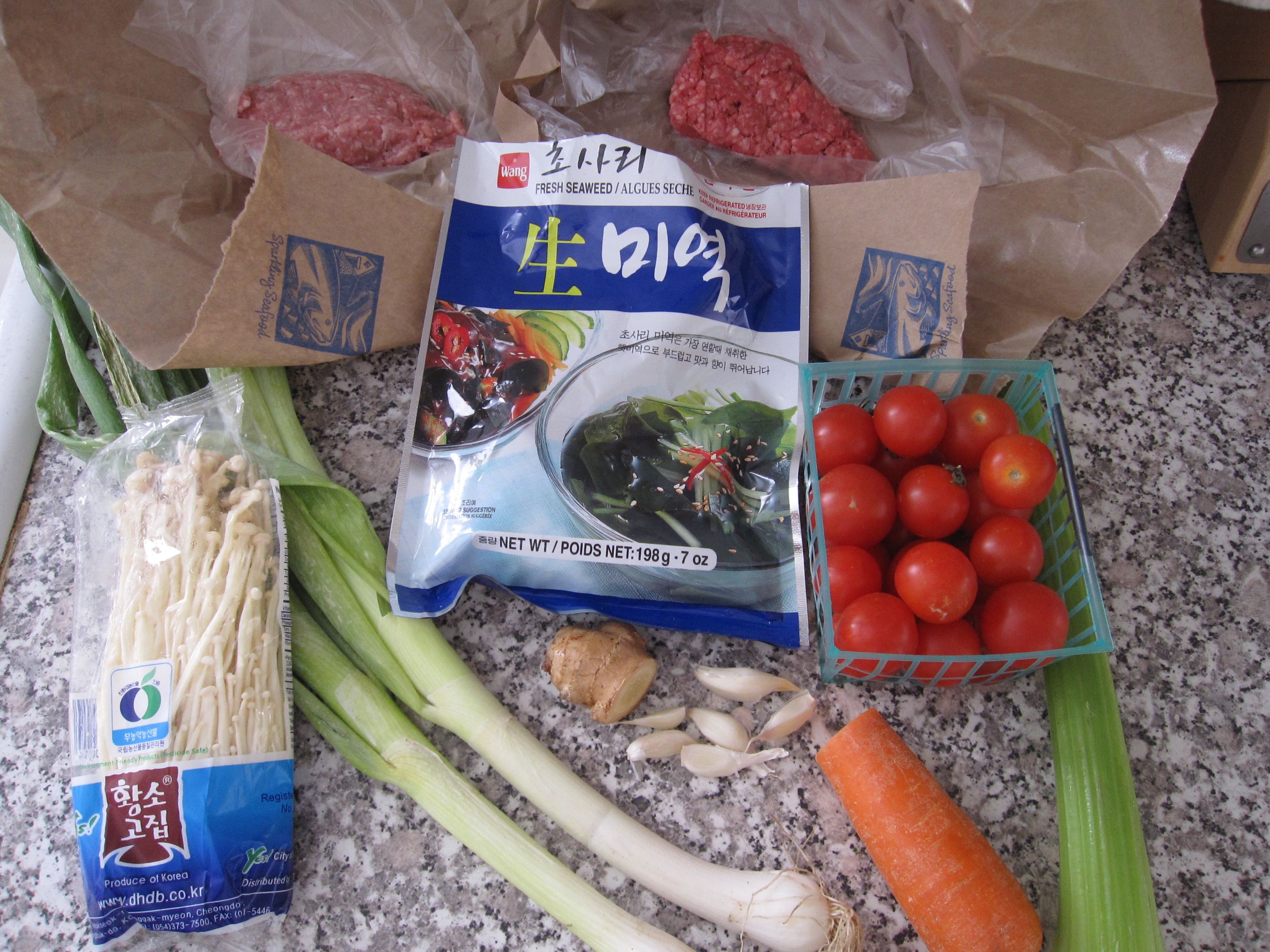
My ingredient list for the bolognese was a package of enoki mushrooms, 1 negi thinly sliced (I had two but decided only to use one), some ginger and garlic minced, 1/2 carrot cut into quarter moon slices, 1 rib of celery cut down the middle lengthwise and then sliced, 10 cherry tomatoes halved, some wakame seaweed, 1/4 pound of ground beef, and 1/4 pound ground pork. What I didn’t get in the photo was some cooking sake, mirin, and soy sauce.

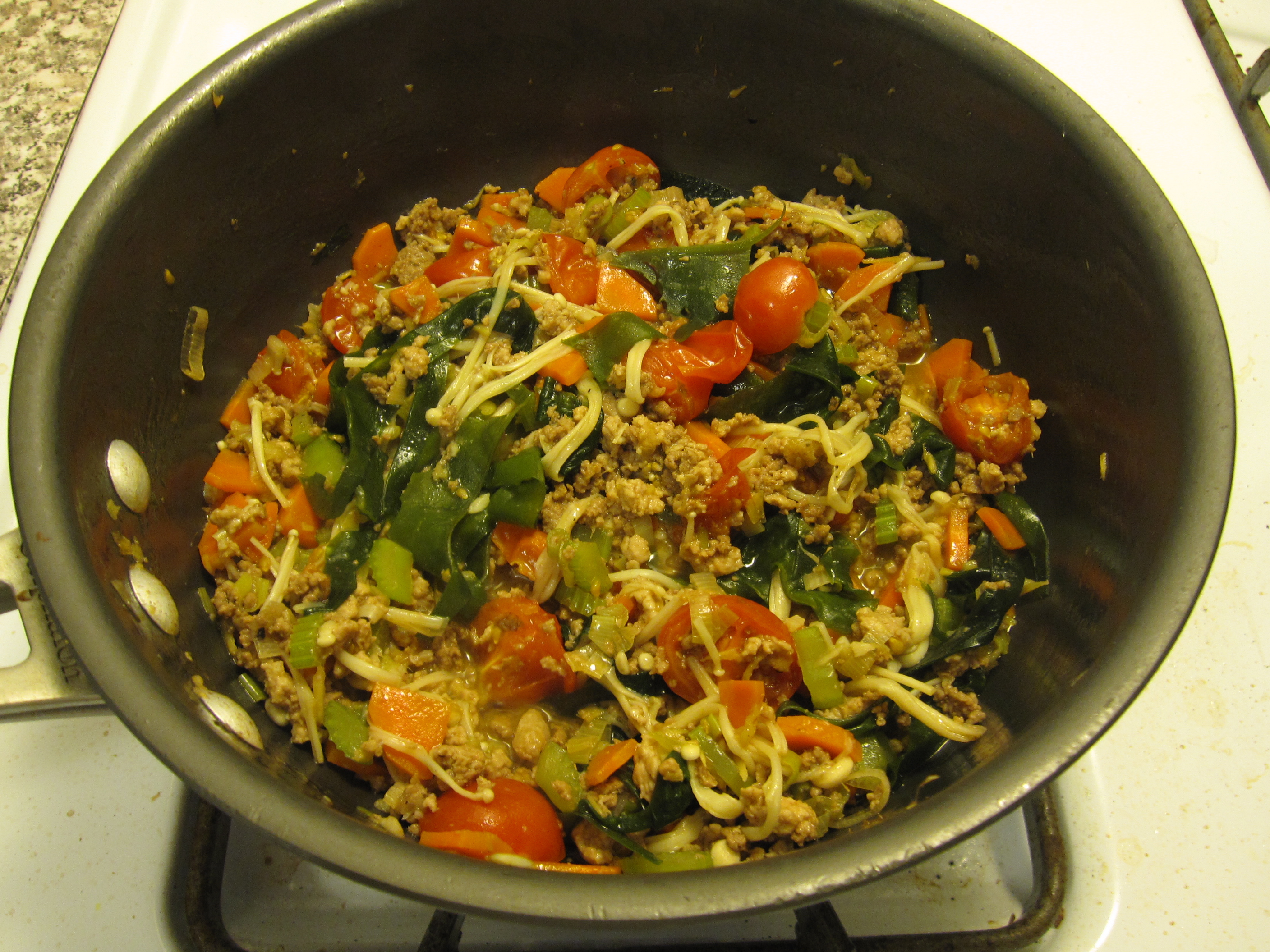
In my pot I heated up about 2 tablespoons of soy oil and 1 tablespoon of sesame oil and then let the garlic and ginger go for about a minute. Then I tossed in the carrot, negi, and celery for about 5 minutes until they just started to soften a little. After that I added the ground meats. They took about 5 minutes or so to cook and break up, I added just a touch of salt (not too much since I was about to add some soy sauce) and some black pepper. Once the meat was broken down I poured in about 3 tablespoons of sake and let that boil off for a couple of minutes before adding about 2 tablespoons of soy sauce and 1 tablespoon of mirin. Once all the liquid was almost completely boiled off, about 2 more minutes, I added the cherry tomatoes and enoki. A couple of minutes later I mixed in the wakame and then turned off the heat. The wakame doesn’t need to be cooked, so I just wanted its flavor to incorporate into the meat.

While that was all going on I cooked some angel hair pasta and drained it thoroughly.

To serve, I piled the pasta on the plate and then topped it with the bolognese. On top of that I put some katsuobushi (dried bonito flakes). Some Asahi to wash it all down and we were good for the night.

Read Full Post »

Last night was the final performance of Millenium Park’s world music series. They had two different accordion players, and I have to say, that is one bad ass instrument! Now I need to work on my air accordion skills. It’s a lot of fun packing a picnic and hanging out at the park for free music (I say free, but let’s be honest, we already paid for it with our tax dollars). At any rate, I had to make a dinner that would taste good cold. I thought that poached salmon on corn salad would do the trick. As usual, I was right.

The first thing I did was roast some cherry tomatoes. I simply drizzled them with olive oil and then put them in a 375 degree oven for about 20 minutes. I set them aside to cool down before packing it all up.

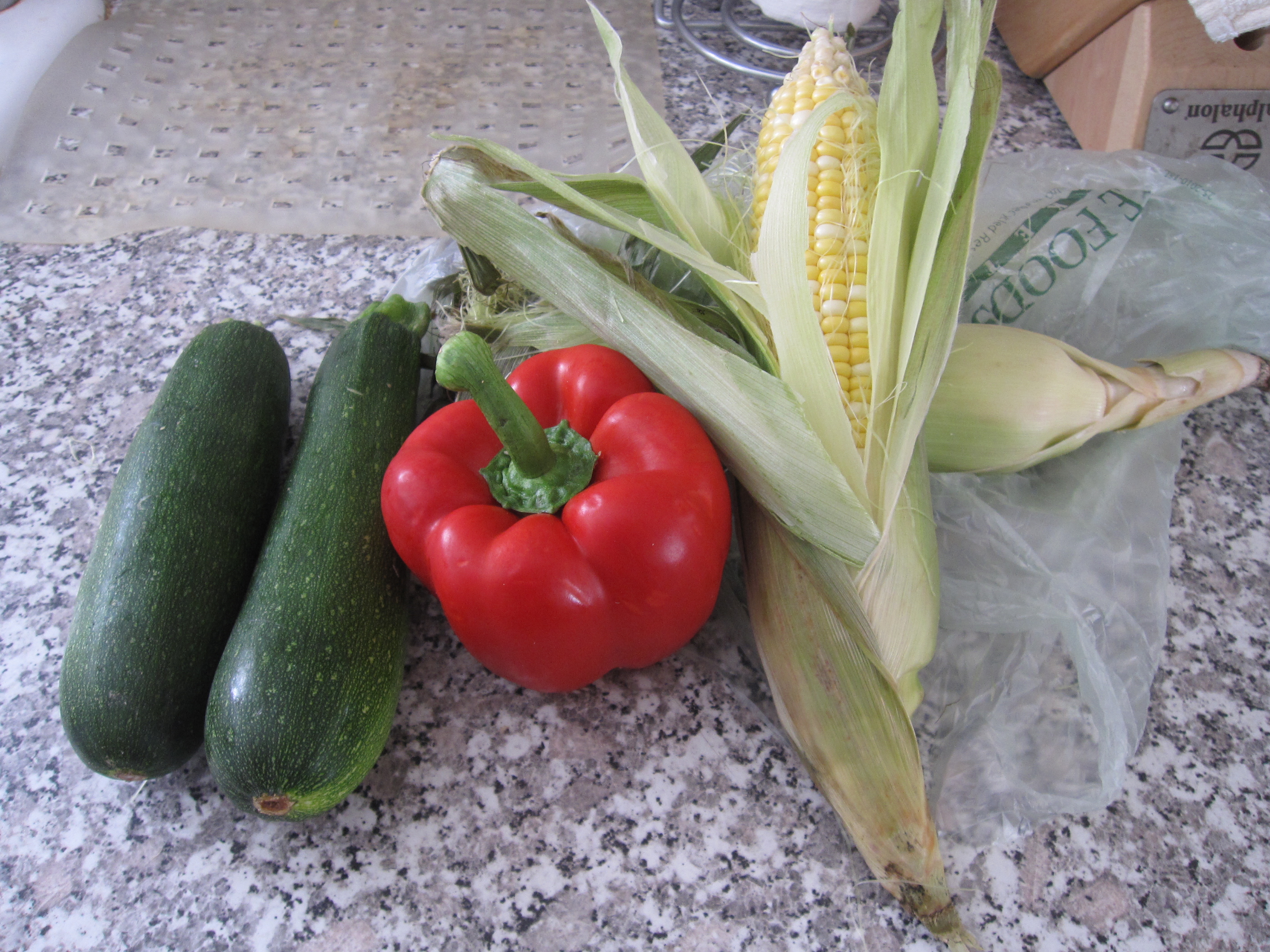
For the corn salad I used two medium-sized zucchini, one red bell pepper, and three ears of corn. I grated the zucchini into a mesh sieve, sprinkled a little salt on it, and let the juices drain for about 20 minutes. Then I squeezed it as dry as I could and set it aside for cooking. For the bell pepper, I just diced it up.

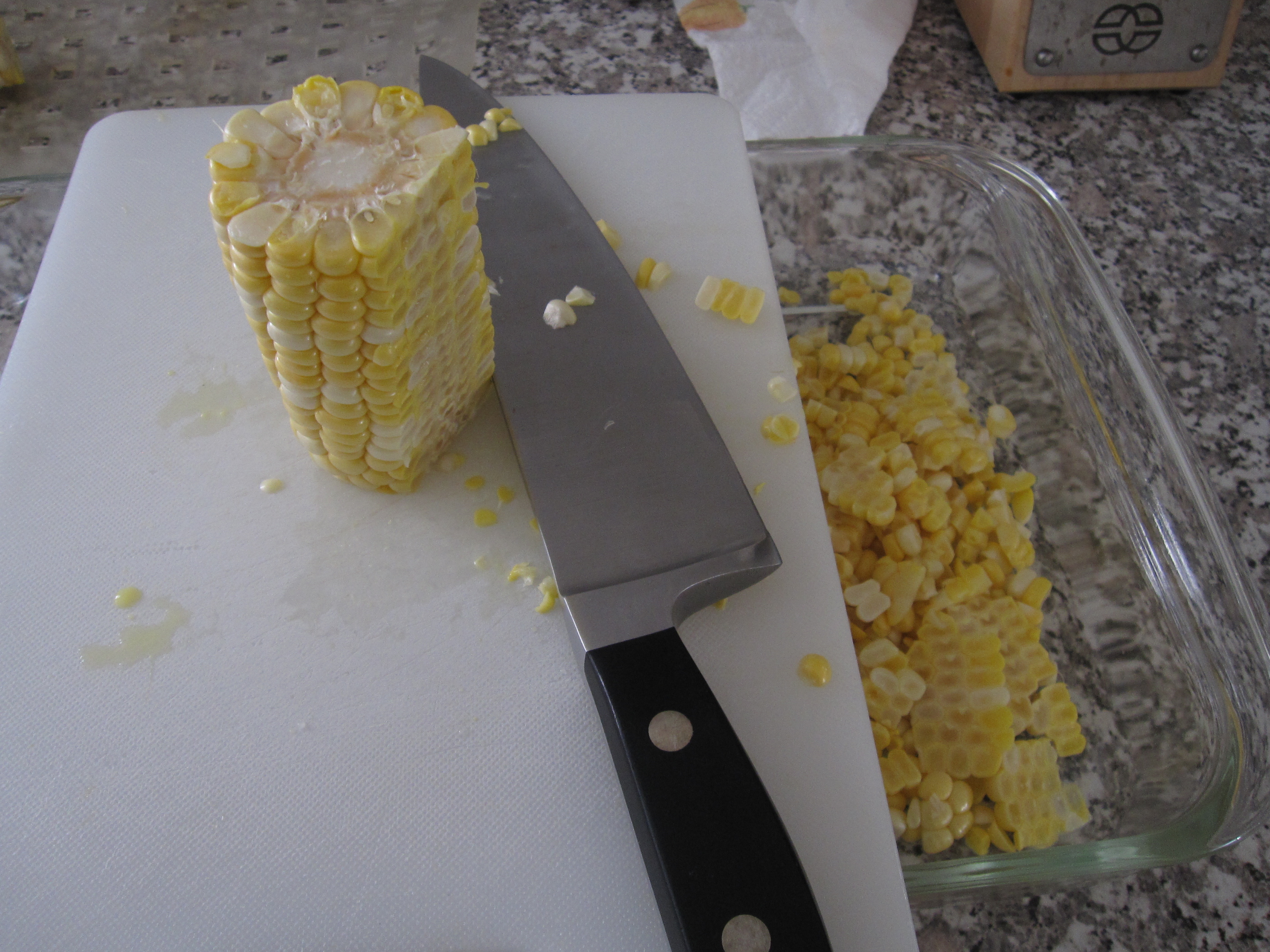
After cleaning all of the silk off the corn I separated the kernels from the ears. This can be a little messy as kernels have been known to fly around the kitchen as you slice them off, in my kitchen at least. I find the easiest way to do this is to cut the ears in half first. Then, I take my cutting board and lay it over a large baking dish. This way, when I slice the kernels off they fall right into the baking dish instead of all over my counter and floor.

Save the cleaned ears, they have tons of flavorful juice in them. I used these to help flavor the poaching liquid for the salmon.

To make the salad I first sautéed about three tablespoons of diced shallots in some olive oil for about 5 minutes. Then I poured in 1/4 cup of white wine (I used the same White Burgundy that I planned on drinking with dinner) and let that boil away for about 3 minutes. Once the wine was boiled off I dumped in the corn, bell pepper, and 1/2 cup of water. I covered the skillet and let it go until the corn was softened a little, about 5 more minutes. After that I seasoned with salt and pepper and then threw in the zucchini. I stirred it all around to separate the zucchini (it will become a zucchini ball when squeezing out the liquid), let it cook for another 5 minutes, then turned off the heat and moved on to the salmon while it cooled down.

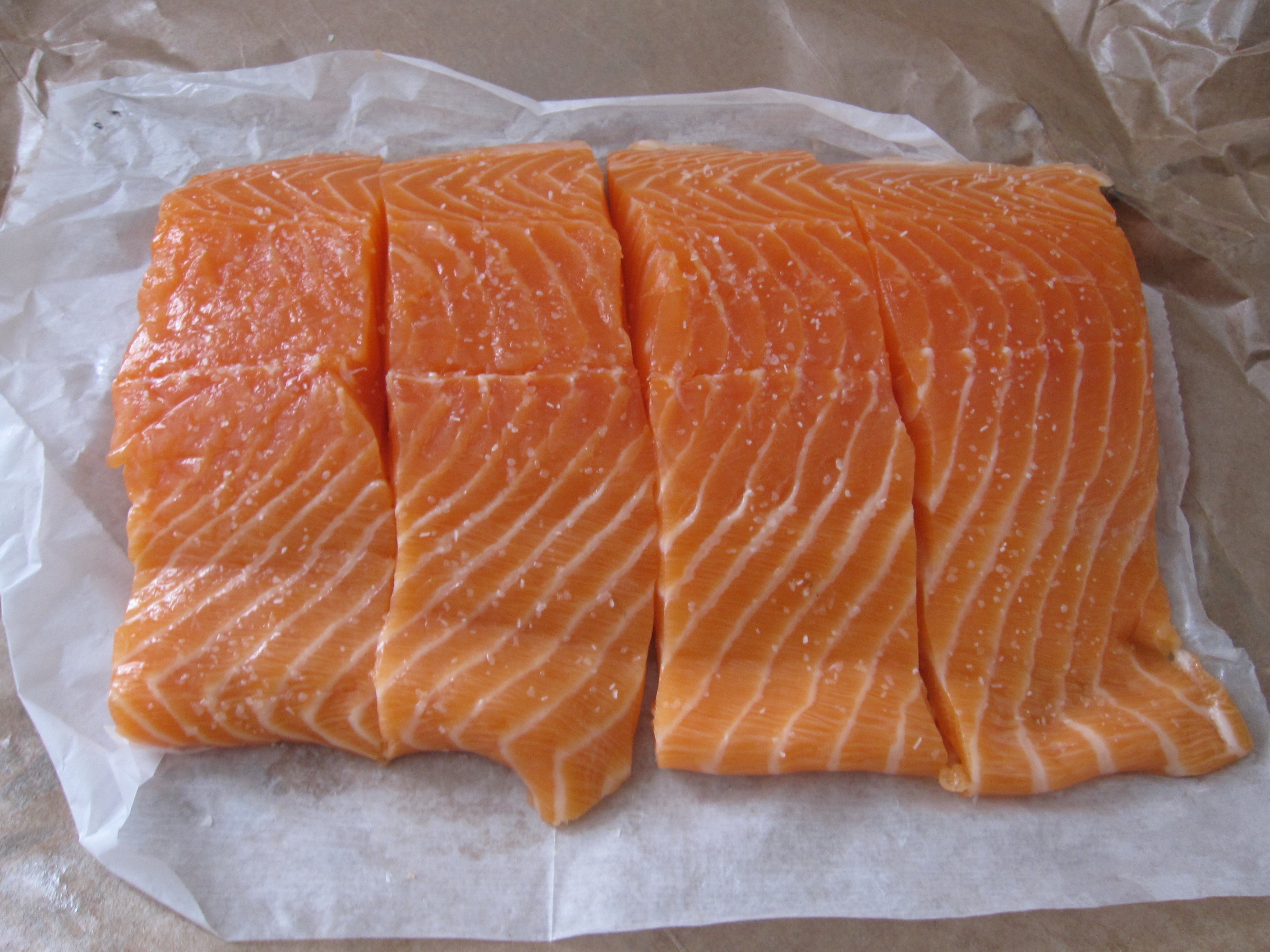
I picked up about 24 oz’s of really nice wild caught salmon, center cut so that it was uniform in thickness. I had the fishmonger skin it for me. Fishmongers have better knives for that job than I do, plus I didn’t want my garbage can to stink like rotting fish. It’s always a good idea to let the fishmonger skin and gut for you. I cut the salmon into 4 equal filets. Before putting the salmon in the poaching liquid I lightly seasoned it with salt.

For the poaching liquid I used 1 cup of the white wine, 1/4 cup of soy sauce, 3 cups of water, 1 bay leaf, about 2 tablespoons of diced shallot, and the naked corn cobs. I brought that all up to a boil and let it go for about 5 minutes or so to let all of the corn juice mix into the liquid.

Once the corn juice was incorporated I took the cobs out, gently laid the salmon in, and turned the heat down so that the liquid was at a simmer instead of a vigorous boil. It should only take about 6 or 7 minutes for the salmon to cook all the way through.

After I took the salmon out I seasoned it lightly with salt again, and a little pepper. Then I drizzled just a little olive oil on top.

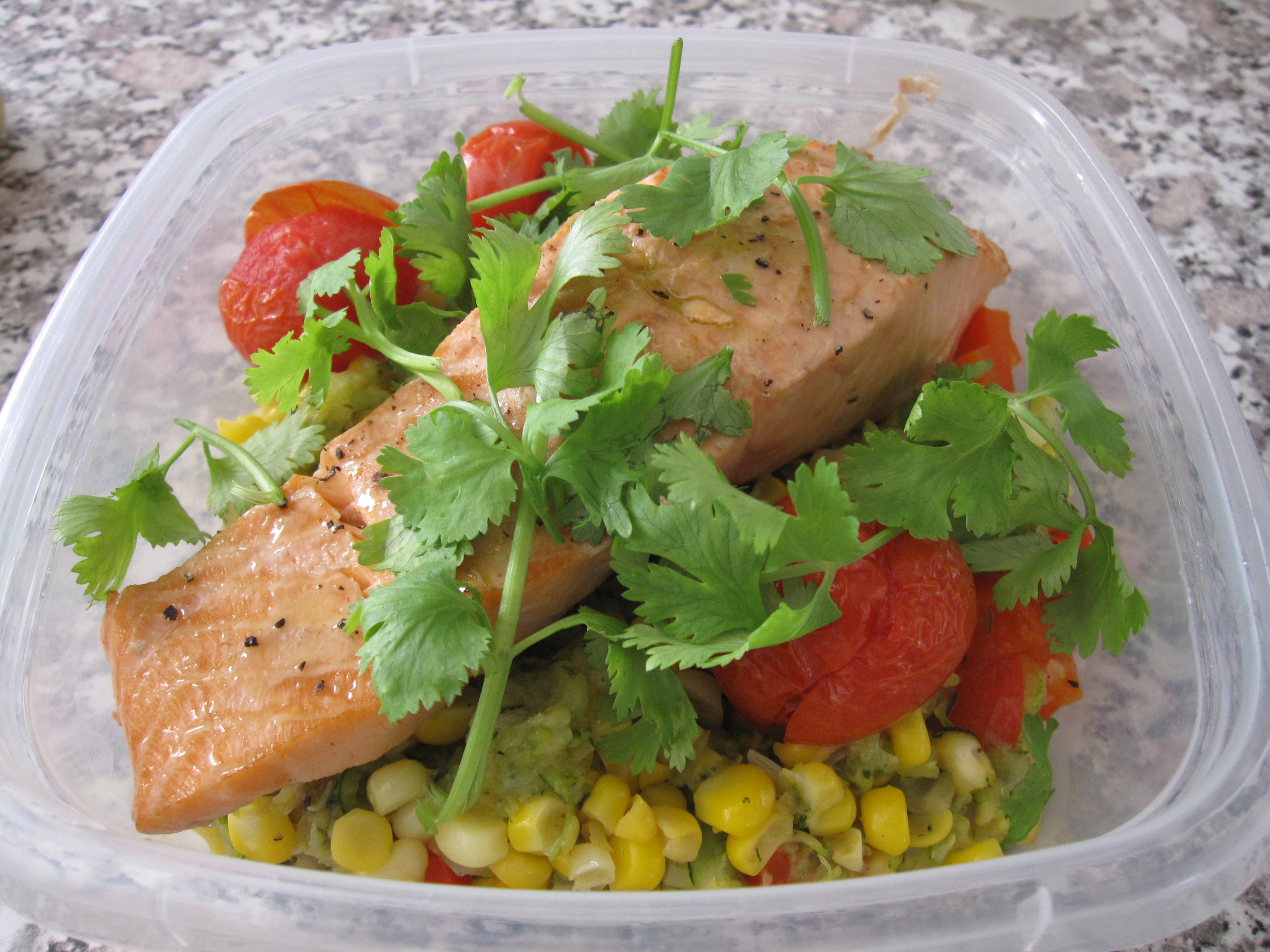
I got out my little Rubbermaid TakeAlongs and scooped a bunch of the corn salad in, topped it with a piece of salmon, laid in a few of the tomatoes, and garnished with some cilantro. I also brought some dinner rolls along. It was absolutely delicious! It also would have been tasty if I served it hot right off the stove top.

The only thing I did wrong was a miscalculation on the amount of corn salad. When I cook dinner during the week I try to make 4 portions so that Yuki and I have lunch for the next day as well. I came up one portion short on the corn. So, if you try this recipe and want 4 portions use 3 zucchini and 4 ears of corn. That should do the trick.

Read Full Post »

Last night I did a riff on one of Yuki’s recipes. She commonly makes ground chicken dumplings similar to these patties in the winter when we eat nabe (Japanese hot-pot). So, I took her idea and made my own Japanese flavored dinner.

The ingredient list for the patties were 3/4’s pound of ground chicken thigh, 1 block of tofu that I had pressed the water out of, one egg scrambled with 1 tablespoon of soy sauce, 1 carrot cut into a small dice, 3 garlic cloves and 1 inch of ginger that I minced, and 1 tablespoon of hijiki seaweed. The hijiki comes dried and is available in most Asian sections of your grocer. I put 1 tablespoon of dried hijiki in a couple of cups of cold water and let it sit for about a half hour. Then I strained it, reserving the liquid for the miso soup.

I mixed it all together, with about a tablespoon of nanami togarashi (a Japanese red pepper spice mix, there are various kinds of togarashi that are also usually available in the Asian section) until the tofu was completely broken down and everything was mixed well. Then, on a lightly oiled baking sheet, I laid 8 patties (two patties per serving, leftovers for lunch). I let it cook in a 375 degree oven for about 20 minutes.

Before cooking the patties I got my miso soup ingredients ready to go. I cut 2 negi (Japanese green onions, larger than regular green onions, not as big as leeks) into 1 inch pieces, hiratake (oyster mushrooms), and wakame seaweed. Wakame can be bought dried or fresh. Fresh comes heavily salted to preserve it. You need to soak it really well in water and cut it into smaller pieces as it expands once the salt is rinsed off.

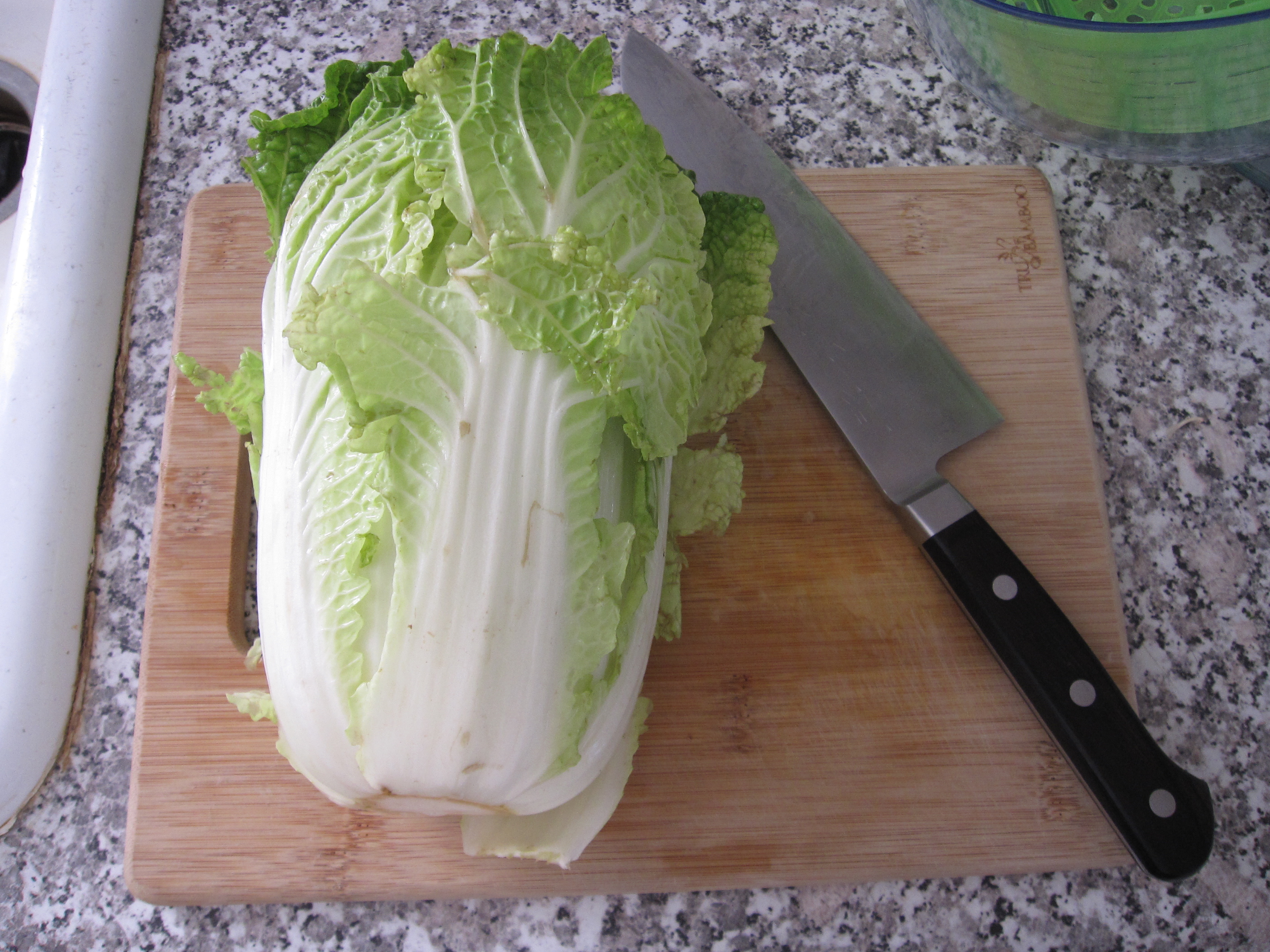
I also chopped up a small head of napa cabbage to cook as a side.

Once I put the patties in the oven I melted 1 tablespoon of butter in a skillet and heated up the hijiki liquid in a pan along with one more cup of water, 1 teaspoon of dashi-no-moto (instant dashi), the negi, and the mushrooms. I let the soup simmer while working on the cabbage. Once the butter was melted I added 1 tablespoon of soy sauce and then the cabbage. I let the cabbage wilt in the soy butter for about 10 minutes and then turned off the heat.
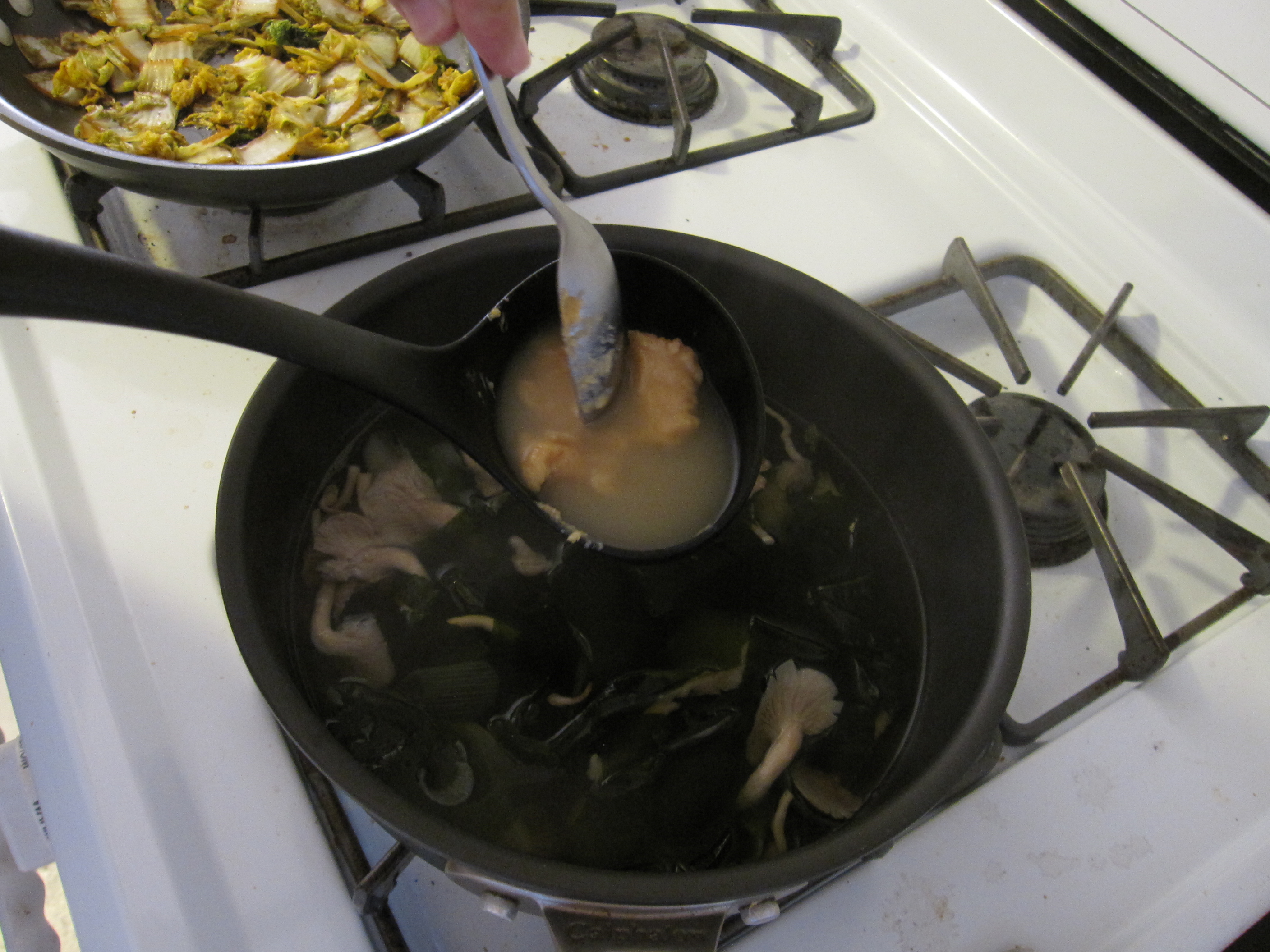
After the cabbage was ready I added the wakame to the soup and then the miso. The best way to add the miso is to take a heaping spoonful and swirl it around in a ladle that is just slightly in the soup. This allows the miso to incorporate slowly keeping it from being lumpy.

I served everything with some white rice. I poured just a little ponzu on top of the patties to add a touch of acidity and help keep them moist. To keep with the Japanese flavors it only seemed right to drink Asahi.
Read Full Post »

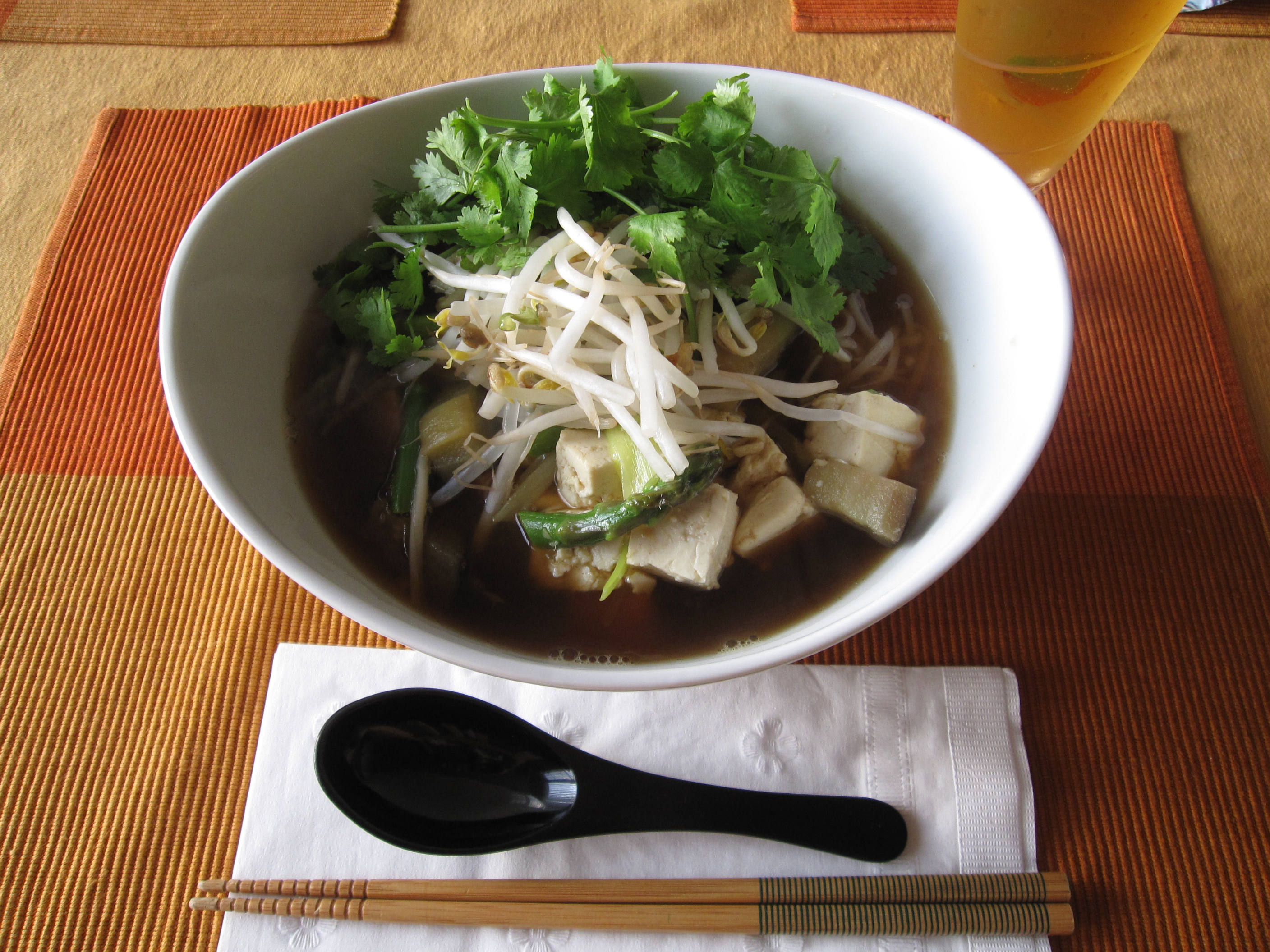
For Meatless Monday last night I made a Cambodian-style noodle soup. It’s very similar to Vietnamese Pho, but the broth is slightly different. Pho usually has star anise and cinnamon in the broth, I didn’t use either of those. Stylistically though, their very similar. And why not? They are neighboring countries after all.

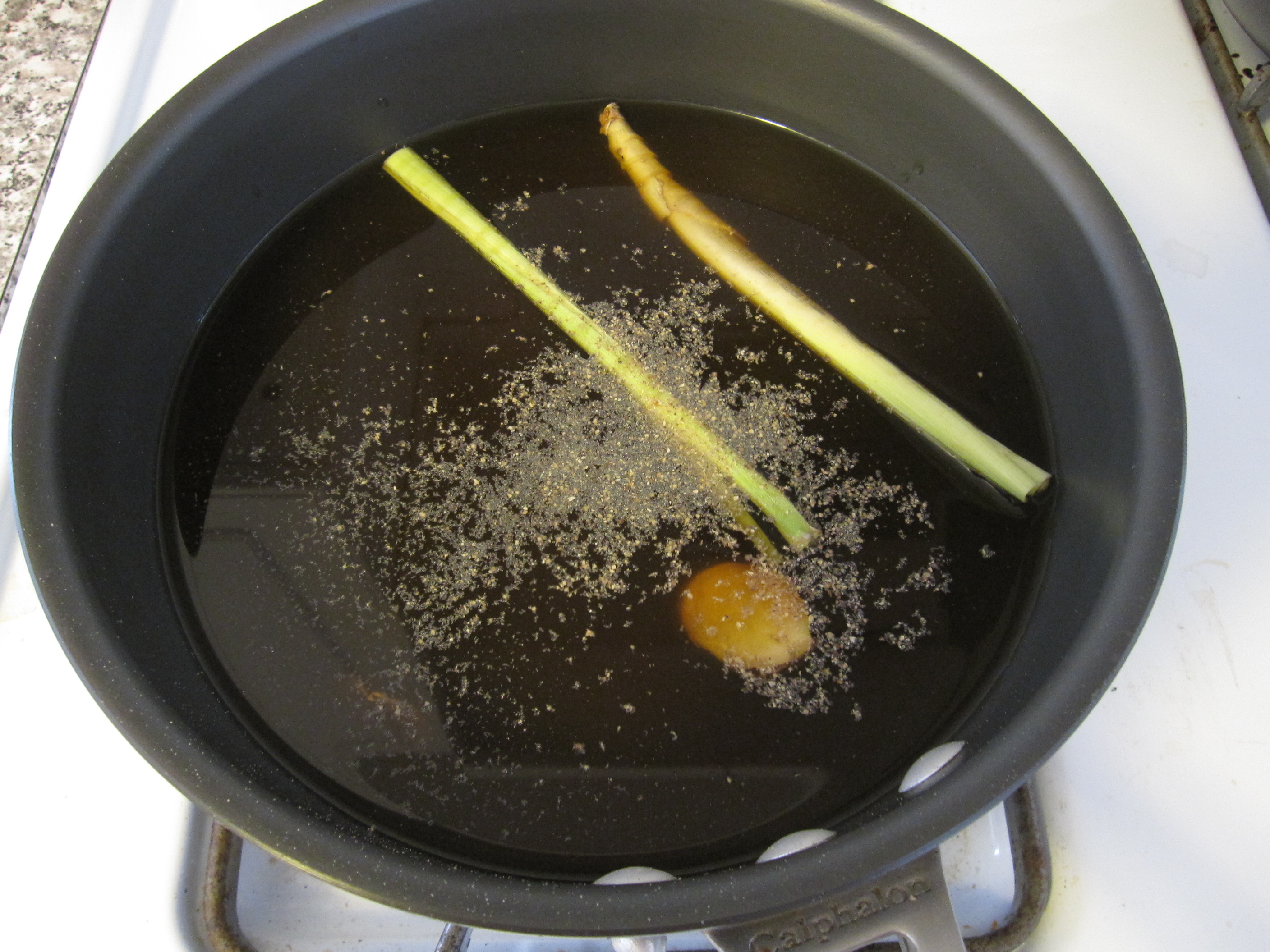
To get the Cambodian flavor I used ginger and lemongrass. I left the skin on the ginger and the tough outer layers of the lemongrass in tact. The ginger was sliced and those marks you see on the lemongrass are from banging it with the back of my knife. That loosens up the fibers and helps release the oils.

I put them in a sauce pan along with 1 quart of vegetable stock, 1/4 cup of soy sauce, 1 cup of water, and a lot of fresh cracked white pepper. I brought that all to a boil and let the flavors steep for about 20 minutes. Then I strained the broth into a large bowl and let it sit until later on in the cooking.

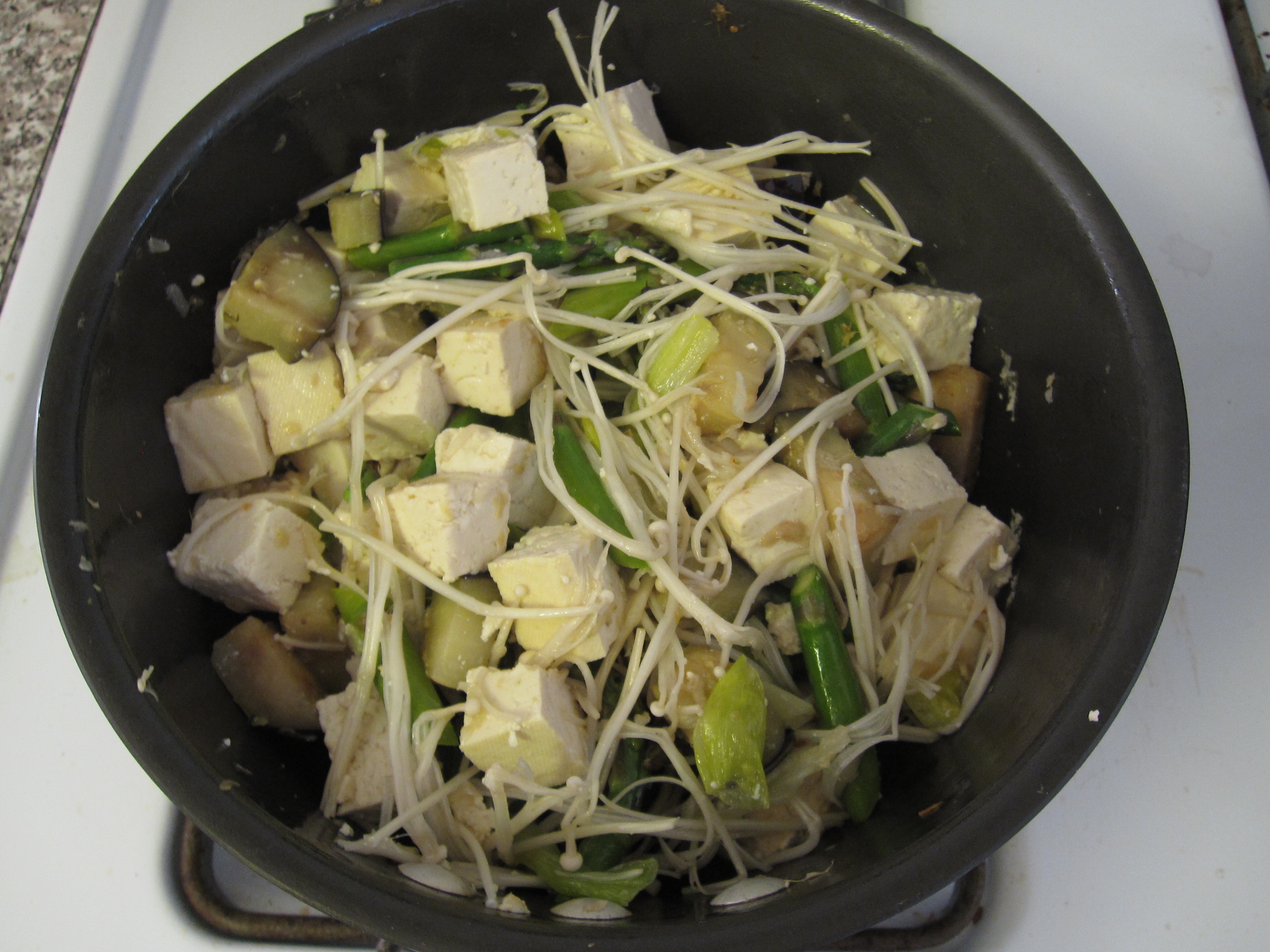
My ingredient list included bean sprouts, enoki mushrooms (not Cambodian, but nevertheless delicious and healthy), fresh made tofu from the HMart that I cubed, ginger and garlic that I minced, asparagus that I cut up (again, not Cambodian), half of an eggplant diced, green onions that were sliced about 2 inches in length, and rice noodles.

I started by heating up about 1/4 cup of soy oil and a few tablespoons of sesame oil. I let the ginger and garlic go until they were fragrant, about 1 minute, then added the green onion and asparagus. Once they started to slightly soften I added the eggplant. That took about 5 minutes until it was mostly cooked through. Then I added the tofu and enoki. Those both heat through relatively quickly, about 2 minutes. After all of those vegetables were heated I poured the broth in and let it come to a boil, then turned the heat down and let it simmer, covered, for only about 5 minutes.

During that time I cooked the noodles according to package instructions. Once cooked through I drained them thoroughly and divided them up into the serving bowls and ladled the soup on top. I topped all of that with the bean sprouts, some cilantro, and a squeeze of lime juice.

Half-way through eating I realized that something was missing….SRIRACHA!!! I took my sriracha out, squeezed a little into the broth, and all was good.

Read Full Post »

Somen noodles are typically eaten in a cold broth in Japan. It’s the perfect lunch or light dinner on a hot, humid Tokyo day. Seeing as the days here in Chicago have been hot and humid Yuki decided to make a somen dish for lunch on Saturday.

Somen noodles are packaged just like soba, wrapped in individual servings. So, she first boiled two servings of the noodles and then cooled them down in some ice water.

While the noodles were cooling she hard-boiled a couple of eggs and steamed (maybe boiled, I wasn’t paying close enough attention) some okra. When the okra was cool to touch she thinly sliced them.

In a bowl, she mixed equal parts water and yamaki mentsuyu (soy sauce that’s been seasoned with dashi). She also added a few dashes of ponzu to give it a little bit of citrus tang. Then she divided up the noodles and topped them with the okra and hard-boiled eggs. We also had some cherry tomatoes so she cut some of those in half and put them in as well.

That’s all there is too it. Delicious, refreshing, and fully satisfying.

Read Full Post »

« Newer Posts - Older Posts »