Feeds:
Posts
Comments

Archive for the ‘beef’ Category

Last night I made the dinner that my brother-in-law probably would have preferred over Meatless Monday, I grilled up some skirt steak!

I got a steak that weighed about 1.3 lbs. For it to fit in my largest dish to marinate, I had to cut it into thirds. I marinated it in a mix of 6 tbls of soy sauce, 4 tbls of sake, 2 tbls of mirin, 1 tbls of sesame oil, 5 minced garlic cloves, a bunch of chopped cilantro, black pepper, and nanami togarashi. I wrapped it and let it sit in the fridge for about an hour. I took it out about 30 minutes before grilling to bring it up to room temperature.

For vegetables I found these great little sweet onions at Stanleys. I halved them and set them on the upper rack of the grill so that they’d get real sweet but not burned. They also had some great little purple potatoes. I quartered them, drizzled them with olive oil, threw some salt and pepper on, then grilled them as well. They get a nice crisp skin and get real soft inside. I love grilled potatoes! I also cut a couple of red bell peppers into disks. I waited until everything was about 10 minutes from being finished on the grill. Since they were pretty thin, I didn’t want them to burn.

I served everything with some sliced avocado and halved cherry tomatoes. Some cilantro garnish, a beer, and we were set! Yuki had to have some white rice too, she has white rice with everything.

Read Full Post »

A common dish in our diets is a shiitake burger. When I was at the store cremini mushrooms were on sale for $1.49 per 8oz package as opposed to the normal $4.99. Shiitakes also typically cost about $4.99 per 8oz package. So, I decided to use creminis.

To make the patties I small diced a quarter of a medium-sized onion, two garlic cloves minced, about 5 or 6 oz’s of creminis diced, and about a pound of ground beef. To that, I mixed in a half teaspoon of mirin, 1 teaspoon of sake, 1.5 teaspoons of sake, and one egg all beaten together. I don’t typically like to put egg in my burgers, but I didn’t have any bread crumbs or any bread to make breadcrumbs and I was a little worried that the added liquids would make the meat too loose. Once everything was mixed up I let it rest for about fifteen minutes. Then, I made it into 4 patties and put them in the fridge, covered, until just before grilling time.

I made some soup to serve with the burgers. I put about 3 cups of water in a pan and turned the heat up. I added about 8 chopped green onions, one chopped carrot, the rest of the creminis sliced, and let that all boil for about 7 minutes. Then I added a tablespoon of instant dashi and about a quarter cup of soy sauce. Once that all mixed in I added some sliced aburage and a half block of silken tofu that I diced. I let that simmer a little and then covered it and turned the heat down to keep it warm while I grilled.

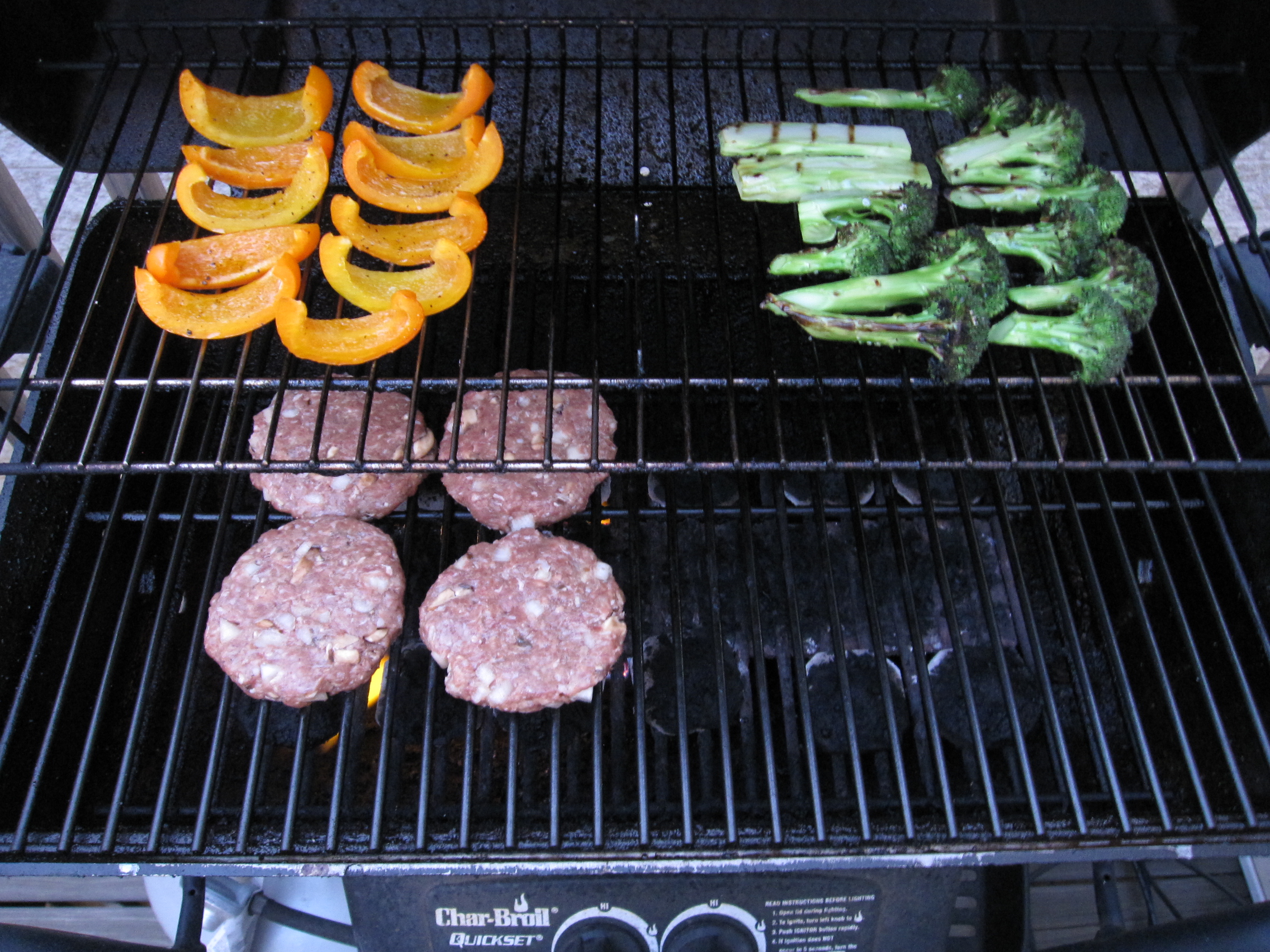
I first grilled some broccoli and orange bell pepper slices (both drizzled with olive oil, salt, and pepper) over direct heat on the top rack until the broccoli started to show some grill marks. Then I moved the broccoli to the other side of the grill off the direct heat so that it would continue to cook a little without burning. After the broccoli was moved I put the burgers on the lower rack and grilled them up. By the time the burgers were done on both sides the peppers were nice and roasted and the broccoli nice and al dente.

I served everything with white rice. I also drizzled a little ponzu on top of the burgers to add a little zing to them.

Read Full Post »

Alright, so Tuesday night’s Passover Seder was spent at my dad’s. His Seder is different from the one with my mom’s side of the family. They do everything family style while my dad likes to serve each plate himself. I think it’s a control thing, but this site isn’t about psychoanalysis.

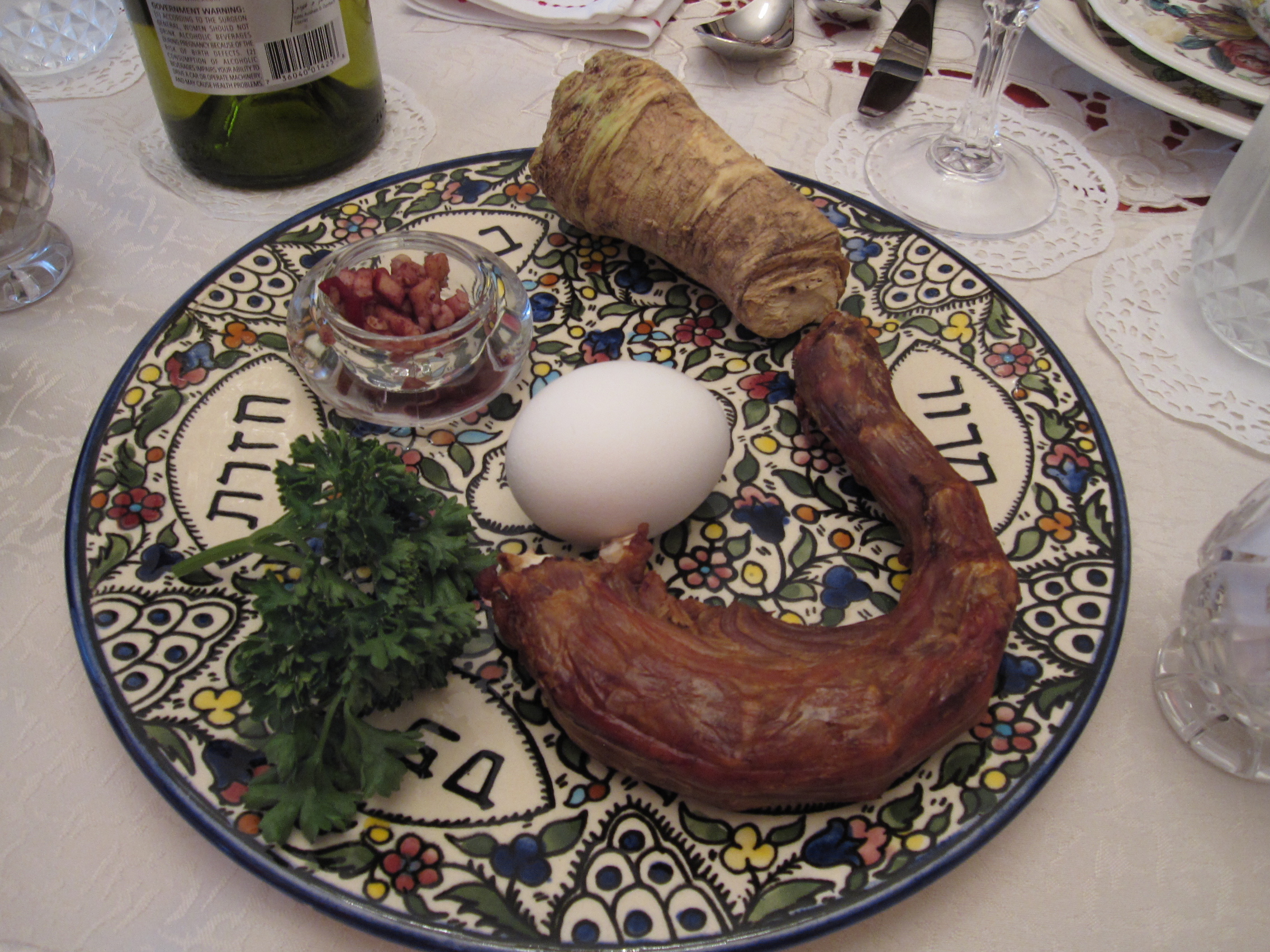
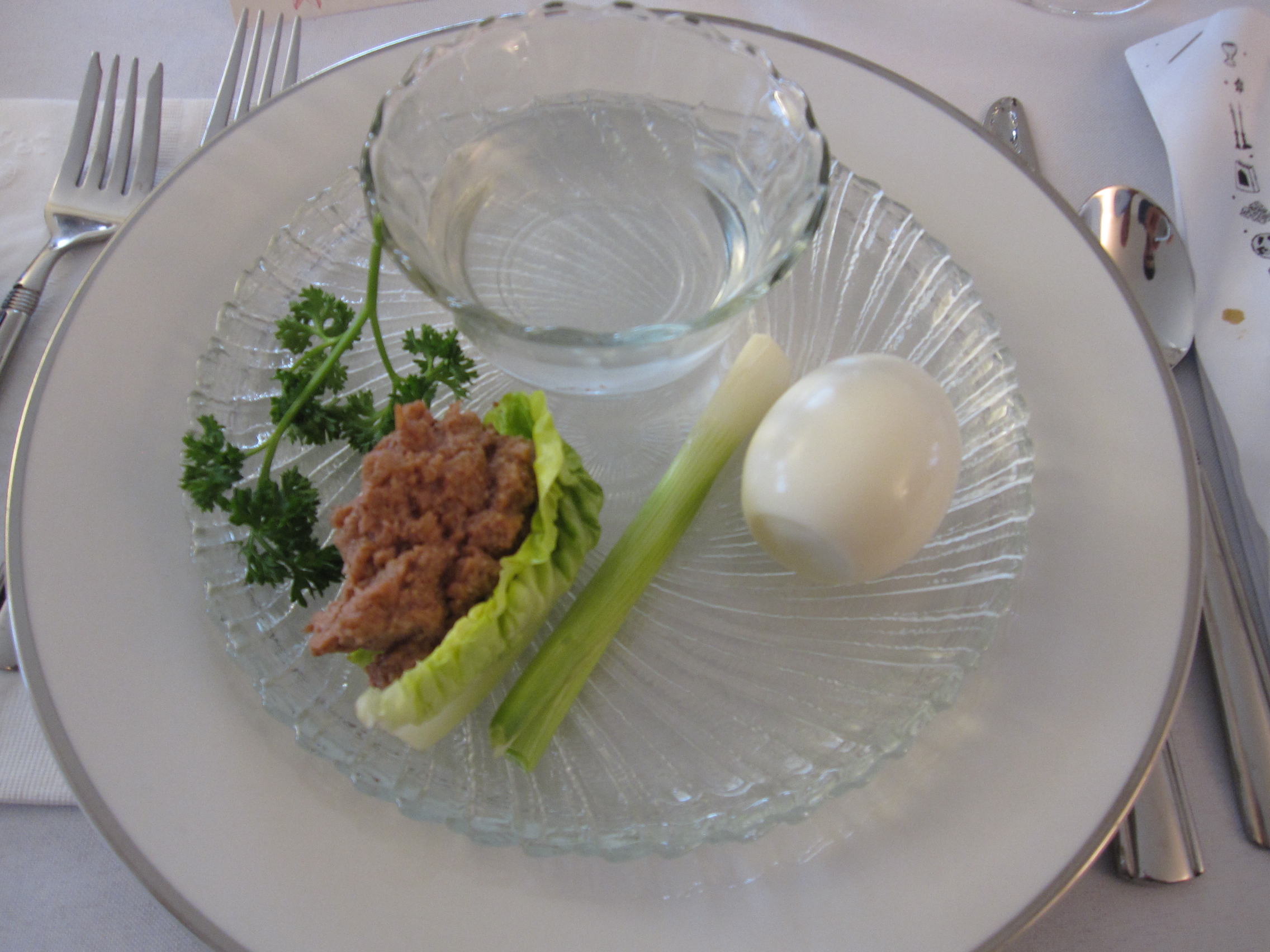
This is what his Seder Plate looks like. It has all the elements, however, he uses a roasted turkey neck instead of shankbone and a horseradish root instead of green onion.

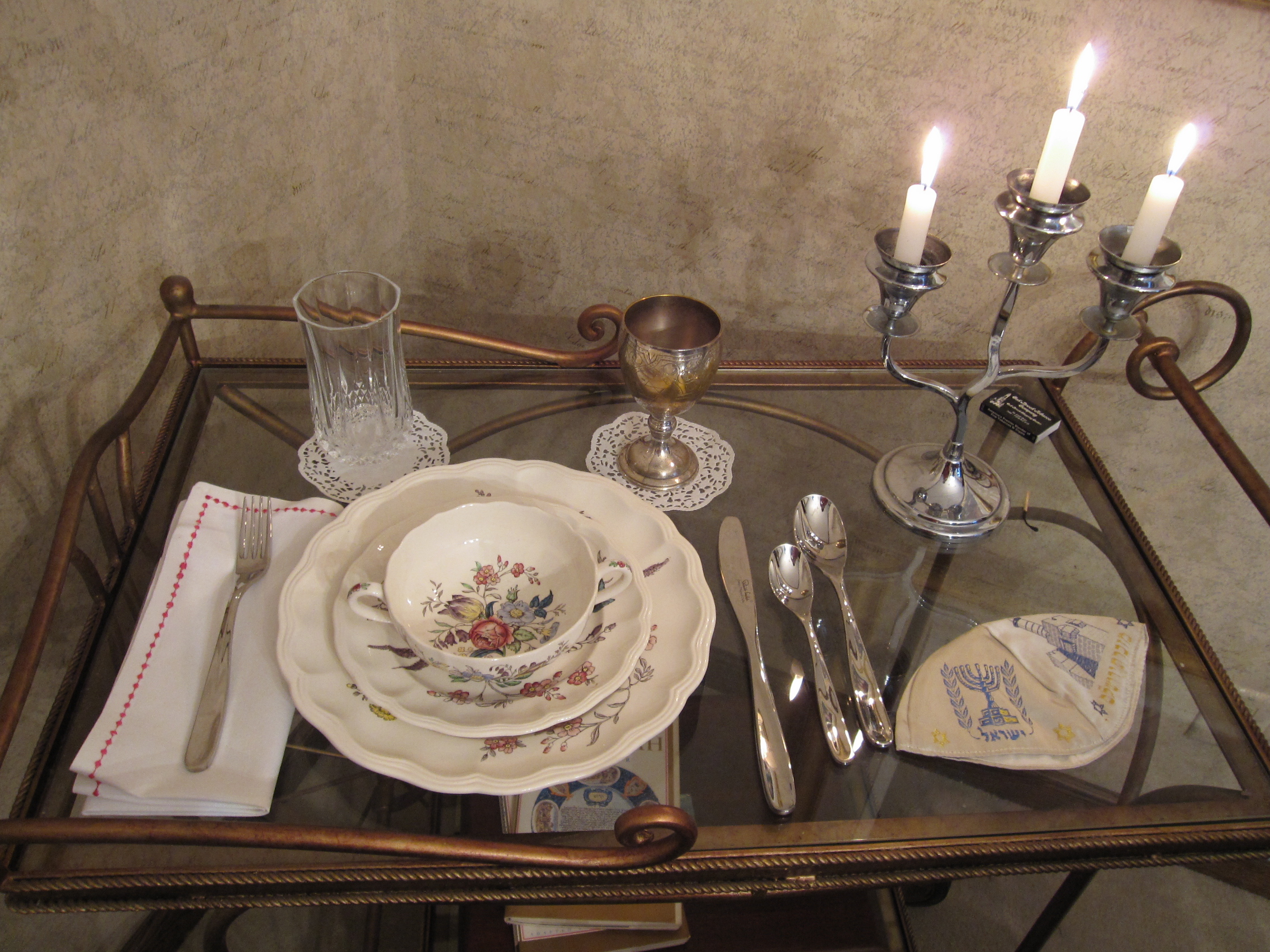
Also, instead of putting Elijah’s wine glass on the Seder Plate, he puts a full place setting off to the side for him.

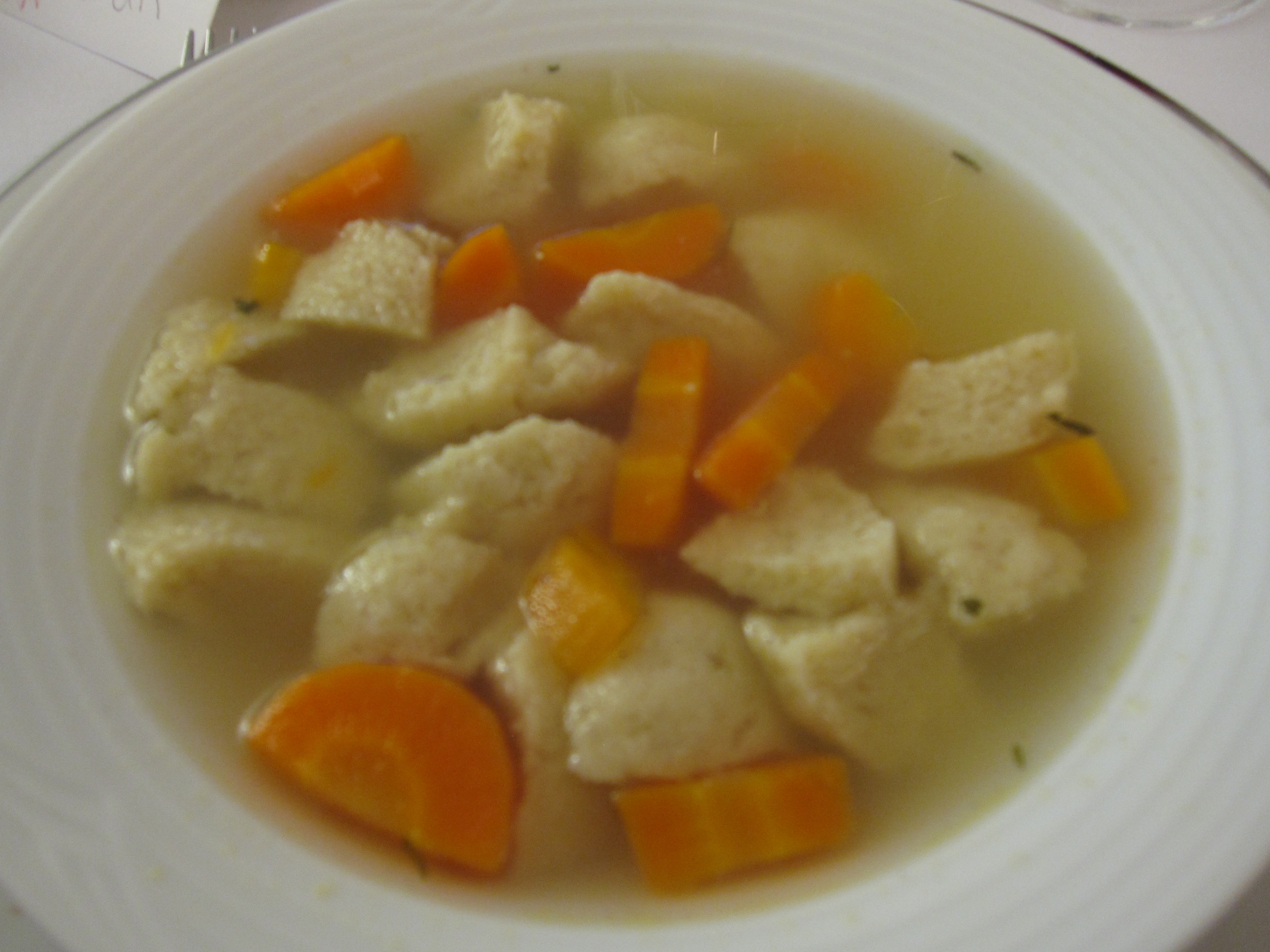
My old man did all of the cooking himself, which of course includes his Matzah Ball Soup. The main difference is that, like me, he puts the chicken meat back into the soup. I do have to say, this was one of his best batches.

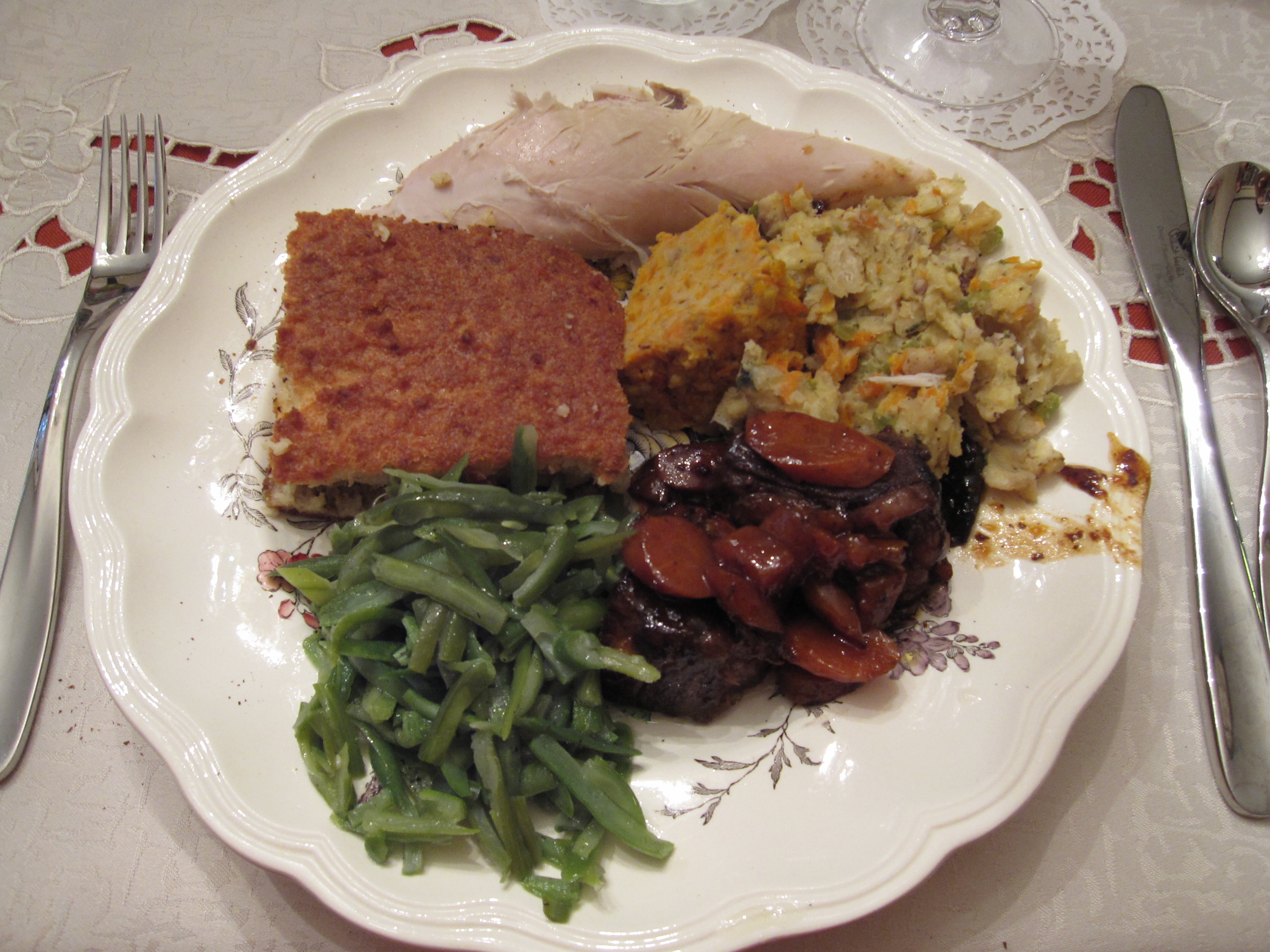
For dinner he served some roast turkey, matzah meal stuffing, carrot ring, tsimis (a slow braised beef short rib with carrots), green beans, and potato kugel (basically a casserole of grated potato).

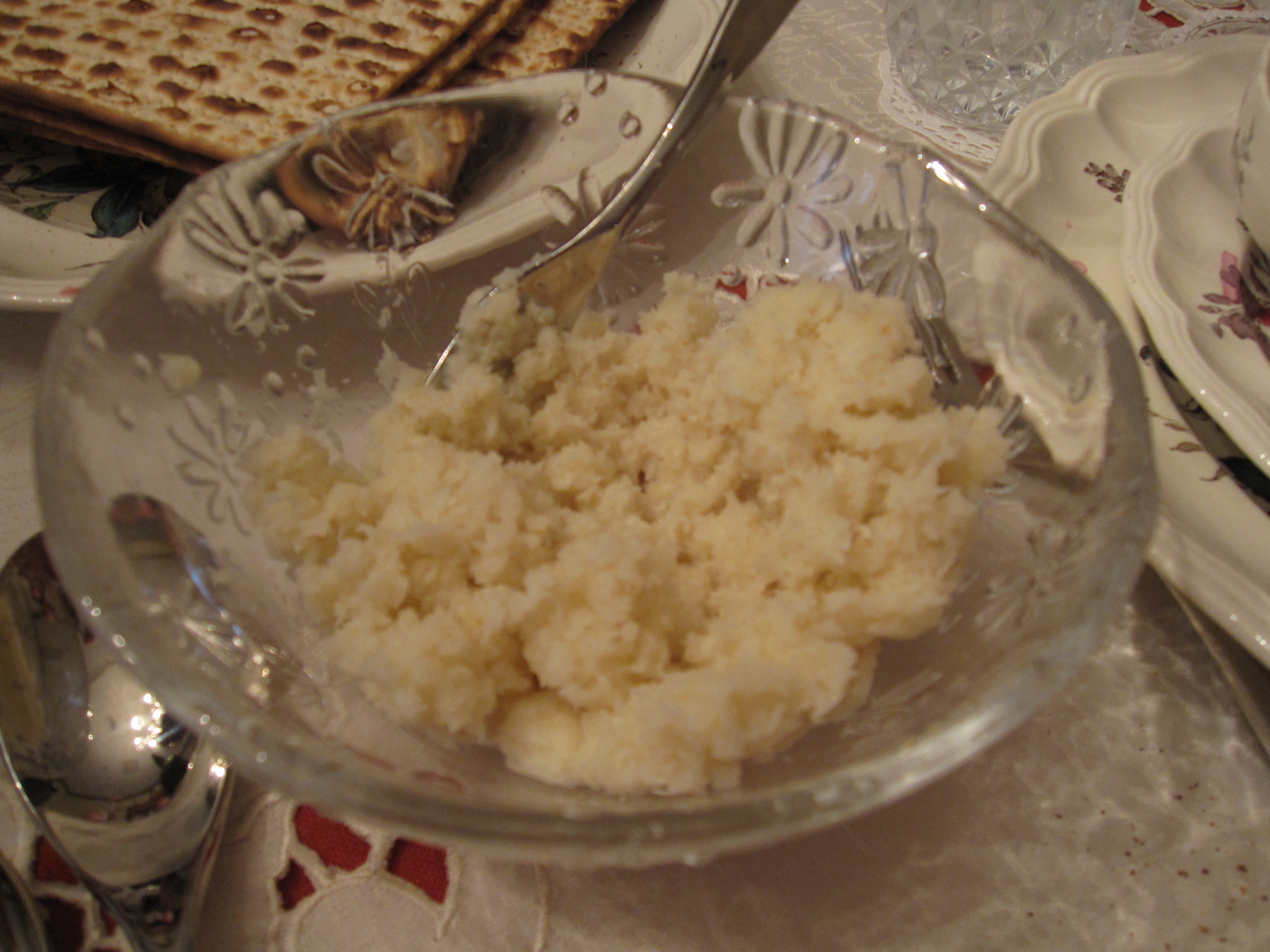
He freshly grated some horseradish.

And, of course, plenty of Matzah on hand.

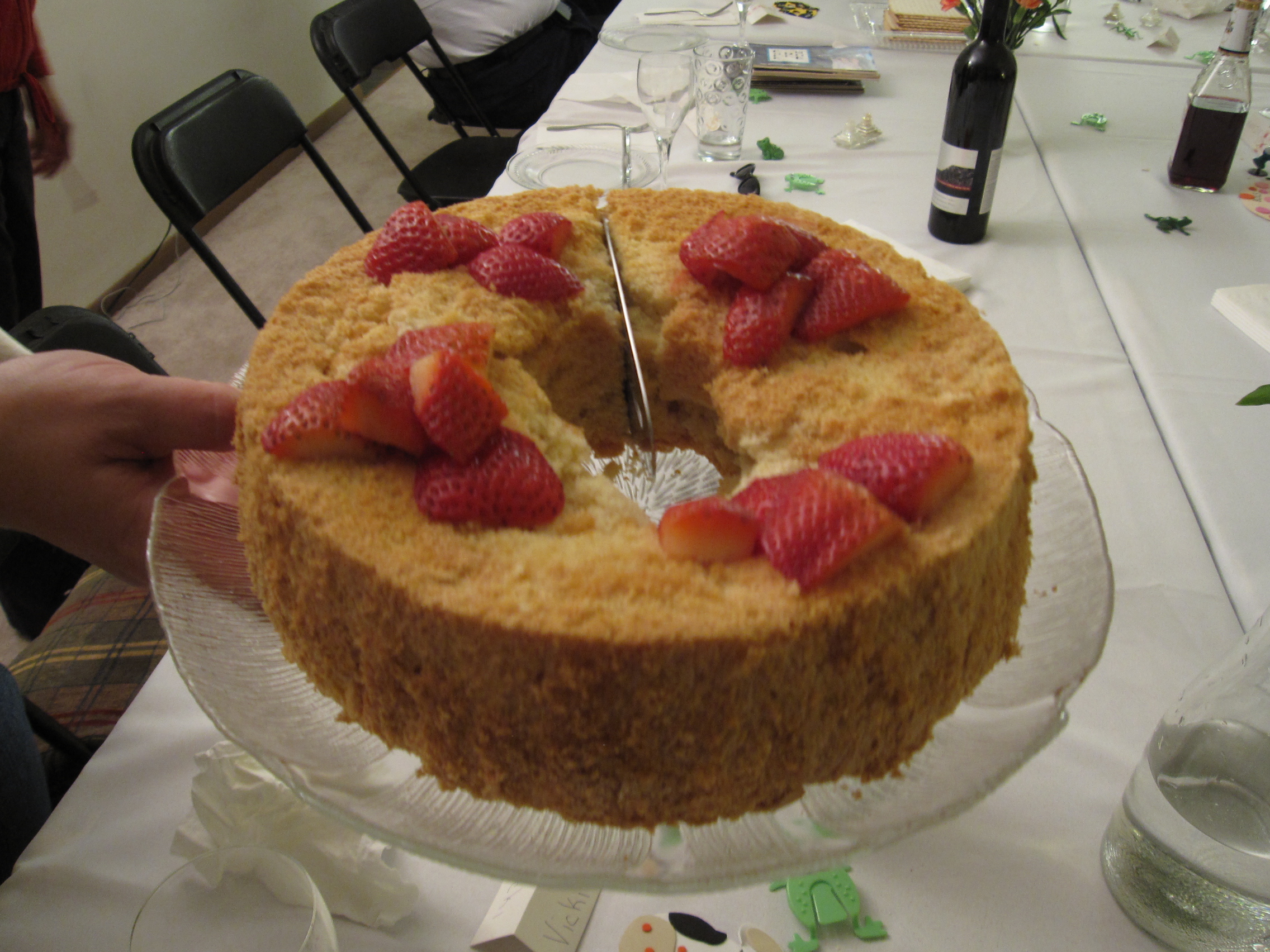
I was in charge of dessert. I made a citrus sponge cake and served it with whipped cream and strawberries. The cake was made with matzah meal flour and potato flour. I mixed in the grated rind and juice from a lemon and an orange. As thick as the batter was with all of the heavy flour it actually turned out light and moist.

Read Full Post »

Last night was the first night of Passover. In America, typically the first two nights of Passover are a huge deal in the Jewish household (in Israel they only have Seder on the first night). Families get together for big feasts of traditional foods and celebrate the liberation from Egypt led by Moshe himself, called a Seder. I do want to state that I am not religious, I’m atheist. However, I am culturally Jewish and thoroughly enjoy a meal that consists of Matzah Ball Soup and slow braised Brisket. This year my brothers and I had the first night at our cousins with my mom’s side of the family.

Here is the traditional Seder Plate that sits in the middle of the table. It contains the symbols of the Passover story. Starting at 2 o’clock is the Beitzah, a roasted egg that symbolizes the festival sacrifice. Then is the Zeroa, a roasted shankbone symbolizing the lamb’s blood that was marked on doors to keep the Jews safe from the 1oth plague. After that is the Maror, we use green onion to remind us of the bitterness and harshness of slavery. Charoset is next, apples, honey, walnuts, and wine that are blended into a thick paste representing the mortar used by Jews in constructing Egyptian storehouses. Next is Karpas, parsley is used for the coming of Spring. There’s a bowl of saltwater that is used to show the tears shed by Jews in slavery. You dip the Karpas into the saltwater. Finally, in the middle is a glass of wine that’s set aside for Elijah the prophet.
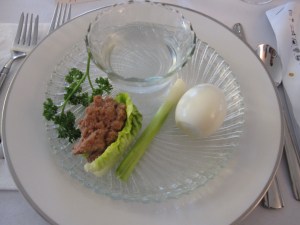
At each individual seat there’s a small plate with the edible symbols. After we get through the Haggadah and eat the Seder plate dinner gets started.
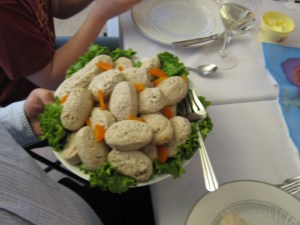
The first thing that get’s passed around is Gefilte Fish. It’s basically a classic Eastern European fish dumpling made out of whitefish and pike. It’s eaten with horseradish.
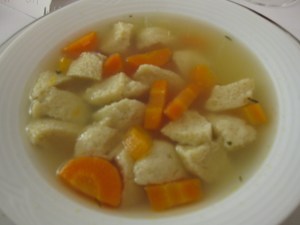
Next is the Matzah Ball Soup. I had two matzah balls, but had already cut them up into bite sized pieces when I remembered that I needed to take a photo. I also forgot to take a pic of the matzah, but that isn’t the end of the world. I do have to say that my Matzah Ball Soup is far superior, but that’s always the case.
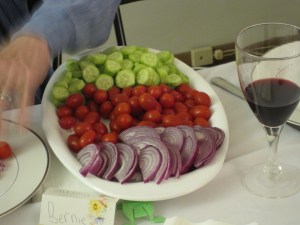
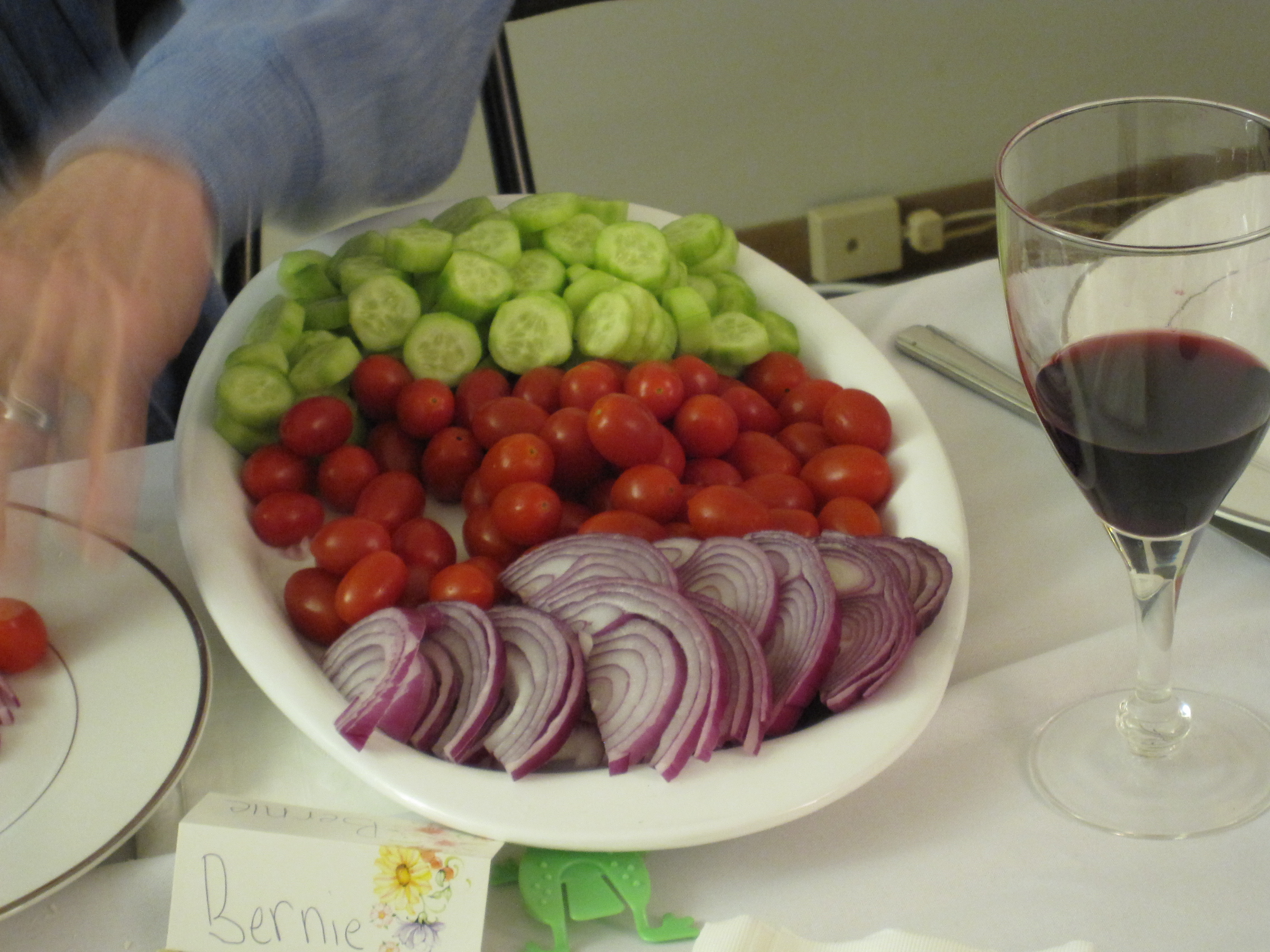
Then some fresh vegetables. Cucumbers, tomatoes, and red onions.
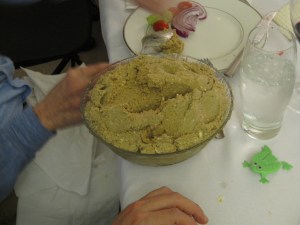
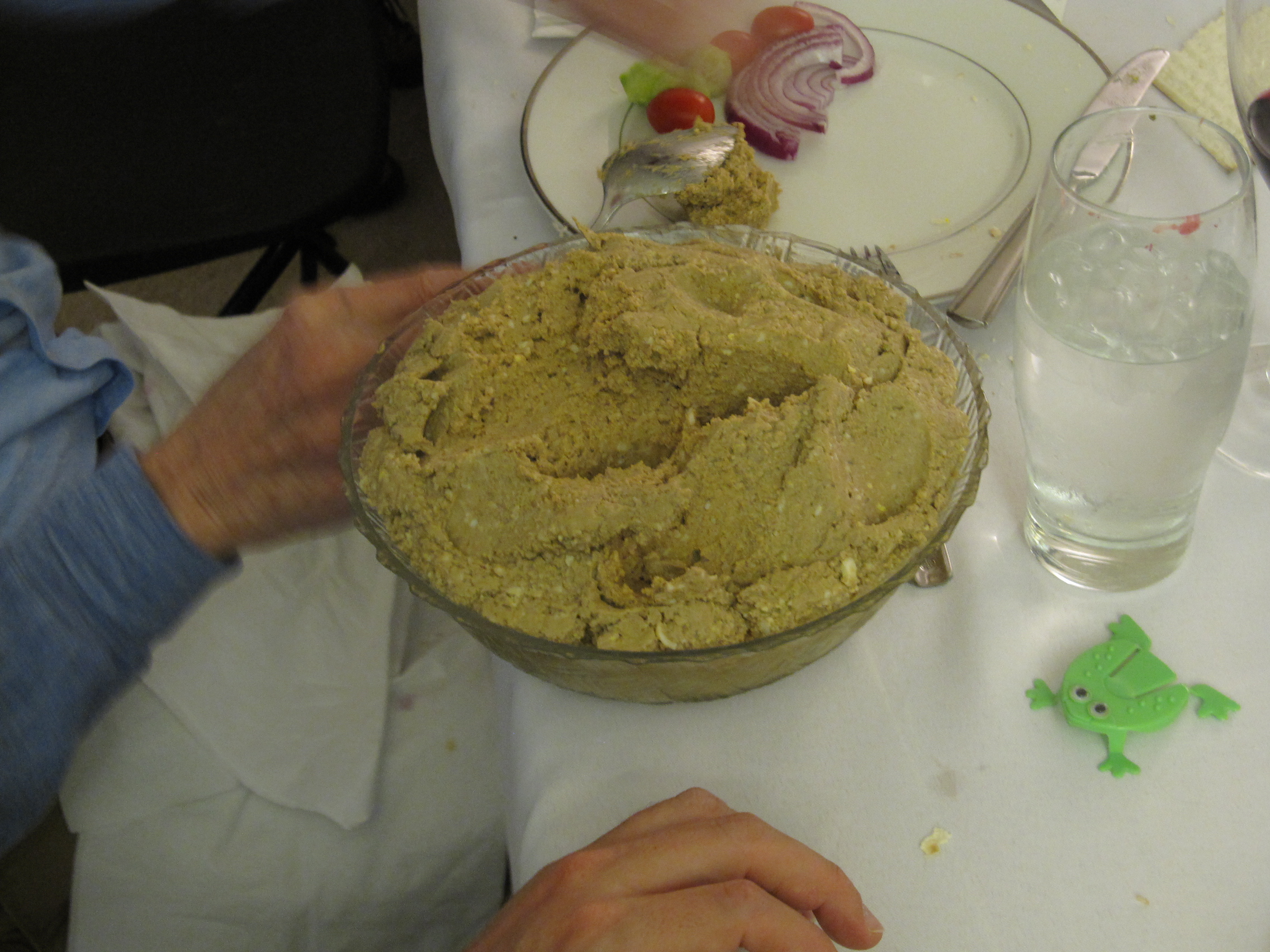
Here’s Grandma’s chopped chicken liver. Unfortunately it’s the only thing she makes anymore. She cooks up the livers, seasons them, and mashes it all down. My cousin Lorrie has to salt it though. Grandma’s taste buds aren’t quite what they used to be. But hey, she’s 86! She gets a pass.

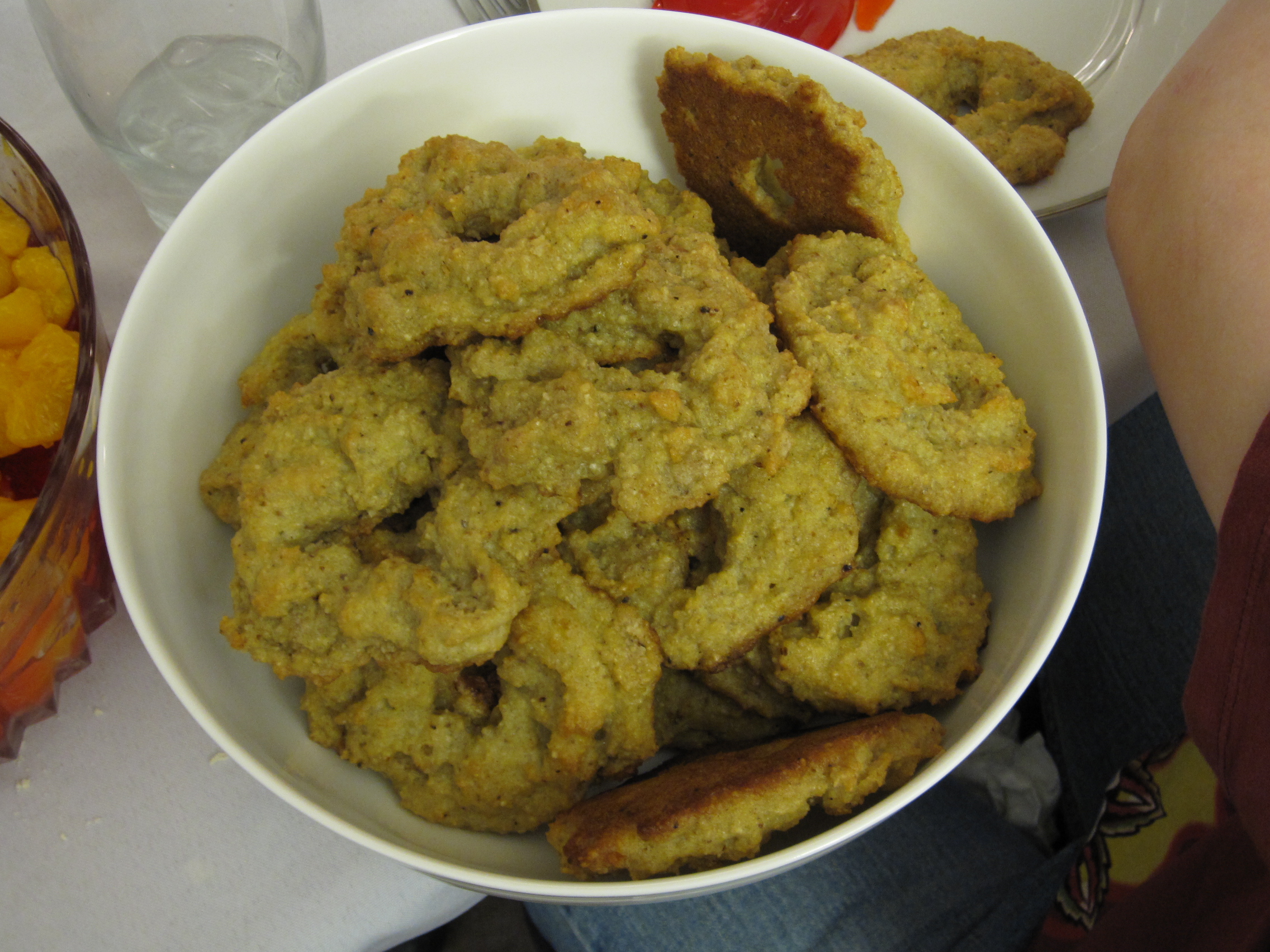
Some bagels made out of matzah meal. They resemble bagels in shape only, but they aren’t bad.
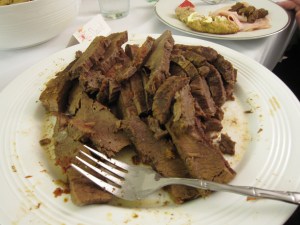
Here’s the famous slow-braised Passover Brisket. Brisket is to Passover what turkey is to Thanksgiving. Again though, my brisket is better. I made the brisket last year, but not this year. I need to take charge of it again for the betterment of all our digestion.

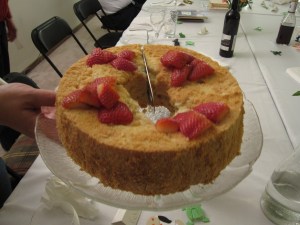
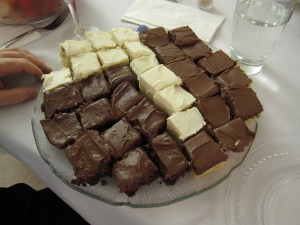
Dessert consists of various cakes made with matzah meal flour and fresh fruit. Chocolate cake with raspberries, strawberry shortcake, brownies, carrot cake, grapes and strawberries.

For some reason I always tend to eat too much at Seders.

Read Full Post »

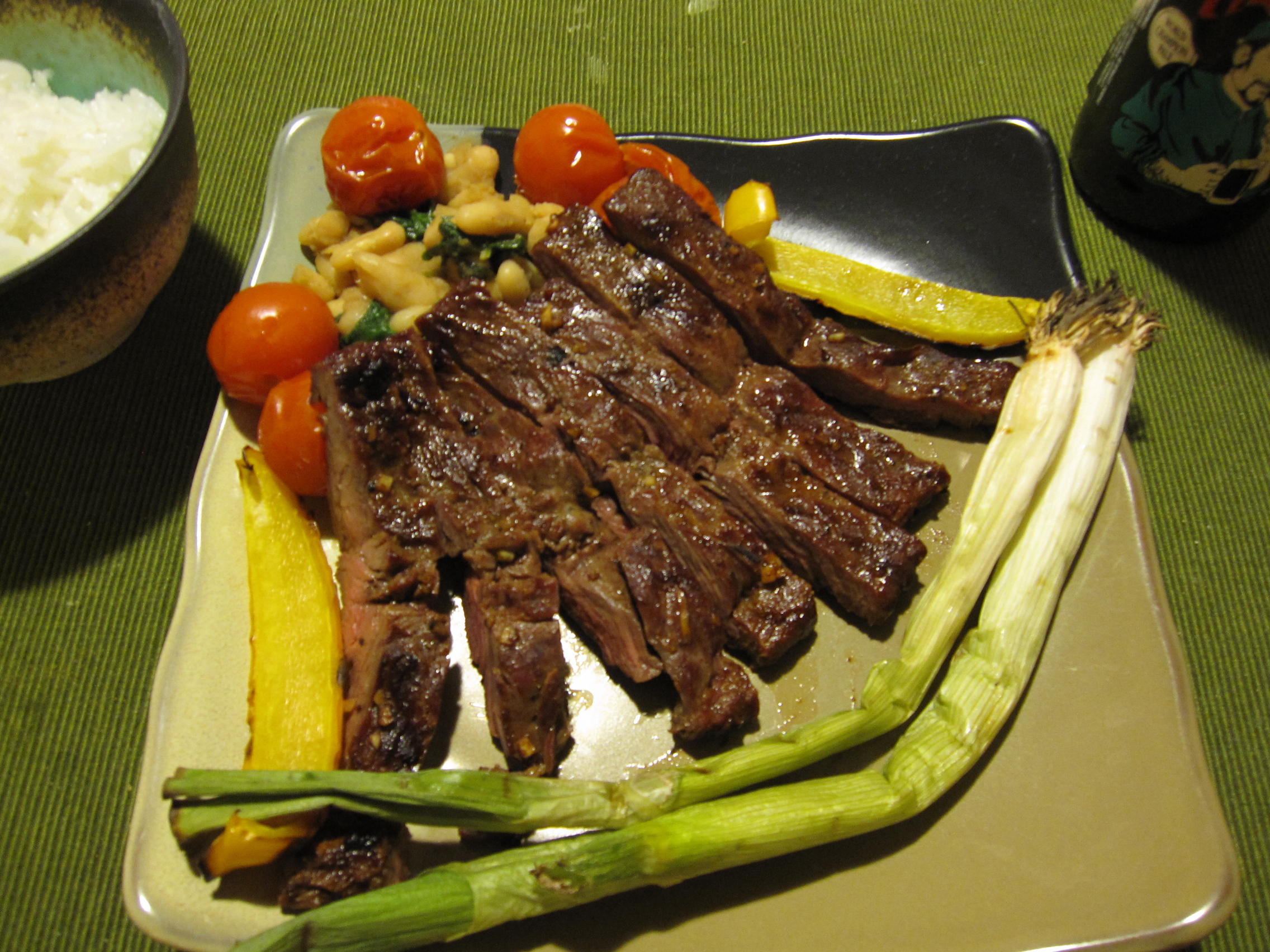
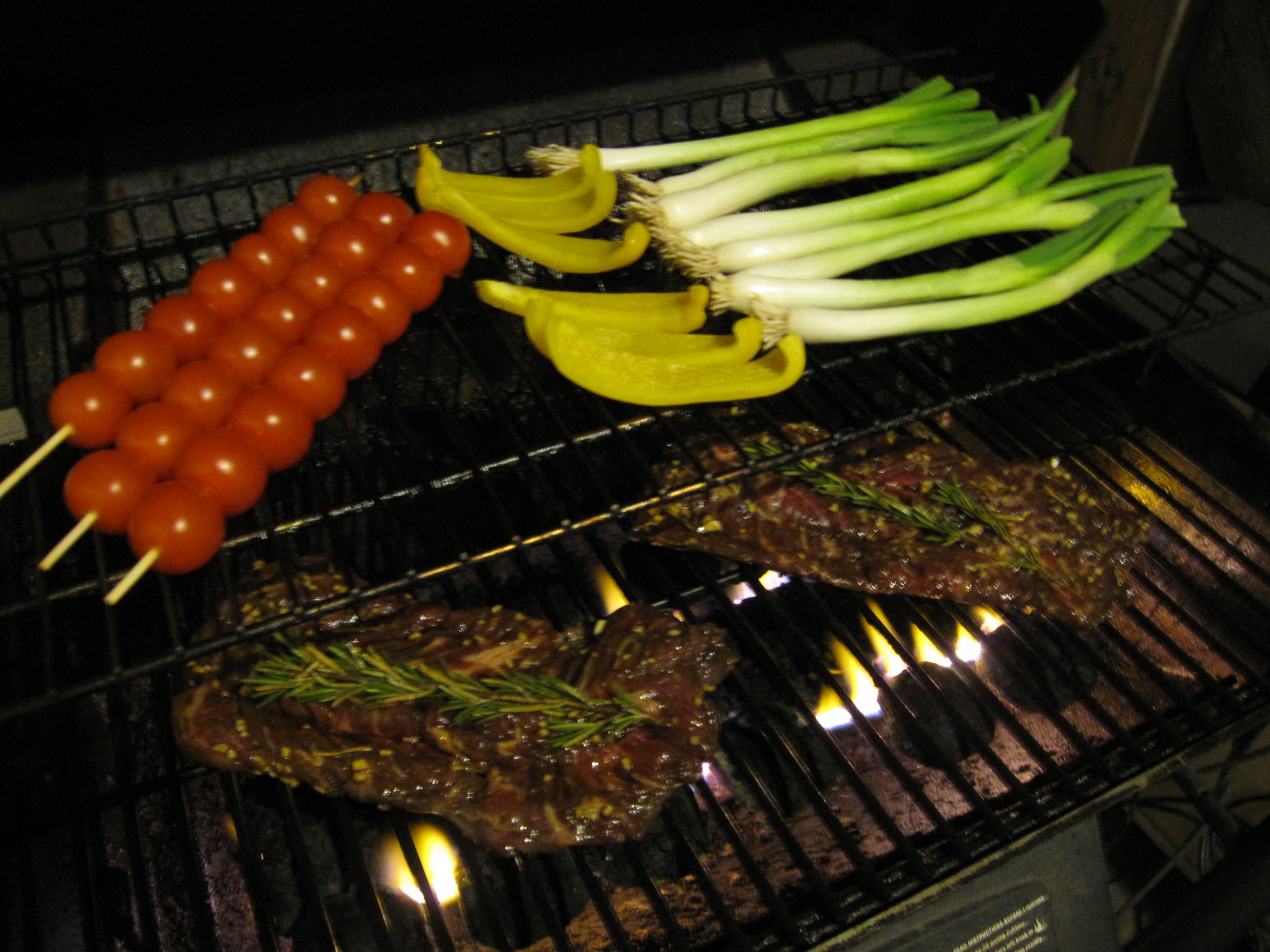
Grilling season is here people! Nothing could make me happier. Well, I guess that’s not entirely true, but it does bring a smile to my belly. To kick off the year’s grilling I picked up a beautiful 1.5 pound skirt steak, easily one of the best cuts of any carcass.

To start off I marinated the skirt in a mix of 5 tablespoons of soy sauce, 3 tablespoons of sake, 2 tablespoons of mirin, 5 chopped garlic cloves, an inch of chopped ginger, 1 teaspoon of cayenne, 1/2 teaspoon of turmeric, black pepper, and some whole sprigs of rosemary. The steak was too long for my biggest dish, so I cut it in half and marinated covered in the fridge for about 4 hours, turning every hour or so.

I skewered some cherry tomatoes, cut the yellow pepper that I had left in my fridge, and cleaned some green onions. Stanley’s had real thick green onions that were just screaming to be grilled. when you leave the thicker outer layer on and then grill them as is, the inside becomes real soft and sweet. You can just put the whole thing in your mouth and squeeze out the innards with your teeth as you pull the onion out. So delicious!

While everything was on the grill I sautéed some cannellini beans with garlic and spinach. I started with some olive oil and chopped garlic. A few minutes later I added the left-over marinade from the steak and let that boil for a couple of minutes. Then I tossed in a drained can of beans. Once they were heated through I added a bunch of spinach. I stirred it all around until the spinach had just wilted and most of the liquid had evaporated. Then I took it off the heat and covered it until the grill was ready.

Once the grill was ready I let the steak rest for about 8 minutes while I plated everything else. Then I sliced the steak with the grains, put them on the plates, and we ate. I also served some white rice.

Read Full Post »
The other night I tried my hand at making a classic home-cooking dish from Japan, Nikujaga. It is a stewed meat and potato dish that is the definition of Japanese comfort food. There are about as many different ways to make it as there are Japanese mothers (and Jewish husbands who cook for their Japanese wives).

The basics of Nikujaga are thin slices of beef (can use pork for variation), potatoes, and onions that are simmered in a sweetened soy broth. Frequently there are other veggies added such as carrots and peas or green beans. It’s really very easy to make as well as being healthy and delicious. It’s the perfect meal for a winter’s eve when served with white rice.

I made it using about 2 cups of water, 1/3 cup of soy sauce, 1/3 cup of mirin, and a couple tablespoons of sugar as the broth. I threw that all into my pot with about a pound of large chopped Yukon Gold potatoes. I brought that to a boil and let the potatoes soften for about 20 minutes. It’s best to put all of that in the pot with the potatoes cold and bring to a boil together so that the potatoes absorb more of the flavor.

Once the potatoes were partially cooked I added about 2/3’s of a pound of thinly sliced beef. After that boils for a few minutes I skimmed off the foam that forms from boiling raw meat, much like I do when making chicken soup. The foam isn’t bad for you or anything, but by skimming it off you get a clear broth.

After the meat simmered for about 5 minutes or so I added a thinly sliced onion along with a sliced carrot. I simmered those for about 10 minutes. I just wanted them softened, not fully cooked, so that there was still some texture left in them.

Then I threw in a bunch of shelled edamame. Those don’t need to cook since they’re small and already cooked when you buy them. They just need to be heated through so they go in towards the end. After they’re cooked through I thought I was finished and proceeded to serve up the meal.

However, I forgot the last ingredient that I wanted to put in, shirataki. These are clearish-white “noodles” that are made from the starch of a yam-like vegetable. It’s the same substance as konnyaku, but in noodle form. They don’t need to be cooked, just heated through. They come in a package in liquid. Drain the liquid, rinse them off, cut them into smaller pieces, and throw them in to the stew for a few minutes. Unfortunately, I forgot to take a pic with the shirataki in the Nikujaga. Just imagine some opaque noodles in the stew and you’ll get the idea.

If you follow my recipe you’ll end up with about 4 servings. The only suggestion I would make, and it’s something that I’ll do the next time I make it, is to use Russets instead of Yukon Gold. Russets will stand up to the long stewing a little better as their a little more dense.

After Yuki ate the Nikujaga she gave me probably the best compliment I could have received. She said that her mother would definitely enjoy eating it. Knowing her mom and what a great home cook she is, that’s pretty high praise. I am now officially a Japanese mother! I may be the only Japanese mother in the world who is actually a Jewish husband without any children. That’s all part of my charm.

Read Full Post »

A good buddy of mine, Jason Meyer, gave us a couple of tables he made a while back. He’s a very talented sculptor/furniture maker/badass dancer that I used to work with at Bin36 back in the day. In order to show gratitude Yuki and I invited he and his fiancée over for dinner the other night. We figured that he gave us something that he made so we should do the same.

We started off with some Lemongrass Corn Soup with Avocado garnish. The soup was actually purchased and I didn’t make it (shhh, don’t tell Jason). It did taste exactly like something I would make though. Had I made it I would have simmered some corn and onion in vegetable stock with some lemongrass until the kernels were nice and soft. Then I would have discarded the lemongrass and blended the rest of the ingredients until smooth and strained it back into the pot. A little salt and pepper and there you go. I did make the rest of the meal. Well, that’s not entirely true as Yuki did some of it.

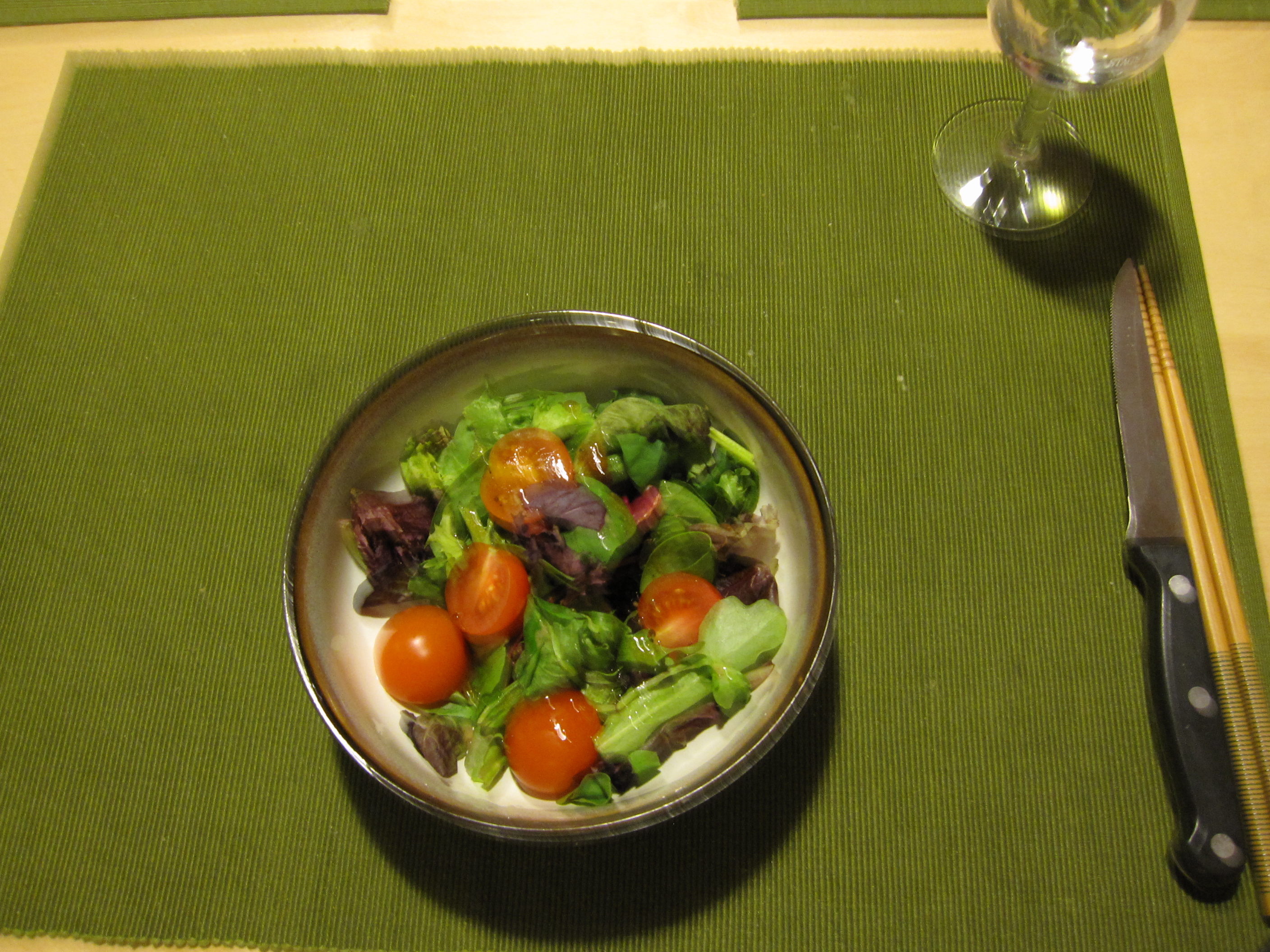
Then I served a simple salad. Mixed greens with cherry tomatoes and a sesame vinaigrette. Vinaigrettes are easy to make. This one had soy sauce, sesame oil, a touch of rice wine vinegar, salt, and pepper.

Next was the main course. I went to Olympic Meats for some good strip steaks. The steaks were pan-fried in nothing but olive oil. No salt or pepper added. Once I got a nice seer on each side and they were cooked about medium rare or so I put them on plate to rest. While they were resting I doused them with a sauce I had made. The sauce consisted of grated ginger and garlic, soy sauce, lime juice, red pepper flakes, and pepper. No salt since there was plenty of soy. I made the sauce way in advance to let the rawness of the ginger and garlic mellow out a little in the lime juice. By pouring it on the steaks while they rested it allowed the flavors infuse into the meat and keep them nice and juicy. I served the steaks on top of baby spinach with roasted yellow peppers and shiitake.

On the side was some hijiki rice that Yuki made. In the rice cooker she added to the rice some diced carrot, hijiki seaweed, cooking sake, soy, and konbu dashi. It’s one of my favorites as hijiki adds a wonderful flavor to almost anything. Plus, it’s extremely healthy as most seaweed is.

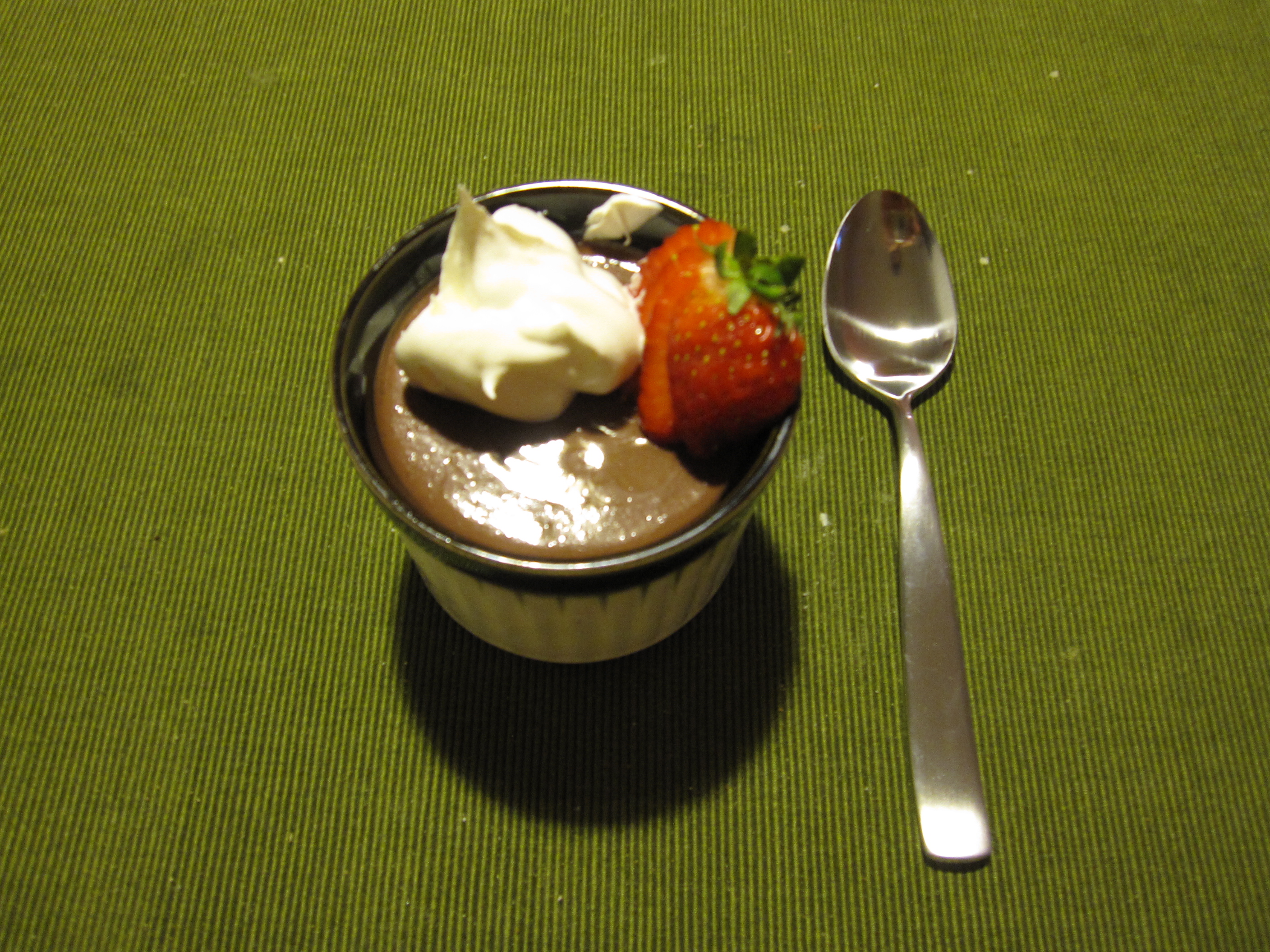
For dessert I made some Mexican Chocolate Pots de Cremes. What better to follow Asian flavors than Mexican chocolate? I made these the day before to let them set in the fridge overnight. I used egg yolks, heavy cream, whole milk, Mexican chocolate, and bittersweet chocolate. You first have to heat the cream and milk without boiling it, just a slow simmer for a few minutes. Then you incorporate the egg yolks, beaten, very slowly constantly mixing so that the eggs don’t scramble. Once it’s thick enough to coat the back of the spoon add the chocolates in pieces so that they melt completely. Once you have a nice smooth thick custard pour it into your serving dishes, cover, and chill for at least 4 hours and preferably overnight. To serve, I sliced some strawberries and added a little whipped cream.

Jason brought a bottle of Prosecco that we enjoyed with the soup and salad. After that we opened up a special bottle of Sake that we brought back from our last trip to Japan. Everything worked out extremely well. Portions were perfectly sized as none of us were hungry afterwords yet we weren’t stuffed either. I hope they enjoyed because it would be a disaster if I had to make them a table!

Read Full Post »

IMG_0958

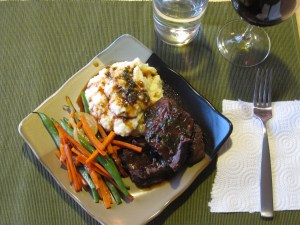
It’s starting to get cold here in Chicago, that means less grilling and more braising. My first braise of the season was a batch of beef short ribs. One of the most flavorful cuts. Nice and fatty, lots of bone marrow, what could be better?

First, I browned them in a big pot with some olive oil to get some nice color then set them aside. Then I added onions, carrots, celery, and garlic. After about 5 minutes, when the veggies were translucent, I dumped in two cups of red wine and let it boil for a few minutes. I added three cups of beef stock, a quarter cup of balsamic vinegar, two bay leaves, a tablespoon of coriander seeds, and a bunch of thyme. Let it come to a boil and added salt and pepper. Then I returned the short ribs, covered the pot tightly, and put into a preheated oven at 250 degrees.

After 5 hours in the oven to took the pot out and removed the short ribs. The meat was tender that the bones fell right off, it sent tingles down my spine. I put the meat in a dish and tented it with foil to keep it from losing moisture and strained the braising liquid into a bowl and let it cool to room temperature allowing the fat to rise to the top. I scraped off the fat and returned the liquid to a pot and boiled for about 45 minutes so it could reduce. Then I added a little corn starch slurry to thicken it up to a more velvety texture and added a bunch of chopped parsley. There was my gravy.

I made some creamy garlic mashed potatoes along with quickly stir-fryed carrots, onions, and haricots vert to serve alongside.

Once everything was ready I put the short ribs back into the oven at 400 for 10 minutes to reheat them and then plated everything up. It was one of the best short ribs I’ve ever eaten in my life! The perfect thing for a chilly night.

Read Full Post »
IMG_0590

Here’s my first attempt at making Gyu-don, Japanese simmered thinly sliced beef with onions on rice. It’s surprisingly simple to make, yet full of flavor and easy on the wallet.

The trick is to get the beef sliced as thin as deli meat. You can get it at Mitsuwa, but I’m not sure where else to get good quality meat in this fashion. I’m sure it’s available. I do know that it’s near impossible to get such even thin slices at home with a knife no matter how sharp it is.

So, take put a little oil in a medium-sized pot and cook some ginger and garlic for a minute or two. Then add an onion thinly sliced and sweat it for a few minutes. Add a couple cups of water, a quarter cup each of soy sauce and mirin, a few pinches of sugar and let it come to a simmer. Then add your beef and let it cook until the liquid is reduced by 3/4’s.

All you have to do then is put some white rice in a bowl and top it with some Gyu-don.

I served it with a simple corn soup garnished with Thai basil and a salad that Yuki made. She tossed some mixed greens, julienned carrots, celery, and cucumber (I left the cucumber out of mine, vile phalis!) in a homemade hijiki vinaigrette. All washed down with a cold beer.

Read Full Post »
« Newer Posts