Feeds:
Posts
Comments

Posts Tagged ‘carrot’

Meatless Monday last night ended up being Yakisoba. Yakisoba is a traditional noodle dish (even though it’s origins are from China, it has become a staple of Japanese cuisine much like Ramen) that is typically served with various vegetables and pork. I omitted the pork to accommodate Meatless Monday.

First thing I did was get the protein ready. I made a thin omelet of two eggs and a little cream. In my heated large skillet I poured a tablespoon each of soy oil and sesame oil. I swirled that around to coat the entire pan and then poured in the scrambled eggs. I swirled the eggs around to make a thin omelet, much like a crepe in appearance. I turned the heat down so it wouldn’t burn. Once the bottom was cooked and the top set I carefully flipped it over to get a little crust on both sides. Then I slid it out of the pan and onto a cutting board, cut it in half, then made thin “noodles” out of it. I set this aside because this was my garnish.

For my vegetables I used 6 green onions, 1 carrot, some haricots vert, 6 ounces of bean sprouts, 1 red bell pepper, 6 cremini mushrooms (I wanted to use shiitake, but I had cremini in my fridge already), some ginger and a few cloves of garlic. I sliced everything thinly so that they would mix in well with the noodles.
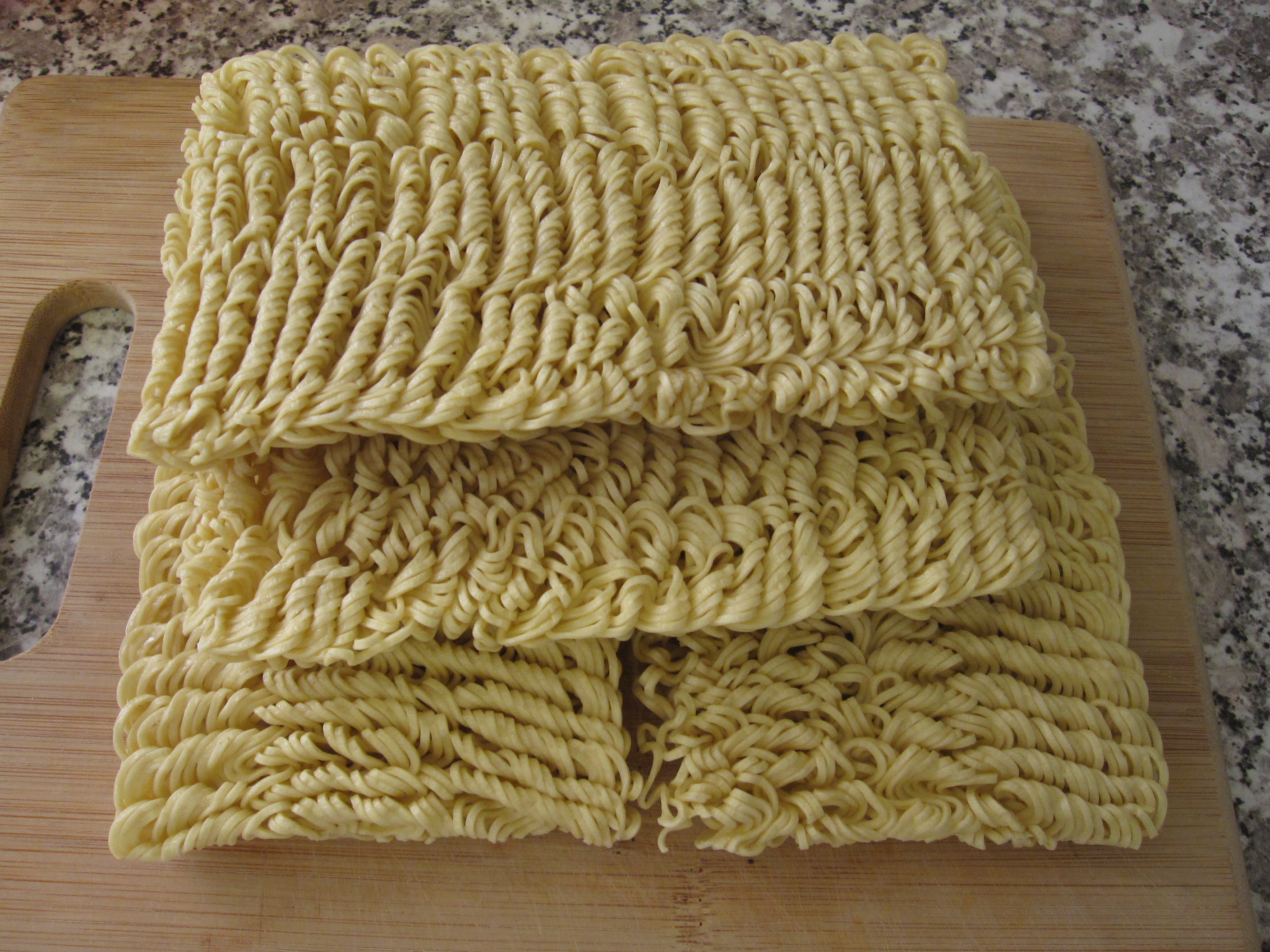
The noodles I used are called Chuka Soba, which translates to Chinese Noodles. They’re wheat noodles, but honestly, you could use a chow mein or ramen noodle if you wanted and get the same results. I cooked the noodles according to package instructions.

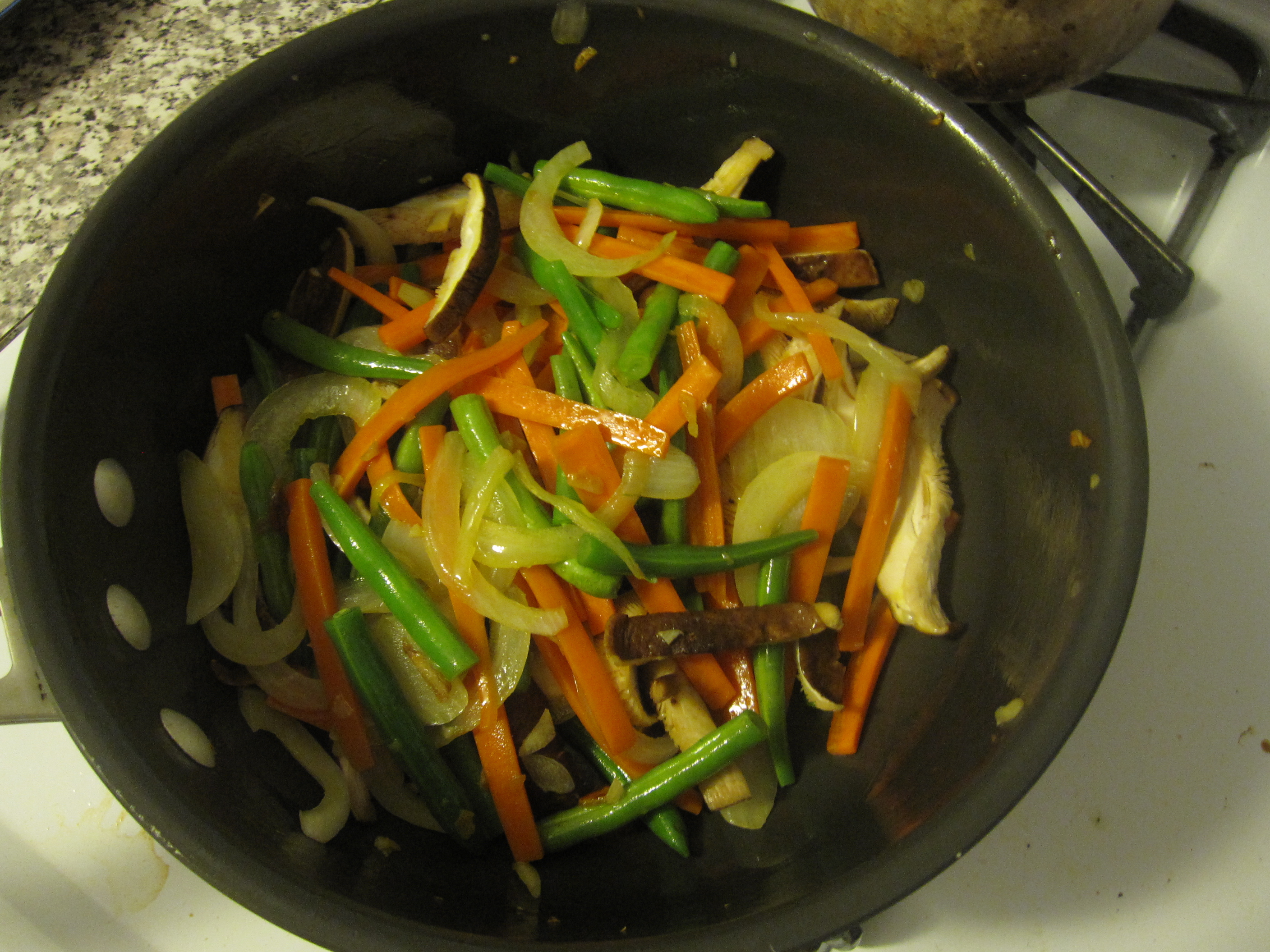
Using the same skillet I used for the egg I heated another tablespoon each of soy and sesame oils. I threw the garlic and ginger in for about a minute and then added the haricots vert, carrot, bell pepper, and green onions. I let those cook for about 6 minutes before adding the mushrooms. I let the mushrooms cook for about 4 minutes and then seasoned with a little salt and pepper. Then I poured in about 2 tablespoons of sake and let that boil off. After that I added the sprouts and then about 1/3 cup of Bull-Dog Sauce. I don’t know if you can get Bull-Dog Sauce at many places. We get ours at Mitsuwa, but you may be able to find it in ChinaTown or some other Asian Grocers.  

Once the sauce was mixed in well with the vegetables I tossed the noodles in and let them fry a little while mixing everything together. It’s important to keep the heat on to dry the sauce up a little while the noodles absorb it. This gives a nice texture to the noodles.

To serve I simply used my tongs and put a big pile of everything on a plate. Then I topped it with some of the sliced eggs and drank a cold beer. For the leftovers today I sliced some Black Forest Ham and added it to the mix. Since it’s not Meatless Tuesday I’m cool with that.
Read Full Post »

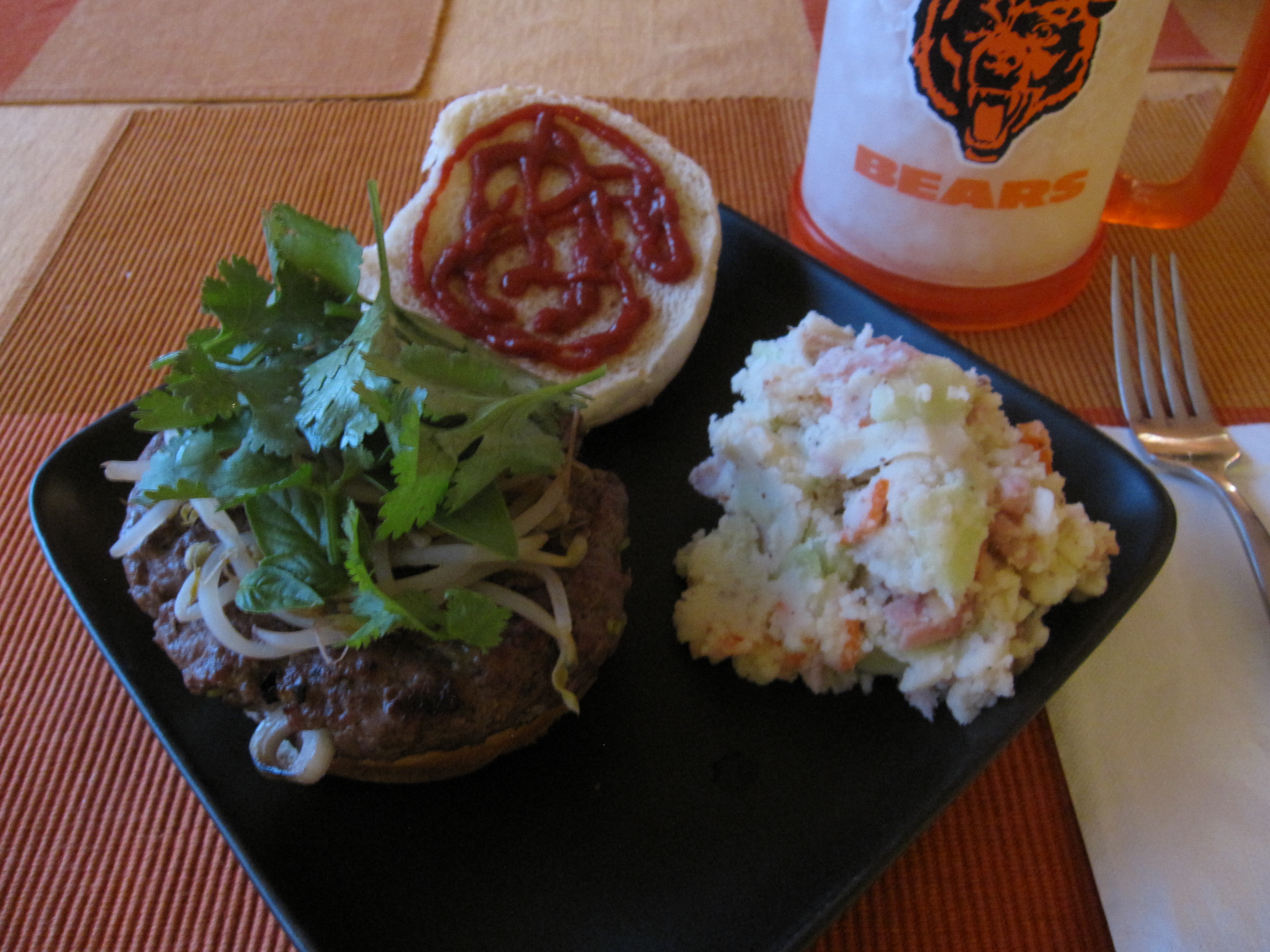
Alright, so I’ve been working on perfecting a hamburger that tastes like a bowl of Pho for a while now so that I could enter it into a contest that has a nice payout for the winner (wish me luck everyone!). I think I finally nailed it Saturday night. Here’s how it all goes down.

Instead of using regular old ground chuck I picked up a 2 pound brisket. Pho commonly uses brisket or rump, so I wanted to get that type of beefy flavor for these burgers. You could have your butcher grind it up for you, but what’s the fun in that? I don’t have a meat grinder (anyone seeking to get me a gift for whatever reason take note, I would gladly accept a meat grinder) but that didn’t stop me from giving it a go.

First thing I did was cut the brisket up into 1 inch cubes. I threw all of the meat into my food processor and pulsed it until it turned in the consistency I was looking for. I had to be careful not to over process it as that would start to melt the fat and ruin the texture. Then I put the meat in a bowl and prepared all of the seasonings.

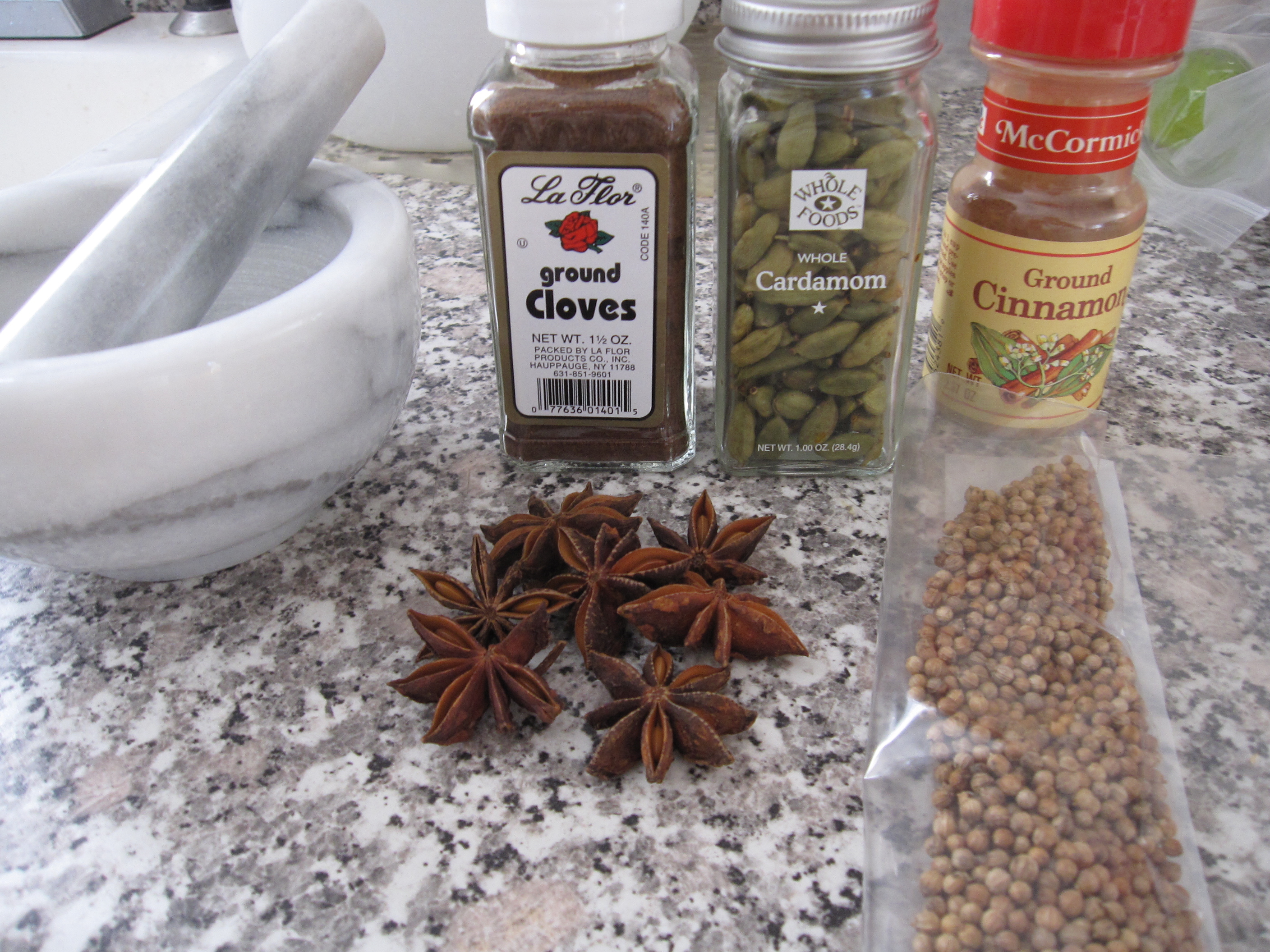
The spice mix included ground cloves, cardamom, ground cinnamon, star anise, and coriander seeds.

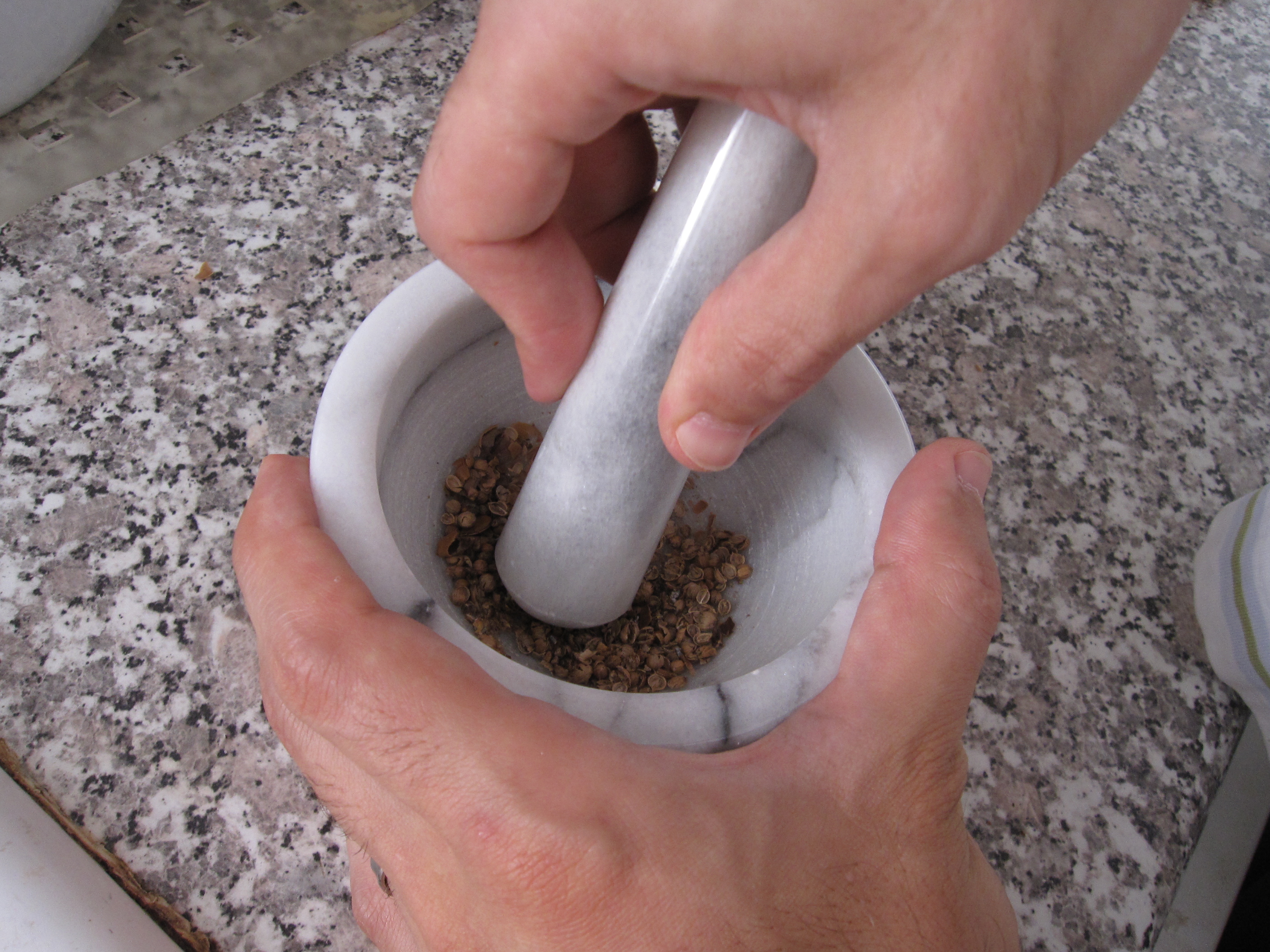
With my pestle and mortar I first had to grind up the whole seeds. I took enough seeds out of the star anise to measure about 1/4 teaspoon (cracking out the seeds is a pain!). Then I cracked open enough cardamom pods to get me 1/4 teaspoon of its seeds. I also measured about 3/4 teaspoon of coriander seeds. I ground those up into a fine powder and then added 1/2 teaspoon each of the ground cinnamon and ground cloves. I also mixed in there 1/2 teaspoon of black pepper and 1 teaspoon of pure cane sugar.

Once my dry spices were mixed together I zested a lime to get about 1 tablespoon, and I minced up 1 tablespoon of ginger and 1 tablespoon of garlic.

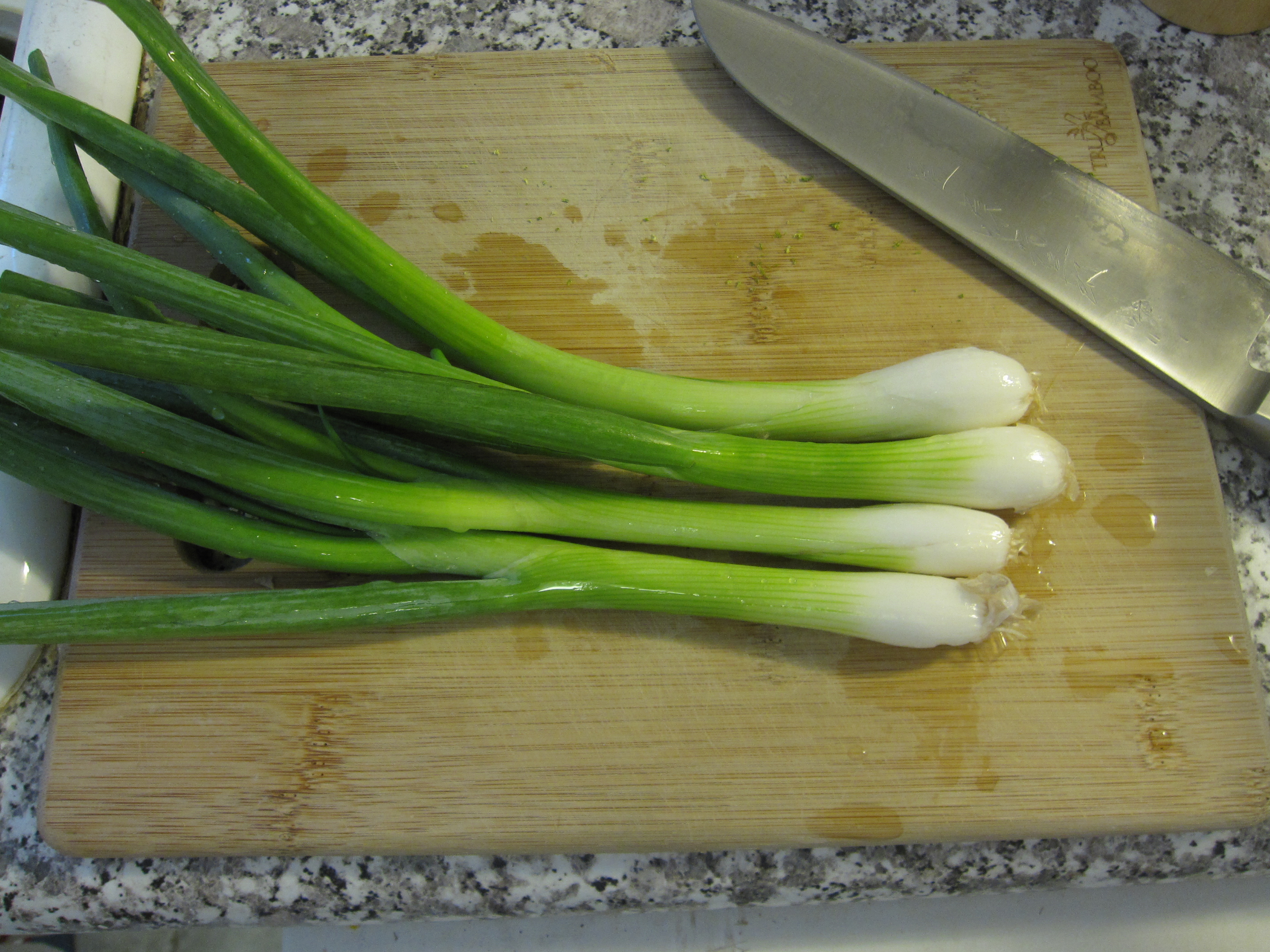
I also sliced up 4 green onions, just the white and pale green parts.

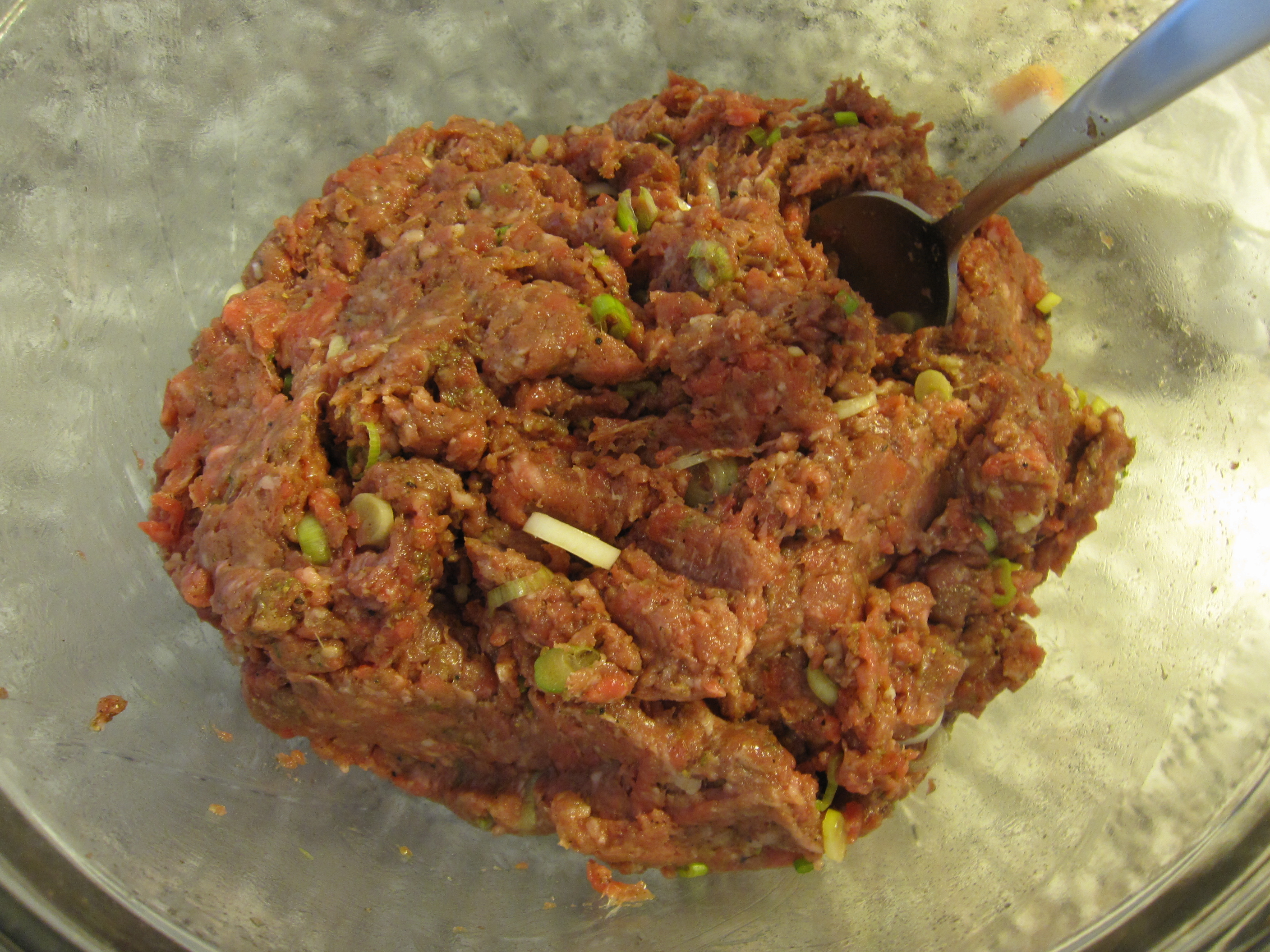
I put all of my seasonings in the bowl with the meat and then added 2 tablespoons each of fish sauce and sesame oil. With a metal spoon I mixed it all together until the flavors were evenly distributed. It’s important to use a metal spoon when mixing things into burger meat. When you use your hands the body heat can melt the fat, you don’t want that. You want the fat to mix in just like the other ingredients so that it melts properly when cooking keeping the meat nice and juicy.
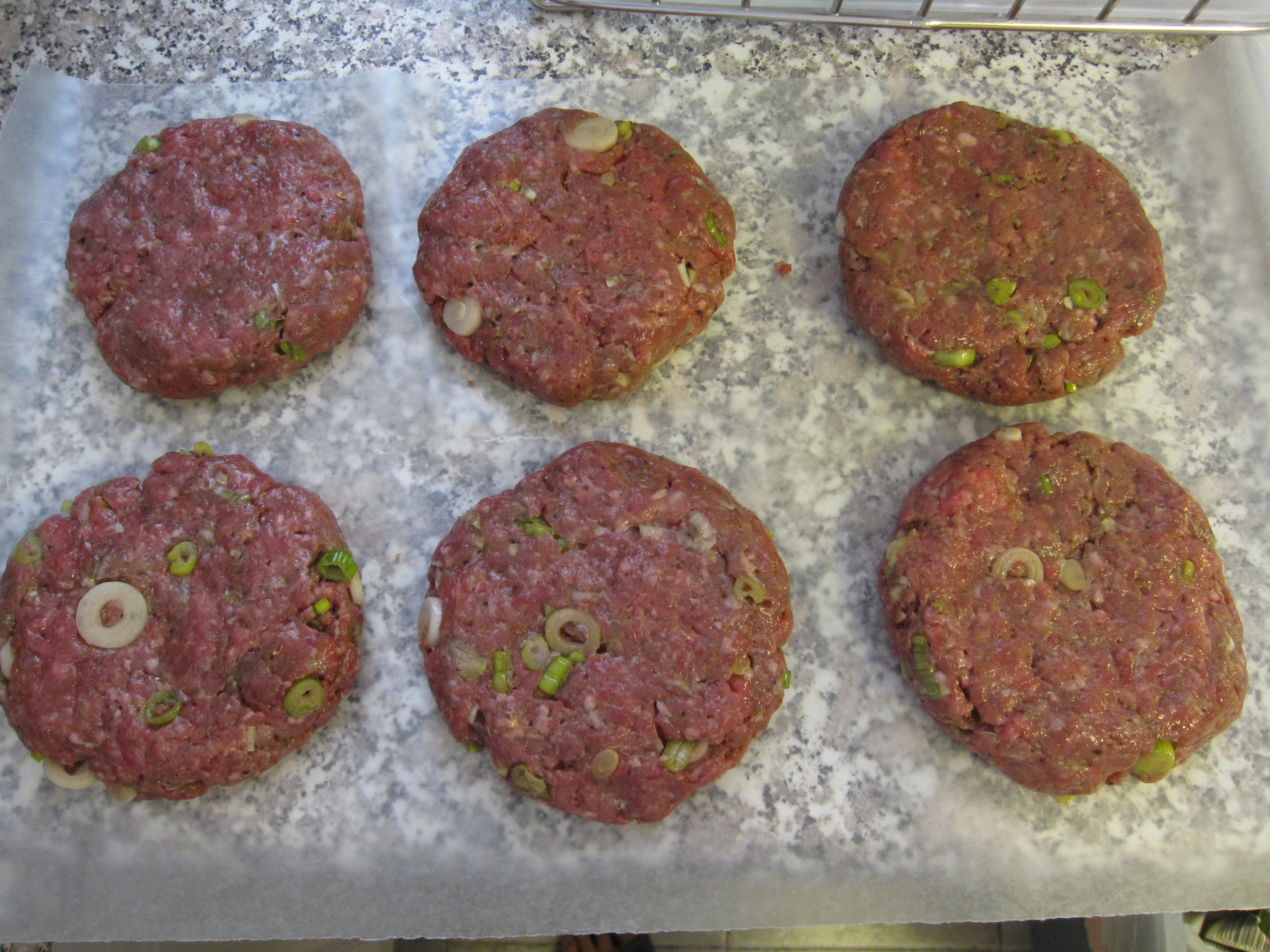
After the meat was mixed nicely I let it rest for about 10 minutes to let the flavors settle in. Then, I wetted my hands and formed 6 patties.

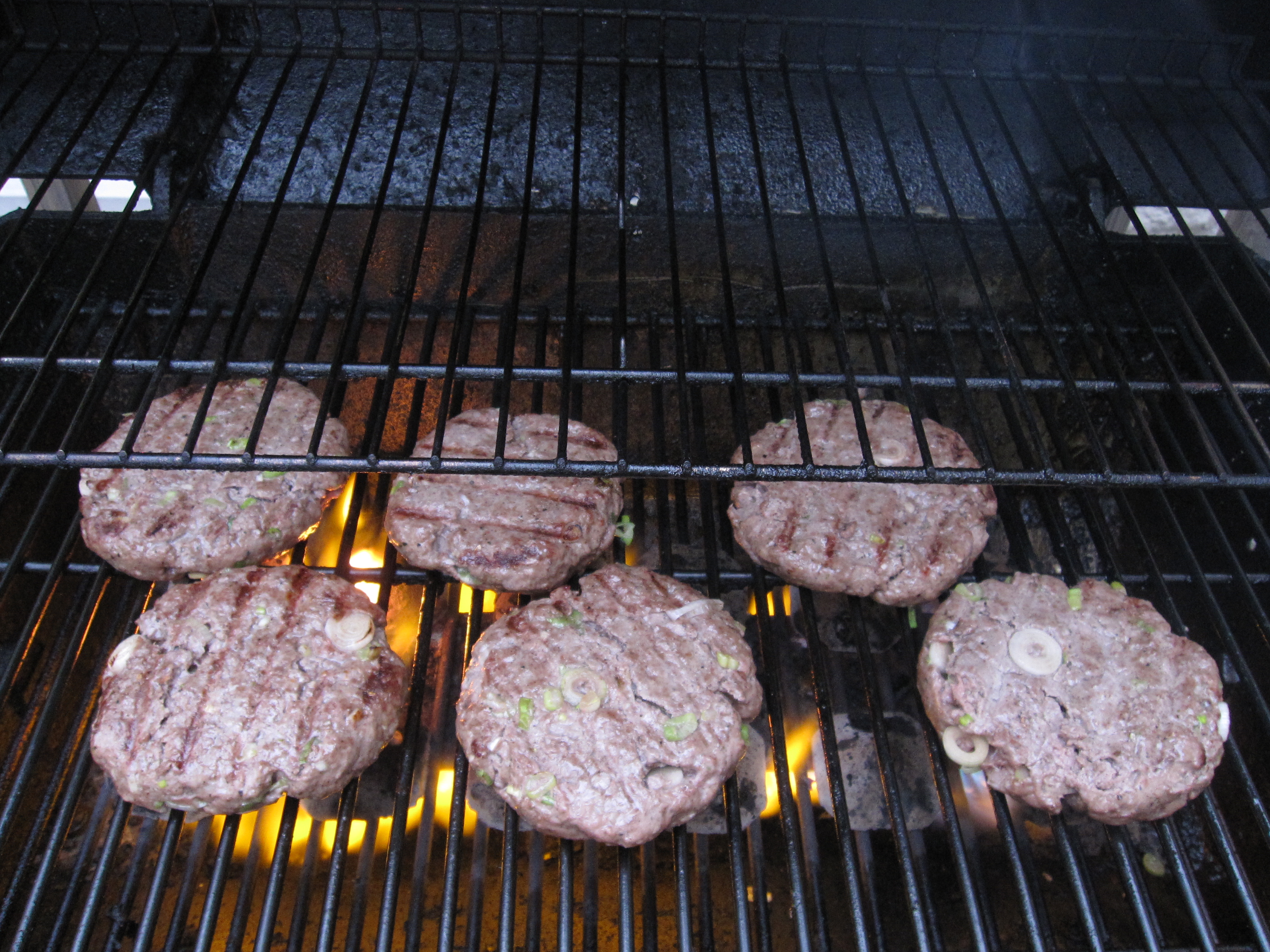
I heated the grill up to a medium-high heat, brushed it off, and oiled it. Just before putting the burgers on I lightly salted both sides of the patties. With the fish sauce there’s no need for a lot of salt, but sprinkling a little on just before grilling helps get a nice crust on the outside of the meat. I let the cook for about 6 minutes or so on each side.

When the burgers were cooked to my liking I put some sesame seed buns on the grill to lightly toast them. That only took a minute.

To assemble the burgers I placed one grilled patty on each bottom bun and squeezed one wedge of lime on each patty. On top of each patty placed 1 ounce bean sprouts, then 3 basil leaves and 3 cilantro sprigs. 1 tablespoon of Sriracha got squeezed on the underside of each top half of bun and they were ready to go.

For the side Yuki wanted to make Japanese-style potato salad. She skinned and diced two large russet potatoes and then tossed them into boiling water. She let them boil for about 15 minutes until they were cooked through. Then she mashed them up with enough mayonnaise to keep them nice and moist and a little mustard for flavor. She mixed in a cucumber that she skinned and chopped up, a carrot that she also chopped up, and some black forest ham that she cut into short slivers. That all got mixed together well and provided a nice cool counterpoint to the spicy burgers.

Read Full Post »

I had some angel hair pasta that I wanted to use up last night. Combine that with all of the Japanese ingredients I had in my fridge that needed to be eaten I whipped up a bolognese sauce with Japanese flavors. Note, I usually cook for 4 so that we have lunch the next day, but since it was Friday and we don’t need to take a lunch anywhere on Saturday this recipe was for 2.

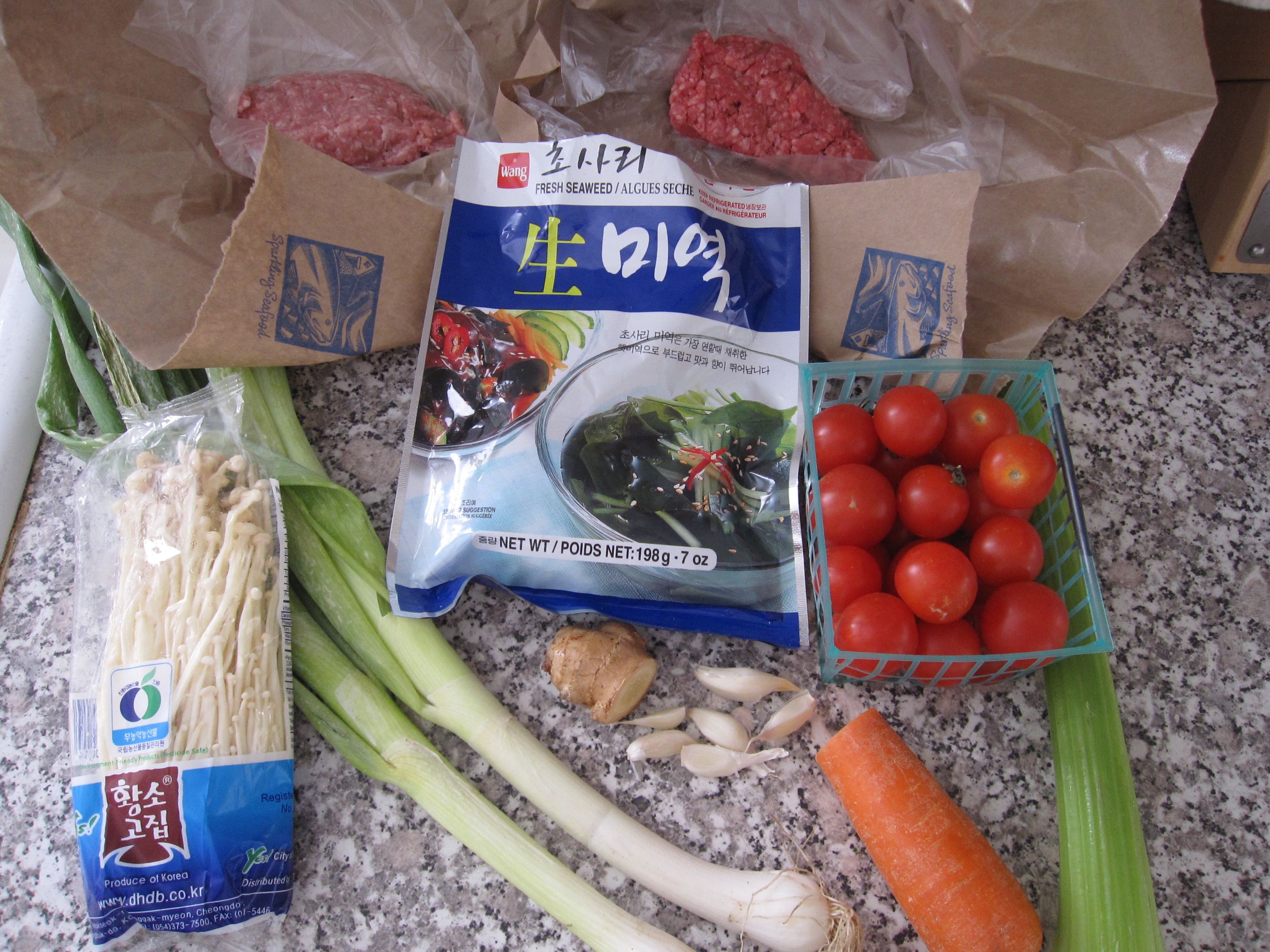
My ingredient list for the bolognese was a package of enoki mushrooms, 1 negi thinly sliced (I had two but decided only to use one), some ginger and garlic minced, 1/2 carrot cut into quarter moon slices, 1 rib of celery cut down the middle lengthwise and then sliced, 10 cherry tomatoes halved, some wakame seaweed, 1/4 pound of ground beef, and 1/4 pound ground pork. What I didn’t get in the photo was some cooking sake, mirin, and soy sauce.

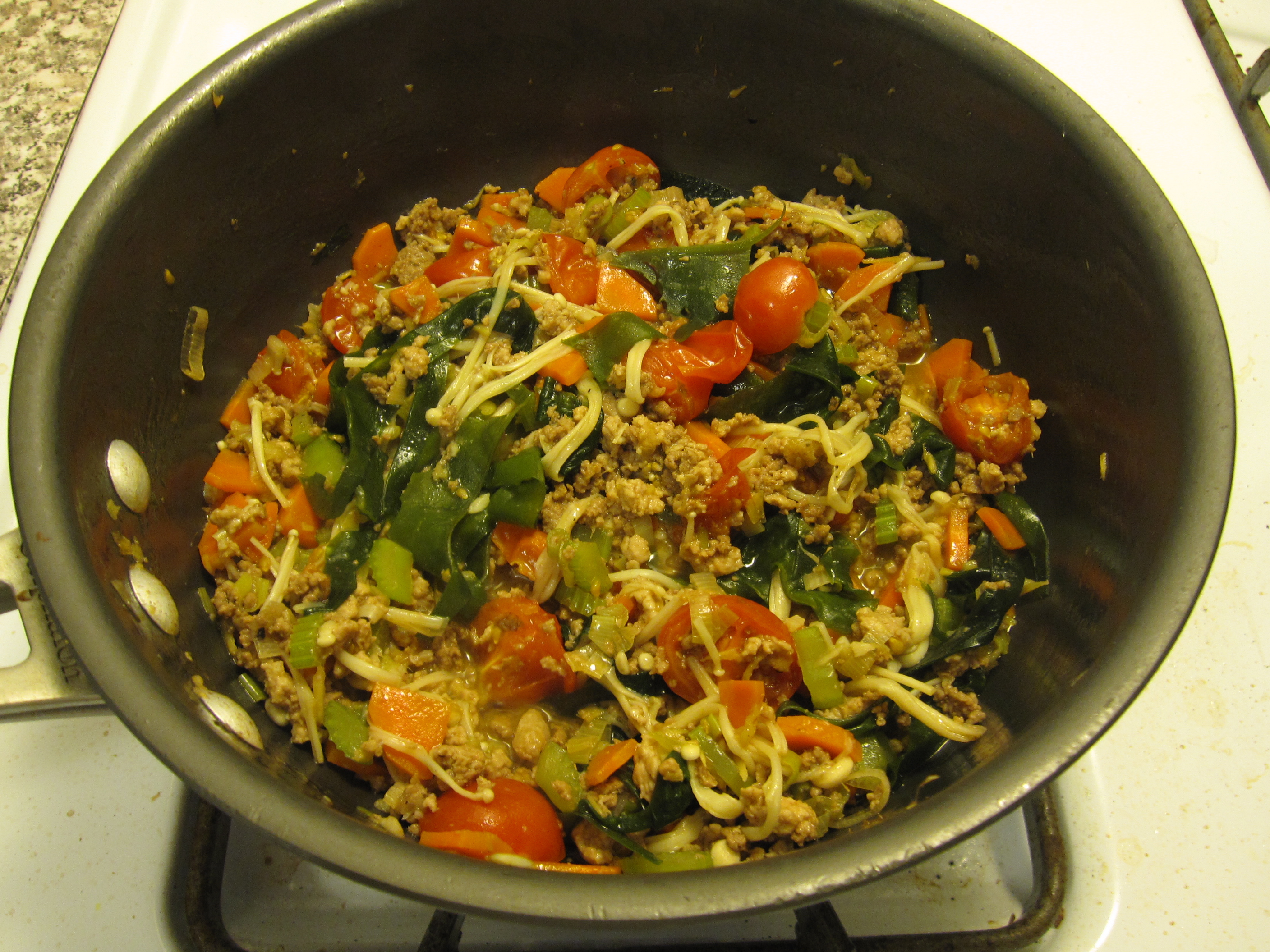
In my pot I heated up about 2 tablespoons of soy oil and 1 tablespoon of sesame oil and then let the garlic and ginger go for about a minute. Then I tossed in the carrot, negi, and celery for about 5 minutes until they just started to soften a little. After that I added the ground meats. They took about 5 minutes or so to cook and break up, I added just a touch of salt (not too much since I was about to add some soy sauce) and some black pepper. Once the meat was broken down I poured in about 3 tablespoons of sake and let that boil off for a couple of minutes before adding about 2 tablespoons of soy sauce and 1 tablespoon of mirin. Once all the liquid was almost completely boiled off, about 2 more minutes, I added the cherry tomatoes and enoki. A couple of minutes later I mixed in the wakame and then turned off the heat. The wakame doesn’t need to be cooked, so I just wanted its flavor to incorporate into the meat.

While that was all going on I cooked some angel hair pasta and drained it thoroughly.

To serve, I piled the pasta on the plate and then topped it with the bolognese. On top of that I put some katsuobushi (dried bonito flakes). Some Asahi to wash it all down and we were good for the night.

Read Full Post »

Last night I did a riff on one of Yuki’s recipes. She commonly makes ground chicken dumplings similar to these patties in the winter when we eat nabe (Japanese hot-pot). So, I took her idea and made my own Japanese flavored dinner.

The ingredient list for the patties were 3/4’s pound of ground chicken thigh, 1 block of tofu that I had pressed the water out of, one egg scrambled with 1 tablespoon of soy sauce, 1 carrot cut into a small dice, 3 garlic cloves and 1 inch of ginger that I minced, and 1 tablespoon of hijiki seaweed. The hijiki comes dried and is available in most Asian sections of your grocer. I put 1 tablespoon of dried hijiki in a couple of cups of cold water and let it sit for about a half hour. Then I strained it, reserving the liquid for the miso soup.

I mixed it all together, with about a tablespoon of nanami togarashi (a Japanese red pepper spice mix, there are various kinds of togarashi that are also usually available in the Asian section) until the tofu was completely broken down and everything was mixed well. Then, on a lightly oiled baking sheet, I laid 8 patties (two patties per serving, leftovers for lunch). I let it cook in a 375 degree oven for about 20 minutes.

Before cooking the patties I got my miso soup ingredients ready to go. I cut 2 negi (Japanese green onions, larger than regular green onions, not as big as leeks) into 1 inch pieces, hiratake (oyster mushrooms), and wakame seaweed. Wakame can be bought dried or fresh. Fresh comes heavily salted to preserve it. You need to soak it really well in water and cut it into smaller pieces as it expands once the salt is rinsed off.

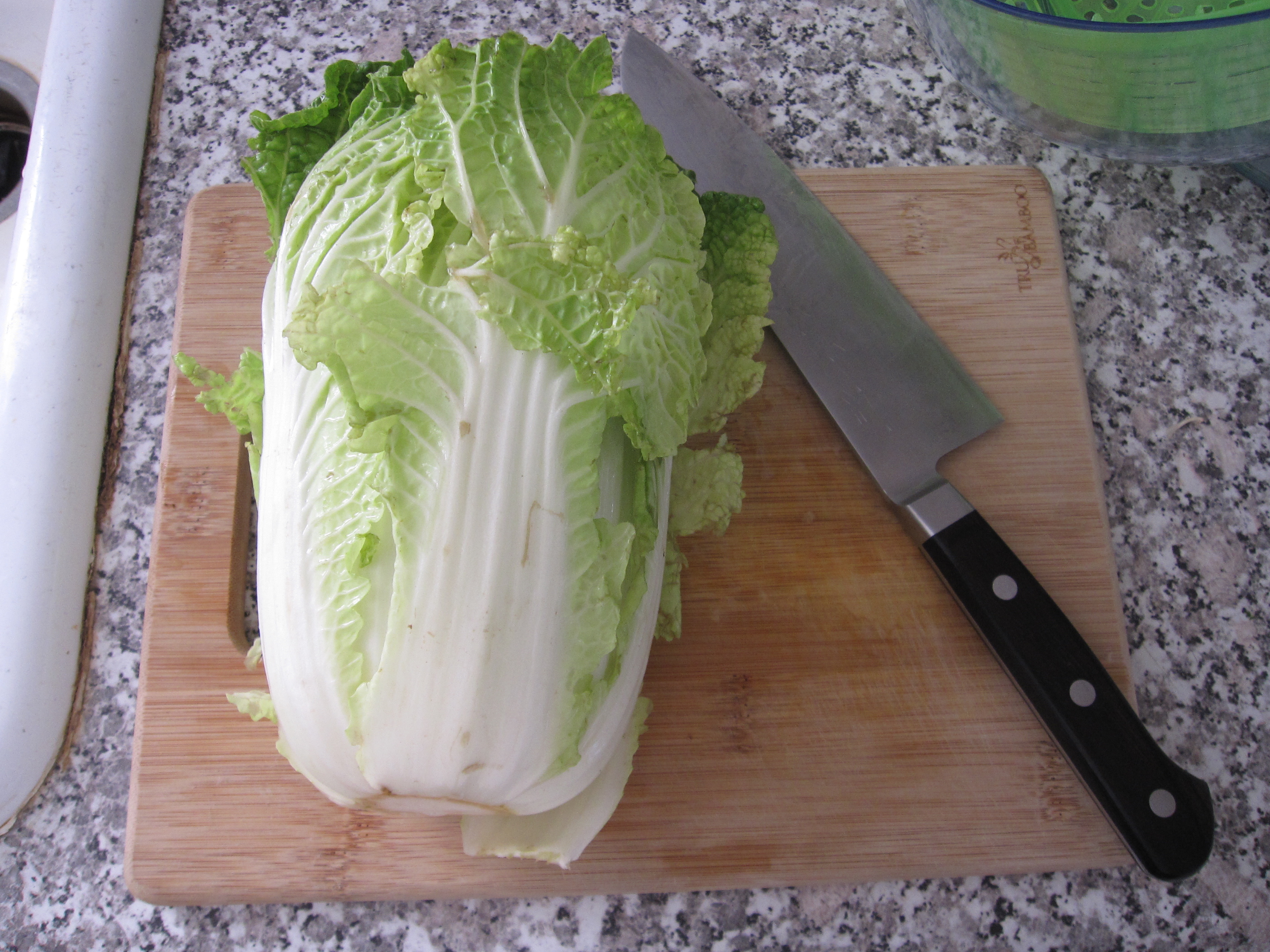
I also chopped up a small head of napa cabbage to cook as a side.

Once I put the patties in the oven I melted 1 tablespoon of butter in a skillet and heated up the hijiki liquid in a pan along with one more cup of water, 1 teaspoon of dashi-no-moto (instant dashi), the negi, and the mushrooms. I let the soup simmer while working on the cabbage. Once the butter was melted I added 1 tablespoon of soy sauce and then the cabbage. I let the cabbage wilt in the soy butter for about 10 minutes and then turned off the heat.

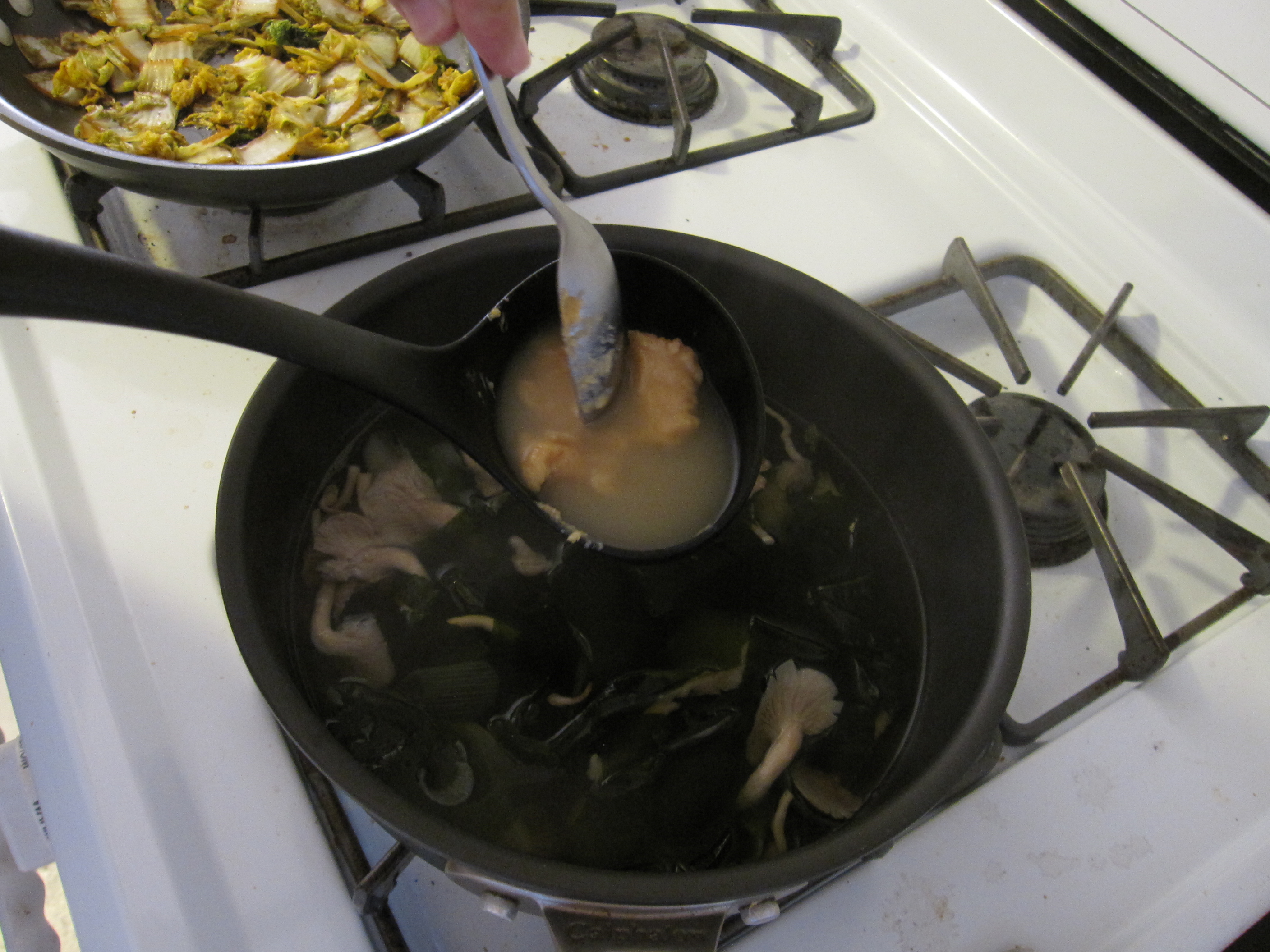
After the cabbage was ready I added the wakame to the soup and then the miso. The best way to add the miso is to take a heaping spoonful and swirl it around in a ladle that is just slightly in the soup. This allows the miso to incorporate slowly keeping it from being lumpy.

I served everything with some white rice. I poured just a little ponzu on top of the patties to add a touch of acidity and help keep them moist. To keep with the Japanese flavors it only seemed right to drink Asahi.

Read Full Post »

I had an eggplant left from my shopping excursion to the HMart that I wanted to use last night. Not wanting to do my typical grilled-eggplant or stir-fry I decided to stuff it instead. Ground lamb seemed like the perfect partner.

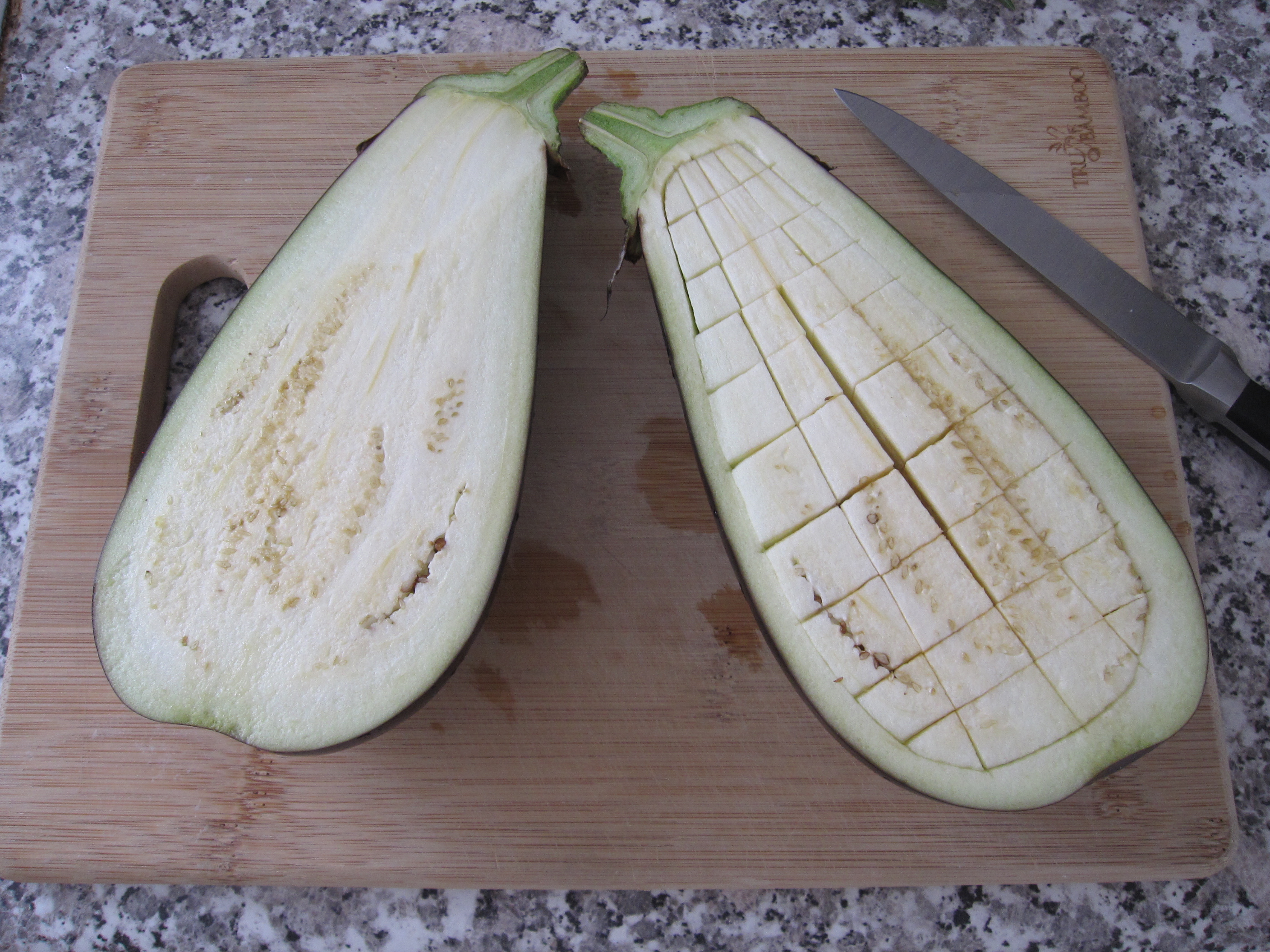
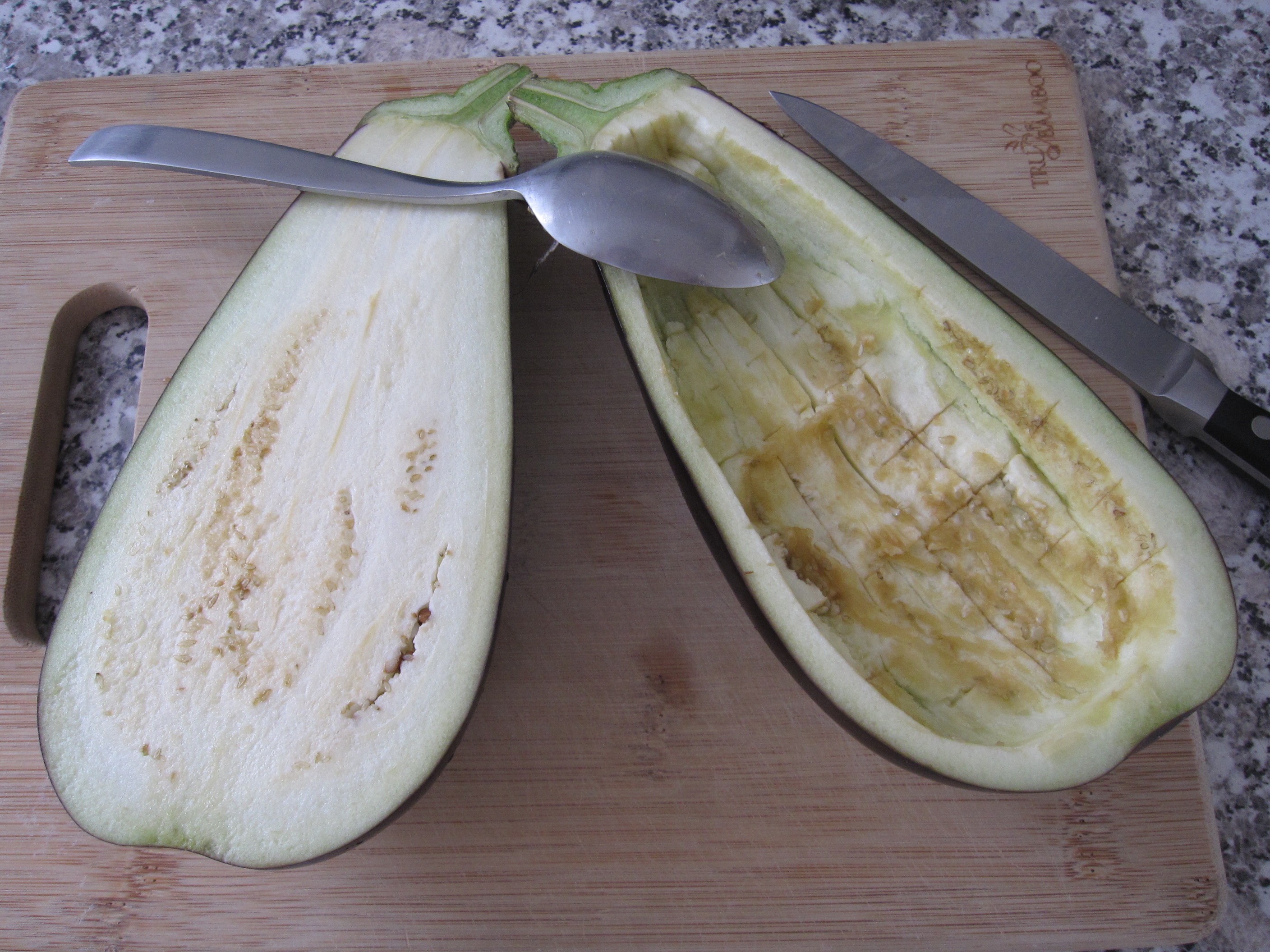
Hollowing out an eggplant is a pretty easy thing to do. First, you have to cut it in half length-wise. Then, I took my pairing knife and cut around the edges of the eggplant about a quarter-inch from the skin, carefully making sure I didn’t pierce the skin. After that I cut a bunch of lines through the width and length.

With a small spoon (a serrated grapefruit spoon would work great, but don’t worry if you don’t have one, I don’t and I made it work with a regular spoon) carefully scoop out the flesh. Save the flesh as it’s going to be used later on. I sprinkled some salt all over the inside of the eggplant and then let them drain in a colander for about a half hour while I prepped the rest of the ingredients. This removes some of the bitter juices.

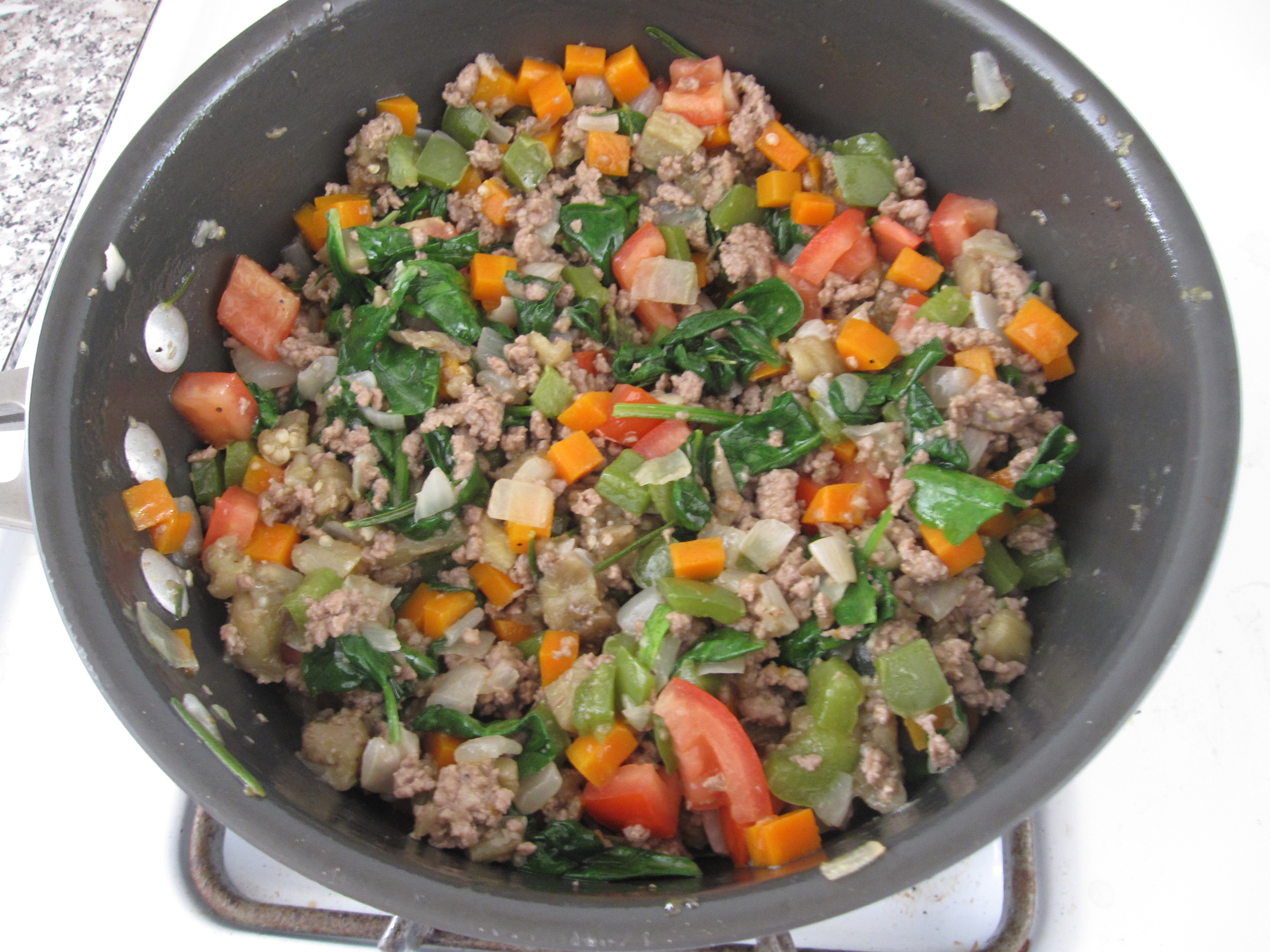
For the stuffing I diced up a green pepper, half an onion, a carrot, one tomato (I scraped out the seeds), some spinach, the eggplant flesh, three cloves of garlic, some rosemary from my back porch, a quarter cup of white wine, and 2/3’s pound of ground lamb.

I started off by sautéing the onion, green pepper, carrot, and garlic in a quarter cup of olive oil. Once the vegetables were slightly translucent, about 7 minutes, I added the eggplant flesh and let that cook down for another 7 minutes. Then I seasoned with salt and pepper and added the lamb. It took about 5 minutes or so for the lamb to be fully cooked. Once the lamb was broken down I poured in the wine, let it come to a boil, and let it simmer for another 5 minutes. Then I turned off the heat, added the rosemary, spinach, and tomato, and stirred it all together.

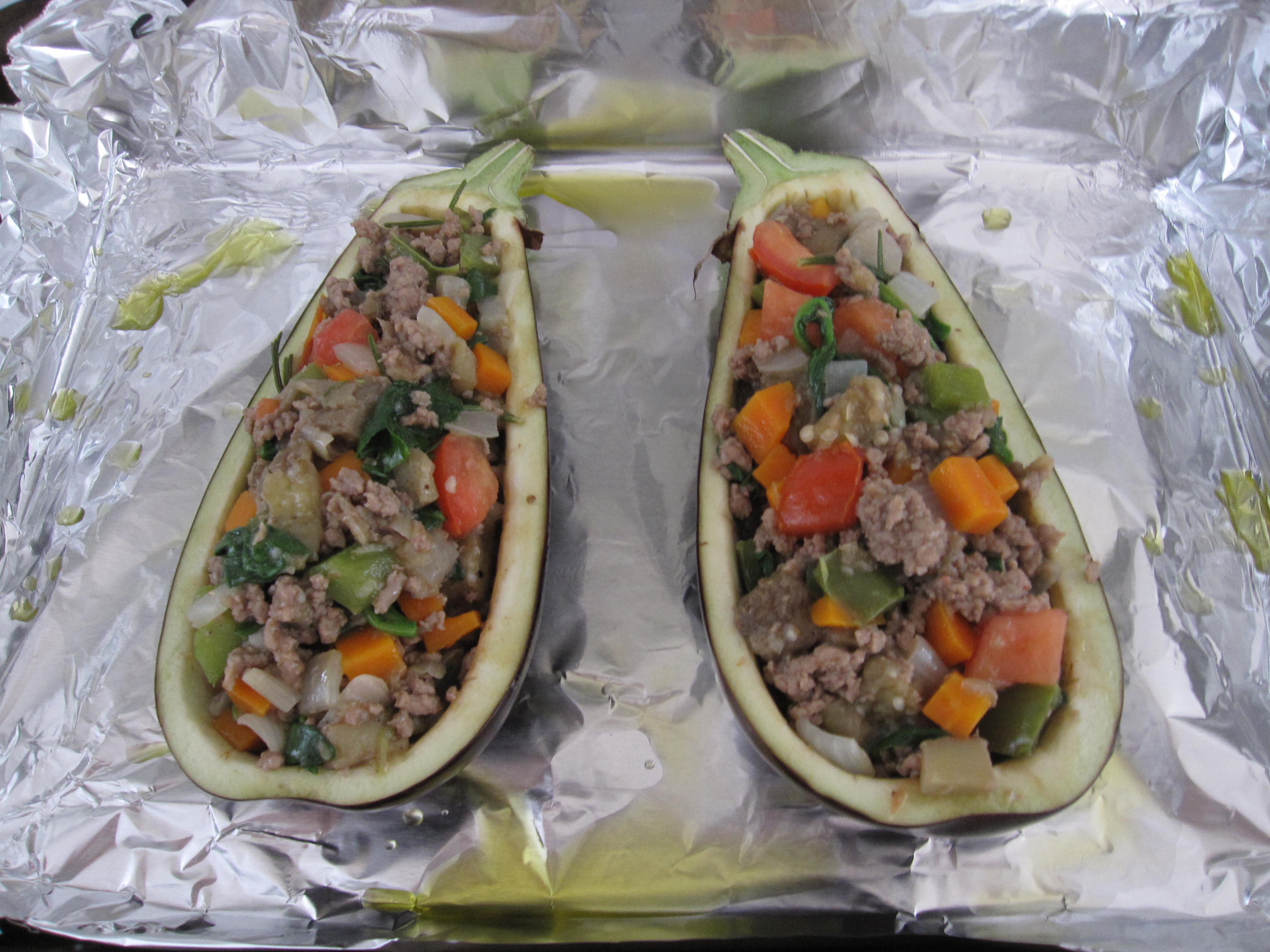
I wiped the salt out of the eggplant skins before stuffing them with the lamb mixture. Fill them up over the top, as much as you can before it all falls out. There will be extra stuffing, just put it in the fridge and toss it in some pasta or something for lunch the next day. I laid the stuffed eggplant halves in a lightly olive oiled baking pan and threw it in a 375 degree oven for about 30 minutes.

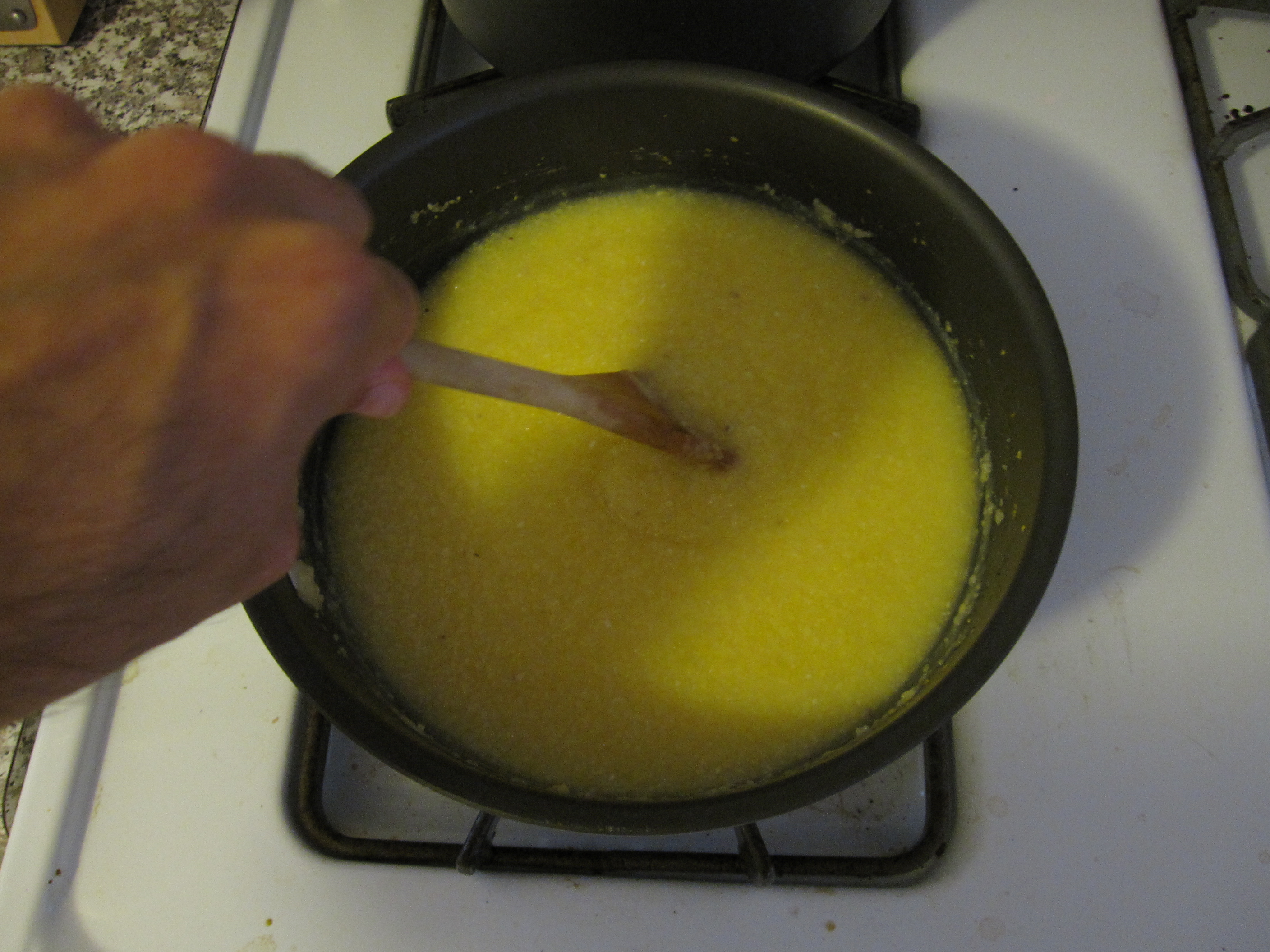
I had just enough time to make creamy polenta while the eggplant cooked. In a stock pot I poured in 4 cups of water, some salt, a bay leaf, and 1 cup of polenta. That’s enough for 4 portions. I brought it up to a boil over high heat. Once boiling I slowly poured in about a quarter cup of olive oil and turned the heat down to medium. I continuously stirred for about 25 minutes, until the polenta started to pull away from the sides of the pot. At that time the eggplant was done and I was ready to serve.

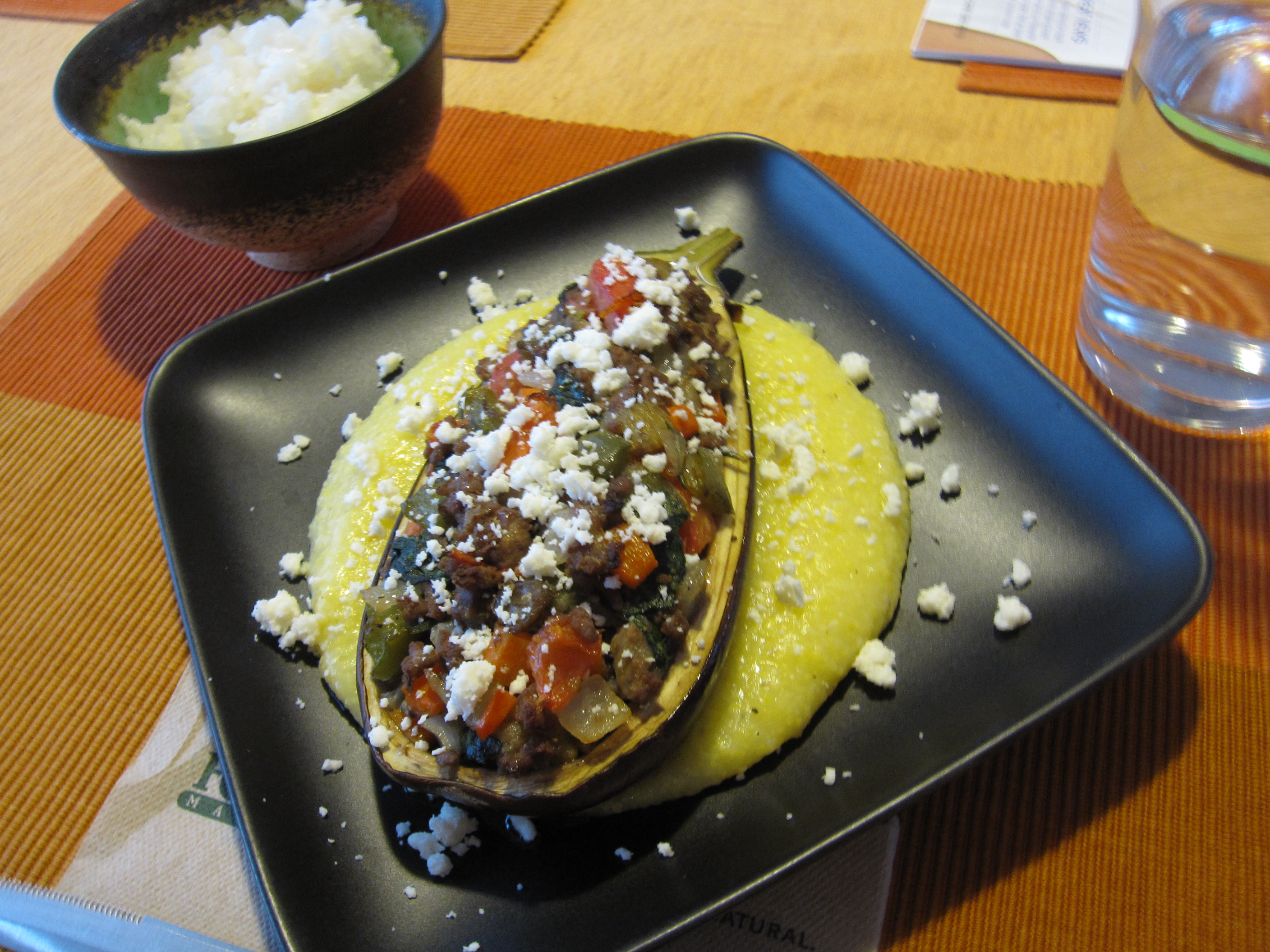
I poured some polenta in the middle of the plates, put an eggplant on the polenta, and topped it all with some crumbled cotija cheese. I served some white rice on the side.

Overall this dish was delicious. If I ever make it again I would make a couple of changes though. First, I’d add some spice to the lamb mixture, maybe some cumin, or turmeric, or garam masala. Second, I wouldn’t put a bay leaf in the polenta. That was the first time I used bay in polenta. It gave it kind of a medicinal taste. Yuki said it tasted like Walgreens. It wasn’t that bad, just not what I wanted. Otherwise I’d keep everything about the same.

Read Full Post »

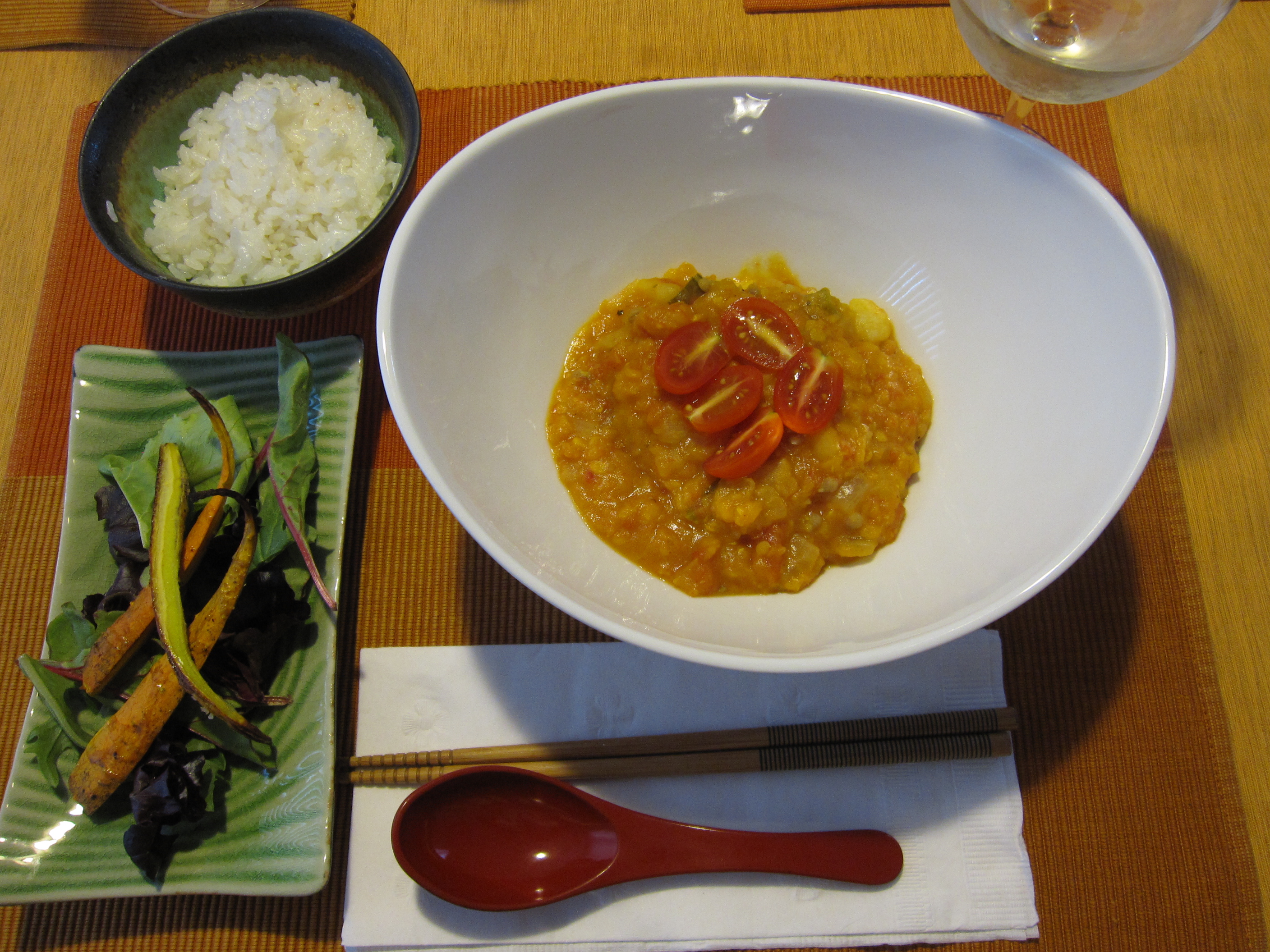
For Meatless Monday last night I made a Dahl, an Indian-style lentil stew. I had a handful of okra left from the farmer’s market this weekend, so I decided that this would be a good way to use them up.

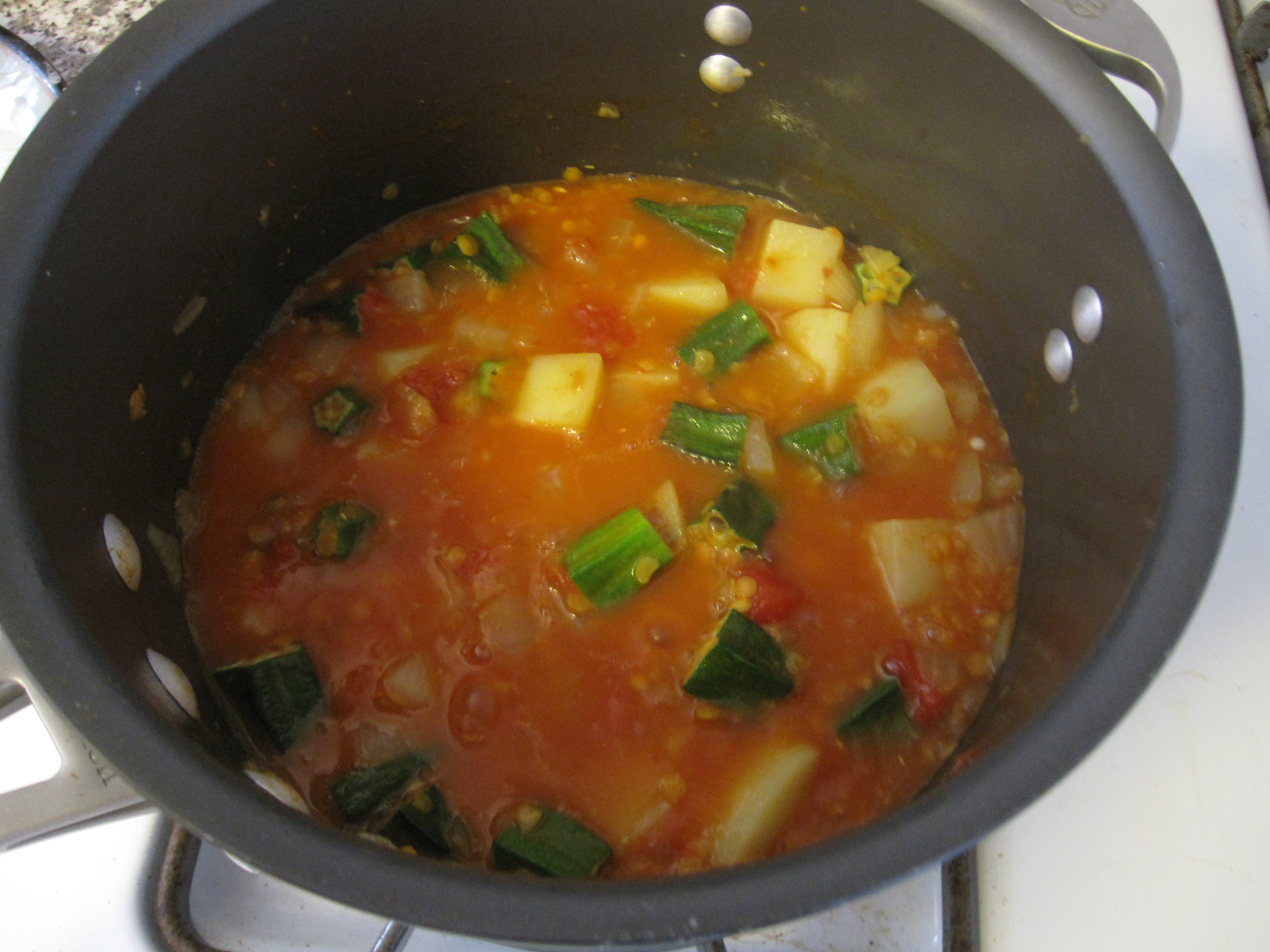
My ingredient list included the okra (cut into 1/2 inch slices), 1/3 cup of red lentils, a 14 oz can of diced tomatoes, one medium onion diced, an inch of ginger, two garlic cloves, and one medium russet potato that I skinned and diced. I also used one cup of water and about a teaspoon of turmeric along with salt and pepper.

Over med-high heat I melted about a tablespoon of ghee and grated the ginger and garlic into it. Once they became fragrant, about 30 seconds or so, I added the onions. Those sautéed for about 5 minutes and then I added the potato. A few minutes later I stirred in the lentils just until they were fully coated with the ghee and then I poured in the water. I let the water come to a boil and then scraped up the garlic and ginger that stuck to the bottom of the pan. Then I added the turmeric, salt, and tomatoes and let that all come to a boil. Once boiling, I turned the heat down to med-low, stirred in the okra, covered the pan, and let it all simmer for about 30 minutes. After that, I added some black pepper and adjusted my salt. A garnish of halved cherry tomatoes and it’s ready to eat.

Besides the okra, I also had a few baby carrots from the farmer’s market that I needed to use up. Even though their skin was purple, the flesh was either orange or yellow. They were so tender and sweet, possibly the best carrots I’ve ever cooked with. I didn’t want to take away from their natural sweetness so I kept it really simple. After skinning them I quartered them length-wise. I drizzled some olive oil all over them, then sprinkled some cumin, salt, and pepper. I put them in the oven at 375 degrees for about 15-20 minutes. To serve, I just layed them on top of a mixed green salad.

As happens more often than not in my kitchen, white rice was served on the side.

Read Full Post »

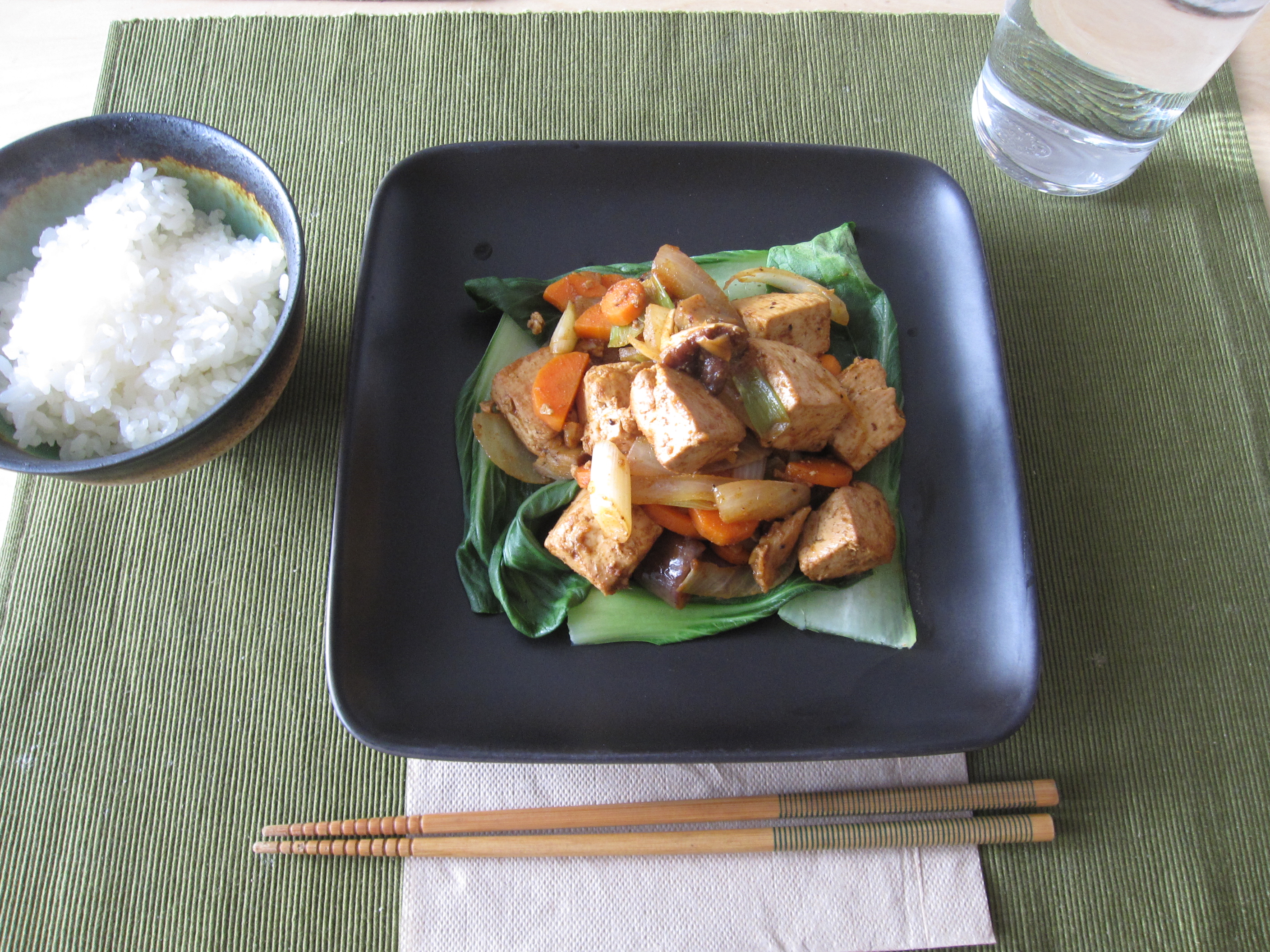
Feeling relatively uninspired for Meatless Monday last night I decided to clear some of the older veggies out of my fridge. The best way to do that is a simple stir-fry. Instead of meat I just added some cubed tofu.

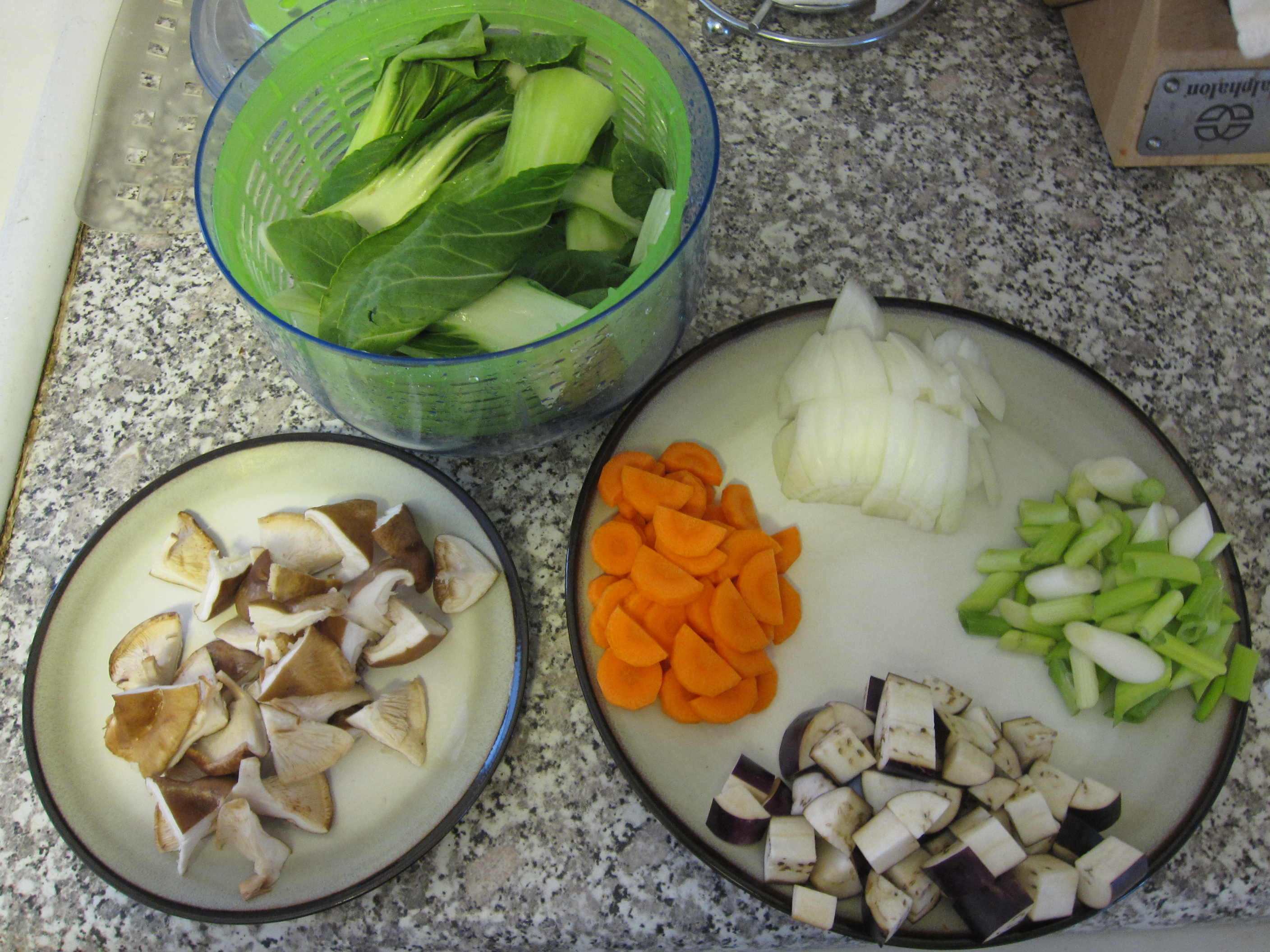
I halved and quartered some shiitake depending on their size, separated and cleaned up some baby bok choy, chopped up a carrot, half an onion, 6 green onions, and a chinese eggplant.

I mixed together 1 tablespoon of paprika, 2 teaspoons of cumin, a pinch of sugar, and a pinch of cayenne. After pressing the liquid out of the tofu in the fridge for about an hour I cubed it and tossed it in the spice mix. Then, in a hot pan, I stir-fried the tofu in soy oil for about 5 minutes. After that I put the tofu back into a bowl, wiped out the pan, and then cooked the veggies.

I started by adding some minced garlic and ginger to some hot soy oil. Then every few minutes I added another vegetable. I started with the onion, then carrot, green onion, shiitake, and eggplant. Once all the veggies were in I seasoned with salt and pepper. Then I tossed the tofu back in and added the juice of one lime and 2 tablespoons of honey (I had mixed the two together beforehand in order to get the honey fully integrated). I let that cook down for about 3 minutes or so before it was ready to serve.

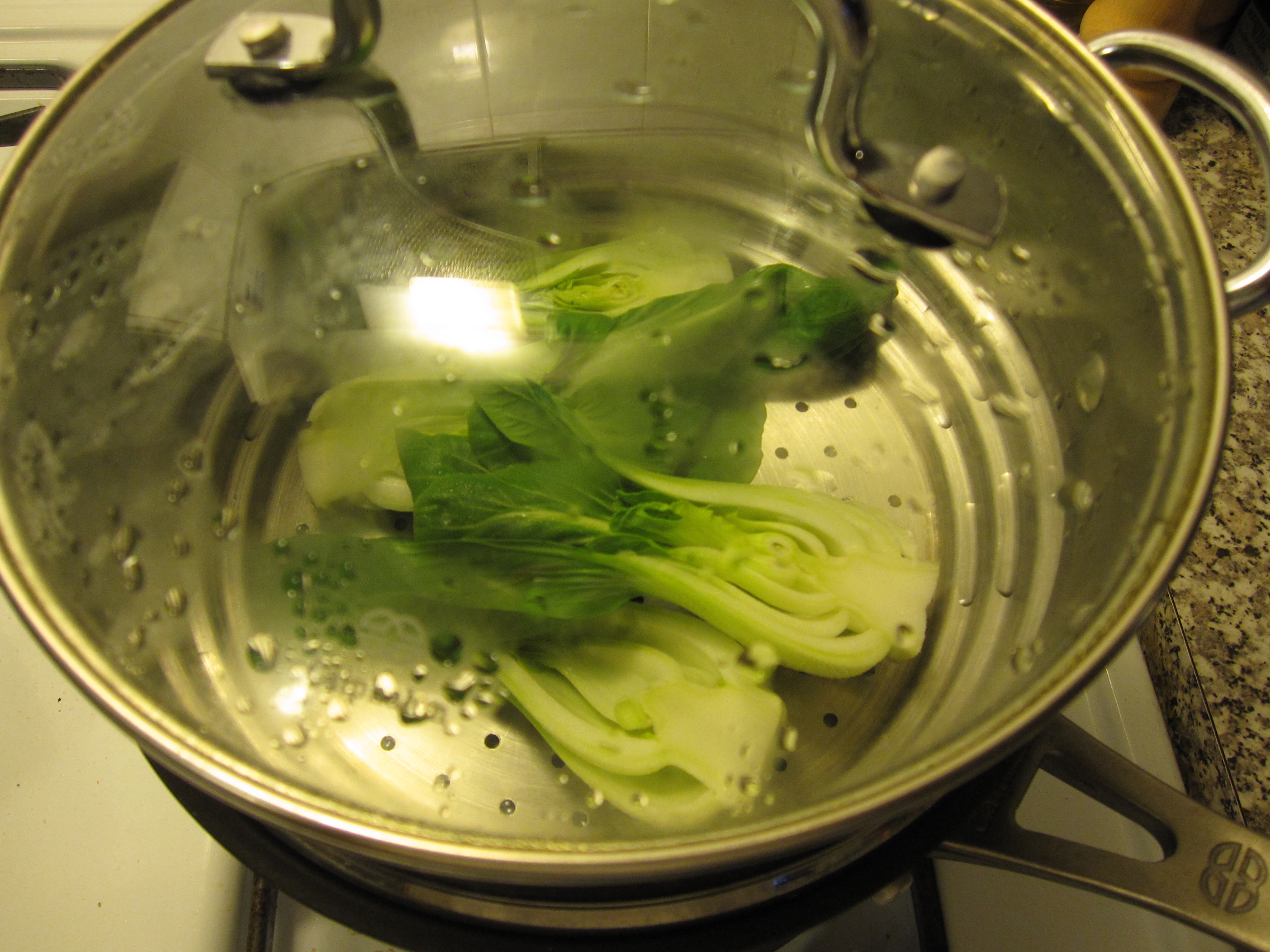
I steamed the baby bok choy for about 4 minutes.

To serve, I laid the baby bok choy down on the plate and then topped it with the stir-fry. White rice was on the side.

Read Full Post »

Alright, back in the kitchen. The one thing about traveling in the Grand Circle area is the lack of quality Asian food. We did find one really good Thai place near Zion Canyon, but Yuki was craving Japanese flavors and simple white rice. So, being the absolutely wonderful husband that I am, I made some chicken teriyaki with vegetables and white rice.

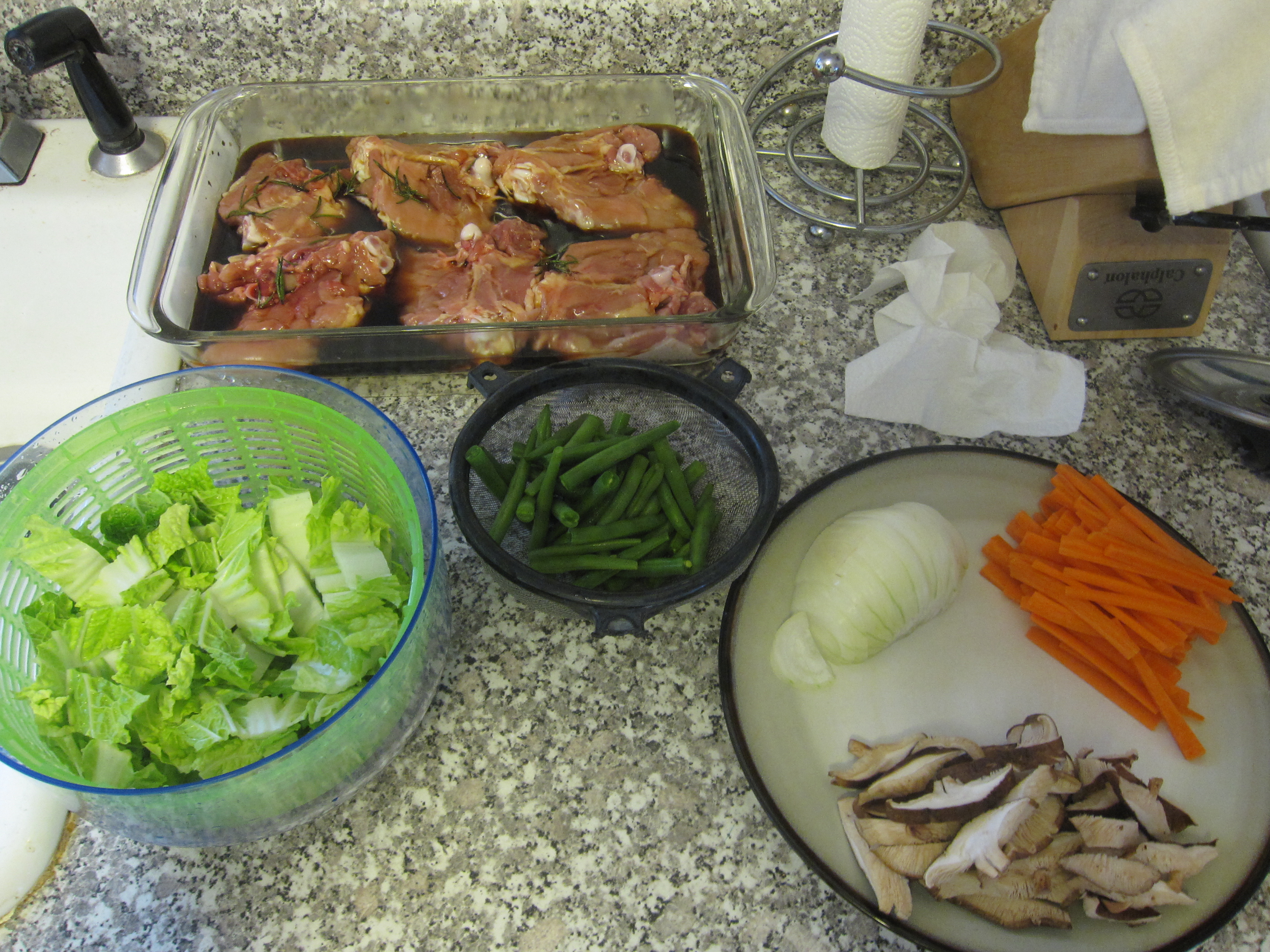
First thing I had to do was make the teriyaki sauce. In a small sauce pan I put in 1 tablespoon of sugar with 7 tablespoons each of soy sauce, mirin, and sake. I also added a few fresh rosemary needles just to add one more element. I let that come to a slow boil for just a few minutes until the sugar was dissolved. Then I set it aside and let it cool to room temperature.

Once the sauce was cooled I marinated some bone-in skin-on chicken breasts in it for about an hour at room temperature.

Then I cut up all the vegetables. Half of a sweet onion was sliced, one carrot into matchsticks, 7 good-sized shiitake mushrooms sliced, a handful of green beans cut in half, and half of a small napa cabbage head sliced.

I turned the oven on to 400 degrees. I took my baking pan and lined it with foil and then laid a rack inside it. I laid the chicken thighs on the rack, sprinkled them with some pepper and a few rosemary needles, and threw them in the oven. I strained the reserved marinade back into the small sauce pan and boiled it for about 15 minutes until it reduced into a BBQ sauce consistency. Then I took the chicken out and glazed it with the thickened teriyaki and threw it back into the over for another 15 minutes.

While the sauce reduced I sautéed the vegetables. I started by throwing a couple of diced garlic cloves into some hot olive oil. After a minute I added the onion. A few minutes later the carrot. Then I added the green beans followed by the shiitake. I let it all come together for about 5 minutes and then seasoned with very little salt, some pepper, and about 2 tablespoons of soy sauce. I covered the pot and turned the heat way down to low. The vegetables at this point were mostly cooked, I just wanted them to finish off by steaming a little in the soy sauce.

I steamed the napa cabbage. That only takes about 4-5 minutes, so I waited until the chicken was just about done.

That’s it. A pretty simple meal to make but full of flavor and very healthy.

Read Full Post »

The other night I made a Japanese classic with some of my own additions. I made Shogayaki, ginger pork. Typically made with just thinly sliced pork, ginger, soy sauce, mirin, and sake, I added a few vegetables into the mix instead of serving vegetables separately. This is an easy dish to make and very flavorful.

We picked up some really nice Kurobuta (Berkshire) sidebelly while at Mitsuwa. It came thinly sliced which is prefered for this dish. It doesn’t necessarily have to be thinly sliced, nor does it have to be belly. You could get some nice chops and cut them thinly yourself, just try to make them no thicker than about 1/8 inch. I cut the pork sliced in half since they were as long as bacon. That wasn’t necessary, just what I felt like doing.

For vegetables I sliced half an onion, cut a carrot into half moons, sliced half of a yellow bell pepper, and slices a bunch of mushrooms.

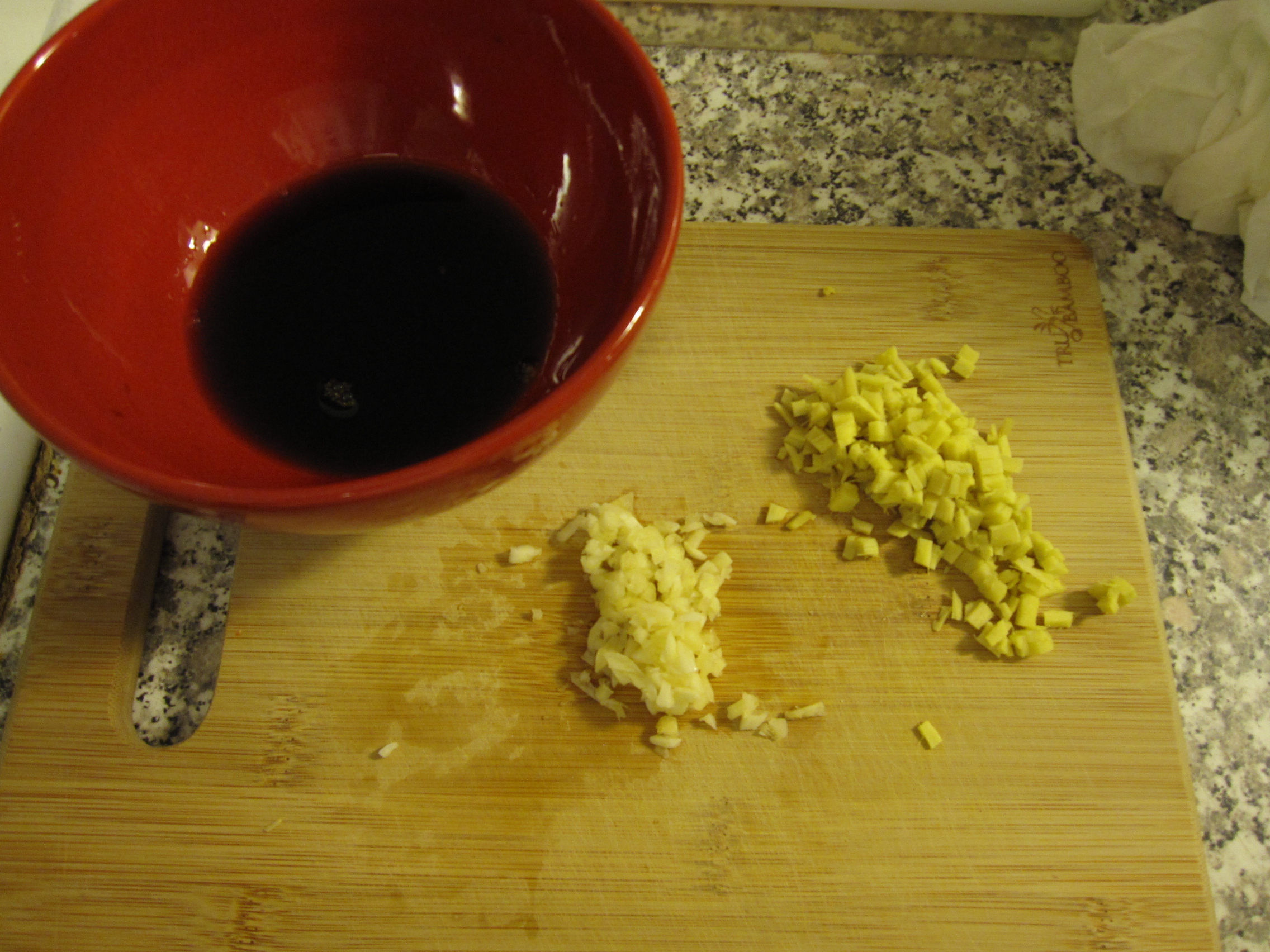
For flavorings I, obviously from the title, used some minced ginger, a couple of minced garlic cloves, and a sauce of 3 tablespoons soy, 2 tablespoons sake, and 1 tablespoon mirin.

I started by tossing the ginger and garlic into a hot pan with 2 tablespoons of sesame oil and 2 tablespoons of soy oil. I let that go for just a few minutes until it became fragrant.

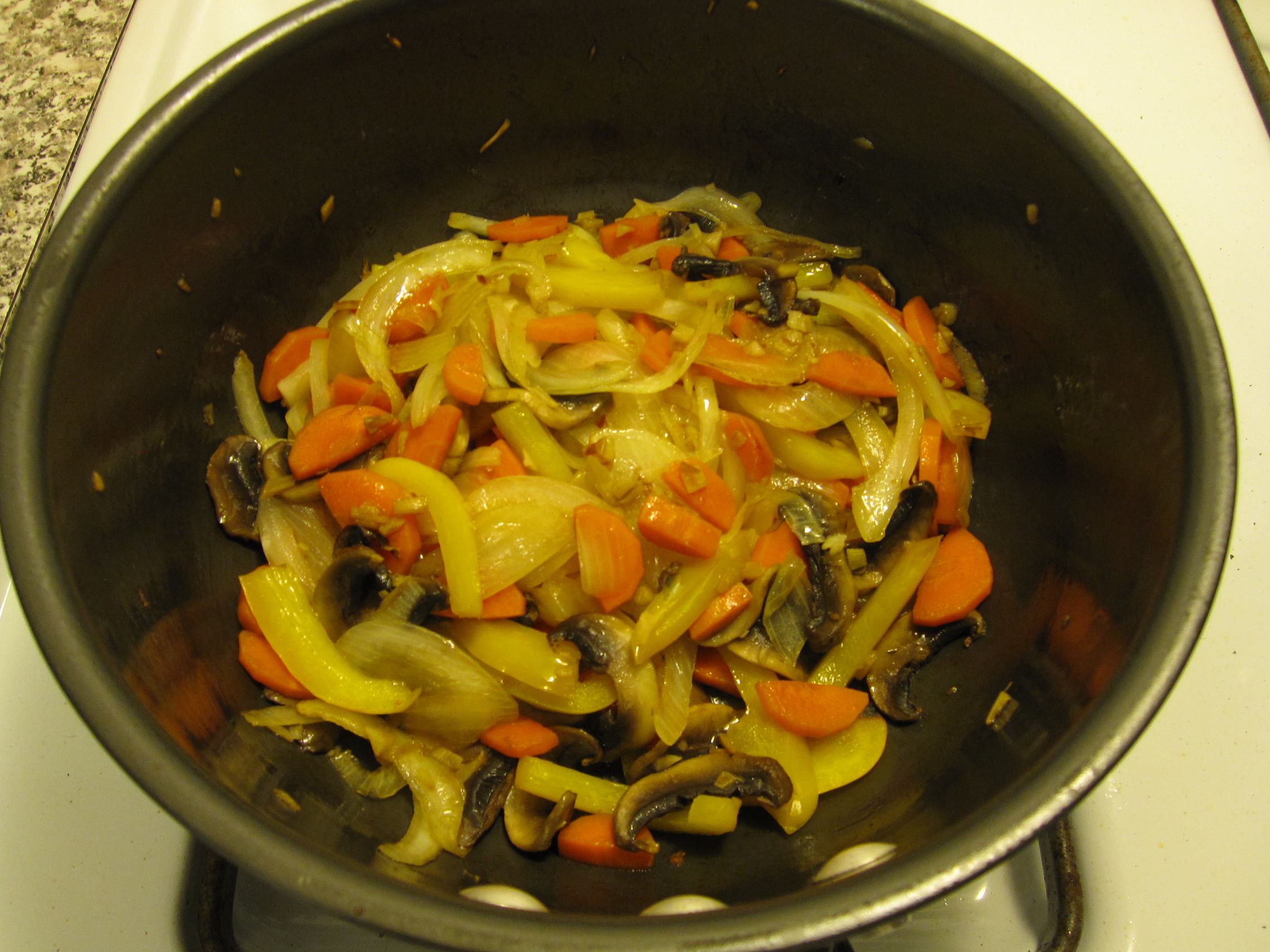
Then I added the onions for a few minutes. Followed by the carrot for a few minutes. Then the pepper for a few more minutes. And finally the mushrooms for another few minutes.

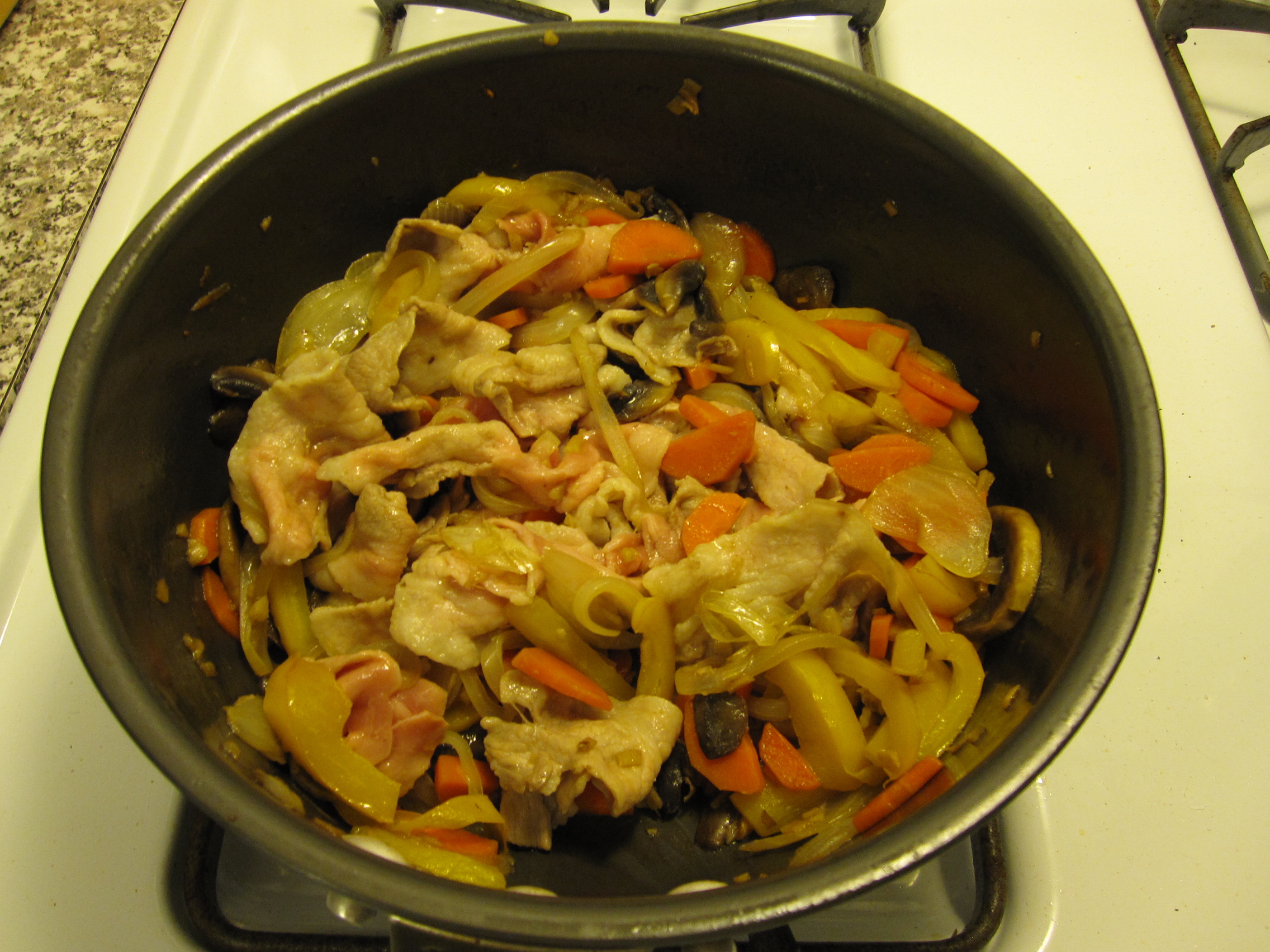
Once the vegetables were mostly cooked I added the pork. I mixed it all together and let it go for, you guessed it, a few minutes.

Then I dumped in the sauce along with some black pepper. I covered the pan and turned the heat down to medium once the sauce started to boil a little. Every few minutes I stirred everything around. After about 15 minutes I uncovered the pan and let the sauce reduce a little. I served it once the pork and vegetables were evenly coated by the slightly thickened sauce.

While the sauce was thickening I put a couple of baby bok choy that I had cut in half into the steamer. I let them steam for about 6 minutes. They were served next to the shogayaki with some white rice.

Read Full Post »

Last night’s Meatless Monday certainly wasn’t the prettiest of all plating, but I do have to say, my fried rice was excellent!

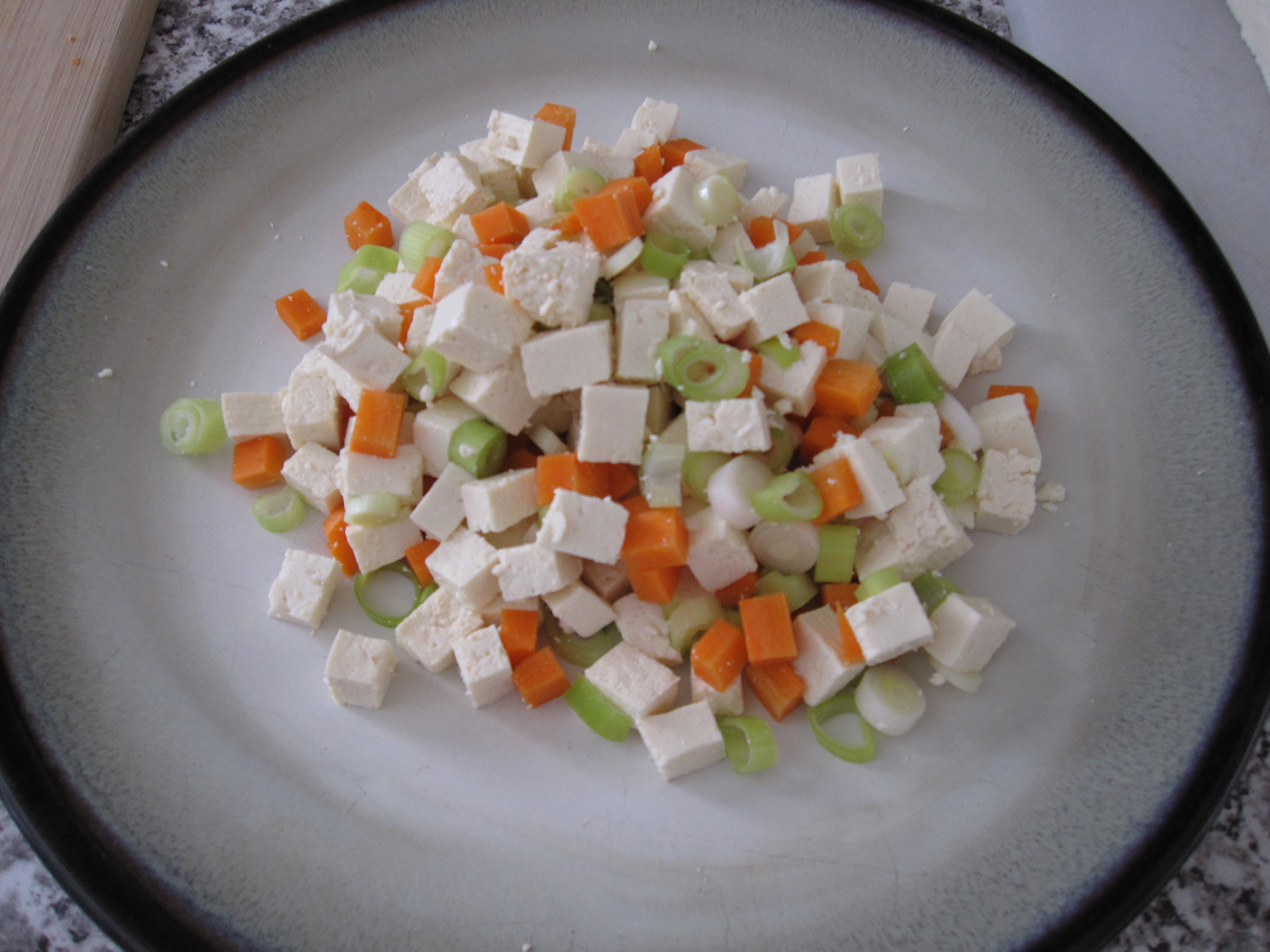
First things first, making the shumai. I simply took a half a piece of tofu and mixed it together with a small carrot and three green onions that were all small diced. I folded it all into some wonton wrappers and then set everything aside to steam later. When it came time to steam them, I let them go for about 10 minutes or so. That left the carrots a little al dente to leave a little texture. For service, I drizzled the shumai with some ponzu.

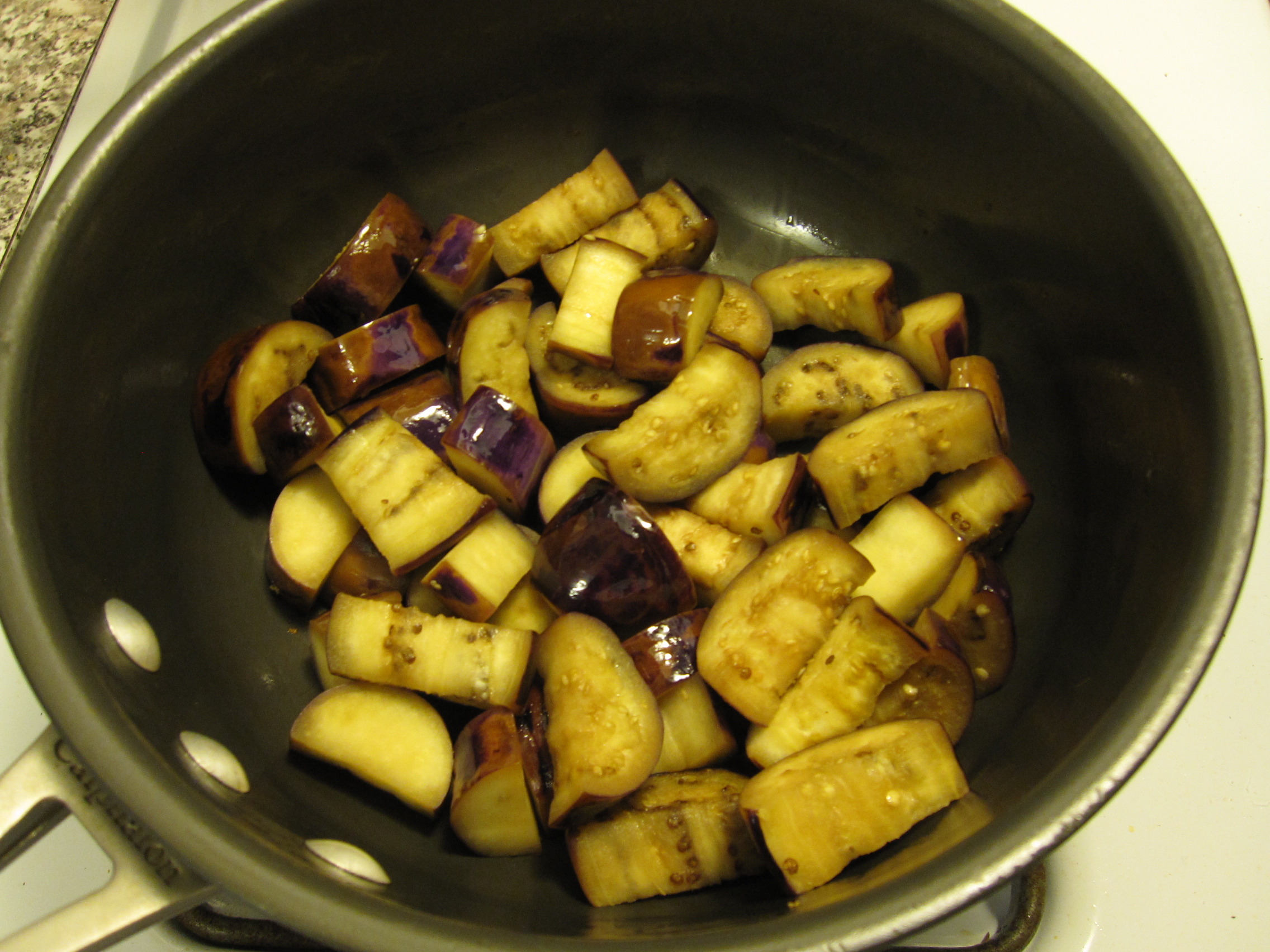
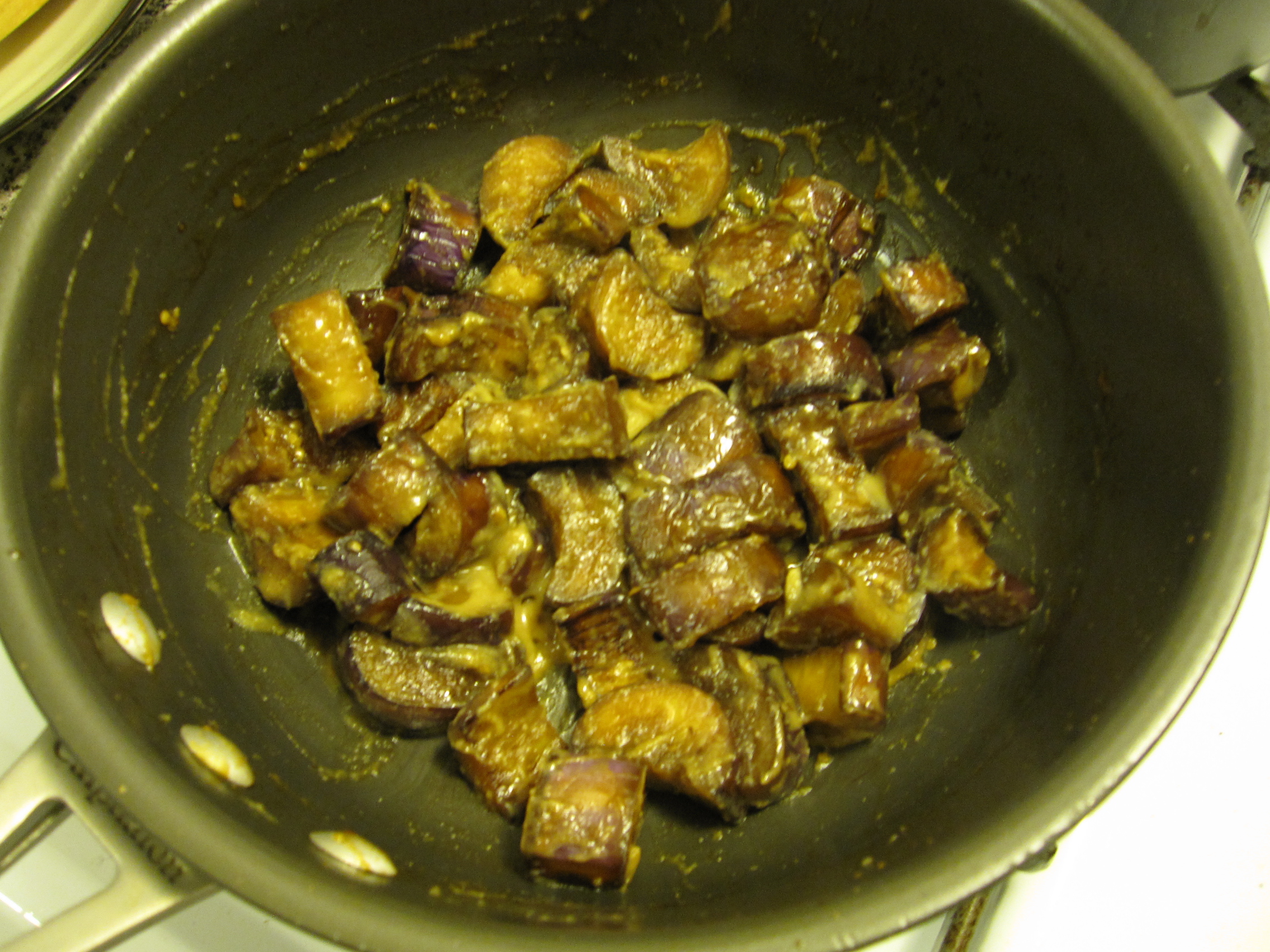
The miso eggplant is a classic Japanese home dish called nasu-miso. To start, I took two large Chinese eggplants, chopped them up into bite-sized pieces, then sprinkled them with salt in a colander. I let them sit for about a half hour to allow the bitter juices to drip out. Then I rinsed them off and squeezed them dry.

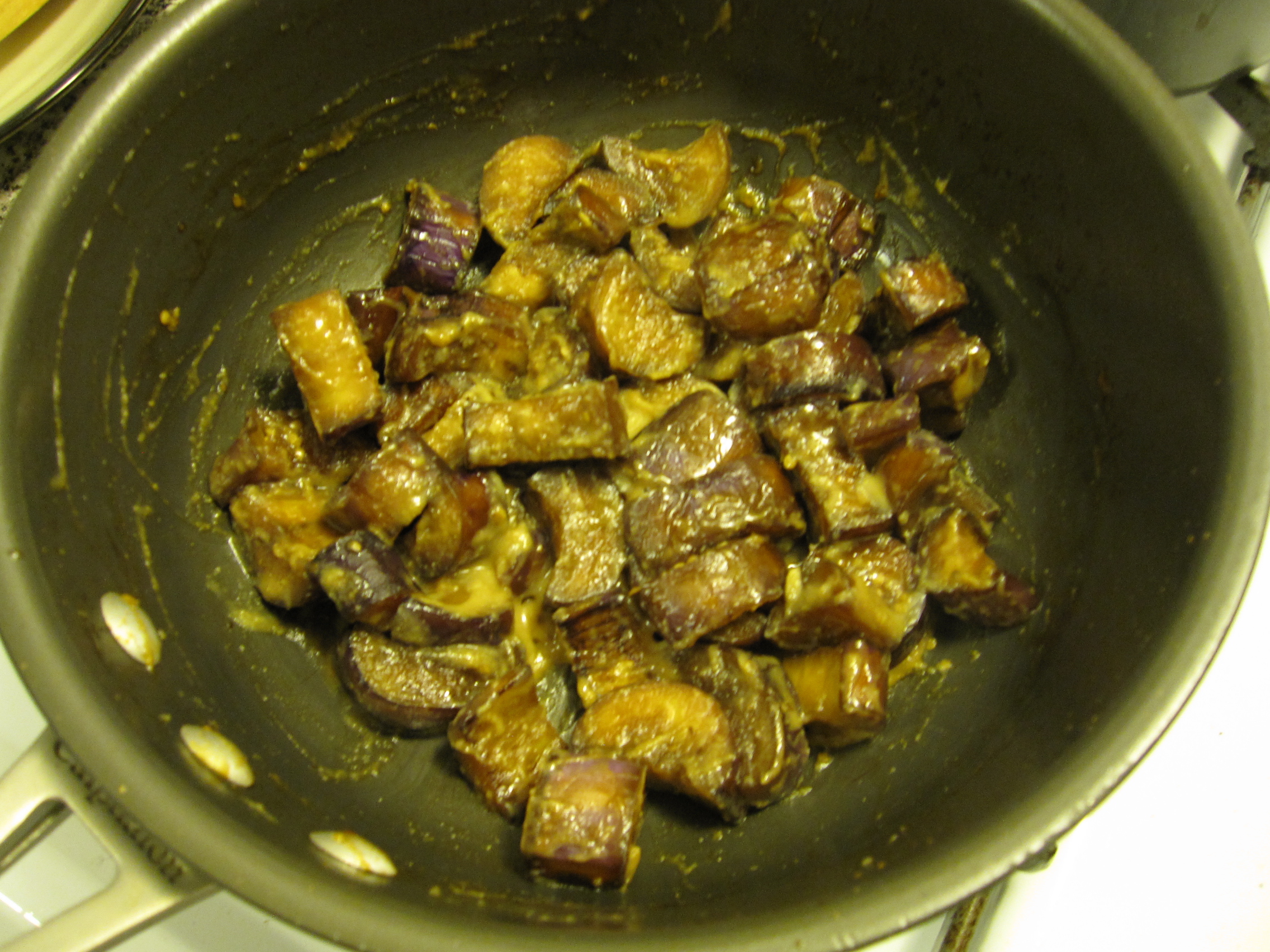
In a really hot pan I heated up about 5 tablespoons of sesame oil. As soon as the oil was smoking hot I added the eggplant. I wanted to wait until the oil was super hot so that the eggplant didn’t absorb it all. I fried the eggplant for about 8 minutes and then added a mix consisting of 3 tablespoons of sake, 1 tablespoon of mirin, 2 tablespoons of soy sauce, and 1 tablespoon of sugar. I let that boil down for a couple of minutes.

Once the liquid almost evaporated and absorbed, I added 2 tablespoons of miso that I diluted with 3 tablespoons of water. I mixed that all around and let it cook for about 2 more minutes before serving.

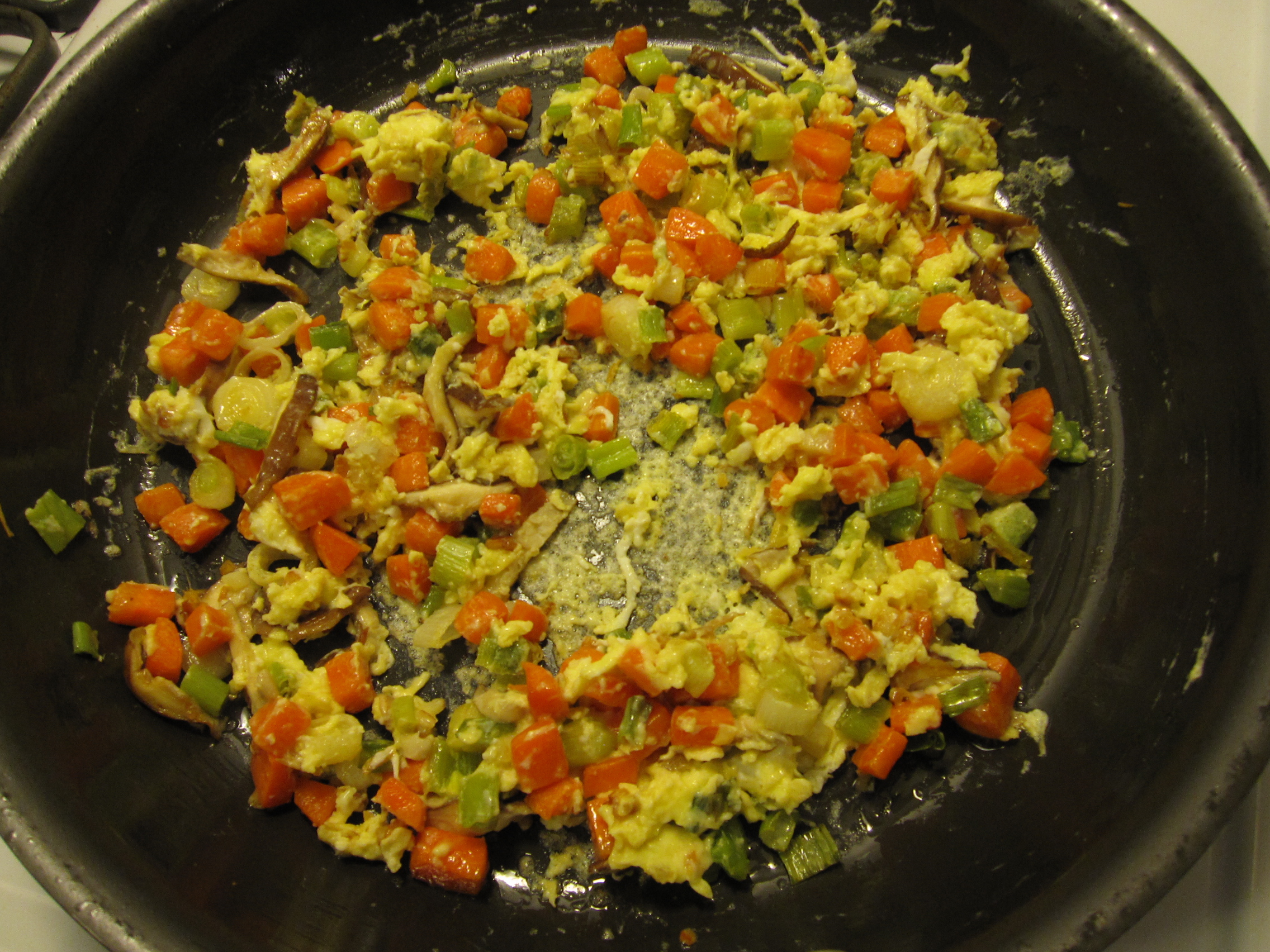
To make the fried rice I started by sauteing some ginger and garlic in peanut oil. After a few minutes when they became really aromatic I threw in a diced carrot and 7 chopped green onions. I let that all cook for about 7 minutes and then threw in a bunch of thinly sliced shiitake. That went for another 4 minutes.

Typically, when I make fried rice, I will first make some scrambled eggs and set them aside to add right about this point. I forgot to do that. So, I just dumped two scrambled eggs on top of the veggies and fried them. I still works, but it’s not how fried rice is usually made.

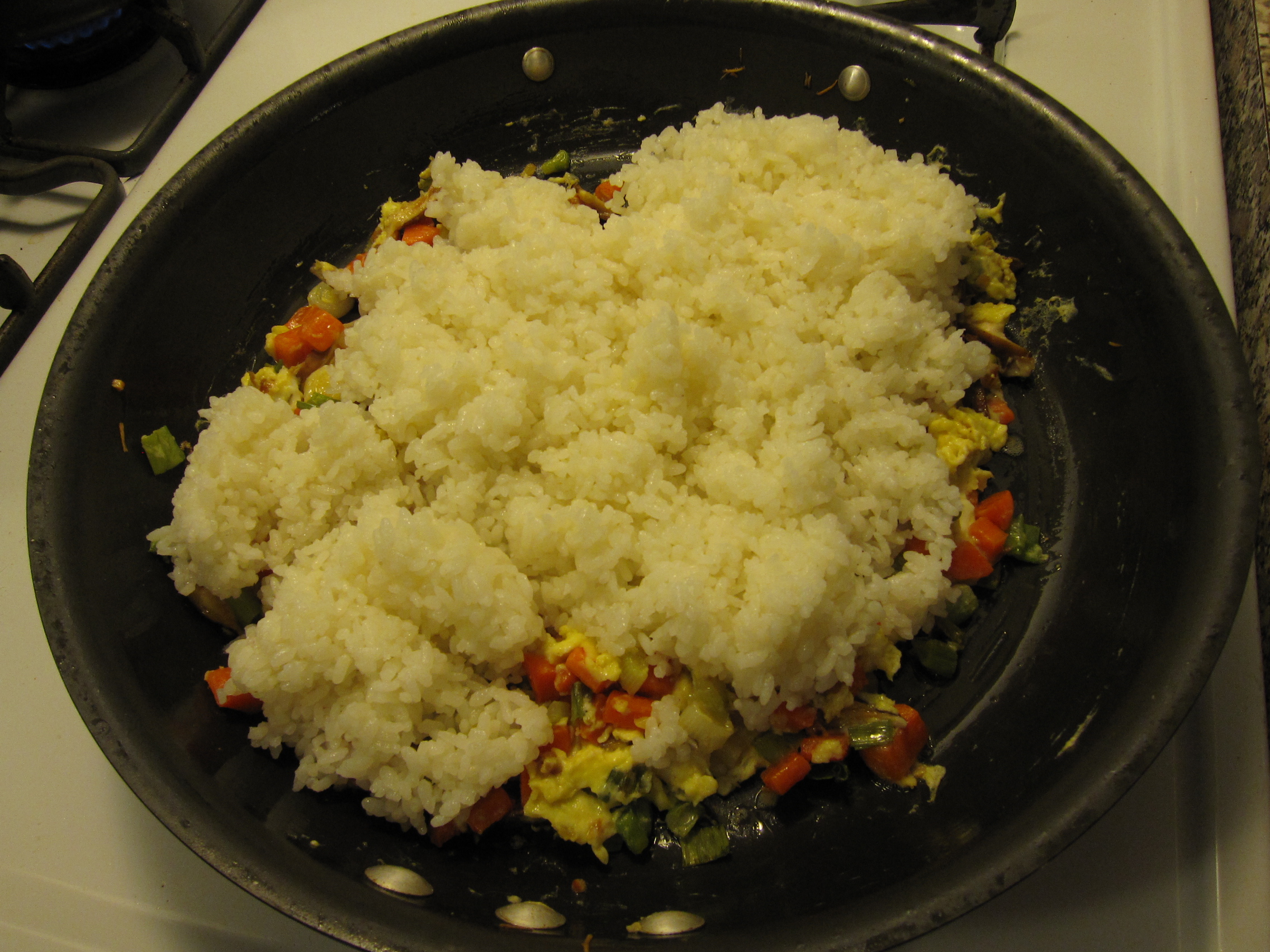
Once the egg was cooked I threw in 2 cups of rice that I had made earlier in the day and let cool. With a wooden spoon I continuously broke up the rice and stirred it all in to get an even mix and to allow all of the rice to fry a little bit.

Once the rice is was all broken up I added a few tablespoons of soy sauce along with some black pepper and mixed it in really well. Then I tasted it for seasoning only to see that I needed a little more soy. So, I added a little more soy. It’s always best to start with less than you think you need. You can always add more, you can’t take any back at this point. At any rate, the rice turned out fantastic!

Oh, right before serving the rice I mixed in a bunch of chopped chives. We were at my buddy’s new place out in Jefferson Park and they have tons of chives growing in their backyard. So they gave us some for our cooking pleasure.

Read Full Post »

« Newer Posts - Older Posts »