Feeds:
Posts
Comments

Posts Tagged ‘ginger’

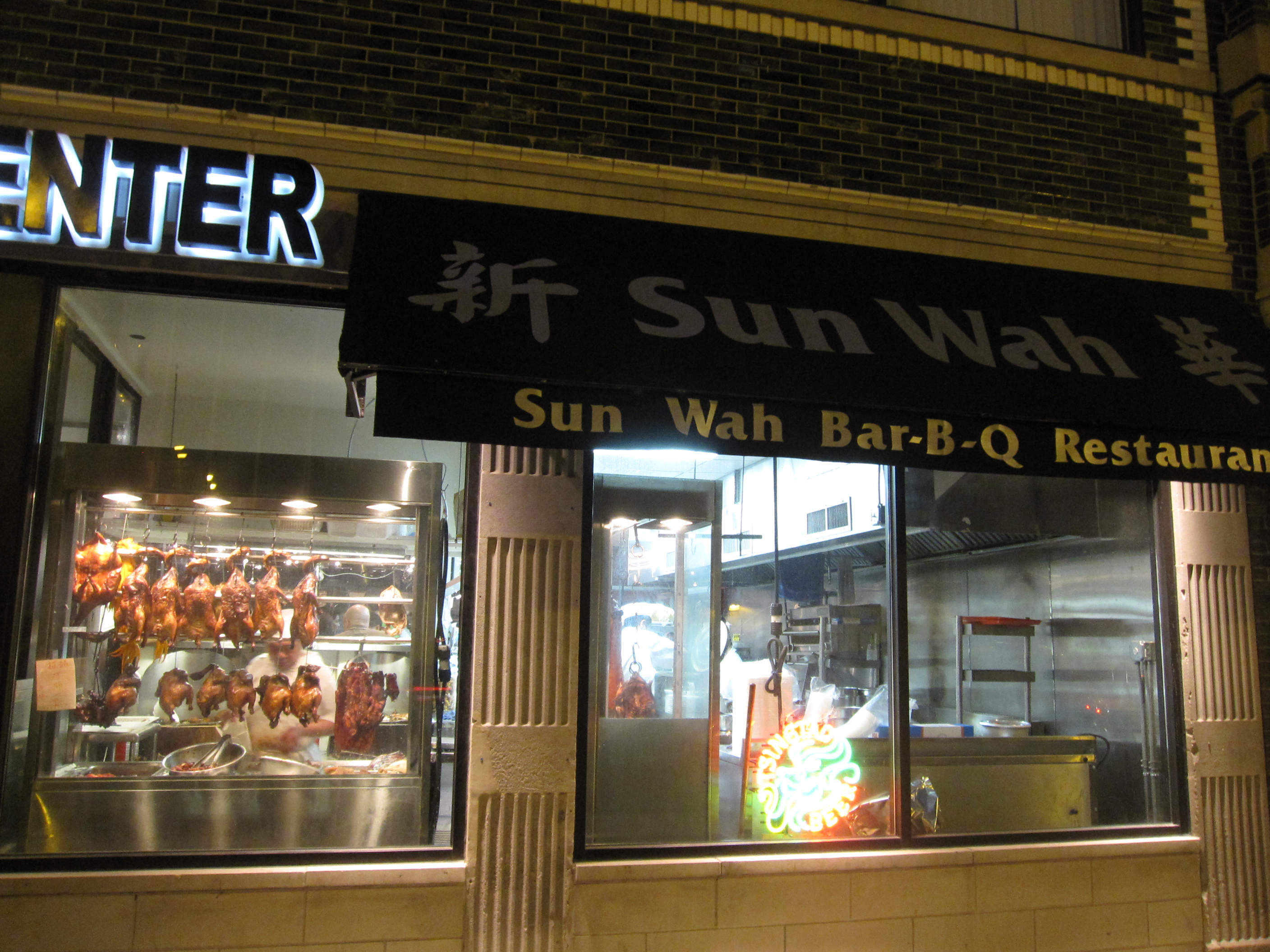
Friday night we went out to Sun Wah B.B.Q. with a bunch of Yuki’s co-workers. We had a big group of 12 adults (I still have trouble thinking of myself as an adult) including spouses and then there were 3 babies. For Chinese food, I think it’s best to go with a big crowd so you can order a variety of food.

The first thing I noticed about Sun Wah was that they had duck hanging in the window. You don’t see that often in Chicago which is a shame. Any restaurant that serves Peking Duck (Sun Wah is considered the best Peking Duck in Chicago, from what I’ve eaten here, I would have to agree) needs to display it in the window to dry the skin and show the customers what’s in store.

They have a huge dining room. I guess that’s a good thing because as the night went on they got packed! I think the wait was about 30-45 minutes when we left. Good thing we got there relatively early, although, we did have a reservation. Service was pretty typical of a Chinese restaurant. Not refined, but not sloppy. As for the food…
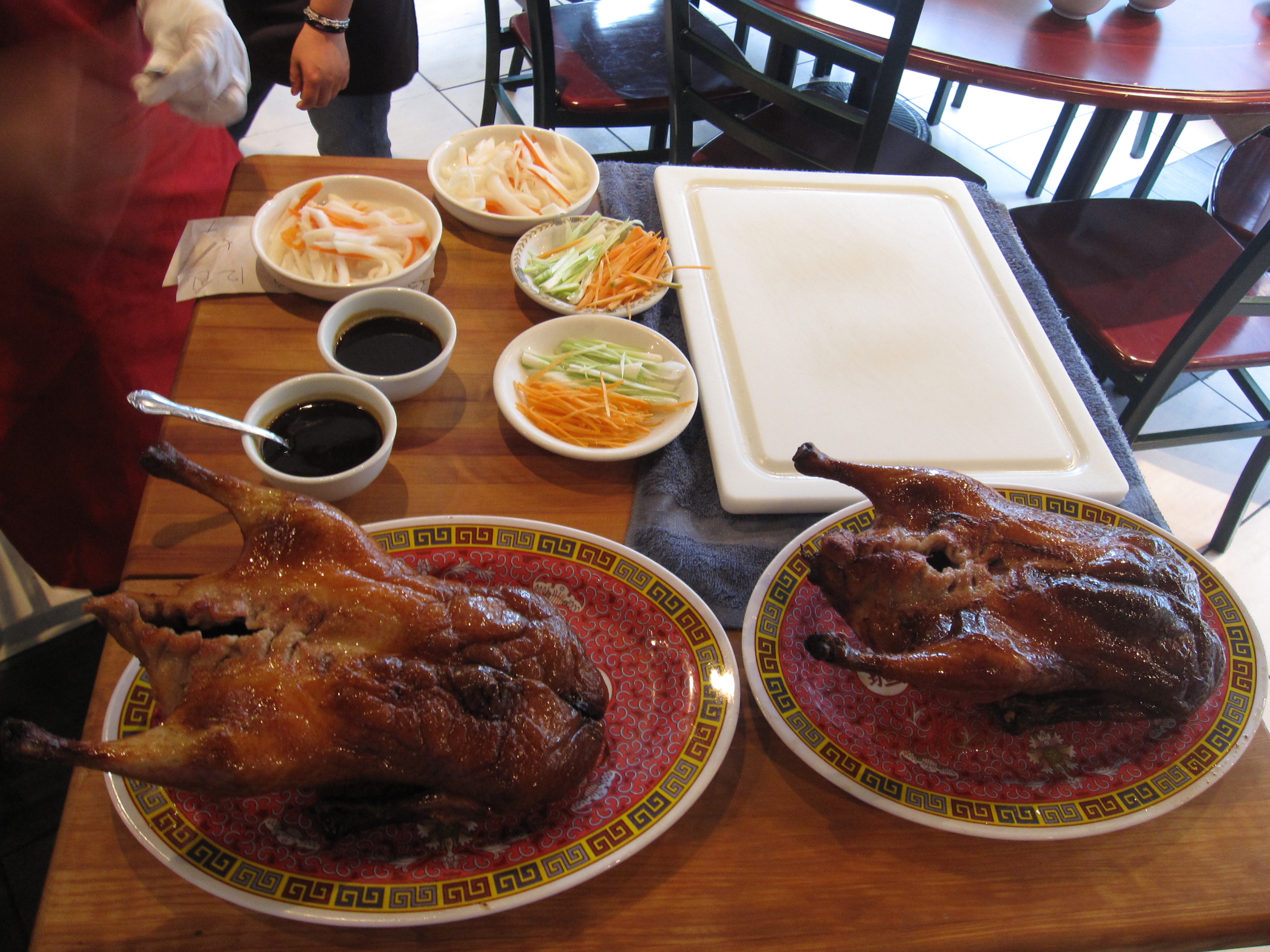
…the first thing that rolled out was the Peking Duck. Since we had two big round tables we ordered two of each dish so that we didn’t have to pass things from one table to the other.
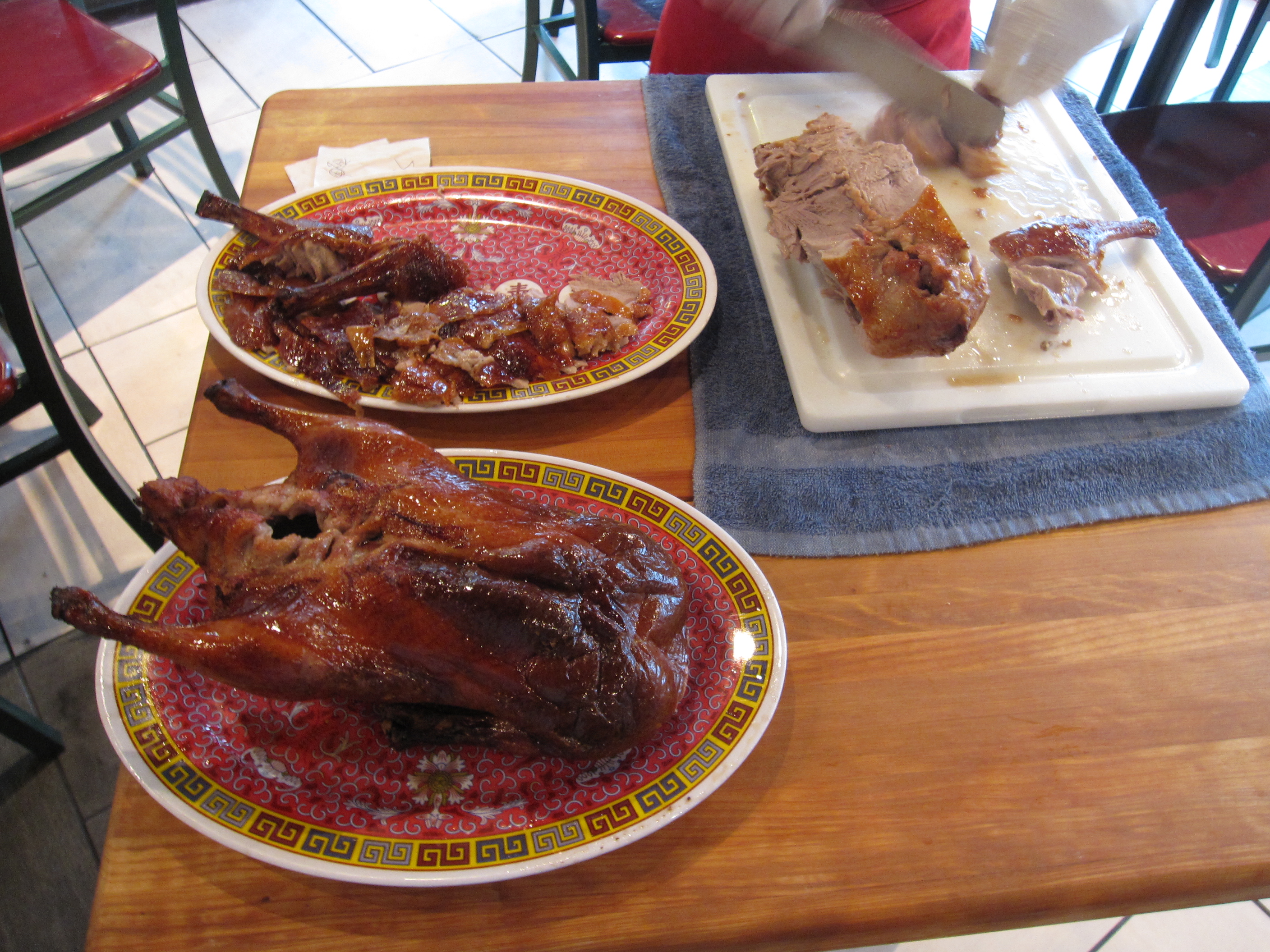
Classic tableside duck carving. Slice off that crispy skin first and then chop up the meat. Really good duck. If you’re a fan of Peking Duck, and the only people I know who aren’t are veggies, you have to try Sun Wah’s. I wouldn’t say it’s really anything special, but it is the best in town, very good duck.
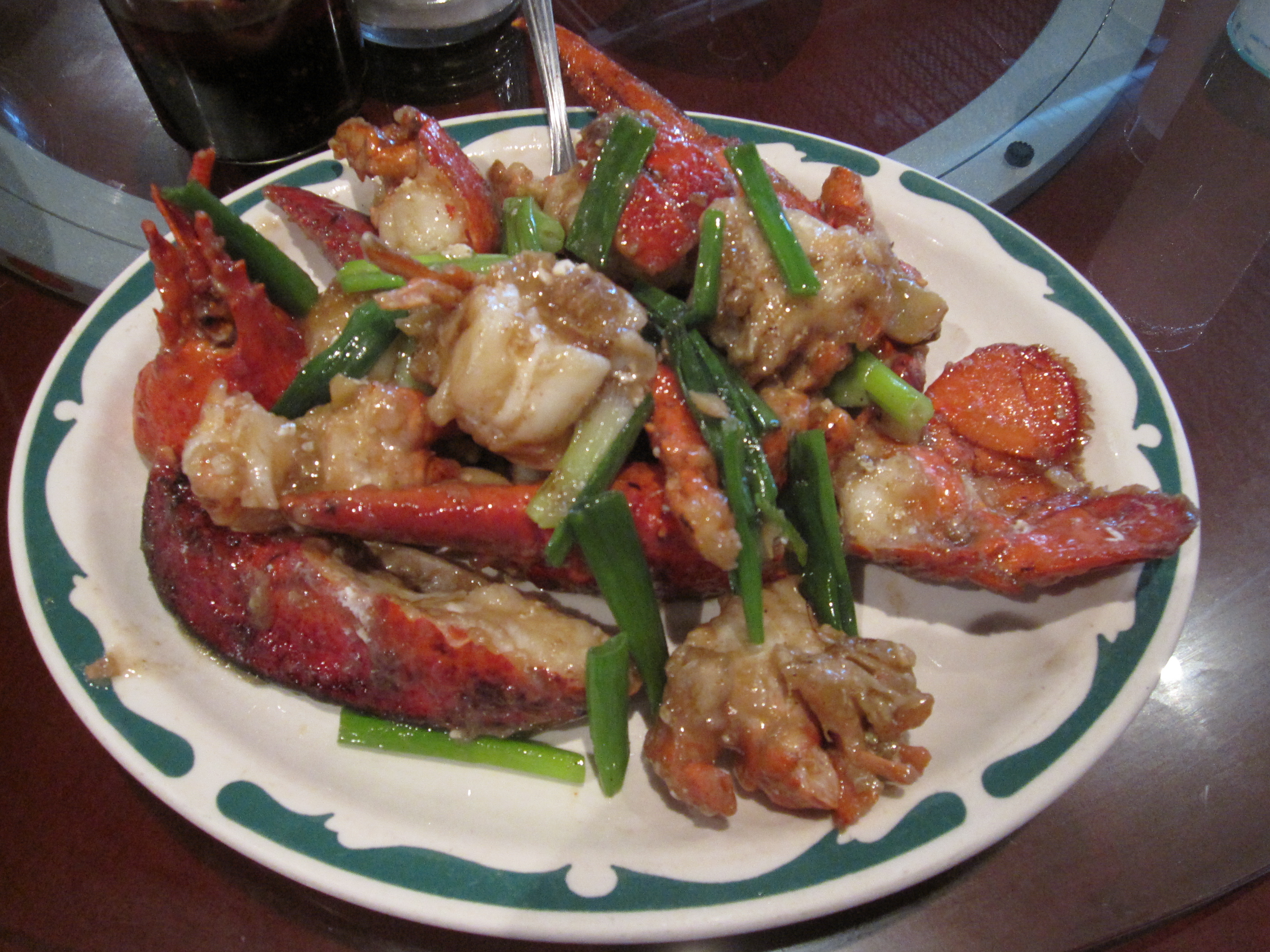
Lobster with ginger and scallions, what more do you need? My only gripe with this dish, and it’s not unique to Sun Wah, is that the lobster was all hacked up and very hard to get the meat from the shell. Why do Chinese restaurants hack up lobster like this? Surely there has to be a better way to stir-fry all of that flavor into the meat and keep it easy to eat.

Peking Pork Ribs. Thin slices of rib meat cooked in a thickened sweet sauce. There were slices of carrot, green pepper, and yellow pepper in it as well. If you like sweet Chinese ribs, this is the dish for you!

Stir-fried water spinach. We wanted green beans, but they didn’t have any. No worries, water spinach has a nice subtle bitterness to it. It’s also extremely healthy. A good vegetable to help cut through all of the animal fat we were mauling down.

Fried rice with BBQ pork, shrimp, scallions, carrots, and scrambled eggs. Another classic, but one you must have with a Chinese feast.
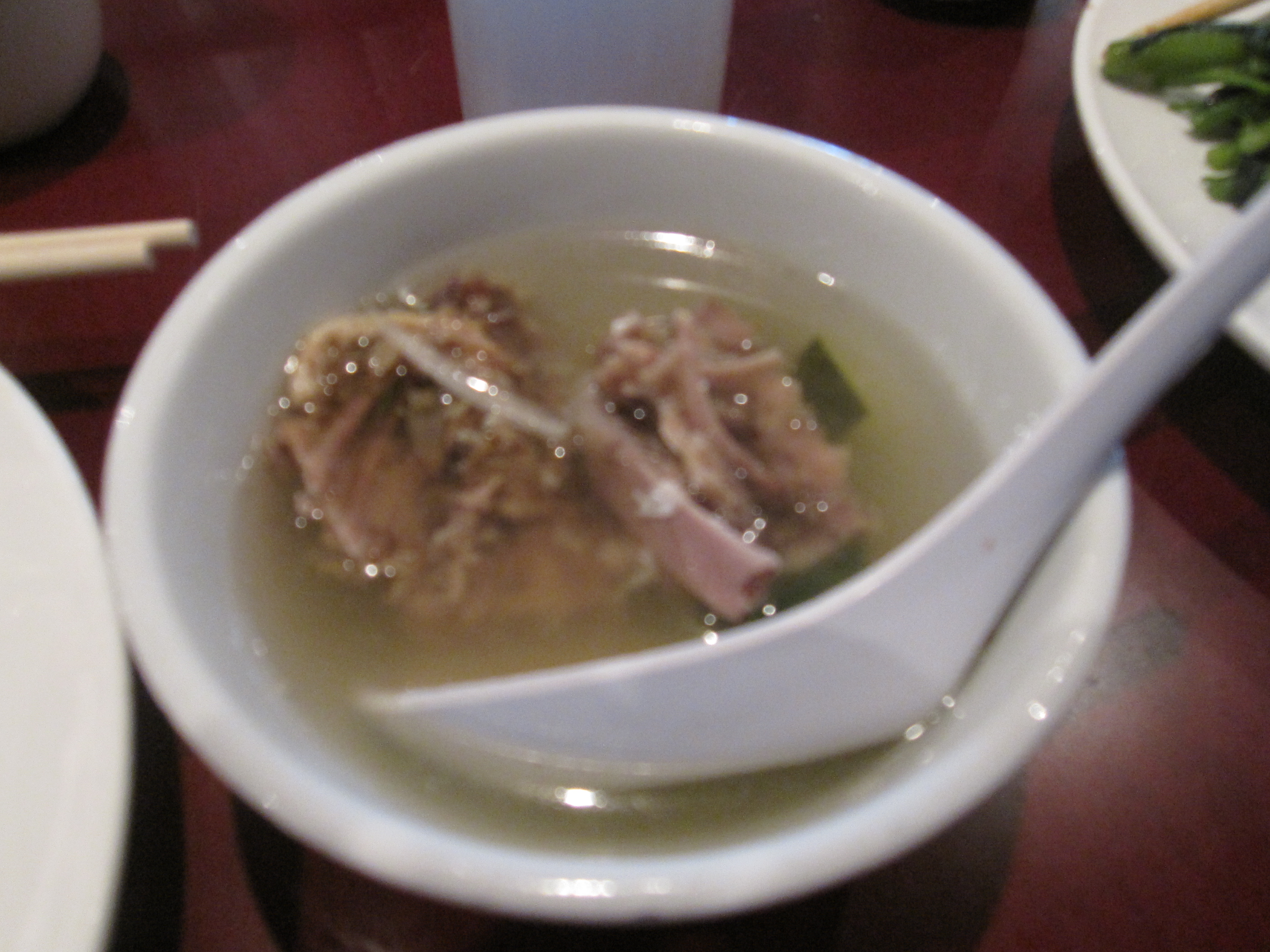
Shanton soup with chunks of pork. It’s the pork bone that gives this soup its flavor. This is to the Chinese kitchen what chicken soup is to the Jewish kitchen.
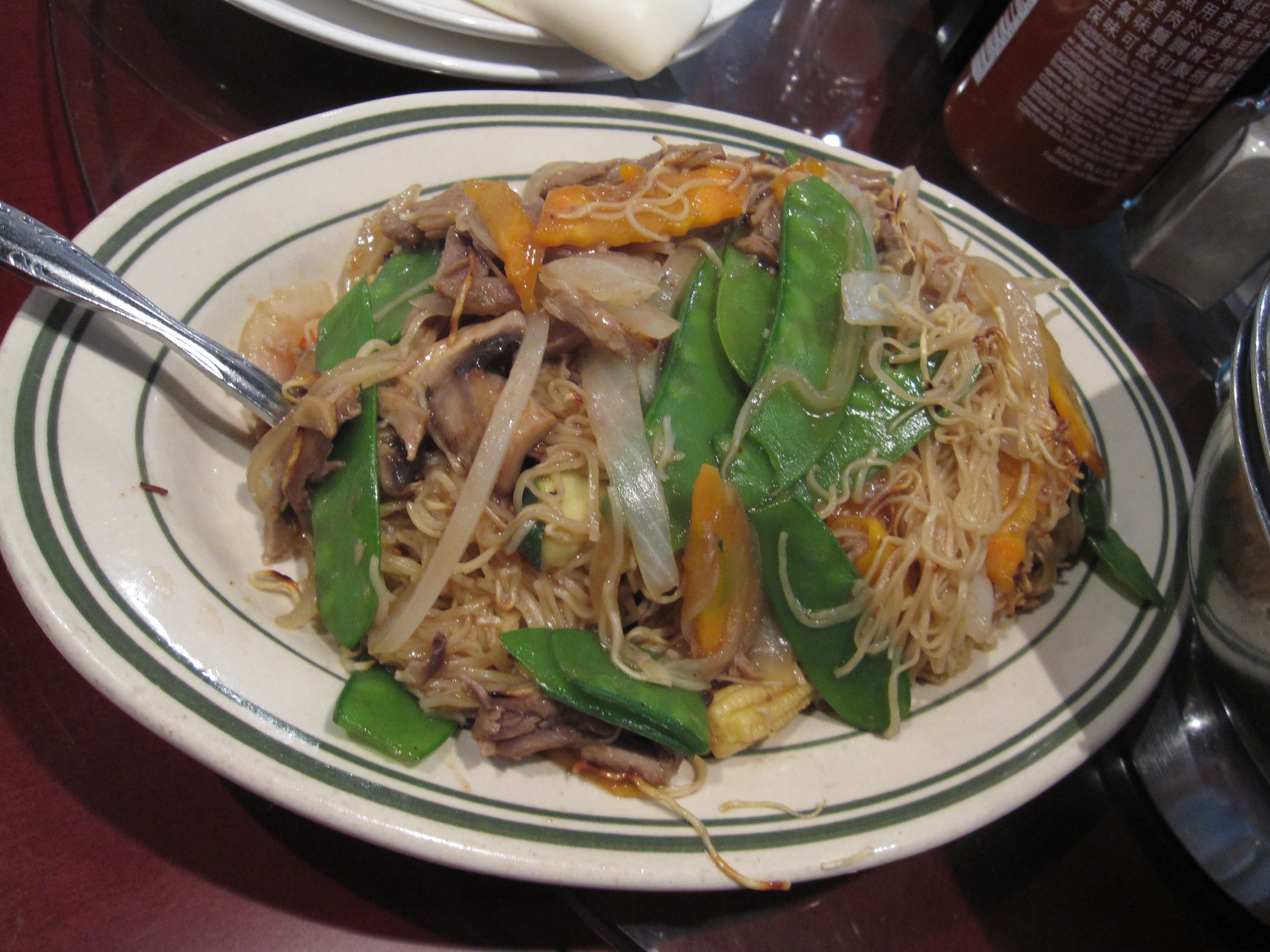
Fried noodles. For this dish they used the duck breast from the Peking duck (for Peking you only eat the skin and some of the dark meat), pea pods, baby corn, carrots, mushrooms, and onions. Personally, I would have used shiitake instead of white button mushrooms, but hey, it’s not my restaurant. Still a tasty dish.
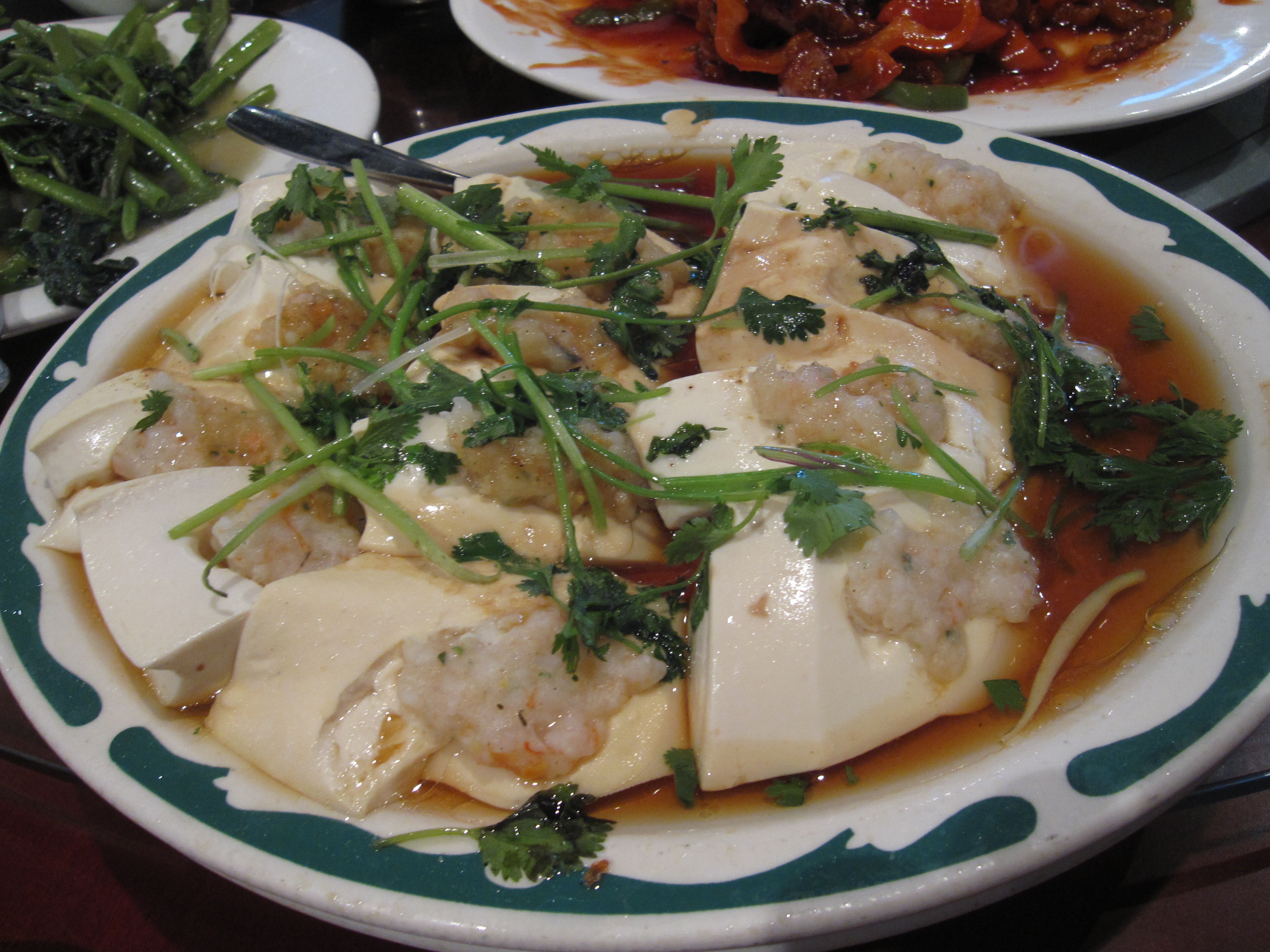
Our last dish was silken tofu steamed with shrimp. It was topped with cilantro and swimming in a soy and broth soup. It was really good.

Overall, I have to say, Sun Wah B.B.Q. is quite possibly the best Chinese food in Chicago. While I am a true believer that Chicago does not have the best Chinese food in the world, this place is definitely worth passing through your entrails. Every dish was fresh and well prepared. Nothing was over the top, but everything was extremely solid. The best part was that all of that food, along with Tsing Dao and tip, only came to $25 per person. Well worth the weakened US Dollar.

Read Full Post »

Mapo tofu is a Szechuan dish typically made with ground pork. However, last night being Meatless Monday, I diced up some shiitake mushrooms to take the place of the meat.

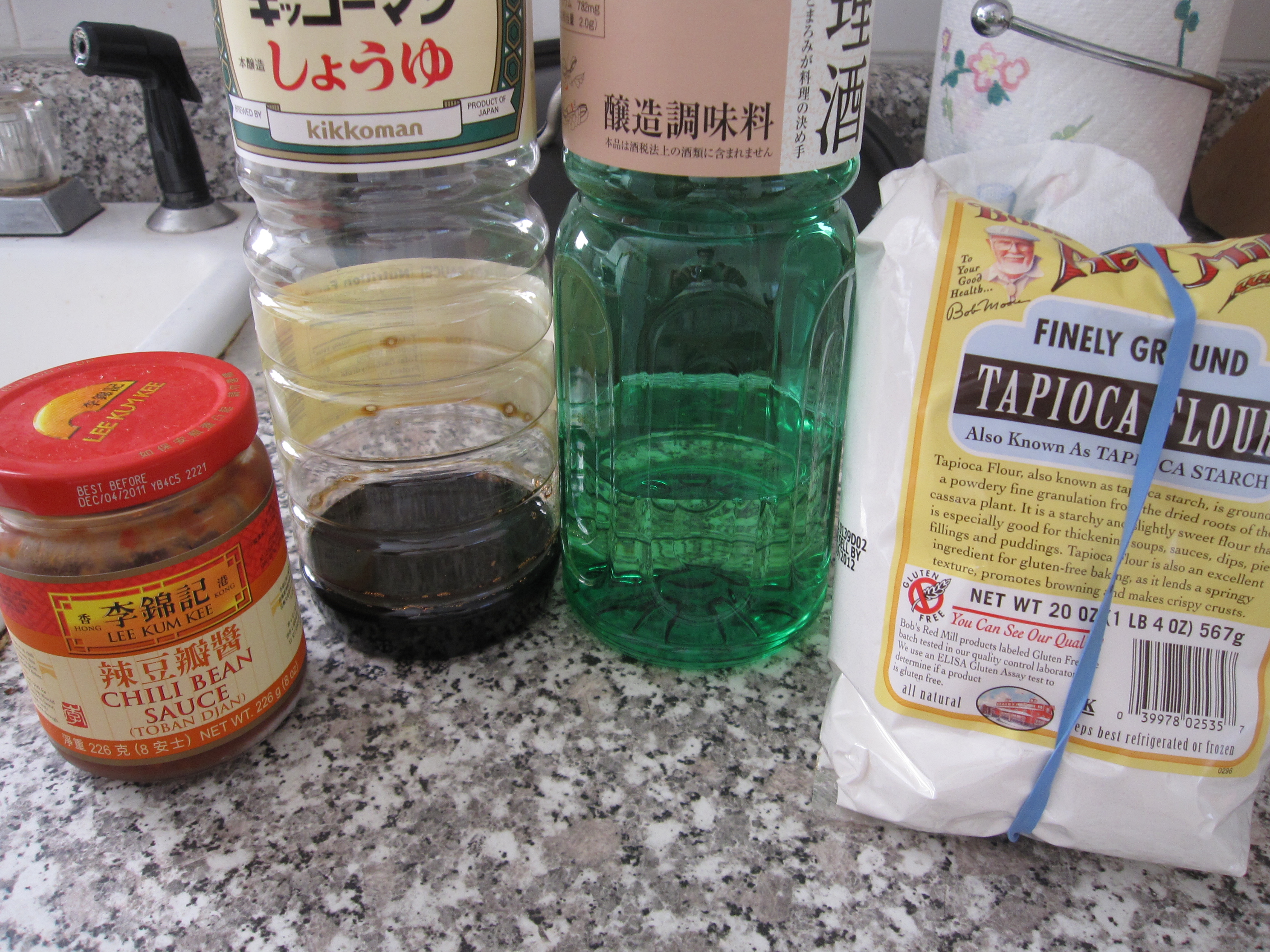
To start, I made the sauce. I used 2 heaping tablespoons of toban djan (a szechuan chili and fermented bean sauce, its spicy but this dish is supposed to be very hot), 1/4 cup of soy sauce, 1/8 cup of sake, and 2 teaspoons of tapioca flour to thicken it up a bit. I mixed it all together and set it aside.

I used a 3.5 oz package of shiitake, about 6 oz of haricots vert cut into thirds, a carrot cut into matchsticks about 2 inches long, 8 green onions chopped into 1 inch pieces, 3 minced garlic cloves, 2 tablespoons minced ginger, 1 red bell pepper cut into thin slices and then halved, and 1 package of firm tofu. I prefer silken tofu, but there wasn’t any at the store. Oh well, what can you do? I pressed the water out of the tofu for an hour in the fridge and then diced it.

In a hot pan I poured in about 2 tablespoons of sesame oil and then fried the garlic and ginger for about a minute. Then I added the haricots vert. About 3 minutes later I tossed in the carrot and pepper. I let that go for about 3 more minutes and then the shiitake and green onions went in. Once the shiitake were softened a bit, about 3 or 4 minutes, I poured in the sauce (I mixed the sauce thoroughly again to make sure the tapioca didn’t form any clumps). This was the first time I’ve ever used tapioca flour as a thickening agent and it worked a little better than I expected. The sauce almost immediately thickened up on me in that hot pan. To remedy that I poured in about 1/3 cup of water and that thinned it out nicely. I needed it a little thinner so it would evenly coat the tofu which went in right after I stirred the water in. I let the tofu heat through for about 4 minutes over medium heat and then served it all up with some white rice and drank it down with a cold beer.

Read Full Post »

I was perusing my Charlie Trotter cookbook the other day and came across a recipe that uses a very similar marinade to one I often use. Since he’s the great Charlie Trotter I thought I’d give his a try. Oh, and yakigyu is simply Japanese for grilled beef.

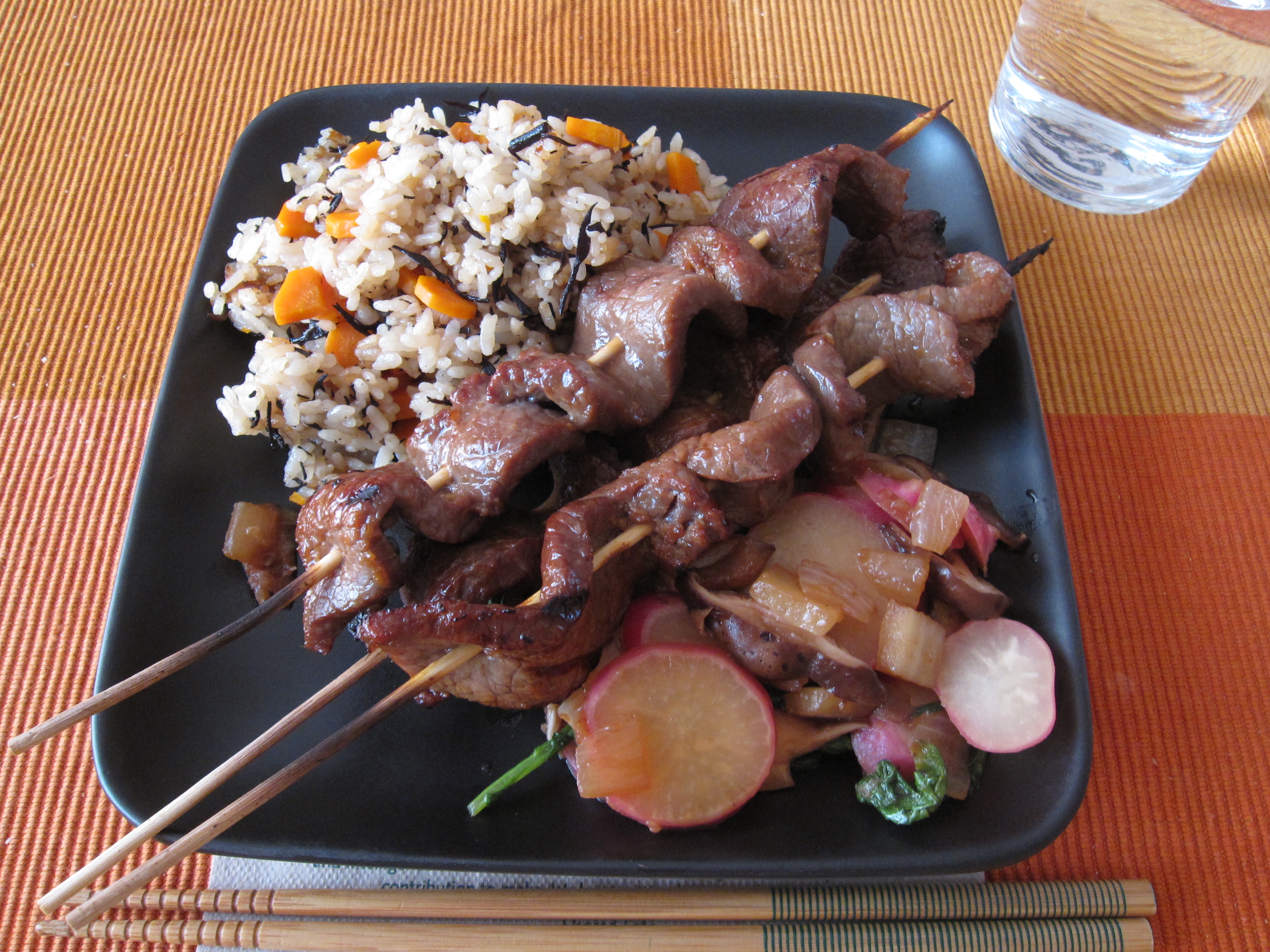
His marinade consisted of 1/2 cup of tamari which is probably the most ancient style of Japanese soy sauce as it contains no wheat and is a little richer than regular soy (it is the byproduct of making miso), 1/4 cup of mirin, 1.5 tablespoons of sesame oil, and 2 tablespoons of grated ginger. Once I mixed up the marinade I set 3 tablespoons aside and then thinly sliced 3/4 pound of sirloin and threw that into the marinade. I covered it with plastic wrap and let it sit in the fridge for 2 hours.

Then, using some bamboo skewers that I soaked in water for an hour, I threaded the meat and got it ready for the grill. Since the meat was thin it only needed about 2-3 minutes on each side over a medium-hot grill.

To accompany the meat I made a quick vegetable saute of 5 shiitake sliced, half an onion large diced, and 5 radishes. I separated the greens from the radish and thinly sliced the radishes with my mandolin slicer. I could have used my knife, but the wife was wondering why I got a mandolin slicer if I never use it. So, there you go sweetheart, I used the mandolin.

In my hot pan I poured 1 tablespoon of soy oil and sautéed the onion first for about 5 minutes. Then I added the shiitake and let that go for about 4 minutes. After that I tossed in the sliced radishes. Those cooked for about 4 minutes until I poured in the reserved 3 tablespoons of marinade. I let that boil down for a few minutes and then added the radish greens. Once the radish greens wilted down, about 1-2 minutes, I turned of the heat as this was ready to go.

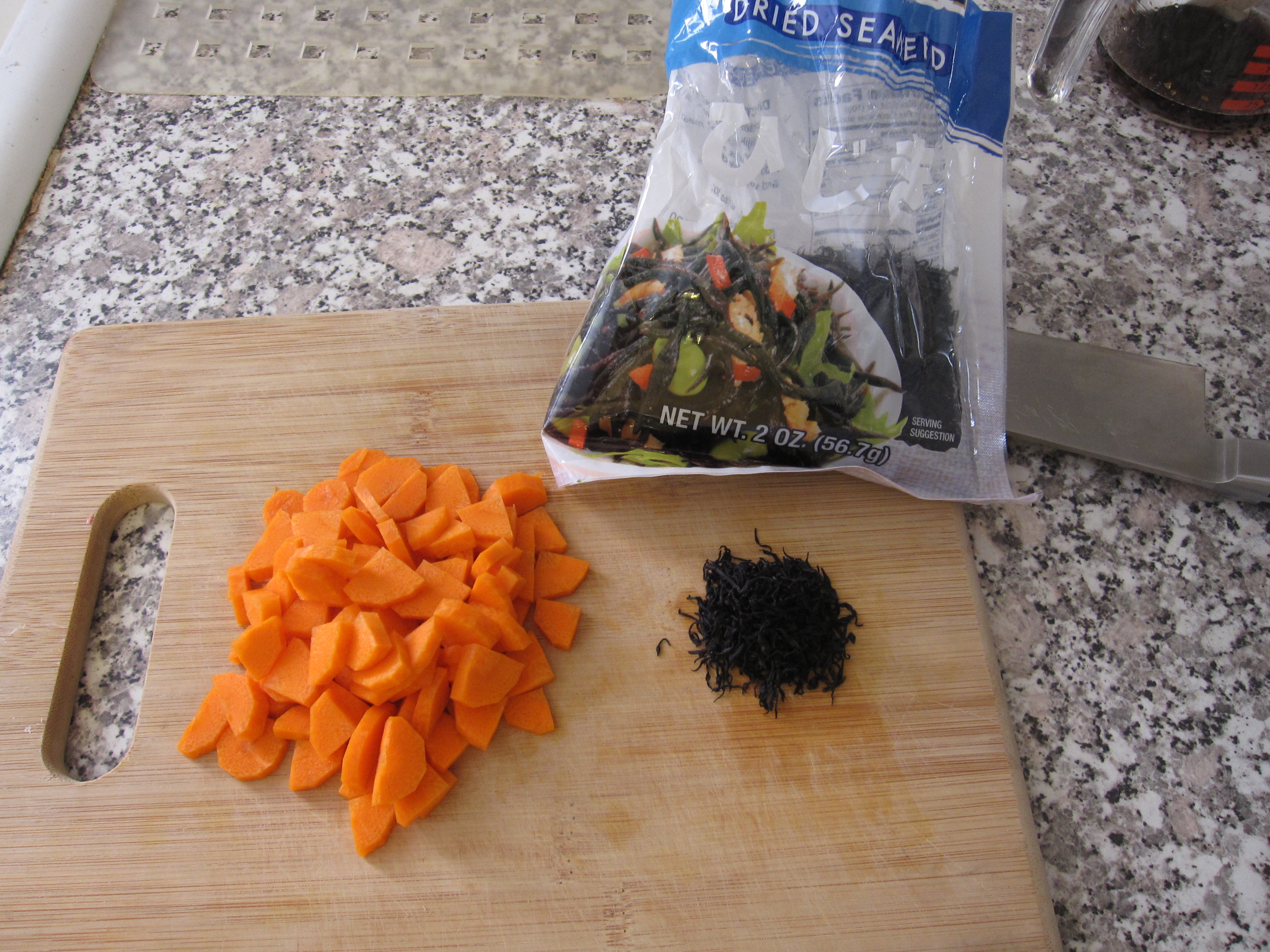
Instead of regular white rice I made hijiki and carrot rice, a recipe that Yuki taught me a long time ago and has become one of my favorite rice preparations. First, I took a heaping tablespoon of dried hijiki and soaked it in some cold water for about a half hour. I also diced up a small carrot. Once the rice was washed and in the rice cooker bowl (I only made one cup of rice) instead of regular water I poured in 2 tablespoons of soy sauce, and 1 tablespoon each of sake and mirin. Then, the get the right amount of liquid I used the hijiki soaking water to fill it up. Once the liquid was at the right level I threw in the hijiki and carrot. Hit the on button and a half hour later my rice was ready.

I have to say I was very disappointed in Trotter’s marinade. Tamari is a little bit stronger in flavor than soy sauce and it really made the beef salty. Too salty for Yuki’s taste and almost too much for mine (I tend to like food a little saltier than she does). Old Chucky Boy should know better than to have used so much tamari. I would have been much better served to have used the classic marinade I usually do, 3 parts soy, 2 parts sake, and 1 part mirin (1.5 tablespoons of sesame oil is ok). Besides the soy being a little lighter in flavor, cutting back on the amount and replacing it with sake (or vodka if you like) adds a little more depth the marinade. A little grated garlic wouldn’t have hurt either. While I have had good luck with some of his recipes in the past, this is one I will not be using again.

Read Full Post »

My buddy Nimah has been in town and finally made a little time to see Yuki and I Sunday night for dinner. His wife and brother were supposed to join us, but they both backed out. It’s nice to know where we stand on their totem pole (I’ll remember this Lora and Ramin!). At any rate, for the past couple of weeks all he’s been talking about was Smoque. “Yo Twig”. He’s been calling me Twig since high school. “How’s Smoque?” I just kept telling him that it’s hands down the best BBQ in Chicago, maybe even the best BBQ north of Mason-Dixon Line. It’s at least the best BBQ Brisket north of Texas. Honestly, I haven’t even eaten it’s equal in Texas, although I’ve only had a couple of BBQ Briskets there.

So he got there early, which is quite amazing. He’s notoriously late (no, he’s not pregnant, but he does have three testicles…all Iranians have three testicles, just ask him) and I’m notoriously punctual. We were supposed to meet at 7 and he got there at 6:40. I was just about to hop on the highway and he called. “Twig, there’s a friggin line down the street!”. That should have been a sign to him that I’m not the only one who thinks Smoque is the best. That worked well for us since he got to wait in line for us. When we showed up, it wasn’t too bad. They do a pretty good job of keeping the line moving.

He kept asking me what to order, and I kept telling him to get the sliced brisket sandwich. Honestly, that’s all I’ve ever gotten there other than the chili made with their brisket. I have to imagine that their ribs are pretty damn good too, but I’ve never had them. Always skeptical he asked one of the guys who works there. Of course, he said, “Get the brisket”. Just goes to show that I’m always right.

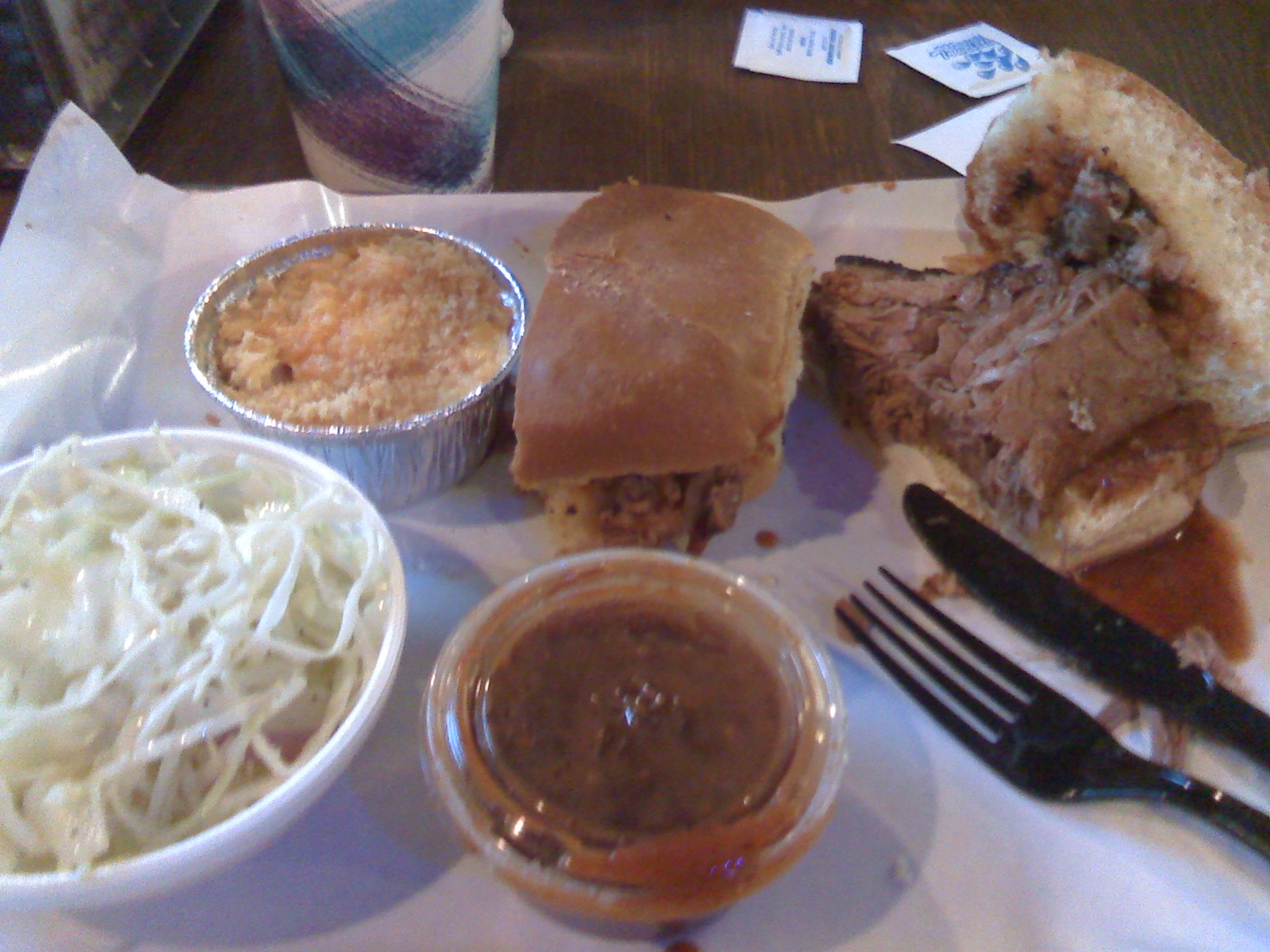
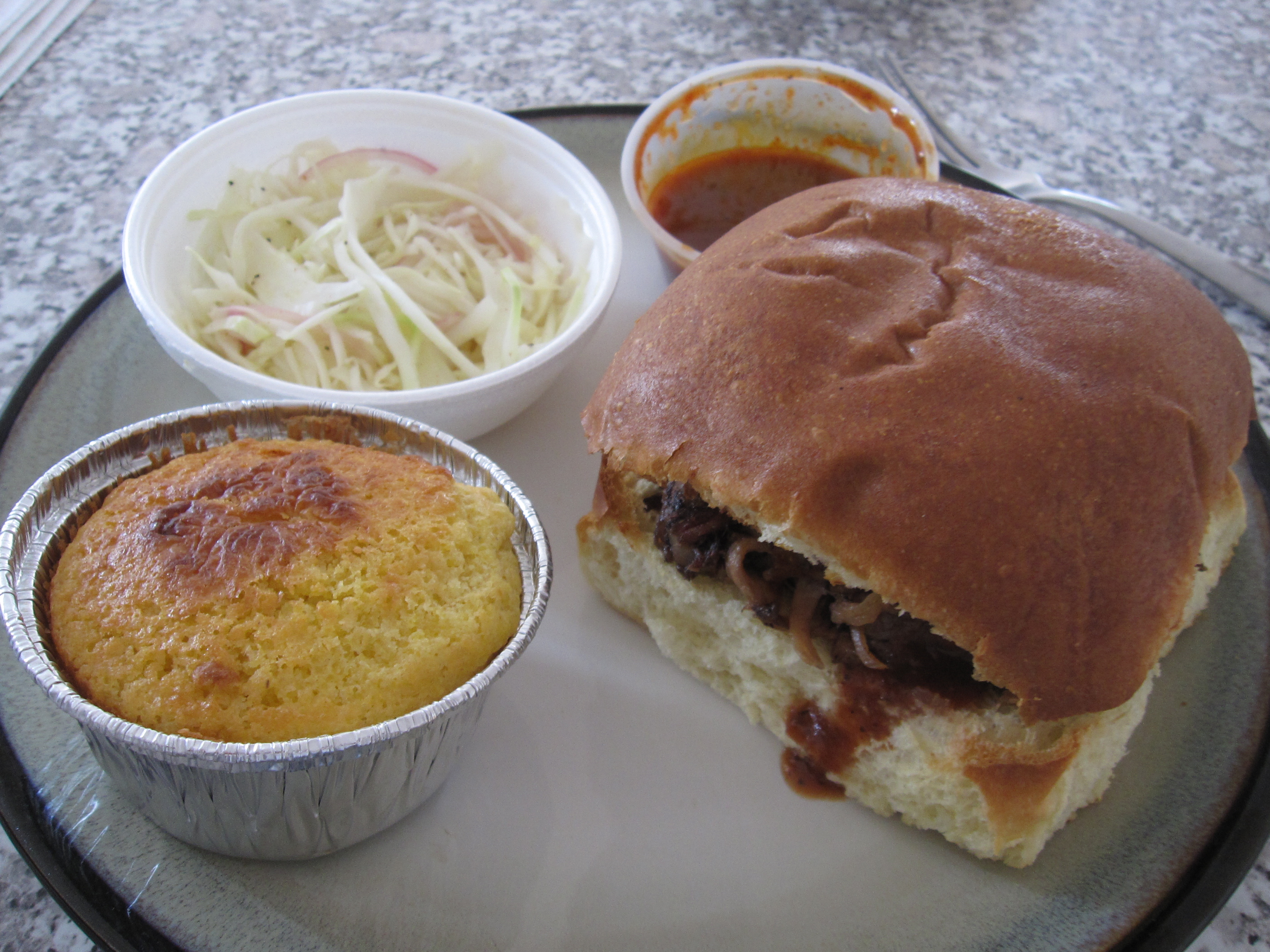
After about a half hour wait, not too bad, we ordered our food and got our seats. Besides sliced brisket they also do a chopped brisket. Yuki and I decided to try the chopped, so we got one of each and split them. I have to say, I think the chopped may even be better! You get more of the charred outside, and that has a ton of flavor. But, the sliced has more of the fat. You really can’t go wrong either way. All sandwiches come with a side of slaw. Theirs is nice because it’s just vinegar, no mayonnaise. That helps keep it light and helps you digest all of the delicious smoked carcass. I’m a mac’n’cheese guy, so I usually get that for my side. They have a great mac’n’cheese. Yuki got the fries. They cut their own potatoes and they keep the oil hot enough to cook them properly. Nimah got the baked beans. Simple BBQ beans, but their sauce makes them stand above the rest.

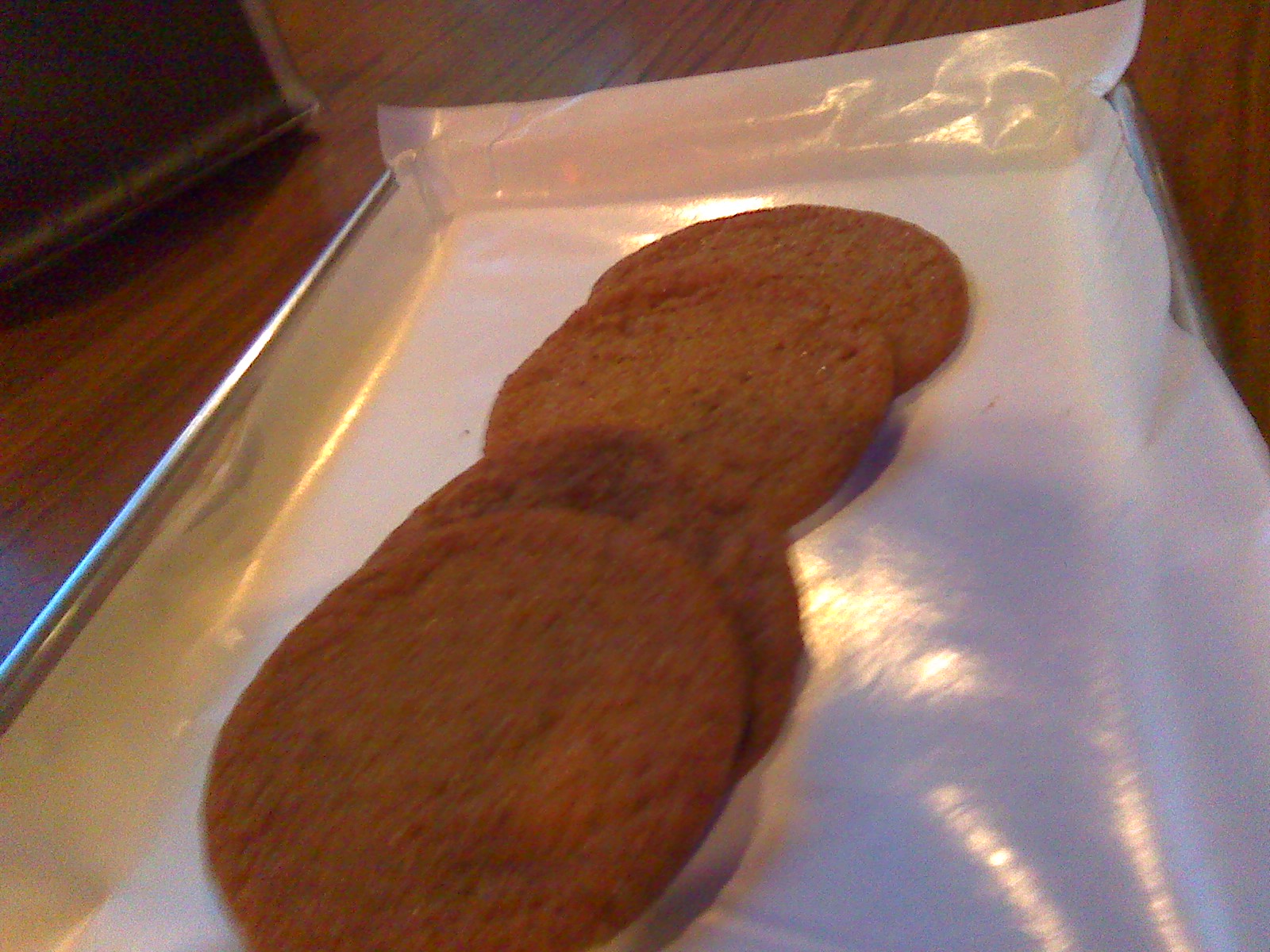
Oh, I should back up a bit in the story. While we were waiting for our food to be called at our seats one of the owners brought the people next to us some fresh made ginger cookies. I didn’t know why at the time (turns out they wanted some cobbler but Smoque was out, so they brought them some complimentary cookies) but anyone who knows me knows that I’m not shy. I said to the owner, “We have some problems with our food too, do we get cookies?” I was completely joking because we haven’t gotten our food yet. He said, “Sure, I’ll get you some cookies”. I told him I was just kidding, but he said they had more and it was no problem. Moral of that story, it pays to be an obnoxious extrovert with no shame!

Wanting to try their pulled pork, but only having one stomach each, Yuki and I brought a couple of sandwiches home for lunch today. Beautiful! Absolutely lovely. Every bit the brisket’s equal. Well, I think I’d still get the chopped brisket over the pulled pork, but there isn’t a better tasting pig-which in town! The cornbread also held up to a night in the fridge. It was relatively moist all things considered.

All in all, if you haven’t made it to Smoque yet then you really need to. That is unless you’re a vegetarian or vegan. In which case you and I must have a sit down. Vegetarian meals are important, but only on Meatless Monday. Every other day of the week Smoque makes a tasty and inexpensive option to fill your guts.

Read Full Post »

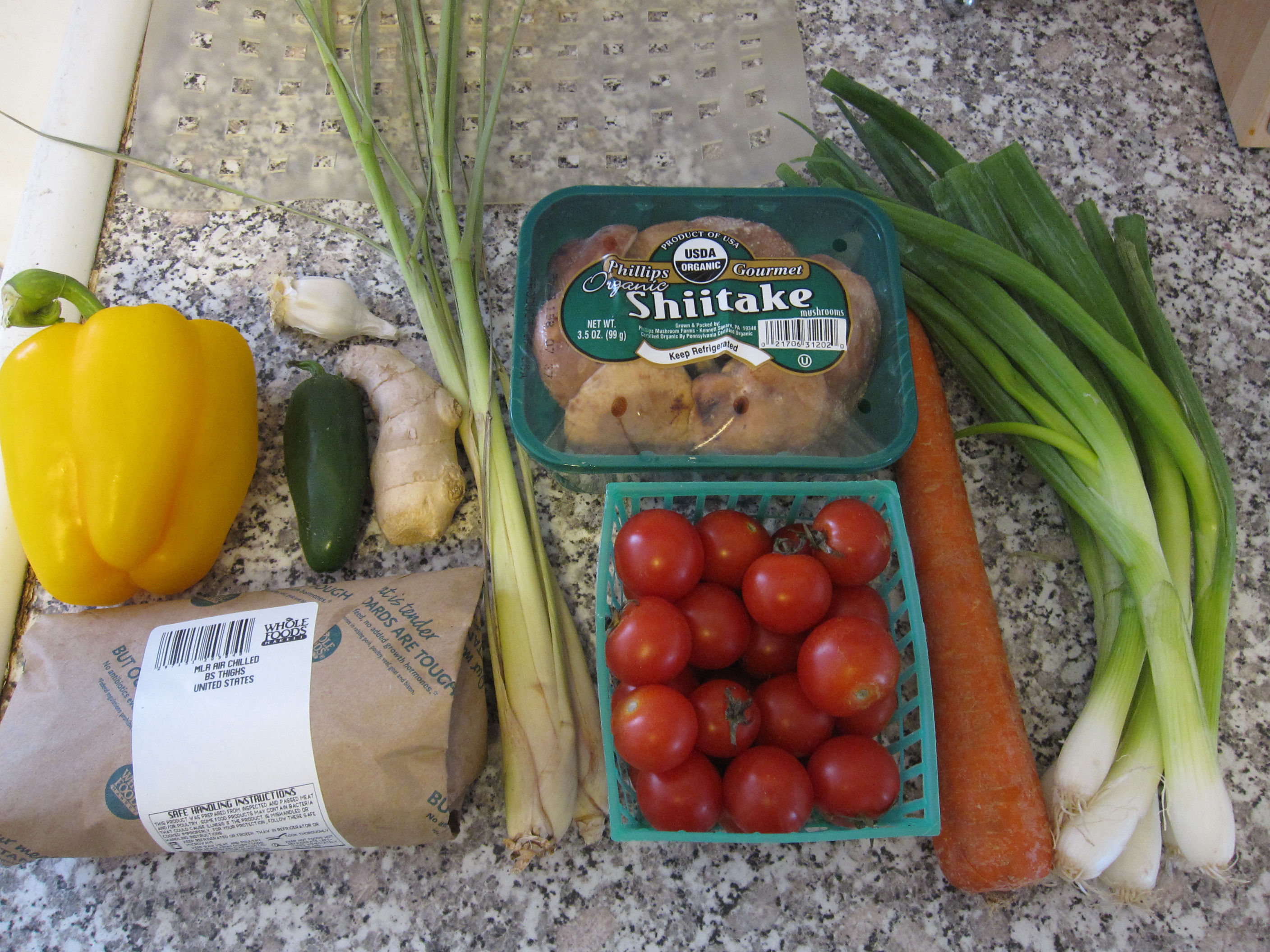
I was at the store the other day unsure of what I wanted to make for dinner. I saw some beautiful fresh lemongrass stalks I immediately knew that dinner was going to be lemongrass chicken. I’ve made lemongrass chicken a hundred different ways before, and the possibilities to make it are endless, so I just kept looking at what looked fresh and built my dinner from there.

I grabbed a yellow bell pepper, just shy of 1 pound of skinless/boneless chicken thighs, a jalapeno, 4 garlic cloves, a piece of ginger, two lemongrass stalks, some shiitake mushrooms, cherry tomatoes, a carrot, and some green onions. The pepper got chopped up, the chicken thighs cut down into bite sized pieces, the jalapeno diced, the ginger and garlic minced, I removed the outer layers of the lemongrass and sliced up the soft white inner part, I sliced up 6 of the shiitake, halved 12 tomatoes, and chopped up the carrot and 6 green onions.

In a hot pan I poured in 1 tablespoon each of soy oil and sesame oil and then tossed in the ginger, garlic, and lemongrass. I let the go for about a minute until they became very fragrant. Then I added the green onions and carrots. About 3 minutes later I tossed in the bell pepper and jalapeno. I let that all cook for about 6 minutes before adding some salt and pepper. Then I added the chicken. That took about 6 minutes to cook almost completely. About 1 tablespoon of fish sauce went in to add that distinctive Southeast Asian aroma and flavor. After the fish sauce cooked for a couple of minutes I added the shiitake. About 4 minutes later the tomatoes went in. I let everything come together for about 3 minutes and turned off the heat.

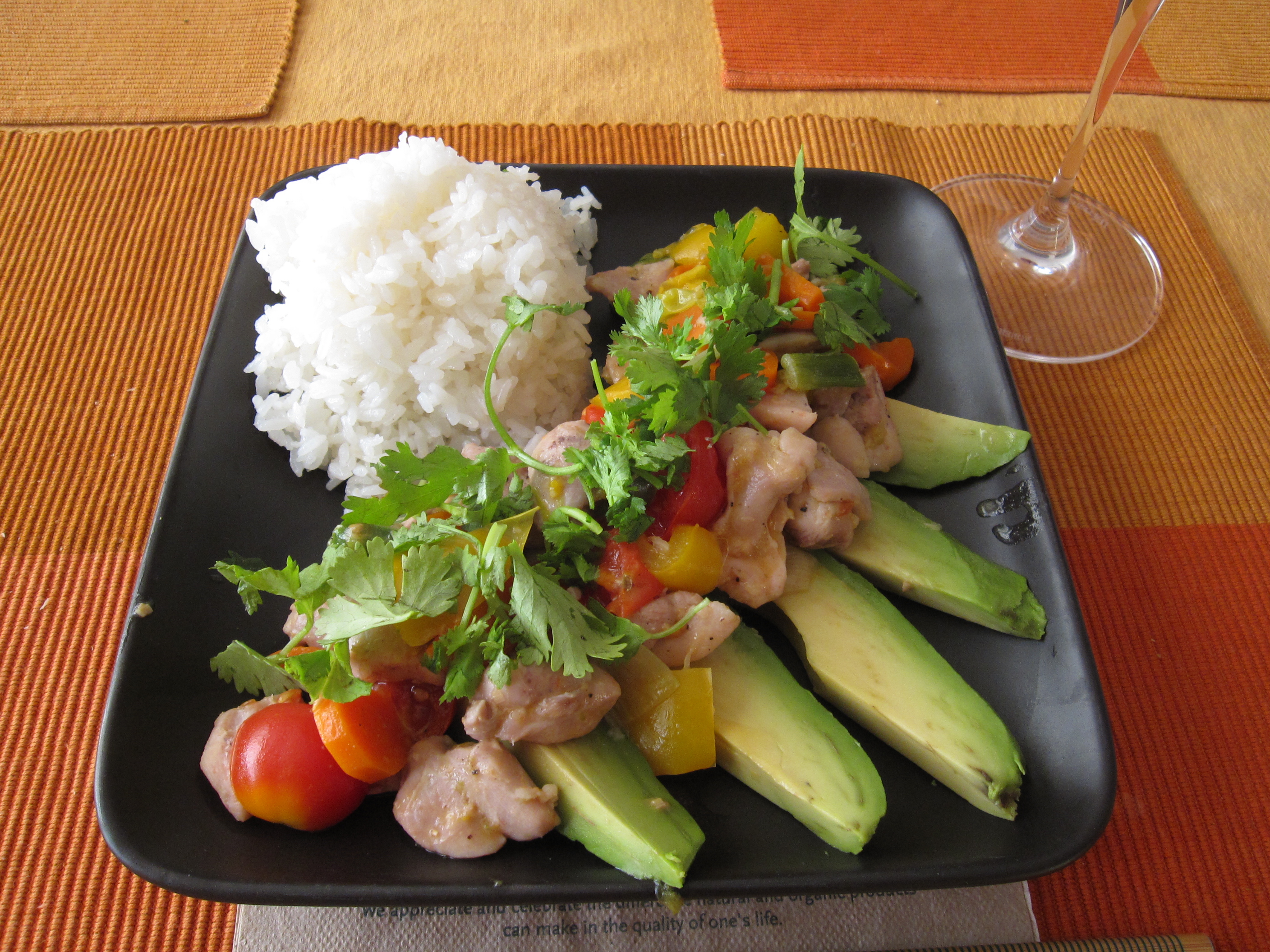
To serve, I put some white rice on one corner of the plate and then fanned out a half avocado on the other half. I put the lemongrass chicken down the middle. For garnish I tore up some cilantro. There was enough leftovers for Yuki’s lunch yesterday, so this was a 3 portion recipe.

Read Full Post »

Meatless Monday last night ended up being Yakisoba. Yakisoba is a traditional noodle dish (even though it’s origins are from China, it has become a staple of Japanese cuisine much like Ramen) that is typically served with various vegetables and pork. I omitted the pork to accommodate Meatless Monday.

First thing I did was get the protein ready. I made a thin omelet of two eggs and a little cream. In my heated large skillet I poured a tablespoon each of soy oil and sesame oil. I swirled that around to coat the entire pan and then poured in the scrambled eggs. I swirled the eggs around to make a thin omelet, much like a crepe in appearance. I turned the heat down so it wouldn’t burn. Once the bottom was cooked and the top set I carefully flipped it over to get a little crust on both sides. Then I slid it out of the pan and onto a cutting board, cut it in half, then made thin “noodles” out of it. I set this aside because this was my garnish.

For my vegetables I used 6 green onions, 1 carrot, some haricots vert, 6 ounces of bean sprouts, 1 red bell pepper, 6 cremini mushrooms (I wanted to use shiitake, but I had cremini in my fridge already), some ginger and a few cloves of garlic. I sliced everything thinly so that they would mix in well with the noodles.

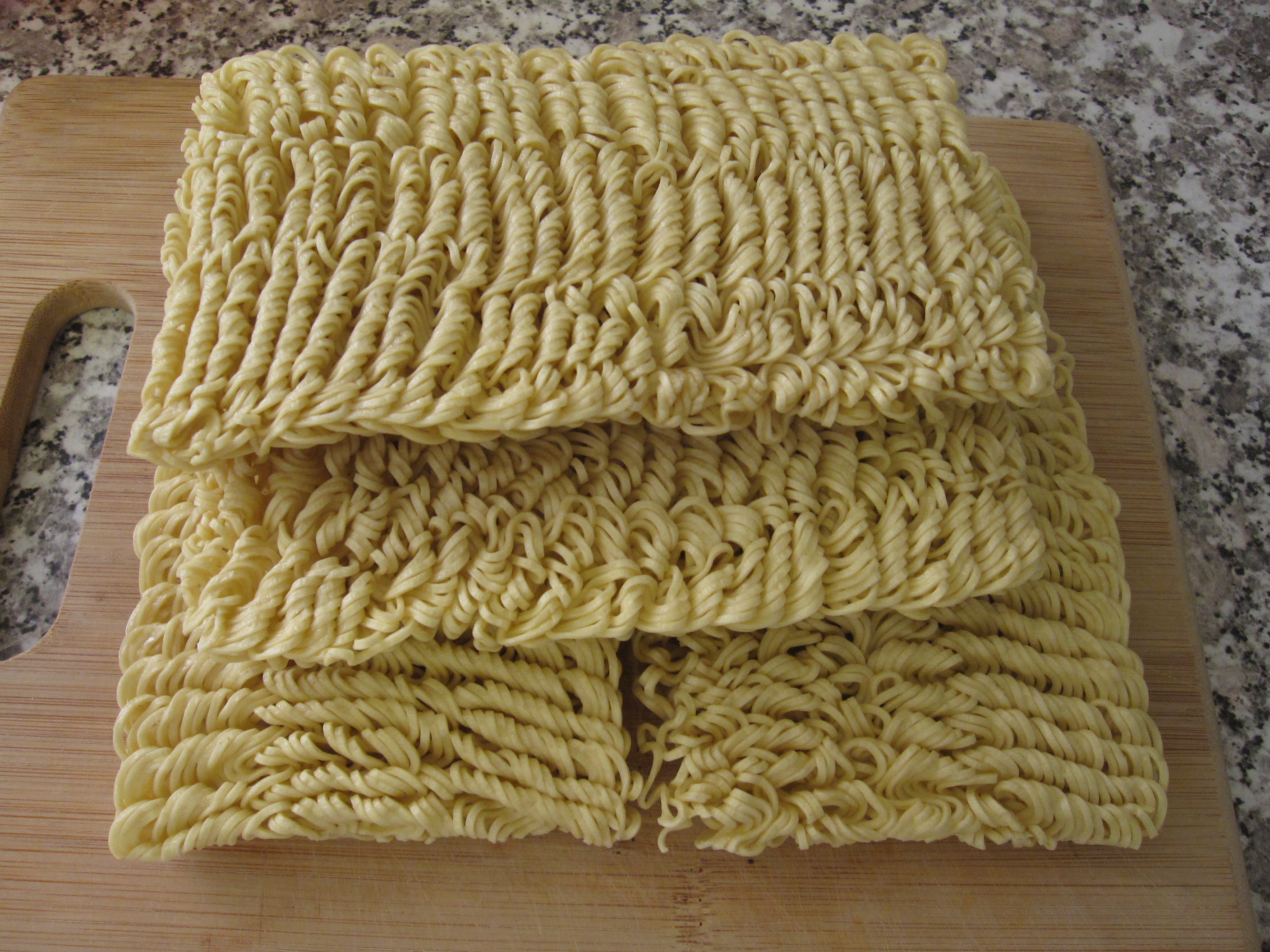
The noodles I used are called Chuka Soba, which translates to Chinese Noodles. They’re wheat noodles, but honestly, you could use a chow mein or ramen noodle if you wanted and get the same results. I cooked the noodles according to package instructions.

Using the same skillet I used for the egg I heated another tablespoon each of soy and sesame oils. I threw the garlic and ginger in for about a minute and then added the haricots vert, carrot, bell pepper, and green onions. I let those cook for about 6 minutes before adding the mushrooms. I let the mushrooms cook for about 4 minutes and then seasoned with a little salt and pepper. Then I poured in about 2 tablespoons of sake and let that boil off. After that I added the sprouts and then about 1/3 cup of Bull-Dog Sauce. I don’t know if you can get Bull-Dog Sauce at many places. We get ours at Mitsuwa, but you may be able to find it in ChinaTown or some other Asian Grocers.  

Once the sauce was mixed in well with the vegetables I tossed the noodles in and let them fry a little while mixing everything together. It’s important to keep the heat on to dry the sauce up a little while the noodles absorb it. This gives a nice texture to the noodles.

To serve I simply used my tongs and put a big pile of everything on a plate. Then I topped it with some of the sliced eggs and drank a cold beer. For the leftovers today I sliced some Black Forest Ham and added it to the mix. Since it’s not Meatless Tuesday I’m cool with that.

Read Full Post »

Alright, so I’ve been working on perfecting a hamburger that tastes like a bowl of Pho for a while now so that I could enter it into a contest that has a nice payout for the winner (wish me luck everyone!). I think I finally nailed it Saturday night. Here’s how it all goes down.

Instead of using regular old ground chuck I picked up a 2 pound brisket. Pho commonly uses brisket or rump, so I wanted to get that type of beefy flavor for these burgers. You could have your butcher grind it up for you, but what’s the fun in that? I don’t have a meat grinder (anyone seeking to get me a gift for whatever reason take note, I would gladly accept a meat grinder) but that didn’t stop me from giving it a go.

First thing I did was cut the brisket up into 1 inch cubes. I threw all of the meat into my food processor and pulsed it until it turned in the consistency I was looking for. I had to be careful not to over process it as that would start to melt the fat and ruin the texture. Then I put the meat in a bowl and prepared all of the seasonings.

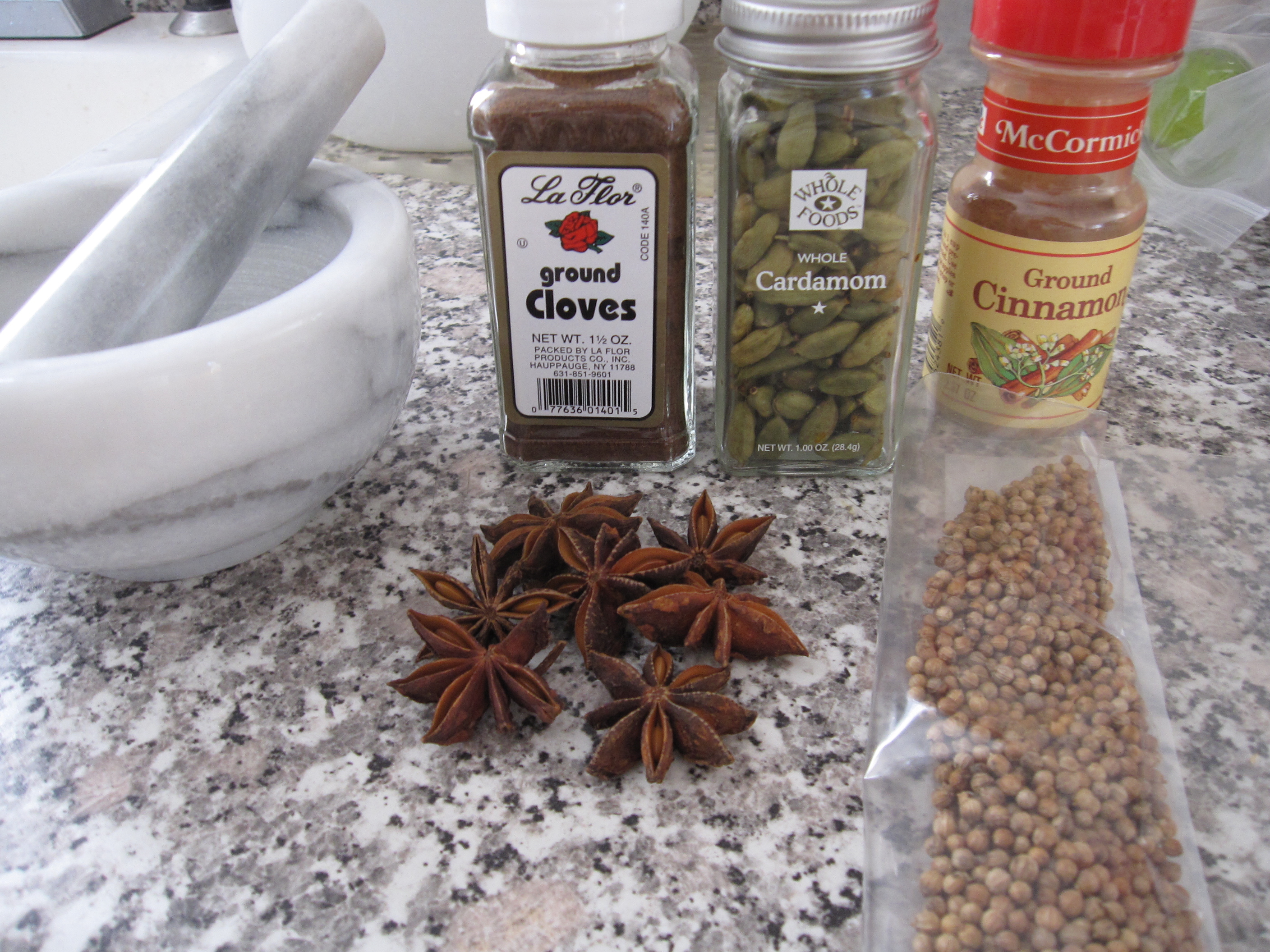
The spice mix included ground cloves, cardamom, ground cinnamon, star anise, and coriander seeds.

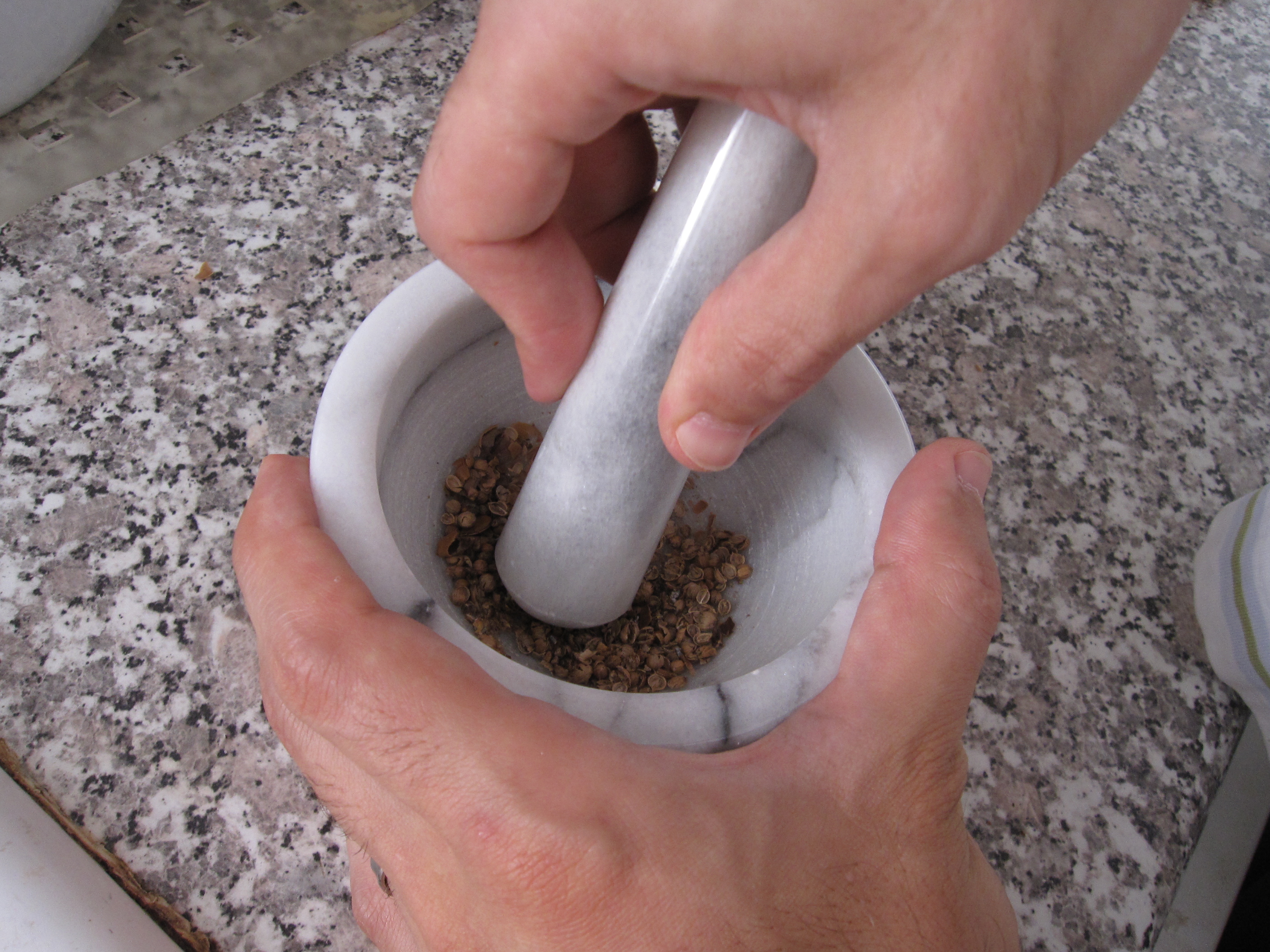
With my pestle and mortar I first had to grind up the whole seeds. I took enough seeds out of the star anise to measure about 1/4 teaspoon (cracking out the seeds is a pain!). Then I cracked open enough cardamom pods to get me 1/4 teaspoon of its seeds. I also measured about 3/4 teaspoon of coriander seeds. I ground those up into a fine powder and then added 1/2 teaspoon each of the ground cinnamon and ground cloves. I also mixed in there 1/2 teaspoon of black pepper and 1 teaspoon of pure cane sugar.

Once my dry spices were mixed together I zested a lime to get about 1 tablespoon, and I minced up 1 tablespoon of ginger and 1 tablespoon of garlic.

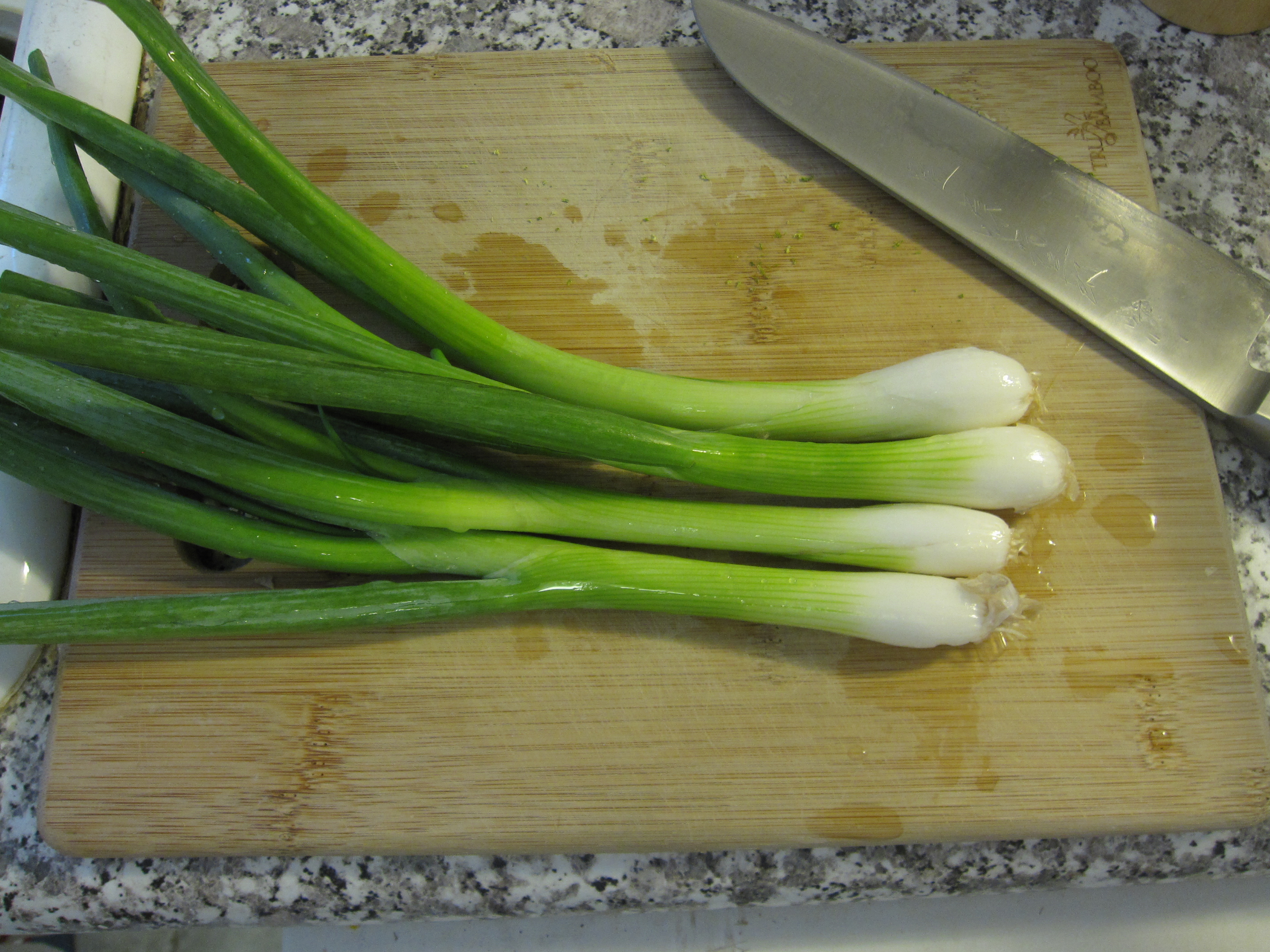
I also sliced up 4 green onions, just the white and pale green parts.

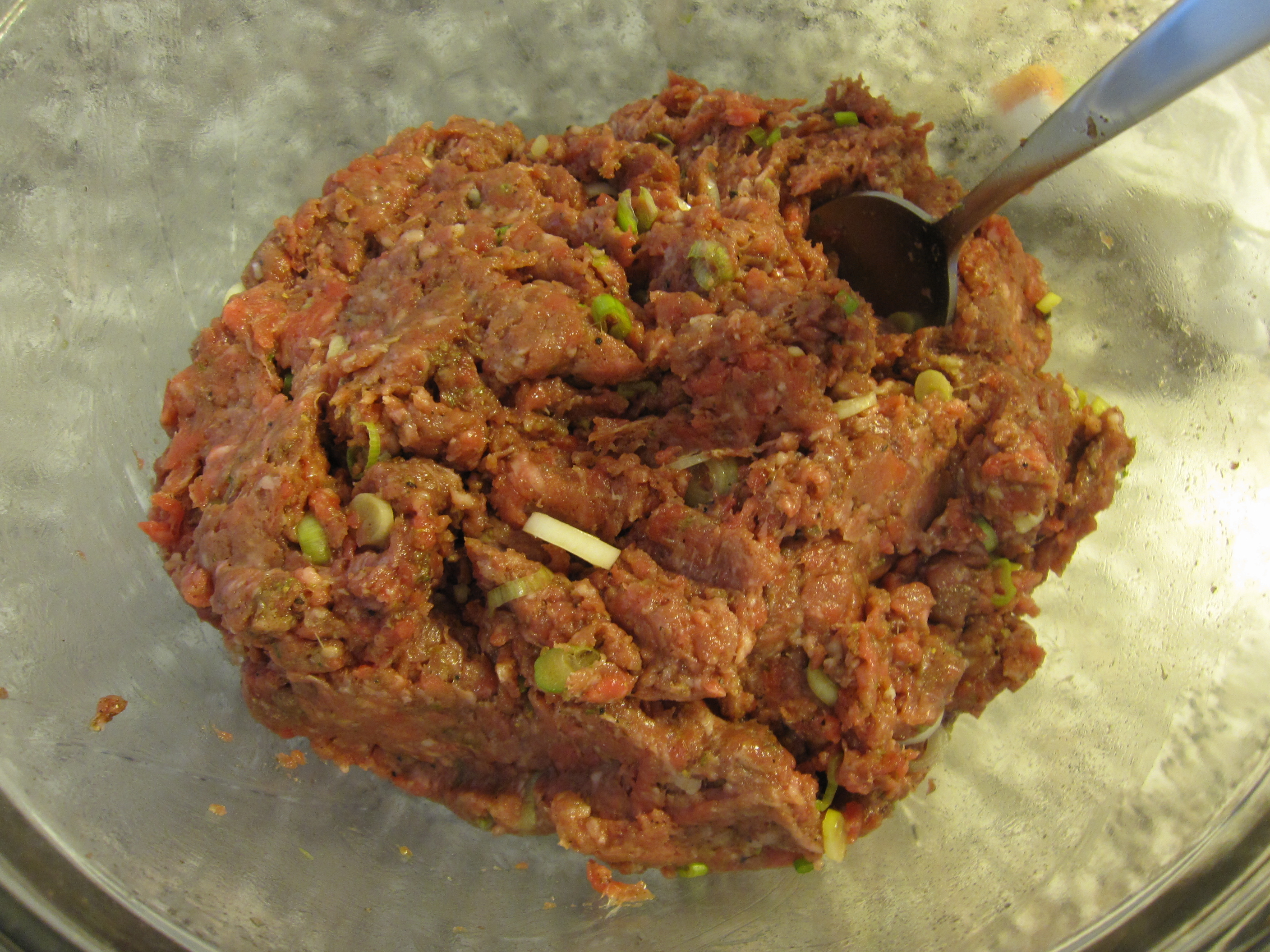
I put all of my seasonings in the bowl with the meat and then added 2 tablespoons each of fish sauce and sesame oil. With a metal spoon I mixed it all together until the flavors were evenly distributed. It’s important to use a metal spoon when mixing things into burger meat. When you use your hands the body heat can melt the fat, you don’t want that. You want the fat to mix in just like the other ingredients so that it melts properly when cooking keeping the meat nice and juicy.

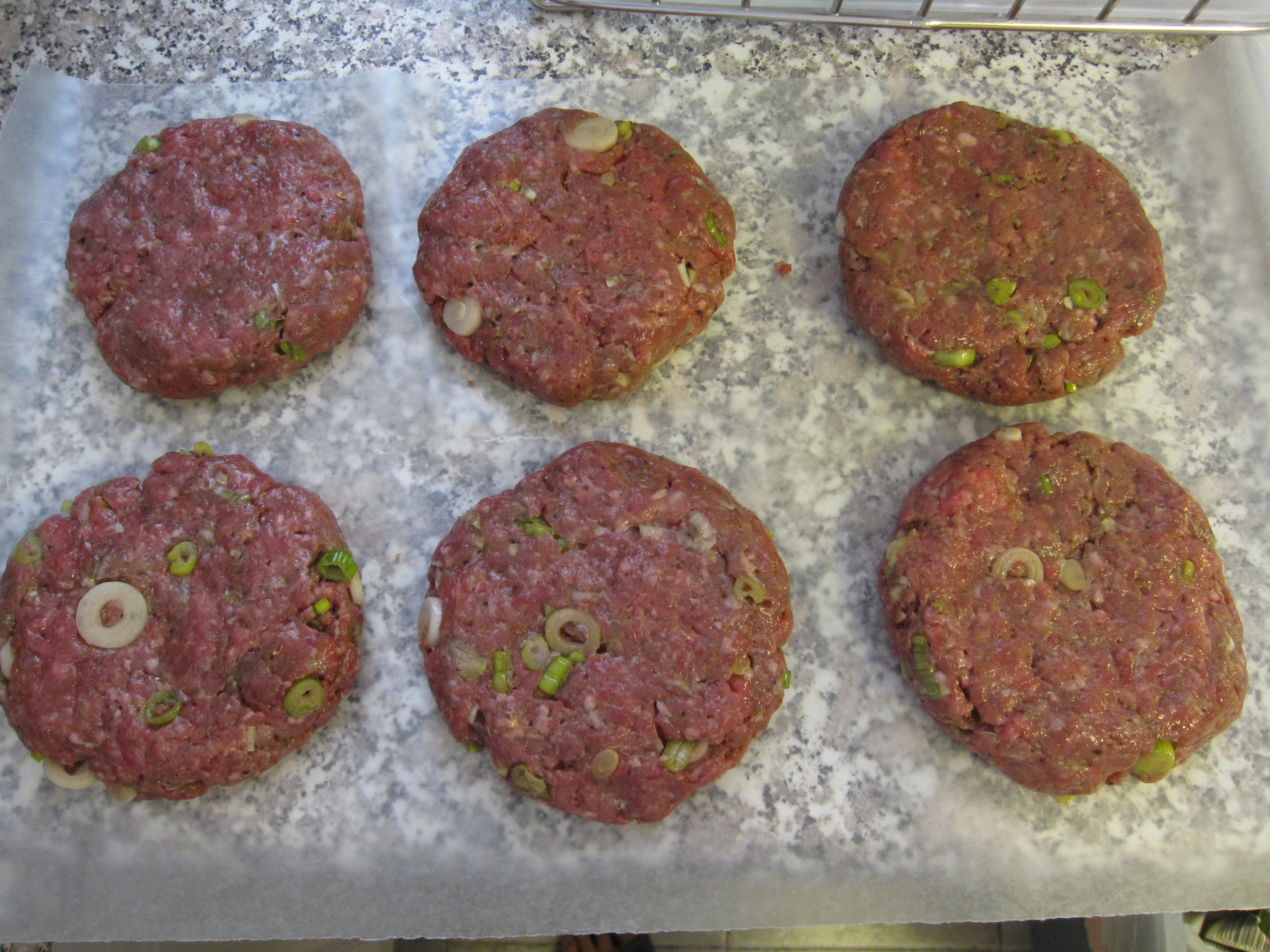
After the meat was mixed nicely I let it rest for about 10 minutes to let the flavors settle in. Then, I wetted my hands and formed 6 patties.

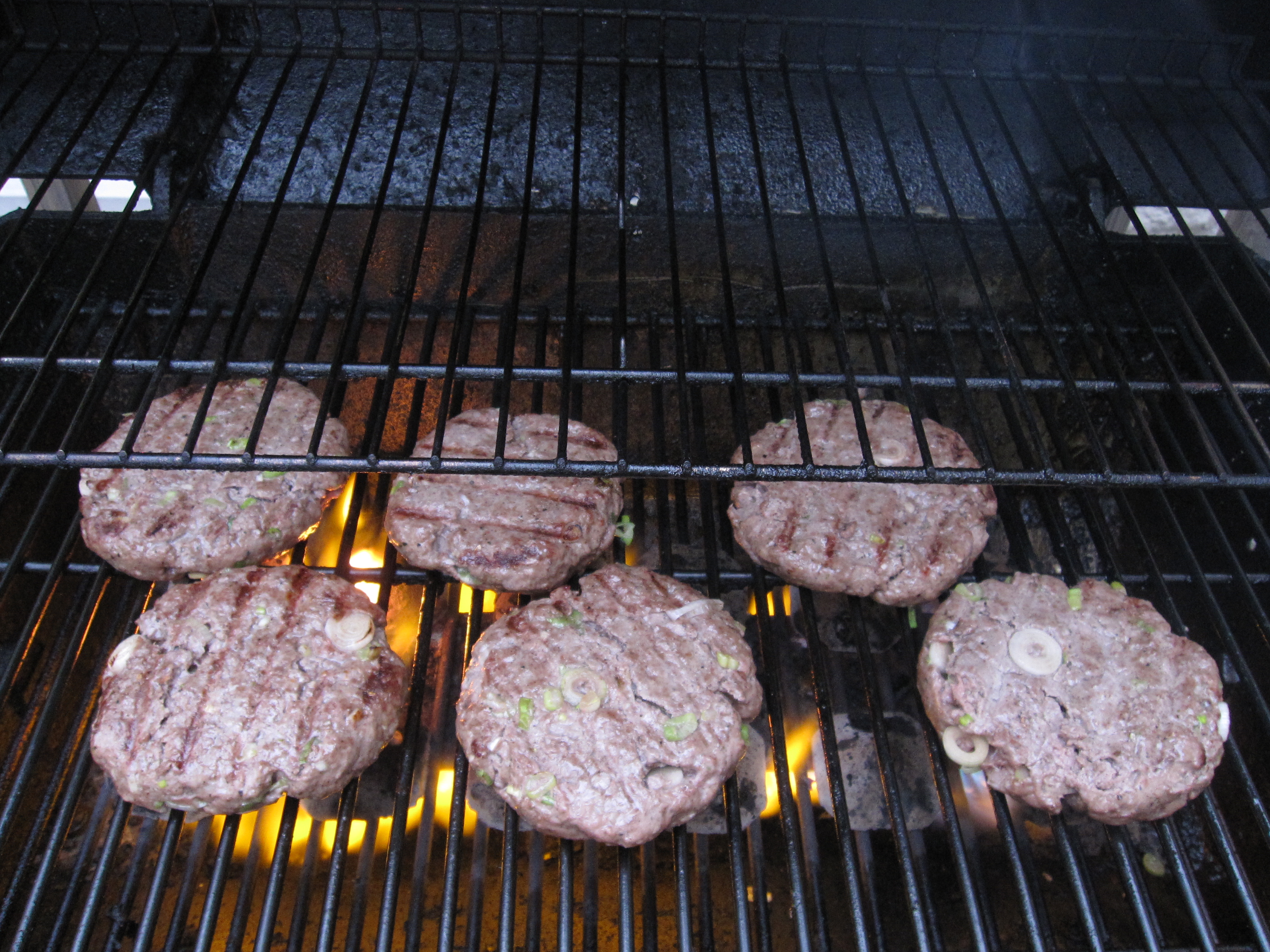
I heated the grill up to a medium-high heat, brushed it off, and oiled it. Just before putting the burgers on I lightly salted both sides of the patties. With the fish sauce there’s no need for a lot of salt, but sprinkling a little on just before grilling helps get a nice crust on the outside of the meat. I let the cook for about 6 minutes or so on each side.

When the burgers were cooked to my liking I put some sesame seed buns on the grill to lightly toast them. That only took a minute.

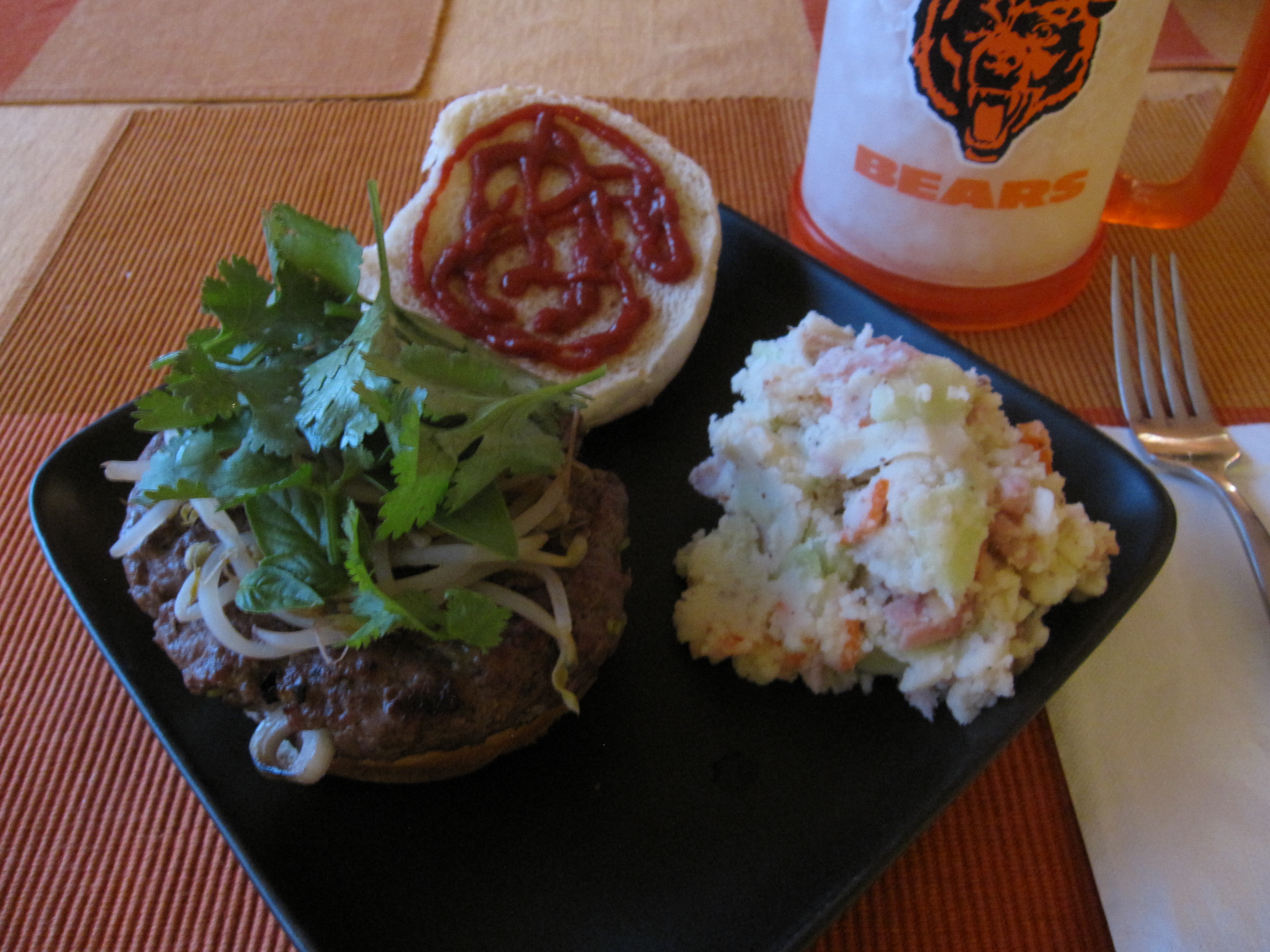
To assemble the burgers I placed one grilled patty on each bottom bun and squeezed one wedge of lime on each patty. On top of each patty placed 1 ounce bean sprouts, then 3 basil leaves and 3 cilantro sprigs. 1 tablespoon of Sriracha got squeezed on the underside of each top half of bun and they were ready to go.

For the side Yuki wanted to make Japanese-style potato salad. She skinned and diced two large russet potatoes and then tossed them into boiling water. She let them boil for about 15 minutes until they were cooked through. Then she mashed them up with enough mayonnaise to keep them nice and moist and a little mustard for flavor. She mixed in a cucumber that she skinned and chopped up, a carrot that she also chopped up, and some black forest ham that she cut into short slivers. That all got mixed together well and provided a nice cool counterpoint to the spicy burgers.

Read Full Post »

I had some angel hair pasta that I wanted to use up last night. Combine that with all of the Japanese ingredients I had in my fridge that needed to be eaten I whipped up a bolognese sauce with Japanese flavors. Note, I usually cook for 4 so that we have lunch the next day, but since it was Friday and we don’t need to take a lunch anywhere on Saturday this recipe was for 2.

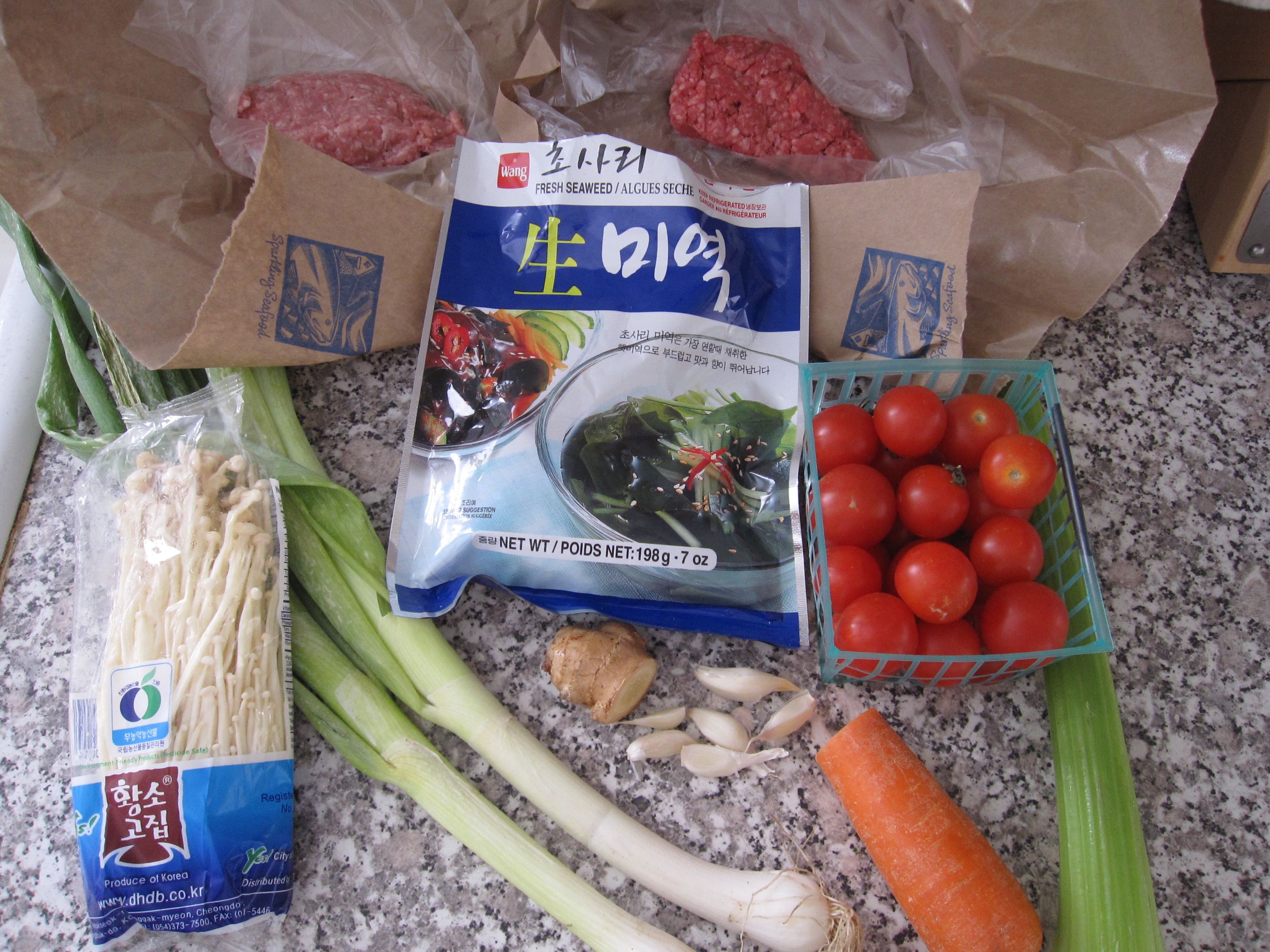
My ingredient list for the bolognese was a package of enoki mushrooms, 1 negi thinly sliced (I had two but decided only to use one), some ginger and garlic minced, 1/2 carrot cut into quarter moon slices, 1 rib of celery cut down the middle lengthwise and then sliced, 10 cherry tomatoes halved, some wakame seaweed, 1/4 pound of ground beef, and 1/4 pound ground pork. What I didn’t get in the photo was some cooking sake, mirin, and soy sauce.

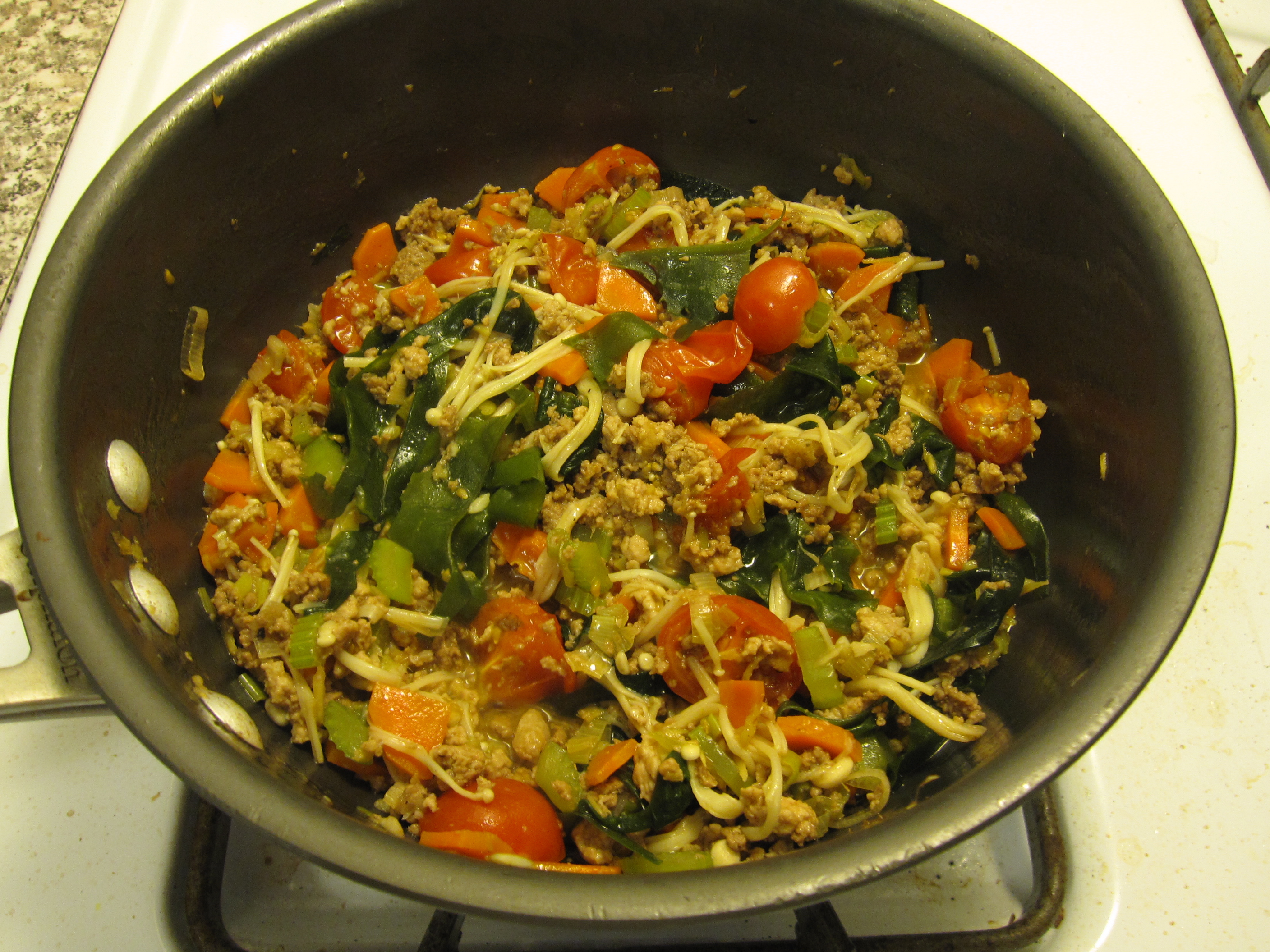
In my pot I heated up about 2 tablespoons of soy oil and 1 tablespoon of sesame oil and then let the garlic and ginger go for about a minute. Then I tossed in the carrot, negi, and celery for about 5 minutes until they just started to soften a little. After that I added the ground meats. They took about 5 minutes or so to cook and break up, I added just a touch of salt (not too much since I was about to add some soy sauce) and some black pepper. Once the meat was broken down I poured in about 3 tablespoons of sake and let that boil off for a couple of minutes before adding about 2 tablespoons of soy sauce and 1 tablespoon of mirin. Once all the liquid was almost completely boiled off, about 2 more minutes, I added the cherry tomatoes and enoki. A couple of minutes later I mixed in the wakame and then turned off the heat. The wakame doesn’t need to be cooked, so I just wanted its flavor to incorporate into the meat.

While that was all going on I cooked some angel hair pasta and drained it thoroughly.

To serve, I piled the pasta on the plate and then topped it with the bolognese. On top of that I put some katsuobushi (dried bonito flakes). Some Asahi to wash it all down and we were good for the night.

Read Full Post »

Last night I did a riff on one of Yuki’s recipes. She commonly makes ground chicken dumplings similar to these patties in the winter when we eat nabe (Japanese hot-pot). So, I took her idea and made my own Japanese flavored dinner.

The ingredient list for the patties were 3/4’s pound of ground chicken thigh, 1 block of tofu that I had pressed the water out of, one egg scrambled with 1 tablespoon of soy sauce, 1 carrot cut into a small dice, 3 garlic cloves and 1 inch of ginger that I minced, and 1 tablespoon of hijiki seaweed. The hijiki comes dried and is available in most Asian sections of your grocer. I put 1 tablespoon of dried hijiki in a couple of cups of cold water and let it sit for about a half hour. Then I strained it, reserving the liquid for the miso soup.

I mixed it all together, with about a tablespoon of nanami togarashi (a Japanese red pepper spice mix, there are various kinds of togarashi that are also usually available in the Asian section) until the tofu was completely broken down and everything was mixed well. Then, on a lightly oiled baking sheet, I laid 8 patties (two patties per serving, leftovers for lunch). I let it cook in a 375 degree oven for about 20 minutes.

Before cooking the patties I got my miso soup ingredients ready to go. I cut 2 negi (Japanese green onions, larger than regular green onions, not as big as leeks) into 1 inch pieces, hiratake (oyster mushrooms), and wakame seaweed. Wakame can be bought dried or fresh. Fresh comes heavily salted to preserve it. You need to soak it really well in water and cut it into smaller pieces as it expands once the salt is rinsed off.

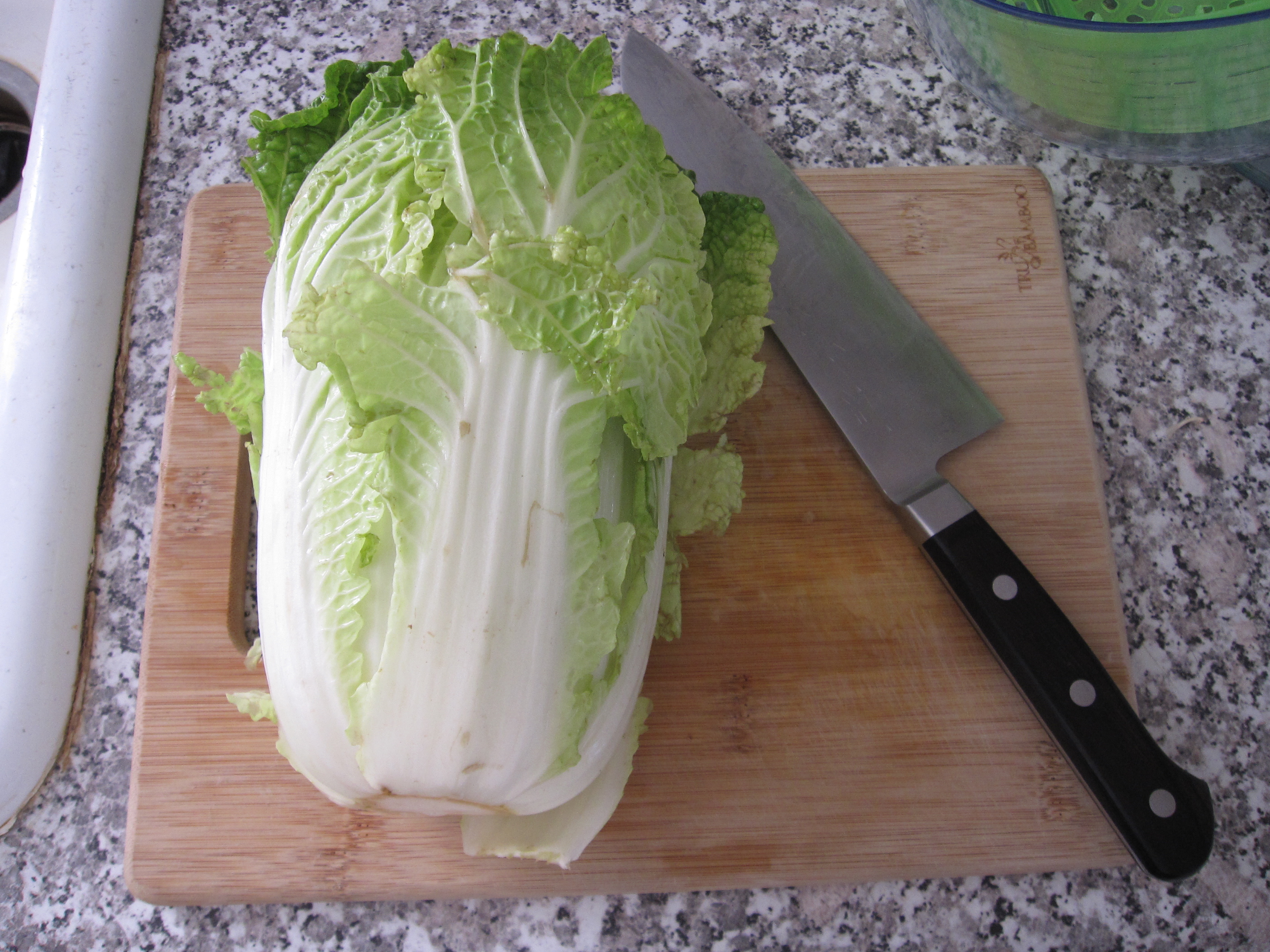
I also chopped up a small head of napa cabbage to cook as a side.

Once I put the patties in the oven I melted 1 tablespoon of butter in a skillet and heated up the hijiki liquid in a pan along with one more cup of water, 1 teaspoon of dashi-no-moto (instant dashi), the negi, and the mushrooms. I let the soup simmer while working on the cabbage. Once the butter was melted I added 1 tablespoon of soy sauce and then the cabbage. I let the cabbage wilt in the soy butter for about 10 minutes and then turned off the heat.

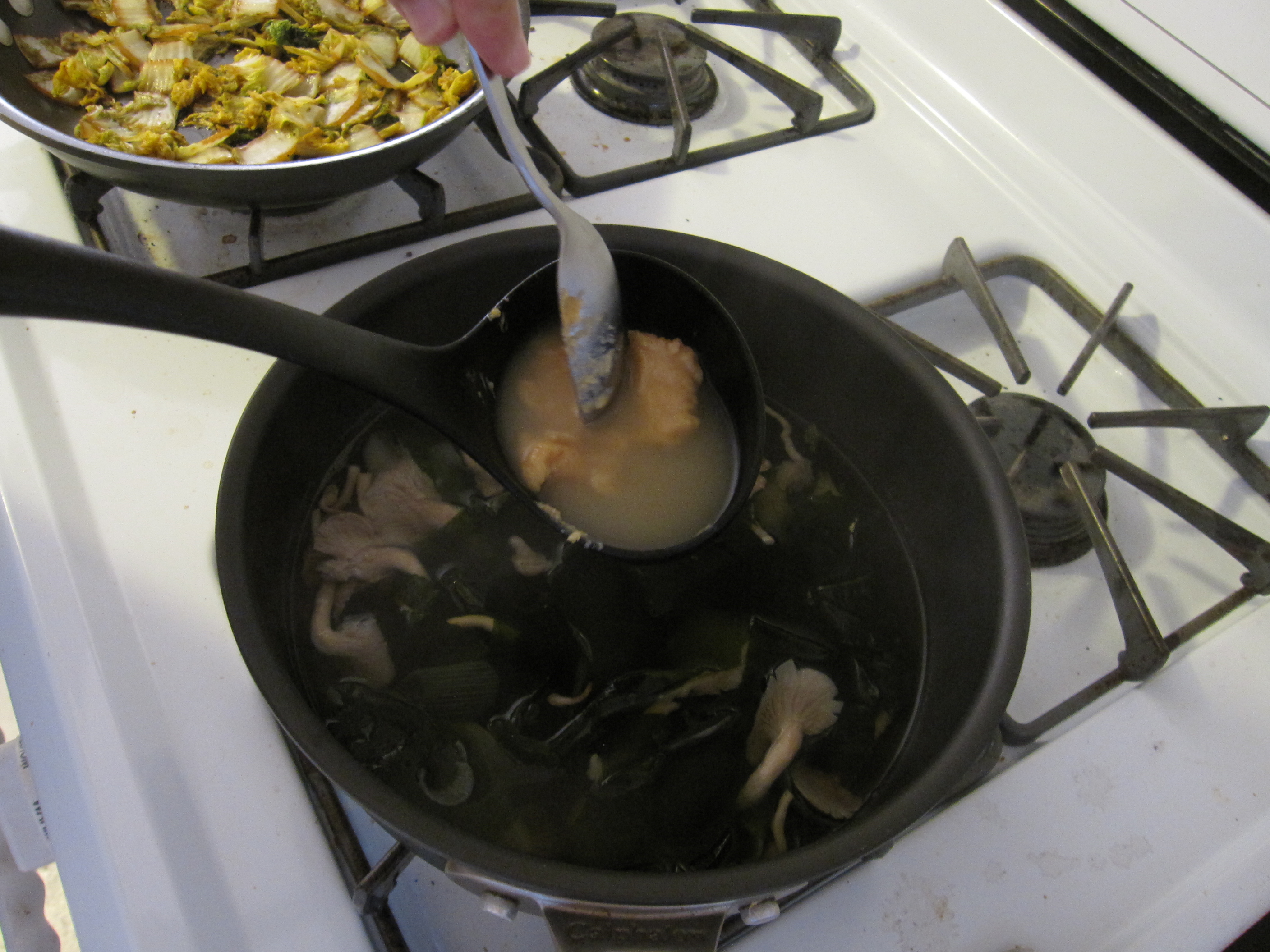
After the cabbage was ready I added the wakame to the soup and then the miso. The best way to add the miso is to take a heaping spoonful and swirl it around in a ladle that is just slightly in the soup. This allows the miso to incorporate slowly keeping it from being lumpy.

I served everything with some white rice. I poured just a little ponzu on top of the patties to add a touch of acidity and help keep them moist. To keep with the Japanese flavors it only seemed right to drink Asahi.

Read Full Post »

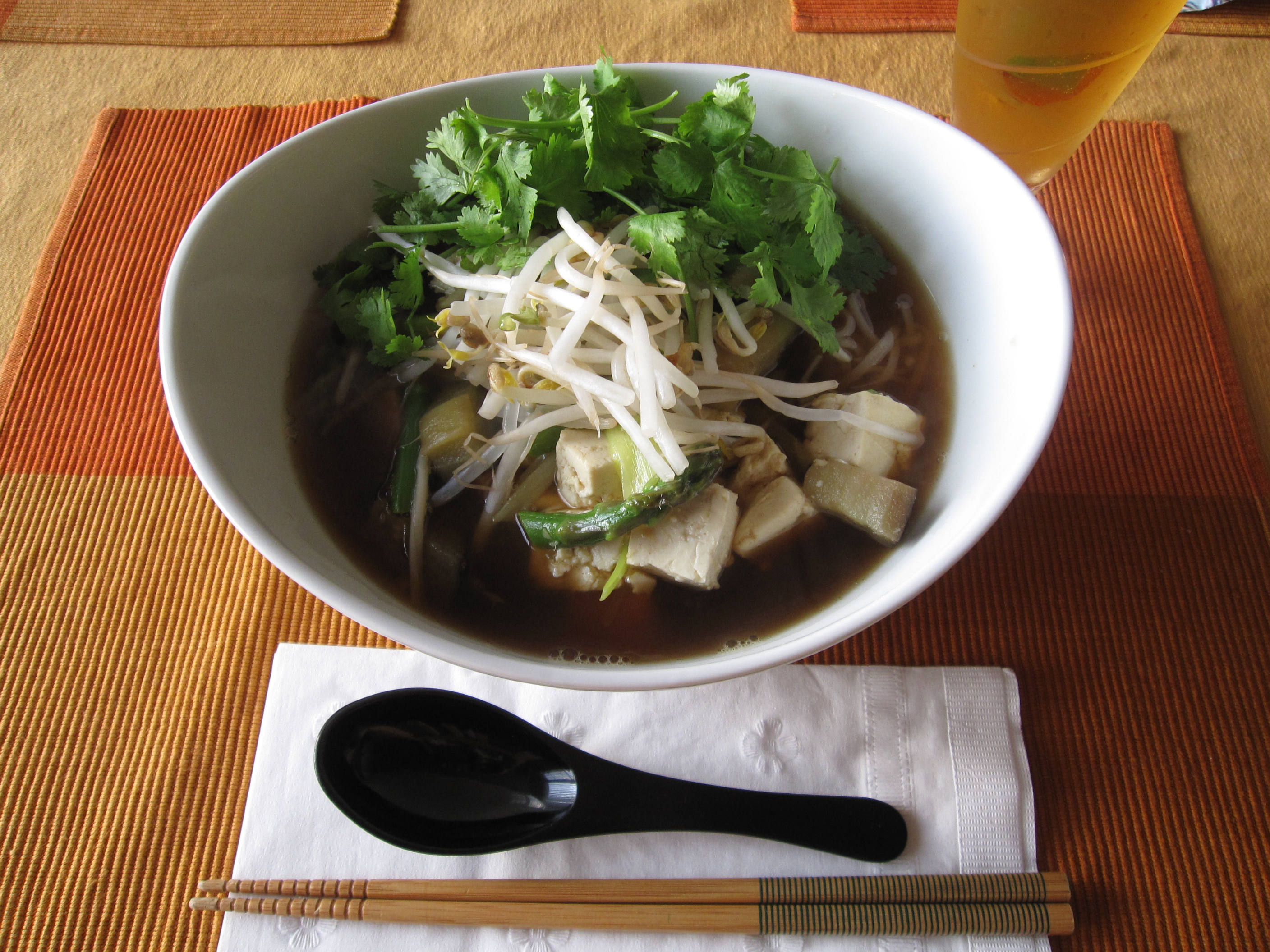
For Meatless Monday last night I made a Cambodian-style noodle soup. It’s very similar to Vietnamese Pho, but the broth is slightly different. Pho usually has star anise and cinnamon in the broth, I didn’t use either of those. Stylistically though, their very similar. And why not? They are neighboring countries after all.

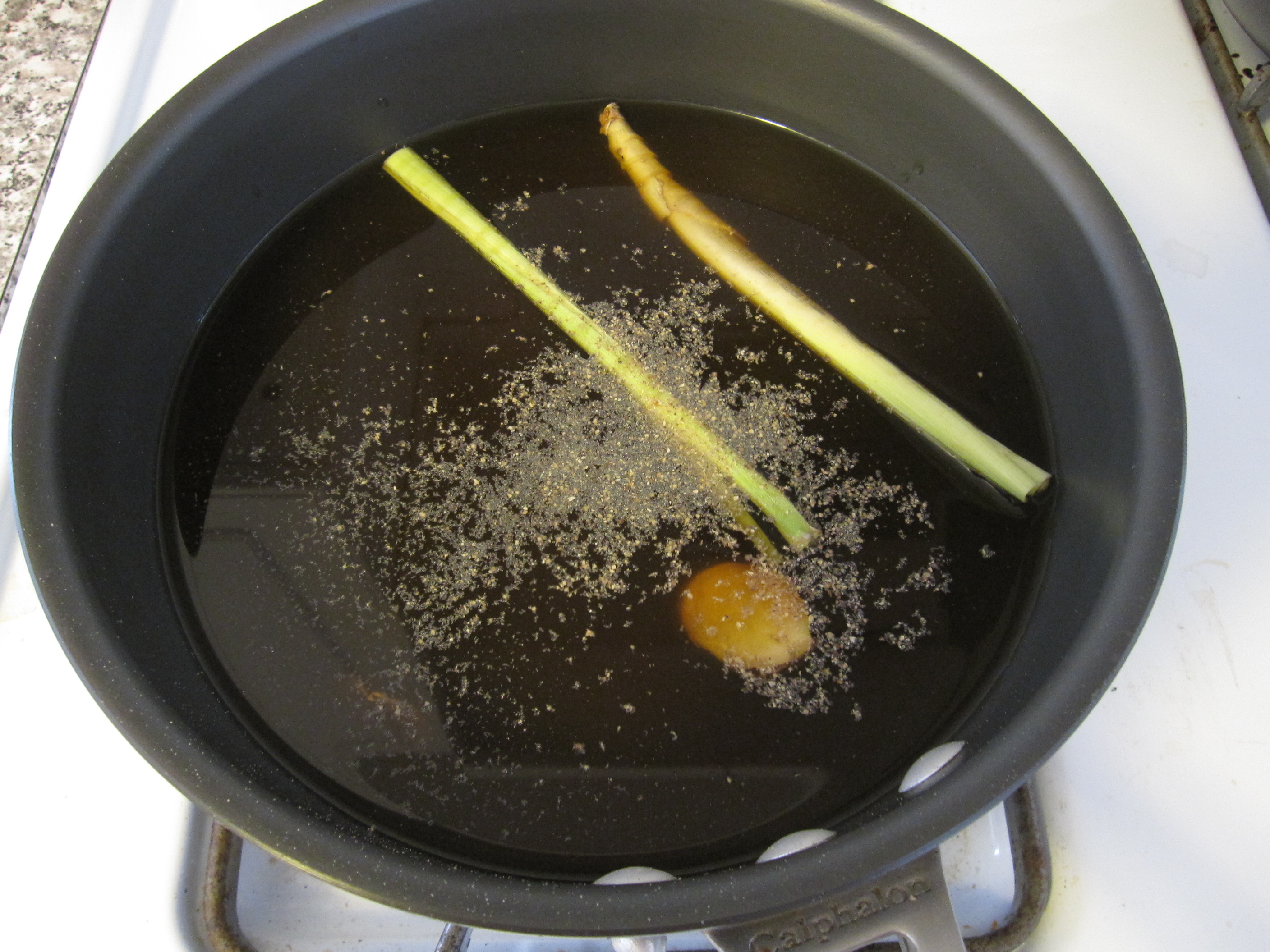
To get the Cambodian flavor I used ginger and lemongrass. I left the skin on the ginger and the tough outer layers of the lemongrass in tact. The ginger was sliced and those marks you see on the lemongrass are from banging it with the back of my knife. That loosens up the fibers and helps release the oils.

I put them in a sauce pan along with 1 quart of vegetable stock, 1/4 cup of soy sauce, 1 cup of water, and a lot of fresh cracked white pepper. I brought that all to a boil and let the flavors steep for about 20 minutes. Then I strained the broth into a large bowl and let it sit until later on in the cooking.

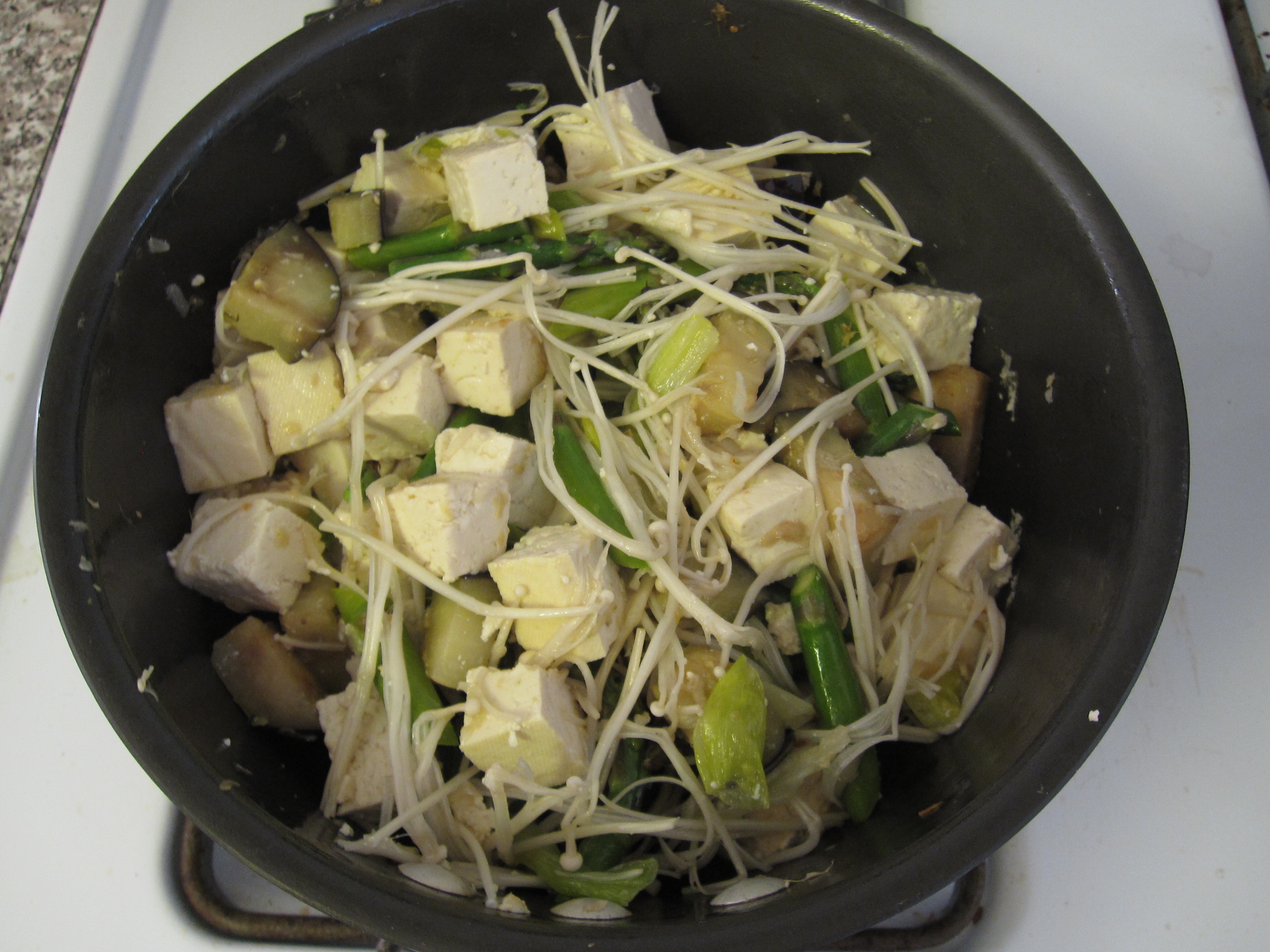
My ingredient list included bean sprouts, enoki mushrooms (not Cambodian, but nevertheless delicious and healthy), fresh made tofu from the HMart that I cubed, ginger and garlic that I minced, asparagus that I cut up (again, not Cambodian), half of an eggplant diced, green onions that were sliced about 2 inches in length, and rice noodles.

I started by heating up about 1/4 cup of soy oil and a few tablespoons of sesame oil. I let the ginger and garlic go until they were fragrant, about 1 minute, then added the green onion and asparagus. Once they started to slightly soften I added the eggplant. That took about 5 minutes until it was mostly cooked through. Then I added the tofu and enoki. Those both heat through relatively quickly, about 2 minutes. After all of those vegetables were heated I poured the broth in and let it come to a boil, then turned the heat down and let it simmer, covered, for only about 5 minutes.

During that time I cooked the noodles according to package instructions. Once cooked through I drained them thoroughly and divided them up into the serving bowls and ladled the soup on top. I topped all of that with the bean sprouts, some cilantro, and a squeeze of lime juice.

Half-way through eating I realized that something was missing….SRIRACHA!!! I took my sriracha out, squeezed a little into the broth, and all was good.

Read Full Post »

« Newer Posts - Older Posts »