Feeds:
Posts
Comments

Posts Tagged ‘japanese’

I was perusing my Charlie Trotter cookbook the other day and came across a recipe that uses a very similar marinade to one I often use. Since he’s the great Charlie Trotter I thought I’d give his a try. Oh, and yakigyu is simply Japanese for grilled beef.

His marinade consisted of 1/2 cup of tamari which is probably the most ancient style of Japanese soy sauce as it contains no wheat and is a little richer than regular soy (it is the byproduct of making miso), 1/4 cup of mirin, 1.5 tablespoons of sesame oil, and 2 tablespoons of grated ginger. Once I mixed up the marinade I set 3 tablespoons aside and then thinly sliced 3/4 pound of sirloin and threw that into the marinade. I covered it with plastic wrap and let it sit in the fridge for 2 hours.

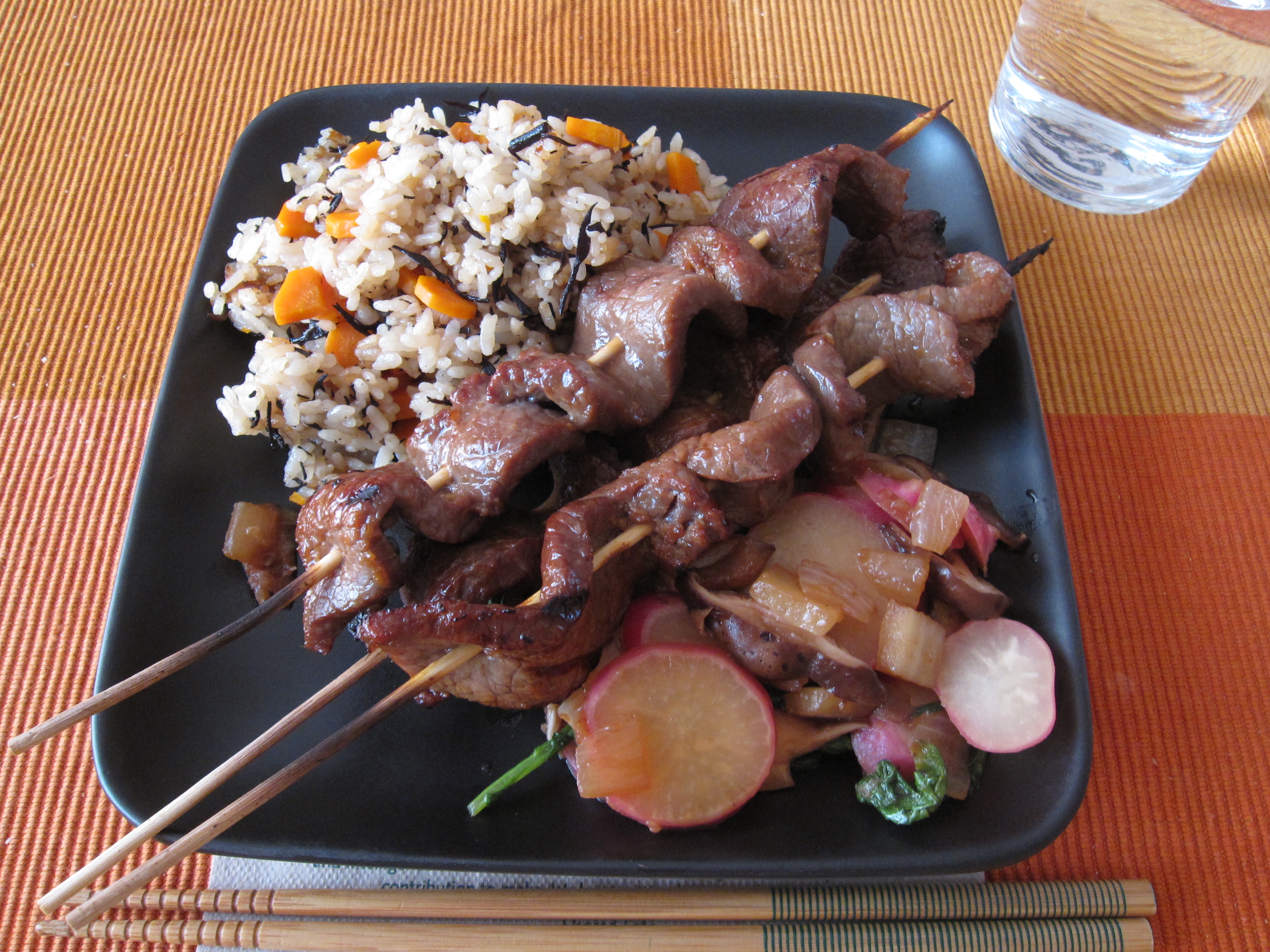
Then, using some bamboo skewers that I soaked in water for an hour, I threaded the meat and got it ready for the grill. Since the meat was thin it only needed about 2-3 minutes on each side over a medium-hot grill.

To accompany the meat I made a quick vegetable saute of 5 shiitake sliced, half an onion large diced, and 5 radishes. I separated the greens from the radish and thinly sliced the radishes with my mandolin slicer. I could have used my knife, but the wife was wondering why I got a mandolin slicer if I never use it. So, there you go sweetheart, I used the mandolin.

In my hot pan I poured 1 tablespoon of soy oil and sautéed the onion first for about 5 minutes. Then I added the shiitake and let that go for about 4 minutes. After that I tossed in the sliced radishes. Those cooked for about 4 minutes until I poured in the reserved 3 tablespoons of marinade. I let that boil down for a few minutes and then added the radish greens. Once the radish greens wilted down, about 1-2 minutes, I turned of the heat as this was ready to go.

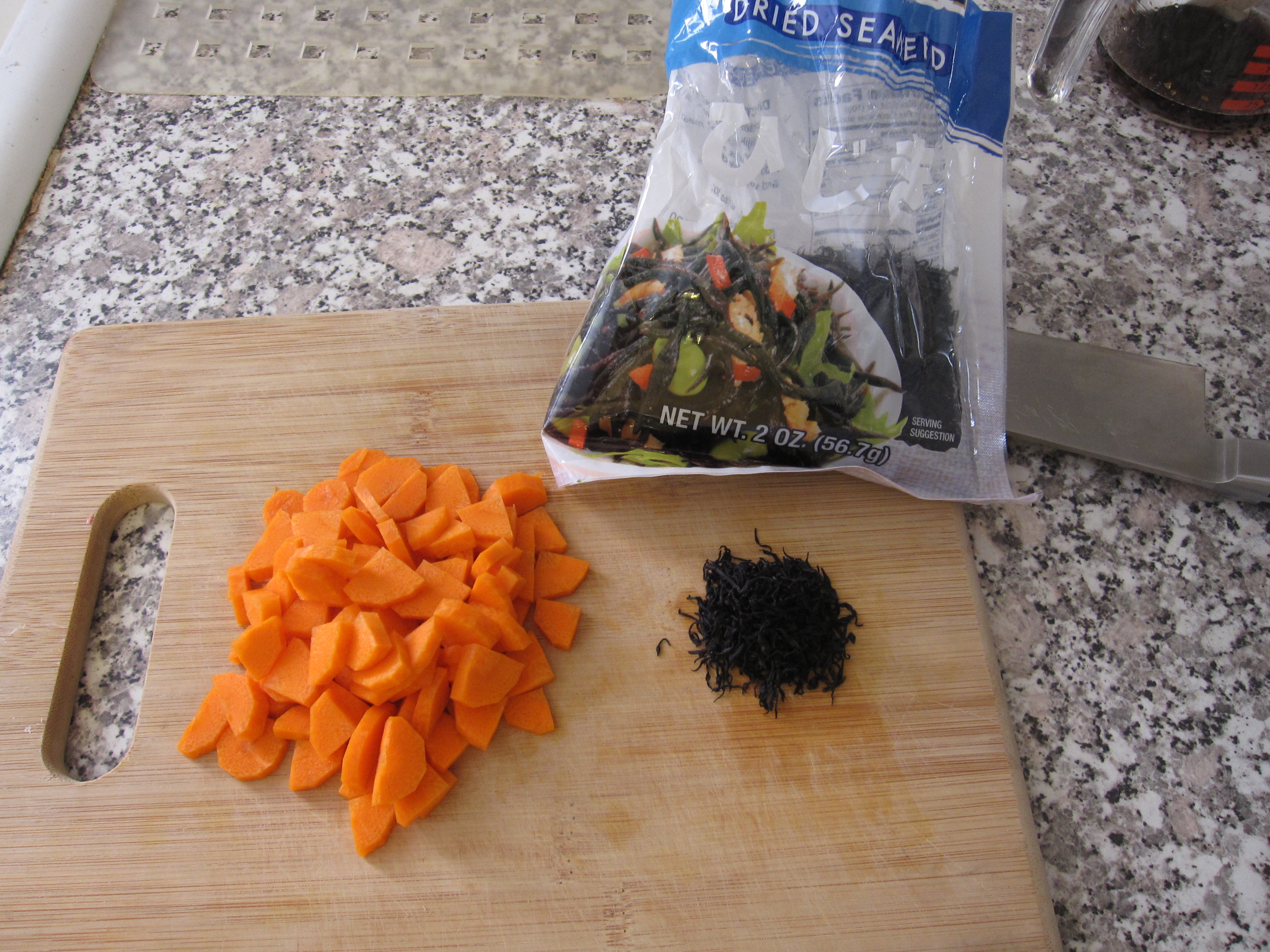
Instead of regular white rice I made hijiki and carrot rice, a recipe that Yuki taught me a long time ago and has become one of my favorite rice preparations. First, I took a heaping tablespoon of dried hijiki and soaked it in some cold water for about a half hour. I also diced up a small carrot. Once the rice was washed and in the rice cooker bowl (I only made one cup of rice) instead of regular water I poured in 2 tablespoons of soy sauce, and 1 tablespoon each of sake and mirin. Then, the get the right amount of liquid I used the hijiki soaking water to fill it up. Once the liquid was at the right level I threw in the hijiki and carrot. Hit the on button and a half hour later my rice was ready.

I have to say I was very disappointed in Trotter’s marinade. Tamari is a little bit stronger in flavor than soy sauce and it really made the beef salty. Too salty for Yuki’s taste and almost too much for mine (I tend to like food a little saltier than she does). Old Chucky Boy should know better than to have used so much tamari. I would have been much better served to have used the classic marinade I usually do, 3 parts soy, 2 parts sake, and 1 part mirin (1.5 tablespoons of sesame oil is ok). Besides the soy being a little lighter in flavor, cutting back on the amount and replacing it with sake (or vodka if you like) adds a little more depth the marinade. A little grated garlic wouldn’t have hurt either. While I have had good luck with some of his recipes in the past, this is one I will not be using again.

Read Full Post »

Alright, back in the kitchen. The one thing about traveling in the Grand Circle area is the lack of quality Asian food. We did find one really good Thai place near Zion Canyon, but Yuki was craving Japanese flavors and simple white rice. So, being the absolutely wonderful husband that I am, I made some chicken teriyaki with vegetables and white rice.

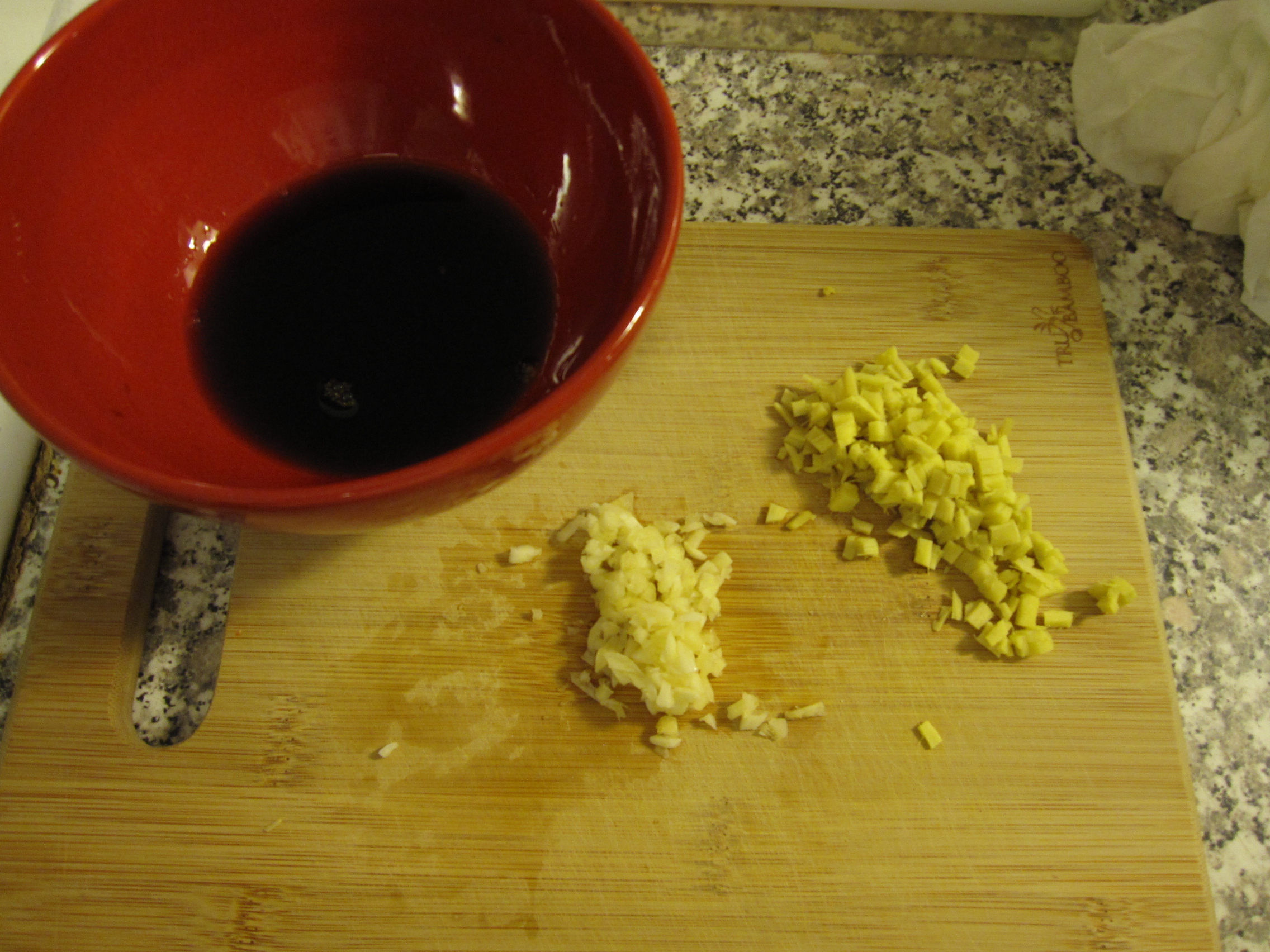
First thing I had to do was make the teriyaki sauce. In a small sauce pan I put in 1 tablespoon of sugar with 7 tablespoons each of soy sauce, mirin, and sake. I also added a few fresh rosemary needles just to add one more element. I let that come to a slow boil for just a few minutes until the sugar was dissolved. Then I set it aside and let it cool to room temperature.

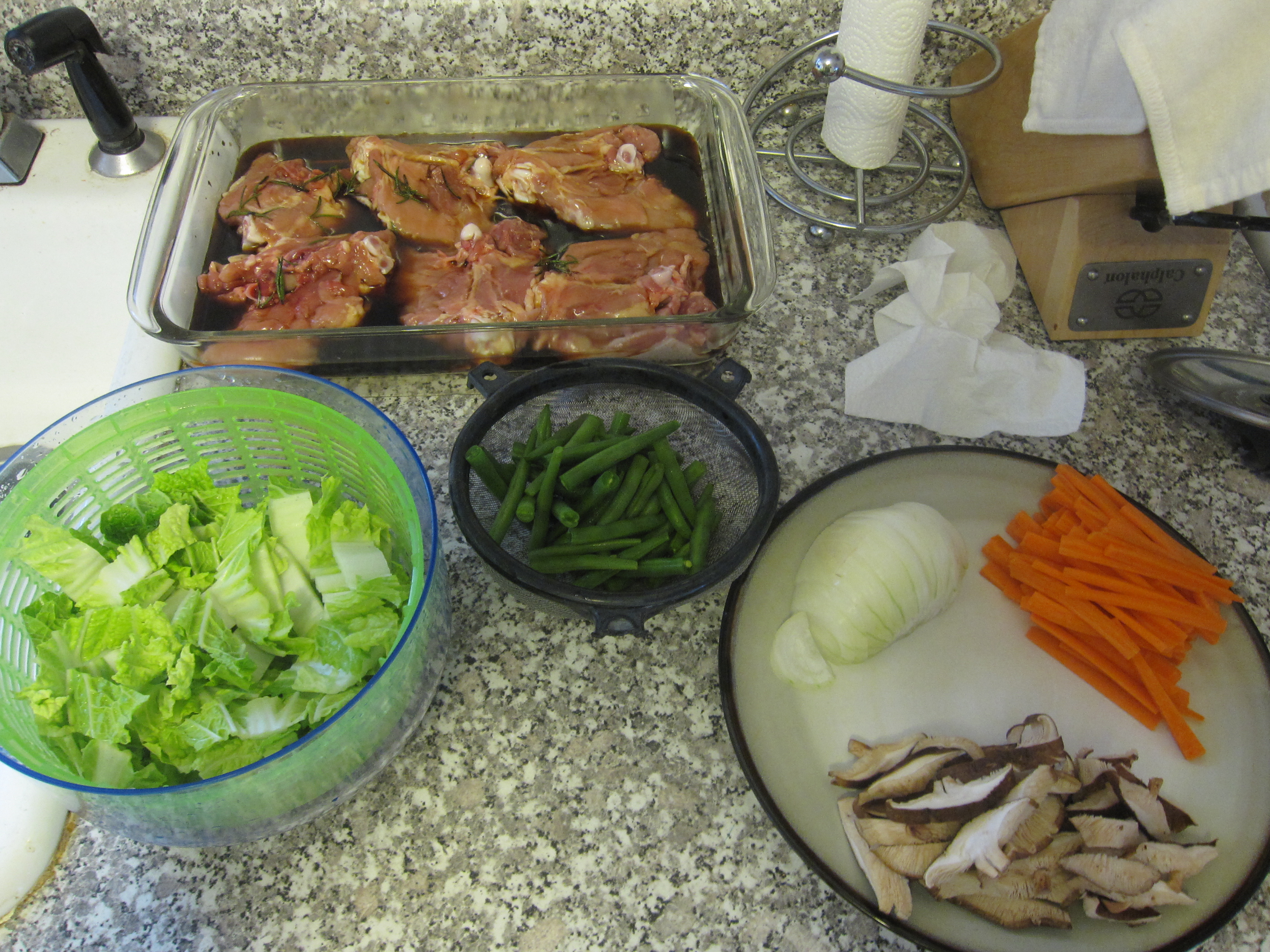
Once the sauce was cooled I marinated some bone-in skin-on chicken breasts in it for about an hour at room temperature.

Then I cut up all the vegetables. Half of a sweet onion was sliced, one carrot into matchsticks, 7 good-sized shiitake mushrooms sliced, a handful of green beans cut in half, and half of a small napa cabbage head sliced.

I turned the oven on to 400 degrees. I took my baking pan and lined it with foil and then laid a rack inside it. I laid the chicken thighs on the rack, sprinkled them with some pepper and a few rosemary needles, and threw them in the oven. I strained the reserved marinade back into the small sauce pan and boiled it for about 15 minutes until it reduced into a BBQ sauce consistency. Then I took the chicken out and glazed it with the thickened teriyaki and threw it back into the over for another 15 minutes.

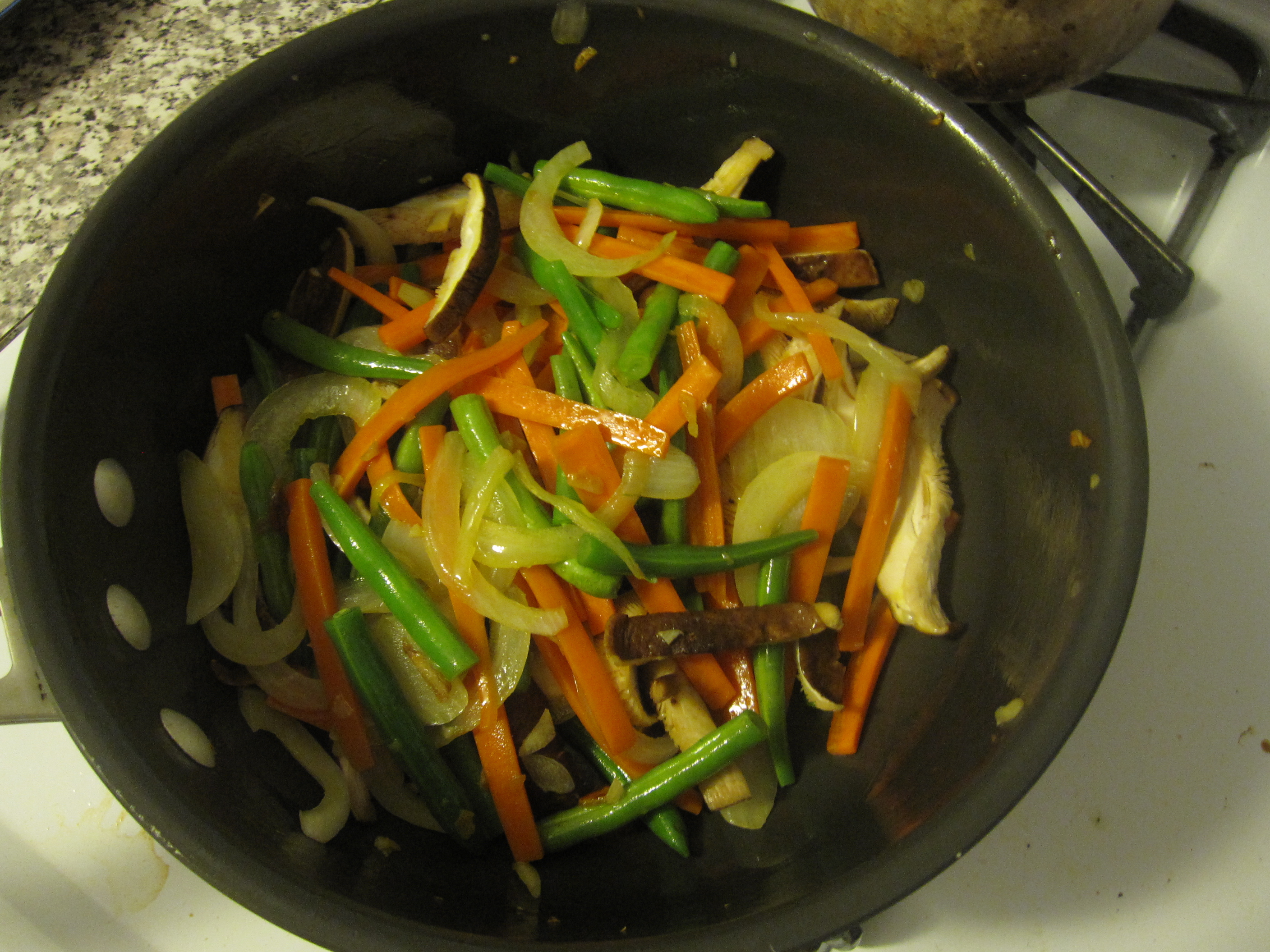
While the sauce reduced I sautéed the vegetables. I started by throwing a couple of diced garlic cloves into some hot olive oil. After a minute I added the onion. A few minutes later the carrot. Then I added the green beans followed by the shiitake. I let it all come together for about 5 minutes and then seasoned with very little salt, some pepper, and about 2 tablespoons of soy sauce. I covered the pot and turned the heat way down to low. The vegetables at this point were mostly cooked, I just wanted them to finish off by steaming a little in the soy sauce.

I steamed the napa cabbage. That only takes about 4-5 minutes, so I waited until the chicken was just about done.

That’s it. A pretty simple meal to make but full of flavor and very healthy.

Read Full Post »

The other night I made a Japanese classic with some of my own additions. I made Shogayaki, ginger pork. Typically made with just thinly sliced pork, ginger, soy sauce, mirin, and sake, I added a few vegetables into the mix instead of serving vegetables separately. This is an easy dish to make and very flavorful.

We picked up some really nice Kurobuta (Berkshire) sidebelly while at Mitsuwa. It came thinly sliced which is prefered for this dish. It doesn’t necessarily have to be thinly sliced, nor does it have to be belly. You could get some nice chops and cut them thinly yourself, just try to make them no thicker than about 1/8 inch. I cut the pork sliced in half since they were as long as bacon. That wasn’t necessary, just what I felt like doing.

For vegetables I sliced half an onion, cut a carrot into half moons, sliced half of a yellow bell pepper, and slices a bunch of mushrooms.

For flavorings I, obviously from the title, used some minced ginger, a couple of minced garlic cloves, and a sauce of 3 tablespoons soy, 2 tablespoons sake, and 1 tablespoon mirin.

I started by tossing the ginger and garlic into a hot pan with 2 tablespoons of sesame oil and 2 tablespoons of soy oil. I let that go for just a few minutes until it became fragrant.

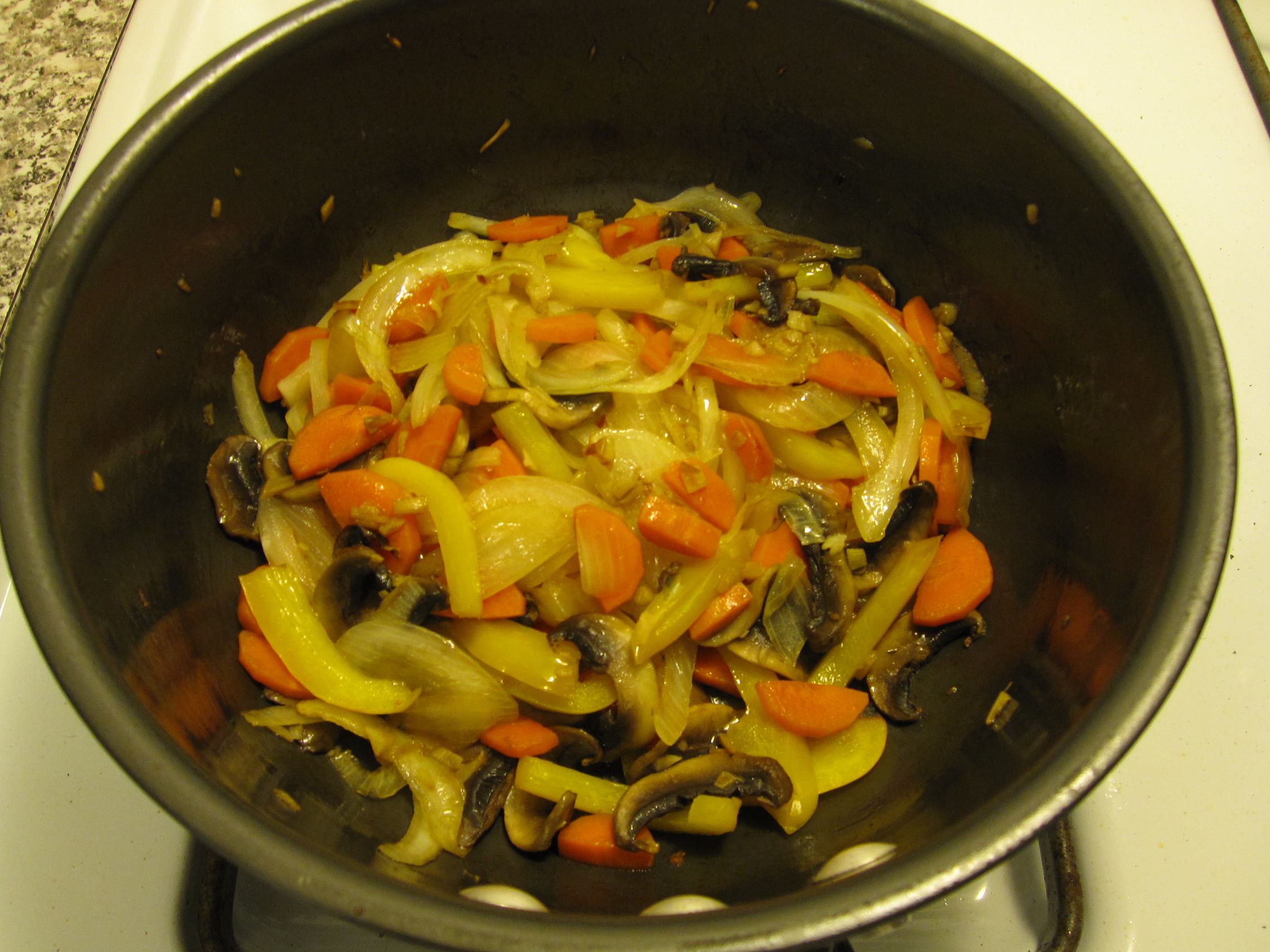
Then I added the onions for a few minutes. Followed by the carrot for a few minutes. Then the pepper for a few more minutes. And finally the mushrooms for another few minutes.

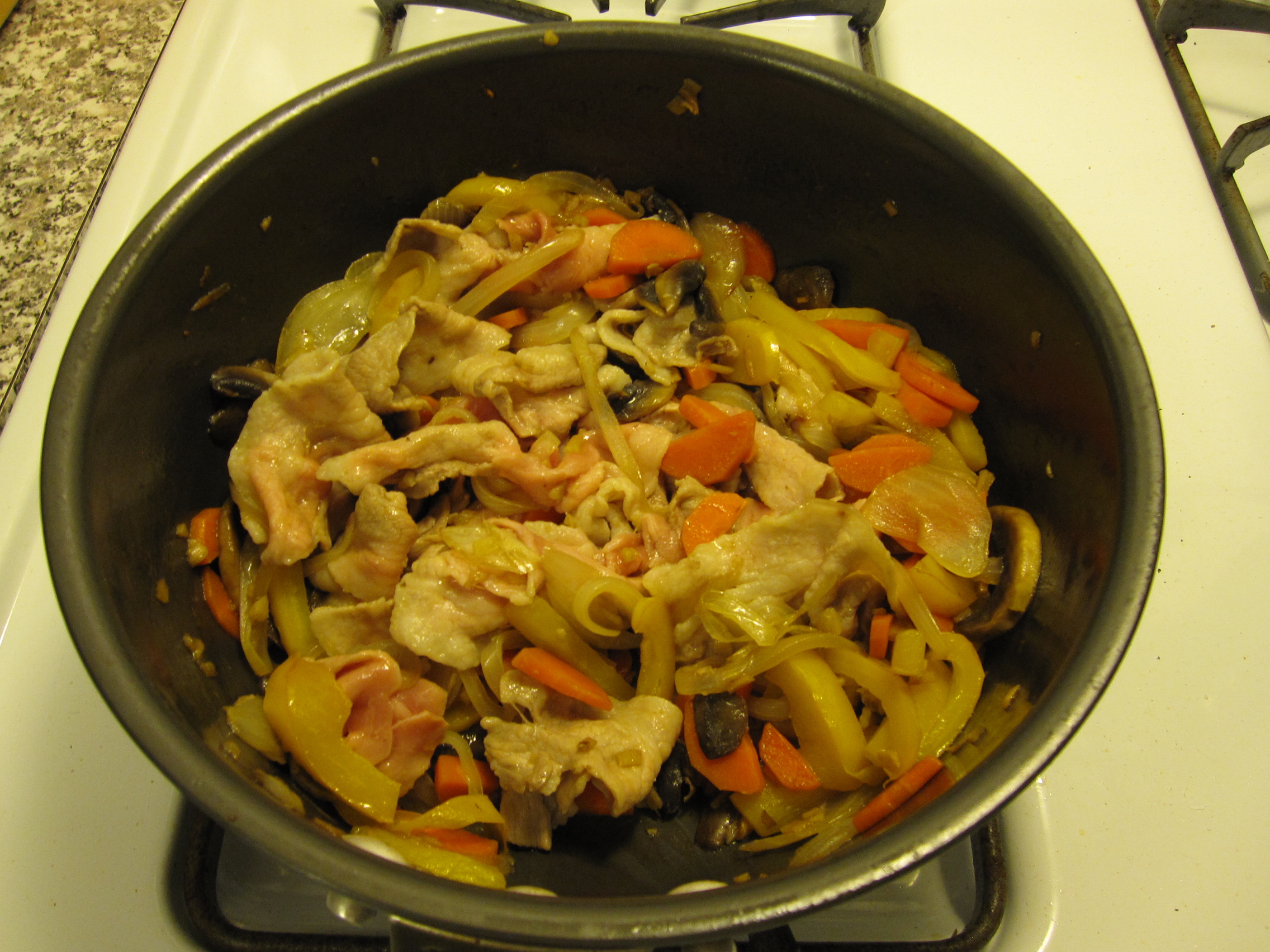
Once the vegetables were mostly cooked I added the pork. I mixed it all together and let it go for, you guessed it, a few minutes.

Then I dumped in the sauce along with some black pepper. I covered the pan and turned the heat down to medium once the sauce started to boil a little. Every few minutes I stirred everything around. After about 15 minutes I uncovered the pan and let the sauce reduce a little. I served it once the pork and vegetables were evenly coated by the slightly thickened sauce.

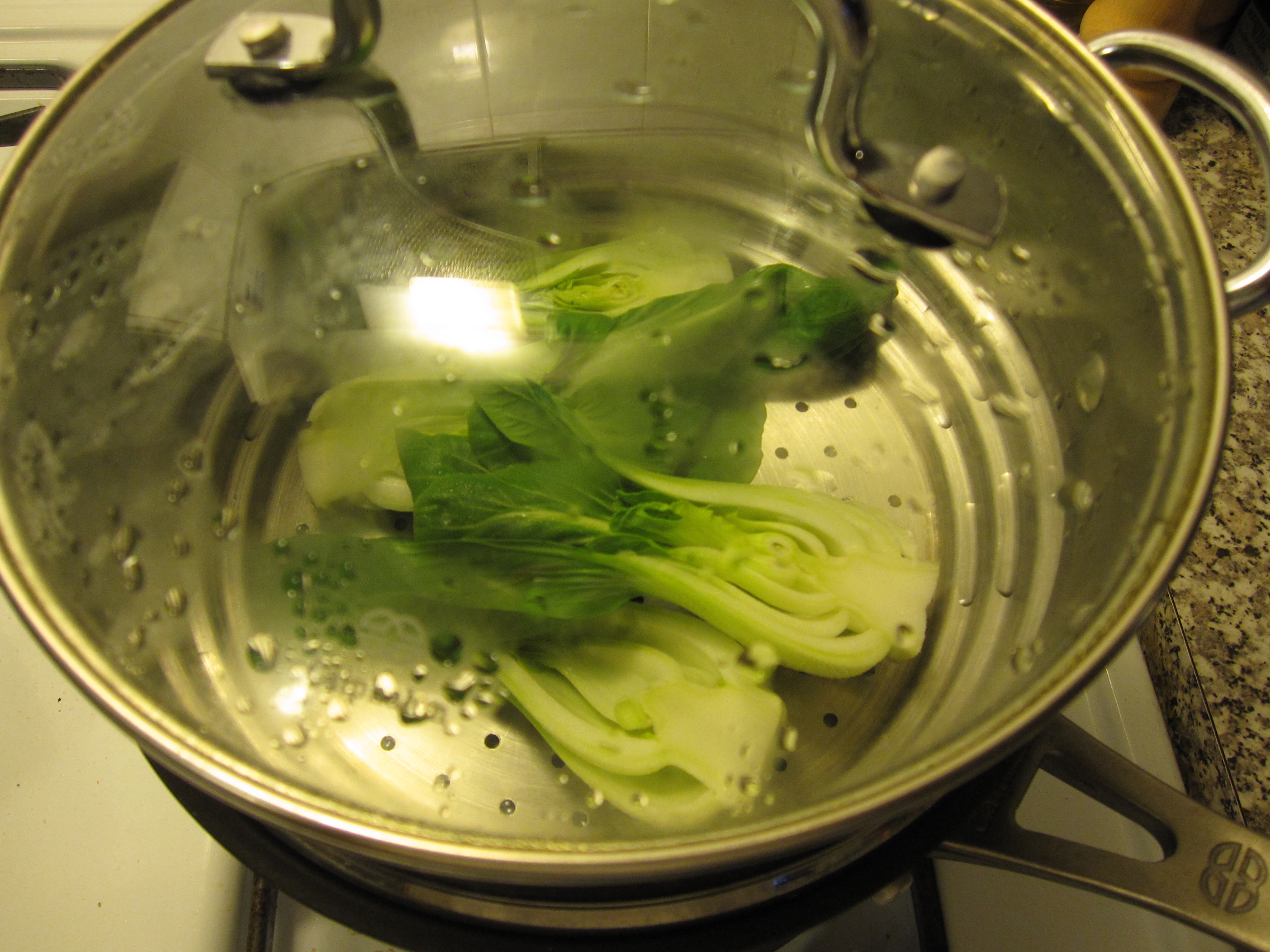
While the sauce was thickening I put a couple of baby bok choy that I had cut in half into the steamer. I let them steam for about 6 minutes. They were served next to the shogayaki with some white rice.

Read Full Post »

Okaka mayo, a really fun sauce to say. It’s also a delicious, very Japanese, sauce that’s easy to make. This is a dish that Yuki made the other night.

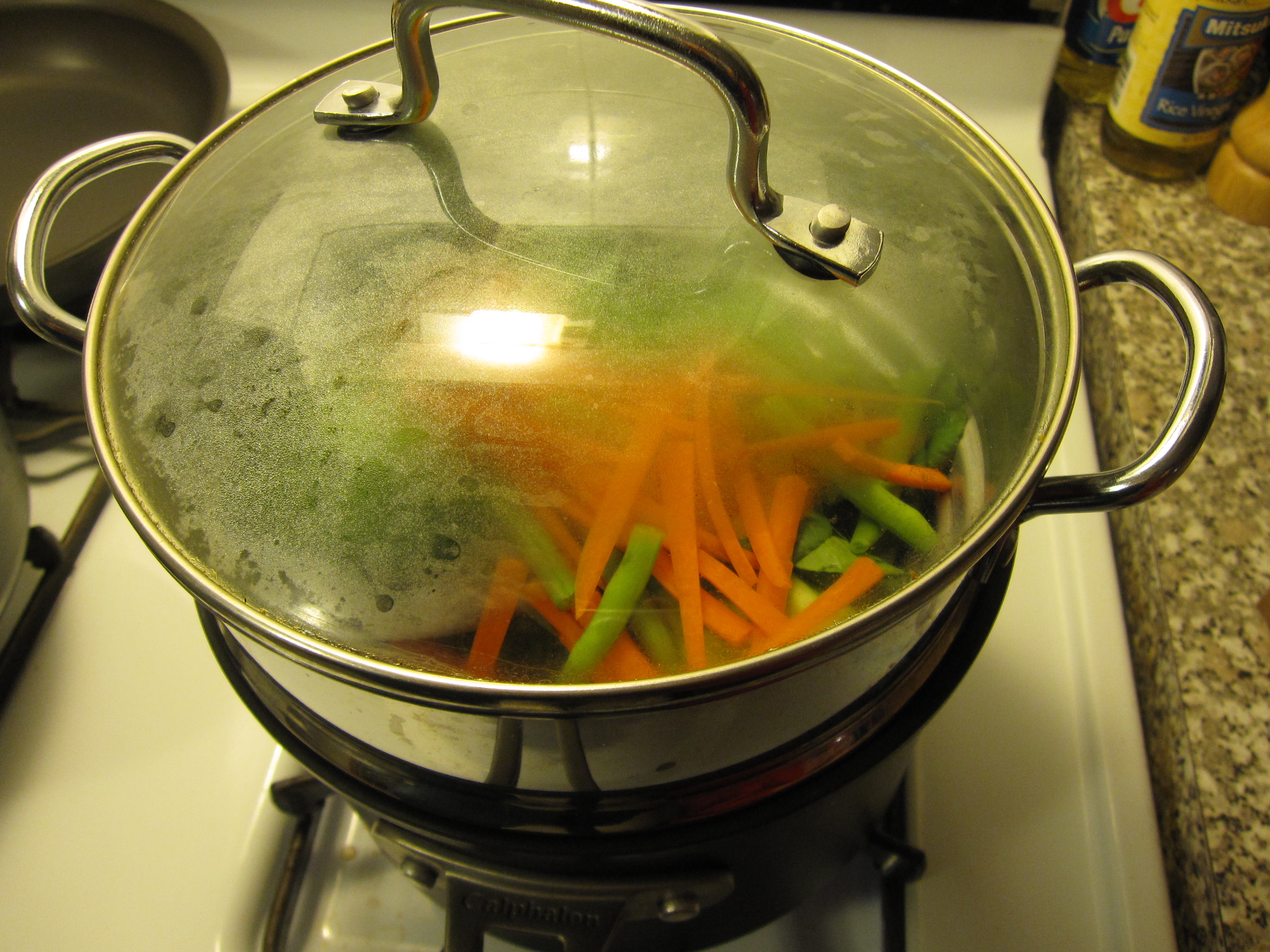
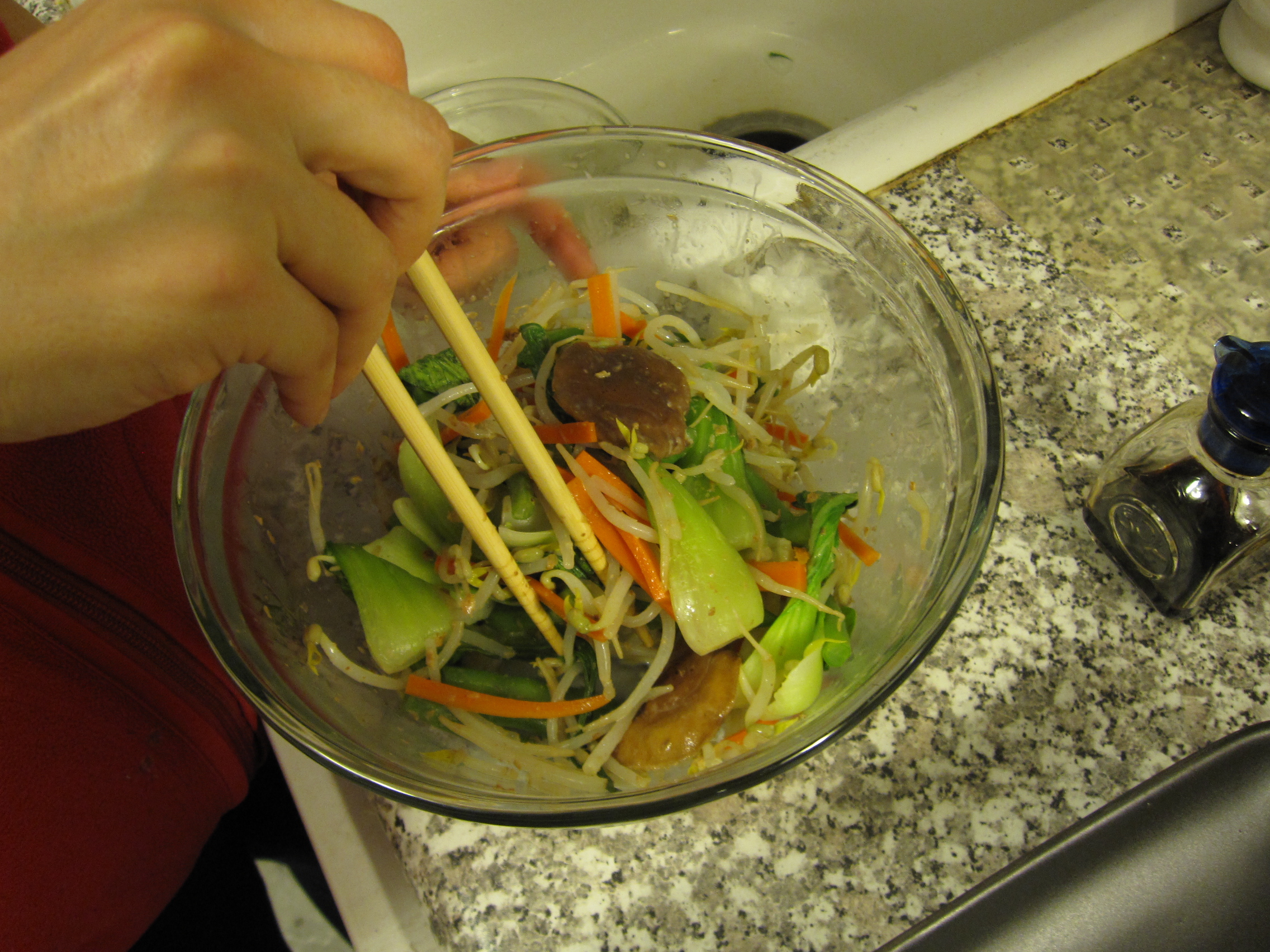
To start, Yuki steamed some vegetables. Once the steamer got going she put in a couple of baby bok choy, a carrot cut into match sticks, and a handful of green beans.

A few minutes later she threw in some bean sprouts and some fresh shiitake caps. She let everything steam for about 5 minutes or so, just so that the veggies are al dente.

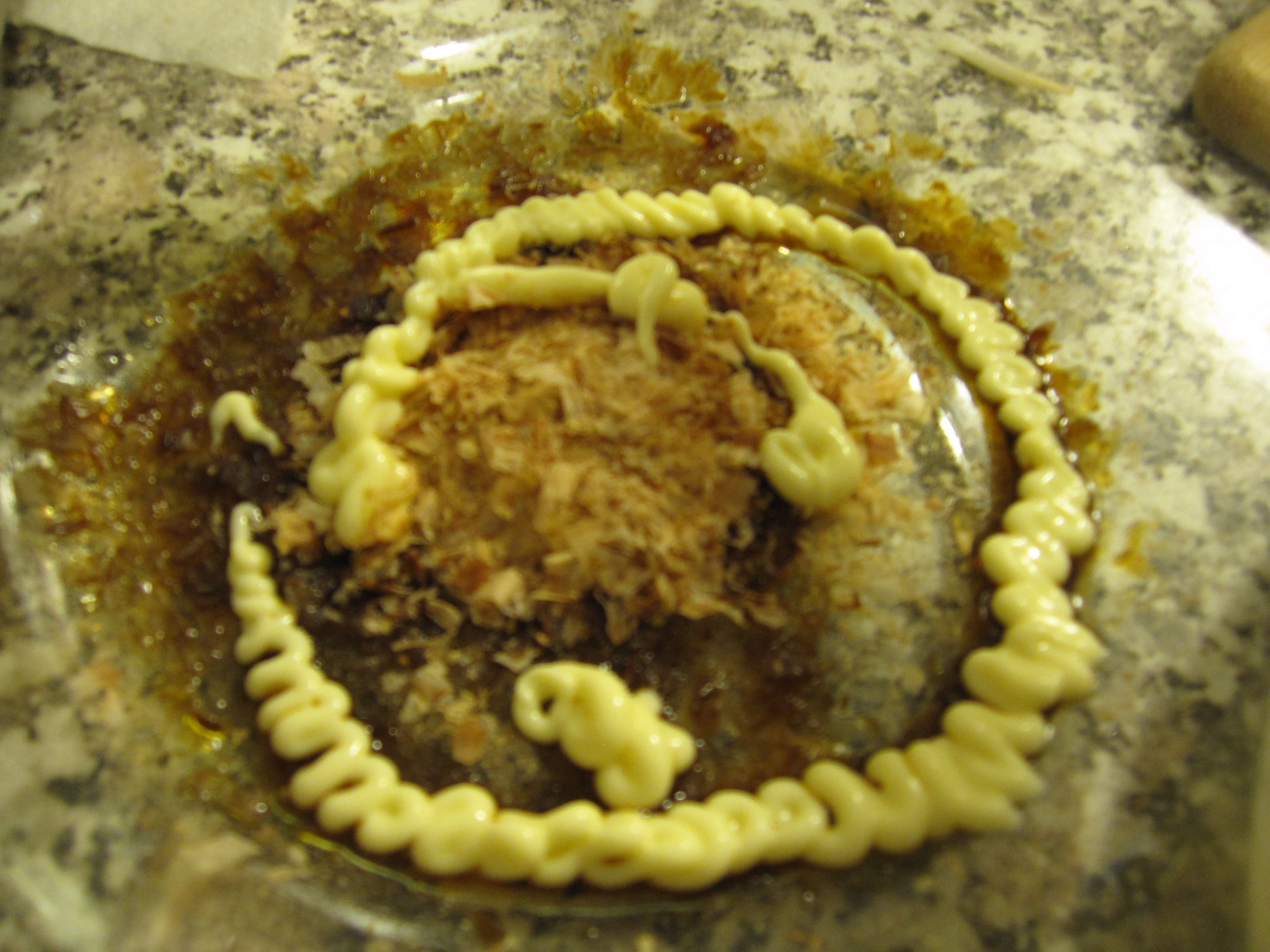
While the veggies were steaming she mixed up the okaka mayo. Okaka is a sauce that is often used for onigiri. It’s simply a mixture of soy sauce and bonito flakes (available at most grocers these days in the Asian section). To that, she squirted in some mayonnaise and mixed it all up in a bowl large enough to hold all of the vegetables. I have no idea what the measurements were. Just taste it and adjust according to your preference.

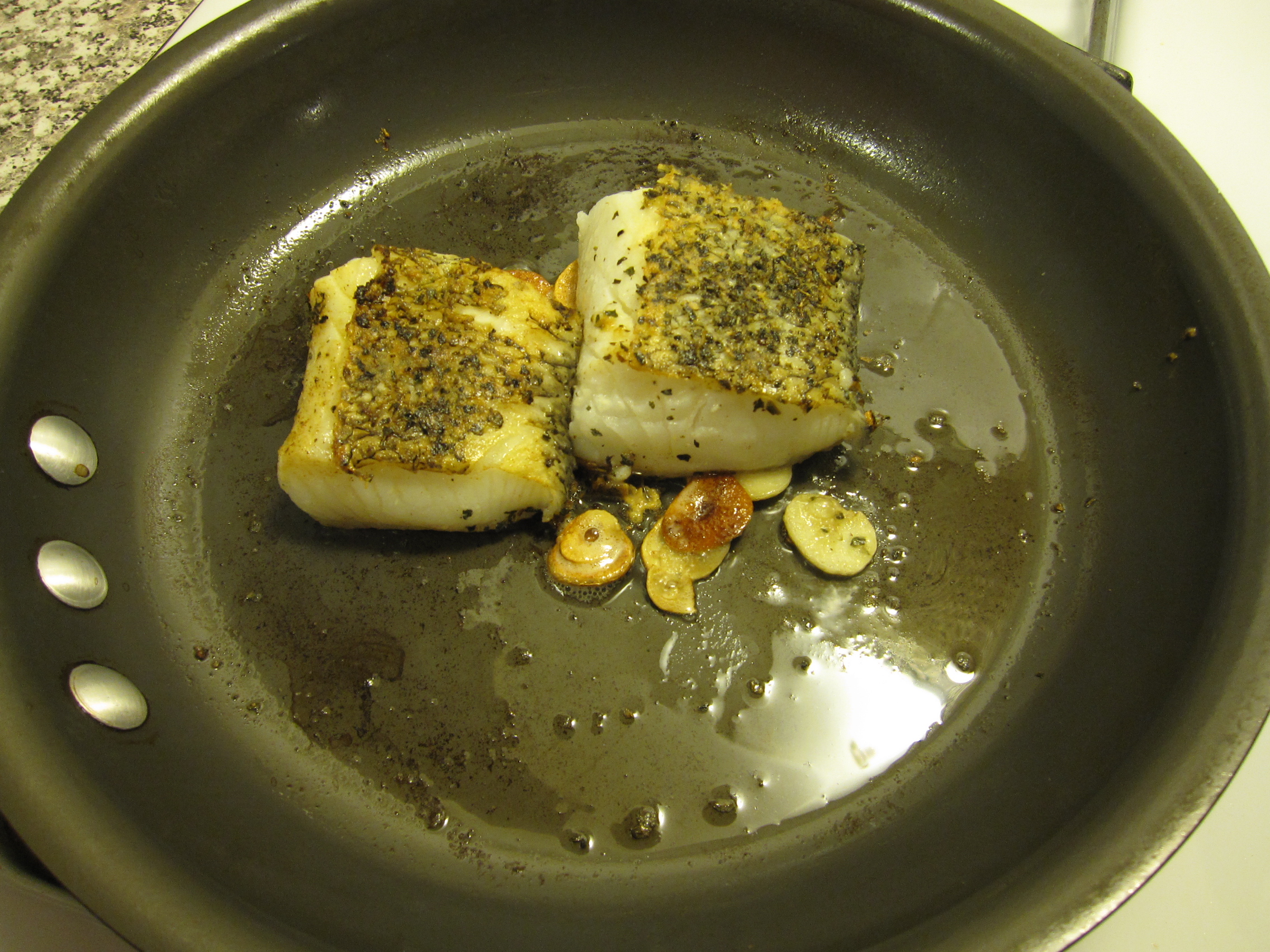
Then, she got the sea bass going. In a saute pan she melted some butter and added some sliced garlic. She let the garlic cook a little in order for its flavor to absorb into the butter. The sea bass was seasoned with salt, pepper, and dried basil. She cooked it skin-side down first in order to get a nice crisp skin. After a few minutes she flipped it over to cook the top. In total, the fish only needs about 8-10 minutes of cooking. Sea bass stays moist, but you still don’t want to overcook it. It will continue to cook for a few minutes inside after you take it off the heat.

While the fish was cooking she tossed the steamed vegetables in the okaka mayo.

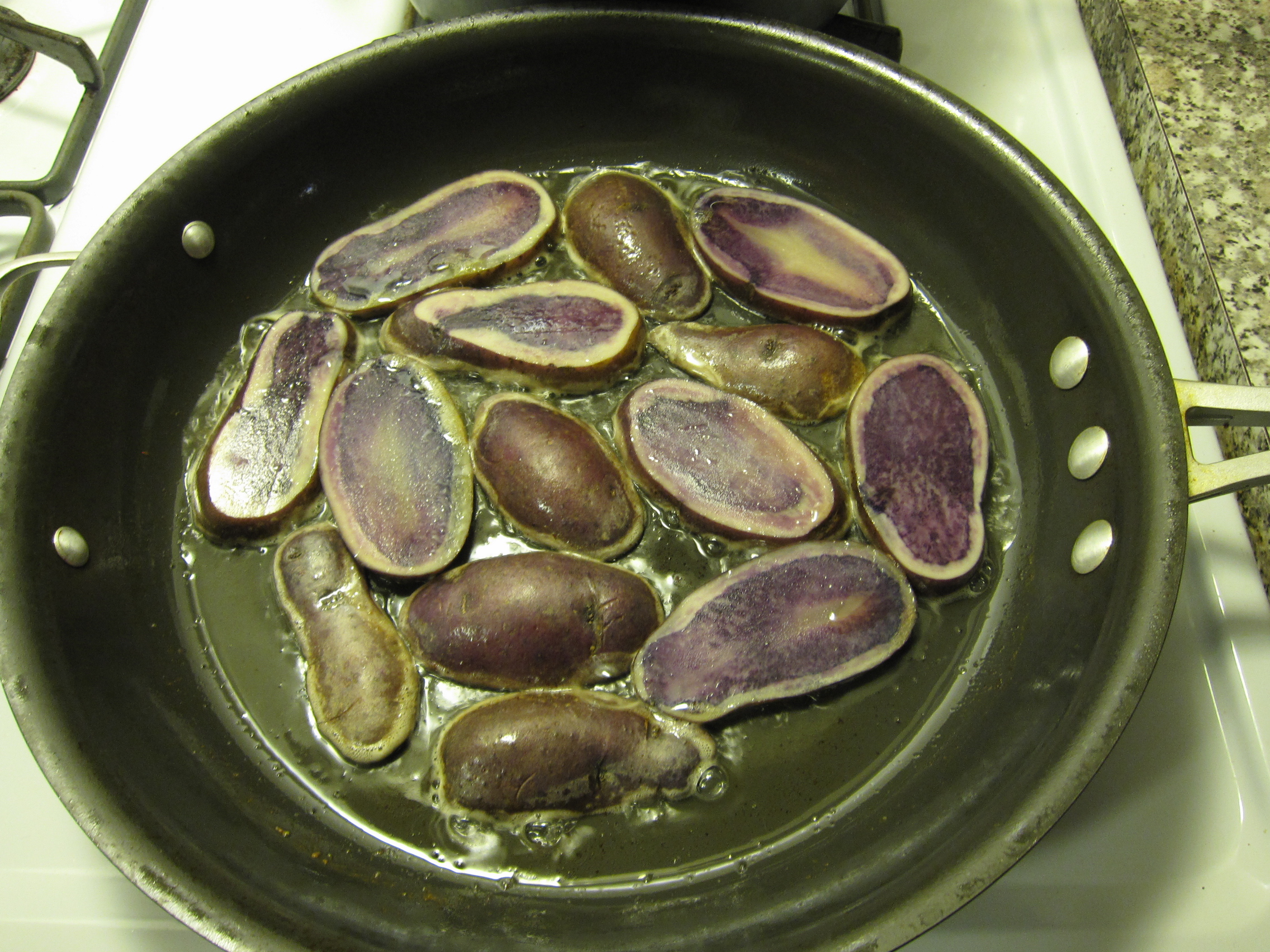
While she was doing all of that, I was charged with the difficult task of potatoes. I melted some butter in a large skillet and let it get ridiculously hot. Then I added thin sliced purple potatoes in a single layer. The hot butter gave it a really nice crust. After about 3 or 4 minutes I turned each slice over and turned the heat down to medium. This allowed the inside to cook while also crisping up the bottom of each slice. While that was going on I sprinkled a little salt and pepper on top of everything.

Everything was served with white rice. It was extremely tasty!

Read Full Post »

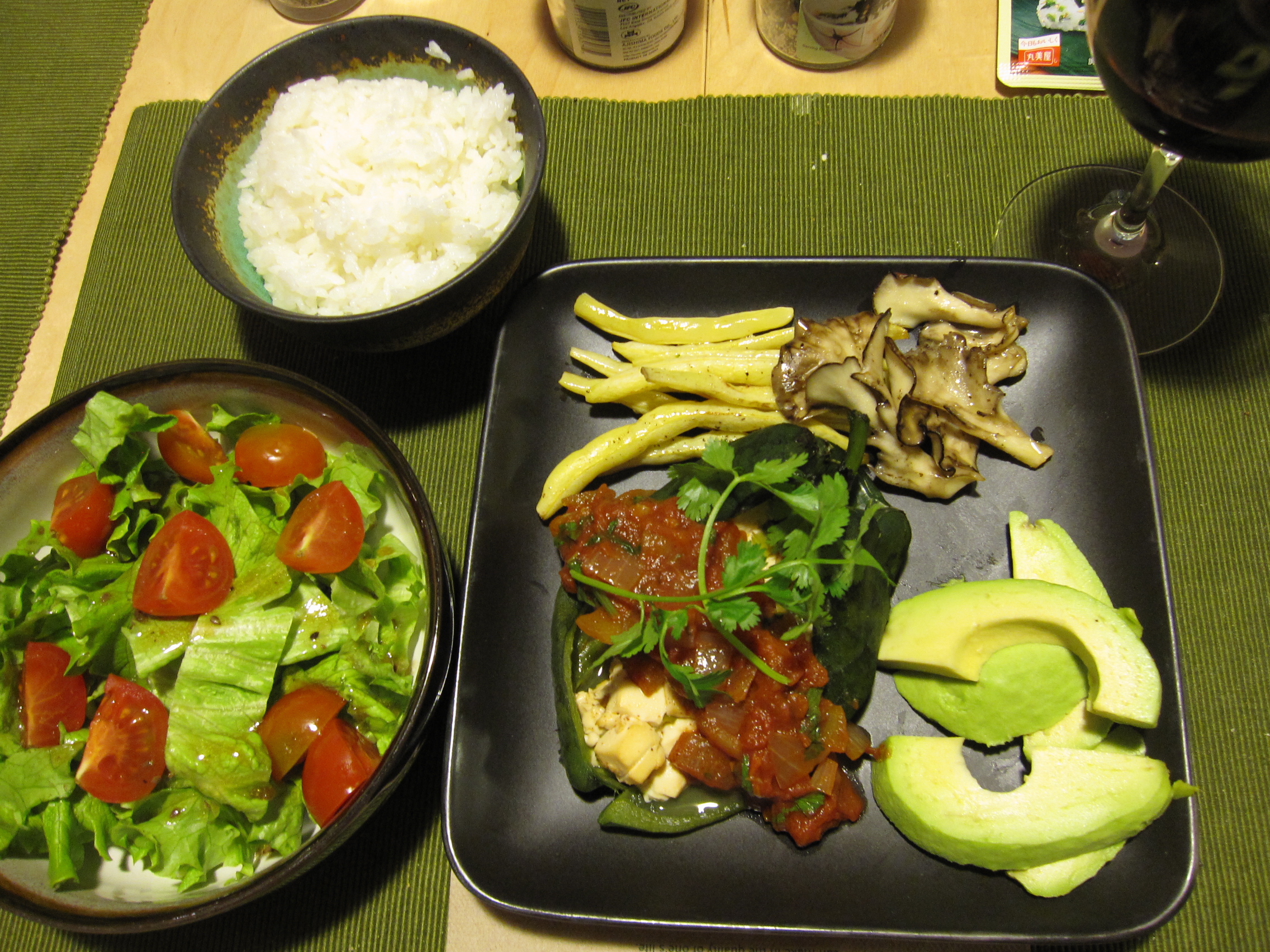
I’ve been mulling this recipe over in my head since my trip to Merida. I wanted to somehow make a Japanese flavored Chiles Rellenos. Last night, for Meatless Monday, I gave it a shot. Not sure it’s exactly the way I had originally planned, but it turned out pretty good.

First thing I did was roast the poblano peppers on the open flame of my stove-top till the skin was completely charred. Then I let them steam themselves in a bowl covered with plastic-wrap for about a half hour.

While that was going on I made the filling. I sautéed some green onions and garlic in a little vegetable oil for about 5 minutes. Then I added one teaspoon of mirin, two teaspoons of sake, and three teaspoons of soy sauce. I also threw in some chili powder. Once that was all mixed together I dumped in some diced tofu and let it simmer for a few minutes and absorb some of the flavors.

Next, I peeled the skin off the poblanos and made a slit down one side to remove the seeds. Once the poblanos were all cleaned out I stuffed them with the tofu and set them aside.

The sauce was very simple to make. I first sautéed a half onion, diced, in some vegetable oil for a few minutes until soft but not burned. Then I added some grated garlic and let that cook for a couple of minutes. A couple tablespoons of red wine, a couple tablespoons of soy sauce, a can of diced tomatoes, and a few dashed of chili powder then let it simmer till it thickens up a bit. Just before serving I turned the heat off the sauce and added a little sesame oil and some chopped cilantro.

For the veggies, I just doused some yellow string beans and maitake mushrooms in some olive oil, salt, and pepper and threw then under the broiler for about 10 minutes. For the last few minutes I also put the peppers under to heat them back up.

I served everything with white rice, slices of avocado, cilantro garnish and a simple salad. The salad was green leaf lettuce and cherry tomatoes with a shiitake-sesame vinaigrette. It all turned out better than I expected.

Read Full Post »

I’ve long been a believer that the only way to truly understand a different culture is to head straight over to the local markets. So, our first morning in Merida, Mexico, a few weeks ago with my mom and step-dad (they live in Merida) we stopped at the San Benito Market.

What I love about the San Benito Market is that it’s not a food market, it’s not a textiles market, it’s not an appliance market….it’s all of the above! Whatever you need to buy you can get at San Benito. Need some produce? They’ve got everything from hundreds of different chilis to pineapples to freshly butchered meats. Need clothes and footwear? Take your pick! How about kitchen knives and other little chochkies? Sure. You can even buy a pet bird there. However, to me, the absolute best part of the market are the food stalls. With so much to choose from, various tacos, tamales, empanadas, sopas, etc., we decided that it’s best to just sample as many different tacos as our bellies could stomach.

The first stop was this stall that served up some outstanding carnitas.

Fresh slices of pork fried up on his hot slate to tasty perfection! Garnish with some onions, cilantro, carved up radishes, and salsa verde and you’re ready for all sorts of goodness. I really could have just ordered more of these, but there were more items on my menu to digest. So,…..

…it was off to this stand for a choice of more carnitas or…

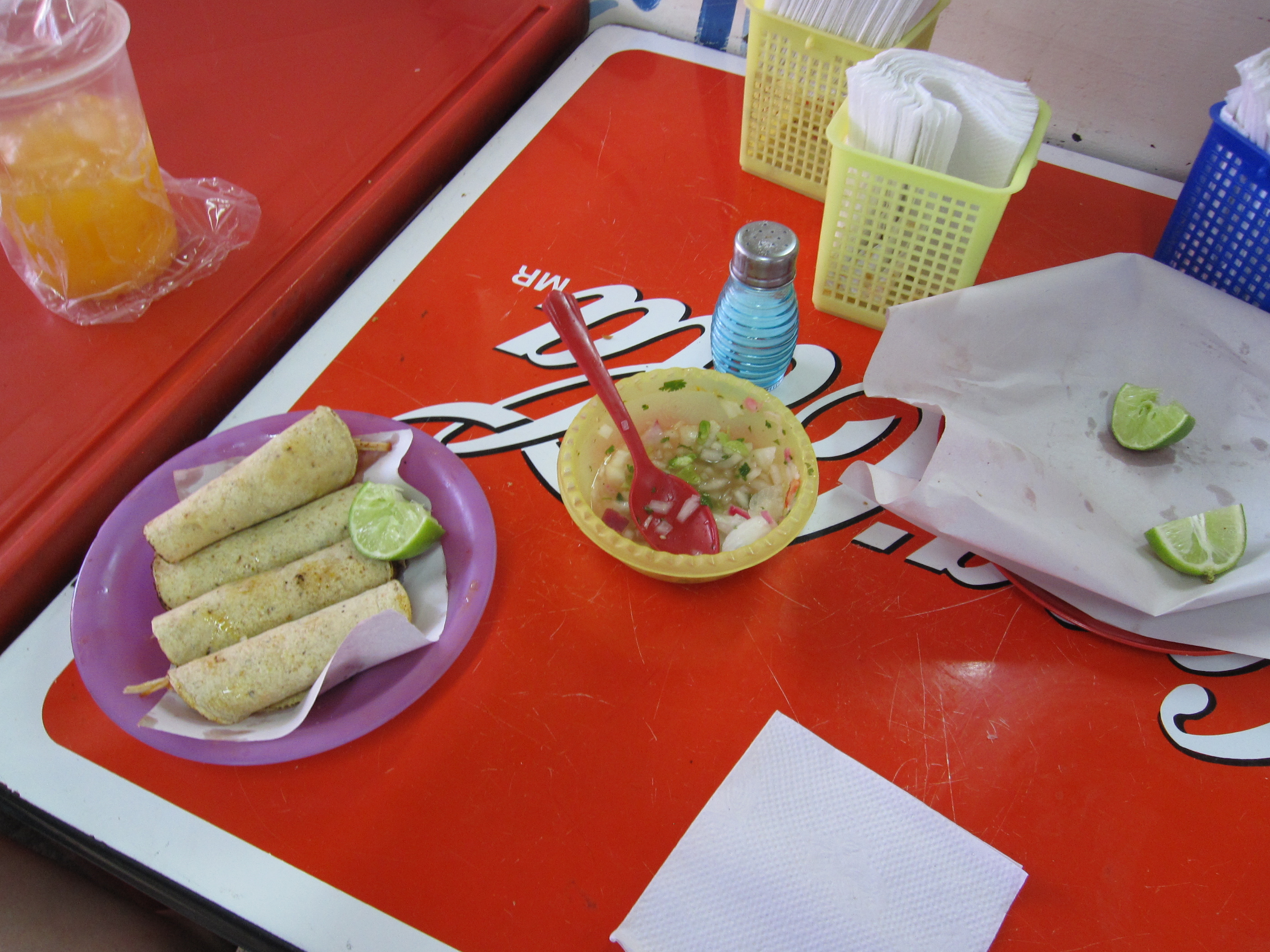
…these achiote turkey tacos. I had to go for the turkey since I just downed a couple of carnitas. These were served with pico de gallo and lime wedges. Wow! I have never had pulled turkey so good. Screw Thanksgiving with its roasted bird, I want these little morsels instead. 

After walking around a bit more something caught my eye.

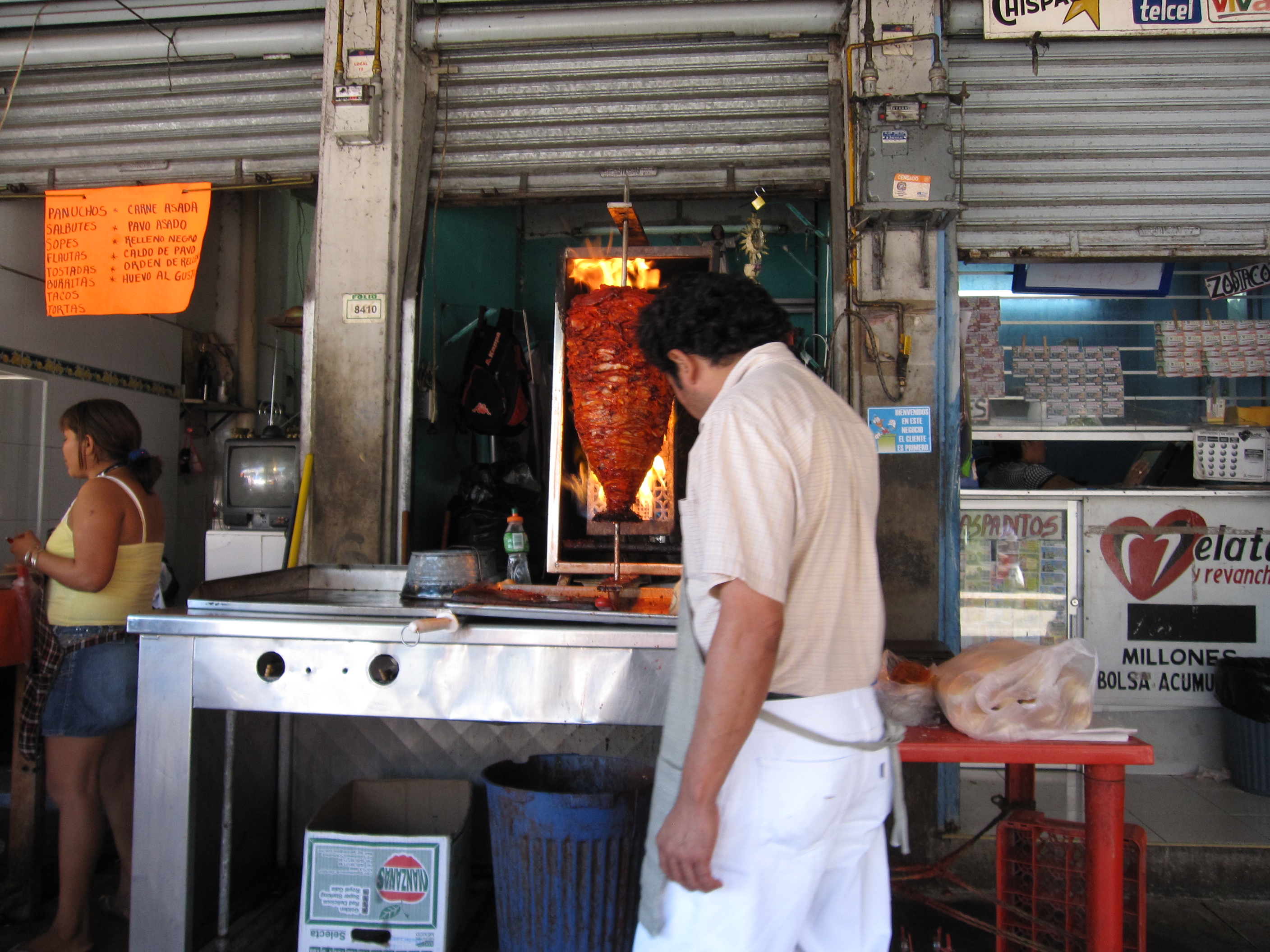
How on Earth could I walk past something like this without giving it a try? Influenced by Lebanese immigrants from three hundred years ago Tacos al Pastor are truly a thing of beauty. Juicy pieces of pork marinated in a red chili sauce, piled on top of each other, and roasted upright on a spit much like a gyro or schwarma. These are the kings of tacos.

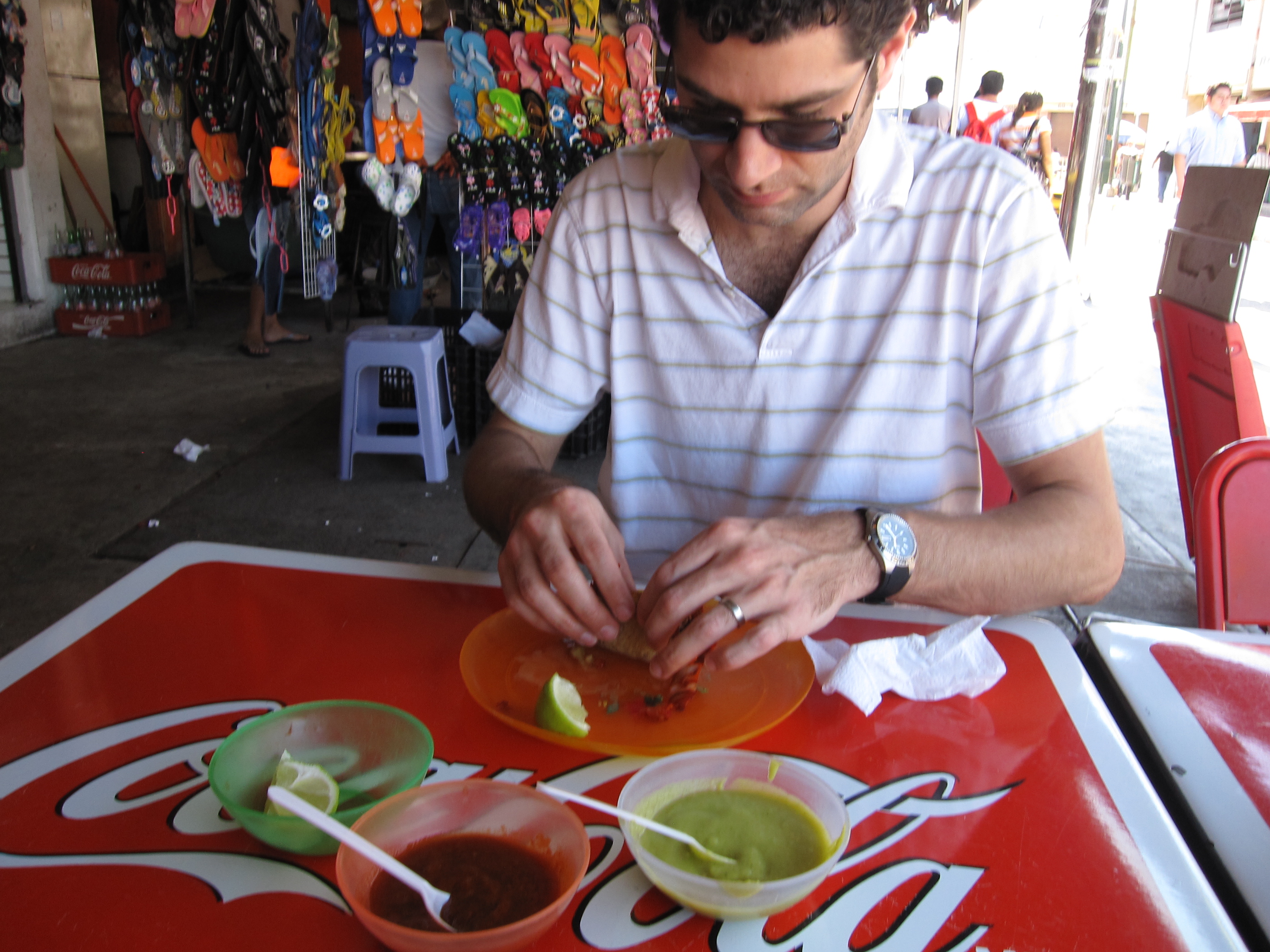
I actually ate this guy’s pastor because the other one would have taken too long to cook. I had to have one and I had to have it quick!

Typically served with a slice of pineapple, instead, this guy served his with a creamy avocado salsa, chipotle salsa, and lime. MMMMMMM! That was it, the piece de resistance! Sorry La Pasadita, I love you, but you just don’t quite hold up to the genius of meat cooked on a spit and served in a tortilla.

Everything was washed down with some Jugo de Mango. The juice carts serve their juices with a plastic bag on top. This serves two purposed. First, the bag keeps the flies out of the sweet nectar. Second, it somehow keeps the drink cold so that the ice doesn’t melt, even though it’s 90 degrees outside. Genius!

Surprisingly, I was not met by old Montezuma himself. Either he took the day off or my stomach is stronger than it used to be. Just goes to show that street food in markets like San Benito are every bit as sanitary as a regular restaurant. Plus, you get the added bonus of auto emissions to help give the food that indefinable taste. The Japanese call it umami, I call it delicious!

Read Full Post »

So, Yuki made dinner for Meatless Monday this week. As you can see from the pic, she cooks a totally different style than me. She prefers numerous different plates with different items while I usually cook more of a one-pot gig. But, with it being Presidents Day and a day off work it was her turn.

Starting with the top left dish, she simmered some daikon radish. For the broth, she boiled niboshi (small dried sardines) in water to extract that flavor into a deliciously light dashi. Then she simmered the daikon until they were softened, but still retained some texture. She topped the daikon with yuzu-miso and some sliced green onion.

The top right dish is sato imo, a hairy potato that made my fingers itch when I peeled it. It’s worth it though as it has a more pronounced earthiness in its flavor than the potatoes we’re used to here in the States. She first had boil them in some vinegar. These potatoes are very slimy and by boiling them in vinegar the slime is removed. After they were boiled she sautéed them in olive oil with some onions and garlic. Then she added some ponzu and a little mayonnaise.

The bottom bowl is harusame soup. She used konbu dashi for the broth, a very typical broth for Japanese soups. The noodles are harusame, made from mung bean starch. Also in it were some enoki mushrooms, shiitake, wakame seaweed, sliced aburage (deep fried tofu skin), baby bok choy, and an egg that was poached in the dashi.

She also made dessert, shiratama dango. They’re little dumplings made out of mochi rice flour. Simply add water to the flour, roll the dough into little balls, and boil them till they float. They’re usually grilled afterword to make them a little more savory before adding various sweet sauces. We used three of the more common sauces. On the left is azuki bean paste, the middle is mitarashi (a sweetened and thickened soy sauce with mirin, sugar, and corn starch), and the right is kinako (soy flour mixed with sugar).

Read Full Post »

After making a run to Mitsuwa for some Japanese ingredients (some staples in our kitchen) I let Yuki do the cooking last night. She made a dish called Jjigae Don. Well, that’s what she calls it anyway. Jjigae is an old Korean recipe (you see Ira, Yuki doesn’t have anything against Korea), a stew typically made with kimchi. She didn’t use any kimchi but did use Tobanjan, a Korean fermented chili paste.

First, she made a broth out of miso, tobanjan, and dashi. She simmered some green onions, carrot slices, and baby bok choy until soft and tender. Then she took those vegetables out and cooked some thinly sliced kurobuta pork. By thinly sliced I mean deli meat thin. You can purchase it that way at Mitsuwa and some other Asian grocery stores. It’s typically marked for use in Shabu-shabu or dishes like that. The pork cooks quickly since it’s so thin. Be careful not to cook it more than a minute or two because the meat will get tough if overcooked. Once the pork was cooked she took it out and then cooked some shimeji mushrooms in the broth.

While all of this was going on we had pressed the water out of a package of silken tofu. Once the tofu was firm enough we cut (she did the cooking I did most of the cutting, I’m her sous chef as I love to use the hand-carved Japanese steel she got me for my birthday a few years ago) it into smaller pieces and then cooked it in the broth.

After everything was cooked we put some rice in the bottom of our bowls and then topped it with all of the ingredients. While we did that Yuki cooked some shungiku in the broth. You have to cook that last as it turns the broth a darker color. That way the veggies and meat keep their natural colors. Once the shungiku was cooked that went in the bowl with everything else.

No extra fats, just the natural fat from top quality pork, were added to this dish. Along with the variety of fresh vegetables and white rice this is an extremely healthy dish. Absolutely delicious as well.

Read Full Post »

I have to apologize to the environment as well as my physical well-being. There was no Meatless Monday last night. Cafe Hoang is sending all proceeds from yesterday’s take, including tips, to Haiti in order to help feed those who need. For my part I figured the least I could do was to eat some tasty food for charity. From what their website states, they’re doing it again next Monday, the 8th. I encourage you all to take part and keep my boy Jason Tran busy as hell cooking his ass off.

So, instead of a Meatless Monday post I’m going to tell you about a dinner we had at Yuki’s sister’s condo in Tokyo with her family last November. As you can see, it was family-style with some authentic Japanese flavors and some not-so-Japanese.

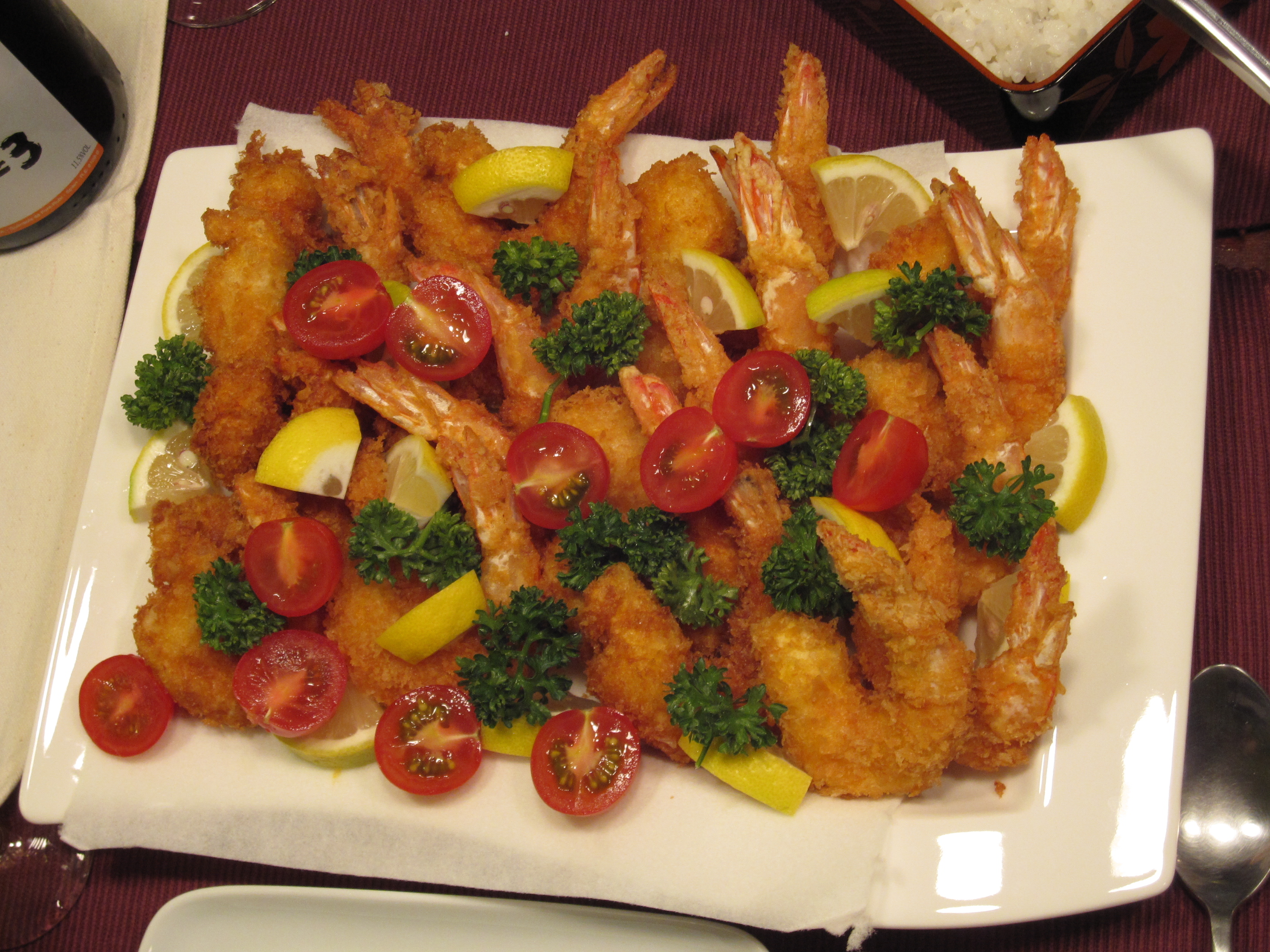
We had some shrimp tempura. Pretty simple, just fresh juicy shrimp deep fried in panko. Yuki’s mom scattered some cherry tomatoes, parsley, and little pieces of lemon around the plate. A squeeze of citrus, a dip in soy, some herb….makes me a happy man.

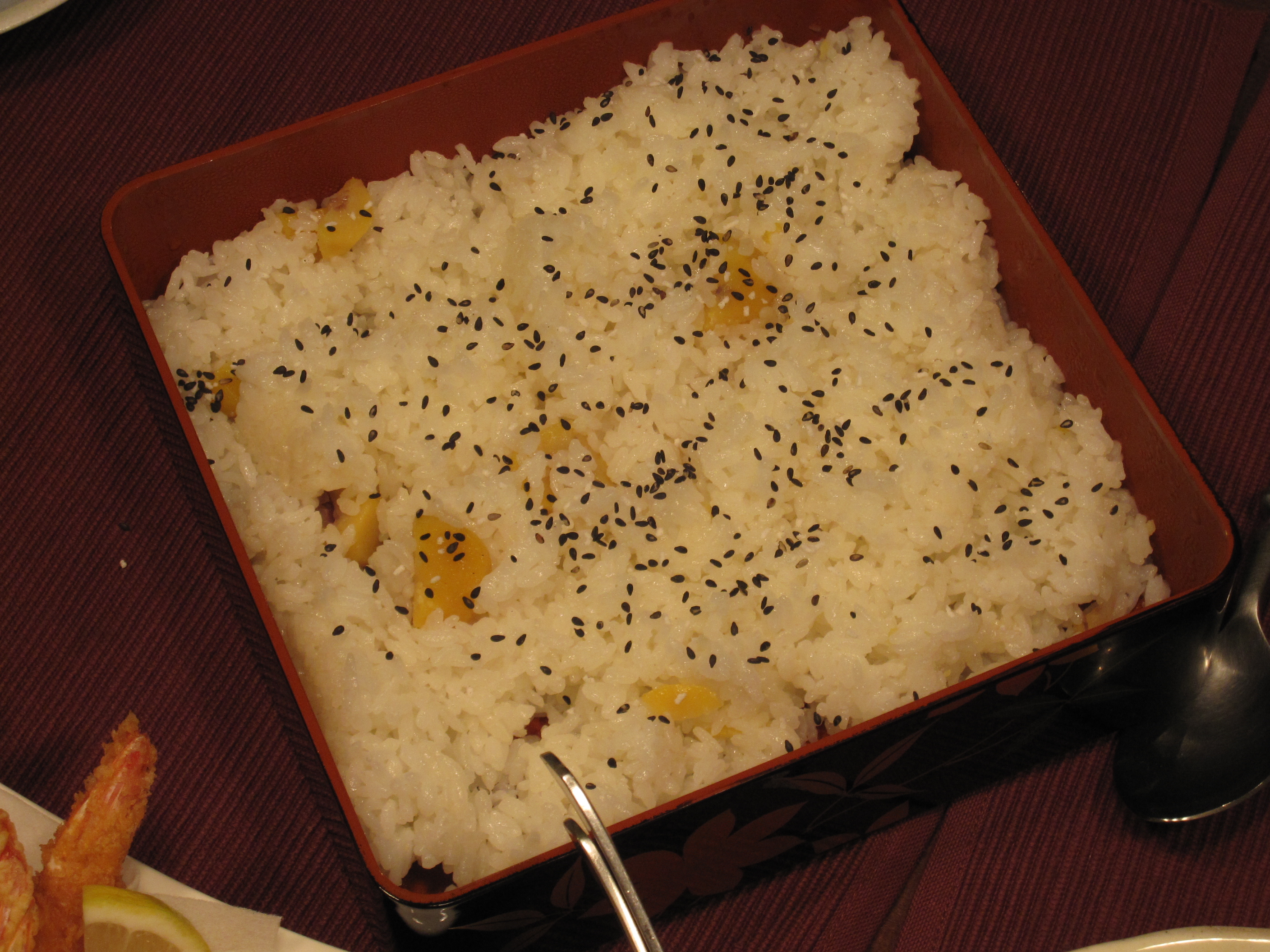
There was some Kuri Gohan, chestnut rice. This is a common dish throughout Japan. A favorite as chestnuts add a great flavor as well as nutrition to rice. Simply add the chestnuts to the rice while it’s cooking and then sprinkle some sesame seeds on top.

This is a Raw Tuna Salad that Yuki’s brother-in-law Jun made. Chunks of fresh tuna, avocado, and thinly sliced onion that’s been soaked in cold water to remove the rawness tossed in a vinaigrette. I forget exactly what he put in the vinaigrette, but it was something like sesame oil, soy oil, soy sauce, rice wine vinegar, and pepper. He lined the serving dish with some lettuce leaves and dumped it on top.

This one is a classic Japanese home cooked dish. Not sure what it’s called, maybe Yuki will leave a comment and let us all know. Yuki’s mom simmered some lotus root, bamboo shoots, green beans, shiitake, konnyaku, carrots, and chicken. Again, I’m not completely sure what the simmering liquid was, I think it was a mix of soy sauce, sake, and mirin. Maybe some dashi. Always delicious (at least when Tamiko makes it)!

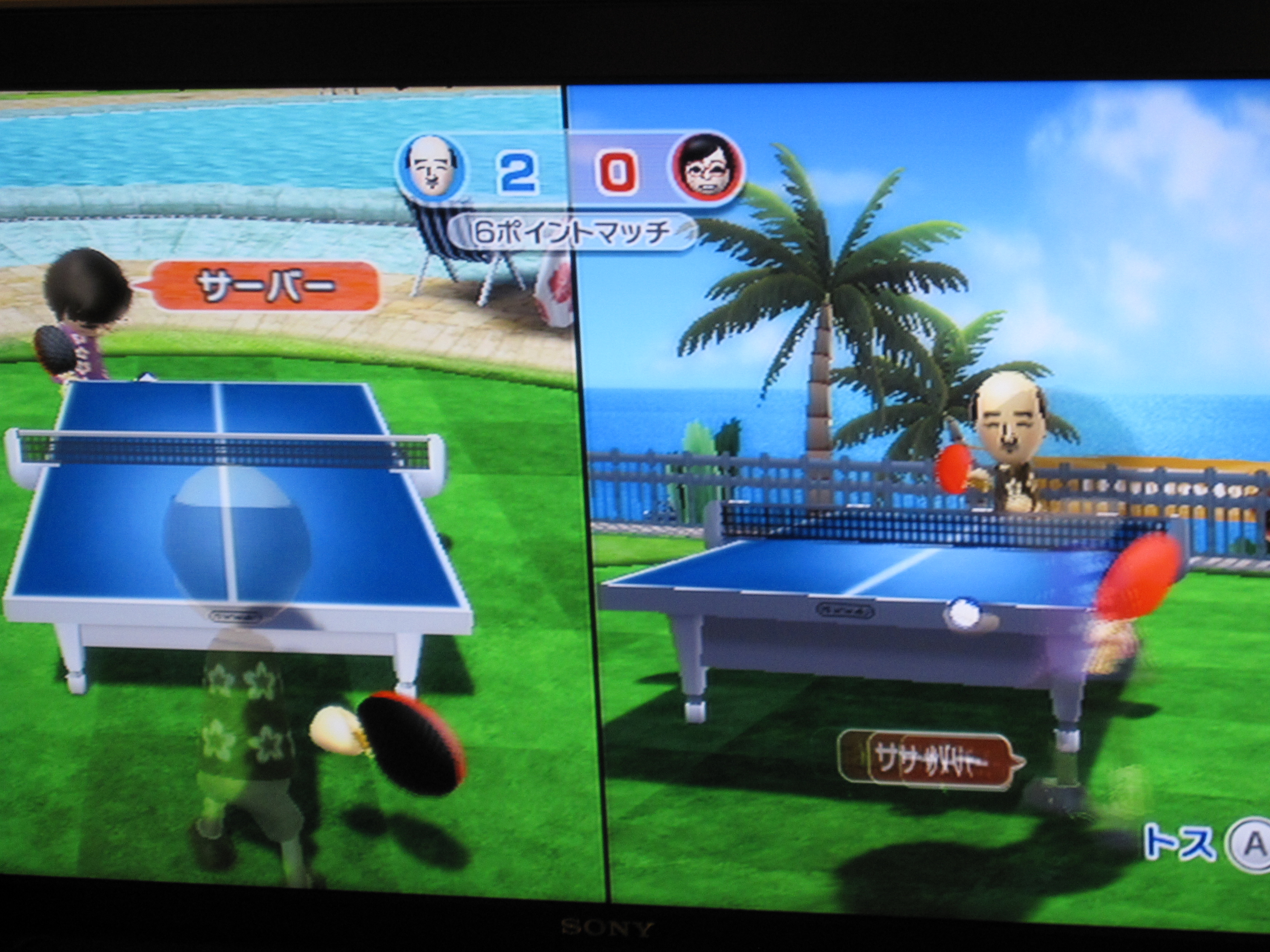
We drank it all down with some Prosecco and some fantastic sake that we picked up on the way to the condo. After we ate we took turns kicking each others asses in Wii.

Read Full Post »

So, yesterday was my wife’s birthday. I won’t tell you how old she is now, you should never ask a woman her age. Needless to say, she’s still younger and better looking than me. For this year’s birthday dinner I took her to L2O. I know, I know. I’m unemployed and shouldn’t spend that kind of money right now. But hey, what can you do? I have to say, we were both extremely impressed and satisfied by what transpired at the dinner table last night.

First of all, we were fortunate enough to have found a parking spot right in front of the restaurant. No easy task in Lincoln Park. We knew all would be well when that happened. Saved me $12 on valet!

l20

The interior was perfect for the concept of Laurent Gras’s food. French sophistication with Japanese minimalism. It was really nice inside. The one weird thing we’re not used to is how they sat us. We got a 4 top to ourselves, but they sat us next to each other instead of across from each other. Our necks hurt a little bit since we had to turn our head to converse, but that’s being nitpicky.

We opted for the 4 course pre-fix. Our choice of one item from the Raw section, one from the Warm section, one from the Main, and one dessert. To be quite honest, deciding what to order might possibly have been the hardest decisions we’ve had to make in years! Everything sounded great. You can see the menu on their website, so you’ll understand what I mean.

Before we ordered we got not one, but two amuse buches. The first was a small little layered octopus and potato thing with a spicy soy paste underneath. It was the perfect little starter. Clean, fresh, and just enough spice to get our taste buds rolling. The second was a little…. you know what? I don’t remember what it was. I do remember it being delicious. You’d think I’d remember something from last night, but then again, my short-term memory is a little off.

tuna foie

From the Raw section Yuki ordered the Tuna and I ordered the Peekytoe Crab. The Tuna was served with little squares of tomato on top, hibiscus stems along the surface, little dollops of some sort of creamy sauce, and foie gras snow. I can only imagine that it’s frozen foie that’s been grated. It was a truly magnificent dish. Very elegant and buttery but not oily or greasy.

crab and avocado

My Crab was a little lighter but not quite as elegant. It was served in a mound with a sliced avocado dome around it. Around the avocado mound was kaffir lime jelly and lemon oil. The crab was probably the best crab meat I’ve ever eaten. The sweetness shined through all of the tart citrus with the avocado’s creaminess adding depth.

lobster bisque

For the Warm course Yuki ordered the Lobster Bisque. It was a boiled lobster claw with chestnuts and lobster/scallop dumplings. Table service lobster bisque broth was poured over it. I didn’t try the lobster claw, but Yuki claims that she’s never ever had lobster with such a soft texture. I did try a little of the dumpling and judging from that I’d have to say that Yuki’s right about the lobster. Easily the best bisque of all time.
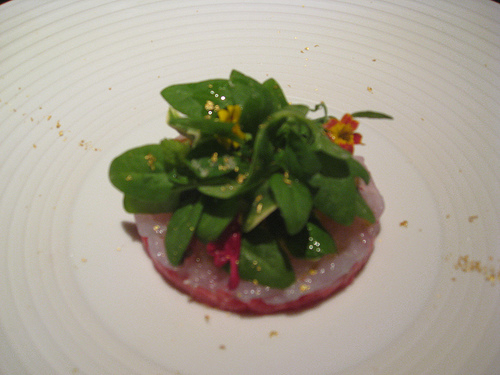
lamb tartar

I got the Lamb Tartare. In a circle mold they layered the bottom with the freshest raw lamb I’ve ever seen. On top of that was a layer of raw diced shiro ebi (sweet shrimp). Then, on top of that was a few sliced of pickled peach and some tarragon. I think it was gold fleck on top of that, but I can’t be sure. The sliminess of the shrimp and the sourness of the pickled peach combined with the herbal notes of the tarragon so well that you hardly even knew you had lamb underneath. It was such a clean taste that nothing seemed raw. As such, I think it belongs in the raw section, but I’m not complaining because then I’d have to have chosen between that and the crab.

On to the main course. Yuki’s Tai Snapper with Deconstructed Green Curry (I couldn’t find a pic online) was a masterpiece. The Snapper seems to have been steamed with lemon zest on top. It was so moist and delicious. There was some coconut sauce, dollops of some sort of spicy chili sauce. A brown sugar tuille. The coolest part were the parsley merengues. They were brought out getting frozen in liquid nitrogen and served tableside. They were so light and airy that they melted in your mouth making you wonder if you had even eaten anything at all. But the flavor was pure parsley. Genius! When you put everything together it really tasted like green curry. Wonderful deconstruction job. Her only complaint was that she wanted white rice with it. But, she’s Japanese. She wants white rice with everything.
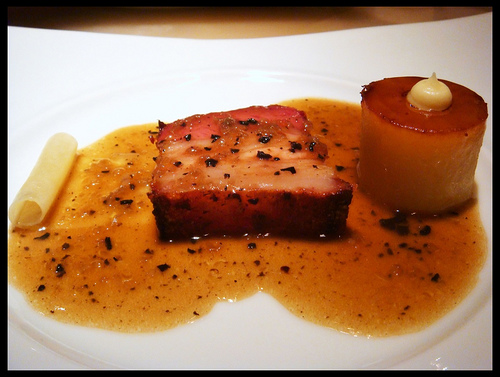
pork belly

I got the Pork Belly. Three thick slices of pork belly that had been seared in duck fat. Served with thin slices of potato, scalloped potato, and pureed potato in the scalloped potato. On top of everything they poured some truffle sauce. It was decadence on a plate! I can’t begin to describe to you just exactly what that crisp pig skin fried in duck fat did to my digestive tracts, but I will say this…it was a beautiful thing! My only complaint is that I couldn’t quite finish everything on the plate. I hate to waste food. (please note that the pic I found on Google only shows one slice, I was served three with three potatoes.)

Before dessert they sent out another amuse buche. This was a little ramekin filled with Meyer Lemon Marshmallow. It was super tart the second it hit our tongues, but almost immediately subsided into just a really palette cleansing citrus. It was the perfect thing to prepare us for dessert.

Dessert was two different souffles. One was a Grand Marnier, the other was a Bailey’s and Frangelico. Of course, he got the souffles just right. Super fluffy with a mild egg taste. They spooned a hole in at the table to pour in the alcohol. Absolutely scrumptious!

We weren’t quite done yet. After dessert they sent out these interesting pastry concoctions that the pastry chef came up with. In a small bundt shaped mold they poured some beeswax, let it burn a little to carmelize, then filled it with custard. I’ve never had anything quite like it.

But, there was still more. What meal is complete without chocolate? Our server brought out a loaf of some of the richest, creamiest chocolate mouse of all time! So good, so so good!

When we were done, Tony, the general manager, gave us a quick tour of the kitchen. Laurent Gras was back there with his army of chefs cooking away. It’s great to see a restaurant where the head chef is actually doing the cooking. Too often the big name chefs are never in the kitchen, having their sous chefs handle everything. Not here. Laurent is such a perfectionist that he tends the kitchen almost every single night. The man is tireless. I’m damn glad he is!

It wasn’t cheap, but when you feel like splurging for a special dinner you’d be hard-pressed to find a better place than L2O. It truly is a gem among Chicago restaurants.

Read Full Post »
« Newer Posts - Older Posts »