Feeds:
Posts
Comments

Posts Tagged ‘mirin’

Braised yakitori, kind of a misnomer. Yakitori translates to “grilled chicken”. I didn’t grill anything for this dish. Braised typically means cooking something in liquid over low heat for a long period of time. I didn’t do that either. What I did was make a standard yakitori marinade and cook some chicken thighs along with green onions in it. Why did I call this “Braised Yakitori”? Honestly, I just don’t know what else to call it.
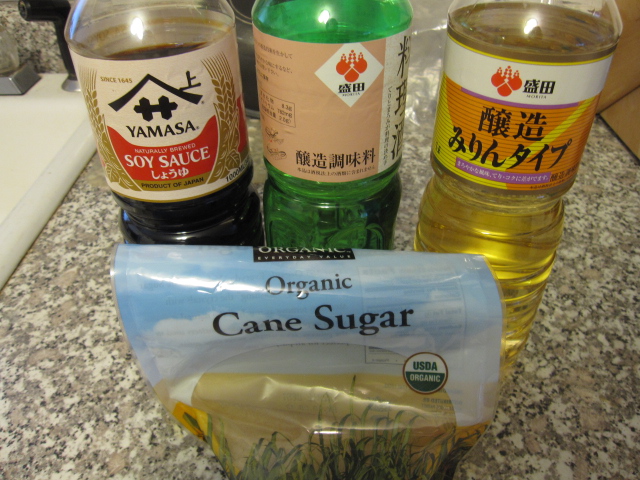
First thing I did was make the marinade. In a small saucepan I poured in 5 tablespoons of soy sauce, 4 tablespoons of sake, 1 tablespoon of mirin, and 1 tablespoon of sugar. I brought it up to a low boil and let it gently simmer for about 5 minutes or so. I just wanted the sugar to dissolve and the marinade to thicken up slightly. After that I turned the heat off and let it cool down for about an hour, until it reached room temperature.

I minced up 2 garlic cloves and chopped up 6 green onions and 6 skinless and boneless chicken thighs. I mixed them all together in a glass dish and poured to marinade over. Covered with plastic wrap I put it in the fridge while I got the veggies and miso soup ready.
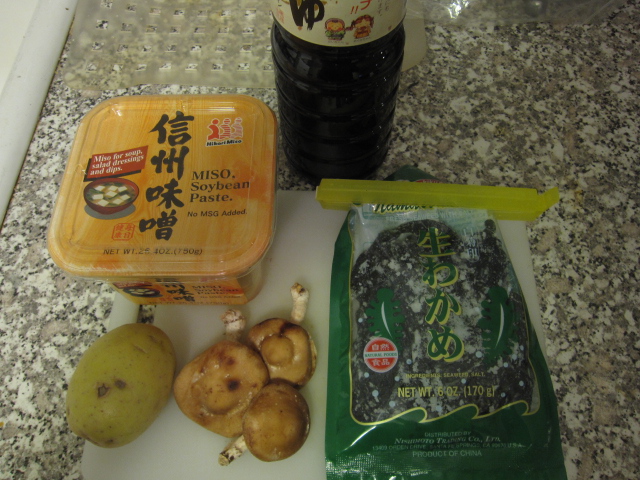
For the miso soup I only made 2 portions. We had some tomato soup leftover from Kasia’s that became lunch today, so I didn’t need to make too much. I used 1-1.5 tablespoons of miso, one yukon gold potato skinned and chopped, 3 shiitake sliced, 2 tablespoons of dashi flavored soy sauce, and some salted wakame. For the wakame, you have to rinse the salt off and then let it soak in cold water for about 10-15 minutes. I honestly cannot tell you how much I used, I just eye-balled it. You have to be careful though because it does get considerable larger as it absorbs the water.

In a small soup pan I poured in about 1.25 cups of water and added the dashi soy, potato, and shiitake. I let it simmer over a very low boil for about 20 minutes. That was just long enough for the potato to cook but not so long that it started to disintegrate.

Just before serving I put the miso in our little tea colander and swished it around for a few minutes until it all mixed into the soup. Using the colander keeps the miso from being chunky. But, this was right before serving (at which time I also added the wakame). Before I did this I made the veggies and cooked the chicken.
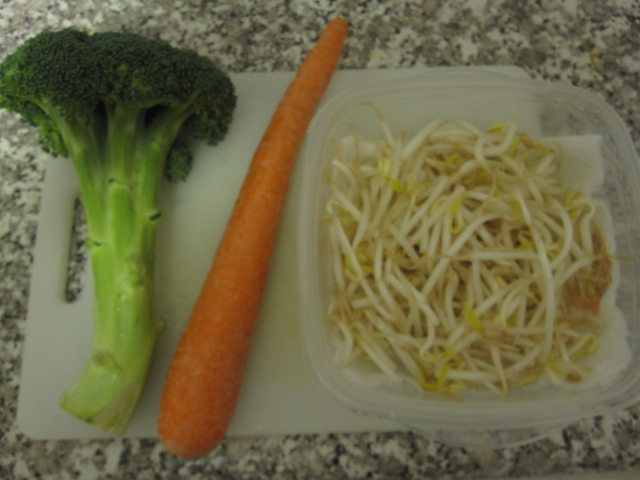
I kept the veggies very simple. I cut up 1 head of broccoli, sliced up 1 carrot, and rinsed about 2-3 ounces of bean sprouts. I got my steamer going and steamed the broccoli and carrot for about 5 minutes. After that I added the bean sprouts and let it go for another minute or so. A little sprinkle of salt and the veggies were ready.

To cook the chicken I heated up my pan and added about 2 tablespoons of sesame oil. When the oil was shimmering I just dumped everything in. It took about 9 or 10 minutes for the chicken to cook through and the sauce the thicken up a little. I seasoned with a little black pepper and that was all.

Of course, white rice accompanied the night’s chow.
Read Full Post »

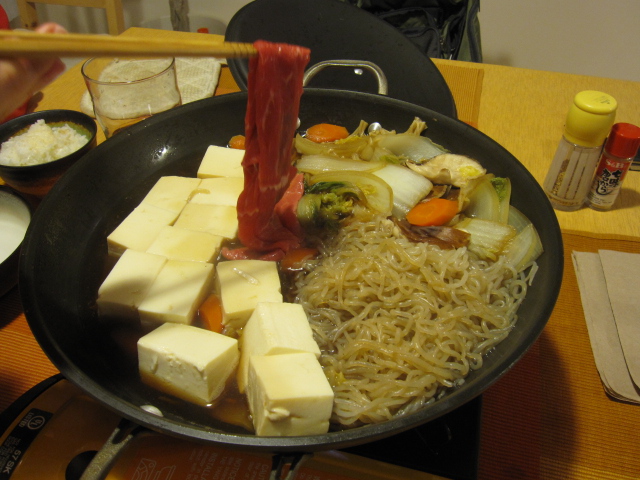
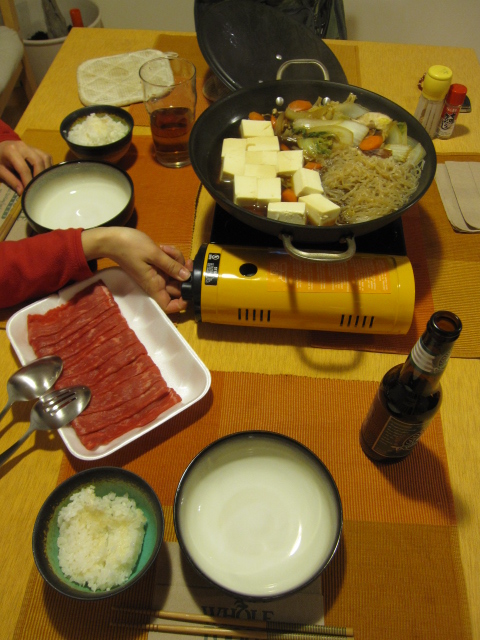
Just saying Yuki’s Sukiyaki is almost as much fun as eating it. Sukiyaki is a traditional family style one-pot meal in Japan. Vegetables are simmered in a sweet soy-based broth.

Then the pot is brought to the table and, over a table-top burner, thin slices of beef are swished around (similar to shabu-shabu) and cooked in the pot. Each individual has their own dish to put the beef and veggies in. It usually is mixed with a raw egg, but raw eggs aren’t good for prego so we omitted that.

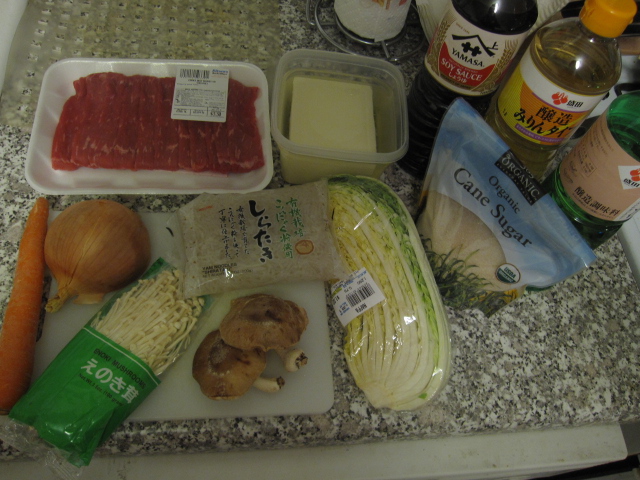
Ingredients for Yakiniku aren’t set in stone, what we used are pretty typical for the most part. I chopped up a carrot, quartered 1/2 onion, cleaned up 1 packet of enoki mushrooms, rinsed and cut up 1 packaged of konnyaku shirataki noodles, 2 large shiitake halved, 1/4 head of napa cabbage chopped, a little more than 1/2 pound of thinly sliced beef, almost 1 block of silken tofu large diced (I had previously used about 1/8th of it for miso soup, use as much as you like), about 5 tablespoons of soy sauce, 2 tablespoons mirin, 3 tablespoons sake, and 1-2 tablespoons of sugar.

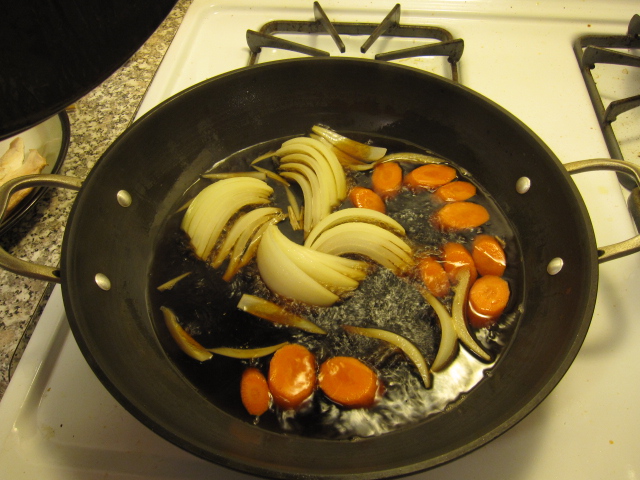
In our large pan Yuki poured in the soy, mirin, and sake along with about 1/4 cup of water. She added the sugar and brought it up to a simmer. The onion and carrot had the longest cooking time so they went in for about 5 minutes, covered.

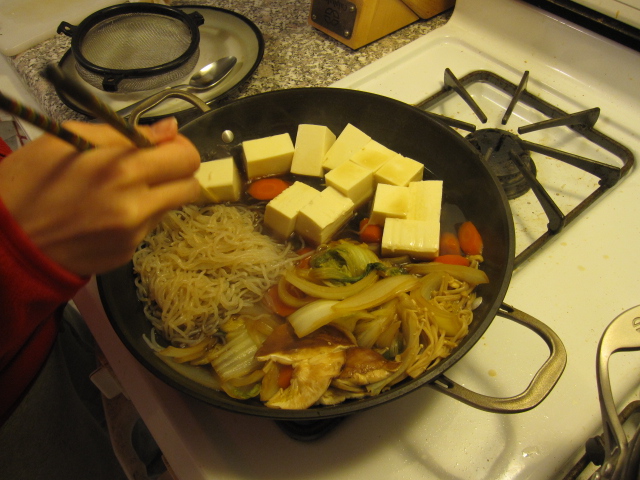
Then she added the rest of the ingredients minus the beef and let them cook for another 5 minutes or so. After that we moved the pan to our table-top burner and swished the beef in the boiling liquid. White rice on the side and cold beer in hand.

Read Full Post »

Oden is Japanese home cooking at it’s finest as well as being a favorite winter-time treat. While the ingredients can vary, the basis of oden is to have a slightly salty dashi broth filled with fish cakes, daikon, konnyaku, hard-boiled eggs, and potatoes. Slowly simmered and warm in the belly, this is true comfort food. In Japan, it’s served at home, in restaurants, at street vendors, and you can even get it warm from vending machines (you can get anything in a Japanese vending machine, and I do mean anything!).

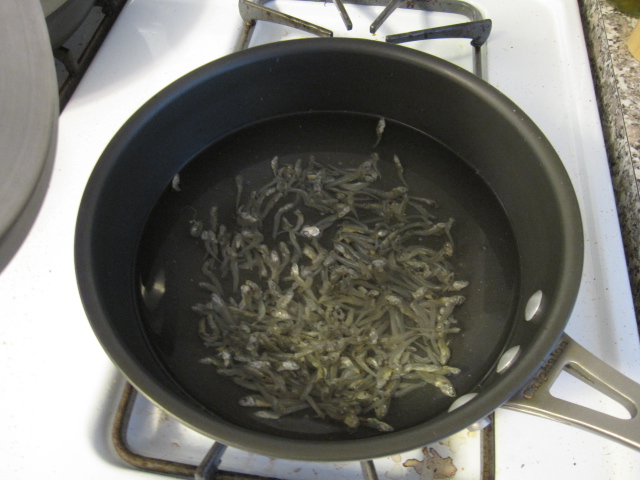
To start I made a good dashi broth. I used about 1/3 cup of dried anchovies, 3 tablespoons of mirin, 2 tablespoons of soy sauce, and 1 tablespoon of kosher salt. Most oden sets come with their own little packets of soy flavoring. They are usually pretty good, but it’s just as easy to do it yourself giving you more control over the flavor.

I let the anchovies simmer in 4 cups of boiling water for about an hour. I wanted every last bit of flavor out of the fish and into the broth.

I strained the broth and discarded the anchovies. Then I mixed in the mirin, soy, and salt.

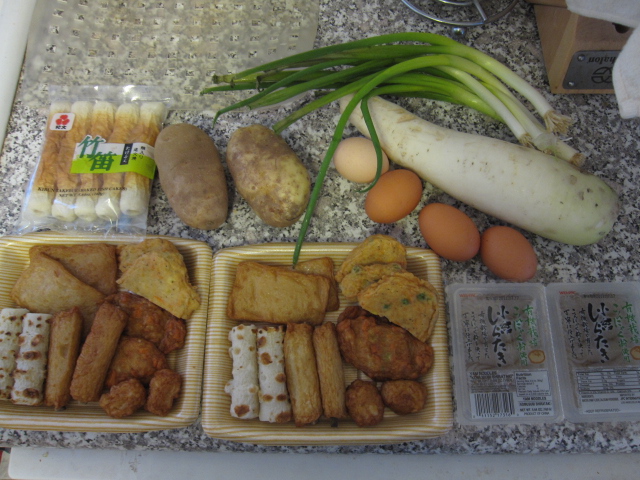
You can buy oden sets at any Japanese market and some Asian markets. We got two two-person sets that were on sale from Mitsuwa, each containing a variety of fish cakes. Some with carrot in them, some with burdock root, some grilled, most deep fried. We also had a package of chikuwa fishcakes that we used. I skinned and chopped two russet potatoes, medium boiled 4 eggs (just enough to peel the shell off, since they were going to simmer in the dashi for a while I didn’t want to overcook the yolk too much), 1 daikon skinned and chopped, a bunch of green onions chopped, and a couple packaged of shirataki konnyaku.

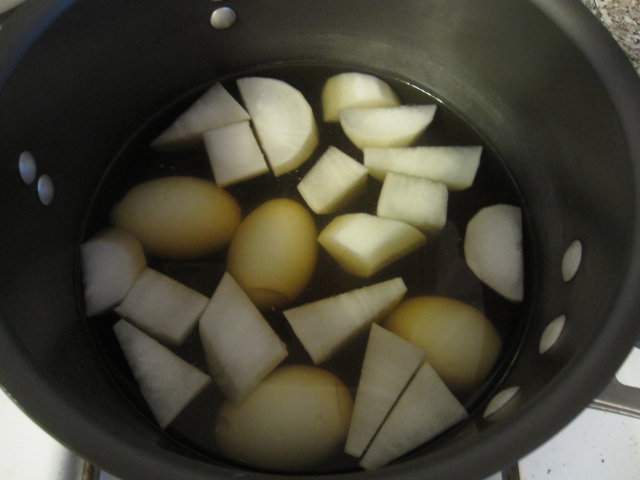
Once the dashi was ready I added the eggs and daikon and simmered them, covered, over a low heat for an hour. This allows both to absorb a lot of the dashi flavor.

Then I added the potatoes and konnyaku. If you boil the potatoes too long they will fall apart and melt into the broth. I only let them simmer for about 20 minutes. That’s also enough time for the konnyaku to take on some flavor. If you’re using sliced blocks of konnyaku instead of the shirataki noodles you’ll need to add them about 20 minutes earlier.

Since most of the fishcakes are deep fried before packaging they can sometimes have a little bit of grease residue. Because of that I boil and drain them seperately for a few minutes before adding them to the dashi, that gets rid of any unwanted oil. They also are fully cooked so just need to be heated up. After about 5 minutes in the dashi, along with the green onions, the oden is ready to go.

To serve it up I divied one of each for both of our bowls and then laddles some dashi on top. Oden is great with a cold beer and some white rice, I covered our rice with ground sesame seeds. I tell you though, oden is even better the next day. It is a stew, so once all of the flavors fully penetrate the ingredients you really have a special dish here. The daikon and egg for lunch today were outstanding!

Read Full Post »

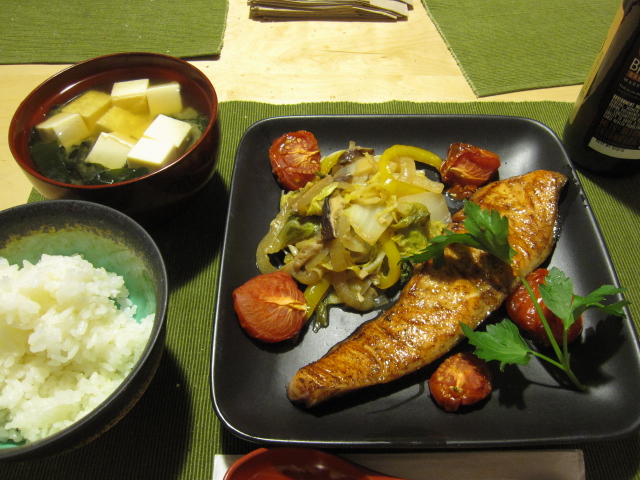
We journeyed up to Arlington Heights this weekend to stock up on Japanese ingredients, something we do at least once a month. At the Tensuke Market we saw this absolutely gorgeous salmon. They have the best seafood in town, hands down. This salmon was marbled like a real Kobe Ribeye, just made our mouths water. So, that was dinner last night.

We picked up a package of 3 quarter pound slices of filet (Yuki got lunch today, I didn’t get to enjoy that beautiful fish again). I made a quick marinade consisting of 1/2 tablespoon mirin, 1 tablespoon sake, and 1.5 tablespoons soy sauce. In a glass baking dish I let the salmon sit in the marinade while I got everything else ready.

For my veggies I used 1/2 onion sliced, 3 garlic cloves minced, 7 cherry tomatoes halved, 2/3 carton of shiitake sliced, 2 small yellow bell peppers sliced, and about 1/8 of a medium napa cabbage cut into chunks.

In a heated pan I melted about 1/2 tablespoon of butter and poured in 1 tablespoon of sesame oil. Once the butter was melted I added the onion and let it saute for about 5 minutes. Then, I added the garlic, shiitake, and bell pepper. About 5 more minutes and I poured in about 2 tablespoons of soy sauce and let that coat all of the veggies. Just before the soy was completely boiled off, about a minute or so, I added the napa cabbage. I let that wilt down a little for about 5 minutes, seasoned with a little black pepper, turned the heat to low just to keep everything warm, covered it, and let it sit while I cooked the salmon.

Oh, and during this time I had the tomatoes in the oven roasting at about 375 degrees, I did that for about 25 minutes. I also decided, at the last minute, to make a simple miso soup with some wakame and tofu. I just boiled some water with a little dashi seasoned soy, stirred in some miso, and added the tofu and wakame. That only takes a few minutes.

For the salmon I heated up my large skillet and melted a little dab of butter, just enough to lightly coat the surface of the pan. The salmon had enough fat that I didn’t want to add to much more, but I also didn’t want it to stick. So, a tiny amount of butter. I seasoned the salmon with some crushed white pepper and then seared one side for about 3 minutes. Then I flipped it all over and poured the marinade all over it. I let it cook for about 3 more minutes and then pur the salmon on a plate and served everything up, with white rice of course. I garnished with a piece of parsley (only because I have some in my fridge).

Read Full Post »

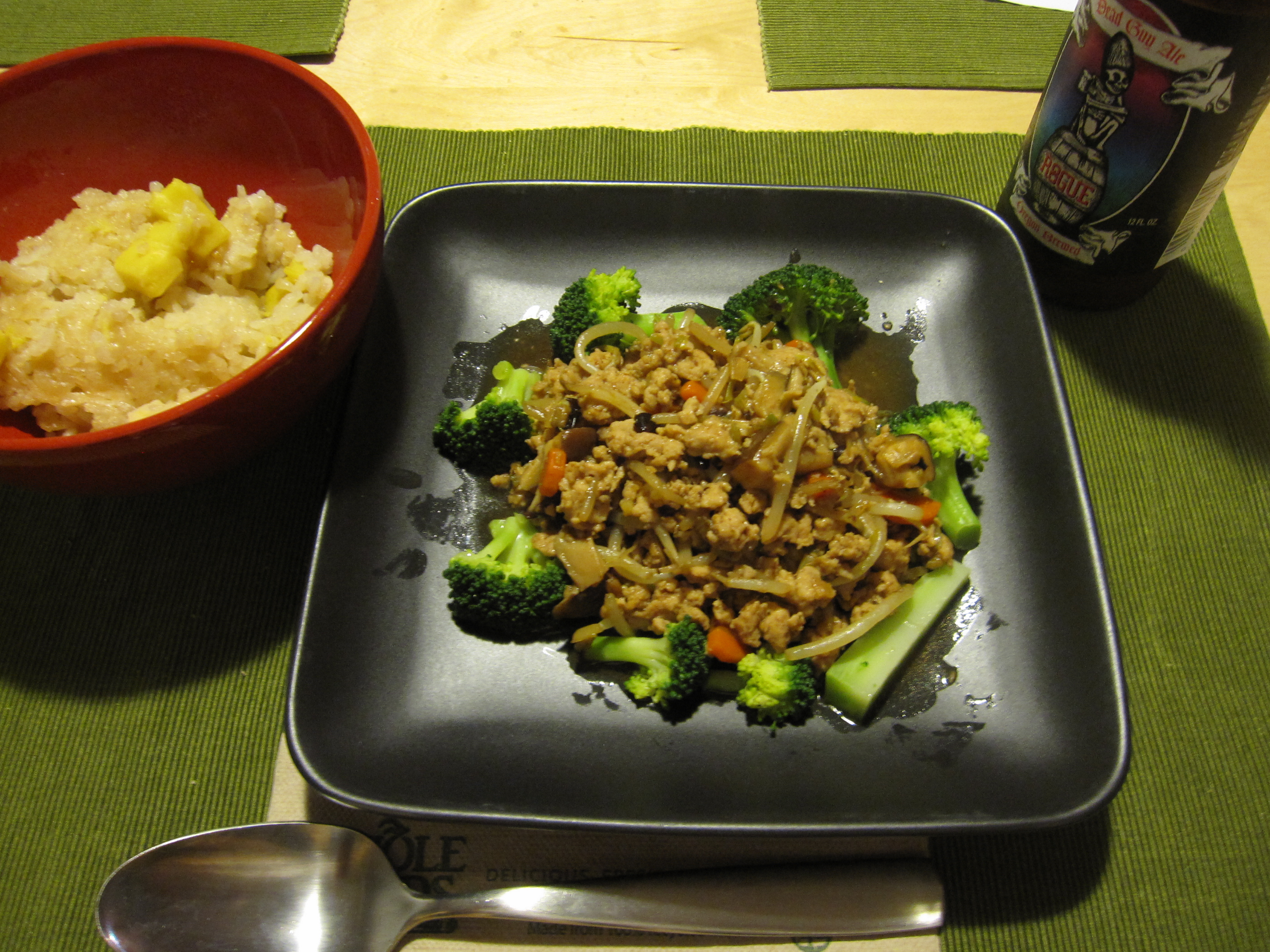
For dinner last night I made a simple Chinese-flavored ground chicken stir-fry. For the sauce, I used fermented black bean and garlic sauce. It’s a real easy way to get a lot of flavor into a quick, healthy dish.

My ingredients included 1 carrot cut into half moons, 1/2 pound bean sprouts, 2 tablespoons soy sauce, 10 green onions thinly sliced, 3 tablespoons of black bean and garlic sauce, a package of shiitake diced, 1 head of broccoli cut into florets, 1/2 inch ginger, minced, 3 cloves garlic minced, and 1 pound of ground chicken thigh.

First thing I did was to mix up the sauce. In a small dish I mixed the soy and black bean sauce. After tasting it, I decided to add a little sweetness so I mixed in 1 tablespoon of mirin. I set that aside and heated up a saute pan.

Once hot, I poured in about 2 tablespoons of sesame oil and then added the ginger and garlic. I let them sizzle for about 30 seconds and then added the carrot and green onions. I sautéed them for about 3 minutes and then added the chicken. I broke up the chicken as it cooked for about 7 or 8 minutes and then added the shiitake. Once the shiitake were coated with the rest of the ingredients I added the sauce and mixed it around. At this time I put the broccoli into my steamer. Broccoli only needs about 4 minutes to steam to a nice al dente and at this point all I need to do with the stir-fry was let the sauce boil down a little and add some pepper and the bean sprouts. So, that’s what I did. Easy as that.

The other day Yuki had made some sweet potato rice that we didn’t finish. Instead of making new rice I decided to use that up. White rice probably would have matched better with the slightly salty dish, but the sweetness of the sweet potatoes wasn’t that bad of a match, and it added a higher nutritional value to the meal. So did my beer.

Read Full Post »

I try to make quinoa a regular in my diet, but don’t make it as often as I should. Being one of the world’s superfoods, as well as being relatively inexpensive, I think everyone should eat it at least a few times a month. I’m just waiting for the McQuinoa to show up on menus. Although, to get most Americans to eat it they’d probably have to use burger patties as the bun.

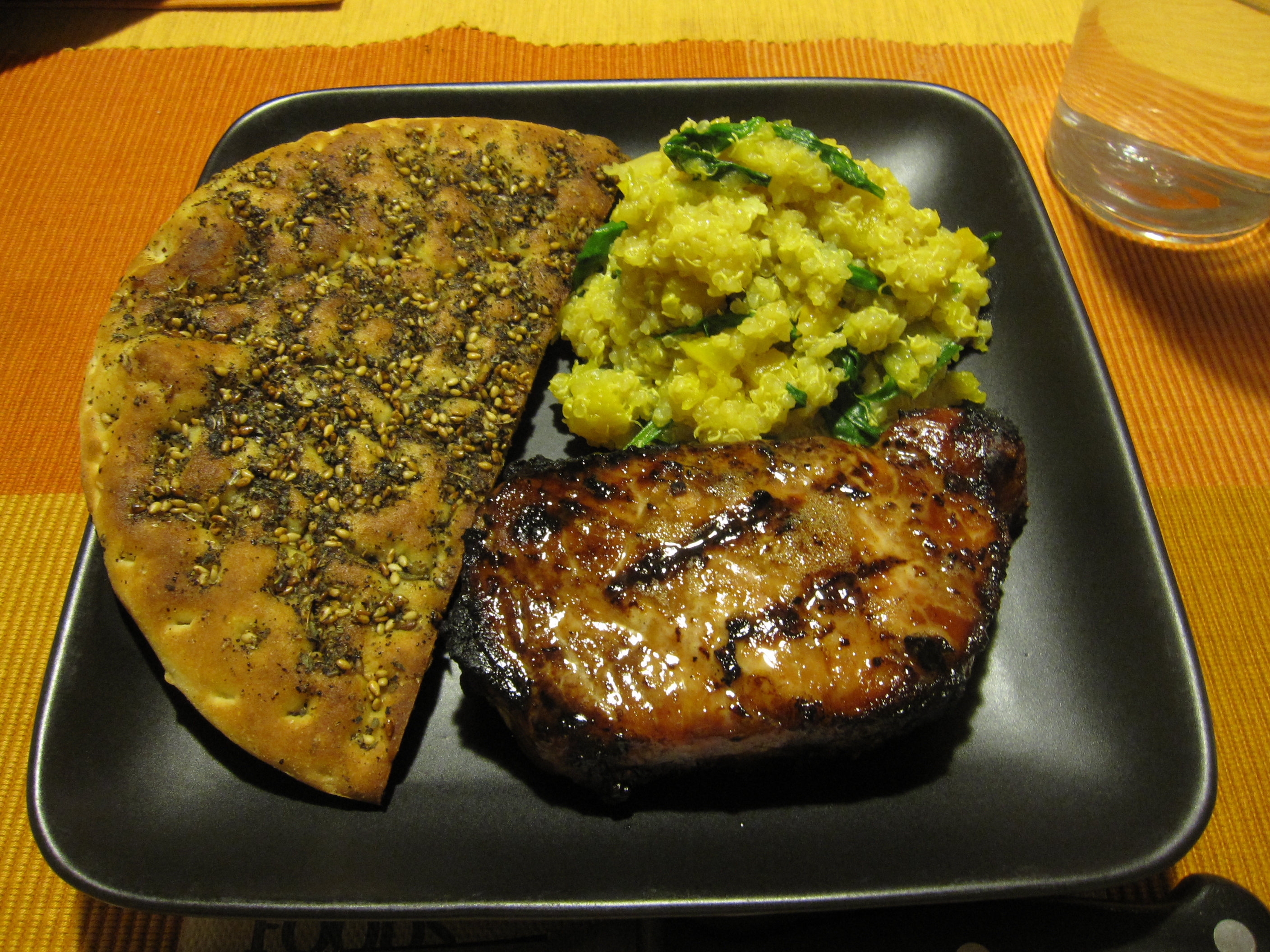
First thing I did was marinate the pork chops. I mixed together 2 tablespoons of sake, 1 tablespoon of mirin, 3 tablespoons of soy sauce,1/2 inch ginger grated, a large garlic clove grated, and some cracked black pepper. I turned the pork around in the marinade a few times to coat it entirely, then I covered it and set it in the fridge for about 2 hours. I turned it a couple of times while marinating. I also took it out about 30 minutes prior to grilling to bring it to room temperature, this ensures that it cooks more evenly.

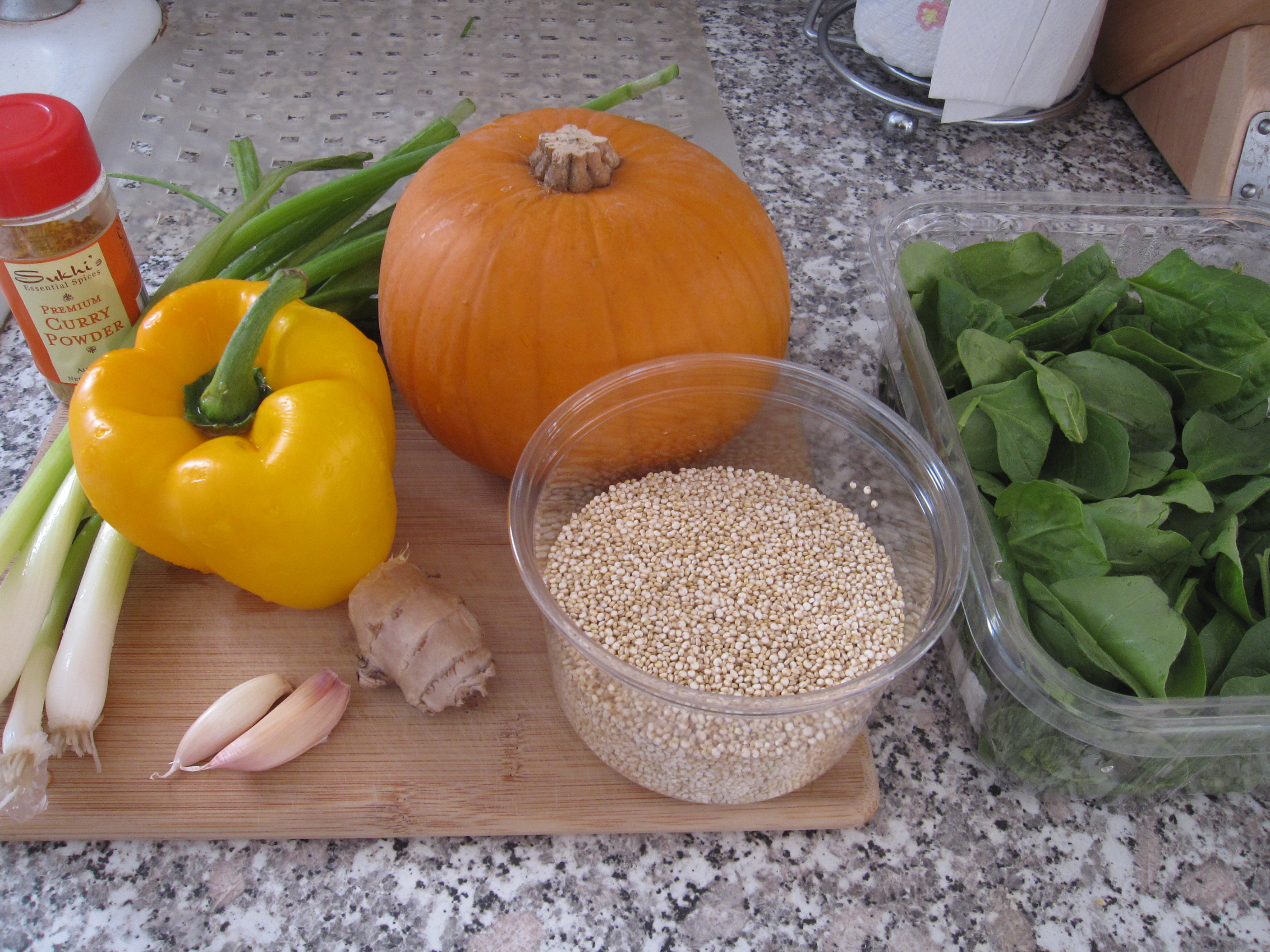
For the quinoa I used 1 tablespoon of curry powder, 6 green onions sliced, 1 yellow bell pepper sliced, 2 garlic cloves minced, 1/2 inch of ginger minced, 1/3 of a small pumpkin (I just eye-balled how much I wanted to use, I have no idea how much it actually was), 1 cup of quinoa, and a couple large handfuls of baby spinach.

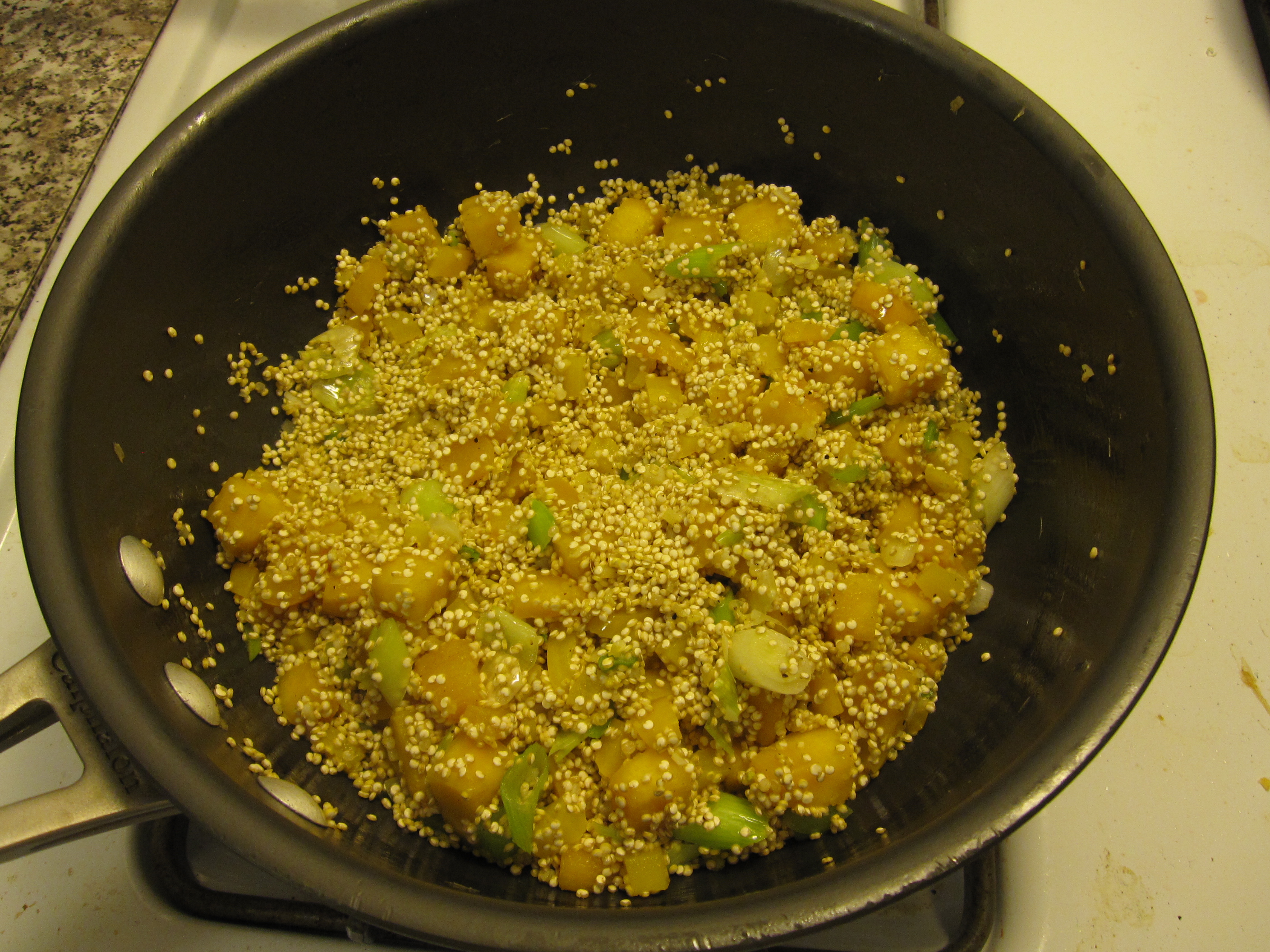
In a small sauce pan I brought 2 cups of water to a boil. While the water was getting hot, I heated up my medium pan and poured in about 2 tablespoons of sesame oil. I threw in the pumpkin, bell pepper, and green onions. I let them saute for about 5 minutes and then added the garlic and ginger. While the garlic and ginger started to heat up, about a minute, I thoroughly rinsed the quinoa and then added it to the pan along with the curry powder, a touch of salt, and some black pepper. I stirred it around for about 3-4 minutes so that the quinoa would start to give off a slight nutty aroma. After that I poured in the boiling water, covered the pan, and let it simmer over medium-low heat for about 15 minutes. Once that 15 minutes was up I turned off the heat and let it rest for another 10 minutes.

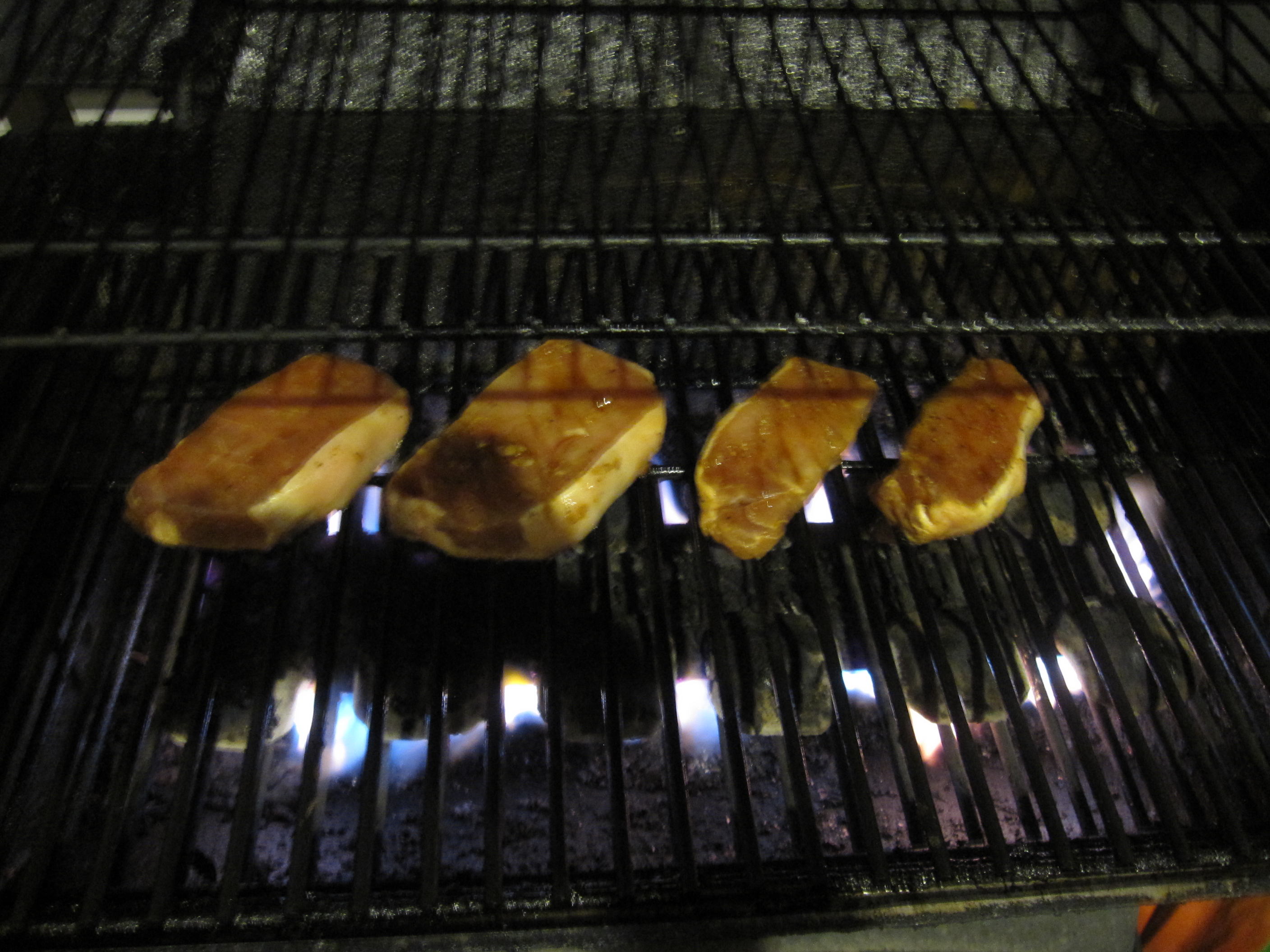
While the quinoa was simmering I got the grill hot and grilled up the pork chops. It took about 5-6 minutes per side.

Just before serving I toasted my last piece of manakeesh from the Tannourine Bakery. I also fluffed up the quinoa with a fork and then mixed in the baby spinach.

If I were to make this recipe again I would do two things different. Instead of using 1 tablespoon curry powder I would use 1.5-2 tablespoons, or maybe a touch of cinnamon. I would also squeeze a lemon or lime into the quinoa as I stir in the spinach. The quinoa was good, just much more lightly flavored than I would have liked.

Read Full Post »

The other night Yuki and I cooked together. We made one of my favorites, chicken hijiki rice, along with some vegetables that we needed to use up.

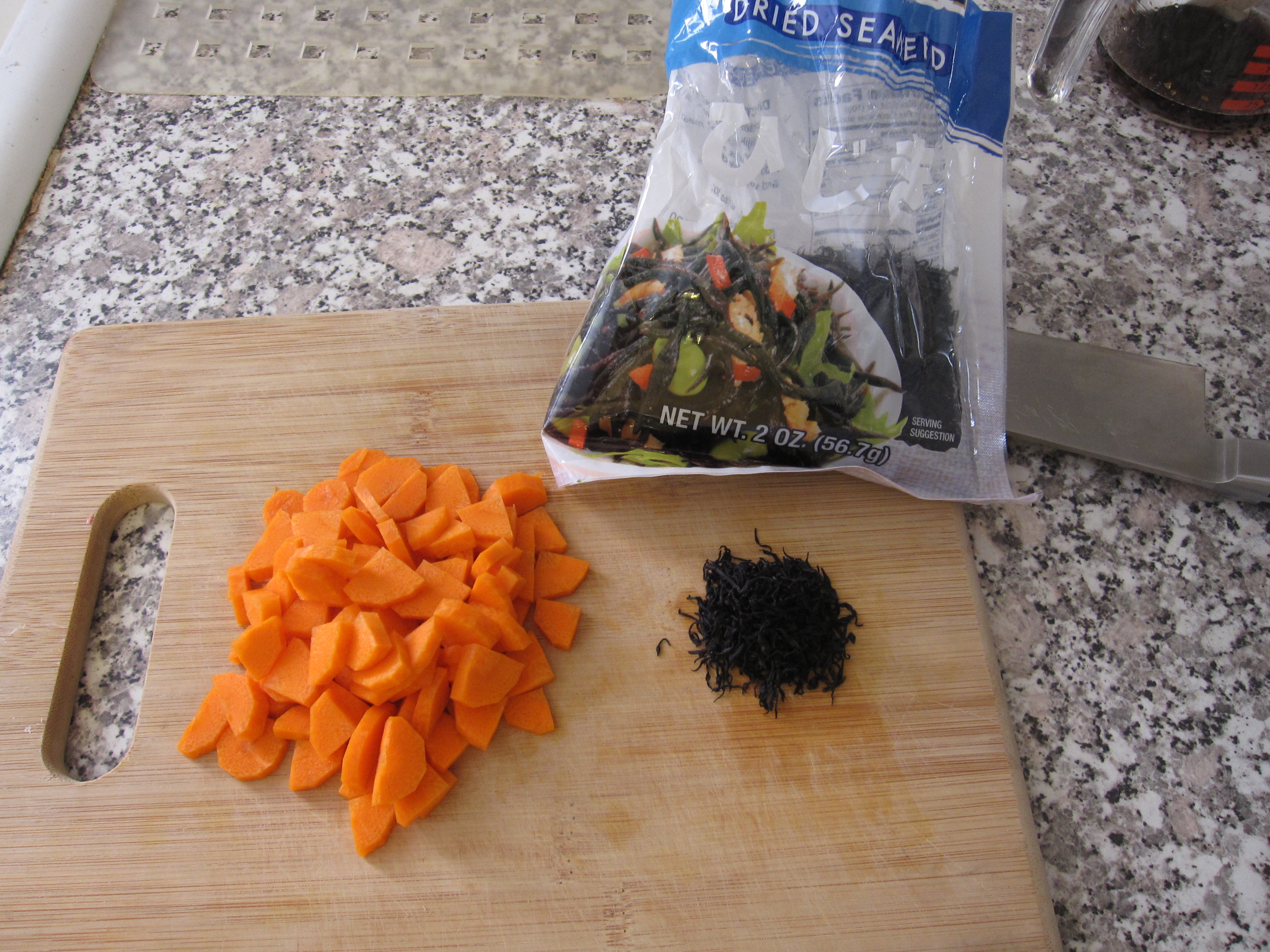
Making the rice is easy as can be. We used 1.5 tablespoons of dried hijiki seaweed, 4 shiitake sliced, 1 carrot sliced in half moons, and 1/2 pound of skinless chicken thighs. While I rinsed off 2 cups of rice and cut up the vegetables Yuki cut up the chicken and quickly sauteed it in sesame oil. After filling the rice cooker with the proper amount of water for 2 cups of rice I put the hijiki in and let it sit for about 15 minutes. Then we tossed everything else in, turned on the cooker, and let it go.

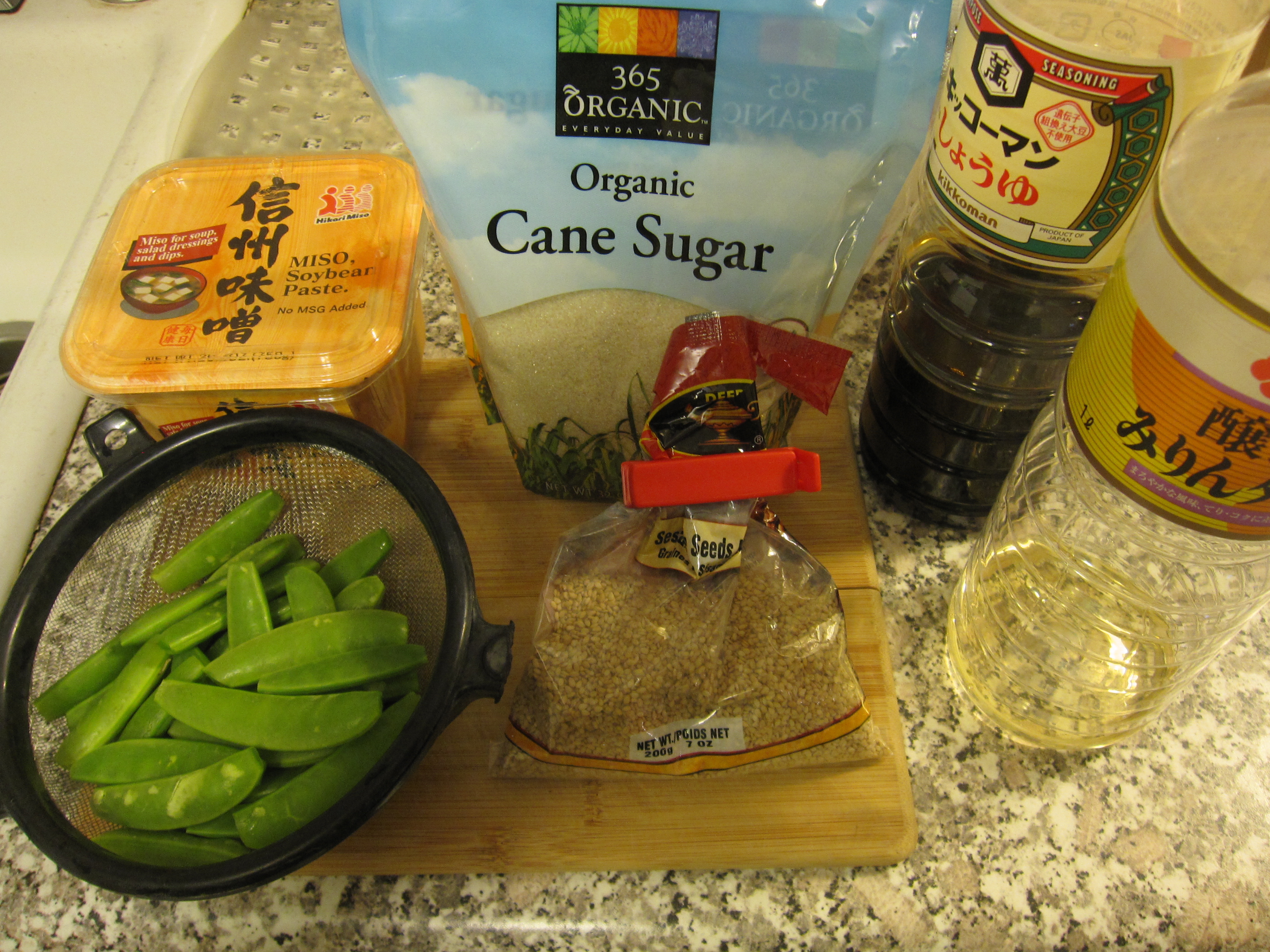
I made a sesame dressing for some pea pods that were in our fridge. I used 1 tablespoon of miso paste, a pinch of sugar, 1 tablespoon of sesame seeds, 1 tablespoon of soy sauce, and 1/2 tablespoon of mirin.

I toasted the sesame seeds in a dry skillet for a few minutes until they turned a golden brown and started to give off their fragrance. Then I ground them with my pestle and mortar. I added the rest of the ingredients, mixed them all together, and set it aside. I simply steamed the pea pods for about 4 minutes when the rice was ready. Then I tossed them with the sesame dressing.

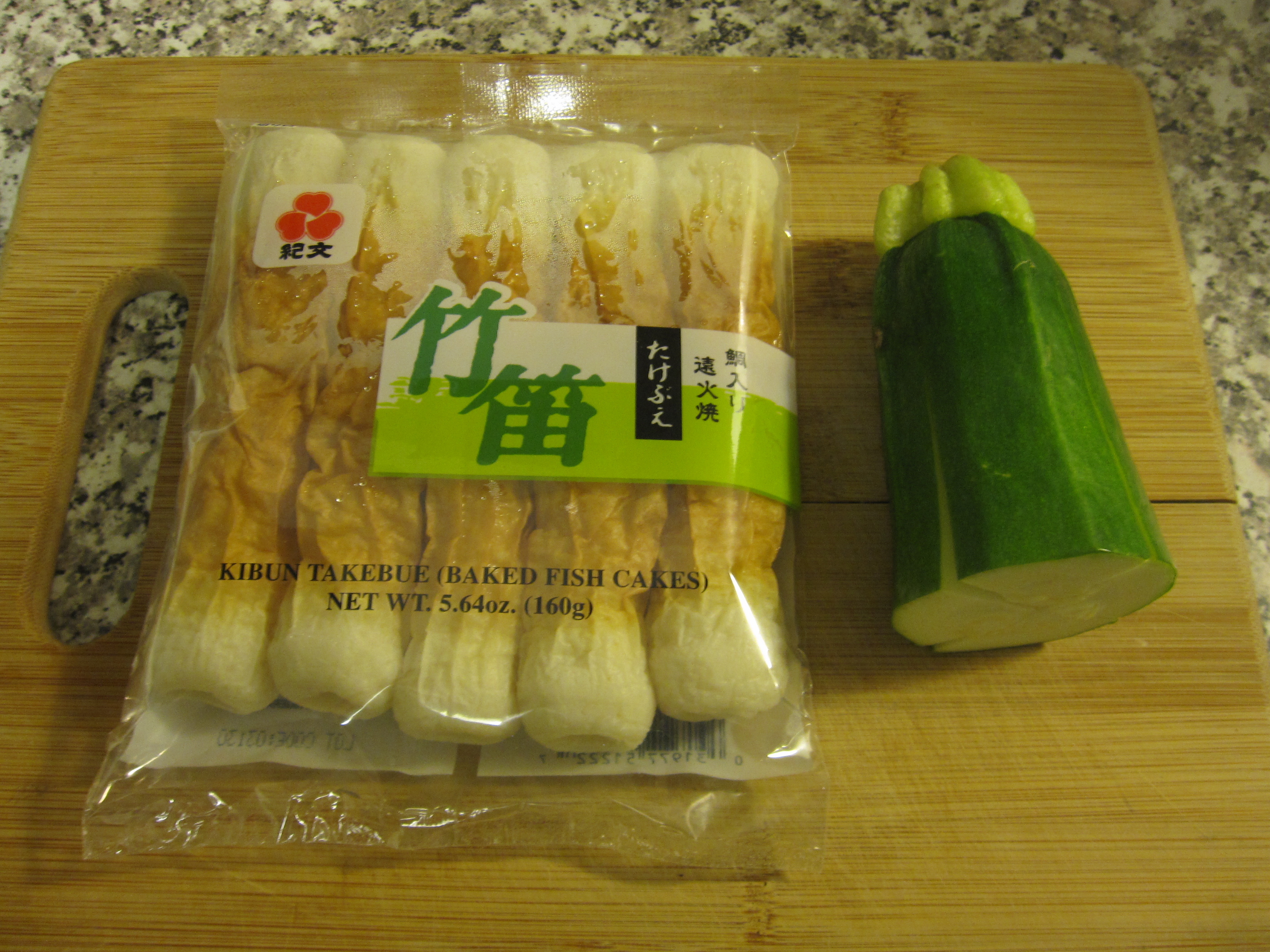
We also had some chikuwa and 1/2 a zucchini to use up. Chikuwa are tubular, hollow fish cakes that have been baked or grilled. I sliced the zucchini into long sticks and stuffed the chikuwa with them. Once the rice was ready and the pea pods steaming I just put them in the toaster oven and toasted them for about 6 minutes. I drizzled them with the sesame dressing as well.

While I was doing that Yuki made some miso soup. I didn’t watch her make it, but she put in it sliced onion and wakame.

Read Full Post »

Friday night, to me, was the perfect night for grilling. Mid-60’s, clear skies, light breeze. Unlike summer, which I still grill quite a bit, it wasn’t too hot to stand over a hot grill. In light of that, I had to get something on the grill. With organic air-chilled split chicken breasts on sale my mind was made up for me.

I had two big breasts that I slashed the flesh 4 times in each. I did this for two reasons, to allow the marinade to penetrate more meat and to allow them to grill more evenly since they were pretty meaty in the middle. For the marinade, in my small processor I processed up 3 garlic cloves, 2 green onions, 1 inch of ginger, and 2 tablespoons each of soy sauce, mirin, sake, and shiro miso. I rubbed it all into the chicken, covered it, and let it sit in the fridge for an hour.

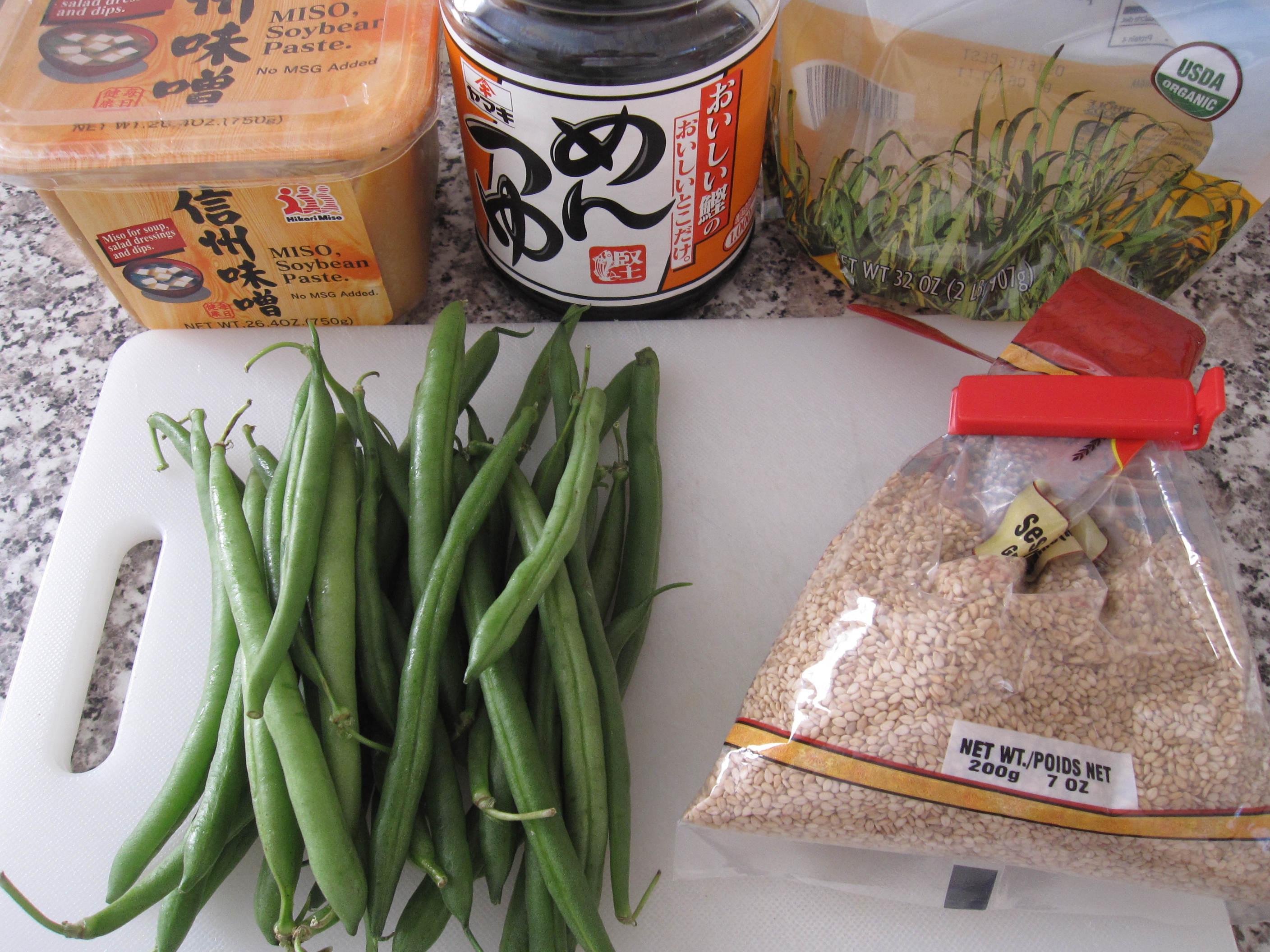
For my side I made haricots vert in miso-sesame dressing. I cleaned up 6 ounces of haricots vert and set them aside. I took 1 tablespoon of sesame seeds and dumped them into a hot skillet and let them toast until they turned a nice golden color and started to release their aroma, about 1-2 minutes. Then I ground them with my pestle and mortar and added a big pinch of sugar, 1.5 tablespoons of seasoned soy sauce (contains mirin and dashi), and 1/2 tablespoon of shiro miso. I mixed that all together and set it aside. Later on, right after taking the chicken off the grill, I steamed the haricots vert for about 4 minutes and then tossed them with the dressing.

I also made some miso soup. I boiled about 2 cups of water and added two skinned and diced yukon gold potatoes, 2 green onions sliced, and three shiitake sliced. While they were boiling I took a bunch of salted wakame and soaked it in water while also cleaning 3 ounces of bean sprouts. I also set aside 1/4 cup of the seasoned soy sauce and a large spoonful of shiro miso.

While the potatoes were cooking in the miso soup I got the grill ready and grilled up the chicken. I got the skin nice and crisp while the meat stayed juicy.

Just before taking the chicken off I poured the seasoned soy into the miso soup and added the sprouts and wakame. Right after taking the chicken off I mixed the miso into the soup and then, like I said earlier, steamed the haricots vert. I took some shichimi togarashi and crushed black and white sesame seeds and sprinkled them all over the chicken. I served everything with white rice.

Read Full Post »

Yesterday I saw some really nice coho salmon on sale that just came in that morning. Since I haven’t cooked salmon in a while I took that as a sign that it’s time to do it up again. I decided to keep it very simple and use some Japanese flavors to appease my wife.

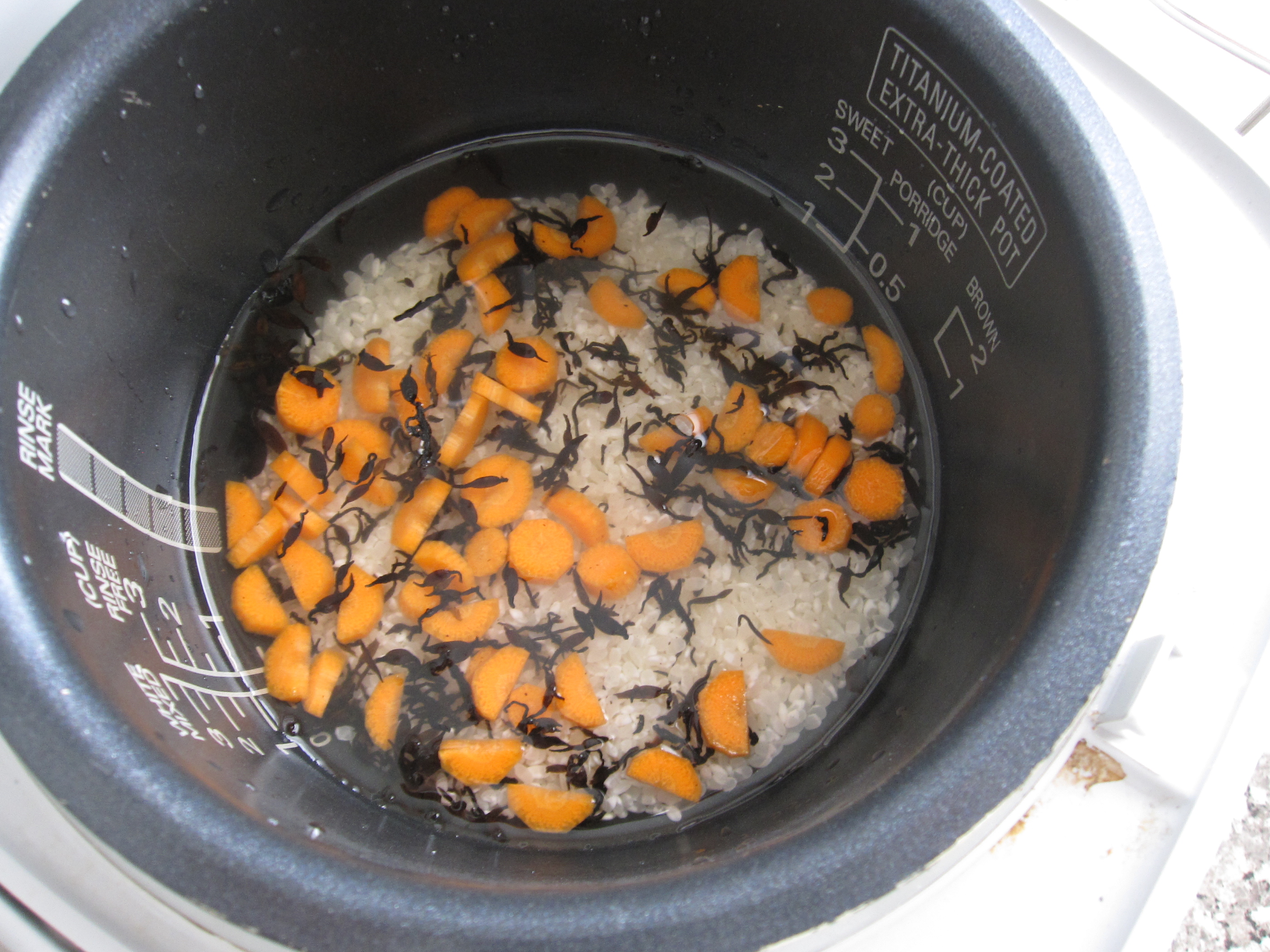
After lunch I got the rice ready. I rinsed 1 cup of rice and threw it in the rice cooker like normal, then added a couple of large pinches of dried hijiki seaweed and a diced carrot. I let it sit for about a half hour to let the hijiki re-hydrate and flavor some of the water. Then I turned on the machine and let the rice cook. When it was finished I turned it off, mixed everything together, and let it cool to room temperature.

Closer to dinner time I made my teriyaki sauce. In a small saucepan I gently heated 3 tablespoons each of soy sauce, sake, and mirin along with 1 tablespoon of sugar. I let it heat just until the sugar was completely dissolved and turned off the heat before it came to a boil. I let that cool to room temperature.

Here’s my 20 ounce filet of coho salmon. I cut it into 4 equal portions and marinated it in the teriyaki sauce for about 45 minutes at room temperature.

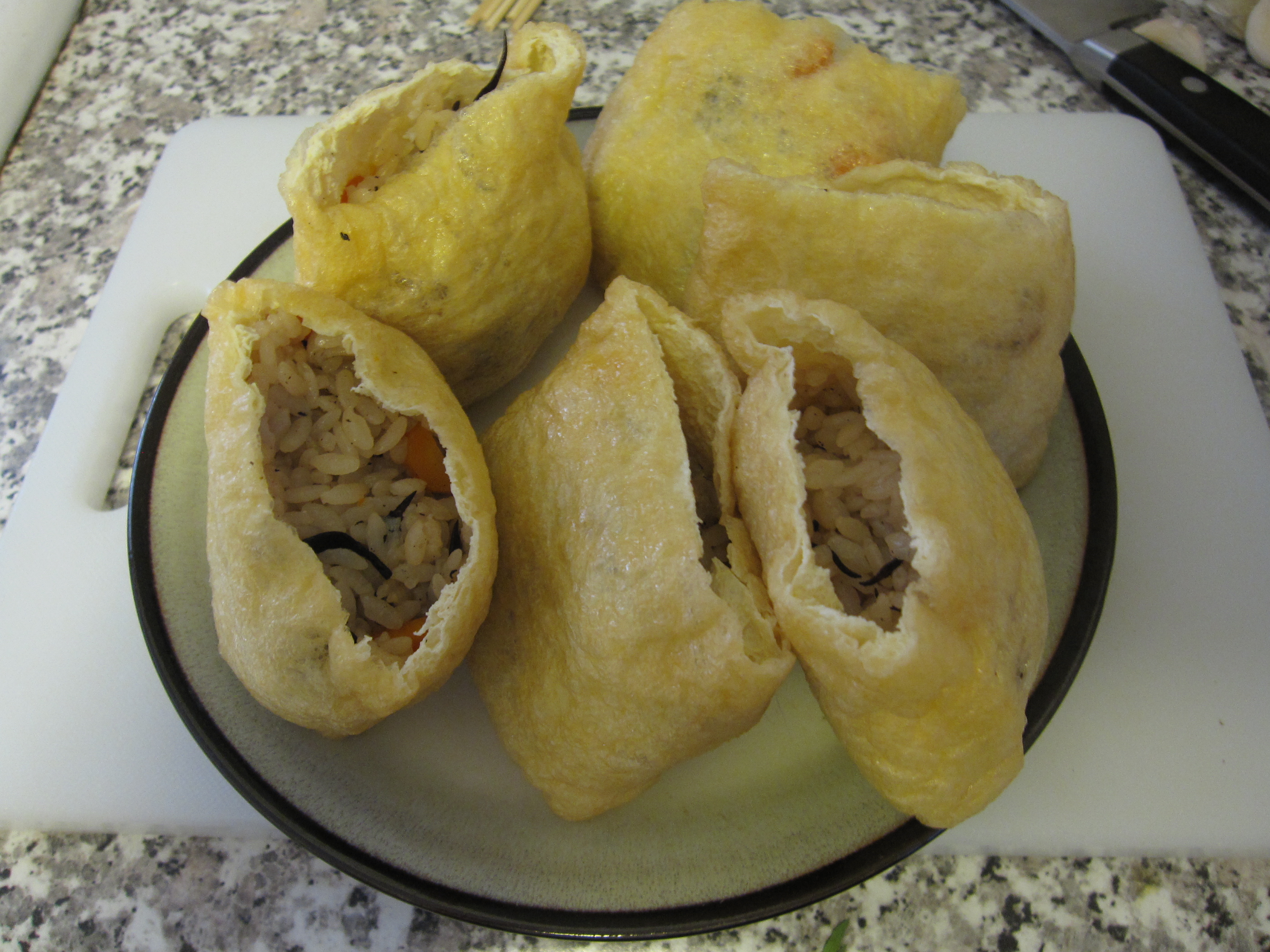
While the salmon was marinating I got the abura-age ready. I had a pack of three here. I cut them in half and rinsed them off with some boiling water. They very oily and the boiling water rinsed a majority of that oil off. Then the packages open up nicely for easy stuffing.

I stuffed them equally with the rice mixture and then sealed them. I didn’t have any toothpicks, so I cut down some bamboo skewers to do the job. In a saute pan I brought 1/4 cup of water to boil with 1/4 cup of seasoned soy. The soy is seasoned with a little dashi and mirin. Once lightly boiling I put the packets in, covered it, and turned the heat to low. This lets the broth flavor penetrate while heating up the rice. I let it go for about 10 minutes then turned off the heat and let it sit until everything was ready.

I also placed the salmon under the broiler, starting with the skin-side up. About 5 minutes later I turned it over, basted the top with the marinade left in the dish, and let it broil for another 5 minutes.

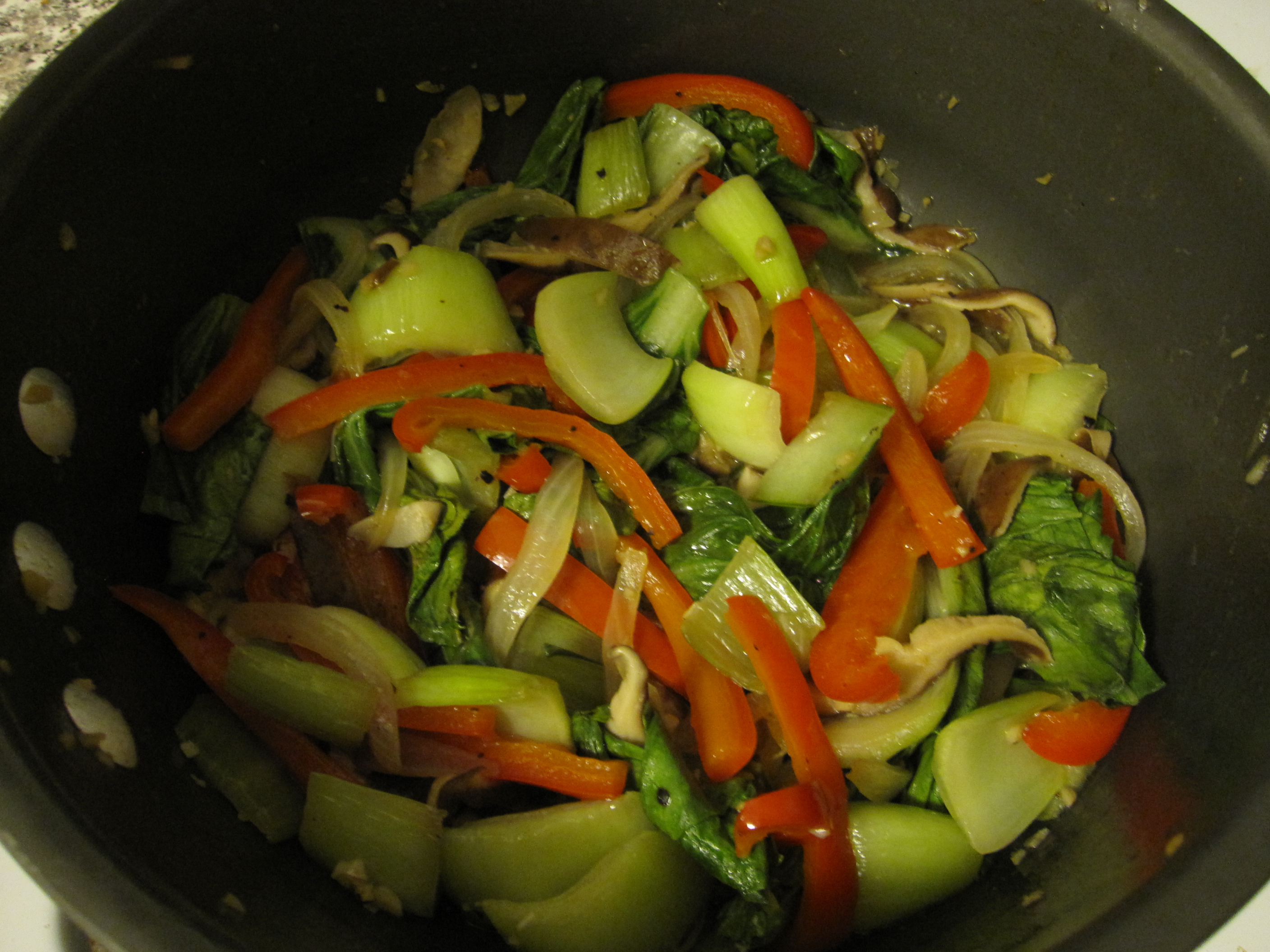
Before cooking the salmon and abura-age I got my vegetables ready. I had two large heads of baby bok choy that I separated the leaves from the stems and chopped them all down, 1/2 onion sliced, 3 garlic cloves minced, 1 package of shiitake sliced, and 1/2 a large red bell pepper sliced.

While the salmon was broiling and the abura-age packets absorbing tasty fluids I heated up a pan and poured in 2 tablespoons of sesame oil and tossed in the onions to let them saute for about 4 minutes. Then I added the peppers and garlic. After another few minutes I added the shiitake and bok choy stems for about 4 more minutes. I seasoned with pepper and poured in about 3 tablespoons of soy sauce. Once the soy boiled off I added the bok choy leaves, stirred them in, covered the pan, and turned off the heat. I just wanted the leaves to wilt a little.

I timed it all so everything would be finished at the same time. I plated it up and scarfed it down.

Read Full Post »

I was perusing my Charlie Trotter cookbook the other day and came across a recipe that uses a very similar marinade to one I often use. Since he’s the great Charlie Trotter I thought I’d give his a try. Oh, and yakigyu is simply Japanese for grilled beef.

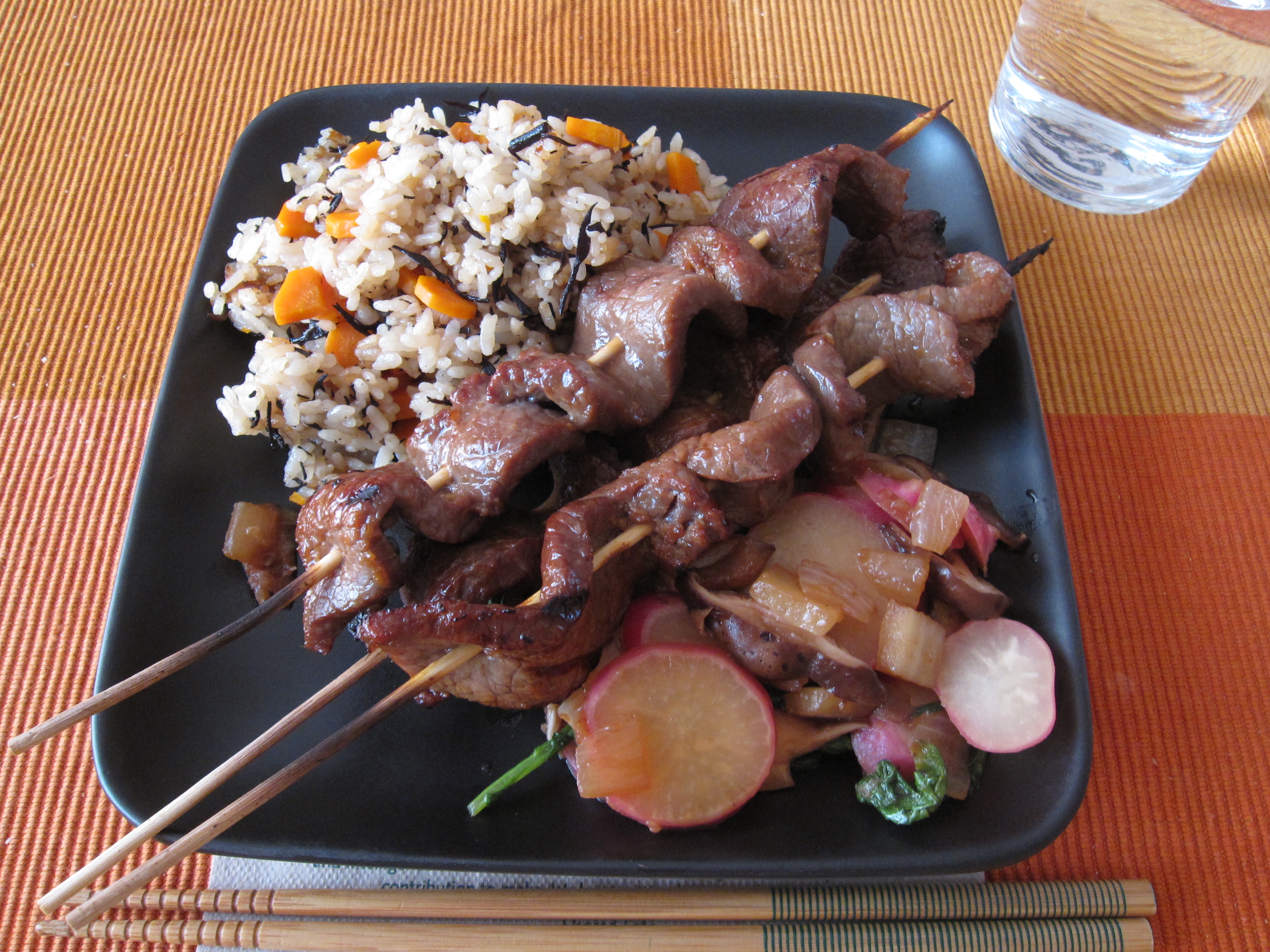
His marinade consisted of 1/2 cup of tamari which is probably the most ancient style of Japanese soy sauce as it contains no wheat and is a little richer than regular soy (it is the byproduct of making miso), 1/4 cup of mirin, 1.5 tablespoons of sesame oil, and 2 tablespoons of grated ginger. Once I mixed up the marinade I set 3 tablespoons aside and then thinly sliced 3/4 pound of sirloin and threw that into the marinade. I covered it with plastic wrap and let it sit in the fridge for 2 hours.

Then, using some bamboo skewers that I soaked in water for an hour, I threaded the meat and got it ready for the grill. Since the meat was thin it only needed about 2-3 minutes on each side over a medium-hot grill.

To accompany the meat I made a quick vegetable saute of 5 shiitake sliced, half an onion large diced, and 5 radishes. I separated the greens from the radish and thinly sliced the radishes with my mandolin slicer. I could have used my knife, but the wife was wondering why I got a mandolin slicer if I never use it. So, there you go sweetheart, I used the mandolin.

In my hot pan I poured 1 tablespoon of soy oil and sautéed the onion first for about 5 minutes. Then I added the shiitake and let that go for about 4 minutes. After that I tossed in the sliced radishes. Those cooked for about 4 minutes until I poured in the reserved 3 tablespoons of marinade. I let that boil down for a few minutes and then added the radish greens. Once the radish greens wilted down, about 1-2 minutes, I turned of the heat as this was ready to go.

Instead of regular white rice I made hijiki and carrot rice, a recipe that Yuki taught me a long time ago and has become one of my favorite rice preparations. First, I took a heaping tablespoon of dried hijiki and soaked it in some cold water for about a half hour. I also diced up a small carrot. Once the rice was washed and in the rice cooker bowl (I only made one cup of rice) instead of regular water I poured in 2 tablespoons of soy sauce, and 1 tablespoon each of sake and mirin. Then, the get the right amount of liquid I used the hijiki soaking water to fill it up. Once the liquid was at the right level I threw in the hijiki and carrot. Hit the on button and a half hour later my rice was ready.

I have to say I was very disappointed in Trotter’s marinade. Tamari is a little bit stronger in flavor than soy sauce and it really made the beef salty. Too salty for Yuki’s taste and almost too much for mine (I tend to like food a little saltier than she does). Old Chucky Boy should know better than to have used so much tamari. I would have been much better served to have used the classic marinade I usually do, 3 parts soy, 2 parts sake, and 1 part mirin (1.5 tablespoons of sesame oil is ok). Besides the soy being a little lighter in flavor, cutting back on the amount and replacing it with sake (or vodka if you like) adds a little more depth the marinade. A little grated garlic wouldn’t have hurt either. While I have had good luck with some of his recipes in the past, this is one I will not be using again.

Read Full Post »

« Newer Posts - Older Posts »