Feeds:
Posts
Comments

Posts Tagged ‘pork’

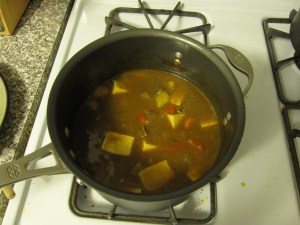
The other night I tried my hand at making a classic home-cooking dish from Japan, Nikujaga. It is a stewed meat and potato dish that is the definition of Japanese comfort food. There are about as many different ways to make it as there are Japanese mothers (and Jewish husbands who cook for their Japanese wives).

The basics of Nikujaga are thin slices of beef (can use pork for variation), potatoes, and onions that are simmered in a sweetened soy broth. Frequently there are other veggies added such as carrots and peas or green beans. It’s really very easy to make as well as being healthy and delicious. It’s the perfect meal for a winter’s eve when served with white rice.

I made it using about 2 cups of water, 1/3 cup of soy sauce, 1/3 cup of mirin, and a couple tablespoons of sugar as the broth. I threw that all into my pot with about a pound of large chopped Yukon Gold potatoes. I brought that to a boil and let the potatoes soften for about 20 minutes. It’s best to put all of that in the pot with the potatoes cold and bring to a boil together so that the potatoes absorb more of the flavor.

Once the potatoes were partially cooked I added about 2/3’s of a pound of thinly sliced beef. After that boils for a few minutes I skimmed off the foam that forms from boiling raw meat, much like I do when making chicken soup. The foam isn’t bad for you or anything, but by skimming it off you get a clear broth.

After the meat simmered for about 5 minutes or so I added a thinly sliced onion along with a sliced carrot. I simmered those for about 10 minutes. I just wanted them softened, not fully cooked, so that there was still some texture left in them.

Then I threw in a bunch of shelled edamame. Those don’t need to cook since they’re small and already cooked when you buy them. They just need to be heated through so they go in towards the end. After they’re cooked through I thought I was finished and proceeded to serve up the meal.

However, I forgot the last ingredient that I wanted to put in, shirataki. These are clearish-white “noodles” that are made from the starch of a yam-like vegetable. It’s the same substance as konnyaku, but in noodle form. They don’t need to be cooked, just heated through. They come in a package in liquid. Drain the liquid, rinse them off, cut them into smaller pieces, and throw them in to the stew for a few minutes. Unfortunately, I forgot to take a pic with the shirataki in the Nikujaga. Just imagine some opaque noodles in the stew and you’ll get the idea.

If you follow my recipe you’ll end up with about 4 servings. The only suggestion I would make, and it’s something that I’ll do the next time I make it, is to use Russets instead of Yukon Gold. Russets will stand up to the long stewing a little better as their a little more dense.

After Yuki ate the Nikujaga she gave me probably the best compliment I could have received. She said that her mother would definitely enjoy eating it. Knowing her mom and what a great home cook she is, that’s pretty high praise. I am now officially a Japanese mother! I may be the only Japanese mother in the world who is actually a Jewish husband without any children. That’s all part of my charm.
Read Full Post »

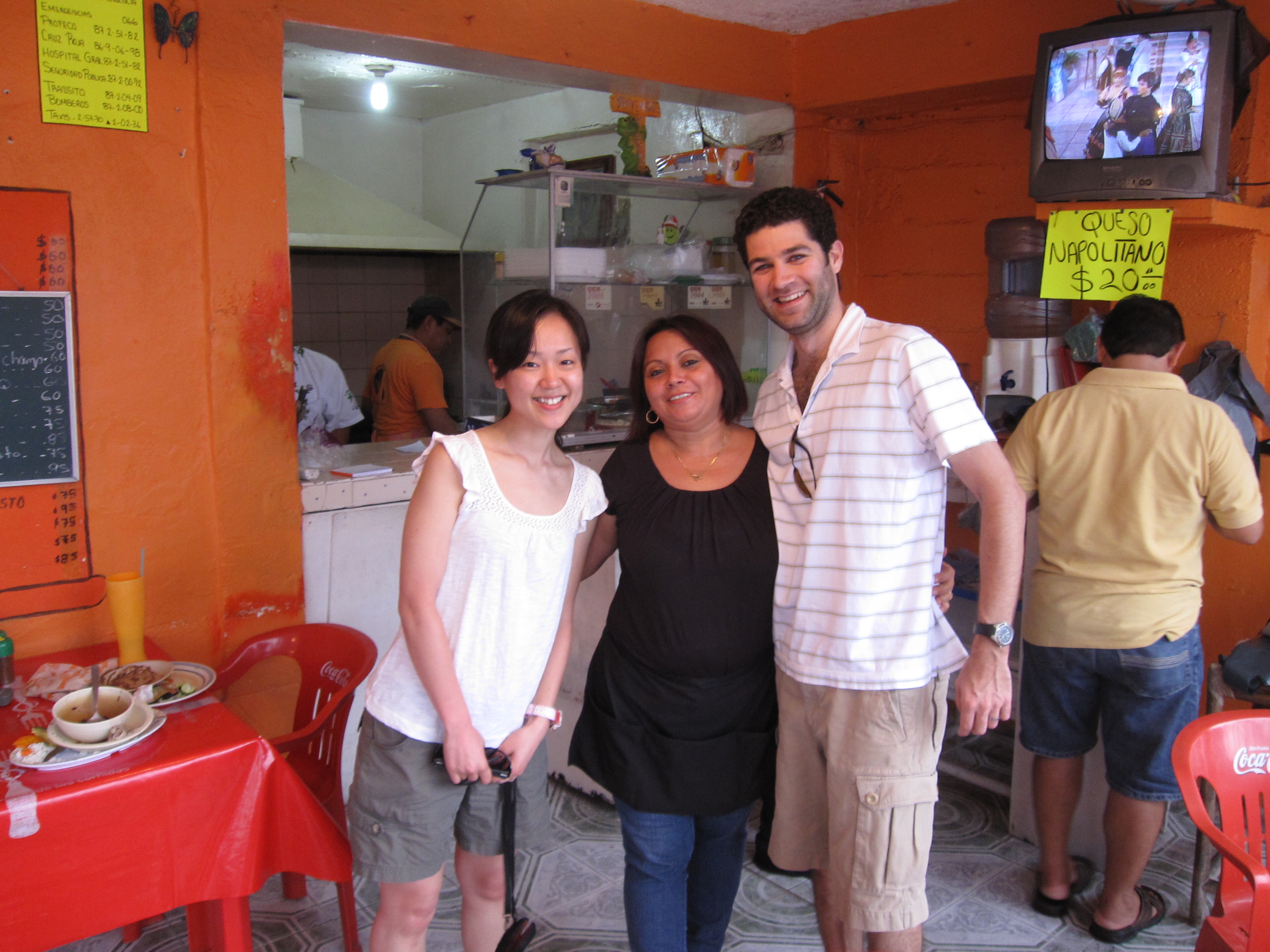
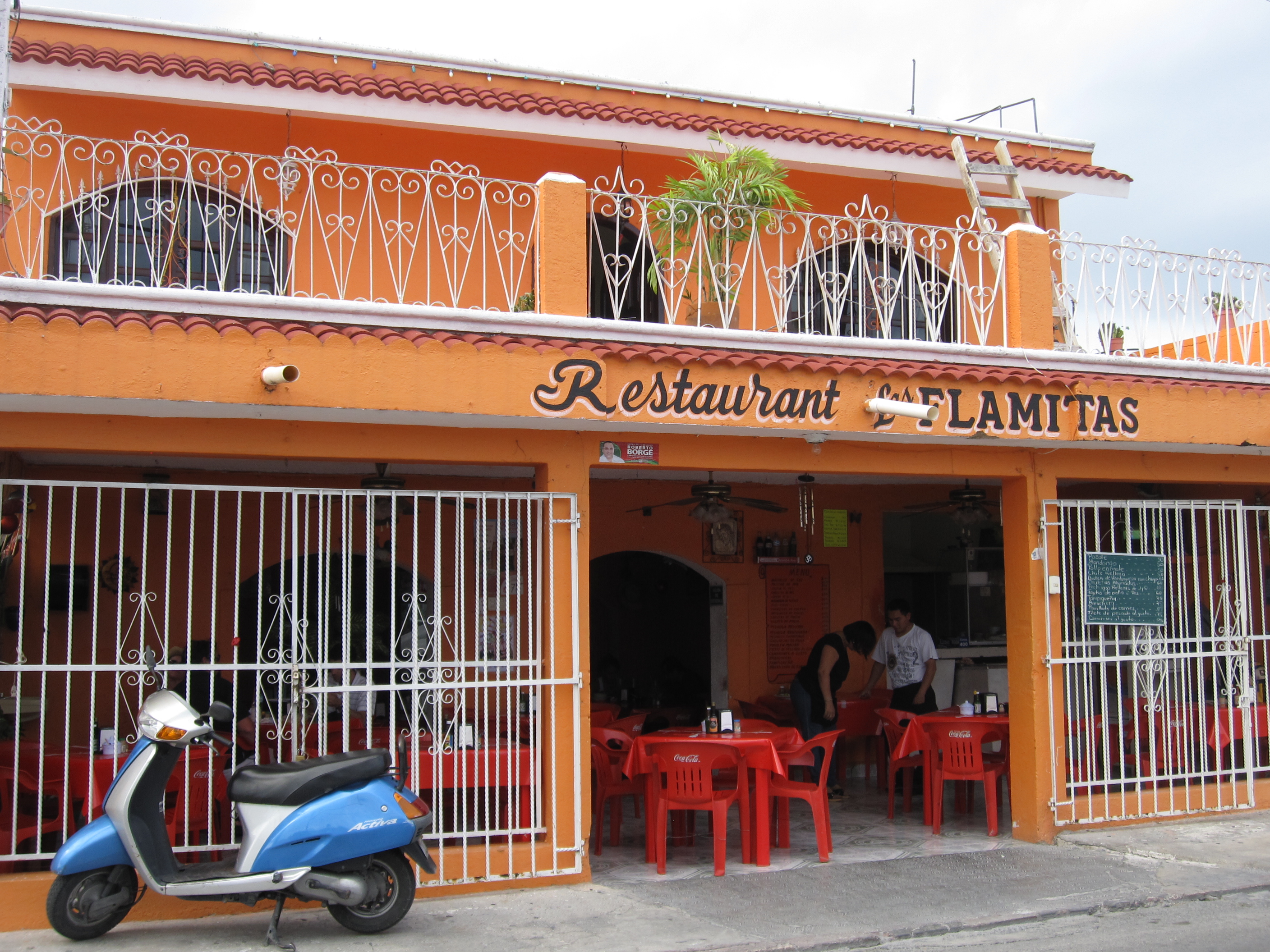
Alright, my final Donna from Aqua Safari recommendation, Las Flamitas. Again, it’s off the tourist path so the prices are much lower and food is much much better. A couple from Iowa joined us for this lunch. He went diving with us and they were also looking for some local food options.

So, we started off with some soup. One thing I noticed is that the more authentic joints always serve soup with the meals, gratis of course. This one was a simple chicken consomme with vegetables. Very basic, but very tasty.

For my entrée I got the Parrillada. A plate full of grilled meats. There was grilled chicken, beef, a pork enchilada with mole, rice, fried plantain, a small salad, steamed squash ring, broccoli, papas fritas, avocado, lime, and some smoky salsa. It really was a ton of food! I ate most of it somehow, but it’s something that Yuki and I could have easily shared and still have been satisfied. Our Iowan friends each got the Parrillada as well.

Yuki ordered the Pescado Mojo de Ajo. A huge fillet of grouper covered in garlic. It was one of the freshest pieces of fish I’ve ever eaten. So succulent! Hers came with the same sides as mine. Oh, there were tortillas for all as well.

When we were offered flan there was no way I could resist, even though I was about to undo my shorts button because I ate so much. This flan was a little heavier than the one at Sabores, but it was still delicious.

The best part of this meal wasn’t the food though. The food was great and priced right, but it was everything that made this meal great. Dining with new friends always makes for good conversation. The lady who runs this joint was a very memorable character. For some reason she took it upon herself to tell Yuki and I that we need to have a baby and we’d better start practicing. Little does she know, we don’t really need a coach. But, she kept telling us how I need to eat more habaneros because “they’re good for chacachaca!” She wants to be our sex teacher. Not sure exactly what that means, but I’m pretty sure we don’t need anyone to teach us anything. Or do we?

Read Full Post »

After making a run to Mitsuwa for some Japanese ingredients (some staples in our kitchen) I let Yuki do the cooking last night. She made a dish called Jjigae Don. Well, that’s what she calls it anyway. Jjigae is an old Korean recipe (you see Ira, Yuki doesn’t have anything against Korea), a stew typically made with kimchi. She didn’t use any kimchi but did use Tobanjan, a Korean fermented chili paste.

First, she made a broth out of miso, tobanjan, and dashi. She simmered some green onions, carrot slices, and baby bok choy until soft and tender. Then she took those vegetables out and cooked some thinly sliced kurobuta pork. By thinly sliced I mean deli meat thin. You can purchase it that way at Mitsuwa and some other Asian grocery stores. It’s typically marked for use in Shabu-shabu or dishes like that. The pork cooks quickly since it’s so thin. Be careful not to cook it more than a minute or two because the meat will get tough if overcooked. Once the pork was cooked she took it out and then cooked some shimeji mushrooms in the broth.

While all of this was going on we had pressed the water out of a package of silken tofu. Once the tofu was firm enough we cut (she did the cooking I did most of the cutting, I’m her sous chef as I love to use the hand-carved Japanese steel she got me for my birthday a few years ago) it into smaller pieces and then cooked it in the broth.

After everything was cooked we put some rice in the bottom of our bowls and then topped it with all of the ingredients. While we did that Yuki cooked some shungiku in the broth. You have to cook that last as it turns the broth a darker color. That way the veggies and meat keep their natural colors. Once the shungiku was cooked that went in the bowl with everything else.

No extra fats, just the natural fat from top quality pork, were added to this dish. Along with the variety of fresh vegetables and white rice this is an extremely healthy dish. Absolutely delicious as well.

Read Full Post »

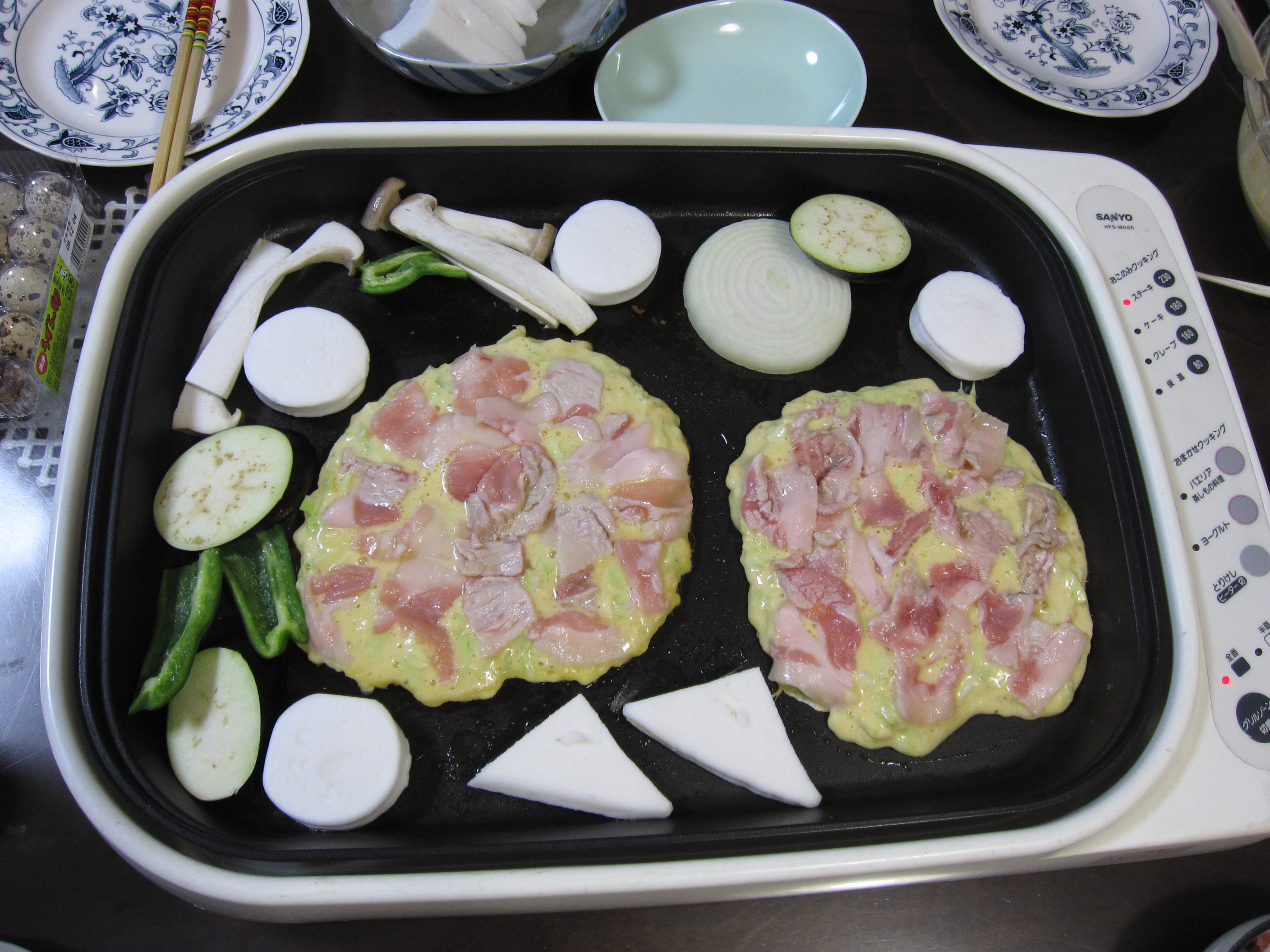
Alright, here’s Uichiro’s famous Kawabata-style Okonomiyaki. Okonomiyaki is Japan’s version of a pancake of sorts. It’s base ingredients are eggs, flour, and shredded cabbage. Not entirely sure if Uichiro uses water or dashi, or what else he puts in his mix (highly guarded secret but I’m sure there are green onions in it) but it sure is tasty.

You start off by getting out the old table-top griddle. Once its hot add a little oil and pour some of the batter to form a pancake. Next to it lay out some sliced pork and start cooking it a little.

Once the batter starts to cook lay the pork slices on top.

While the okonomiyaki cooks grill various veggies. We had eggplant, green peppers, onion rings with quail eggs, kabocha, matsutake mushrooms, and various mochi cakes. Once the bottom is done you carefully flip the okonomiyaki to cook the other side.

Once it’s fully cooked spoon on top some bull dog sauce (a semi-sweet vegetable and fruit sauce), mayonnaise, shredded ao nori, bonito flakes, and pickled ginger on the side. Since it’s family-style you just cook and grab as you go. It’s a ton of fun and extremely tasty.

And if you aren’t full yet, don’t worry as yakisoba is up next. Once the batter is finished cook up the rest of the pork and veggies, add some bean sprouts and noodles, then eat it up.

Please, no dessert.

Read Full Post »

It seems like every other program on Japanese TV has something to do with food. One program that I watched featured the biography of Nobu Matsuhisa, he of the restaurant Nobu. One of the dishes he showed on TV piqued the interest of Yuki’s mom, so the next night we set out to try and replicate it…Fluke sashimi.

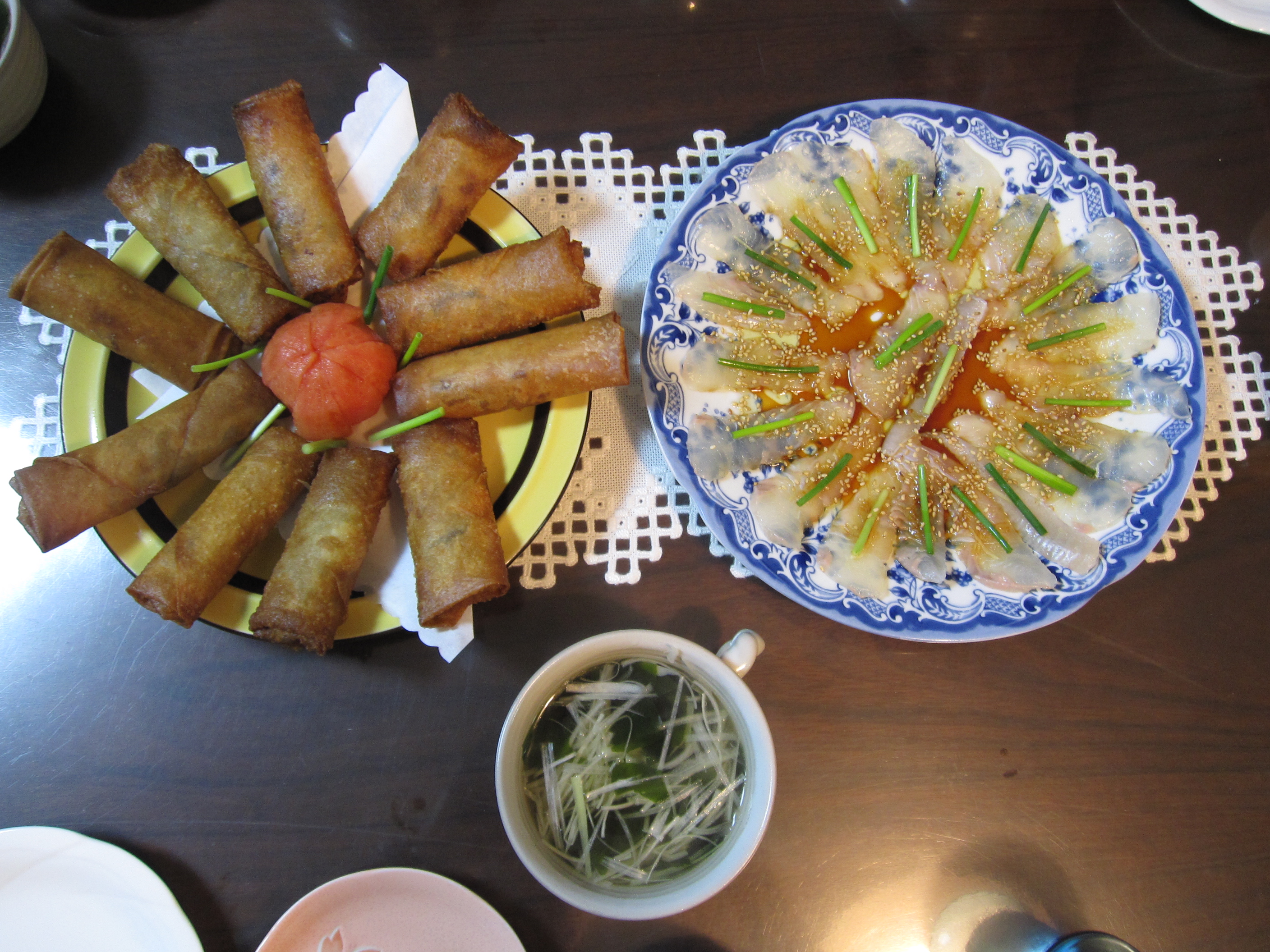
It’s really quite simple. Slice a piece of fluke as thinly as possible and arrange on the plate without overlapping each slice of sashimi. Mash some garlic and lightly brush a little over each slice. On top of that lay down thin sticks of ginger and chives. In a small pot heat up equal parts soy oil and sesame oil until smoking hot. With a metal spoon dish some of the hot oil on top of the fish so that it sizzles a little. Then, drizzle with some ponzu and toasted sesame seeds.

To go with it Uichiro made his special harumaki, spring rolls. He “took the two best recipes and combined them into his own which is now the best.” I won’t give you measurements so I don’t spoil his secret, but the harumaki contain shiitake, bamboo shoots, leek, pork, ginger, oil, sake, chicken stock, soy sauce, sugar, pepper, starch, and spring roll skins. Cook it all together, roll them up, then deep fry them to golden perfection and serve with Chinese Mustard.

There was also some clear broth soup with shredded green onion and wakame.

Read Full Post »

chen

Friday night Yuki’s mom went to a concert with a friend, so it was up to me to decide where we went for dinner with her dad. In my quest to eat at every Iron Chef’s restaurants I was able to convince him that we should head out to one of Chen Kenichi’s joints. It wasn’t a hard sell. So, the three of us hopped on the train to Roppongi where Chen has one of his four places.

There were a handful of pre fix options, but none of them really had what we wanted, so we ordered a bunch of dishes in typical Chinese family-style dining.

IMG_1141

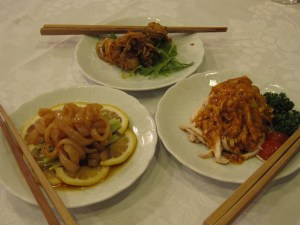
First up was a trio of cold appetizers. On the top were Scallops cooked with chili peppers. Not too spicy, just a nice, slow, gentle burn on the back of the throat. Bottom right was shredded chicken with a sweet miso sauce. Bottom left jellyfish in a light soy. All three were very complimentary of each other and made for a great start to the meal.

IMG_1143

Next up was Shark Fin Soup. Not the most politically correct dish, but hey, a little shark fin never hurt anything. A lot does, but a little doesn’t. The broth was a thick soy flavor and it had thin slices of pork in it alongside the shark fin.

IMG_1144

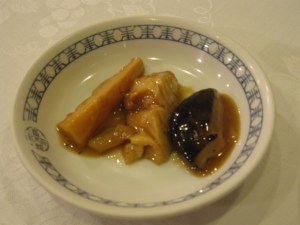
Then came Abalone, one of the sea’s finest of all creatures! Served with shiitake and bamboo shoots it was truly delicious. Judging by Uichiro’s (Yuki’s dad) reaction when he first bit into it, I’d say it was his favorite part of the meal, next to the beer.

IMG_1145

After that we had mixed seafood served on rice cakes. The restaurant manager poured the hot seafood on the rice cakes making it sizzle, much like the classic sizzling rice soup commonly found in American Chinatown restaurants. I need make a correction, I think Uichiro liked this dish more than the abalone. Hard to argue, the shrimp, scallops, and squid were cooked to perfection with all of the natural sweetness brought out.

IMG_1146

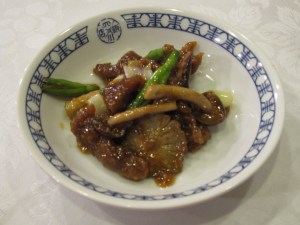
Next was probably my favorite dish of the meal, beef with mushrooms and lilies in a thick ginger soy sauce. The beef was so tender it almost melted in my mouth. The mushrooms and lilies were nice counterpoints to the salty soy. The only thing missing was white rice to balance a little more of the salt. This was definitely more of what Americans are used to than Japanese. Give me this dish and a cold beer and I’m a happy man!

IMG_1147

Here we go, the dish that brought me to Chen’s restaurant and the one that will make my brothers very envious, his famous mapotofu! There were two choices on the menu, Kenichi’s and Kenmei’s. Kenmei was Kenichi’s father, the one who brought true Szechuan cooking to Japan. It was a tough choice, but we opted for Kenichi’s since it was his restaurant and not his father’s. It wasn’t quite as hot as I expected, but it was definitely a hot and spicy dish! Packed with Szechuan peppercorns it gives an initial citrusy spice followed by a mouth-numbing burn. Yuki and I added some extra peppercorns to get the full experience, while Uichiro only ate a few pieces of tofu. I think it’s a little spicy for him. It was a little oily as it was douced in chili oil, but that’s what makes it so delicious. The funny thing is that in the middle of the night Tokyo experienced what it thinks was a small earthquake. It wasn’t an earthquake at all though, it was the effects of my trying to digest Chen’s mapotofu! I’m still not quite sure exactly what that dish did to my intestines, but it made a city of 16 million rumble a little. And somehow my chest got a little harrier.

IMG_1148

We followed the mapotofu with a mild pork and egg noodle dish. It had shiitake, green onions, chinese cabbage, sprouts, and bamboo shoots. It took a few bites to get the burn out of our mouths, but once it was gone this dish’s wonderful flavor stood out. It’s just too bad I couldn’t finish it all because we ordered one too many dishes I think. Oh well, what can you do?

IMG_1149

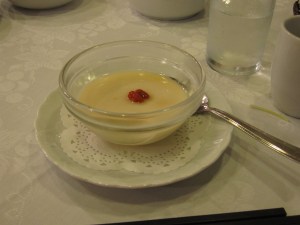
We thought we were finished when the manager brought us some complimentary dessert, Annin Tofu. Annin Tofu is a popular Chinese dessert. It’s basically just almond jelly. Very smooth, light, and creamy. It’s the perfect way to finish off a meal.

All in all, I have to say that I was a little dissapointed. After watching countless episodes of Chen creating some of the most amazing looking dishes anyone could ever think up, this meal was a very straight forward Chinese meal. Every dish was a classic that you can get at just about any Chinese restaurant. Granted, everything was perfectly balanced, but nothing was off the wall. I was kind of hoping for some Chen originals. This restaurant wasn’t the right format for him to create Iron Chef dishes. I have no regrets, but I wasn’t blown away like I was at other Iron Chef restaurants.

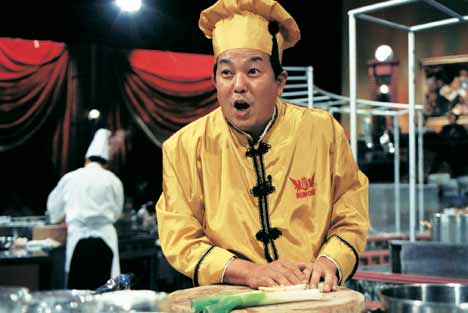
I have now been to three Iron Chef restaurants (4 if you count Bobby Flay, but I don’t consider him an Iron Chef and I never wanted to go to his place). I have done Sakai, Michiba, and now Chen. Next up….Kobe Masahiko.

Read Full Post »

IMG_1011

I took the easy way out for this past Meatless Monday adventure. I found a packet of Japanese Curry in my cabinet and decided to use it up. I don’t know if you can buy Japanese Curry packets at regular grocers, but it is available at almost any Asian market. It comes in a box with two packets and comes in different spice levels. I like the spicy, but it does come mild and medium.

At any rate, we usually eat this with either chicken, beef, or pork as the protein. Being Meatless Monday I used tofu instead. Not all that creative, but still delicious and healthy.

For this batch I chopped up a whole onion into about 1/3 of an inch chunks. I also cut up a green pepper, red pepper, carrot, and some potatoes (all about the same size as the onion chunks). I wanted them cut a little larger since they’d be stewing for a while. If they’re too small they can disintegrate.

In a hot stew pot I put in a little soy oil and then the onions and carrots. After they sweated a little I added the peppers so they could sweat too. Then I added the potatoes. After about 5 minutes or so I added 3 cups of water. That was a bit of a mistake on my part. The package said to add 3 cups, but my wife told me that in Japan a cup is much smaller. Not sure why that is, but it was a little too much water. To fix that I just boiled it down a little longer without covering to pot to let the water evaporate. If I had the proper amount I would have covered it. Next time I’ll only add 2 cups.

Once the veggies were cooked through I broke up the curry cube into 4 pieces and added them one at a time to mix them in completely. You’ll want to let it simmer for a little bit to let the curry sauce thicken, otherwise it’ll be too soupy.

All the while this was going on I had taken some silken tofu and pressed it to firm it up a little and rid it of some water. To do this I took a plate and lined it with a few paper towels. I put the tofu on top and then covered it with a few more paper towels and laid a cutting board on top. I put some weight on the cutting board and let it press the water out of the tofu in the fridge for about an hour.

Once the tofu was a little firmer I cut it into cubes and stirred it gently into the curry. I let the curry cook with the tofu for about 10-15 minutes over a lower heat to let some of the flavors absorb into the tofu.

I served it simply with white rice and drank it down with a cold beer. Just for my friend Tsutomu I did not add a hard boiled egg. Actually, I never do for this type of Japanese Curry.

Read Full Post »

« Newer Posts