Feeds:
Posts
Comments

Posts Tagged ‘sesame oil’

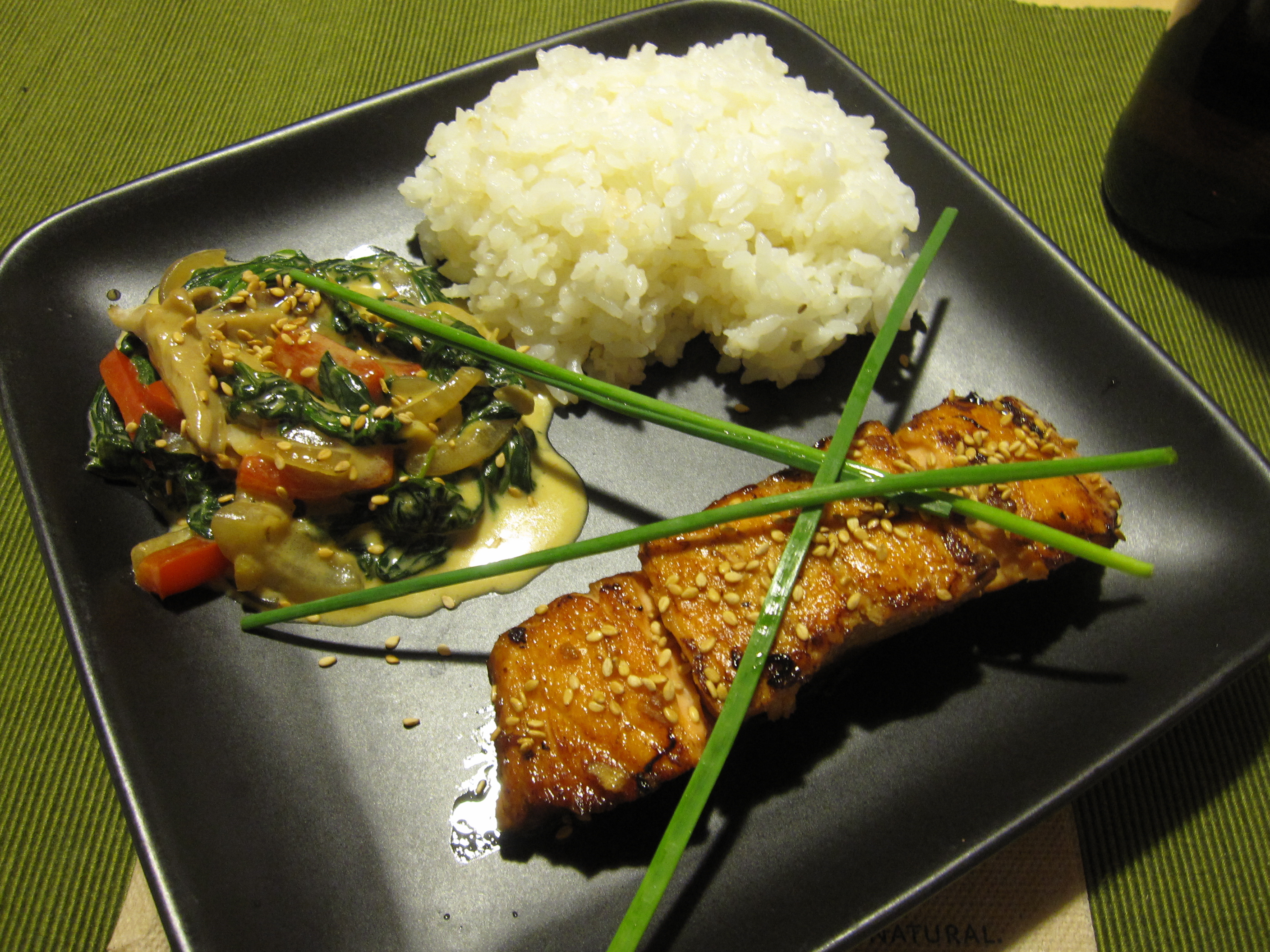
Last night I made a teriyaki-like salmon dish using maple syrup. To go with it I made sort of an Asian flavored creamed spinach with shiitake and pepper. With iron, folic acid, and omega-3’s on my mind, this dish packed them all in and then some.
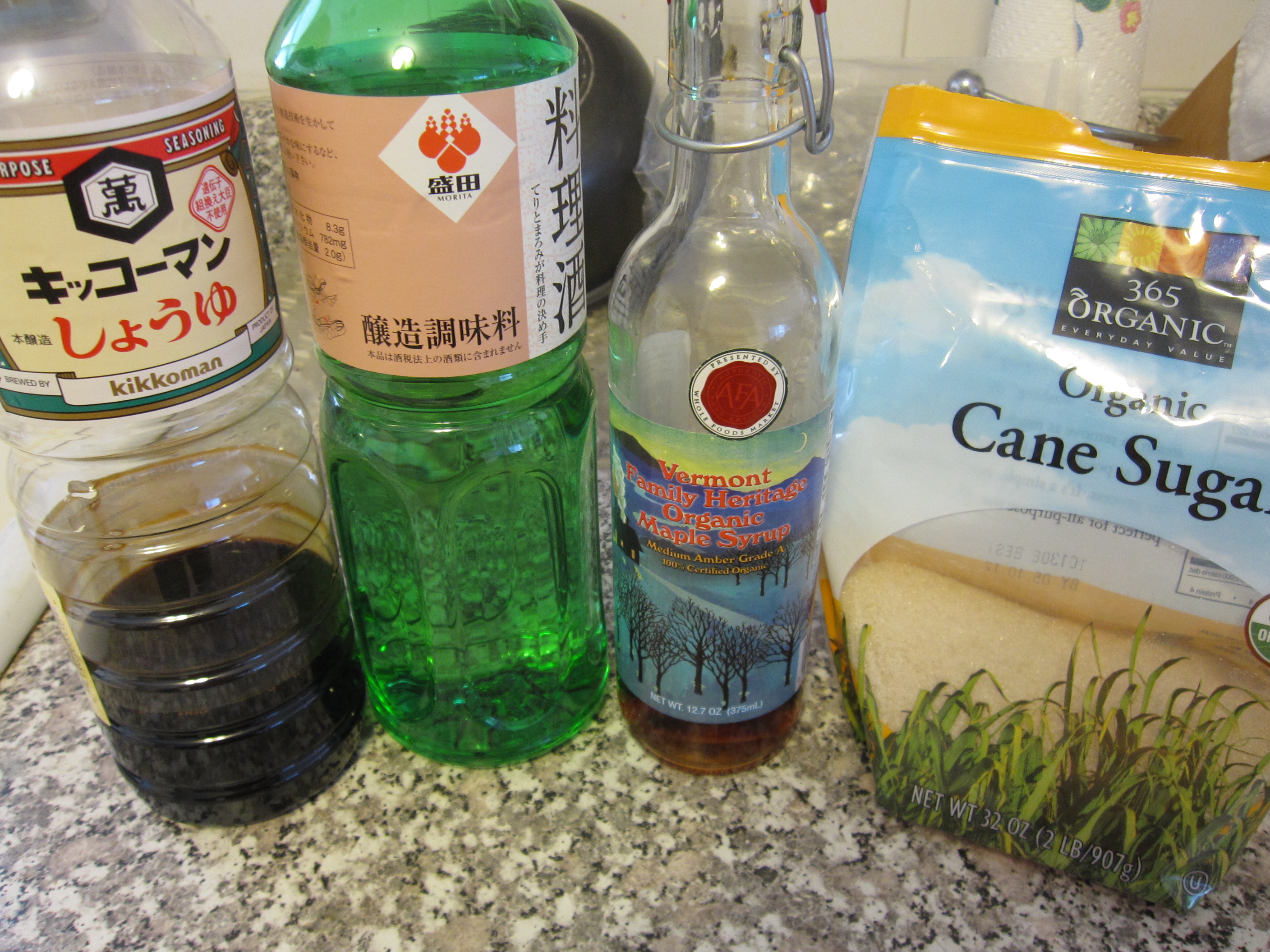
First thing I did was make the sauce. I mixed together 2 tablespoons soy sauce, 1 tablespoon sake, 1 tablespoon maple syrup, and 2 teaspoons of sugar. I set that aside and then marinated the salmon.
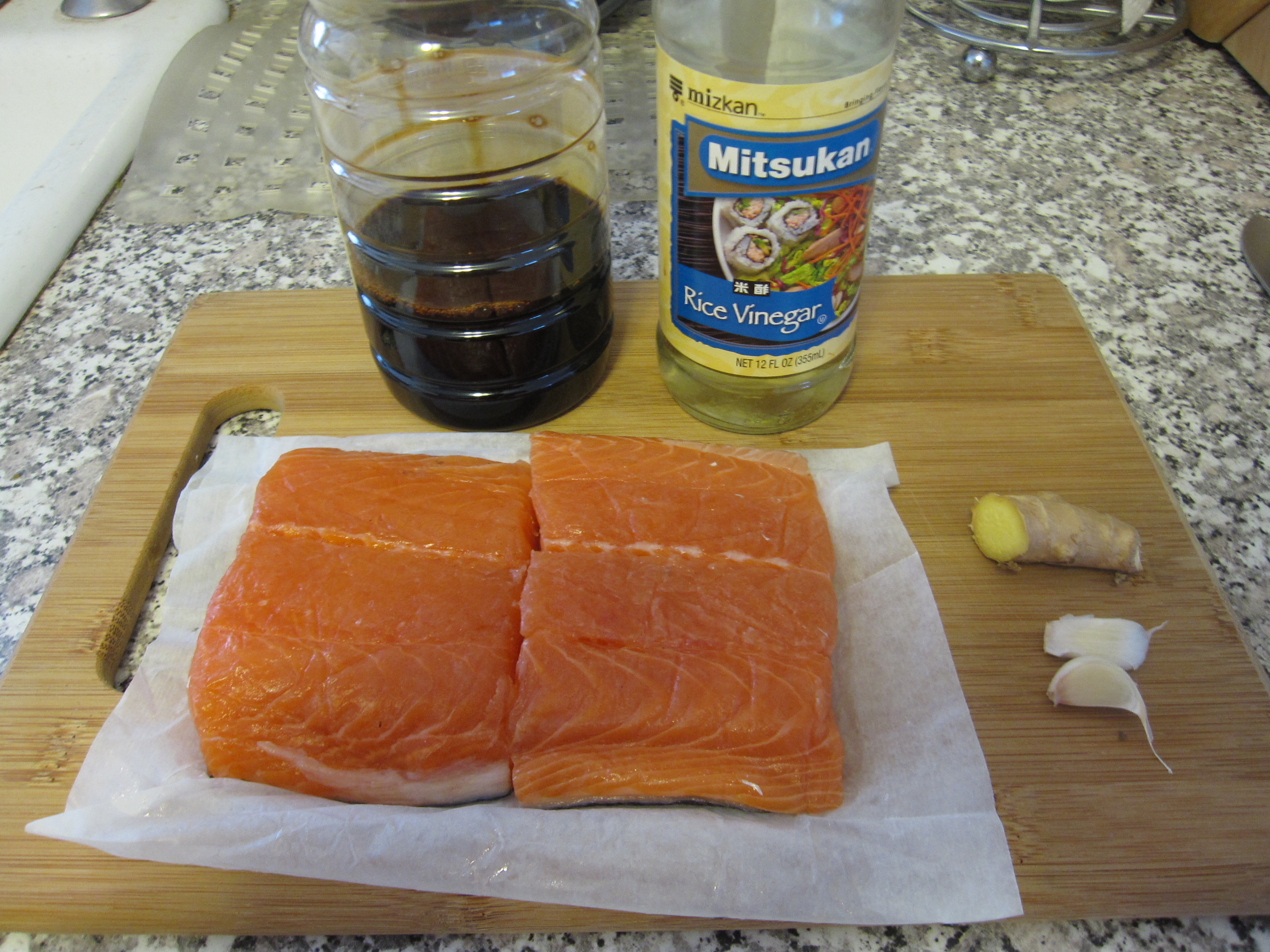
The marinade consisted of 1 tablespoon grated ginger, 2 grated garlic cloves, 2 tablespoons soy sauce, 1 tablespoon rice vinegar, and some fresh cracked black pepper. I had two 8 ounce salmon filets that I cut in half, giving me 4 4 ounce filets (check the math on that one). I coated them in the marinade, covered it up, and let it sit at room temperature for an hour.
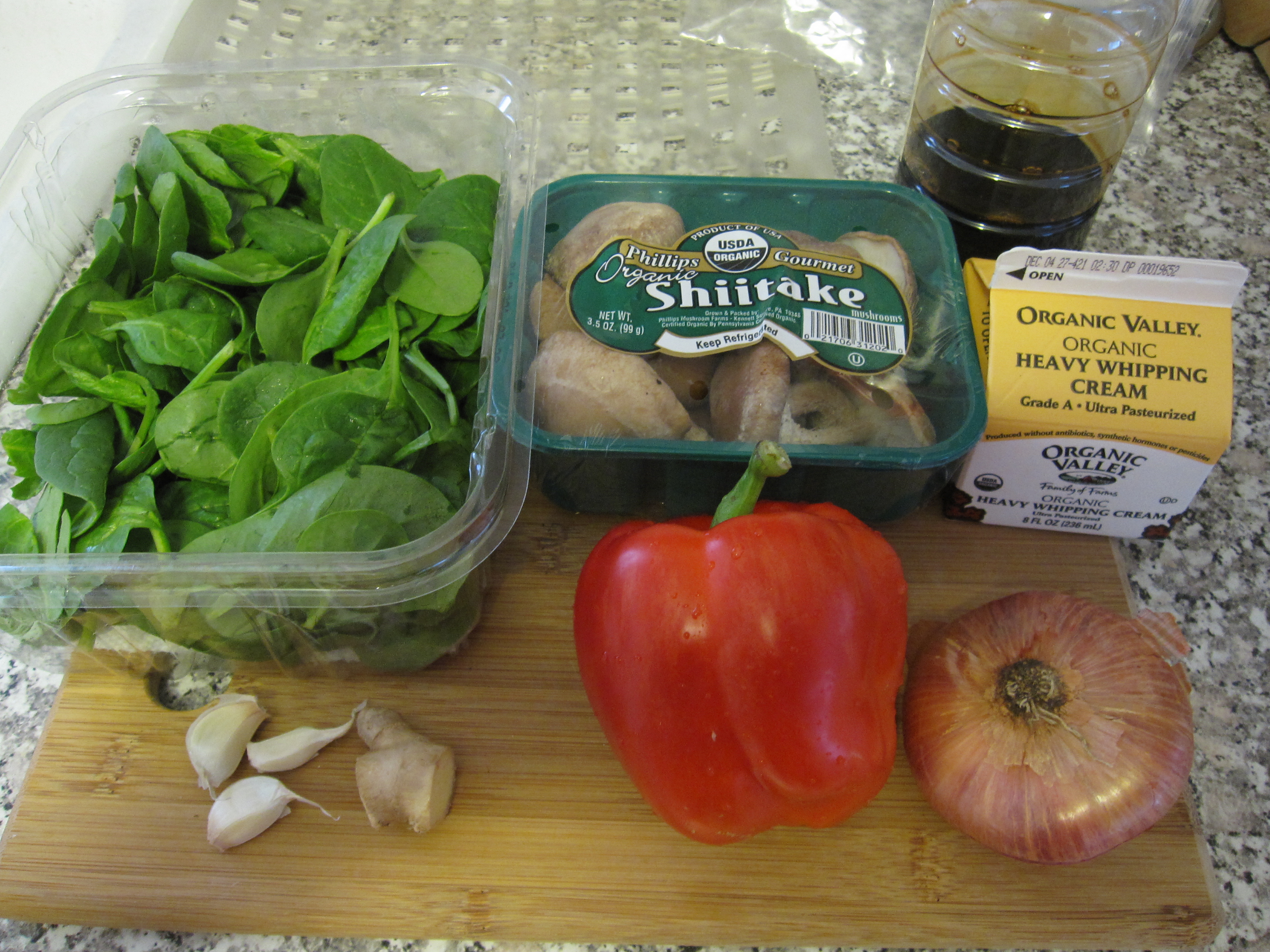
While the salmon was marinating I got the ingredients ready for the creamed spinach. I had a container of spinach, 3 garlic cloves, sliced, 1/2 inch of ginger slivered, 7 shiitake sliced, 1 red bell pepper chopped, 1 small red onion sliced, 1 tablespoon soy sauce, and 1/2 cup of heavy cream.

For the actual cooking I had to do the salmon and spinach at the same time. I’ll write about it separately, but it was a busy 10 minute stretch or so.

I heated up a large skillet over high heat and then poured in 2 tablespoons or so of sesame oil. I laid the salmon in skin-side up and let it cook for about 4 or 5 minutes, until it got a nice crust and easily released from the skillet. I poured the marinade into the maple mixture. When I flipped the salmon filets, after a couple of minutes, I poured the sauce all over each filet and let it cook for a few more minutes. Make sure you fan is on, it’ll get a little smokey. Once the sauce carmelized I turned off the heat and set the salmon on a plate.

In a separate saute pan I heated up 2 tablespoons of sesame oil and added the onion, pepper, shiitake, ginger, and garlic. I sautéed it for about 5 minutes and then added the soy sauce. About 2 minutes later I poured in the cream. Once the cream had reduced a little I added the spinach by large handfuls until it all wilted down and the cream had thickened up into a nice sauce.

Of course, some white rice on the side never hurt anyone. I garnished everything with some toasted sesame seeds and whole chives.

Read Full Post »

So, I had some salt cured salmon filets that needed to get eaten up from our last bimble up to Mitsuwa. These salmon filets are great because the don’t need much cooking since they’re already salt-cured. With that, we also had a kabocha that Yuki wanted me to cook. However, I did not cook it how she requested. Too bad for her. Without further ado…

First thing I did was get the kabocha ready, I only used half of it. I seeded it, cut off most of the skin, quartered the half, and then cut the quarters themselves in half.

I set them in a baking dish, drizzled them with sesame oil, salt, and pepper. I boiled about 3/4 cup of water, poured that into the pan, and put the kabocha into a 375 degree oven for about an hour. The water should be mostly absorbed by the time cooking is done keeping the kabocha nice and moist, while the top gets a little bit golden brown.  Then I took 1/4 cup of walnuts and toasted them in a dry pan for about 6 minutes.

I coarsely ground them with my mortar and pestle and then added 4 tablespoons of ponzu. I let that sit while I cooked everything else.

For the kale I used a bunch of red kale stalks removed and leaves chopped down, 1 cup of chicken stock, 1/2 onion sliced, and three garlic cloves sliced. In a hot stock pot I poured in about 2 tablespoons of sesame oil and then added the onion and garlic. About 2 minutes later I added the kale and let that wilt for about 4 minutes. Then I poured in the chicken stock and seasoned with salt and pepper. Once the stock came to a boil I loosely covered the pot, turned the heat down to medium-low, and let it simmer for about 30-40 minutes (however much time I had left on the kabocha, it doesn’t matter as long as the kale simmers for a while).

Once the kale got going I started the miso soup. I used a heaping service spoon of shiro miso, about 4 inches of daikon sliced and quartered, one small carrot cut in half moons, 4 green onions chopped in 1 inch lengths, 1/4 cup of dashi seasoned soy sauce, and 3 shiitake sliced. In a soup pot I poured in 4 cups of water and added everything except for the miso. I brought it to a boil, then covered the pot, and turned the heat down to medium-low to let it simmer for about 15-20 minutes.

I just rubbed some sesame oil on both sides of the salmon and then seasoned with pepper. My toaster oven has a broiler setting, so I just turned that on and broiled the salmon for about 8 minutes. That was just enough time to cook it all the way through and crisp up the skin. When it was finished it was time to put everything together.

I left the salmon as is. Put some of the kale on the plate and then a couple of pieces of the kabocha. I topped the kabocha with the walnut-ponzu mixture. I mixed the miso into the soup and served that up. Then I served some white rice along with everything, mainly to balance the saltiness from the salt-cured salmon.

Read Full Post »

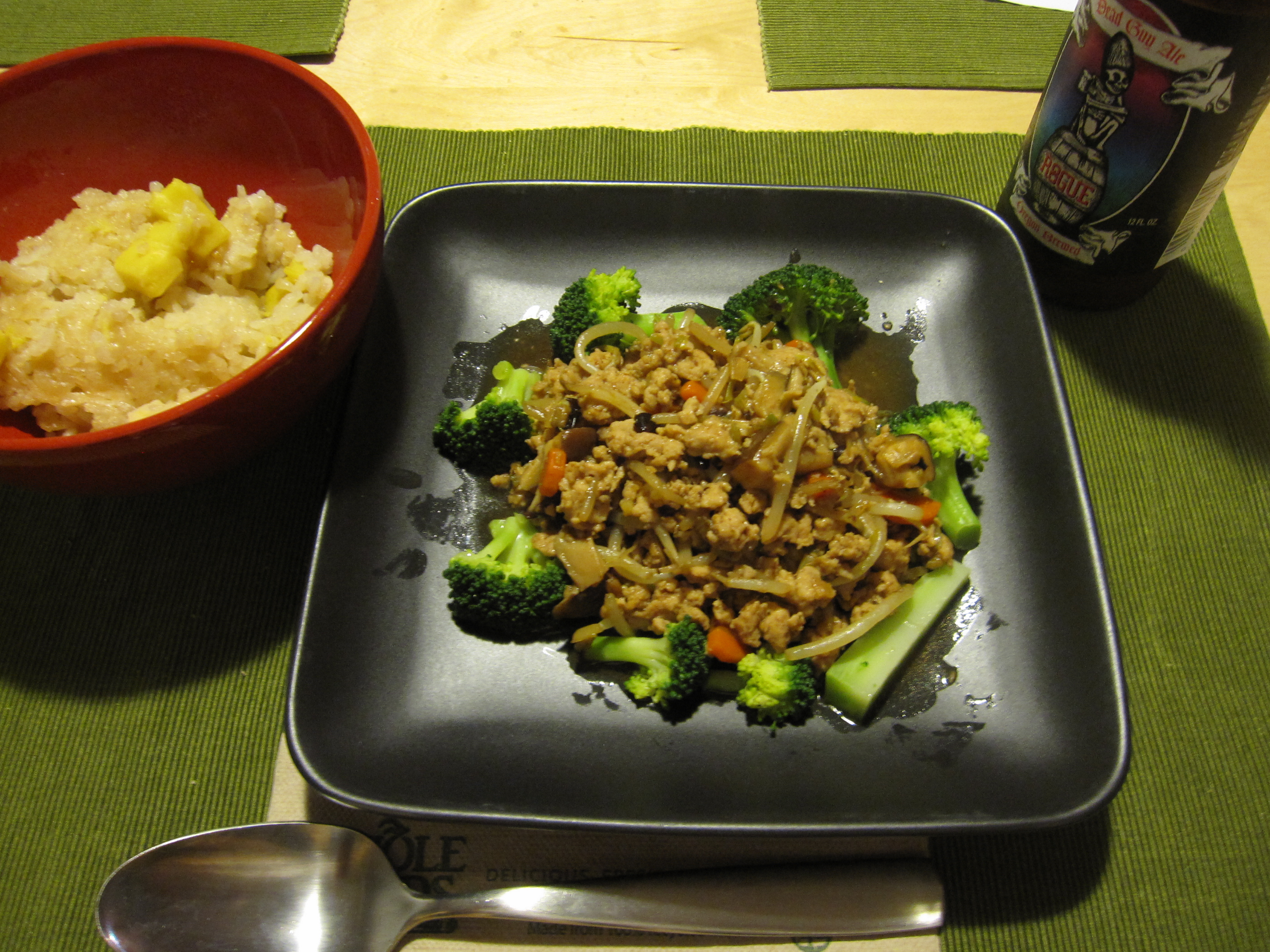
For dinner last night I made a simple Chinese-flavored ground chicken stir-fry. For the sauce, I used fermented black bean and garlic sauce. It’s a real easy way to get a lot of flavor into a quick, healthy dish.

My ingredients included 1 carrot cut into half moons, 1/2 pound bean sprouts, 2 tablespoons soy sauce, 10 green onions thinly sliced, 3 tablespoons of black bean and garlic sauce, a package of shiitake diced, 1 head of broccoli cut into florets, 1/2 inch ginger, minced, 3 cloves garlic minced, and 1 pound of ground chicken thigh.

First thing I did was to mix up the sauce. In a small dish I mixed the soy and black bean sauce. After tasting it, I decided to add a little sweetness so I mixed in 1 tablespoon of mirin. I set that aside and heated up a saute pan.

Once hot, I poured in about 2 tablespoons of sesame oil and then added the ginger and garlic. I let them sizzle for about 30 seconds and then added the carrot and green onions. I sautéed them for about 3 minutes and then added the chicken. I broke up the chicken as it cooked for about 7 or 8 minutes and then added the shiitake. Once the shiitake were coated with the rest of the ingredients I added the sauce and mixed it around. At this time I put the broccoli into my steamer. Broccoli only needs about 4 minutes to steam to a nice al dente and at this point all I need to do with the stir-fry was let the sauce boil down a little and add some pepper and the bean sprouts. So, that’s what I did. Easy as that.

The other day Yuki had made some sweet potato rice that we didn’t finish. Instead of making new rice I decided to use that up. White rice probably would have matched better with the slightly salty dish, but the sweetness of the sweet potatoes wasn’t that bad of a match, and it added a higher nutritional value to the meal. So did my beer.

Read Full Post »

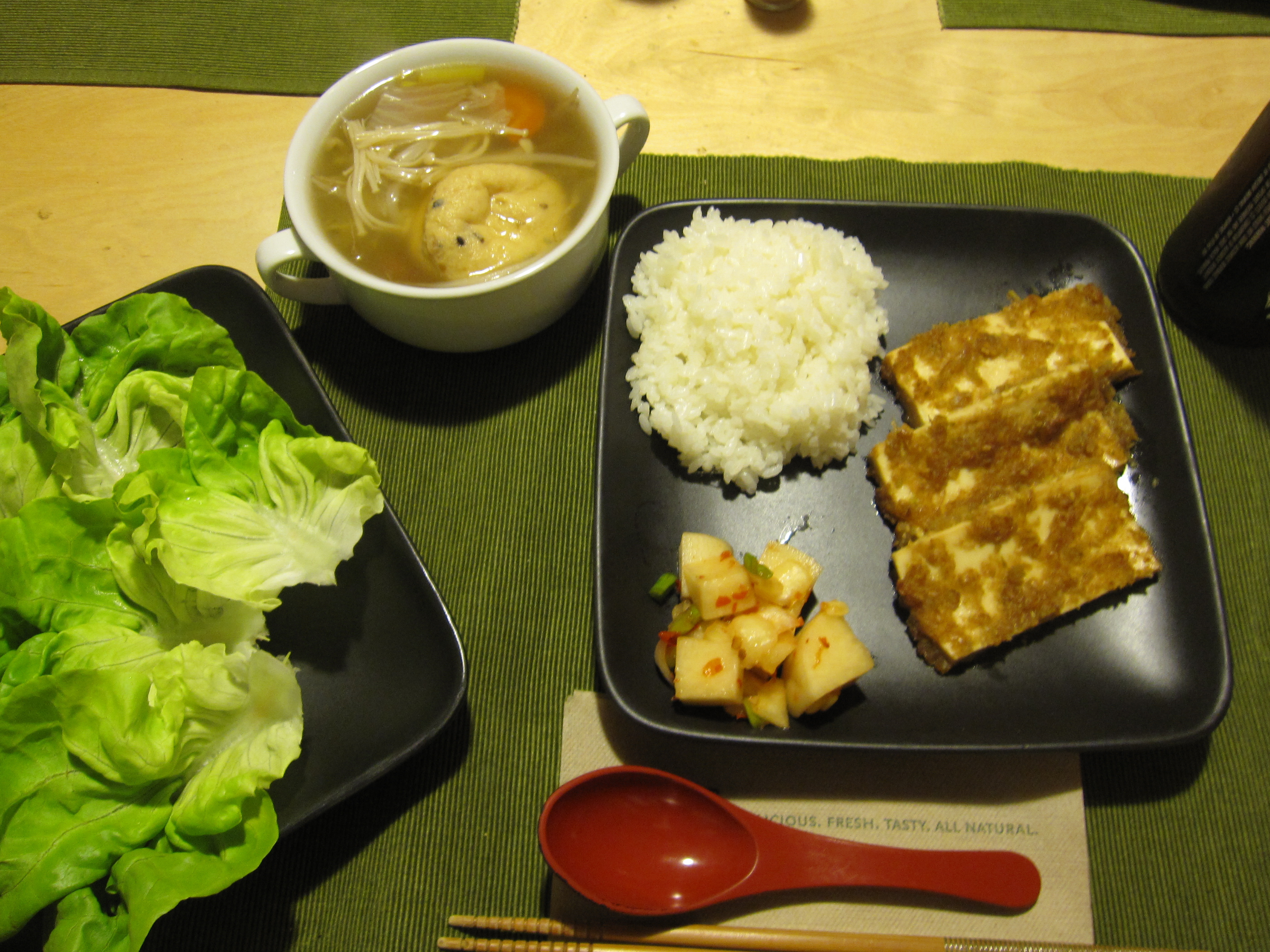
I made some daikon kimchi and really wanted to build a Meatless Monday around it. I thought I was going to make a tofu bulgolgi to stick with the Korean theme, but the marinade turned out nothing like a bulgolgi. It was very asian though so I used some ganmodoki we had bought at Mitsuwa and made a clear broth Japanese-style soup to bring more vegetables into the meal.

The daikon kimchi takes 24 hours so I had to start the Sunday. The ingredient list includes a lot of kosher salt (sea salt can be used also), 1.5 tablespoons of toban djan (I didn’t have any Korean chili paste, toban djan is Sichuan, but it is similar enough to work), 1/4 onion small diced, 1 garlic clove minced, 1 lb daikon cut into 3/4 inch cubes, 1 teaspoon fish sauce, 1 teaspoon sugar, and 2 green onions thinly sliced.

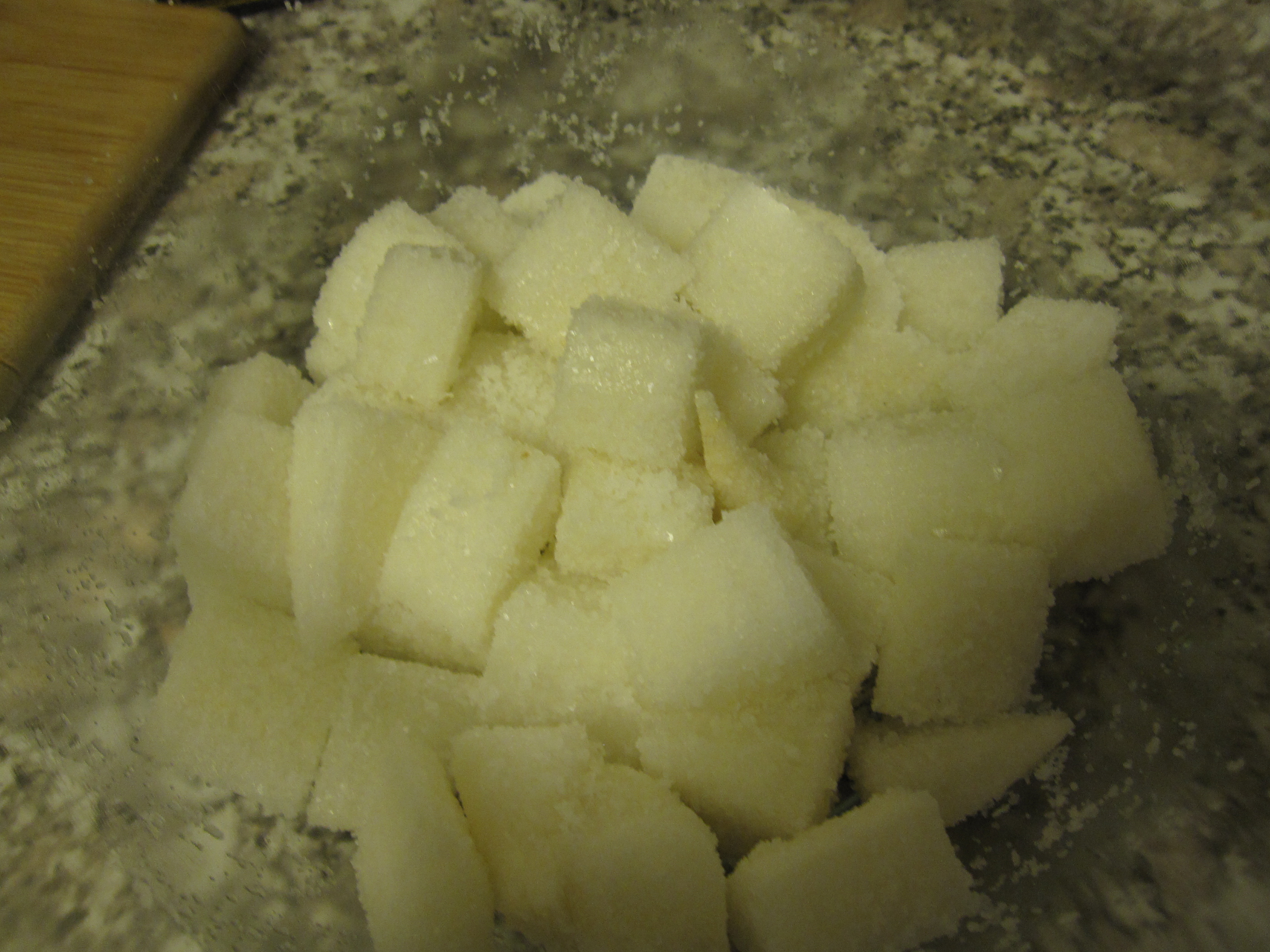
I threw the daikon into a bowl and completely coated it with salt. I left it for 2 hours and then drained off all of the liquid that accumulated at the bottom of the bowl and then rinsed and drained very well.

Then I mixed together the rest of the ingredients, tossed the daikon to coat evenly, and put into an airtight jar. I left it out for 24 hours and then put it in the fridge to chill for a couple of hours. You absolutely have to let it sit to get the flavors to penetrate and pickle, so this does take more than 24 hours to prepare. I will say, the daikon turned out way too salty when we ate it. Not sure if I added too much during the pickling process or if I just didn’t rinse it well enough, but next time I make this I will make sure it’s completely rinsed of salt and I may just add 1/2 tablespoon instead during the pickling to make sure it doesn’t get too salty. To salvage the rest of the daikon I’ll boil it in some water to make broth for noodle soup later in the week or something.

For the tofu “bulgolgi” I used 3 tablespoons of soy sauce, 1/4 granny smith apple, 1/4 onion, 1 tablespoon sugar, juice from 1/2 lemon, 1 tablespoon of sesame seeds, 1/2 inch ginger, 2 garlic cloves, 2 green onions, and 1 packet of silken tofu.

I pressed the water out of the tofu for about an hour and then sliced it into 1/4 inch pieces. I put the rest of the ingredients into my little processor and made a marinade.

I took out my glass baking dish, poured a little marinade on the bottom, lined the tofu side-by-side on top, and then covered it with the rest of the marinade. I let it sit while I prepared the soup. When the soup was almost done I drizzled a little sesame oil on top of the tofu and threw it under the broiler for about 10 minutes.

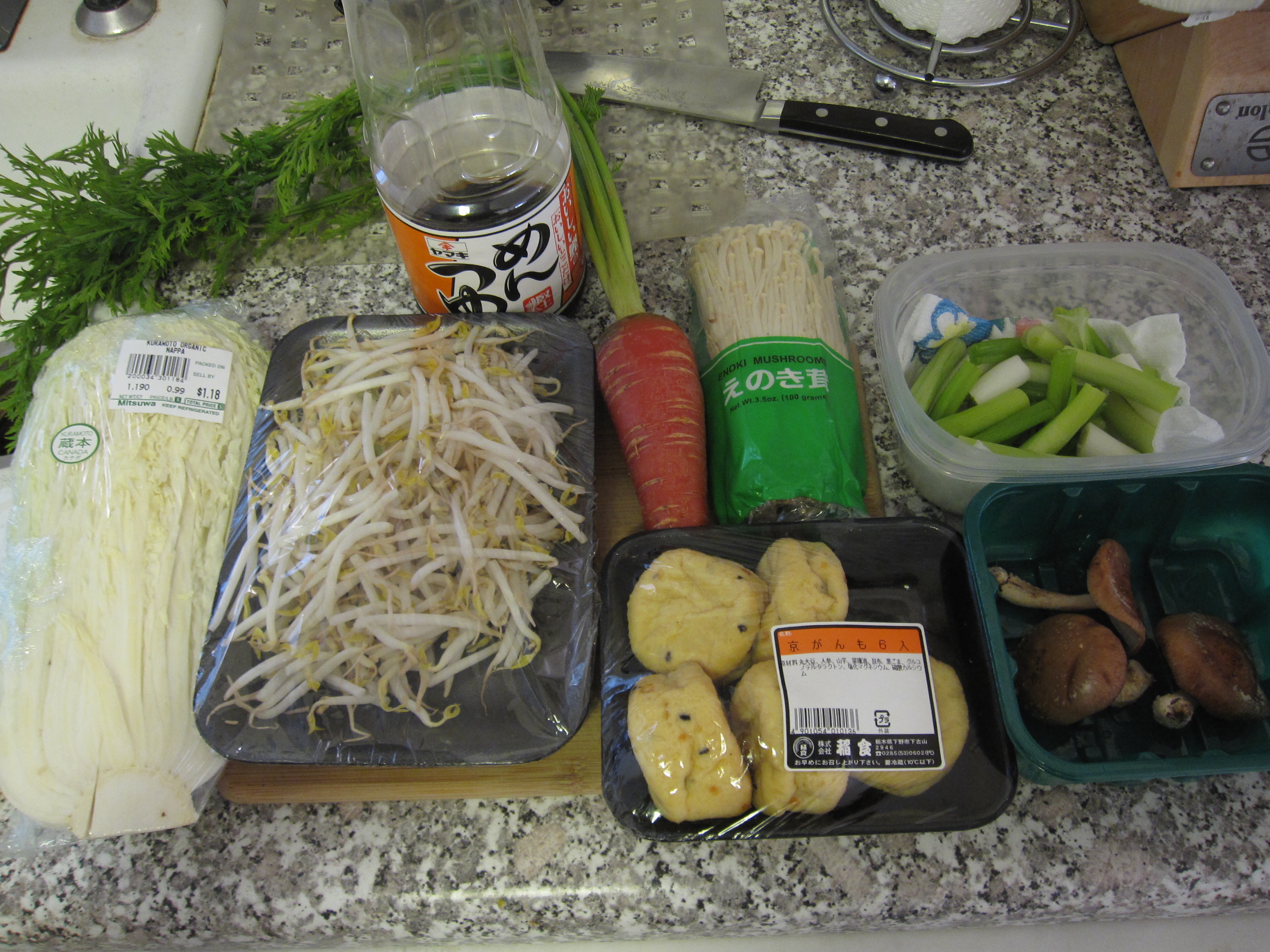
For the soup I cut up 1/4 of a napa cabbage, used some bean sprouts, 1/4 cup of dashi seasoned soy sauce, 1 carrot cut into half moons, 1/2 package of enoki mushrooms, 5 ganmodoki, the rest of our green onions (about 3), and my last three shiitake sliced.

In my soup pan I poured in about 4 cups of water and added everything except for the cabbage, bean sprouts, and enoki. I brought it up to a boil and then covered it, lowered the heat to medium-low, and let it simmer for about 15 minutes. Then I added the rest of the ingredients and let it simmer for another 5 minutes. That’s all she wrote for the soup.

I served everything with white rice and leaves of butter lettuce. That way we could make lettuce wraps bulgolgi-style.

Read Full Post »

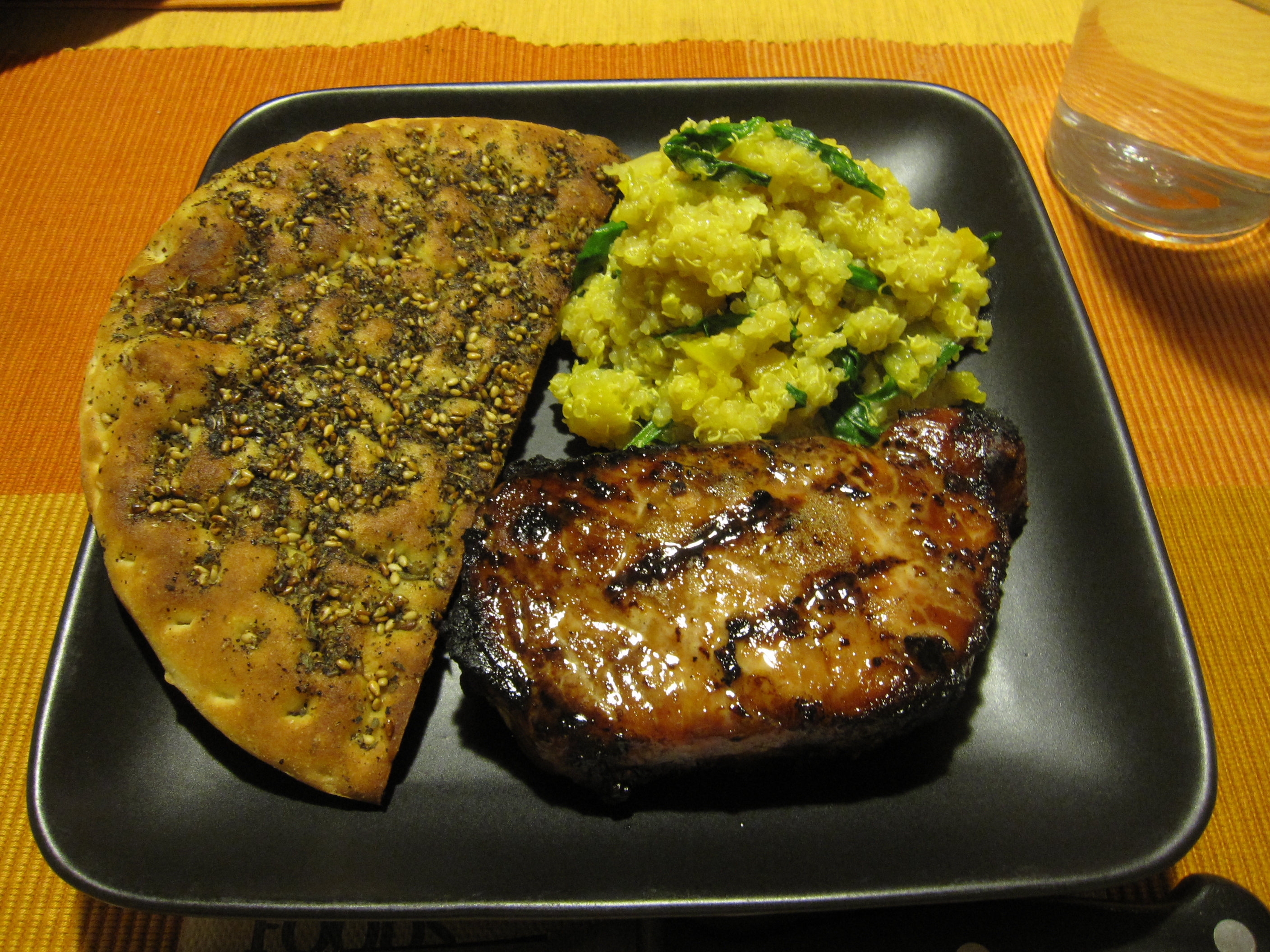
I try to make quinoa a regular in my diet, but don’t make it as often as I should. Being one of the world’s superfoods, as well as being relatively inexpensive, I think everyone should eat it at least a few times a month. I’m just waiting for the McQuinoa to show up on menus. Although, to get most Americans to eat it they’d probably have to use burger patties as the bun.

First thing I did was marinate the pork chops. I mixed together 2 tablespoons of sake, 1 tablespoon of mirin, 3 tablespoons of soy sauce,1/2 inch ginger grated, a large garlic clove grated, and some cracked black pepper. I turned the pork around in the marinade a few times to coat it entirely, then I covered it and set it in the fridge for about 2 hours. I turned it a couple of times while marinating. I also took it out about 30 minutes prior to grilling to bring it to room temperature, this ensures that it cooks more evenly.

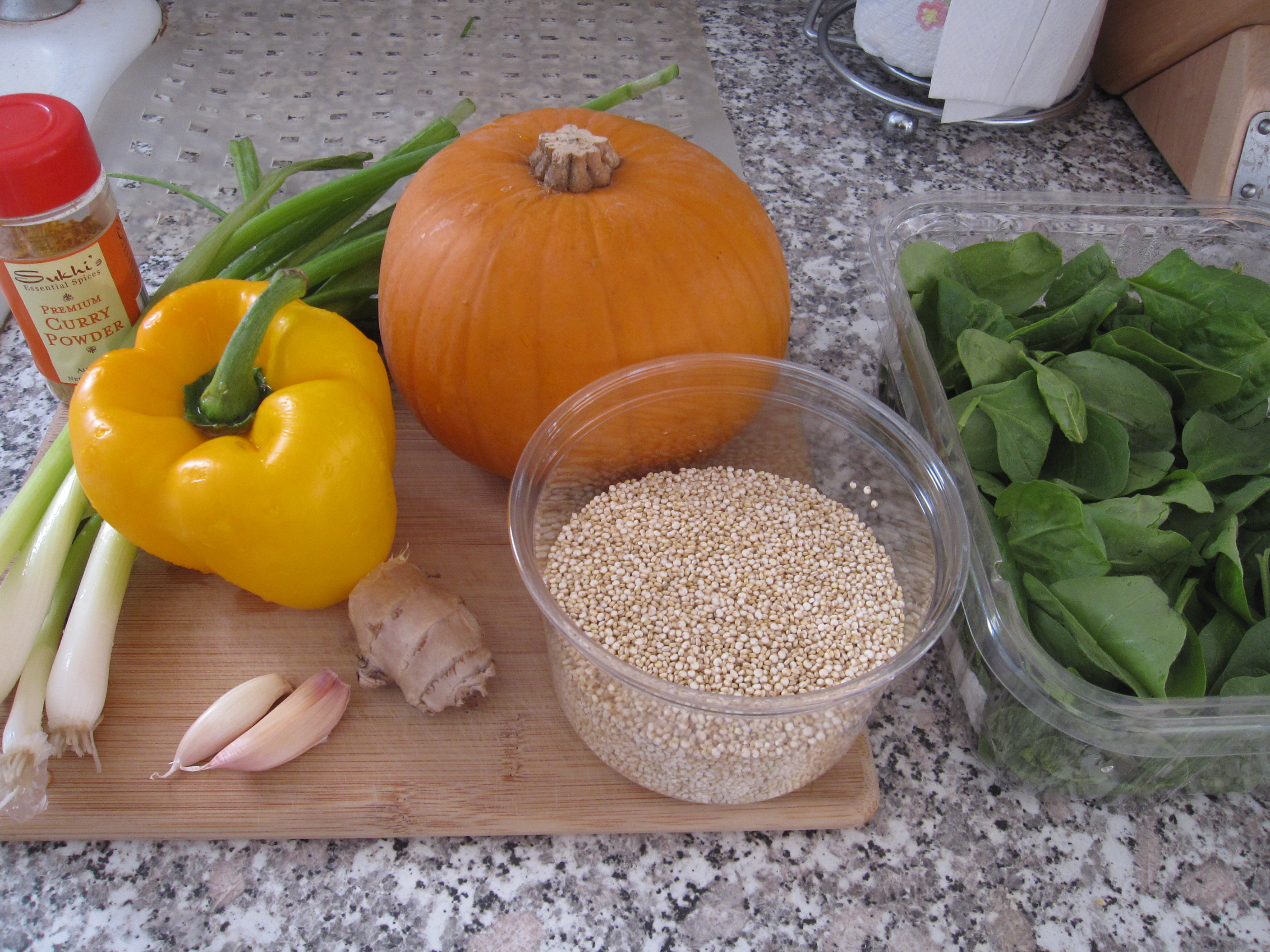
For the quinoa I used 1 tablespoon of curry powder, 6 green onions sliced, 1 yellow bell pepper sliced, 2 garlic cloves minced, 1/2 inch of ginger minced, 1/3 of a small pumpkin (I just eye-balled how much I wanted to use, I have no idea how much it actually was), 1 cup of quinoa, and a couple large handfuls of baby spinach.

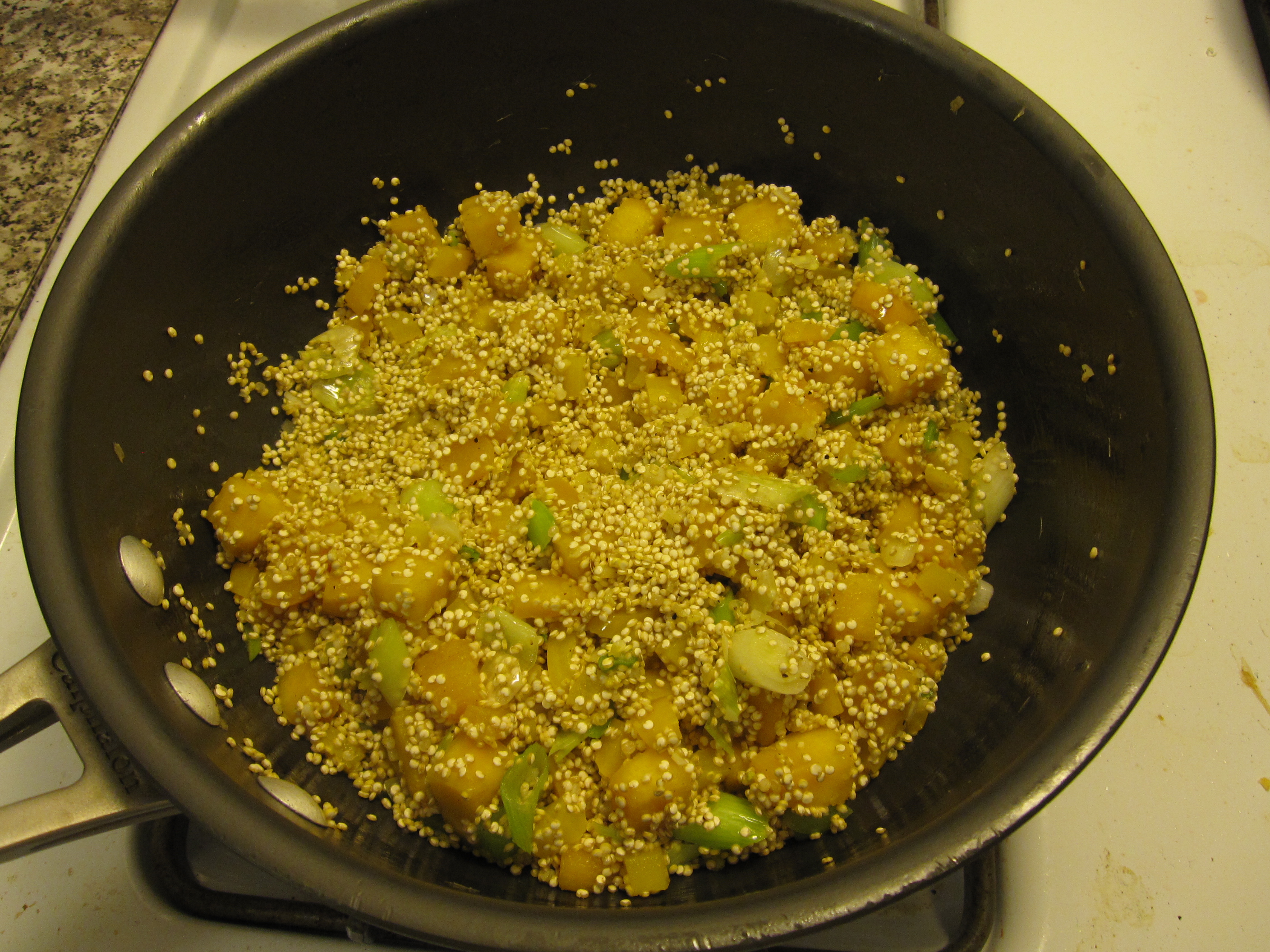
In a small sauce pan I brought 2 cups of water to a boil. While the water was getting hot, I heated up my medium pan and poured in about 2 tablespoons of sesame oil. I threw in the pumpkin, bell pepper, and green onions. I let them saute for about 5 minutes and then added the garlic and ginger. While the garlic and ginger started to heat up, about a minute, I thoroughly rinsed the quinoa and then added it to the pan along with the curry powder, a touch of salt, and some black pepper. I stirred it around for about 3-4 minutes so that the quinoa would start to give off a slight nutty aroma. After that I poured in the boiling water, covered the pan, and let it simmer over medium-low heat for about 15 minutes. Once that 15 minutes was up I turned off the heat and let it rest for another 10 minutes.

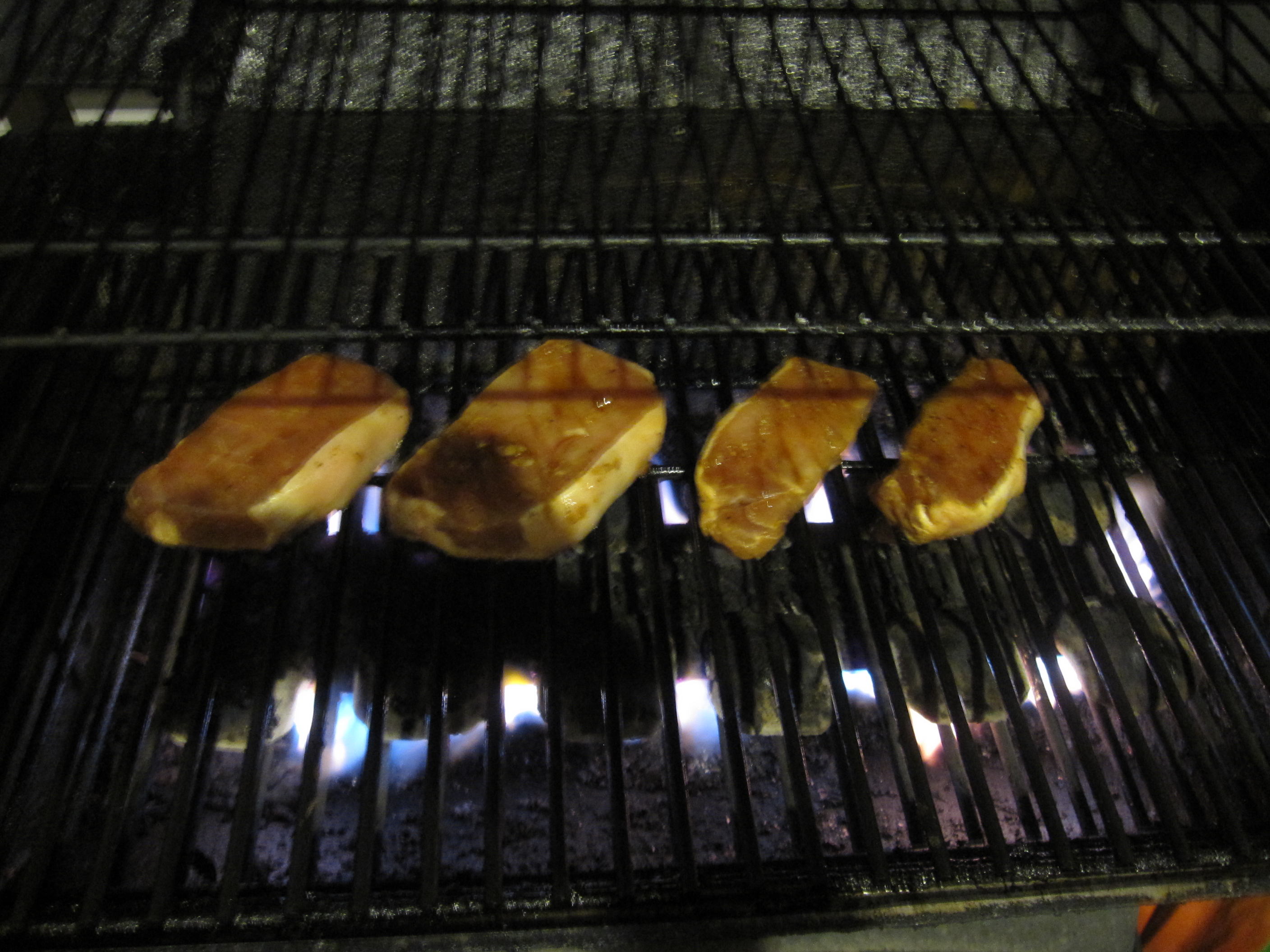
While the quinoa was simmering I got the grill hot and grilled up the pork chops. It took about 5-6 minutes per side.

Just before serving I toasted my last piece of manakeesh from the Tannourine Bakery. I also fluffed up the quinoa with a fork and then mixed in the baby spinach.

If I were to make this recipe again I would do two things different. Instead of using 1 tablespoon curry powder I would use 1.5-2 tablespoons, or maybe a touch of cinnamon. I would also squeeze a lemon or lime into the quinoa as I stir in the spinach. The quinoa was good, just much more lightly flavored than I would have liked.

Read Full Post »

The other night Yuki and I cooked together. We made one of my favorites, chicken hijiki rice, along with some vegetables that we needed to use up.

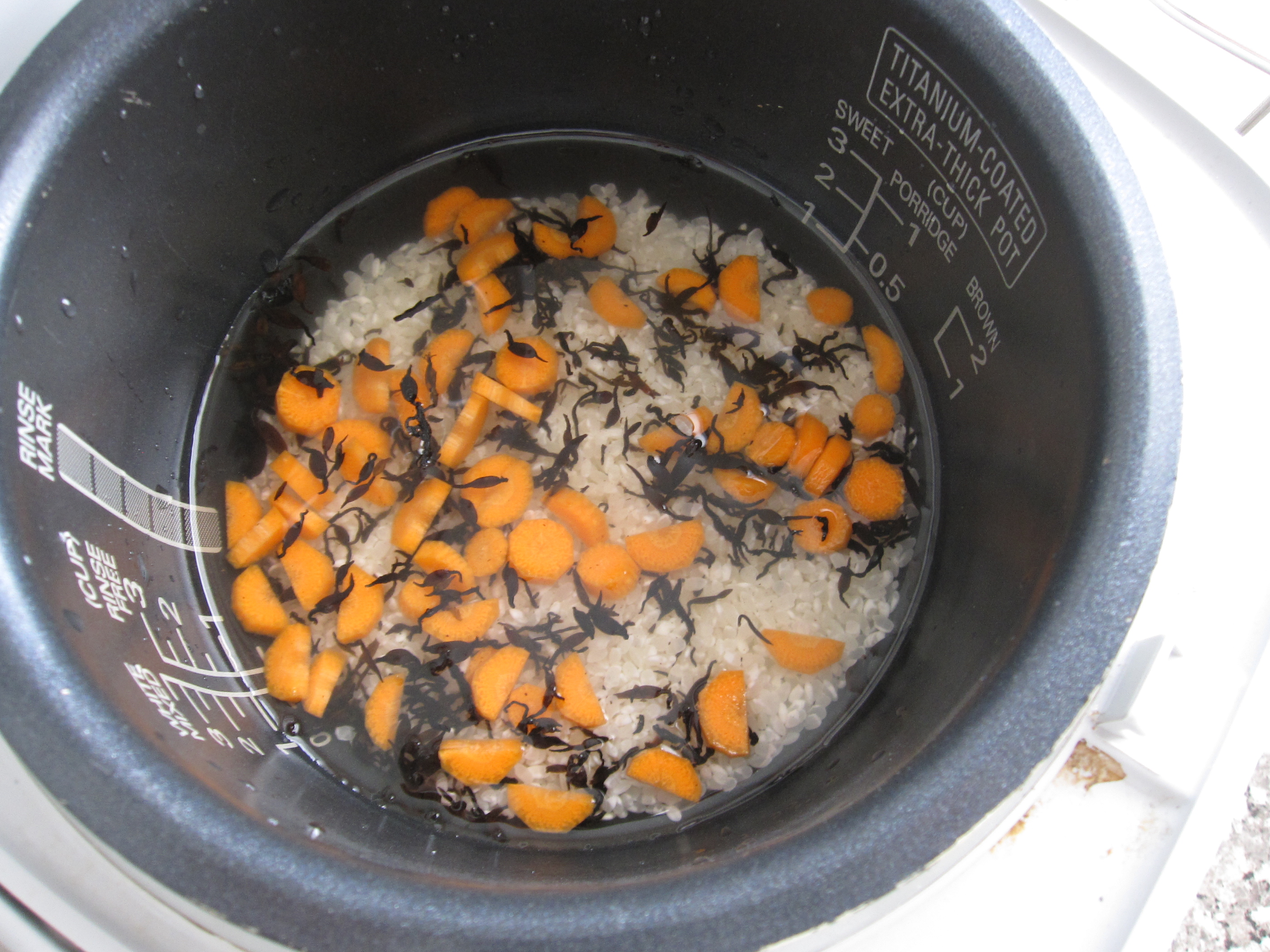
Making the rice is easy as can be. We used 1.5 tablespoons of dried hijiki seaweed, 4 shiitake sliced, 1 carrot sliced in half moons, and 1/2 pound of skinless chicken thighs. While I rinsed off 2 cups of rice and cut up the vegetables Yuki cut up the chicken and quickly sauteed it in sesame oil. After filling the rice cooker with the proper amount of water for 2 cups of rice I put the hijiki in and let it sit for about 15 minutes. Then we tossed everything else in, turned on the cooker, and let it go.

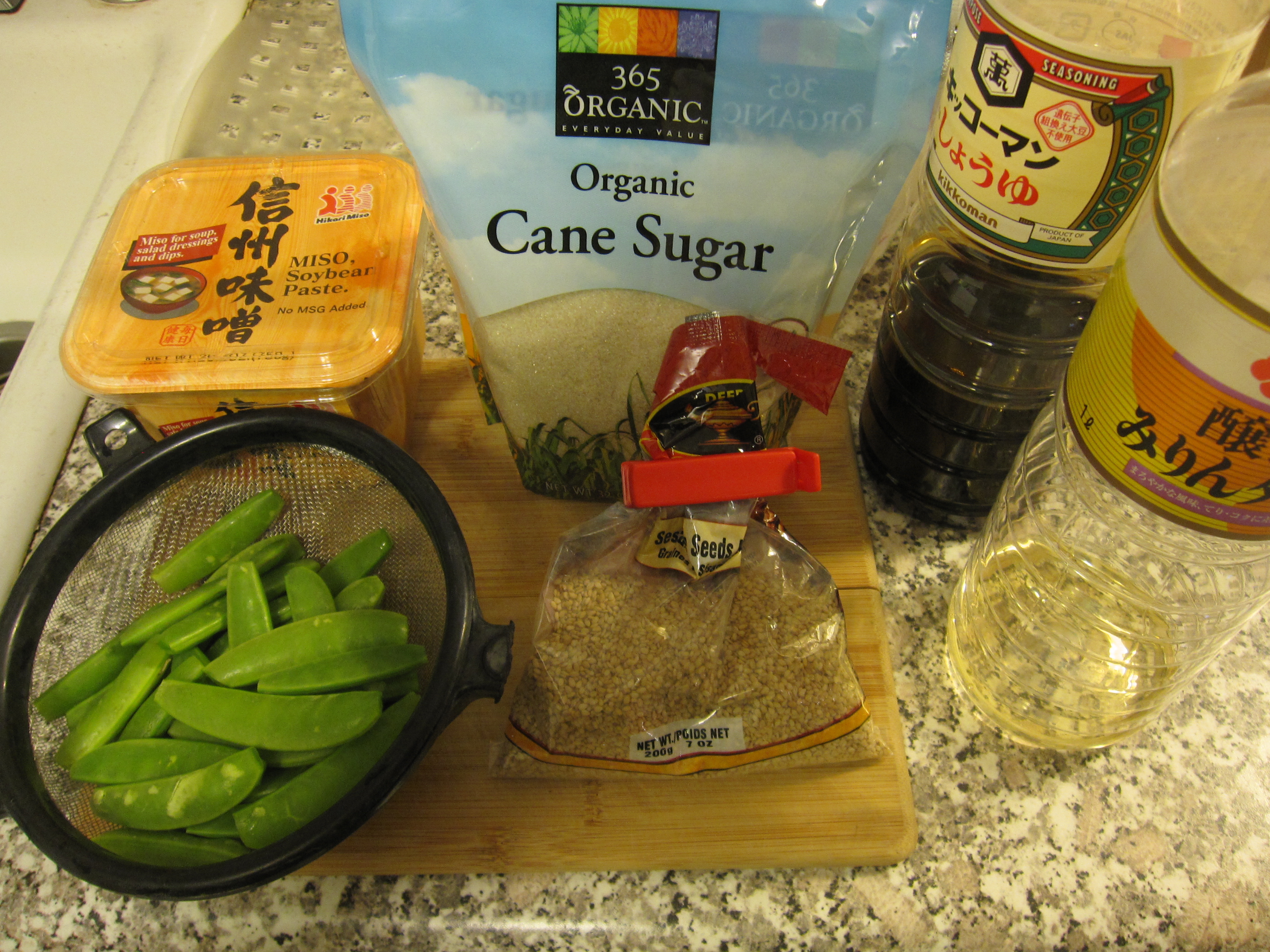
I made a sesame dressing for some pea pods that were in our fridge. I used 1 tablespoon of miso paste, a pinch of sugar, 1 tablespoon of sesame seeds, 1 tablespoon of soy sauce, and 1/2 tablespoon of mirin.

I toasted the sesame seeds in a dry skillet for a few minutes until they turned a golden brown and started to give off their fragrance. Then I ground them with my pestle and mortar. I added the rest of the ingredients, mixed them all together, and set it aside. I simply steamed the pea pods for about 4 minutes when the rice was ready. Then I tossed them with the sesame dressing.

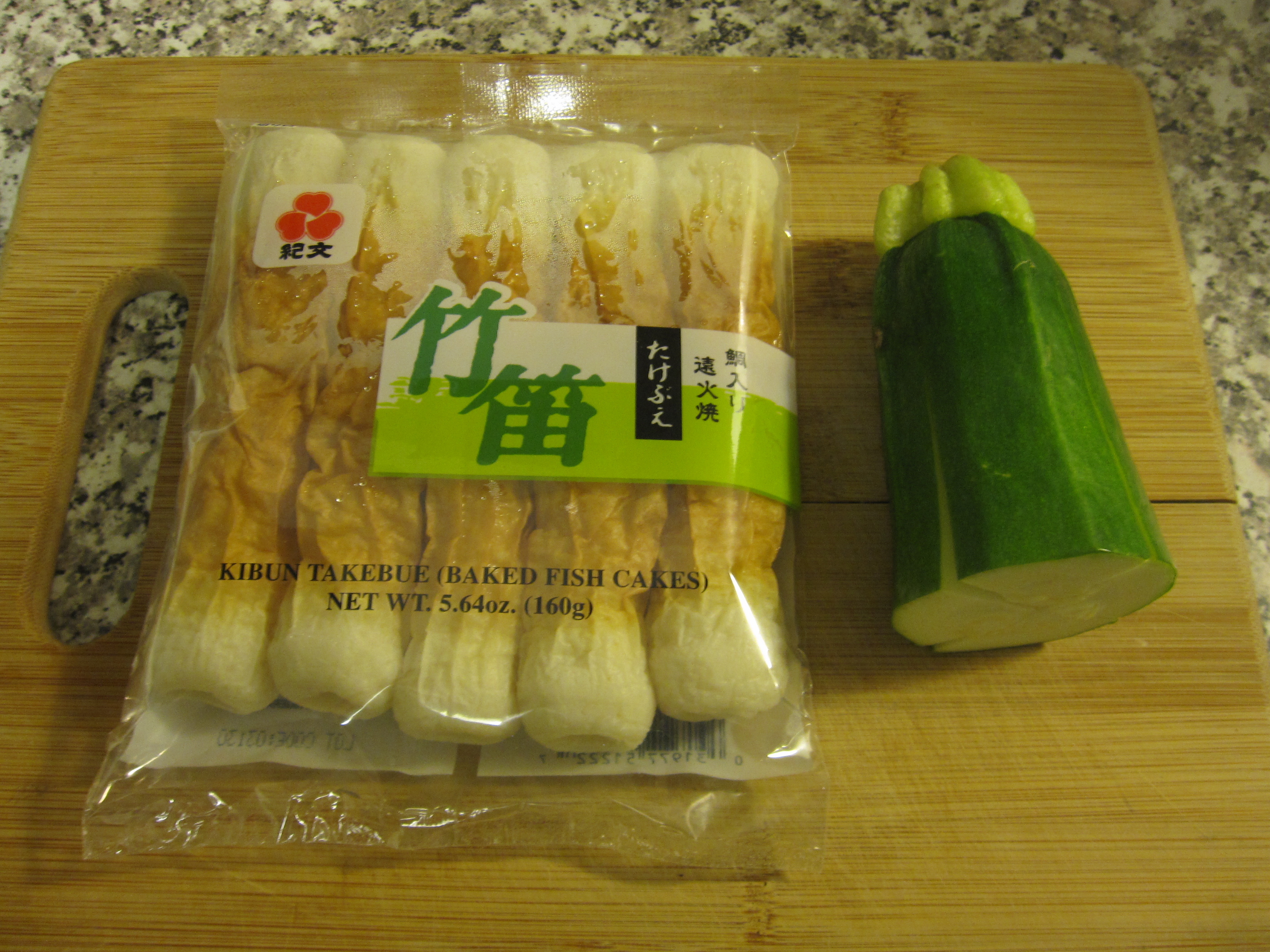
We also had some chikuwa and 1/2 a zucchini to use up. Chikuwa are tubular, hollow fish cakes that have been baked or grilled. I sliced the zucchini into long sticks and stuffed the chikuwa with them. Once the rice was ready and the pea pods steaming I just put them in the toaster oven and toasted them for about 6 minutes. I drizzled them with the sesame dressing as well.

While I was doing that Yuki made some miso soup. I didn’t watch her make it, but she put in it sliced onion and wakame.

Read Full Post »

Yesterday I saw some really nice coho salmon on sale that just came in that morning. Since I haven’t cooked salmon in a while I took that as a sign that it’s time to do it up again. I decided to keep it very simple and use some Japanese flavors to appease my wife.

After lunch I got the rice ready. I rinsed 1 cup of rice and threw it in the rice cooker like normal, then added a couple of large pinches of dried hijiki seaweed and a diced carrot. I let it sit for about a half hour to let the hijiki re-hydrate and flavor some of the water. Then I turned on the machine and let the rice cook. When it was finished I turned it off, mixed everything together, and let it cool to room temperature.

Closer to dinner time I made my teriyaki sauce. In a small saucepan I gently heated 3 tablespoons each of soy sauce, sake, and mirin along with 1 tablespoon of sugar. I let it heat just until the sugar was completely dissolved and turned off the heat before it came to a boil. I let that cool to room temperature.

Here’s my 20 ounce filet of coho salmon. I cut it into 4 equal portions and marinated it in the teriyaki sauce for about 45 minutes at room temperature.

While the salmon was marinating I got the abura-age ready. I had a pack of three here. I cut them in half and rinsed them off with some boiling water. They very oily and the boiling water rinsed a majority of that oil off. Then the packages open up nicely for easy stuffing.

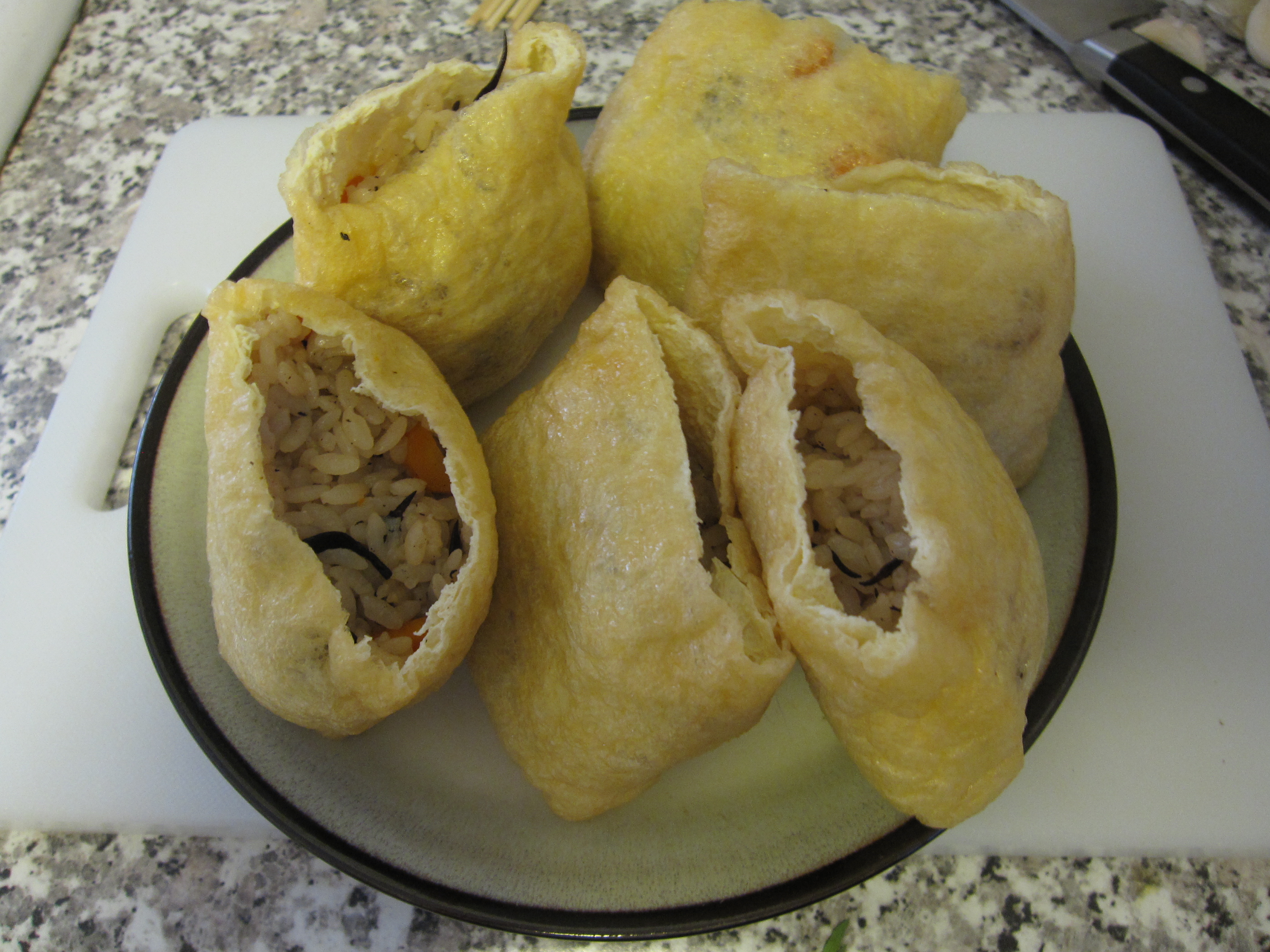
I stuffed them equally with the rice mixture and then sealed them. I didn’t have any toothpicks, so I cut down some bamboo skewers to do the job. In a saute pan I brought 1/4 cup of water to boil with 1/4 cup of seasoned soy. The soy is seasoned with a little dashi and mirin. Once lightly boiling I put the packets in, covered it, and turned the heat to low. This lets the broth flavor penetrate while heating up the rice. I let it go for about 10 minutes then turned off the heat and let it sit until everything was ready.

I also placed the salmon under the broiler, starting with the skin-side up. About 5 minutes later I turned it over, basted the top with the marinade left in the dish, and let it broil for another 5 minutes.

Before cooking the salmon and abura-age I got my vegetables ready. I had two large heads of baby bok choy that I separated the leaves from the stems and chopped them all down, 1/2 onion sliced, 3 garlic cloves minced, 1 package of shiitake sliced, and 1/2 a large red bell pepper sliced.

While the salmon was broiling and the abura-age packets absorbing tasty fluids I heated up a pan and poured in 2 tablespoons of sesame oil and tossed in the onions to let them saute for about 4 minutes. Then I added the peppers and garlic. After another few minutes I added the shiitake and bok choy stems for about 4 more minutes. I seasoned with pepper and poured in about 3 tablespoons of soy sauce. Once the soy boiled off I added the bok choy leaves, stirred them in, covered the pan, and turned off the heat. I just wanted the leaves to wilt a little.

I timed it all so everything would be finished at the same time. I plated it up and scarfed it down.

Read Full Post »

A couple of our friends are growing their own shiso. apparently their plant is going haywire and they have too much shiso for their own usage, so they gave us a bunch. I do mean a bunch! I only used half of it for the pesto. Does anyone want some? I have a feeling you’ll see at least one more shiso recipe on this blog sometime this week.

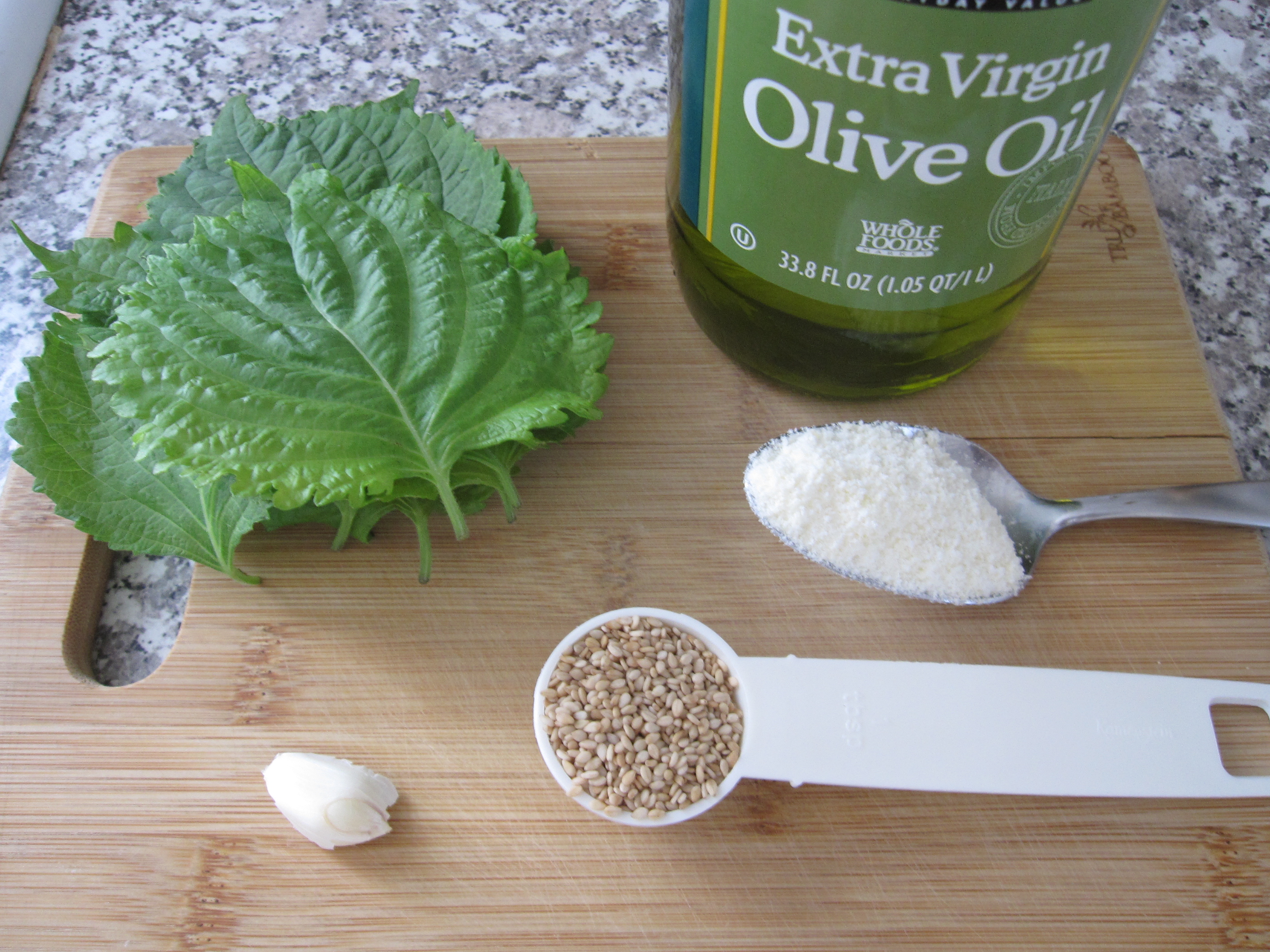
I made the pesto much like I would a regular pesto, but with a few changes. I used about 1/2 ounce of shiso leaves, one clove of garlic, 1 tablespoon of sesame seeds, 1 tablespoon of parmesan cheese, and about 1/4 cup of olive oil. I put it all in my little food processor and whipped it all up.

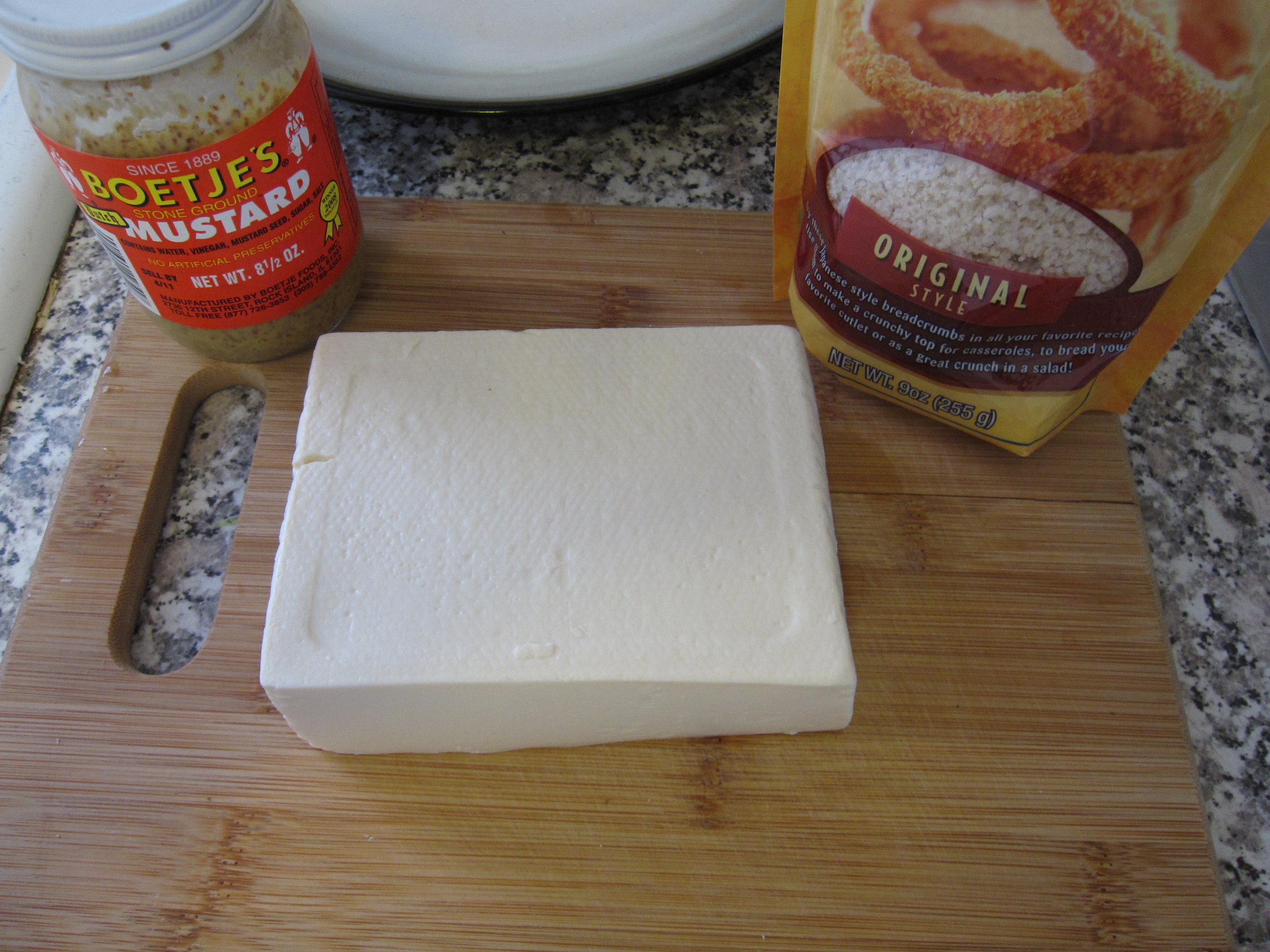
For the tofukatsu I used mustard, 1 block of silken tofu, and some panko. I pressed the water out of the tofu in the fridge for about an hour. Then, I cut it in half. I sliced the halves into 4 equal pieces to look like cutlets.

I poured some panko on a plate and then spread a thin layer of mustard on top of each tofu cutlet. I pressed the tofu, mustard side down, on the panko and spread another thin layer of mustard on the other side then flipped and pressed again. I wanted both sides of the tofu crusted in panko. In a large skilled heated to high I poured in a few tablespoons of peanut oil. I like to shallow fry in peanut oil because it has a high smoking point and doesn’t really have that strong of a flavor. I fried the tofu in two batches so as to not overcrowd the skillet. After both sides were nice and golden I laid them on a wire rack to let any excess oil drip off.

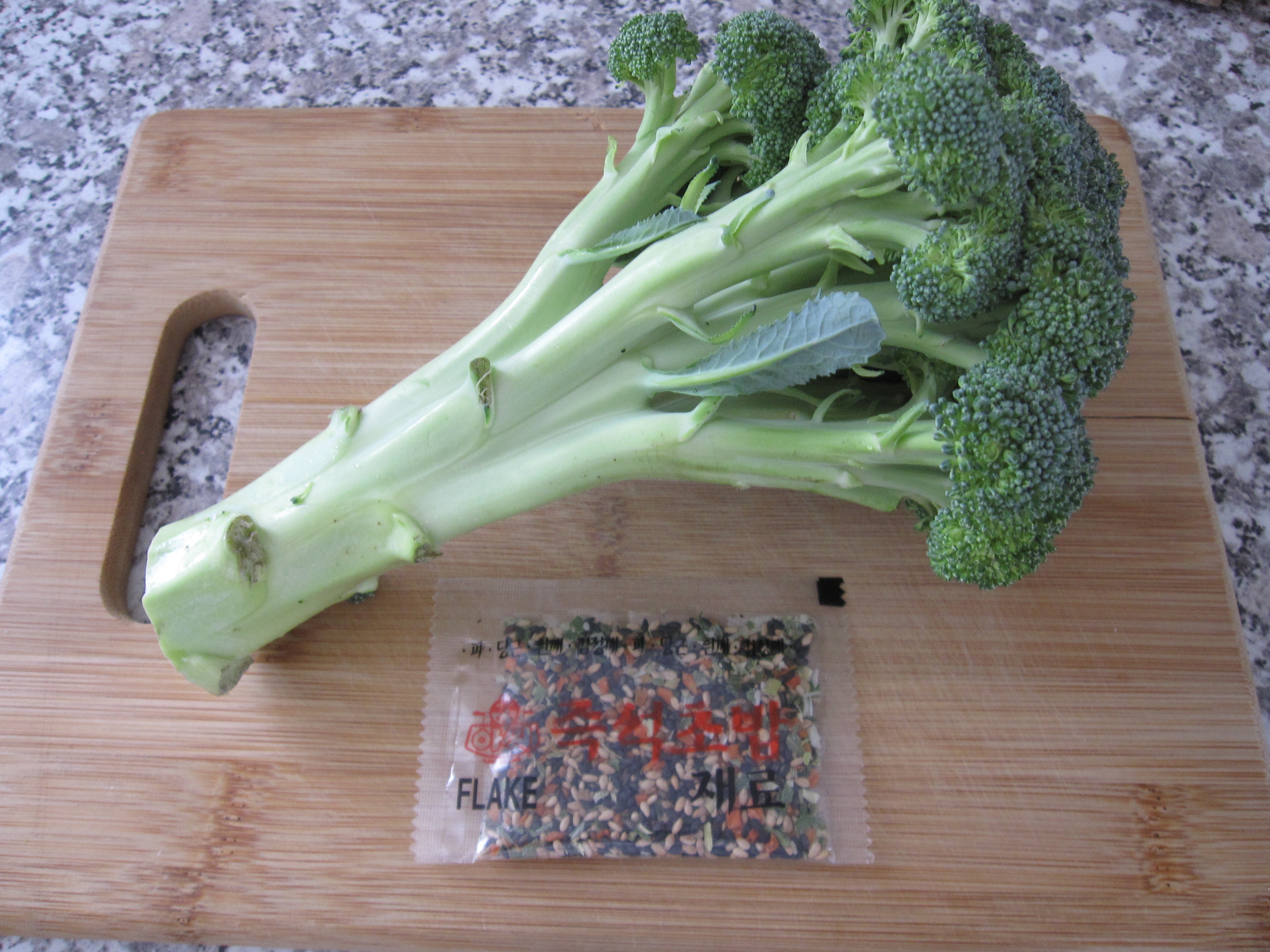
I made a couple of sides to go with the tofukatsu. One was a simple steamed head of broccoli. I cut the broccoli down into bite-sized pieces, florets and stem and them steamed it for about 4 minutes. I had a packet of mixed sesame seeds with dried carrot so I decided to sprinkle that on instead of salt and pepper.

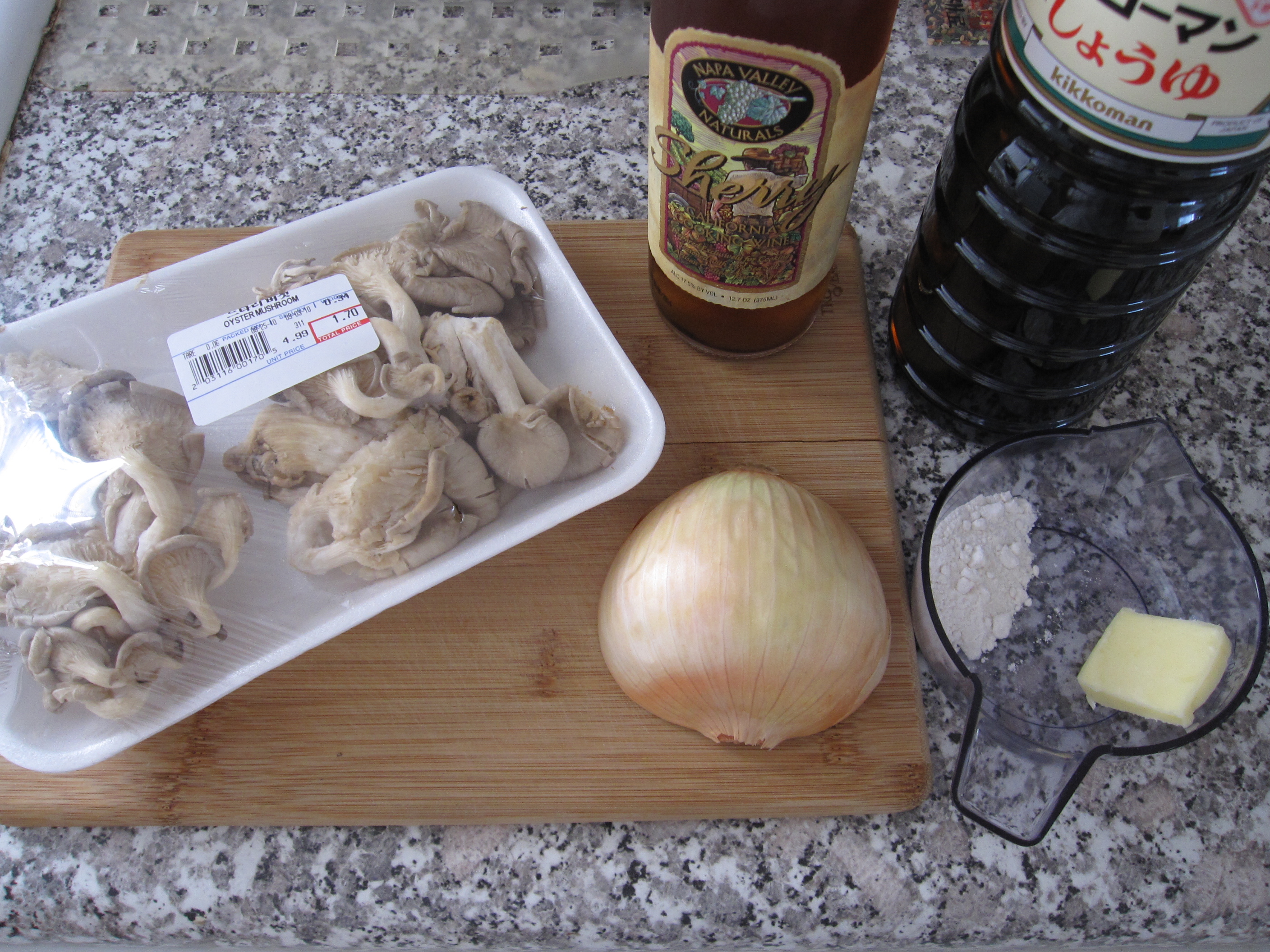
I had about 1/2 pound of oyster mushrooms in my fridge, so I decided to saute them with 1 teaspoon of sherry, 1 tablespoon of soy sauce, 1 tablespoon of flour, 1/2 tablespoon of butter, and I was going to use 1/2 onion.

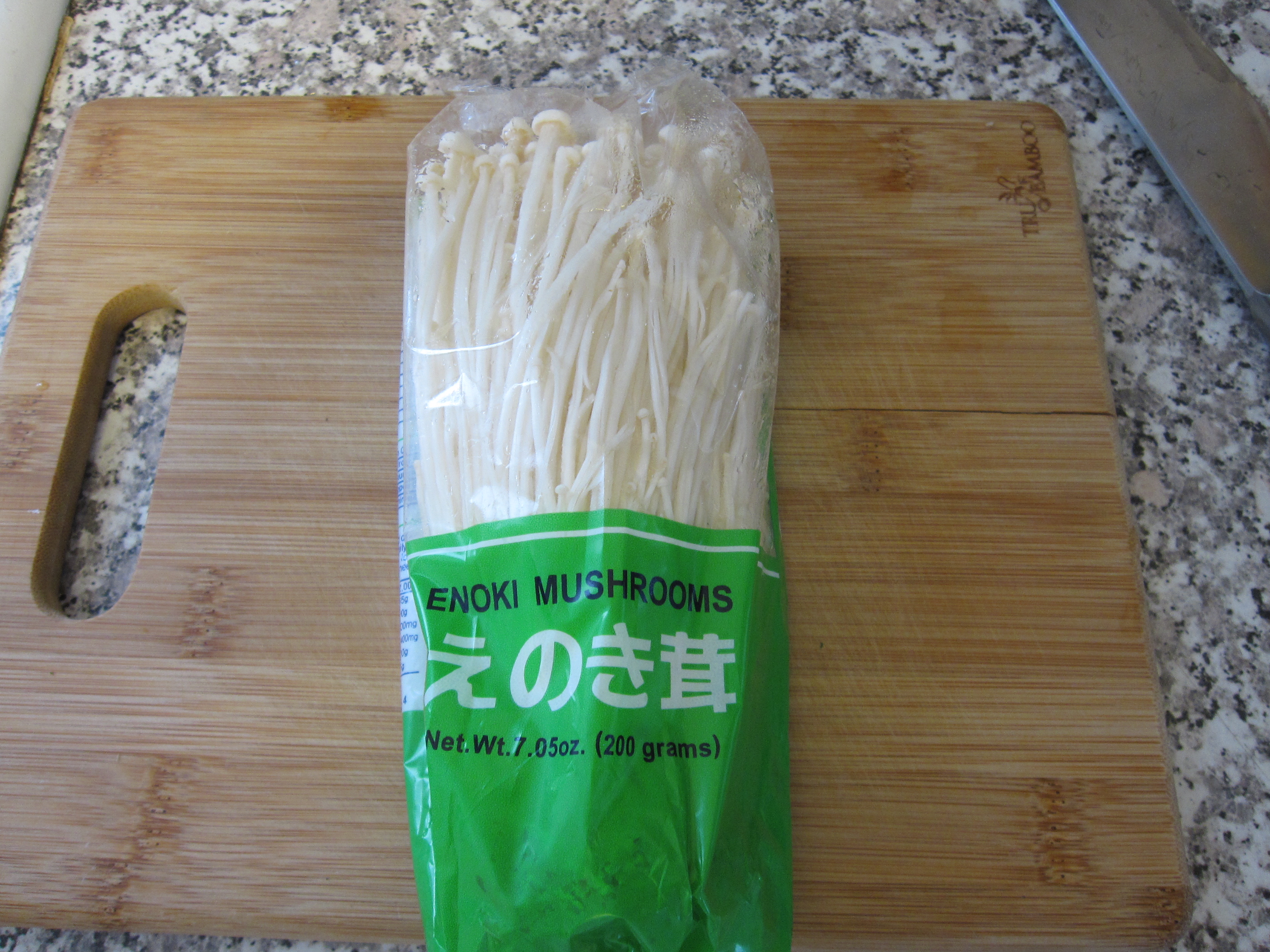
For whatever reason I wasn’t feeling the onion. No rhyme or reason, I just decided not to use the onion and instead use the enoki mushrooms that were in my fridge. I also grated a clove of garlic at the last minute too.

In a hot pan I poured in about 2 tablespoons of sesame oil and put the grated garlic in for about 30 seconds. Then, I threw in all of the mushrooms, both oyster and enoki. I let them saute for about 4 minutes and then poured in the sherry and soy sauce. Once the liquid was almost completely boiled off, about 2 minutes, I poured in the flour and butter and stirred that all in. The flour thickened up the last bit of liquid while the butter made it all silky and smooth, as butter always does.

Finally, I took a daikon radish and skinned about half of it. I grated the part that I skinned and served it just as it is.

To serve everything, I had some white rice and then put some broccoli next to it and then two pieces of tofukatsu next to that. I poured a little of the pesto on top of the tofukatsu. The grated daikon went on the plate as well. It was a little sharp, so we poured a few drops of soy sauce on it. In a separate plate I laid some mushrooms down. Next to them I put some kimchi cucumbers that we picked up at the Assi Plaza. I’m not a big fan of cucumbers, but these kimchi ones are so damn good they just might make me a believer. Bon apetit!

Read Full Post »

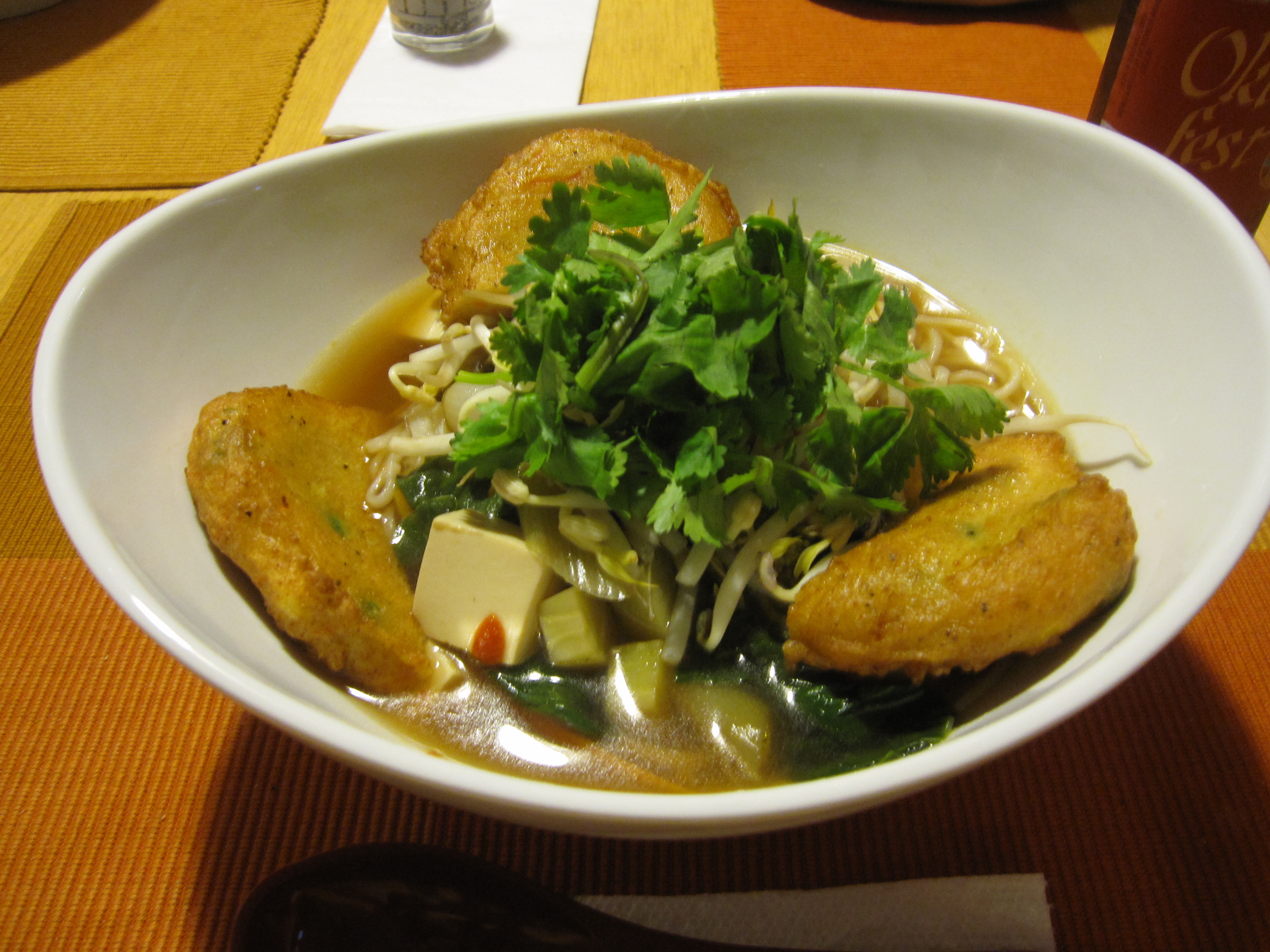
Last night I made some noodle soup using Vietnamese rice noodles, pho-like broth, and Japanese fish cakes. Not sure what to call this dish, so I’ll just call it Japanese Pho. It was very simple to make and actually tasted really really good.

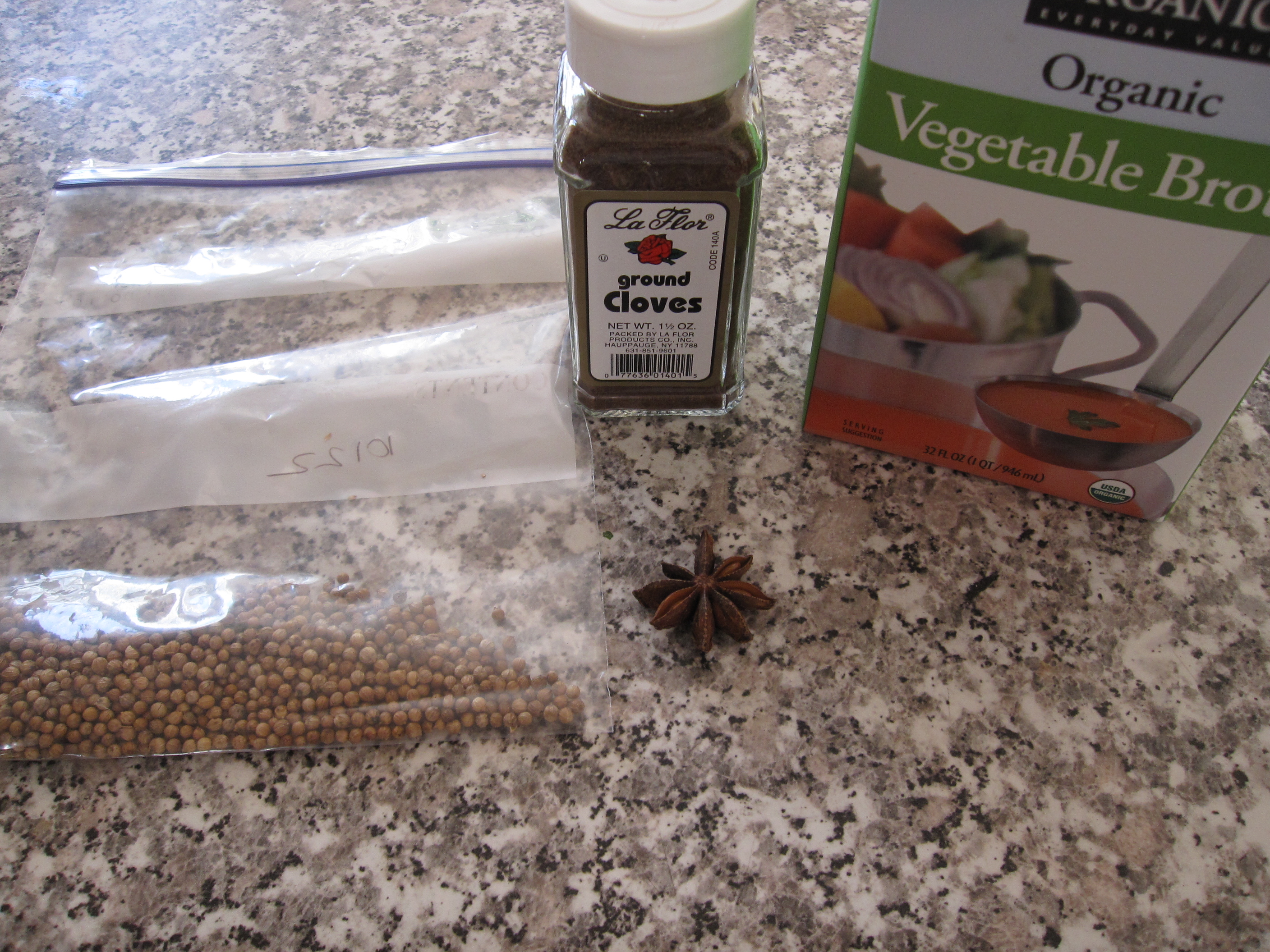
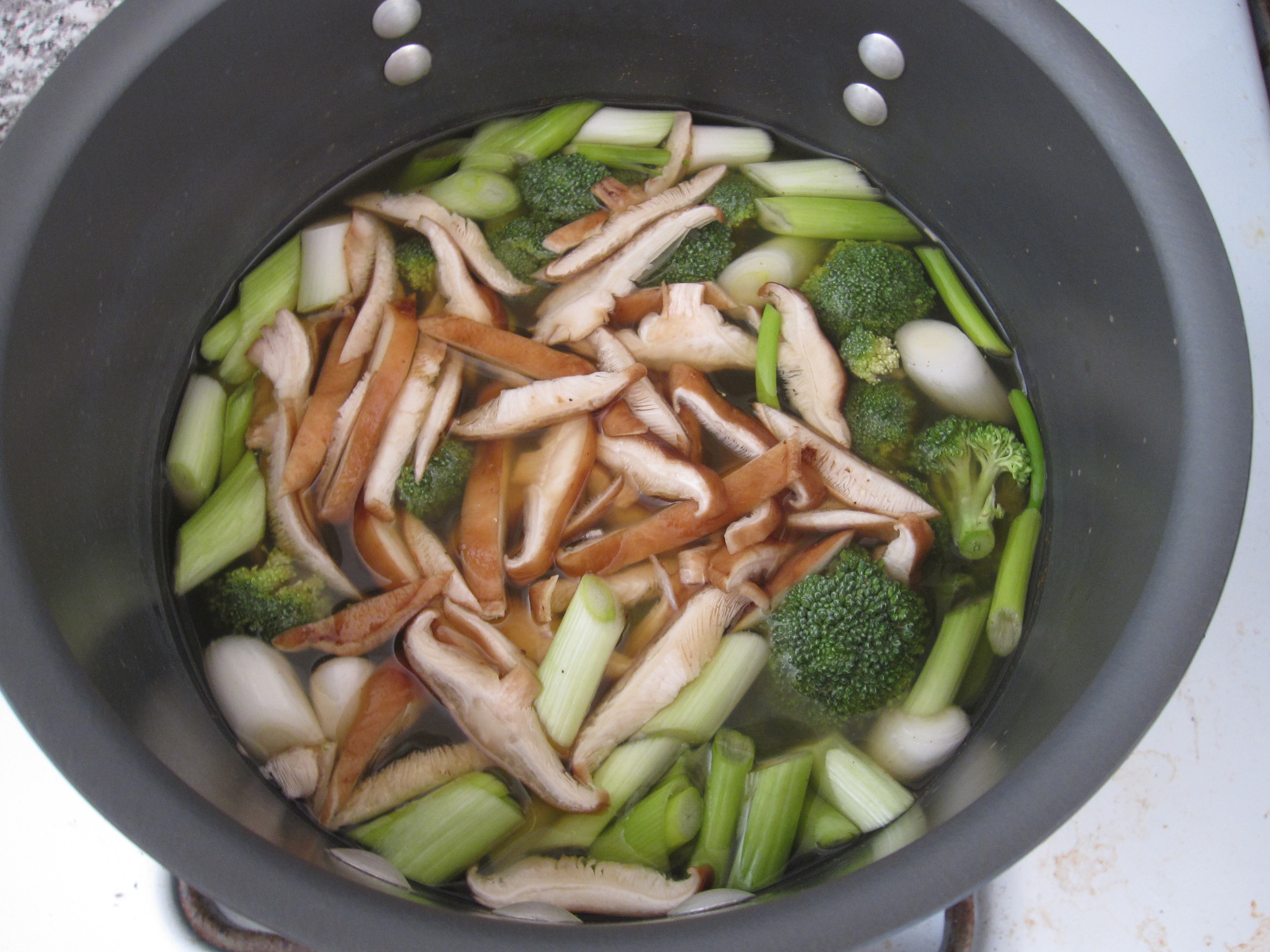
First thing I did was make the broth base. I crushed 1 teaspoon of coriander seeds and 1 star anise with my pestle and mortar. Once they were ground to an almost fine powder I added 1 teaspoon of ground cloves. I wish I had some ginger, I would have bashed that up and added it as well. At any rate, I had 3 cups of vegetable broth in my fridge that needed to be used up so I poured that into a pot, dumped the spices in, and let it boil for about 10 minutes. After that I turned off the heat and let it sit while I prepped the rest of the dish.
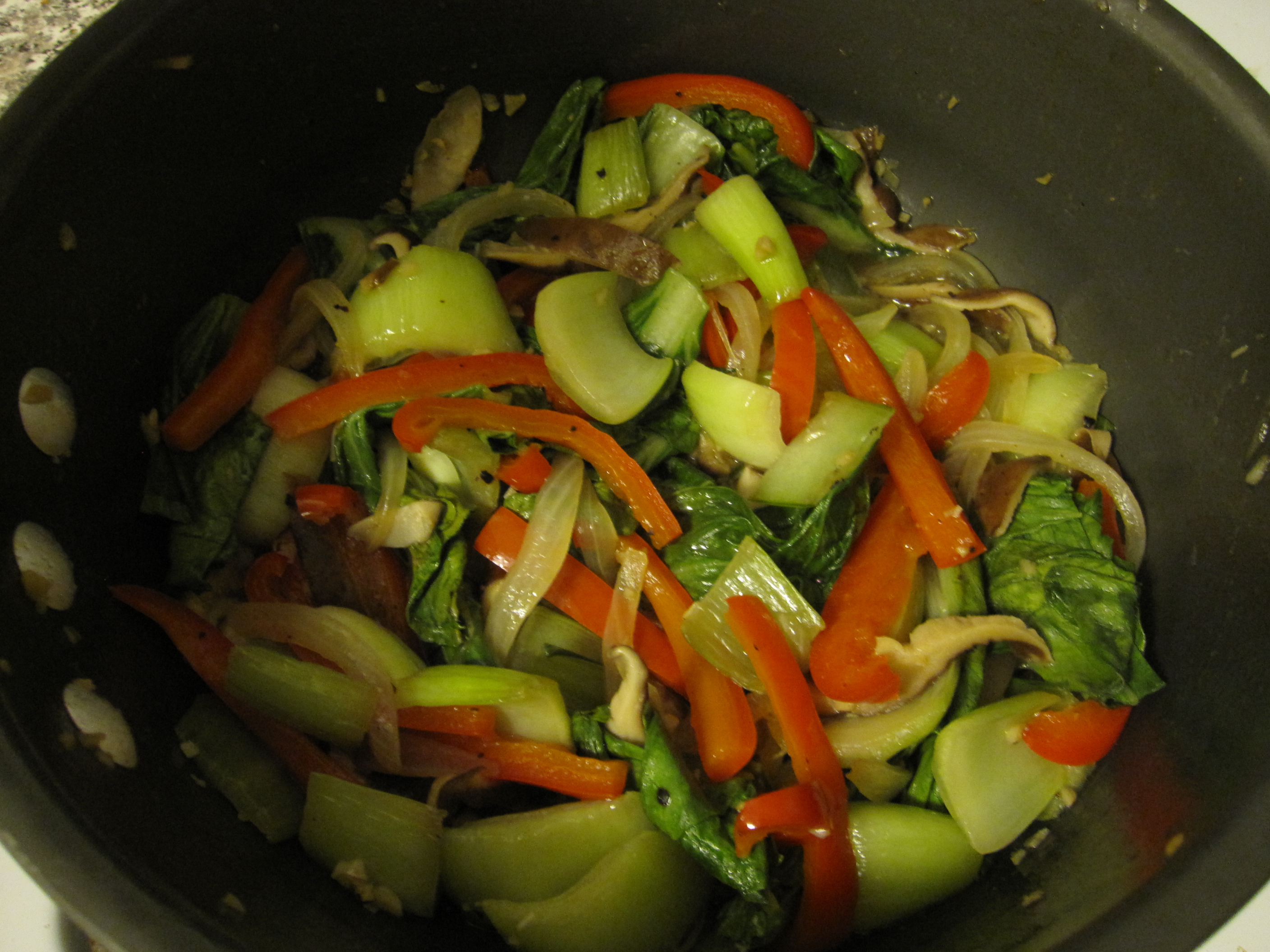
My ingredient list included 4 green onions sliced into inch length pieces, a small head of broccoli chopped up, two small carrots cut into thin strips, 2/3’s of a pack of shiitake sliced, half a cube of silken tofu diced, about half a container of baby spinach, about 4-5 ounces of bean sprouts, and 3 fish cakes from the Tensuke Market (these fish cakes had slivers of carrot and peas in them, one of my favorites).

In a clean pot I strained the broth base discarding the grit. I made sure to press the grit though to make sure I got all of the flavorful liquid. To that I added about 3 cups of water, 1/4 cup soy sauce, 1/2 teaspoon of dashi-no-moto, and 3 tablespoons of sesame oil. Then I tossed in the green onions, shiitake, and broccoli. I brought all of that up to a boil and let it go for about 7 minutes while toasting the fish cakes. After that I added the carrots, tofu, and baby spinach for about 3 minutes. That was it, I turned off the heat.
While the soup was cooking I boiled some rice noodles in a separate pot with just plain water. I did that according to package instructions and then drained.

In my serving bowls I first put in the noodles. Then I ladled the soup on top and squeezed in some sriracha. On top of the soup I put in some bean sprouts and garnished those with some cilantro. I placed the halved fish cakes around the edge.

Read Full Post »

Last night Yuki and I went to Millenium Park for another one of their Made In Chicago: World Class Jazz shows. Besides listening to some killer guitar by Alfonso Ponticelli we ate some killer skirt steak sandwiches that I made earlier in the day, along with some potato salad.

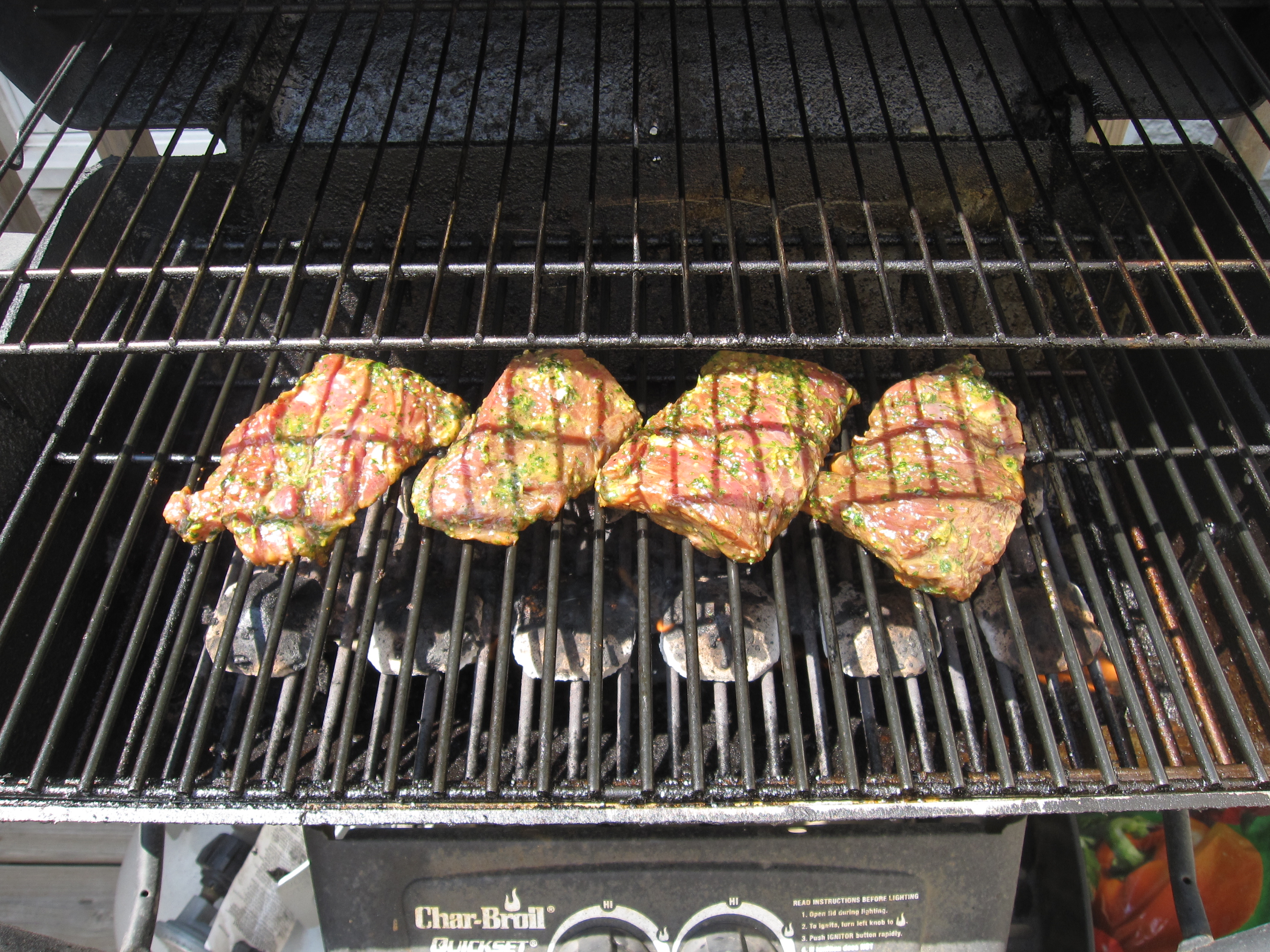
For the steak I took a big handful of cilantro, 1/4 cup of sesame oil, 1/4 cup of soy sauce, 1 tablespoon of ginger, and two cloves of garlic. I processed it all into a nice marinade along with some black pepper. I picked up a 1.5 pound skirt steak and cut it into 4 equal pieces. I laid the steak in a glass baking dish and covered it in the marinade. I wrapped it in plastic and put it in the fridge for about 3 hours. I took it out and let it come to room temperature for about a half hour before grilling it.

I brought my grill up to high heat and grilled the steak for about 7 minutes on each side. That made it somewhere between medium-rare and medium. I let it sit for a few hours to cool down in its own juices while I went back to my computer to do some work.

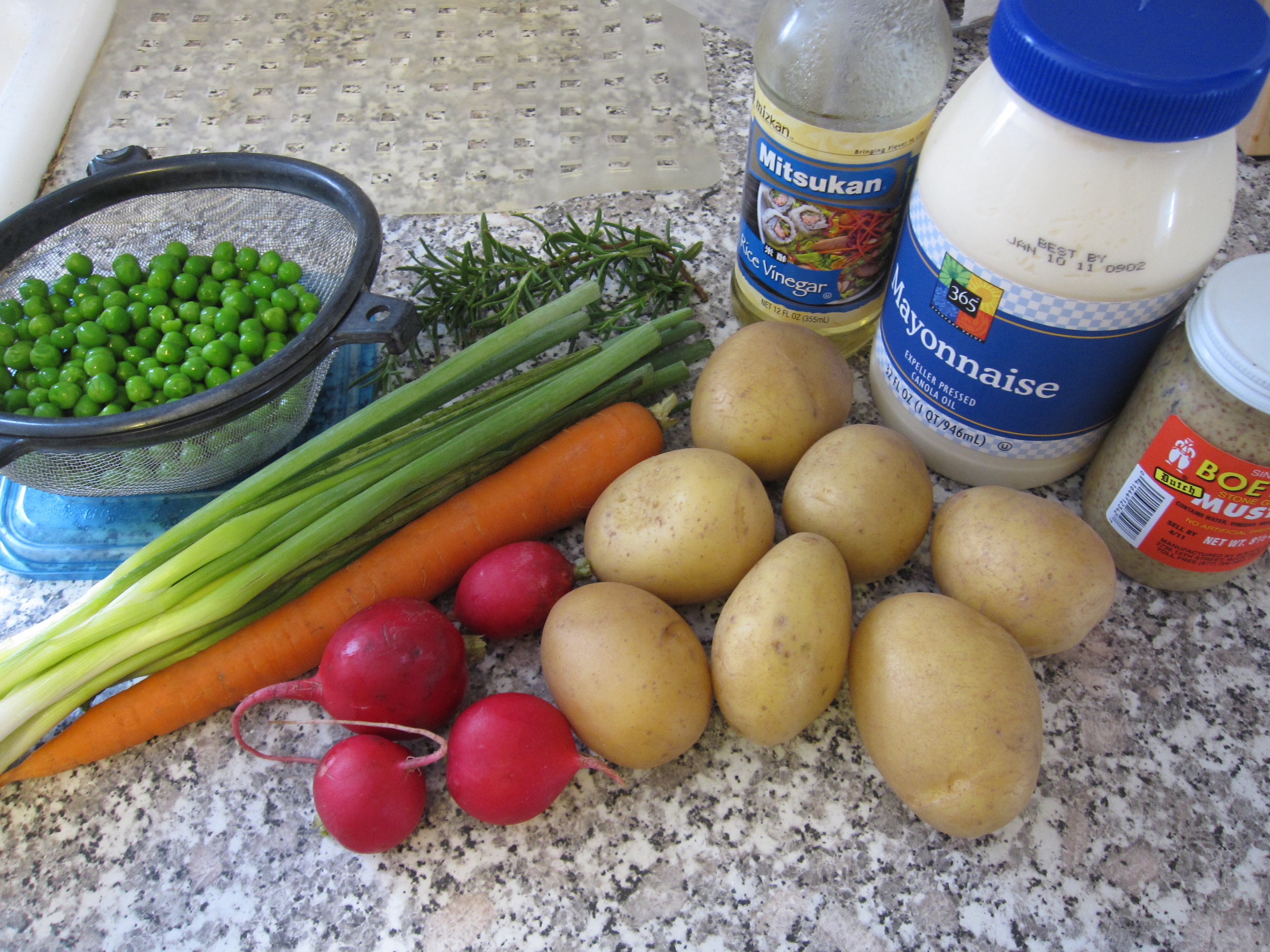
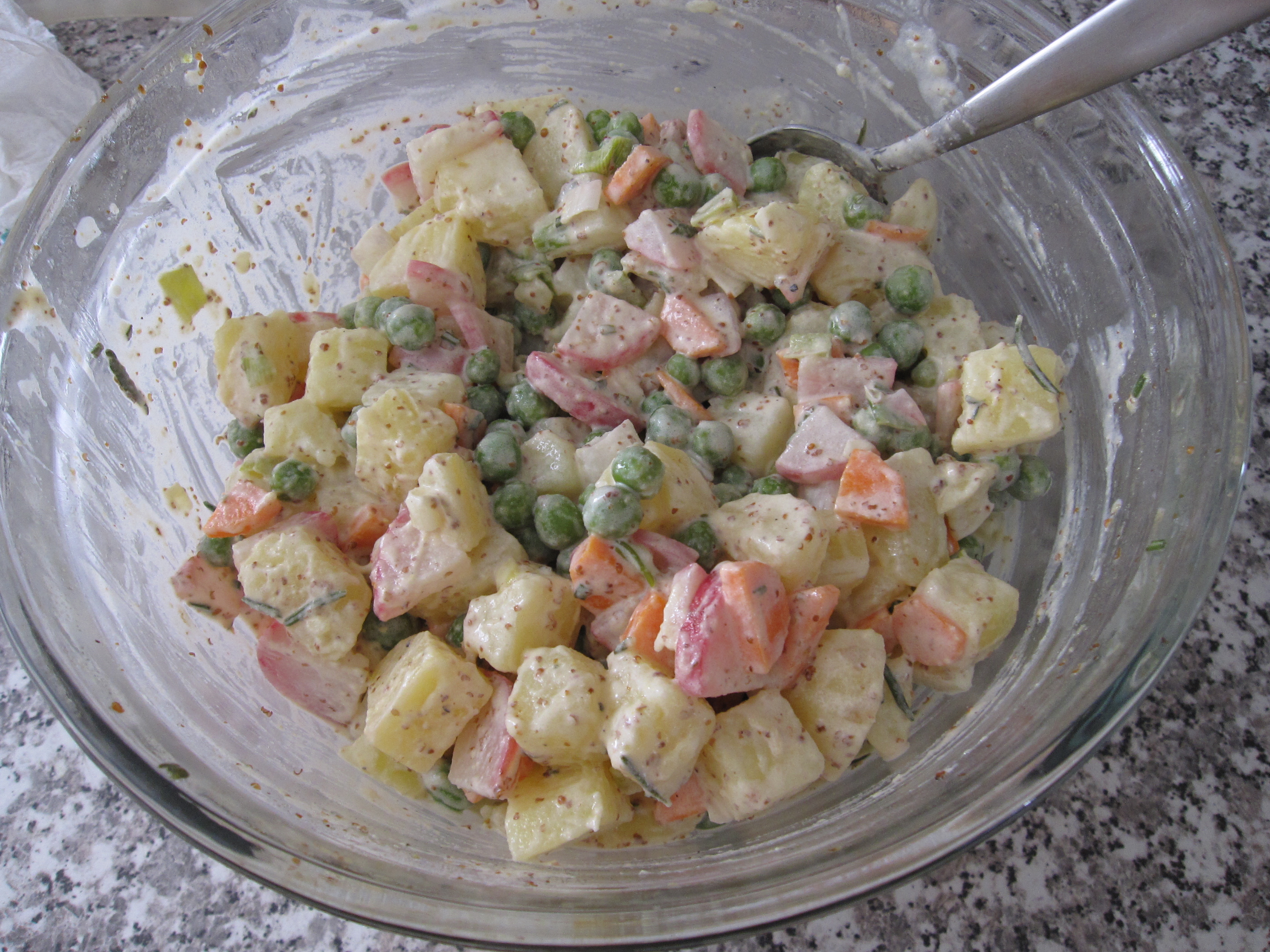
For the potato salad I defrosted about 1/3 cup of frozen organic peas and chopped up a bunch of green onions, a carrot, 4 radishes, and 7 yukon gold potatoes that were skinned before getting chopped up. For the dressing I mixed together a branch of rosemary from my back porch that I gave the once over with my knife, 2 tablespoons of rice wine vinegar, 1/4 cup of mayonnaise, 3 tablespoons of mustard (my favorite brand of Boetje’s of course), and a pinch of salt and pepper.

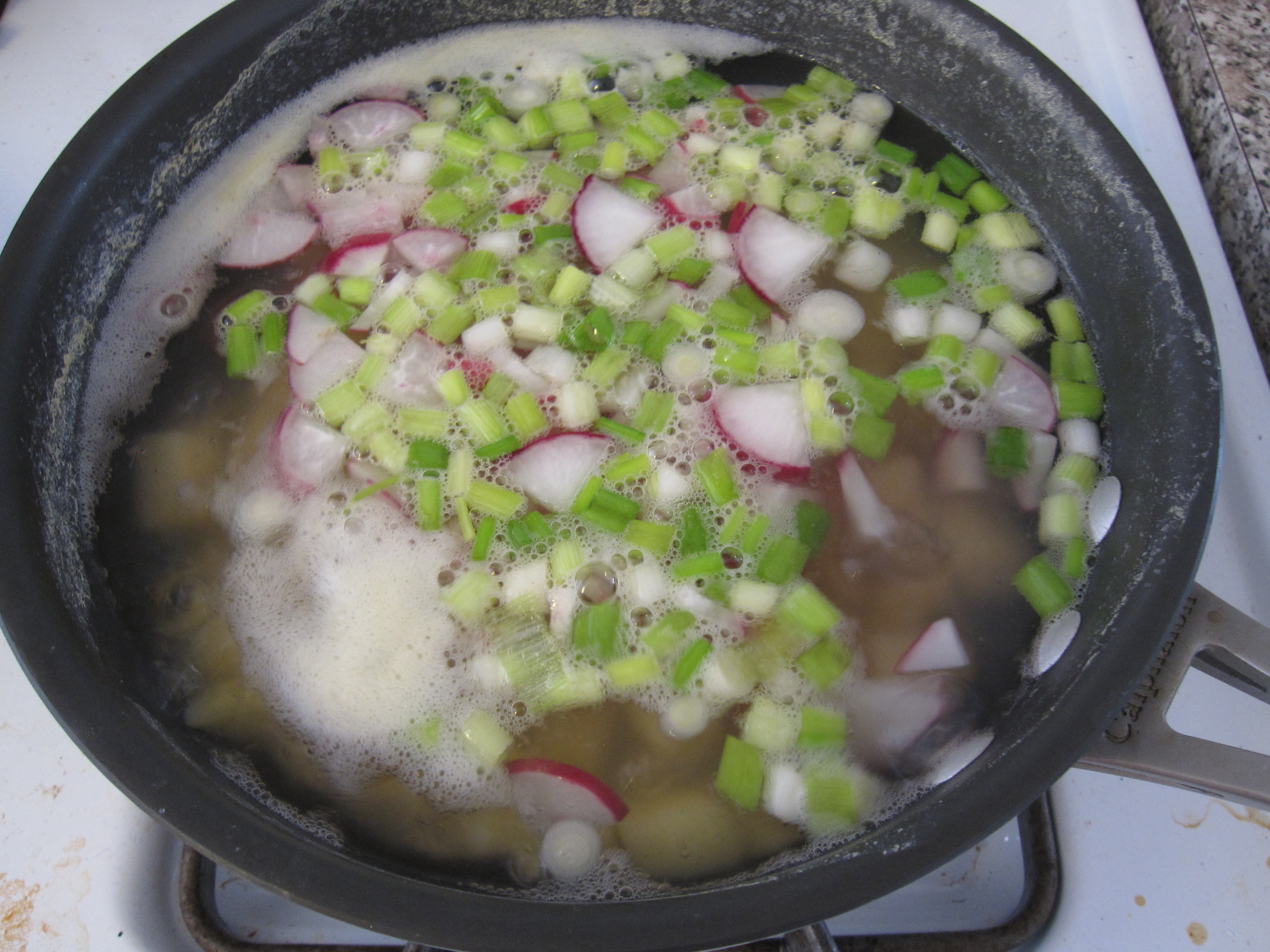
In a pot of boiling water I dumped the skinned diced potatoes and let them cook for about 10 minutes until they were soft but held their shape (may take a little longer depending upon how big the chunks are). After 10 minutes I added the green onions, radishes, and carrot for about 2 minutes. I didn’t want to cook the vegetables, I just wanted to take away the sharpness and rawness of them while keeping the texture. Then I strained everything into a colander.

In a large glass bowl I put the peas and then strained vegetables and potatoes. While still warm I poured the dressing on top and stirred it all around. I like dressing it while still warm so that the potatoes absorb some of the dressing.

To put together the sandwiches I toasted some ciabatta rolls. On the bottom I laid some baby spinach and tomato slices. I sliced up two of the steak portions and laid them on top. I covered the steak with cilantro. On the top bun I spread some mustard and mayonnaise. It was outstanding!

Read Full Post »

« Newer Posts - Older Posts »