Feeds:
Posts
Comments

Archive for the ‘seafood’ Category

Yesterday I saw some really nice coho salmon on sale that just came in that morning. Since I haven’t cooked salmon in a while I took that as a sign that it’s time to do it up again. I decided to keep it very simple and use some Japanese flavors to appease my wife.
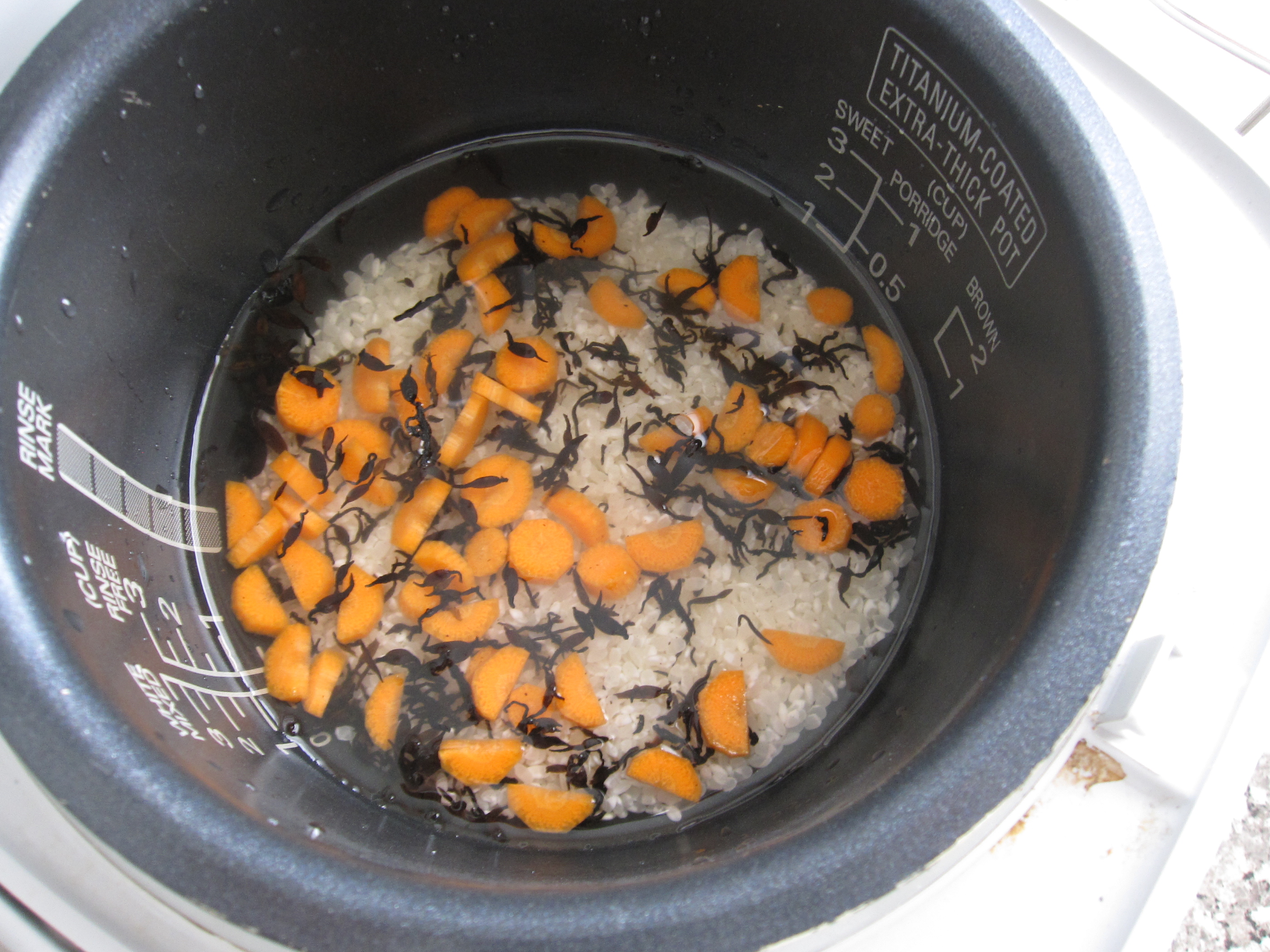
After lunch I got the rice ready. I rinsed 1 cup of rice and threw it in the rice cooker like normal, then added a couple of large pinches of dried hijiki seaweed and a diced carrot. I let it sit for about a half hour to let the hijiki re-hydrate and flavor some of the water. Then I turned on the machine and let the rice cook. When it was finished I turned it off, mixed everything together, and let it cool to room temperature.

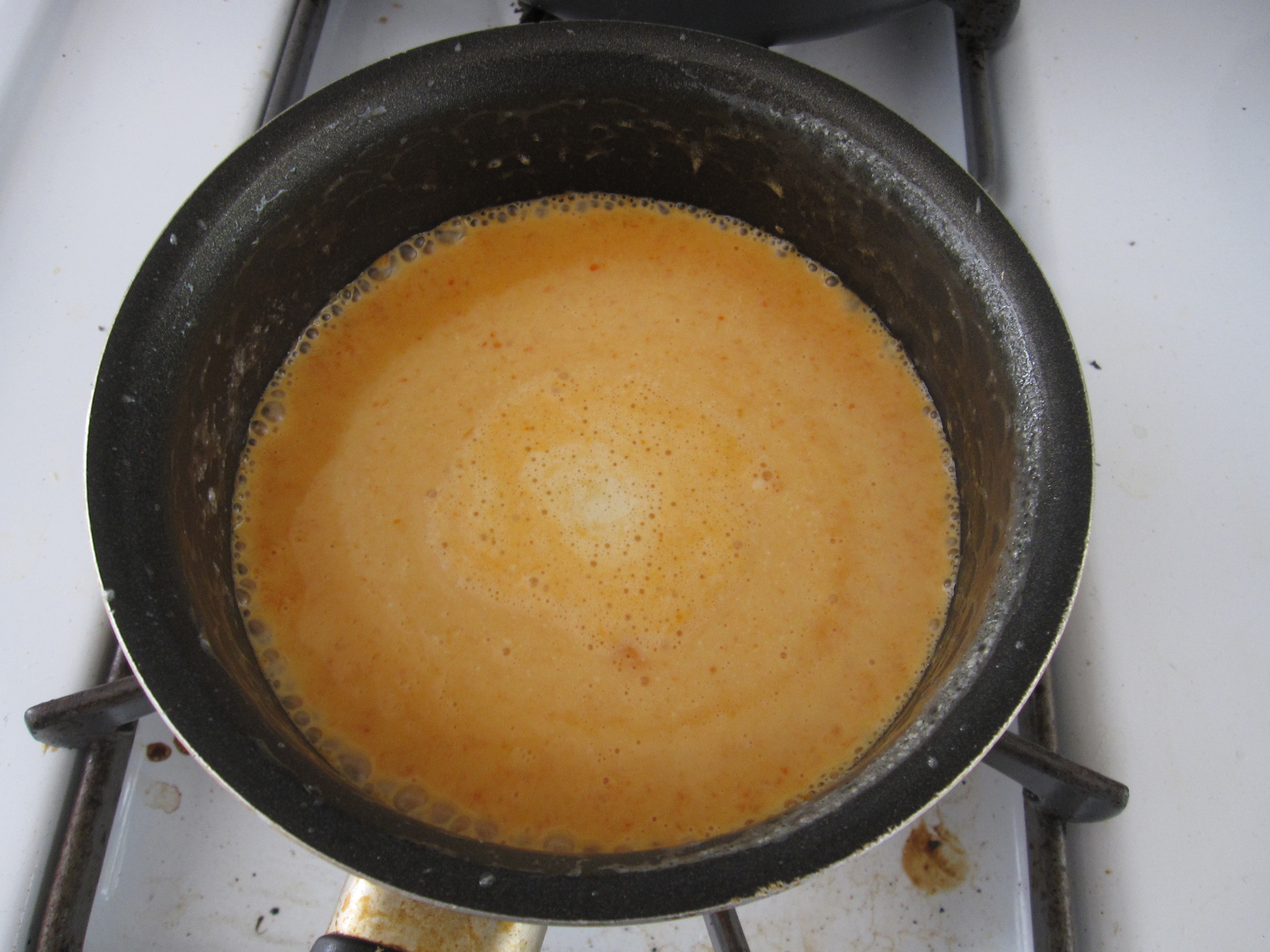
Closer to dinner time I made my teriyaki sauce. In a small saucepan I gently heated 3 tablespoons each of soy sauce, sake, and mirin along with 1 tablespoon of sugar. I let it heat just until the sugar was completely dissolved and turned off the heat before it came to a boil. I let that cool to room temperature.

Here’s my 20 ounce filet of coho salmon. I cut it into 4 equal portions and marinated it in the teriyaki sauce for about 45 minutes at room temperature.

While the salmon was marinating I got the abura-age ready. I had a pack of three here. I cut them in half and rinsed them off with some boiling water. They very oily and the boiling water rinsed a majority of that oil off. Then the packages open up nicely for easy stuffing.
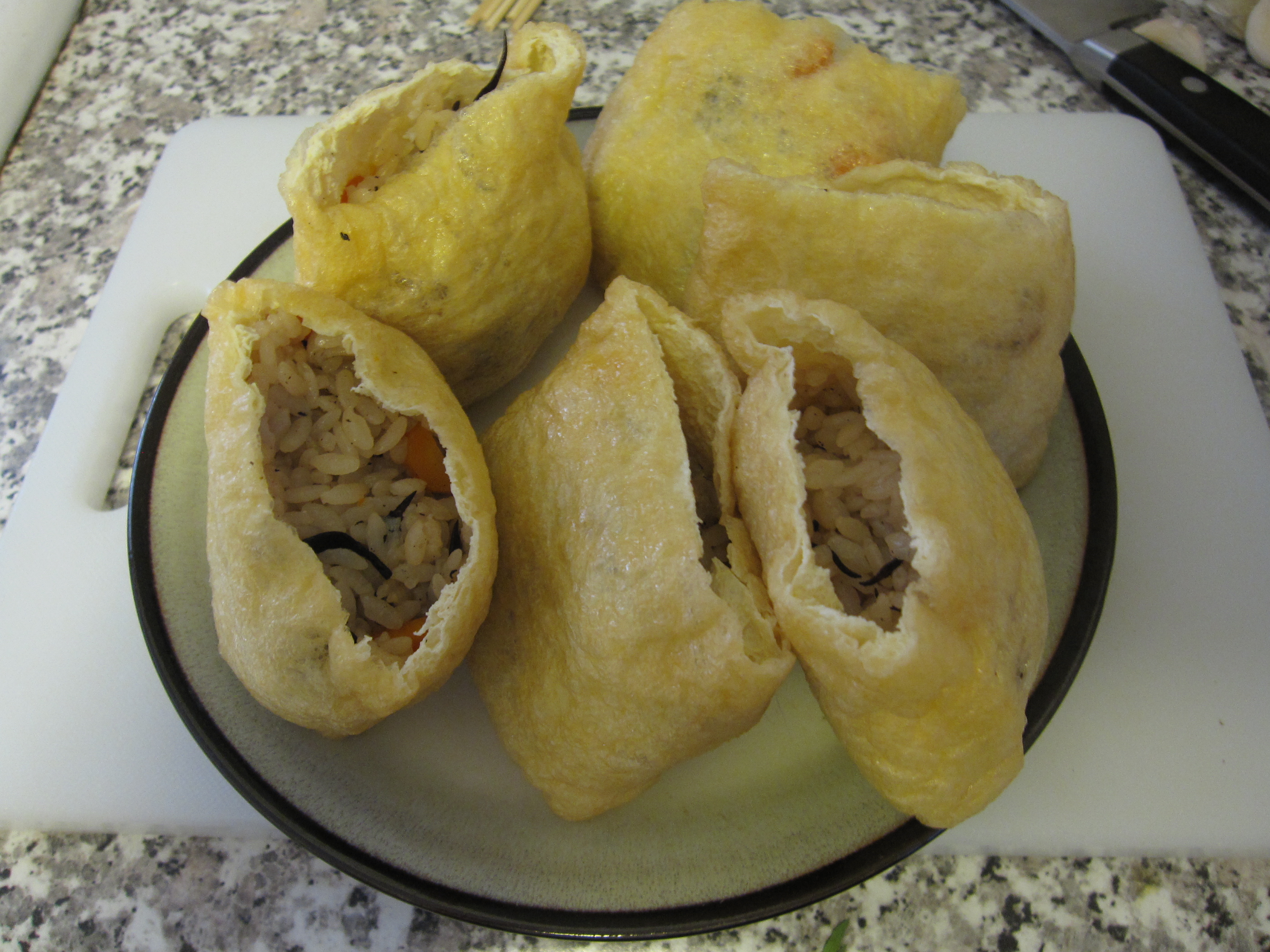
I stuffed them equally with the rice mixture and then sealed them. I didn’t have any toothpicks, so I cut down some bamboo skewers to do the job. In a saute pan I brought 1/4 cup of water to boil with 1/4 cup of seasoned soy. The soy is seasoned with a little dashi and mirin. Once lightly boiling I put the packets in, covered it, and turned the heat to low. This lets the broth flavor penetrate while heating up the rice. I let it go for about 10 minutes then turned off the heat and let it sit until everything was ready.

I also placed the salmon under the broiler, starting with the skin-side up. About 5 minutes later I turned it over, basted the top with the marinade left in the dish, and let it broil for another 5 minutes.

Before cooking the salmon and abura-age I got my vegetables ready. I had two large heads of baby bok choy that I separated the leaves from the stems and chopped them all down, 1/2 onion sliced, 3 garlic cloves minced, 1 package of shiitake sliced, and 1/2 a large red bell pepper sliced.
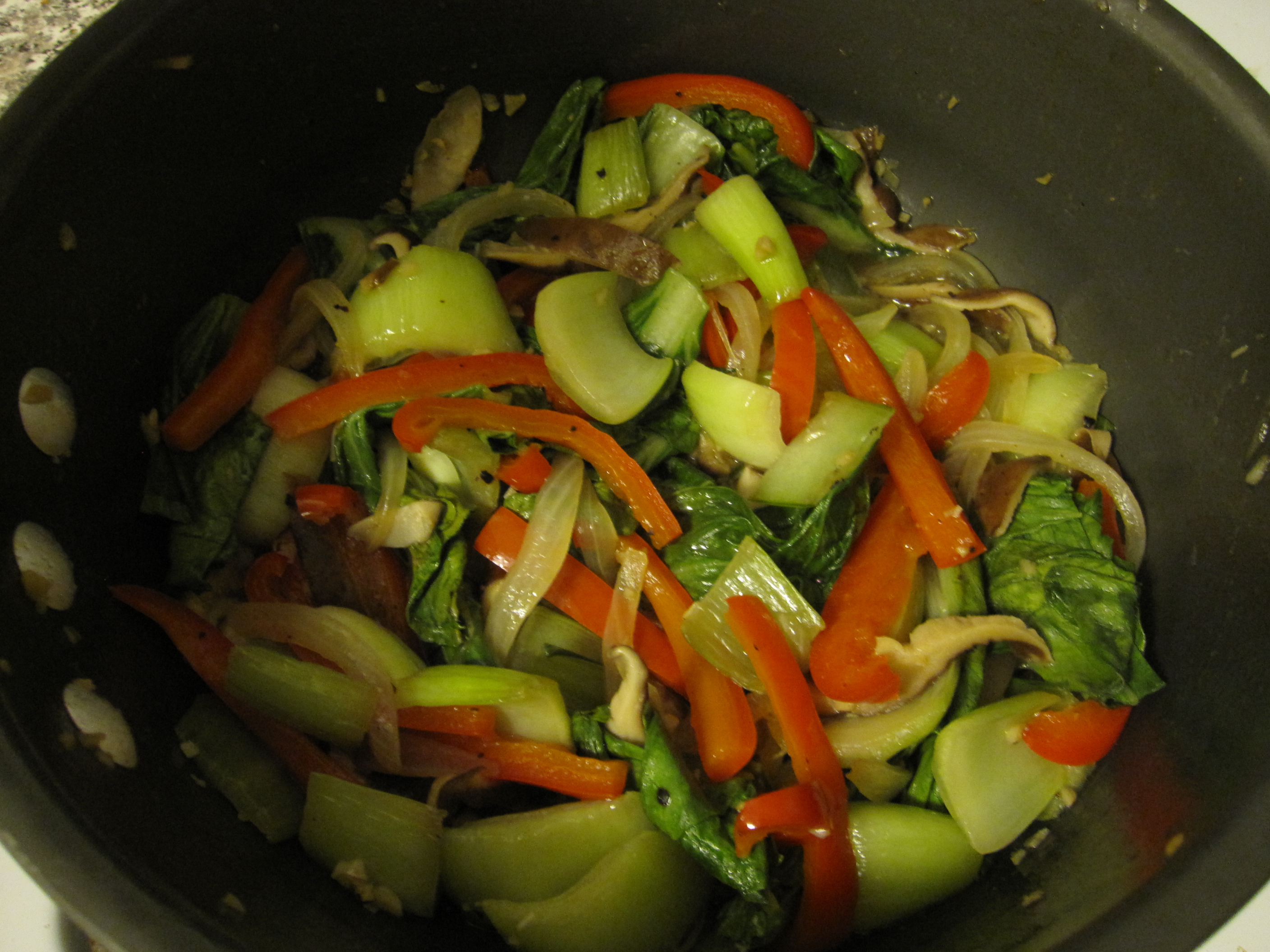
While the salmon was broiling and the abura-age packets absorbing tasty fluids I heated up a pan and poured in 2 tablespoons of sesame oil and tossed in the onions to let them saute for about 4 minutes. Then I added the peppers and garlic. After another few minutes I added the shiitake and bok choy stems for about 4 more minutes. I seasoned with pepper and poured in about 3 tablespoons of soy sauce. Once the soy boiled off I added the bok choy leaves, stirred them in, covered the pan, and turned off the heat. I just wanted the leaves to wilt a little.

I timed it all so everything would be finished at the same time. I plated it up and scarfed it down.

Read Full Post »

The Top Chef finale was on the other night and I noticed something from watching it this season…every time someone made a pea puree they won the challenge. With that in mind I decided to make my own pea puree to eat while watching the finale. Instead of using green peas though I used edamame.

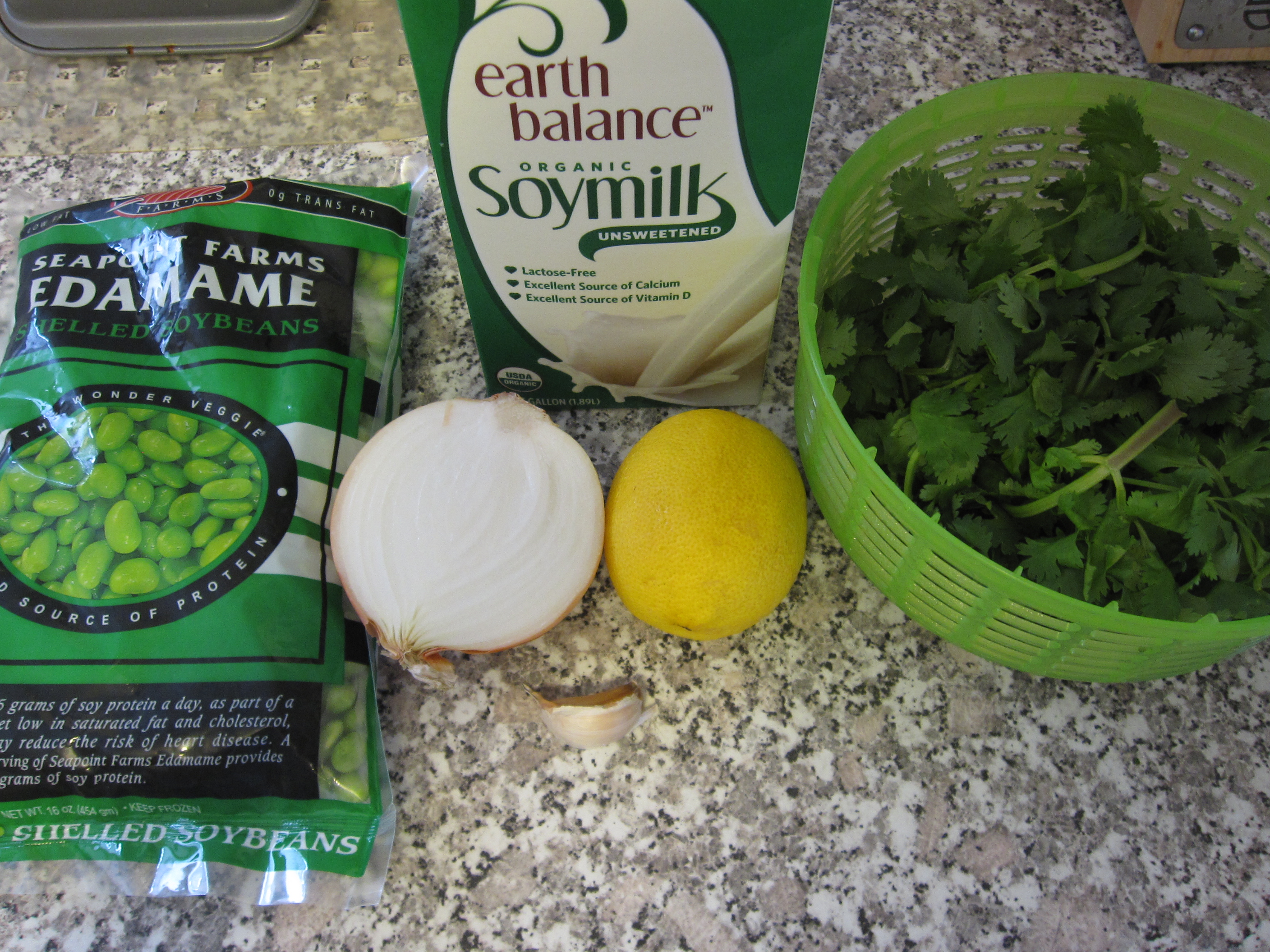
To make the puree I started with 1 cup of frozen shelled edamame, 1/2 onion diced, 1 lemon zested and juiced, 1 garlic clove minced, 1/3 cup soy milk, and a handful of cilantro.

In a heated pot I poured about 1 tablespoon of vegetable oil and tossed the onion in. I let the onion sweat over medium heat for about 5 minutes and then added the garlic. About 1 minute later I added the edamame (it was still frozen when I added it). It only took about 6-7 minutes for the edamame to heat through, at which point I turned off the heat and let it cool down for about 10 minutes.

I put the edamame mixture in my blender and added the cilantro, soy milk, 1/4 of the lemon zest, and half of the lemon juice. While blending it I noticed that it needed a little more liquid to get a nice smooth puree. After tasting it, I decided to add about 1/4 cup of orange juice instead of more soy milk, it needed a little sweetness to it. Once I got the thick, smooth texture I wanted I seasoned it with salt and pepper and poured it back into the pot. I gently re-heated it when it came time to serve.

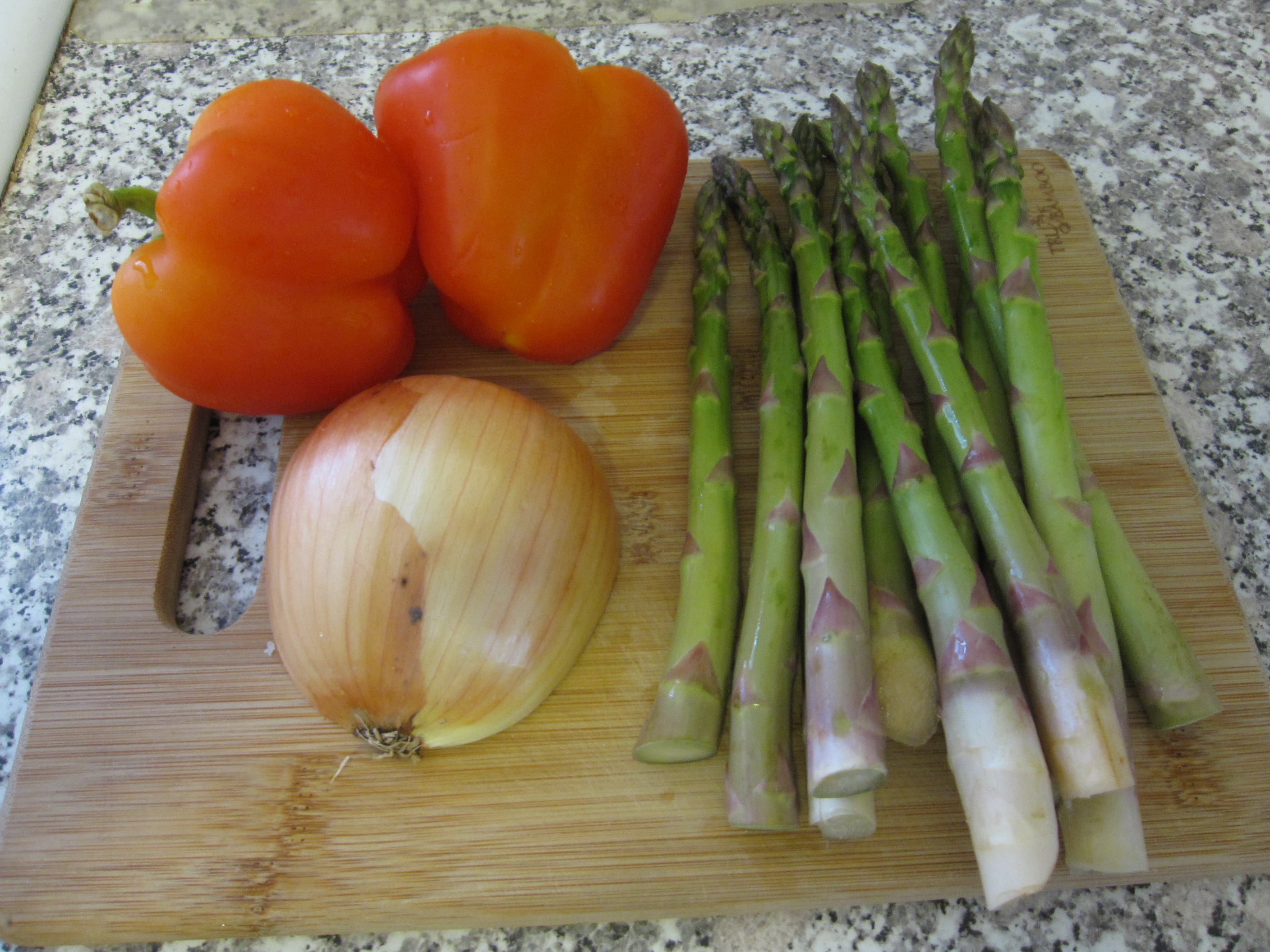
Before cooking the halibut I got some vegetables ready. I sliced one red bell pepper (decided to only use one of them, I’ll use the other one tonight) and the half of the onion from the puree. I also cleaned up some asparagus.

I simply laid the vegetables on a roasting tray, drizzled some olive oil on top, seasoned with salt and pepper, and then sprinkled about another quarter of the lemon zest on top. This all went into an 350 degree oven for about a half hour.

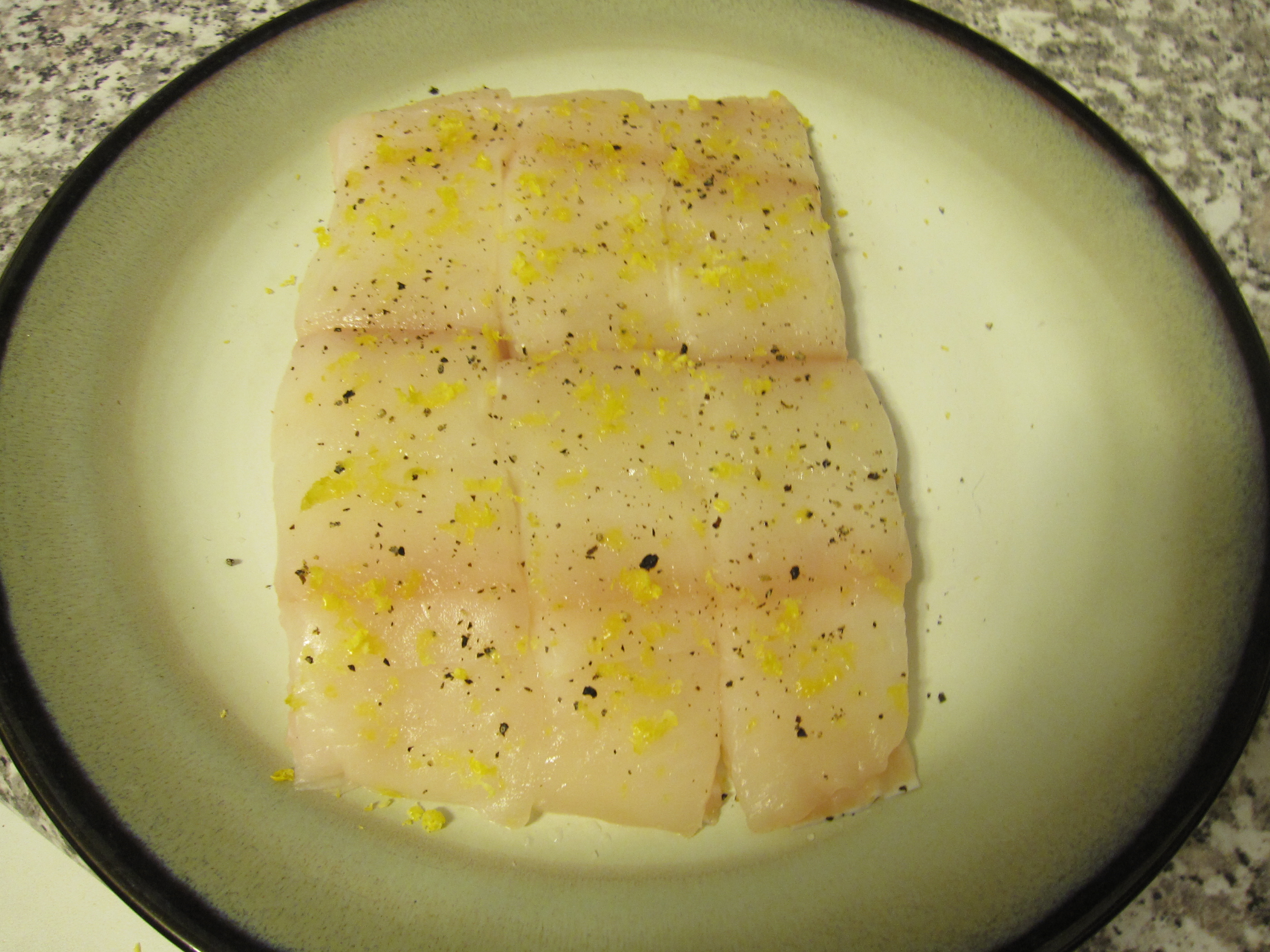
For the halibut I used three 4-5 ounce filets (I still had meatloaf leftovers for my lunch so I only needed lunch leftovers for Yuki) and seasoned them with salt, pepper, and the 3rd quarter of lemon zest.

In a large skillet over high heat I poured in about 1 tablespoon of vegetable oil and then dropped 1 tablespoon of butter in. I laid the filets in skin-side down and let them go for 5-6 minutes, until the skin was golden brown and crispy and released from the pan with ease. If the fish doesn’t release easily then it’s not ready. Once it was ready I flipped it over and let the other side go for about 5 minutes until it released easily.

To serve, I laid the halibut on top of some puree, laid the vegetables all around, and then sprinkled everything with the rest of the lemon zest and juice. White rice on the side.

Read Full Post »

I made this delicious salmon on the grill with some cedar planks. To go with it I made a miso soup and a cherry tomato caprese. This menu was kind of all over the map, but it worked out.

I first made the caprese. I simply quartered the cherry tomatoes and cut some mozzarella di bufalo and then tossed them with a drizzle of olive oil, a drizzle of balsamic vinegar, and some sliced up basil from my back porch. A little salt and pepper to bring out the flavors and that was ready.

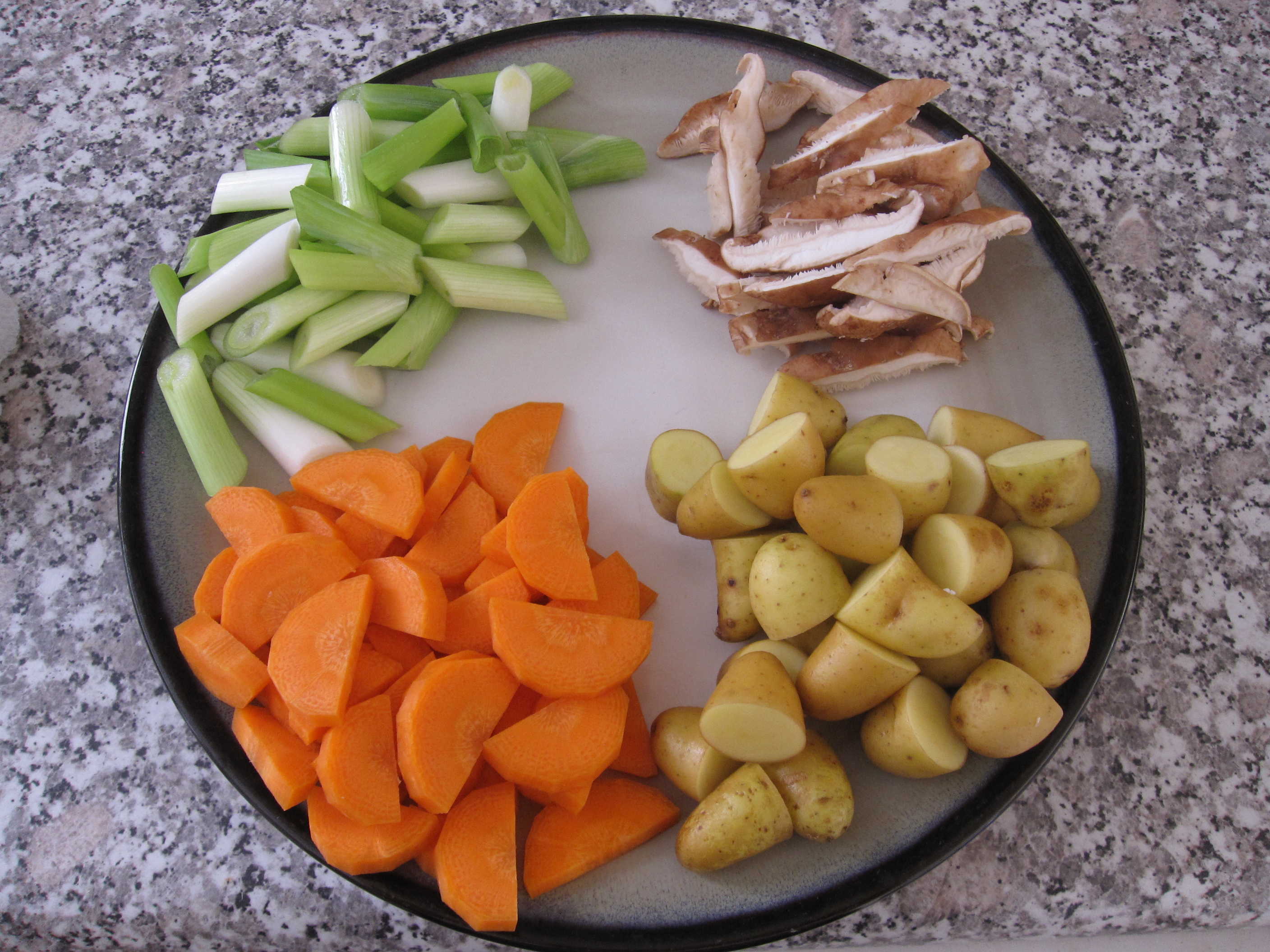
Then I got the soup rollin’. I chopped up 4 green onions, half a package of shiitake sliced, 7 fingerling potatoes cut into bite sized pieces, and a carrot cut into half-moons.

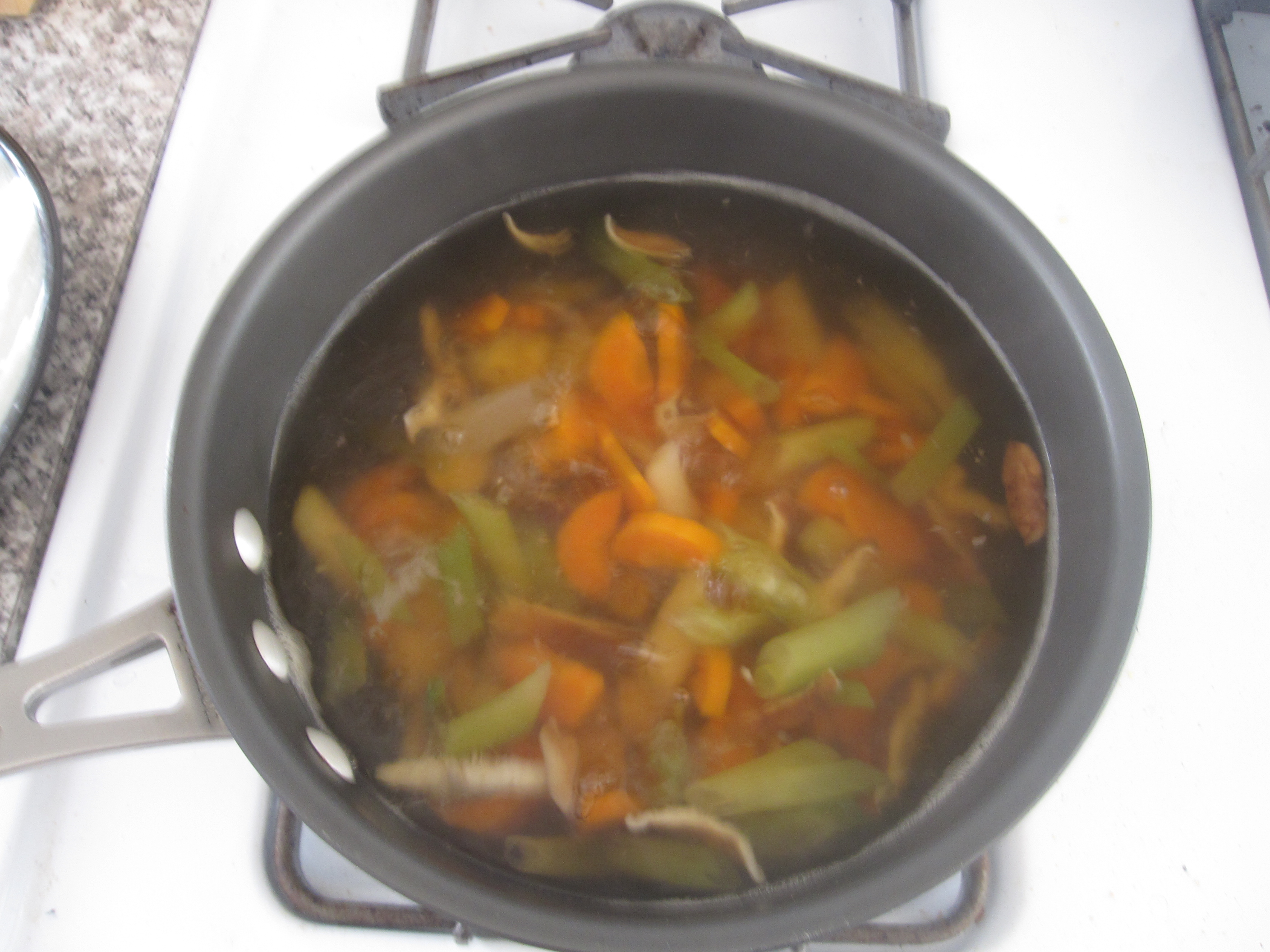
I dumped them all into about 6 cups of water and brought it all up to a boil. Once boiling I turned the heat down to medium and let it all simmer for about 10 minutes, just until the veggies were softened and tender. Then I added about a teaspoon of dashi-no-moto and turned the heat down to medium-low. I covered it and kept it warm while I grilled the salmon.

I had a beautiful piece of salmon that weighed in at 20 ounces. Perfect for 4 portions at 5 ounces each. I simply seasoned it with salt and pepper and then laid some sprigs of rosemary on top that I cut from my plant out back.

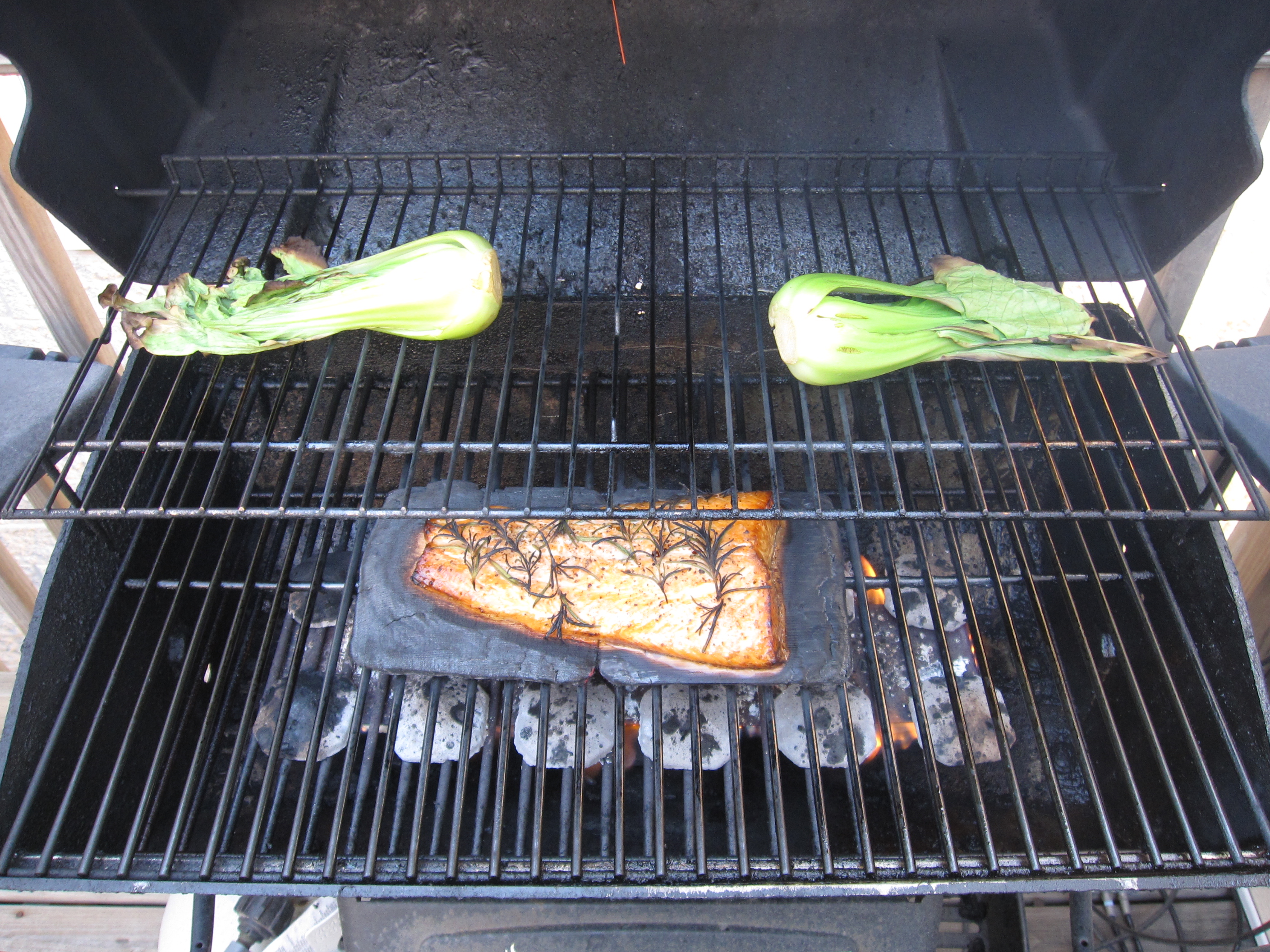
I had a couple of small cedar planks that I soaked in water for about 2 hours. You can see from the picture that they were pretty cheap as I’ve never had cedar burn up quite as quickly as these did. It did no harm to the fish though as it stayed nice and moist and absorbed some great smokey cedar flavor. I also had a couple of bok choy that I halved and grilled. I was careful to keep the green leaves away from any direct heat to keep them from burning. They still charred a little around the edges, but that just added some flavor.

When all was ready I cut the salmon up and served it on top of the bok choy. I had some white rice as well. For the soup, I found some bean sprouts in my bottom drawer so I threw them in at the last minute as they don’t need much cooking at all. Then I mixed in 2 heaping tablespoons of shiro miso and served it up.

Read Full Post »

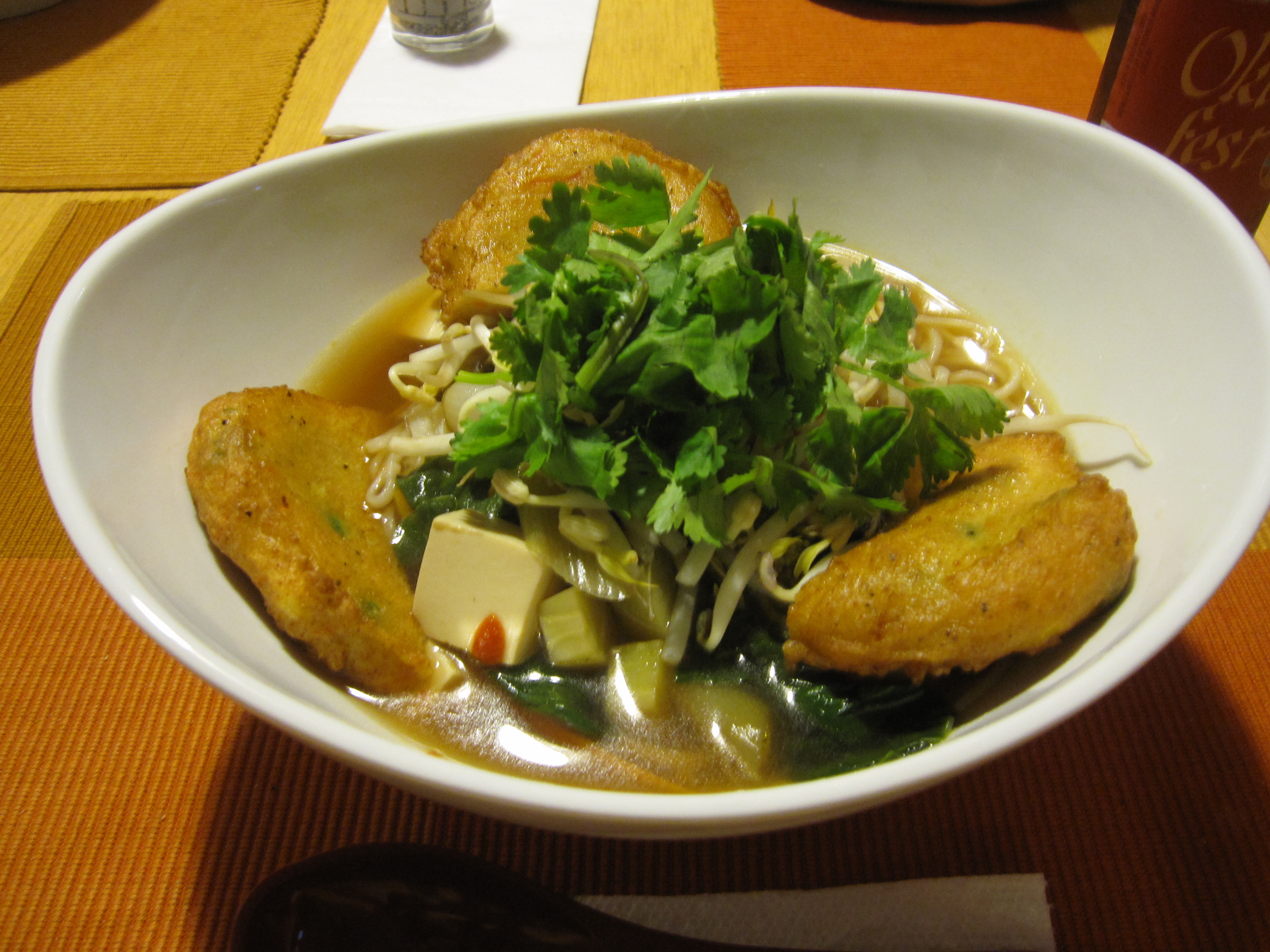
Last night I made some noodle soup using Vietnamese rice noodles, pho-like broth, and Japanese fish cakes. Not sure what to call this dish, so I’ll just call it Japanese Pho. It was very simple to make and actually tasted really really good.

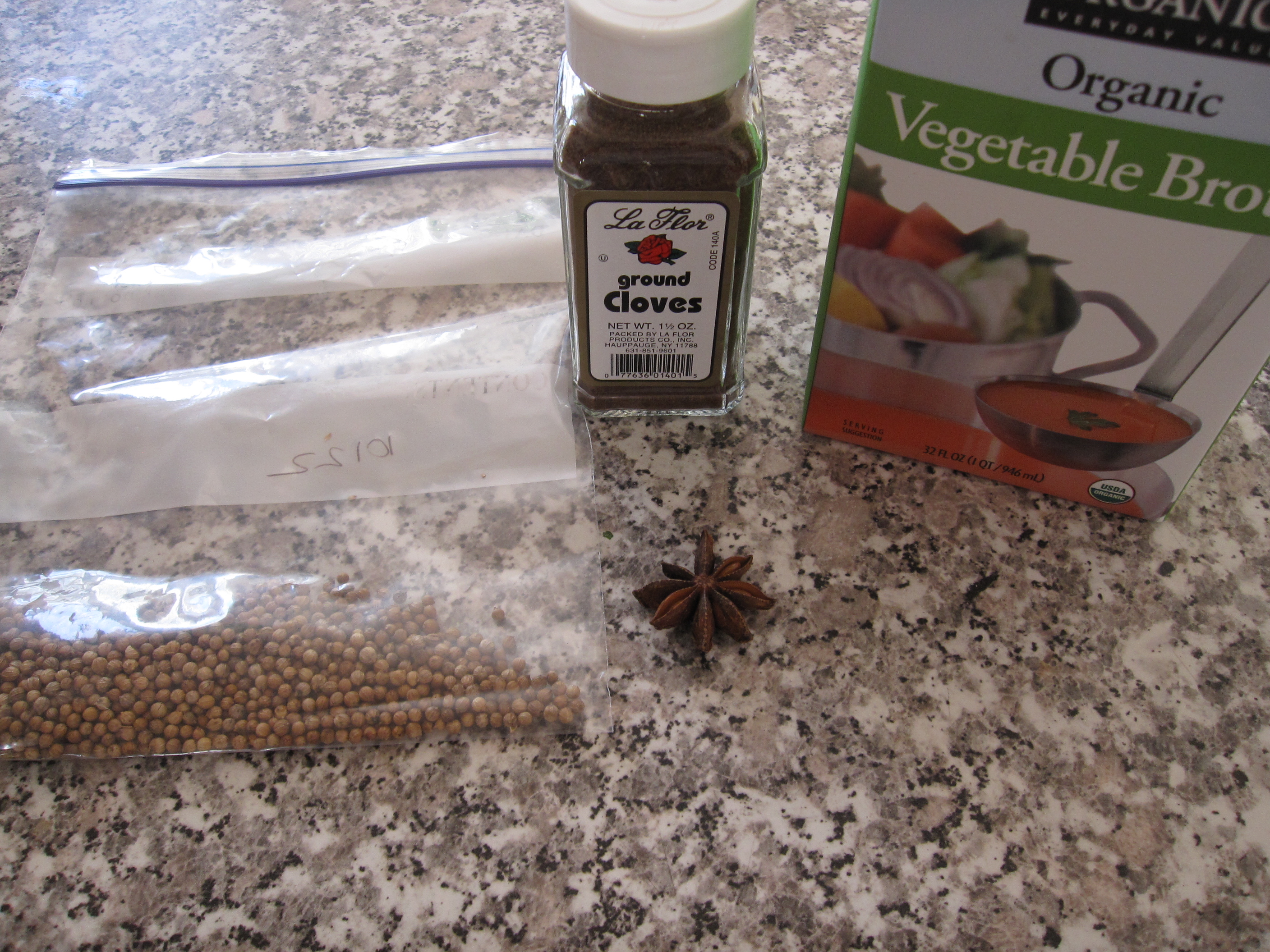
First thing I did was make the broth base. I crushed 1 teaspoon of coriander seeds and 1 star anise with my pestle and mortar. Once they were ground to an almost fine powder I added 1 teaspoon of ground cloves. I wish I had some ginger, I would have bashed that up and added it as well. At any rate, I had 3 cups of vegetable broth in my fridge that needed to be used up so I poured that into a pot, dumped the spices in, and let it boil for about 10 minutes. After that I turned off the heat and let it sit while I prepped the rest of the dish.

My ingredient list included 4 green onions sliced into inch length pieces, a small head of broccoli chopped up, two small carrots cut into thin strips, 2/3’s of a pack of shiitake sliced, half a cube of silken tofu diced, about half a container of baby spinach, about 4-5 ounces of bean sprouts, and 3 fish cakes from the Tensuke Market (these fish cakes had slivers of carrot and peas in them, one of my favorites).

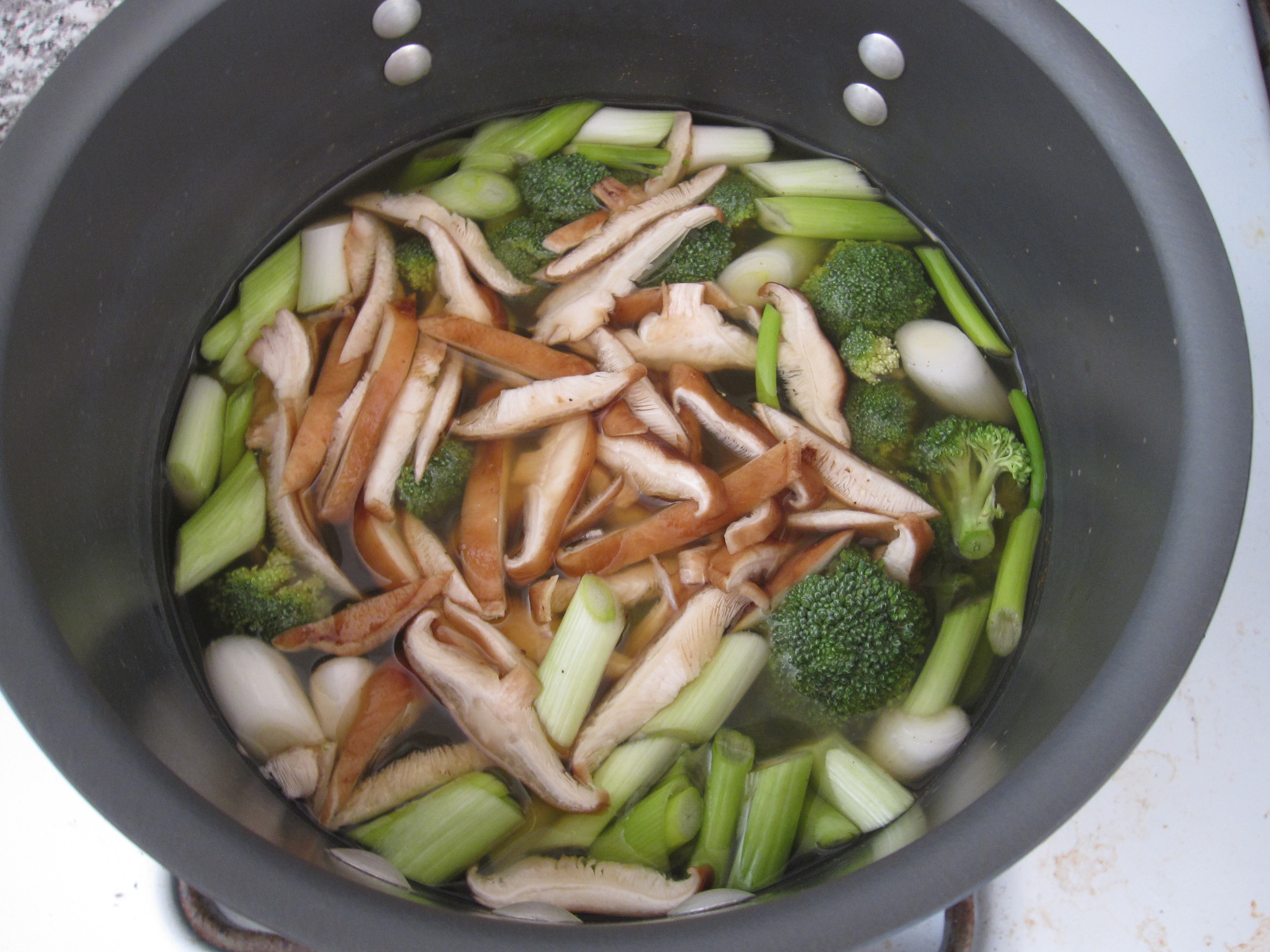
In a clean pot I strained the broth base discarding the grit. I made sure to press the grit though to make sure I got all of the flavorful liquid. To that I added about 3 cups of water, 1/4 cup soy sauce, 1/2 teaspoon of dashi-no-moto, and 3 tablespoons of sesame oil. Then I tossed in the green onions, shiitake, and broccoli. I brought all of that up to a boil and let it go for about 7 minutes while toasting the fish cakes. After that I added the carrots, tofu, and baby spinach for about 3 minutes. That was it, I turned off the heat.

While the soup was cooking I boiled some rice noodles in a separate pot with just plain water. I did that according to package instructions and then drained.

In my serving bowls I first put in the noodles. Then I ladled the soup on top and squeezed in some sriracha. On top of the soup I put in some bean sprouts and garnished those with some cilantro. I placed the halved fish cakes around the edge.

Read Full Post »

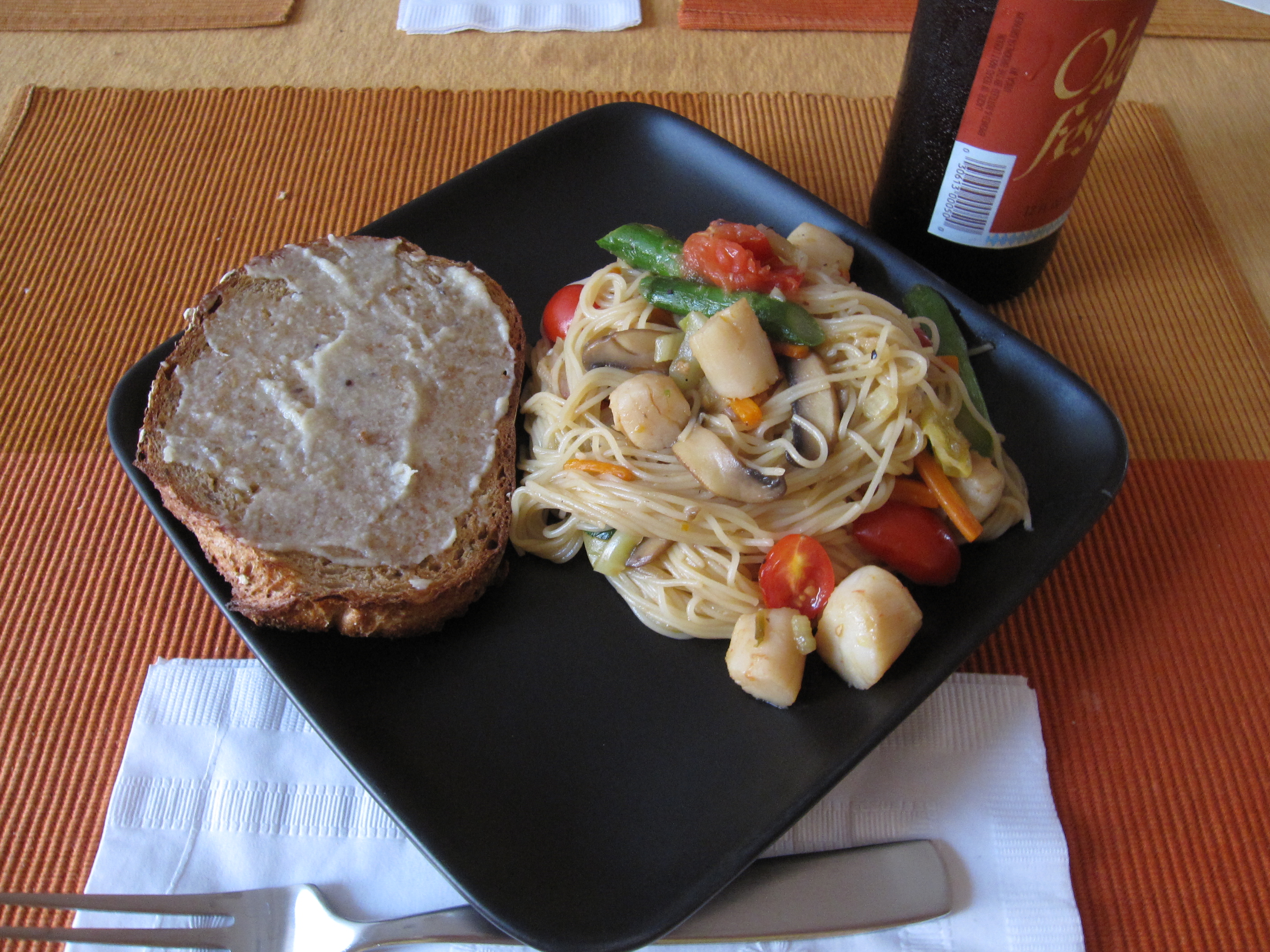
It doesn’t look like much in this picture, but last night I made some delicious pasta with scallops and vegetables. I had some things in my fridge I wanted to use up and pasta seemed like a good way to do it. While at the store I first went to the fish counter to figure out what to do. They just got in some really fresh bay scallops for $9.99 a pound, I couldn’t resist.

I had some cherry tomatoes to use up along with some asparagus, 3 cloves of garlic, a carrot, 1/2 onion, and 1/4 cup of white wine. To go with it I picked up a bulb of fennel (I only used half), some cremini mushrooms (I only used half the package), 1 pound of bay scallops. I chopped up all of the vegetables slicing the onion and fennel.

In a large hot skillet I poured in a good glug of olive oil, probably about 1/4 cup or so and then tossed in the garlic for about minute. Then I added the onion, carrot, and asparagus and let them go for about 4 minutes. Then I added the fennel and mushrooms for about another 4 minutes. Once all of the vegetables were slightly transparent I poured in the white wine and let it boil off for 3 minutes while seasoning with salt and pepper. After that I added the scallops which only needed about 2-3 minutes to cook. You never want to overcook scallops so always cook them a little less than you think.

While this was going on I cooked some angel hair pasta according to package instructions and drained them. Once the scallops were ready I tossed the cherry tomatoes in followed by the pasta and some basil I picked from my back porch. I tossed and tossed and tossed it all together so that the vegetables were incorporated throughout the pasta. Then I turned of the heat and served it up. Quick, simple, healthy, and delicious.

To eat with the pasta I toasted some bread and spread this delicious artichoke-garlic dip I have on top.

Read Full Post »

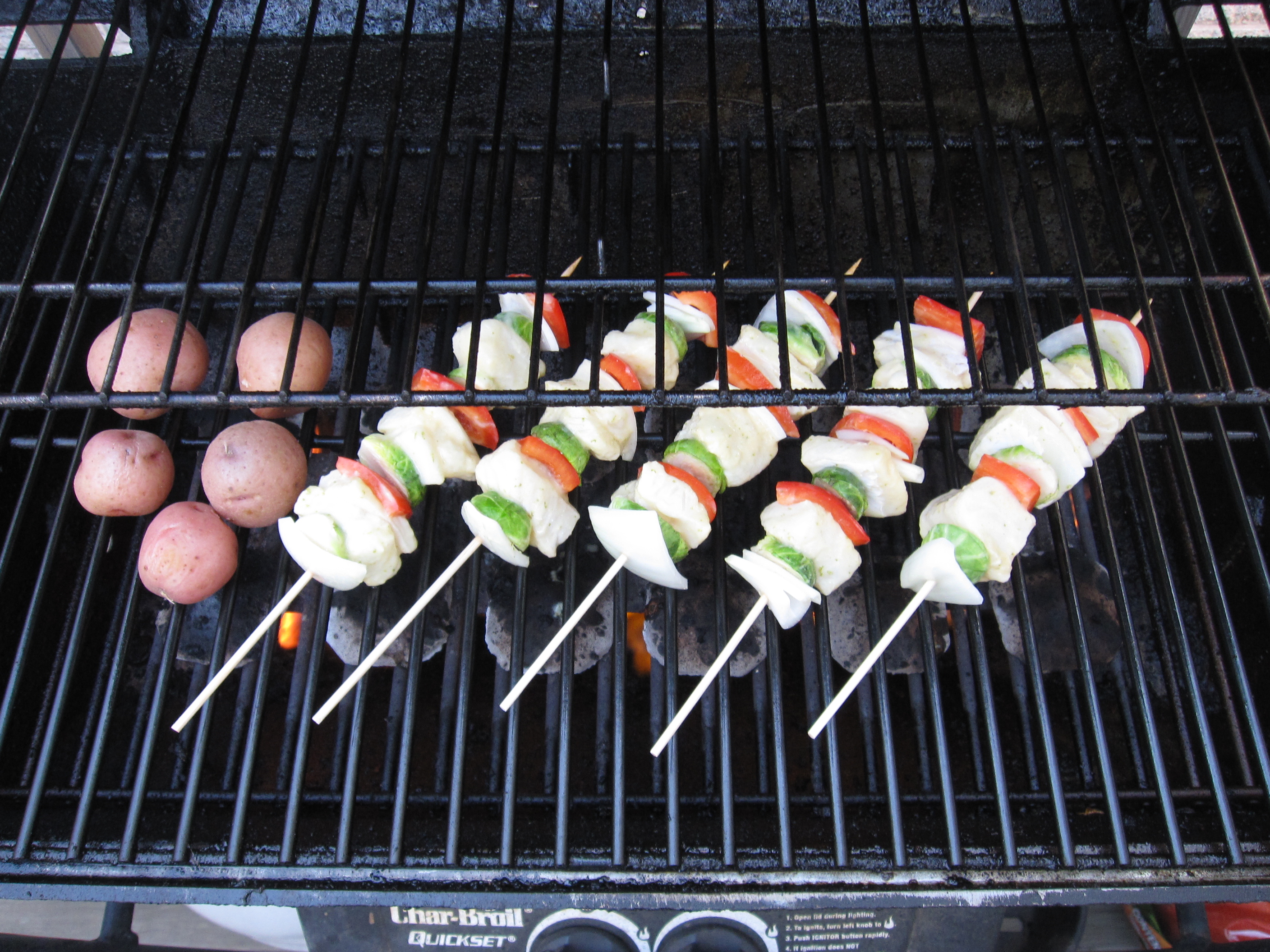
I love grilling dead animals on a stick. It’s my most sadistic past time, but I love it so. The other night I picked up a 3/4 pound cod filet and did just that.

I mixed together 2 tablespoons of shiro miso, 2 minced garlic cloves, 1 teaspoon of pure cane sugar, and both the zest and juice of 1 lime. While mixing that together into a smooth paste I decided to pour in about 1-2 tablespoons of sesame oil to add a bit of nuttiness. I cut up the cod into bite-sized morsels and tossed them in the marinade.

While the cod was taking a miso bath I made a tomato and bread soup. I used the leftover roasted cherry tomatoes with their juice from the night before, the crusty bread left from the night before, a 28 oz can of whole peeled tomatoes, a handful of basil from my back porch, and 3 garlic cloves diced.

In a hot pan I poured in about 3 tablespoons of olive oil and then added the garlic and the stems from the basil. Once that garlic started to color a bit, about 1 minute or so, I poured in the can of tomatoes. You need to be careful with that because the tomato juice will splatter. Then I filled the empty can with water and poured that in. I let it come to a boil and then simmer down for about 15 minutes. At that point it’s pretty easy to break down the tomatoes with the back of a wooden spoon. After the tomatoes were completely broken down I poured in the roasted cherry tomatoes, bread, and basil and then seasoned with salt and pepper. I let that simmer together for about 10 minutes or so. Before serving I mixed in another little glug of olive oil.

To skewer with the cod I chopped up a red bell pepper, half an onion, and the last handful of brussel sprouts from my fridge (I’ve never skewered brussel sprouts before, they’re quite nice as long as they’re cooked enough). I also picked up 5 little red creamer potatoes to grill alongside.

I skewered it all up and threw it all on the grill. I let the skewers go for about 4-5 minutes on each side. The potatoes needed about 7 or 8 minutes on each side as my grill was about medium-high.

After I rinsed the rice and put it in the rice cooker I decided to throw a tablespoon of dried hijiki seaweed in with it. I just dropped it in and let it sit in the water with the rice for about a half hour before turning on the rice cooker. It’s hard to describe the flavor of hijiki on its own. It’s kind of earthy and mushroomy which is weird because I struggle to call anything from the sea “earthy”. It’s really just umami. Damn delicious!

My only mistake was not reserving some of the marinade. The potatoes weren’t as sweet as I had hoped and I would have been much better off smashing them after grilling and topping with some of the miso. Other than that I did well.

Read Full Post »

Fresh caught sustainable Coho Salmon was on sale, and it looked damn good, so I picked up a 20 oz fillet. I really wanted to throw it on the grill, but with it raining all day yesterday I had to settle for the broiler. I hate covering up fresh flesh like this with a lot of flavors, so I kept it real simple and just added a little extra flavor. But first, the soup.

I cut the kernels off of 3 ears of corn, chopped up 4 green onions, sliced 3 cloves of garlic, and threw it all into a stockpot with 1 cup of chicken stock and 2 cups of water. I also threw the stripped corn cobs in to make sure all of that flavorful juice made it into the soup. I brought it all up to a boil, covered the pot, turned the heat down to med-low, and let it simmer for about 15 minutes. Then, I turned off the heat and let it cool for about 10 minutes before pouring it all into my blender. I contemplated straining it, but I like the little bits of corn so I left it as is. I poured it back into the pot, seasoned it with salt and pepper, and left it until dinner time. At that point I re-heated it and ladled it into a couple of bowls and garnished it with some fresh slices of radish.

For the hash I used 5 large shiitake stems removed and caps quartered, 5 red creamer potatoes (the pic shows 7, but I only used 5 of them), 6-7 oz of brussel sprouts quartered, half an onion large diced, 2 garlic cloves minced, and 2 thick slices of applewood smoked bacon. In a large pot of boiling salt water I par-boiled the potatoes for about 10 minutes then lifted them out with a slotted spoon. I set them aside to cool down. In the same boiling water I threw in the quartered brussel sprouts and let them go for 2 minutes. Then I drained them and let them sit until further notice.

In a large hot skillet I laid the bacon slices in and let the fat render off. Once they were crispy I took them out and drained them on paper towels, then sliced them up. I added 1 tablespoon of butter to the hot bacon fat and then chopped the cooled potatoes and tossed them in. I let them get a little crisp on the outside for about 6 minutes and then tossed in the garlic and onion. After about 6 more minutes I added the shiitake and brussel sprouts and then seasoned with a little salt and pepper. Didn’t need too much salt because of the salty bacon fat. A few minutes later and I added back in the sliced bacon. I let that all come together for about 3 minutes.

Look at that salmon! Isn’t that gorgeous?

I cut it up into 4 equal portions and seasoned it with salt and pepper. Then I took some hoisin sauce and brushed just a little on top of each piece. Not too much, just a little. While my hash was cooking I put my oven rack on the upper third and started the broiler. I put the salmon under the broiler for about 7 minutes. That’s all it needs. Ready to be devoured.

I had soup, vegetables, dead animal (salmon and bacon), a beer, my beautiful wife….what more did I need?

Read Full Post »

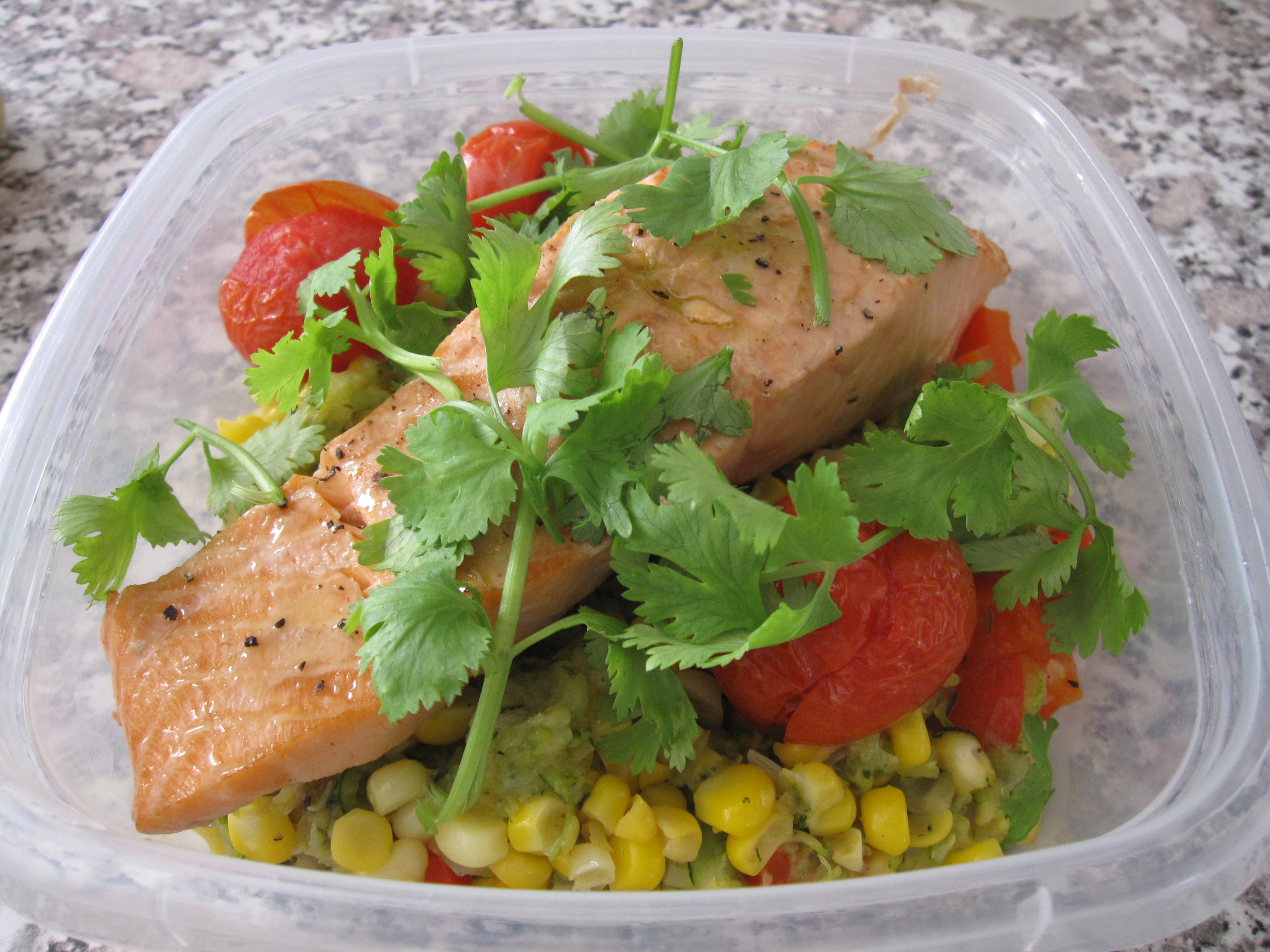
Last night was the final performance of Millenium Park’s world music series. They had two different accordion players, and I have to say, that is one bad ass instrument! Now I need to work on my air accordion skills. It’s a lot of fun packing a picnic and hanging out at the park for free music (I say free, but let’s be honest, we already paid for it with our tax dollars). At any rate, I had to make a dinner that would taste good cold. I thought that poached salmon on corn salad would do the trick. As usual, I was right.

The first thing I did was roast some cherry tomatoes. I simply drizzled them with olive oil and then put them in a 375 degree oven for about 20 minutes. I set them aside to cool down before packing it all up.

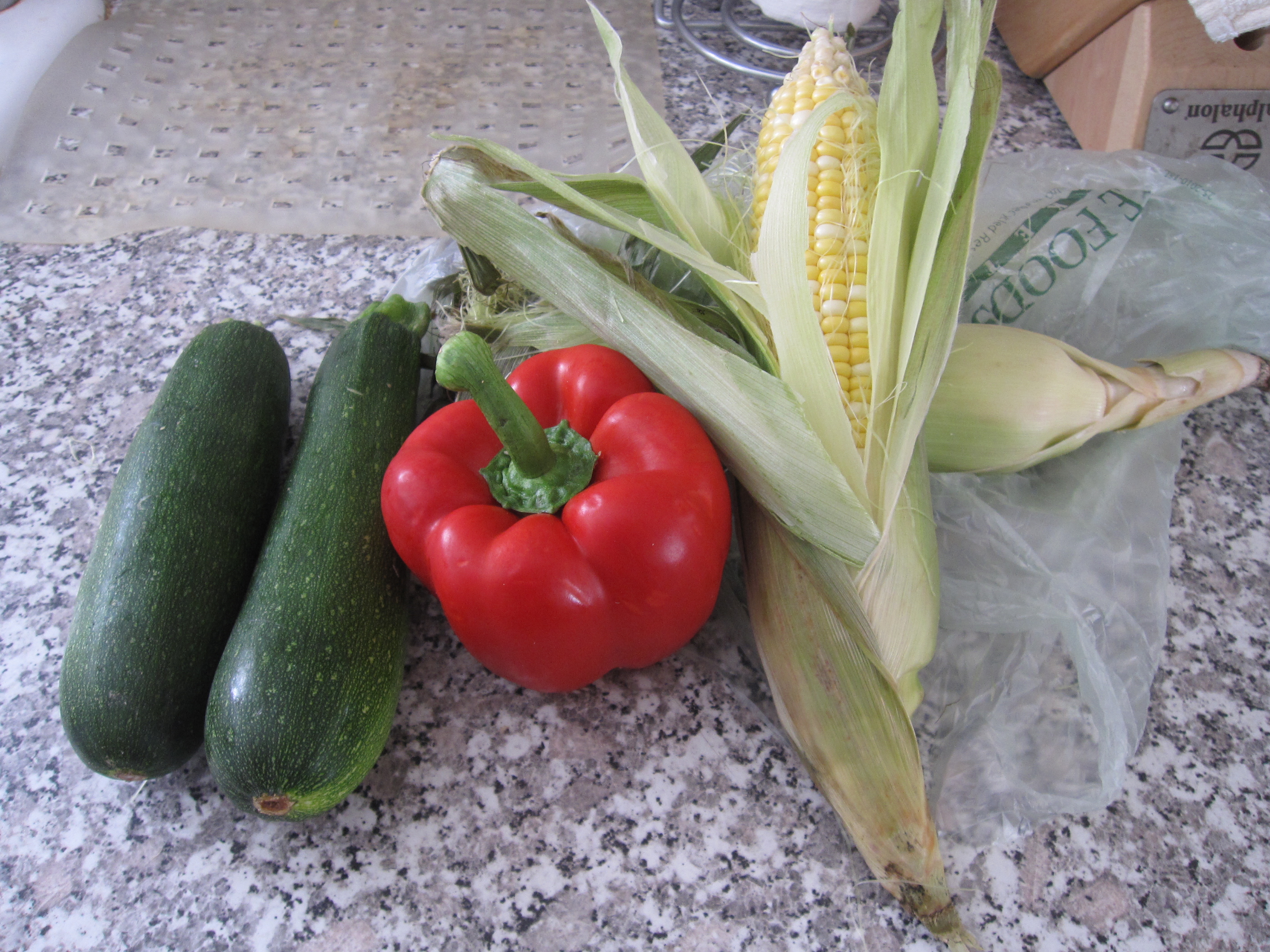
For the corn salad I used two medium-sized zucchini, one red bell pepper, and three ears of corn. I grated the zucchini into a mesh sieve, sprinkled a little salt on it, and let the juices drain for about 20 minutes. Then I squeezed it as dry as I could and set it aside for cooking. For the bell pepper, I just diced it up.

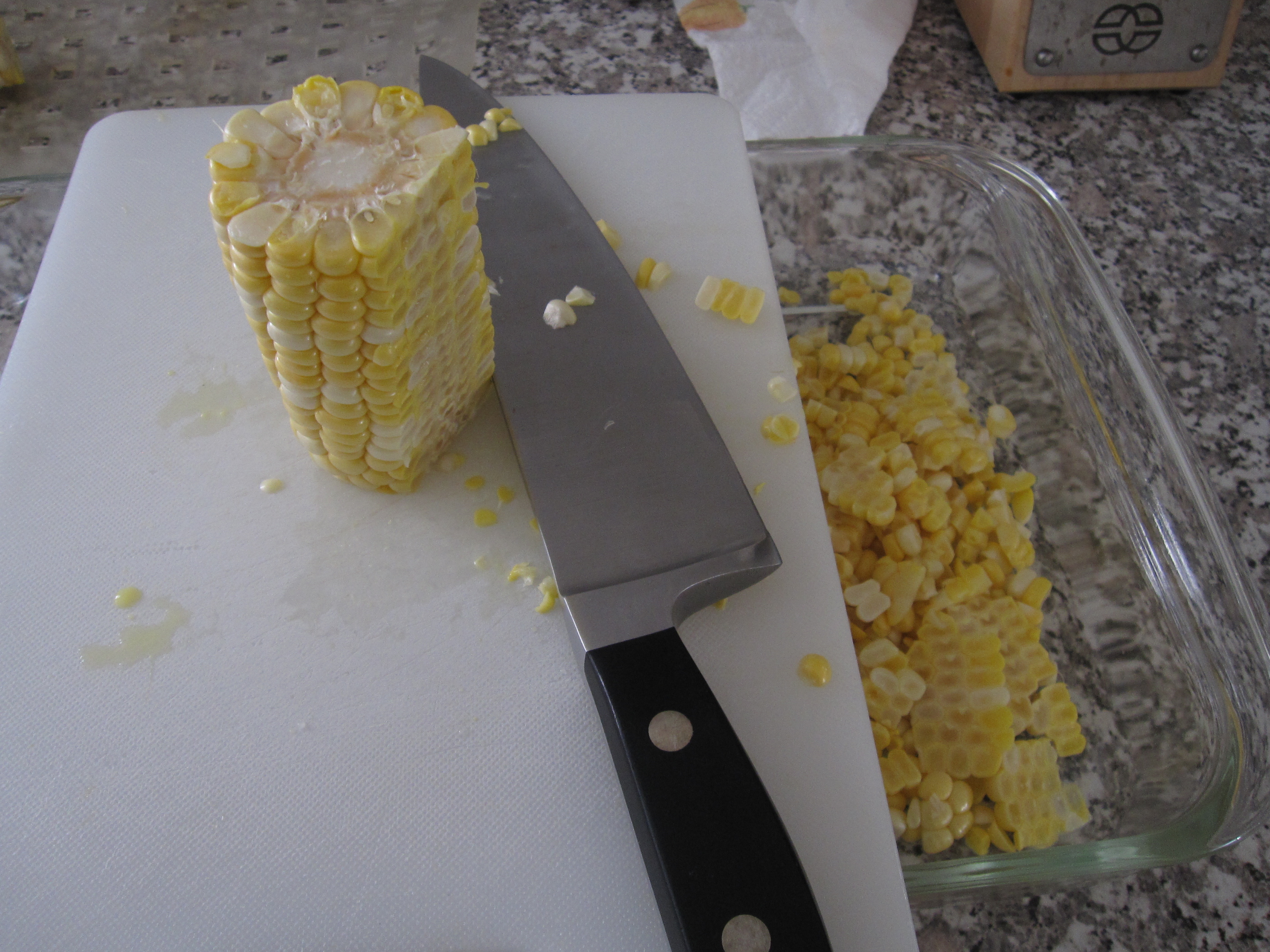
After cleaning all of the silk off the corn I separated the kernels from the ears. This can be a little messy as kernels have been known to fly around the kitchen as you slice them off, in my kitchen at least. I find the easiest way to do this is to cut the ears in half first. Then, I take my cutting board and lay it over a large baking dish. This way, when I slice the kernels off they fall right into the baking dish instead of all over my counter and floor.

Save the cleaned ears, they have tons of flavorful juice in them. I used these to help flavor the poaching liquid for the salmon.

To make the salad I first sautéed about three tablespoons of diced shallots in some olive oil for about 5 minutes. Then I poured in 1/4 cup of white wine (I used the same White Burgundy that I planned on drinking with dinner) and let that boil away for about 3 minutes. Once the wine was boiled off I dumped in the corn, bell pepper, and 1/2 cup of water. I covered the skillet and let it go until the corn was softened a little, about 5 more minutes. After that I seasoned with salt and pepper and then threw in the zucchini. I stirred it all around to separate the zucchini (it will become a zucchini ball when squeezing out the liquid), let it cook for another 5 minutes, then turned off the heat and moved on to the salmon while it cooled down.
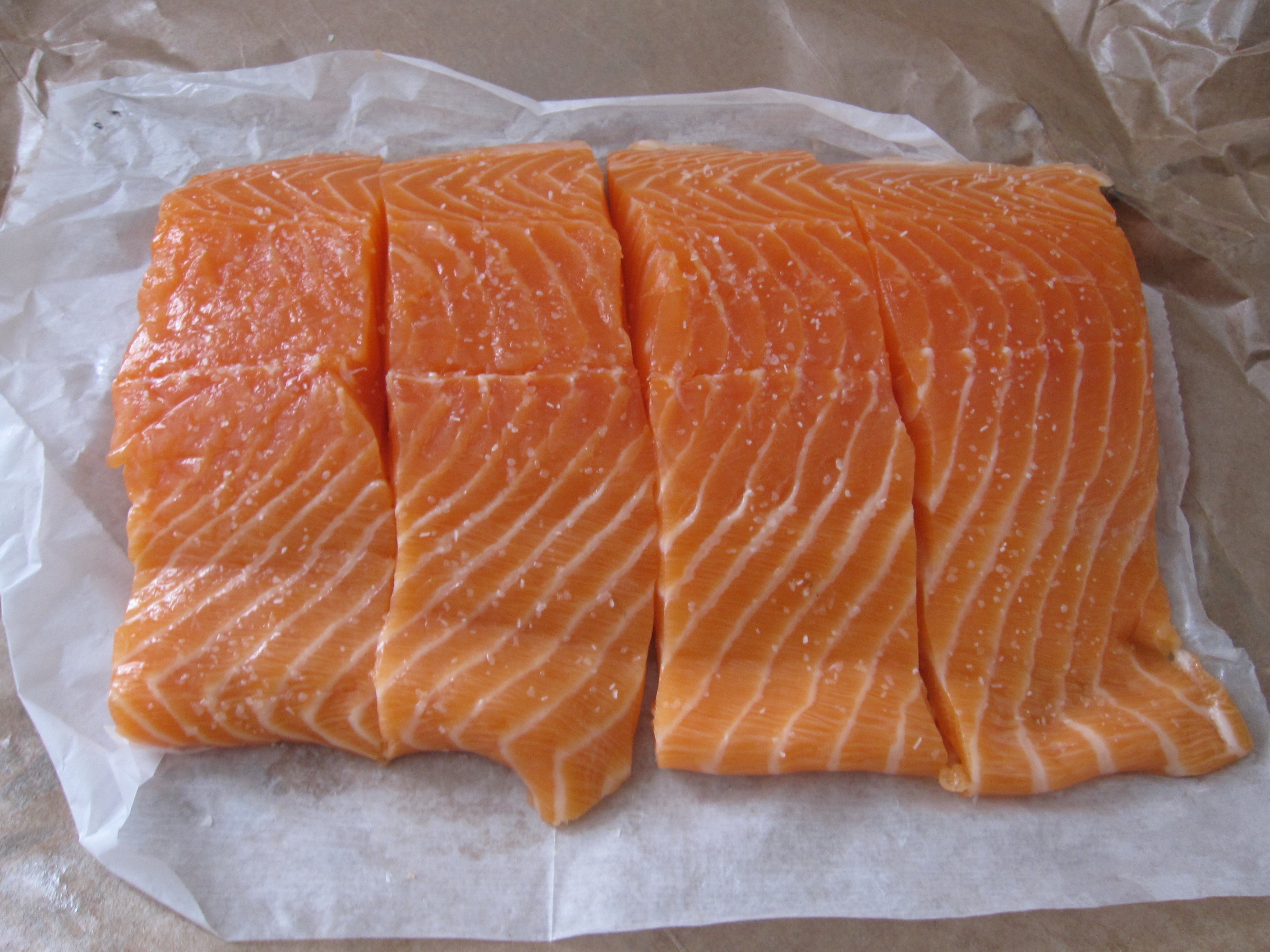
I picked up about 24 oz’s of really nice wild caught salmon, center cut so that it was uniform in thickness. I had the fishmonger skin it for me. Fishmongers have better knives for that job than I do, plus I didn’t want my garbage can to stink like rotting fish. It’s always a good idea to let the fishmonger skin and gut for you. I cut the salmon into 4 equal filets. Before putting the salmon in the poaching liquid I lightly seasoned it with salt.

For the poaching liquid I used 1 cup of the white wine, 1/4 cup of soy sauce, 3 cups of water, 1 bay leaf, about 2 tablespoons of diced shallot, and the naked corn cobs. I brought that all up to a boil and let it go for about 5 minutes or so to let all of the corn juice mix into the liquid.

Once the corn juice was incorporated I took the cobs out, gently laid the salmon in, and turned the heat down so that the liquid was at a simmer instead of a vigorous boil. It should only take about 6 or 7 minutes for the salmon to cook all the way through.

After I took the salmon out I seasoned it lightly with salt again, and a little pepper. Then I drizzled just a little olive oil on top.

I got out my little Rubbermaid TakeAlongs and scooped a bunch of the corn salad in, topped it with a piece of salmon, laid in a few of the tomatoes, and garnished with some cilantro. I also brought some dinner rolls along. It was absolutely delicious! It also would have been tasty if I served it hot right off the stove top.

The only thing I did wrong was a miscalculation on the amount of corn salad. When I cook dinner during the week I try to make 4 portions so that Yuki and I have lunch for the next day as well. I came up one portion short on the corn. So, if you try this recipe and want 4 portions use 3 zucchini and 4 ears of corn. That should do the trick.

Read Full Post »

What many people don’t know is that the Spanish were using pasta way before Marco Polo brought it over to Italy. I’m referring to fideos, short pasta that’s very similar to broken angel hair. In fact, if you can’t find fideos you can easily use angel hair pasta. Just break it down into 2-3 inch pieces. Another difference is that the Spanish like to toast the dried pasta before using it. This does two things. First, it adds an extra nuttiness to the flavor. Second, this causes the pasta to get even drier allowing it to soak up more of the sauce. Cooking fideos with clams is a classic Spanish dish, although I added more vegetables than the Spanish typically do to clams. I’m Jewish (I know I know, clams aren’t Kosher, but I’m not a religious man, I’m a foodie!), not Spanish, so I can get away with that.

The first thing I did was toast the fideos. I spread about 4-5 oz’s on some foil and toasted them until they became nice and dark golden in color. Then I let them sit and cool while I prepared the rest of the dish.

My ingredient list is two chopped celery ribs, half an onion diced, 1 purple potato diced, two plum tomatoes chopped and seeded, three garlic cloves minced, some broccoli florets broken down into smaller pieces, handful of basil leaves from my back porch, and a half cup of white wine. I also quartered an eggplant lengthwise, but that was used as a side and not in the main dish.

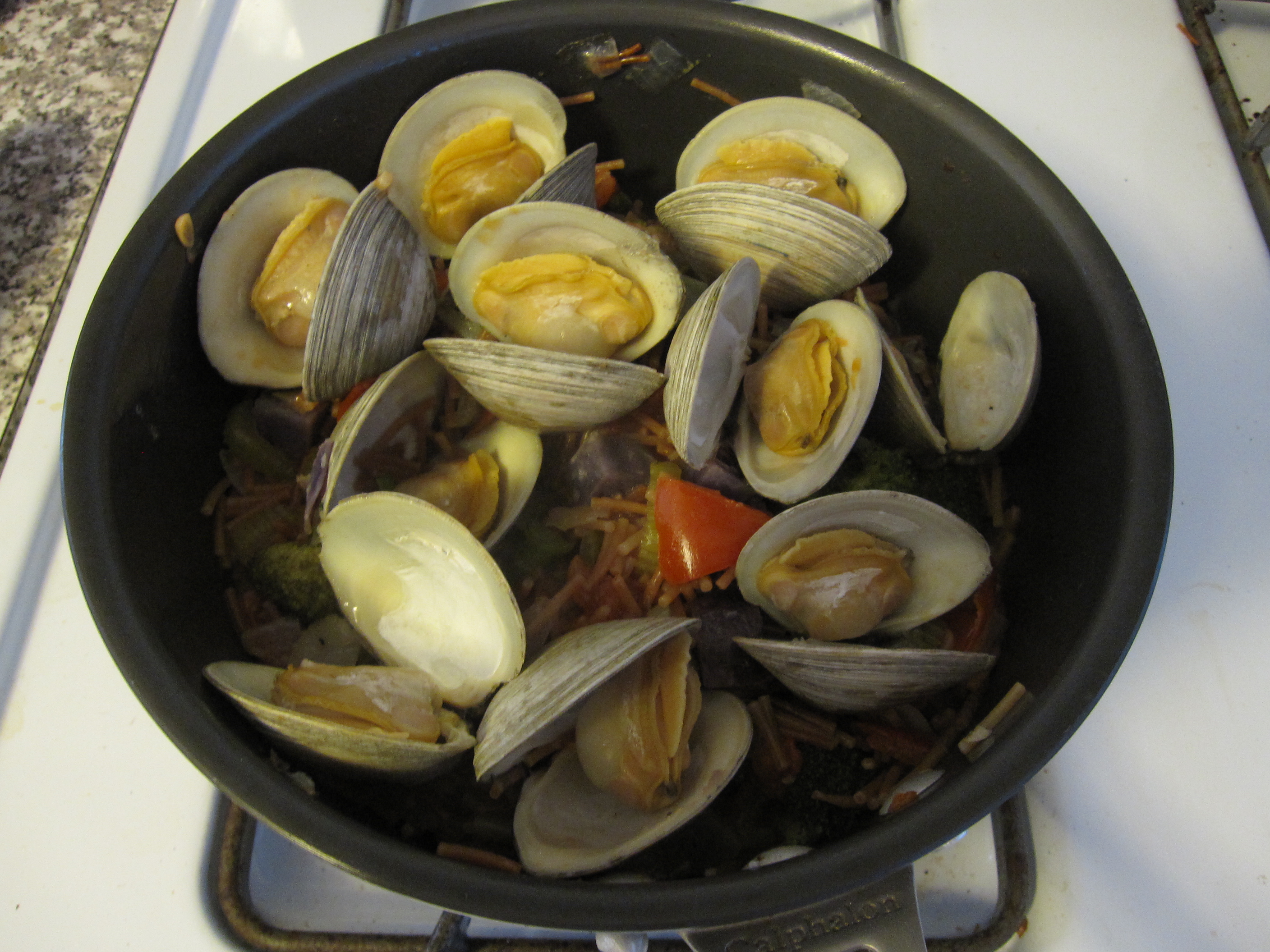
Of course, the stars of the show were the clams. I used little neck clams and got 12 of them for two portions. I only needed 5 per person, but got the extras in case some didn’t open. Sometimes my brain works perfectly as two of them didn’t open during cooking.

I started by sautéing the garlic and onion in some olive oil for about 6 minutes, just until the onion started to get translucent. Then I added the celery and let that go for another 3 minutes before added the potato. The potato was cut small enough that it didn’t need too much time to cook through, only about 5 or six minutes before adding the broccoli. Again, the broccoli was cut pretty small, it only needed about 3 minutes or so, then I added the tomato and seasoned with salt, pepper, and a few dashes of paprika. I mixed it all together and then added the toasted fideos. Once the fideos were well incorporated I poured in the white wine and let that come to a quick boil. Once boiling, in went the clams. I covered the pot and shook it around every minute until the clams opened up, anywhere from 3-6 minutes. Any clams that don’t open need to get tossed in the garbage immediately.

I kept the eggplant extremely simple. I heated up some olive oil to its smoking point and pan-fried the eggplant on all sides until it got a nice toasty color. If the oil isn’t hot enough the eggplant will absorb it all, so you need to make sure it’s hot.

To serve, I took the clams out off the pot and stirred in the basil leaves. That also allowed all of the clam juices to be evenly mixed into the dish. Then, I just put the clams on top of the fideos and vegetables in the bowl and drank everything down with the white wine I used in the dish. I sliced up some crusty bread to mop up the juices.

Read Full Post »

Monkfish, quite possibly natures ugliest creation (not including Ann Coulter’s morality). However, I’m a firm believer that the uglier the animal, the better it tastes. Monkfish is truly one of the best tasting fish in the sea. Called the poor man’s lobster because of a similar stringy texture it is a much more affordable way to go than lobster. Hence, the name. One thing to keep in mind with monkfish, the tail is covered in a membrane that needs to be removed prior to cooking and eating. It’s easy to do, all you need is a sharp knife. However, let the fishmonger do it for you so your garbage doesn’t stink like rotten fish the next day.

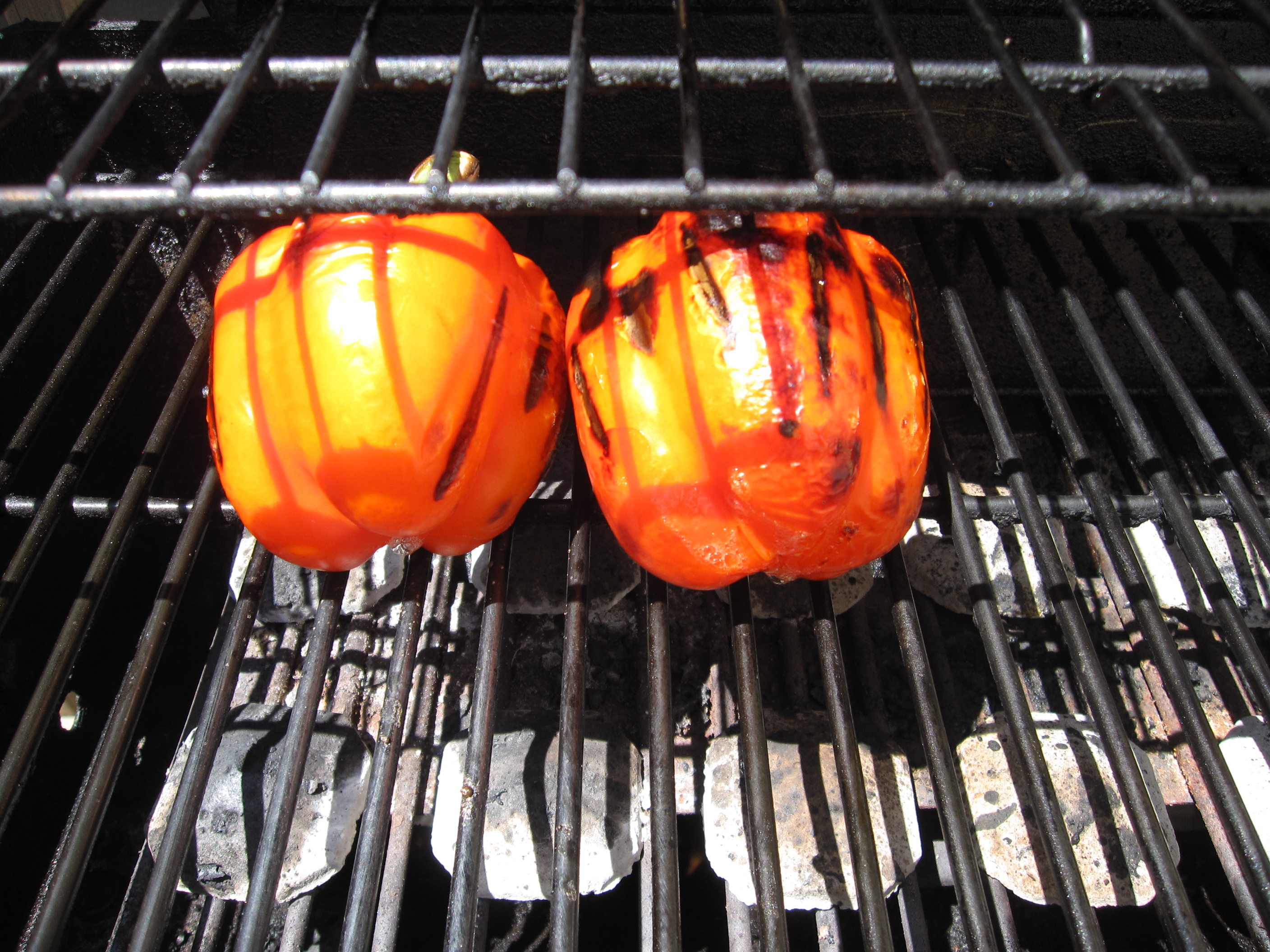
The first thing I did was make the sauce. I took two red bell peppers and grilled them (I guess it’s technically not a roasted red pepper sauce) until the skin was nice and charred. I kept turning them around to make sure the entire pepper got charred. You can do this under a broiler or on the gas stove top if you don’t have a grill. The grill does add a nice smokey element to the peppers though that you don’t get on a range.

Once the skin was good to go I put them in a bowl and covered them in plastic wrap. I let them cool down in their own steam for about a half an hour. This not only allows the peppers to cool down for easier handling, but it helps the skin separate from the flesh. Then, keeping the peppers over the bowl, I rubbed off the skin and discarded it along with the stem. I opened them up and removed the seeds as well. I kept them over the bowl to catch the flavorful juices. Once the flesh was clear of seeds I put them in my small blender and pureed them along with the juice from the bowl.

In a small saucepan I melted 1/2 tablespoon of butter over high heat and poured in about 1/3 cup of white wine. I let that boil until it reduced by half, approx 7 or 8 minutes. Then I poured in about 2/3 cup of cream. Once that started to boil I turned the heat down to med-low to keep the cream from boiling over. I let that reduce by half as well, another 10 minutes or so once it started to boil. After it reduced I poured in the red pepper puree and let that come to a boil. Again, I let it reduce by about half, another 10 minutes. Then I turned off the heat, covered the pan, and let it sit until service.

Thinking about vegetables that go well with red peppers I decided to use a zucchini, two baby eggplants, and an onion. I also cut some rosemary from my backyard and cut up a couple of garlic cloves.

I chopped up the vegetables and tossed them with olive oil and the rosemary in a roasting pan. In a 400 degree oven I let them cook for about 20 minutes. Then, I took them out and added the garlic. I didn’t want to garlic to burn which is why I didn’t include it to start with. I also seasoned with salt and pepper at this point and put everything back into the oven for another 10 minutes.

Then, I took it out again. I had cut the monkfish into 4 portions. I seasoned it with salt, pepper, and some paprika. The seasoned fish was laid on top of the veggies and then everything went back into the oven for another 15 minutes.

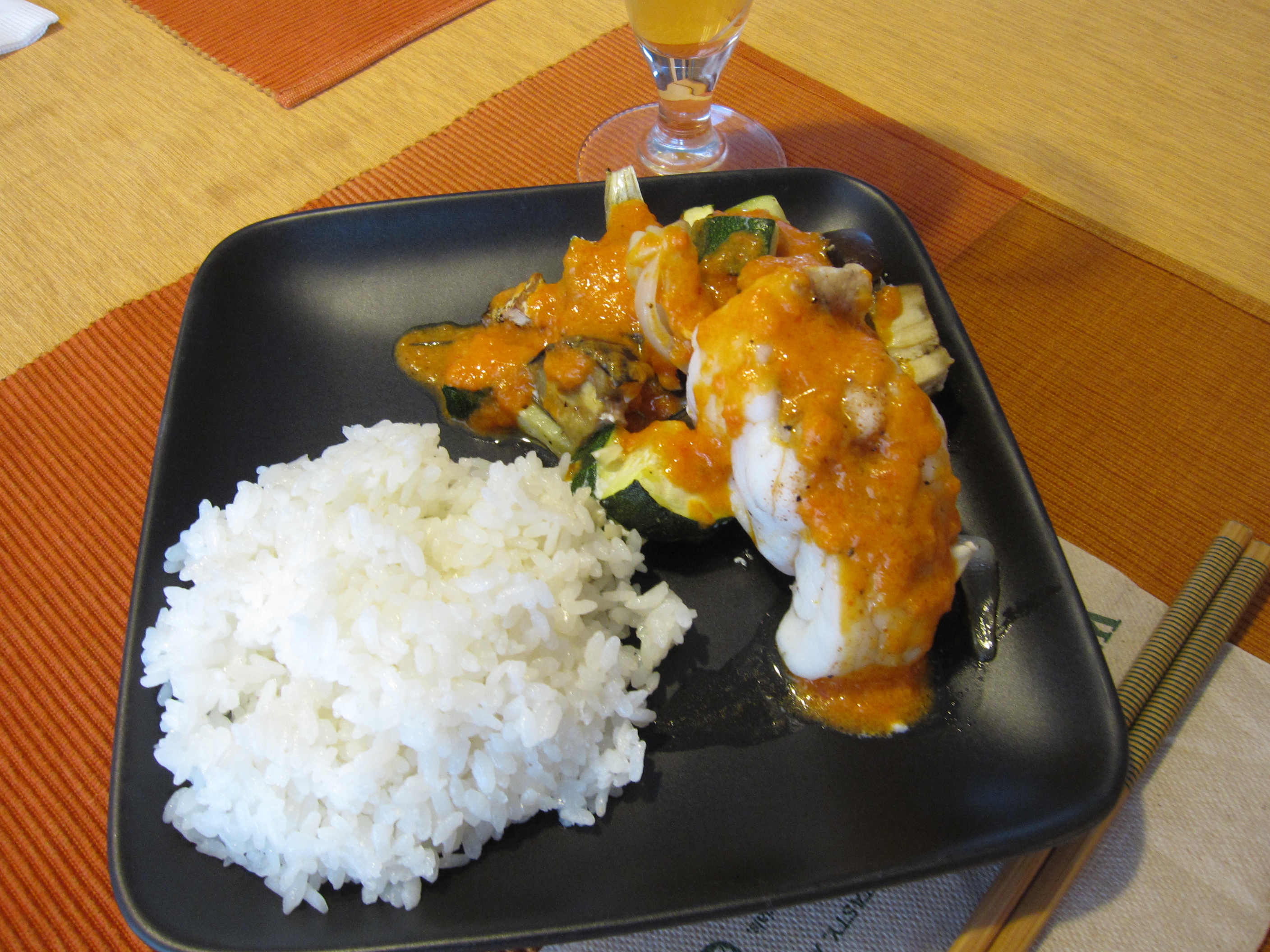
To serve, I put some white rice on the plate, scooped some of the veggies next to the rice, and laid a piece of fish on top of the veggies. I had re-heated the red pepper sauce and spooned it all over the fish and veggies. Delicious!

Read Full Post »

« Newer Posts - Older Posts »