Feeds:
Posts
Comments

Posts Tagged ‘daikon’

Oden is Japanese home cooking at it’s finest as well as being a favorite winter-time treat. While the ingredients can vary, the basis of oden is to have a slightly salty dashi broth filled with fish cakes, daikon, konnyaku, hard-boiled eggs, and potatoes. Slowly simmered and warm in the belly, this is true comfort food. In Japan, it’s served at home, in restaurants, at street vendors, and you can even get it warm from vending machines (you can get anything in a Japanese vending machine, and I do mean anything!).

To start I made a good dashi broth. I used about 1/3 cup of dried anchovies, 3 tablespoons of mirin, 2 tablespoons of soy sauce, and 1 tablespoon of kosher salt. Most oden sets come with their own little packets of soy flavoring. They are usually pretty good, but it’s just as easy to do it yourself giving you more control over the flavor.
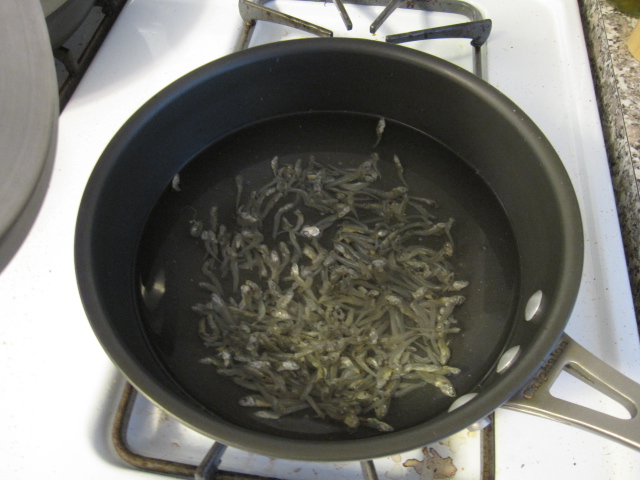
I let the anchovies simmer in 4 cups of boiling water for about an hour. I wanted every last bit of flavor out of the fish and into the broth.

I strained the broth and discarded the anchovies. Then I mixed in the mirin, soy, and salt.
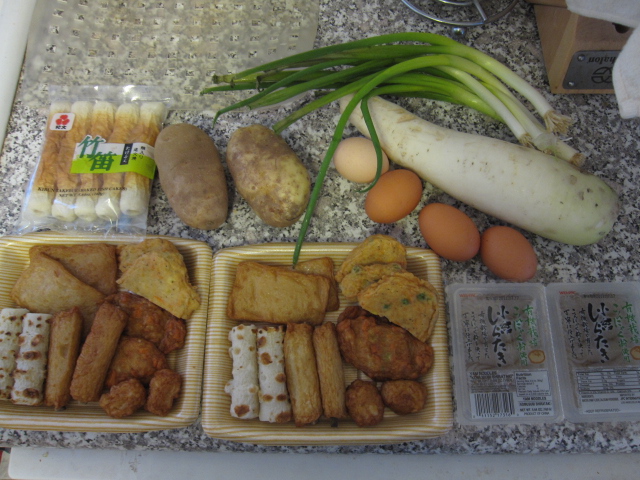
You can buy oden sets at any Japanese market and some Asian markets. We got two two-person sets that were on sale from Mitsuwa, each containing a variety of fish cakes. Some with carrot in them, some with burdock root, some grilled, most deep fried. We also had a package of chikuwa fishcakes that we used. I skinned and chopped two russet potatoes, medium boiled 4 eggs (just enough to peel the shell off, since they were going to simmer in the dashi for a while I didn’t want to overcook the yolk too much), 1 daikon skinned and chopped, a bunch of green onions chopped, and a couple packaged of shirataki konnyaku.
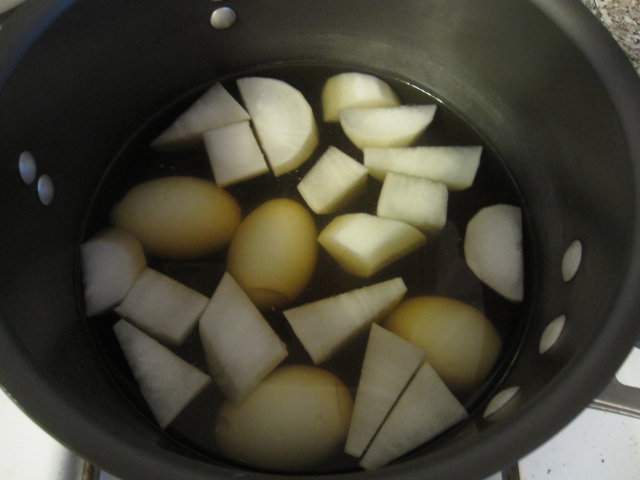
Once the dashi was ready I added the eggs and daikon and simmered them, covered, over a low heat for an hour. This allows both to absorb a lot of the dashi flavor.

Then I added the potatoes and konnyaku. If you boil the potatoes too long they will fall apart and melt into the broth. I only let them simmer for about 20 minutes. That’s also enough time for the konnyaku to take on some flavor. If you’re using sliced blocks of konnyaku instead of the shirataki noodles you’ll need to add them about 20 minutes earlier.

Since most of the fishcakes are deep fried before packaging they can sometimes have a little bit of grease residue. Because of that I boil and drain them seperately for a few minutes before adding them to the dashi, that gets rid of any unwanted oil. They also are fully cooked so just need to be heated up. After about 5 minutes in the dashi, along with the green onions, the oden is ready to go.

To serve it up I divied one of each for both of our bowls and then laddles some dashi on top. Oden is great with a cold beer and some white rice, I covered our rice with ground sesame seeds. I tell you though, oden is even better the next day. It is a stew, so once all of the flavors fully penetrate the ingredients you really have a special dish here. The daikon and egg for lunch today were outstanding!
Read Full Post »


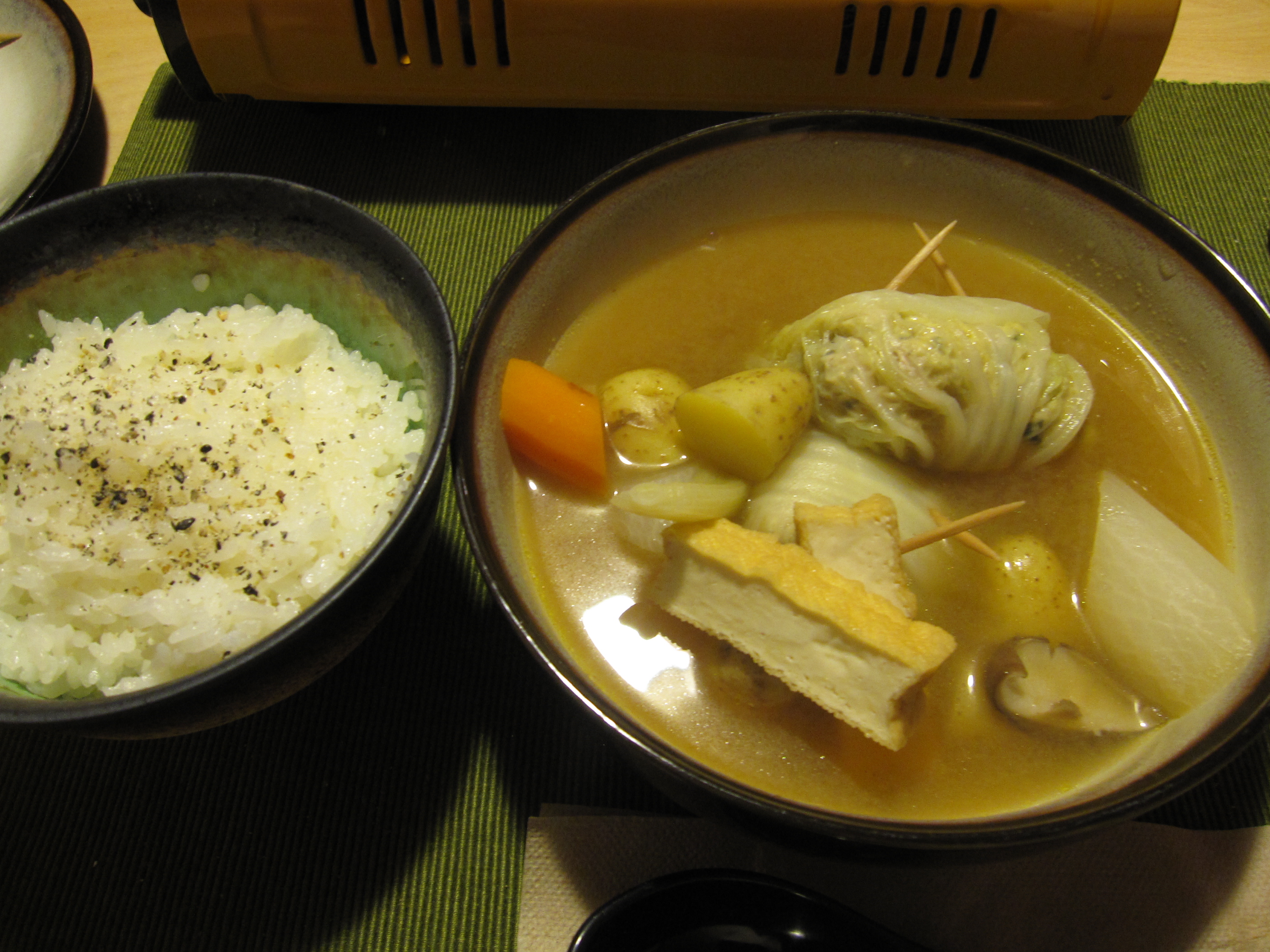
The other night I made one of Yuki’s favorites, a dish she usually makes. She, like most Japanese absolutely love nabe in the winter time and it’s hard to blame her. You just can’t beat a good table-top soup filled with meat, veggies, and a good broth. I think chicken meatballs rolled in cabbage is her favorite and one she’s made quite a few times for me, so this time I made it for her.

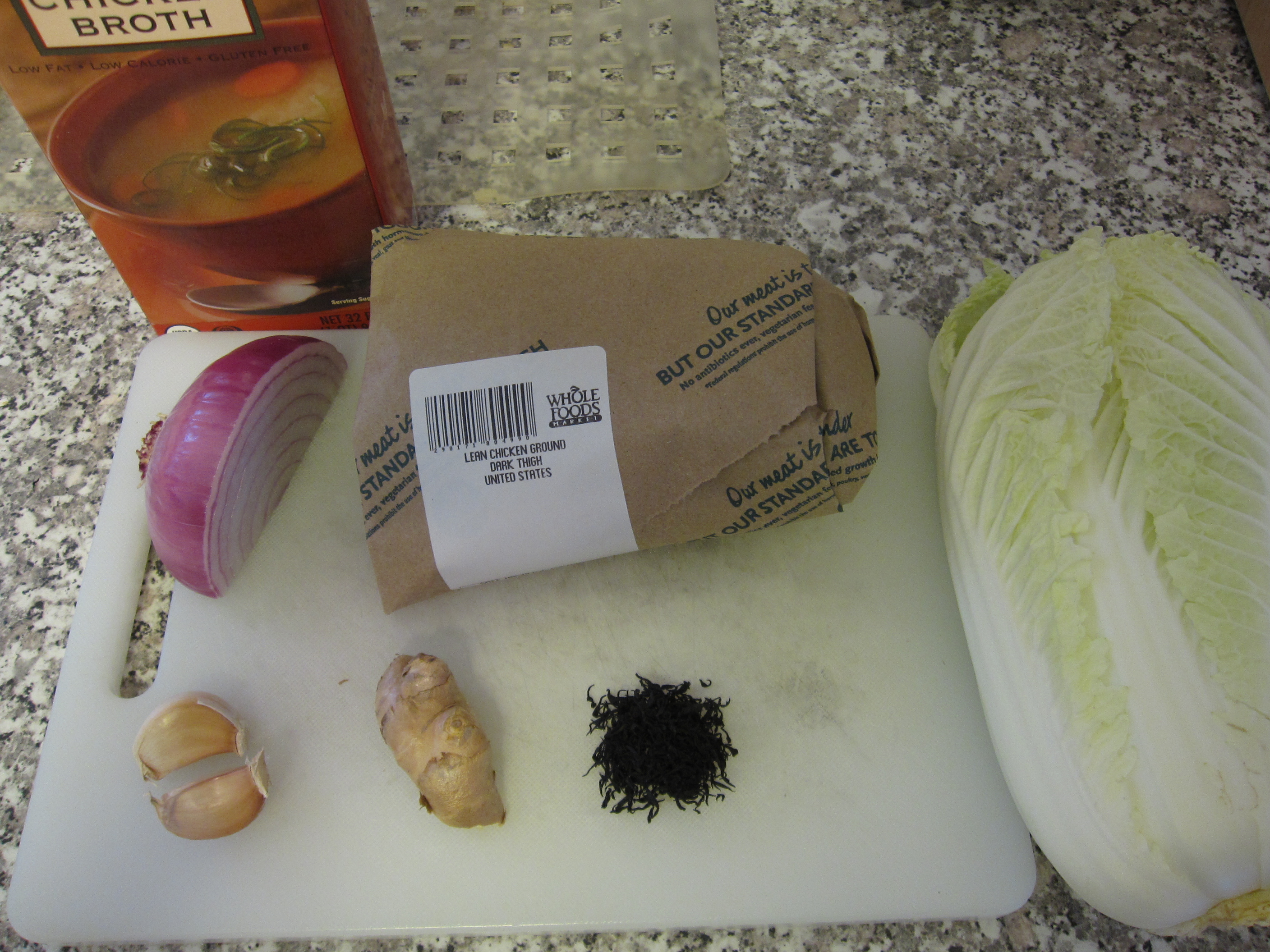
First thing I did was get the meatballs wrapped and ready to go. I used chicken stock as my base for the broth so I used 2 cups of it to soak a heaping tablespoon of dried hijiki seaweed for about 30 minutes before I could do much else. When the hijike was rehydrated I strained the broth into a soup pot. The rest of my meatball ingredients were 1/2 red onion, 2 garlic cloves, 1/2 inch of ginger, 1 pound of ground chicken thigh, and a small head of napa cabbage.

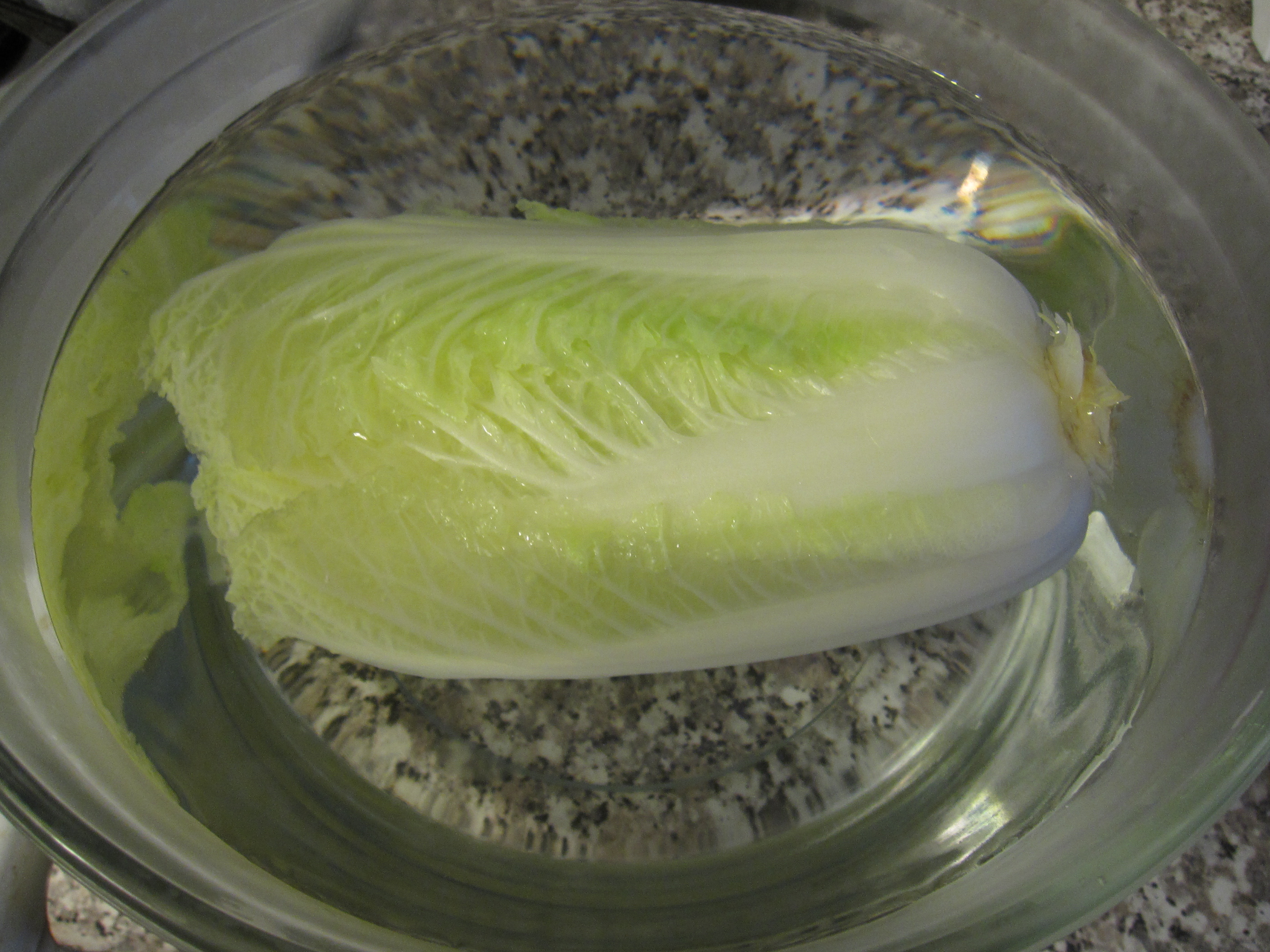
To make the cabbage more pliable I dropped it into some salted boiling water and let it boil for about 2 minutes. Then I took it out and shocked it in ice water. The boiling water softened it making it easier to roll while shocking it in ice water helps it retain its color.

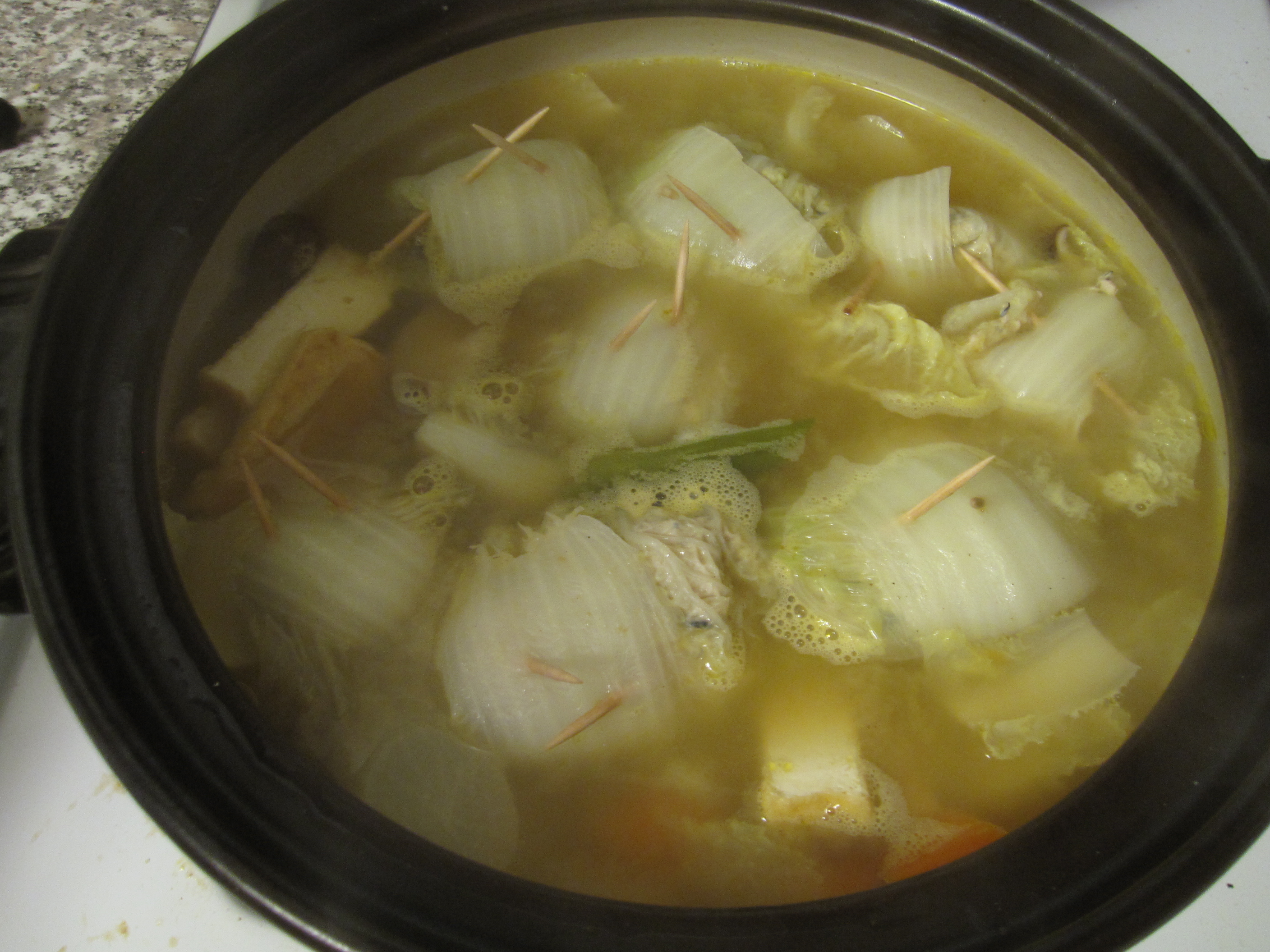
In a glass bowl I grated the onion, garlic, and ginger into the chicken meat, added the hijiki, seasoned it with salt and pepper, and mixed it thoroughly. Then I rolled walnut-sized meatballs in the cabbage and secured them with toothpicks.

The rest of my ingredients for the nabe were 6 green onions chopped, 2 small carrots chopped, 1 small daikon chopped, 7 fingerling potatoes halved, 8 shiitake halved, a package of fried tofu sliced, and 1 Honey 1 Rib (yes, I am finding creative ways to finish up those ribs since I over-ordered).

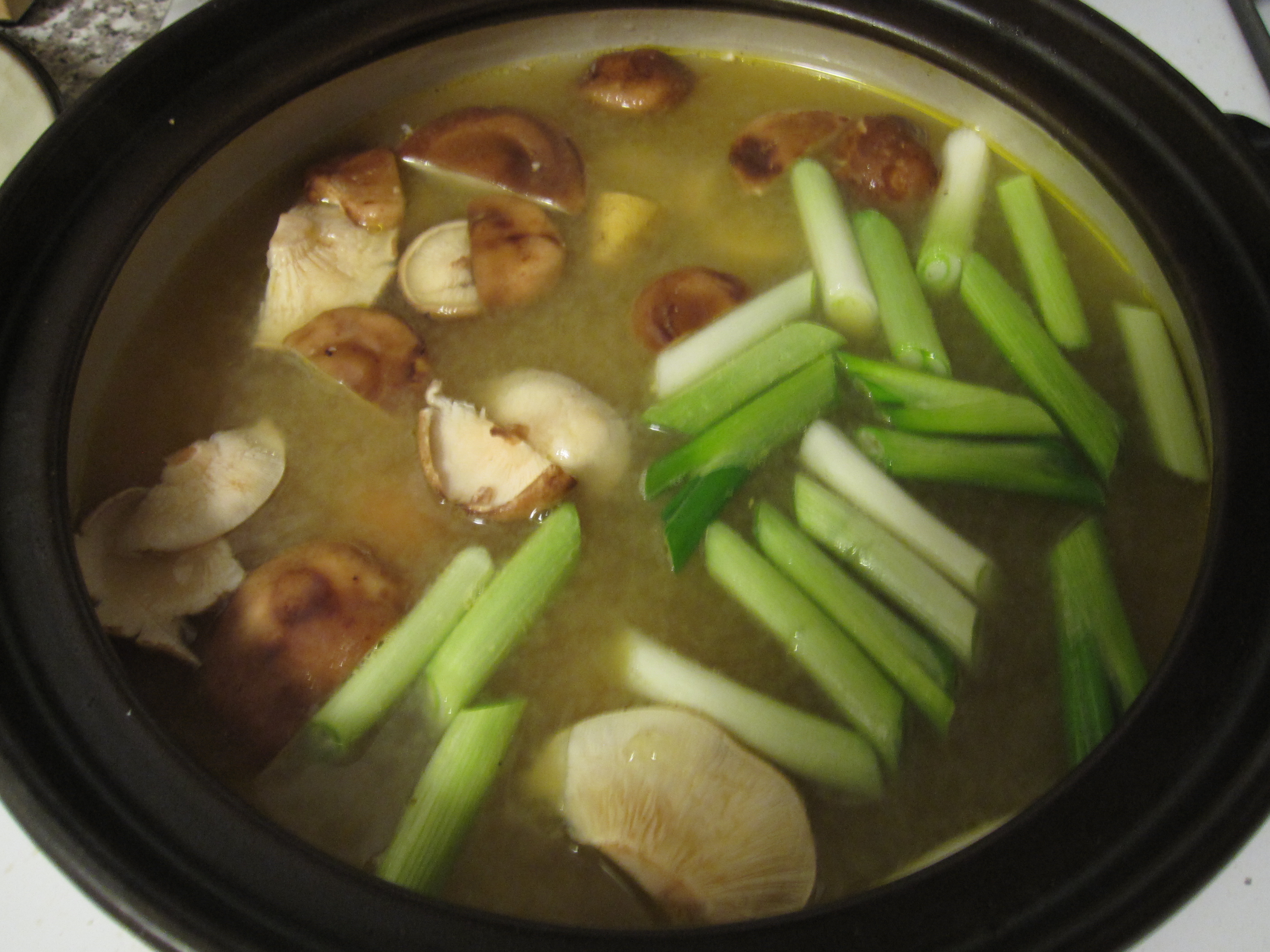
I put the rib in the chicken stock that had already soaked the hijiki and added 2 cups of water. I brought that to a boil and let the rib simmer in the broth for about 15 minutes. Then I strained the broth into our nabe (clay pot). The rib added some nice smokey depth to the broth. It also gave me some moist tender meat to nosh on while finishing up the cooking.

Then I brought the broth back to a slow boil and added the chicken-cabbage rolls. I let them cook for about 15 minutes to make sure they cooked all the way through. Once they were cooked I took them out and set them aside.

I kept the broth at a low boil and added all of the veggies. I let them all cook for about 10 minutes.

Once all of the veggies were cooked I added the chicken-cabbage rolls back and took the nabe to our table-top propane burner.

 To serve, I poured about a tablespoon of ponzu in each of our bowls. We helped ourselves by adding broth, meatballs, and vegetables along with a dash of togarashi. I had white rice topped with ground sesame seeds along with it.

Read Full Post »

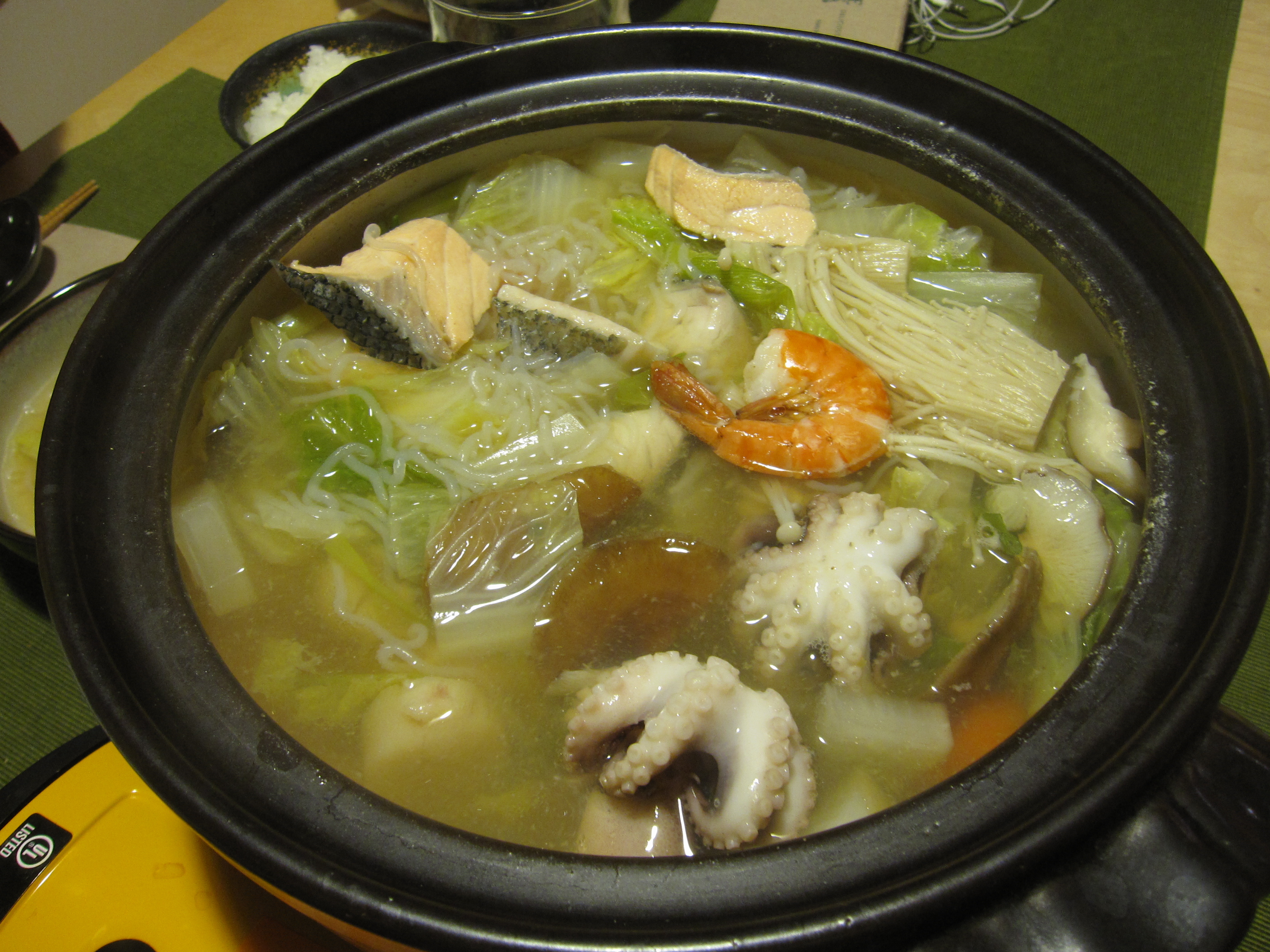
The other day we were at the Tensuke Market in Elk Grove Village, arguably the best fish market in the Chicagoland area. We were out of rice and they usually have the best deals on high quality Japanese (even though it’s all from California) rice. Sure enough, they had a great deal on some new crop. While we were there we found a package of nabe-ready seafood. Nabe is simply one-pot stew or soup cooking. Usually prepared on the stove top then brought to a table-top burner to keep warm while eating it. So, we had seafood nabe.

Yuki started by making the broth. She simply boiled about 1/4 cup of dried anchovies in about 5 or 6 cups of water for 30 minutes or so. That allows enough time for the water to take on all of that nice seafood flavor without any added oils or salts.

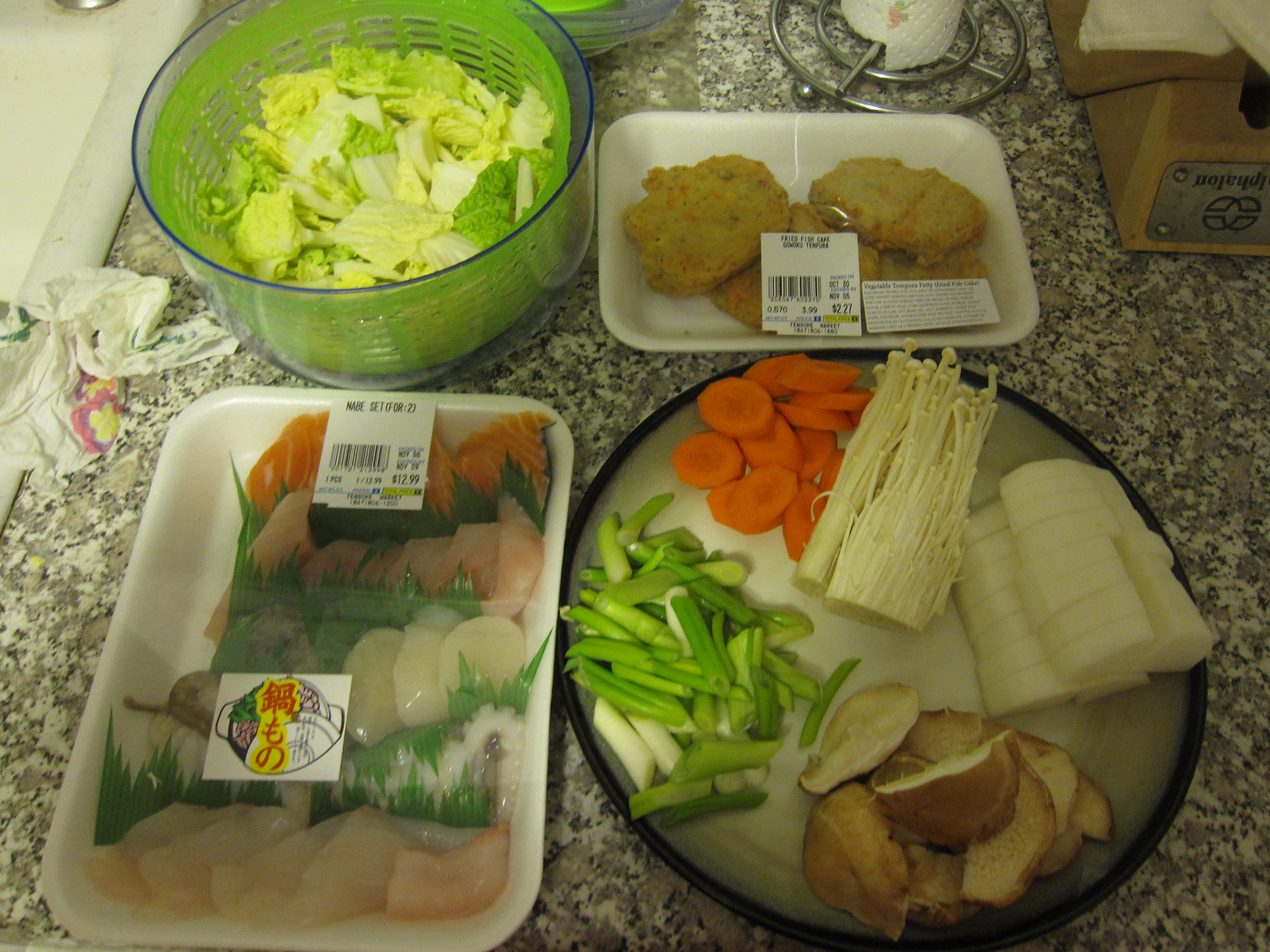
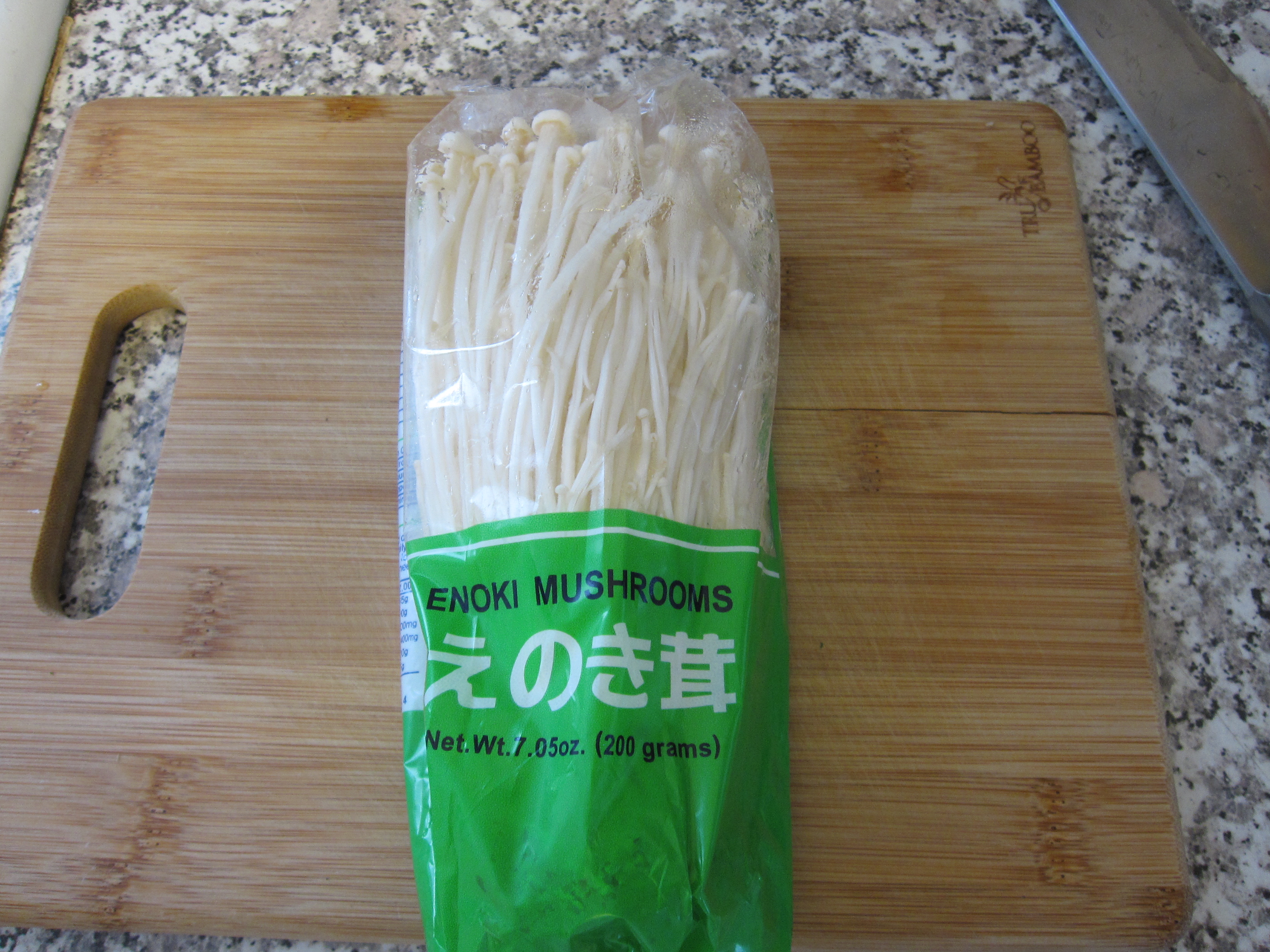
While the broth was boiling away I prepared the veggies. Besides the seafood package (slices of fluke, octopus, scallops, shrimp, sea bass, and salmon) I chopped up 1/4 pound of napa cabbage, 6 green onions, 1 carrot, 1 package of enoki mushrooms, 3/4 pound daikon, and 6 shiitake. There are also fish cakes in the picture, but we decided not to use them. Instead, we used 1 package of shirataki noodles which aren’t in the picture.

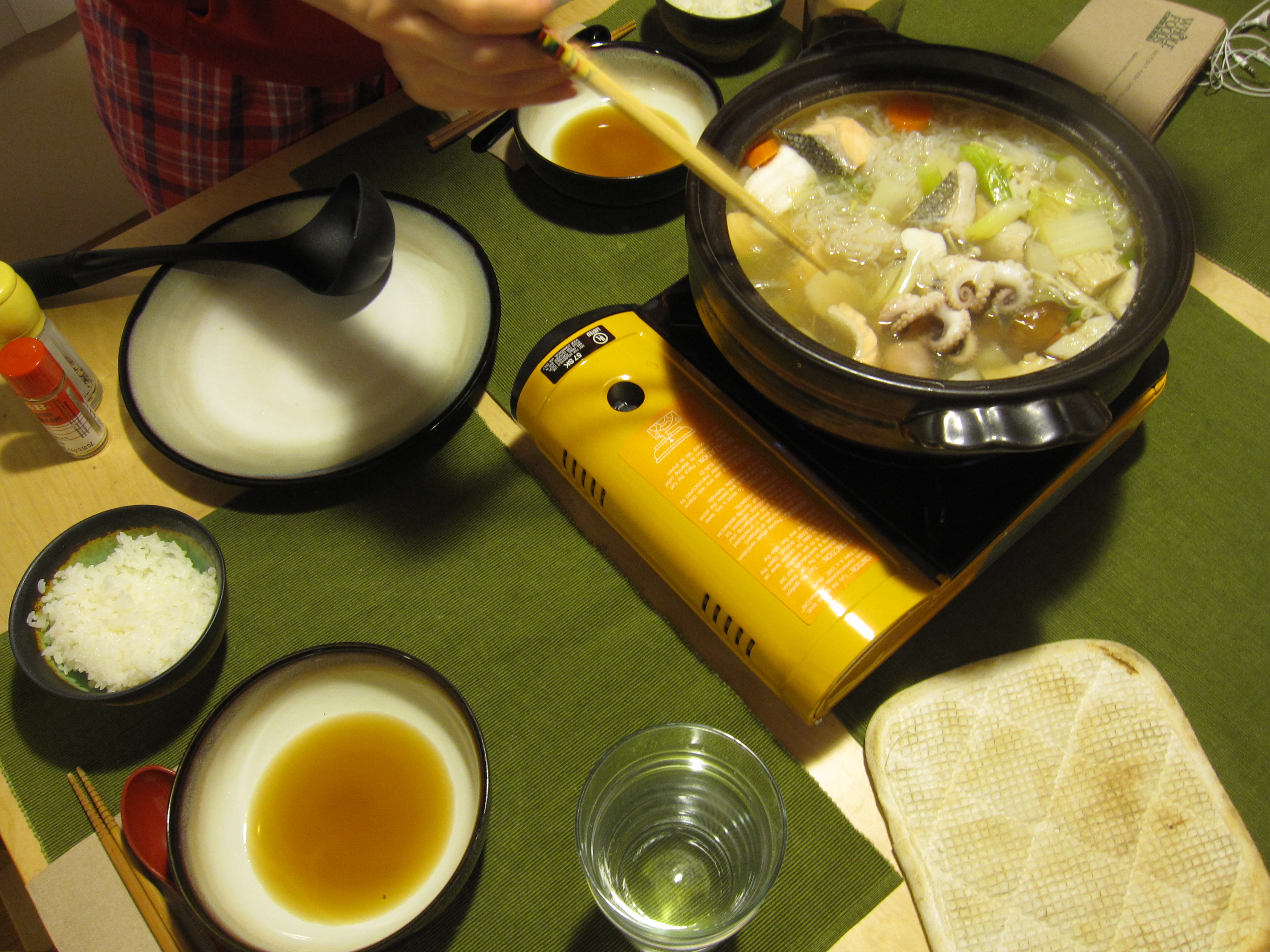
When the broth was ready I strained it into our earthenware clay pot and discarded the anchovies. I brought it up to a low boil and Yuki added the daikon and carrot. She let that boil for about 5 minutes or so and then added the shiitake, green onions, and cabbage. About 5 minutes later she added the rest of the ingredients.

When the stew was ready, about 5 more minutes after adding the fish, we brought it over to our table and put it on our table-top burner over low heat. We poured about 2 tablespoons of ponzu into our bowls, then ladled some broth in and started eating. We had white rice on the side.

Read Full Post »

So, I had some salt cured salmon filets that needed to get eaten up from our last bimble up to Mitsuwa. These salmon filets are great because the don’t need much cooking since they’re already salt-cured. With that, we also had a kabocha that Yuki wanted me to cook. However, I did not cook it how she requested. Too bad for her. Without further ado…

First thing I did was get the kabocha ready, I only used half of it. I seeded it, cut off most of the skin, quartered the half, and then cut the quarters themselves in half.

I set them in a baking dish, drizzled them with sesame oil, salt, and pepper. I boiled about 3/4 cup of water, poured that into the pan, and put the kabocha into a 375 degree oven for about an hour. The water should be mostly absorbed by the time cooking is done keeping the kabocha nice and moist, while the top gets a little bit golden brown.  Then I took 1/4 cup of walnuts and toasted them in a dry pan for about 6 minutes.

I coarsely ground them with my mortar and pestle and then added 4 tablespoons of ponzu. I let that sit while I cooked everything else.

For the kale I used a bunch of red kale stalks removed and leaves chopped down, 1 cup of chicken stock, 1/2 onion sliced, and three garlic cloves sliced. In a hot stock pot I poured in about 2 tablespoons of sesame oil and then added the onion and garlic. About 2 minutes later I added the kale and let that wilt for about 4 minutes. Then I poured in the chicken stock and seasoned with salt and pepper. Once the stock came to a boil I loosely covered the pot, turned the heat down to medium-low, and let it simmer for about 30-40 minutes (however much time I had left on the kabocha, it doesn’t matter as long as the kale simmers for a while).

Once the kale got going I started the miso soup. I used a heaping service spoon of shiro miso, about 4 inches of daikon sliced and quartered, one small carrot cut in half moons, 4 green onions chopped in 1 inch lengths, 1/4 cup of dashi seasoned soy sauce, and 3 shiitake sliced. In a soup pot I poured in 4 cups of water and added everything except for the miso. I brought it to a boil, then covered the pot, and turned the heat down to medium-low to let it simmer for about 15-20 minutes.

I just rubbed some sesame oil on both sides of the salmon and then seasoned with pepper. My toaster oven has a broiler setting, so I just turned that on and broiled the salmon for about 8 minutes. That was just enough time to cook it all the way through and crisp up the skin. When it was finished it was time to put everything together.

I left the salmon as is. Put some of the kale on the plate and then a couple of pieces of the kabocha. I topped the kabocha with the walnut-ponzu mixture. I mixed the miso into the soup and served that up. Then I served some white rice along with everything, mainly to balance the saltiness from the salt-cured salmon.

Read Full Post »

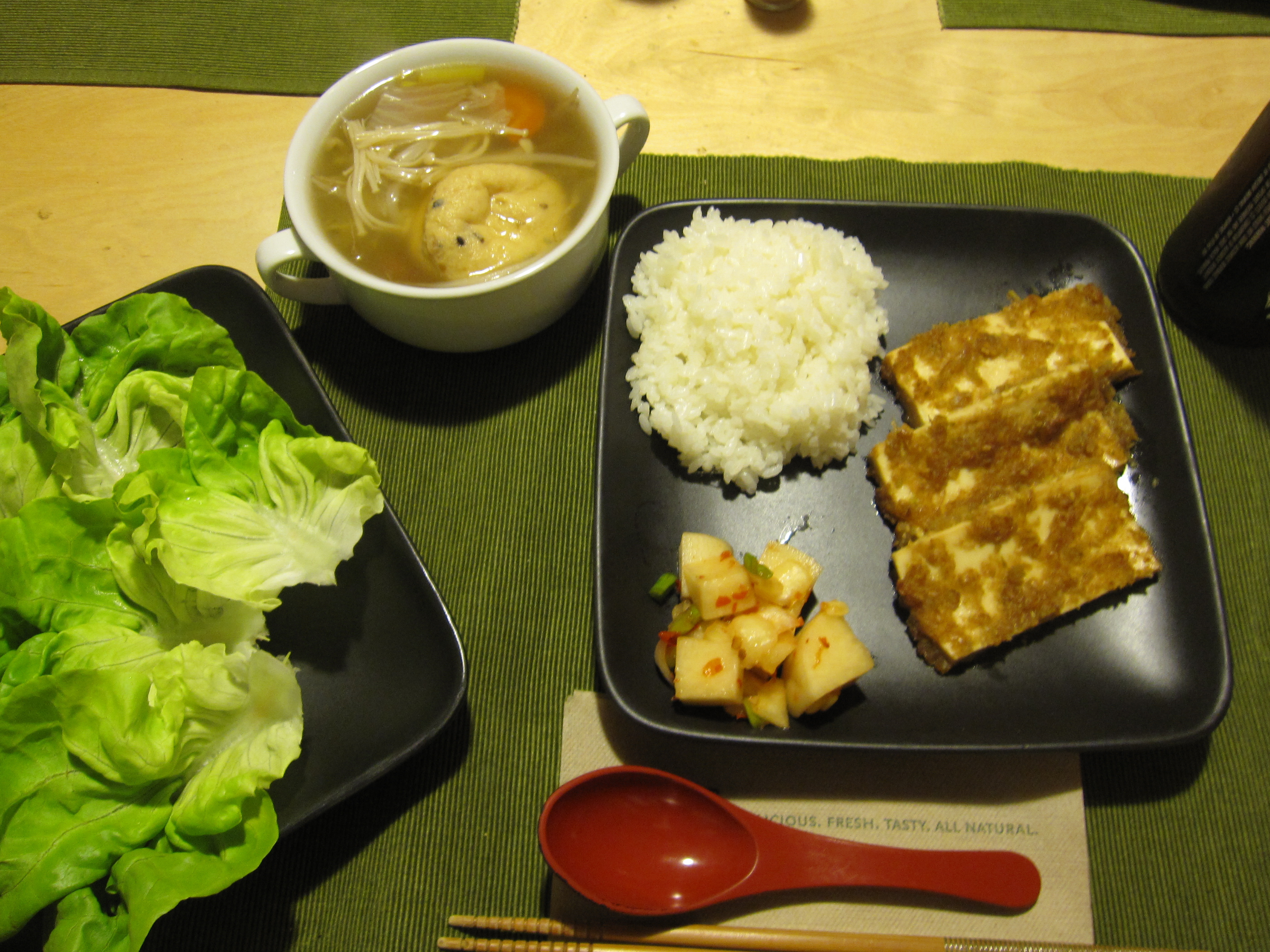
I made some daikon kimchi and really wanted to build a Meatless Monday around it. I thought I was going to make a tofu bulgolgi to stick with the Korean theme, but the marinade turned out nothing like a bulgolgi. It was very asian though so I used some ganmodoki we had bought at Mitsuwa and made a clear broth Japanese-style soup to bring more vegetables into the meal.

The daikon kimchi takes 24 hours so I had to start the Sunday. The ingredient list includes a lot of kosher salt (sea salt can be used also), 1.5 tablespoons of toban djan (I didn’t have any Korean chili paste, toban djan is Sichuan, but it is similar enough to work), 1/4 onion small diced, 1 garlic clove minced, 1 lb daikon cut into 3/4 inch cubes, 1 teaspoon fish sauce, 1 teaspoon sugar, and 2 green onions thinly sliced.

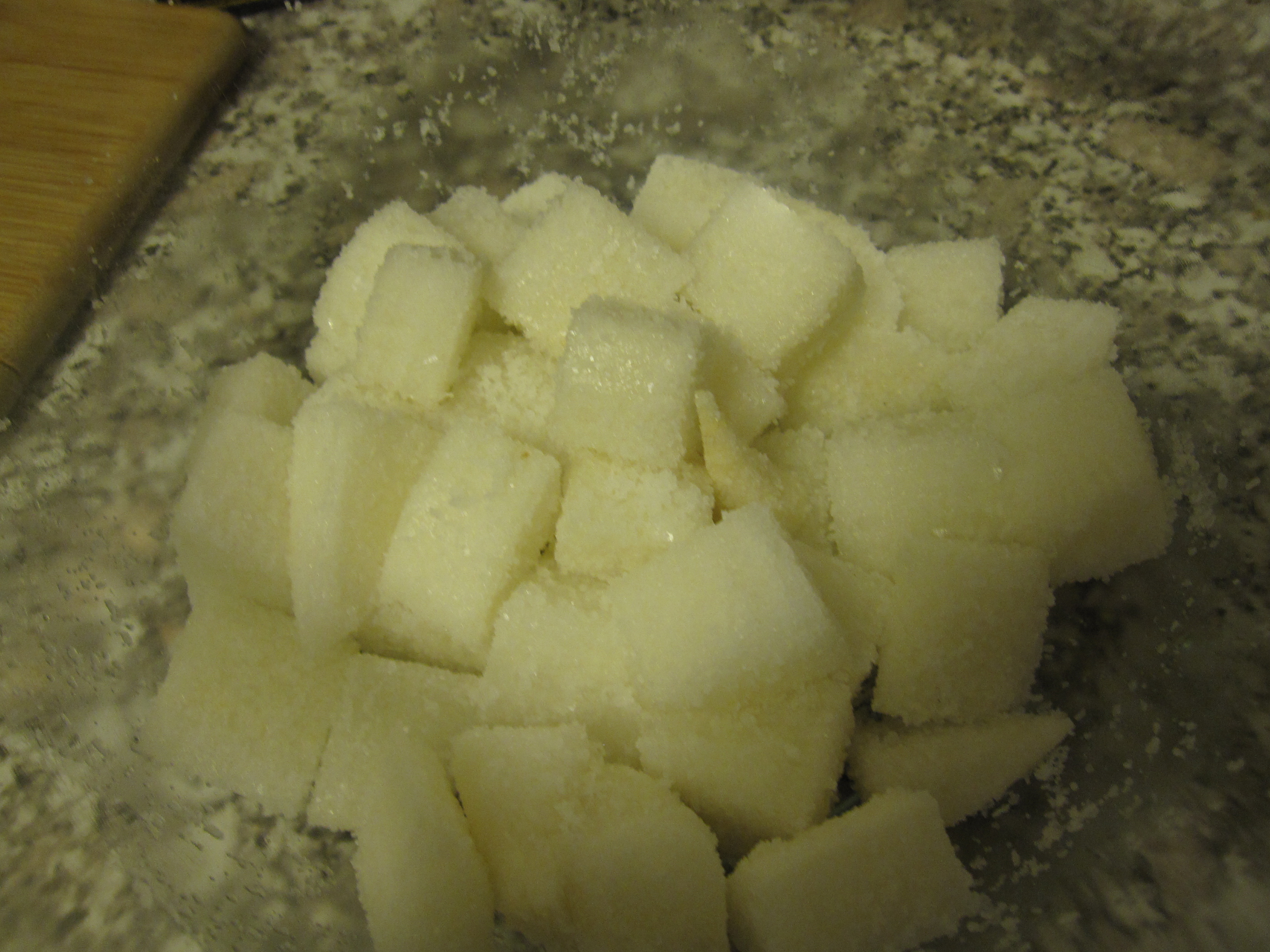
I threw the daikon into a bowl and completely coated it with salt. I left it for 2 hours and then drained off all of the liquid that accumulated at the bottom of the bowl and then rinsed and drained very well.

Then I mixed together the rest of the ingredients, tossed the daikon to coat evenly, and put into an airtight jar. I left it out for 24 hours and then put it in the fridge to chill for a couple of hours. You absolutely have to let it sit to get the flavors to penetrate and pickle, so this does take more than 24 hours to prepare. I will say, the daikon turned out way too salty when we ate it. Not sure if I added too much during the pickling process or if I just didn’t rinse it well enough, but next time I make this I will make sure it’s completely rinsed of salt and I may just add 1/2 tablespoon instead during the pickling to make sure it doesn’t get too salty. To salvage the rest of the daikon I’ll boil it in some water to make broth for noodle soup later in the week or something.

For the tofu “bulgolgi” I used 3 tablespoons of soy sauce, 1/4 granny smith apple, 1/4 onion, 1 tablespoon sugar, juice from 1/2 lemon, 1 tablespoon of sesame seeds, 1/2 inch ginger, 2 garlic cloves, 2 green onions, and 1 packet of silken tofu.

I pressed the water out of the tofu for about an hour and then sliced it into 1/4 inch pieces. I put the rest of the ingredients into my little processor and made a marinade.

I took out my glass baking dish, poured a little marinade on the bottom, lined the tofu side-by-side on top, and then covered it with the rest of the marinade. I let it sit while I prepared the soup. When the soup was almost done I drizzled a little sesame oil on top of the tofu and threw it under the broiler for about 10 minutes.

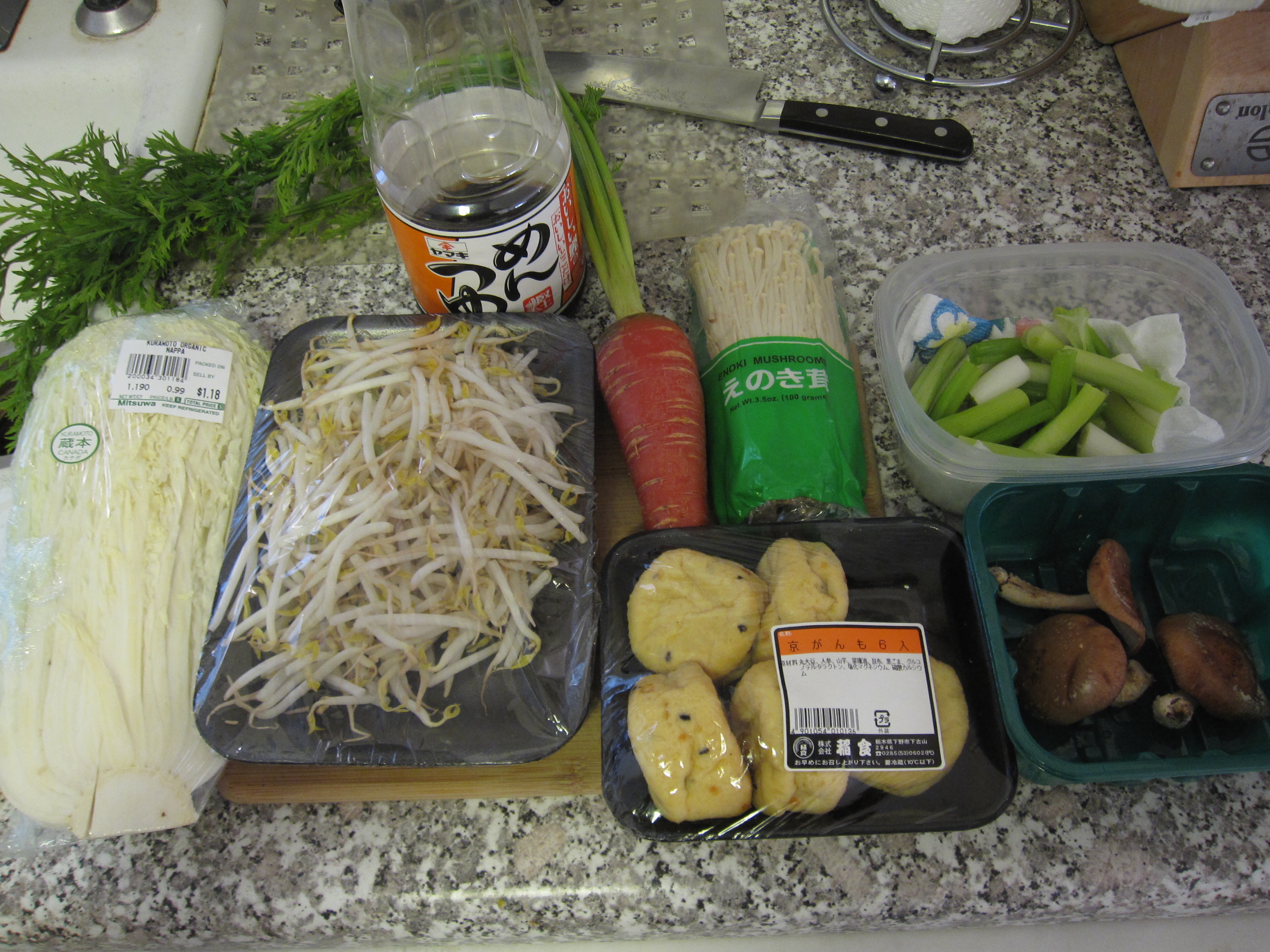
For the soup I cut up 1/4 of a napa cabbage, used some bean sprouts, 1/4 cup of dashi seasoned soy sauce, 1 carrot cut into half moons, 1/2 package of enoki mushrooms, 5 ganmodoki, the rest of our green onions (about 3), and my last three shiitake sliced.

In my soup pan I poured in about 4 cups of water and added everything except for the cabbage, bean sprouts, and enoki. I brought it up to a boil and then covered it, lowered the heat to medium-low, and let it simmer for about 15 minutes. Then I added the rest of the ingredients and let it simmer for another 5 minutes. That’s all she wrote for the soup.

I served everything with white rice and leaves of butter lettuce. That way we could make lettuce wraps bulgolgi-style.

Read Full Post »

So, Yuki had some coupons from unused miles on United Airlines. Last night we used one at Ai Sushi.  I dvr’d the Bears-Giants game and we headed down to Ontario St for some grub.

Parking was a pain because all of the meters were “For Residents Only Until Oct 4”. We did find a spot about a block away so we didn’t have to spend on valet. Tonight we could have gotten a spot right in front. Oh well, can’t blame that on the restaurant.

The interior is really nice. It has the open loft feel with exposed brick and wood beams. The art on the walls was not flashy at all and instead complimented the brick. Colors were soft and very intimate. It has a real nice setting inside.

I did use my phone’s camera, so these pics are terrible.

First thing we got was the Sunomono Moriawase. Shrimp, real crab meat, and octopus lightly cooked along with fluke sashimi in a dashi vinaigrette with daikon sticks and seaweed. It was really good, fresh fish and not to vinegary at all.

Next was one of the specials of the night, Wagyu Tobanyaki. 5 slices of real Kobe beef imported from Japan, enoki mushrooms, and shimeji mushrooms that you cook yourself on a hot stone with butter. The beef was so soft and delicious. It was definitely the real thing, none of that cow from Nebraska.

After that we each had a bowl of Kabocha Corn Soup. Simply a puree of kabocha and corn, probably with onion. It tasted like something I would make, which is to say it was pretty tasty.

Then came the Chawanmushi. A Chinese style egg custard with shiitake, shimeji, and enoki mushrooms. The custard was the perfect consistency. Not a fancy dish, but a good one.

The first maki roll we got was their Habanero Lobster. It had tempura lobster, kampyo, ginger, mango, avocado, habanero, capers, cilantro, and sour cream mayo. We’re not usually fans of rolls with more than a few ingredients, but this one was pretty good. That habanero packed a punch, but not so much that you couldn’t taste the lobster’s sweetness. It was pretty good. They also put a few slices of smoked duck on the plate. They serve smoked duck sushi and must have needed to get rid of it, but it tasted pretty good to me, so I didn’t mind.

The last thing we got was one of the night’s special rolls, Orange Maki. It had tempura shrimp and orange zest inside and was topped with salmon and black tobiko. It was really good! Light, sweet, and refreshing. I would definitely order that roll again. Also, there was more smoked duck on this plate.
We didn’t have any room for dessert and didn’t even look at the dessert menu so I can’t comment on that.

The service was professional. We never had to wait long for anything, we weren’t rushed or bothered to hurry up, and our server was very knowledgable of the menu. The only gripe I have, and it’s nitpicking, is that the food should have come out in a different order. The beef should have been last and soup served before the chawanmushi. Other than that, I have no complaints at all.

I would have to say that Ai is one of the better sushi restaurants we’ve been to in Chicago. I wouldn’t call it the best, but it is definitely worth while with some creative offerings as well as some classics, all very fresh and properly prepared. I would go back without hesitation.

Read Full Post »

I still had some of the shiso pesto I made a few days ago in my fridge. I decided to use it as a marinade for a beautiful pork tenderloin, one of our favorite cuts of carcus.

In a non-reactive baking dish I marinated a 1.5 pound tenderloin in the shiso pesto. I really rubbed it in there. I covered it and let it sit in the fridge for about 3 hours. Every hour I took it out and turned it over to keep it nice and coated.

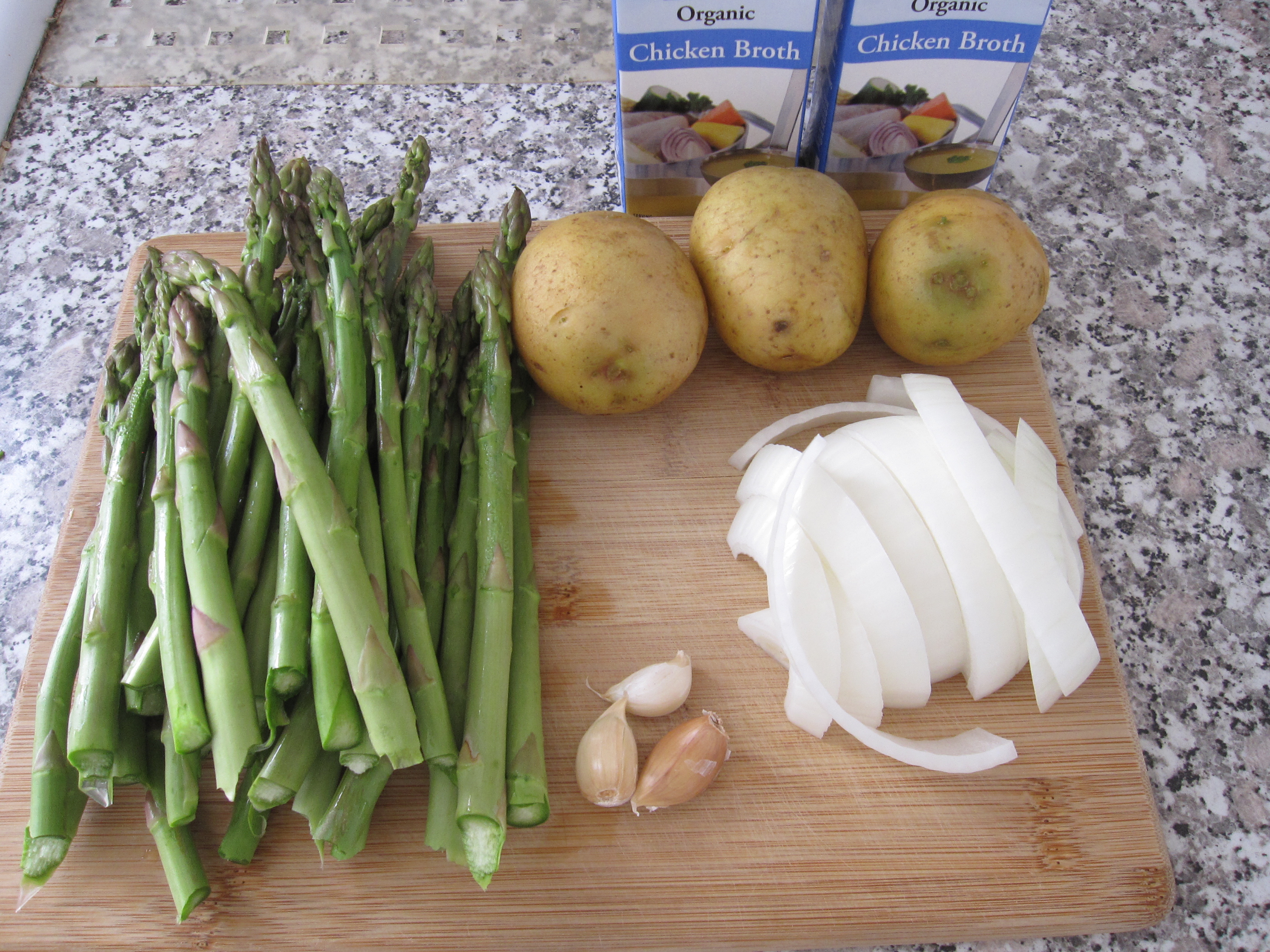
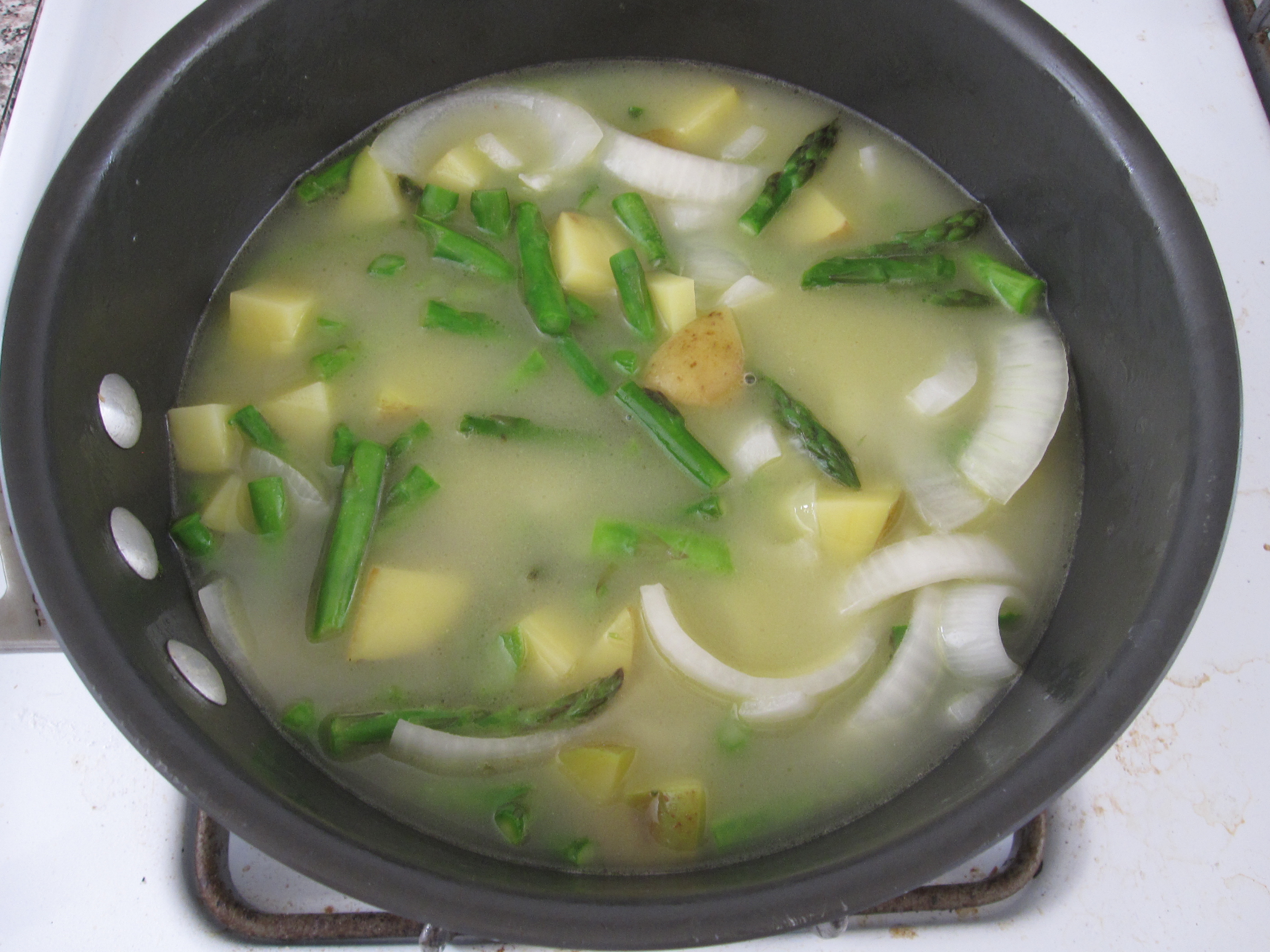
While the pork was marinating I made some asparagus soup. I took a bunch of asparagus and reserved ten of the tips. The rest I chopped up along with 3 cloves of garlic, 3 yukon gold potatoes, and half an onion.

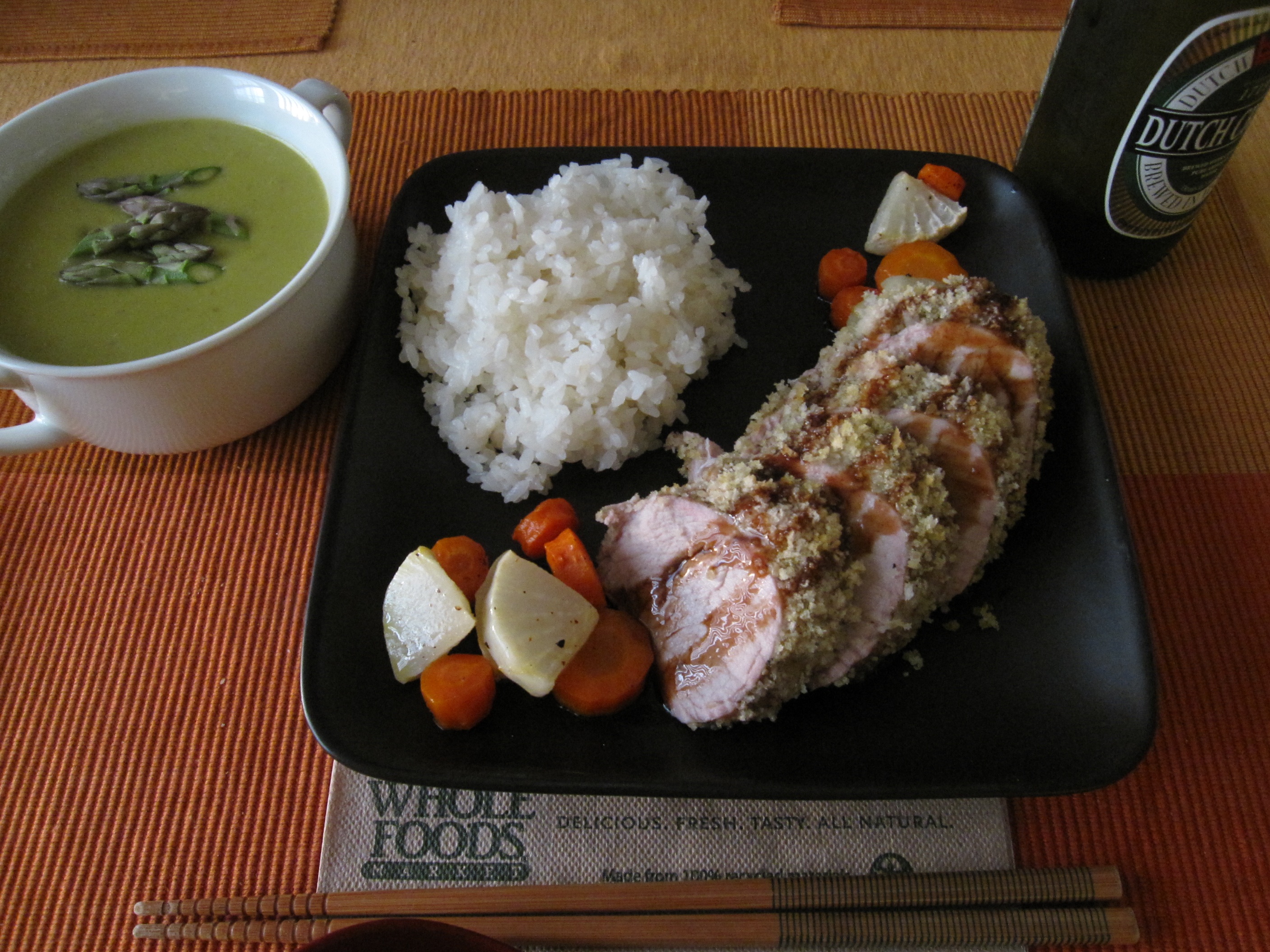
In a heated pot I poured in about 3 tablespoons of olive oil and tossed all of the vegetables in. I kind of stir-fryed them for about 7 minutes and then poured in two cups of chicken stock. I seasoned with a little salt, let it come to a boil, then covered it up and turned the heat to medium so that it could simmer for about 10 minutes. I didn’t want to overcook the vegetables, I just wanted them softened so that I could puree them. After the 10 minutes were up I turned off the heat and let it cool down for about a half hour. Then, I poured it all into my blender and pureed it nice and smooth. I poured it back into the pot, seasoned with pepper, and set it aside until dinner, at which time all I had to do was re-heat it gently and garnish with the reserved asparagus tips.

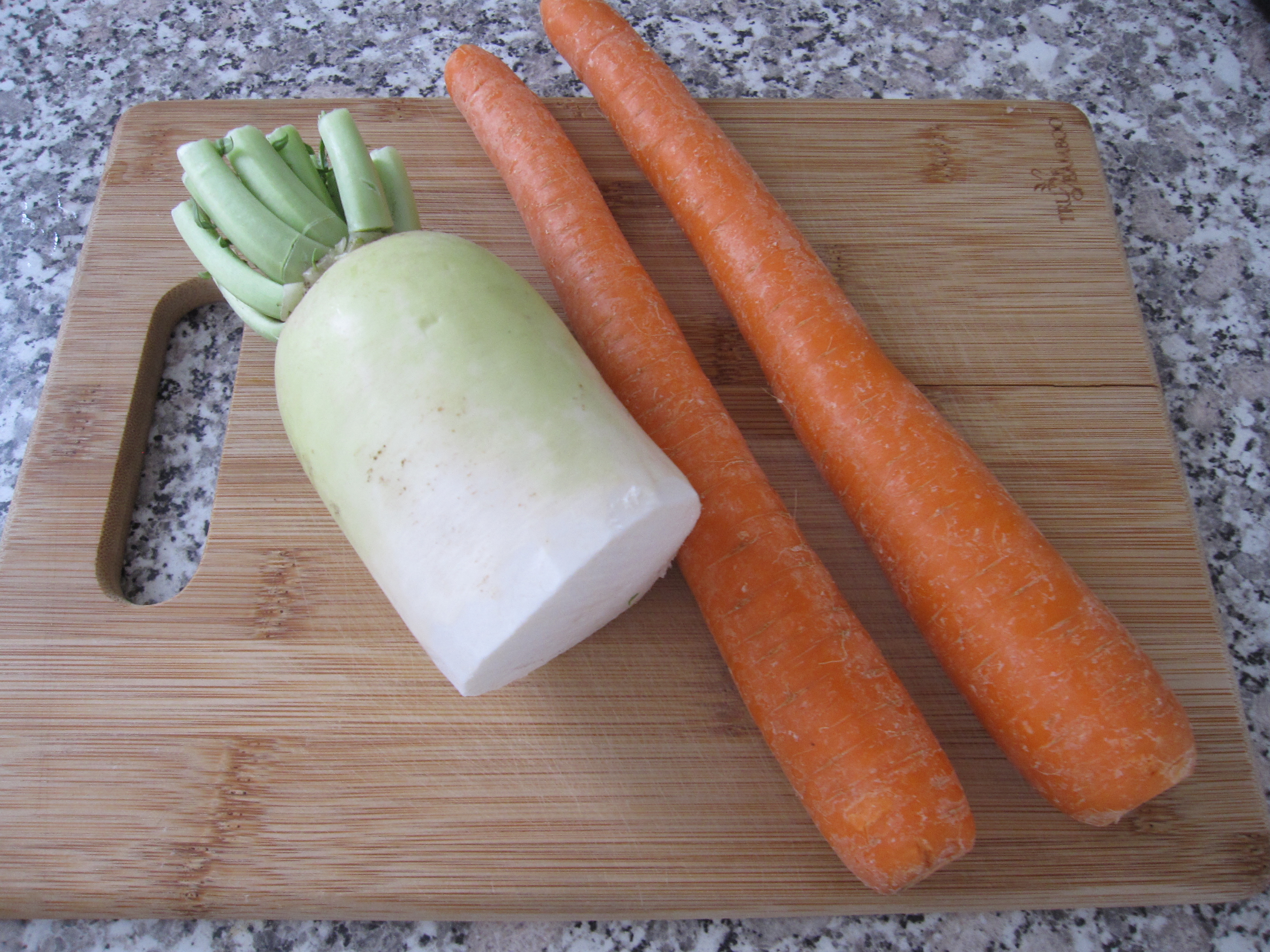
Then, I took the last half of my daikon and two carrots and chopped them up. In a small baking pan I tossed them with some olive oil, salt, and pepper.

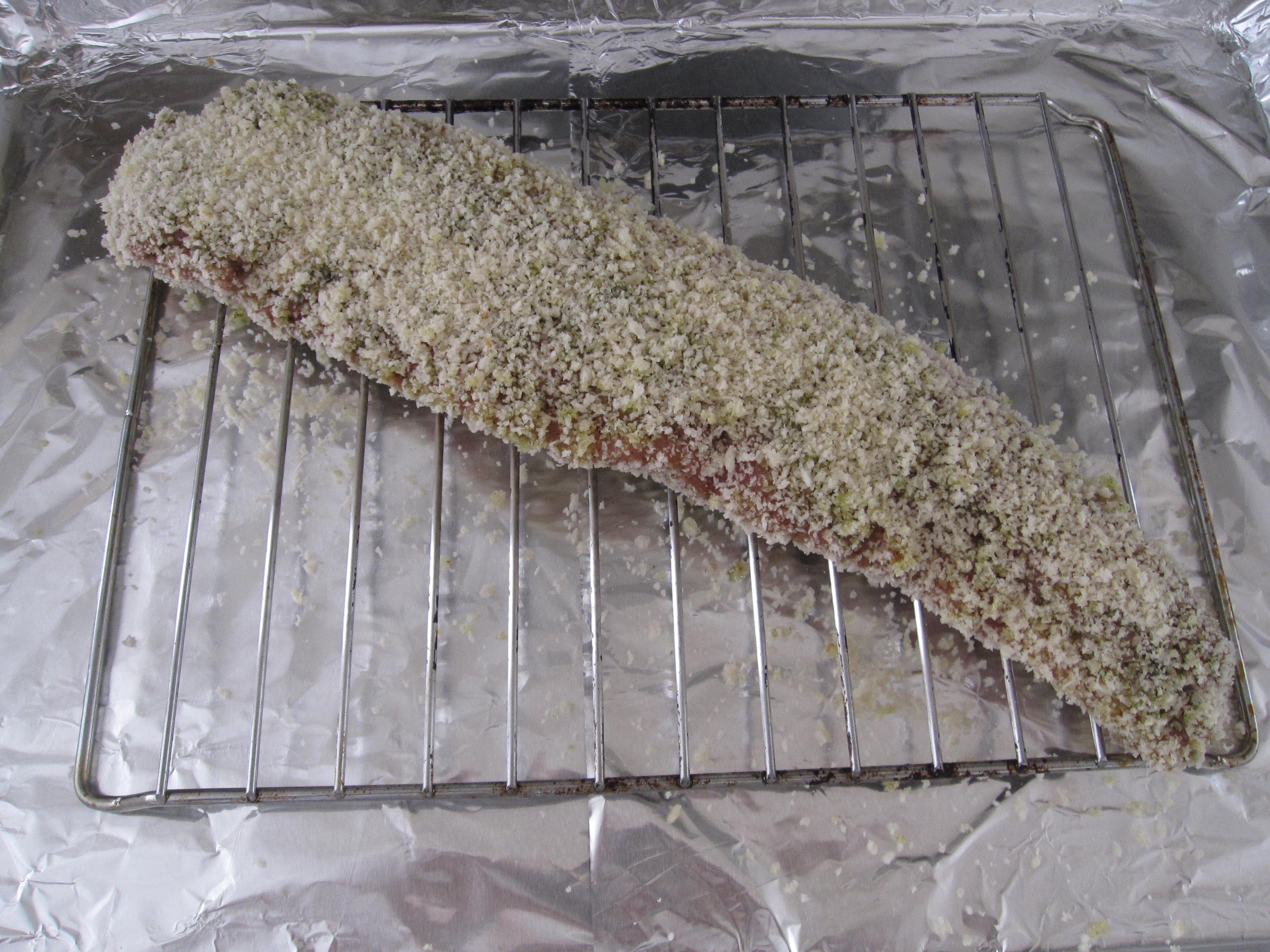
I poured some panko on a plate and then rolled the marinated pork loin all over it to crust the entire thing. I put a rack over some foil on a baking sheet and laid the crusted loin on top. I used a rack so that I’d get some convection in the oven, keeping all of the panko nice and crispy, even on the bottom.

I heated my oven to 375 degrees and put the loin and the daikon and carrots in. I let them all roast for about 55 minutes.

When I took everything out I let the pork rest for about 10 minutes before slicing to allow the juices to redistribute throughout the meat. In the meantime, I plated up the white rice and vegetables and heated the soup. After slicing and plating the pork I drizzled a little Bull-Dog sauce on top.

Read Full Post »

A couple of our friends are growing their own shiso. apparently their plant is going haywire and they have too much shiso for their own usage, so they gave us a bunch. I do mean a bunch! I only used half of it for the pesto. Does anyone want some? I have a feeling you’ll see at least one more shiso recipe on this blog sometime this week.

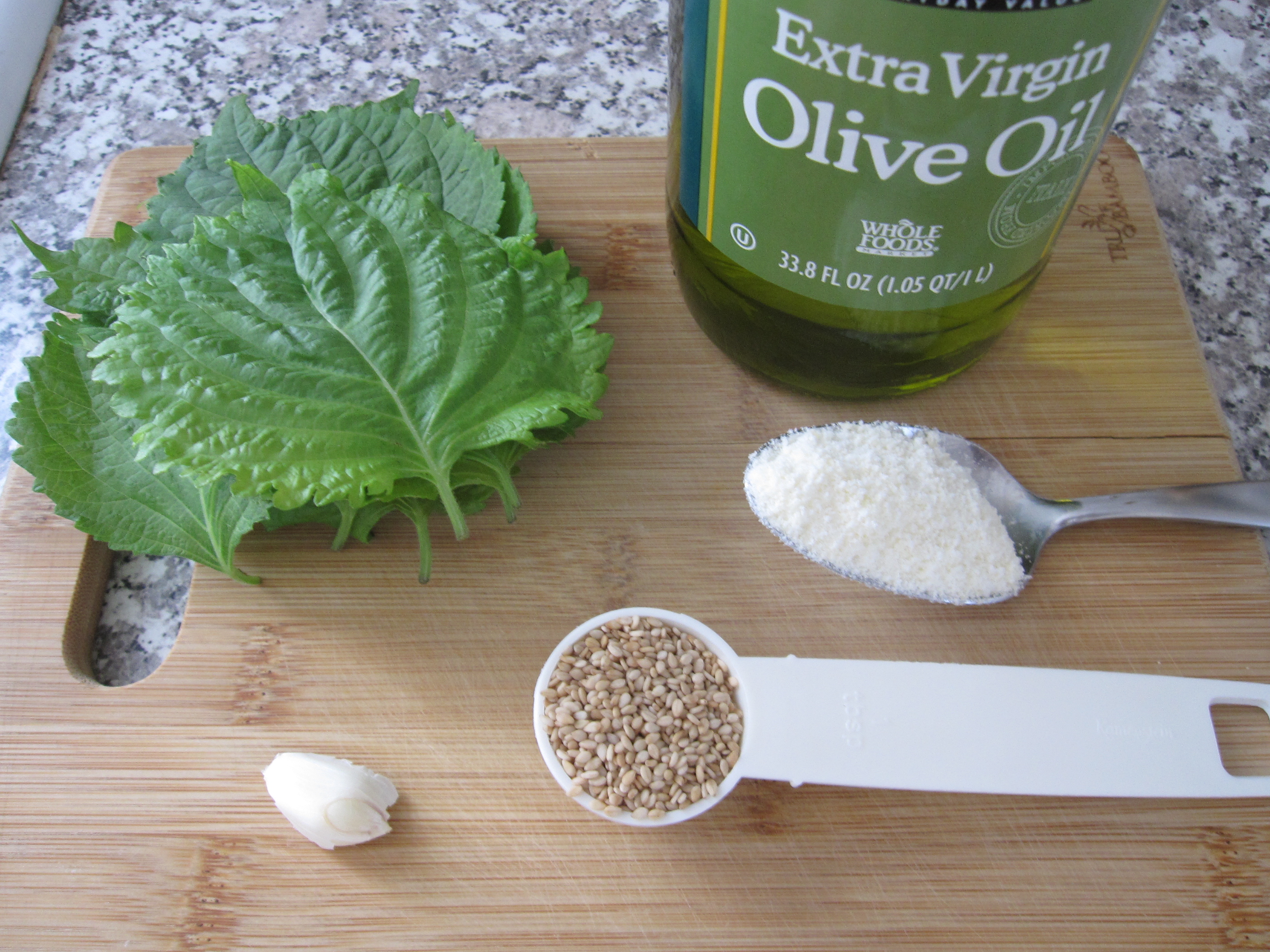
I made the pesto much like I would a regular pesto, but with a few changes. I used about 1/2 ounce of shiso leaves, one clove of garlic, 1 tablespoon of sesame seeds, 1 tablespoon of parmesan cheese, and about 1/4 cup of olive oil. I put it all in my little food processor and whipped it all up.

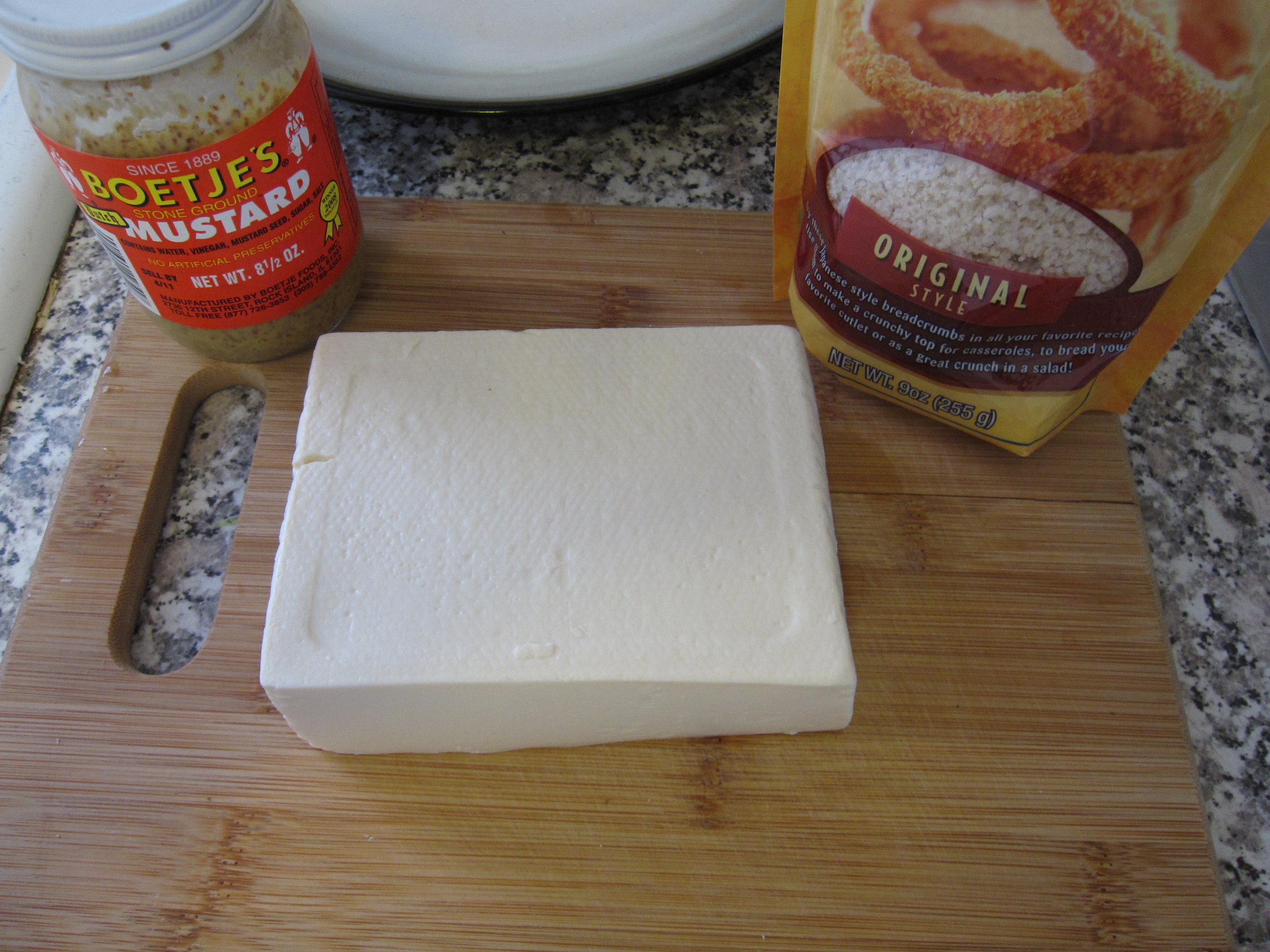
For the tofukatsu I used mustard, 1 block of silken tofu, and some panko. I pressed the water out of the tofu in the fridge for about an hour. Then, I cut it in half. I sliced the halves into 4 equal pieces to look like cutlets.

I poured some panko on a plate and then spread a thin layer of mustard on top of each tofu cutlet. I pressed the tofu, mustard side down, on the panko and spread another thin layer of mustard on the other side then flipped and pressed again. I wanted both sides of the tofu crusted in panko. In a large skilled heated to high I poured in a few tablespoons of peanut oil. I like to shallow fry in peanut oil because it has a high smoking point and doesn’t really have that strong of a flavor. I fried the tofu in two batches so as to not overcrowd the skillet. After both sides were nice and golden I laid them on a wire rack to let any excess oil drip off.

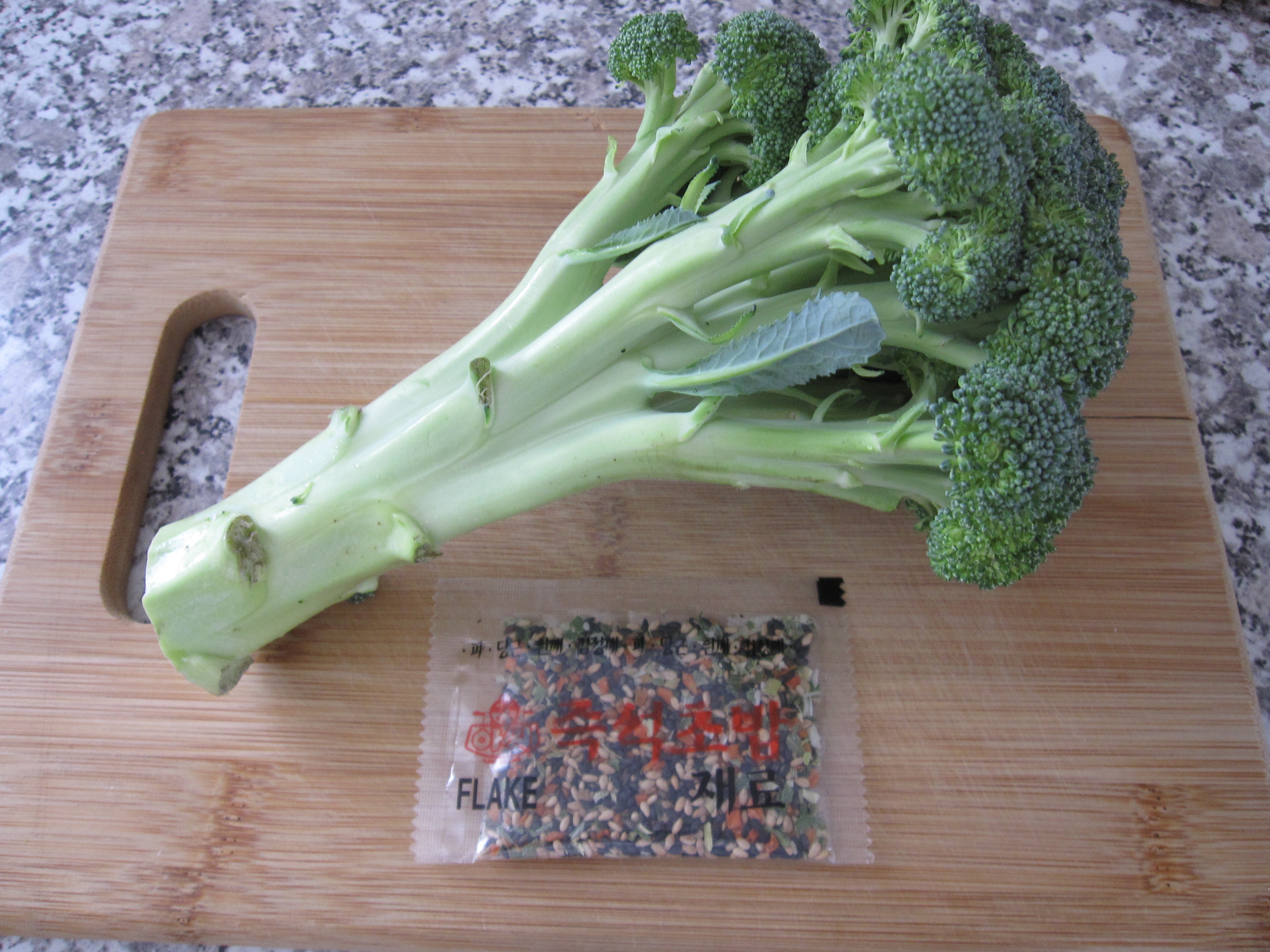
I made a couple of sides to go with the tofukatsu. One was a simple steamed head of broccoli. I cut the broccoli down into bite-sized pieces, florets and stem and them steamed it for about 4 minutes. I had a packet of mixed sesame seeds with dried carrot so I decided to sprinkle that on instead of salt and pepper.

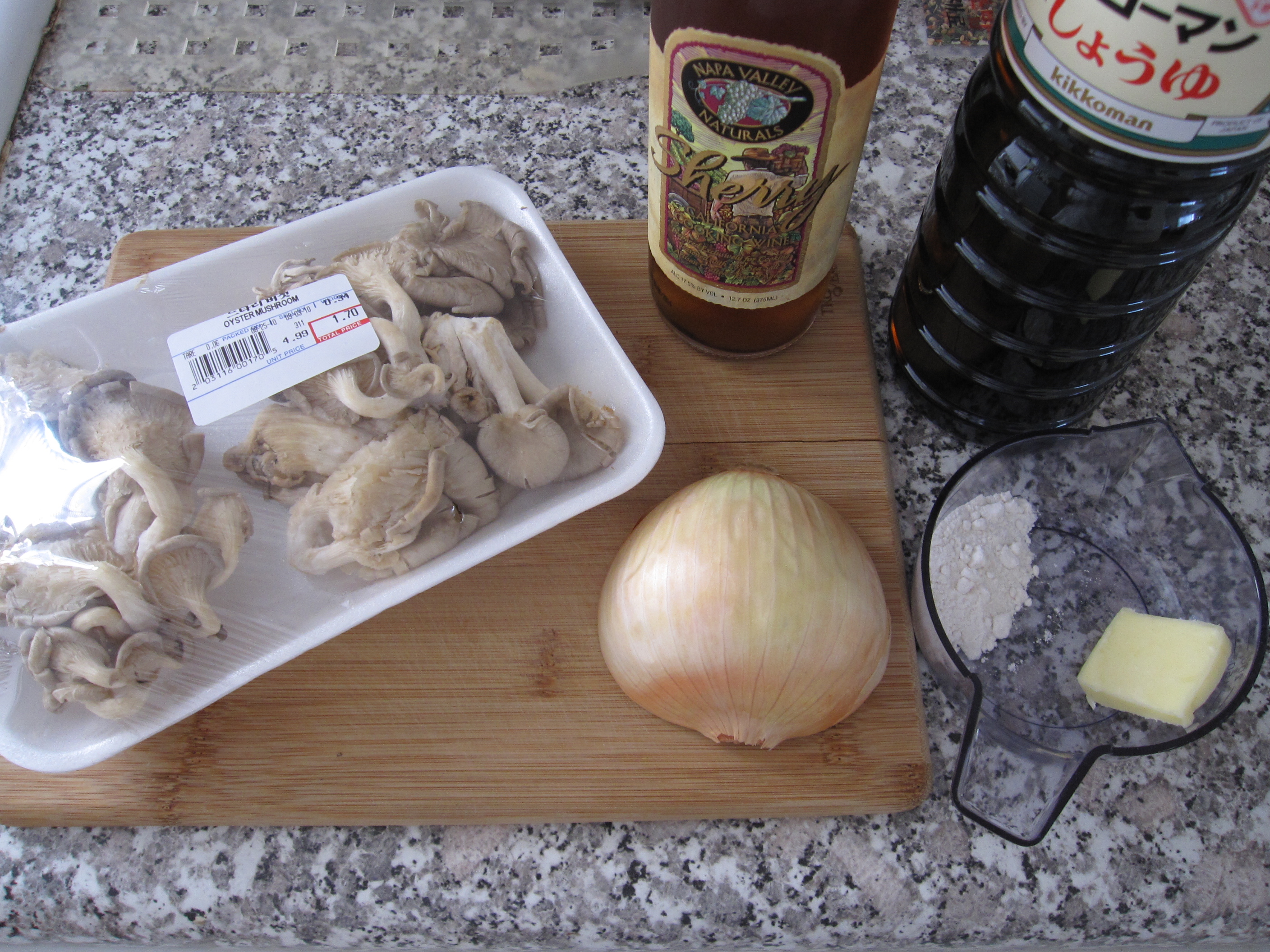
I had about 1/2 pound of oyster mushrooms in my fridge, so I decided to saute them with 1 teaspoon of sherry, 1 tablespoon of soy sauce, 1 tablespoon of flour, 1/2 tablespoon of butter, and I was going to use 1/2 onion.

For whatever reason I wasn’t feeling the onion. No rhyme or reason, I just decided not to use the onion and instead use the enoki mushrooms that were in my fridge. I also grated a clove of garlic at the last minute too.

In a hot pan I poured in about 2 tablespoons of sesame oil and put the grated garlic in for about 30 seconds. Then, I threw in all of the mushrooms, both oyster and enoki. I let them saute for about 4 minutes and then poured in the sherry and soy sauce. Once the liquid was almost completely boiled off, about 2 minutes, I poured in the flour and butter and stirred that all in. The flour thickened up the last bit of liquid while the butter made it all silky and smooth, as butter always does.

Finally, I took a daikon radish and skinned about half of it. I grated the part that I skinned and served it just as it is.

To serve everything, I had some white rice and then put some broccoli next to it and then two pieces of tofukatsu next to that. I poured a little of the pesto on top of the tofukatsu. The grated daikon went on the plate as well. It was a little sharp, so we poured a few drops of soy sauce on it. In a separate plate I laid some mushrooms down. Next to them I put some kimchi cucumbers that we picked up at the Assi Plaza. I’m not a big fan of cucumbers, but these kimchi ones are so damn good they just might make me a believer. Bon apetit!

Read Full Post »

Last night Yuki and I went to see RUSH at Northerly Island. What a great band! Because of that I didn’t cook Meatless Monday, though I did eat a falafel sandwich with some babaganoush before the show to keep with the theme. I tell ya, being at the concert really drove home the point that all Americans need to adopt a healthier diet as at least 75% of the concert goers were way overweight. That might be an understatement too. Concert seats are only so big and literally everyone around us was well over 200 pounds. I felt claustrophobic at time. America, start eating healthy well-balanced diets!!! But that didn’t stop us from enjoying the show. At any rate, I’m going to blog about the dinner we had Saturday night.

We were out in Schaumburg so that we could stop at the Tensuke Market, which is actually in Elk Grove, but just south of Mitsuwa. It’s smaller than Mitsuwa but sometimes has better deals and has the absolute best retail seafood in the Chicago area. If you want to make sashimi at home, I highly suggest making the trek to Tensuke for your fish. There’s a restaurant called Daruma that Yuki had wanted to try for a while so we decided to give it a try. Honestly, walking through the doors was almost like walking into Japan. I mean that in every good way possible.

The decor is very traditional of casual dining in Japan. The Japanese don’t put a whole lot of stock into gaudy decor, instead they prefer to focus on high quality food. The walls were poorly painted, the tables and seats a little worn down, cheap napkins (in Japan you usually don’t find any napkins). It really felt like a restaurant in Japan. Made me feel homesick even though I’m not Japanese.

Service was pretty good. All Japanese servers, but bi-lingual so don’t worry. It was the food that starred though.

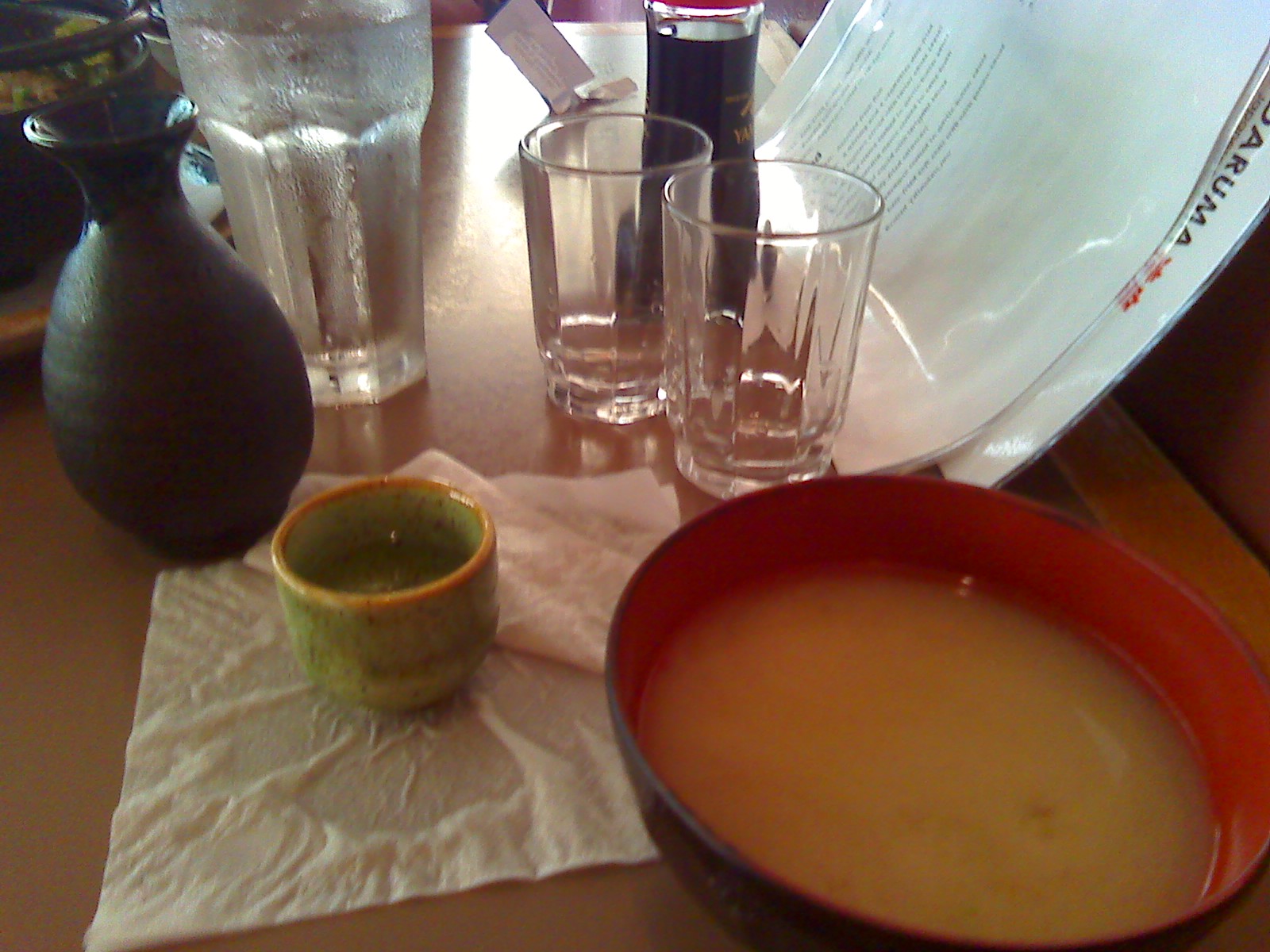
We started off with some Miso Soup. Nothing fancy, just a well made miso soup with wakame and tofu. I also had some sake. I was torn between two kinds so they gave me a couple of samples. The samples were very generous and I honestly didn’t need to order any sake due to the large pours. But, I did get a sake from the Nara Prefecture.

We got a Daikon Salad. Thin sticks of daikon served with carrot stick tempura and a shiso dressing. Carrots often accompany daikon, but this is the first time I’ve seen carrot tempura with the daikon. Nice touch. Little pea shoots for a bit of peppery bit and color.

We ordered two maki rolls. Ebi Ten, shrimp tempura with avocado, cucumber, and smelt roe. Unakyu, fresh water eel with cucumber. The sushi was good. Not the best I’ve ever had, but overall solid.

Tatsuta Age, deep-fried chicken thigh. Usually served in smaller pieces and called karage, these were pretty big chunks of chicken. Served with shredded cabbage, potato salad, pea shoots, and a slice of lemon this is a classic. It’s also one of mine and Yuki’s favorites.

Niku Tofu, a play on the popular Japanese home cooked dish called niku jaga (meat and potato). Instead of potato Daruma used tofu. It’s thin sliced beef with tofu simmered in a sweet soy broth. Also simmered in the dish were chopped napa cabbage and green onions. This was delicious!

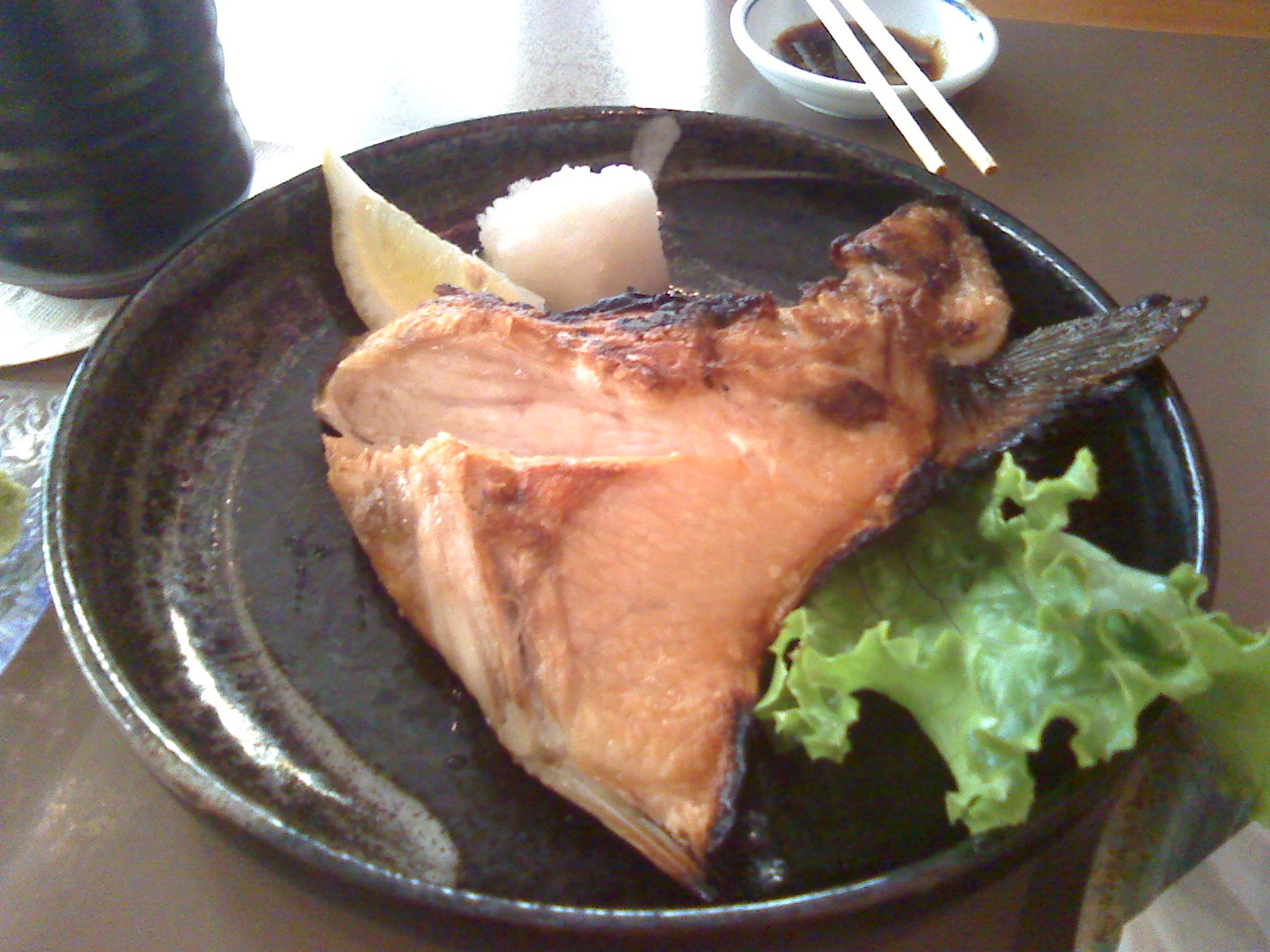
Hamachi Kama, the absolute star of the show! Yellowtail jaw broiled to perfection. You got all of that flavorful cheek meat, easily the best part of any large fish. I don’t know why this part isn’t served more in American cuisine because it has so much more meat and flavor than our prefered filets. This chunk of fish was so tasty it almost brought a tear to my eye. My stomach thanked me for eating this.

Overall, the food and ambiance at Daruma were fantastic. So far it’s the most authentic Japanese restaurant we’ve been to in the Chicagoland area. The food is delicious, portions are priced accordingly (we had leftovers), and the sake was flowing. The only downfall of this place is that I have to fight Hwy 90 traffic to get there. Next time Yuki’s parents are in town we’re definitely taking them there to show them that there is real Japanese cooking here.

Read Full Post »

Alright, back to the Land of the Rising Sun. Better known as Japan. Yuki was at a gathering with a bunch of her friends one of the Saturday nights we were there last November. Instead of hanging out with her parents, whom I love to spend time with, I met up with an ex-coworker of hers that I am also friends with, Reiko-chan, who moved back to Tokyo. We decided to meet up at the Ebisu train station and then head to one of the many Izakaya in that neighborhood. Izakaya are Japanese-style bars. Much different from what we’re used to they usually have a great chef that focuses on creative small bites that match with different types of alcohol. I had done some research and found this great little Izakaya called Ippo that focused on seafood and sake, my drink of choice.

Ippo is an extremely hard place to find. We walked all over the neighborhood for about 30 minutes trying to find it. Since Reiko is Japanese, and being Japanese speaks Japanese, I left it to her to ask various retail stores for directions. No one seemed to know exactly where it was even though we had an address. About to give up and go to a different Izakaya, I turned around and noticed the big Fugu hanging in front of the door. Finally! I needed some sake!

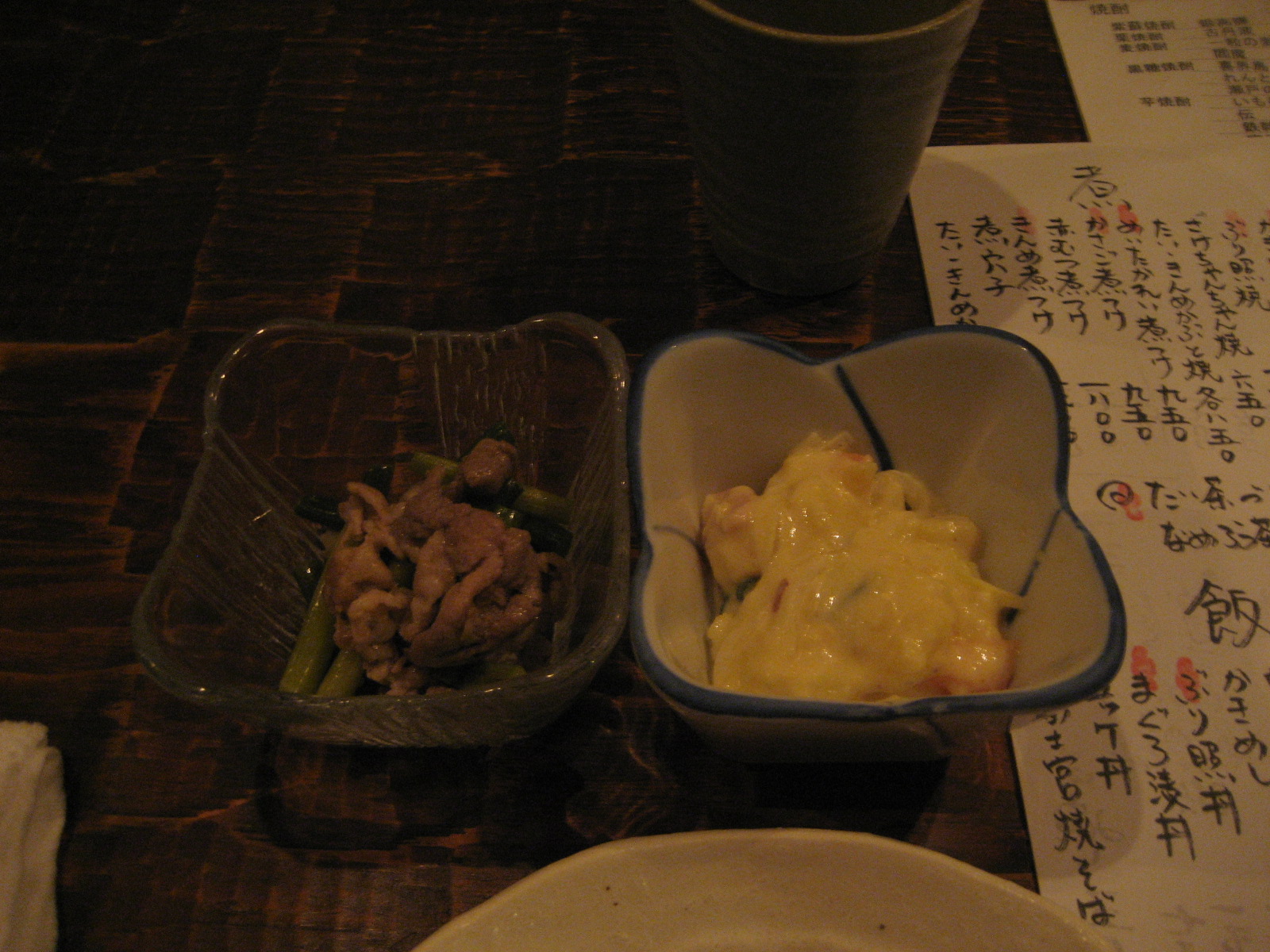
When we sat down the bartender handed us each a couple of little starters. One was a cold pork and green bean salad, the other was a macaroni salad in a mayonnaise dressing. Nice little starters, good with either a beer or sake.

Speaking of sake, their list was over fifty long, all written in Japanese. I had no idea where to start. Luckily, one of the bartenders lived in Las Angeles for a while and spoke fluent English. He also knew that sake list off the back of his hand. There were all varieties of sake from brewers both large and small as well as from every region of Japan that produces it. I honestly can’t remember what all I drank, but throughout the night I ended up putting back 4 cups of different sake, all delicious in their own way. Some more floral, some herbal, some sweeter, all fantastic selections. When I say 4 cups I don’t mean those little sake cups we’re used to getting at sushi joints, I mean 4 12oz cups filled to the rim! Love it!

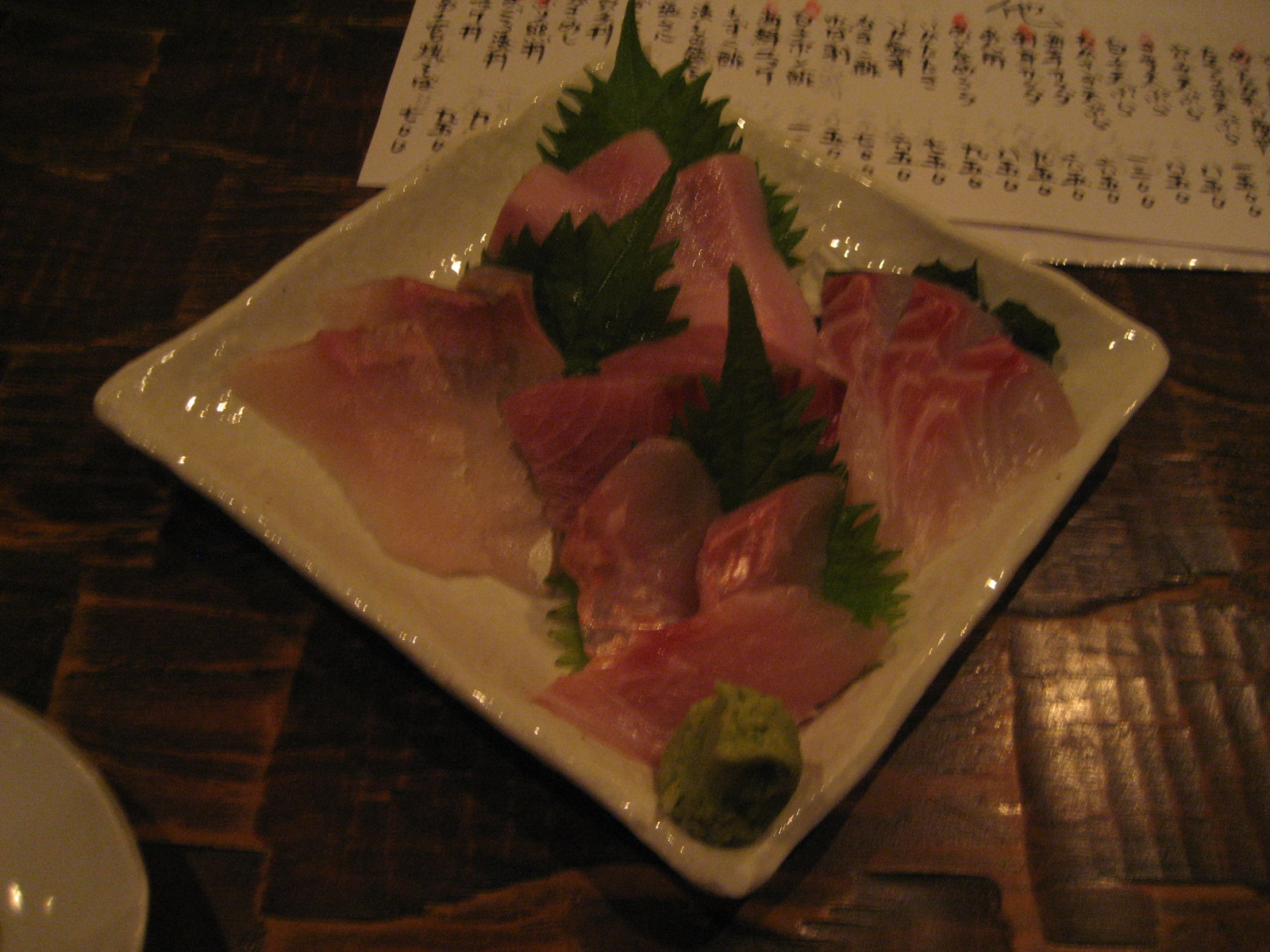
We started off with a plate of sashimi. I don’t know all of the different types, some of the communication was lost in translation, but there were two kinds of tuna and three different kinds of hamachi. I do remember that they were all fresh as can be (they get their fish every morning from the Tsukiji Market) and cut by a chef who knows how to cut a piece of fish. You can’t get sashimi that good here in Chicago.

After the sashimi we got a plate of the house specialty, Namero. It’s basically a tartare of mackerel in miso, ginger, and scallions. Mackerel is a strong-tasting fish with a lot of natural oil, but this was incredible! The miso and ginger masked the strong fishy smell and fit the flavors perfectly. I can see why this is a house specialty as it was probably the best match with sake I’ve ever had.

Then we got the Daigaku Imo, candied sweet potatoes. These were prepared different than normal though. They’re usually deep fried and then coated in a sweetened soy sauce with black sesame seeds. Here, they lightly coated them in batter that had black seseame seeds mixed in before frying, basically tempura style. The were sweet enough that they didn’t need any added sugar. Served only with some grated daikon they were a great snack to eat at a bar.

Kaki was next up. Some of the biggest, juiciest oysters I’ve ever seen on a plate! Removed from the shells and grilled all the chef did was add some herbs to them. With a squeeze of lemon they’re ready to go. If you’re a fan of oysters, you’d love these. If you hate oysters, you’d still probably love these.

After the Kaki we ordered up some Ankimo. Steamed monkfish liver served with grated daikon, ponzu, and green onions this is one of the great delicacies of Japanese cuisine. It’s called the foie gras of the sea, but in all honesty, I think foie gras should be called the ankimo of the land. It’s so soft and creamy. If not for the next dish I’d call it Japan’s greatest contribution to the world of food.

Here it is, one of the greatest things in the world. An item that will make most Americans sick to their stomach but makes my mouth water…Shirako. The king of seafood. Meaning “white children” in Japanese, shirako is the soft roe of male fish, usually monkfish, cod, or fugu (pufferfish). Basically, it’s the male fish’s genitalia. You read that right, it’s a fish sperm sack! You may be wincing at the thought of eating that, but think about it, you eat caviar don’t you? Well, this is the male counterpart to caviar. It’s extremely soft and delicate with a slightly sweet briny taste that literally melts in your mouth (and it’s not sticky!). Ippo serves it raw with ponzu, scallions, and sesame seeds. It can also be steamed. Any way you look at it, I luz me some fish balls!

My experience at Ippo really makes me sad that we have nothing like this in Chicago, or really anywhere in America for that matter. Sure, there are a handful of Izakaya-style bars throughout the country (mostly on the west coast), but nothing quite like Ippo. Just a long bar in a hidden space that serves up some of the best quality seafood and sake one could ever ask for. Why are we stuck with bars that serve nothing but big greasy burgers (not that there’s anything wrong with that), frozen wings, and chicken fingers? Let’s get some creativity into the American bar scene! Great chefs don’t need to be in a white cloth atmosphere to shine. We’d all be better off for it there were Izakayas scattered throughout the country.

Read Full Post »

« Newer Posts - Older Posts »