Feeds:
Posts
Comments

Posts Tagged ‘garlic’

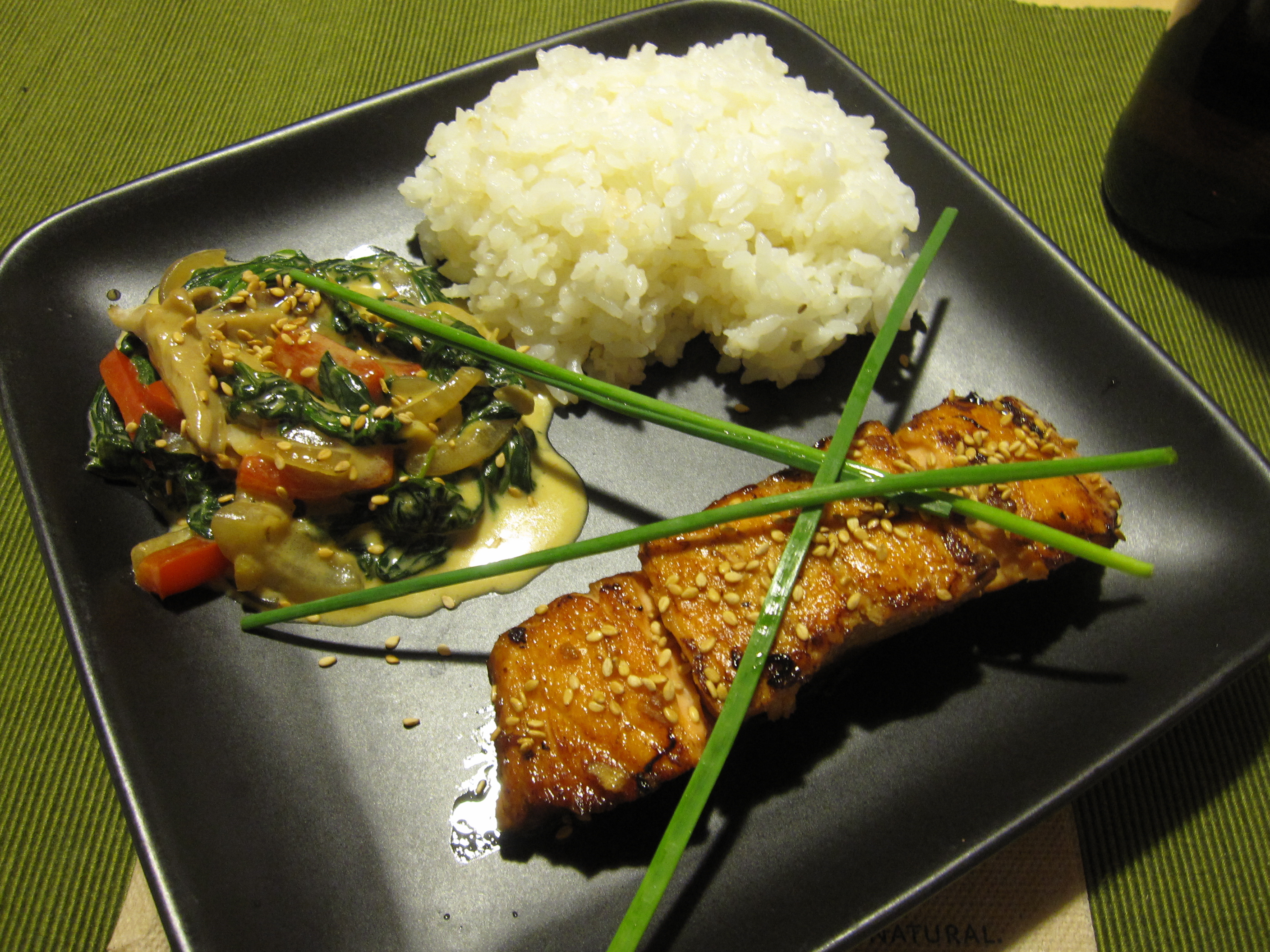
Last night I made a teriyaki-like salmon dish using maple syrup. To go with it I made sort of an Asian flavored creamed spinach with shiitake and pepper. With iron, folic acid, and omega-3’s on my mind, this dish packed them all in and then some.
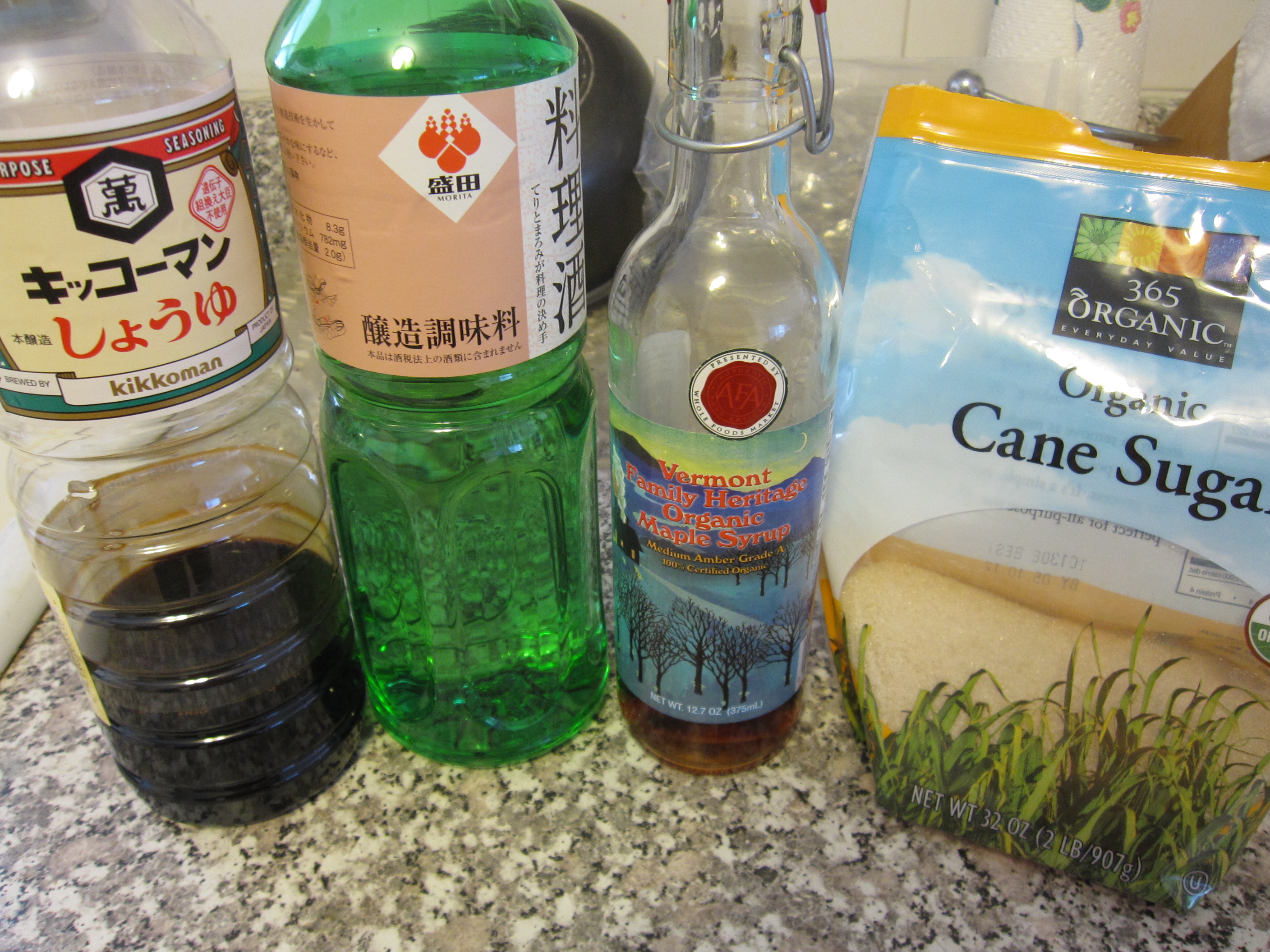
First thing I did was make the sauce. I mixed together 2 tablespoons soy sauce, 1 tablespoon sake, 1 tablespoon maple syrup, and 2 teaspoons of sugar. I set that aside and then marinated the salmon.
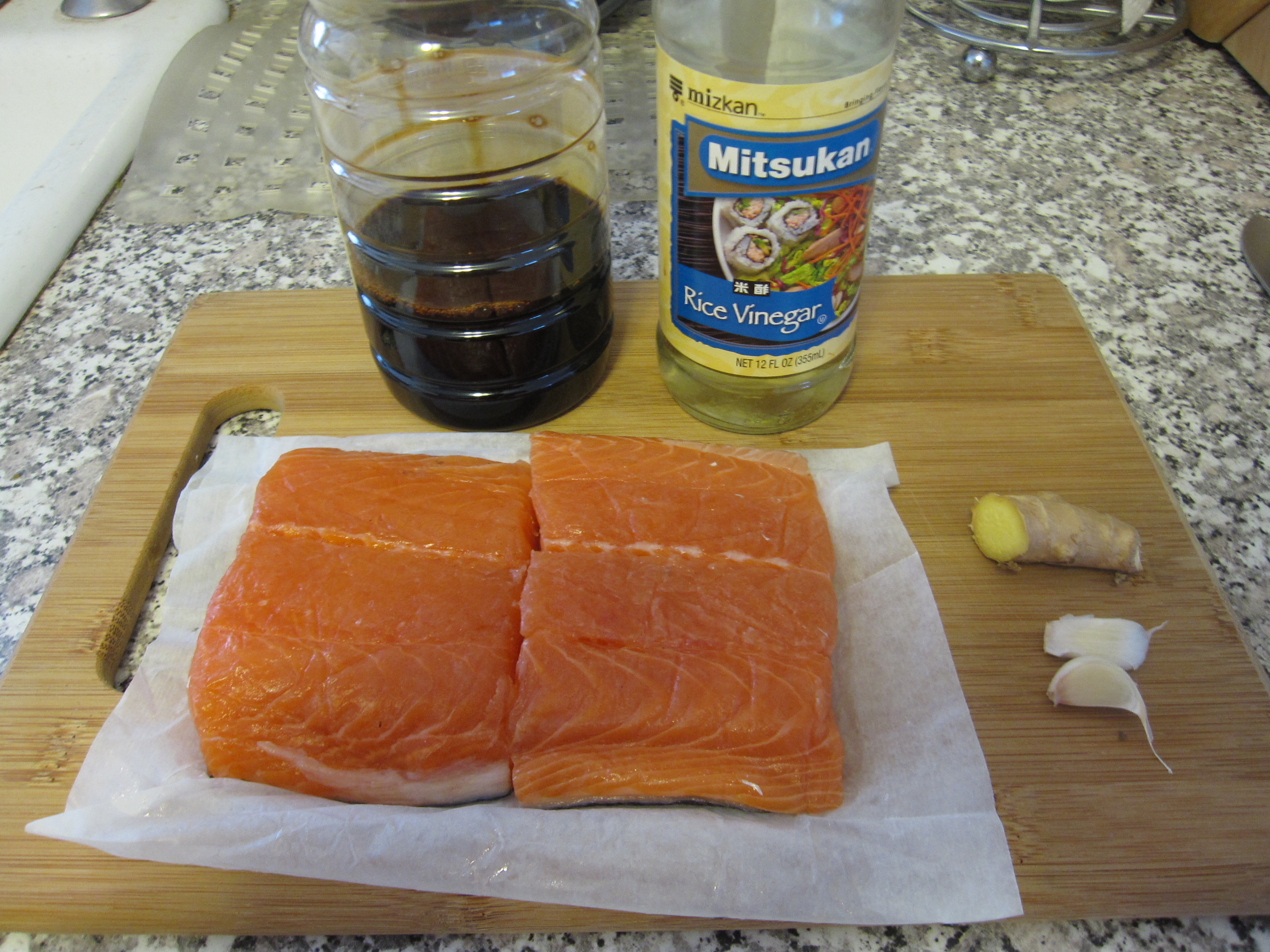
The marinade consisted of 1 tablespoon grated ginger, 2 grated garlic cloves, 2 tablespoons soy sauce, 1 tablespoon rice vinegar, and some fresh cracked black pepper. I had two 8 ounce salmon filets that I cut in half, giving me 4 4 ounce filets (check the math on that one). I coated them in the marinade, covered it up, and let it sit at room temperature for an hour.
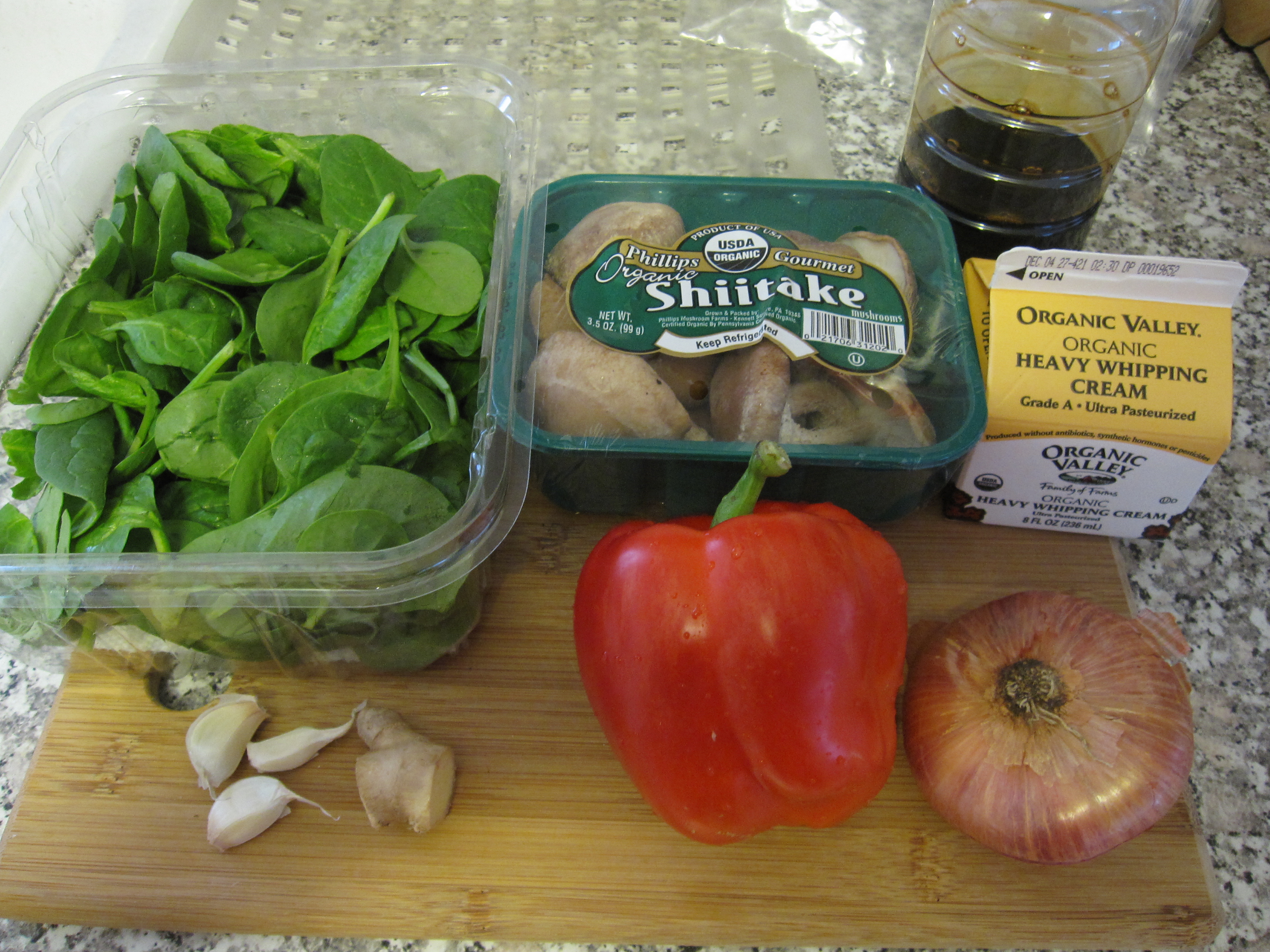
While the salmon was marinating I got the ingredients ready for the creamed spinach. I had a container of spinach, 3 garlic cloves, sliced, 1/2 inch of ginger slivered, 7 shiitake sliced, 1 red bell pepper chopped, 1 small red onion sliced, 1 tablespoon soy sauce, and 1/2 cup of heavy cream.

For the actual cooking I had to do the salmon and spinach at the same time. I’ll write about it separately, but it was a busy 10 minute stretch or so.

I heated up a large skillet over high heat and then poured in 2 tablespoons or so of sesame oil. I laid the salmon in skin-side up and let it cook for about 4 or 5 minutes, until it got a nice crust and easily released from the skillet. I poured the marinade into the maple mixture. When I flipped the salmon filets, after a couple of minutes, I poured the sauce all over each filet and let it cook for a few more minutes. Make sure you fan is on, it’ll get a little smokey. Once the sauce carmelized I turned off the heat and set the salmon on a plate.

In a separate saute pan I heated up 2 tablespoons of sesame oil and added the onion, pepper, shiitake, ginger, and garlic. I sautéed it for about 5 minutes and then added the soy sauce. About 2 minutes later I poured in the cream. Once the cream had reduced a little I added the spinach by large handfuls until it all wilted down and the cream had thickened up into a nice sauce.

Of course, some white rice on the side never hurt anyone. I garnished everything with some toasted sesame seeds and whole chives.

Read Full Post »

This is actually what I cooked last Thursday night for dinner. I had a couple of huge strip steaks that I cooked up. If you go back, you’ll see that I sautéed some red kale with onion the night before. I made way too much, we still had leftovers after Thursday’s lunch. To get rid of it I turned it into a soup to go with the steaks. I also made some garlic mashed potatoes, roasted tomatoes, and sliced some avocado.

For the soup I used the leftover kale, a can of canelli beans drained and rinsed, and one carrot chopped up. I put all of the ingredients in a soup pot along with 3 cups of water. I brought it up to a slow boil, covered the pot, then turned the heat down to low and let it simmer for 45 minutes or so while I prepared the rest of dinner.

For the potatoes I peeled and cubed 4 yukon golds and added them to a pot of boiling water along with 5 garlic cloves. I let it boil for about 15-20 minutes, until the potatoes were soft enough to mash-up. Then I drained them, put them back in the pot (garlic included), and poured in 3/4 cup of milk. I mashed it all up with salt and pepper until it was nice and creamy.

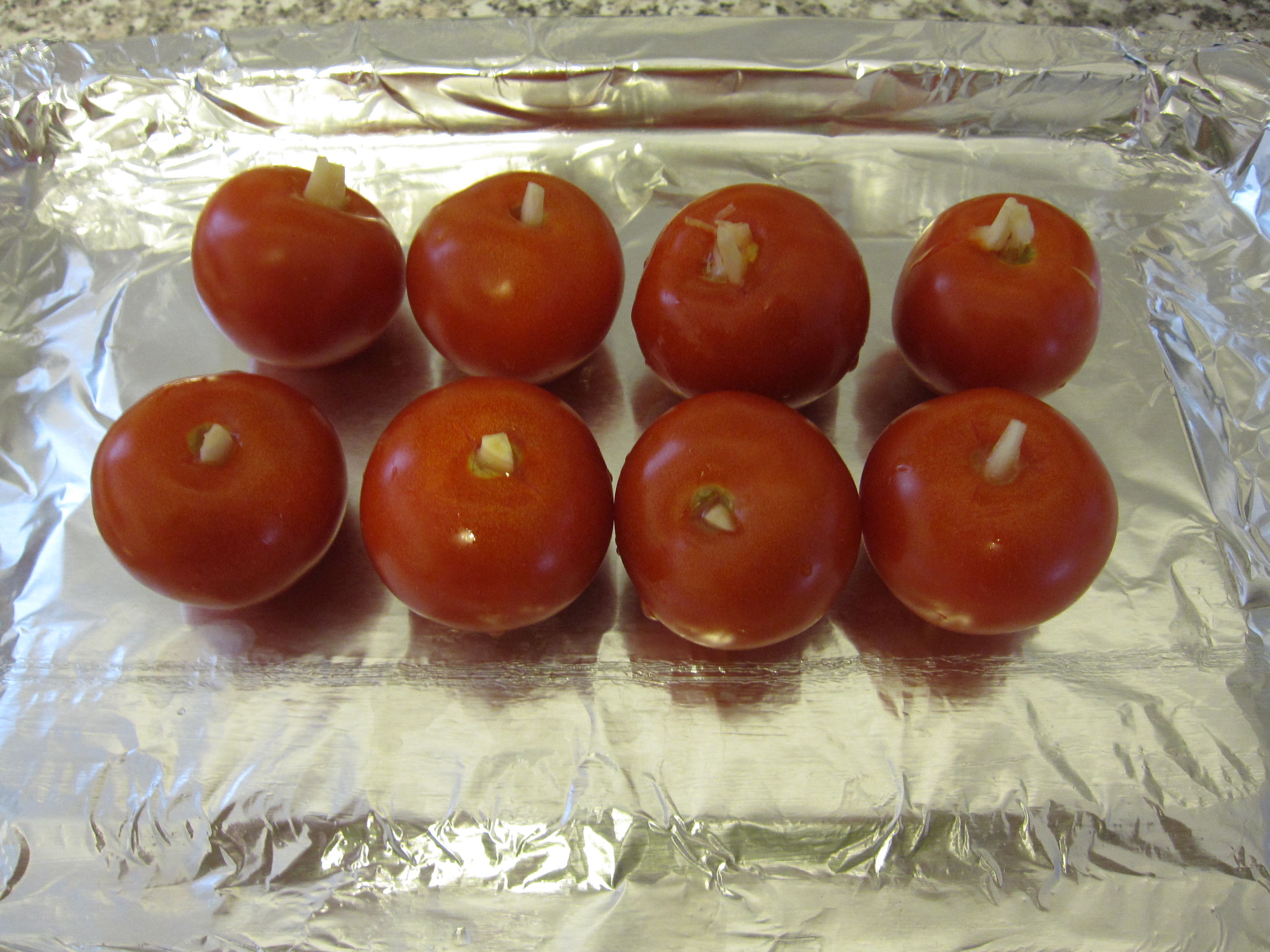
For the tomatoes I slivered a clove of garlic and speared on sliver into each tomato. I drizzled some olive oil all over and roasted them at 375 degrees for about 25 minutes.

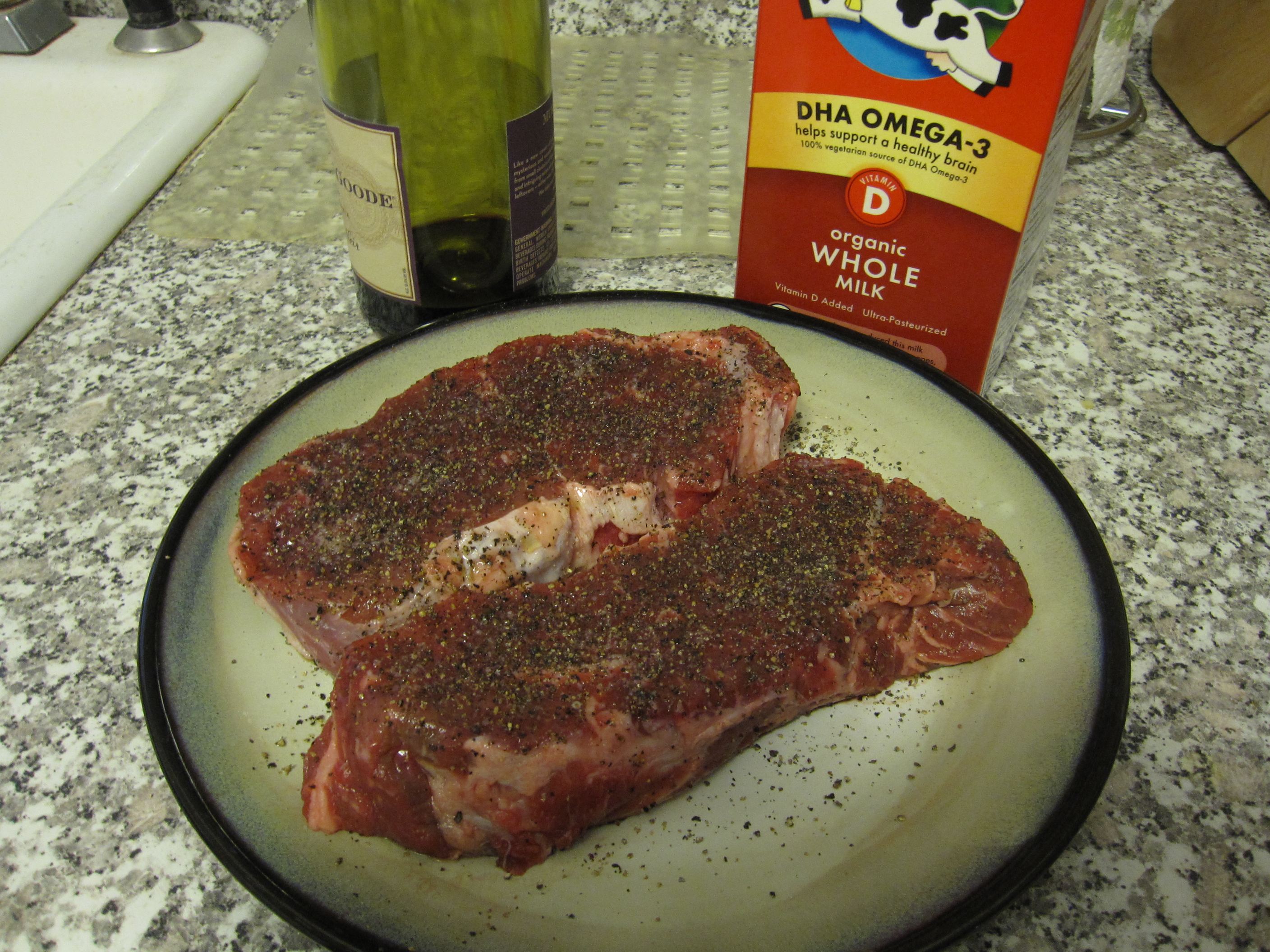
I salted both sides of the steaks and then coated them heavily with black pepper. In a really hot ovenproof skillet I melted 2 tablespoons of butter and then set the steaks in to sear them up. I let them sit for about 4-5 minutes until the bottom were nice and brown. If they are sticking to the pan, then they’re not quite ready. Once they release with ease, they’re to be flipped. I only let the side sear for about 2 minutes and then I put the skillet in the 375 degree oven for about 10 minutes. When I took it out I let the steaks rest on a plate for about 7 minutes while I made the sauce. I turned the burner back on and deglazed the skillet with about 1/4 cup of red wine. Once that reduced down I poured in 1/4 cup of milk. I let it reduce for a few minutes and then turned off the heat. Since I used milk, the sauce separated a little, that’s where cream would have been better. The sauce would have turned out nice and smooth with cream. Oh well. After the steak rested I sliced it and served it up.
I put a big dollop of mashed potatoes on one side, laid some avocado slices down on the other. I laid some steak on to of the avocados and spooned some sauce over the top. Then I put a couple of tomatoes on the plate and ladled up the soup.

Read Full Post »

So, I had some salt cured salmon filets that needed to get eaten up from our last bimble up to Mitsuwa. These salmon filets are great because the don’t need much cooking since they’re already salt-cured. With that, we also had a kabocha that Yuki wanted me to cook. However, I did not cook it how she requested. Too bad for her. Without further ado…

First thing I did was get the kabocha ready, I only used half of it. I seeded it, cut off most of the skin, quartered the half, and then cut the quarters themselves in half.

I set them in a baking dish, drizzled them with sesame oil, salt, and pepper. I boiled about 3/4 cup of water, poured that into the pan, and put the kabocha into a 375 degree oven for about an hour. The water should be mostly absorbed by the time cooking is done keeping the kabocha nice and moist, while the top gets a little bit golden brown.  Then I took 1/4 cup of walnuts and toasted them in a dry pan for about 6 minutes.

I coarsely ground them with my mortar and pestle and then added 4 tablespoons of ponzu. I let that sit while I cooked everything else.

For the kale I used a bunch of red kale stalks removed and leaves chopped down, 1 cup of chicken stock, 1/2 onion sliced, and three garlic cloves sliced. In a hot stock pot I poured in about 2 tablespoons of sesame oil and then added the onion and garlic. About 2 minutes later I added the kale and let that wilt for about 4 minutes. Then I poured in the chicken stock and seasoned with salt and pepper. Once the stock came to a boil I loosely covered the pot, turned the heat down to medium-low, and let it simmer for about 30-40 minutes (however much time I had left on the kabocha, it doesn’t matter as long as the kale simmers for a while).

Once the kale got going I started the miso soup. I used a heaping service spoon of shiro miso, about 4 inches of daikon sliced and quartered, one small carrot cut in half moons, 4 green onions chopped in 1 inch lengths, 1/4 cup of dashi seasoned soy sauce, and 3 shiitake sliced. In a soup pot I poured in 4 cups of water and added everything except for the miso. I brought it to a boil, then covered the pot, and turned the heat down to medium-low to let it simmer for about 15-20 minutes.

I just rubbed some sesame oil on both sides of the salmon and then seasoned with pepper. My toaster oven has a broiler setting, so I just turned that on and broiled the salmon for about 8 minutes. That was just enough time to cook it all the way through and crisp up the skin. When it was finished it was time to put everything together.

I left the salmon as is. Put some of the kale on the plate and then a couple of pieces of the kabocha. I topped the kabocha with the walnut-ponzu mixture. I mixed the miso into the soup and served that up. Then I served some white rice along with everything, mainly to balance the saltiness from the salt-cured salmon.

Read Full Post »

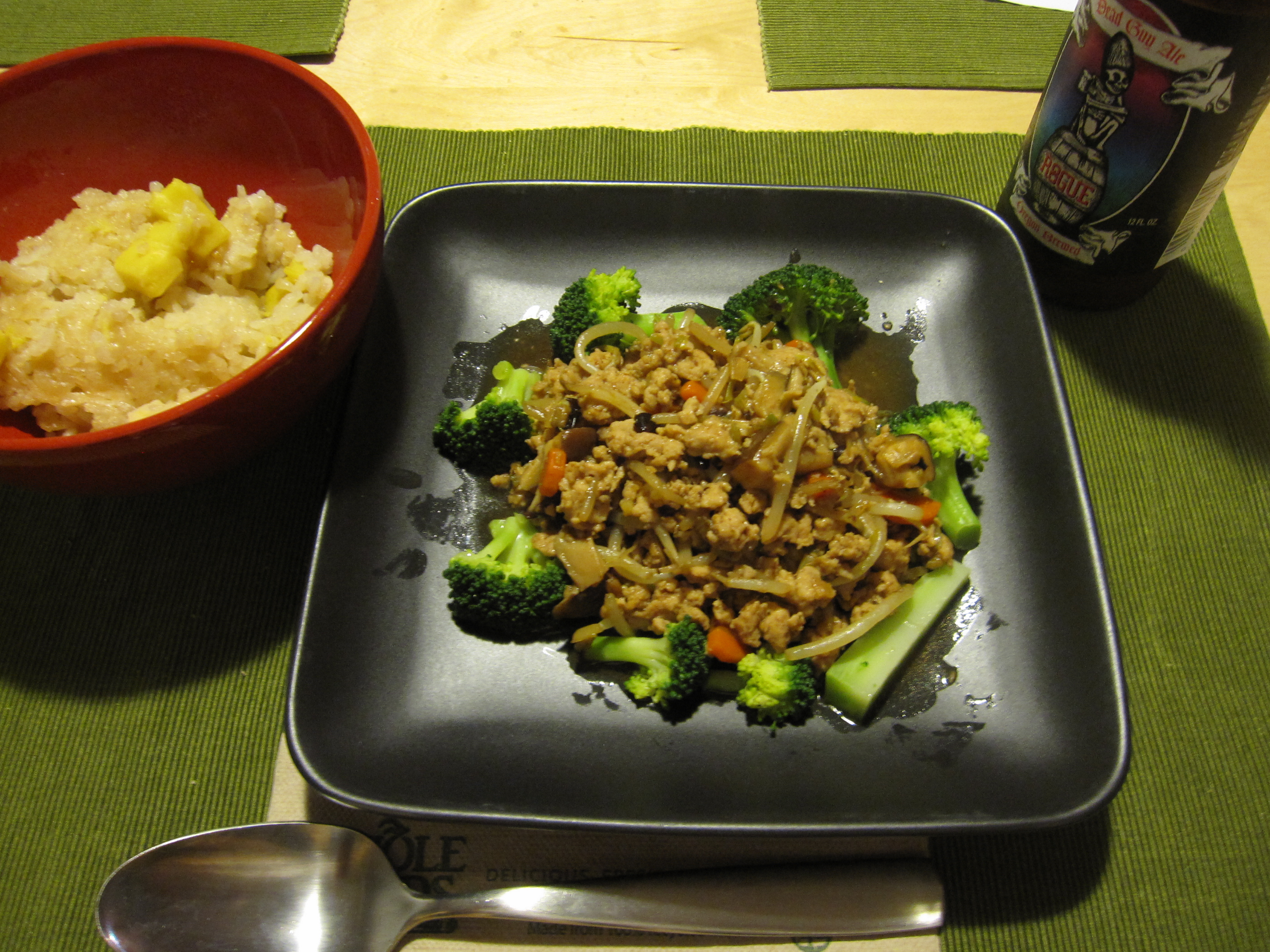
For dinner last night I made a simple Chinese-flavored ground chicken stir-fry. For the sauce, I used fermented black bean and garlic sauce. It’s a real easy way to get a lot of flavor into a quick, healthy dish.

My ingredients included 1 carrot cut into half moons, 1/2 pound bean sprouts, 2 tablespoons soy sauce, 10 green onions thinly sliced, 3 tablespoons of black bean and garlic sauce, a package of shiitake diced, 1 head of broccoli cut into florets, 1/2 inch ginger, minced, 3 cloves garlic minced, and 1 pound of ground chicken thigh.

First thing I did was to mix up the sauce. In a small dish I mixed the soy and black bean sauce. After tasting it, I decided to add a little sweetness so I mixed in 1 tablespoon of mirin. I set that aside and heated up a saute pan.

Once hot, I poured in about 2 tablespoons of sesame oil and then added the ginger and garlic. I let them sizzle for about 30 seconds and then added the carrot and green onions. I sautéed them for about 3 minutes and then added the chicken. I broke up the chicken as it cooked for about 7 or 8 minutes and then added the shiitake. Once the shiitake were coated with the rest of the ingredients I added the sauce and mixed it around. At this time I put the broccoli into my steamer. Broccoli only needs about 4 minutes to steam to a nice al dente and at this point all I need to do with the stir-fry was let the sauce boil down a little and add some pepper and the bean sprouts. So, that’s what I did. Easy as that.

The other day Yuki had made some sweet potato rice that we didn’t finish. Instead of making new rice I decided to use that up. White rice probably would have matched better with the slightly salty dish, but the sweetness of the sweet potatoes wasn’t that bad of a match, and it added a higher nutritional value to the meal. So did my beer.

Read Full Post »

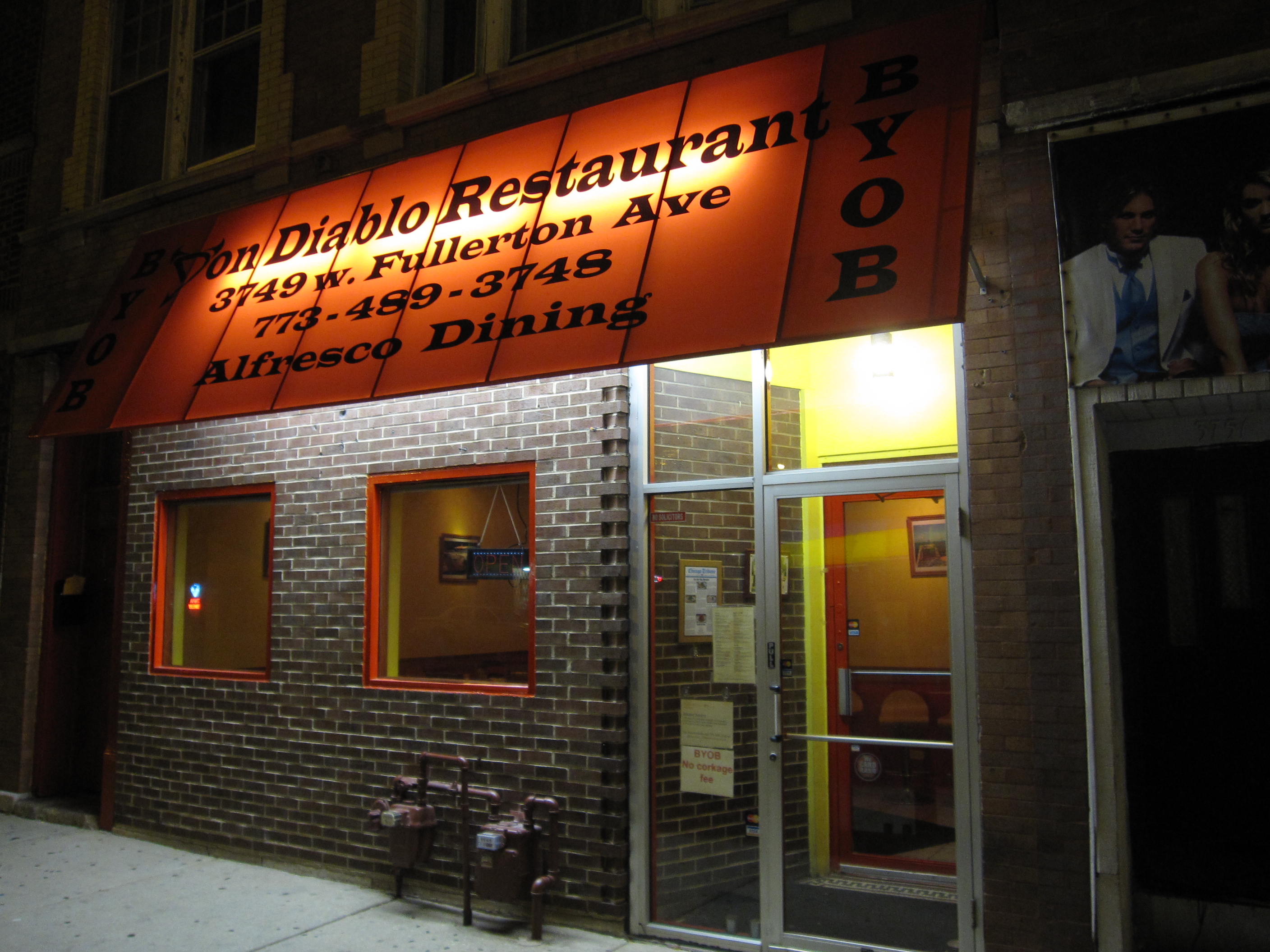
This past Friday night Yuki and I had dinner with our friends Nick and Andrea. I was charged with finding a place that none of us had been to before. Yuki had mentioned a taste for tamales so I thought I’d find a Mexican joint. Since Nick and Andrea have travelled extensively through Mexico I knew it wouldn’t be hard to convince them to try Don Diablo with us. I believe Nick’s response was, “you had me at tamales”. So, we headed over the former Fonda Del Mar current Don Diablo, and we’re all damn glad we did.

It’s a little out of any gentrified neighborhood so there aren’t many people who know about it yet, but I think that will all change soon. Especially since it’s BYOB, keeping costs down.

The interior is very quaint. It has an exposed kitchen and the tables aren’t to close together that you’re bumping up against strangers. Music wasn’t too loud so you don’t have to shout in order to converse. The service was also pretty good. There was only one waitress, but with only 4 tables we never got antsy waiting for service.

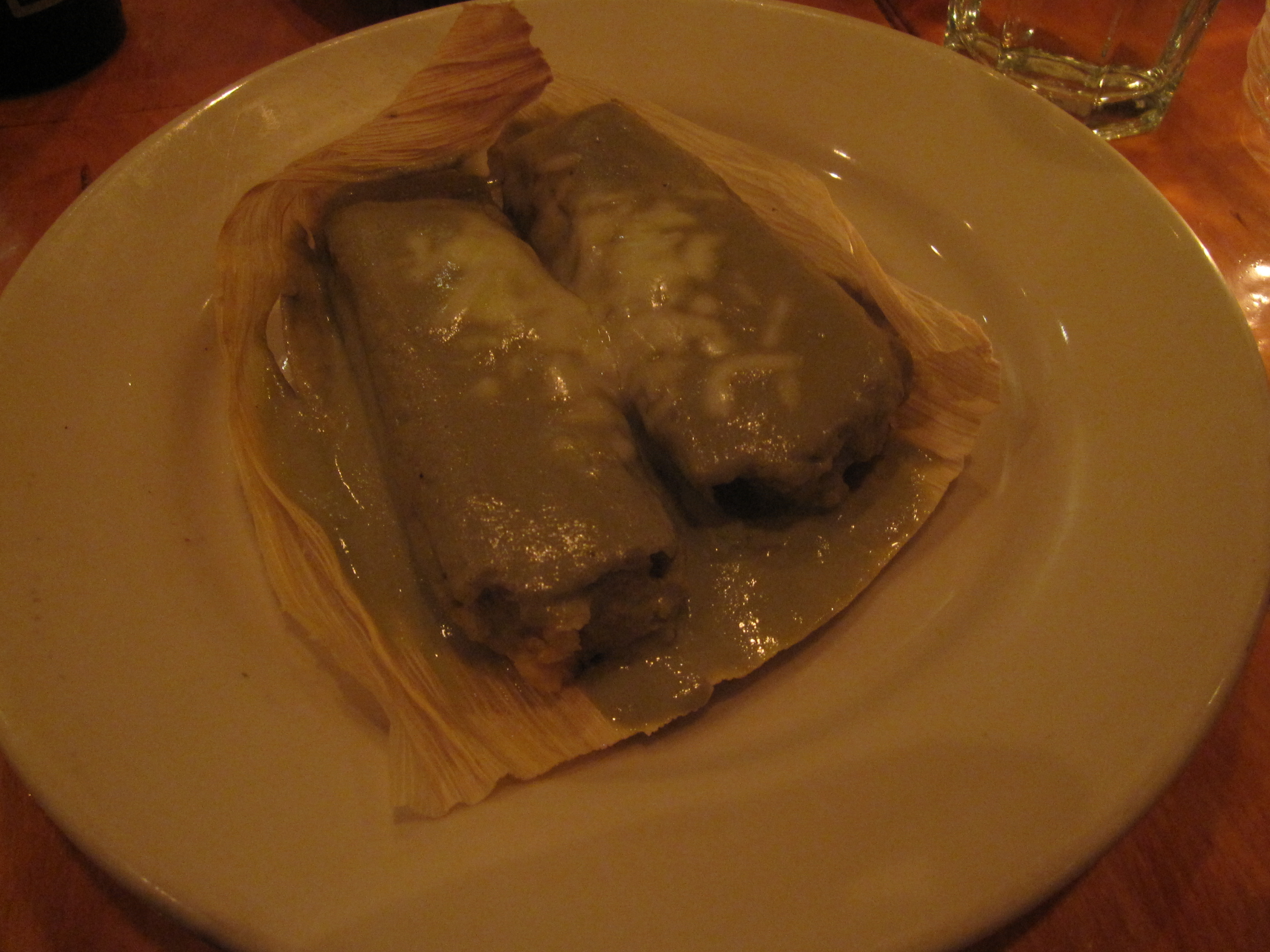
Of course, we started with the tamales. Chicken filled and topped with a green sauce and some melted cheese. They put a lot of whole kernels in their masa which gave a little bit more sweetness to the dish. It took a couple of bites to get used to it, but after those couple of bites I found that I really enjoyed them. With two tamales per order we got two orders so that we each got our own.

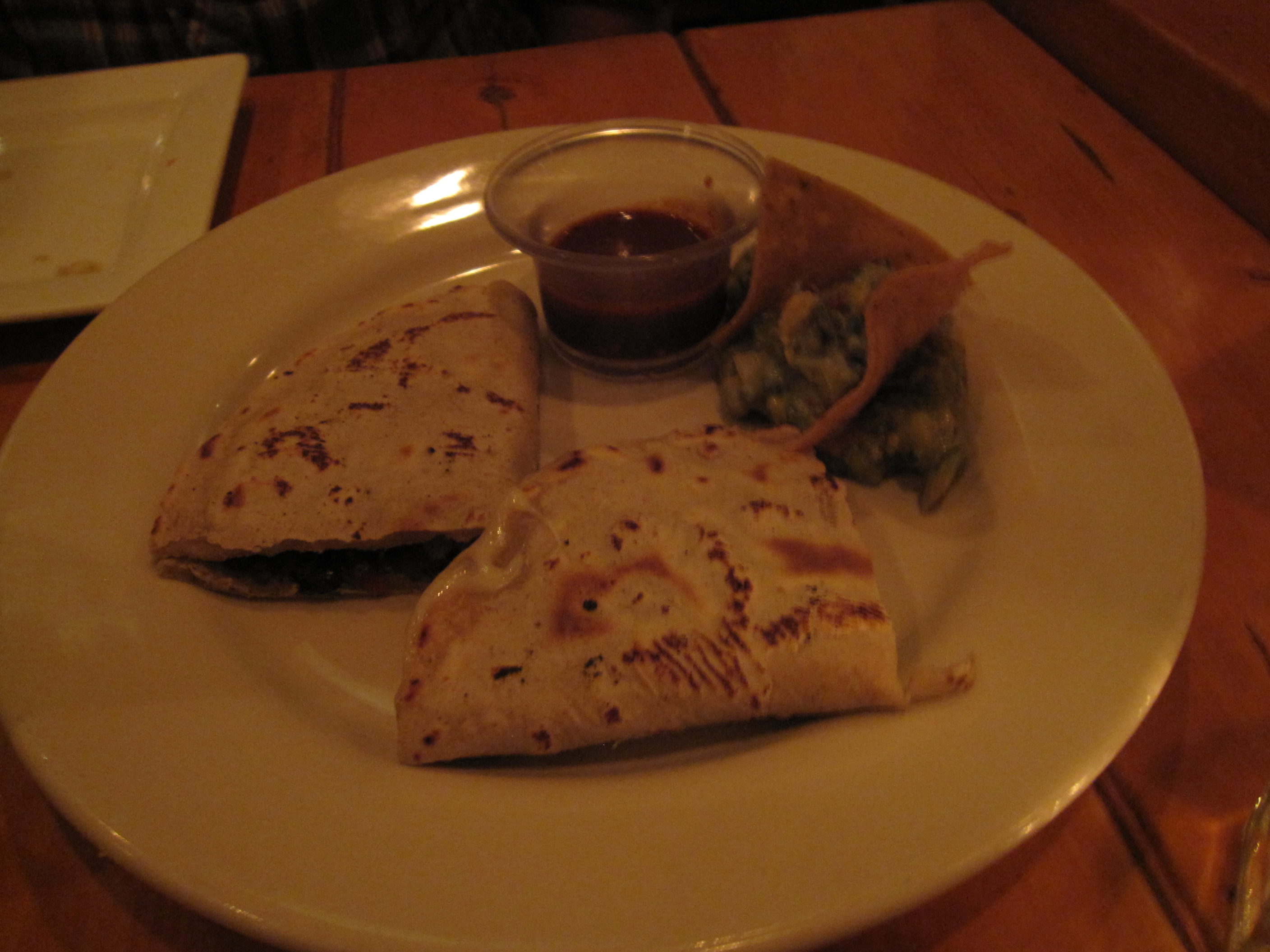
The other appetizer we tried was the Quesadillas De Huitlacoche. You almost have to order huitlacoche whenever you see it because it’s such a delicacy with a great earthy flavor. That said, I don’t think they really showcased the huitlacoche all that much in these. With chihuahua cheese, epazote, and guacamole on the side the huitlacoche almost got lost. Don’t get me wrong, they were very good, but I wanted more huitlacoche flavor.

Nick and Andrea each ordered the Enchaladas De Pollo. They did so for the mole. It had a very deep chocolate flavor, but was smooth and delicious. Not an outstanding plate, but a very very good one.

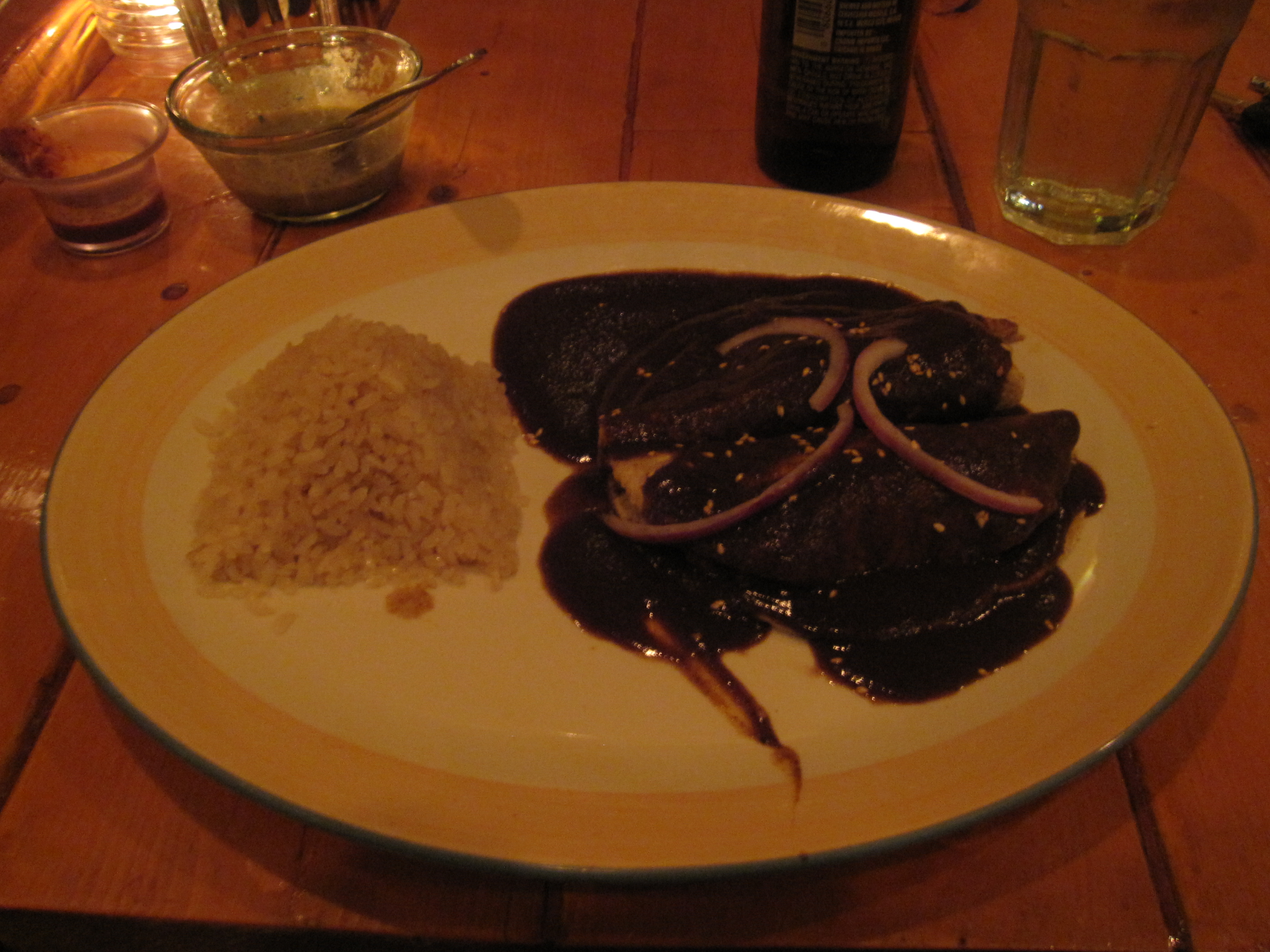
I ordered Puerco en Mole. Really soft and perfectly cooked pork loin served in a green mole with pumpkin seeds. The mole was very light which was nice because it didn’t overpower the pork flavor. It also came with garlic mashed potatoes with melted cheese. Another very very good dish.

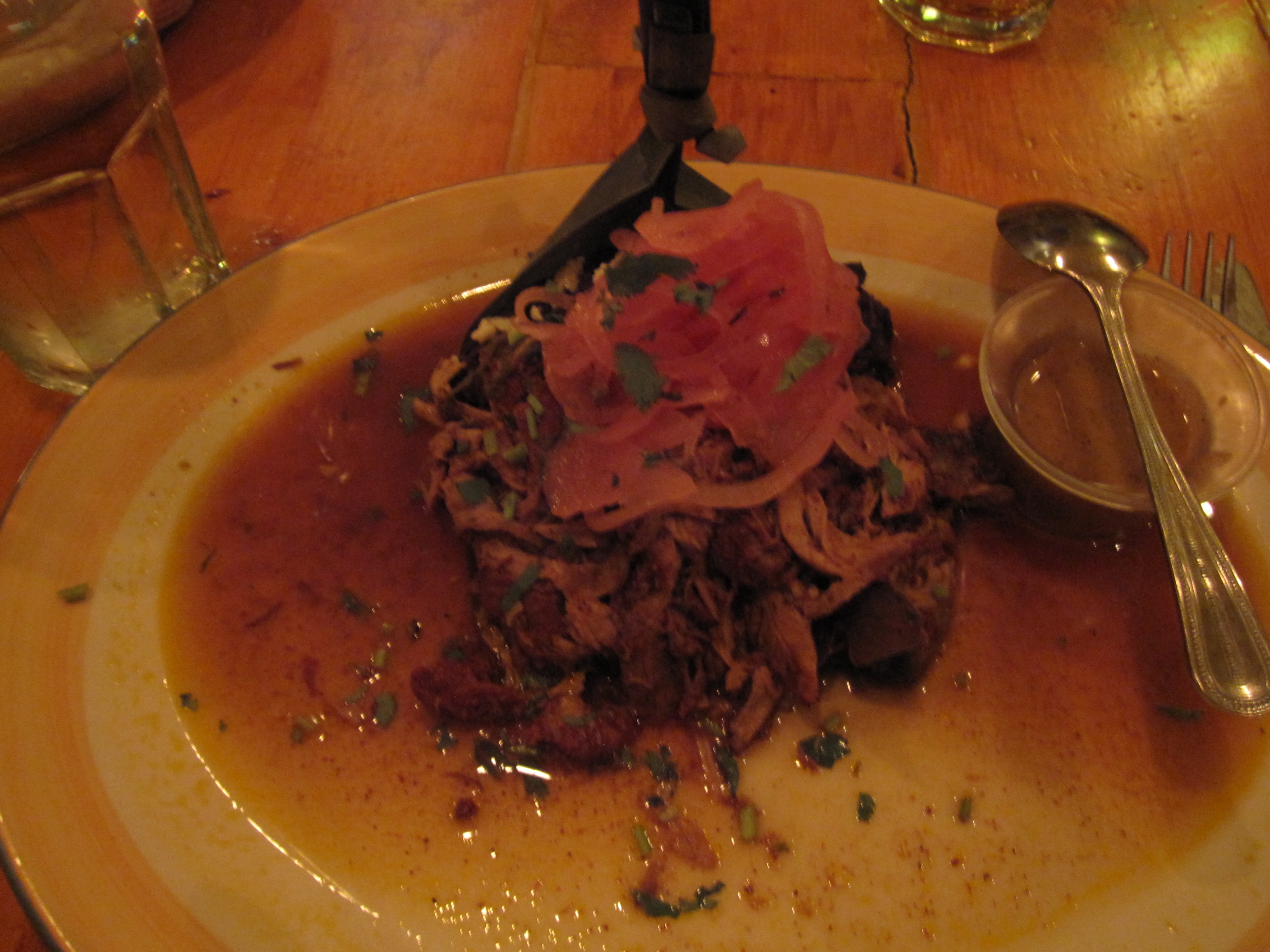
Ah, the piece de resistance! Yuki ordered the Cochinita Pibil. Slow cooked pork shoulder cooked in a banana leaf and served with black beans, pickled onions, and a spicy habanero salsa. This was one of the best pork dishes I have ever eaten in Chicago. If it were socially acceptable I would dress myself in cochinita pibil and prance about town. The pork was fall-apart tender full of flavor. The pickled onion just explodes in your mouth. The beans add substance. The habanero salsa was the perfect level of spice, a slow burn that coats your mouth but isn’t overpowering and makes you want to come back for more. This dish was truly impressive.

We kind of shared three desserts. Coconut Flan was one of them. It was a little thick, but had a great flavor.

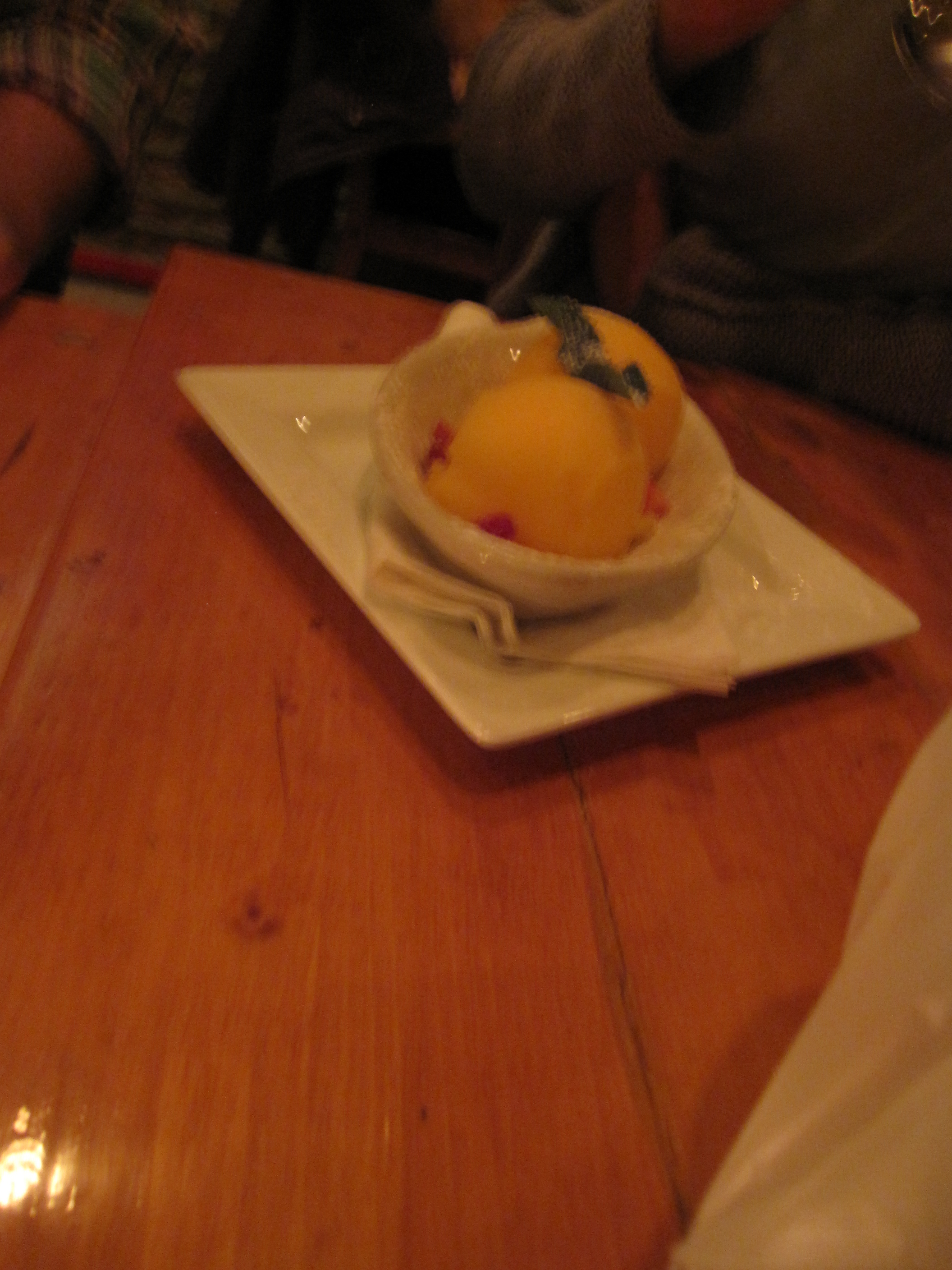
Mango sorbet, nice and light with a great natural sweetness.

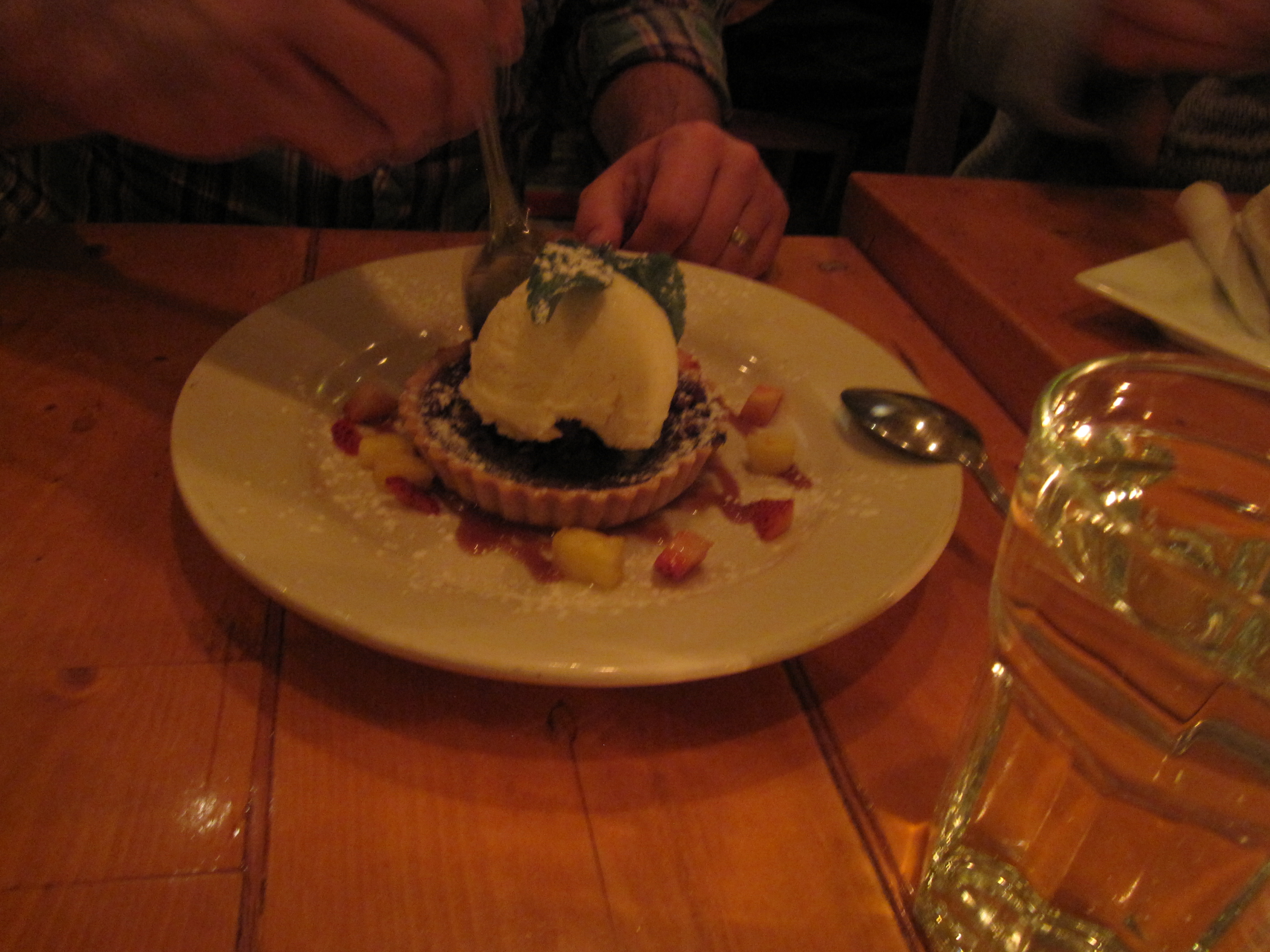
And a Pecan Pie with vanilla ice cream, not really what I think of when I think of Mexican dessert, but a delicious one nonetheless. I’m not sure if the desserts were homemade or brought it, but they were pretty good.

Overall, I find Don Diablo to be one of the best kept secrets in Chicago Mexican dining. Every dish was cooked perfectly with nice balance and quality ingredients. Service was efficient and friendly. The price point was excellent, you’ll be hard pressed to find a better value for a Mexican meal like this. Cochinita Pibil is a true masterpiece. I would crawl on my hands and knees in the middle of January to get a taste of that again.

Read Full Post »

Last night I made a fajita fiesta for dinner. We picked up a couple of pomegranates the other day and I wanted to use some in guacamole. So, I made up a Mexican meal.

The first thing I did was make a real simple corn soup. I took 4 ears of corn, 1/2 onion, and 1 garlic clove. I stripped the kernels from the ears and tossed it all (ears included so I wouldn’t lose all of the milky flavor) into a soup pan. I chopped up the onion and garlic, tossed them in the pan as well. Then I poured in 3 cups of water. I brought it to a boil, covered the pot, turned the heat down to medium-low, and let it simmer for about 7 minutes. I turned off the heat and let it cool down a bit.

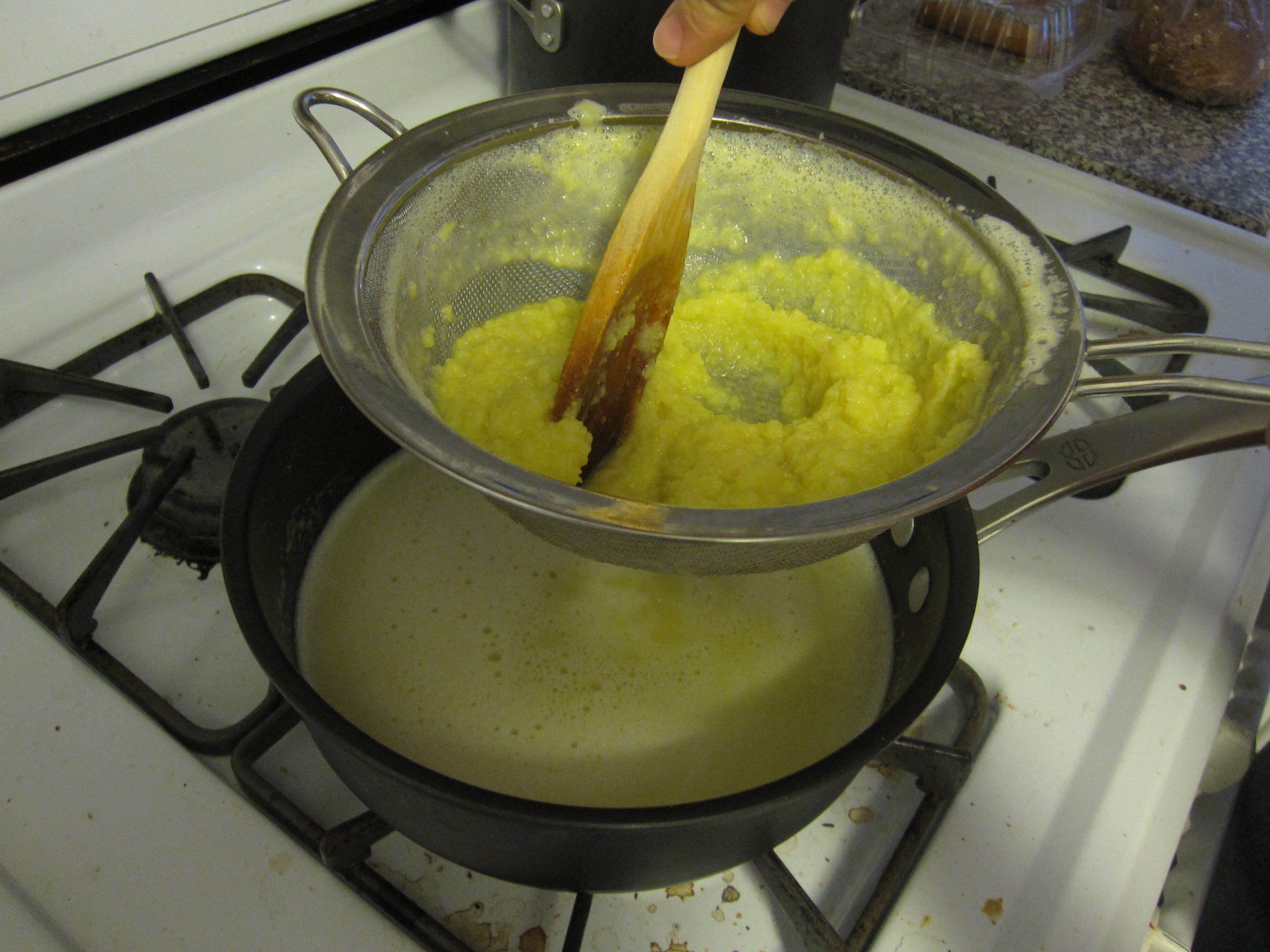
After it cooled a little I discarded the ears and poured the rest into my blender and pureed it. I wiped out the pan and strained it back in then seasoned with some salt and pepper. I let that sit covered while I prepared the rest of the dinner and just re-heated it for service, garnished with some cilantro.

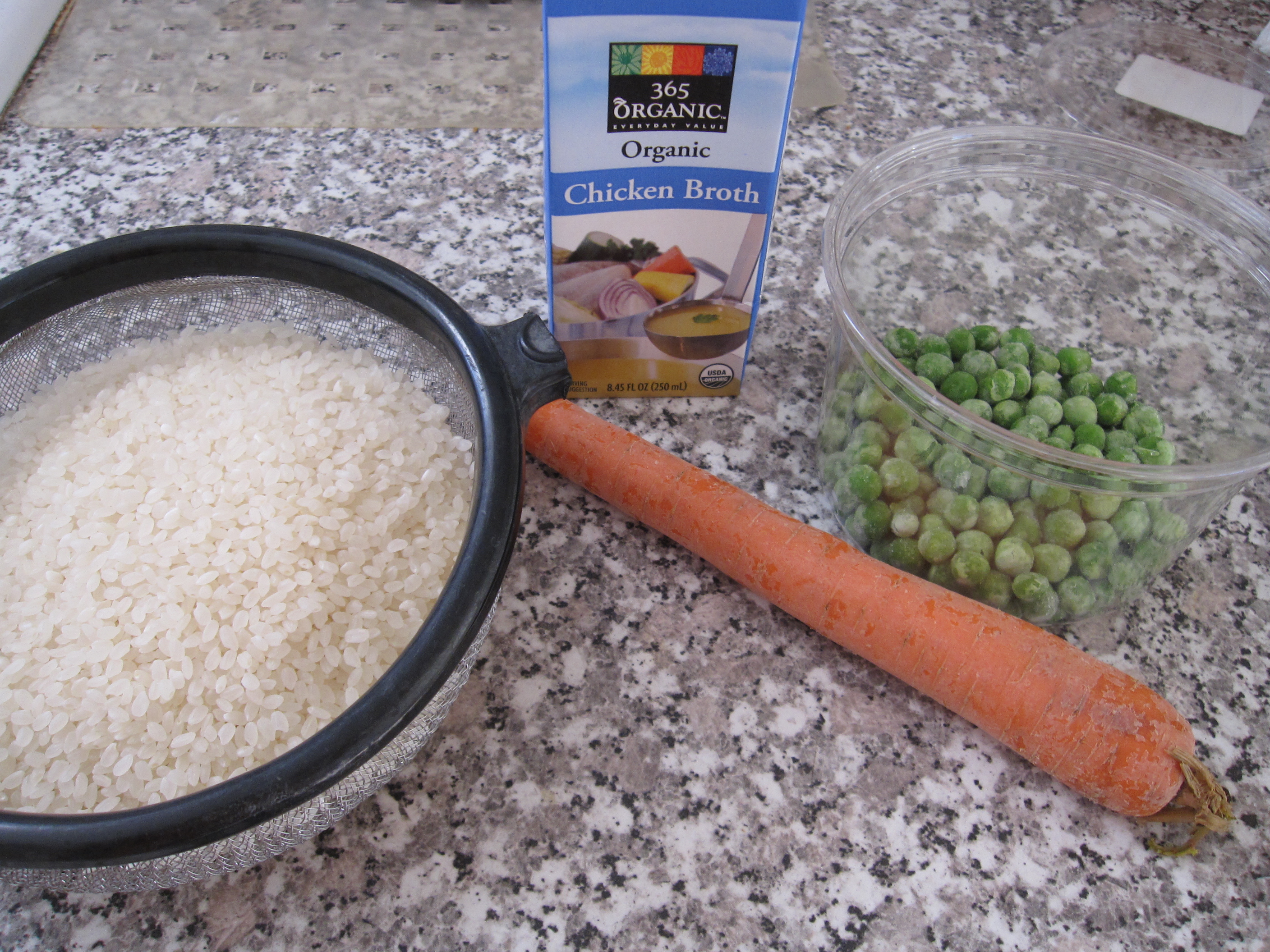
For the rice, I used my rice cooker to make 2 cups of rice, but added 1/4 cup defrosted frozen peas, and 1 carrot chopped into quarter moons. I also replaced 1 cup of the cooking water with chicken stock to deepen the flavor a little. I hit the start button and let the cooker do it’s thang.

Then I put together the guacamole. I used 3 avocados, 2 plum tomatoes (the pic shows 3, but I only used 2), 1/4 onion, 1/2 pomegranate, the juice from 1 lime, 1 garlic clove minced, and some cilantro. I actually started on the onion quite a bit earlier. To take the bite out of without cooking I diced it and soaked it in cold water for about 2 hours. That keeps it crisp but eliminates the rawness. In a glass bowl I let the minced garlic soak in the lime juice for about 10 minutes to mellow it out a bit, then I added everything else and mashed it u with a fork keeping it a little chunky. I seasoned it as needed and then set it aside (I did snack on it while I cooked).

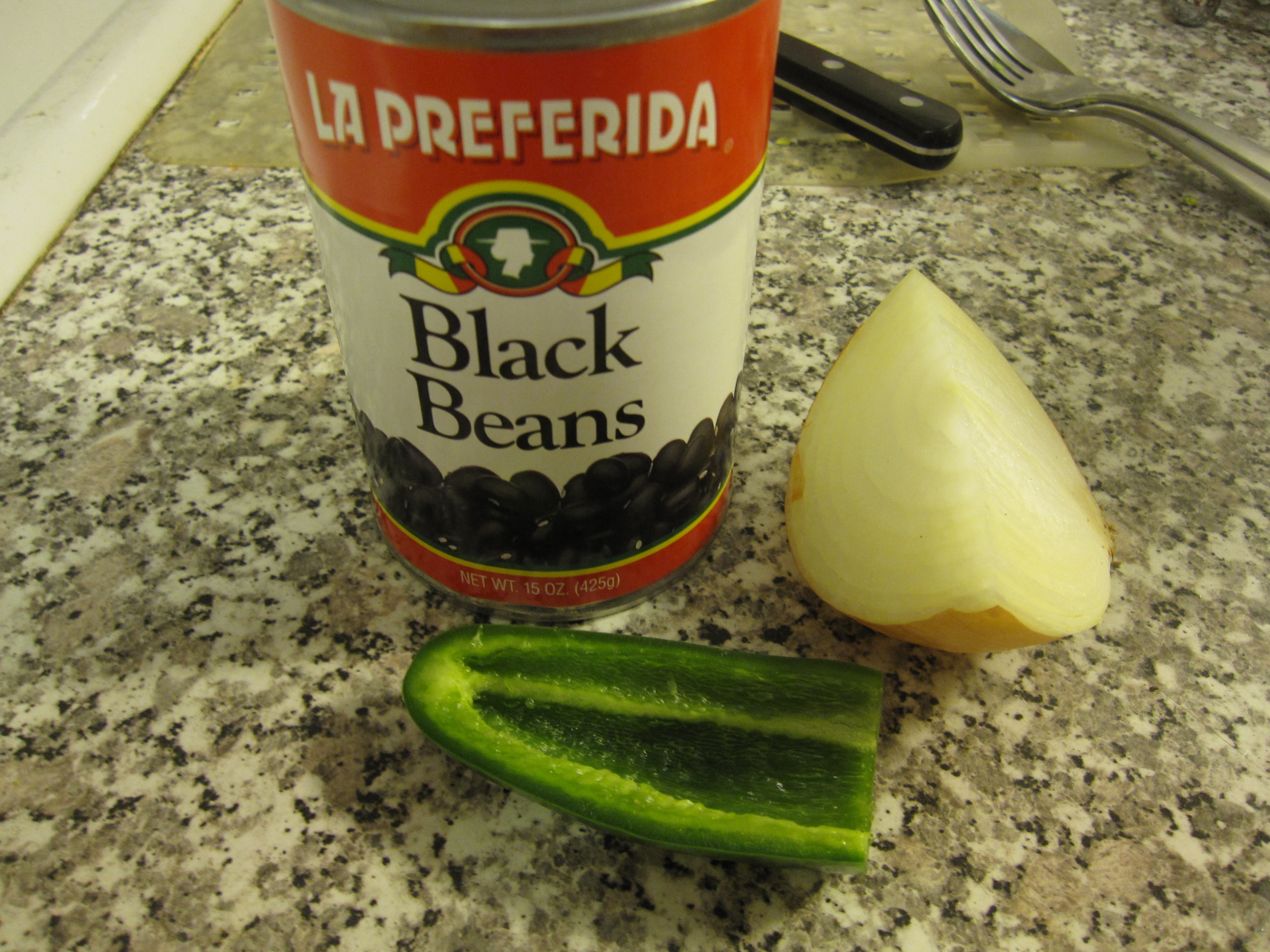
For the fajita I used 1 teaspoon cayenne, 1 teaspoon cinnamon, 2 teaspoons dried oregano, 1 tablespoon sugar, 1 green bell pepper sliced, 1 orange bell pepper sliced, the zest and juice from 1 lime, 1/2 jalapeno sliced, 1/2 onion sliced, and 1 pound of chicken breasts sliced into thin strips.

In a glass bowl I mixed together the lime zest and juice with all of the spices and tossed the chicken in. I let it marinade for about 30 minutes. I used that time to cut the peppers and get the black beans going, but I’ll get to the beans in a minutes.

In a large saute pan I heated 2 tablespoons of vegetable oil and stir-fryed the chicken and spices for about 7 minutes. Then I added the peppers and onion and stir-fryed them with the chicken for a further 7 minutes or so. For service I garnished it all with some fresh cilantro.

Alright, for the beans I thoroughly drained and rinsed 1 14oz can of black beans and put them in a small sauce pan with 1/4 onion small diced, and 1/2 jalapeno diced. I filled the black bean can about 1/4 full of water and poured that in. I brought it up to a slow boil and let it go while I finished up the fajitas. I seasoned it as needed.

For service I just laid everything out on the table along with some warm whole wheat tortillas. I know whole wheat is not very authentic, but I opted for the health benefits of whole wheat instead of authenticity. The only thing missing was sour cream, a mistake I will not make the next time.

Read Full Post »

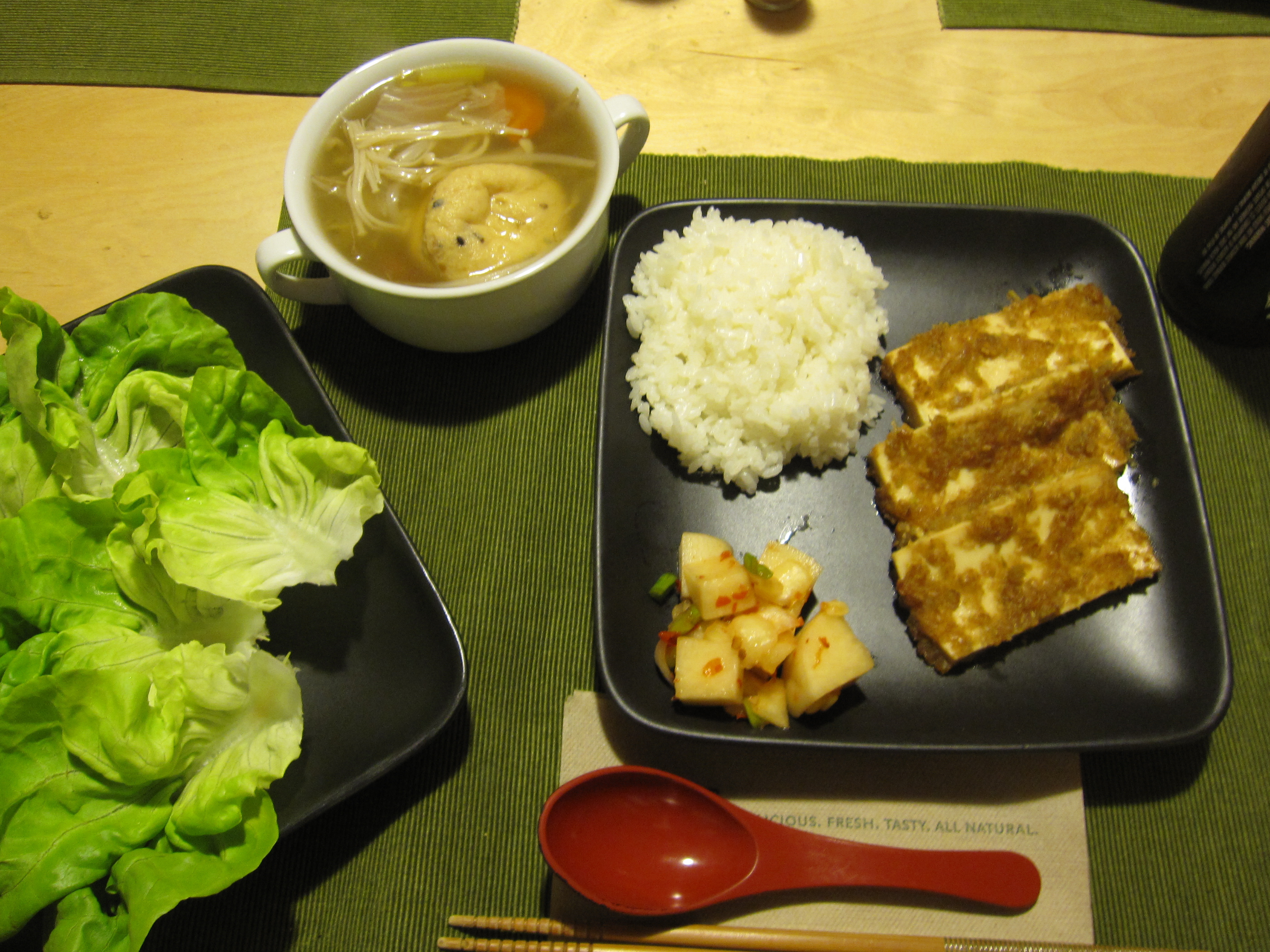
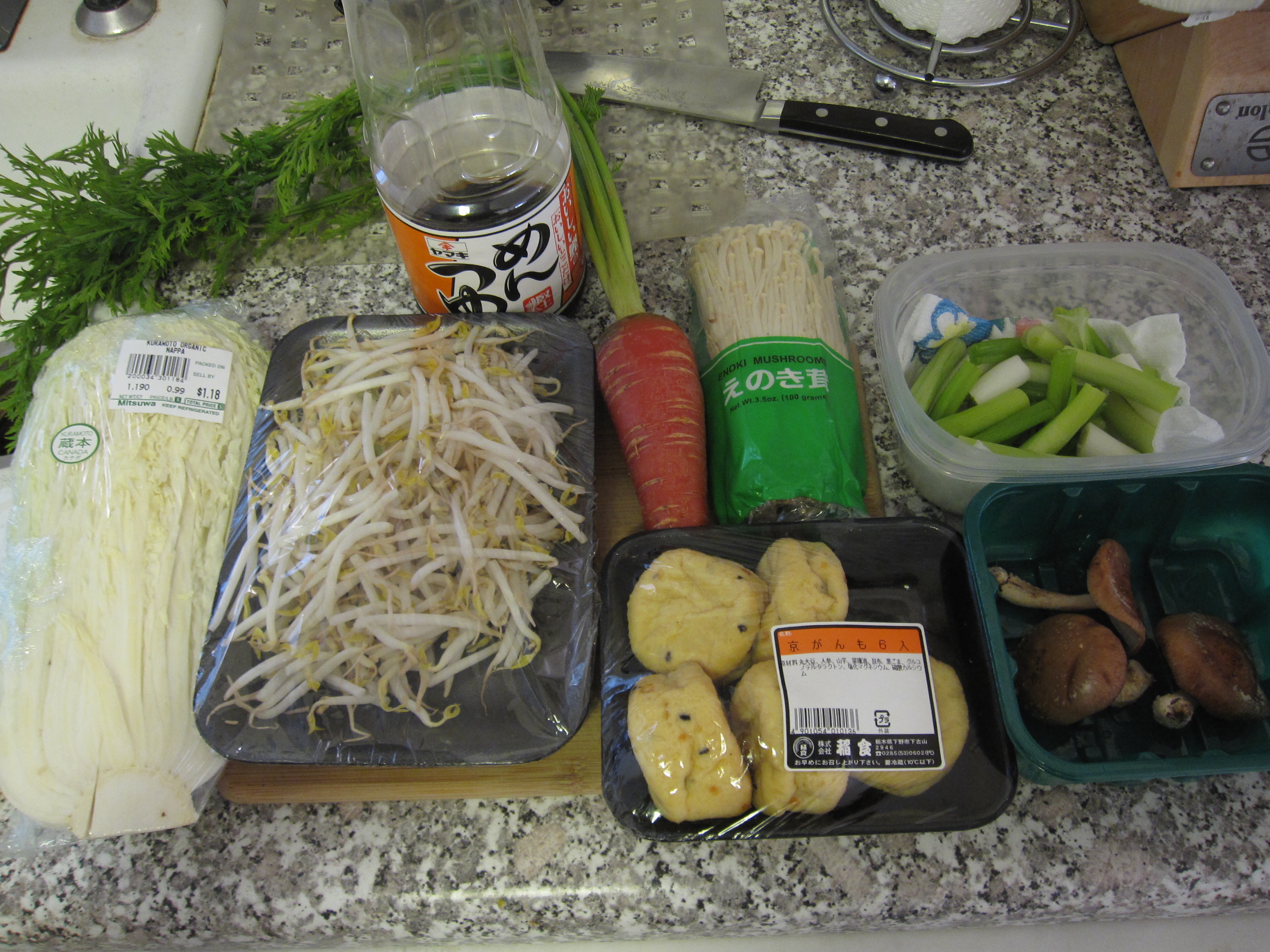
I made some daikon kimchi and really wanted to build a Meatless Monday around it. I thought I was going to make a tofu bulgolgi to stick with the Korean theme, but the marinade turned out nothing like a bulgolgi. It was very asian though so I used some ganmodoki we had bought at Mitsuwa and made a clear broth Japanese-style soup to bring more vegetables into the meal.

The daikon kimchi takes 24 hours so I had to start the Sunday. The ingredient list includes a lot of kosher salt (sea salt can be used also), 1.5 tablespoons of toban djan (I didn’t have any Korean chili paste, toban djan is Sichuan, but it is similar enough to work), 1/4 onion small diced, 1 garlic clove minced, 1 lb daikon cut into 3/4 inch cubes, 1 teaspoon fish sauce, 1 teaspoon sugar, and 2 green onions thinly sliced.

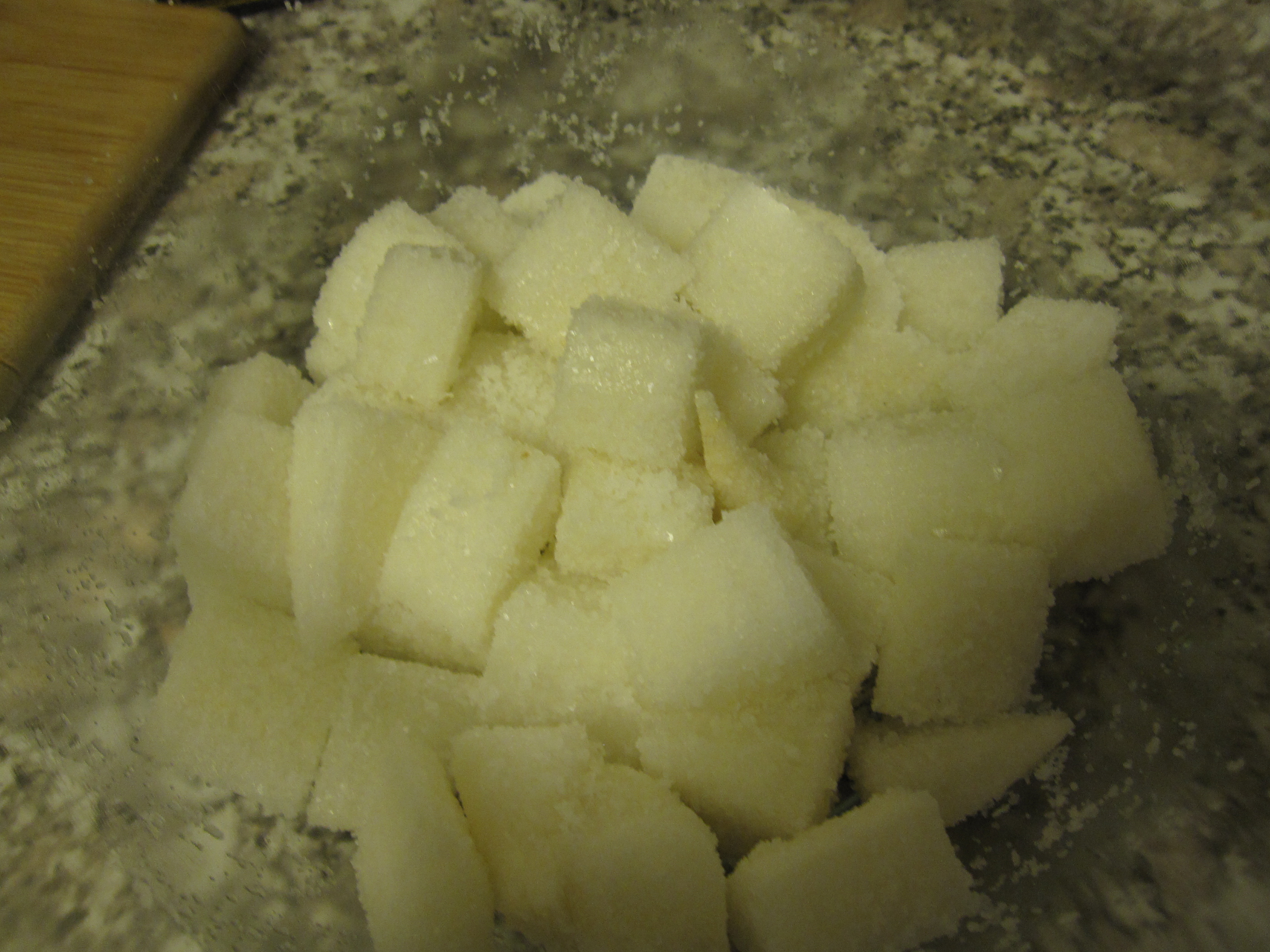
I threw the daikon into a bowl and completely coated it with salt. I left it for 2 hours and then drained off all of the liquid that accumulated at the bottom of the bowl and then rinsed and drained very well.

Then I mixed together the rest of the ingredients, tossed the daikon to coat evenly, and put into an airtight jar. I left it out for 24 hours and then put it in the fridge to chill for a couple of hours. You absolutely have to let it sit to get the flavors to penetrate and pickle, so this does take more than 24 hours to prepare. I will say, the daikon turned out way too salty when we ate it. Not sure if I added too much during the pickling process or if I just didn’t rinse it well enough, but next time I make this I will make sure it’s completely rinsed of salt and I may just add 1/2 tablespoon instead during the pickling to make sure it doesn’t get too salty. To salvage the rest of the daikon I’ll boil it in some water to make broth for noodle soup later in the week or something.

For the tofu “bulgolgi” I used 3 tablespoons of soy sauce, 1/4 granny smith apple, 1/4 onion, 1 tablespoon sugar, juice from 1/2 lemon, 1 tablespoon of sesame seeds, 1/2 inch ginger, 2 garlic cloves, 2 green onions, and 1 packet of silken tofu.

I pressed the water out of the tofu for about an hour and then sliced it into 1/4 inch pieces. I put the rest of the ingredients into my little processor and made a marinade.

I took out my glass baking dish, poured a little marinade on the bottom, lined the tofu side-by-side on top, and then covered it with the rest of the marinade. I let it sit while I prepared the soup. When the soup was almost done I drizzled a little sesame oil on top of the tofu and threw it under the broiler for about 10 minutes.

For the soup I cut up 1/4 of a napa cabbage, used some bean sprouts, 1/4 cup of dashi seasoned soy sauce, 1 carrot cut into half moons, 1/2 package of enoki mushrooms, 5 ganmodoki, the rest of our green onions (about 3), and my last three shiitake sliced.

In my soup pan I poured in about 4 cups of water and added everything except for the cabbage, bean sprouts, and enoki. I brought it up to a boil and then covered it, lowered the heat to medium-low, and let it simmer for about 15 minutes. Then I added the rest of the ingredients and let it simmer for another 5 minutes. That’s all she wrote for the soup.

I served everything with white rice and leaves of butter lettuce. That way we could make lettuce wraps bulgolgi-style.

Read Full Post »

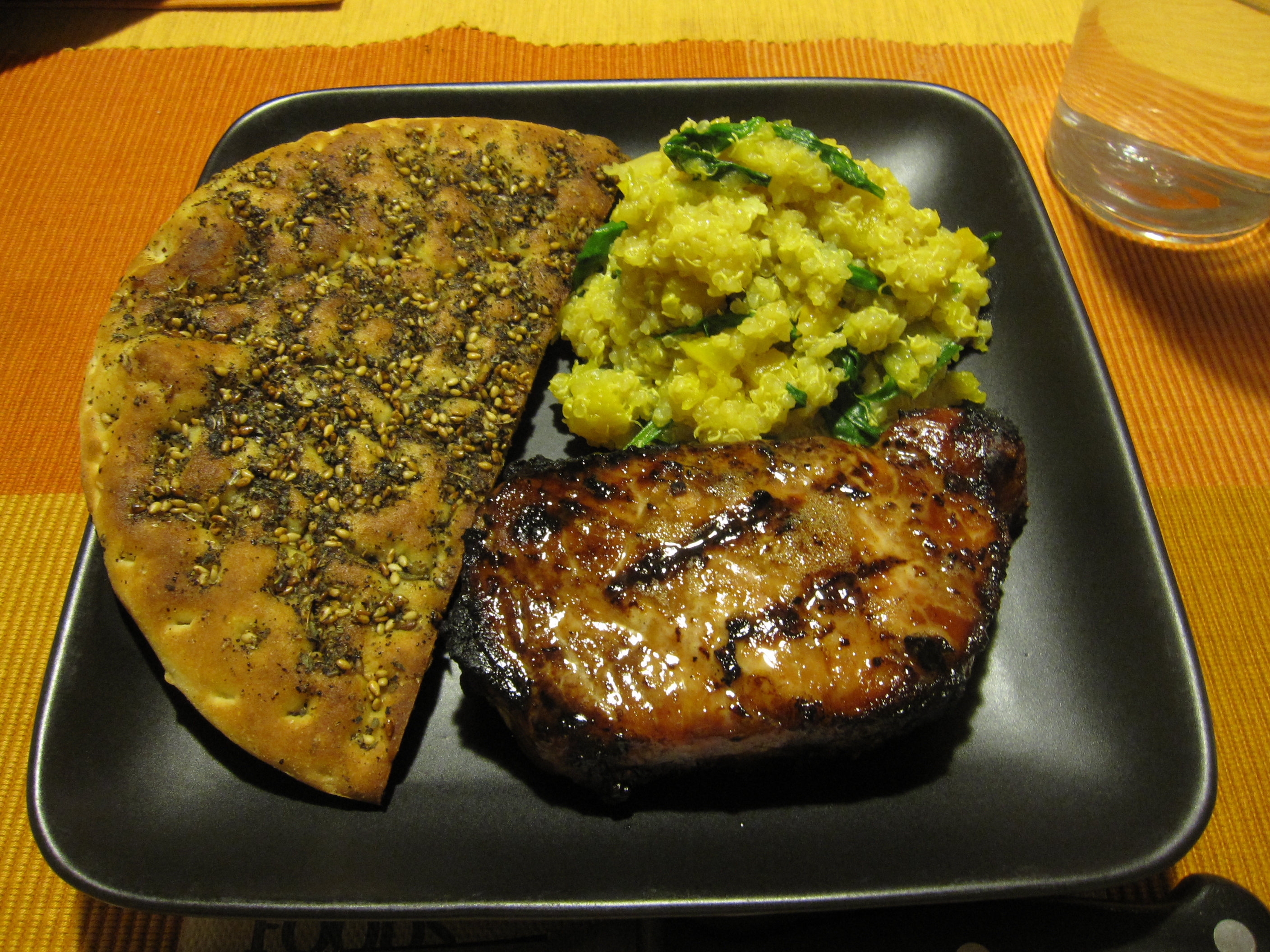
I try to make quinoa a regular in my diet, but don’t make it as often as I should. Being one of the world’s superfoods, as well as being relatively inexpensive, I think everyone should eat it at least a few times a month. I’m just waiting for the McQuinoa to show up on menus. Although, to get most Americans to eat it they’d probably have to use burger patties as the bun.

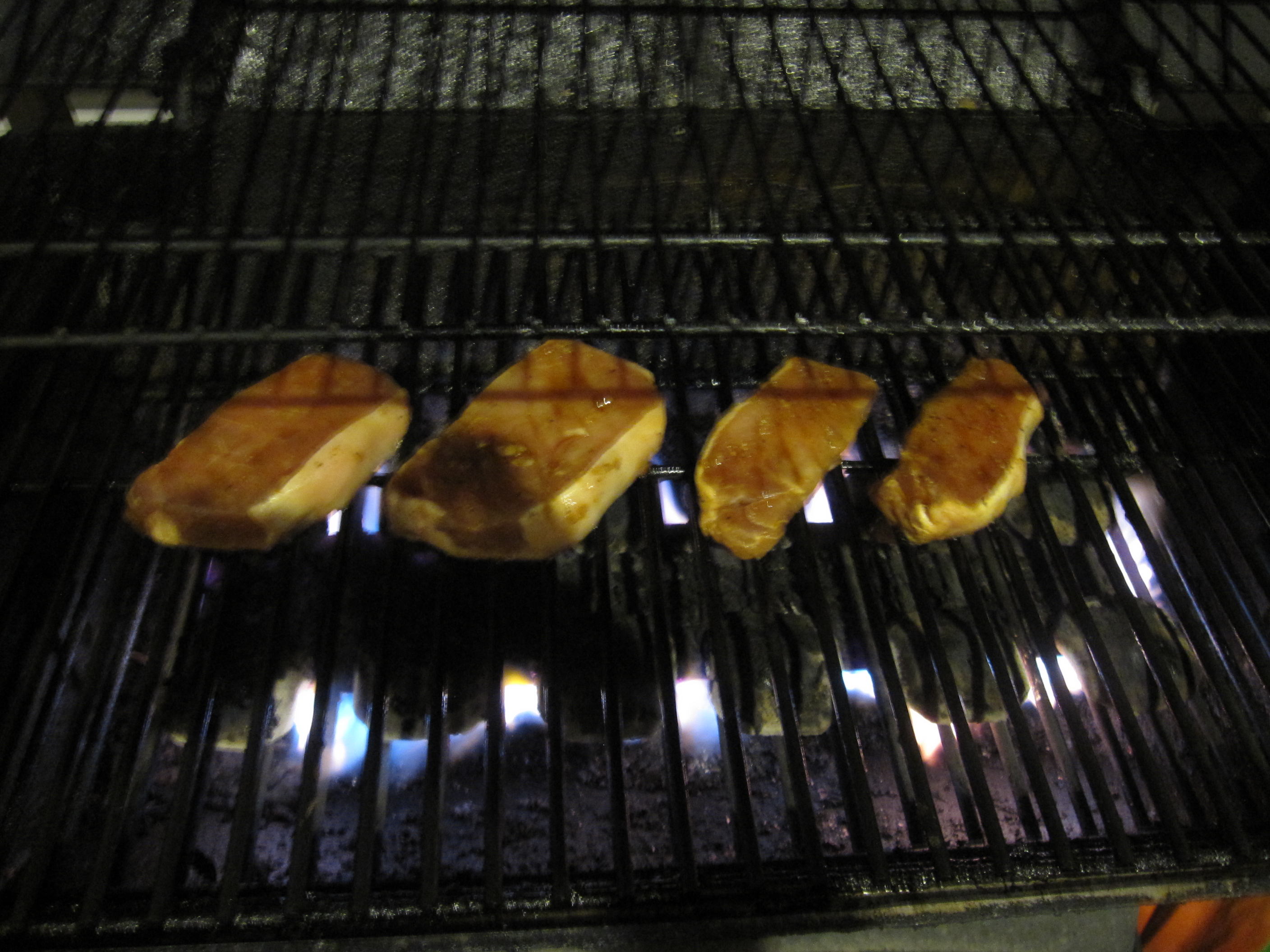
First thing I did was marinate the pork chops. I mixed together 2 tablespoons of sake, 1 tablespoon of mirin, 3 tablespoons of soy sauce,1/2 inch ginger grated, a large garlic clove grated, and some cracked black pepper. I turned the pork around in the marinade a few times to coat it entirely, then I covered it and set it in the fridge for about 2 hours. I turned it a couple of times while marinating. I also took it out about 30 minutes prior to grilling to bring it to room temperature, this ensures that it cooks more evenly.

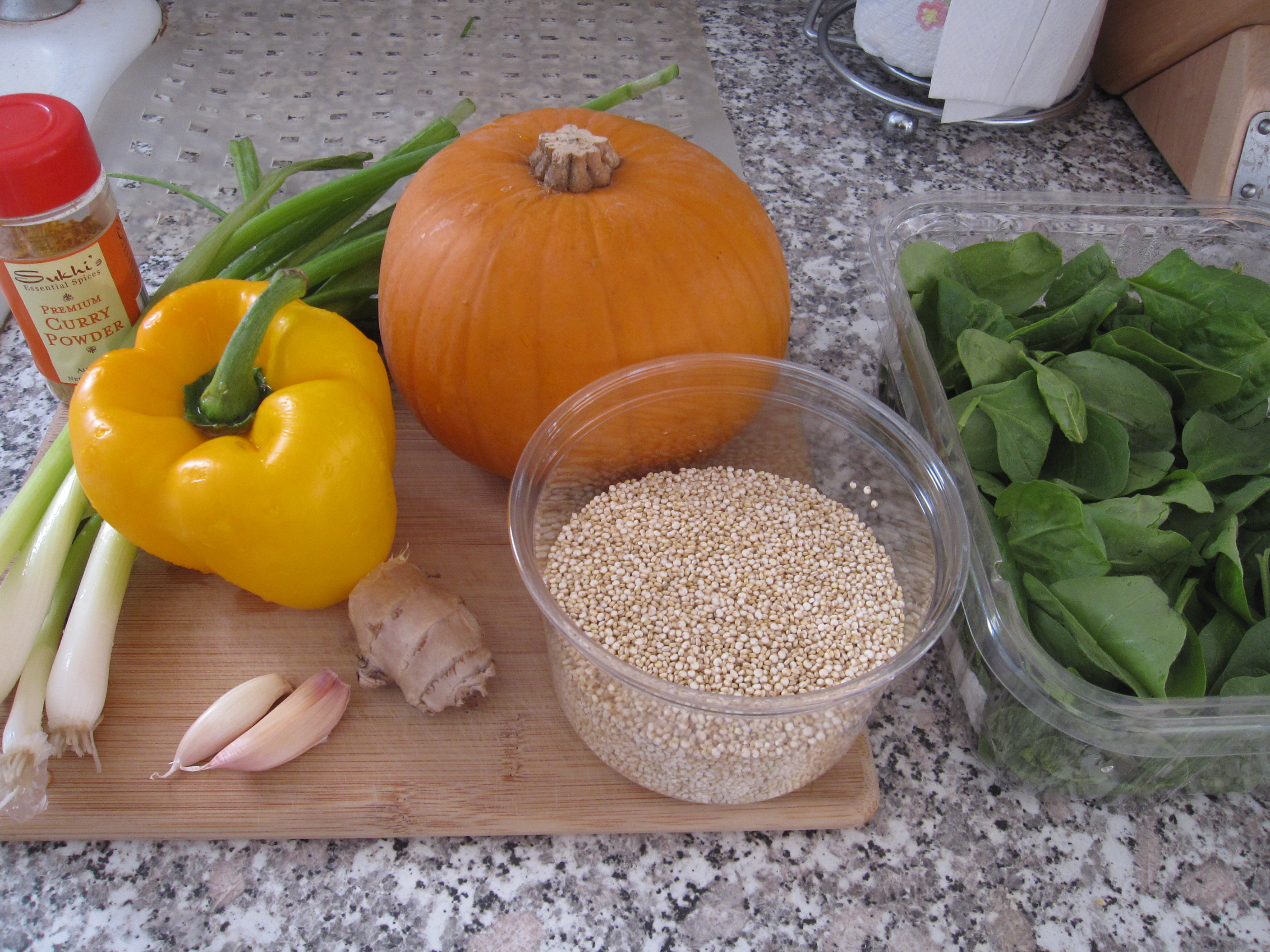
For the quinoa I used 1 tablespoon of curry powder, 6 green onions sliced, 1 yellow bell pepper sliced, 2 garlic cloves minced, 1/2 inch of ginger minced, 1/3 of a small pumpkin (I just eye-balled how much I wanted to use, I have no idea how much it actually was), 1 cup of quinoa, and a couple large handfuls of baby spinach.

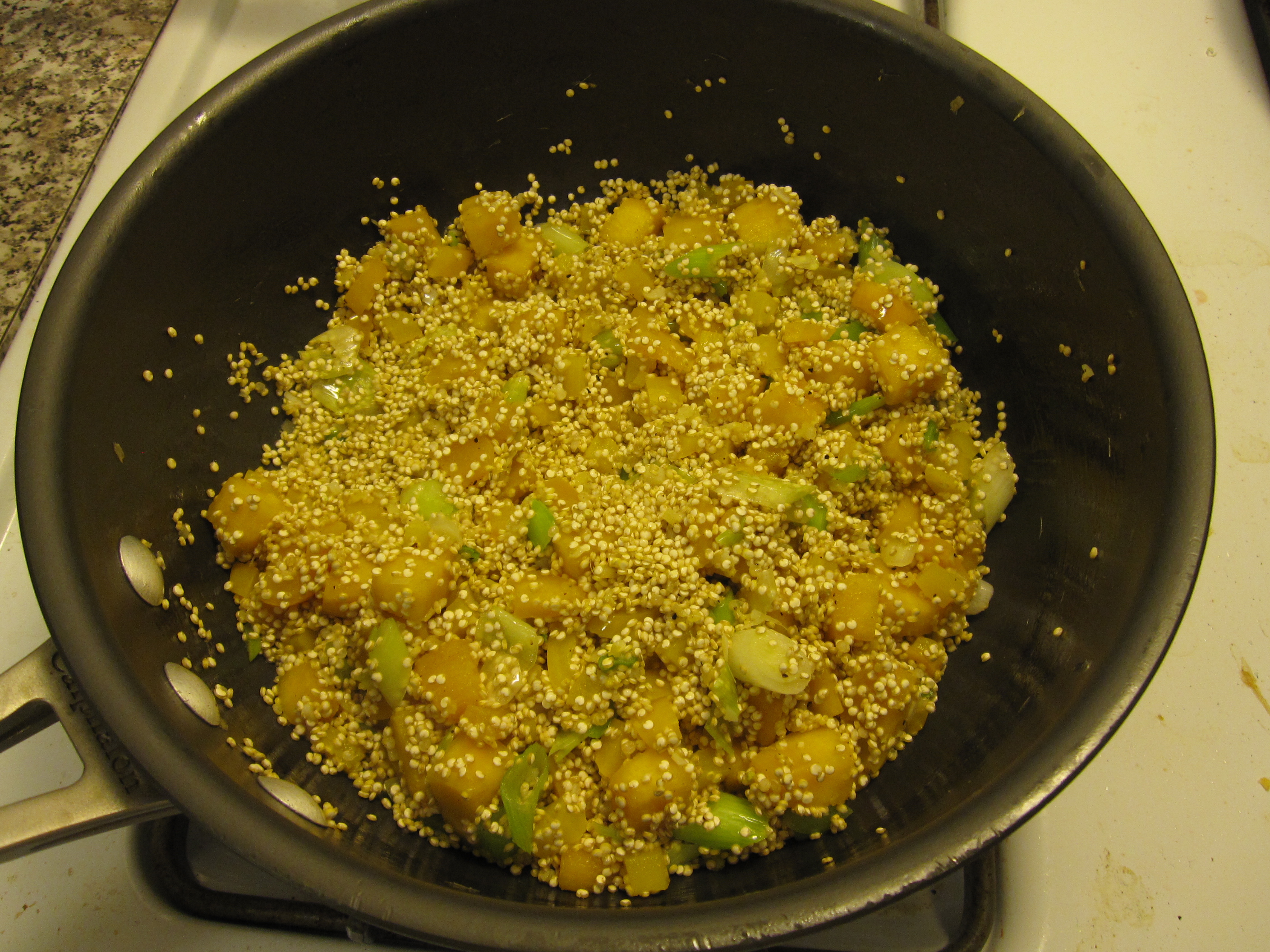
In a small sauce pan I brought 2 cups of water to a boil. While the water was getting hot, I heated up my medium pan and poured in about 2 tablespoons of sesame oil. I threw in the pumpkin, bell pepper, and green onions. I let them saute for about 5 minutes and then added the garlic and ginger. While the garlic and ginger started to heat up, about a minute, I thoroughly rinsed the quinoa and then added it to the pan along with the curry powder, a touch of salt, and some black pepper. I stirred it around for about 3-4 minutes so that the quinoa would start to give off a slight nutty aroma. After that I poured in the boiling water, covered the pan, and let it simmer over medium-low heat for about 15 minutes. Once that 15 minutes was up I turned off the heat and let it rest for another 10 minutes.

While the quinoa was simmering I got the grill hot and grilled up the pork chops. It took about 5-6 minutes per side.

Just before serving I toasted my last piece of manakeesh from the Tannourine Bakery. I also fluffed up the quinoa with a fork and then mixed in the baby spinach.

If I were to make this recipe again I would do two things different. Instead of using 1 tablespoon curry powder I would use 1.5-2 tablespoons, or maybe a touch of cinnamon. I would also squeeze a lemon or lime into the quinoa as I stir in the spinach. The quinoa was good, just much more lightly flavored than I would have liked.

Read Full Post »

Finally, I got Meatless Monday back into my life. No Bears game (thank goodness, I don’t think I can stand to watch that O-line pretend to block anymore) or anything that calls for carcus so I cleaned out some of the vegetables I had in my fridge. With the weather getting a little chilly I thought a nice hot bowl of Minestrone would hit the spot, especially since Yuki loves soup. To go with it I made some mushrooms in soy milk on toast.

For the minestrone I used 1 can of brown beans, 4 quarts of vegetable stock, 1 28oz can of skinned tomatoes, 6oz of farfale pasta, 2 ribs of celery chopped, 1 carrot chopped, 1 zucchini chopped, 1/2 an onion chopped, 1/2 green bell pepper chopped, 1 yukon gold potato skinned and chopped (2 in the pic but I only used 1), 3 garlic cloves chopped, some basil thinly sliced, and Parmigiano Reggiano grated.

In a heated stock pot I poured in about 2 tablespoons of olive oil and then sweated down the onion, carrot, and celery for about 3 minutes. Then I added the green pepper and garlic and let that go for another 3 minutes. I dumped the juice from the tomato can in and crushed the tomatoes with my hands. Once the tomato juice started to boil, about 1 minute or so, I poured in the stock and seasoned with salt and pepper and 1 bay leaf. Once the stock started to boil, about 2 or 3 minutes, I added the potato and zucchini. The potato and zucchini obviously lowered the temperature of the soup, so a few minutes later when it came back to a boil I added the pasta then covered the pot and turned the heat down from medium-high to medium. I let it simmer for about 15 minutes to let the pasta cook properly.

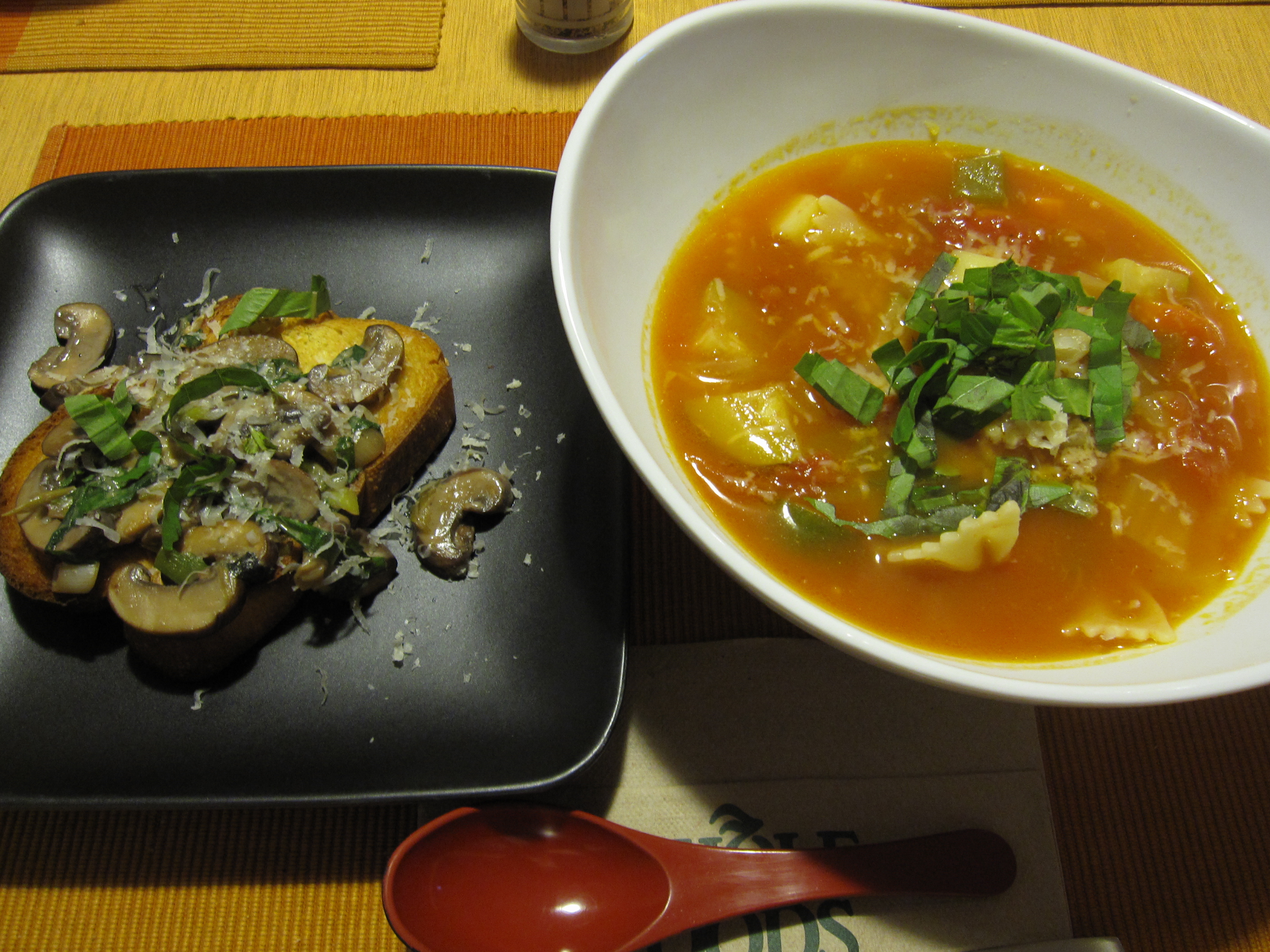
While the pasta was cooking I heated up my saute pan and got the mushrooms ready. I thickly sliced (about 1/4-1/3 inch) 4 button mushrooms and a container of cremini mushrooms and sliced up 3 green onions. I melted 1 tablespoon of butter and poured in another tablespoon of olive oil then dumped all of the mushrooms and green onions in. I let them cook down for about 10 minutes until the mushrooms started to release their moisture. Then I poured in about 1/4 cup of soy milk and let that thicken up for about 2 minutes. I added some thinly sliced basil and turned off the heat. I toasted some sliced of challah during the cooking.

To serve, I ladled some soup into my bowls and topped it with sliced basil. I put the toasted challah on a plate and spooned some of the mushrooms on top. Then I topped everything with fresh grated Parmigiano Reggiano.

Read Full Post »

Last night I made another Japanese flavored spaghetti dish using sake hogushi and aonori. Sake hogushi is simply cooked salmon that’s been flaked into small “crumbs” and jarred. Aonori is a type of nori, Japanese algae, that’s been ground into a powder. The two ingredients can be used in a variety of ways like being sprinkled on white rice, mixed into cream sauces or dressings, or used like I did last night to name a few. Great ingredients to have on hand and available at any Asian grocer.

First thing I did was get my side vegetables ready. I had three beefsteak tomatoes and 1 large Japanese eggplant. I sliced the top off the tomatoes, sliced the eggplant in half length-wise, and then cut the eggplant into 2-3 inch pieces. I coated the tops of the vegetables with panko, then drizzled some olive oil on top, then sprinkled some aonori on top of that. I roasted them in a 350 degree oven for about 35-40 minutes, just enough time for me to get the rest of dinner ready.

To make the spaghetti I used butter, the sake hogushi, half on onion sliced, 7 button mushrooms sliced, and 4 garlic cloves. In a large hot skillet I poured about 2 tablespoons of olive oil and then melted 1 tablespoon of butter in that. I added the onion and let it sweat for about 4 minutes. Then, I added the garlic and mushrooms. At the same time I cooked my noodles in boiling water until al dente. The garlic and mushrooms needed about 5 minutes which was about the same amount of time the noodles took. After draining the noodles (I reserved about 1/3 cup of the water) I added about 1/4 cup of soy sauce along with 1/2 cup of the sake hogushi to the onions, garlic, and mushrooms. I let the soy come to boil for about 2 minutes and then added the noodles and reserved water with some black pepper. I let the noodles coat with the sauce and most of the liquid boil off then turned off the heat and covered the skillet.

Then, I took two baby bok choy that I had seperated the leaves of and put them in my steamer for about 4 minutes. That’s just enough time to cook the stems without having the leaves wilt too much.

To serve, I put the baby bok choy on the plate then the spaghetti on top of that. I sprinkled it with some aonori and then put a tomato and some eggplant on the side.

Read Full Post »

« Newer Posts - Older Posts »