Feeds:
Posts
Comments

Posts Tagged ‘japan’

Another Donna (from Aqua Safari) recommendation. This place is called Parrilla Mission. The Mission group has two restaurants in Cozumel. One of them is in the heart of touristville, this other one is a 10 minute walk down the street. Same food, same high quality, half the price.

We started off with just their salsa and a beer. Pretty good salsa, not too spicy at all. All of the sudden, after one particular bite, my head started to throb, my mouth went up in smoke, and I instantaneously started to hiccup. I didn’t see anything in the salsa that would suggest caliente. Maybe some jalapeño was hidden among the cilantro? Would’ve been the hottest damn jalapeño ever! Before we took another bite I explored the rest of the salsa only to find this little bugger hiding within the tomatoes…habanero! That thing was intense! I’ve eaten raw habanero before, but I was always ready for the hurt. This one snuck up on me. A few minutes, a keg of beer, the flame eventually died down.

For my entrée I ordered the shrimp shish kabob. Nice juicy shrimp perfectly grilled with slices of green pepper, onion, and tomato. Half of a baked potato with crema drizzled on top, some Mexican rice, and steamed carrots and chayote rounded out the dish. The dish wasn’t outstanding by any means, but everything was fresh, properly seasoned, and properly cooked. It was very delicious.

Yuki ordered the garlic shrimp. Same accoutrements as my dish, but her shrimp were butterflied shell-on and sautéed in butter and garlic. Those were outstanding! Seriously though, how can fresh shrimp sautéed in butter and garlic not be outstanding?

No dessert that night as the entrees filled our bellies, along with the beer. It definitely pays off to head to restaurants away from tourist traps and cruise ship docks. You’ll find more authentic food usually with fresher ingredients at a fraction of the cost. You’ll also meet more of the local characters than you will at Senior Frogs, Coconuts, The Hard Rock, or Margaritaville. Best thing to do is ask people who work at the hotel you’re staying at where they eat when they go out. They’ll usually send you to some memorable meals.

Speaking of which, I have one more from Cozumel that’ll be up soon. Then we head to Merida. Or, I may throw another Japan joint up. Or, maybe I’ll get lazy and wait for the next Meatless Monday. At any rate, keep checking back.

Read Full Post »

A good buddy of mine, Jason Meyer, gave us a couple of tables he made a while back. He’s a very talented sculptor/furniture maker/badass dancer that I used to work with at Bin36 back in the day. In order to show gratitude Yuki and I invited he and his fiancée over for dinner the other night. We figured that he gave us something that he made so we should do the same.

We started off with some Lemongrass Corn Soup with Avocado garnish. The soup was actually purchased and I didn’t make it (shhh, don’t tell Jason). It did taste exactly like something I would make though. Had I made it I would have simmered some corn and onion in vegetable stock with some lemongrass until the kernels were nice and soft. Then I would have discarded the lemongrass and blended the rest of the ingredients until smooth and strained it back into the pot. A little salt and pepper and there you go. I did make the rest of the meal. Well, that’s not entirely true as Yuki did some of it.

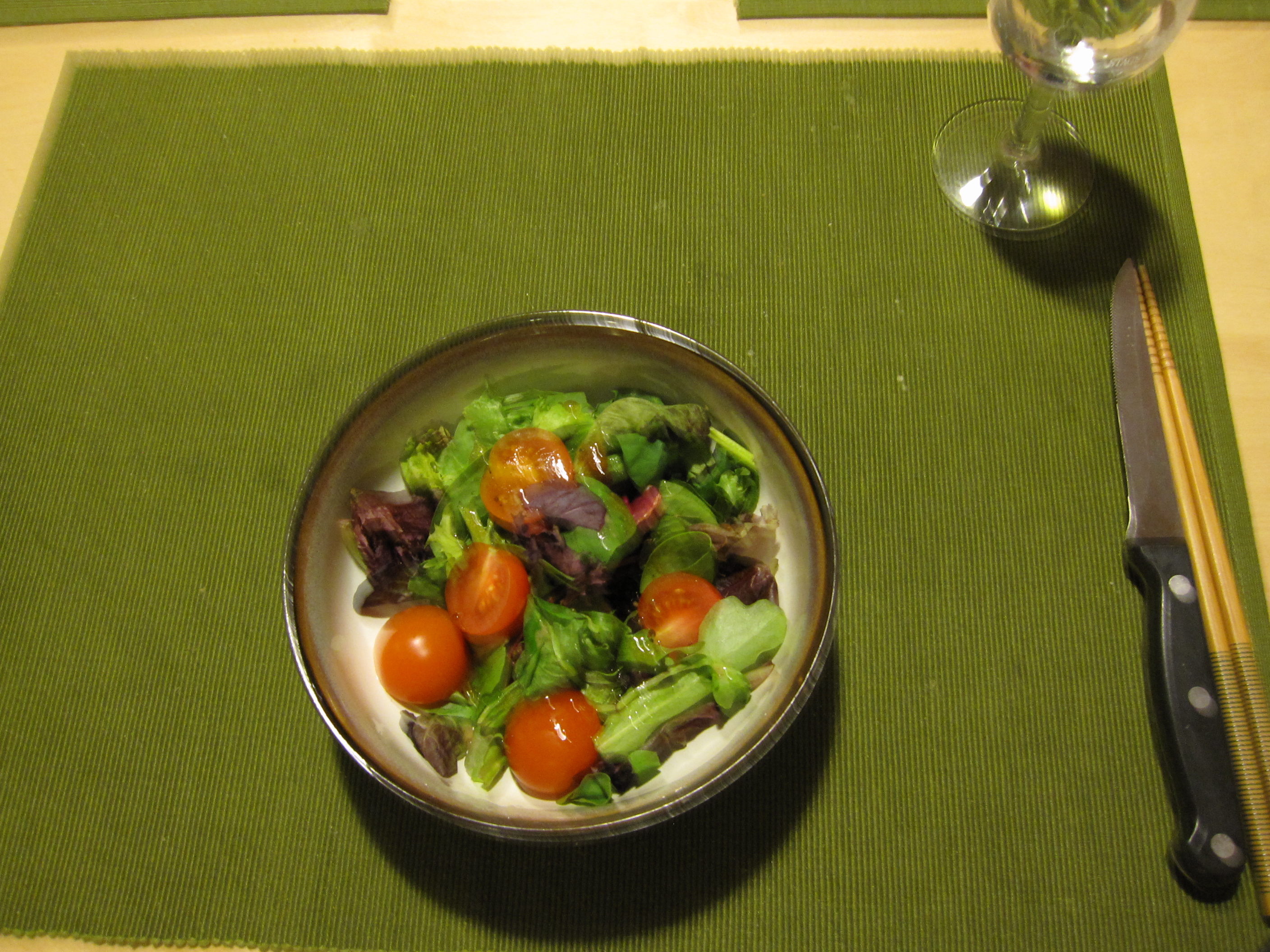
Then I served a simple salad. Mixed greens with cherry tomatoes and a sesame vinaigrette. Vinaigrettes are easy to make. This one had soy sauce, sesame oil, a touch of rice wine vinegar, salt, and pepper.

Next was the main course. I went to Olympic Meats for some good strip steaks. The steaks were pan-fried in nothing but olive oil. No salt or pepper added. Once I got a nice seer on each side and they were cooked about medium rare or so I put them on plate to rest. While they were resting I doused them with a sauce I had made. The sauce consisted of grated ginger and garlic, soy sauce, lime juice, red pepper flakes, and pepper. No salt since there was plenty of soy. I made the sauce way in advance to let the rawness of the ginger and garlic mellow out a little in the lime juice. By pouring it on the steaks while they rested it allowed the flavors infuse into the meat and keep them nice and juicy. I served the steaks on top of baby spinach with roasted yellow peppers and shiitake.

On the side was some hijiki rice that Yuki made. In the rice cooker she added to the rice some diced carrot, hijiki seaweed, cooking sake, soy, and konbu dashi. It’s one of my favorites as hijiki adds a wonderful flavor to almost anything. Plus, it’s extremely healthy as most seaweed is.

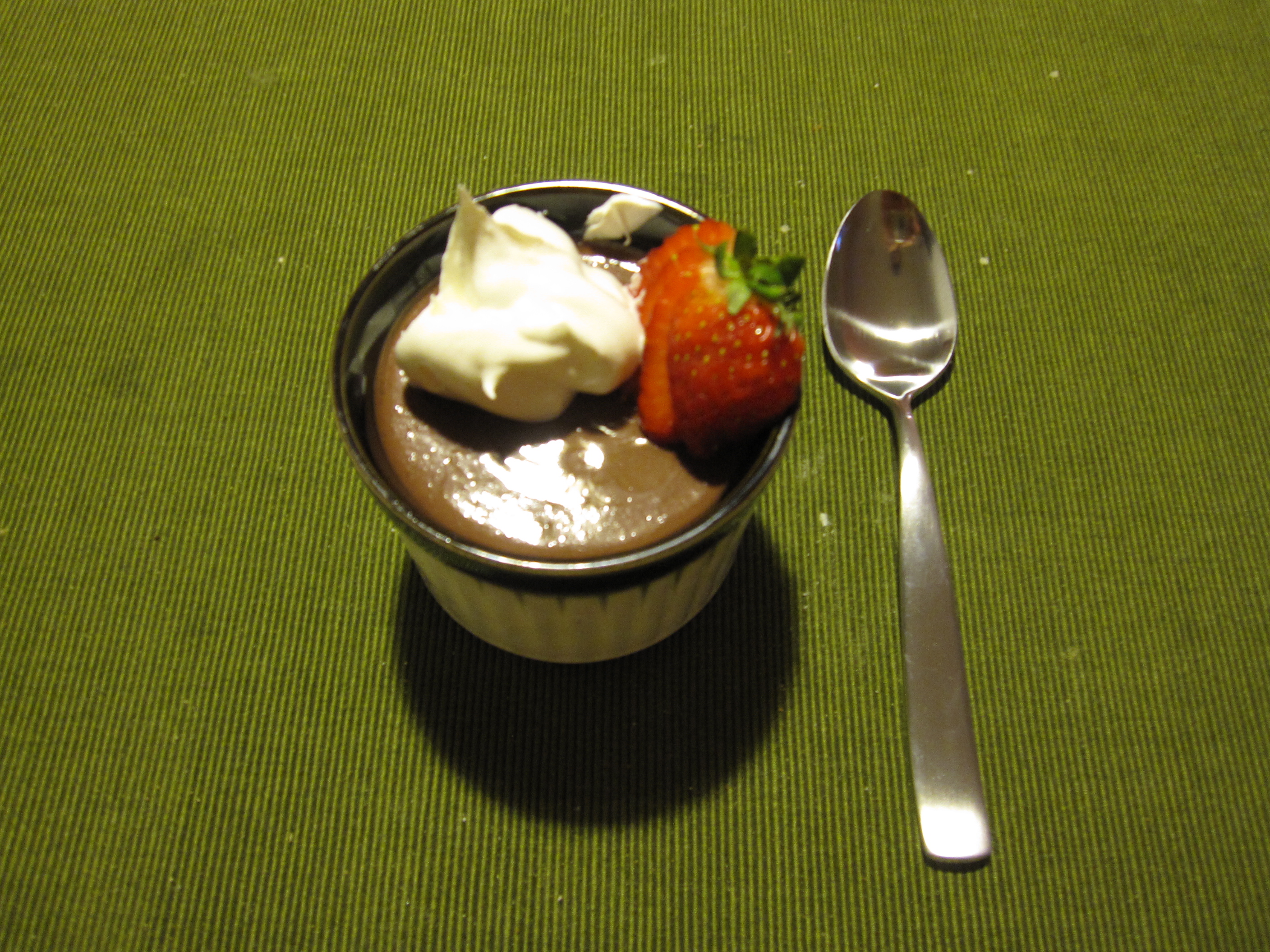
For dessert I made some Mexican Chocolate Pots de Cremes. What better to follow Asian flavors than Mexican chocolate? I made these the day before to let them set in the fridge overnight. I used egg yolks, heavy cream, whole milk, Mexican chocolate, and bittersweet chocolate. You first have to heat the cream and milk without boiling it, just a slow simmer for a few minutes. Then you incorporate the egg yolks, beaten, very slowly constantly mixing so that the eggs don’t scramble. Once it’s thick enough to coat the back of the spoon add the chocolates in pieces so that they melt completely. Once you have a nice smooth thick custard pour it into your serving dishes, cover, and chill for at least 4 hours and preferably overnight. To serve, I sliced some strawberries and added a little whipped cream.

Jason brought a bottle of Prosecco that we enjoyed with the soup and salad. After that we opened up a special bottle of Sake that we brought back from our last trip to Japan. Everything worked out extremely well. Portions were perfectly sized as none of us were hungry afterwords yet we weren’t stuffed either. I hope they enjoyed because it would be a disaster if I had to make them a table!

Read Full Post »

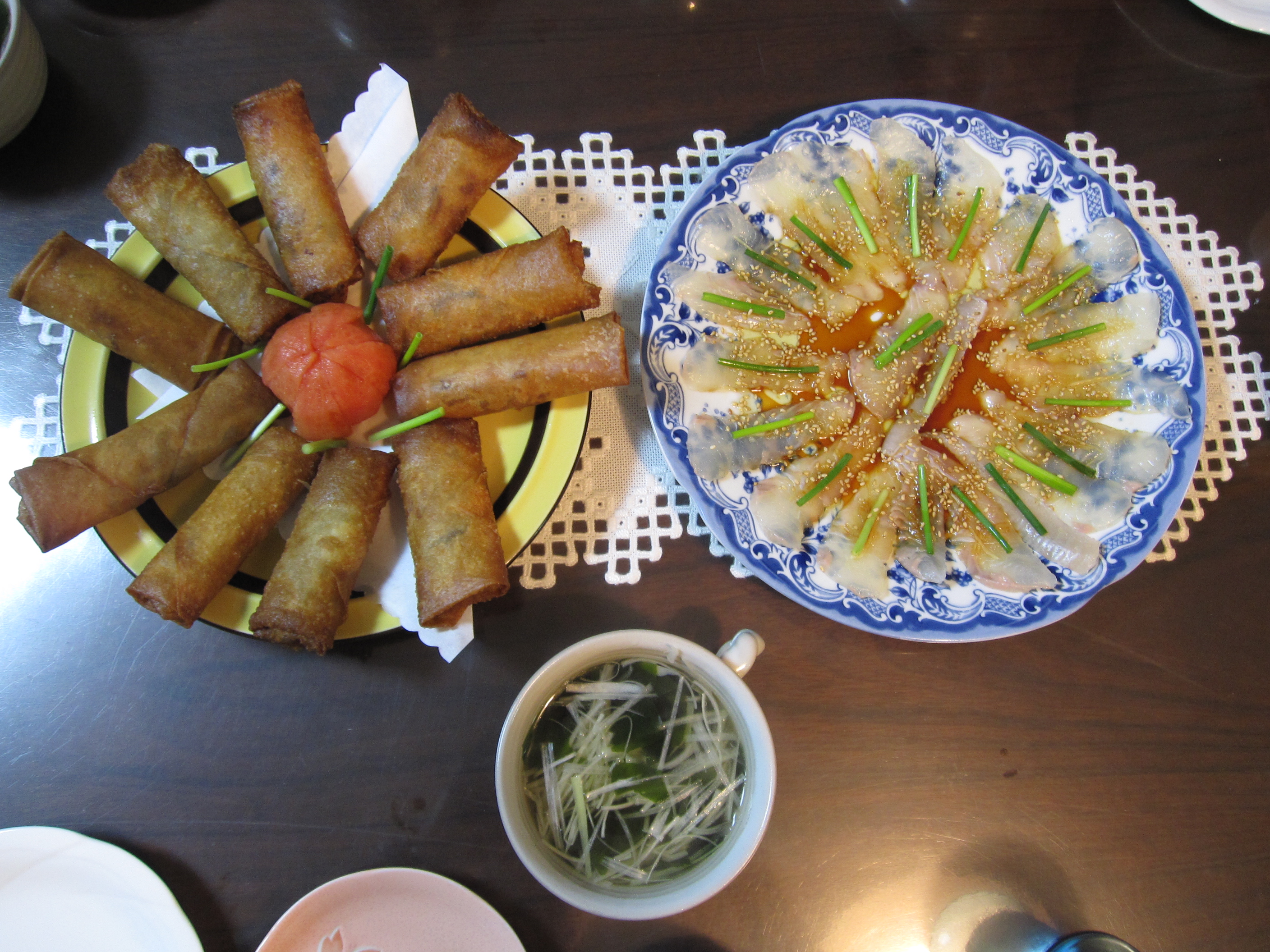
It seems like every other program on Japanese TV has something to do with food. One program that I watched featured the biography of Nobu Matsuhisa, he of the restaurant Nobu. One of the dishes he showed on TV piqued the interest of Yuki’s mom, so the next night we set out to try and replicate it…Fluke sashimi.

It’s really quite simple. Slice a piece of fluke as thinly as possible and arrange on the plate without overlapping each slice of sashimi. Mash some garlic and lightly brush a little over each slice. On top of that lay down thin sticks of ginger and chives. In a small pot heat up equal parts soy oil and sesame oil until smoking hot. With a metal spoon dish some of the hot oil on top of the fish so that it sizzles a little. Then, drizzle with some ponzu and toasted sesame seeds.

To go with it Uichiro made his special harumaki, spring rolls. He “took the two best recipes and combined them into his own which is now the best.” I won’t give you measurements so I don’t spoil his secret, but the harumaki contain shiitake, bamboo shoots, leek, pork, ginger, oil, sake, chicken stock, soy sauce, sugar, pepper, starch, and spring roll skins. Cook it all together, roll them up, then deep fry them to golden perfection and serve with Chinese Mustard.

There was also some clear broth soup with shredded green onion and wakame.

Read Full Post »

So, this past Monday night was the first Monday I really had a chance to cook since coming back from Japan. That meant it was my first Meatless Monday in a long time. After watching an episode of “Mexico: One Plate at a Time” with Rick Bayless that featured Chiles Rellenos I was inspired. Renowned chef from Mexico City, Ricardo Muñoz-Zurita, demonstrated his plantain stuffed ancho chile. I couldn’t find the recipe online, so I thought I’d improvise on that a bit.

First, I roasted some ripe plantains at 400 degrees for about a half hour. While they were roasting I blistered the skin on 4 poblano chiles directly on my stove top burners. I kept turning them so the entire surface was charred. Then I set them in a bowl and covered them with plastic to cool in their own steam for about a half hour.

I sautéed some onions and garlic in olive oil then added the roasted plantain (I diced them first). Once they plantains carmelized a little I added some chili powder, salt, pepper, and about a half cup of orange juice. I covered it and let everything soften for 7 minutes. Once the plantains were soft enough to mash I turned off the heat and kept them covered.

While they were covered and cooling I carefully peeled the skin off the poblanos and then cut a slit up along one side of each. Without tearing the chiles, I pulled out all of the seeds and the ribs along the inside. Once I was finished with that I stuffed them with the mashed plantains. I cooked them at 400 for another 12 minutes.

While they were in the oven I sautéed some green onions and one diced serrano chile, seeds removed. Then I added a drained can of black beans and dumped in a quarter cup of water. I brought that up to a boil, let the water evaporate, seasoned with salt and pepper, then turned off the heat.

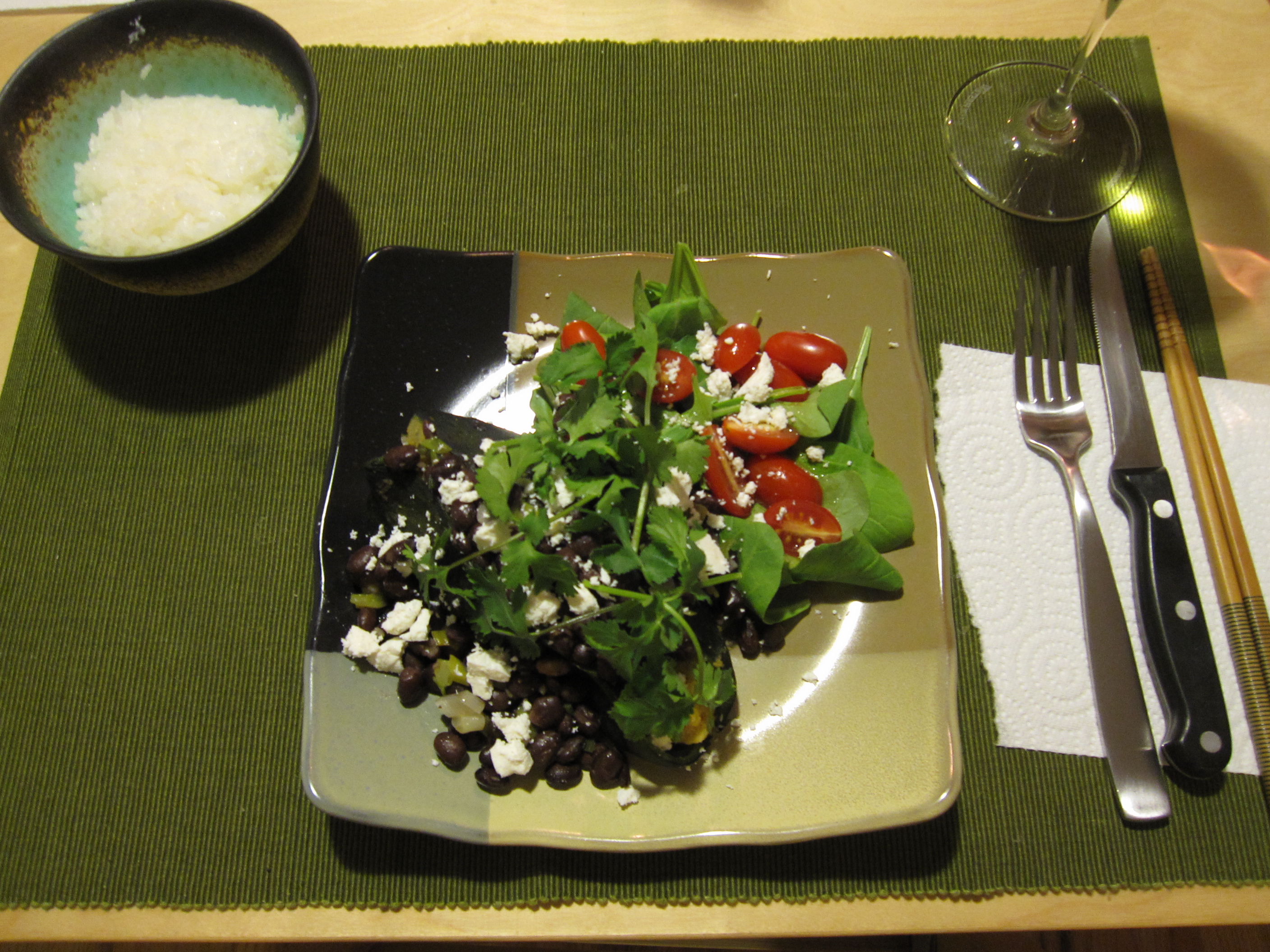
To serve, I put one pepper on each plate next to an arugula salad with tomatoes. I covered the pepper with the black bean salsa and then topped everything with cilantro and crumbled ricotta salata cheese. White rice on the side of course.

Read Full Post »

We spent an afternoon at Himeji Castle before exploring some of the Nara Prefecture. If you only see one castle in Japan, you’d better make it Himeji. It is absolutely pristine. Easily the best preserved structure built in the 1300’s that I’ve ever been to. It is the quintessential Japanese Castle.

At any rate, it’s located about a 10 minute walk down the main street from the Shinkansen. We arrived about lunch time figuring that there’d be plenty fo food options along that 10 minute walk. Right we were. We decided to veer off onto a side street where a retail arcade was as there’s always cheap delicious food options a plenty in retail arcades. Instead of eating at one of those establishments we wandered into a typical hole-in-the-wall Japanese staple, their alter-ego of Chicago’s taquerias. We filled ourselves with Ramen Noodles.

This was a very typical ma and pa ramen shop that you find everywhere in Japan. You walk in and are greeted by ma and pa themselves, “Irrashaemase!” There’s a vending-like machine near the door with the menu on it. It basically consists of a few different Ramen broths with a handful of different additions to choose if you so desire. Put your money in, press the buttons for what you want, and out comes your little order ticket.

Then, you walk in to see that there’s only 8-10 chairs along the bar. Grab a seat. Every few seats are trays of condiments, things like soy sauce, togarashi, toothpicks, boxes of tissue for the runny nose the hot ramen will give you. There’s also little spickets of hot water with tea cups and green tea for you to make as you like along with a cold water dispenser. Hand the ticket across the bar and ma and pa make your food.

I ordered the Bakabuta Ramen and Yuki got the Miso Ramen with mushrooms. Both were miso broth with loads of bean sprouts, bamboo shoots, green onions, and black woodear mushrooms. Both came with a slice of roasted pork. “Buta” in Japanese means pig, so mine had extra pork. Two big pieces of fall off the bone sweet fatty pork. Each bite coated your lips with fatty goodness. Yuki’s had extra woodear mushrooms as well as what I think were eryngii mushrooms. If I’m wrong Yuki will correct me after she reads this and I’ll correct the blog.

Since we both love pork and mushrooms we arranged a deal. I gave her some pork, she gave me a few more mushrooms. A fair trade I think.

It’s too bad that 25 cent packages of dried ramen noodles killed the idea here in America. A nice big bowl of fresh ramen like this is fast, cheap, filling but not overly heavy, and healthy. In fact, just thinking about it makes me crave some ramen. I think I’ll make some for dinner tonight.

Read Full Post »

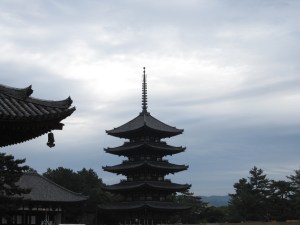
So, Yuki and I took a few days to visit some of the early temples and castles in the Kansai region of Japan. Most of the structures we saw date back to the 8th century and are truly amazing! Besides the structures there were also tons of great sculptures from the same time period. However, as you all know, this blog isn’t about architecture, it’s about food. This post is to let you know about the incredible Kaiseki we ate our last night in Nara at the Ryokan (traditional Japanese Inn) we stayed at, Yoshino.
Kaiseki is the classic multi-course meal that progresses through various cooking techniques using regional, seasonal ingredients. It’s the highest art form you can find in food anywhere in the world. Focus on the subtleties of each ingredient to draw out natural flavors and not cover then with heavy sauces (sorry Frenchies, but the Japanese have your asses kicked in food culture!).

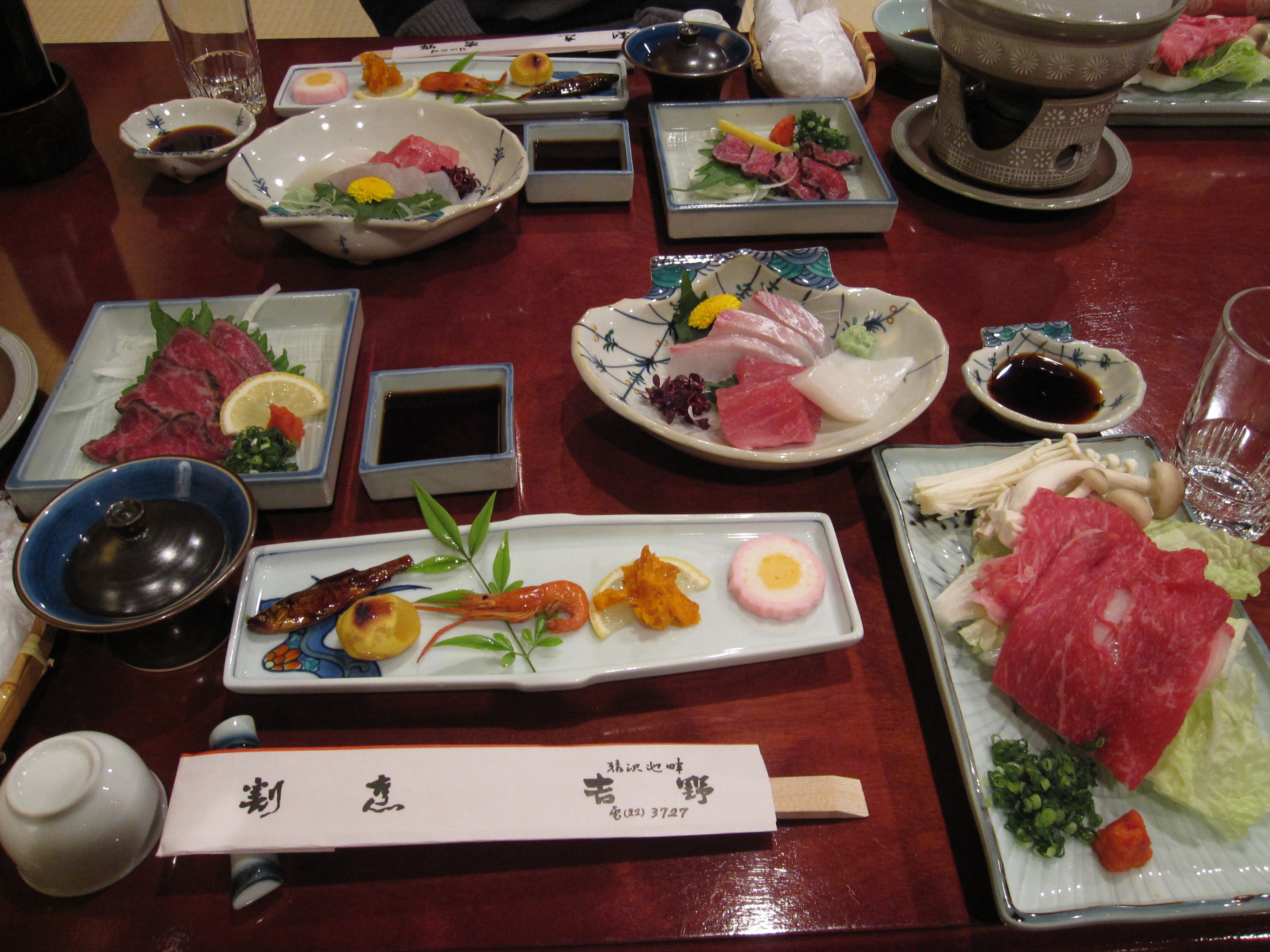
It started with that dish in the middle of the picture above. From left to right was a little fish grilled in a sweet soy marinade, a roasted chestnut, ama ebi (sweet shrimp), some sort of seafood that had a jellyfish-like texture in a miso sauce (I have absolutely no idea what it was, but it sure tasted good!), then a three-colored fish cake.
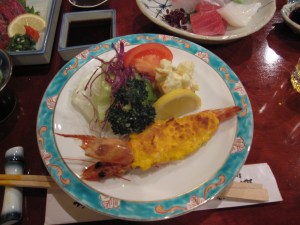
After that they brought out this dish. It was obviously a shrimp, but I’m not quite sure what else there was. I think it was a gratin made with the roe of the shrimp. Also on the plate as a macaroni salad and some lettuce with a tomato.
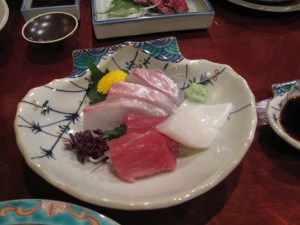
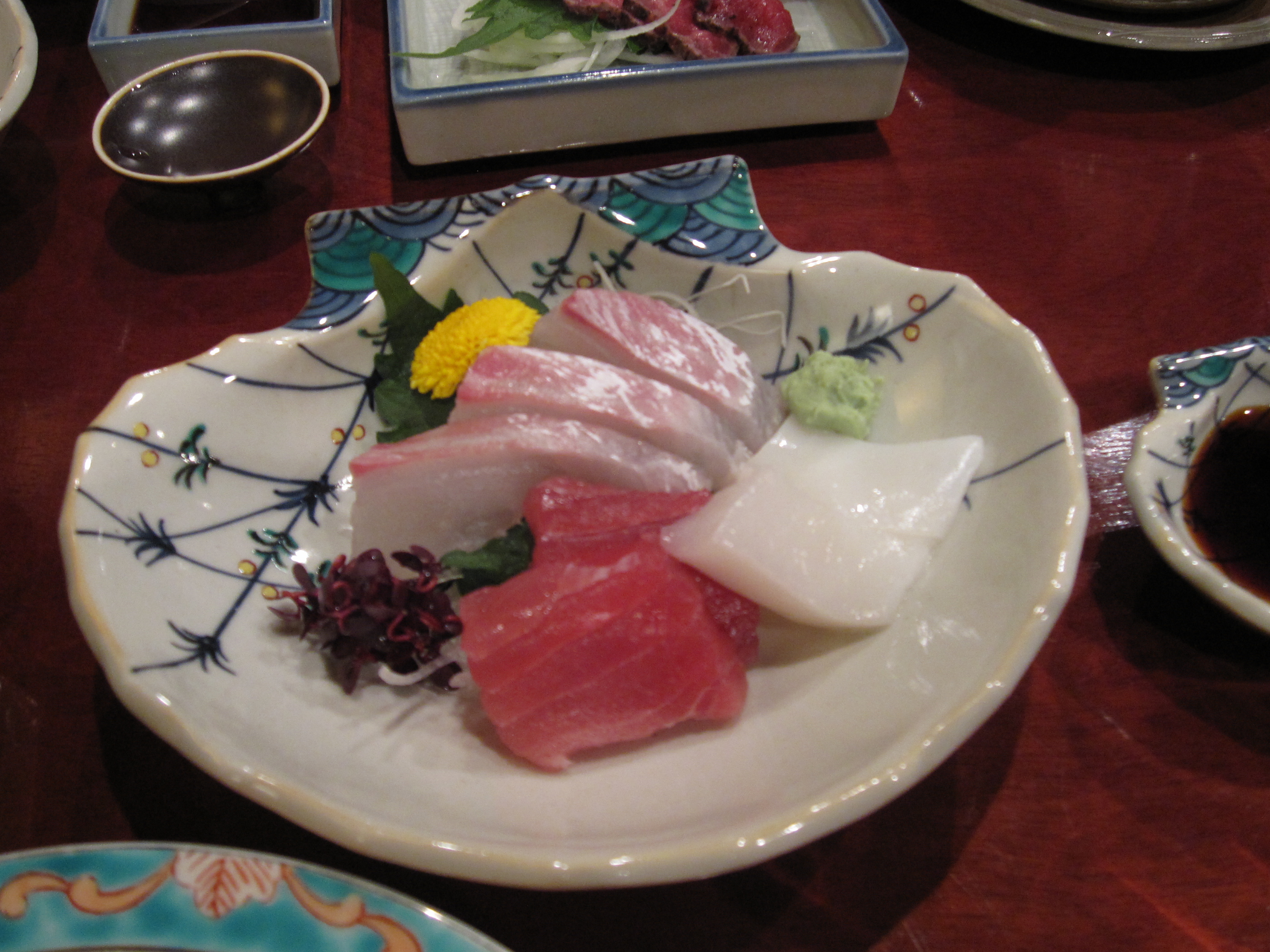
Then we moved on to the sashimi plate. It had some fantastic Chu-Toro (tuna), Tai (snapper), and the star of the plate….Ika (squid). In the States when you order Ika it’s usually very thin and a little rubbery. Not these two slices. They were about a half centimeter thick, squid steaks! Rubbery? Hell no! Each chew and the squid literally melted away in our mouths. Hands down the best squid I’ve ever eaten.

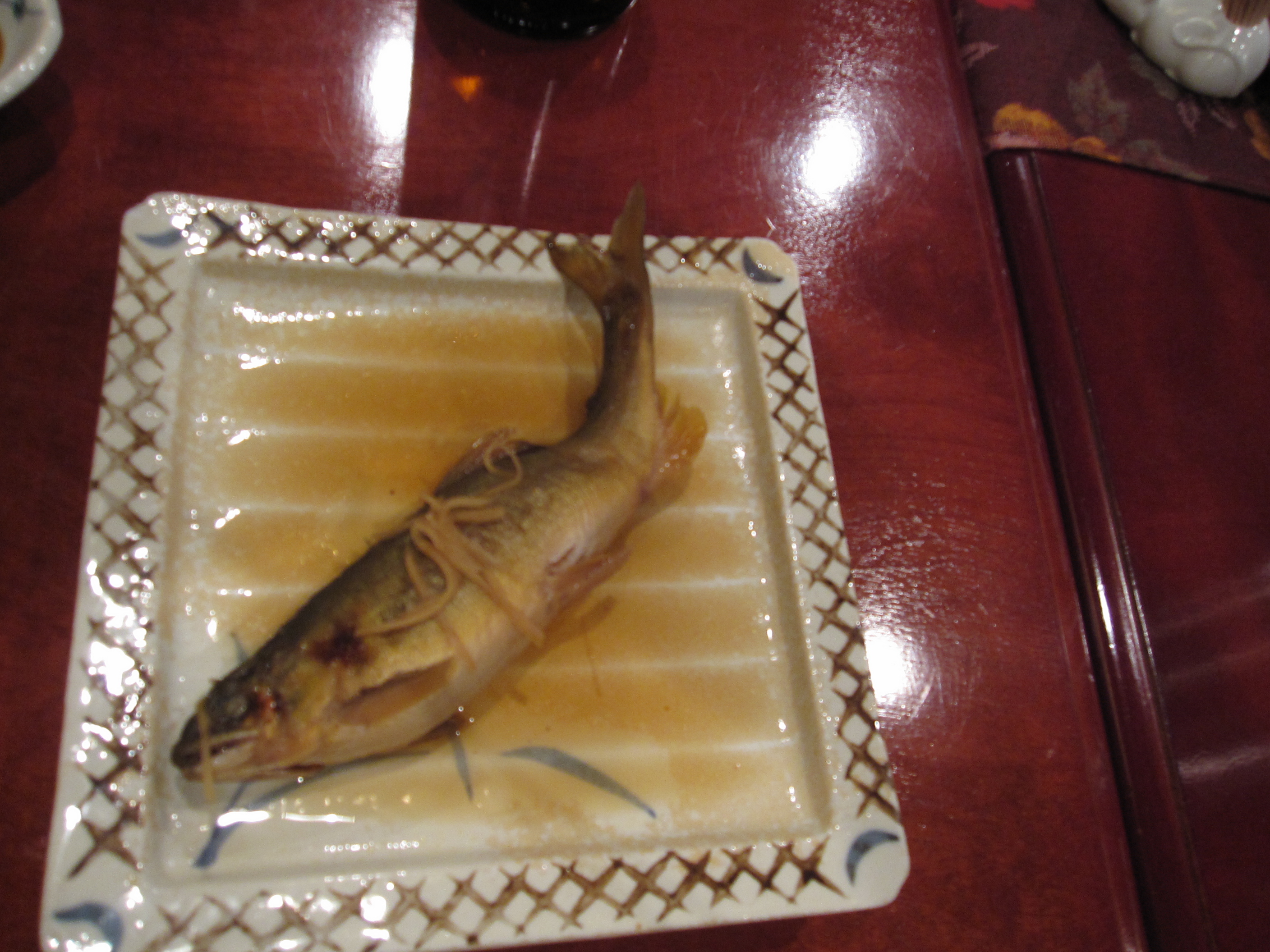
Then they brought us a plate of steamed Ayu (sweet fish). It’s a river fish that eats moss attached to stones giving it a really fresh and clean taste. It was served with a light ginger sauce. The thing that makes Ayu special is that it’s eaten when the belly is full of fish roe. There isn’t much meat, so it’s like dipping chopsticks into a bowl of fresh water caviar.

Being the meatavore that I am, the next plate was what I was most looking forward to….Beef Tataki. Lightly seared beef to give a little texture to the soft raw meat laden with mouth-watering fat. The dipping sauce is a soy-dashi mix. You see the little mound of reddish gew on the side of the dish? That’s a mix of togarahsi (Japanese red pepper) and yuzu (a small citrus fruit). You mix that into the sauce like you would wasabi for sushi, along with thinly sliced chives. With the tataki there was a small dish of sliced cucumber and I think seaweed in a vinegar sauce that cleansed the palette from the fatty beef.
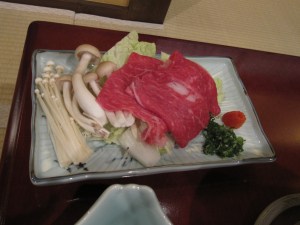
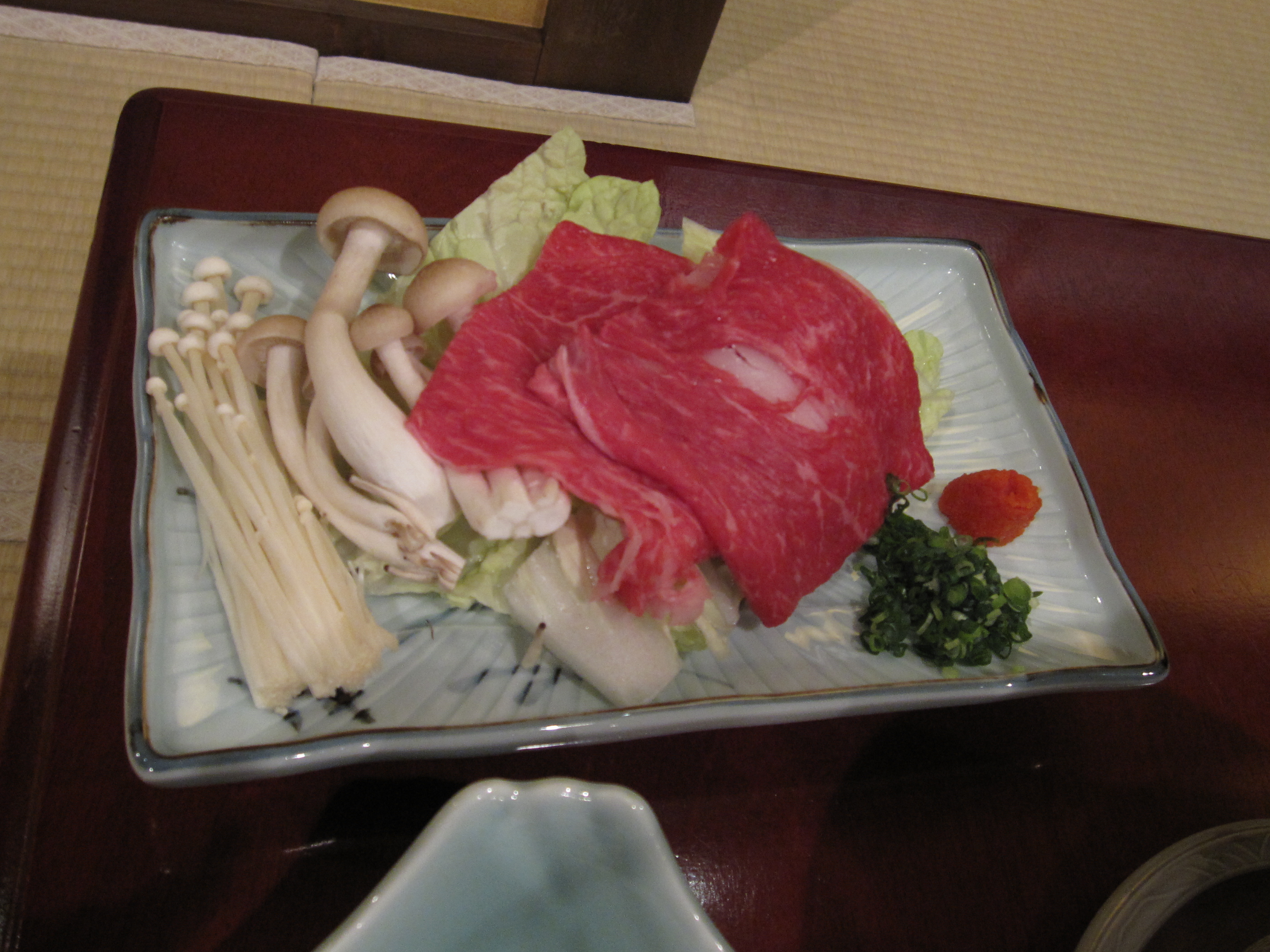
Then we ate the Shabu-shabu. Unfortunately I forgot to get a picture of the individual hotpots we used, but here’s the ingredients. The broth was a light sake base, in it we added cabbage, enoki mushrooms, and shimeji mushrooms. Once they were cooked, we sloshed the thinly sliced beef around to cook it and then dipped it all in a light soy with more of the togarashi yuzu and chives.
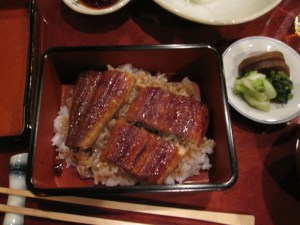
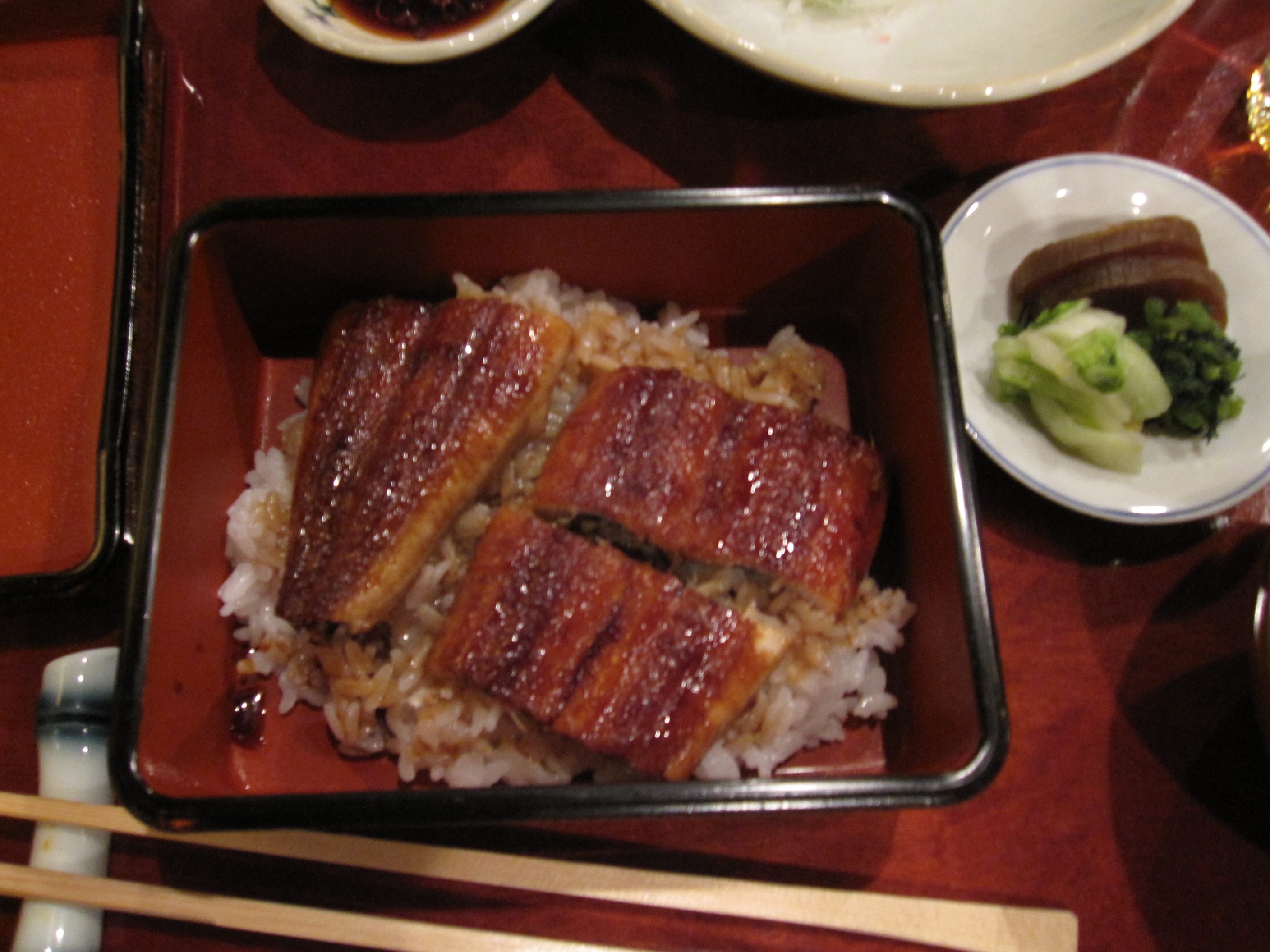
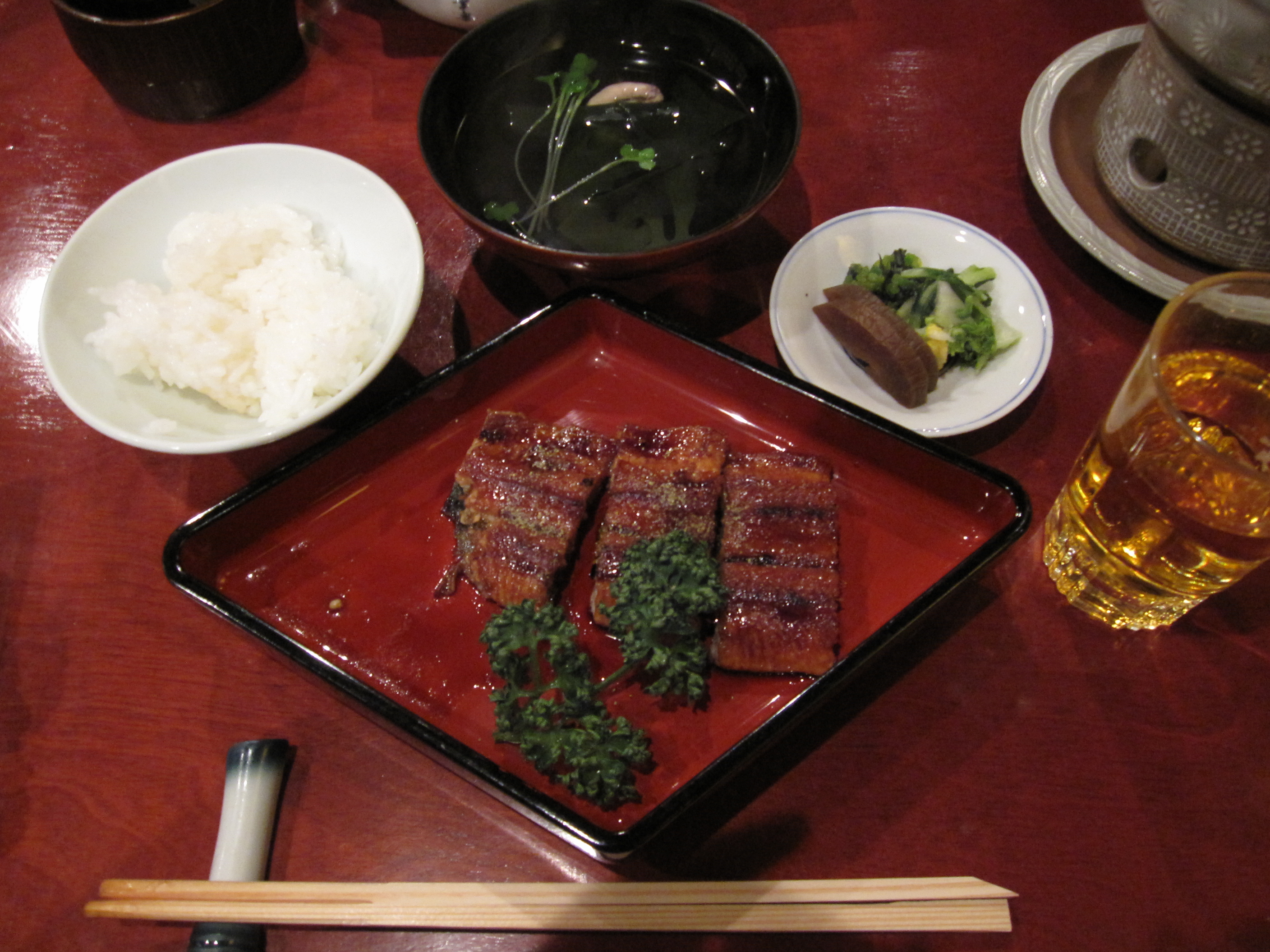
After that we got two different preparations of Unagi. To be honest, I have absolutely no clue what the difference was. One was served on top of rice, the other with rice on the side. All I can tell you is that you will never find eel of that quality anywhere in the States. It tasted like they just caught it that morning. Best eel ever! Both came with a little dish of Japanese pickles. They were probably damn good pickles, but I don’t like pickles so I let Yuki eat mine.

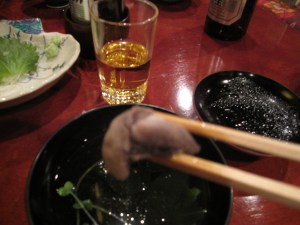
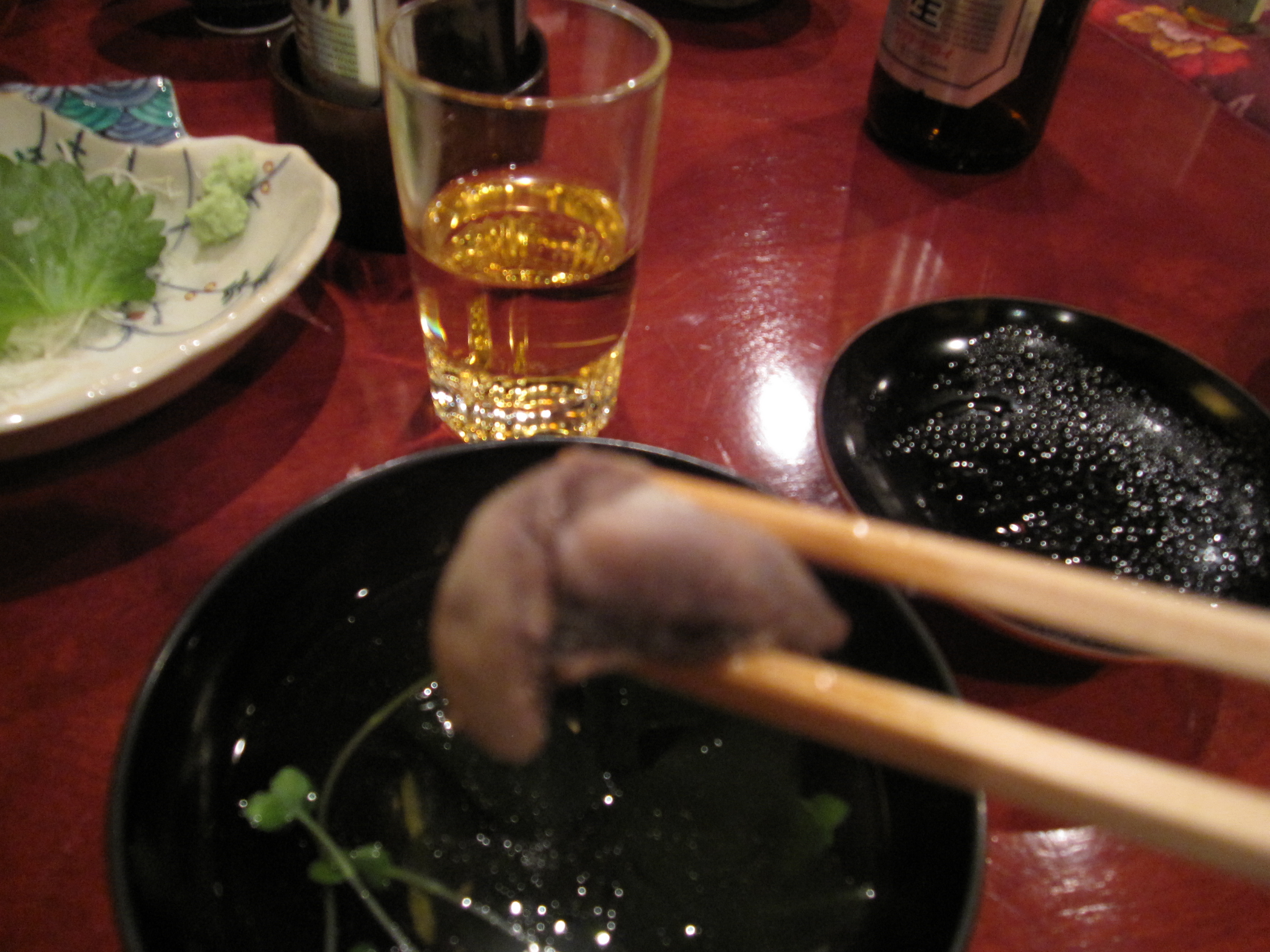
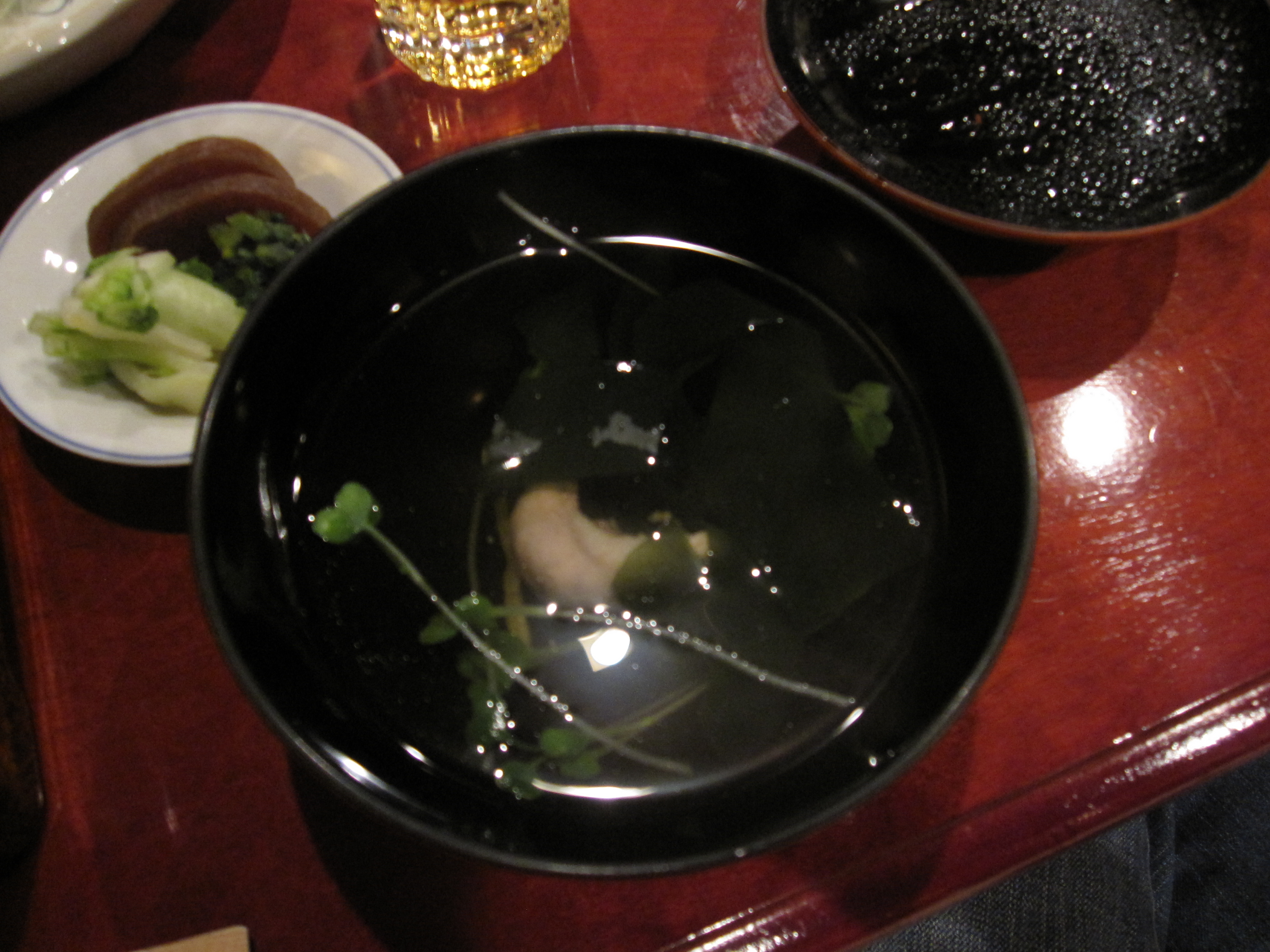
After the Unagi was a clear broth soup with an ingredient we couldn’t figure out. At first, we thought it was some sort of mushroom. It wasn’t. Then we thought it might be shiroko, fish sperm sack. It wasn’t that either. We finally found out that it was eel liver, probably from the Unagi we just ate. It had kind of a crunchy yet soft texture. Not something you’ll find on any old menu.
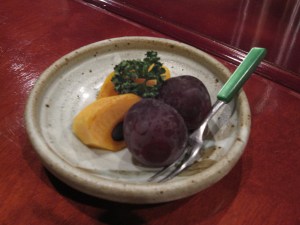
Finally, to finish things off was a plate with fresh persimmons and grapes. persimmons are in season right now and are everywhere while Japanese grapes are absolutely huge compared to what we get.

All in all this was my 5th Kaiseki. I wish I could afford to eat like this every night as there is always something unusual and strange to the western palette. If any of you get to Japan I highly recommend splurging at least once to experience the delicate yet sophisticated Japanese cuisine at it’s finest.

Read Full Post »

IMG_0982

It’s starting to get damn cold here in Chicago. In Japan, when it gets cold out, they start eating Shabu-shabu which is a Japanese hotpot. It’s called Shabu-shabu because of the sound the thinly sliced meat makes when you slosh it around in the broth to cook. I didn’t make this one, this dish is one of my wife’s responsibilities.

To start, she had to make the broth. Typically it’s Konbu (kelp) boiled in water. We didn’t have any Konbu, so she used Niboshi, dried anchovies. A good handful boiled in water for a bit and you get a really nice healthy broth.

To the broth she added shiitake and enoki mushrooms, green onion, and shanghai cabbage. That was left to cook for about 10 minutes in the boiling broth. If I hadn’t forgotten carrots at the store she would have added them as well. Daikon also makes regular appearances in Shabu-shabu.

After the veggies cooked a little she added tofu and konnyaku, a firm gelatinous cake-like ingredient made from yam starch. Then the pot was brought to the table and left to simmer on our table-top propane burner (something every Japanese household has).

In our bowls we poured a little ponzu, a soy sauce product with yuzu citrus juice and a little vinegar mixed in, and a couple ladles of the broth. Then we picked and chose which veggies we wanted and dipped them in our bowls before eating. All the while taking slices of the pork (we picked up some thinly sliced kurobuta pork at Mitsuwa) and sloshing them around the broth to cook. A side of white rice to complete the chow.

This a the perfect winter dish to have with a cold beer. It’s fun, delicious, and very healthy since there are no added oils or anything. Just make sure your meat, whether using pork or beef, is very thinly sliced so that it cooks quickly in the broth.

Read Full Post »
Kawabata Family Lunch

So, someone talked me about yesterday’s post.  “Lasagna, what’s the big deal?” I know, it’s a very basic dish. I really just wanted to show that good, well-rounded, organic meals can be whipped up on a budget. I’m going to continue showing different ideas in the future as well.

At any rate, there is a reason that lasagna holds a special place inside my duodenum. You see, my wife is Japanese. I met her when bumming around Tokyo before grey hairs started popping out of my scalp. While I ended up hanging out with her quite a bit on that journey, it wasn’t until my next trip to Japan that I met her parents.

In Japan, it’s typical for parents to meet the “boyfriend” (I use quotes because I think I was married from the first time I talked with her, or at least it feels like I was) for the first time out at a restaurant or a public place. Parents typically do not invite them into their home until after they’ve met. However, my situation was different. Here I am, a hairy Jewish gaijin from Chicago who’s travelled to Belize, Italy, and Kyoto with their daughter. They also know of my love of food and the Iron Chef. Being quite the home gourmets that they are they decided to invite me over for a home cooked meal.

I was expecting some weird Japanese dishes that I’ve never heard of or seen before using ingredients that don’t look like food. Much to my surprise her dad made his special lasagna. Actually, two special lasagnas, one with and one without meat. I have to say, the man can cook Italian! If he had big boozims I’d think he was an Italian grandmother.

Because of how her parents let me into their family, and because her family may very well be the best damn people in the world, I will always have a deep and profound love for homemade lasagna. Oh, and her mom bought a bottle of Coke because all Americans drink Coke. (I prefer sake)

Seriously, let’s be honest here. Isn’t this the cutest man in the world?

Uichiro's Mustache

He thinks the mustache makes him look like Sean Connery.

Read Full Post »
« Newer Posts