Feeds:
Posts
Comments

Posts Tagged ‘olive oil’

Last night I joined a couple of buddies for a happy hour drink. With that in mind I put together a dinner that I could cook and assemble quickly once I got home. Broiled chicken and vegetables seemed perfect.

Before I headed out to the bar I got all my veggies cut. Asparagus, red pepper, yellow pepper, and a half onion. I set them aside and covered so that they wouldn’t dry out. I also trimmed up some skin-on bone-in chicken thighs and kept them covered in the fridge.

After getting the ingredients prepared I ground a tablespoon of fennel seeds with my pestle and mortar. I mixed them into a quarter cup of olive oil and let that sit. Then I made the mustard sauce. 1 tablespoon of fresh thyme leaves, 1 tablespoon of rinsed capers, 2 tablespoons of mustard (I use Boetje’s, use whatever is on hand), the juice from a half lemon, 4 tablespoons of olive oil, and some black pepper. That all got stirred up and left in the fridge. Then I rinsed some rice, put it in the rice cooker, and set the timer so it’d be ready once I got home.

Off to go drink.

When I got home I put the rack in the upper third of the oven and turned on the broiler. I laid the chicken thighs and all of the veggies on a baking sheet and brushed the fennel seed olive oil over everything. I salted and peppered and then put everything under the broiler for about 15 minutes. At that point the veggies were carmelized and the chicken a little crispy and fully cooked and juicy.

I served the chicken on top of a bed of arugula and laid everything else out on the plate. Then I drizzled some mustard sauce over the chicken. That’s it, time to eat.

Read Full Post »

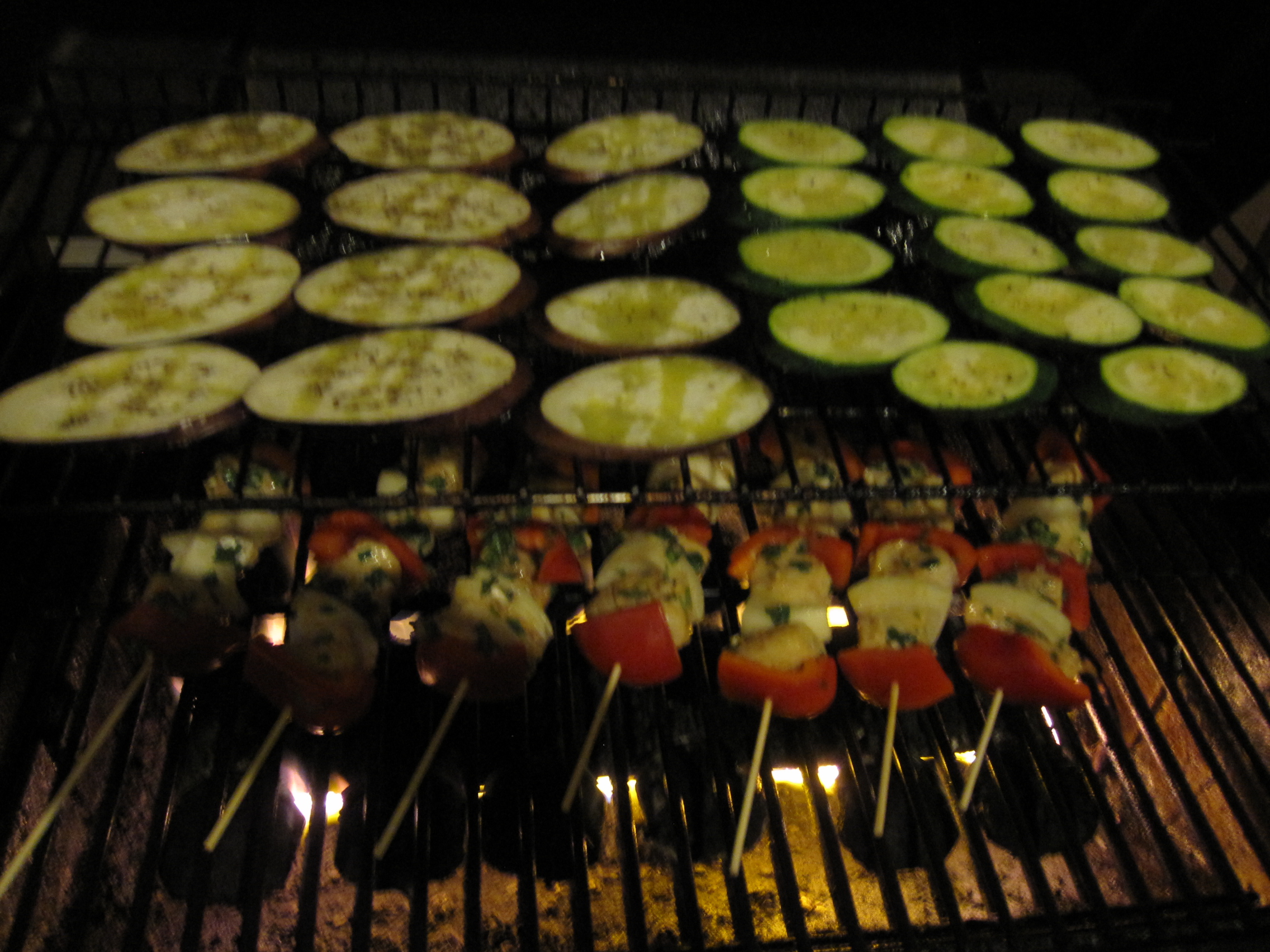
Last night I took advantage of another nice evening and grilled up some fish, at Yuki’s request. I decided to make some brochettes with Moroccan spiced cod. Any firm-fleshed fish would work for this recipe, cod just happened to be the cheapest and freshest as it just came in yesterday morning.

I cut up the fish into chunks large enough to skewer for the grill. Then I mixed up a marinade that consisted of 4 chopped garlic cloves, 1/2 teaspoon of paprika, 1/2 teaspoon of cumin, 1 teaspoon of salt, 1/2 teaspoon of cayenne, about 4 tablespoons of olive oil, the juice from one lemon, and a few tablespoons of chopped cilantro. I tossed the fish into the marinade and let it sit in the fridge, covered, for about 3 hours occasionally turning.

When it came time to grill I took the fish out to rest for about a half hour to come to room temperature. During that time I chopped an onion and a red pepper as well as thinly slicing , about 1/4 of an inch thick, a chinese eggplant (the regular eggplants weren’t as fresh) and two small zucchini. I also let my bamboo skewers soak in water for an hour.

After all of the vegetables were cut I skewered the fish with the red pepper and onion chunks. Then I drizzled the eggplant and zucchini slices with olive oil and seasoned with salt and pepper. I put the skewers on the bottom rack and the slices on the top rack. Everything was cooked at medium heat. That way the vegetables would cook at about the same rate as the fish. If the heat were too high the fish would cook much faster and the veggies would be too raw.

I made a sauce to drizzle on top of everything after grilling. The sauce consisted of 2 tablespoons of tahini, 1 tablespoon of soy sauce, 1 tablespoon of olive oil, the juice of 1/2 lemon, 1/2 teaspoon of paprika, and 2 tablespoons of chopped cilantro. I served with white rice and garnished with some cilantro sprigs.

Read Full Post »

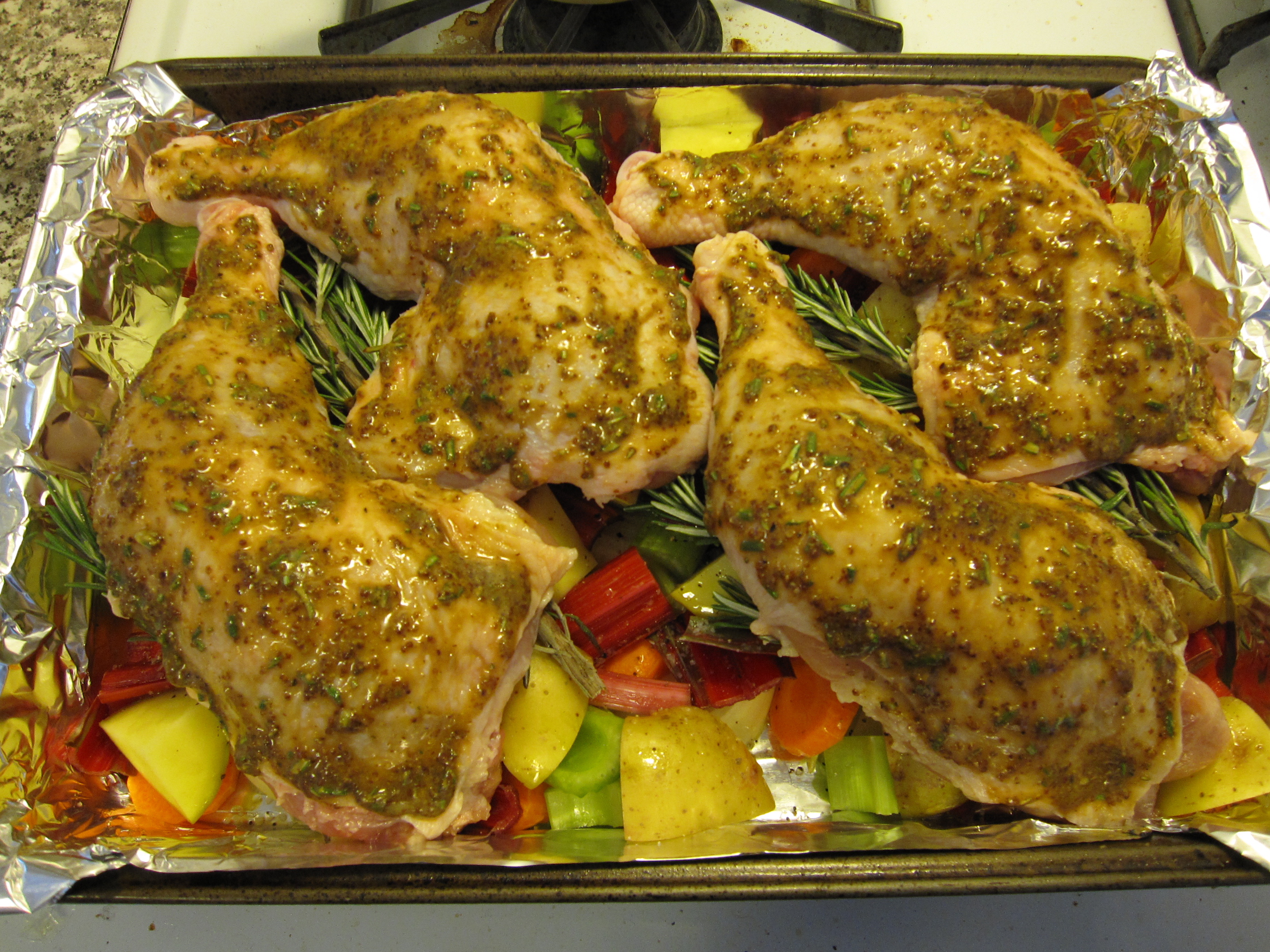
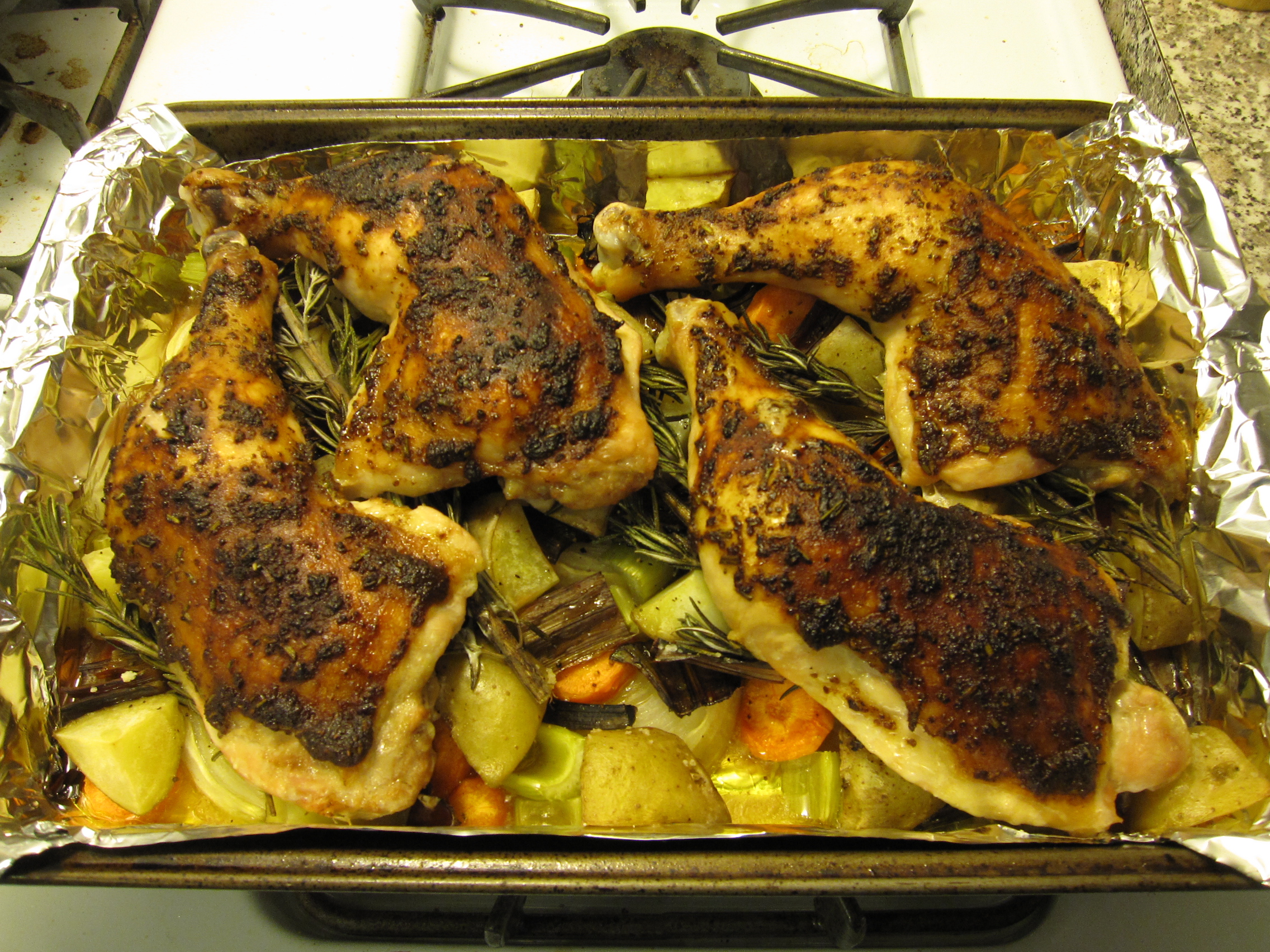
Roasting chicken on top of vegetables is one of the easiest ways to prepare a healthy, well balanced meal. You can add whatever veggies you want, season or marinade the chicken with just about anything, and there’s few dishes to clean since everything is roasted in the same pan.

Last night I marinated some whole leg parts in a sauce that consisted of a couple spoonfuls of mustard (any kind of mustard works, my favorite is Boetje’s, a Dutch stone-ground style), a few tablespoons of soy sauce, some chopped garlic, some finely chopped fresh rosemary, black pepper, and a couple tablespoons of olive oil. Mix that all together and then coat the chicken skin with it.

For the veggies I chopped up three stalks of celery, one carrot, three yukon gold potatoes, one onion, and the leftover chard stems from the Ethiopian stewed chard that I made a few nights ago. I threw them all into my roasting pan and tossed them with olive oil, salt, and pepper.

On top of the veggies I layed down some rosemary sprigs and then the chicken. I let it all roast in a 375 degree oven for about an hour and 15 minutes, or until the skin was nice and crisp with the meat cooked and juicy.

My favorite thing about roasting chicken on top of veggies is that the chicken fat that cooks off helps cook the veggies. So you’re basically cooking with chicken fat. It’s not at all unhealthy either as I leave most of the juice in the pan when I serve. Only a little of the chicken fat makes its way into my belly. As we know, a little chicken fat never hurt anyone.

Read Full Post »

Last night I made some delicious Lamb Kofta with the leftover berbere spice from the Doro Wat. I thought I’d stick with a Middle Eastern theme by serving it with some homemade Baba Ghanoush, roasted red pepper and yellow string beans, and an Israeli Couscous and Tomato soup. Of course, it wouldn’t be complete without some pita.

Before I made the kofta, I roasted two eggplants on the burner for the baba ghanoush. Once the skin was nice and charred I set them in a bowl, covered them with plastic, and let them sit for an hour.

So, to make the kofta I mixed in the berbere spice (there was about 1.5 tablespoons left), 1 teaspoon of turmeric, salt, pepper, 6 grated garlic cloves, half an onion grated, 1 jalapeno seeded and diced, 1 slice of bread crumbed, 1 beaten egg, 1 tablespoon of tomato paste, some chopped cilantro, and the juice from a half lemon into 1 pound of ground lamb. Once mixed I let it rest for a half hour covered in the fridge.

After the meat was rested, I wet my hands and formed 8 patties. They were set aside until time to cook.

Then I started on the couscous. I sautéed half an onion in some olive oil for about 10 minutes, then I added three grated garlic cloves. A few minutes later I threw in a diced carrot. That cooked for about 6-7 minutes, then I added a 14oz can of diced tomatoes and two cups of chicken stock. Once that was all mixed together I grated three more garlic cloves and tossed them in along with some salt, pepper, and about a tablespoon of cumin and a teaspoon of cayenne. I let that simmer for about 10 minutes covered over med-low heat.

After that I turned on the broiler and drizzled olive oil on the red pepper slices and yellow string beans. I seasoned them and threw them under the broiler. I left them there for about 10-15 minutes, during which time I finished the baba ghanoush.

I peeled the skin off the eggplants and mashed them up real good with a fork. I added 2 cloves of grated garlic, about 8 tablespoons of tahini, the juice from 1 lemon, and about a half teaspoon of cumin.

Then I heated some oil in a pan and cooked the kofta. I left them on for about 6 minutes each side, that gave them a nice crust, but kept them juicy. I also added about a cup of Israeli couscous to the tomato soup at this point to let it cook while the kofta was going.

Once everything was done I added a handful of chopped cilantro to the soup and plated it all up. The leftovers made a fantastic pita sandwich for lunch today!

Read Full Post »

I was flipping through a Jewish cookbook that I have trying to find recipes for Passover when I came across a recipe for Doro Wat, the national dish of Ethiopia. At first, I was surprised to see this. As I thought about it though, there has been a Jewish community in Ethiopia for thousands of years, untouched by the Romans or Crusaders. This allowed a more traditional interpretation of the Torah to exist, along with strict dietary Kashrut laws. I’m not saying that Doro Wat was created by the Jewish community, I don’t think anyone knows where its origins are, but it is consistent with a style of cooking prevalent throughout the Jewish diaspora during the Sabbath. Since it’s not permitted to do any work, cooking included, during the Sabbath, food is simmered on low heat for long periods of time. That way, when families get home from synagogue, a warm and filling meal is ready to go without further cooking.

I felt compelled to give it a whirl since Yuki and I both thoroughly enjoyed the two Ethiopian food experiences we’ve had. The recipe calls for a mix of spices, but I prefered to make a berbere to use instead. To make the berbere I mixed the following spices together all at a 1/2 teaspoon measurement: chili powder, paprika, ground ginger, cinnamon, ground cardamom seeds, ground cloves, and dried basil. Like any spice mix, you can make much more and store in a tight container for a few months.

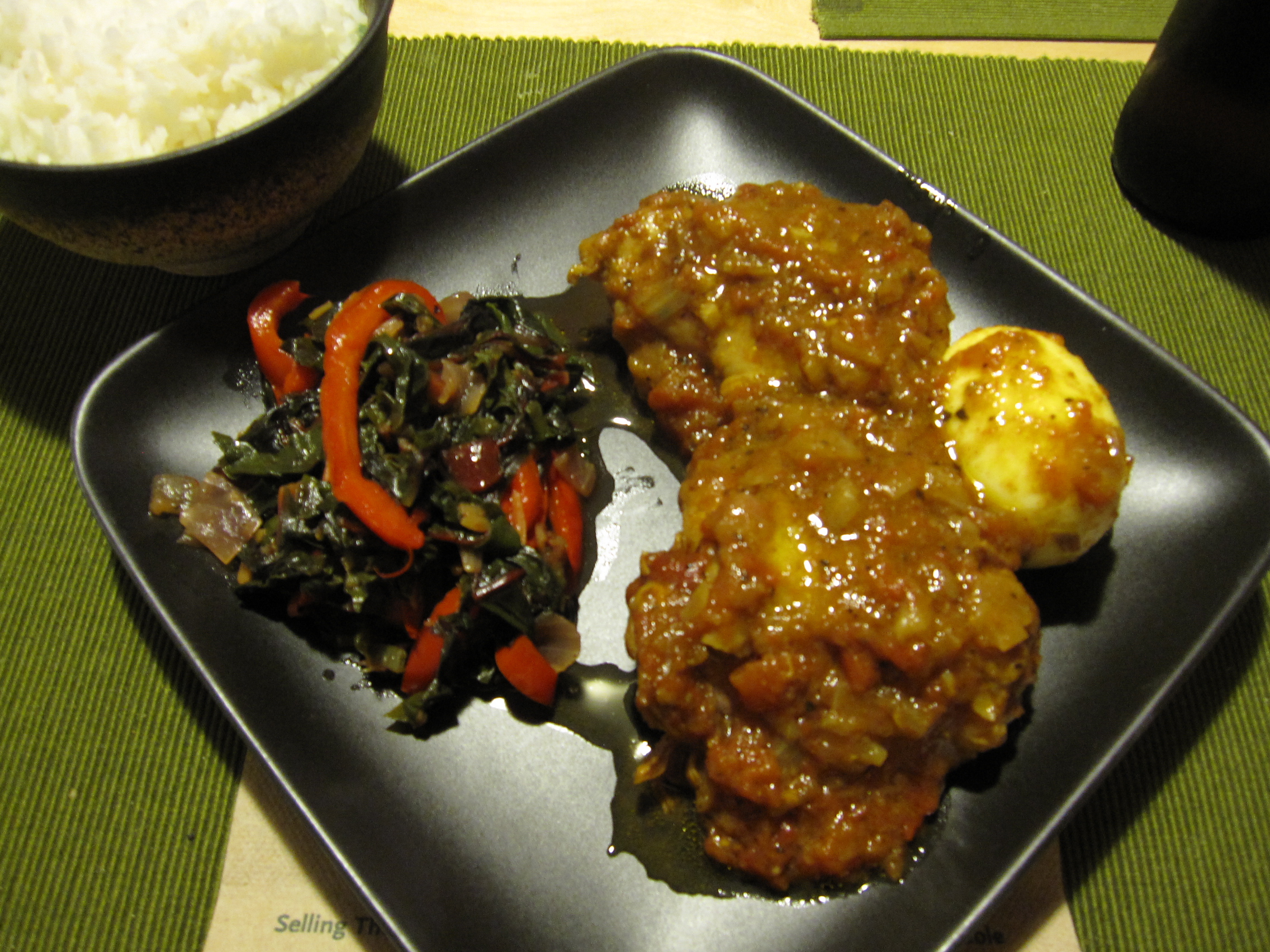
To make the Doro Wat I first sautéed a diced large onion in some vegetable oil until it was soft but not burned, about 7 or 8 minutes. Then I grated in 6 garlic cloves and a 1/2 inch of fresh ginger and let those cook for a couple of minutes. After that, I added one cup of chicken stock and one 14 oz can of diced tomatoes and brought to a boil. I let it boil for about 10 minutes to reduce some of the liquid. Next, I salted and peppered to taste.

I was making 4 servings, so I picked up 8 skin-on, bone-in chicken thighs. You can get a whole bird and break it down, purchase 4 complete leg sections, whatever you want to make 4 portions. Just make sure to use skin-on, bone-in chicken. The skin and bones will add depth to the dish. So, just before putting the thighs in the sauce I mixed in 1/2 teaspoon of turmeric and 1 teaspoon of the berbere that I made. Once the chicken was added I covered it with the sauce, turned the heat down, and let it simmer for an hour covered.

While the chicken was simmering I hard-boiled 4 eggs, one per portion. The egg is what really sets this dish apart from other chicken stews, so make sure every plate gets one. When the chicken only had about 10 minutes left I peeled the eggs, pricked them all over with a fork making sure not to break them, and then added them to the stew.

To serve with the Doro Wat I made another traditional Ethiopian dish of stewed greens. Typically collard greens are used, but Stanley’s had some beautiful chard, so I used that instead. It’s a real simple recipe. Fry a diced red onion in some olive oil for a few minutes, then add a couple of crushed garlic cloves and 1/2 inch grated ginger. After that, add 2 green chilis that have been seeded and sliced. Add about 1/3 cup of water and let come to a boil for a couple of minutes. Then, add one red pepper that’s been seeded and sliced as well as 1 pound of whatever green you use (collard, chard, kale, cabbage, etc.) thinly sliced. Season with salt and pepper, mix it all up and cook over a med-low heat for about 25 minutes partially covered. That’s all there is too it.

As much as I wanted to make some Injera, I have absolutely no idea where to find teff, the grain used to make it. I found a bunch of recipes, but no teff. So, I just made some basmati rice.

I have to say, this is one of the best tasting dishes I’ve ever made! The sauce is so friggin delicious, I am definitely keeping it in my regular rotation. It would be equally good with lamb instead of chicken. I would even give shrimp a try in this sauce.

Read Full Post »

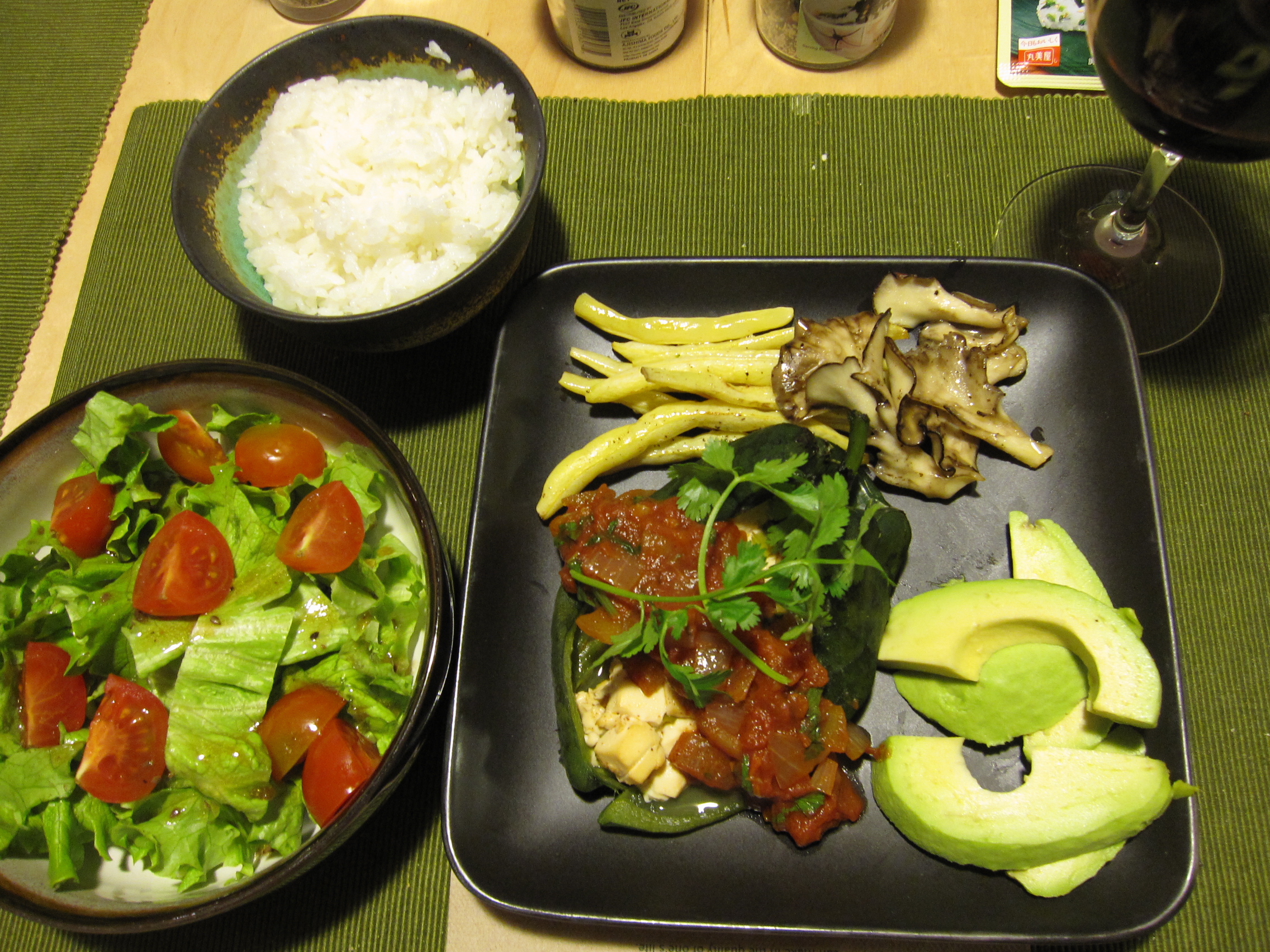
I’ve been mulling this recipe over in my head since my trip to Merida. I wanted to somehow make a Japanese flavored Chiles Rellenos. Last night, for Meatless Monday, I gave it a shot. Not sure it’s exactly the way I had originally planned, but it turned out pretty good.

First thing I did was roast the poblano peppers on the open flame of my stove-top till the skin was completely charred. Then I let them steam themselves in a bowl covered with plastic-wrap for about a half hour.

While that was going on I made the filling. I sautéed some green onions and garlic in a little vegetable oil for about 5 minutes. Then I added one teaspoon of mirin, two teaspoons of sake, and three teaspoons of soy sauce. I also threw in some chili powder. Once that was all mixed together I dumped in some diced tofu and let it simmer for a few minutes and absorb some of the flavors.

Next, I peeled the skin off the poblanos and made a slit down one side to remove the seeds. Once the poblanos were all cleaned out I stuffed them with the tofu and set them aside.

The sauce was very simple to make. I first sautéed a half onion, diced, in some vegetable oil for a few minutes until soft but not burned. Then I added some grated garlic and let that cook for a couple of minutes. A couple tablespoons of red wine, a couple tablespoons of soy sauce, a can of diced tomatoes, and a few dashed of chili powder then let it simmer till it thickens up a bit. Just before serving I turned the heat off the sauce and added a little sesame oil and some chopped cilantro.

For the veggies, I just doused some yellow string beans and maitake mushrooms in some olive oil, salt, and pepper and threw then under the broiler for about 10 minutes. For the last few minutes I also put the peppers under to heat them back up.

I served everything with white rice, slices of avocado, cilantro garnish and a simple salad. The salad was green leaf lettuce and cherry tomatoes with a shiitake-sesame vinaigrette. It all turned out better than I expected.

Read Full Post »

I thought we were done with Restaurant Week, well, I thought wrong! A couple friends of ours had invited us to join them for dinner Saturday night at Salpicon. I’ve been there once before with  my sister and brother-in-law, maybe 5 years ago. I remember walking away fully satisfied both in my belly as well as my taste buds. So, the opportunity to dine there again, at the discounted restaurant week price, was too good to pass up as we’re not ones to miss out on top-notch Mexican food at a discount. Hanging out with Tony and Sandra was also a nice proposition which certainly didn’t hurt the matter.

I must warn you that I did use my cell phone camera again. The pics do not do the food the justice they deserve, but what can you do? Also, since there were four of us I have a lot of pics to show. They offered 5 different appetizers as well as 5 different entrees. What we did was order the 4 most interesting of each and shared them all. I’ll try to keep this post short, but no guarantees.

Ceviche of Blue Marlin. Very typical with onions, tomatoes, chiles, and cilantro. Served with tortillas it always makes a great starter.

Gorditas Divorciadas. Thick tortillas stuffed with black beans and shredded beef (I think brisket, which completely satisfies the Jew in me). They each had a different salsa. One was a guajillo and the other was serrano-tomatillo, both had Mexican crema drizzled on top.

This was the Trio de Tamalitos. Three little tamales, one with queso fresco and serrano chiles that had a spicy molcajete salsa and crema, another with black beans, rajas (a saute of chilis and onions), and chihuahua cheese with a black been puree, the last had zucchini and chipotles.

The last appetizer was Sopa de Lentejas, lentil soup. It was garnished with grilled pineapple, smoked bacon (YUM!!!), chile pasilla, and queso anejo.

For the entrees we got the Camarones al Mojo de Ajo. Big, plump, juicy grilled shrimp in a sweet garlic and olive oil sauce with avocado chunks, guajillo chiles, and white rice. Not too garlicky at all.

Chiles Rellenos. Two battered poblanos deep-fried and swimming in a roasted tomato sauce. One was stuffed with minced pork picadillo, the other with chihuahua cheese. There was a side dish of frijoles borrachos, but I forgot to get a pic of that. Deal with it!

Pollo en Mole Poblano. Two chicken breasted smothered in a rich, spicy mole and served with Mexican rice. It really was kind of spicy. My first bite gave me a couple of little hiccups.

Tinga Poblana. Pork tenderloin on top of a roasted tomato-chipotle sauce with chorizo and potatoes, surrounded by an avocado-tomatillo sauce. This was hands down the best in show! Nice soft tenderloin and chorizo….how could that go wrong?

Alright, time for dessert. We got a flan that was covered in a sugar dome.

Tres Leches.
A crepe filled with berries and a caramel sauce.

My personal favorite was the mango and pear cobbler. Not sure what it’s actually called, but it sure was delicious with the cajeta ice cream on top!

All in all it was a delicious dinner. It’s every bit on par with Rick Bayless as far as creativity and quality. While I just found out that they offer a $29 pre fix every Monday and Tuesday this restaurant week deal might not have been the best offer. However, on a weekend night it was. I would recommend to everyone that they check Salpicon out for the pre fix deals. If you don’t want a limited menu, it’s also definitely worth paying full price for.

Read Full Post »

So, Yuki made dinner for Meatless Monday this week. As you can see from the pic, she cooks a totally different style than me. She prefers numerous different plates with different items while I usually cook more of a one-pot gig. But, with it being Presidents Day and a day off work it was her turn.

Starting with the top left dish, she simmered some daikon radish. For the broth, she boiled niboshi (small dried sardines) in water to extract that flavor into a deliciously light dashi. Then she simmered the daikon until they were softened, but still retained some texture. She topped the daikon with yuzu-miso and some sliced green onion.

The top right dish is sato imo, a hairy potato that made my fingers itch when I peeled it. It’s worth it though as it has a more pronounced earthiness in its flavor than the potatoes we’re used to here in the States. She first had boil them in some vinegar. These potatoes are very slimy and by boiling them in vinegar the slime is removed. After they were boiled she sautéed them in olive oil with some onions and garlic. Then she added some ponzu and a little mayonnaise.

The bottom bowl is harusame soup. She used konbu dashi for the broth, a very typical broth for Japanese soups. The noodles are harusame, made from mung bean starch. Also in it were some enoki mushrooms, shiitake, wakame seaweed, sliced aburage (deep fried tofu skin), baby bok choy, and an egg that was poached in the dashi.

She also made dessert, shiratama dango. They’re little dumplings made out of mochi rice flour. Simply add water to the flour, roll the dough into little balls, and boil them till they float. They’re usually grilled afterword to make them a little more savory before adding various sweet sauces. We used three of the more common sauces. On the left is azuki bean paste, the middle is mitarashi (a sweetened and thickened soy sauce with mirin, sugar, and corn starch), and the right is kinako (soy flour mixed with sugar).

Read Full Post »

Sorry it took me a few days to put up this past week’s Meatless Monday. It’s been a pretty hectic week. Plus, I still have posts from Japan that I need to get up as well as other home cooked meals from both me and my wife. Soon enough my loyal readers (all three of you), soon enough.

At any rate, I had some kabocha that I need to use up so I decided to make a vegetarian stew based around it. It’s real simple to make, much like a pot of chili. It’s one-pot cooking at its tastiest.

I started by sweating some chopped onion in olive oil in a large pot. Then I added some ginger and garlic. After a few more minutes I threw some diced carrot and red pepper. Then I added some diced purple potatoes.  A few more minutes and then I finally added the star of the stew…the kabocha. You don’t want to cut the kabocha too small because it will start to become mushy and melt if you stew small pieces for too long (same with the purple potatoes).

After the kabocha was in there for about 5 minutes I seasoned with salt, pepper, paprika, cinnamon, and a little curry powder. Then I poured in about a quarter cup of orange juice and a half cup of water (I added a little more later because it absorbed and evaporated a little quicker than I anticipated, no worries, you can always add water). Once that all came to a boil I turned the heat down to a simmer, covered, and let stew for an hour.

After the hour was up I threw in some lentils then covered it for another 15 minutes. Then I added a can of drained brown beans. Once the beans were heated through I turned off the heat and threw in a handful of chopped fresh parsley and squeezed a half a lime in.

I was just going to serve it as is with some bread on the side, but Yuki decided it would taste better with angel hair pasta. That sparked an idea. Instead of angel hair we should use udon noodles! The problem with that, though, is that we didn’t have any udon. So, angel hair it was.

The beauty of a stew like this is that you can really do anything you like. Vegetables you want and any seasonings you want. Just make sure the flavors will compliment each other. The only think really missing from this dish was nice, juicy, tender chunks of lamb!

Read Full Post »

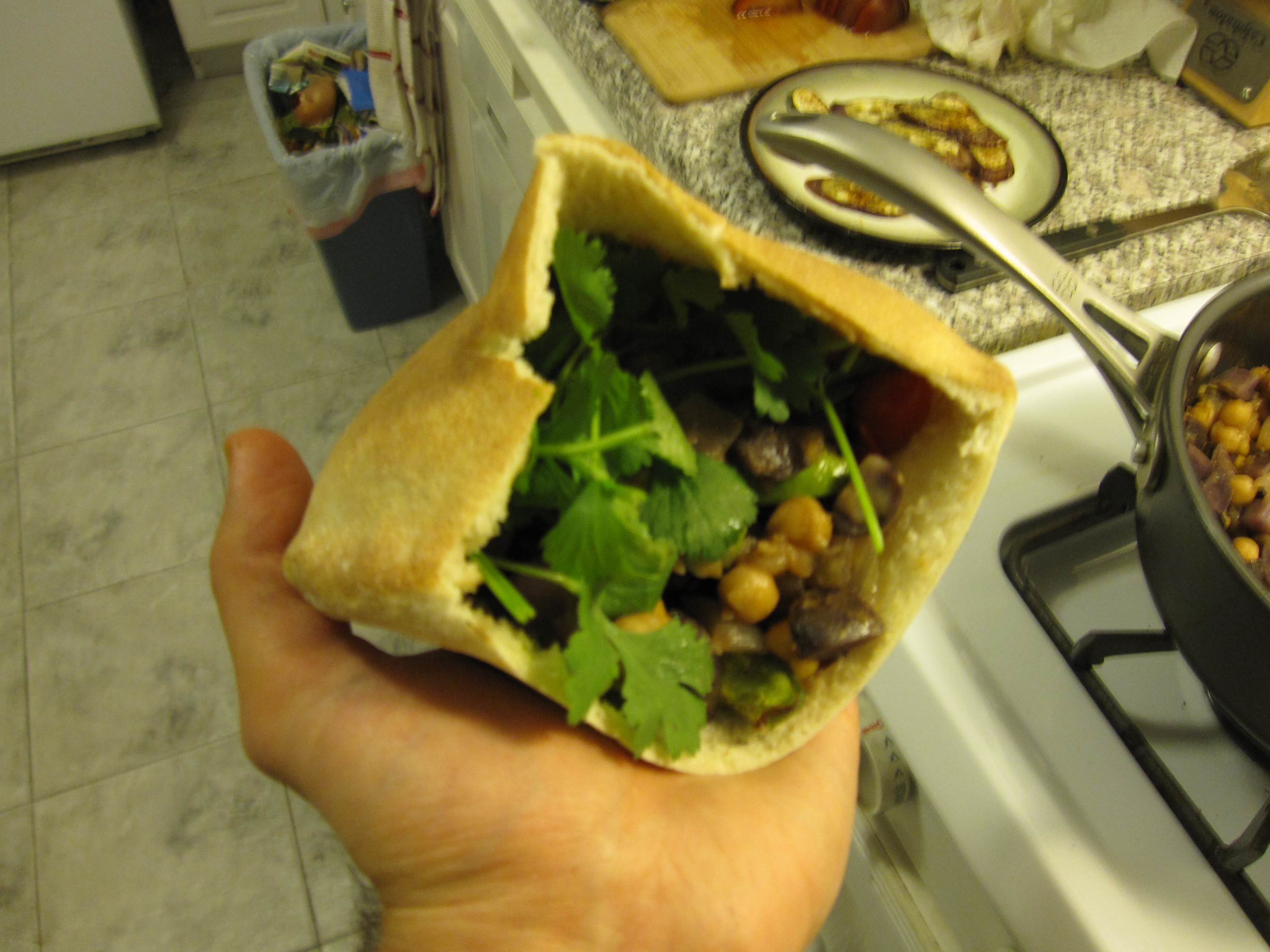
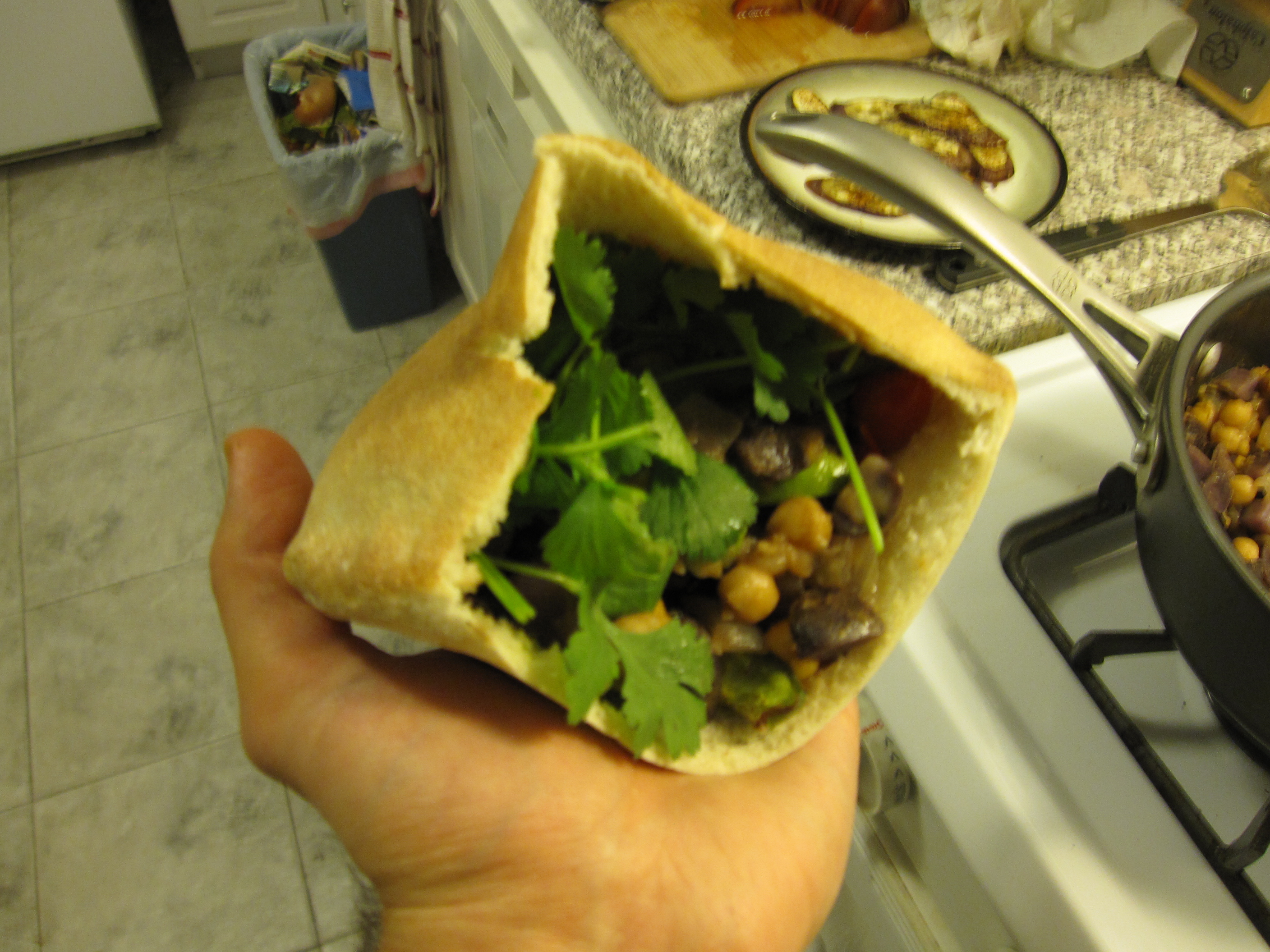
We picked up some pita bread yesterday so we decided to make some vegetarian pita sandwiches for Meatless Monday. The beauty of something like this is that you can fill them with absolutely anything! We went with a more Middle Eastern flavor.

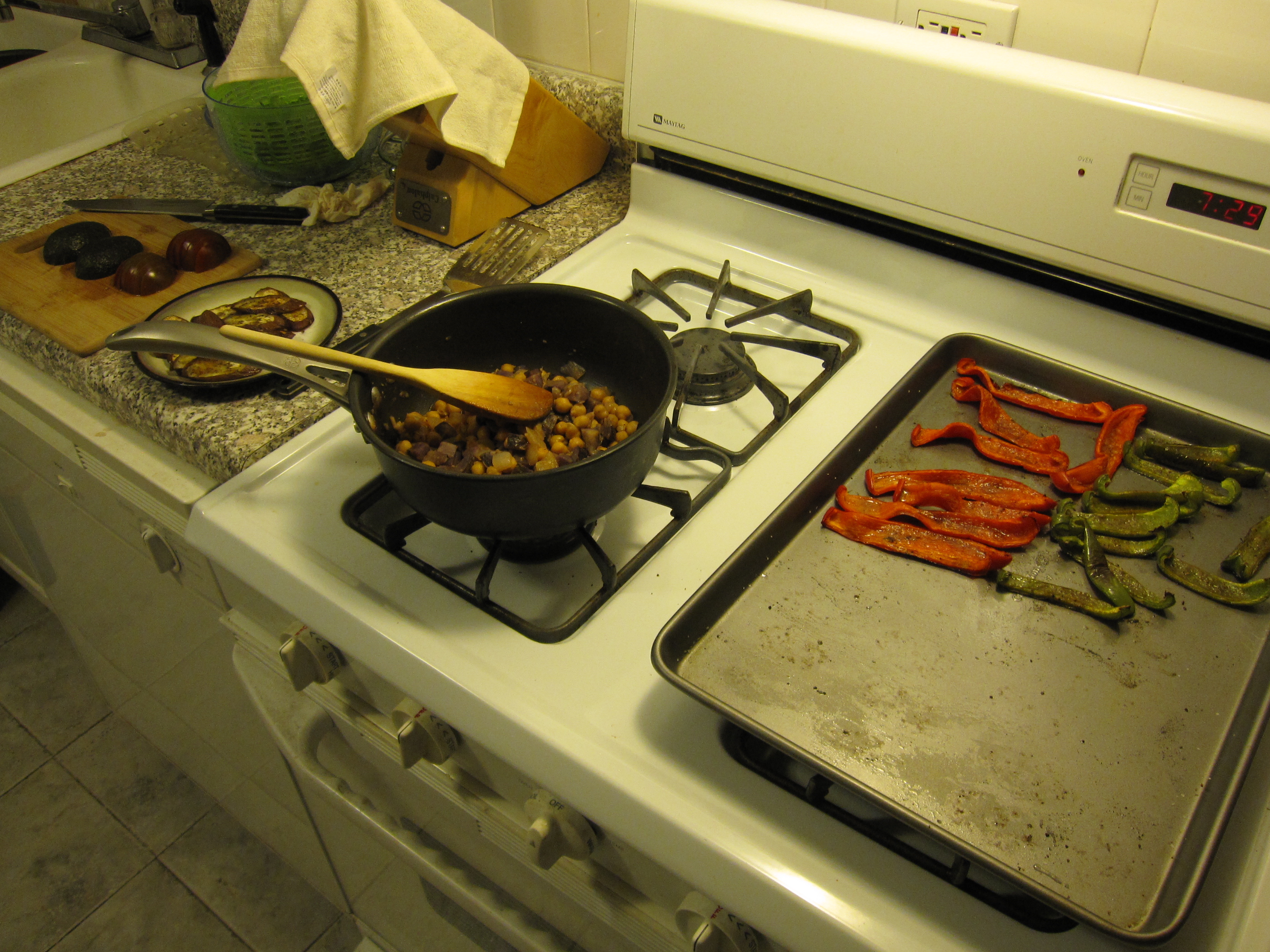
I sliced a Japanese Eggplant into quarter inch thick slices. I also sliced one large red pepper and one large green pepper into quarter inch slices. On a baking sheet I drizzled some olive oil and laid them all on. Then I drizzled some more olive oil on top of the veggies and sprinkled them with salt, pepper, paprika, and cumin. I roasted them in the oven at 400 degrees for about 10 minutes. Then I took the eggplant off the sheet and put the peppers back in for another 5 minutes.

While those were roasting I sautéed some diced purple potatoes in olive oil for about 10 minutes to color the surface. Then I added some chopped onion and garlic and sautéed for another 7 minutes. After that, I added a half cup of chicken stock. Scraping up the browned bits on the bottom of the pan I mixed in some salt, pepper, paprika, and cumin. Then I added a drained can of chickpeas and let it simmer until the liquid was almost completely evaporated. After turning off the heat I added the juice from one lime.

I put a couple of pitas into the oven while it was still hot for a couple of minutes to warm them up. After slicing the top off I filled them with all the goodies plus some tomatoes and avocados I sliced. Then I shoved some cilantro into whatever little crevice wasn’t filled yet.

Read Full Post »

« Newer Posts - Older Posts »