Feeds:
Posts
Comments

Posts Tagged ‘onion’

Ever since our gastroventure to Don Diablo a while back I’ve wanted to try my hand at making cochinita pibil. It’s something that needs to be planned ahead since it’s best if the pork shoulder marinates overnight. I just never planned ahead until this week rolled around. I got my shoulder the day before and went at it.
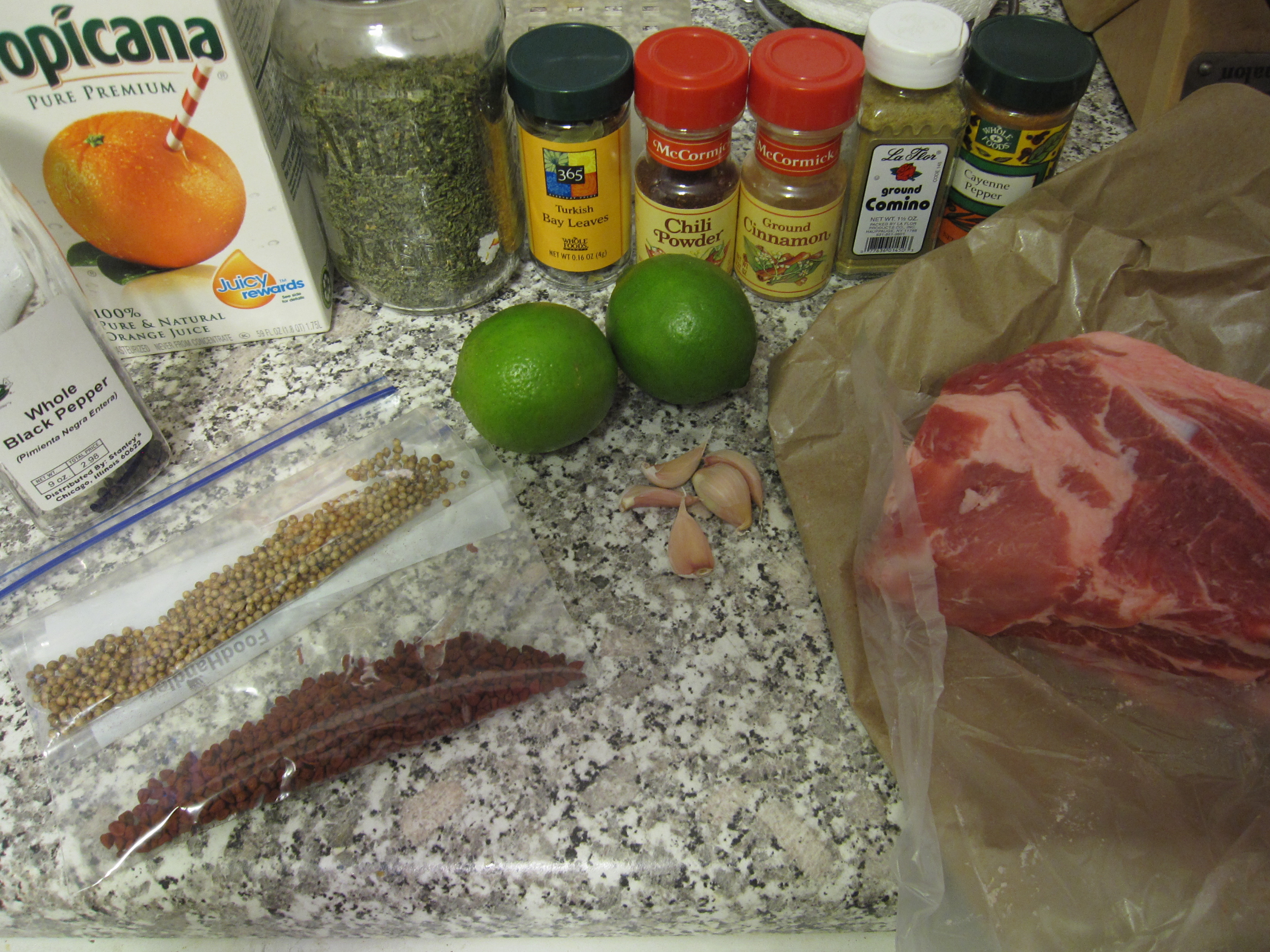
Alright, so I the shoulder I picked up weighed about 2.8 lbs, bone-in. Gotta be bone-in, there’s just no other way to go. For the marinade I crushed 2 tablespoons of achiote seeds with 1 teaspoon of coriander seeds. I found out the hard way that achiote seeds stain anything and everything. If you can find achiote past that’s a better alternative. Anyway, I mixed those in a large glass (must be a non-reactive material) bowl with 1 teaspoon each of dried oregano, chili powder, cinnamon, cumin, and cayenne. Then, I minced 5 garlic cloves, crushed up 2 bay leaves, and mixed those in. I cracked about 2 tablespoons of black pepper. Finally, I poured in 1 cup of orange juice and the juice of 2 limes. With a fork I pricked the shoulder all over, let it swim in the marinade, covered it with plastic wrap, and threw it in my fridge. This was about 2pm Monday so that I could get 24 hours of marinating time.

When marinating time was up I put the shoulder along with the marinade in a cheap foil braising pan, covered it tightly with foil wrap, and threw it in a 325 degree oven for 3 hours. Use whatever braising pan you have.

While the pork was braising I made my sides and condiments. I pickled a red onion, very easy to do and very delicious. Also, pickled red onion is the classic condiment to cochinita pibil. I quartered a red onion and then sliced each quarter into 1/8 inch slices then put them in this small glass bowl. I boiled some water and poured it on top of the onions. After ten minutes I drained the onions and put them back into the bowl. I mixed together 1/2 cup of orange juice with 1/2 cup of fresh squeezed lime juice and a pinch of salt and then poured that on top of the onions. I covered it with wrap and let it sit until dinner time.

I also made some guacamole. I was going to use 2 avocados, but when I sliced the 2nd one open it was absolutely disgusting! That’s the one problem I have with avocados, they’re such a crapshoot. I did get one good though and that was enough for our dinner. Since I only had one good one I only used 1 plum tomato. I de-seeded it and chopped it up. I mixed the tomato and avocado with the juice from 1/2 lime, 1 small garlic clove minced, a pinch of salt and pepper, and a handful of chopped cilantro.

Finally, I made a black bean and corn succotash. I first took 1 cup of dried black beans and boiled them in 6 cups of water for a few minutes, then I turned off the heat, covered the pan, and let it sit for about an hour. I drained and rinsed the beans then put them back in the pan. To that I added 1/2 onion diced, 1 jalapeno diced, and the kernels from 1 ear of corn separated. I seasoned with a little salt and pepper, poured in about 1/2 cup of chicken stock, and let it simmer for about 30 minutes while I finished off the cochinita pibil.

Once the pork was fall-off-the-bone deliciousness, I let it cool a little so that I could handle it without burning myself. Although, the pleasure of sinking my teeth into that meat would be worth the pain. Once I could handle it painlessly I pulled the meat and put it in a large skillet. I poured about 1/2-1/3 cup of the liquid in and then heated it back up.

I served everything with some watercress, ricotta ensalata cheese, and some cilantro. I had warmed corn tortillas on the side and we made some fantastic cochinita pibil tacos.

Read Full Post »

This year for Thanksgiving we didn’t really have much of a plan. There weren’t a lot of options on the table for us. We could have gone to my mom’s in Merida, Mexico, but flights were very expensive this year. We could have gone to my Grandma’s in the Quad Cities, but no one there cooks anymore, they go to a restaurant in Andalusia. Not exactly a mouth-watering proposition. Almost all of our friends were with their families. It wasn’t until 3:00 Thursday afternoon that we figured out what to do. With so little time we decided to keep it very simple. So, we headed to Stanley’s and Whole Foods to get the fixin’s we needed to make a small dinner of four portions.

First thing I made was a sweet potato puree soup. I skinned and chopped up two medium-sized sweet potatoes and tossed them into a pot with 3 garlic cloves and 2 cups of chicken stock. I brought it to a boil, covered it, and let it simmer for 20 minutes until the potato chunks were nice and soft. Once it cooled down a little I threw it all into my blender with a cup of soy milk and pureed it nice and smooth. I seasoned it with some salt, pepper, and a tablespoon of cinnamon and then poured it back into the pot ready to re-heat once everything else was done.

For the rice I simply rinsed 2 cups of rice and put it in our rice cooker. Once I poured in the water I added one diced carrot and 1.5 tablespoons of dried hijiki. I let it sit for about 30 minutes and then hit the start button. Simple as that.

For the Turkey I just got a 1.75 pound breast. I laid it in a large rimmed baking sheet and covered it with a mix of 2 tablespoons of miso, the juice from one lemon, the zest from half of the lemon, and some black pepper. After evenly coating the top of the turkey with the miso I put it on the lower 3rd rack of the oven at 400 degrees. I let it roast for about an hour. Once the hour was up I took it out and put a bunch of haricots vert all around the pan and poured 3/4 cup of chicken stock around the bird. I put that back into the oven for another 15 minutes. When I took it out I let the bird rest on a board and set the haricots vert aside. I mixed together 1 tablespoon of miso and 1/4 cup of chicken stock and poured that into the pan to mix with the rest of the juices. That was my sauce for the turkey after slicing it.

While the turkey was cooking I melted 1/4 cup of butter and slowly carmelized 1 sliced onion for about 20 minutes.

To serve, I sliced the turkey and laid it on top of the haricots vert. I spooned some sauce on top and then laid down some of the onions. I garnished it all with the other half of lemon zest. The soup and rice were on the side.

I cheated on dessert, we just picked up a pumpkin pie and some vanilla ice cream. It’s a shame we didn’t plan ahead because both Yuki and I make a mean pumpkin pie. I also make a pretty good ice cream. Oh well, we weren’t trying to impress anyone this year, so this worked out just fine. Maybe next year we’ll be more creative and extravagant. In the meantime, everything turned out really tasty and we have no complaints. It sure beats a restaurant in Andalusia.

Read Full Post »

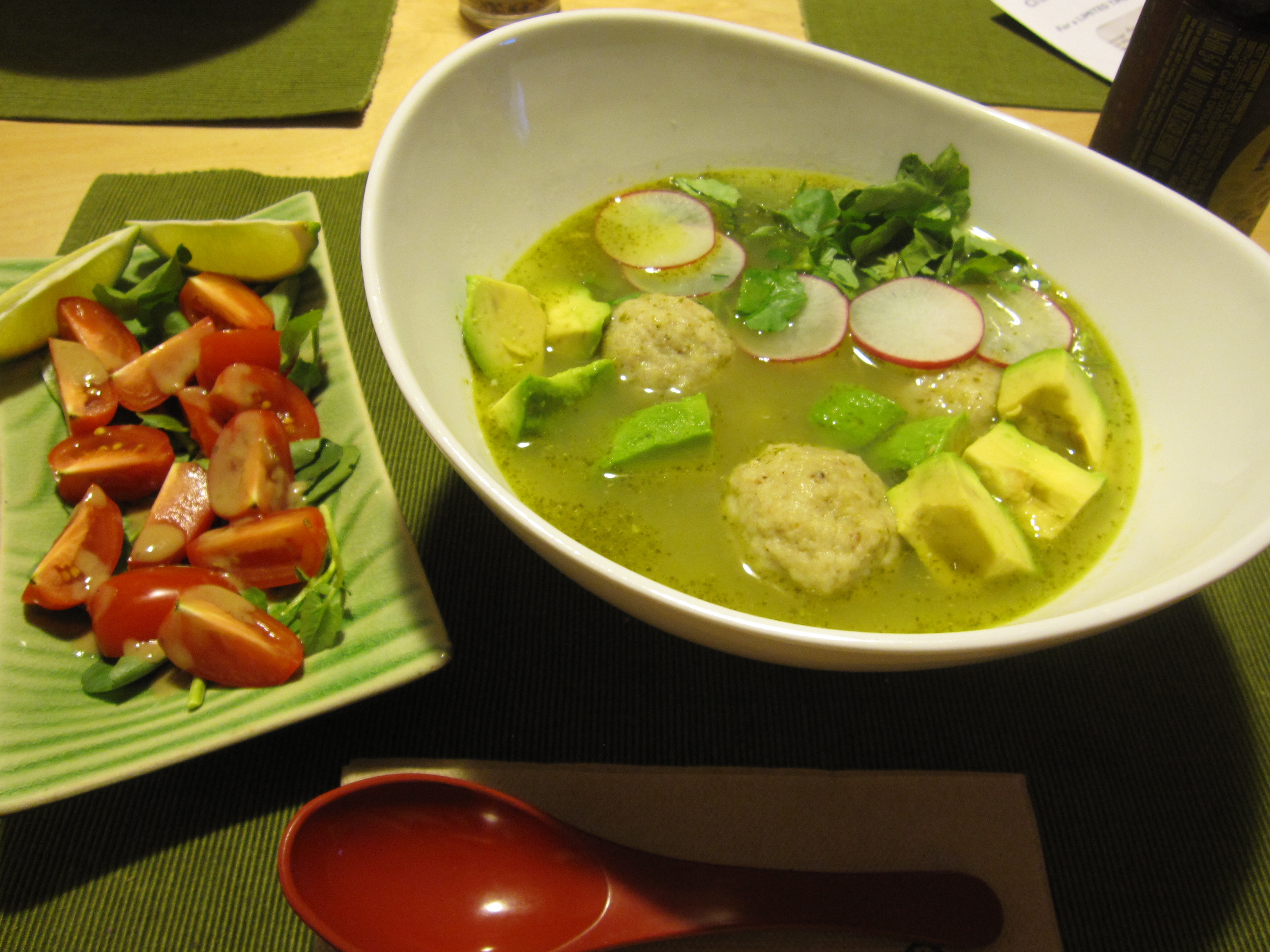
With the weather getting really cold here in Chicago already, my mind starts to go towards stews, braises, and soups. Being Jewish, a good chicken soup with matza balls is always a winner (at least the way I make it), but I wanted to do something different. Since my mom lives in Mexico I thought I’d make a Mexican-Jewish soup. I made a relatively classic chicken pozole verde but dropped some matza balls in the soup instead of tortilla chips. 

Most of the recipes I found online used a combination of store-bought chicken broth and water with chicken breasts. Making a simple chicken broth is really easy so I opted to use plain water and chicken thighs. Dark meat has much more flavor than white meat and I never use breasts when making a soup. What I did was bring 10 cups of water to a boil and then put 2 pounds of skin-on bone-in chicken thighs in. Once it came back up to a boil I turned the heat down to medium and let it simmer for about an hour. Every 10 minutes or so I skimmed the surface to remove the muck and some of the excess fat. Once I had gotten all of the chicken flavor into the broth I removed the chicken, took off the skin and bones, and shredded the meat. I set the meat aside while I prepared the verde part of the soup.

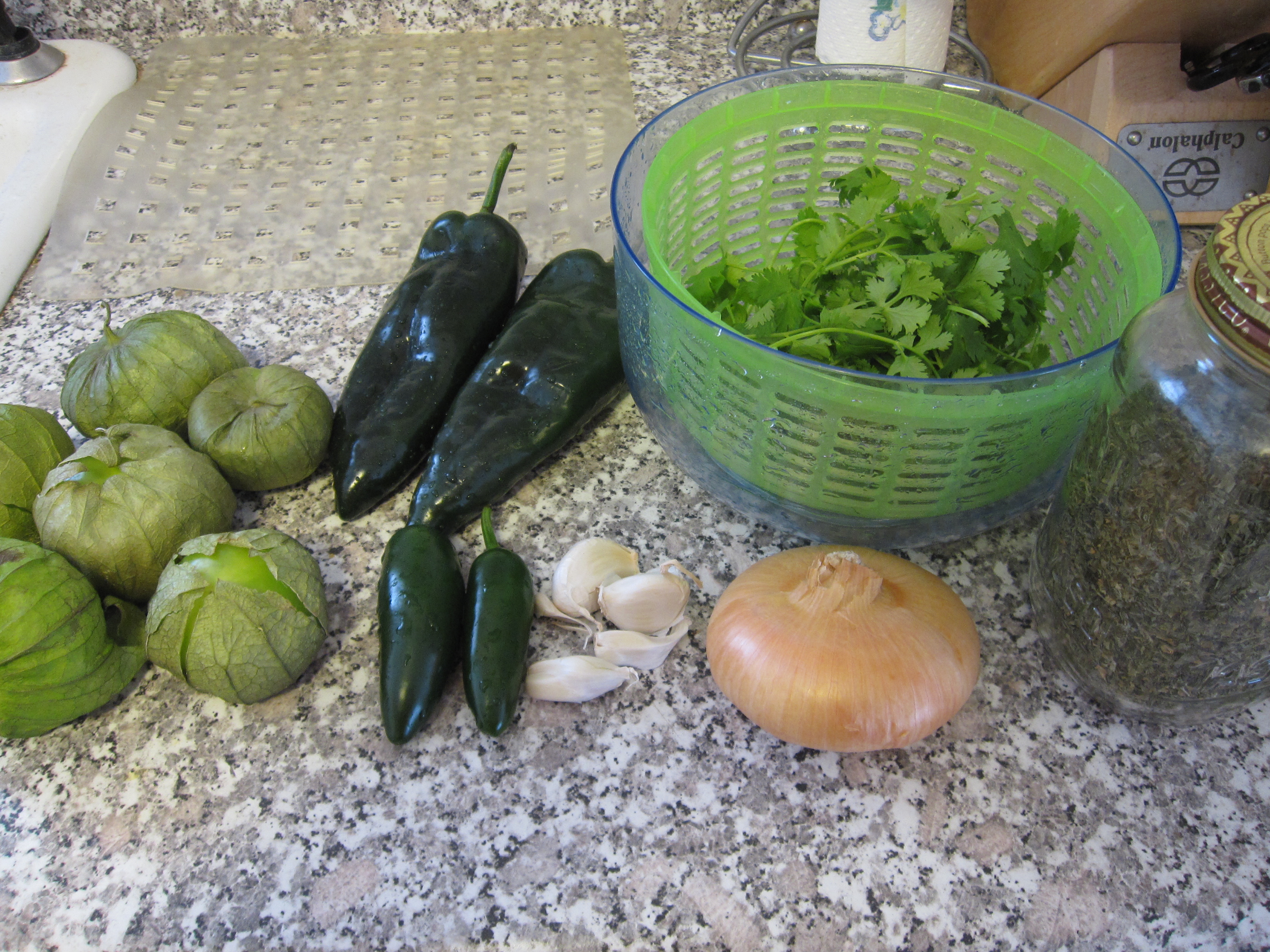
The verde part is really just a simple salsa verde, much like you’d be served at a taqueria with chips. I used 1 pound of tomatillos, 2 poblanos, 2 jalapenos, 5 garlic cloves, 1/2 cup of cilantro, 1 small onion, and 1 tablespoon of dried oregano. I gave everything a rough chop and tossed it into my processor. I processed it into a smooth salsa and added a ladle of the broth to make sure everything mixed nicely.

I heated up a soup pan and poured in 1 tablespoon of vegetable oil and then added the verde. As you can see from this picture it started off a nice bright green. About 10-15 minutes later with occasional stirring…

…you can see it took on a much more drab color. That’s what you want in order to get rid of the raw flavors of the garlic and jalapeno and whatnot. Then I poured it into the broth and made the matza balls.

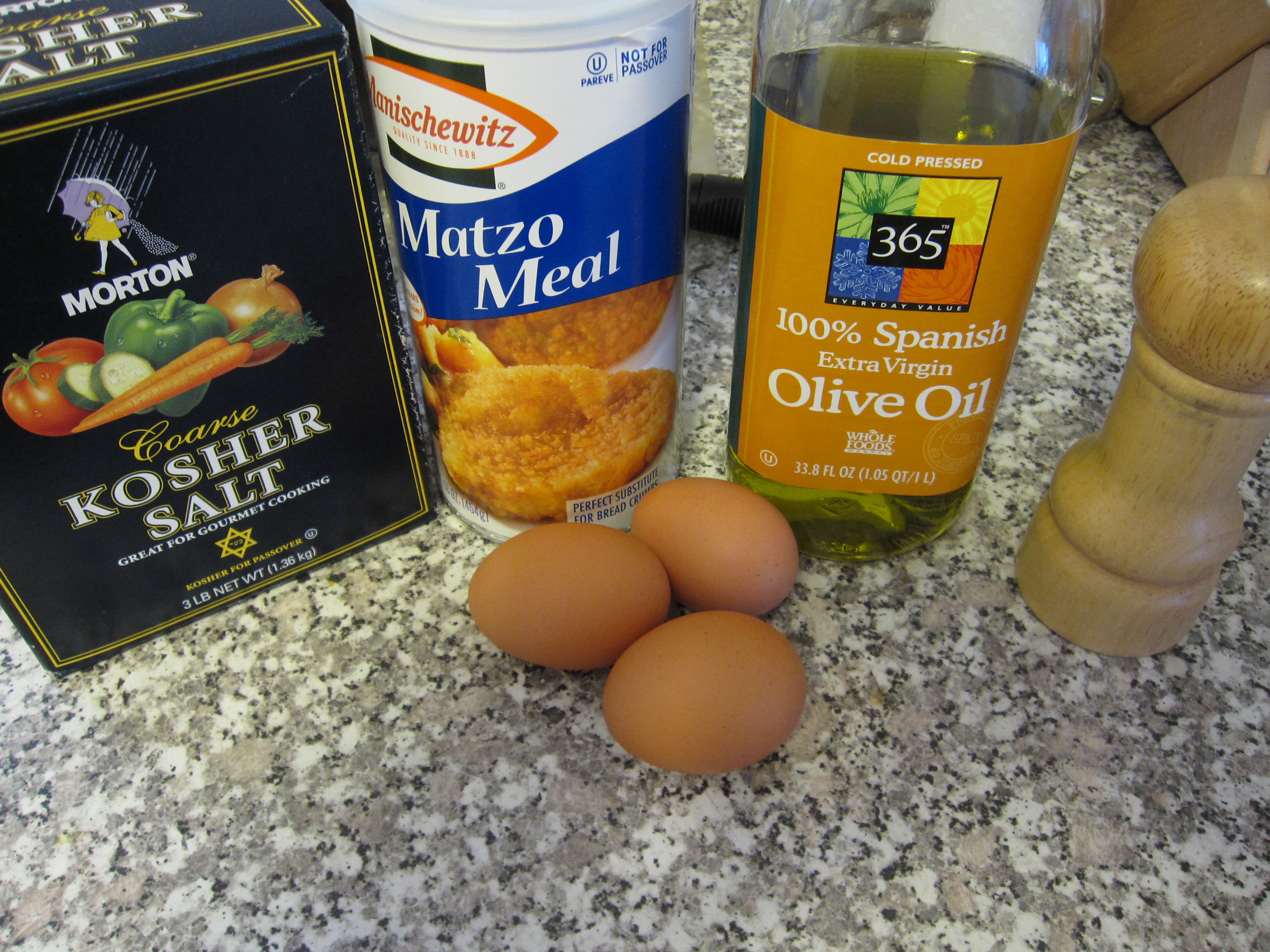
The last time I made matza balls my mom called me out for using matza ball mix. So, this time I did it from scratch. Honestly, there really isn’t much difference. I used 1 teaspoon of salt, 1 cup of matza meal, 3 eggs, 3 tablespoons of olive oil, and some cracked black pepper to taste. I mixed everything thoroughly in a glass bowl, added about 4 tablespoons of cold water and mixed that in, then covered the bowl and threw it in the fridge for about 45 minutes.

Then I got the accoutrements ready for the soup. I got out the shredded chicken, 3 radishes thinly sliced, 1 avocado, a 28 ounce can of hominy drained and rinsed, and a large handful of watercress chopped. I added the chicken and hominy to the soup and slowly brought it back up to a low boil while the rest of the ingredients stood aside and waited their turn.

When the soup was at a low boil I got the matza ball mix out and turned it into matza balls. With moist hands I rolled out balls about the size of silver dollars and dropped them in the soup. A lot of people cook theirs in plain boiling water and then add them to the soup. I’ll never understand why as that prevents them from absorbing the broth’s flavor. I want tasty balls! Once my balls were all swimming in the soup I covered it up and let them cook for about 30 minutes.

For a side I just made a simple tomato and watercress salad. I quartered a bunch of cherry tomatoes, laid them on a bed of watercress, and drizzled some sesame dressing on top.

To garnish the soup I added the sliced radish, the watercress, I diced the avocado, and squeezed some lime juice in.

Read Full Post »

This is actually what I cooked last Thursday night for dinner. I had a couple of huge strip steaks that I cooked up. If you go back, you’ll see that I sautéed some red kale with onion the night before. I made way too much, we still had leftovers after Thursday’s lunch. To get rid of it I turned it into a soup to go with the steaks. I also made some garlic mashed potatoes, roasted tomatoes, and sliced some avocado.

For the soup I used the leftover kale, a can of canelli beans drained and rinsed, and one carrot chopped up. I put all of the ingredients in a soup pot along with 3 cups of water. I brought it up to a slow boil, covered the pot, then turned the heat down to low and let it simmer for 45 minutes or so while I prepared the rest of dinner.

For the potatoes I peeled and cubed 4 yukon golds and added them to a pot of boiling water along with 5 garlic cloves. I let it boil for about 15-20 minutes, until the potatoes were soft enough to mash-up. Then I drained them, put them back in the pot (garlic included), and poured in 3/4 cup of milk. I mashed it all up with salt and pepper until it was nice and creamy.

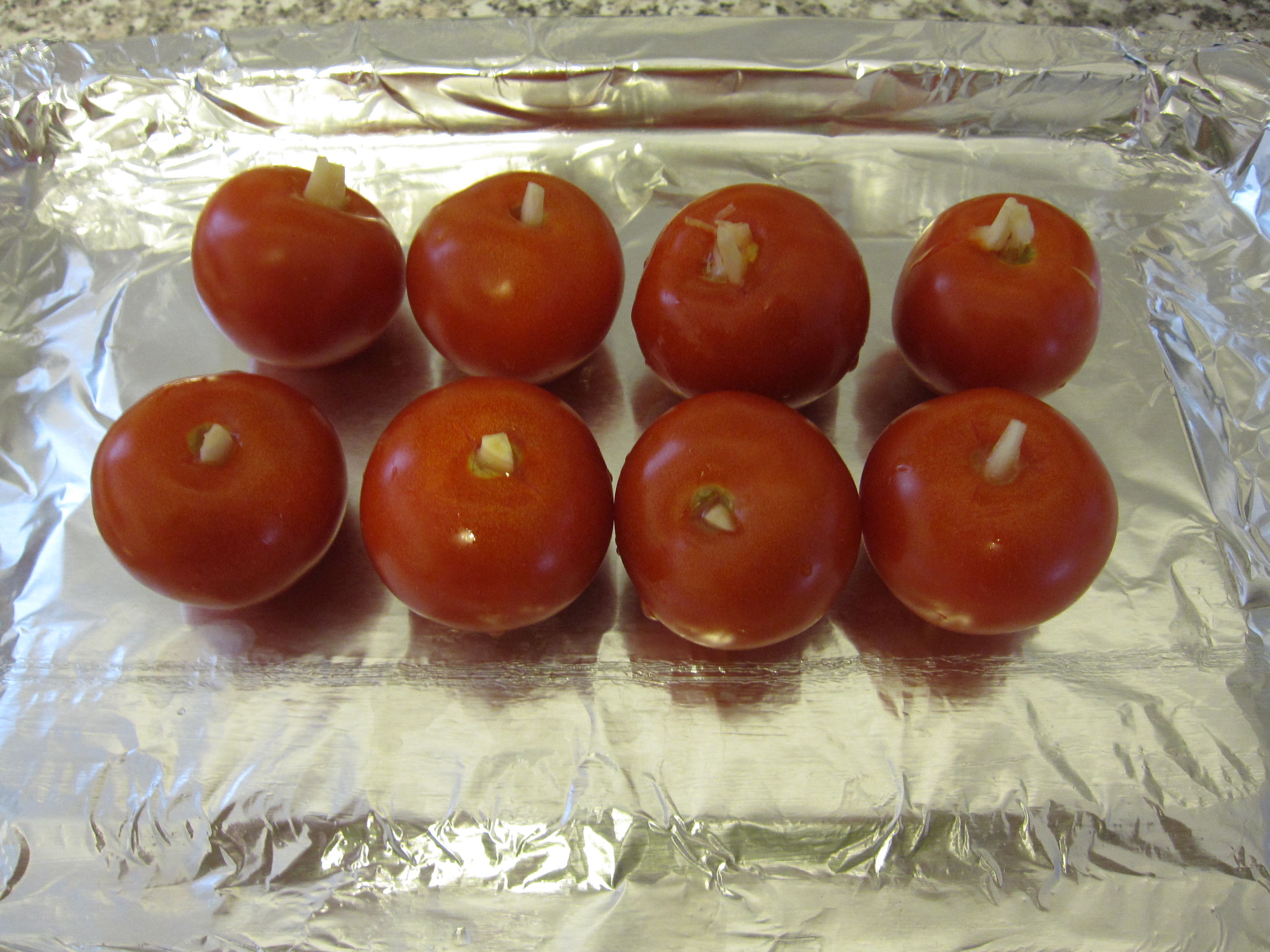
For the tomatoes I slivered a clove of garlic and speared on sliver into each tomato. I drizzled some olive oil all over and roasted them at 375 degrees for about 25 minutes.

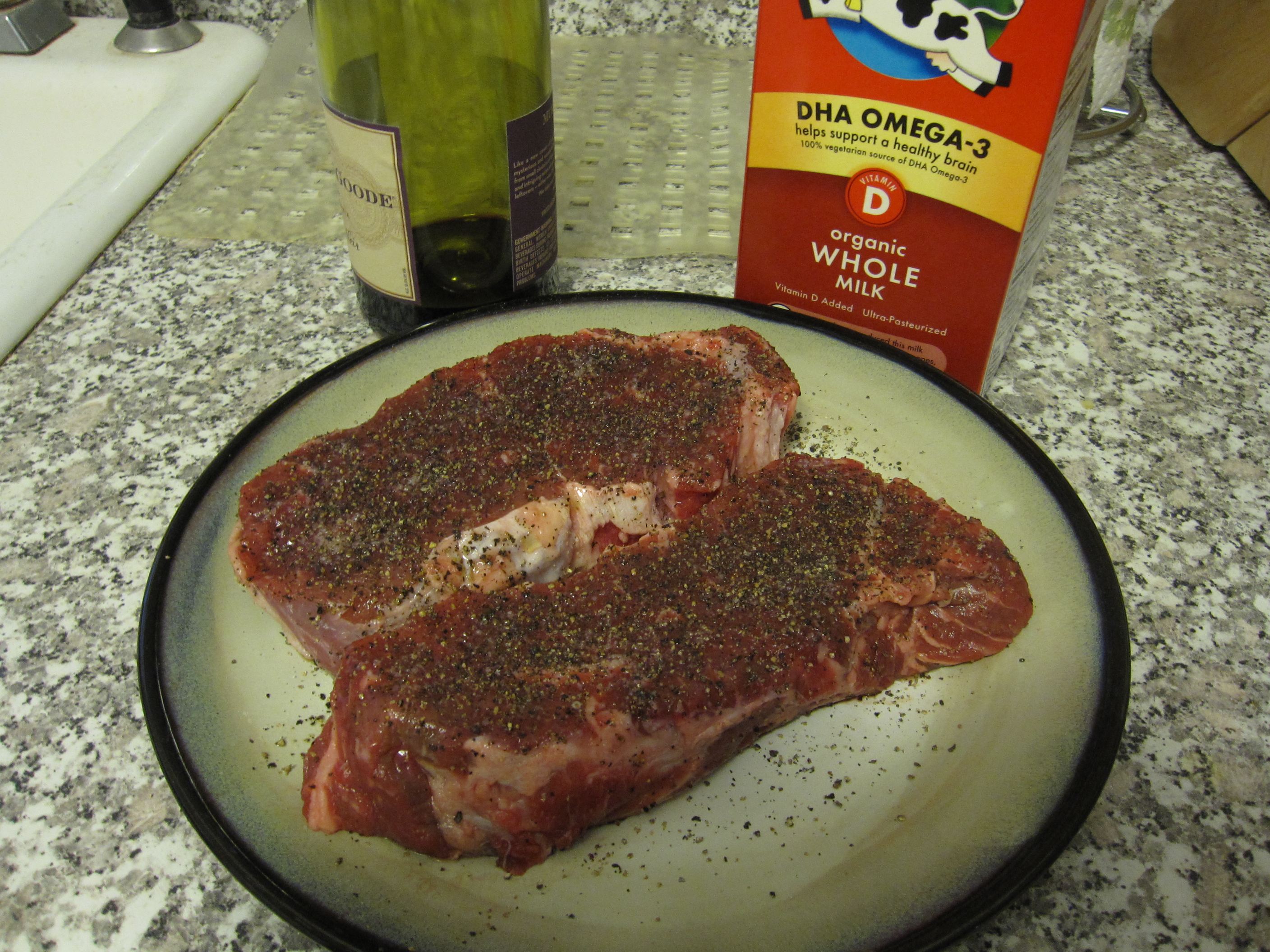
I salted both sides of the steaks and then coated them heavily with black pepper. In a really hot ovenproof skillet I melted 2 tablespoons of butter and then set the steaks in to sear them up. I let them sit for about 4-5 minutes until the bottom were nice and brown. If they are sticking to the pan, then they’re not quite ready. Once they release with ease, they’re to be flipped. I only let the side sear for about 2 minutes and then I put the skillet in the 375 degree oven for about 10 minutes. When I took it out I let the steaks rest on a plate for about 7 minutes while I made the sauce. I turned the burner back on and deglazed the skillet with about 1/4 cup of red wine. Once that reduced down I poured in 1/4 cup of milk. I let it reduce for a few minutes and then turned off the heat. Since I used milk, the sauce separated a little, that’s where cream would have been better. The sauce would have turned out nice and smooth with cream. Oh well. After the steak rested I sliced it and served it up.

I put a big dollop of mashed potatoes on one side, laid some avocado slices down on the other. I laid some steak on to of the avocados and spooned some sauce over the top. Then I put a couple of tomatoes on the plate and ladled up the soup.

Read Full Post »

So, I had some salt cured salmon filets that needed to get eaten up from our last bimble up to Mitsuwa. These salmon filets are great because the don’t need much cooking since they’re already salt-cured. With that, we also had a kabocha that Yuki wanted me to cook. However, I did not cook it how she requested. Too bad for her. Without further ado…

First thing I did was get the kabocha ready, I only used half of it. I seeded it, cut off most of the skin, quartered the half, and then cut the quarters themselves in half.

I set them in a baking dish, drizzled them with sesame oil, salt, and pepper. I boiled about 3/4 cup of water, poured that into the pan, and put the kabocha into a 375 degree oven for about an hour. The water should be mostly absorbed by the time cooking is done keeping the kabocha nice and moist, while the top gets a little bit golden brown.  Then I took 1/4 cup of walnuts and toasted them in a dry pan for about 6 minutes.

I coarsely ground them with my mortar and pestle and then added 4 tablespoons of ponzu. I let that sit while I cooked everything else.

For the kale I used a bunch of red kale stalks removed and leaves chopped down, 1 cup of chicken stock, 1/2 onion sliced, and three garlic cloves sliced. In a hot stock pot I poured in about 2 tablespoons of sesame oil and then added the onion and garlic. About 2 minutes later I added the kale and let that wilt for about 4 minutes. Then I poured in the chicken stock and seasoned with salt and pepper. Once the stock came to a boil I loosely covered the pot, turned the heat down to medium-low, and let it simmer for about 30-40 minutes (however much time I had left on the kabocha, it doesn’t matter as long as the kale simmers for a while).

Once the kale got going I started the miso soup. I used a heaping service spoon of shiro miso, about 4 inches of daikon sliced and quartered, one small carrot cut in half moons, 4 green onions chopped in 1 inch lengths, 1/4 cup of dashi seasoned soy sauce, and 3 shiitake sliced. In a soup pot I poured in 4 cups of water and added everything except for the miso. I brought it to a boil, then covered the pot, and turned the heat down to medium-low to let it simmer for about 15-20 minutes.

I just rubbed some sesame oil on both sides of the salmon and then seasoned with pepper. My toaster oven has a broiler setting, so I just turned that on and broiled the salmon for about 8 minutes. That was just enough time to cook it all the way through and crisp up the skin. When it was finished it was time to put everything together.

I left the salmon as is. Put some of the kale on the plate and then a couple of pieces of the kabocha. I topped the kabocha with the walnut-ponzu mixture. I mixed the miso into the soup and served that up. Then I served some white rice along with everything, mainly to balance the saltiness from the salt-cured salmon.

Read Full Post »

Last night I made a fajita fiesta for dinner. We picked up a couple of pomegranates the other day and I wanted to use some in guacamole. So, I made up a Mexican meal.

The first thing I did was make a real simple corn soup. I took 4 ears of corn, 1/2 onion, and 1 garlic clove. I stripped the kernels from the ears and tossed it all (ears included so I wouldn’t lose all of the milky flavor) into a soup pan. I chopped up the onion and garlic, tossed them in the pan as well. Then I poured in 3 cups of water. I brought it to a boil, covered the pot, turned the heat down to medium-low, and let it simmer for about 7 minutes. I turned off the heat and let it cool down a bit.

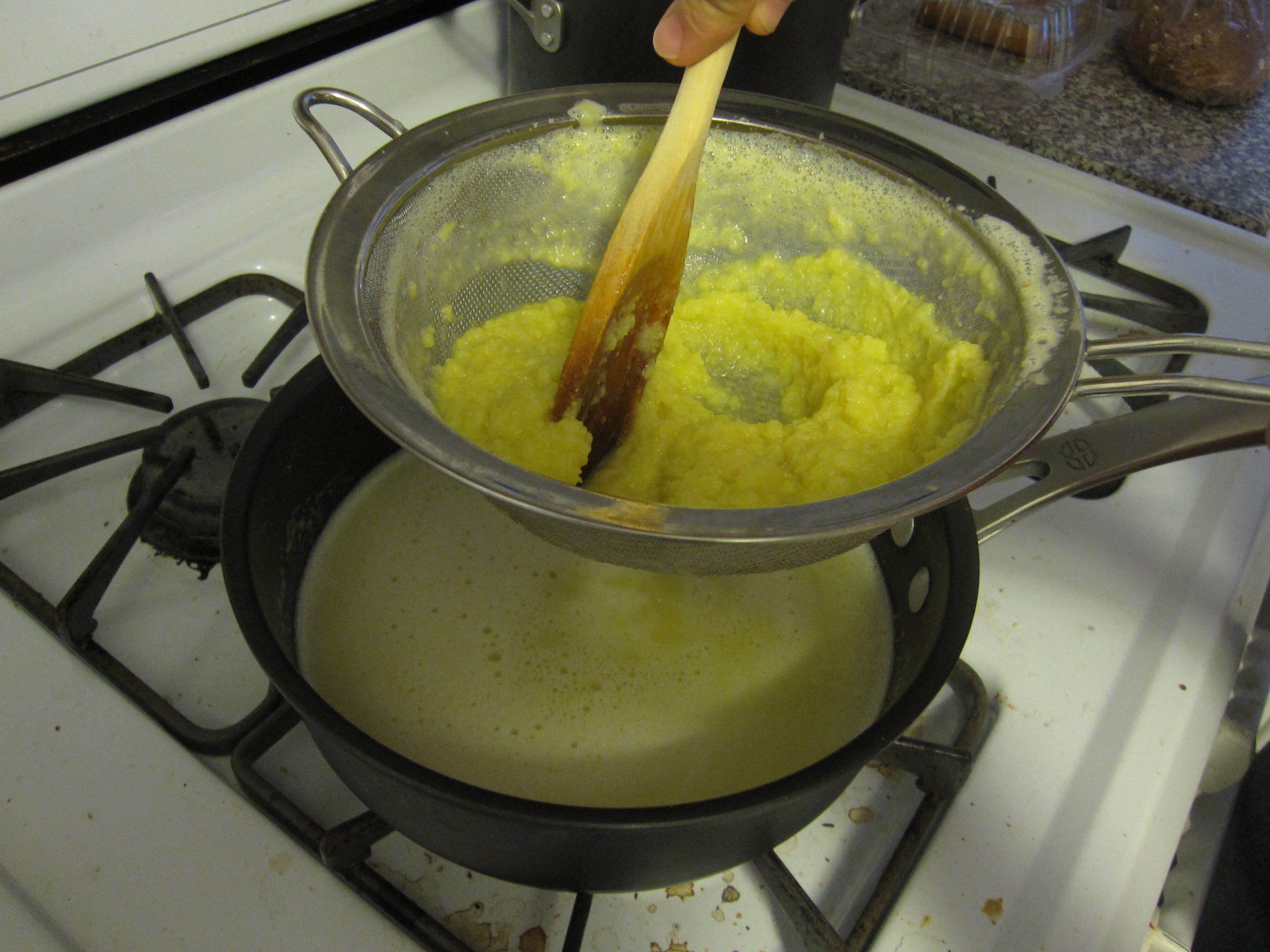
After it cooled a little I discarded the ears and poured the rest into my blender and pureed it. I wiped out the pan and strained it back in then seasoned with some salt and pepper. I let that sit covered while I prepared the rest of the dinner and just re-heated it for service, garnished with some cilantro.

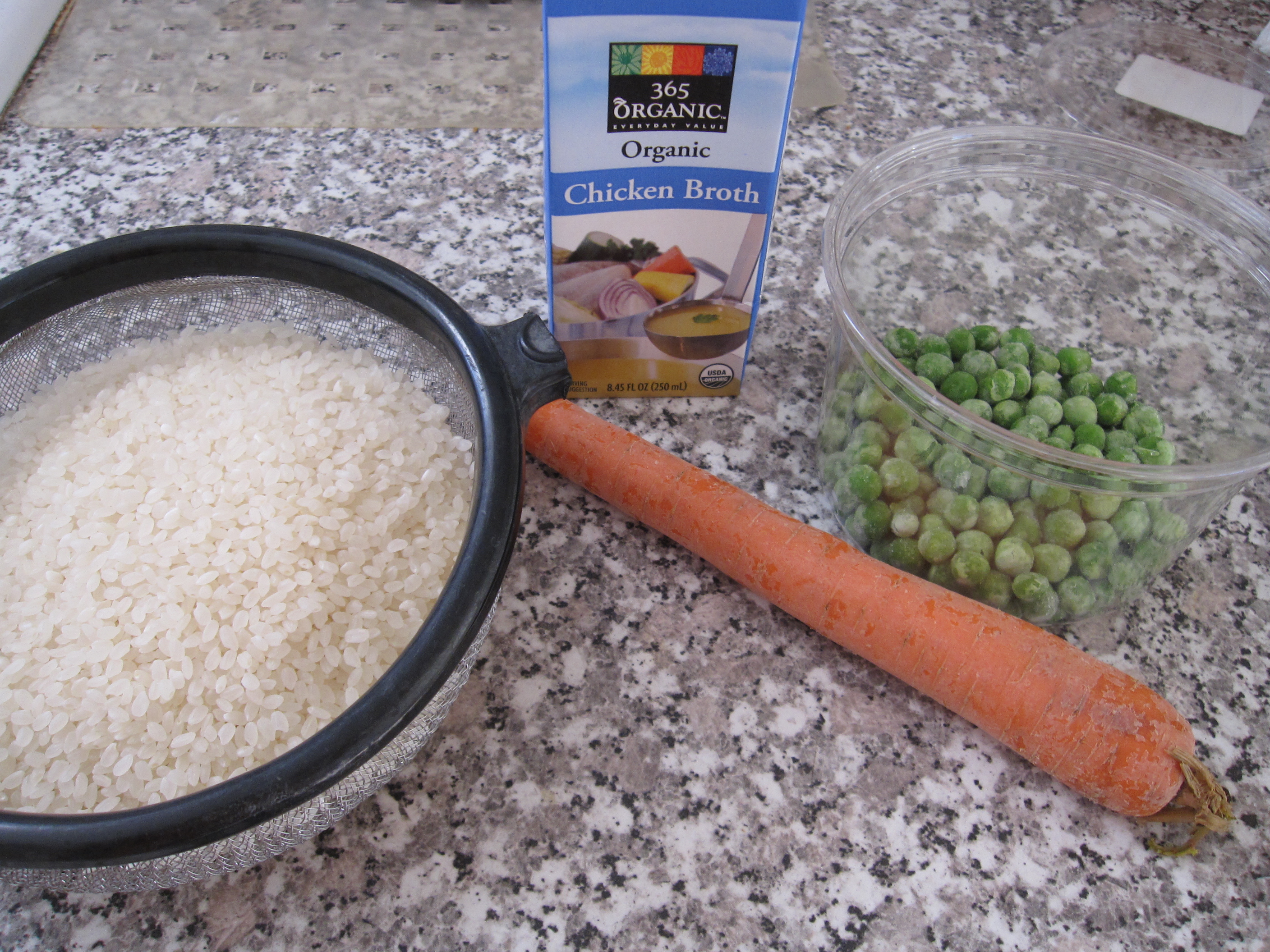
For the rice, I used my rice cooker to make 2 cups of rice, but added 1/4 cup defrosted frozen peas, and 1 carrot chopped into quarter moons. I also replaced 1 cup of the cooking water with chicken stock to deepen the flavor a little. I hit the start button and let the cooker do it’s thang.

Then I put together the guacamole. I used 3 avocados, 2 plum tomatoes (the pic shows 3, but I only used 2), 1/4 onion, 1/2 pomegranate, the juice from 1 lime, 1 garlic clove minced, and some cilantro. I actually started on the onion quite a bit earlier. To take the bite out of without cooking I diced it and soaked it in cold water for about 2 hours. That keeps it crisp but eliminates the rawness. In a glass bowl I let the minced garlic soak in the lime juice for about 10 minutes to mellow it out a bit, then I added everything else and mashed it u with a fork keeping it a little chunky. I seasoned it as needed and then set it aside (I did snack on it while I cooked).

For the fajita I used 1 teaspoon cayenne, 1 teaspoon cinnamon, 2 teaspoons dried oregano, 1 tablespoon sugar, 1 green bell pepper sliced, 1 orange bell pepper sliced, the zest and juice from 1 lime, 1/2 jalapeno sliced, 1/2 onion sliced, and 1 pound of chicken breasts sliced into thin strips.

In a glass bowl I mixed together the lime zest and juice with all of the spices and tossed the chicken in. I let it marinade for about 30 minutes. I used that time to cut the peppers and get the black beans going, but I’ll get to the beans in a minutes.

In a large saute pan I heated 2 tablespoons of vegetable oil and stir-fryed the chicken and spices for about 7 minutes. Then I added the peppers and onion and stir-fryed them with the chicken for a further 7 minutes or so. For service I garnished it all with some fresh cilantro.

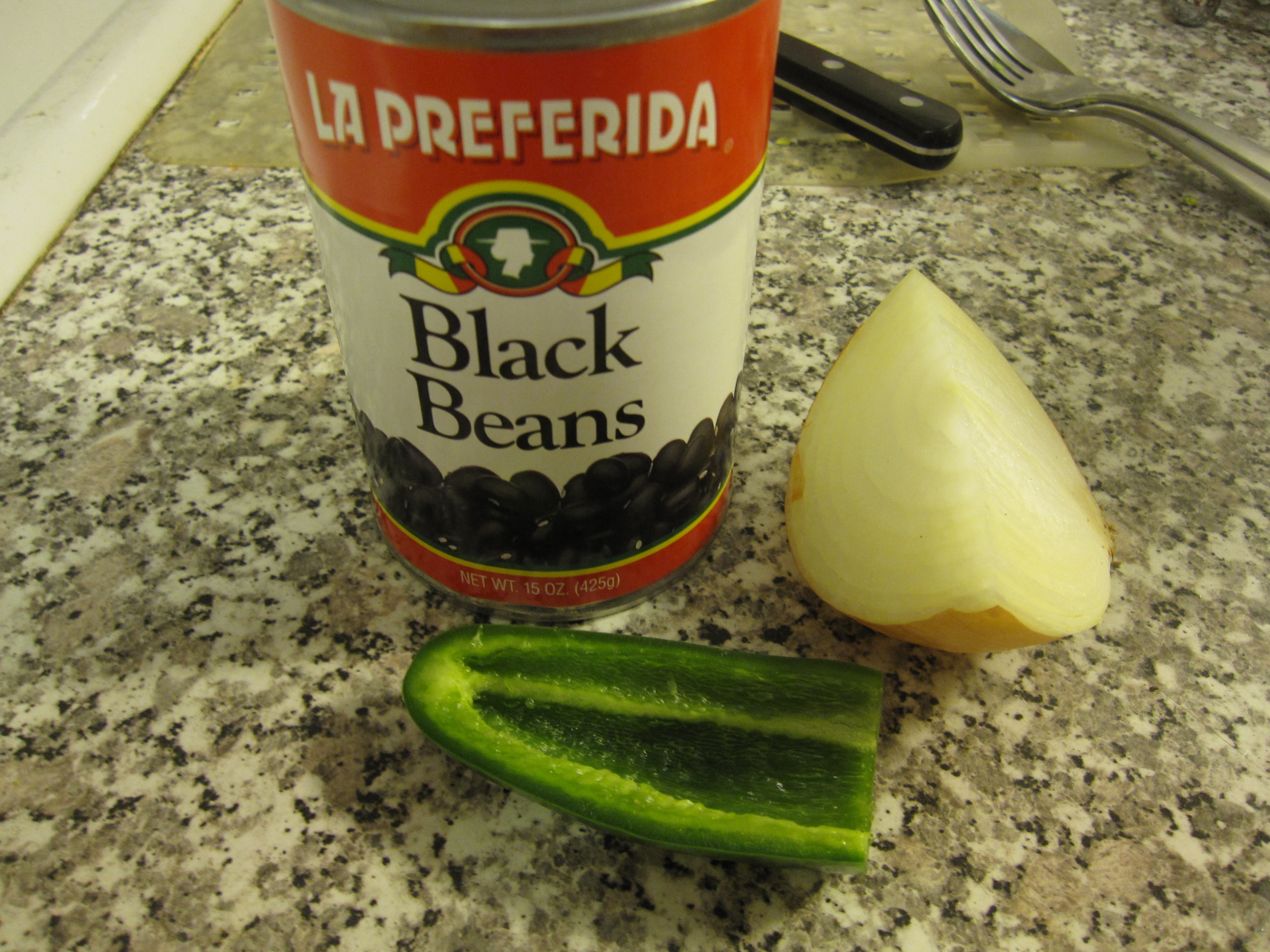
Alright, for the beans I thoroughly drained and rinsed 1 14oz can of black beans and put them in a small sauce pan with 1/4 onion small diced, and 1/2 jalapeno diced. I filled the black bean can about 1/4 full of water and poured that in. I brought it up to a slow boil and let it go while I finished up the fajitas. I seasoned it as needed.

For service I just laid everything out on the table along with some warm whole wheat tortillas. I know whole wheat is not very authentic, but I opted for the health benefits of whole wheat instead of authenticity. The only thing missing was sour cream, a mistake I will not make the next time.

Read Full Post »

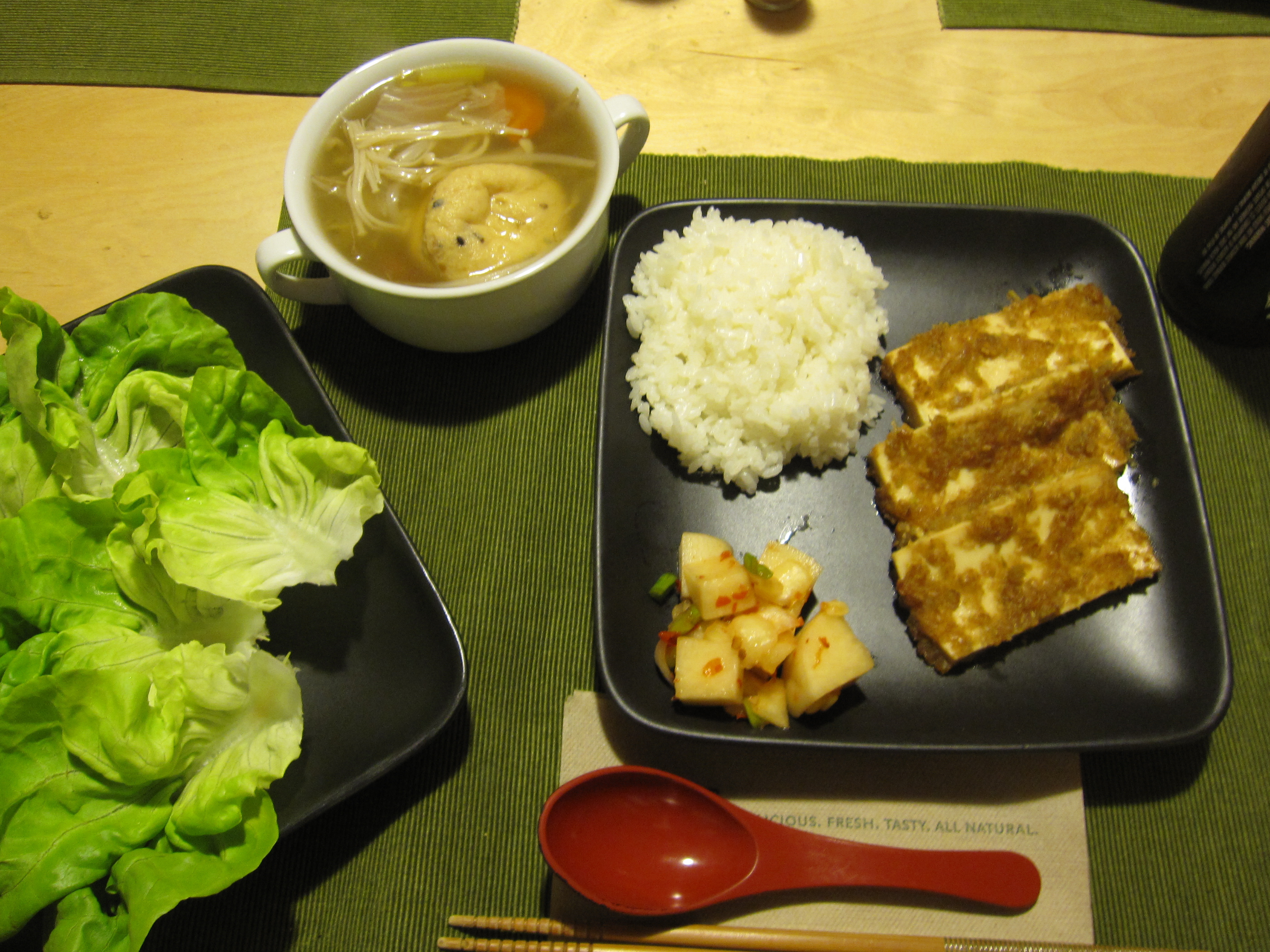
I made some daikon kimchi and really wanted to build a Meatless Monday around it. I thought I was going to make a tofu bulgolgi to stick with the Korean theme, but the marinade turned out nothing like a bulgolgi. It was very asian though so I used some ganmodoki we had bought at Mitsuwa and made a clear broth Japanese-style soup to bring more vegetables into the meal.

The daikon kimchi takes 24 hours so I had to start the Sunday. The ingredient list includes a lot of kosher salt (sea salt can be used also), 1.5 tablespoons of toban djan (I didn’t have any Korean chili paste, toban djan is Sichuan, but it is similar enough to work), 1/4 onion small diced, 1 garlic clove minced, 1 lb daikon cut into 3/4 inch cubes, 1 teaspoon fish sauce, 1 teaspoon sugar, and 2 green onions thinly sliced.

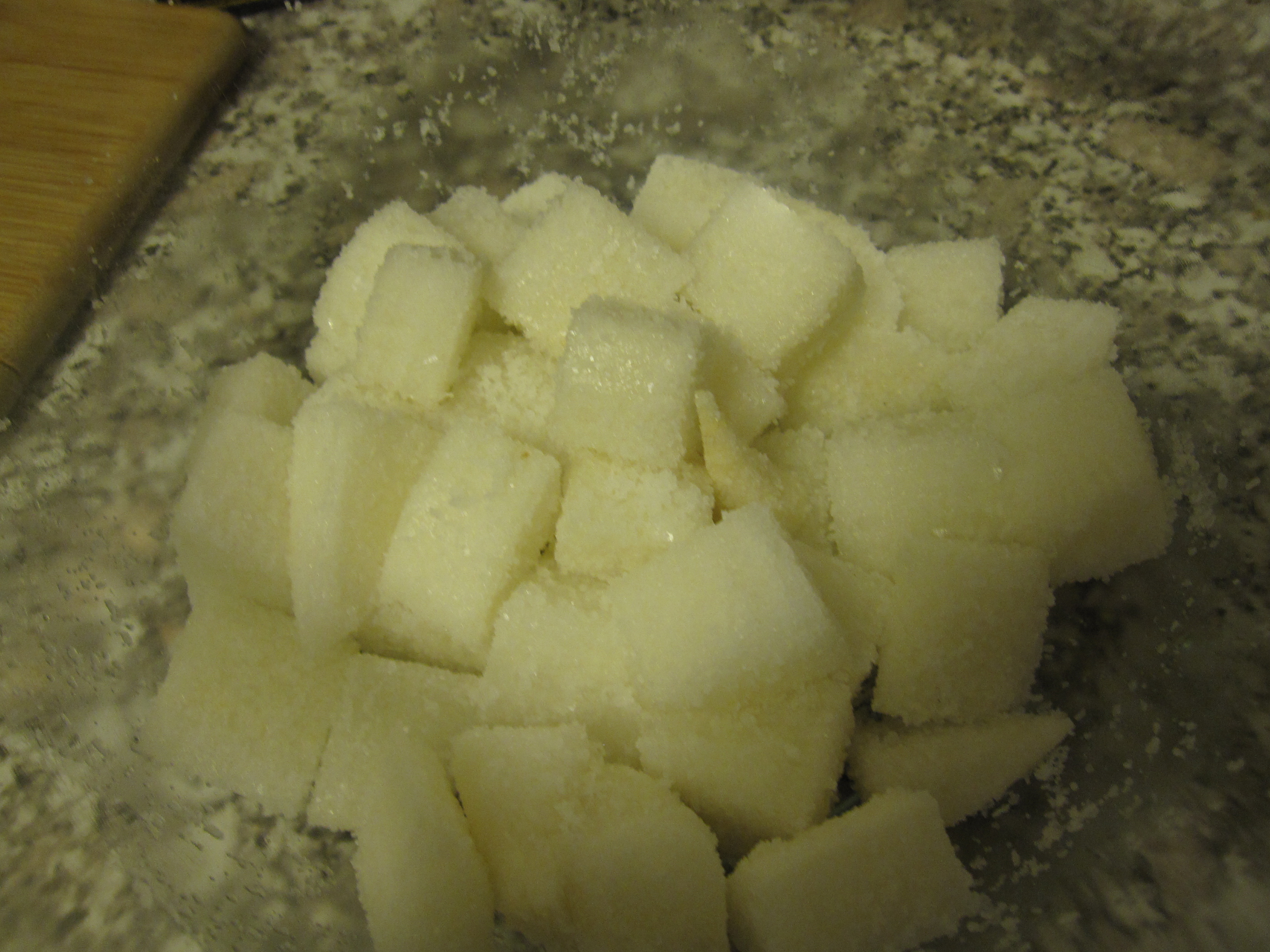
I threw the daikon into a bowl and completely coated it with salt. I left it for 2 hours and then drained off all of the liquid that accumulated at the bottom of the bowl and then rinsed and drained very well.

Then I mixed together the rest of the ingredients, tossed the daikon to coat evenly, and put into an airtight jar. I left it out for 24 hours and then put it in the fridge to chill for a couple of hours. You absolutely have to let it sit to get the flavors to penetrate and pickle, so this does take more than 24 hours to prepare. I will say, the daikon turned out way too salty when we ate it. Not sure if I added too much during the pickling process or if I just didn’t rinse it well enough, but next time I make this I will make sure it’s completely rinsed of salt and I may just add 1/2 tablespoon instead during the pickling to make sure it doesn’t get too salty. To salvage the rest of the daikon I’ll boil it in some water to make broth for noodle soup later in the week or something.

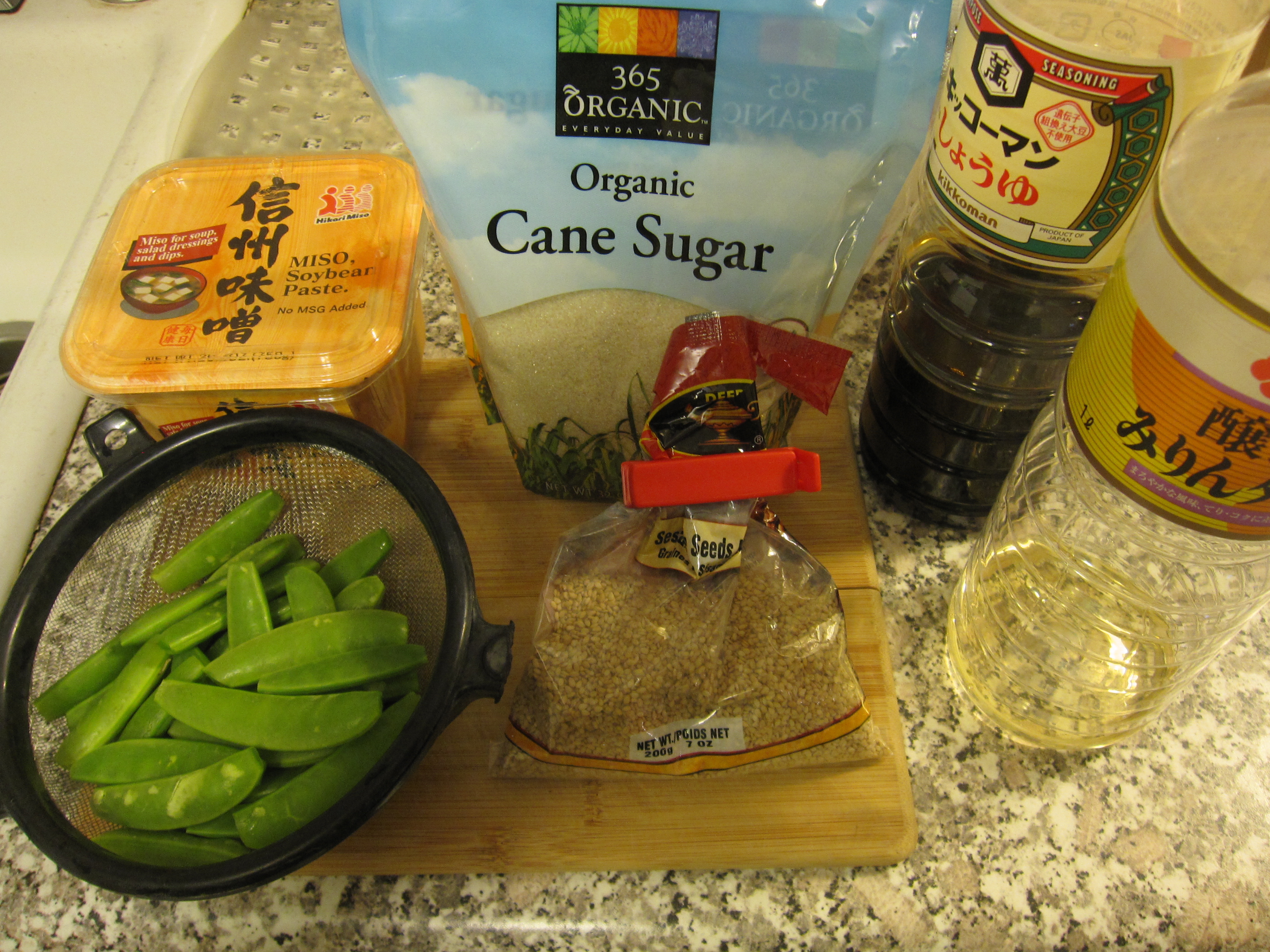
For the tofu “bulgolgi” I used 3 tablespoons of soy sauce, 1/4 granny smith apple, 1/4 onion, 1 tablespoon sugar, juice from 1/2 lemon, 1 tablespoon of sesame seeds, 1/2 inch ginger, 2 garlic cloves, 2 green onions, and 1 packet of silken tofu.

I pressed the water out of the tofu for about an hour and then sliced it into 1/4 inch pieces. I put the rest of the ingredients into my little processor and made a marinade.

I took out my glass baking dish, poured a little marinade on the bottom, lined the tofu side-by-side on top, and then covered it with the rest of the marinade. I let it sit while I prepared the soup. When the soup was almost done I drizzled a little sesame oil on top of the tofu and threw it under the broiler for about 10 minutes.

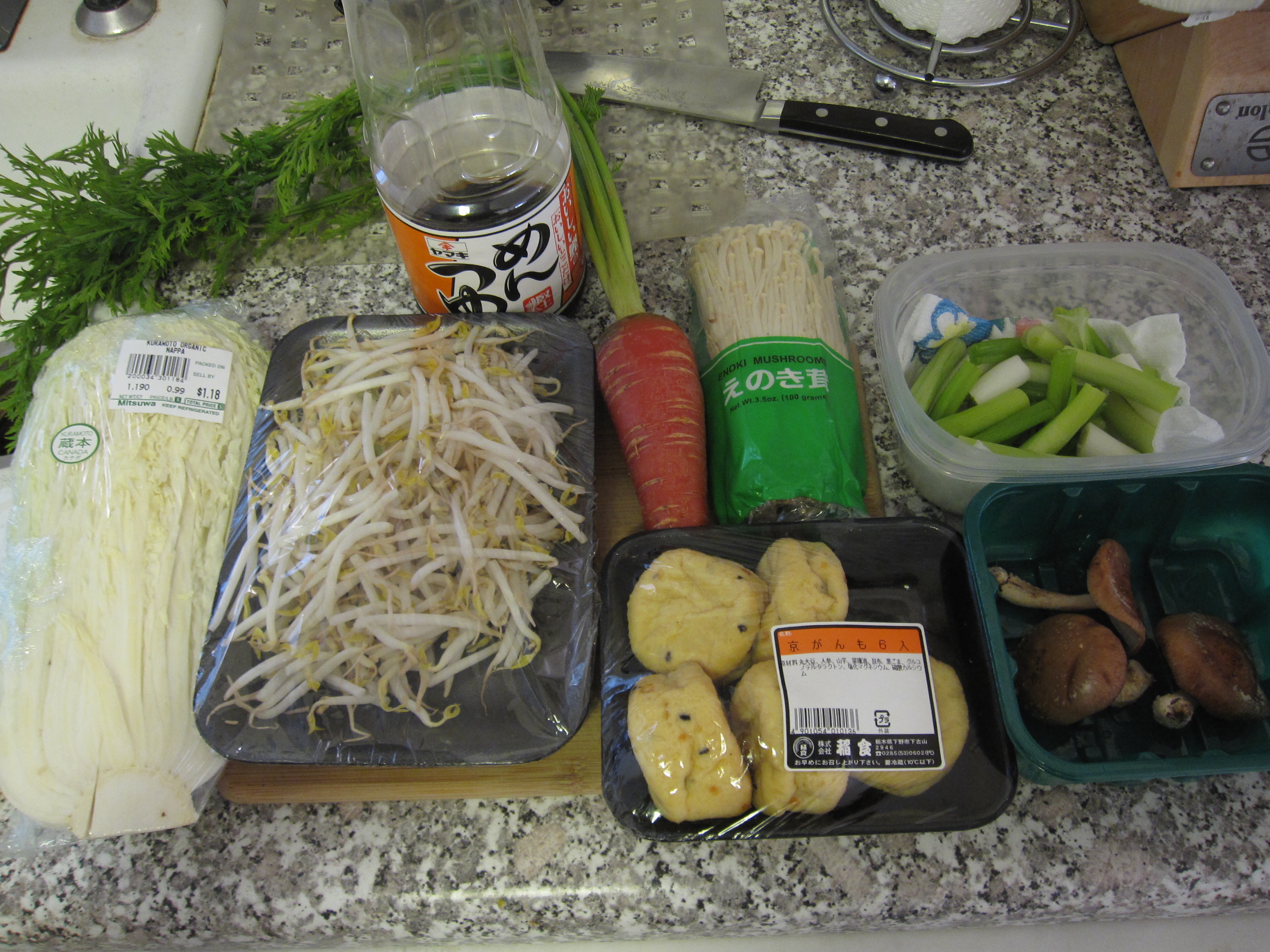
For the soup I cut up 1/4 of a napa cabbage, used some bean sprouts, 1/4 cup of dashi seasoned soy sauce, 1 carrot cut into half moons, 1/2 package of enoki mushrooms, 5 ganmodoki, the rest of our green onions (about 3), and my last three shiitake sliced.

In my soup pan I poured in about 4 cups of water and added everything except for the cabbage, bean sprouts, and enoki. I brought it up to a boil and then covered it, lowered the heat to medium-low, and let it simmer for about 15 minutes. Then I added the rest of the ingredients and let it simmer for another 5 minutes. That’s all she wrote for the soup.

I served everything with white rice and leaves of butter lettuce. That way we could make lettuce wraps bulgolgi-style.

Read Full Post »

The other night Yuki and I cooked together. We made one of my favorites, chicken hijiki rice, along with some vegetables that we needed to use up.

Making the rice is easy as can be. We used 1.5 tablespoons of dried hijiki seaweed, 4 shiitake sliced, 1 carrot sliced in half moons, and 1/2 pound of skinless chicken thighs. While I rinsed off 2 cups of rice and cut up the vegetables Yuki cut up the chicken and quickly sauteed it in sesame oil. After filling the rice cooker with the proper amount of water for 2 cups of rice I put the hijiki in and let it sit for about 15 minutes. Then we tossed everything else in, turned on the cooker, and let it go.

I made a sesame dressing for some pea pods that were in our fridge. I used 1 tablespoon of miso paste, a pinch of sugar, 1 tablespoon of sesame seeds, 1 tablespoon of soy sauce, and 1/2 tablespoon of mirin.

I toasted the sesame seeds in a dry skillet for a few minutes until they turned a golden brown and started to give off their fragrance. Then I ground them with my pestle and mortar. I added the rest of the ingredients, mixed them all together, and set it aside. I simply steamed the pea pods for about 4 minutes when the rice was ready. Then I tossed them with the sesame dressing.

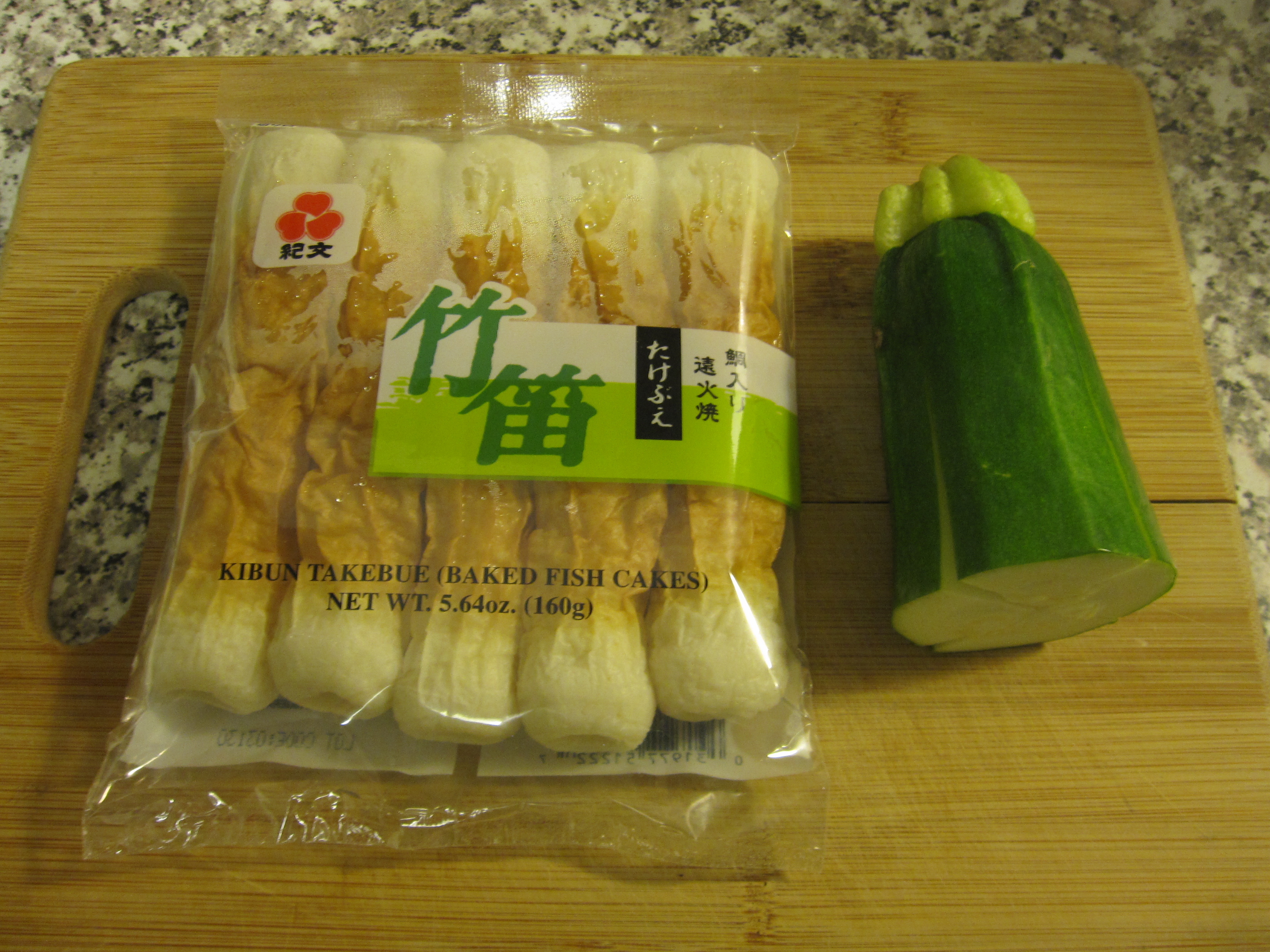
We also had some chikuwa and 1/2 a zucchini to use up. Chikuwa are tubular, hollow fish cakes that have been baked or grilled. I sliced the zucchini into long sticks and stuffed the chikuwa with them. Once the rice was ready and the pea pods steaming I just put them in the toaster oven and toasted them for about 6 minutes. I drizzled them with the sesame dressing as well.

While I was doing that Yuki made some miso soup. I didn’t watch her make it, but she put in it sliced onion and wakame.

Read Full Post »

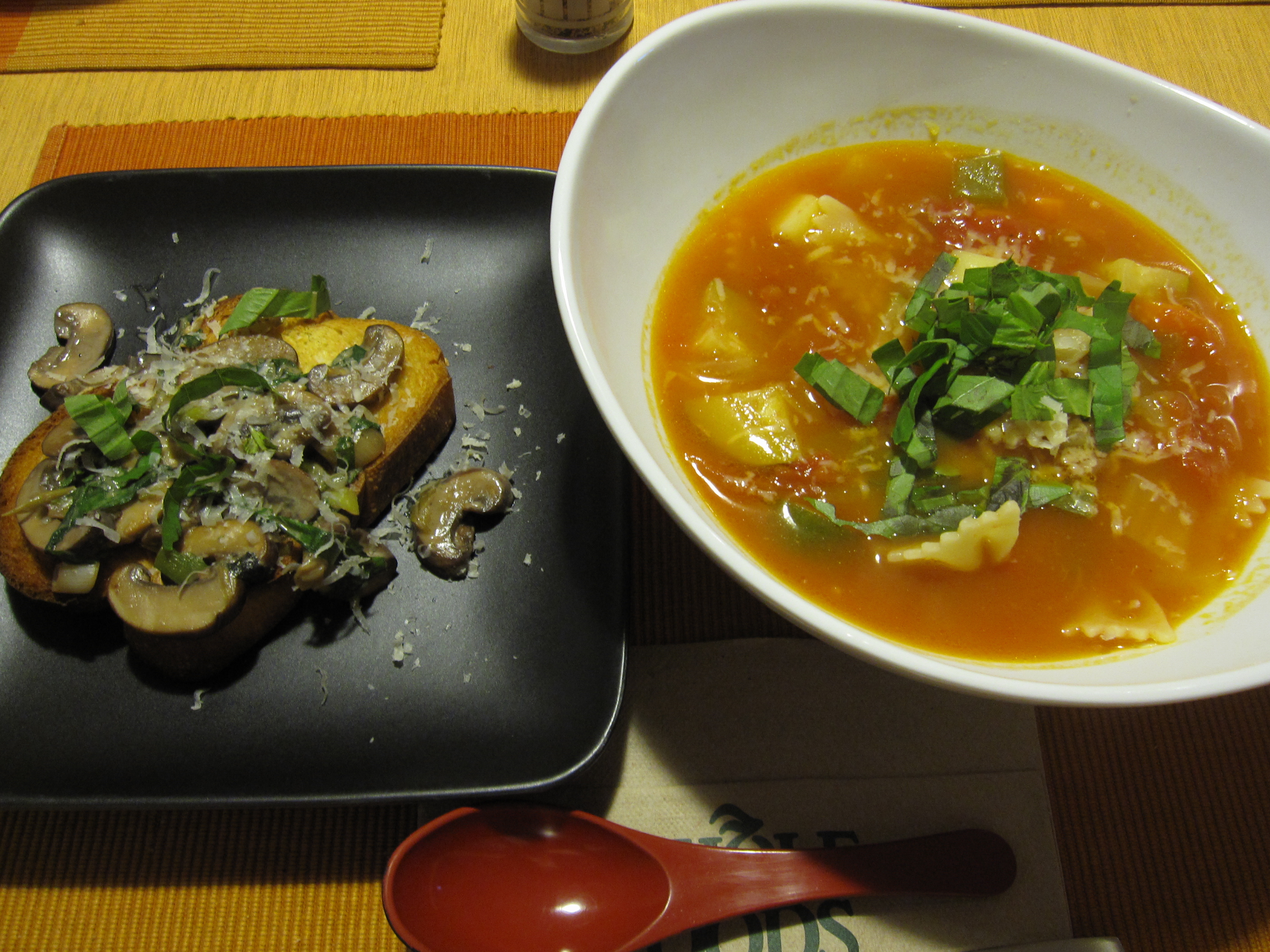
Finally, I got Meatless Monday back into my life. No Bears game (thank goodness, I don’t think I can stand to watch that O-line pretend to block anymore) or anything that calls for carcus so I cleaned out some of the vegetables I had in my fridge. With the weather getting a little chilly I thought a nice hot bowl of Minestrone would hit the spot, especially since Yuki loves soup. To go with it I made some mushrooms in soy milk on toast.

For the minestrone I used 1 can of brown beans, 4 quarts of vegetable stock, 1 28oz can of skinned tomatoes, 6oz of farfale pasta, 2 ribs of celery chopped, 1 carrot chopped, 1 zucchini chopped, 1/2 an onion chopped, 1/2 green bell pepper chopped, 1 yukon gold potato skinned and chopped (2 in the pic but I only used 1), 3 garlic cloves chopped, some basil thinly sliced, and Parmigiano Reggiano grated.

In a heated stock pot I poured in about 2 tablespoons of olive oil and then sweated down the onion, carrot, and celery for about 3 minutes. Then I added the green pepper and garlic and let that go for another 3 minutes. I dumped the juice from the tomato can in and crushed the tomatoes with my hands. Once the tomato juice started to boil, about 1 minute or so, I poured in the stock and seasoned with salt and pepper and 1 bay leaf. Once the stock started to boil, about 2 or 3 minutes, I added the potato and zucchini. The potato and zucchini obviously lowered the temperature of the soup, so a few minutes later when it came back to a boil I added the pasta then covered the pot and turned the heat down from medium-high to medium. I let it simmer for about 15 minutes to let the pasta cook properly.

While the pasta was cooking I heated up my saute pan and got the mushrooms ready. I thickly sliced (about 1/4-1/3 inch) 4 button mushrooms and a container of cremini mushrooms and sliced up 3 green onions. I melted 1 tablespoon of butter and poured in another tablespoon of olive oil then dumped all of the mushrooms and green onions in. I let them cook down for about 10 minutes until the mushrooms started to release their moisture. Then I poured in about 1/4 cup of soy milk and let that thicken up for about 2 minutes. I added some thinly sliced basil and turned off the heat. I toasted some sliced of challah during the cooking.

To serve, I ladled some soup into my bowls and topped it with sliced basil. I put the toasted challah on a plate and spooned some of the mushrooms on top. Then I topped everything with fresh grated Parmigiano Reggiano.

Read Full Post »

So, Yuki had some coupons from unused miles on United Airlines. Last night we used one at Ai Sushi.  I dvr’d the Bears-Giants game and we headed down to Ontario St for some grub.

Parking was a pain because all of the meters were “For Residents Only Until Oct 4”. We did find a spot about a block away so we didn’t have to spend on valet. Tonight we could have gotten a spot right in front. Oh well, can’t blame that on the restaurant.

The interior is really nice. It has the open loft feel with exposed brick and wood beams. The art on the walls was not flashy at all and instead complimented the brick. Colors were soft and very intimate. It has a real nice setting inside.

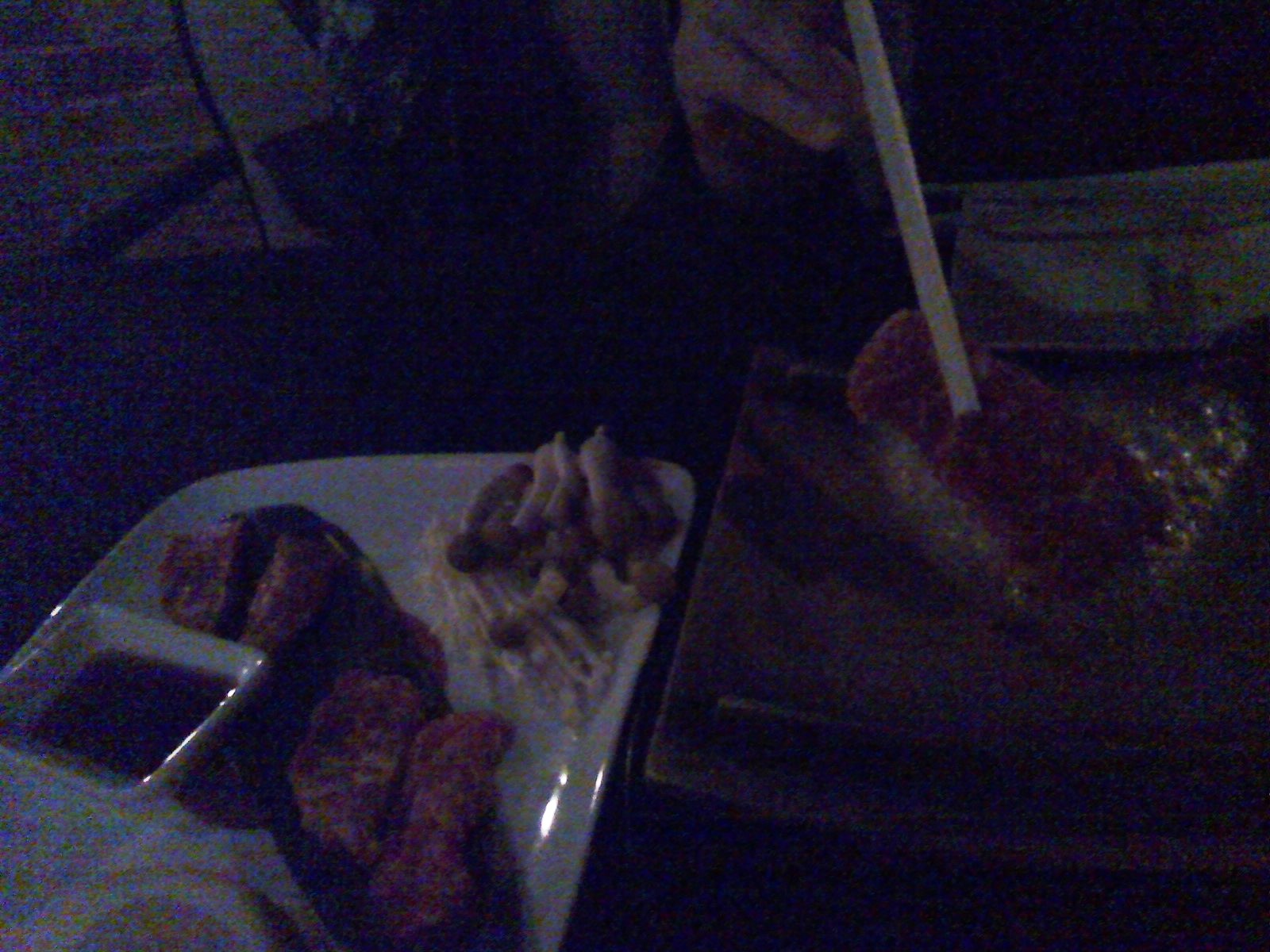
I did use my phone’s camera, so these pics are terrible.

First thing we got was the Sunomono Moriawase. Shrimp, real crab meat, and octopus lightly cooked along with fluke sashimi in a dashi vinaigrette with daikon sticks and seaweed. It was really good, fresh fish and not to vinegary at all.

Next was one of the specials of the night, Wagyu Tobanyaki. 5 slices of real Kobe beef imported from Japan, enoki mushrooms, and shimeji mushrooms that you cook yourself on a hot stone with butter. The beef was so soft and delicious. It was definitely the real thing, none of that cow from Nebraska.

After that we each had a bowl of Kabocha Corn Soup. Simply a puree of kabocha and corn, probably with onion. It tasted like something I would make, which is to say it was pretty tasty.

Then came the Chawanmushi. A Chinese style egg custard with shiitake, shimeji, and enoki mushrooms. The custard was the perfect consistency. Not a fancy dish, but a good one.

The first maki roll we got was their Habanero Lobster. It had tempura lobster, kampyo, ginger, mango, avocado, habanero, capers, cilantro, and sour cream mayo. We’re not usually fans of rolls with more than a few ingredients, but this one was pretty good. That habanero packed a punch, but not so much that you couldn’t taste the lobster’s sweetness. It was pretty good. They also put a few slices of smoked duck on the plate. They serve smoked duck sushi and must have needed to get rid of it, but it tasted pretty good to me, so I didn’t mind.

The last thing we got was one of the night’s special rolls, Orange Maki. It had tempura shrimp and orange zest inside and was topped with salmon and black tobiko. It was really good! Light, sweet, and refreshing. I would definitely order that roll again. Also, there was more smoked duck on this plate.

We didn’t have any room for dessert and didn’t even look at the dessert menu so I can’t comment on that.

The service was professional. We never had to wait long for anything, we weren’t rushed or bothered to hurry up, and our server was very knowledgable of the menu. The only gripe I have, and it’s nitpicking, is that the food should have come out in a different order. The beef should have been last and soup served before the chawanmushi. Other than that, I have no complaints at all.

I would have to say that Ai is one of the better sushi restaurants we’ve been to in Chicago. I wouldn’t call it the best, but it is definitely worth while with some creative offerings as well as some classics, all very fresh and properly prepared. I would go back without hesitation.

Read Full Post »

« Newer Posts - Older Posts »