Feeds:
Posts
Comments

Posts Tagged ‘rice’

The other night I tried my hand at making a classic home-cooking dish from Japan, Nikujaga. It is a stewed meat and potato dish that is the definition of Japanese comfort food. There are about as many different ways to make it as there are Japanese mothers (and Jewish husbands who cook for their Japanese wives).

The basics of Nikujaga are thin slices of beef (can use pork for variation), potatoes, and onions that are simmered in a sweetened soy broth. Frequently there are other veggies added such as carrots and peas or green beans. It’s really very easy to make as well as being healthy and delicious. It’s the perfect meal for a winter’s eve when served with white rice.

I made it using about 2 cups of water, 1/3 cup of soy sauce, 1/3 cup of mirin, and a couple tablespoons of sugar as the broth. I threw that all into my pot with about a pound of large chopped Yukon Gold potatoes. I brought that to a boil and let the potatoes soften for about 20 minutes. It’s best to put all of that in the pot with the potatoes cold and bring to a boil together so that the potatoes absorb more of the flavor.

Once the potatoes were partially cooked I added about 2/3’s of a pound of thinly sliced beef. After that boils for a few minutes I skimmed off the foam that forms from boiling raw meat, much like I do when making chicken soup. The foam isn’t bad for you or anything, but by skimming it off you get a clear broth.

After the meat simmered for about 5 minutes or so I added a thinly sliced onion along with a sliced carrot. I simmered those for about 10 minutes. I just wanted them softened, not fully cooked, so that there was still some texture left in them.

Then I threw in a bunch of shelled edamame. Those don’t need to cook since they’re small and already cooked when you buy them. They just need to be heated through so they go in towards the end. After they’re cooked through I thought I was finished and proceeded to serve up the meal.

However, I forgot the last ingredient that I wanted to put in, shirataki. These are clearish-white “noodles” that are made from the starch of a yam-like vegetable. It’s the same substance as konnyaku, but in noodle form. They don’t need to be cooked, just heated through. They come in a package in liquid. Drain the liquid, rinse them off, cut them into smaller pieces, and throw them in to the stew for a few minutes. Unfortunately, I forgot to take a pic with the shirataki in the Nikujaga. Just imagine some opaque noodles in the stew and you’ll get the idea.

If you follow my recipe you’ll end up with about 4 servings. The only suggestion I would make, and it’s something that I’ll do the next time I make it, is to use Russets instead of Yukon Gold. Russets will stand up to the long stewing a little better as their a little more dense.

After Yuki ate the Nikujaga she gave me probably the best compliment I could have received. She said that her mother would definitely enjoy eating it. Knowing her mom and what a great home cook she is, that’s pretty high praise. I am now officially a Japanese mother! I may be the only Japanese mother in the world who is actually a Jewish husband without any children. That’s all part of my charm.
Read Full Post »

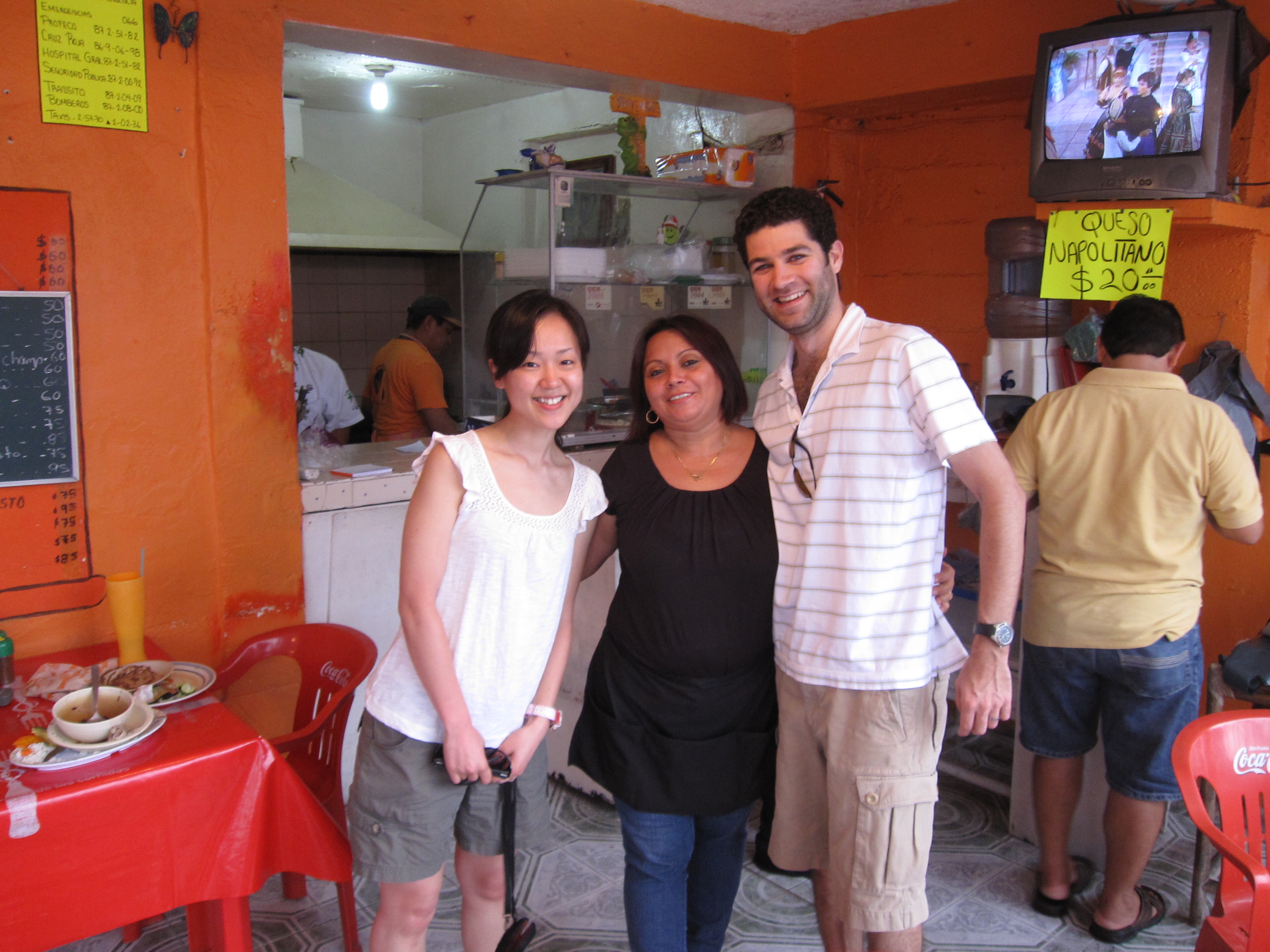
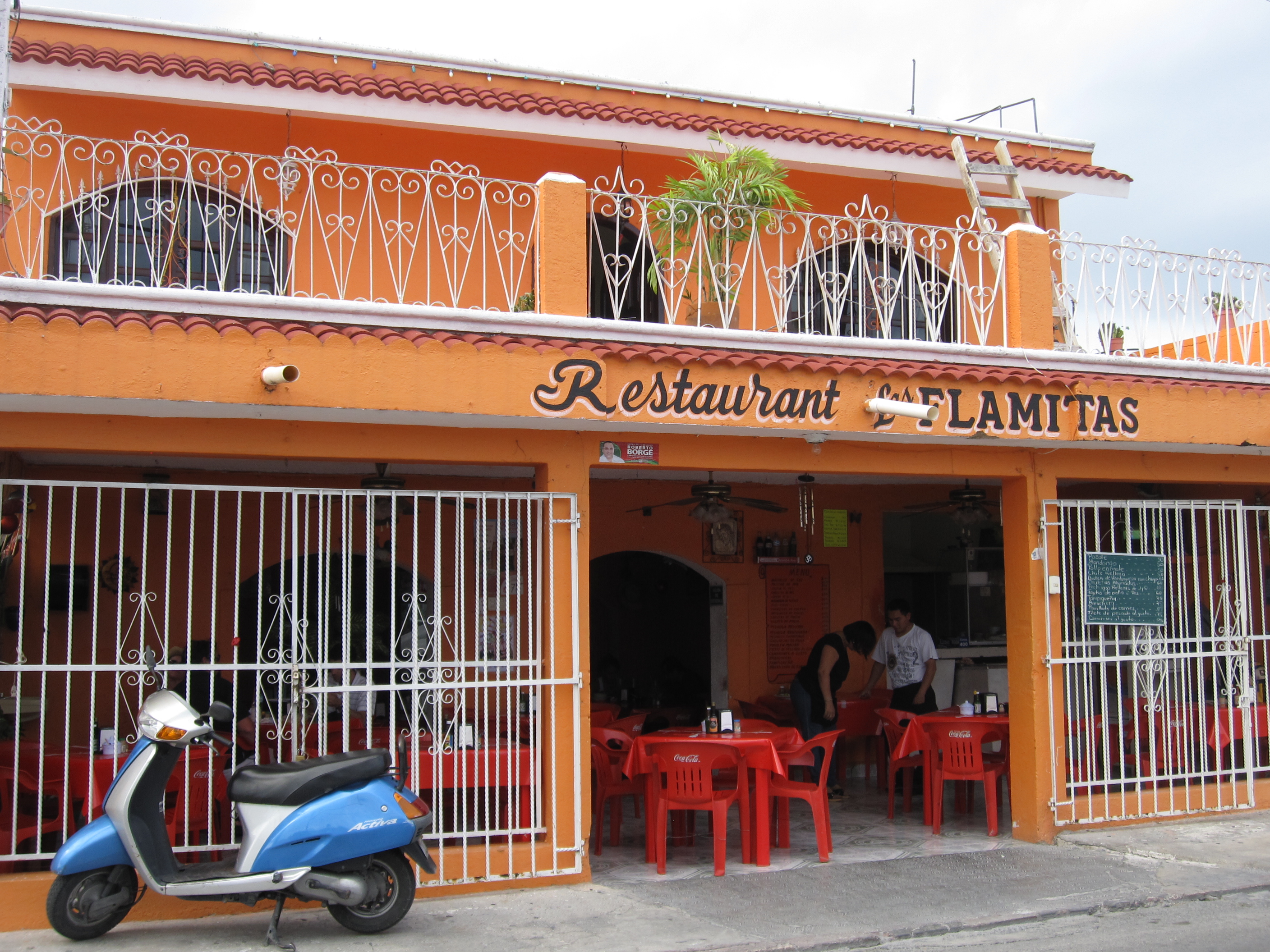
Alright, my final Donna from Aqua Safari recommendation, Las Flamitas. Again, it’s off the tourist path so the prices are much lower and food is much much better. A couple from Iowa joined us for this lunch. He went diving with us and they were also looking for some local food options.

So, we started off with some soup. One thing I noticed is that the more authentic joints always serve soup with the meals, gratis of course. This one was a simple chicken consomme with vegetables. Very basic, but very tasty.

For my entrée I got the Parrillada. A plate full of grilled meats. There was grilled chicken, beef, a pork enchilada with mole, rice, fried plantain, a small salad, steamed squash ring, broccoli, papas fritas, avocado, lime, and some smoky salsa. It really was a ton of food! I ate most of it somehow, but it’s something that Yuki and I could have easily shared and still have been satisfied. Our Iowan friends each got the Parrillada as well.

Yuki ordered the Pescado Mojo de Ajo. A huge fillet of grouper covered in garlic. It was one of the freshest pieces of fish I’ve ever eaten. So succulent! Hers came with the same sides as mine. Oh, there were tortillas for all as well.

When we were offered flan there was no way I could resist, even though I was about to undo my shorts button because I ate so much. This flan was a little heavier than the one at Sabores, but it was still delicious.

The best part of this meal wasn’t the food though. The food was great and priced right, but it was everything that made this meal great. Dining with new friends always makes for good conversation. The lady who runs this joint was a very memorable character. For some reason she took it upon herself to tell Yuki and I that we need to have a baby and we’d better start practicing. Little does she know, we don’t really need a coach. But, she kept telling us how I need to eat more habaneros because “they’re good for chacachaca!” She wants to be our sex teacher. Not sure exactly what that means, but I’m pretty sure we don’t need anyone to teach us anything. Or do we?

Read Full Post »

After making a run to Mitsuwa for some Japanese ingredients (some staples in our kitchen) I let Yuki do the cooking last night. She made a dish called Jjigae Don. Well, that’s what she calls it anyway. Jjigae is an old Korean recipe (you see Ira, Yuki doesn’t have anything against Korea), a stew typically made with kimchi. She didn’t use any kimchi but did use Tobanjan, a Korean fermented chili paste.

First, she made a broth out of miso, tobanjan, and dashi. She simmered some green onions, carrot slices, and baby bok choy until soft and tender. Then she took those vegetables out and cooked some thinly sliced kurobuta pork. By thinly sliced I mean deli meat thin. You can purchase it that way at Mitsuwa and some other Asian grocery stores. It’s typically marked for use in Shabu-shabu or dishes like that. The pork cooks quickly since it’s so thin. Be careful not to cook it more than a minute or two because the meat will get tough if overcooked. Once the pork was cooked she took it out and then cooked some shimeji mushrooms in the broth.

While all of this was going on we had pressed the water out of a package of silken tofu. Once the tofu was firm enough we cut (she did the cooking I did most of the cutting, I’m her sous chef as I love to use the hand-carved Japanese steel she got me for my birthday a few years ago) it into smaller pieces and then cooked it in the broth.

After everything was cooked we put some rice in the bottom of our bowls and then topped it with all of the ingredients. While we did that Yuki cooked some shungiku in the broth. You have to cook that last as it turns the broth a darker color. That way the veggies and meat keep their natural colors. Once the shungiku was cooked that went in the bowl with everything else.

No extra fats, just the natural fat from top quality pork, were added to this dish. Along with the variety of fresh vegetables and white rice this is an extremely healthy dish. Absolutely delicious as well.

Read Full Post »

Another Donna (from Aqua Safari) recommendation. This place is called Parrilla Mission. The Mission group has two restaurants in Cozumel. One of them is in the heart of touristville, this other one is a 10 minute walk down the street. Same food, same high quality, half the price.

We started off with just their salsa and a beer. Pretty good salsa, not too spicy at all. All of the sudden, after one particular bite, my head started to throb, my mouth went up in smoke, and I instantaneously started to hiccup. I didn’t see anything in the salsa that would suggest caliente. Maybe some jalapeño was hidden among the cilantro? Would’ve been the hottest damn jalapeño ever! Before we took another bite I explored the rest of the salsa only to find this little bugger hiding within the tomatoes…habanero! That thing was intense! I’ve eaten raw habanero before, but I was always ready for the hurt. This one snuck up on me. A few minutes, a keg of beer, the flame eventually died down.

For my entrée I ordered the shrimp shish kabob. Nice juicy shrimp perfectly grilled with slices of green pepper, onion, and tomato. Half of a baked potato with crema drizzled on top, some Mexican rice, and steamed carrots and chayote rounded out the dish. The dish wasn’t outstanding by any means, but everything was fresh, properly seasoned, and properly cooked. It was very delicious.

Yuki ordered the garlic shrimp. Same accoutrements as my dish, but her shrimp were butterflied shell-on and sautéed in butter and garlic. Those were outstanding! Seriously though, how can fresh shrimp sautéed in butter and garlic not be outstanding?

No dessert that night as the entrees filled our bellies, along with the beer. It definitely pays off to head to restaurants away from tourist traps and cruise ship docks. You’ll find more authentic food usually with fresher ingredients at a fraction of the cost. You’ll also meet more of the local characters than you will at Senior Frogs, Coconuts, The Hard Rock, or Margaritaville. Best thing to do is ask people who work at the hotel you’re staying at where they eat when they go out. They’ll usually send you to some memorable meals.

Speaking of which, I have one more from Cozumel that’ll be up soon. Then we head to Merida. Or, I may throw another Japan joint up. Or, maybe I’ll get lazy and wait for the next Meatless Monday. At any rate, keep checking back.

Read Full Post »

So, I’m sittin here at mi mama’s casa in Merida, Mexico. For whatever reason, I can’t seem to get this Chiles Rellenos I ate in Cozumel the other day out of my taste buds. It was hands down the best damn Chiles Rellenos one could digest! Not wanting to spend a ton of pesos at extremely subpar, boring restaurants on the tourist strip of Cozumel I asked Donna of Aqua Safari (the hotel/dive shop that we stayed and dove with, and will again hopefully in the near future) where she goes to eat. I figured that she’s been there long enough to know all of the good spots where we can get the local flair. I figured correctly, as I usually do. She sent us to Sabores. It’s literally the home of a mother and her son and daughter that doubles as one of the best Mexican restaurants I’ve ever come across.

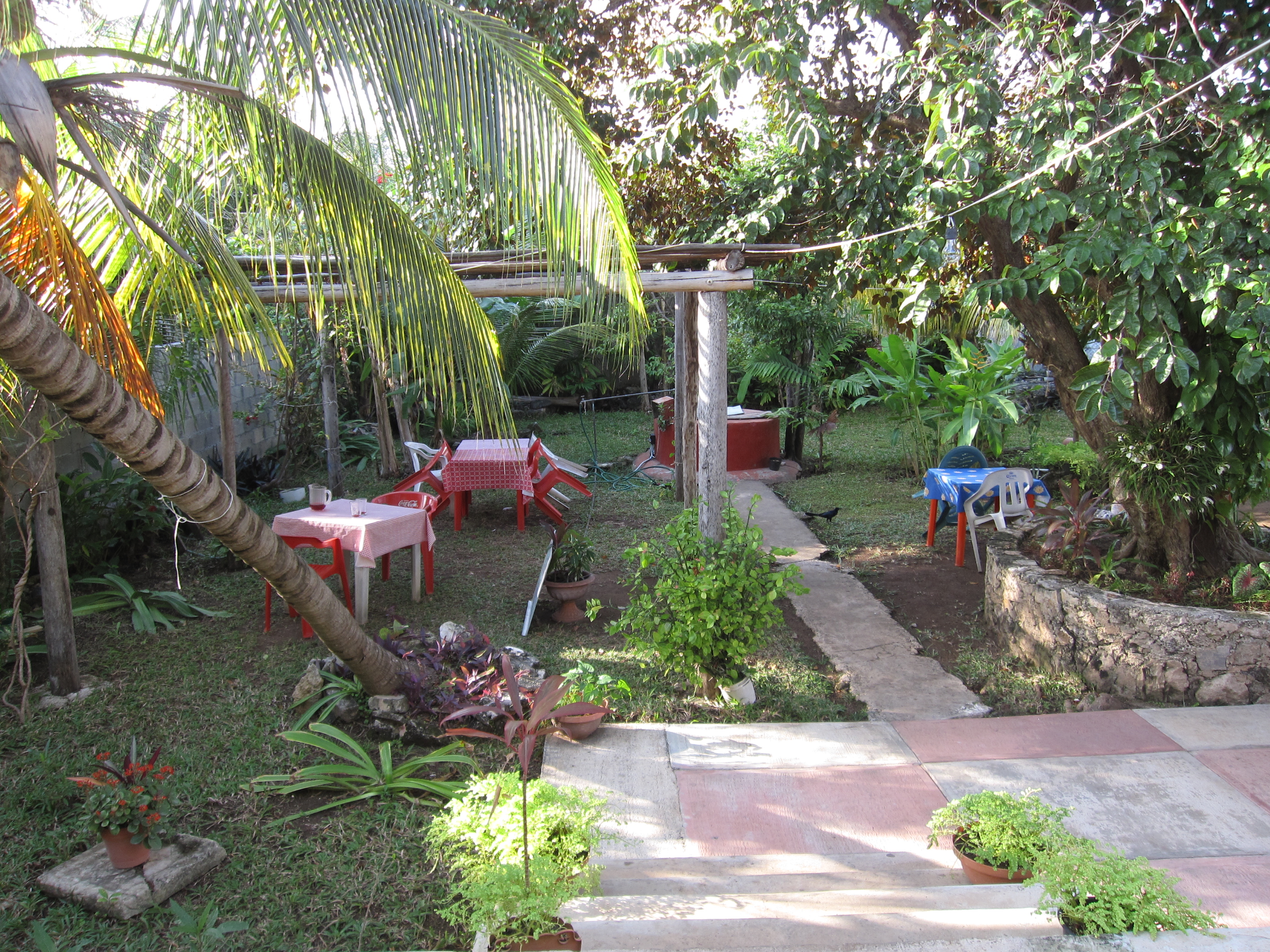
We walked into the house and straight back to their garden patio. As you can see, it was a little tropical paradise. Palm trees, a little canopy, and a few tables all graced by some beautiful birds there to pic up any crumbs. I guess humans aren’t the only ones who enjoy Sabores.

When we sat down they immediately brought us a pitcher of this red drink. I thought to myself, “this is the first time I’ve ever been served Kool-Aid at a restaurant…weird!” Turns out it was Jamaica, a common drink in the Yucatán made with hibiscus. It does taste similar to Kool-Aid, but it’s much better for you as it isn’t processed artificially sweetened dye. We also had a choice of two soups. I got the Sopa Pasta and Yuki got the Sopa Verduras. Same great broth, chicken consomme, but mine had noodles while hers had vegetables. If I were a bettin man, and I am, I’d bet that’s how they got their names.

Once we finished our soup they brought us their dry-erase menu board. Note, the dollar signs are pesos and not dollars. At about 12-13 pesos to the dollar you can do the math, or let a calculator do the math for you. All you really need to know is that there is no possible way to get home cooked food of this quality for anywhere near this price in Chicago, or on Cozumel’s tourist strip for that matter.

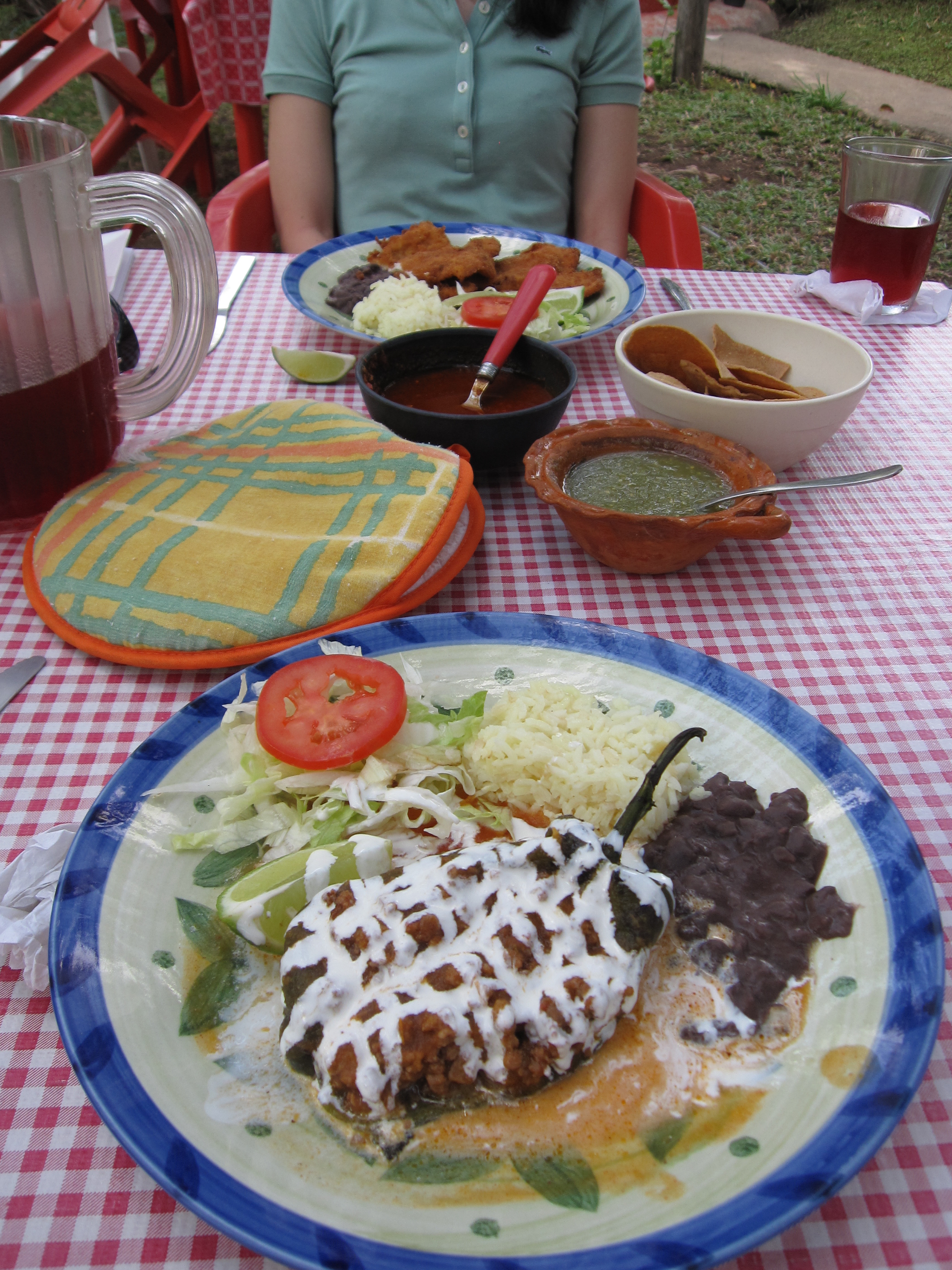
Here’s the Chiles Rellenos. Man, just looking at this picture makes me crave it again! I got con carne option. Perfectly seasoned ground beef stuffed into the roasted poblano and drizzled with Mexican crema. Delicious chunky refried frijoles negros, rice, slice of lime, and a small salad on the side to help push the food through my tracts. Yuki got the pollo milanesa, thin chicken breasts breaded and deep fried, to perfection I might add. Not oily at all, but nice and crisp while the meat stayed juicy. Along with the usual condiments of salsa verde, salsa rojo, and tortillas we were set! Until dessert at least.

What true Mexican meal is complete without flan? Not this one! The best flan ever! Creamy, but light and not heavy. Just a touch of lime to balance the caramel. It was outstanding.

Everything was top-notch. You could really taste that this food was cooked in someone’s home, and cooked with care. Next time I’m in Cozumel I am definitely heading back to Sabores. If you know what’s good for you, especially what’s good for your taste buds and stomach, you will too if you ever go to Cozumel.

Read Full Post »

I have to apologize to the environment as well as my physical well-being. There was no Meatless Monday last night. Cafe Hoang is sending all proceeds from yesterday’s take, including tips, to Haiti in order to help feed those who need. For my part I figured the least I could do was to eat some tasty food for charity. From what their website states, they’re doing it again next Monday, the 8th. I encourage you all to take part and keep my boy Jason Tran busy as hell cooking his ass off.

So, instead of a Meatless Monday post I’m going to tell you about a dinner we had at Yuki’s sister’s condo in Tokyo with her family last November. As you can see, it was family-style with some authentic Japanese flavors and some not-so-Japanese.

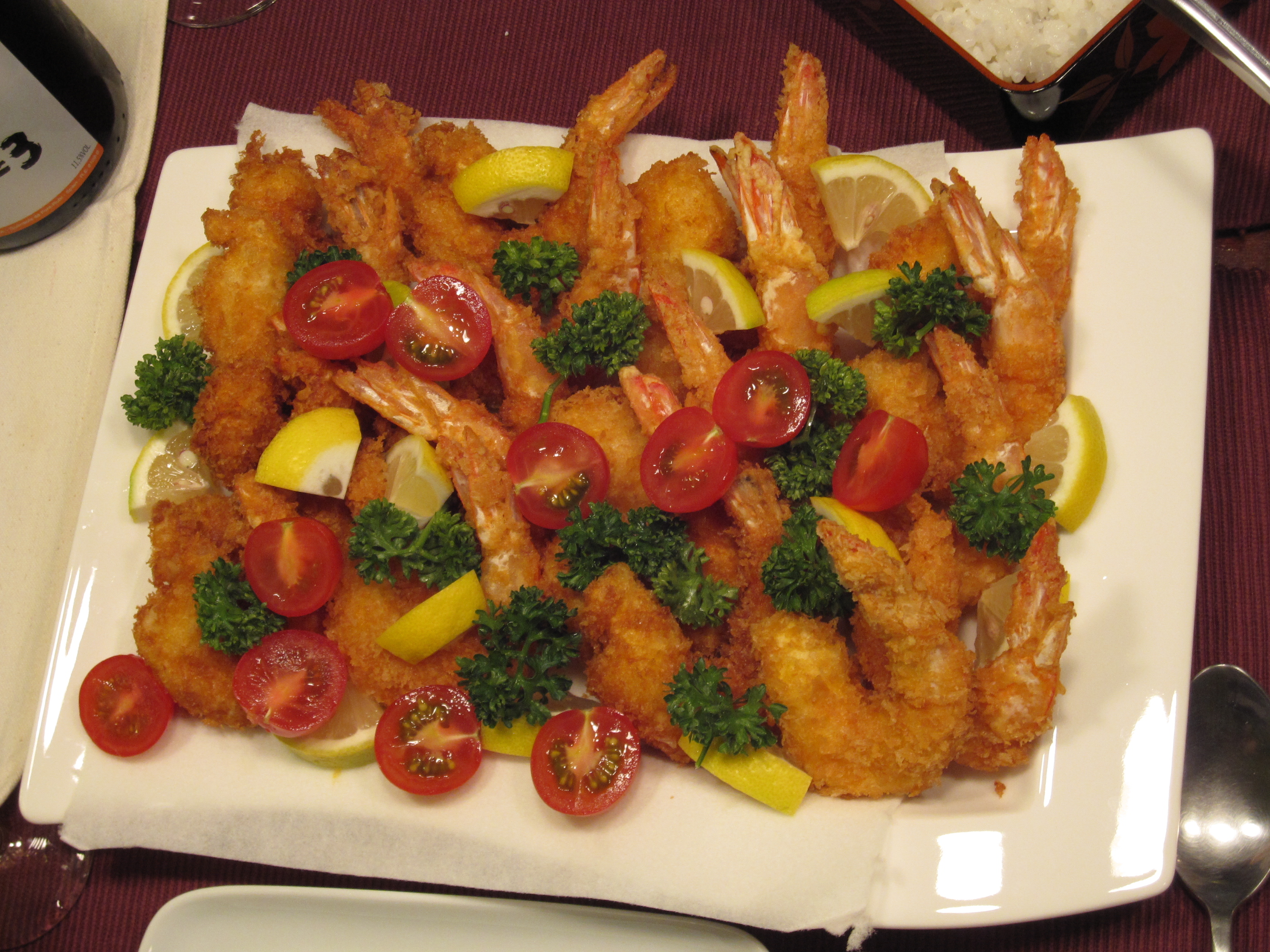
We had some shrimp tempura. Pretty simple, just fresh juicy shrimp deep fried in panko. Yuki’s mom scattered some cherry tomatoes, parsley, and little pieces of lemon around the plate. A squeeze of citrus, a dip in soy, some herb….makes me a happy man.

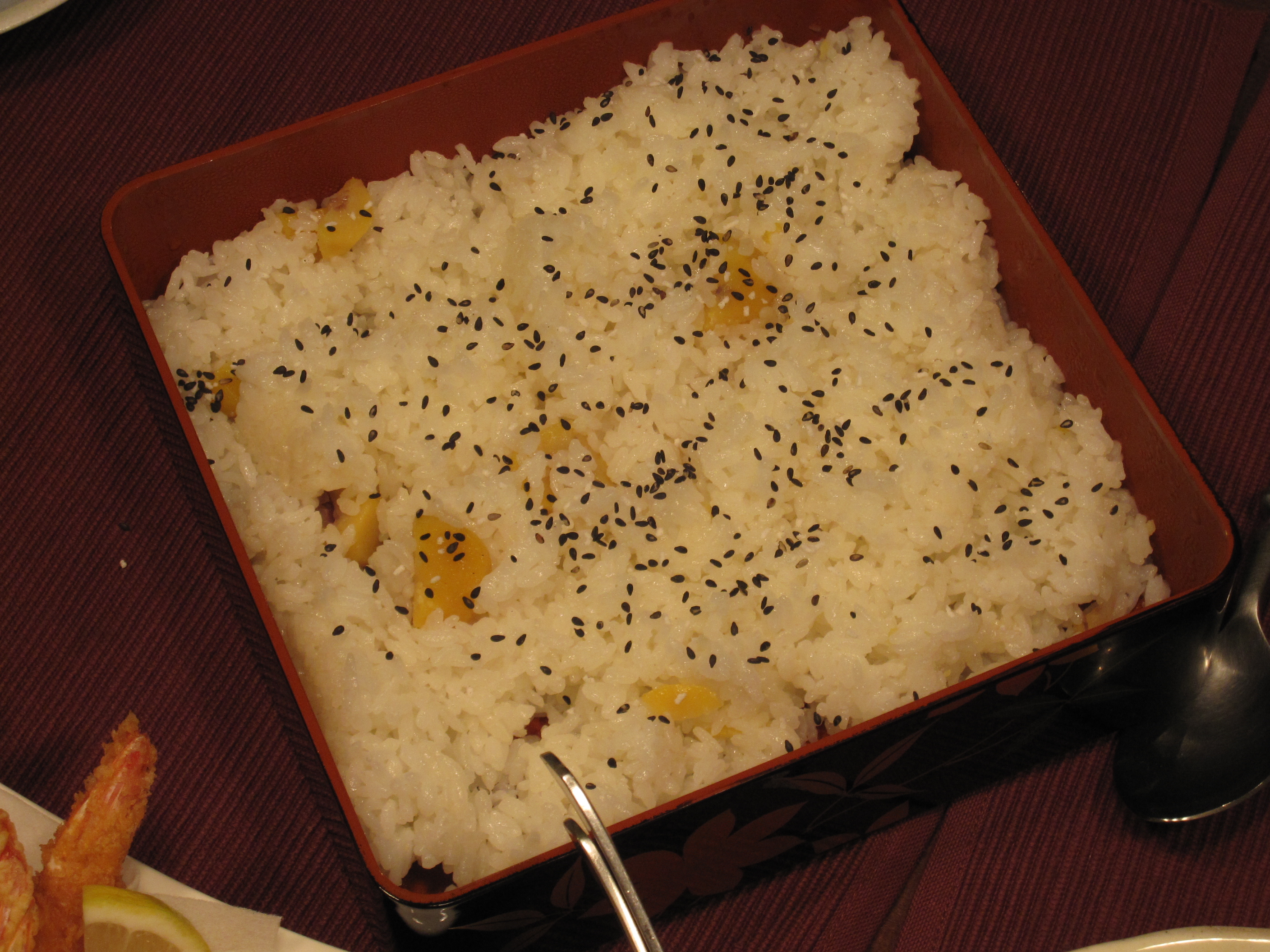
There was some Kuri Gohan, chestnut rice. This is a common dish throughout Japan. A favorite as chestnuts add a great flavor as well as nutrition to rice. Simply add the chestnuts to the rice while it’s cooking and then sprinkle some sesame seeds on top.

This is a Raw Tuna Salad that Yuki’s brother-in-law Jun made. Chunks of fresh tuna, avocado, and thinly sliced onion that’s been soaked in cold water to remove the rawness tossed in a vinaigrette. I forget exactly what he put in the vinaigrette, but it was something like sesame oil, soy oil, soy sauce, rice wine vinegar, and pepper. He lined the serving dish with some lettuce leaves and dumped it on top.

This one is a classic Japanese home cooked dish. Not sure what it’s called, maybe Yuki will leave a comment and let us all know. Yuki’s mom simmered some lotus root, bamboo shoots, green beans, shiitake, konnyaku, carrots, and chicken. Again, I’m not completely sure what the simmering liquid was, I think it was a mix of soy sauce, sake, and mirin. Maybe some dashi. Always delicious (at least when Tamiko makes it)!

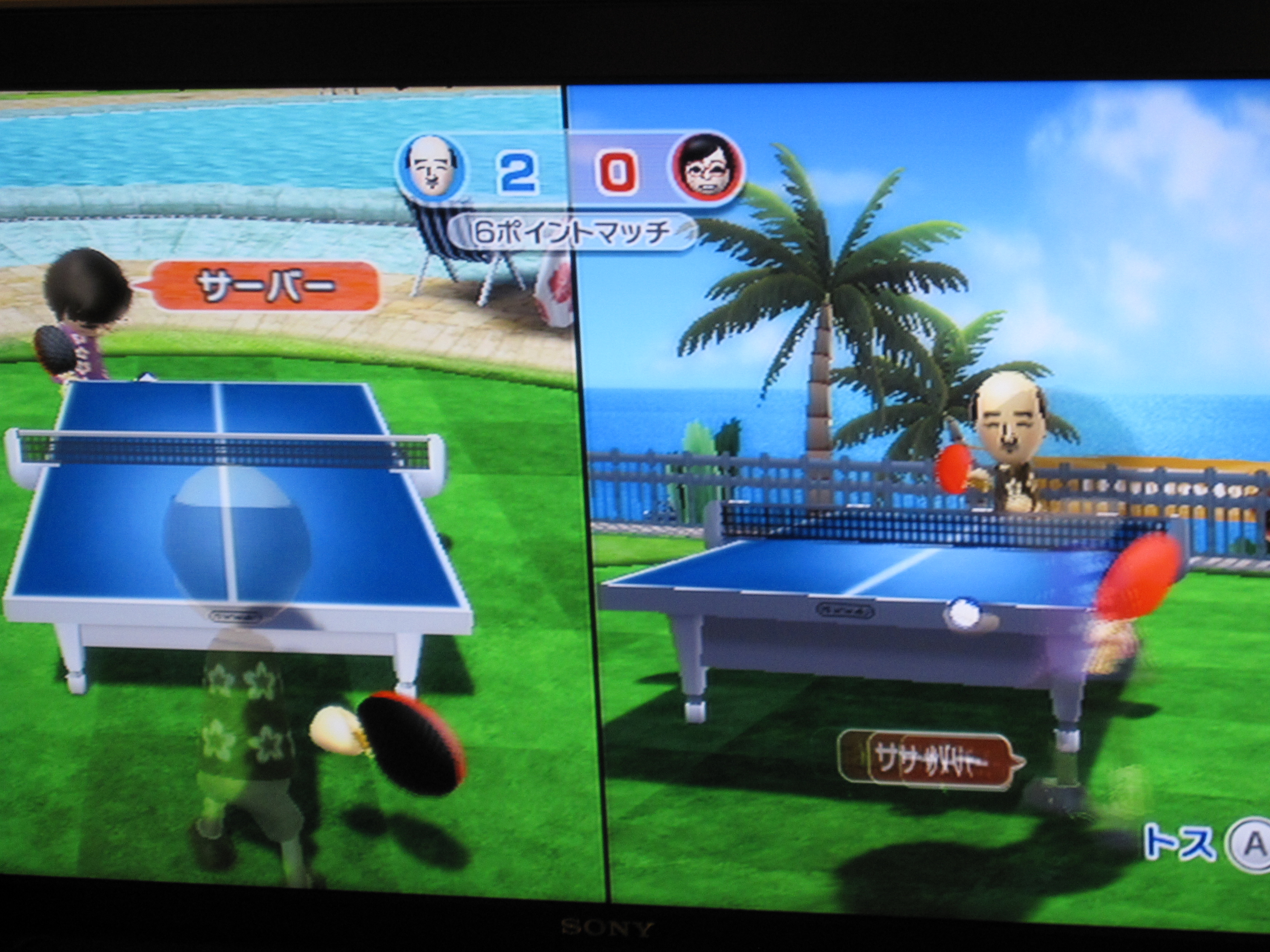
We drank it all down with some Prosecco and some fantastic sake that we picked up on the way to the condo. After we ate we took turns kicking each others asses in Wii.

Read Full Post »

A good buddy of mine, Jason Meyer, gave us a couple of tables he made a while back. He’s a very talented sculptor/furniture maker/badass dancer that I used to work with at Bin36 back in the day. In order to show gratitude Yuki and I invited he and his fiancée over for dinner the other night. We figured that he gave us something that he made so we should do the same.

We started off with some Lemongrass Corn Soup with Avocado garnish. The soup was actually purchased and I didn’t make it (shhh, don’t tell Jason). It did taste exactly like something I would make though. Had I made it I would have simmered some corn and onion in vegetable stock with some lemongrass until the kernels were nice and soft. Then I would have discarded the lemongrass and blended the rest of the ingredients until smooth and strained it back into the pot. A little salt and pepper and there you go. I did make the rest of the meal. Well, that’s not entirely true as Yuki did some of it.

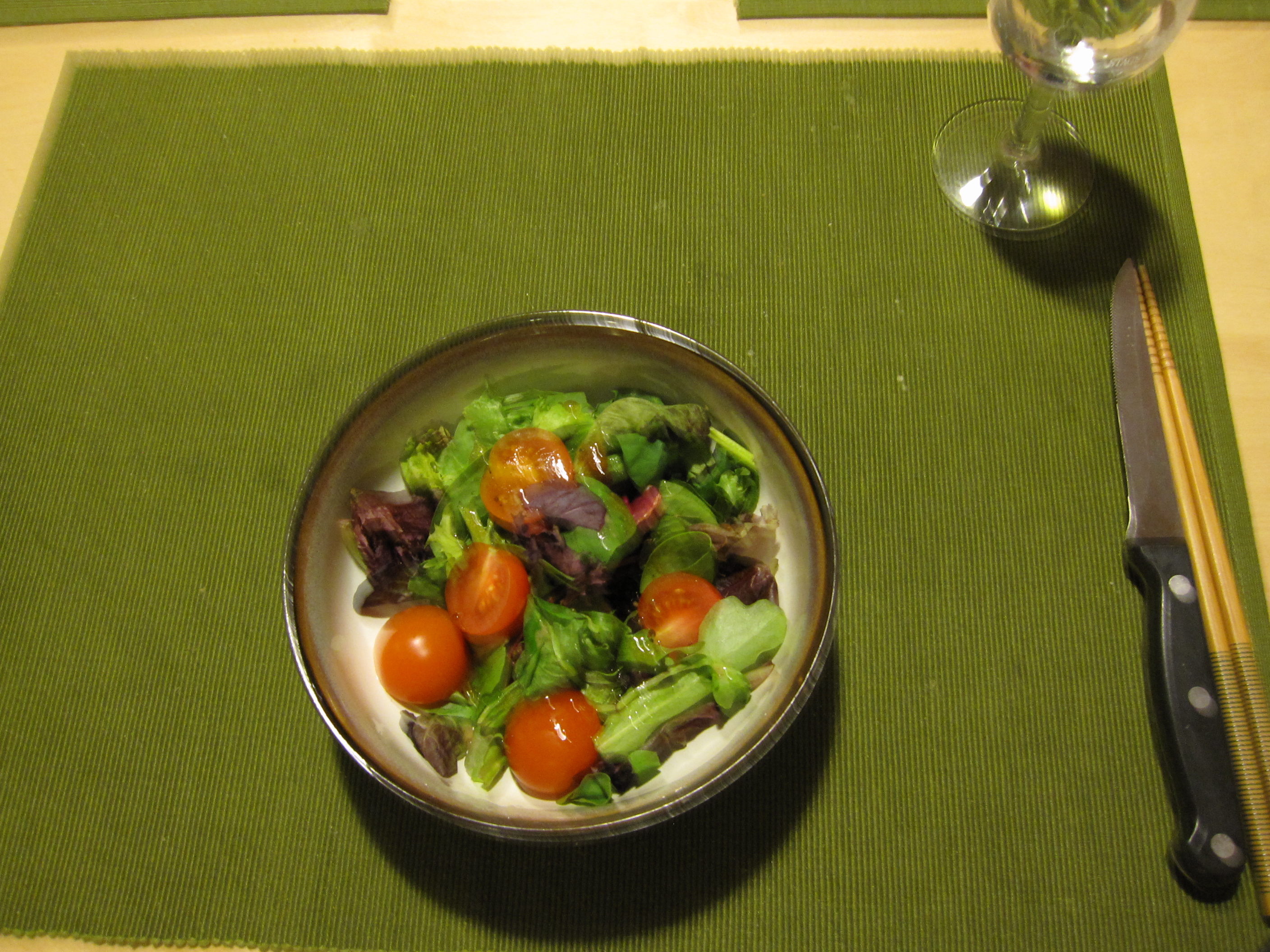
Then I served a simple salad. Mixed greens with cherry tomatoes and a sesame vinaigrette. Vinaigrettes are easy to make. This one had soy sauce, sesame oil, a touch of rice wine vinegar, salt, and pepper.

Next was the main course. I went to Olympic Meats for some good strip steaks. The steaks were pan-fried in nothing but olive oil. No salt or pepper added. Once I got a nice seer on each side and they were cooked about medium rare or so I put them on plate to rest. While they were resting I doused them with a sauce I had made. The sauce consisted of grated ginger and garlic, soy sauce, lime juice, red pepper flakes, and pepper. No salt since there was plenty of soy. I made the sauce way in advance to let the rawness of the ginger and garlic mellow out a little in the lime juice. By pouring it on the steaks while they rested it allowed the flavors infuse into the meat and keep them nice and juicy. I served the steaks on top of baby spinach with roasted yellow peppers and shiitake.

On the side was some hijiki rice that Yuki made. In the rice cooker she added to the rice some diced carrot, hijiki seaweed, cooking sake, soy, and konbu dashi. It’s one of my favorites as hijiki adds a wonderful flavor to almost anything. Plus, it’s extremely healthy as most seaweed is.

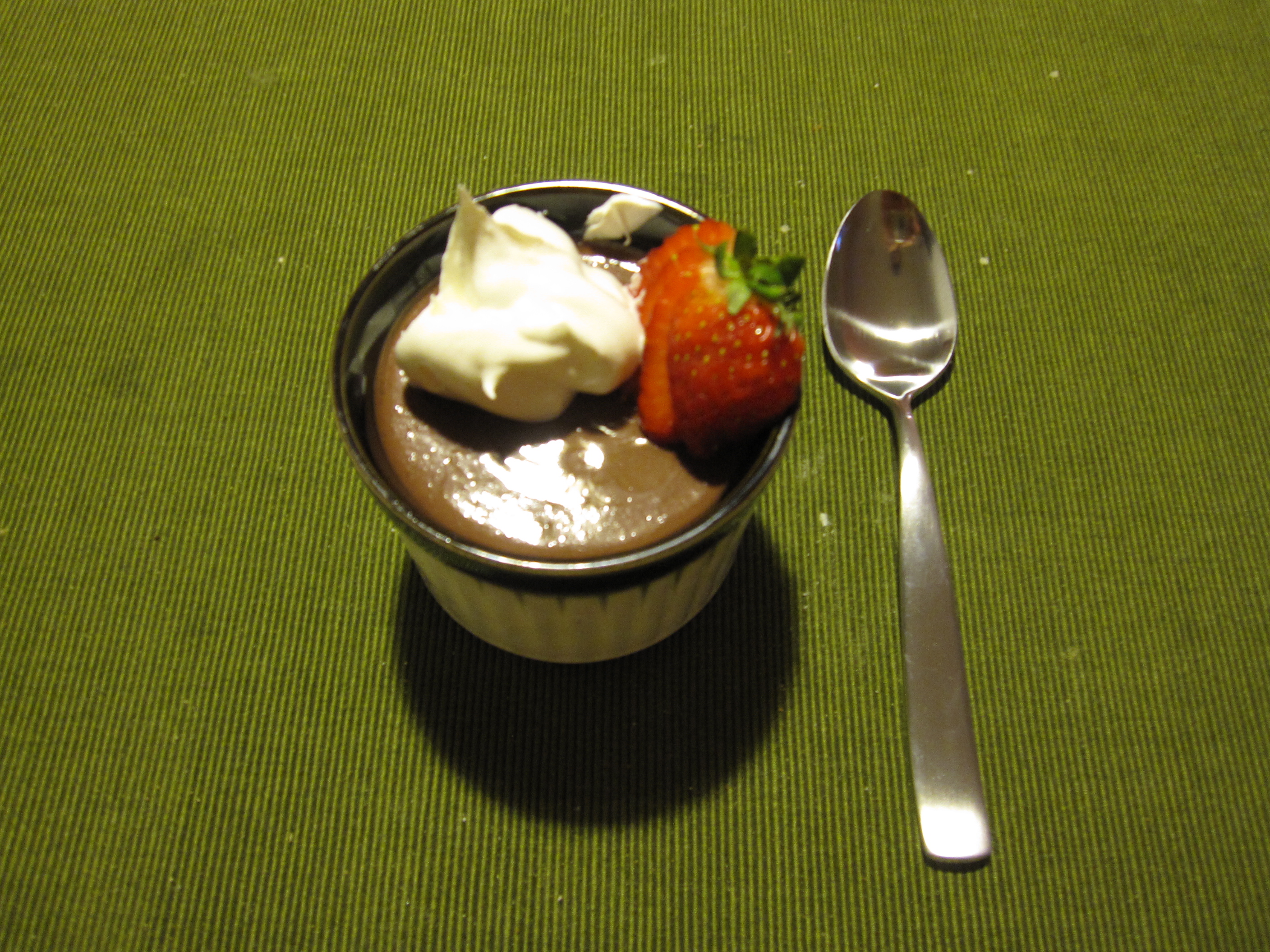
For dessert I made some Mexican Chocolate Pots de Cremes. What better to follow Asian flavors than Mexican chocolate? I made these the day before to let them set in the fridge overnight. I used egg yolks, heavy cream, whole milk, Mexican chocolate, and bittersweet chocolate. You first have to heat the cream and milk without boiling it, just a slow simmer for a few minutes. Then you incorporate the egg yolks, beaten, very slowly constantly mixing so that the eggs don’t scramble. Once it’s thick enough to coat the back of the spoon add the chocolates in pieces so that they melt completely. Once you have a nice smooth thick custard pour it into your serving dishes, cover, and chill for at least 4 hours and preferably overnight. To serve, I sliced some strawberries and added a little whipped cream.
Jason brought a bottle of Prosecco that we enjoyed with the soup and salad. After that we opened up a special bottle of Sake that we brought back from our last trip to Japan. Everything worked out extremely well. Portions were perfectly sized as none of us were hungry afterwords yet we weren’t stuffed either. I hope they enjoyed because it would be a disaster if I had to make them a table!
Read Full Post »

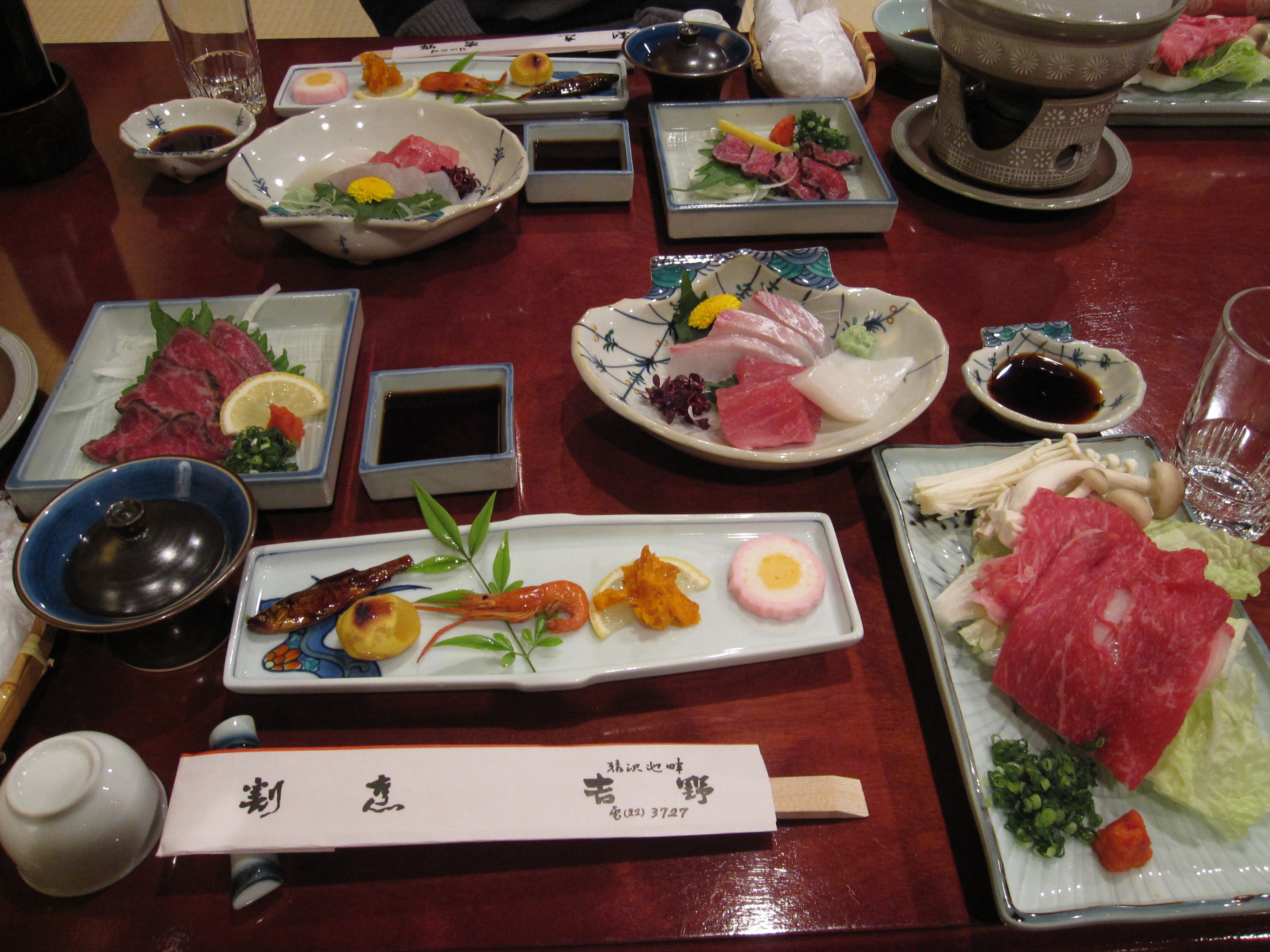
So, Yuki and I took a few days to visit some of the early temples and castles in the Kansai region of Japan. Most of the structures we saw date back to the 8th century and are truly amazing! Besides the structures there were also tons of great sculptures from the same time period. However, as you all know, this blog isn’t about architecture, it’s about food. This post is to let you know about the incredible Kaiseki we ate our last night in Nara at the Ryokan (traditional Japanese Inn) we stayed at, Yoshino.

Kaiseki is the classic multi-course meal that progresses through various cooking techniques using regional, seasonal ingredients. It’s the highest art form you can find in food anywhere in the world. Focus on the subtleties of each ingredient to draw out natural flavors and not cover then with heavy sauces (sorry Frenchies, but the Japanese have your asses kicked in food culture!).

It started with that dish in the middle of the picture above. From left to right was a little fish grilled in a sweet soy marinade, a roasted chestnut, ama ebi (sweet shrimp), some sort of seafood that had a jellyfish-like texture in a miso sauce (I have absolutely no idea what it was, but it sure tasted good!), then a three-colored fish cake.

After that they brought out this dish. It was obviously a shrimp, but I’m not quite sure what else there was. I think it was a gratin made with the roe of the shrimp. Also on the plate as a macaroni salad and some lettuce with a tomato.

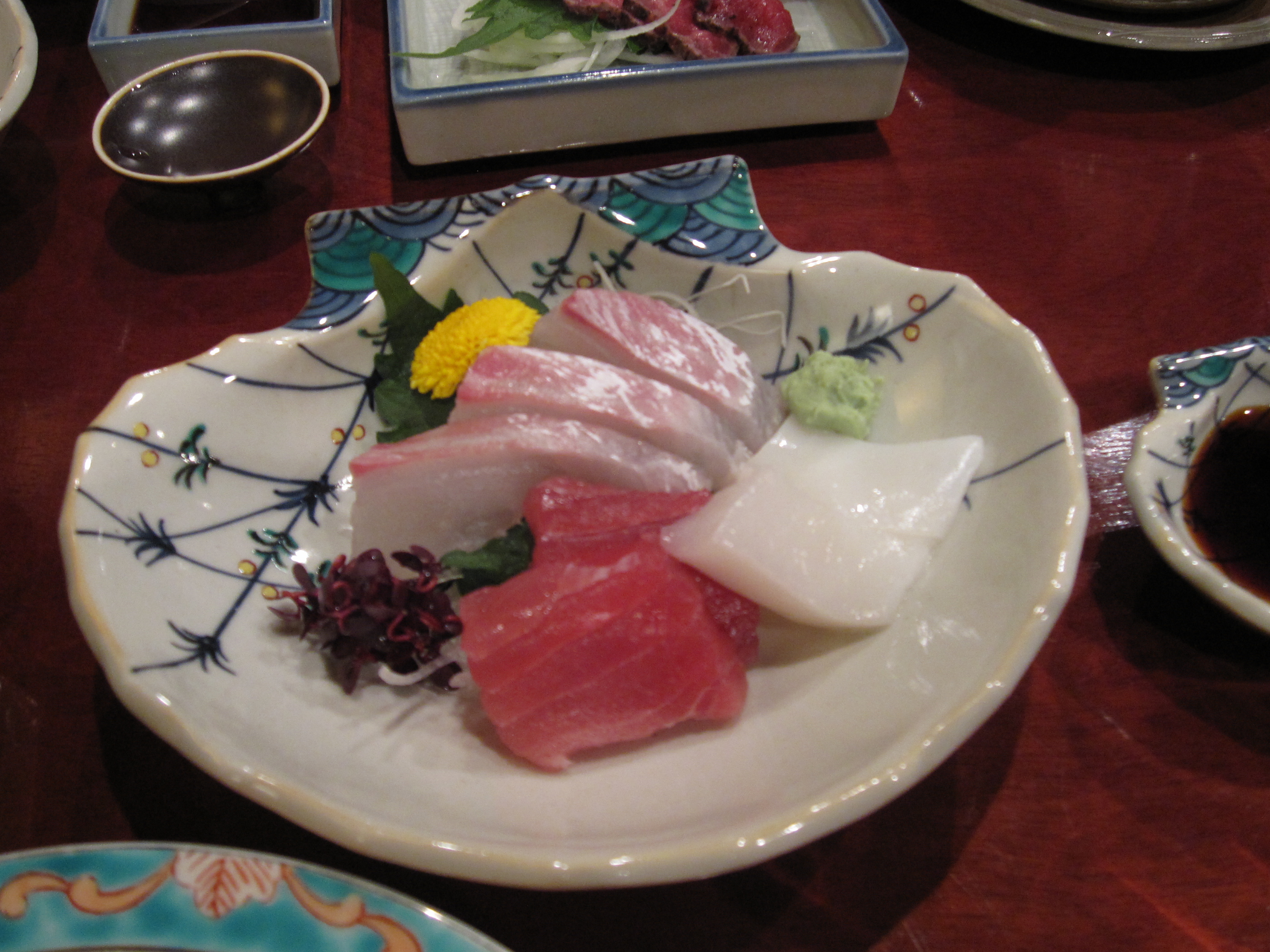
Then we moved on to the sashimi plate. It had some fantastic Chu-Toro (tuna), Tai (snapper), and the star of the plate….Ika (squid). In the States when you order Ika it’s usually very thin and a little rubbery. Not these two slices. They were about a half centimeter thick, squid steaks! Rubbery? Hell no! Each chew and the squid literally melted away in our mouths. Hands down the best squid I’ve ever eaten.

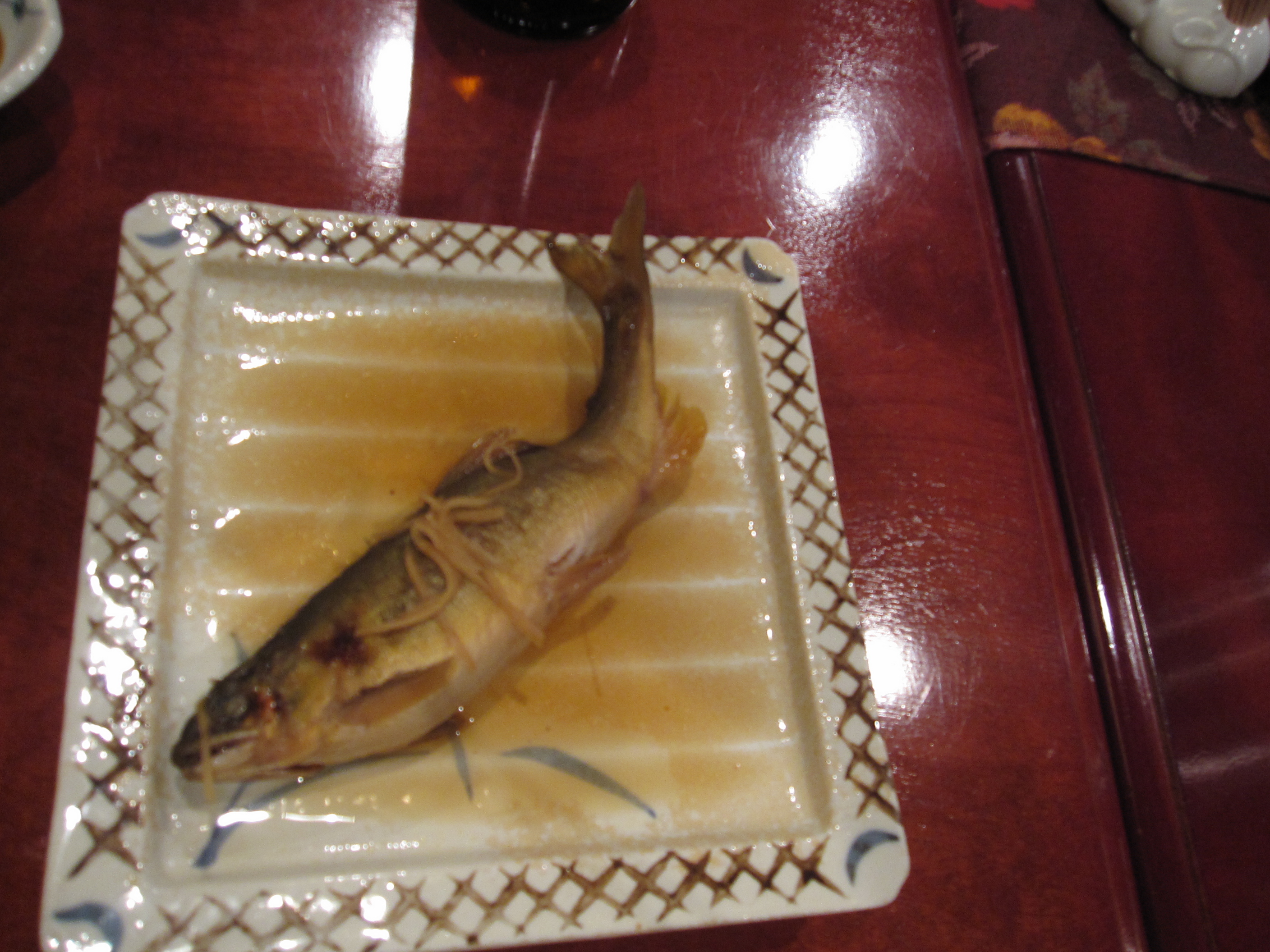
Then they brought us a plate of steamed Ayu (sweet fish). It’s a river fish that eats moss attached to stones giving it a really fresh and clean taste. It was served with a light ginger sauce. The thing that makes Ayu special is that it’s eaten when the belly is full of fish roe. There isn’t much meat, so it’s like dipping chopsticks into a bowl of fresh water caviar.

Being the meatavore that I am, the next plate was what I was most looking forward to….Beef Tataki. Lightly seared beef to give a little texture to the soft raw meat laden with mouth-watering fat. The dipping sauce is a soy-dashi mix. You see the little mound of reddish gew on the side of the dish? That’s a mix of togarahsi (Japanese red pepper) and yuzu (a small citrus fruit). You mix that into the sauce like you would wasabi for sushi, along with thinly sliced chives. With the tataki there was a small dish of sliced cucumber and I think seaweed in a vinegar sauce that cleansed the palette from the fatty beef.

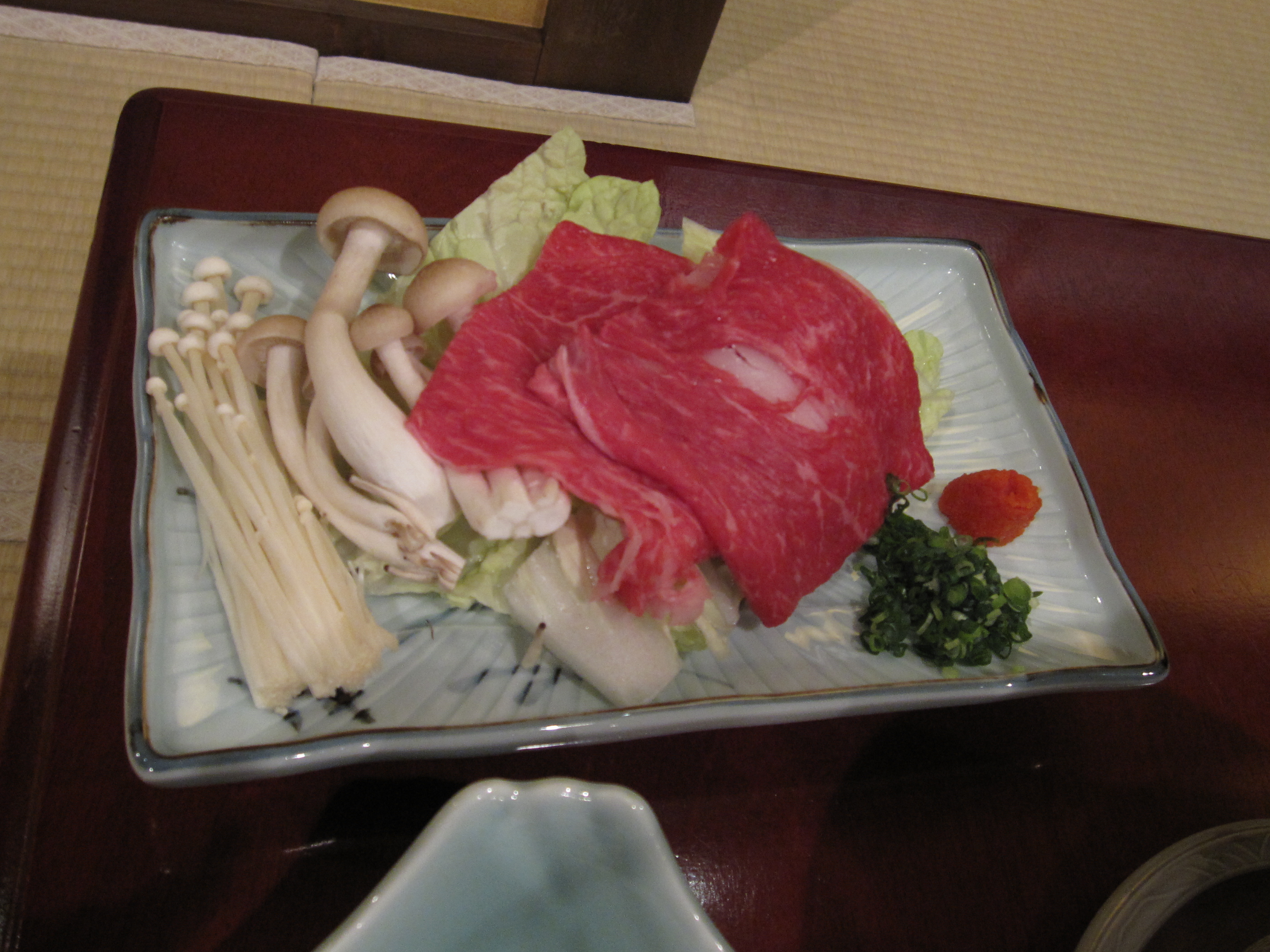
Then we ate the Shabu-shabu. Unfortunately I forgot to get a picture of the individual hotpots we used, but here’s the ingredients. The broth was a light sake base, in it we added cabbage, enoki mushrooms, and shimeji mushrooms. Once they were cooked, we sloshed the thinly sliced beef around to cook it and then dipped it all in a light soy with more of the togarashi yuzu and chives.

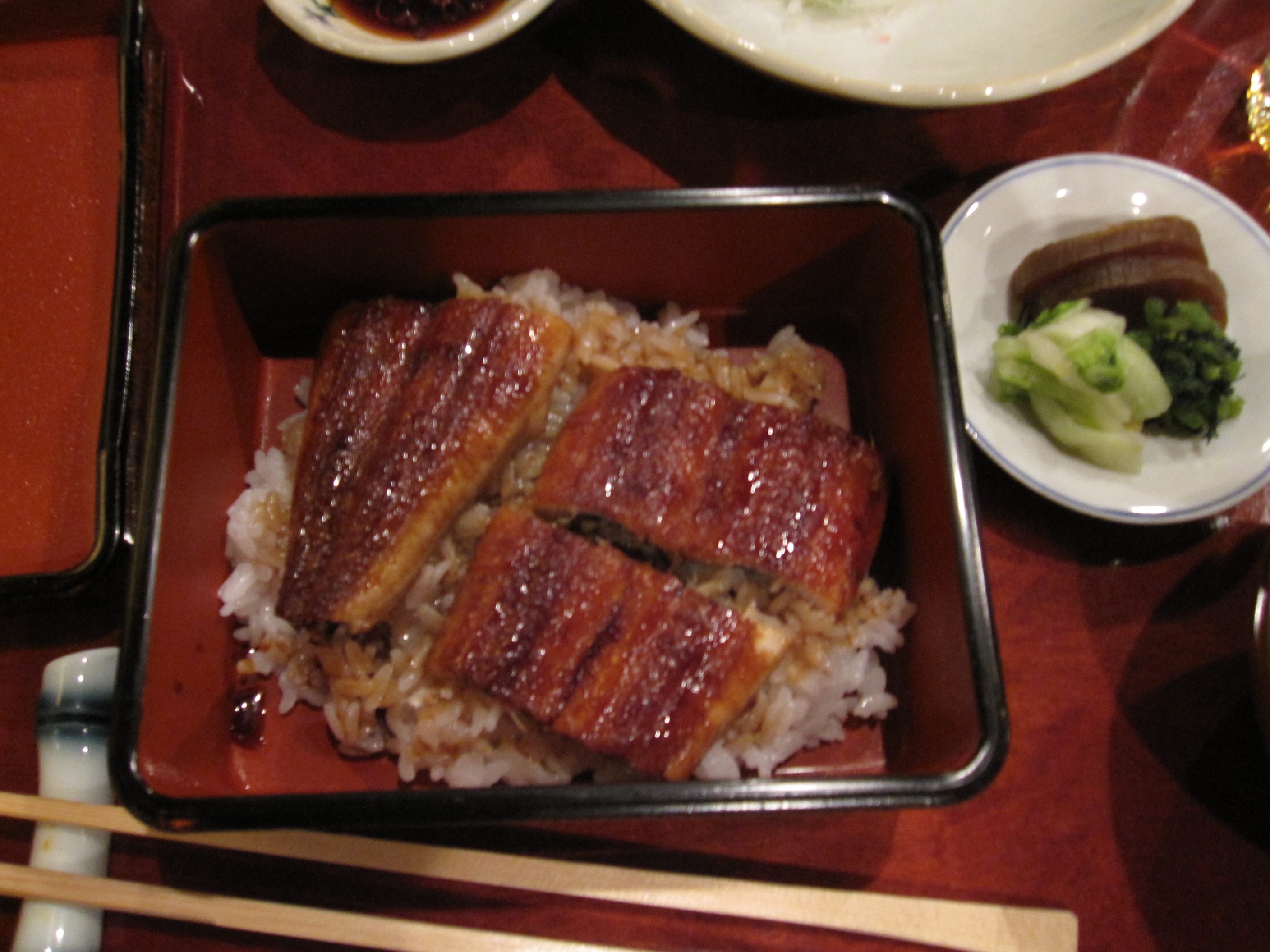
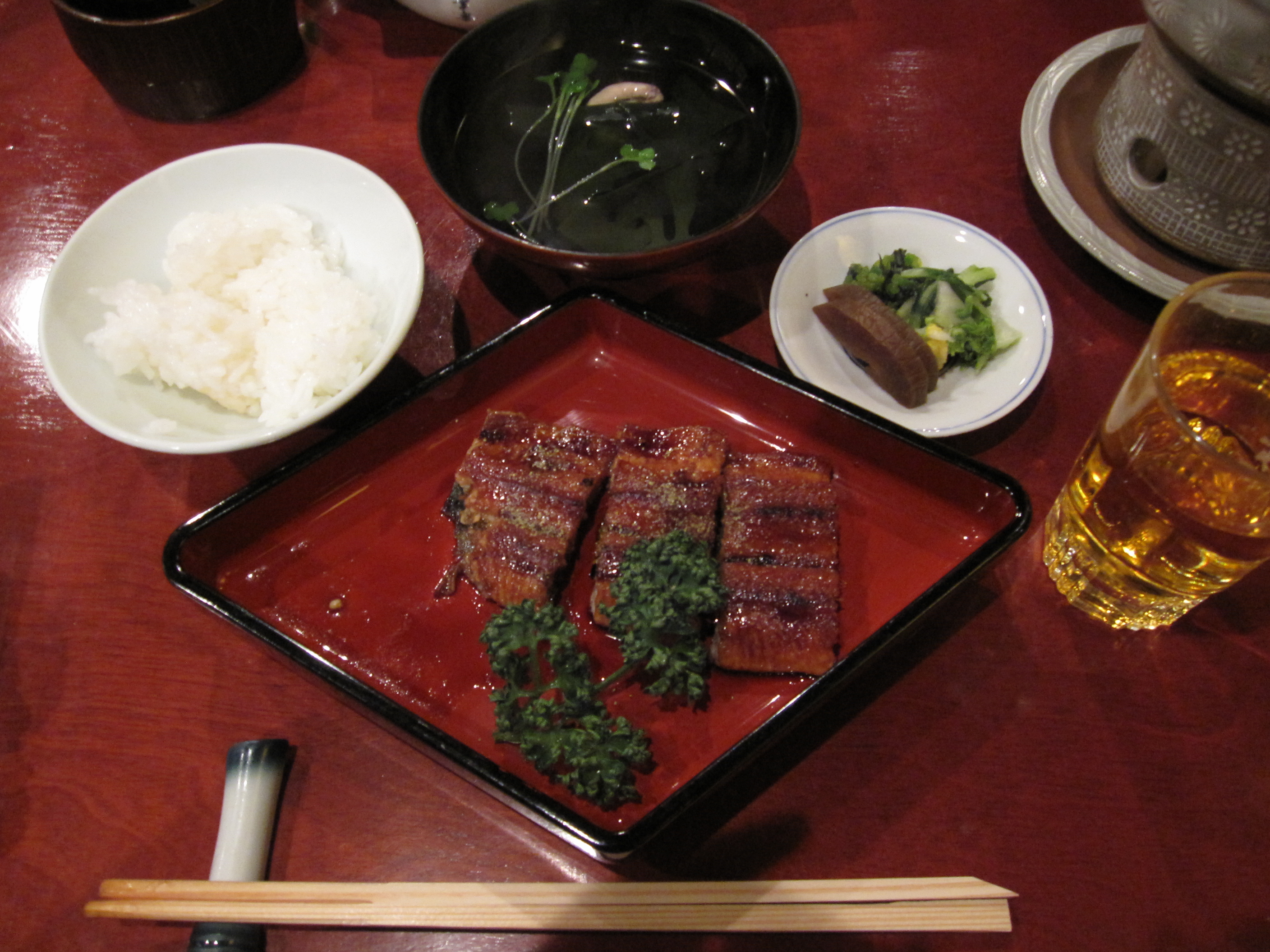
After that we got two different preparations of Unagi. To be honest, I have absolutely no clue what the difference was. One was served on top of rice, the other with rice on the side. All I can tell you is that you will never find eel of that quality anywhere in the States. It tasted like they just caught it that morning. Best eel ever! Both came with a little dish of Japanese pickles. They were probably damn good pickles, but I don’t like pickles so I let Yuki eat mine.

After the Unagi was a clear broth soup with an ingredient we couldn’t figure out. At first, we thought it was some sort of mushroom. It wasn’t. Then we thought it might be shiroko, fish sperm sack. It wasn’t that either. We finally found out that it was eel liver, probably from the Unagi we just ate. It had kind of a crunchy yet soft texture. Not something you’ll find on any old menu.

Finally, to finish things off was a plate with fresh persimmons and grapes. persimmons are in season right now and are everywhere while Japanese grapes are absolutely huge compared to what we get.

All in all this was my 5th Kaiseki. I wish I could afford to eat like this every night as there is always something unusual and strange to the western palette. If any of you get to Japan I highly recommend splurging at least once to experience the delicate yet sophisticated Japanese cuisine at it’s finest.

Read Full Post »

IMG_1132

Meatless Monday continues. I went back to my days in Egypt for last night’s dinner. In Dahab, as in many parts of Egypt, they eat a dish called Koshary as a quick lunch. It’s usually sold from street vendors as opposed to restaurants. In Dahab, my dive shop was on the far north end of the bay. The Koshary guy, much like Chicago’s ice cream bike guys, came from the north so I always got the freshest Koshary. Besides Koshary, he also sold rice pudding, but I’d usually wait and get that for dessert as it was sweeter.

Koshary is a bowl filled with crazy goodness. Rice on the bottom, spaghetti noodles on top of that, lentils on top of that, all covered with spicy tomato sauce, then topped with chickpeas, and finally garnished with fried onions. All for about 30 cents ( in Egypt, it cost about $2.00 per serving last night).

I didn’t make a pure Koshary though. First thing I did was dice up a medium eggplant and let it sit in a colander with some salt for about a half hour. Then I rinsed it and dried it. This takes away some of the fruit’s bitterness. After that I sauted a chopped onion in some olive oil for about 4 minutes with a few chopped garlic cloves. I ground up about a teaspoon of coriander seeds with my pestle and mortar and added that along with about a teaspoon each of cumin and cinnamon. Then I added the eggplant chunks and let them cook for about 5 more minutes. I dumped in a 28 0z can of chopped tomatoes, seasoned with salt and pepper, then let simmer over a medium heat for about 15 minutes. After that I added a can of chickpeas and let everything simmer for another 15 minutes so that the tomato juices would reduce down to a thicker stew.

While the juices were reducing I friend a thinly sliced onion in extremely hot oil with some sliced garlic. The garlic burns quickly, but as long as you don’t eat it the aroma infuses the onion. You don’t want to burn the onion, but you want a nice crisp texture. Once their cooked set them aside on a small plate.

To serve, instead of throwing everything in a bowl, I put the rice on the side and ladled the stew next to it. I garnished it with the fried onions and some cilantro and had a mixed green salad along side.

Read Full Post »

IMG_0590

Here’s my first attempt at making Gyu-don, Japanese simmered thinly sliced beef with onions on rice. It’s surprisingly simple to make, yet full of flavor and easy on the wallet.

The trick is to get the beef sliced as thin as deli meat. You can get it at Mitsuwa, but I’m not sure where else to get good quality meat in this fashion. I’m sure it’s available. I do know that it’s near impossible to get such even thin slices at home with a knife no matter how sharp it is.

So, take put a little oil in a medium-sized pot and cook some ginger and garlic for a minute or two. Then add an onion thinly sliced and sweat it for a few minutes. Add a couple cups of water, a quarter cup each of soy sauce and mirin, a few pinches of sugar and let it come to a simmer. Then add your beef and let it cook until the liquid is reduced by 3/4’s.

All you have to do then is put some white rice in a bowl and top it with some Gyu-don.

I served it with a simple corn soup garnished with Thai basil and a salad that Yuki made. She tossed some mixed greens, julienned carrots, celery, and cucumber (I left the cucumber out of mine, vile phalis!) in a homemade hijiki vinaigrette. All washed down with a cold beer.

Read Full Post »

« Newer Posts