Feeds:
Posts
Comments

Posts Tagged ‘sake’

I’m just not as young as I used to be. I can tell that I was at an izakaya last night because all of that sake floating around my liver is taking its toll. However, slow-moving Saturdays usually mean fun Friday nights.

A group of Yuki’s co-workers got together last night for food and drinks at Chizakaya, a newly opened izakaya here in Chicago. Actually, it’s probably the only real izakaya in town. While there are a few places claiming to be izakayas, they’re really just sushi places. Chizakaya doesn’t serve any sushi at all. I first heard of Chizakaya a few months ago when my mom sent me an article in the Huffington Post about the very fact that there aren’t any real izakaya’s in Chicago, until now. It also mentioned that the group that opened Chizakaya came from L2O, arguably Chicago’s finest seafood restaurant. Naturally, it made the list of places I wanted to go. With Yuki’s group meeting there last night I took the opportunity and ran with it.

I got there before the rest of the group, except for the two white guys in her work team (everyone else is Japanese). We sat at the bar and had a glass of sake while waiting for everyone else. I will say that the bartender knows his sake! It’s not a huge sake list, but a very well put together one with a good variety at all price points. He also gave us each a sample of sweet potato shochu, something none of us have ever had. It’s actually quite good.

Once everyone showed up they took us to the back room at one of the two big tables. I like it much better back there because the kitchen is open and the atmosphere is a little more izakaya-like.

Our waitress was also well-trained in the art of sake flavors as well as their menu. True to being an izakaya, the menu is based on small plates and nibbles to go along with drinking. We ordered a bunch of things and just grabbed and ate as we went, along with numerous bottles of sake. Since I’m drinking for 3, I’m struggling to keep my eyes focused as I write this.

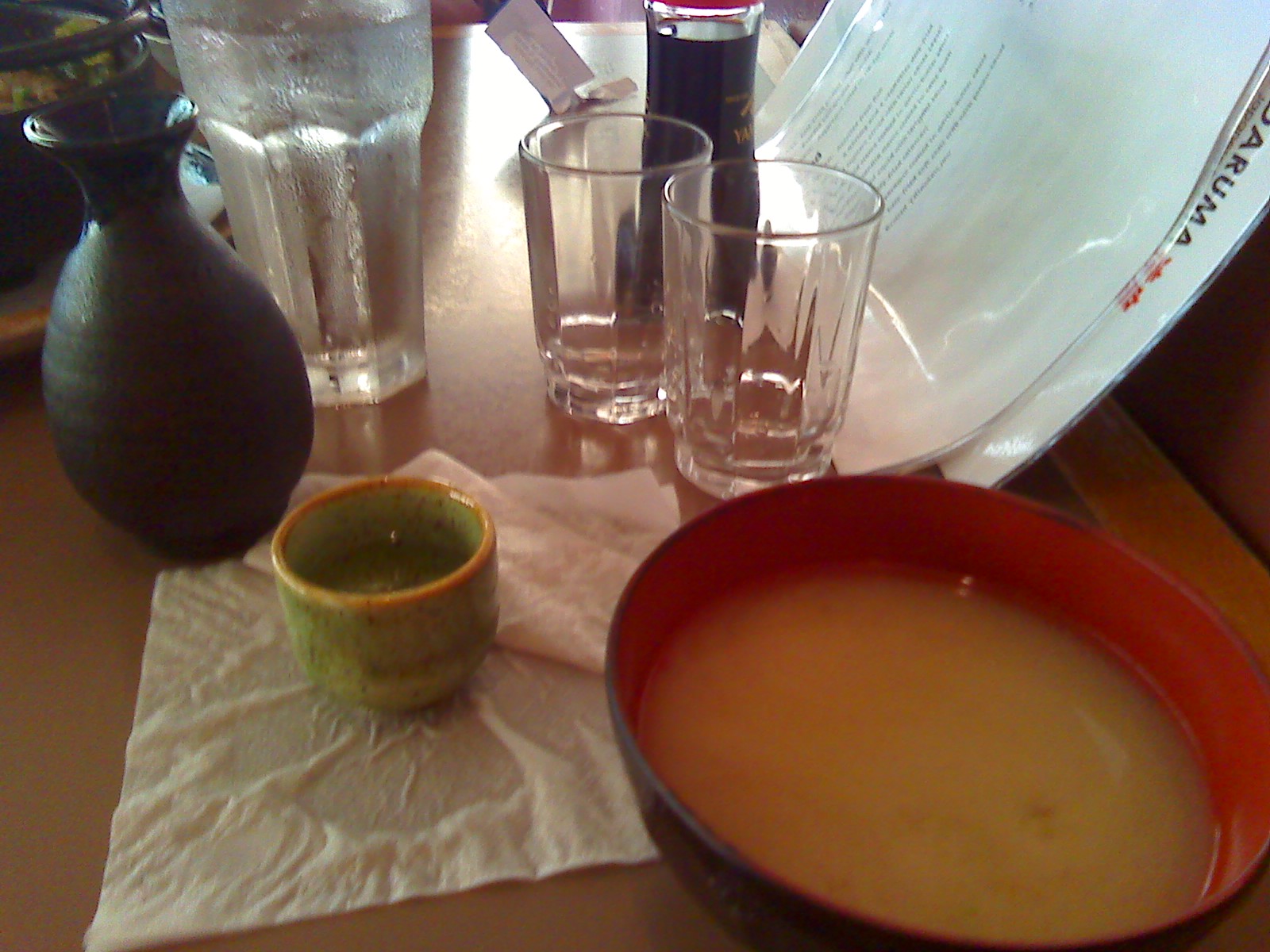
As we sat they brought out little bowls of miso soup. Really good miso, they got the ratio of miso-to-dashi right. Instead of wakame which is typically put in miso soup they used hijiki.

Japanese sweet potato fries with spiced mayo.

Puffed pig ears with togarashi soy dipping sauce. Move over potato chips, these little cracklins are fantastic!

Crispy pork with a slow poached egg.
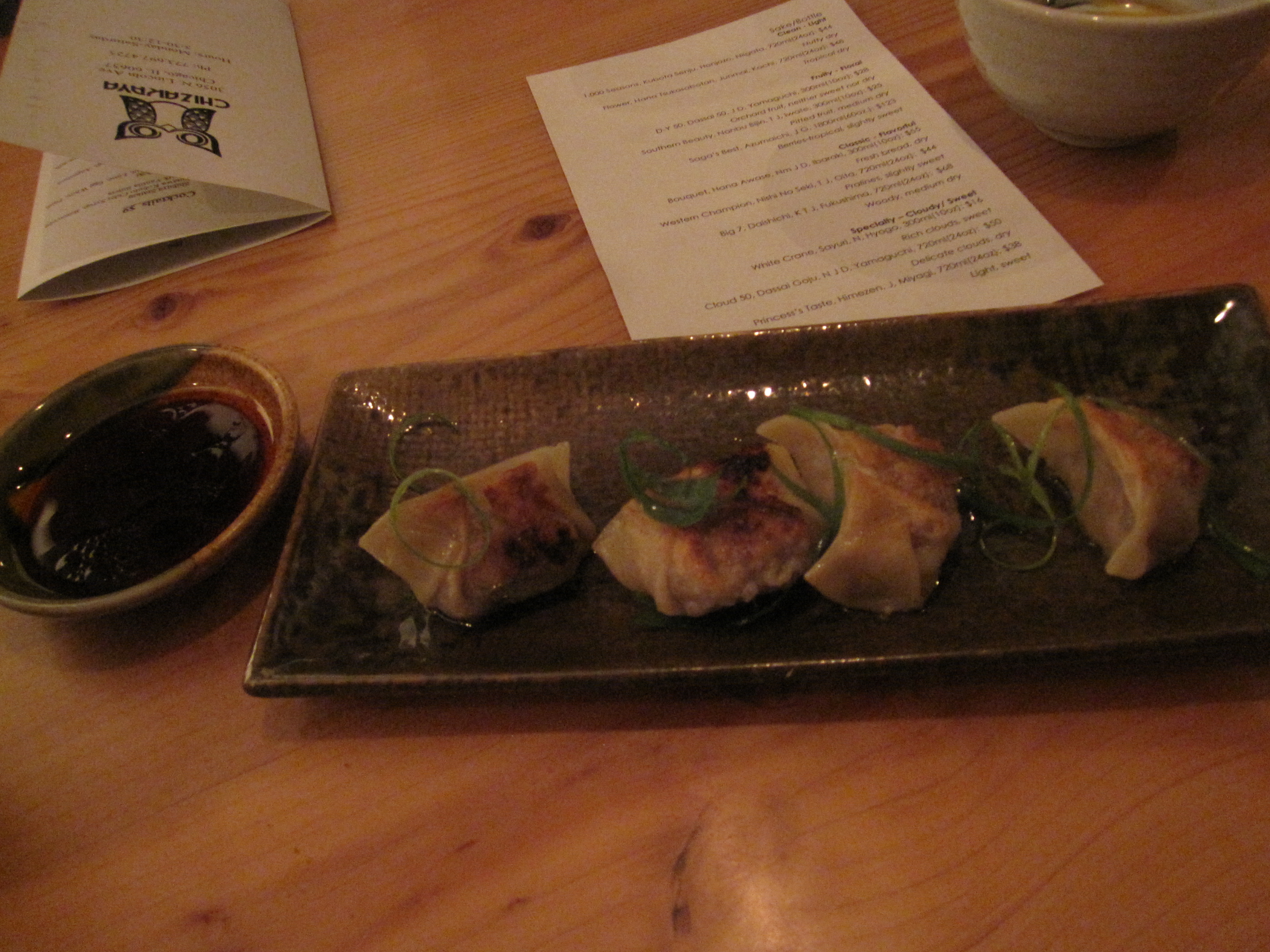
Pork shoulder gyoza. The gyoza could have been a little bit crispier, but the braised pork shoulder filling more than made up for that shortcoming.

Oysters with bacon and shishito. I don’t know if the bacon was over smoked or if they added a little liquid smoke, but there was a bit too much smokiness to this one. The natural sweetness of the beautiful little oysters was lost. Cut back on the smoke and this one is a winner.

Grilled ika togarashi with a yuzu vinaigrette. This was some of the most tender squid I’ve had in Chicago.
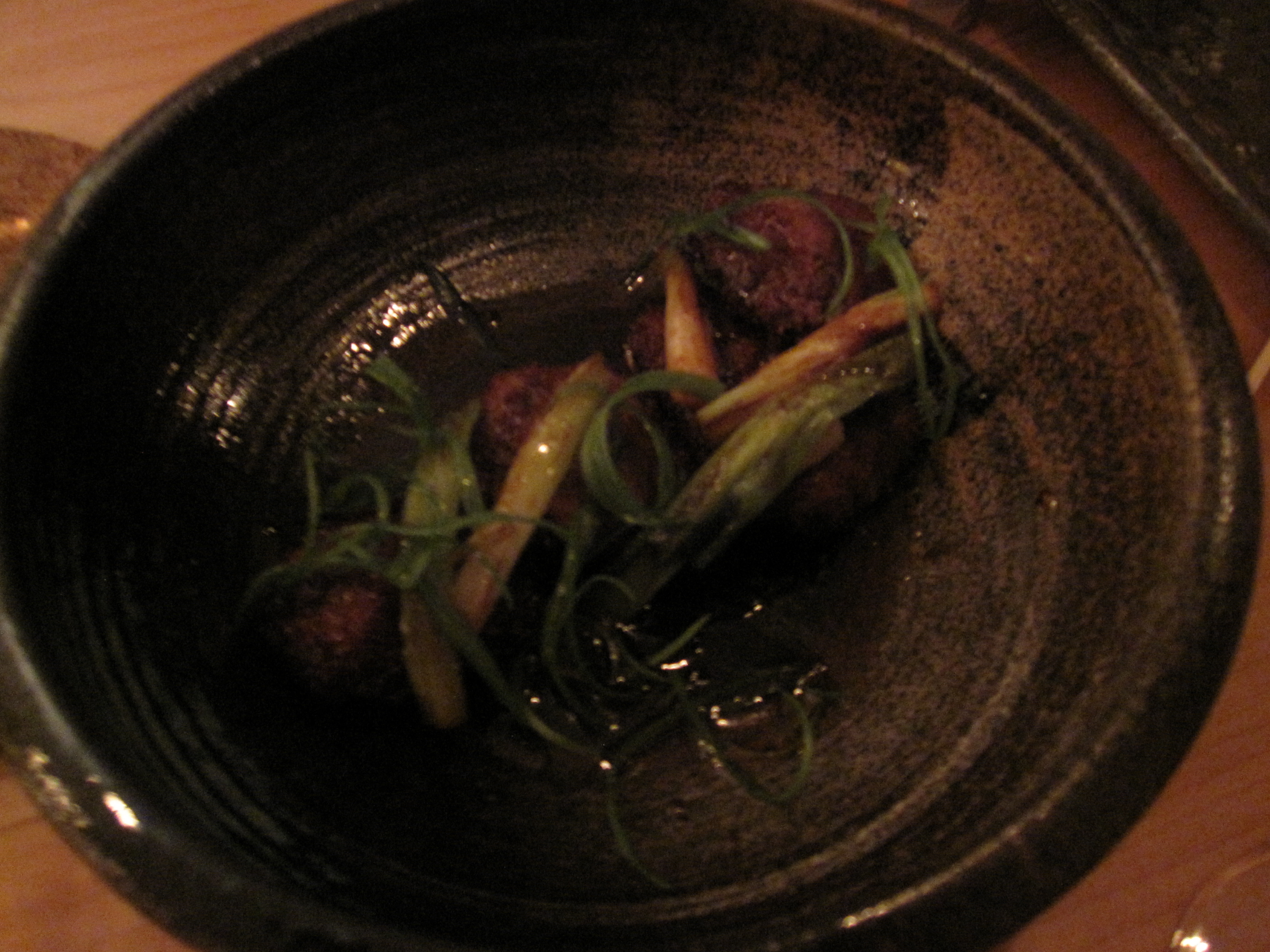
This was one of the night’s specials, duck liver karaage with scallions. Little deep-fried nuggets of ducky deliciousness!
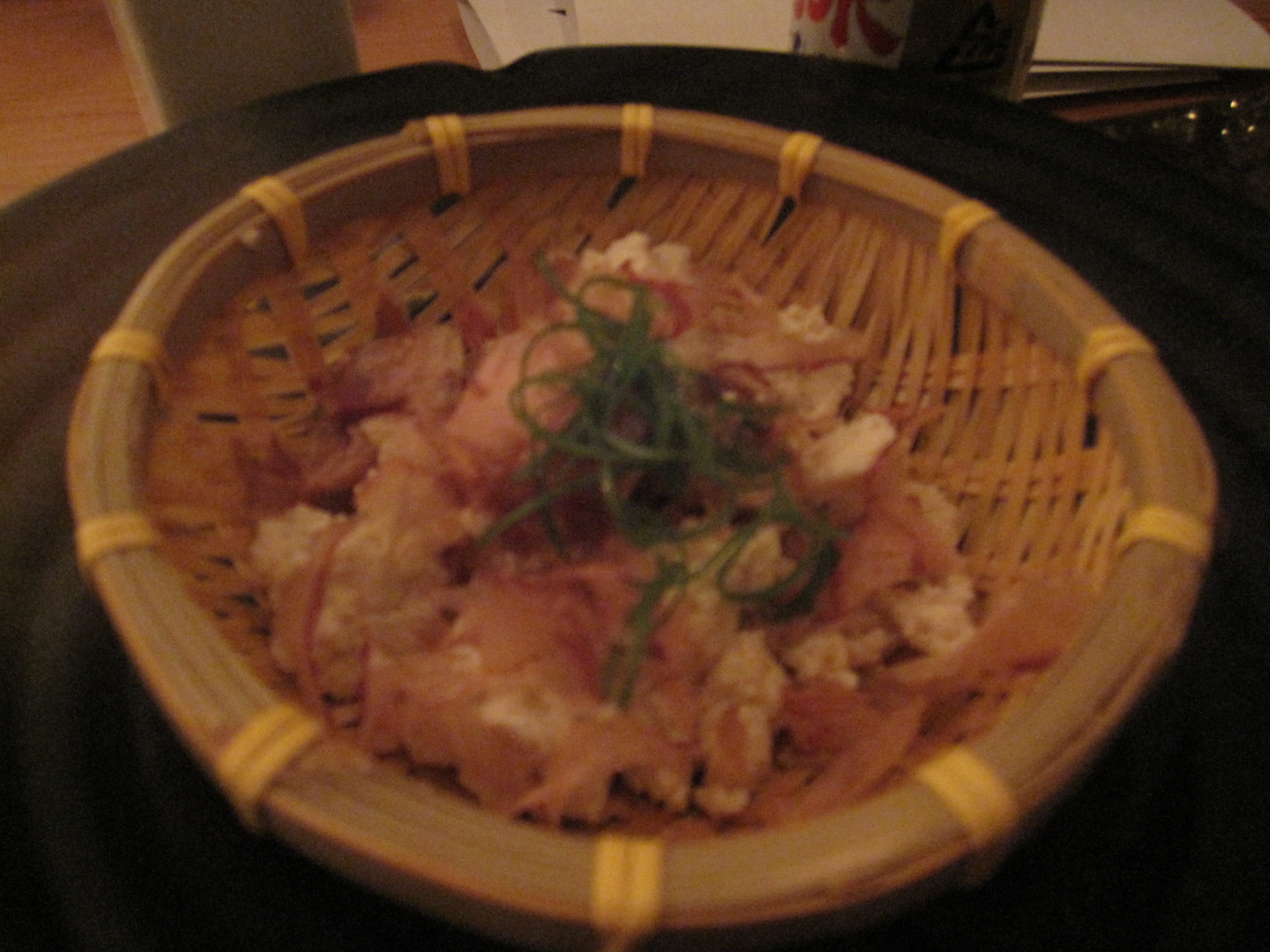
Home-made basket tofu with bonito flakes, scallions, ginger, and soy sauce. You haven’t had tofu until you’ve had a really good home-made tofu. This was a really good home-made tofu. Totally different beast than the store-bought packaged tofu. Very clean, very light, very tasty.

Crispy-braised lamb belly with chopped edamame. This one was another of the night’s specials and quite honestly, one of the most special dishes I’ve ever eaten! I’ve never had lamb belly before and after eating it am wondering why. You see pork belly everywhere as it’s one of the more trendy cuts of meat these days. As much as I love pork belly, and I do love pork belly, I’d drop it in a heartbeat to sink my teeth into some lamb belly. That layer of belly fat may be the most lamby of all lamb flavors that animal has. I absolutely luz it! The only thing that would have made this dish better would be to puree the edamame into a thick sauce instead of leaving it chunky. Otherwise it was perfect.

Now, I’ll show you all of the kushi-yaki (grilled skewers of meat) that we had.
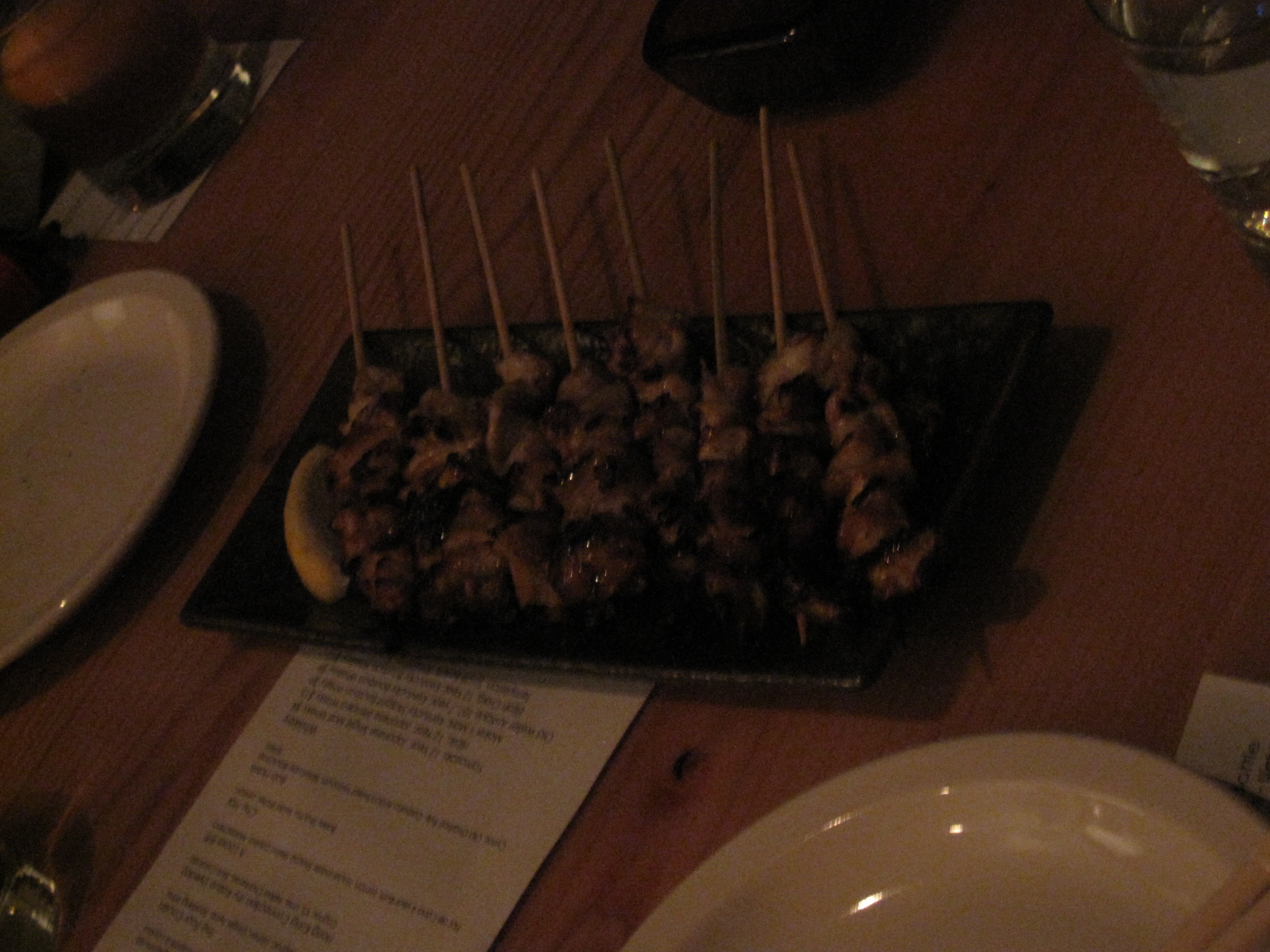
Chicken skin, mother of schmaltz how I love thee!
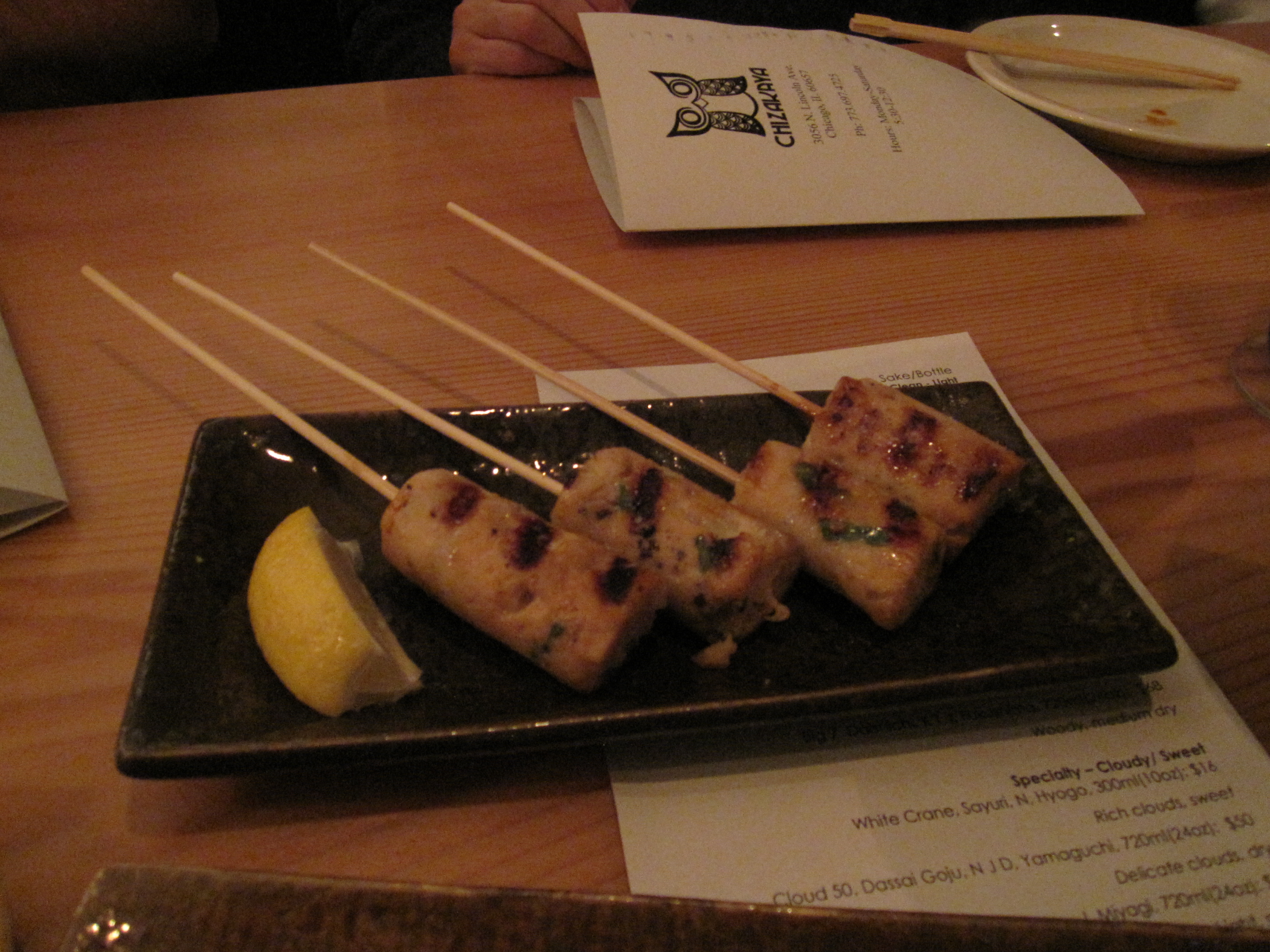
Chicken meatballs.

Chicken gizzards, next to liver and sweetbreads my favorite offal.

Beef heart, surprisingly tender and juicy for such a hard-working and lean muscle.

Beets with shiso, both red and golden.

We also ordered a the ramen and oden. Both of which were, quite honestly, very disappointing.

The ramen came with braised pork, fish balls, a slow poached egg, radish, bamboo shoot, shredded scallions, and some nori. The ingredients were all top-notch, but the noodles were overcooked and soft while the broth wasn’t quite were it needed to be. With everything else so high quality I wonder why they’re using regular old store-bought quality noodles. This bowl of ramen just wasn’t up to standards. If it’s ramen you want, head over to Arami instead.

The oden wasn’t even close to what oden is. Oden should be a dashi broth filled with various fish cakes, potato, hard-boiled eggs, konyakku, etc. It’s something that we make at home a couple of times every winter. This was nowhere near oden. This was a soy-based dashi with overcooked soba noodles, a few spinach leaves, a couple of pieces of potato, some slices of radish, and a few adzuki beans. It wasn’t a terrible noodle soup, but they shouldn’t call it oden and they should be more careful with the noodles.

Now, on to desserts, which were all very creative and well-prepared.
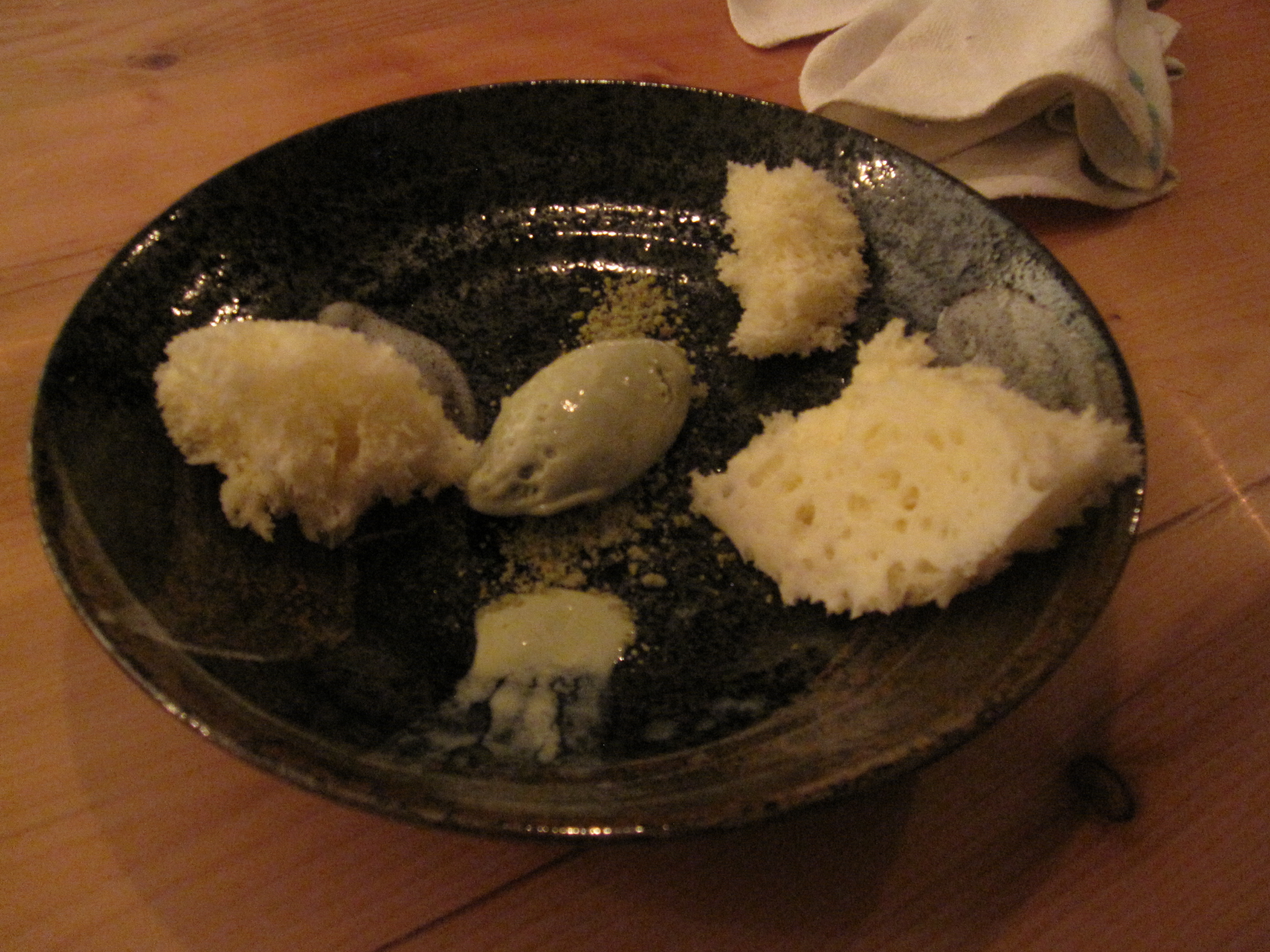
Yuzu cake with green tea ice cream.

Tofu cheese cake with kuro mitsu (black honey) and adzuki bean sorbet. Usually you see adzuki bean ice cream, making it a sorbet was a nice touch.
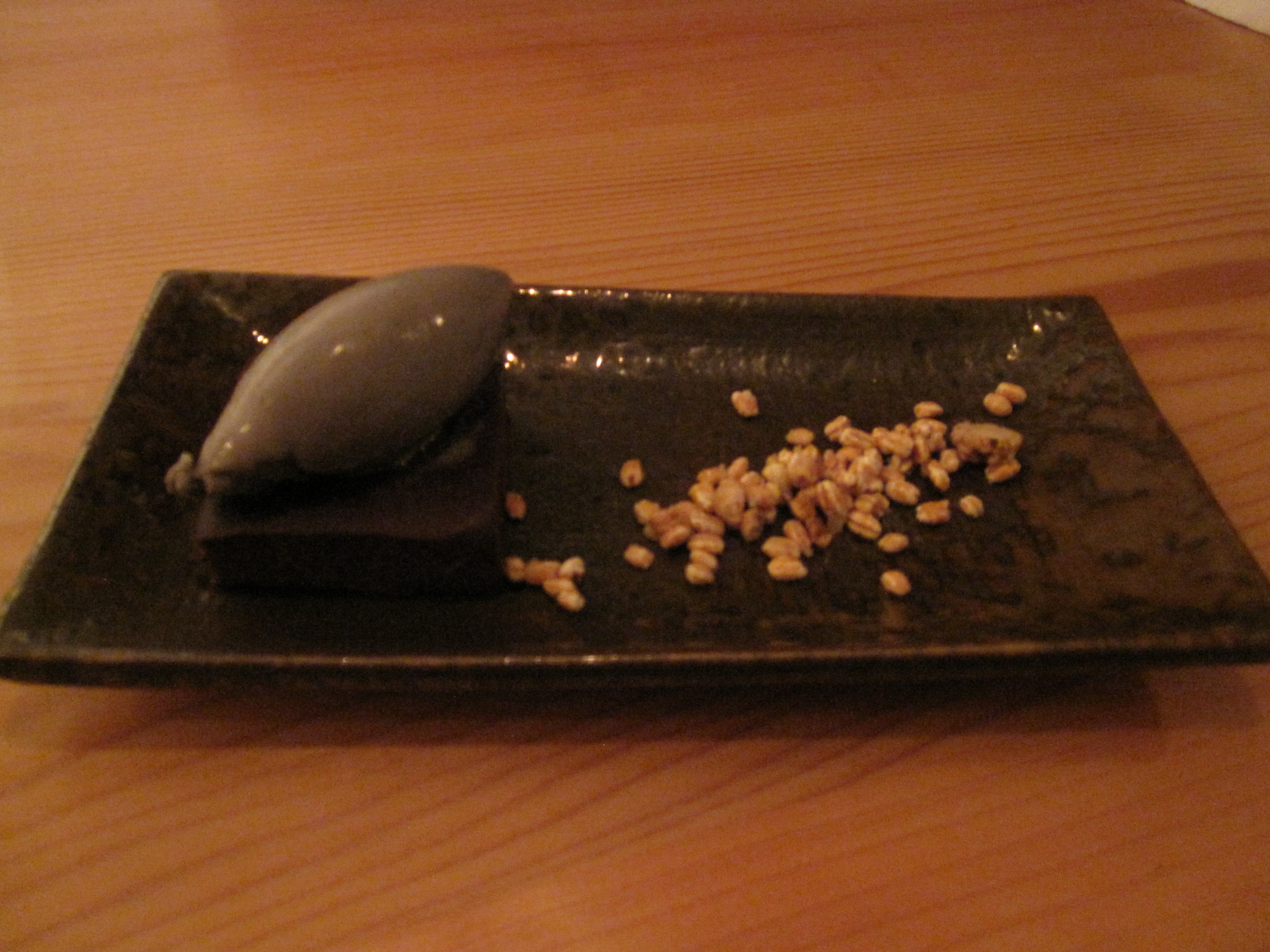
Chocolate ganache with puffed barley and black sesame ice cream.

I will say, that all three desserts are among the best desserts I’ve ever had at a Japanese restaurant.

Overall, Chizakaya is a fun atmosphere with great food. There were a couple of lows, oversmoked bacon and poor noodle soups, but the rest of the food was outstanding. Don’t come here expecting a substantial sit-down meal. Come here expecting a great list of sake, beer, and cocktails with delicious small plates and skewers to match. In that sense, this is a true izakaya. They also use top quality ingredients from local sustainable farms, and you can taste the difference. I will definitely go back, I just have to be more mindful of the amount of sake that I guzzle.
Read Full Post »

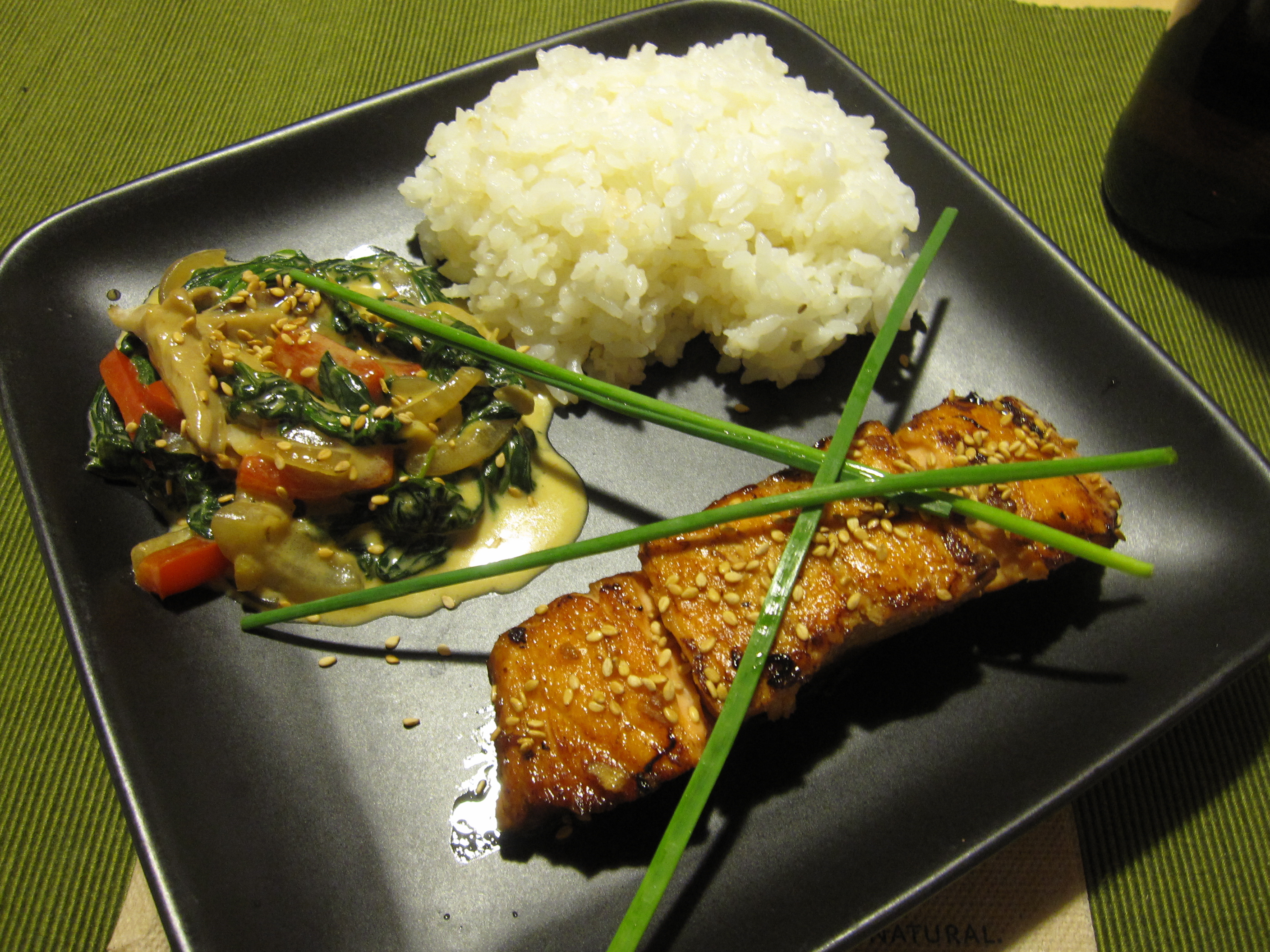
Last night I made a teriyaki-like salmon dish using maple syrup. To go with it I made sort of an Asian flavored creamed spinach with shiitake and pepper. With iron, folic acid, and omega-3’s on my mind, this dish packed them all in and then some.

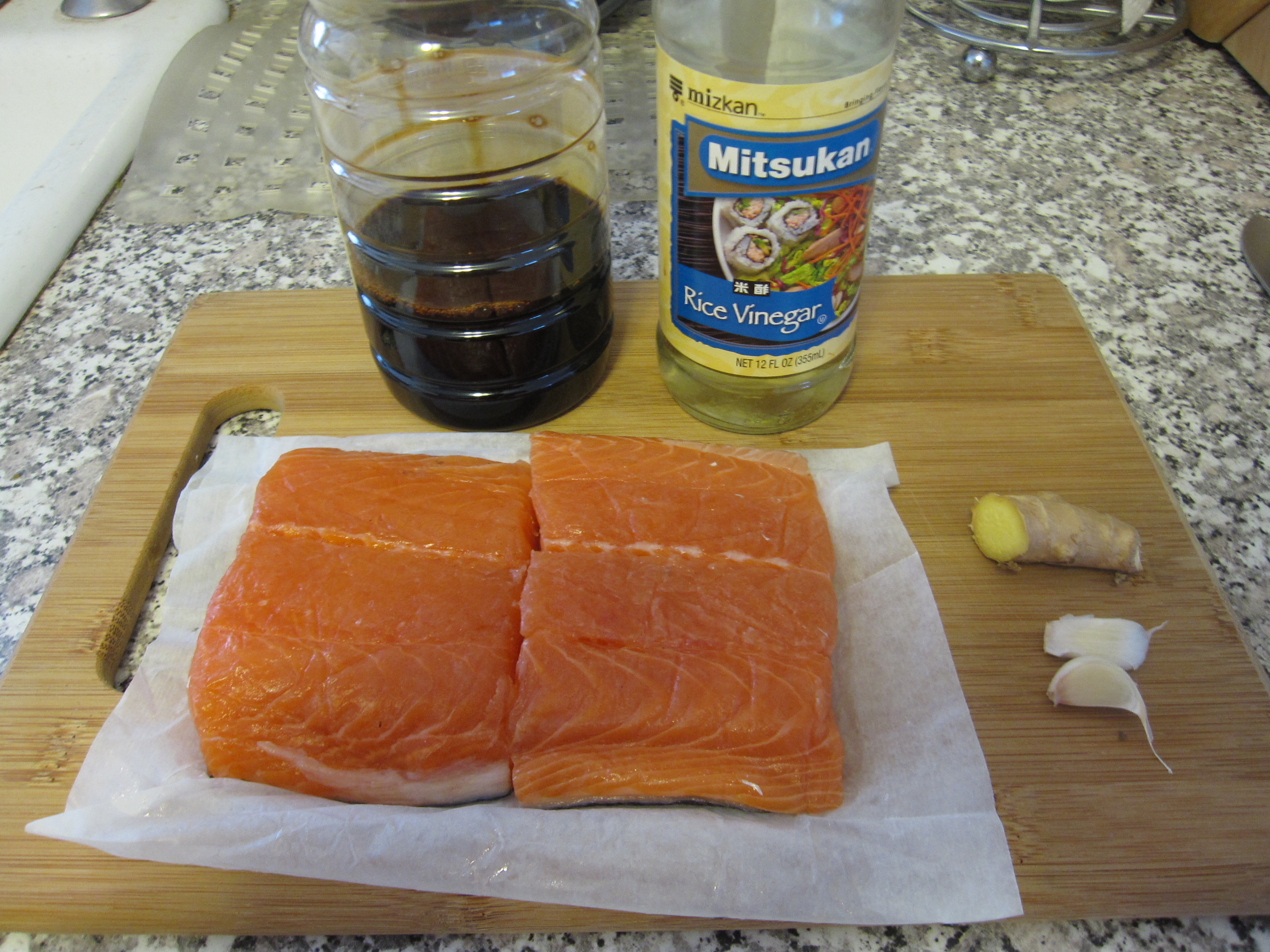
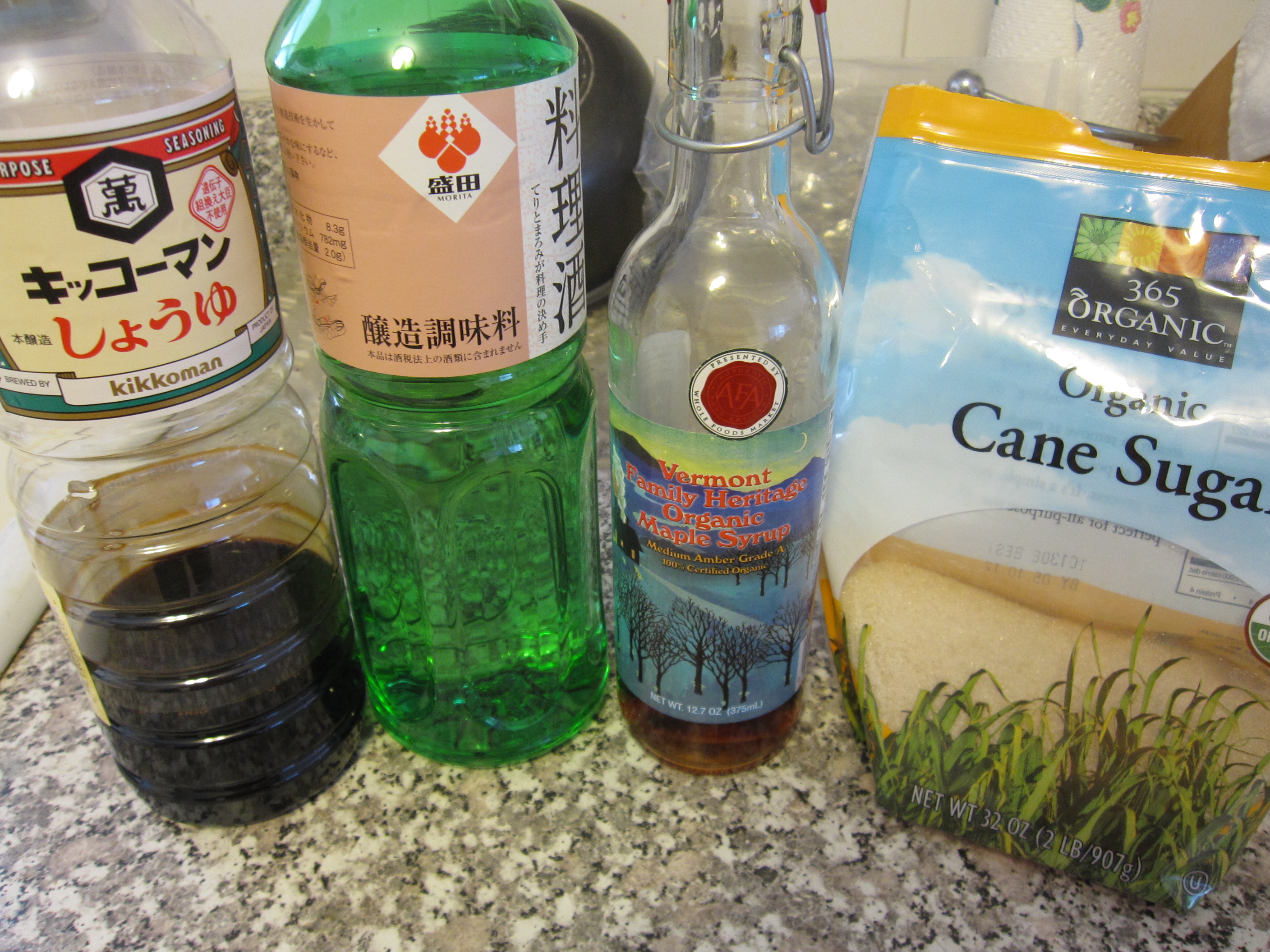
First thing I did was make the sauce. I mixed together 2 tablespoons soy sauce, 1 tablespoon sake, 1 tablespoon maple syrup, and 2 teaspoons of sugar. I set that aside and then marinated the salmon.

The marinade consisted of 1 tablespoon grated ginger, 2 grated garlic cloves, 2 tablespoons soy sauce, 1 tablespoon rice vinegar, and some fresh cracked black pepper. I had two 8 ounce salmon filets that I cut in half, giving me 4 4 ounce filets (check the math on that one). I coated them in the marinade, covered it up, and let it sit at room temperature for an hour.

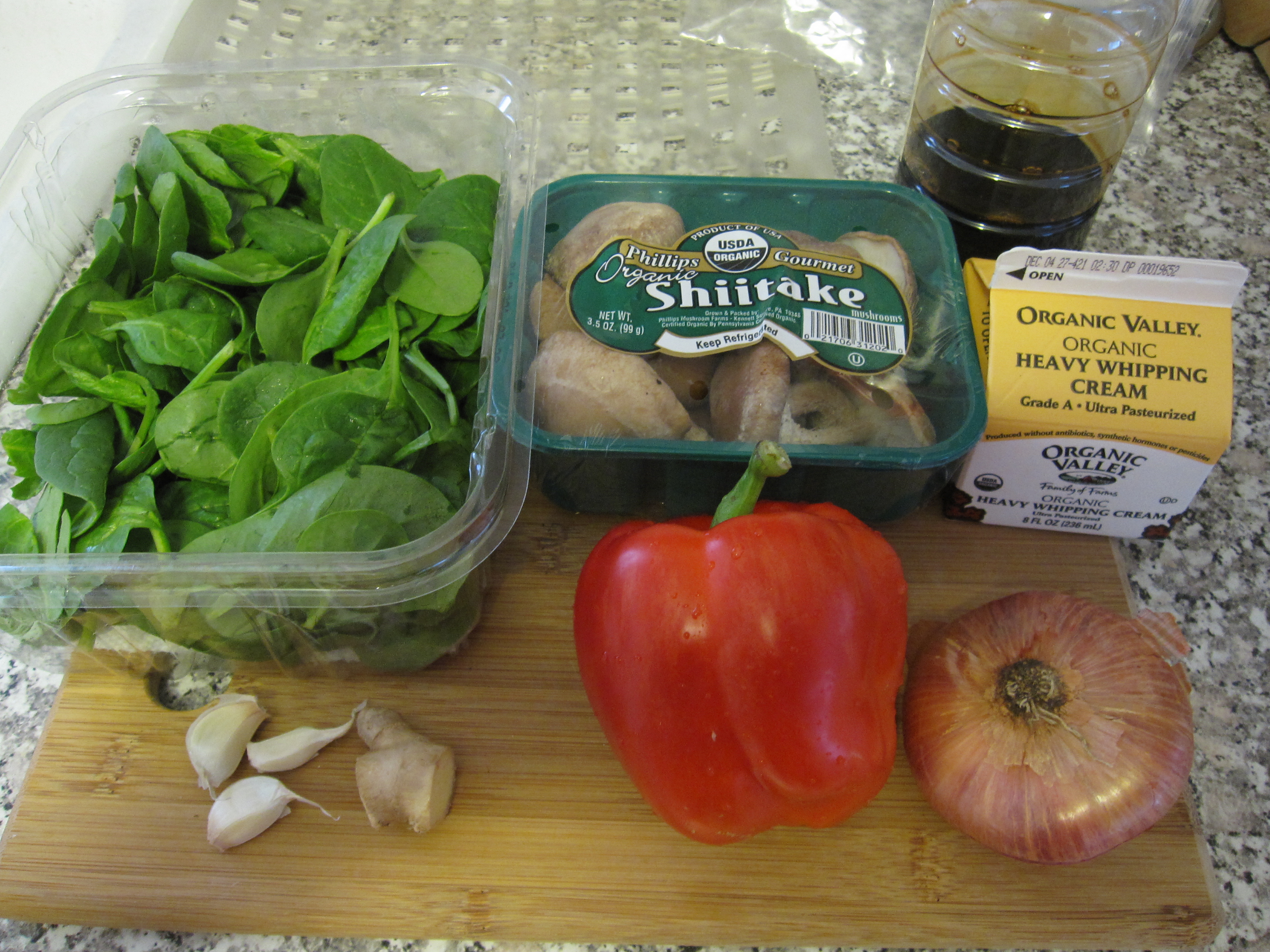
While the salmon was marinating I got the ingredients ready for the creamed spinach. I had a container of spinach, 3 garlic cloves, sliced, 1/2 inch of ginger slivered, 7 shiitake sliced, 1 red bell pepper chopped, 1 small red onion sliced, 1 tablespoon soy sauce, and 1/2 cup of heavy cream.

For the actual cooking I had to do the salmon and spinach at the same time. I’ll write about it separately, but it was a busy 10 minute stretch or so.

I heated up a large skillet over high heat and then poured in 2 tablespoons or so of sesame oil. I laid the salmon in skin-side up and let it cook for about 4 or 5 minutes, until it got a nice crust and easily released from the skillet. I poured the marinade into the maple mixture. When I flipped the salmon filets, after a couple of minutes, I poured the sauce all over each filet and let it cook for a few more minutes. Make sure you fan is on, it’ll get a little smokey. Once the sauce carmelized I turned off the heat and set the salmon on a plate.

In a separate saute pan I heated up 2 tablespoons of sesame oil and added the onion, pepper, shiitake, ginger, and garlic. I sautéed it for about 5 minutes and then added the soy sauce. About 2 minutes later I poured in the cream. Once the cream had reduced a little I added the spinach by large handfuls until it all wilted down and the cream had thickened up into a nice sauce.

Of course, some white rice on the side never hurt anyone. I garnished everything with some toasted sesame seeds and whole chives.

Read Full Post »

I try to make quinoa a regular in my diet, but don’t make it as often as I should. Being one of the world’s superfoods, as well as being relatively inexpensive, I think everyone should eat it at least a few times a month. I’m just waiting for the McQuinoa to show up on menus. Although, to get most Americans to eat it they’d probably have to use burger patties as the bun.

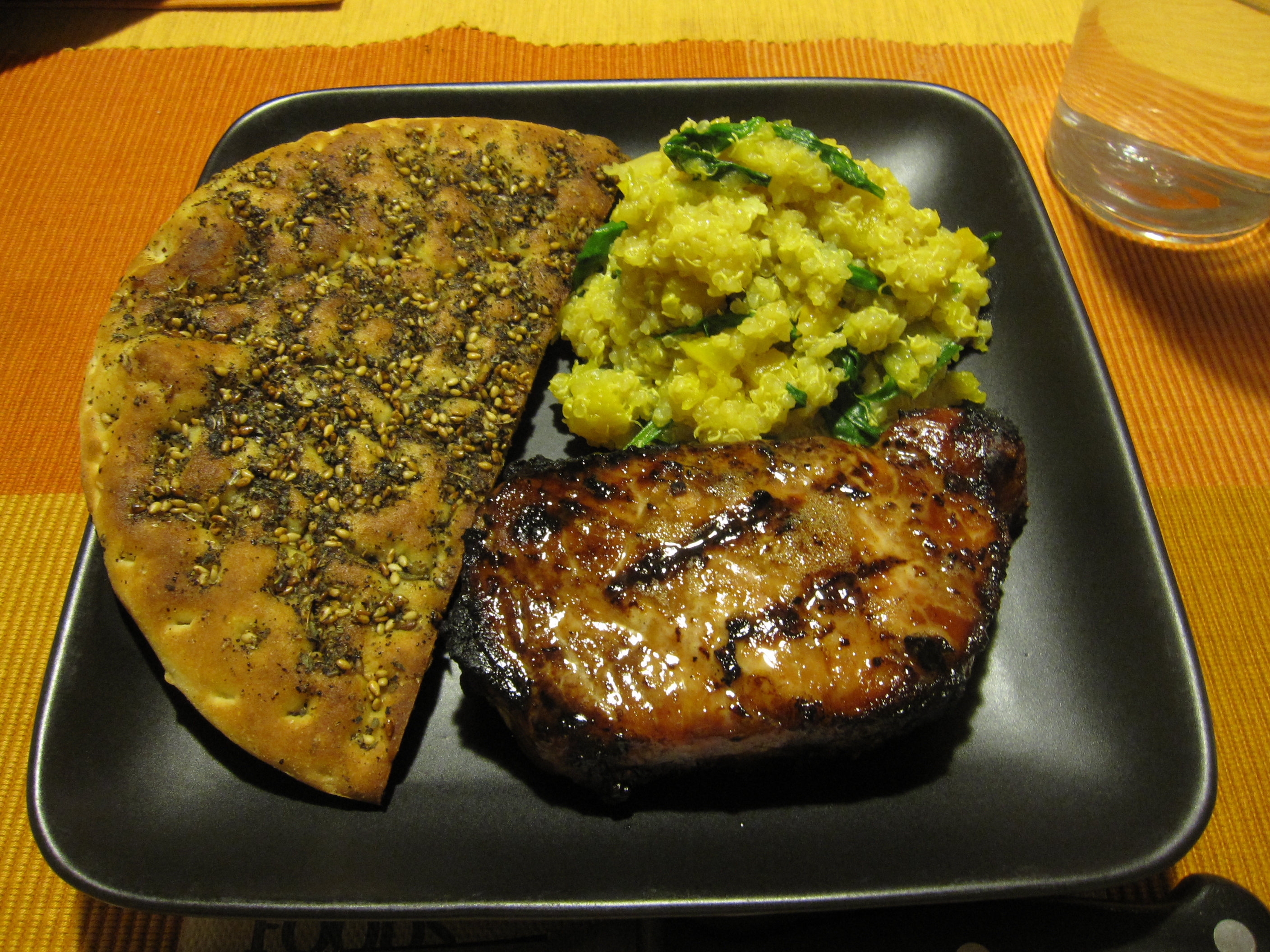
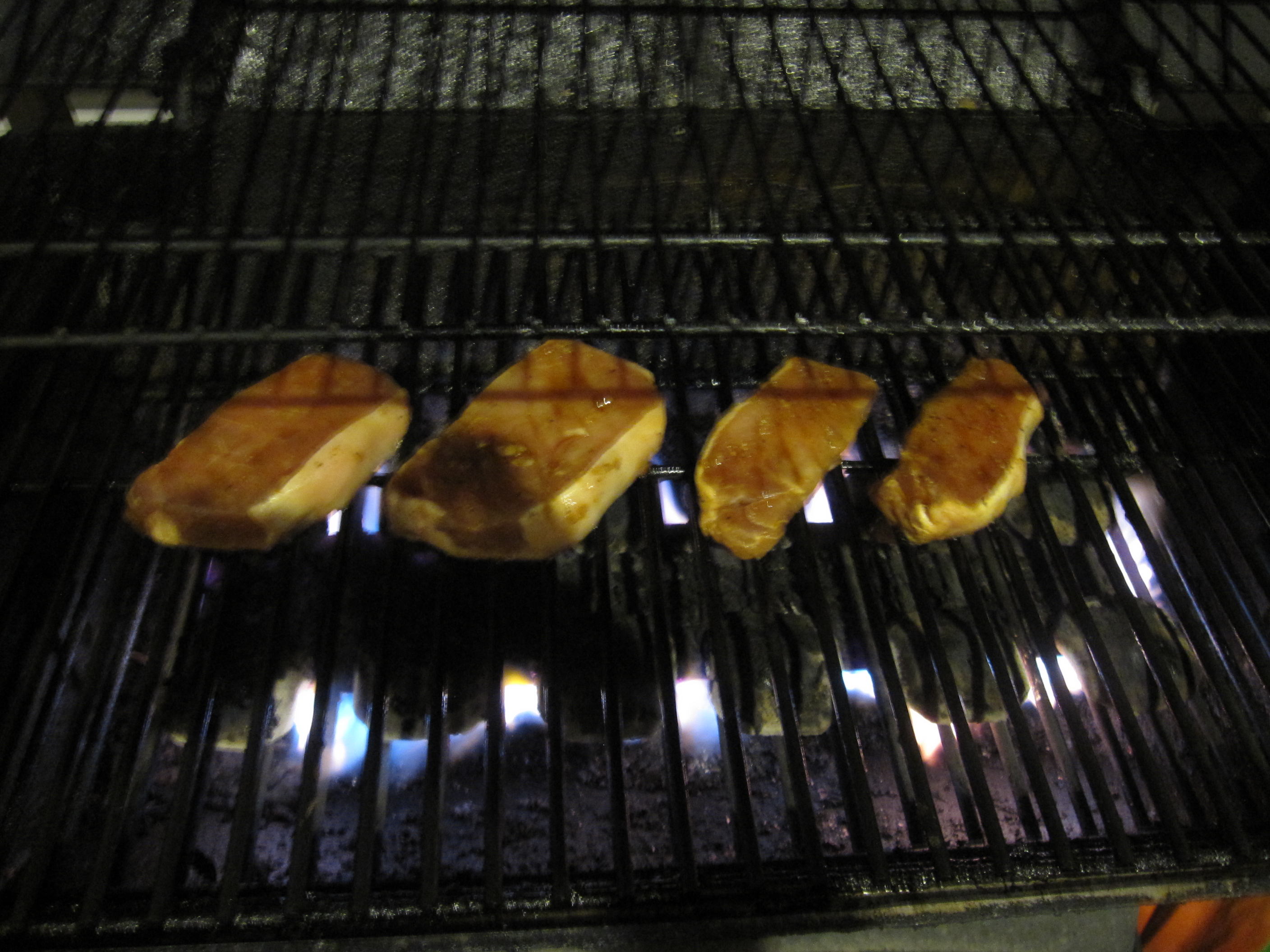
First thing I did was marinate the pork chops. I mixed together 2 tablespoons of sake, 1 tablespoon of mirin, 3 tablespoons of soy sauce,1/2 inch ginger grated, a large garlic clove grated, and some cracked black pepper. I turned the pork around in the marinade a few times to coat it entirely, then I covered it and set it in the fridge for about 2 hours. I turned it a couple of times while marinating. I also took it out about 30 minutes prior to grilling to bring it to room temperature, this ensures that it cooks more evenly.

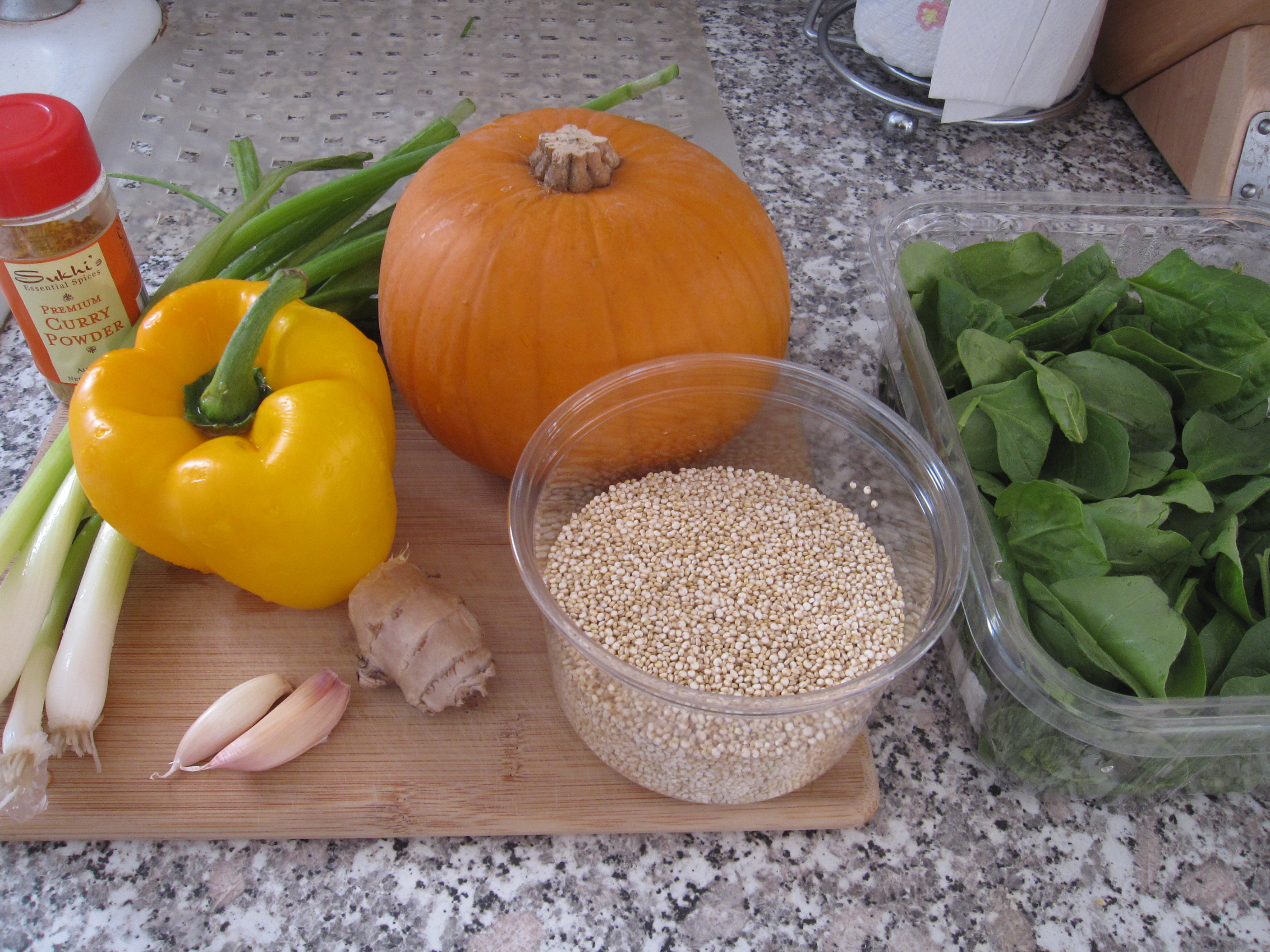
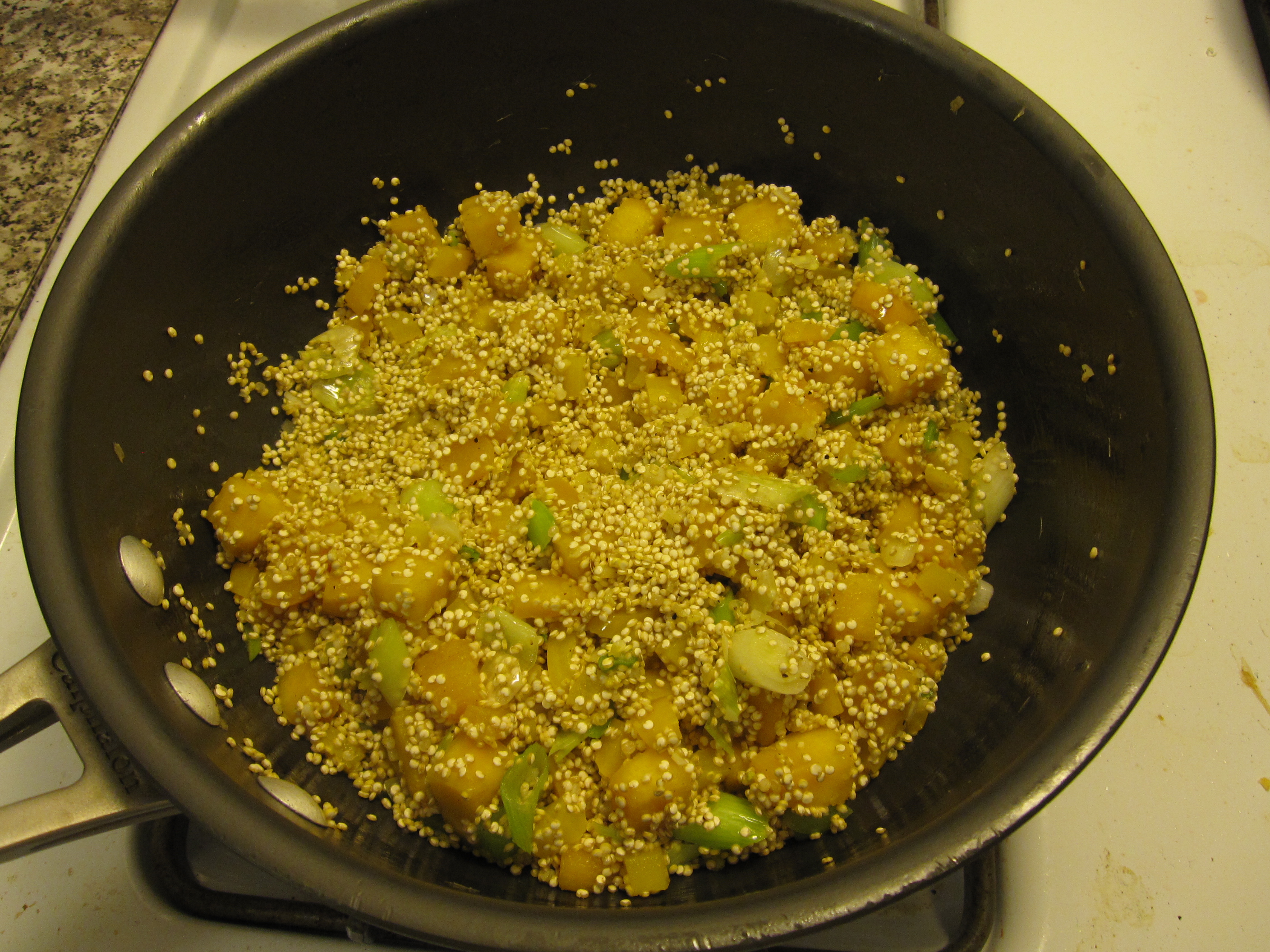
For the quinoa I used 1 tablespoon of curry powder, 6 green onions sliced, 1 yellow bell pepper sliced, 2 garlic cloves minced, 1/2 inch of ginger minced, 1/3 of a small pumpkin (I just eye-balled how much I wanted to use, I have no idea how much it actually was), 1 cup of quinoa, and a couple large handfuls of baby spinach.

In a small sauce pan I brought 2 cups of water to a boil. While the water was getting hot, I heated up my medium pan and poured in about 2 tablespoons of sesame oil. I threw in the pumpkin, bell pepper, and green onions. I let them saute for about 5 minutes and then added the garlic and ginger. While the garlic and ginger started to heat up, about a minute, I thoroughly rinsed the quinoa and then added it to the pan along with the curry powder, a touch of salt, and some black pepper. I stirred it around for about 3-4 minutes so that the quinoa would start to give off a slight nutty aroma. After that I poured in the boiling water, covered the pan, and let it simmer over medium-low heat for about 15 minutes. Once that 15 minutes was up I turned off the heat and let it rest for another 10 minutes.

While the quinoa was simmering I got the grill hot and grilled up the pork chops. It took about 5-6 minutes per side.

Just before serving I toasted my last piece of manakeesh from the Tannourine Bakery. I also fluffed up the quinoa with a fork and then mixed in the baby spinach.

If I were to make this recipe again I would do two things different. Instead of using 1 tablespoon curry powder I would use 1.5-2 tablespoons, or maybe a touch of cinnamon. I would also squeeze a lemon or lime into the quinoa as I stir in the spinach. The quinoa was good, just much more lightly flavored than I would have liked.

Read Full Post »

The other night Yuki and I cooked together. We made one of my favorites, chicken hijiki rice, along with some vegetables that we needed to use up.

Making the rice is easy as can be. We used 1.5 tablespoons of dried hijiki seaweed, 4 shiitake sliced, 1 carrot sliced in half moons, and 1/2 pound of skinless chicken thighs. While I rinsed off 2 cups of rice and cut up the vegetables Yuki cut up the chicken and quickly sauteed it in sesame oil. After filling the rice cooker with the proper amount of water for 2 cups of rice I put the hijiki in and let it sit for about 15 minutes. Then we tossed everything else in, turned on the cooker, and let it go.

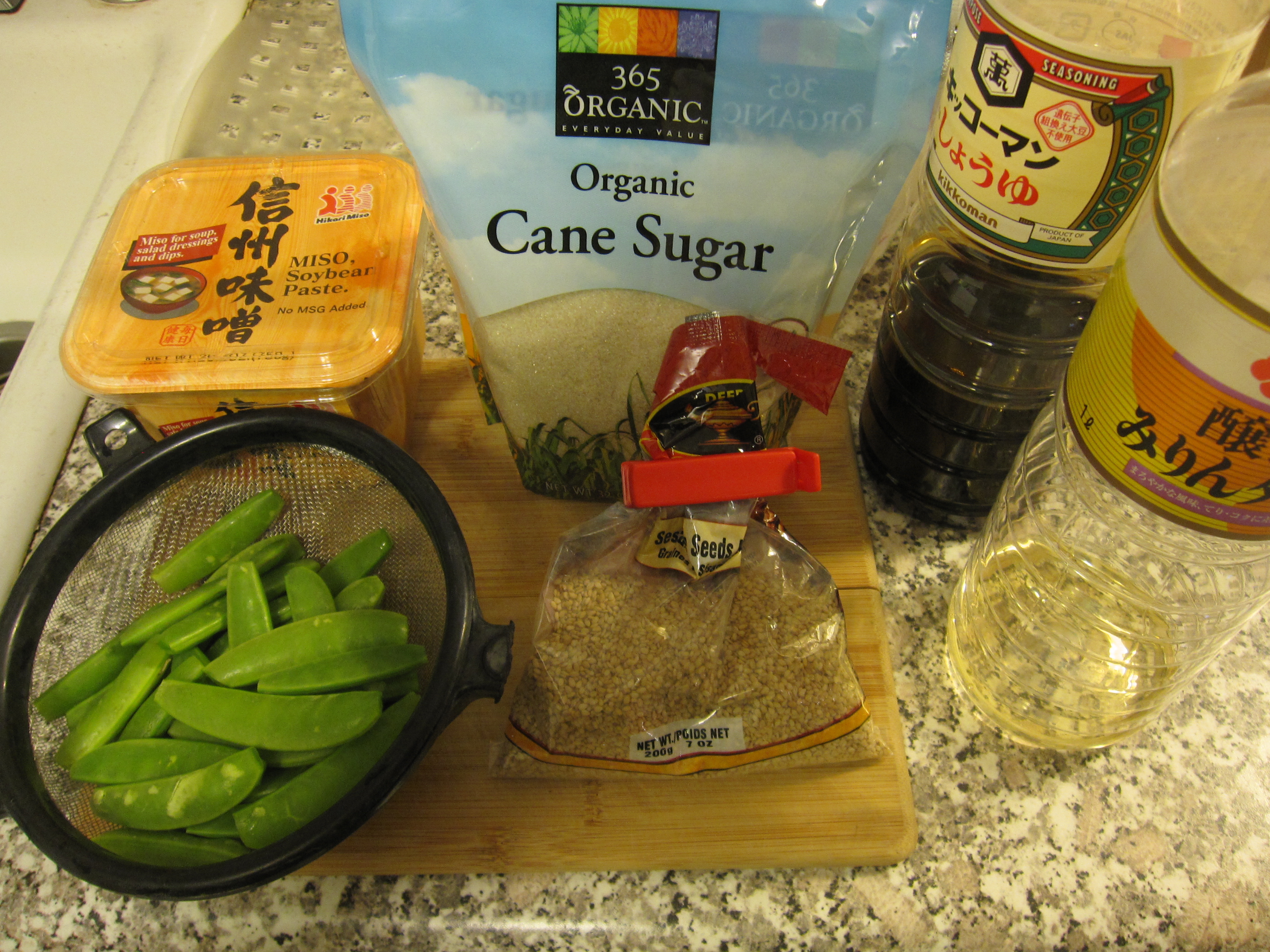
I made a sesame dressing for some pea pods that were in our fridge. I used 1 tablespoon of miso paste, a pinch of sugar, 1 tablespoon of sesame seeds, 1 tablespoon of soy sauce, and 1/2 tablespoon of mirin.

I toasted the sesame seeds in a dry skillet for a few minutes until they turned a golden brown and started to give off their fragrance. Then I ground them with my pestle and mortar. I added the rest of the ingredients, mixed them all together, and set it aside. I simply steamed the pea pods for about 4 minutes when the rice was ready. Then I tossed them with the sesame dressing.

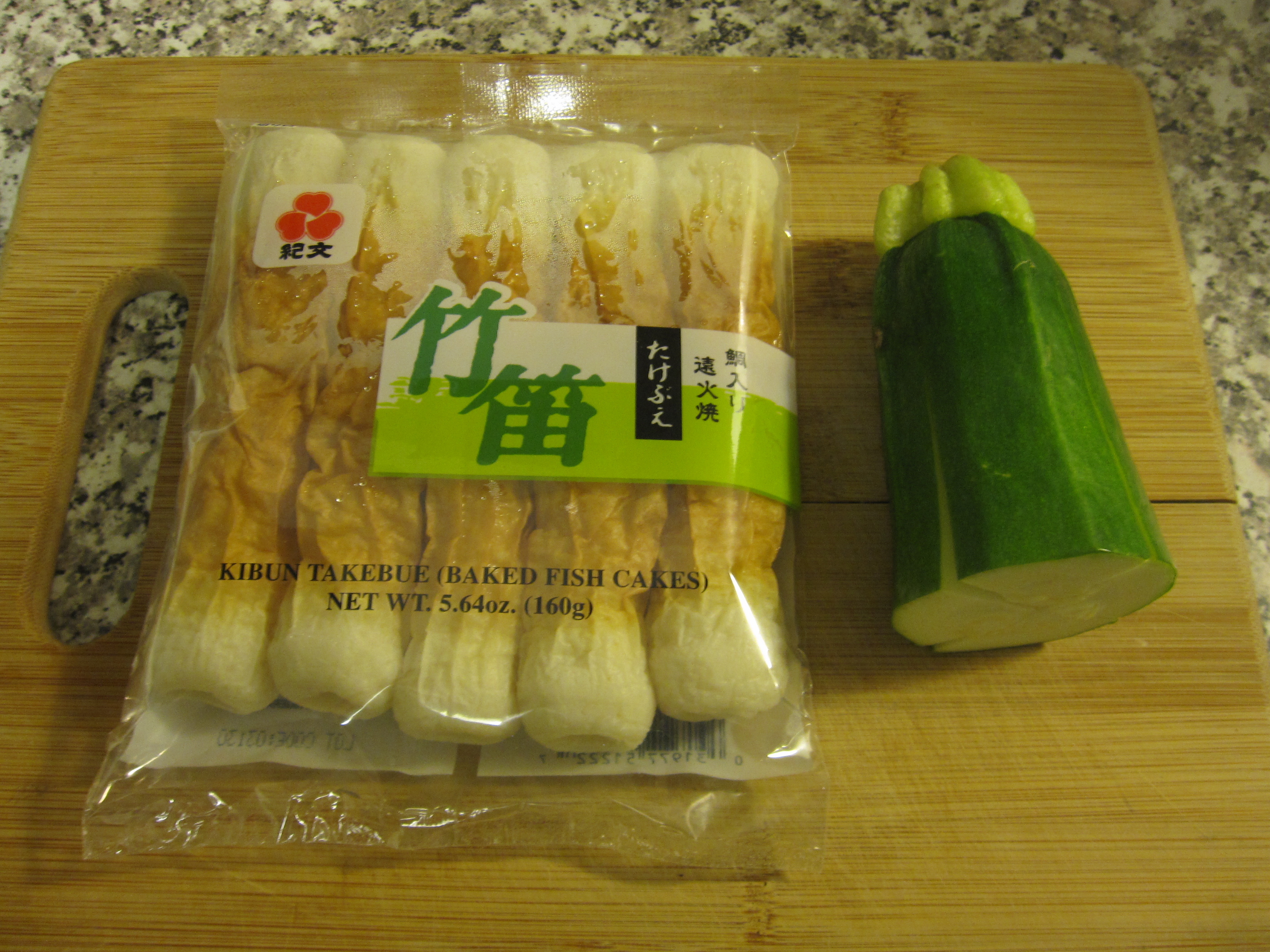
We also had some chikuwa and 1/2 a zucchini to use up. Chikuwa are tubular, hollow fish cakes that have been baked or grilled. I sliced the zucchini into long sticks and stuffed the chikuwa with them. Once the rice was ready and the pea pods steaming I just put them in the toaster oven and toasted them for about 6 minutes. I drizzled them with the sesame dressing as well.

While I was doing that Yuki made some miso soup. I didn’t watch her make it, but she put in it sliced onion and wakame.

Read Full Post »

Last night I made another Japanese flavored spaghetti dish using sake hogushi and aonori. Sake hogushi is simply cooked salmon that’s been flaked into small “crumbs” and jarred. Aonori is a type of nori, Japanese algae, that’s been ground into a powder. The two ingredients can be used in a variety of ways like being sprinkled on white rice, mixed into cream sauces or dressings, or used like I did last night to name a few. Great ingredients to have on hand and available at any Asian grocer.

First thing I did was get my side vegetables ready. I had three beefsteak tomatoes and 1 large Japanese eggplant. I sliced the top off the tomatoes, sliced the eggplant in half length-wise, and then cut the eggplant into 2-3 inch pieces. I coated the tops of the vegetables with panko, then drizzled some olive oil on top, then sprinkled some aonori on top of that. I roasted them in a 350 degree oven for about 35-40 minutes, just enough time for me to get the rest of dinner ready.

To make the spaghetti I used butter, the sake hogushi, half on onion sliced, 7 button mushrooms sliced, and 4 garlic cloves. In a large hot skillet I poured about 2 tablespoons of olive oil and then melted 1 tablespoon of butter in that. I added the onion and let it sweat for about 4 minutes. Then, I added the garlic and mushrooms. At the same time I cooked my noodles in boiling water until al dente. The garlic and mushrooms needed about 5 minutes which was about the same amount of time the noodles took. After draining the noodles (I reserved about 1/3 cup of the water) I added about 1/4 cup of soy sauce along with 1/2 cup of the sake hogushi to the onions, garlic, and mushrooms. I let the soy come to boil for about 2 minutes and then added the noodles and reserved water with some black pepper. I let the noodles coat with the sauce and most of the liquid boil off then turned off the heat and covered the skillet.

Then, I took two baby bok choy that I had seperated the leaves of and put them in my steamer for about 4 minutes. That’s just enough time to cook the stems without having the leaves wilt too much.

To serve, I put the baby bok choy on the plate then the spaghetti on top of that. I sprinkled it with some aonori and then put a tomato and some eggplant on the side.

Read Full Post »

Friday night, to me, was the perfect night for grilling. Mid-60’s, clear skies, light breeze. Unlike summer, which I still grill quite a bit, it wasn’t too hot to stand over a hot grill. In light of that, I had to get something on the grill. With organic air-chilled split chicken breasts on sale my mind was made up for me.

I had two big breasts that I slashed the flesh 4 times in each. I did this for two reasons, to allow the marinade to penetrate more meat and to allow them to grill more evenly since they were pretty meaty in the middle. For the marinade, in my small processor I processed up 3 garlic cloves, 2 green onions, 1 inch of ginger, and 2 tablespoons each of soy sauce, mirin, sake, and shiro miso. I rubbed it all into the chicken, covered it, and let it sit in the fridge for an hour.

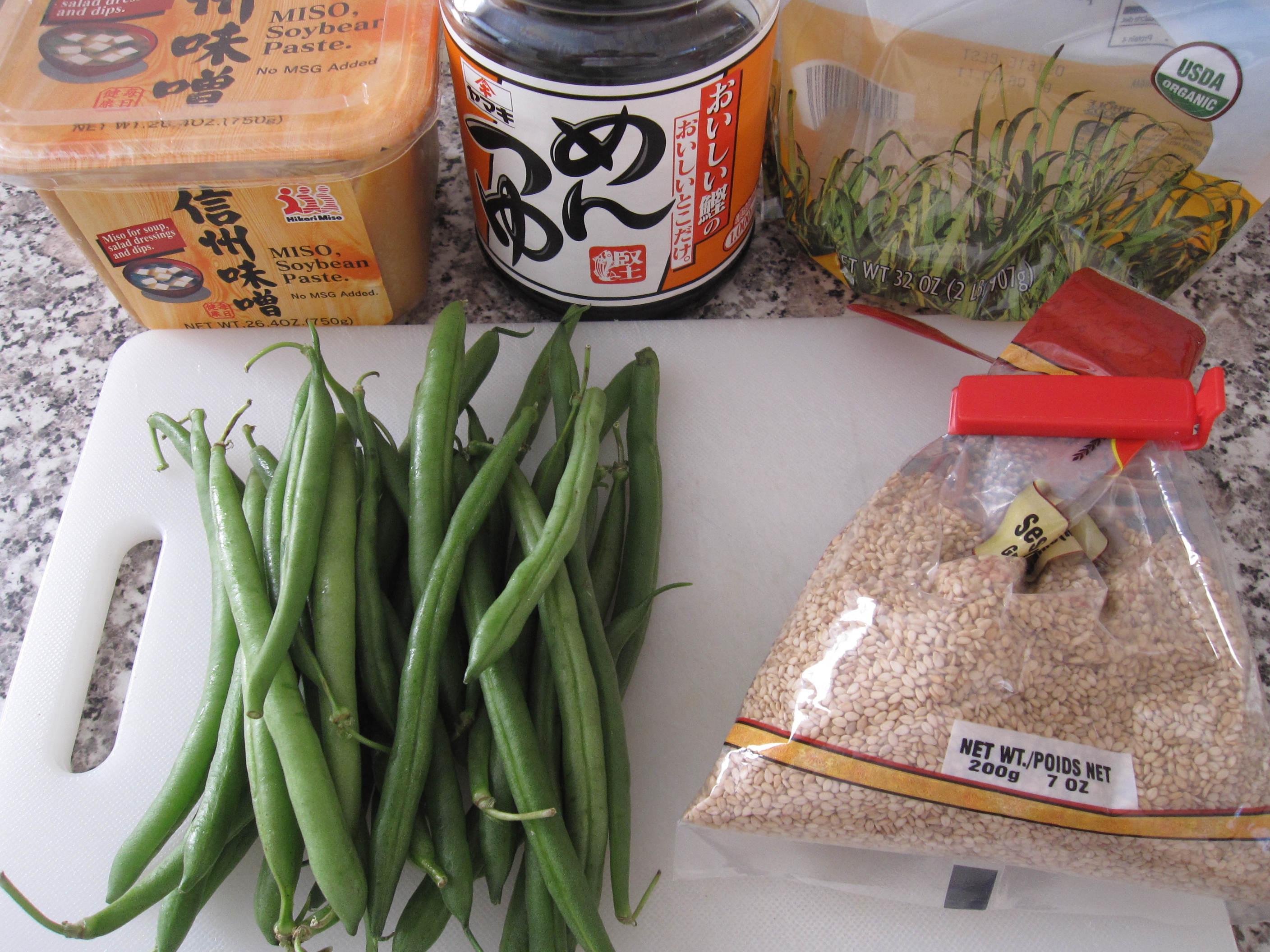
For my side I made haricots vert in miso-sesame dressing. I cleaned up 6 ounces of haricots vert and set them aside. I took 1 tablespoon of sesame seeds and dumped them into a hot skillet and let them toast until they turned a nice golden color and started to release their aroma, about 1-2 minutes. Then I ground them with my pestle and mortar and added a big pinch of sugar, 1.5 tablespoons of seasoned soy sauce (contains mirin and dashi), and 1/2 tablespoon of shiro miso. I mixed that all together and set it aside. Later on, right after taking the chicken off the grill, I steamed the haricots vert for about 4 minutes and then tossed them with the dressing.
I also made some miso soup. I boiled about 2 cups of water and added two skinned and diced yukon gold potatoes, 2 green onions sliced, and three shiitake sliced. While they were boiling I took a bunch of salted wakame and soaked it in water while also cleaning 3 ounces of bean sprouts. I also set aside 1/4 cup of the seasoned soy sauce and a large spoonful of shiro miso.

While the potatoes were cooking in the miso soup I got the grill ready and grilled up the chicken. I got the skin nice and crisp while the meat stayed juicy.

Just before taking the chicken off I poured the seasoned soy into the miso soup and added the sprouts and wakame. Right after taking the chicken off I mixed the miso into the soup and then, like I said earlier, steamed the haricots vert. I took some shichimi togarashi and crushed black and white sesame seeds and sprinkled them all over the chicken. I served everything with white rice.

Read Full Post »

Yesterday I saw some really nice coho salmon on sale that just came in that morning. Since I haven’t cooked salmon in a while I took that as a sign that it’s time to do it up again. I decided to keep it very simple and use some Japanese flavors to appease my wife.

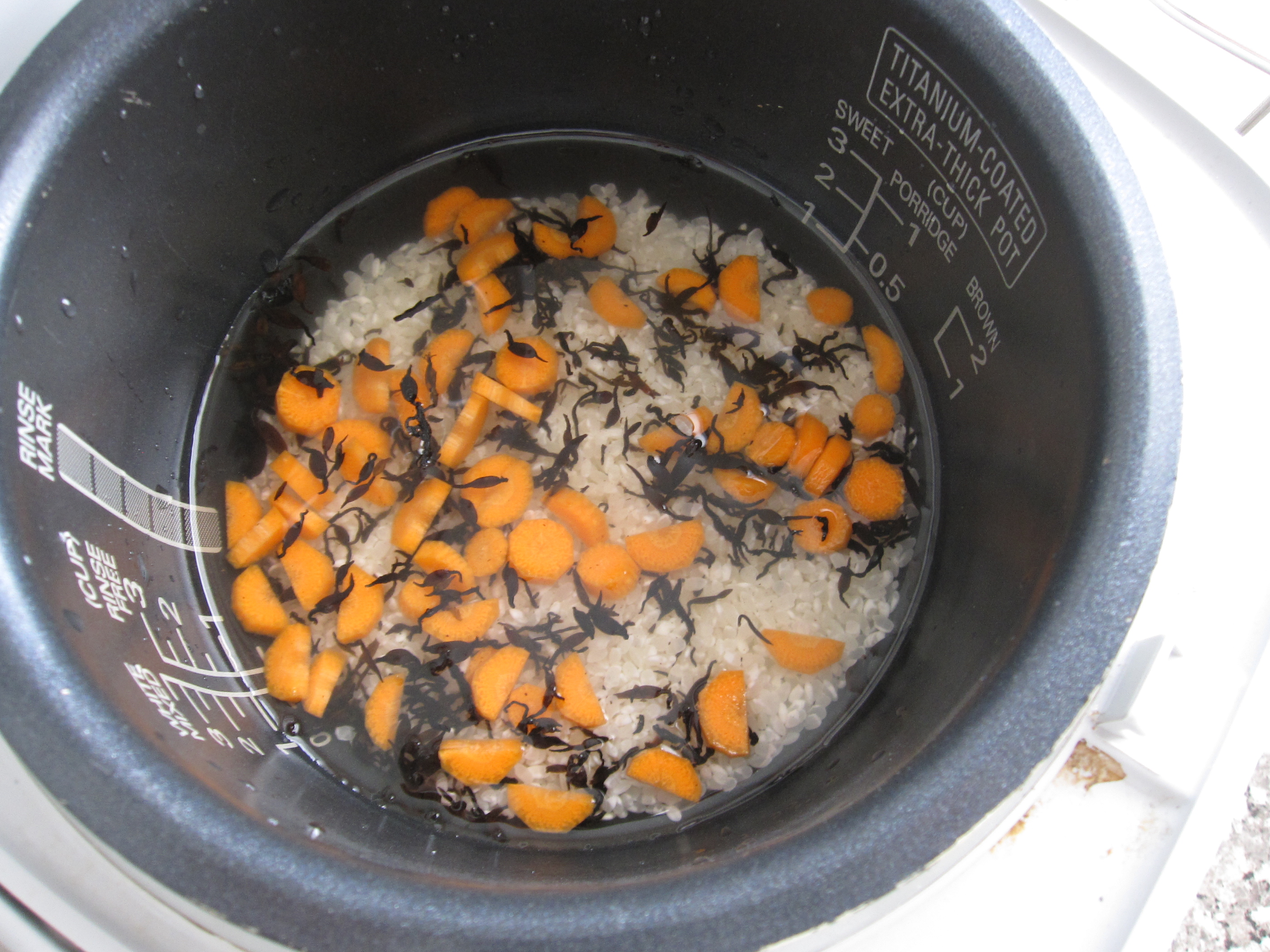
After lunch I got the rice ready. I rinsed 1 cup of rice and threw it in the rice cooker like normal, then added a couple of large pinches of dried hijiki seaweed and a diced carrot. I let it sit for about a half hour to let the hijiki re-hydrate and flavor some of the water. Then I turned on the machine and let the rice cook. When it was finished I turned it off, mixed everything together, and let it cool to room temperature.

Closer to dinner time I made my teriyaki sauce. In a small saucepan I gently heated 3 tablespoons each of soy sauce, sake, and mirin along with 1 tablespoon of sugar. I let it heat just until the sugar was completely dissolved and turned off the heat before it came to a boil. I let that cool to room temperature.

Here’s my 20 ounce filet of coho salmon. I cut it into 4 equal portions and marinated it in the teriyaki sauce for about 45 minutes at room temperature.

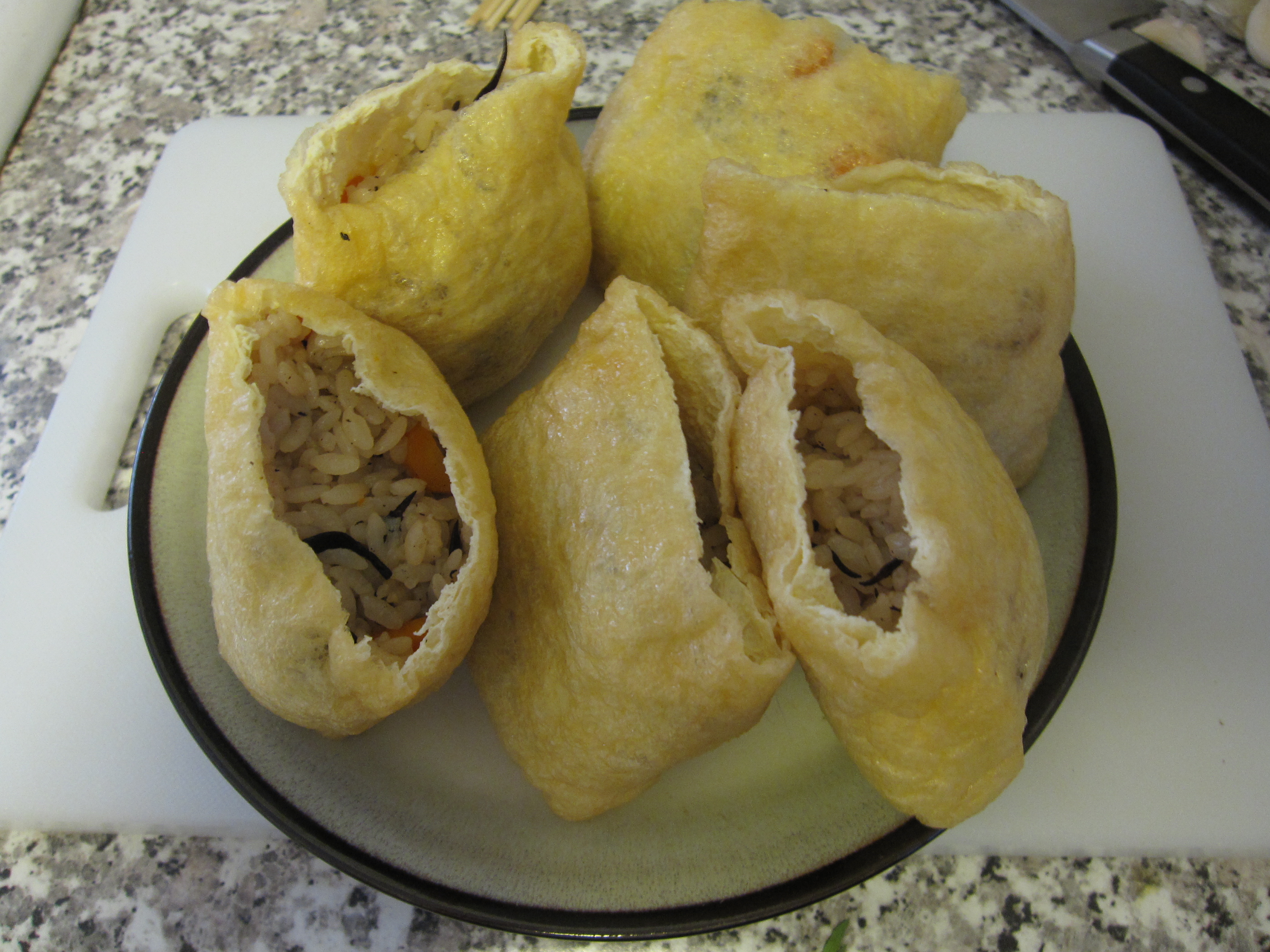
While the salmon was marinating I got the abura-age ready. I had a pack of three here. I cut them in half and rinsed them off with some boiling water. They very oily and the boiling water rinsed a majority of that oil off. Then the packages open up nicely for easy stuffing.

I stuffed them equally with the rice mixture and then sealed them. I didn’t have any toothpicks, so I cut down some bamboo skewers to do the job. In a saute pan I brought 1/4 cup of water to boil with 1/4 cup of seasoned soy. The soy is seasoned with a little dashi and mirin. Once lightly boiling I put the packets in, covered it, and turned the heat to low. This lets the broth flavor penetrate while heating up the rice. I let it go for about 10 minutes then turned off the heat and let it sit until everything was ready.

I also placed the salmon under the broiler, starting with the skin-side up. About 5 minutes later I turned it over, basted the top with the marinade left in the dish, and let it broil for another 5 minutes.

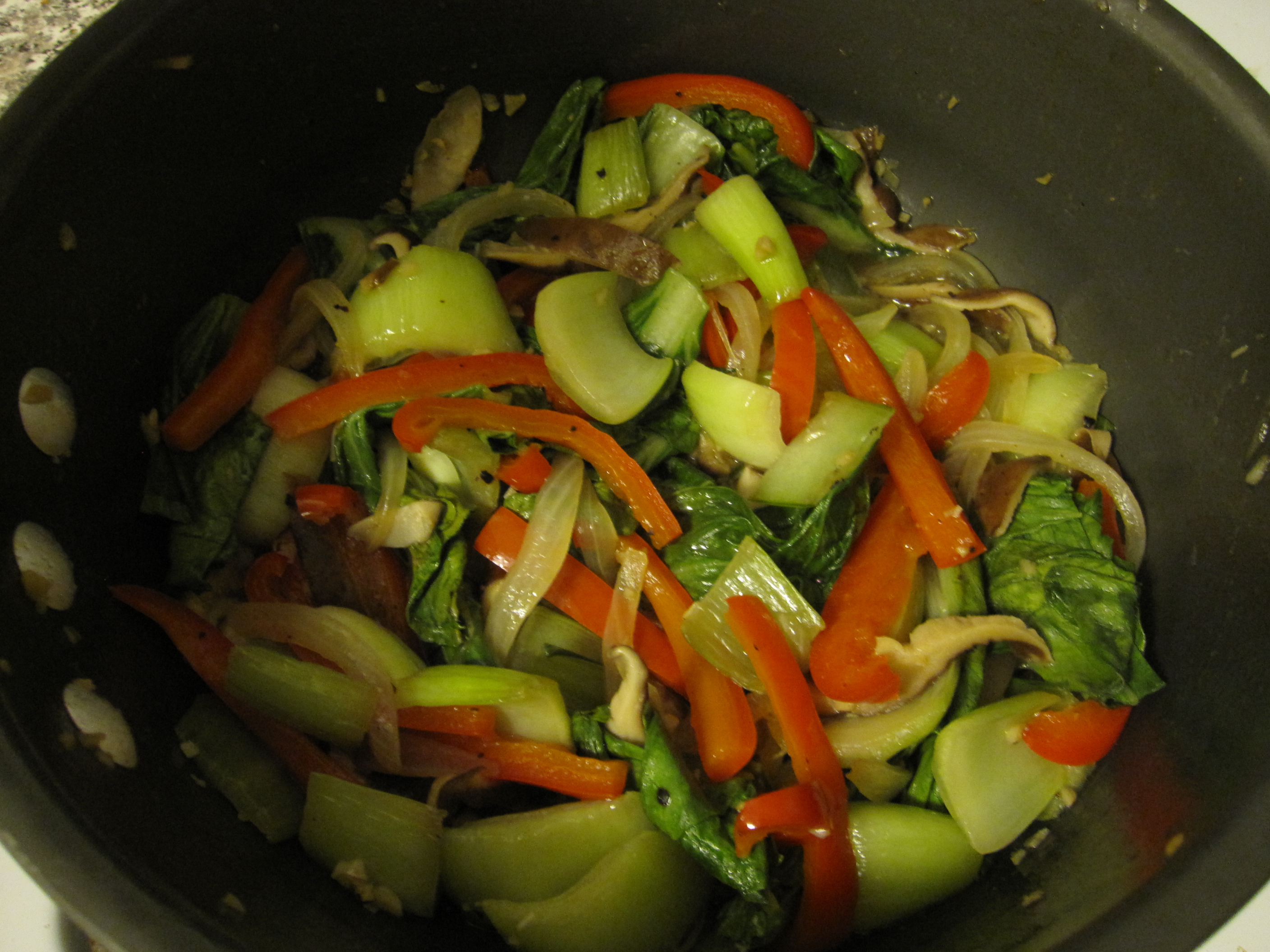
Before cooking the salmon and abura-age I got my vegetables ready. I had two large heads of baby bok choy that I separated the leaves from the stems and chopped them all down, 1/2 onion sliced, 3 garlic cloves minced, 1 package of shiitake sliced, and 1/2 a large red bell pepper sliced.

While the salmon was broiling and the abura-age packets absorbing tasty fluids I heated up a pan and poured in 2 tablespoons of sesame oil and tossed in the onions to let them saute for about 4 minutes. Then I added the peppers and garlic. After another few minutes I added the shiitake and bok choy stems for about 4 more minutes. I seasoned with pepper and poured in about 3 tablespoons of soy sauce. Once the soy boiled off I added the bok choy leaves, stirred them in, covered the pan, and turned off the heat. I just wanted the leaves to wilt a little.

I timed it all so everything would be finished at the same time. I plated it up and scarfed it down.

Read Full Post »

Last night Yuki and I went to see RUSH at Northerly Island. What a great band! Because of that I didn’t cook Meatless Monday, though I did eat a falafel sandwich with some babaganoush before the show to keep with the theme. I tell ya, being at the concert really drove home the point that all Americans need to adopt a healthier diet as at least 75% of the concert goers were way overweight. That might be an understatement too. Concert seats are only so big and literally everyone around us was well over 200 pounds. I felt claustrophobic at time. America, start eating healthy well-balanced diets!!! But that didn’t stop us from enjoying the show. At any rate, I’m going to blog about the dinner we had Saturday night.

We were out in Schaumburg so that we could stop at the Tensuke Market, which is actually in Elk Grove, but just south of Mitsuwa. It’s smaller than Mitsuwa but sometimes has better deals and has the absolute best retail seafood in the Chicago area. If you want to make sashimi at home, I highly suggest making the trek to Tensuke for your fish. There’s a restaurant called Daruma that Yuki had wanted to try for a while so we decided to give it a try. Honestly, walking through the doors was almost like walking into Japan. I mean that in every good way possible.

The decor is very traditional of casual dining in Japan. The Japanese don’t put a whole lot of stock into gaudy decor, instead they prefer to focus on high quality food. The walls were poorly painted, the tables and seats a little worn down, cheap napkins (in Japan you usually don’t find any napkins). It really felt like a restaurant in Japan. Made me feel homesick even though I’m not Japanese.

Service was pretty good. All Japanese servers, but bi-lingual so don’t worry. It was the food that starred though.

We started off with some Miso Soup. Nothing fancy, just a well made miso soup with wakame and tofu. I also had some sake. I was torn between two kinds so they gave me a couple of samples. The samples were very generous and I honestly didn’t need to order any sake due to the large pours. But, I did get a sake from the Nara Prefecture.

We got a Daikon Salad. Thin sticks of daikon served with carrot stick tempura and a shiso dressing. Carrots often accompany daikon, but this is the first time I’ve seen carrot tempura with the daikon. Nice touch. Little pea shoots for a bit of peppery bit and color.

We ordered two maki rolls. Ebi Ten, shrimp tempura with avocado, cucumber, and smelt roe. Unakyu, fresh water eel with cucumber. The sushi was good. Not the best I’ve ever had, but overall solid.

Tatsuta Age, deep-fried chicken thigh. Usually served in smaller pieces and called karage, these were pretty big chunks of chicken. Served with shredded cabbage, potato salad, pea shoots, and a slice of lemon this is a classic. It’s also one of mine and Yuki’s favorites.

Niku Tofu, a play on the popular Japanese home cooked dish called niku jaga (meat and potato). Instead of potato Daruma used tofu. It’s thin sliced beef with tofu simmered in a sweet soy broth. Also simmered in the dish were chopped napa cabbage and green onions. This was delicious!

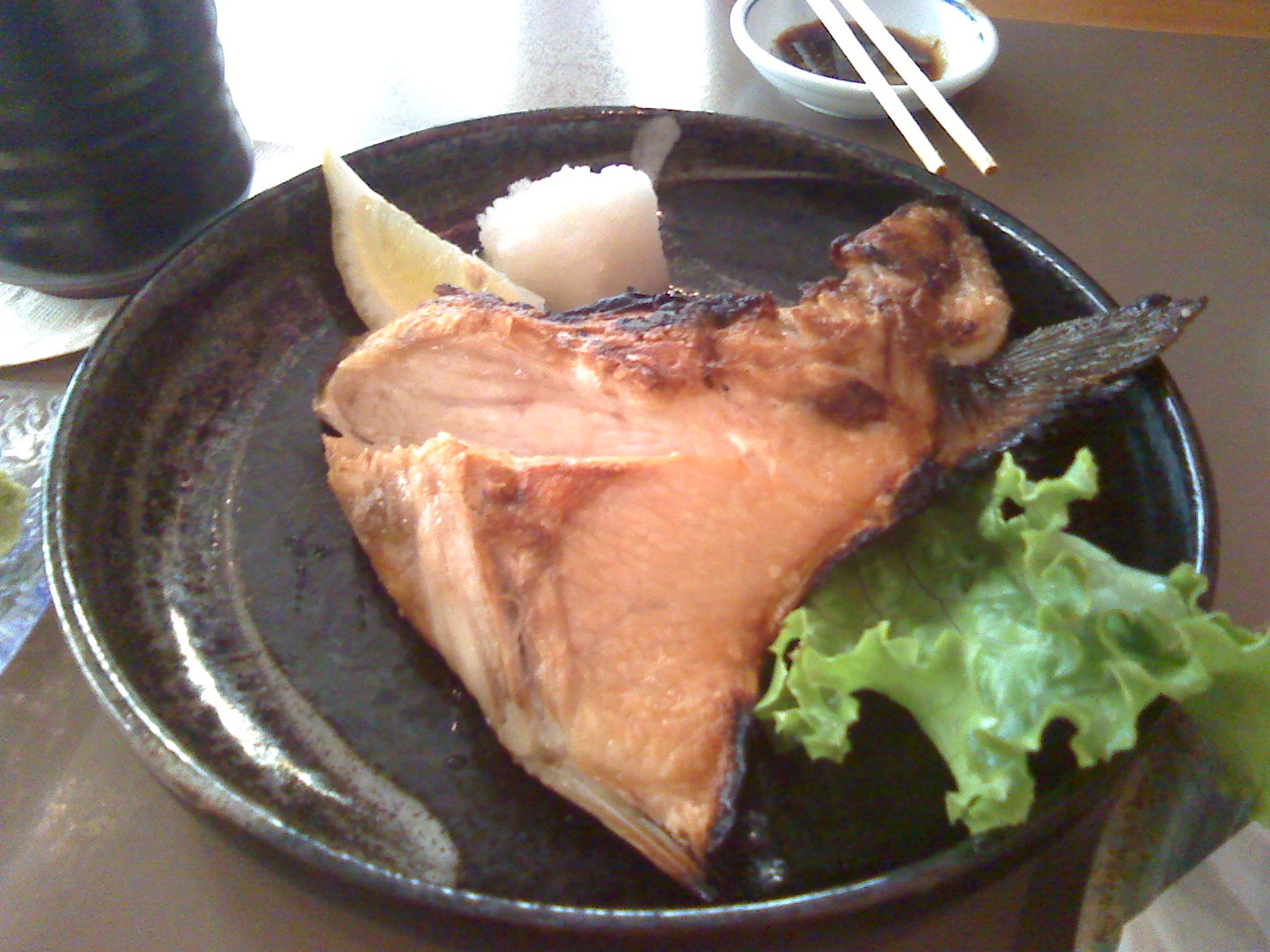
Hamachi Kama, the absolute star of the show! Yellowtail jaw broiled to perfection. You got all of that flavorful cheek meat, easily the best part of any large fish. I don’t know why this part isn’t served more in American cuisine because it has so much more meat and flavor than our prefered filets. This chunk of fish was so tasty it almost brought a tear to my eye. My stomach thanked me for eating this.

Overall, the food and ambiance at Daruma were fantastic. So far it’s the most authentic Japanese restaurant we’ve been to in the Chicagoland area. The food is delicious, portions are priced accordingly (we had leftovers), and the sake was flowing. The only downfall of this place is that I have to fight Hwy 90 traffic to get there. Next time Yuki’s parents are in town we’re definitely taking them there to show them that there is real Japanese cooking here.

Read Full Post »

Last weekend I did a little searching to try to find the best ramen noodles in Chicago. It’s damn near impossible to find a good, authentic bowl of Japanese ramen in this town as all Japanese restaurants seem to be the same neighborhood sushi joint serving up Americanized sushi (ie- California Roll, Dragon Roll, Philly Roll, etc.). While that’s all well and good, what I wanted was ramen!

While searching online I came across very positive reviews of newly opened (only about 3 weeks old) Arami on Chicago just west of Wood. Billed as an authentic Japanese restaurant in my neighborhood I got a little excited, tingly you might say. Not really in the mood to cook last night I decided to take Yuki out and give Arami a go. Very wise decision indeed.

The decor is true to Japanese philosophy, very simple and natural. The entrance is a big torii (traditional Japanese gate) and sets the atmosphere off right. The walls are very light, somewhere between eggshell and wasabi green, but more on the eggshell side. The tables are bamboo and the fixtures look to be made of reclaimed wood. I especially like the bar. It’s just a big slab of tree trunk.

Service was excellent. Usually, when a restaurant first opens up, the service is the worst part of the experience. The place ran like a veteran. Our server, Tiffany, was very knowledgable of the menu and very attentive without being annoying. Food came out in timely order and nothing was rushed.

As I get to the food I want to apologize as I usually do when posting pics from my phone. They are terrible! I do my best to make the food visible, but my phone’s camera is a piece of  junk. Keep that in mind and don’t let my pics deter you.

We started off with the Togarashi Seared Tuna. A beautiful strip of tuna coated in togarashi and seared perfectly, about a millimeter cooked all around the edges with the center completely raw. There were 6 pieces served on top of a seaweed and kelp salad with a meyer lemon dressing. The seaweed and kelp salad was excellent. A lot of times seaweed salads are just dripping with vinegar. Not this one. Perfectly dressed and a nice compliment to the natural fat of the tuna and mild spice of the togarashi.

Next, we got the Akami Ankimo. Akami is the red part of blue fin tuna and ankimo is monkfish liver (one of my all-time favorite ingredients). The slices of akimi sashimi (you could tell that they were cut by professionals who understand the subtlety of cutting fish) topped with small slices of ankimo and some sort of sliced green. Yuki thought it was a kind of pepper, but I think it’s just the green part of scallions. Doesn’t matter whose right, it was outstanding! Too bad Arami doesn’t yet have a liquor license as sake would have matched this perfectly.

For an entrée Yuki got the Kimchi Ramen. Hands down the best ramen I’ve ever tasted in this city! The broth was maybe a little too light to be considered authentic (in Japan the best part about ramen is all of the gelatin from using bones to make the broth, your lips should feel a little greasy), but the flavor was fantastic. Thick chunks of pork belly, cubes of tofu, sliced kimchi (not an authentic Japanese flavoring for ramen, but a delicious one), a par-boiled egg with a nice runny yolk, and sliced scallions for garnish. The only real problem is that it’s too hot in Chicago right now to eat ramen. Yuki was sweating a little from eating it. That didn’t stop her though as it was friggin fantastic.

When ever I see short rib on a menu there’s a very high likelihood that’s what I’m getting. Combine that with my love for all things donburi and I had to get the Short Rib Donburi. I really nice short rib braised in a soy-based broth served on top of rice. To counter the fattiness of the meat they serve it with sliced pickled asian pear and scallions. The rib was very tender and the broth flavors almost penetrated completely through. I’m glad it didn’t to preserve the natural flavors of the meat itself. Another winner in my book.

Dessert is the one area they fell short on. The only two options were the typical mochi ice cream balls or three different gelatos. I asked if the gelato was made in-house and Tiffany said it wasn’t. We still opted for the gelato though. They had three flavors (green tea, ginger-lemon, and muscato) and you get two scoops per order. We were told that we could only pick one flavor, but Tiffany talked the chef into letting us have two, so we got the green tea and ginger-lemon. The green tea was terrible! Overly sweet and very chunky. It was not a good product and they need to get rid of it immediately! The ginger-lemon, however, was great. Not too sweet, nice and creamy. They could do more with desserts though. I’m tired of every Japanese restaurant serving mochi ice cream and ice cream. There are so many things that can be done with Japanese ingredients to make great, simple desserts. Green Tea Pot De Creme with Adzuki Ganache was an idea I gave Tiffany. She seemed to like that idea, so hopefully she can get the chef to open his mind and make some real desserts. You don’t have to be a pastry chef to make good desserts.

At any rate, Arami is our new favorite Japanese restaurant in Chicago. While we didn’t try a lot of the sushi, we could see that they know what they’re doing. We will definitely be back over and over again, especially once they get a liquor license as I was told they’ll have a killer sake list! Sushi and sake, sounds good to me.

Read Full Post »

Mapo tofu is a Szechuan dish typically made with ground pork. However, last night being Meatless Monday, I diced up some shiitake mushrooms to take the place of the meat.

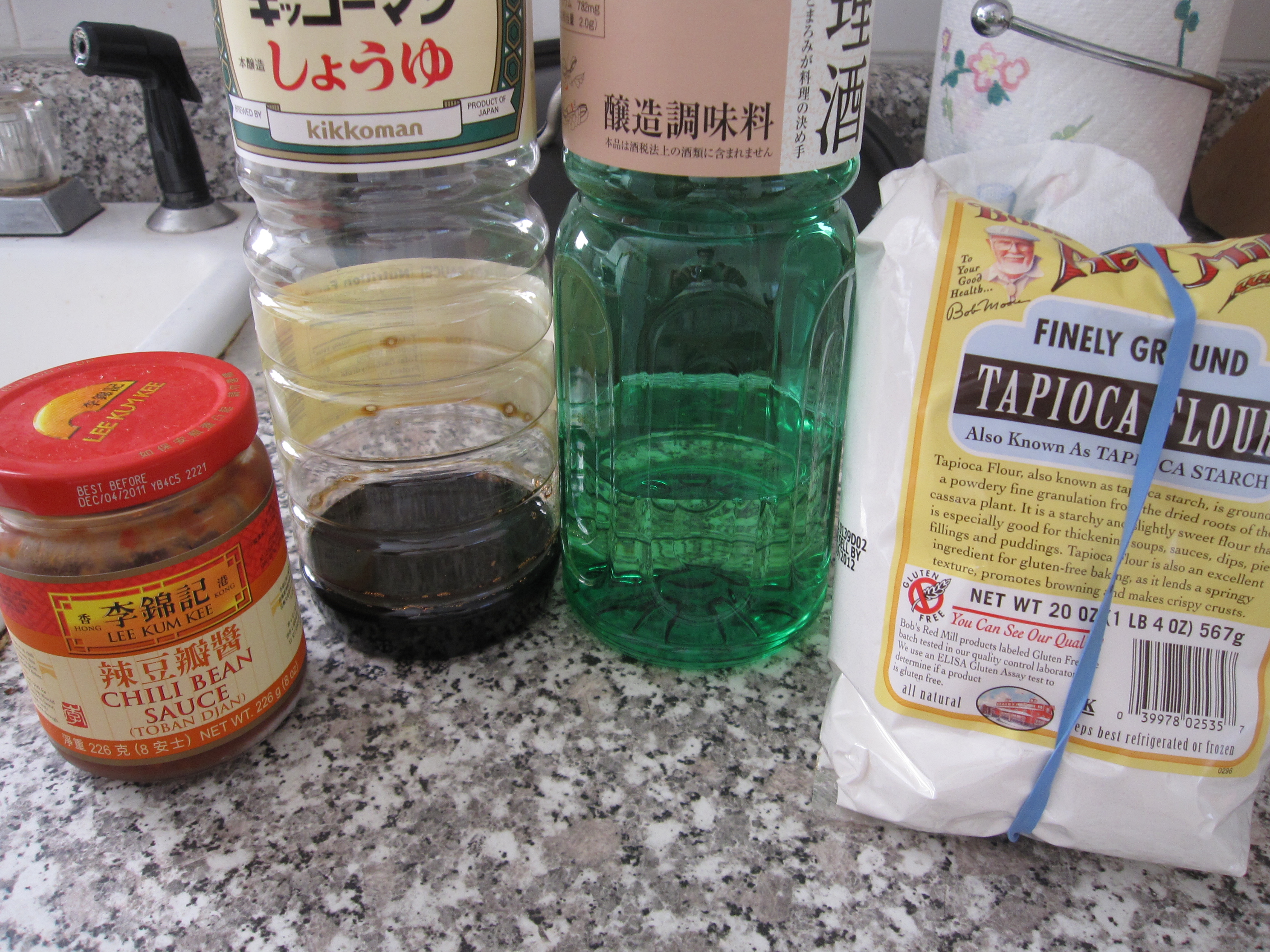
To start, I made the sauce. I used 2 heaping tablespoons of toban djan (a szechuan chili and fermented bean sauce, its spicy but this dish is supposed to be very hot), 1/4 cup of soy sauce, 1/8 cup of sake, and 2 teaspoons of tapioca flour to thicken it up a bit. I mixed it all together and set it aside.

I used a 3.5 oz package of shiitake, about 6 oz of haricots vert cut into thirds, a carrot cut into matchsticks about 2 inches long, 8 green onions chopped into 1 inch pieces, 3 minced garlic cloves, 2 tablespoons minced ginger, 1 red bell pepper cut into thin slices and then halved, and 1 package of firm tofu. I prefer silken tofu, but there wasn’t any at the store. Oh well, what can you do? I pressed the water out of the tofu for an hour in the fridge and then diced it.

In a hot pan I poured in about 2 tablespoons of sesame oil and then fried the garlic and ginger for about a minute. Then I added the haricots vert. About 3 minutes later I tossed in the carrot and pepper. I let that go for about 3 more minutes and then the shiitake and green onions went in. Once the shiitake were softened a bit, about 3 or 4 minutes, I poured in the sauce (I mixed the sauce thoroughly again to make sure the tapioca didn’t form any clumps). This was the first time I’ve ever used tapioca flour as a thickening agent and it worked a little better than I expected. The sauce almost immediately thickened up on me in that hot pan. To remedy that I poured in about 1/3 cup of water and that thinned it out nicely. I needed it a little thinner so it would evenly coat the tofu which went in right after I stirred the water in. I let the tofu heat through for about 4 minutes over medium heat and then served it all up with some white rice and drank it down with a cold beer.

Read Full Post »

« Newer Posts - Older Posts »