Feeds:
Posts
Comments

Posts Tagged ‘soy sauce’

Lamb, the prefered meat in Europe and a fantastic animal to stew up with veggies. With Spring in the air, but still a very chilly breeze shooting through Chicago, I thought that a simple Lamb Stew would be a great dinner. Not to mention I had a nice bottle of Syrah I wanted to drink, a nice match with lamb.

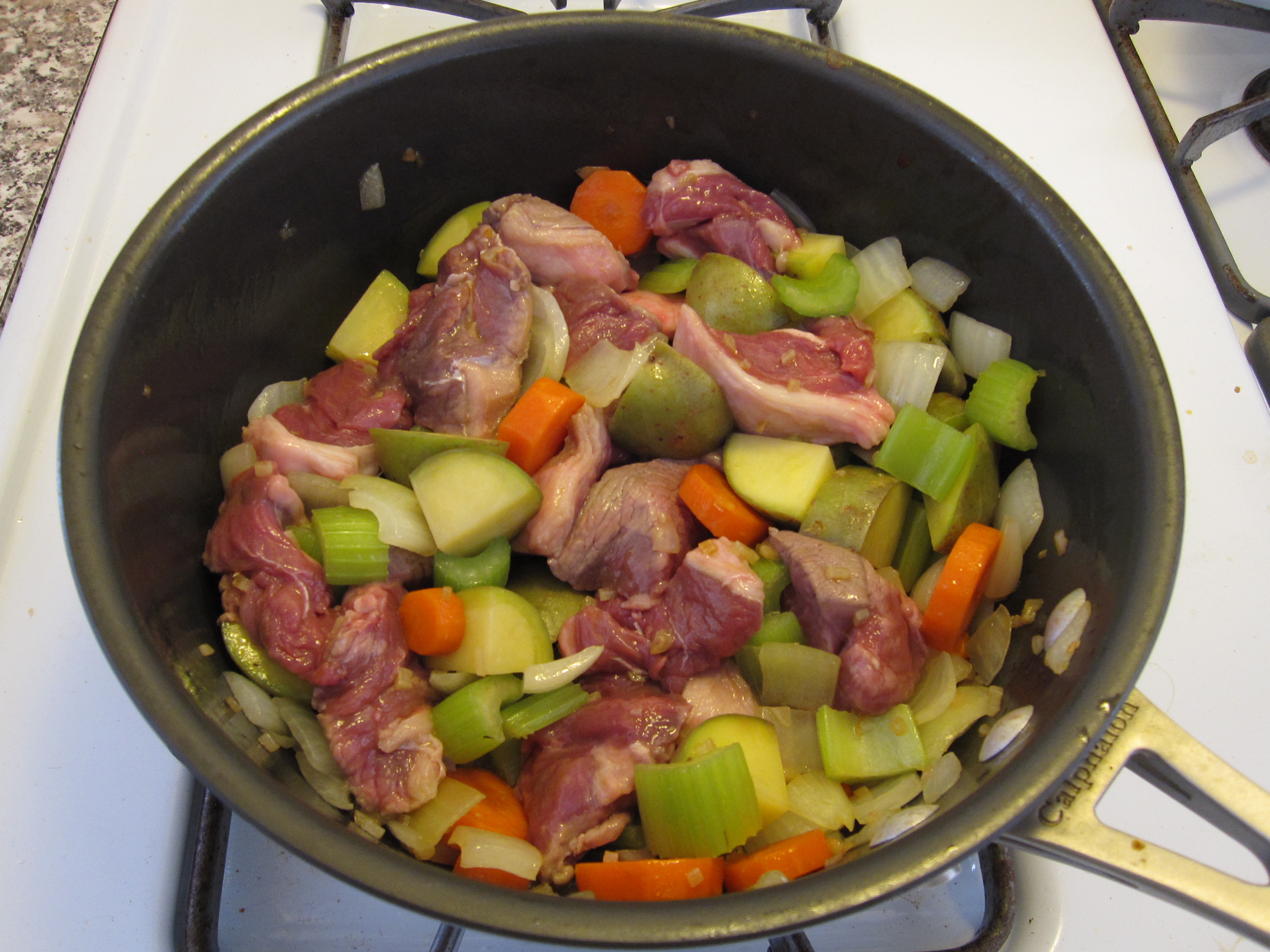
I first sautéed up a small onion that I diced up to medium-sized pieces with a chopped carrot, two stalks of celery chopped, and 4 cloves of minced garlic in some olive oil over medium-high heat. After a few minutes, when the veggies were turning translucent, I added a couple of large diced Yukon Gold potatoes. I didn’t want to add the potatoes too early because they fall apart when stewed for long periods of time. For long stews it’s usually best to use a denser potato like russet. But, I had a couple of Yukons that I needed to use up so I added them late to keep them together.

Only a couple of minutes after adding the potatoes I threw in about a pound of cut-up lamb leg meat. You want about 1 inch cubes. Anything smaller and the meat will get tough. I let the meat cook a little until the outsides were cooked but not the insides. Then I added a bunch of quartered cremini mushrooms and stirred that all around.

Once everything was coated with the olive oil and lamb fat I seasoned with a little salt (not too much), turmeric, cumin, dried basil, and a bay leaf. Then I added about a quarter cup of soy sauce and 2/3 cup of beef stock. Once the liquid came to a boil I put the lid on my pot and turned the heat down to medium. I let everything stew together for about an hour.

Once the stew was about ready I threw in a handful of freshly chopped parsley and turned off the heat. I served it up with some sliced bread. Well, I had it with sliced bread, Yuki had it with white rice. Whatever your pleasure, it’s all good.

Read Full Post »

Enough Koshar….I need some PIG!!! Last night was absolutely gorgeous out. A little windy, but otherwise Spring is here to stay. Combine the weather with two Passover Seders and I really had no choice but to grill up some sort of swine. I picked up some pork tenderloin for the occasion.

I marinated it in a mix of 5 tablespoons of soy sauce, 3 tablespoons of sake, 3 tablespoons of cider vinegar, an inch of grated ginger, 4 grated garlic cloves, and 1 tablespoon of ground coriander seeds. I covered it and left it in the fridge for about 3 hours.

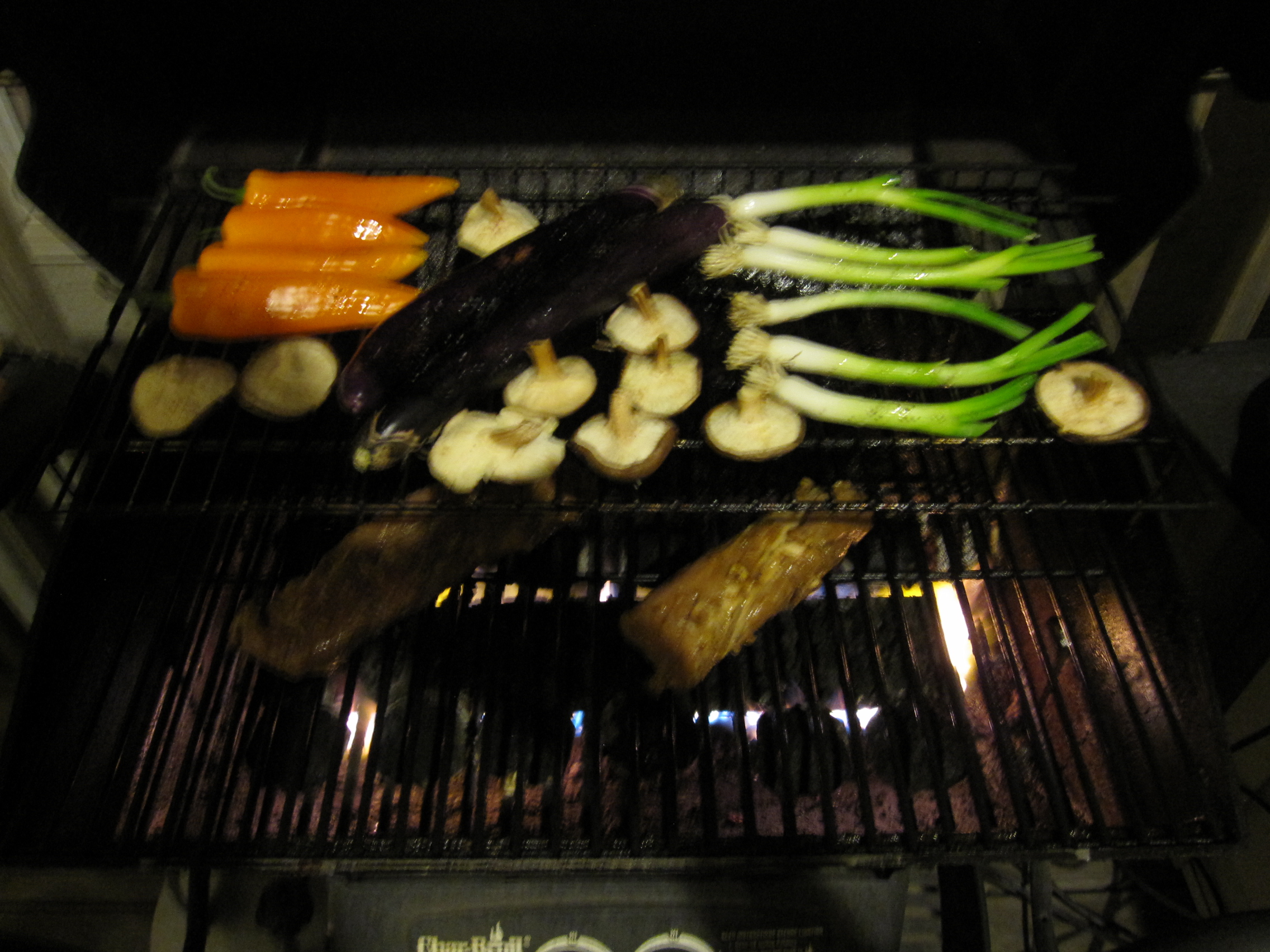
For vegetables I took two whole Japanese eggplants, 4 orange sweet peppers, a bunch of fat green onions, and a bunch of fresh shiitake mushrooms. I simply drizzled them all with a little olive oil, salt, and pepper. You’ll see me do that a lot with the grill as I really don’t think you need to do anything when you have good fresh produce and a hot grill.

Before grilling everything I took the marinated pork out of the fridge and let it rest to room temperature for about a half hour.

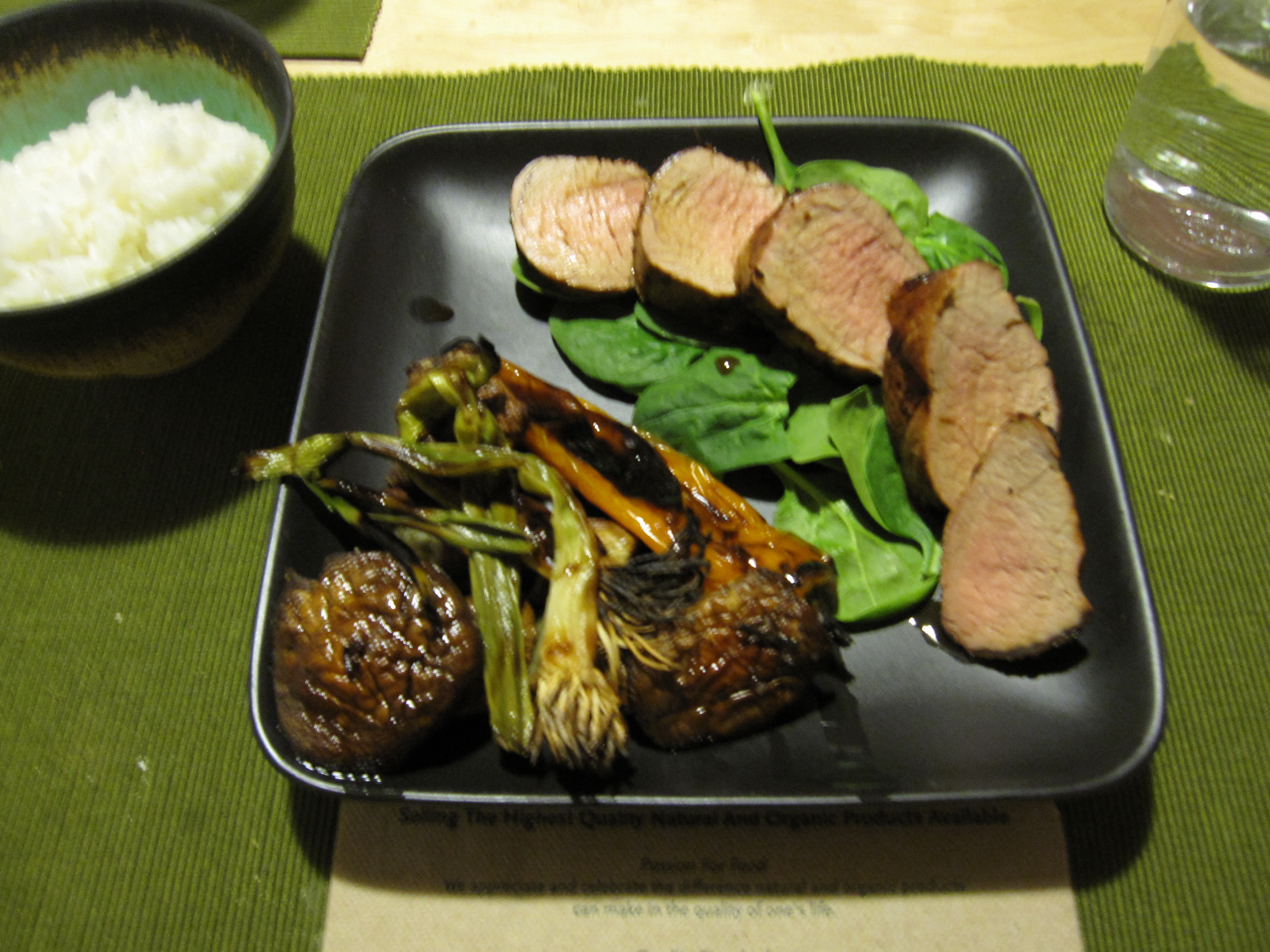
I grilled it all up. After letting the pork rest for about 10 minutes I sliced it and served on top of some fresh baby spinach with the grilled veggies and some white rice.

When you have a good fresh tenderloin you shouldn’t cook it all the way through. I got this one at Whole Foods so I’m not overly concerned with getting sick or anything from it. Leave it a little pink and you’ll enjoy one of the greatest textures of flesh out there. You can’t beat a nice medium-medium rare pork tenderloin.

Read Full Post »

Yuki requested a simple, lightly flavored dinner last night, so to please my wife I made a Japanese-style line up of chow. I made Hijiki Rice, Miso Soup, and Pork-stuffed Aburage.

For the rice, I made two cups in our rice cooker. I simply washed the rice and added a little less water than necessary to cook it. To get the liquid up to the right amount I topped it off with some soy sauce, no more than about a quarter cup. Then I added a couple tablespoons of dried hijiki seaweed (available at more and more groceries), about a half teaspoon of dashi-no-moto (dried, instant dashi, also available at more and more groceries), as well as half of a large carrot diced. That’s it, turn it on and let it cook.

The miso soup was also simple. I brought two and a half cups of water to a boil with 6 green onions chopped to inch-long pieces. Once it started to boil I added 6 baby bok choy and 6 quartered shiitake mushrooms. I let that boil for about 10 minutes, turned off the heat, and added a half teaspoon of dashi-no-moto along with 2 tablespoons of soy sauce. I put that aside until dinner time.

Before making everything I cooked up the ground pork. I sautéed a chopped clove of garlic with a half-inch of chopped ginger in some oil for a few minutes. Then I added about a quarter of an onion, small diced, and let that cook for a few minutes. After that I added a half pound of ground pork and cooked that all the way through. Once the pork was mostly cooked I added 1.5 teaspoons of soy sauce, 1 teaspoon of sake, a half teaspoon of mirin, and some black pepper. I let that liquid boil down and then took off the heat to cool.

To prepare the aburage I first layed them in a colander, boiled some water, and then dumped the water on them to rinse off the excess oil that they come in. Then I squeezed all of the water off. I took my sharpest knife and carefully slit open one side and then gently used my fingers to open them up. After that I just spooned the ground pork mixture and then set aside.

Once the rice was ready I put the soup back on some heat and put the aburage under the broiler. Just before the soup started to boil I added some diced tofu and some wakame seaweed. Then Yuki whisked in a couple tablespoons of miso. When the aburage was heated through, about 5 minutes, I took them out and layed them on beds of arugula and drizzled with ponzu sauce.

Dinner was served!

Read Full Post »

Last night’s Meatless Monday was quite possibly the most simple one yet. Not feeling up to doing too much in the kitchen for some reason, I decided to keep the cooking minimal and quick. The answer? Stir-fry!

I first pressed the water out of a block of tofu. Lay some paper towels on a plate, set the tofu on top, cover with more paper towels, put a cutting board on top of that, and lay a weight of some sort on top of the cutting board. I kept that in the fridge while I cut up the rest of the vegetables.

I cut a bunch of asparagus, green onions, a yellow pepper, a red pepper, and about a half pound of fresh shiitake mushrooms. I let the shiitake sit in a sunny window for about an hour before cutting them up. Sunlight helps the mushrooms produce higher levels of vitamin B.

To start, I fried an inch of minced ginger and two chopped garlic cloves for about 3 minutes. Then I added the green onions, followed by the peppers, and then the asparagus. After a few minutes I added the shiitake sliced in quarter inch strips. I let that all stir fry up for a few minutes then added about 4 tablespoons each of soy sauce and sake along with some black pepper.

While the liquid was reducing a little I cut the tofu into bite-sized pieces then threw them into the stir-fry. I let the tofu absorb the flavor, then took off the heat and drizzled some sesame oil in it, and then served with it white rice.

Read Full Post »

Last night I took advantage of another nice evening and grilled up some fish, at Yuki’s request. I decided to make some brochettes with Moroccan spiced cod. Any firm-fleshed fish would work for this recipe, cod just happened to be the cheapest and freshest as it just came in yesterday morning.

I cut up the fish into chunks large enough to skewer for the grill. Then I mixed up a marinade that consisted of 4 chopped garlic cloves, 1/2 teaspoon of paprika, 1/2 teaspoon of cumin, 1 teaspoon of salt, 1/2 teaspoon of cayenne, about 4 tablespoons of olive oil, the juice from one lemon, and a few tablespoons of chopped cilantro. I tossed the fish into the marinade and let it sit in the fridge, covered, for about 3 hours occasionally turning.

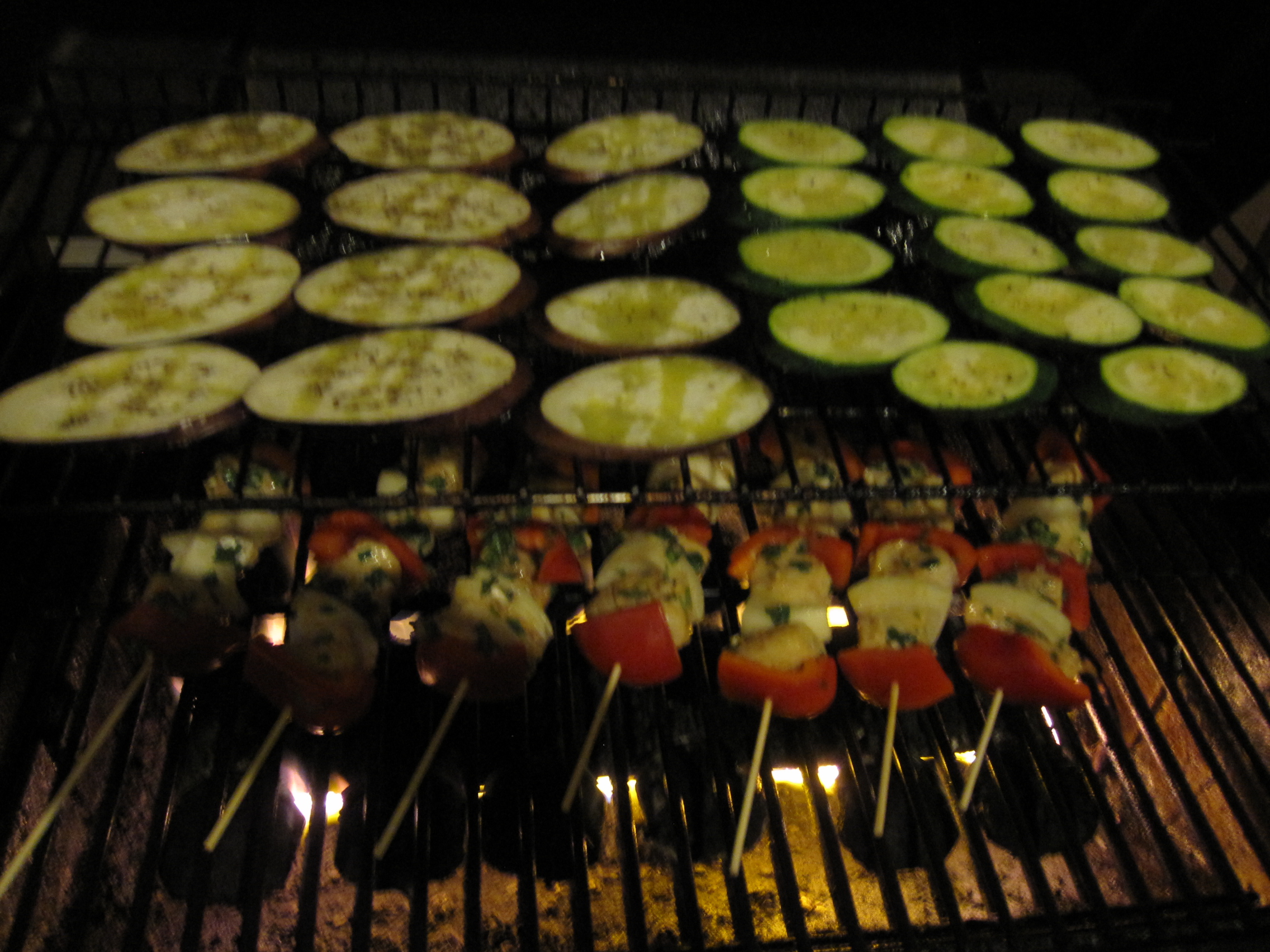
When it came time to grill I took the fish out to rest for about a half hour to come to room temperature. During that time I chopped an onion and a red pepper as well as thinly slicing , about 1/4 of an inch thick, a chinese eggplant (the regular eggplants weren’t as fresh) and two small zucchini. I also let my bamboo skewers soak in water for an hour.

After all of the vegetables were cut I skewered the fish with the red pepper and onion chunks. Then I drizzled the eggplant and zucchini slices with olive oil and seasoned with salt and pepper. I put the skewers on the bottom rack and the slices on the top rack. Everything was cooked at medium heat. That way the vegetables would cook at about the same rate as the fish. If the heat were too high the fish would cook much faster and the veggies would be too raw.

I made a sauce to drizzle on top of everything after grilling. The sauce consisted of 2 tablespoons of tahini, 1 tablespoon of soy sauce, 1 tablespoon of olive oil, the juice of 1/2 lemon, 1/2 teaspoon of paprika, and 2 tablespoons of chopped cilantro. I served with white rice and garnished with some cilantro sprigs.

Read Full Post »

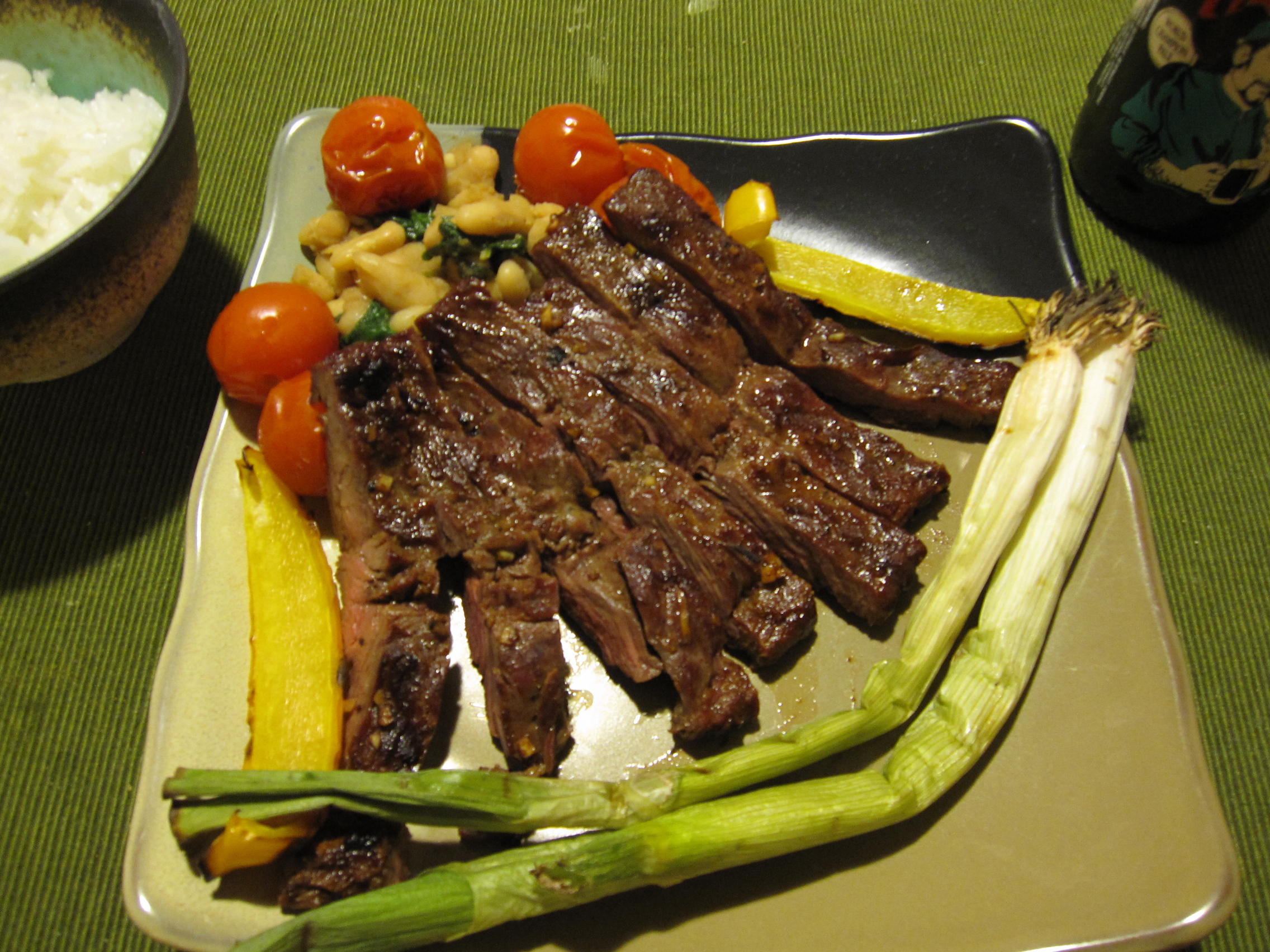
Grilling season is here people! Nothing could make me happier. Well, I guess that’s not entirely true, but it does bring a smile to my belly. To kick off the year’s grilling I picked up a beautiful 1.5 pound skirt steak, easily one of the best cuts of any carcass.

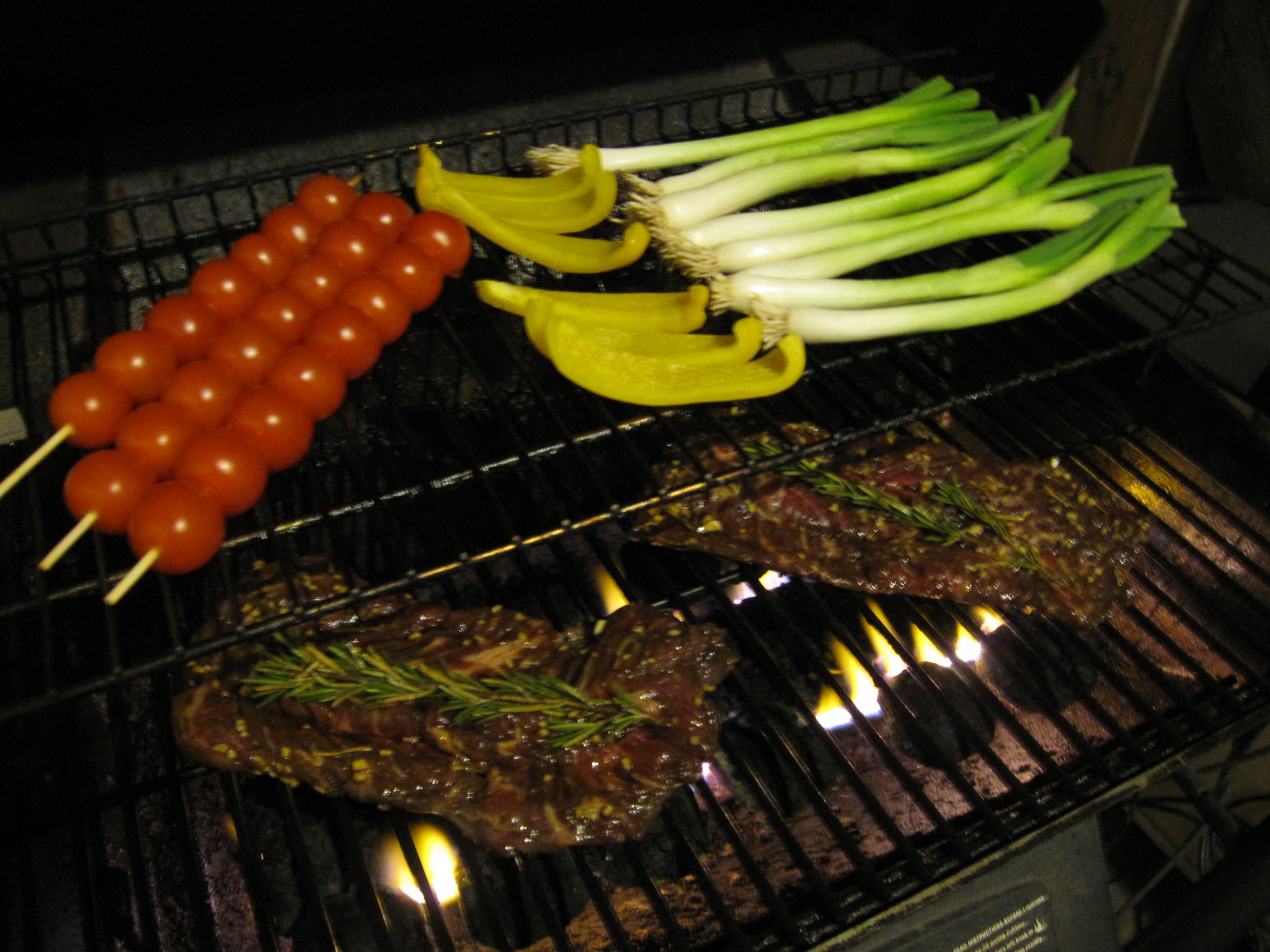
To start off I marinated the skirt in a mix of 5 tablespoons of soy sauce, 3 tablespoons of sake, 2 tablespoons of mirin, 5 chopped garlic cloves, an inch of chopped ginger, 1 teaspoon of cayenne, 1/2 teaspoon of turmeric, black pepper, and some whole sprigs of rosemary. The steak was too long for my biggest dish, so I cut it in half and marinated covered in the fridge for about 4 hours, turning every hour or so.

I skewered some cherry tomatoes, cut the yellow pepper that I had left in my fridge, and cleaned some green onions. Stanley’s had real thick green onions that were just screaming to be grilled. when you leave the thicker outer layer on and then grill them as is, the inside becomes real soft and sweet. You can just put the whole thing in your mouth and squeeze out the innards with your teeth as you pull the onion out. So delicious!

While everything was on the grill I sautéed some cannellini beans with garlic and spinach. I started with some olive oil and chopped garlic. A few minutes later I added the left-over marinade from the steak and let that boil for a couple of minutes. Then I tossed in a drained can of beans. Once they were heated through I added a bunch of spinach. I stirred it all around until the spinach had just wilted and most of the liquid had evaporated. Then I took it off the heat and covered it until the grill was ready.

Once the grill was ready I let the steak rest for about 8 minutes while I plated everything else. Then I sliced the steak with the grains, put them on the plates, and we ate. I also served some white rice.

Read Full Post »

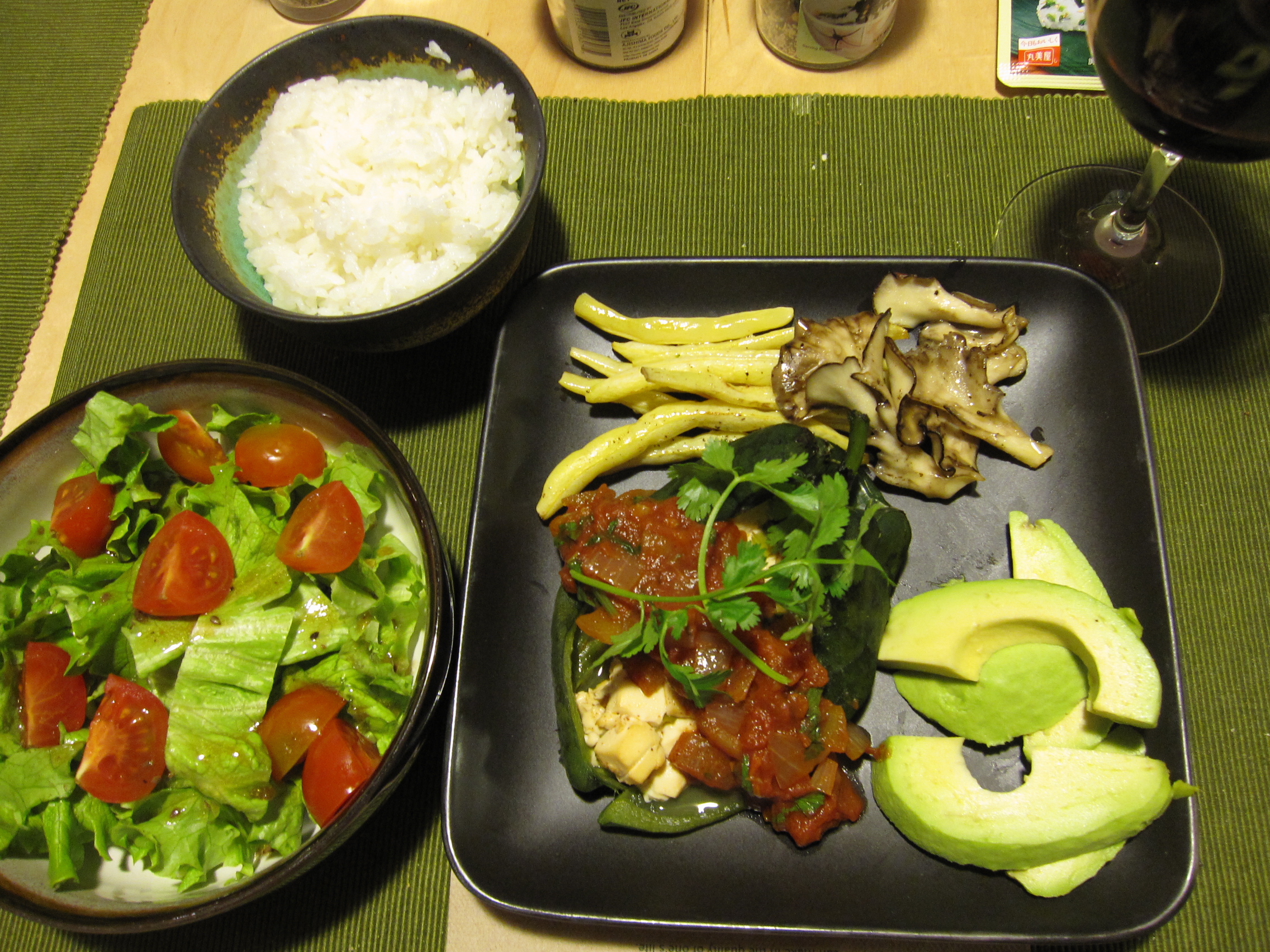
I’ve been mulling this recipe over in my head since my trip to Merida. I wanted to somehow make a Japanese flavored Chiles Rellenos. Last night, for Meatless Monday, I gave it a shot. Not sure it’s exactly the way I had originally planned, but it turned out pretty good.

First thing I did was roast the poblano peppers on the open flame of my stove-top till the skin was completely charred. Then I let them steam themselves in a bowl covered with plastic-wrap for about a half hour.

While that was going on I made the filling. I sautéed some green onions and garlic in a little vegetable oil for about 5 minutes. Then I added one teaspoon of mirin, two teaspoons of sake, and three teaspoons of soy sauce. I also threw in some chili powder. Once that was all mixed together I dumped in some diced tofu and let it simmer for a few minutes and absorb some of the flavors.

Next, I peeled the skin off the poblanos and made a slit down one side to remove the seeds. Once the poblanos were all cleaned out I stuffed them with the tofu and set them aside.

The sauce was very simple to make. I first sautéed a half onion, diced, in some vegetable oil for a few minutes until soft but not burned. Then I added some grated garlic and let that cook for a couple of minutes. A couple tablespoons of red wine, a couple tablespoons of soy sauce, a can of diced tomatoes, and a few dashed of chili powder then let it simmer till it thickens up a bit. Just before serving I turned the heat off the sauce and added a little sesame oil and some chopped cilantro.

For the veggies, I just doused some yellow string beans and maitake mushrooms in some olive oil, salt, and pepper and threw then under the broiler for about 10 minutes. For the last few minutes I also put the peppers under to heat them back up.

I served everything with white rice, slices of avocado, cilantro garnish and a simple salad. The salad was green leaf lettuce and cherry tomatoes with a shiitake-sesame vinaigrette. It all turned out better than I expected.

Read Full Post »

Alright, back to the Land of the Rising Sun. Better known as Japan. Yuki was at a gathering with a bunch of her friends one of the Saturday nights we were there last November. Instead of hanging out with her parents, whom I love to spend time with, I met up with an ex-coworker of hers that I am also friends with, Reiko-chan, who moved back to Tokyo. We decided to meet up at the Ebisu train station and then head to one of the many Izakaya in that neighborhood. Izakaya are Japanese-style bars. Much different from what we’re used to they usually have a great chef that focuses on creative small bites that match with different types of alcohol. I had done some research and found this great little Izakaya called Ippo that focused on seafood and sake, my drink of choice.

Ippo is an extremely hard place to find. We walked all over the neighborhood for about 30 minutes trying to find it. Since Reiko is Japanese, and being Japanese speaks Japanese, I left it to her to ask various retail stores for directions. No one seemed to know exactly where it was even though we had an address. About to give up and go to a different Izakaya, I turned around and noticed the big Fugu hanging in front of the door. Finally! I needed some sake!
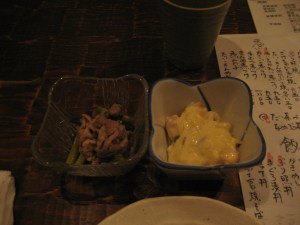
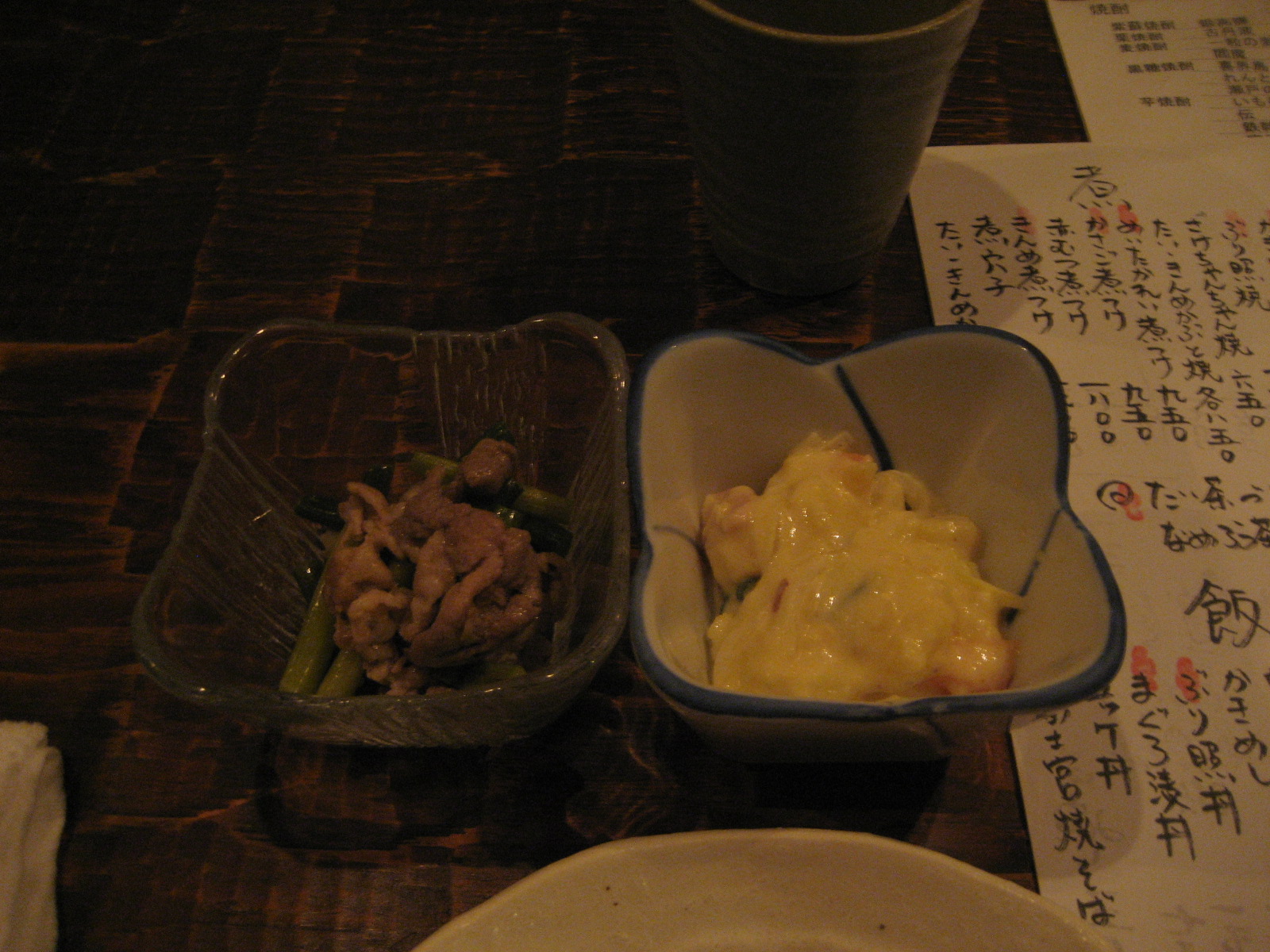
When we sat down the bartender handed us each a couple of little starters. One was a cold pork and green bean salad, the other was a macaroni salad in a mayonnaise dressing. Nice little starters, good with either a beer or sake.

Speaking of sake, their list was over fifty long, all written in Japanese. I had no idea where to start. Luckily, one of the bartenders lived in Las Angeles for a while and spoke fluent English. He also knew that sake list off the back of his hand. There were all varieties of sake from brewers both large and small as well as from every region of Japan that produces it. I honestly can’t remember what all I drank, but throughout the night I ended up putting back 4 cups of different sake, all delicious in their own way. Some more floral, some herbal, some sweeter, all fantastic selections. When I say 4 cups I don’t mean those little sake cups we’re used to getting at sushi joints, I mean 4 12oz cups filled to the rim! Love it!
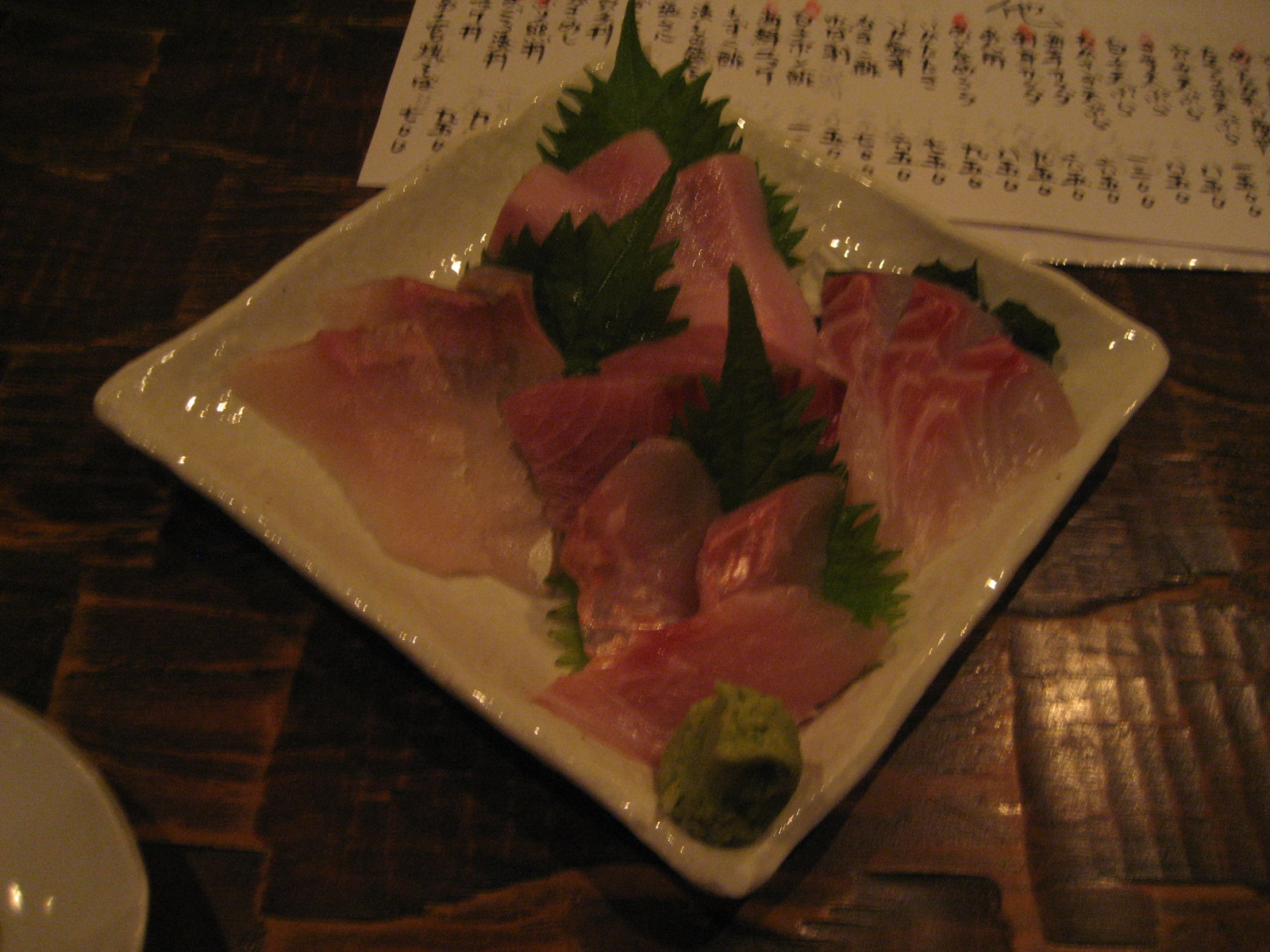
We started off with a plate of sashimi. I don’t know all of the different types, some of the communication was lost in translation, but there were two kinds of tuna and three different kinds of hamachi. I do remember that they were all fresh as can be (they get their fish every morning from the Tsukiji Market) and cut by a chef who knows how to cut a piece of fish. You can’t get sashimi that good here in Chicago.

After the sashimi we got a plate of the house specialty, Namero. It’s basically a tartare of mackerel in miso, ginger, and scallions. Mackerel is a strong-tasting fish with a lot of natural oil, but this was incredible! The miso and ginger masked the strong fishy smell and fit the flavors perfectly. I can see why this is a house specialty as it was probably the best match with sake I’ve ever had.

Then we got the Daigaku Imo, candied sweet potatoes. These were prepared different than normal though. They’re usually deep fried and then coated in a sweetened soy sauce with black sesame seeds. Here, they lightly coated them in batter that had black seseame seeds mixed in before frying, basically tempura style. The were sweet enough that they didn’t need any added sugar. Served only with some grated daikon they were a great snack to eat at a bar.

Kaki was next up. Some of the biggest, juiciest oysters I’ve ever seen on a plate! Removed from the shells and grilled all the chef did was add some herbs to them. With a squeeze of lemon they’re ready to go. If you’re a fan of oysters, you’d love these. If you hate oysters, you’d still probably love these.
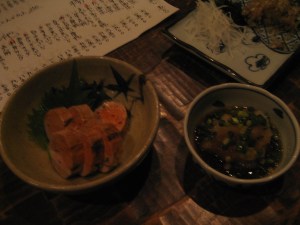
After the Kaki we ordered up some Ankimo. Steamed monkfish liver served with grated daikon, ponzu, and green onions this is one of the great delicacies of Japanese cuisine. It’s called the foie gras of the sea, but in all honesty, I think foie gras should be called the ankimo of the land. It’s so soft and creamy. If not for the next dish I’d call it Japan’s greatest contribution to the world of food.

Here it is, one of the greatest things in the world. An item that will make most Americans sick to their stomach but makes my mouth water…Shirako. The king of seafood. Meaning “white children” in Japanese, shirako is the soft roe of male fish, usually monkfish, cod, or fugu (pufferfish). Basically, it’s the male fish’s genitalia. You read that right, it’s a fish sperm sack! You may be wincing at the thought of eating that, but think about it, you eat caviar don’t you? Well, this is the male counterpart to caviar. It’s extremely soft and delicate with a slightly sweet briny taste that literally melts in your mouth (and it’s not sticky!). Ippo serves it raw with ponzu, scallions, and sesame seeds. It can also be steamed. Any way you look at it, I luz me some fish balls!

My experience at Ippo really makes me sad that we have nothing like this in Chicago, or really anywhere in America for that matter. Sure, there are a handful of Izakaya-style bars throughout the country (mostly on the west coast), but nothing quite like Ippo. Just a long bar in a hidden space that serves up some of the best quality seafood and sake one could ever ask for. Why are we stuck with bars that serve nothing but big greasy burgers (not that there’s anything wrong with that), frozen wings, and chicken fingers? Let’s get some creativity into the American bar scene! Great chefs don’t need to be in a white cloth atmosphere to shine. We’d all be better off for it there were Izakayas scattered throughout the country.

Read Full Post »
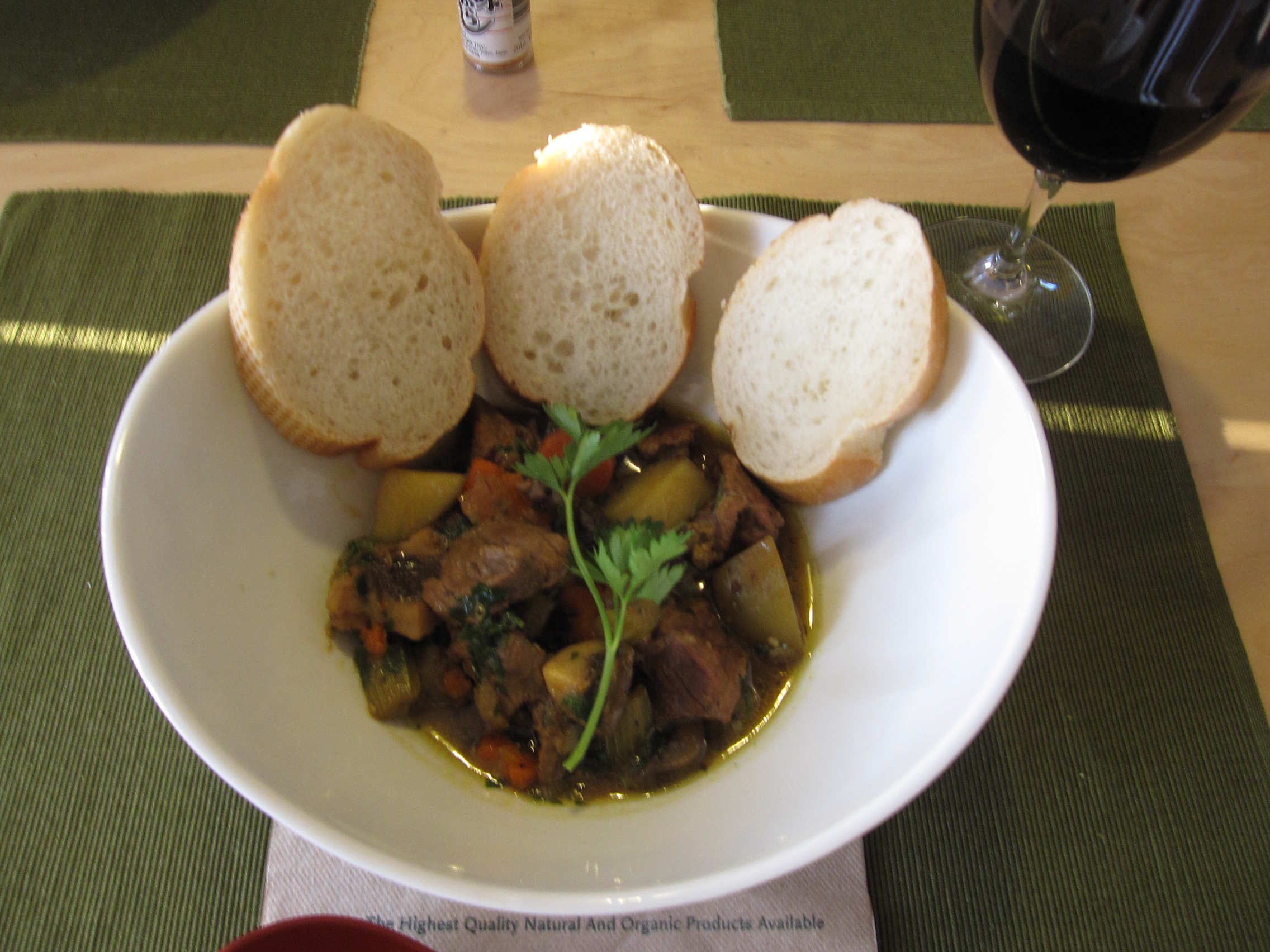
The other night I tried my hand at making a classic home-cooking dish from Japan, Nikujaga. It is a stewed meat and potato dish that is the definition of Japanese comfort food. There are about as many different ways to make it as there are Japanese mothers (and Jewish husbands who cook for their Japanese wives).

The basics of Nikujaga are thin slices of beef (can use pork for variation), potatoes, and onions that are simmered in a sweetened soy broth. Frequently there are other veggies added such as carrots and peas or green beans. It’s really very easy to make as well as being healthy and delicious. It’s the perfect meal for a winter’s eve when served with white rice.

I made it using about 2 cups of water, 1/3 cup of soy sauce, 1/3 cup of mirin, and a couple tablespoons of sugar as the broth. I threw that all into my pot with about a pound of large chopped Yukon Gold potatoes. I brought that to a boil and let the potatoes soften for about 20 minutes. It’s best to put all of that in the pot with the potatoes cold and bring to a boil together so that the potatoes absorb more of the flavor.

Once the potatoes were partially cooked I added about 2/3’s of a pound of thinly sliced beef. After that boils for a few minutes I skimmed off the foam that forms from boiling raw meat, much like I do when making chicken soup. The foam isn’t bad for you or anything, but by skimming it off you get a clear broth.

After the meat simmered for about 5 minutes or so I added a thinly sliced onion along with a sliced carrot. I simmered those for about 10 minutes. I just wanted them softened, not fully cooked, so that there was still some texture left in them.

Then I threw in a bunch of shelled edamame. Those don’t need to cook since they’re small and already cooked when you buy them. They just need to be heated through so they go in towards the end. After they’re cooked through I thought I was finished and proceeded to serve up the meal.

However, I forgot the last ingredient that I wanted to put in, shirataki. These are clearish-white “noodles” that are made from the starch of a yam-like vegetable. It’s the same substance as konnyaku, but in noodle form. They don’t need to be cooked, just heated through. They come in a package in liquid. Drain the liquid, rinse them off, cut them into smaller pieces, and throw them in to the stew for a few minutes. Unfortunately, I forgot to take a pic with the shirataki in the Nikujaga. Just imagine some opaque noodles in the stew and you’ll get the idea.

If you follow my recipe you’ll end up with about 4 servings. The only suggestion I would make, and it’s something that I’ll do the next time I make it, is to use Russets instead of Yukon Gold. Russets will stand up to the long stewing a little better as their a little more dense.

After Yuki ate the Nikujaga she gave me probably the best compliment I could have received. She said that her mother would definitely enjoy eating it. Knowing her mom and what a great home cook she is, that’s pretty high praise. I am now officially a Japanese mother! I may be the only Japanese mother in the world who is actually a Jewish husband without any children. That’s all part of my charm.

Read Full Post »

So, Yuki made dinner for Meatless Monday this week. As you can see from the pic, she cooks a totally different style than me. She prefers numerous different plates with different items while I usually cook more of a one-pot gig. But, with it being Presidents Day and a day off work it was her turn.

Starting with the top left dish, she simmered some daikon radish. For the broth, she boiled niboshi (small dried sardines) in water to extract that flavor into a deliciously light dashi. Then she simmered the daikon until they were softened, but still retained some texture. She topped the daikon with yuzu-miso and some sliced green onion.

The top right dish is sato imo, a hairy potato that made my fingers itch when I peeled it. It’s worth it though as it has a more pronounced earthiness in its flavor than the potatoes we’re used to here in the States. She first had boil them in some vinegar. These potatoes are very slimy and by boiling them in vinegar the slime is removed. After they were boiled she sautéed them in olive oil with some onions and garlic. Then she added some ponzu and a little mayonnaise.

The bottom bowl is harusame soup. She used konbu dashi for the broth, a very typical broth for Japanese soups. The noodles are harusame, made from mung bean starch. Also in it were some enoki mushrooms, shiitake, wakame seaweed, sliced aburage (deep fried tofu skin), baby bok choy, and an egg that was poached in the dashi.

She also made dessert, shiratama dango. They’re little dumplings made out of mochi rice flour. Simply add water to the flour, roll the dough into little balls, and boil them till they float. They’re usually grilled afterword to make them a little more savory before adding various sweet sauces. We used three of the more common sauces. On the left is azuki bean paste, the middle is mitarashi (a sweetened and thickened soy sauce with mirin, sugar, and corn starch), and the right is kinako (soy flour mixed with sugar).

Read Full Post »

« Newer Posts - Older Posts »