Feeds:
Posts
Comments

Posts Tagged ‘carrot’

Very few things get my taste buds watering like a good taco. So when I asked Yuki what she wanted for dinner yesterday at breakfast and she said, “TACOS!”, I swear I was about to make love to her right there on top of our hard-boiled eggs. Tacos it is.

Before making the tacos I got my rice going. I rinsed 1.5 cups of white rice, poured in enough chicken stock to get the right amount of liquid (about 1 cup), and then tossed in 1/4 cup of thawed frozen peas and 1 diced carrot. I let it rest for a half hour and then started up the rice cooker.
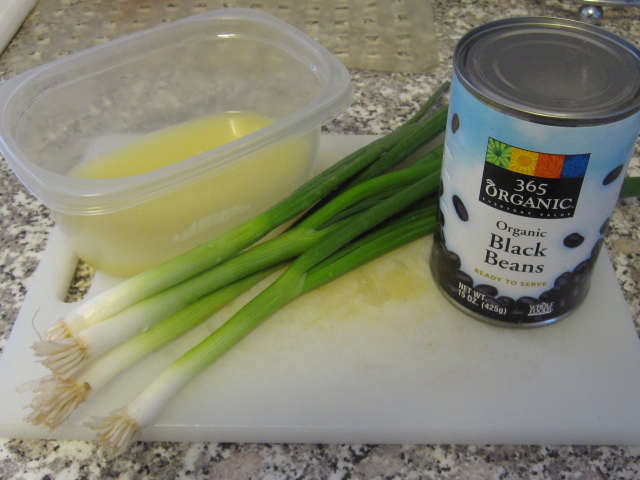
When I make tacos at home I like to have both ground beef as well as black beans for a very fulfilling taco. I don’t cook them together though. Keeping them separate allows them to retain their own flavors for full enjoyment come tortilla time. With that, to make the beans I took 1 14oz can of black beans rinsed and drained, 4 green onions chopped, and 1/2 cup of chicken stock. I put it all in a small sauce pan, brought it up to a boil, covered it, turned the heat to med-low, and let it simmer together for about 15 minutes. I seasoned with salt and pepper before serving.
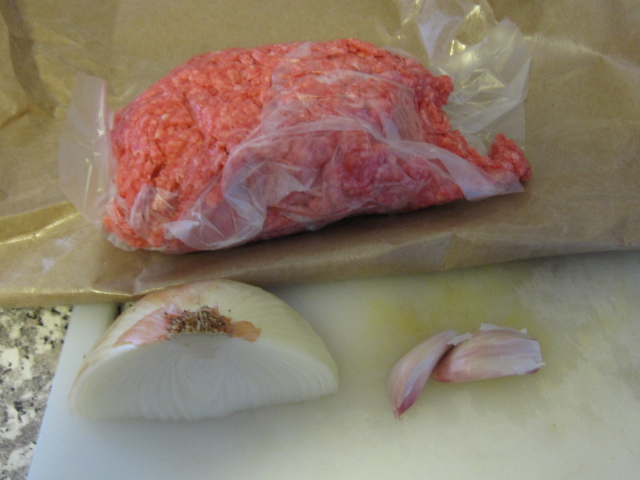
For the meat I used 1 pound of ground chuck, 1/4 onion diced, 2 garlic cloves minced, and 1 tablespoon of cumin (forgot to put in the photo).

I heated my pan and poured in just enough olive oil to lightly coat the bottom. I didn’t want the onion and garlic to stick, but the ground chuck is 20% fat so I didn’t want too much added oil. When the oil was hot I added the onion and let it sweat down for about 3 minutes. Then I added the garlic and let that go for another minute. After that came the beef. As I broke up the beef I seasoned it with the cumin, salt, and pepper. I constantly mixed it up so that it all cooked through and broke apart nicely. When it was finished cooking I poured most of the fat out leaving a little so that the meat didn’t dry out. After tasting it I decided to zest a lime and mix that into the meat. I set all of that aside and got the rest of the fixins ready.
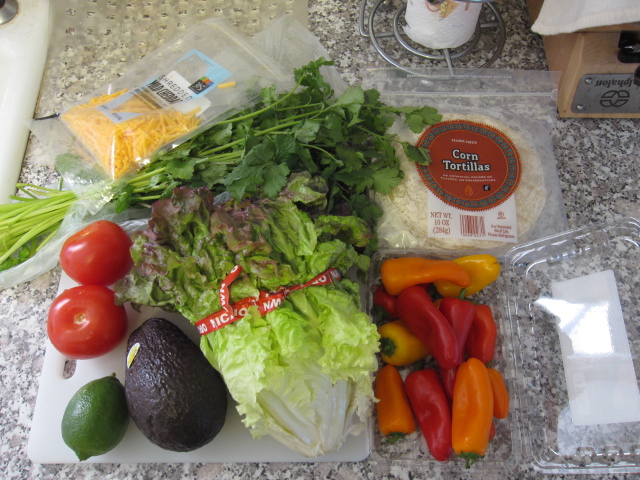
I got out the cheddar cheese that was sitting in my cheese drawer, seeded and diced two tomatoes, diced an avocado and mixed it with the juice of a lime, cut up some red leaf lettuce, chopped up some cilantro, warmed up some corn tortillas, and roasted some sweet peppers at 350 degrees for about 20 minutes. Honestly, I had everything cut up and ready to go with the peppers roasting before I started the beans and beef.
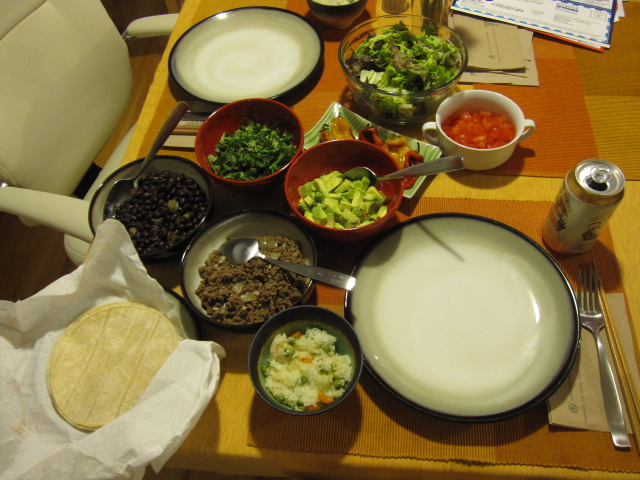
I laid everything out on the table and we away we tacoed!
Read Full Post »

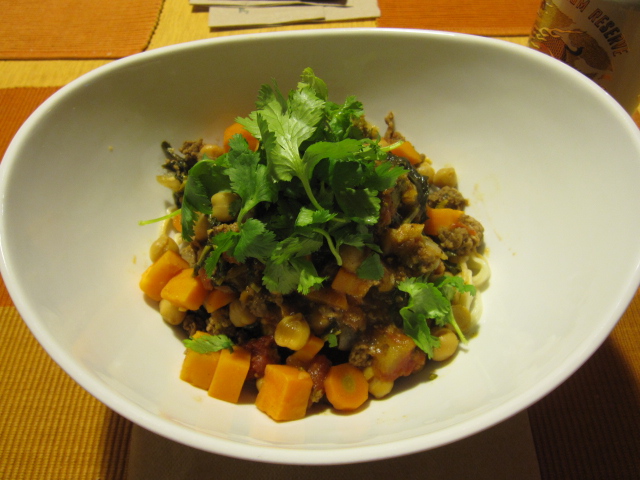
Punjabi Bolognese…sounds kind of weird, right? Well, it isn’t, its delicious! Basically, all I did was take a classic Punjabi dish called Masaledar Chholay (spicy tomato sauce with chickpeas) and add a few things, take away some of the heat, and smother some pasta with it. It really worked out well and is a nice change from regular bolognese.

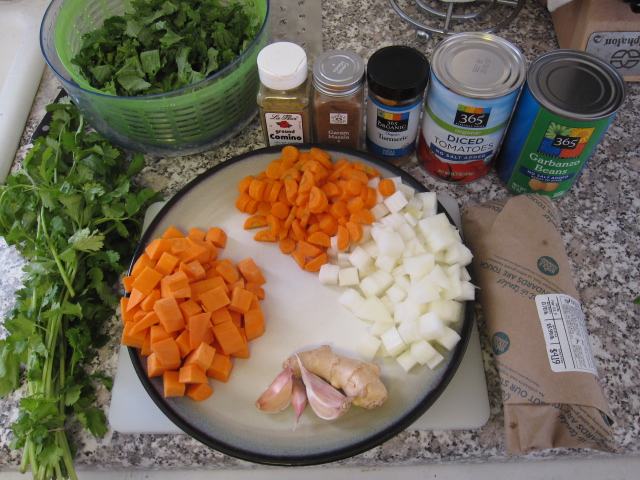
I had already started my prep when I realized that I need to take a photo. So, here are the ingredients all chopped up and ready to go. I had a handful of cilantro that I ripped up at the last minute of cooking, a bunch of rapini chopped up (not an Indian ingredient, but I thought the mustardiness would match real well, I was right of course), 1 medium sweet potato diced, 2 medium carrots diced, 1/2 onion diced, 1 inch of ginger minced, 3 garlic cloves minced, 3/4 pound of ground lamb, 1.5 tablespoons of cumin, 1 tablespoon of garam masala, 1/2 tablespoon of turmeric, 1 14oz can of diced tomatoes, and 1 14oz can of chickpeas.

In a hot pan our poured in 2 tablespoons of olive oil and added the ginger and garlic. I let them go for a minute until the oil was very fragrant. Then, I added the onion and carrots. I let them sweat down for about 5 minutes before adding the lamb. It took the lamb another 5 minutes or so to cook through as I broke it up. Once cooked through I added the spices and mixed them in.

With the meat spiced I poured in the tomatoes along with the juice in the can and let it come up to a slight boil. Then I added the rapini and sweet potato, stirred it all in, covered the pot, turned the heat down to med-low, and let it simmer for about 15 minutes.

After that I added the chickpeas, seasoned with salt and pepper, and let it simmer for another 5 minutes or so. Since I used canned chickpeas I only needed them to heat through.

While the chickpeas were heating up I boiled a mix of regular and wheat spaghetti in salt water according to package instructions. To serve I simply put the noodles in the bottom of a big bowl and ladled some of the Punjabi Bolognese on top. I garnished with the cilantro.

Read Full Post »

After a couple of nights eating out for Restaurant Week I decided to give our stomachs, as well as our wallets, a little bit of a break. Simple, cheap, and delicious, I made a stew with cod and vegetables. Warm stews like this are great for cold winter nights and are packed full of nutrients that won’t bulge your belly or bank account.

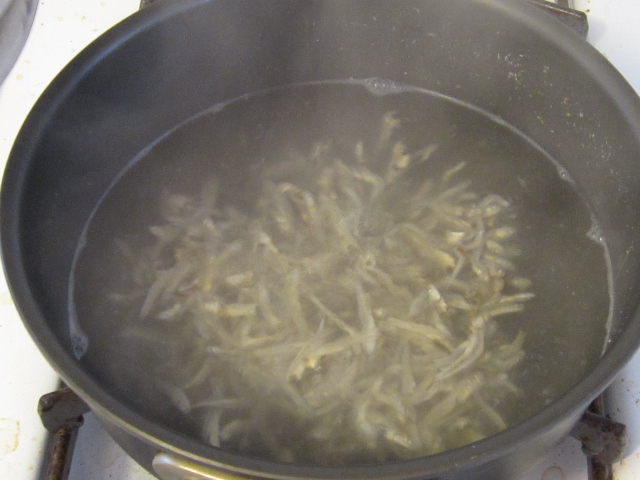
I started off with my typical dashi. I boiled 1/3 cup of dried anchovies in 3 cups of water for about 30 minutes and then strained out the fish. I really love making this dashi because it’s easy, healthy, and delicious.

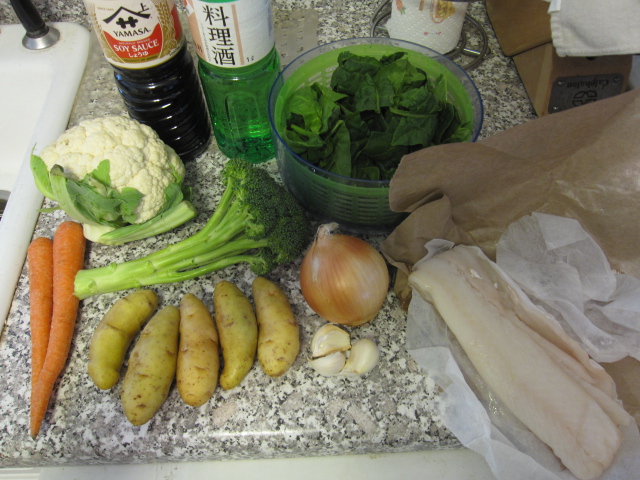
The rest of my ingredients included 2 carrots chopped, 1/2 head of cauliflower broken into florets, 1 head of broccoli broken into florets with the stem chopped, 5 large fingerling potatoes chopped, 1 onion large diced, 3 garlic cloves large diced, 5 ounces of spinach rinsed, 3/4 pound of cod cut into bite-sized pieces, 3 tablespoons of soy sauce, and 2 tablespoons of sake.

I heated up a stock pot and poured in about 2 tablespoons of olive oil. Once the oil was hot and shimmering I added the onion, carrot, and garlic. I let that all sweat down for about 3 minutes and then added the broccoli and cauliflower. About 2 minutes later I poured in the dashi, soy, sake, and a bay leaf and brought that up to a boil. Once boiling I added the potatoes and turned the heat down to med-low so that it could simmer for about 10 minutes. Then I added the fish and let it simmer for another 10 minutes before throwing the spinach in. Once the spinach was in I seasoned with pepper (no need for salt because of the soy in the broth), covered the pot, and let simmer for another 10 minutes. After that all I did was adjust the seasoning and serve it up with some white rice.

Just be gentle stirring after you add the fish, cod will flake apart.

Read Full Post »

Even since it was featured on CheckPlease a while back I have wanted to check out Blue 13. I don’t know why, but it really appealed to me for some reason. When I saw that Chef Curren was doing a Restaurant Week menu I took that as an opportunity to finally get off my ass and take my wife out for some rockin viddles. Turned out to be a damn good idea.

Located in the River North area, Blue 13 is on a very residential strip just off the hwy. That’s both a good thing and a bad thing. It’s good because it allows for a neighborhood feel without any pretension. It’s bad because there’s nowhere to park! I hate paying for valet. I am Jewish (culturally, not religiously) after all. After finding a place to park a couple of blocks away Yuki and I were ready to get out of the cold and fill ourselves full of tastiness.

When we got there a couple of tables lingered a little longer than expected and our reservation was about 15 minutes late. No worries, 15 minutes is acceptable. So, we headed to the bar and I had a beer while we bitched to each other about how frustrating both of our jobs are. Basically, a nightly routine. When we got to our table we already knew what we wanted so we ordered up dinner, ate some good bread with great olive oil, and awaited the feast.

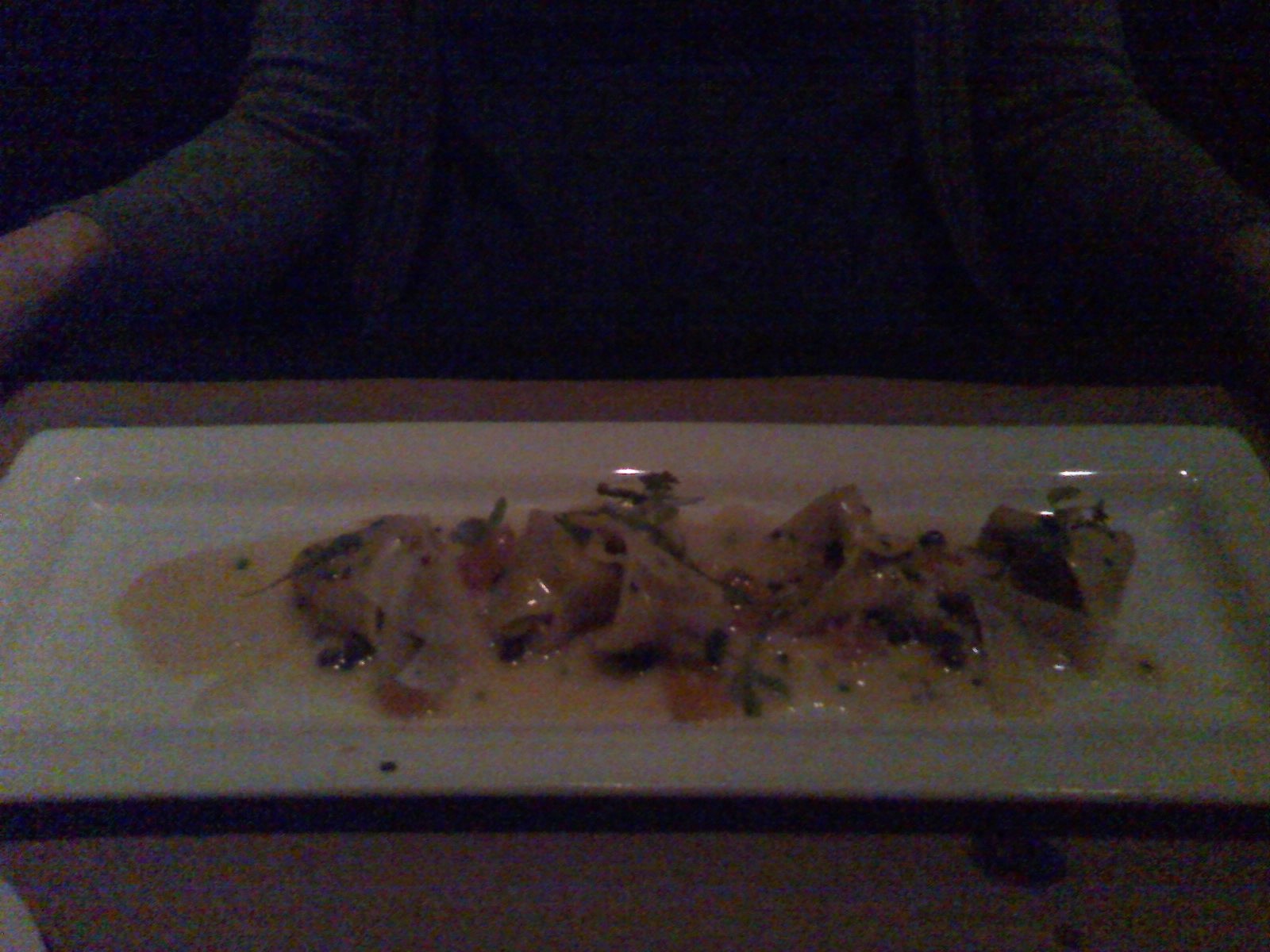
Yuki started off with the Duck Confit Tortellini. Served in a caper and cilantro butter sauce it was absolutely delicious. The only thing wrong with it is that the pasta was just a little too al dente, and not by much. Maybe another 45 seconds or so in salted water and it would have been perfect. On the other hand, this was the first time I’ve ever had capers with cilantro. I hope it’s not the last because it was a really weird pairing that actually works quite well.

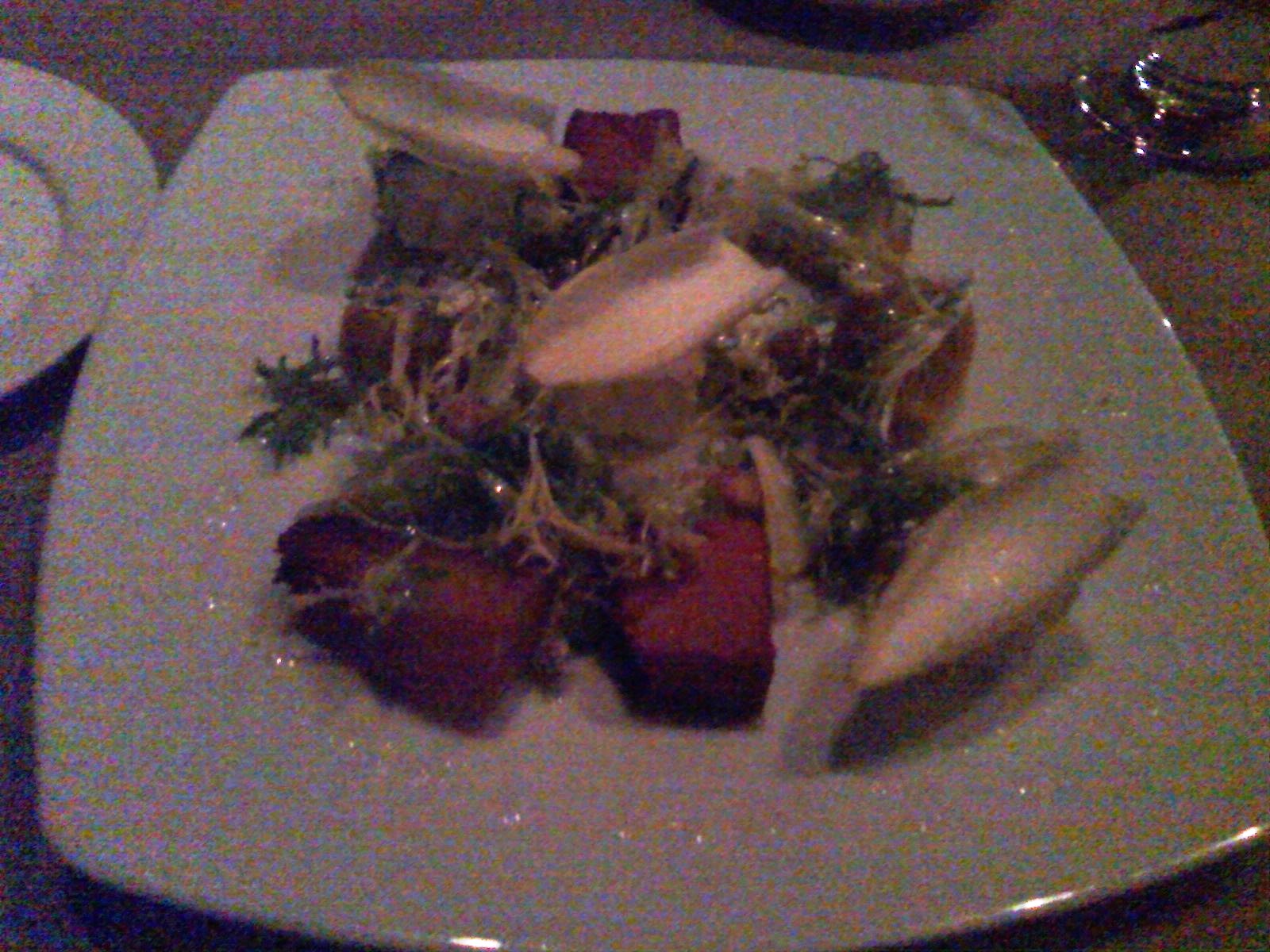
I got the Beet Salad with Champagne Vinaigrette. I did tell you the other day that if there’s a beet salad on a menu I’ll probably get it. It didn’t hurt that their restaurant week menu only had two options (they did have a $44 pre fixe option with more choices, but that’s a little pricy for my blood). I will say this, Chef Curran’s beet salad is one of the most creative ones I’ve ever eaten. Nice sweet golden beets, frisee, endive, candied hazelnuts (quite possibly my favorite of all nuts, excluding my own of course), and, get this, marshmallows made with beets and balsamic vinegar. It was the marshmallows that set this salad over the top.

Yuki got the Arctic Char entrée. A beautiful piece of fish with a nice crispy skin and juicy flesh (is there anything better than juicy flesh?). It was served on a grain salad that consisted mainly of quinoa and pearl barley as well as a big smear of pureed butternut squash. All of the flavors worked in harmony and completed a very satisfying dish.

I got the Guinness Braised Veal Cheeks. These were some of the most tender cheeks I’ve tossed into my organs, like a really soft brisket. Served on buttered noodles with sautéed brussel sprouts and a smear of creme fraiche. It was garnished with a baby carrot and some baby cilantro. I’m beginning to realize that Chef Curran likes to use cilantro. Honestly, I got no beef with that! In fact, I got veal. The only problem with this dish is that I found that it could have used one more pinch of salt to really bring out the beery goodness of the guinness. Otherwise this was a success.

With two dessert options we decided to get one of each, and that really wasn’t a hard decision to make. Yuki had the Apple Cobbler with Vanilla Gelato. A classic that he didn’t really fiddle much with. It was very straightforward but executed nicely.

I got the Chocolate Peanut Butter Waffle. Waffle with candied peanuts, peanut butter sauce, chocolate sauce, and a scoop of vanilla gelato. As I started eating it I was greeted with a very nice surprise, very nice indeed. In the chocolate sauce were little pieces of BACON!!! It’s desserts like this that make me glad I don’t keep Kosher. Bacon truly does make everything better.

Service throughout the night was spot on. The servers were casual, yet professional. Food was brought out in good time and plates were cleared promptly. The atmosphere was also very casual. Exposed brick walls with heavy rock’n’roll on the speakers, but not too loud that it hindered conversation.

Way back when I worked at a restaurant called The Outpost I always thought that it should have been something more like this. Honestly, if I ever did open up a restaurant it would be along the lines of Blue 13, except I’d play more classic rock and throw some Fela in the mix. Otherwise I wouldn’t change a thing.

Read Full Post »

Valentine’s Day…you gotta love holidays that are created for the sole purpose of capitalist pleasure. While the origins of Saint Valentine had absolutely nothing to do with lovers, today Hallmark sells millions of cards and Jared sells tons of ugly jewelry. Restaurants are always packed with their special Valentine’s prix fixe dinners. Extremely disappointed by every meal we’ve gone out for at Valentine’s this year I took the truly romantic way through the day of lovers and put my own hard work into a beautiful meal for the love of my life. I made a Japanese flavored Osso Bucco. Let’s be honest, is there anything sexier than slow-braised oxtails?

While I have never braised oxtails (actually cow tail, not an ox) the principles of braising are the same across the board. Brown your meat, saute your mise en place, and simmer it all together for a couple of hours minimum while keeping the braising liquid about 3/4’s of the way covering your meat.

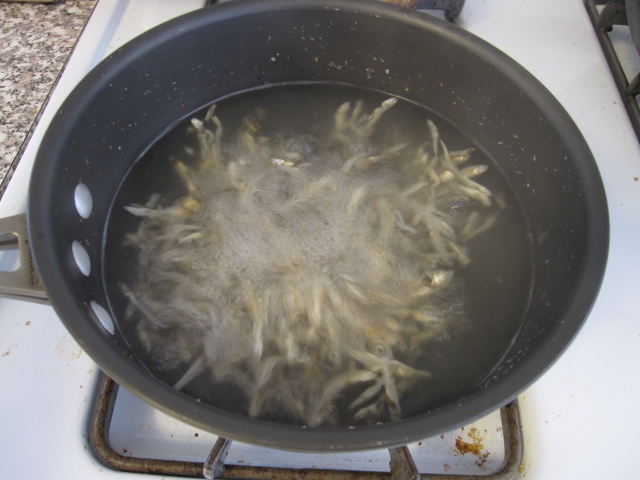
To make this one Japanese flavored I used dashi and soy instead of beef stock and wine. To start I made my dashi. I put 3 cups of water and 1/4 cup of dried anchovies in a pot, brought it to a boil, covered it, turned the heat to med-low, and let it simmer for about a half hour. Then I strained out the anchovies and set the dashi aside.

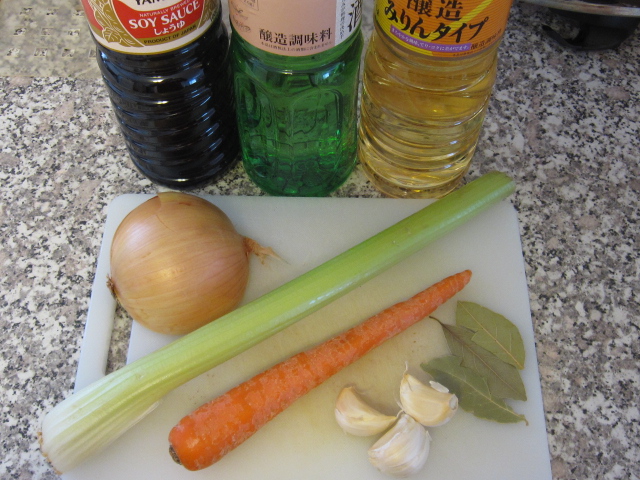
To flavor the dashi, my mise en place, I used 4 tablespoons of soy sauce, 3 tablespoons of sake, 2 tablespoons of mirin, 1/2 onion diced, 1 rib of celery diced, 1 carrot diced, 3 cloves of garlic smashed, and 3 bay leaves.

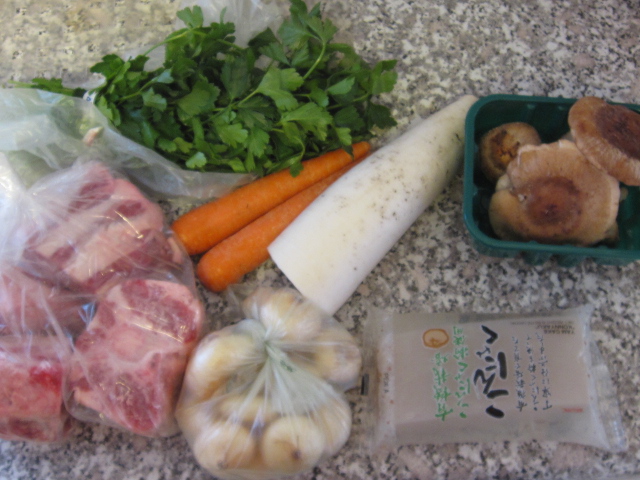
The ingredients I used to serve included 3 pounds of beef oxtail cut into 4 portions (have your butcher use his saw to get through the bone, I went to Olympic Meats for mine), about 1/4 cup of parsley chopped, 2 medium carrots chopped, 1 pound of daikon chopped, 12 cipollini onions skin peeled, 1 package of konnyaku, and 1 package of shiitake halved (large ones quartered).

To get started I heated up a few tablespoons of olive oil in my large stock pot. I dredged the oxtail pieces in flour (no need to season the flour since I used soy sauce, without soy sauce you’d probably want to season the flour with salt and pepper) and browned all sides for a couple of minutes. I did two at a time so as not to overcrowd the pot. I set the browned oxtails off the side.

Once the oxtails were all browned I added another couple of tablespoons of olive oil and added all of my mise en place. I sweated it all down for about 5 minutes. Then I put the oxtails in along with any accumulated juices on the plate and poured the reserved dashi in. Once the dashi came to a boil I let it rumble for a few minutes and skimmed the surface a few times for a clearer liquid. Once I finished skimming I added the soy, sake, and mirin. I covered the pot, turned the heat to med-low, and let it simmer for about an hour and 15 minutes.

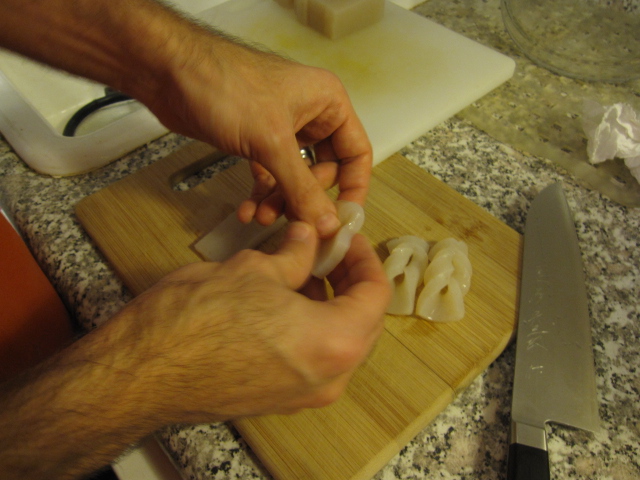
During this time is when I prepped all of my serving veggies. For the konnyaku I cut it in a very traditional Japanese way. I sliced the block into 1/4 inch strips. I put a slit in the middle of each and then folded inside of itself to make this braided shape. Not only does this add visual appeal, but I gives more surface for the konnyaku to absorb the flavors of the broth.

After the initial hour and 15 minute braising time I removed the oxtails and strained out all of the mise en place. With the back of a wooden spoon I squeezed out every last drop of flavor from the soft onion, celery, and carrot. I wiped out my stock pot, poured the strained broth back in, put the oxtails back in, put the serving veggies in, brought it up to a boil, covered the pot, turned the heat to med-low, and let it simmer for another 45 minutes. That was enough time for the daikon to absorb the broth flavors and become nice and tender.

To serve, I placed on piece of oxtail in a large bowl and surrounded it with broth and veggies. I sprinkled the parsley all over the top. On the side was white rice with ground sesame seeds and some seaweed salad (the same kind you get at your neighborhood sushi joint, I picked some up at the Mitsuwa Market).

As if I weren’t already in-love with myself, this dish made me fall heads-over-heals in-love with myself. I can only image what it did to my wife.

Read Full Post »

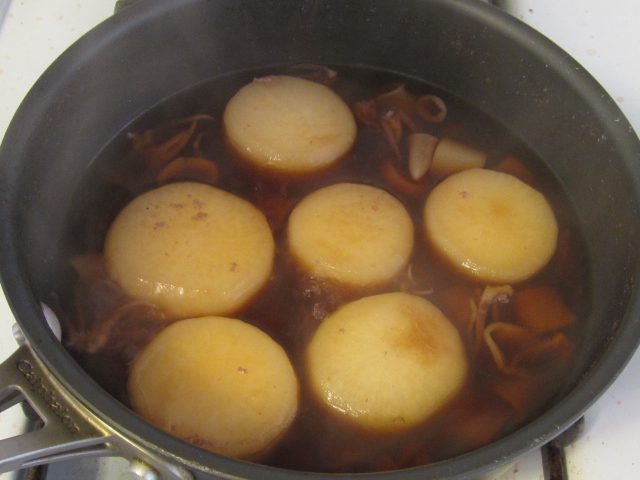
In order to solidify my role as a good Japanese housewife I decided to make another classic comfort dish from the Land of the Rising Sun. I haven’t made anything with squid in a long time and came across this recipe from a Japanese cook book that I have. Since I had a piece of daikon in my fridge that I needed to use, it all just seemed too perfect. And yes, I am perfect!

The first thing I need to do was make 3.75 cups of dashi. We don’t have any bonito flakes in our fridge, but we do have dried anchovy in our freezer that are also used for various types of dashi. In a soup pot I poured in a little more than 3.75 cups of water knowing that some would evaporate and added about 1/3 cup of the dried anchovy. I brought it to a boil, covered it, lowered the heat to med-low, and let it simmer for about 3o minutes. Then I strained out the fish and had a really nice flavorful dashi.

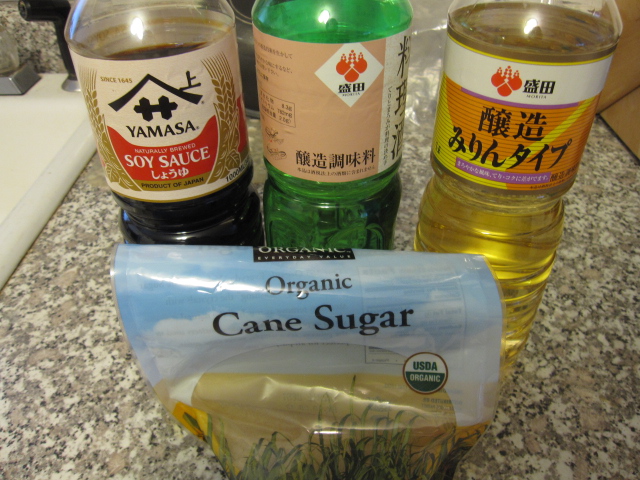
The rest of my ingredients for this dish included 4 tablespoons of soy sauce, 3 tablespoons of sake, 2 tablespoons of mirin, some lime zest, about 2 pounds of daikon, 1 pound of squid (body and tentacles), and 1 tablespoon of sugar.

I cut the daikon into chunks about 1.25 inches thick and rounded the edges with a pairing knife. I’m not sure why they round the edges, maybe it allows the daikon to cook more evenly or maybe it’s just an aesthetics thing, but you probably don’t need to do it if you don’t want. Being the good Japanese housewife that I am, I went all out. I put the cut daikon into cold water then drained it just before cooking. That helps keep the texture firm. I sliced the squid bodies into 1/2 inch strips and cut the tentacles in half.

I put the daikon and squid into a heavy pot and poured the dashi in. I brought it to a boil and let it cook for about 5 minutes. Every 30 seconds or so I had to skim the surface to keep the dashi nice and clear. It’s amazing that 1 pound of squid seems to have more muck than a 3 pound chicken when boiling. So you really need to skim a lot.

Once the dashi cleared up I turned the heat to low and added the soy sauce, sake, mirin, and sugar. I covered the pan and let it simmer for about 45 minutes or so. Every few minutes I gave the pot a good shake to make sure the flavors of the dashi were well mixed.

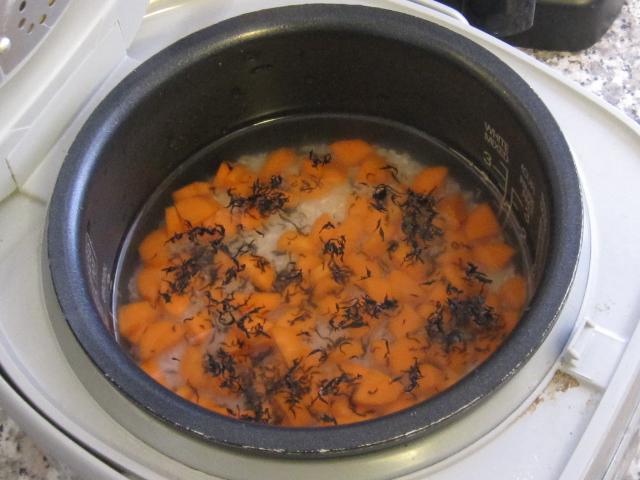
While the squid and daikon were simmering I made some hijiki-carrot rice. After rinsing 2 cups of rice and measuring out the liquid I added a tablespoon or so of dried hijiki and 1 chopped carrot. I let it sit for a half hour and then started the rice cooker. Actually, I had this ready to go before starting the squid and daikon. But I didn’t hit the start button until the simmering started for timing purposes.

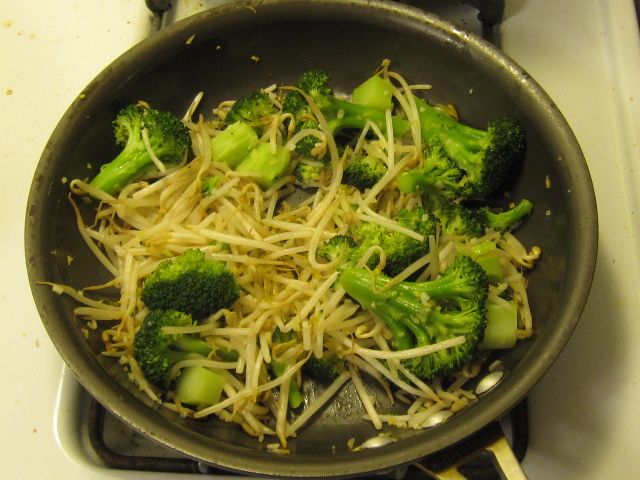
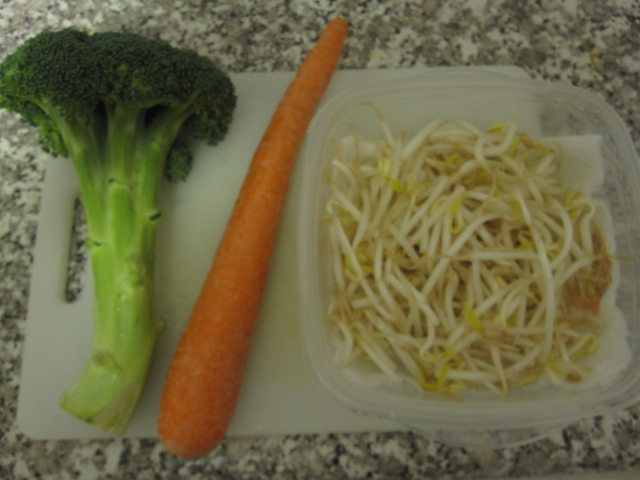
For a side dish to get more vegetables in the meal I made a simple stir-fry. I cut up 1 head of broccoli, had a couple of ounces of bean sprouts, 3 diced garlic cloves, and 1 inch of diced ginger.

I heated a skillet and added 1 tablespoon of sesame oil then added the garlic and ginger. After about 30 seconds I tossed in the broccoli and let it go for about 5 minutes before adding the bean sprouts. About 2 minutes later and it was ready to eat, just a sprinkle of salt and pepper was needed.

For serving I put some of the squid and daikon in bowls with some of the dashi. Then I grated some of the lime zest on top. Yes, as you can see in the picture I do have the hairiest arms you’ll ever see on a Japanese housewife…I hope. In Japan they’d use yuzu instead of lime, but I couldn’t find any yuzu at the store. The lime worked really well though. And the squid, oh brother the squid! It was so soft and tender it literally melted in our mouths. I haven’t had squid that good since we were in Nara, Japan over a year ago during squid season. And if you’ve never eaten daikon simmered in a soy-dashi broth you’re missing out on one of life’s finer flavors. This was the best meal I’ve cooked in a while. OIISHII!!!
Read Full Post »

This was about as simple as cooking can get while using up items that were lying around our fridge. I had about 1/4 cup left of the tomato sauce that accompanies the cabbage rolls from Kasia’s that I didn’t want to waste, so I turned it into a tasty sauce for some salmon. I grabbed the veggies I had and put together a well-rounded dinner.

I picked up 1 pound of salmon and cut it into four equal portions, I chopped up some watercress, 1/2 onion, 1 carrot, 2 small yukon gold potatoes, 2 cloves of garlic, 1/2 yellow bell pepper, and mixed together 1/4 cup of Kasia’s tomato sauce with 1 heaping tablespoon of ground horseradish.

In a small saucepan I heated the sauce gently, not to cook anything, just to have a warm sauce. When I tasted it I decided to add 1 tablespoon soy sauce. That really did the trick, it almost made the sauce taste Japanese. I mean, horseradish is basically wasabi.

For the vegetables I heated up a saute pan and added a tablespoon of vegetable oil and 1/2 tablespoon of butter. Once the butter had melted I tossed in the potatoes and let them start to crisp up for about 10 minutes while occasionally shaking them around. Then, I added the garlic and onion and let them sweat down for about 4 minutes before adding the bell pepper and carrot. I let everything saute for another 5 or 6 minutes and then added the watercress along with salt and pepper.

While that was going on I had drizzled some olive oil on the salmon and then seasoned it with salt and cracked white pepper. I put it in the oven at 375 degrees for about 10 minutes.

To serve, I put some white rice on the plate next to the veggies and salmon. I spooned some of the sauce on top of the salmon. Perfect for a cold beer to wash down. Simple, healthy, fast, and tasty.

Read Full Post »

Braised yakitori, kind of a misnomer. Yakitori translates to “grilled chicken”. I didn’t grill anything for this dish. Braised typically means cooking something in liquid over low heat for a long period of time. I didn’t do that either. What I did was make a standard yakitori marinade and cook some chicken thighs along with green onions in it. Why did I call this “Braised Yakitori”? Honestly, I just don’t know what else to call it.

First thing I did was make the marinade. In a small saucepan I poured in 5 tablespoons of soy sauce, 4 tablespoons of sake, 1 tablespoon of mirin, and 1 tablespoon of sugar. I brought it up to a low boil and let it gently simmer for about 5 minutes or so. I just wanted the sugar to dissolve and the marinade to thicken up slightly. After that I turned the heat off and let it cool down for about an hour, until it reached room temperature.

I minced up 2 garlic cloves and chopped up 6 green onions and 6 skinless and boneless chicken thighs. I mixed them all together in a glass dish and poured to marinade over. Covered with plastic wrap I put it in the fridge while I got the veggies and miso soup ready.

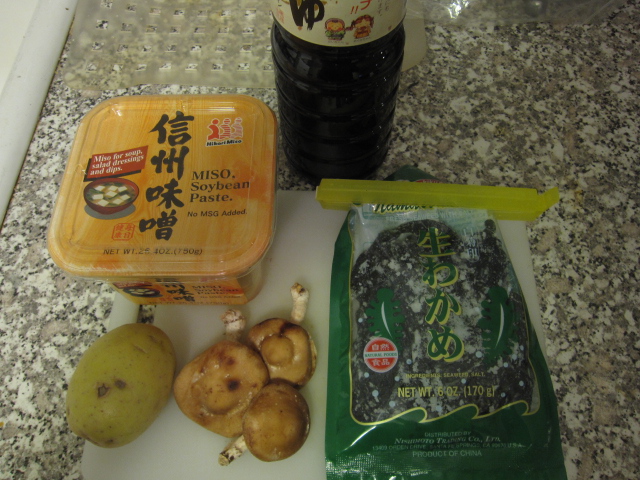
For the miso soup I only made 2 portions. We had some tomato soup leftover from Kasia’s that became lunch today, so I didn’t need to make too much. I used 1-1.5 tablespoons of miso, one yukon gold potato skinned and chopped, 3 shiitake sliced, 2 tablespoons of dashi flavored soy sauce, and some salted wakame. For the wakame, you have to rinse the salt off and then let it soak in cold water for about 10-15 minutes. I honestly cannot tell you how much I used, I just eye-balled it. You have to be careful though because it does get considerable larger as it absorbs the water.

In a small soup pan I poured in about 1.25 cups of water and added the dashi soy, potato, and shiitake. I let it simmer over a very low boil for about 20 minutes. That was just long enough for the potato to cook but not so long that it started to disintegrate.

Just before serving I put the miso in our little tea colander and swished it around for a few minutes until it all mixed into the soup. Using the colander keeps the miso from being chunky. But, this was right before serving (at which time I also added the wakame). Before I did this I made the veggies and cooked the chicken.

I kept the veggies very simple. I cut up 1 head of broccoli, sliced up 1 carrot, and rinsed about 2-3 ounces of bean sprouts. I got my steamer going and steamed the broccoli and carrot for about 5 minutes. After that I added the bean sprouts and let it go for another minute or so. A little sprinkle of salt and the veggies were ready.

To cook the chicken I heated up my pan and added about 2 tablespoons of sesame oil. When the oil was shimmering I just dumped everything in. It took about 9 or 10 minutes for the chicken to cook through and the sauce the thicken up a little. I seasoned with a little black pepper and that was all.

Of course, white rice accompanied the night’s chow.

Read Full Post »

Just saying Yuki’s Sukiyaki is almost as much fun as eating it. Sukiyaki is a traditional family style one-pot meal in Japan. Vegetables are simmered in a sweet soy-based broth.

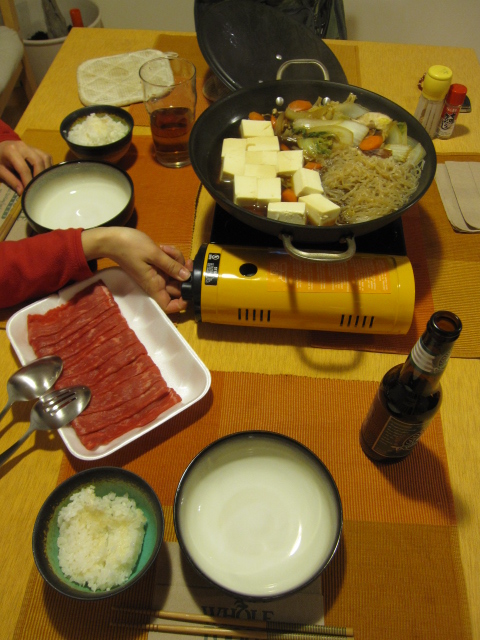
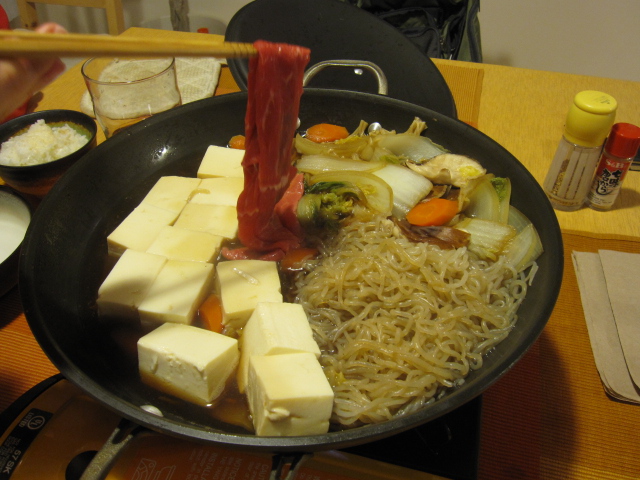
Then the pot is brought to the table and, over a table-top burner, thin slices of beef are swished around (similar to shabu-shabu) and cooked in the pot. Each individual has their own dish to put the beef and veggies in. It usually is mixed with a raw egg, but raw eggs aren’t good for prego so we omitted that.

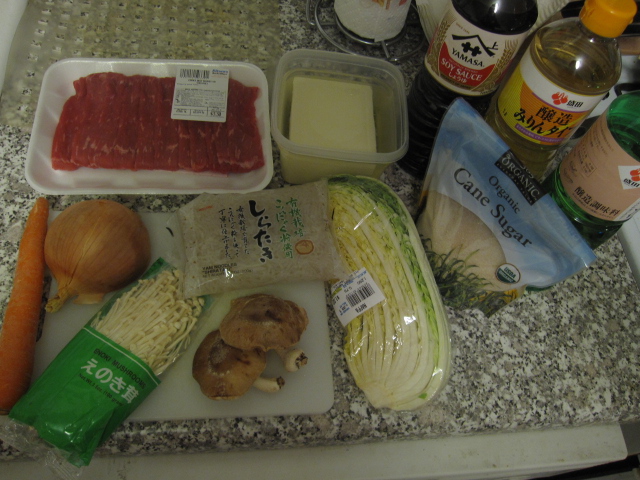
Ingredients for Yakiniku aren’t set in stone, what we used are pretty typical for the most part. I chopped up a carrot, quartered 1/2 onion, cleaned up 1 packet of enoki mushrooms, rinsed and cut up 1 packaged of konnyaku shirataki noodles, 2 large shiitake halved, 1/4 head of napa cabbage chopped, a little more than 1/2 pound of thinly sliced beef, almost 1 block of silken tofu large diced (I had previously used about 1/8th of it for miso soup, use as much as you like), about 5 tablespoons of soy sauce, 2 tablespoons mirin, 3 tablespoons sake, and 1-2 tablespoons of sugar.

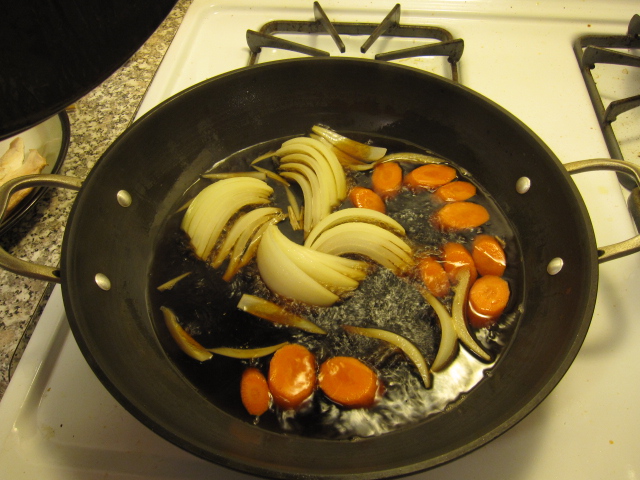
In our large pan Yuki poured in the soy, mirin, and sake along with about 1/4 cup of water. She added the sugar and brought it up to a simmer. The onion and carrot had the longest cooking time so they went in for about 5 minutes, covered.

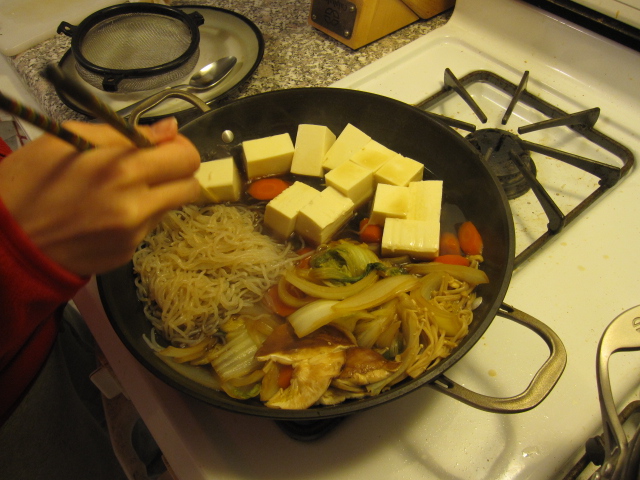
Then she added the rest of the ingredients minus the beef and let them cook for another 5 minutes or so. After that we moved the pan to our table-top burner and swished the beef in the boiling liquid. White rice on the side and cold beer in hand.

Read Full Post »

Stanley’s had these cute little Boston Lettuce heads for sale. The leaves looked perfect to make a wrap with. Then I remembered talking to Yuki about how we haven’t had ginger pork in a while, actually her craving for it. Sometimes I get it. Not often, but this time I did. What better way to put some ginger and pork together than in the buttery leaves of some fresh Boston Lettuce?

Laap is simply a Laotian ground meat dish. I can either be raw or cooked. This one is more of a Southeast Asian flavor instead of a typical laap. I used a handful of parsley chopped (cilantro would have been prefered, but I had to use up my parsley), 7 shiitake caps diced, 1 yellow bell pepper diced, 2 stalks of lemongrass tender innards thinly sliced, juice of 1 lemon (prefer lime but thought lemon would match parsley better), 1/2 inch ginger minced, 3 garlic cloves minced, 6 green onions sliced, 1 head of Boston Lettuce large outer leaves used for wraps while the small inner leaves were chopped up, 1 tablespoon fish sauce, 1 tablespoon of sesame oil, 1 tablespoon of sriracha, and 1.25 pounds of ground pork. I also used 1 tablespoon of soy sauce, but that wasn’t in the picture.

I heated up some vegetable oil and added the lemongrass, ginger, and garlic. I let them sizzle for about a minute and then added the pork. I broke the pork up as it cooked through, that took about 5 minutes. Then I added the shiitake, pepper, and green onion. I let those cooked down for about 3 minutes and then added the fish sauce, soy sauce, and sriracha. After the sauces cooked down for a few minutes I turned off the heat and stirred in the parsley, lemon juice, and sesame oil.  

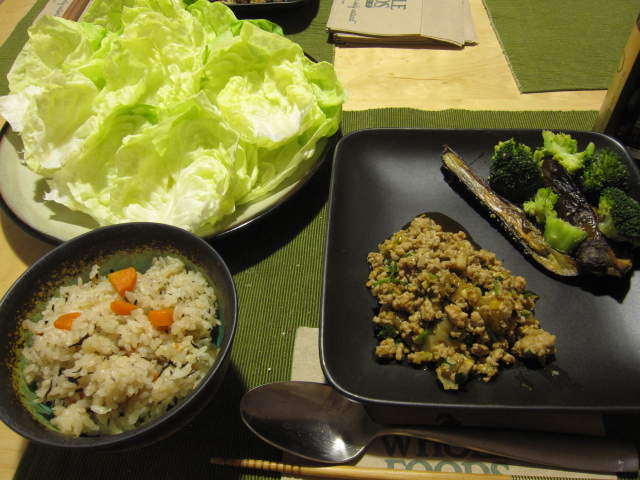
For side vegetables planned on sauteing some baby eggplant and broccoli with garlic, but for some reason I ended up quartering the eggplant and roasting it at 350 degrees for about 20 minutes in sesame oil while steaming the broccoli with ground sesame seeds. I didn’t use the garlic.

The rice I made was Japanese style. Not really the best match, but not bad. In the rice cooker, once I rinsed 2 cups of rice and filled the bowl with the right amount of water I added 1 diced carrot and a few pinches of dried hijiki seaweed. I let it sit for about a half hour before turning the machine on. I made sure to mix the carrots and hijiki in well before serving.

Read Full Post »

« Newer Posts - Older Posts »