Feeds:
Posts
Comments

Posts Tagged ‘green onion’

This is a classic stir-fry dish that I made. Typically it’d be made with snow peas, but I used haricots vert because I had some in my fridge that needed to be gobbled up. Other than that I stuck to the basics for this one.

My ingredients included a bunch of green onions sliced, 1 inch of ginger cut into matchsticks, 1 teaspoon of cornstarch, 1/2 pound of haricots vert, 1/2 cup of chicken stock, 2 tablespoons of soy sauce, 1 tablespoon of sriracha, and about 1 pound of shelled shrimp.

I started by mixing together the chicken stock, soy sauce, sriracha, and cornstarch. I whisked it together until the cornstarch was completely dissolved. I set that aside and heated up my large skillet. Once hot, I poured in about 2 tablespoons of vegetable oil and added the ginger. I let the ginger go for about 1 minute. Then I tossed in the haricots vert and let them cook for about 2 minutes. After that came the shrimp. I let the shrimp go for about 1 minute, during that time I re-whisked the liquid because starch won’t stay dissolved for very long. Once the shrimp were partially cooked and turning pink I poured the liquid in along with the green onions and a few cracks of black pepper. I stir fried it all together for about another minute or two and then served it up. After I plated I decided to tear up some cilantro for garnish.

Besides white rice I made some miso soup to go along with the shrimp. You’ve read about my miso soup numerous times so I won’t bore you with how I made it, I’ll just let you know what ingredients I used this time as it’s always different. For this batch I chopped up some rapini, 6 shiitake, 1/2 onion sliced, about 1/2 block of tofu cubed, 2 yukon gold potatoes skinned and cubed, 2 tablespoons of dashi soy (mixed into 3 cups of water for the broth), and about 1.5 tablespoons of shiro miso. I absolutely love potato and onion in my miso soup.

Read Full Post »

Very few things get my taste buds watering like a good taco. So when I asked Yuki what she wanted for dinner yesterday at breakfast and she said, “TACOS!”, I swear I was about to make love to her right there on top of our hard-boiled eggs. Tacos it is.

Before making the tacos I got my rice going. I rinsed 1.5 cups of white rice, poured in enough chicken stock to get the right amount of liquid (about 1 cup), and then tossed in 1/4 cup of thawed frozen peas and 1 diced carrot. I let it rest for a half hour and then started up the rice cooker.

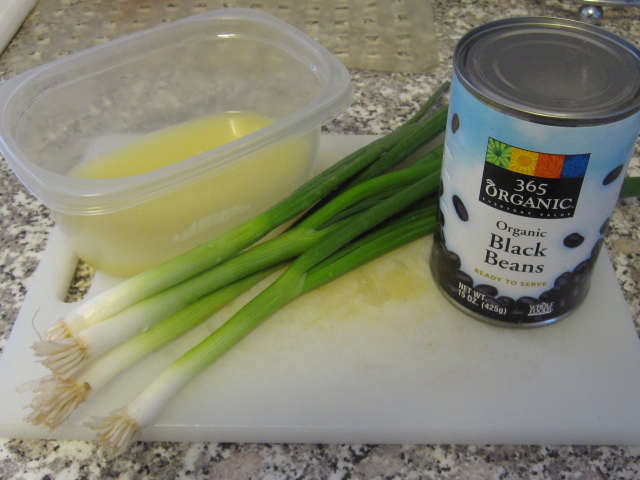
When I make tacos at home I like to have both ground beef as well as black beans for a very fulfilling taco. I don’t cook them together though. Keeping them separate allows them to retain their own flavors for full enjoyment come tortilla time. With that, to make the beans I took 1 14oz can of black beans rinsed and drained, 4 green onions chopped, and 1/2 cup of chicken stock. I put it all in a small sauce pan, brought it up to a boil, covered it, turned the heat to med-low, and let it simmer together for about 15 minutes. I seasoned with salt and pepper before serving.

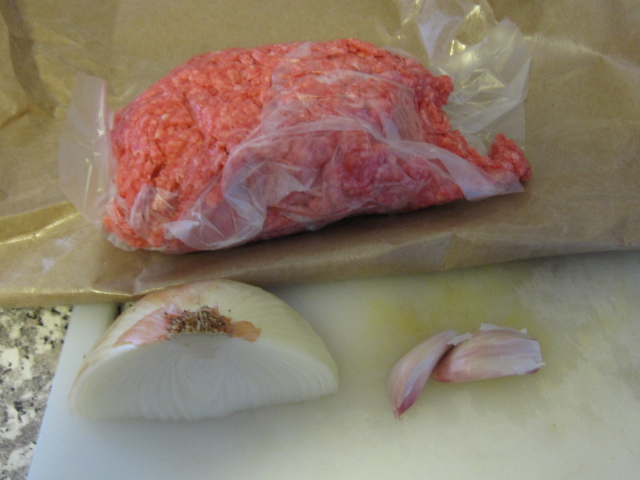
For the meat I used 1 pound of ground chuck, 1/4 onion diced, 2 garlic cloves minced, and 1 tablespoon of cumin (forgot to put in the photo).

I heated my pan and poured in just enough olive oil to lightly coat the bottom. I didn’t want the onion and garlic to stick, but the ground chuck is 20% fat so I didn’t want too much added oil. When the oil was hot I added the onion and let it sweat down for about 3 minutes. Then I added the garlic and let that go for another minute. After that came the beef. As I broke up the beef I seasoned it with the cumin, salt, and pepper. I constantly mixed it up so that it all cooked through and broke apart nicely. When it was finished cooking I poured most of the fat out leaving a little so that the meat didn’t dry out. After tasting it I decided to zest a lime and mix that into the meat. I set all of that aside and got the rest of the fixins ready.

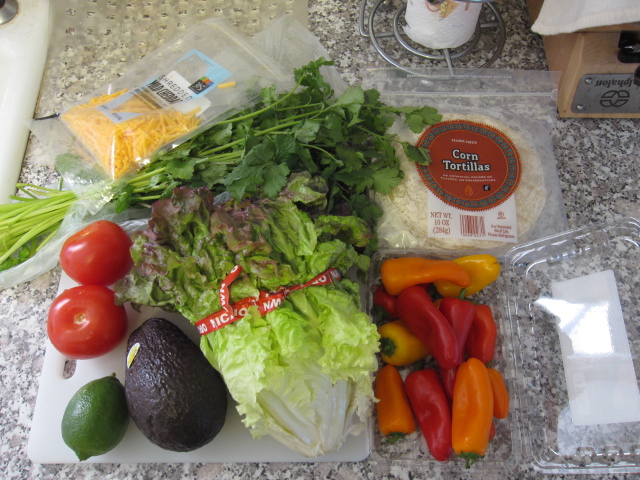
I got out the cheddar cheese that was sitting in my cheese drawer, seeded and diced two tomatoes, diced an avocado and mixed it with the juice of a lime, cut up some red leaf lettuce, chopped up some cilantro, warmed up some corn tortillas, and roasted some sweet peppers at 350 degrees for about 20 minutes. Honestly, I had everything cut up and ready to go with the peppers roasting before I started the beans and beef.

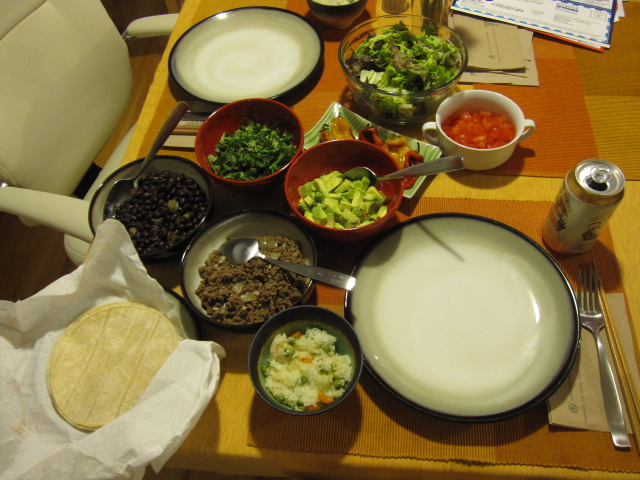
I laid everything out on the table and we away we tacoed!

Read Full Post »

Last night for dinner I made Japanese-style ginger pork with miso soup. The more I cook Japanese food the more I realize just how much healthier it is to American food. There is very little added fat and much more vegetable-to-meat ratio. Cooking Japanese-style food is extremely as well, not to mention delicious!

I first got my miso soup ingredients ready to go. I won’t go into great detail about making miso soup because I’ve done that a few times on this blog already. I poured about 3 cups of water into my pot and added 4 sliced shiitake, 3 chopped fingerling potatoes, 3 chopped green onions, and about 3 tablespoons of dashi soy sauce. I rinsed and soaked some salted wakame and added it to the soup at the end along with a large tablespoon of miso. The soup simmered over low while I cooked everything else, just enough time for the potatoes to cook.

For the pork I used about 3/4 pound of snap peas, 3 ounces of bean sprouts, 1/2 onion sliced, 1 inch of ginger grated, 1 garlic clove grated, 2 tablespoons of soy sauce, 1 tablespoon of sake, 1 tablespoon of mirin, and 4 thin pork chops each about 3 ounces.

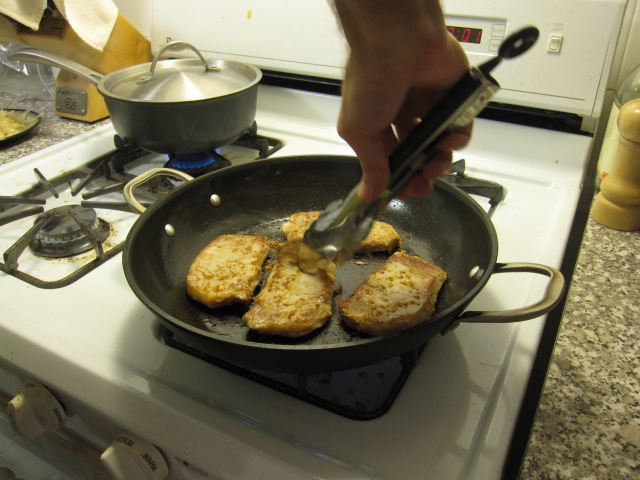
I mixed together the ginger, garlic, soy, sake, and mirin as the marinade. I let the pork sit in it for about 15 minutes or so. I heated up my large skillet and added about 1 tablespoon of vegetable oil and then cooked the onion for about 4 minutes. I took the onion out and rested it on a plate and then cooked the pork (reserving the marinade) for about 2-3 minutes per side. I rested the pork with the onion. I poured the marinade into the skillet to cook it down a little. I added about 4 tablespoons of water to help turn the marinade into a pan sauce and scrape up the bits from the pork, lots of flavor there you don’t want to lose.

Once the sauce had reduced a little bit, a minute or so, I added the snap peas and let them cook for about 5 minutes. After that I added the bean sprouts and the reserved onions.

I placed the pork on top, covered the skillet, and let it go for a few minutes while I mixed the miso into the soup. Then I plated it all up with some white rice. Yuki topped the rice with some ground sesame seeds.

So, we got 7 different vegetables into dinner with only 3 ounces of animal carcass. The only added fat was 1 tablespoon of vegetable oil split between 4 portions. No wonder America is a bunch of fat-asses while Japan is extremely fit and healthy.

Read Full Post »


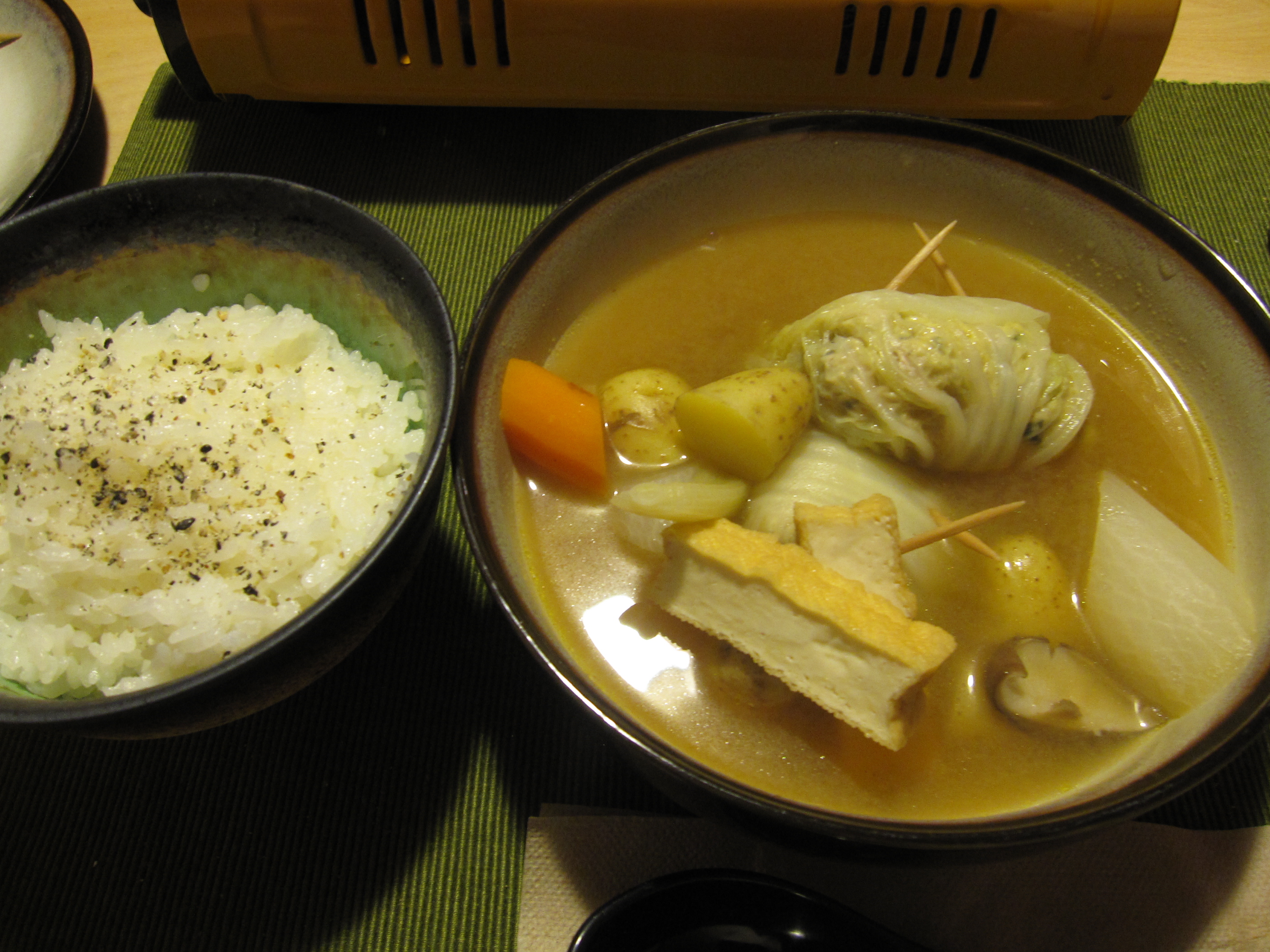
The other night I made one of Yuki’s favorites, a dish she usually makes. She, like most Japanese absolutely love nabe in the winter time and it’s hard to blame her. You just can’t beat a good table-top soup filled with meat, veggies, and a good broth. I think chicken meatballs rolled in cabbage is her favorite and one she’s made quite a few times for me, so this time I made it for her.

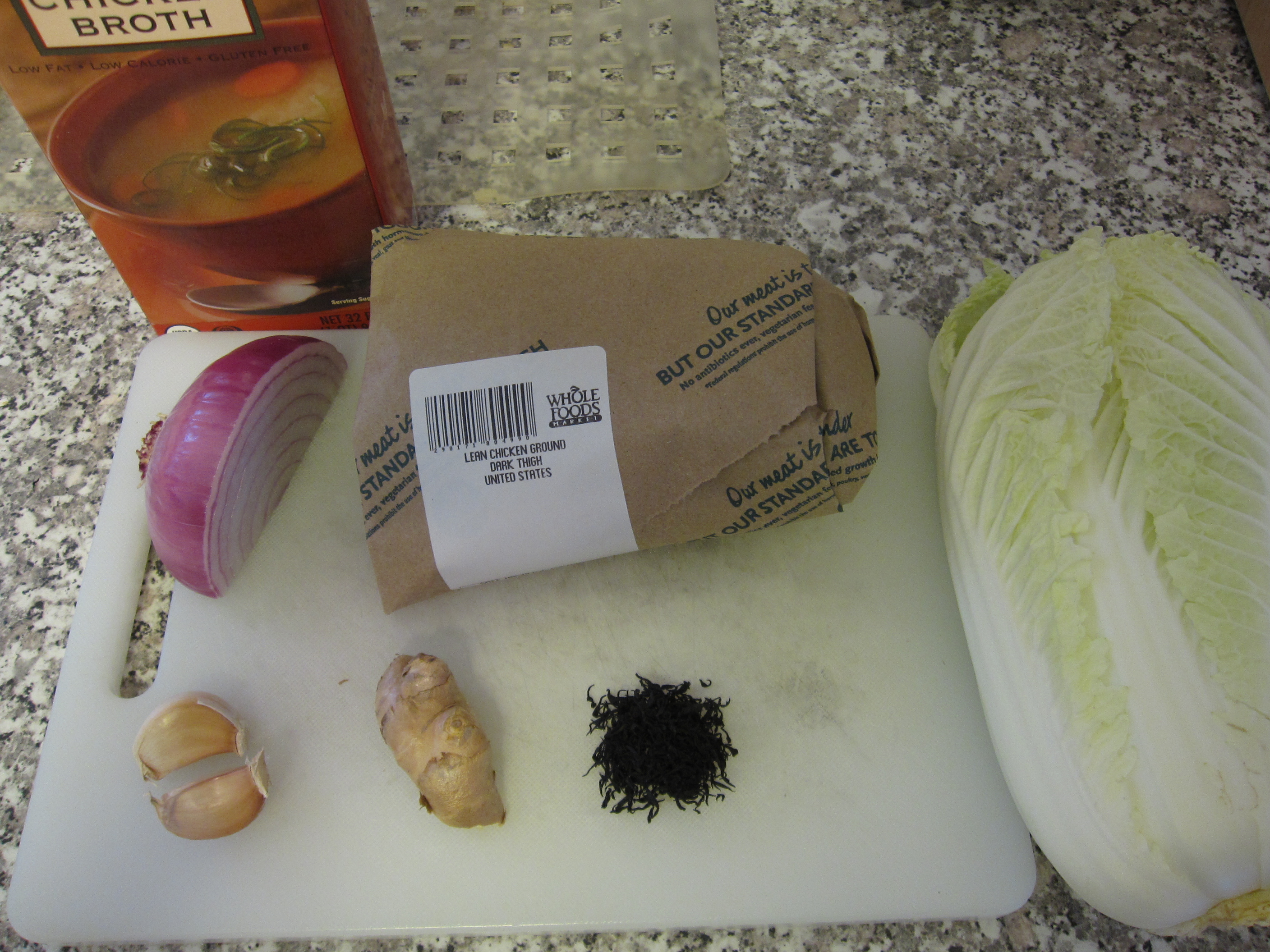
First thing I did was get the meatballs wrapped and ready to go. I used chicken stock as my base for the broth so I used 2 cups of it to soak a heaping tablespoon of dried hijiki seaweed for about 30 minutes before I could do much else. When the hijike was rehydrated I strained the broth into a soup pot. The rest of my meatball ingredients were 1/2 red onion, 2 garlic cloves, 1/2 inch of ginger, 1 pound of ground chicken thigh, and a small head of napa cabbage.

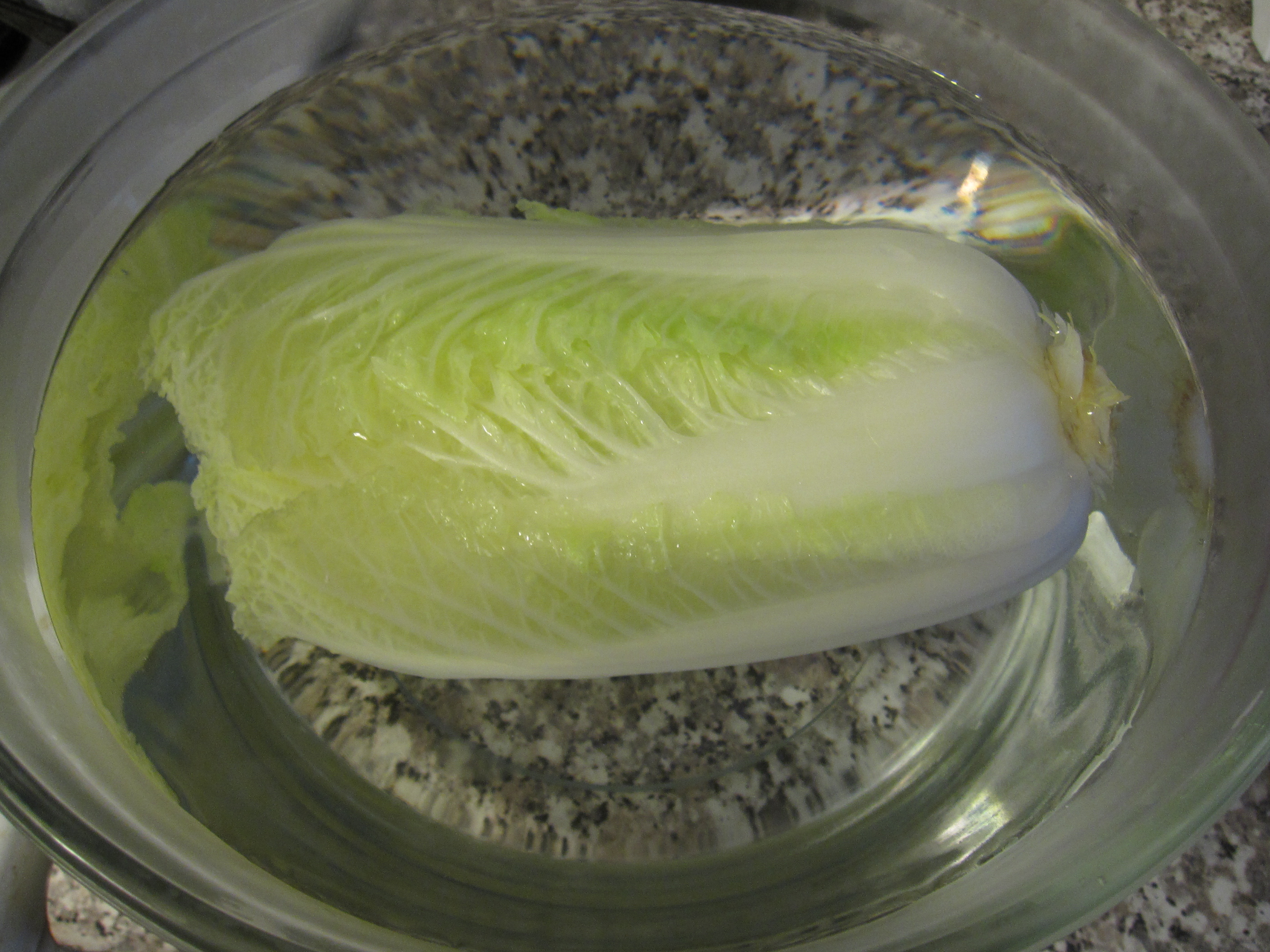
To make the cabbage more pliable I dropped it into some salted boiling water and let it boil for about 2 minutes. Then I took it out and shocked it in ice water. The boiling water softened it making it easier to roll while shocking it in ice water helps it retain its color.

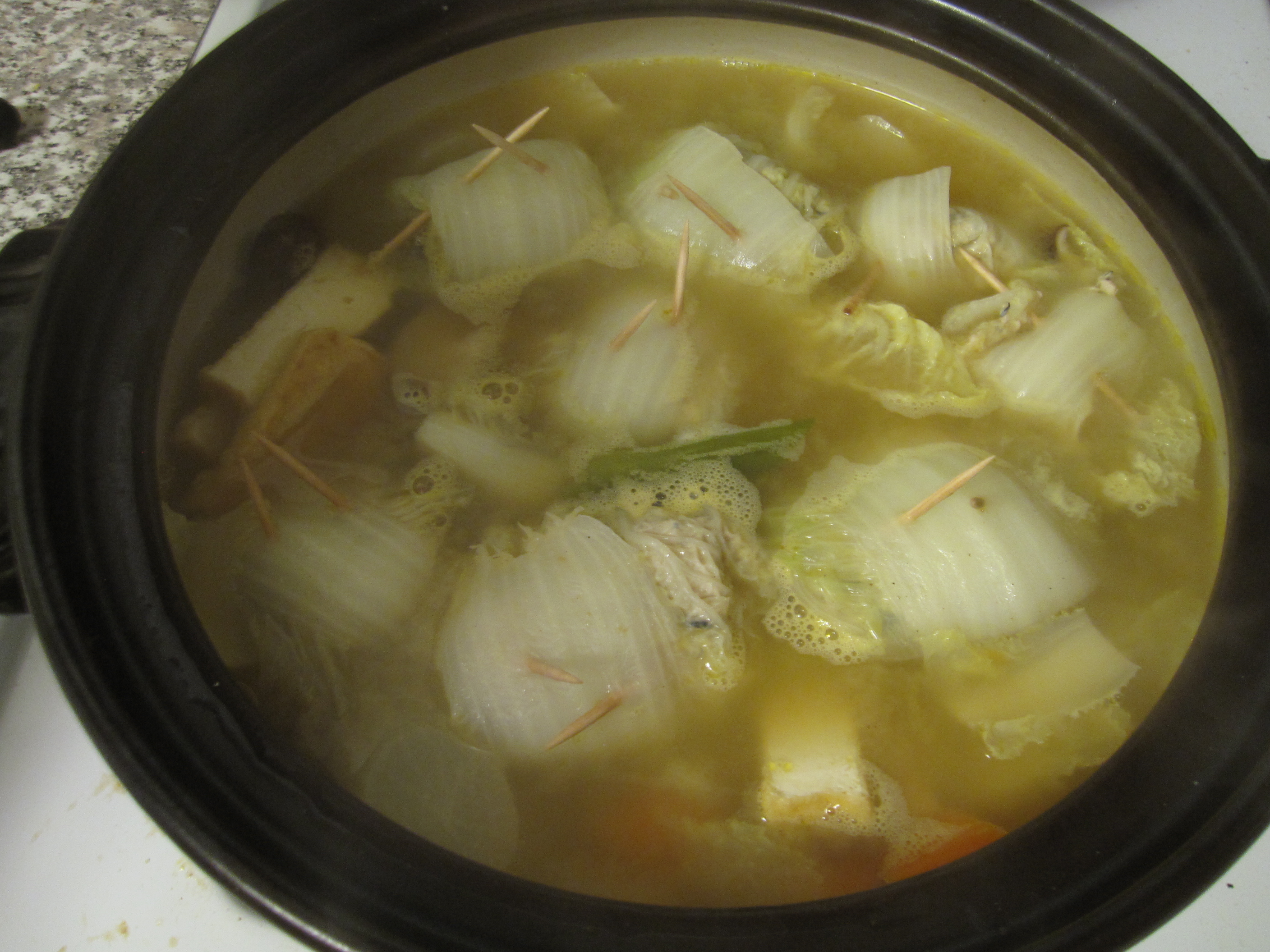
In a glass bowl I grated the onion, garlic, and ginger into the chicken meat, added the hijiki, seasoned it with salt and pepper, and mixed it thoroughly. Then I rolled walnut-sized meatballs in the cabbage and secured them with toothpicks.

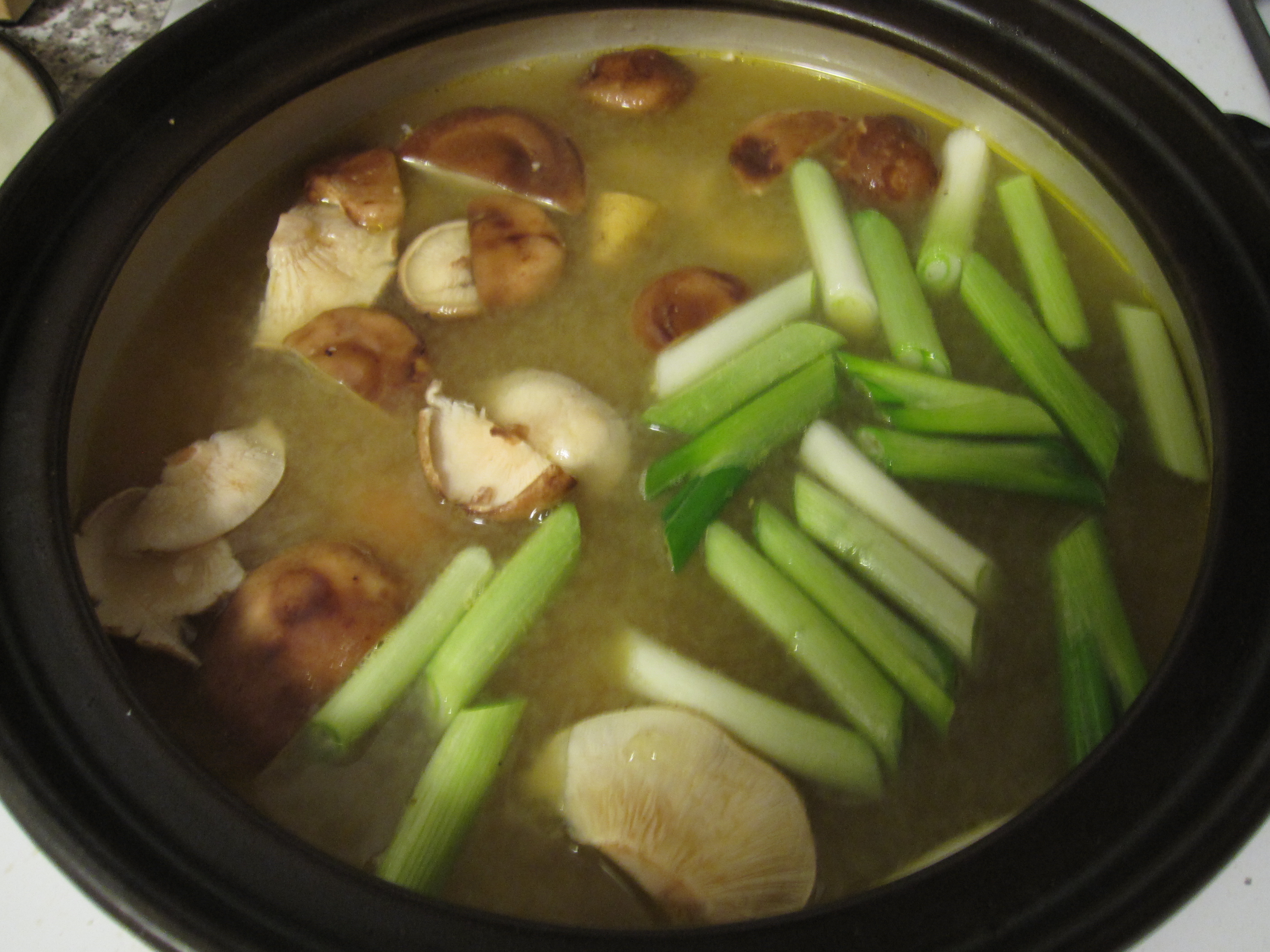
The rest of my ingredients for the nabe were 6 green onions chopped, 2 small carrots chopped, 1 small daikon chopped, 7 fingerling potatoes halved, 8 shiitake halved, a package of fried tofu sliced, and 1 Honey 1 Rib (yes, I am finding creative ways to finish up those ribs since I over-ordered).

I put the rib in the chicken stock that had already soaked the hijiki and added 2 cups of water. I brought that to a boil and let the rib simmer in the broth for about 15 minutes. Then I strained the broth into our nabe (clay pot). The rib added some nice smokey depth to the broth. It also gave me some moist tender meat to nosh on while finishing up the cooking.

Then I brought the broth back to a slow boil and added the chicken-cabbage rolls. I let them cook for about 15 minutes to make sure they cooked all the way through. Once they were cooked I took them out and set them aside.

I kept the broth at a low boil and added all of the veggies. I let them all cook for about 10 minutes.

Once all of the veggies were cooked I added the chicken-cabbage rolls back and took the nabe to our table-top propane burner.

 To serve, I poured about a tablespoon of ponzu in each of our bowls. We helped ourselves by adding broth, meatballs, and vegetables along with a dash of togarashi. I had white rice topped with ground sesame seeds along with it.

Read Full Post »

I like cooking salmon in foil packets because it’s a super easy and delicious way to get a lot of vegetables in your meal with maximum flavor. The other night I made some salmon packets with Japanese flavor.

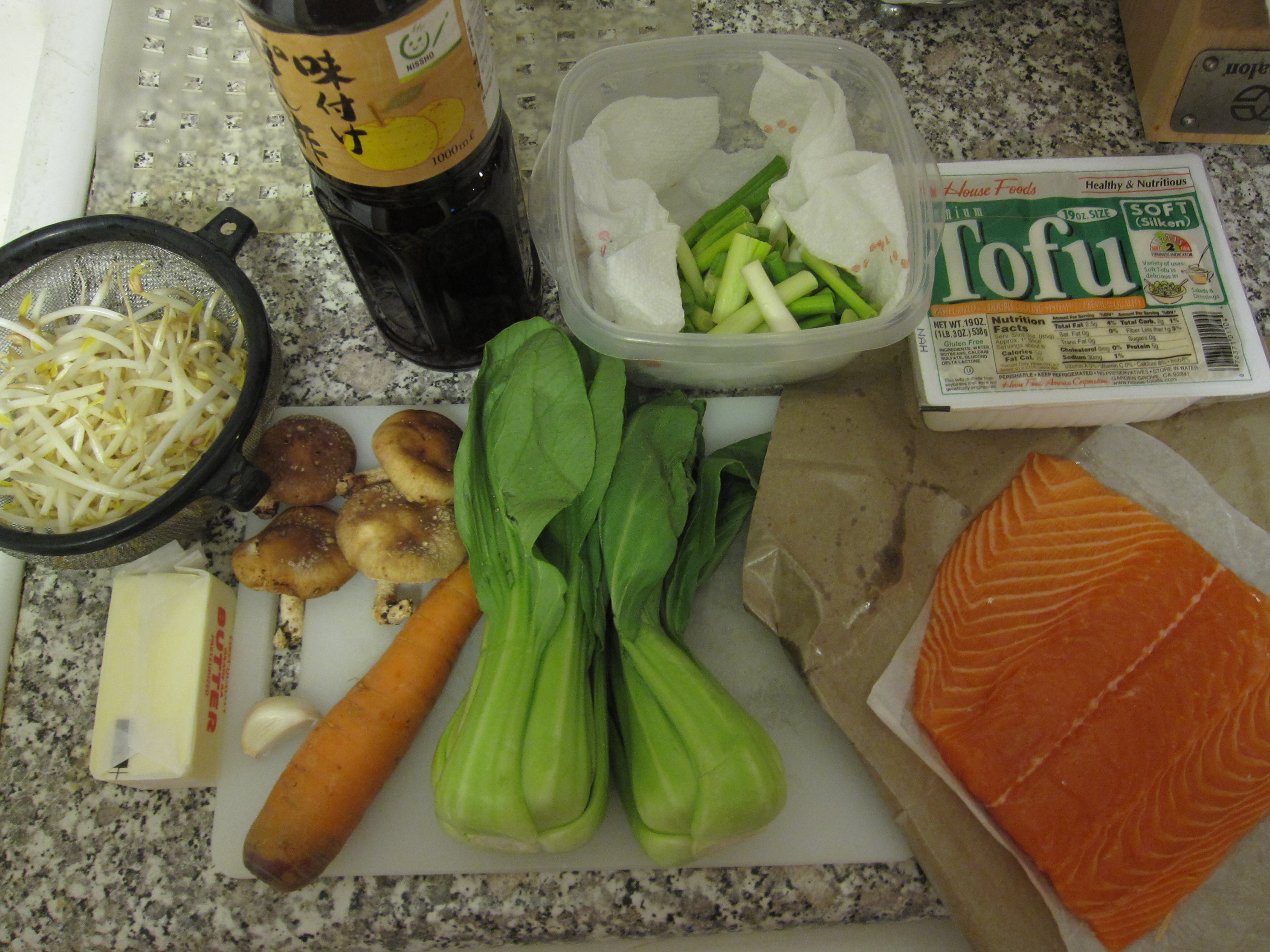
My ingredient list included some bean sprouts, butter, 1 carrot cut in to matchsticks, 1 clove of garlic slivered, 4 shiitake sliced, 4 tablespoons of ponzu, 2 large bok choy, some sliced green onions, 1/3 pack of tofu, and 1 pound of salmon cut into 4 equal portions.

I took four pieces of foil large enough to wrap everything up in and first laid down half a bok choy in each, topped that with the salmon, then divided up the rest of the veggies and threw all of that on. I cracked some black pepper, poured 1 tablespoon of ponzu in each packet, threw a small pat of butter in each, then folded them up careful to leave a little air in to allow everything to steam.

I placed the packets on a baking sheet and threw it in a 400 degree oven for 15-20 minutes. That’s all, home cooking at its easiest.

I served it with white rice. On top of the rice I sprinkled some ground sesame seeds.

Read Full Post »

Last Friday night I made this soup for dinner. It is getting really cold here in Chicago, tis the season, and I thought a nice warm soup with tasty goodness and a little spice would hit the spot. This one is real easy and can accommodate almost any vegetables you have on hand. Since it was Friday night this recipe is only for 2 portions.

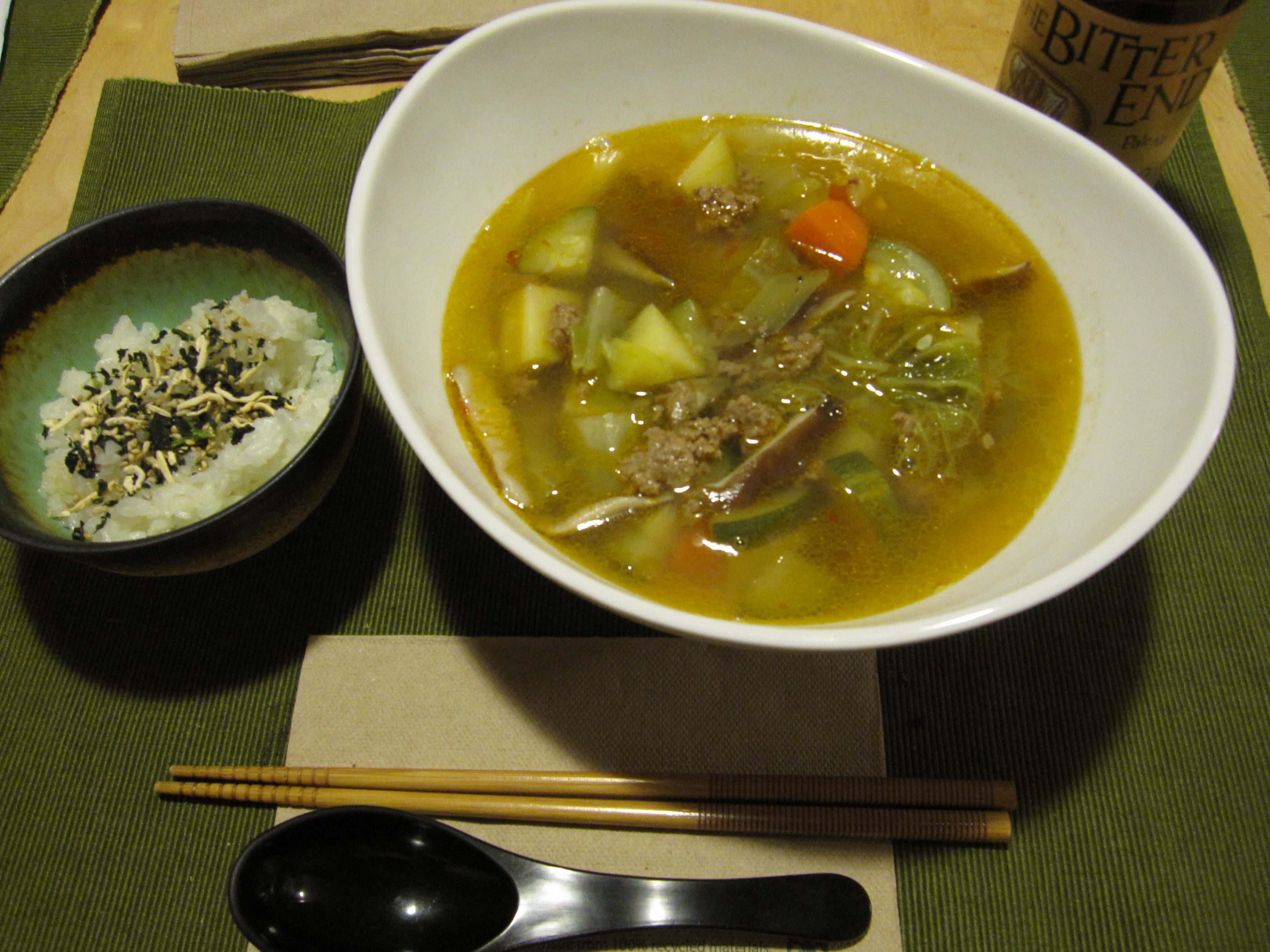
I used only about 1/3 pound of ground beef, 3 shiitake sliced, 1 clove of garlic diced, 1/2 inch of ginger slivered, 1/2  zucchini quartered and sliced, 1 carrot cut into chunks, 2 yukon gold potatoes skinned and chopped, 4 green onions cut in 1 inch lengths, 5 napa cabbage leaves chopped, 1 heaping tablespoon of Toban Djan, and 1 tablespoon of sesame oil.

In a small bowl I cut the garlic, Toban Djan, and sesame oil into the ground beef with a spoon. By doing this the beef will break apart nicely once you throw it into the soup.

I boiled 4 cups of water and tossed in the shiitake, carrot, potatoes, and green onions in. I let them simmer for about 10 minutes and then added the beef mixture. While beef was cooking I decided to pour in about 3 tablespoons of soy sauce and 1 tablespoon of sake to add a little depth to the broth. I let that simmer for about 5 minutes before adding the ginger, zucchini, and cabbage. About 5 more minutes simmering and the soup was ready.

I served it with some white rice that I sprinkled some mazekomi wakame shirasu, which is dried seaweed and little sardines. It adds some saltiness, crunch, flavor, and nutrients to rice. It’s usually used for onigiri, but I like to add to it plain rice sometimes.

Read Full Post »

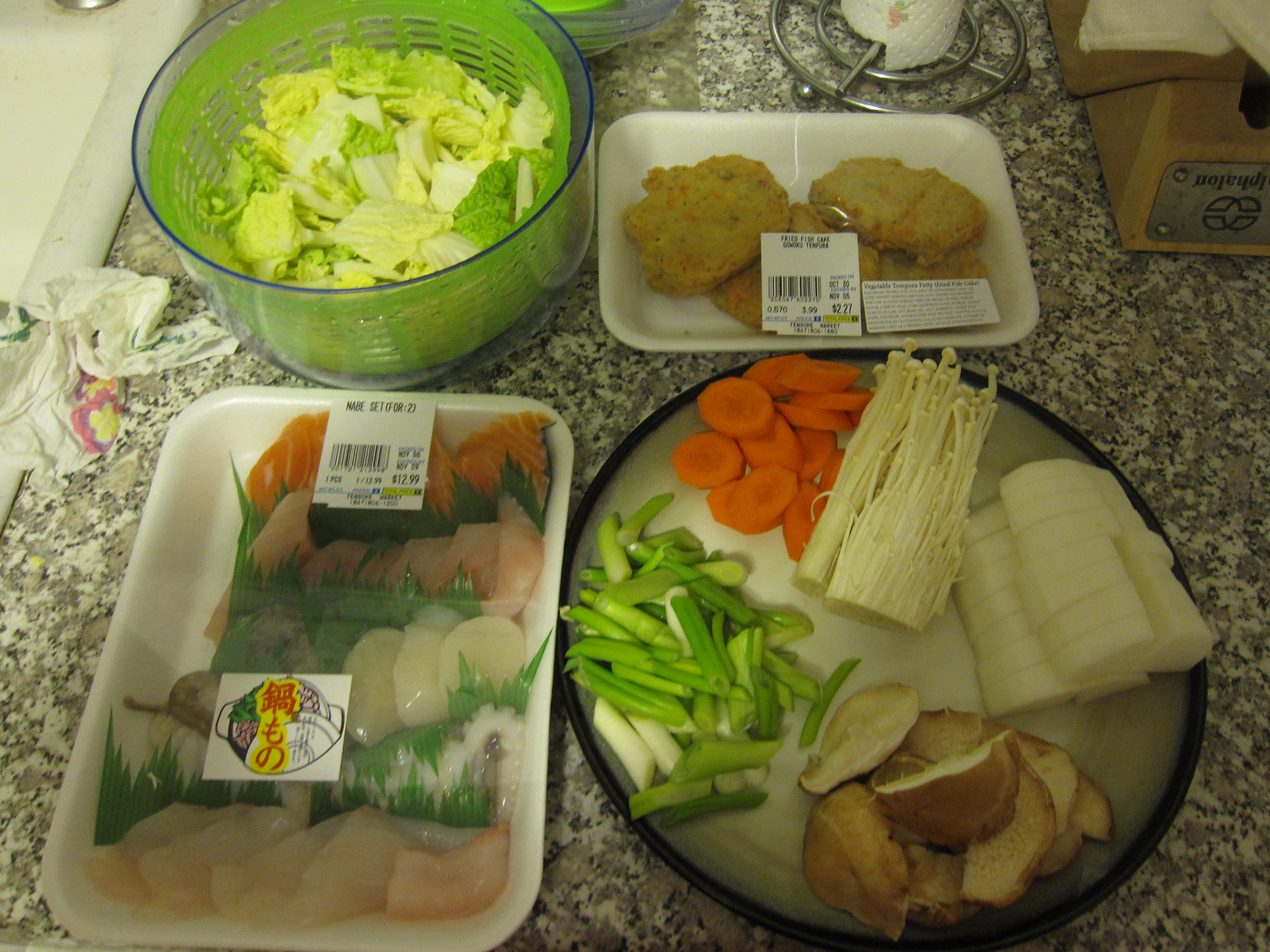
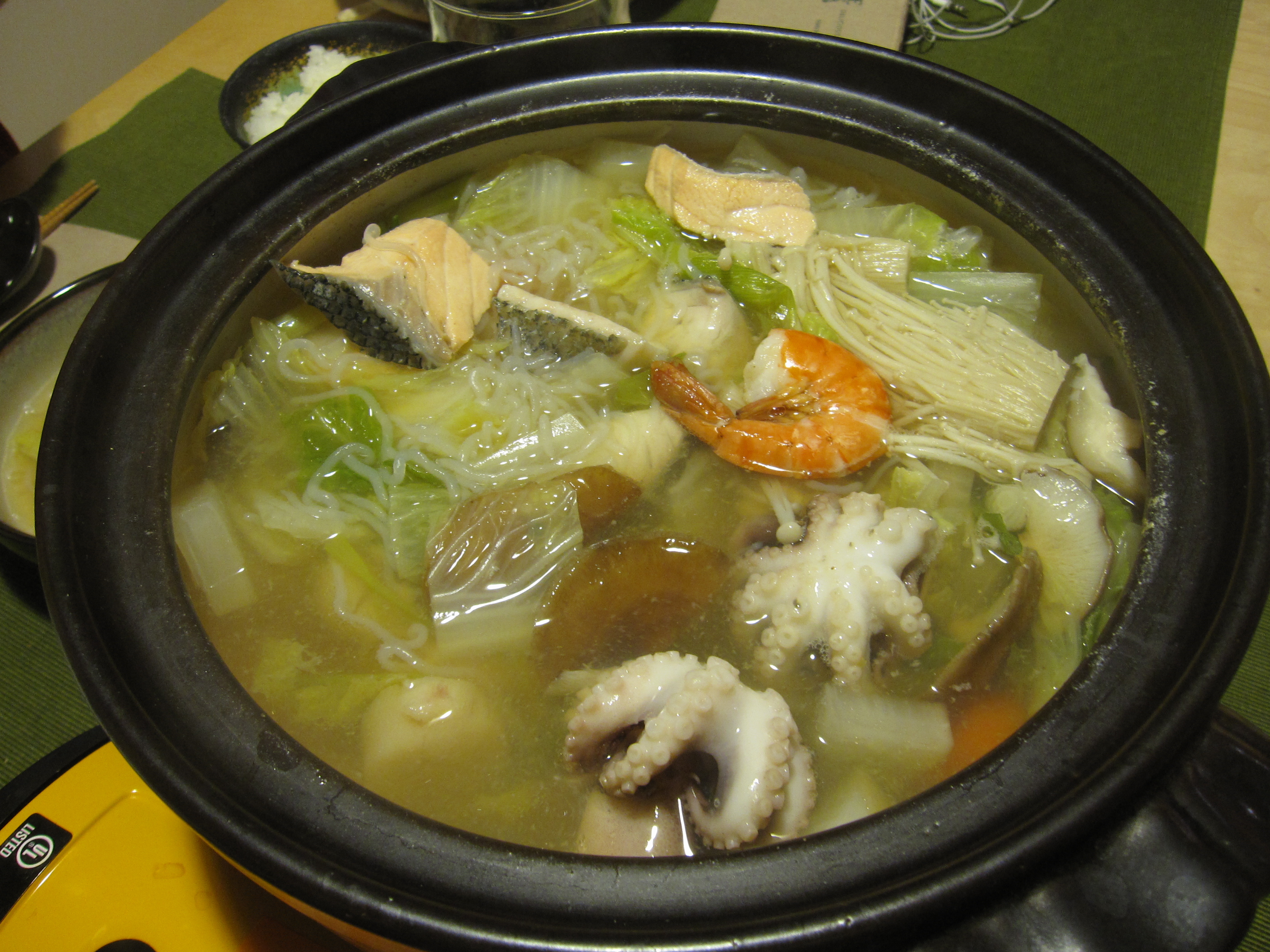
The other day we were at the Tensuke Market in Elk Grove Village, arguably the best fish market in the Chicagoland area. We were out of rice and they usually have the best deals on high quality Japanese (even though it’s all from California) rice. Sure enough, they had a great deal on some new crop. While we were there we found a package of nabe-ready seafood. Nabe is simply one-pot stew or soup cooking. Usually prepared on the stove top then brought to a table-top burner to keep warm while eating it. So, we had seafood nabe.

Yuki started by making the broth. She simply boiled about 1/4 cup of dried anchovies in about 5 or 6 cups of water for 30 minutes or so. That allows enough time for the water to take on all of that nice seafood flavor without any added oils or salts.

While the broth was boiling away I prepared the veggies. Besides the seafood package (slices of fluke, octopus, scallops, shrimp, sea bass, and salmon) I chopped up 1/4 pound of napa cabbage, 6 green onions, 1 carrot, 1 package of enoki mushrooms, 3/4 pound daikon, and 6 shiitake. There are also fish cakes in the picture, but we decided not to use them. Instead, we used 1 package of shirataki noodles which aren’t in the picture.

When the broth was ready I strained it into our earthenware clay pot and discarded the anchovies. I brought it up to a low boil and Yuki added the daikon and carrot. She let that boil for about 5 minutes or so and then added the shiitake, green onions, and cabbage. About 5 minutes later she added the rest of the ingredients.

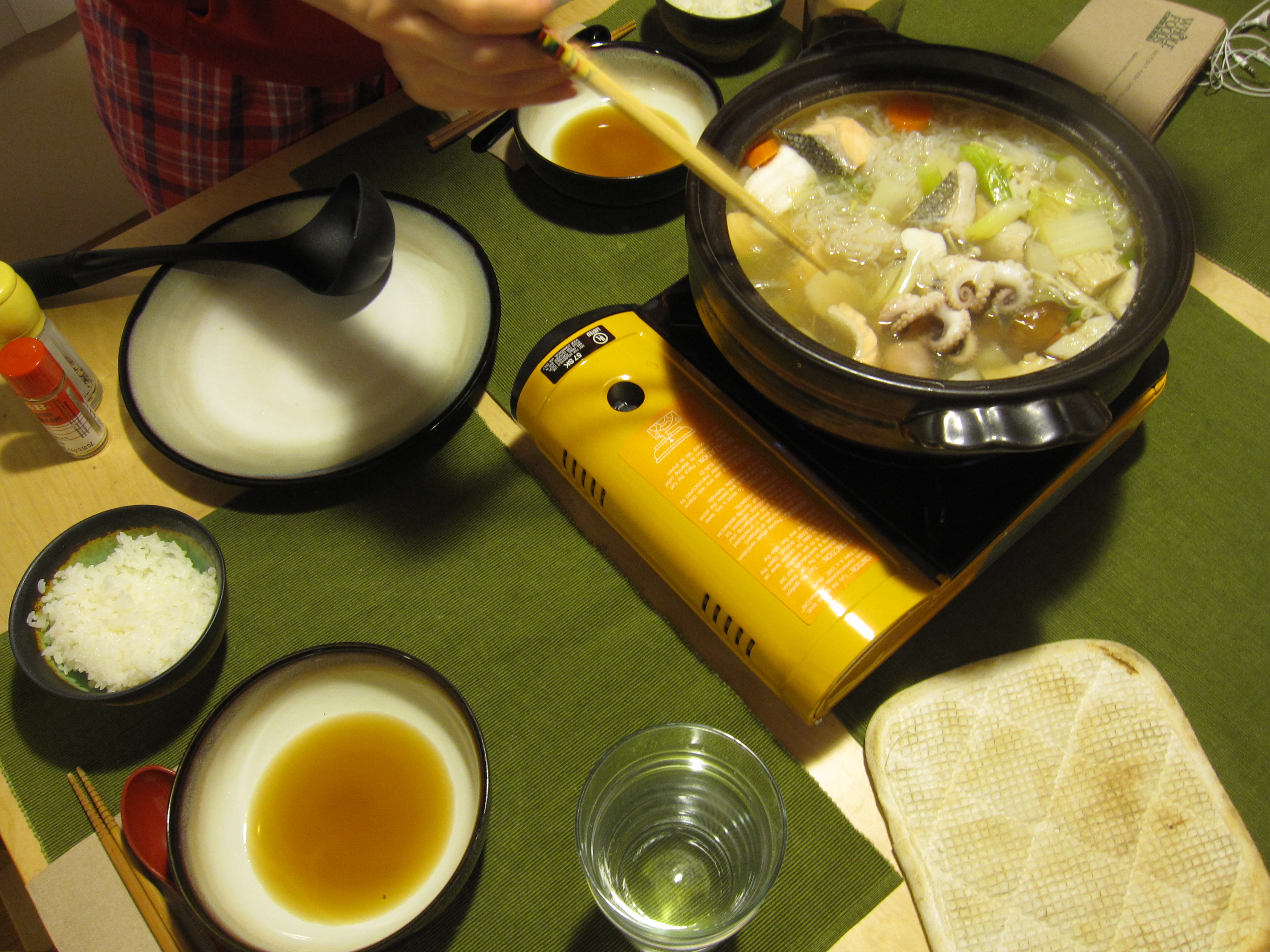
When the stew was ready, about 5 more minutes after adding the fish, we brought it over to our table and put it on our table-top burner over low heat. We poured about 2 tablespoons of ponzu into our bowls, then ladled some broth in and started eating. We had white rice on the side.

Read Full Post »

So, I had some salt cured salmon filets that needed to get eaten up from our last bimble up to Mitsuwa. These salmon filets are great because the don’t need much cooking since they’re already salt-cured. With that, we also had a kabocha that Yuki wanted me to cook. However, I did not cook it how she requested. Too bad for her. Without further ado…

First thing I did was get the kabocha ready, I only used half of it. I seeded it, cut off most of the skin, quartered the half, and then cut the quarters themselves in half.

I set them in a baking dish, drizzled them with sesame oil, salt, and pepper. I boiled about 3/4 cup of water, poured that into the pan, and put the kabocha into a 375 degree oven for about an hour. The water should be mostly absorbed by the time cooking is done keeping the kabocha nice and moist, while the top gets a little bit golden brown.  Then I took 1/4 cup of walnuts and toasted them in a dry pan for about 6 minutes.

I coarsely ground them with my mortar and pestle and then added 4 tablespoons of ponzu. I let that sit while I cooked everything else.

For the kale I used a bunch of red kale stalks removed and leaves chopped down, 1 cup of chicken stock, 1/2 onion sliced, and three garlic cloves sliced. In a hot stock pot I poured in about 2 tablespoons of sesame oil and then added the onion and garlic. About 2 minutes later I added the kale and let that wilt for about 4 minutes. Then I poured in the chicken stock and seasoned with salt and pepper. Once the stock came to a boil I loosely covered the pot, turned the heat down to medium-low, and let it simmer for about 30-40 minutes (however much time I had left on the kabocha, it doesn’t matter as long as the kale simmers for a while).

Once the kale got going I started the miso soup. I used a heaping service spoon of shiro miso, about 4 inches of daikon sliced and quartered, one small carrot cut in half moons, 4 green onions chopped in 1 inch lengths, 1/4 cup of dashi seasoned soy sauce, and 3 shiitake sliced. In a soup pot I poured in 4 cups of water and added everything except for the miso. I brought it to a boil, then covered the pot, and turned the heat down to medium-low to let it simmer for about 15-20 minutes.
I just rubbed some sesame oil on both sides of the salmon and then seasoned with pepper. My toaster oven has a broiler setting, so I just turned that on and broiled the salmon for about 8 minutes. That was just enough time to cook it all the way through and crisp up the skin. When it was finished it was time to put everything together.

I left the salmon as is. Put some of the kale on the plate and then a couple of pieces of the kabocha. I topped the kabocha with the walnut-ponzu mixture. I mixed the miso into the soup and served that up. Then I served some white rice along with everything, mainly to balance the saltiness from the salt-cured salmon.

Read Full Post »

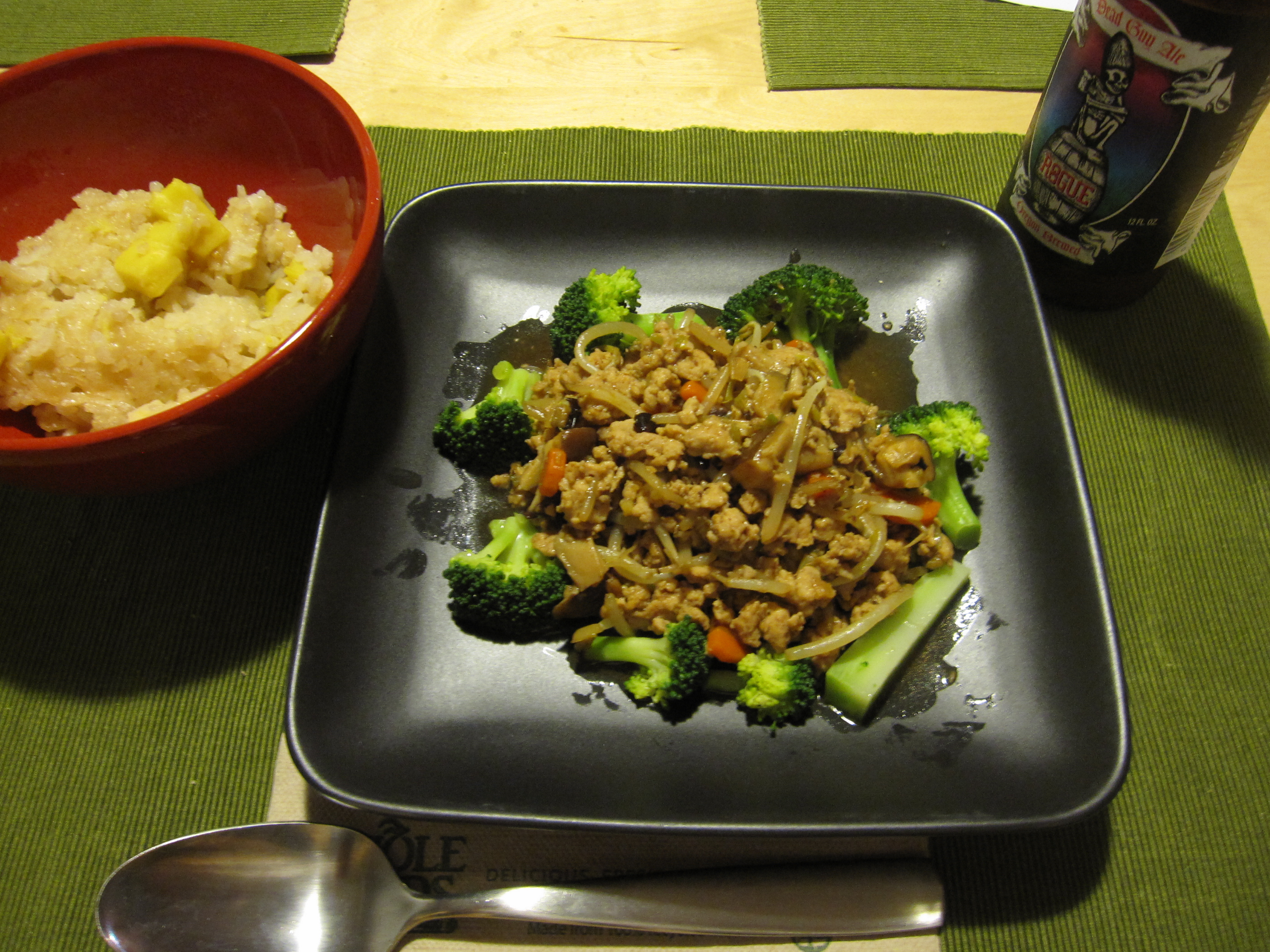
For dinner last night I made a simple Chinese-flavored ground chicken stir-fry. For the sauce, I used fermented black bean and garlic sauce. It’s a real easy way to get a lot of flavor into a quick, healthy dish.

My ingredients included 1 carrot cut into half moons, 1/2 pound bean sprouts, 2 tablespoons soy sauce, 10 green onions thinly sliced, 3 tablespoons of black bean and garlic sauce, a package of shiitake diced, 1 head of broccoli cut into florets, 1/2 inch ginger, minced, 3 cloves garlic minced, and 1 pound of ground chicken thigh.

First thing I did was to mix up the sauce. In a small dish I mixed the soy and black bean sauce. After tasting it, I decided to add a little sweetness so I mixed in 1 tablespoon of mirin. I set that aside and heated up a saute pan.

Once hot, I poured in about 2 tablespoons of sesame oil and then added the ginger and garlic. I let them sizzle for about 30 seconds and then added the carrot and green onions. I sautéed them for about 3 minutes and then added the chicken. I broke up the chicken as it cooked for about 7 or 8 minutes and then added the shiitake. Once the shiitake were coated with the rest of the ingredients I added the sauce and mixed it around. At this time I put the broccoli into my steamer. Broccoli only needs about 4 minutes to steam to a nice al dente and at this point all I need to do with the stir-fry was let the sauce boil down a little and add some pepper and the bean sprouts. So, that’s what I did. Easy as that.

The other day Yuki had made some sweet potato rice that we didn’t finish. Instead of making new rice I decided to use that up. White rice probably would have matched better with the slightly salty dish, but the sweetness of the sweet potatoes wasn’t that bad of a match, and it added a higher nutritional value to the meal. So did my beer.

Read Full Post »

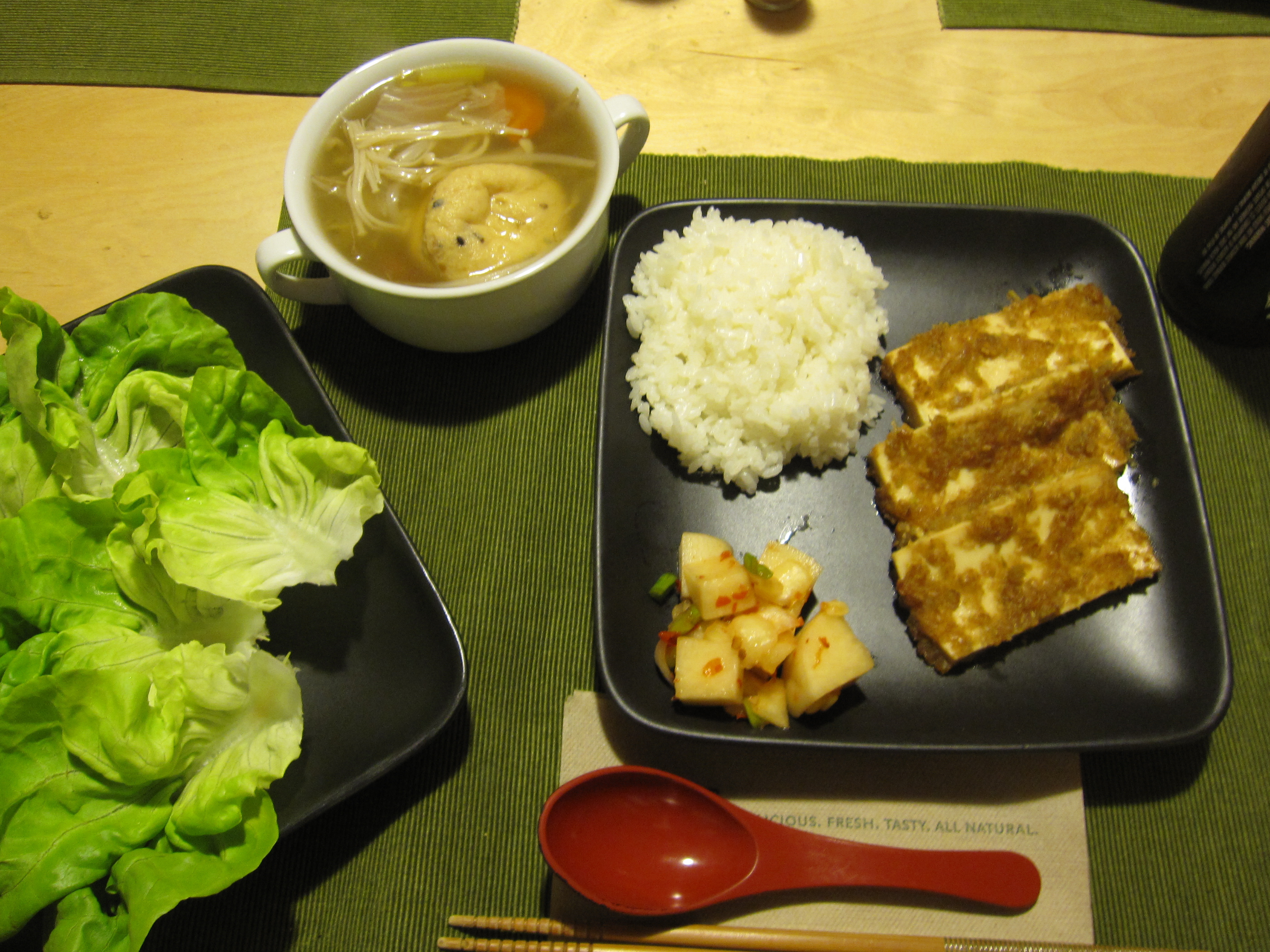
I made some daikon kimchi and really wanted to build a Meatless Monday around it. I thought I was going to make a tofu bulgolgi to stick with the Korean theme, but the marinade turned out nothing like a bulgolgi. It was very asian though so I used some ganmodoki we had bought at Mitsuwa and made a clear broth Japanese-style soup to bring more vegetables into the meal.

The daikon kimchi takes 24 hours so I had to start the Sunday. The ingredient list includes a lot of kosher salt (sea salt can be used also), 1.5 tablespoons of toban djan (I didn’t have any Korean chili paste, toban djan is Sichuan, but it is similar enough to work), 1/4 onion small diced, 1 garlic clove minced, 1 lb daikon cut into 3/4 inch cubes, 1 teaspoon fish sauce, 1 teaspoon sugar, and 2 green onions thinly sliced.

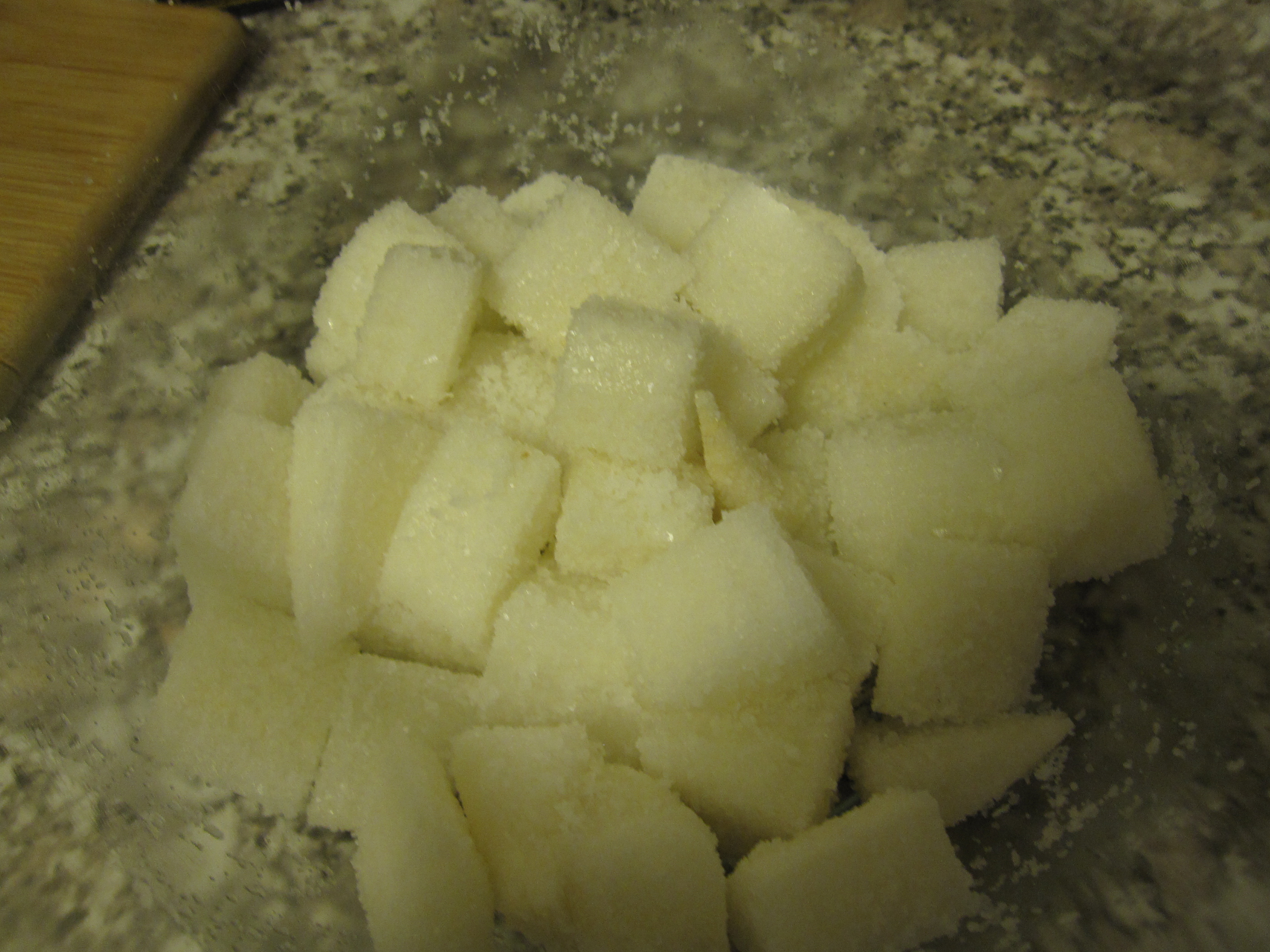
I threw the daikon into a bowl and completely coated it with salt. I left it for 2 hours and then drained off all of the liquid that accumulated at the bottom of the bowl and then rinsed and drained very well.

Then I mixed together the rest of the ingredients, tossed the daikon to coat evenly, and put into an airtight jar. I left it out for 24 hours and then put it in the fridge to chill for a couple of hours. You absolutely have to let it sit to get the flavors to penetrate and pickle, so this does take more than 24 hours to prepare. I will say, the daikon turned out way too salty when we ate it. Not sure if I added too much during the pickling process or if I just didn’t rinse it well enough, but next time I make this I will make sure it’s completely rinsed of salt and I may just add 1/2 tablespoon instead during the pickling to make sure it doesn’t get too salty. To salvage the rest of the daikon I’ll boil it in some water to make broth for noodle soup later in the week or something.

For the tofu “bulgolgi” I used 3 tablespoons of soy sauce, 1/4 granny smith apple, 1/4 onion, 1 tablespoon sugar, juice from 1/2 lemon, 1 tablespoon of sesame seeds, 1/2 inch ginger, 2 garlic cloves, 2 green onions, and 1 packet of silken tofu.

I pressed the water out of the tofu for about an hour and then sliced it into 1/4 inch pieces. I put the rest of the ingredients into my little processor and made a marinade.

I took out my glass baking dish, poured a little marinade on the bottom, lined the tofu side-by-side on top, and then covered it with the rest of the marinade. I let it sit while I prepared the soup. When the soup was almost done I drizzled a little sesame oil on top of the tofu and threw it under the broiler for about 10 minutes.
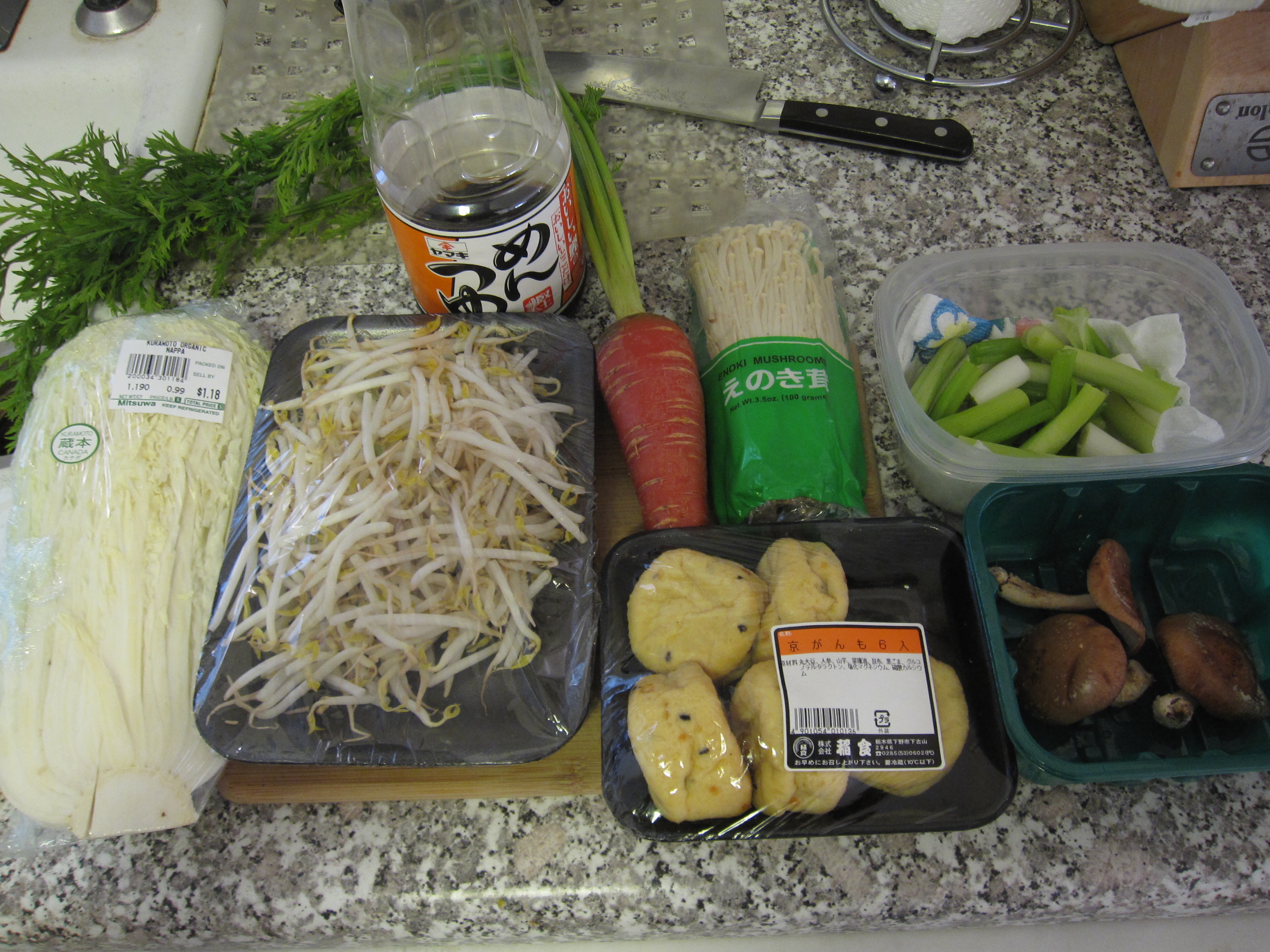
For the soup I cut up 1/4 of a napa cabbage, used some bean sprouts, 1/4 cup of dashi seasoned soy sauce, 1 carrot cut into half moons, 1/2 package of enoki mushrooms, 5 ganmodoki, the rest of our green onions (about 3), and my last three shiitake sliced.

In my soup pan I poured in about 4 cups of water and added everything except for the cabbage, bean sprouts, and enoki. I brought it up to a boil and then covered it, lowered the heat to medium-low, and let it simmer for about 15 minutes. Then I added the rest of the ingredients and let it simmer for another 5 minutes. That’s all she wrote for the soup.

I served everything with white rice and leaves of butter lettuce. That way we could make lettuce wraps bulgolgi-style.

Read Full Post »

« Newer Posts - Older Posts »