Feeds:
Posts
Comments

Posts Tagged ‘green onion’

Enough Koshar….I need some PIG!!! Last night was absolutely gorgeous out. A little windy, but otherwise Spring is here to stay. Combine the weather with two Passover Seders and I really had no choice but to grill up some sort of swine. I picked up some pork tenderloin for the occasion.

I marinated it in a mix of 5 tablespoons of soy sauce, 3 tablespoons of sake, 3 tablespoons of cider vinegar, an inch of grated ginger, 4 grated garlic cloves, and 1 tablespoon of ground coriander seeds. I covered it and left it in the fridge for about 3 hours.

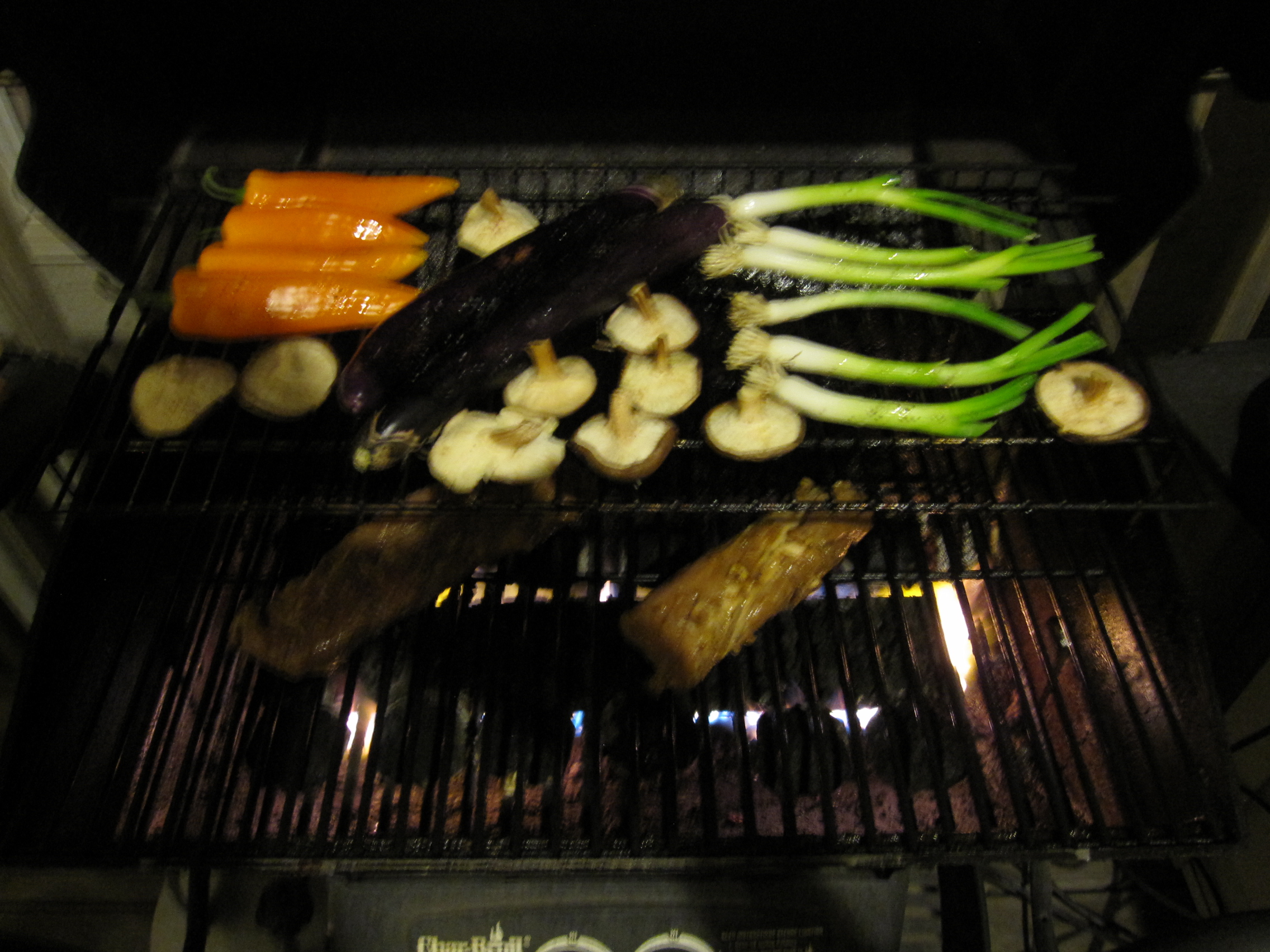
For vegetables I took two whole Japanese eggplants, 4 orange sweet peppers, a bunch of fat green onions, and a bunch of fresh shiitake mushrooms. I simply drizzled them all with a little olive oil, salt, and pepper. You’ll see me do that a lot with the grill as I really don’t think you need to do anything when you have good fresh produce and a hot grill.

Before grilling everything I took the marinated pork out of the fridge and let it rest to room temperature for about a half hour.

I grilled it all up. After letting the pork rest for about 10 minutes I sliced it and served on top of some fresh baby spinach with the grilled veggies and some white rice.

When you have a good fresh tenderloin you shouldn’t cook it all the way through. I got this one at Whole Foods so I’m not overly concerned with getting sick or anything from it. Leave it a little pink and you’ll enjoy one of the greatest textures of flesh out there. You can’t beat a nice medium-medium rare pork tenderloin.

Read Full Post »

Alright, so Tuesday night’s Passover Seder was spent at my dad’s. His Seder is different from the one with my mom’s side of the family. They do everything family style while my dad likes to serve each plate himself. I think it’s a control thing, but this site isn’t about psychoanalysis.

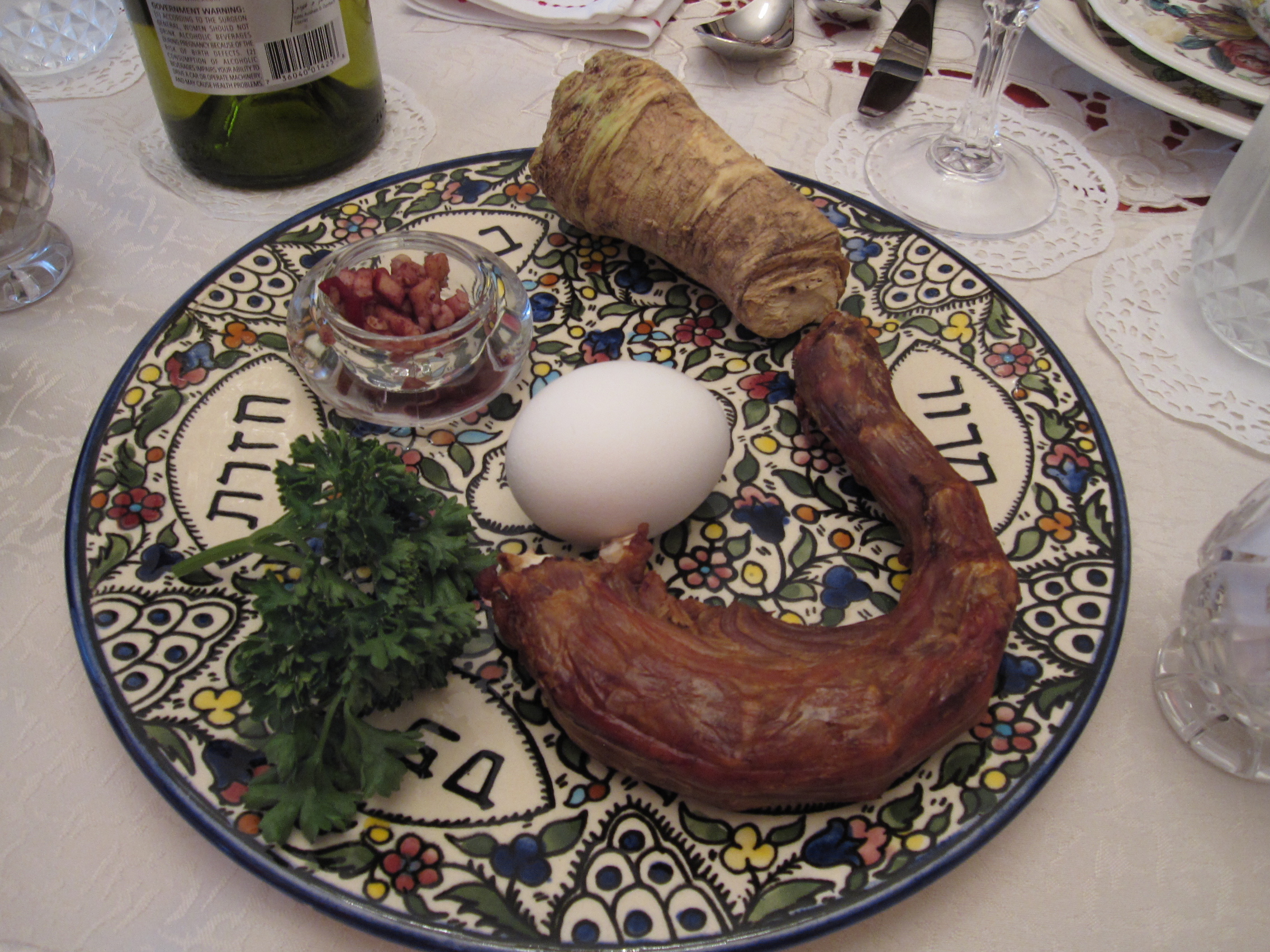
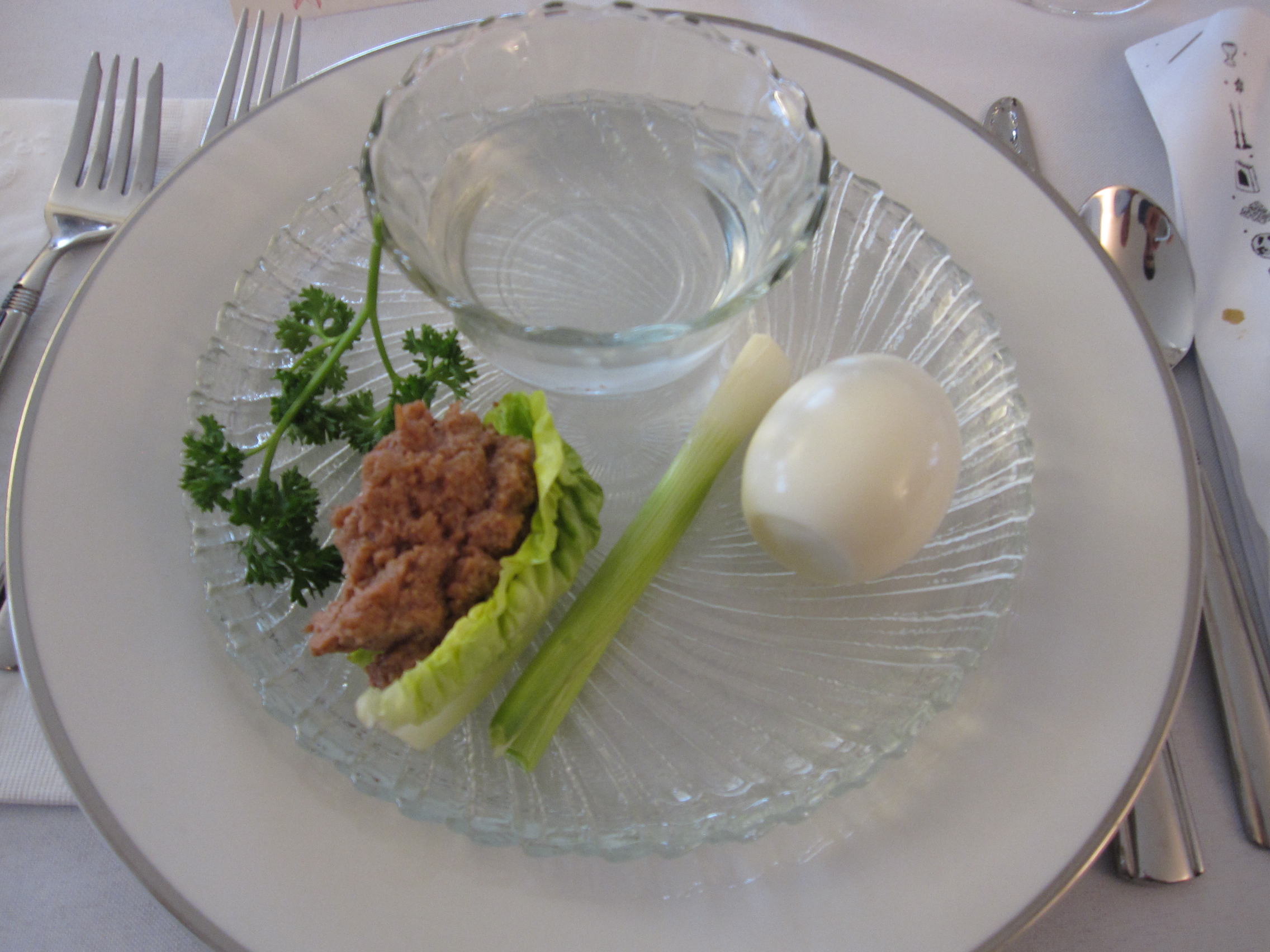
This is what his Seder Plate looks like. It has all the elements, however, he uses a roasted turkey neck instead of shankbone and a horseradish root instead of green onion.

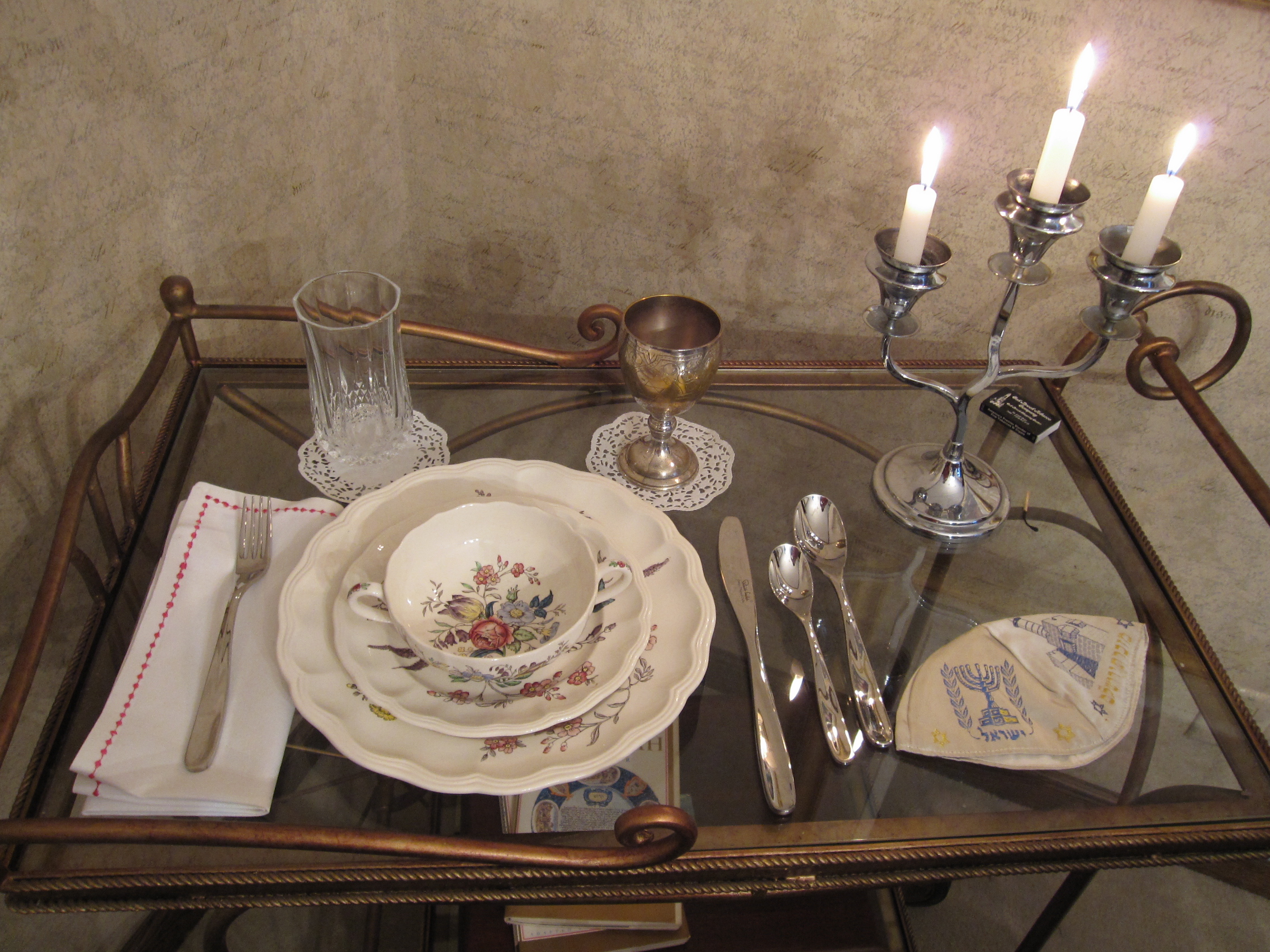
Also, instead of putting Elijah’s wine glass on the Seder Plate, he puts a full place setting off to the side for him.

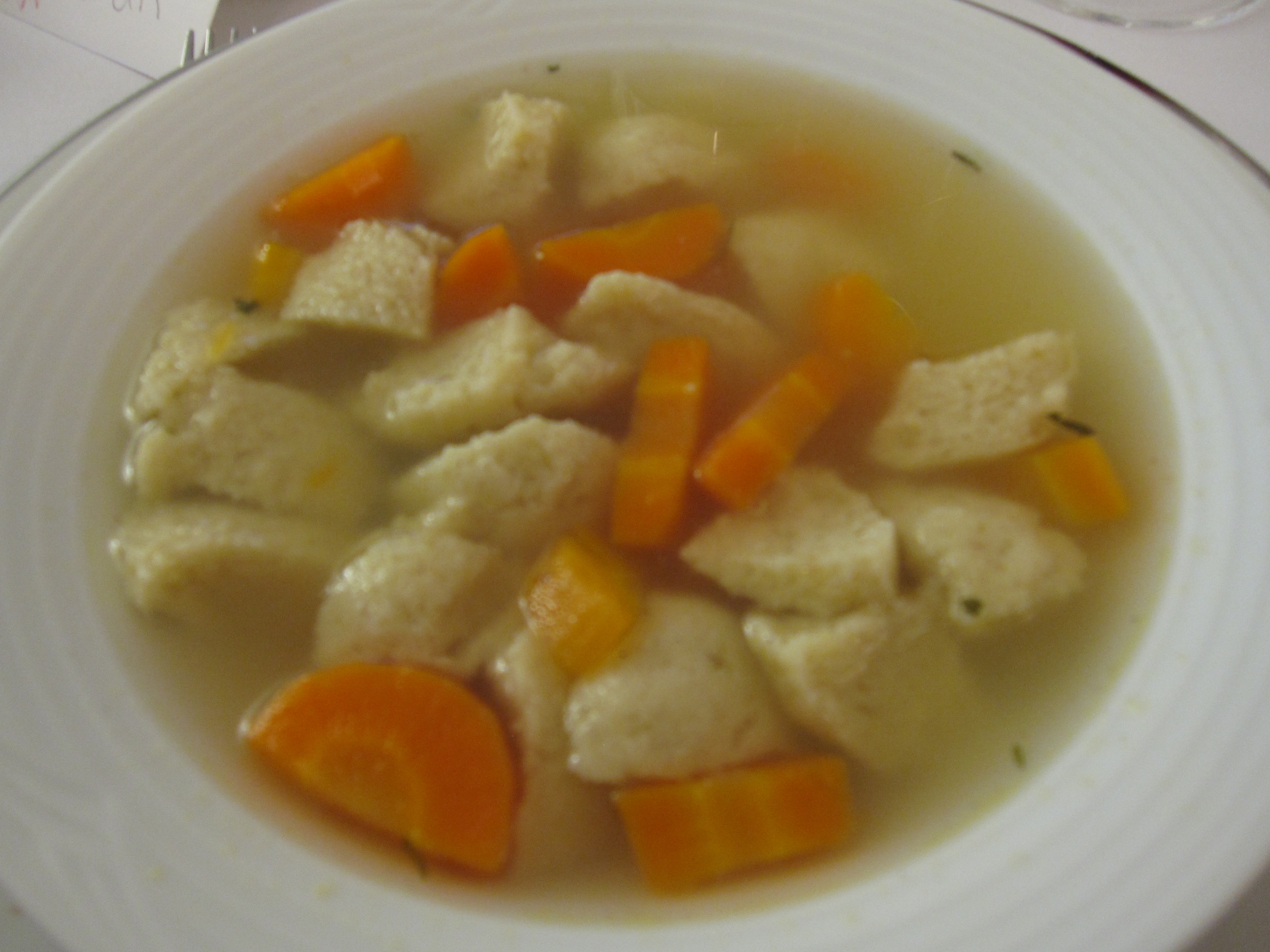
My old man did all of the cooking himself, which of course includes his Matzah Ball Soup. The main difference is that, like me, he puts the chicken meat back into the soup. I do have to say, this was one of his best batches.

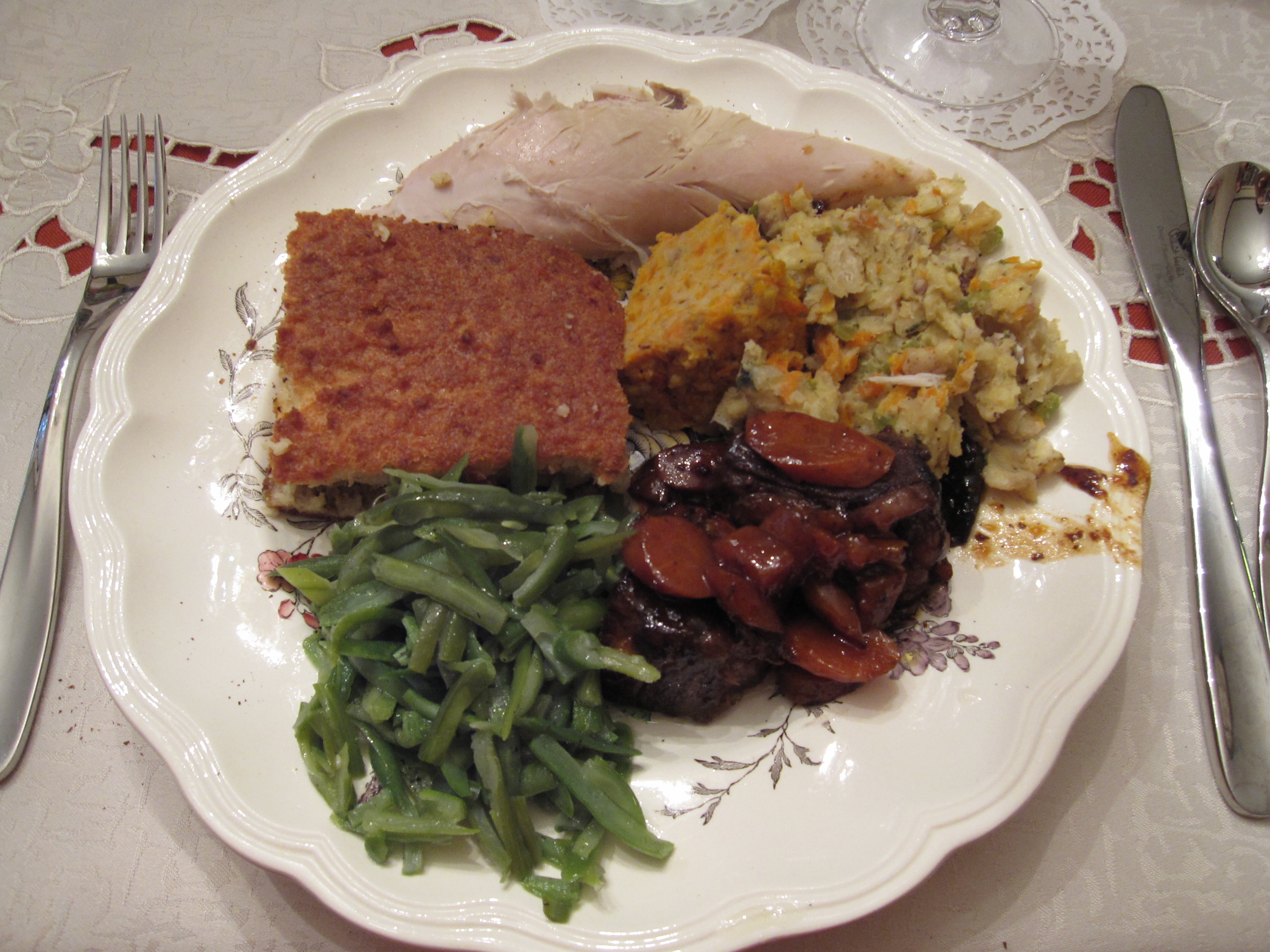
For dinner he served some roast turkey, matzah meal stuffing, carrot ring, tsimis (a slow braised beef short rib with carrots), green beans, and potato kugel (basically a casserole of grated potato).

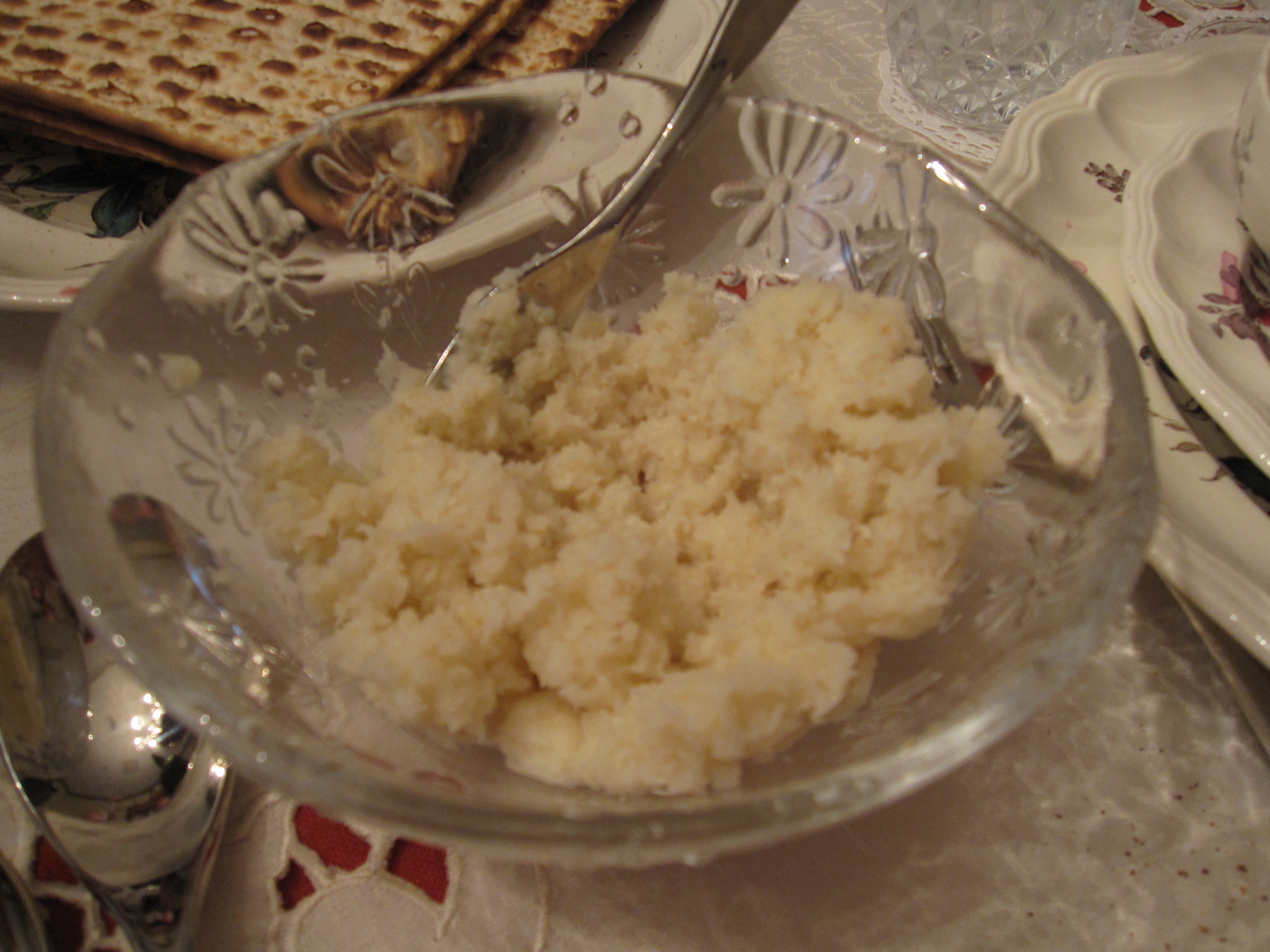
He freshly grated some horseradish.

And, of course, plenty of Matzah on hand.

I was in charge of dessert. I made a citrus sponge cake and served it with whipped cream and strawberries. The cake was made with matzah meal flour and potato flour. I mixed in the grated rind and juice from a lemon and an orange. As thick as the batter was with all of the heavy flour it actually turned out light and moist.

Read Full Post »

Last night was the first night of Passover. In America, typically the first two nights of Passover are a huge deal in the Jewish household (in Israel they only have Seder on the first night). Families get together for big feasts of traditional foods and celebrate the liberation from Egypt led by Moshe himself, called a Seder. I do want to state that I am not religious, I’m atheist. However, I am culturally Jewish and thoroughly enjoy a meal that consists of Matzah Ball Soup and slow braised Brisket. This year my brothers and I had the first night at our cousins with my mom’s side of the family.

Here is the traditional Seder Plate that sits in the middle of the table. It contains the symbols of the Passover story. Starting at 2 o’clock is the Beitzah, a roasted egg that symbolizes the festival sacrifice. Then is the Zeroa, a roasted shankbone symbolizing the lamb’s blood that was marked on doors to keep the Jews safe from the 1oth plague. After that is the Maror, we use green onion to remind us of the bitterness and harshness of slavery. Charoset is next, apples, honey, walnuts, and wine that are blended into a thick paste representing the mortar used by Jews in constructing Egyptian storehouses. Next is Karpas, parsley is used for the coming of Spring. There’s a bowl of saltwater that is used to show the tears shed by Jews in slavery. You dip the Karpas into the saltwater. Finally, in the middle is a glass of wine that’s set aside for Elijah the prophet.
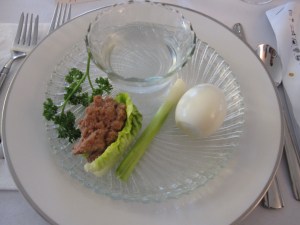
At each individual seat there’s a small plate with the edible symbols. After we get through the Haggadah and eat the Seder plate dinner gets started.
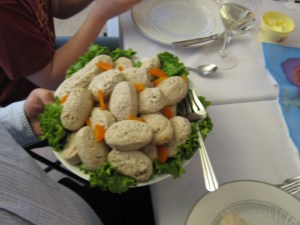
The first thing that get’s passed around is Gefilte Fish. It’s basically a classic Eastern European fish dumpling made out of whitefish and pike. It’s eaten with horseradish.
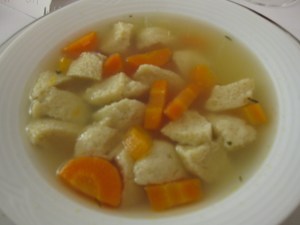
Next is the Matzah Ball Soup. I had two matzah balls, but had already cut them up into bite sized pieces when I remembered that I needed to take a photo. I also forgot to take a pic of the matzah, but that isn’t the end of the world. I do have to say that my Matzah Ball Soup is far superior, but that’s always the case.
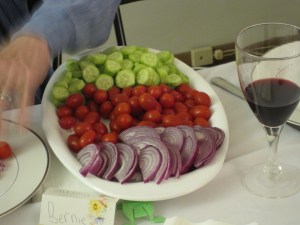
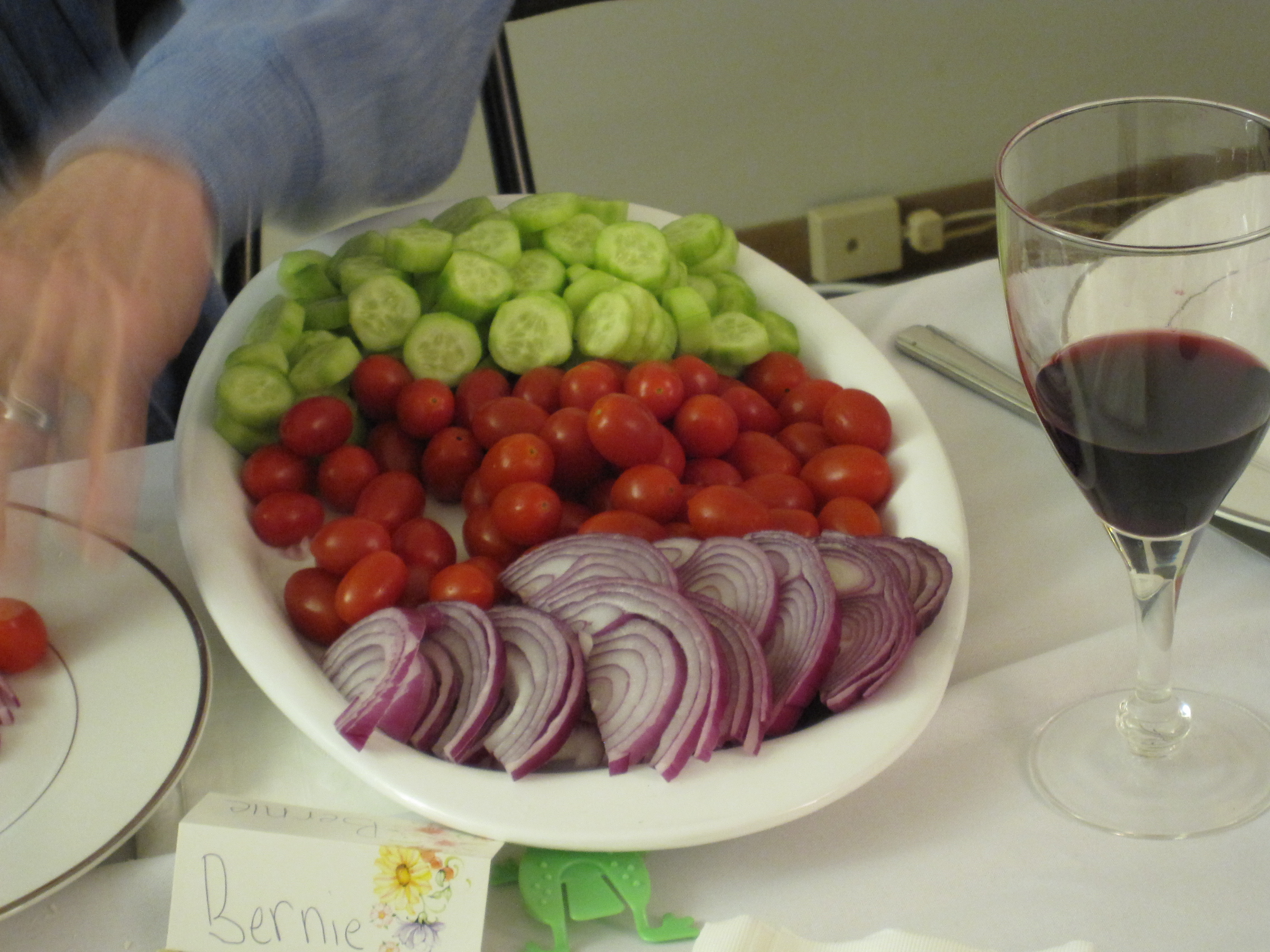
Then some fresh vegetables. Cucumbers, tomatoes, and red onions.
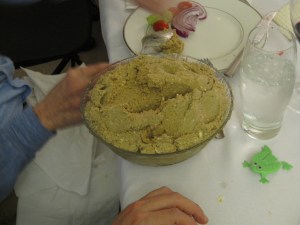
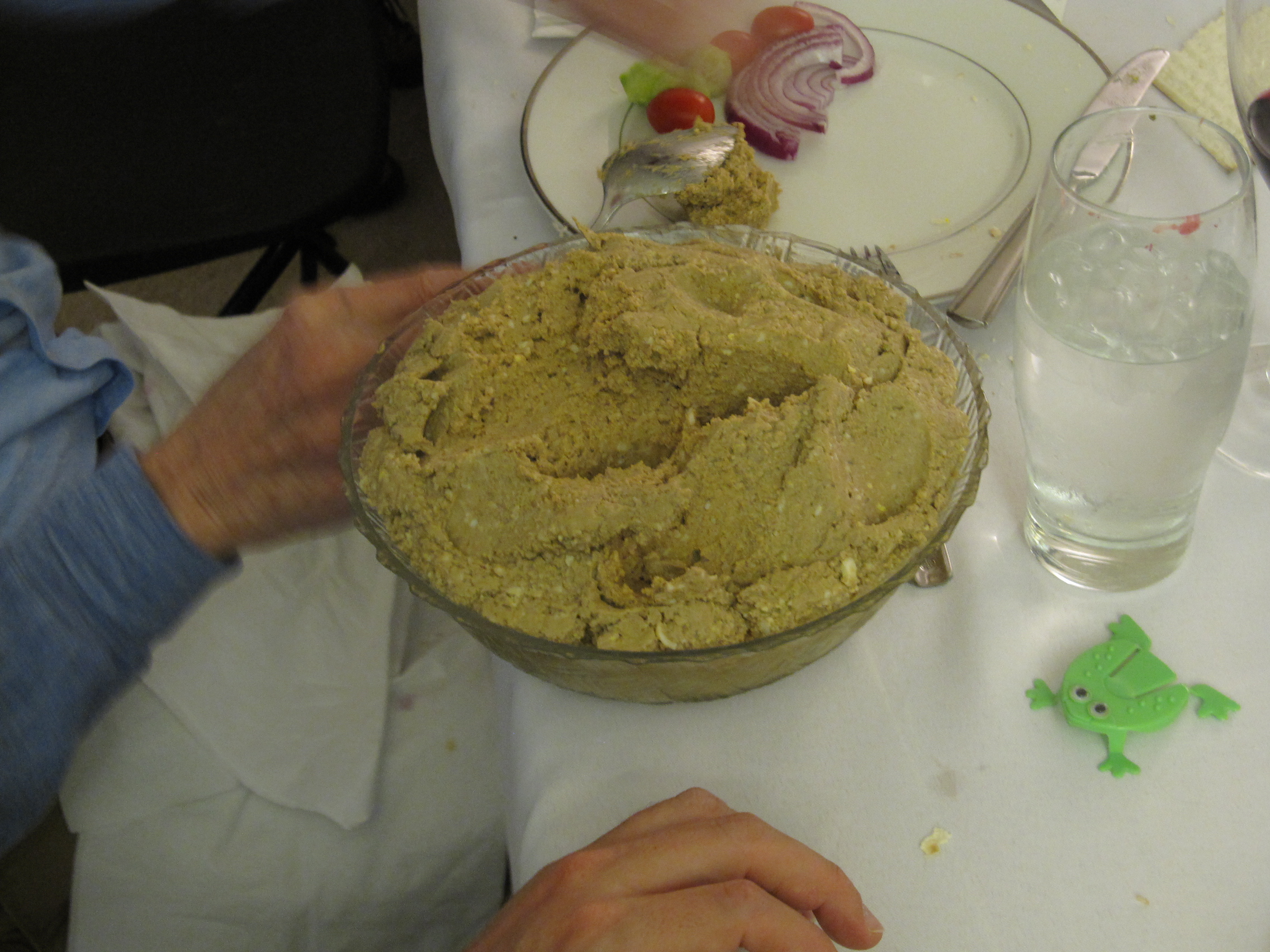
Here’s Grandma’s chopped chicken liver. Unfortunately it’s the only thing she makes anymore. She cooks up the livers, seasons them, and mashes it all down. My cousin Lorrie has to salt it though. Grandma’s taste buds aren’t quite what they used to be. But hey, she’s 86! She gets a pass.

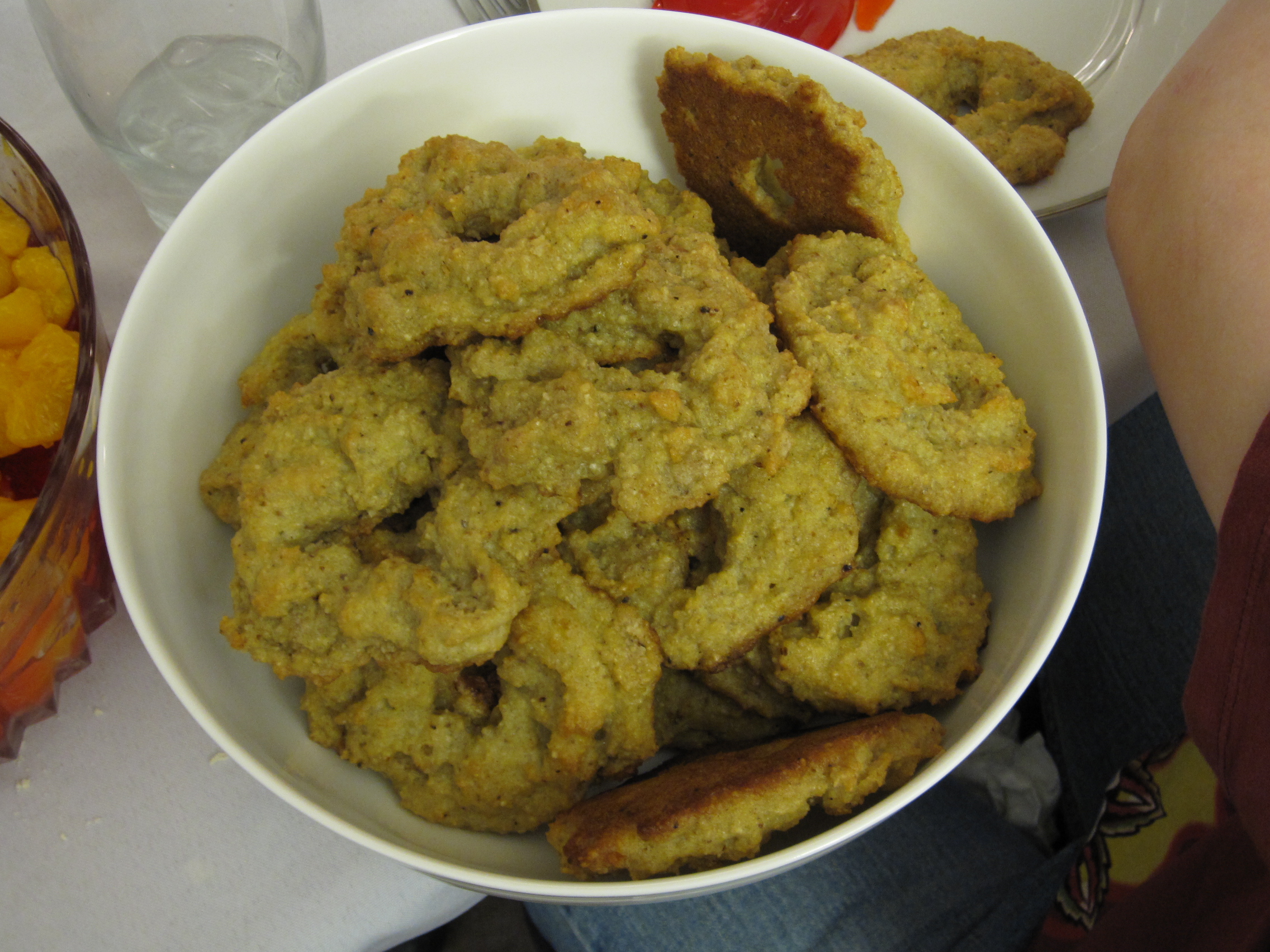
Some bagels made out of matzah meal. They resemble bagels in shape only, but they aren’t bad.
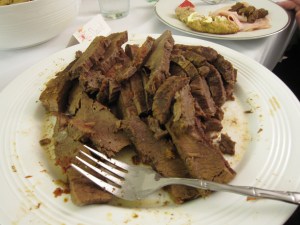
Here’s the famous slow-braised Passover Brisket. Brisket is to Passover what turkey is to Thanksgiving. Again though, my brisket is better. I made the brisket last year, but not this year. I need to take charge of it again for the betterment of all our digestion.

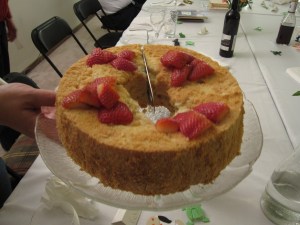
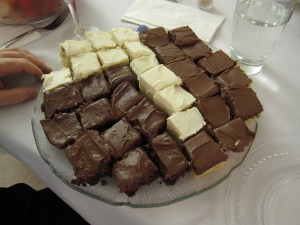
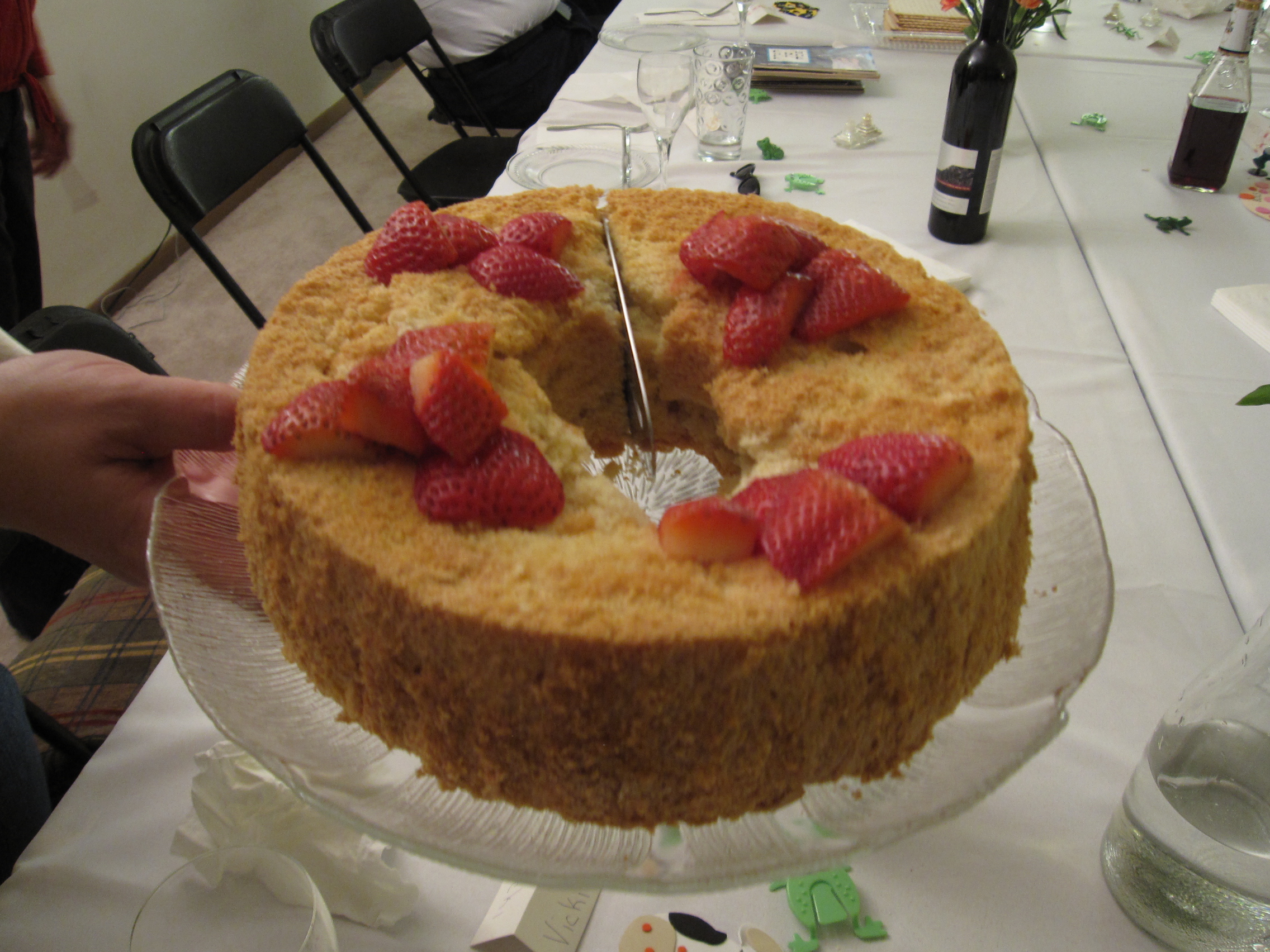
Dessert consists of various cakes made with matzah meal flour and fresh fruit. Chocolate cake with raspberries, strawberry shortcake, brownies, carrot cake, grapes and strawberries.

For some reason I always tend to eat too much at Seders.

Read Full Post »
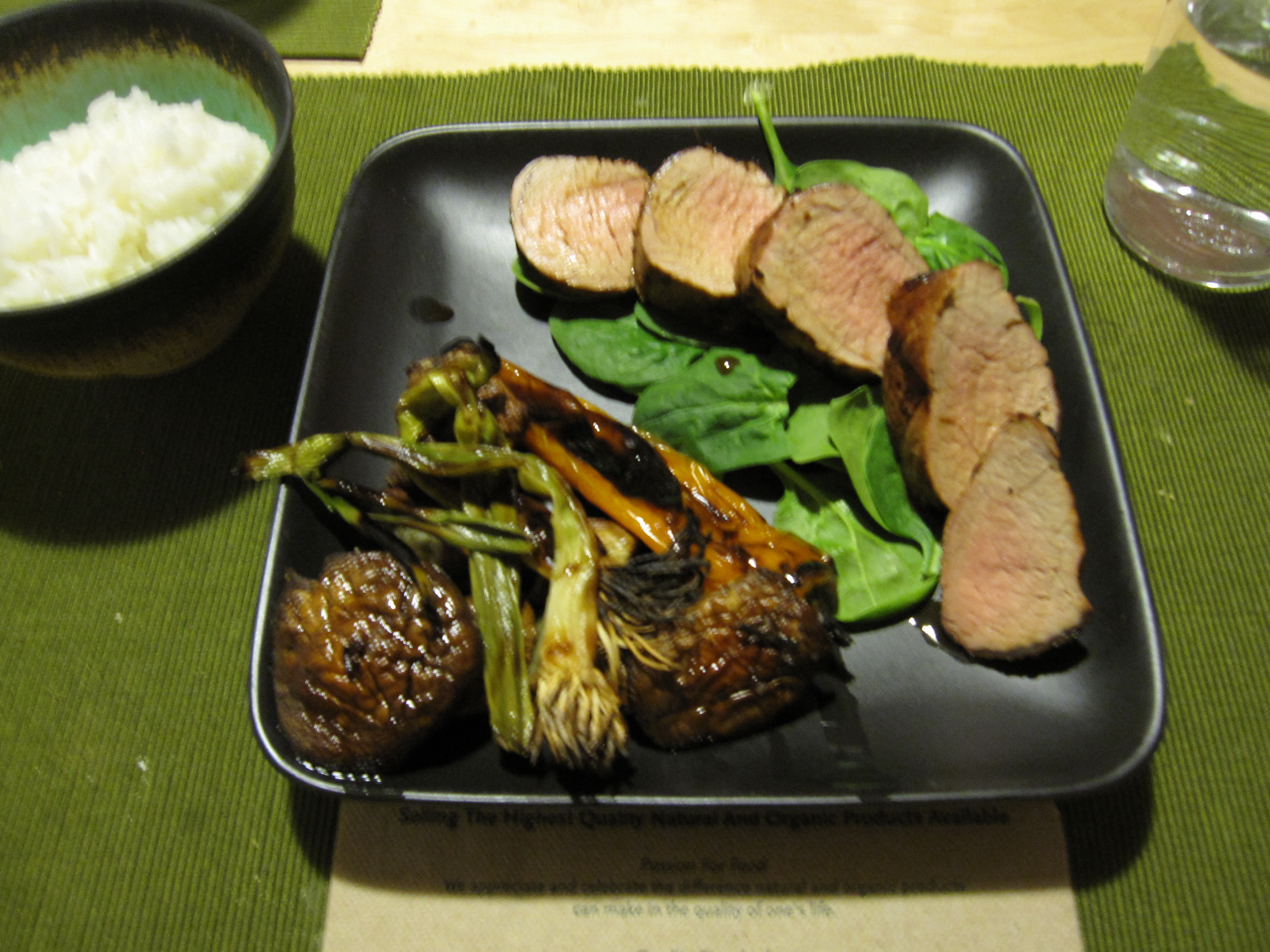
Yuki requested a simple, lightly flavored dinner last night, so to please my wife I made a Japanese-style line up of chow. I made Hijiki Rice, Miso Soup, and Pork-stuffed Aburage.

For the rice, I made two cups in our rice cooker. I simply washed the rice and added a little less water than necessary to cook it. To get the liquid up to the right amount I topped it off with some soy sauce, no more than about a quarter cup. Then I added a couple tablespoons of dried hijiki seaweed (available at more and more groceries), about a half teaspoon of dashi-no-moto (dried, instant dashi, also available at more and more groceries), as well as half of a large carrot diced. That’s it, turn it on and let it cook.

The miso soup was also simple. I brought two and a half cups of water to a boil with 6 green onions chopped to inch-long pieces. Once it started to boil I added 6 baby bok choy and 6 quartered shiitake mushrooms. I let that boil for about 10 minutes, turned off the heat, and added a half teaspoon of dashi-no-moto along with 2 tablespoons of soy sauce. I put that aside until dinner time.

Before making everything I cooked up the ground pork. I sautéed a chopped clove of garlic with a half-inch of chopped ginger in some oil for a few minutes. Then I added about a quarter of an onion, small diced, and let that cook for a few minutes. After that I added a half pound of ground pork and cooked that all the way through. Once the pork was mostly cooked I added 1.5 teaspoons of soy sauce, 1 teaspoon of sake, a half teaspoon of mirin, and some black pepper. I let that liquid boil down and then took off the heat to cool.

To prepare the aburage I first layed them in a colander, boiled some water, and then dumped the water on them to rinse off the excess oil that they come in. Then I squeezed all of the water off. I took my sharpest knife and carefully slit open one side and then gently used my fingers to open them up. After that I just spooned the ground pork mixture and then set aside.

Once the rice was ready I put the soup back on some heat and put the aburage under the broiler. Just before the soup started to boil I added some diced tofu and some wakame seaweed. Then Yuki whisked in a couple tablespoons of miso. When the aburage was heated through, about 5 minutes, I took them out and layed them on beds of arugula and drizzled with ponzu sauce.

Dinner was served!

Read Full Post »

Last night’s Meatless Monday was quite possibly the most simple one yet. Not feeling up to doing too much in the kitchen for some reason, I decided to keep the cooking minimal and quick. The answer? Stir-fry!

I first pressed the water out of a block of tofu. Lay some paper towels on a plate, set the tofu on top, cover with more paper towels, put a cutting board on top of that, and lay a weight of some sort on top of the cutting board. I kept that in the fridge while I cut up the rest of the vegetables.

I cut a bunch of asparagus, green onions, a yellow pepper, a red pepper, and about a half pound of fresh shiitake mushrooms. I let the shiitake sit in a sunny window for about an hour before cutting them up. Sunlight helps the mushrooms produce higher levels of vitamin B.

To start, I fried an inch of minced ginger and two chopped garlic cloves for about 3 minutes. Then I added the green onions, followed by the peppers, and then the asparagus. After a few minutes I added the shiitake sliced in quarter inch strips. I let that all stir fry up for a few minutes then added about 4 tablespoons each of soy sauce and sake along with some black pepper.

While the liquid was reducing a little I cut the tofu into bite-sized pieces then threw them into the stir-fry. I let the tofu absorb the flavor, then took off the heat and drizzled some sesame oil in it, and then served with it white rice.

Read Full Post »

I’m on the tail end of a bad cold and Yuki is in the midst of battling one too. In light of that, last night’s Meatless Monday was all about getting healthy. There isn’t much more healthy than quinoa, except for maybe the hemp seed. I also wanted to keep it really simple.

I first sautéed a bunch of chopped green onions in some vegetable oil for a few minutes, then added three chopped garlic cloves. A couple minutes later I tossed in a diced carrot and a diced yellow pepper. I didn’t want the veggies to get soft, just slightly cooked so shortly after they were sweating I added a cup of rinsed red quinoa. When you saute quinoa for a few minutes it brings out some of the nuttiness in its flavor. After that I poured in a cup of vegetable stock, a drained can of chickpeas, a drained can of sweet corn (I can’t wait for corn season!), about a half cup of peas, salt, pepper, garam masala, and a dash of turmeric. I brought that to a simmer and covered over low heat for about 10-15 minutes.

Once everything was cooked and most of the liquid had evaporated I took it off the heat and let it sit for a few more minutes. Then I fluffed the quinoa and served. A salad of green leaf lettuce and tomatoes with a shiitake vinaigrette on the side along with some toasted pita. Our immune systems got a nice boost last night.

Read Full Post »

So, Yuki made dinner for Meatless Monday this week. As you can see from the pic, she cooks a totally different style than me. She prefers numerous different plates with different items while I usually cook more of a one-pot gig. But, with it being Presidents Day and a day off work it was her turn.

Starting with the top left dish, she simmered some daikon radish. For the broth, she boiled niboshi (small dried sardines) in water to extract that flavor into a deliciously light dashi. Then she simmered the daikon until they were softened, but still retained some texture. She topped the daikon with yuzu-miso and some sliced green onion.

The top right dish is sato imo, a hairy potato that made my fingers itch when I peeled it. It’s worth it though as it has a more pronounced earthiness in its flavor than the potatoes we’re used to here in the States. She first had boil them in some vinegar. These potatoes are very slimy and by boiling them in vinegar the slime is removed. After they were boiled she sautéed them in olive oil with some onions and garlic. Then she added some ponzu and a little mayonnaise.

The bottom bowl is harusame soup. She used konbu dashi for the broth, a very typical broth for Japanese soups. The noodles are harusame, made from mung bean starch. Also in it were some enoki mushrooms, shiitake, wakame seaweed, sliced aburage (deep fried tofu skin), baby bok choy, and an egg that was poached in the dashi.

She also made dessert, shiratama dango. They’re little dumplings made out of mochi rice flour. Simply add water to the flour, roll the dough into little balls, and boil them till they float. They’re usually grilled afterword to make them a little more savory before adding various sweet sauces. We used three of the more common sauces. On the left is azuki bean paste, the middle is mitarashi (a sweetened and thickened soy sauce with mirin, sugar, and corn starch), and the right is kinako (soy flour mixed with sugar).

Read Full Post »

After making a run to Mitsuwa for some Japanese ingredients (some staples in our kitchen) I let Yuki do the cooking last night. She made a dish called Jjigae Don. Well, that’s what she calls it anyway. Jjigae is an old Korean recipe (you see Ira, Yuki doesn’t have anything against Korea), a stew typically made with kimchi. She didn’t use any kimchi but did use Tobanjan, a Korean fermented chili paste.

First, she made a broth out of miso, tobanjan, and dashi. She simmered some green onions, carrot slices, and baby bok choy until soft and tender. Then she took those vegetables out and cooked some thinly sliced kurobuta pork. By thinly sliced I mean deli meat thin. You can purchase it that way at Mitsuwa and some other Asian grocery stores. It’s typically marked for use in Shabu-shabu or dishes like that. The pork cooks quickly since it’s so thin. Be careful not to cook it more than a minute or two because the meat will get tough if overcooked. Once the pork was cooked she took it out and then cooked some shimeji mushrooms in the broth.

While all of this was going on we had pressed the water out of a package of silken tofu. Once the tofu was firm enough we cut (she did the cooking I did most of the cutting, I’m her sous chef as I love to use the hand-carved Japanese steel she got me for my birthday a few years ago) it into smaller pieces and then cooked it in the broth.

After everything was cooked we put some rice in the bottom of our bowls and then topped it with all of the ingredients. While we did that Yuki cooked some shungiku in the broth. You have to cook that last as it turns the broth a darker color. That way the veggies and meat keep their natural colors. Once the shungiku was cooked that went in the bowl with everything else.

No extra fats, just the natural fat from top quality pork, were added to this dish. Along with the variety of fresh vegetables and white rice this is an extremely healthy dish. Absolutely delicious as well.

Read Full Post »

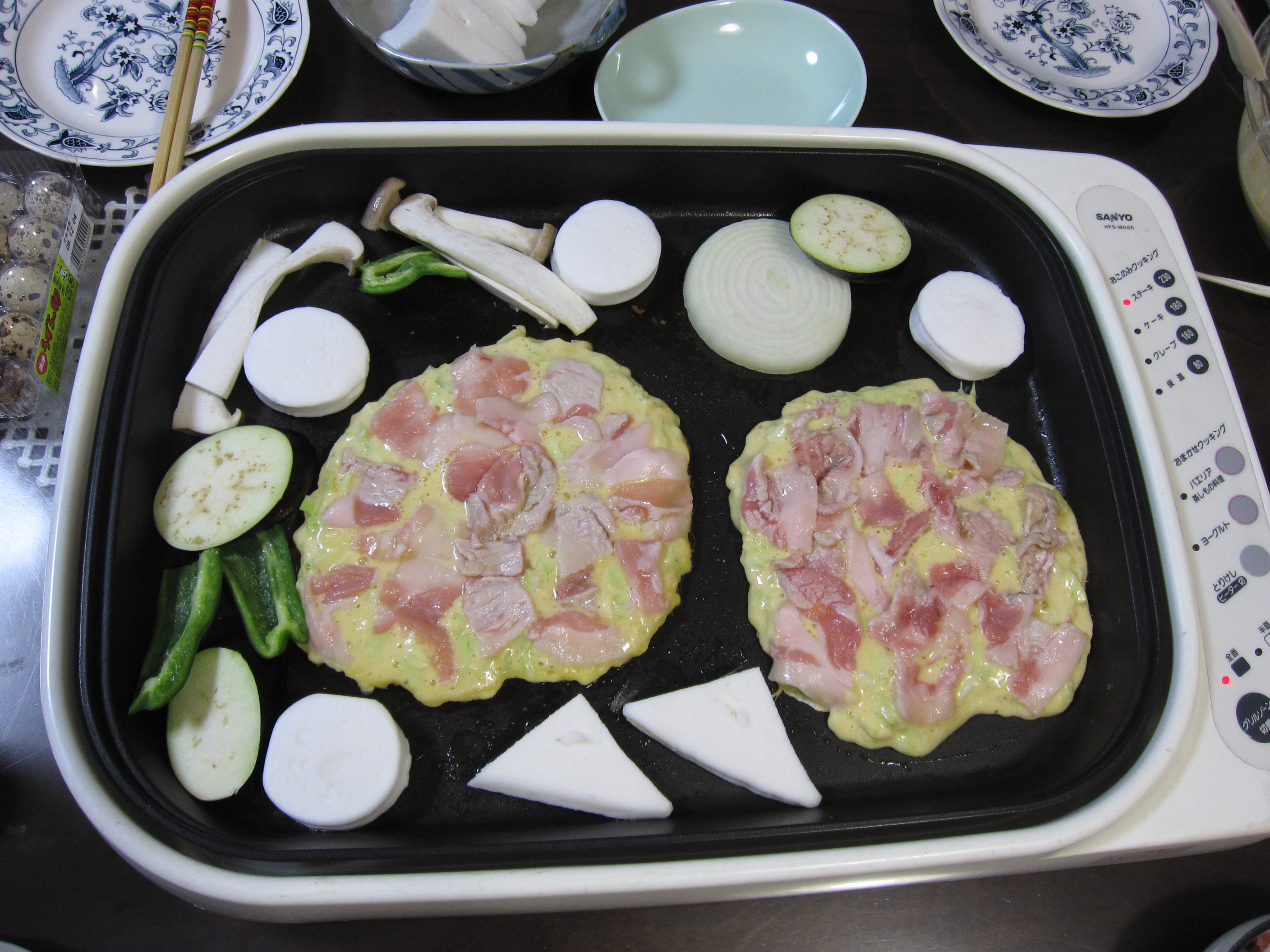
Alright, here’s Uichiro’s famous Kawabata-style Okonomiyaki. Okonomiyaki is Japan’s version of a pancake of sorts. It’s base ingredients are eggs, flour, and shredded cabbage. Not entirely sure if Uichiro uses water or dashi, or what else he puts in his mix (highly guarded secret but I’m sure there are green onions in it) but it sure is tasty.

You start off by getting out the old table-top griddle. Once its hot add a little oil and pour some of the batter to form a pancake. Next to it lay out some sliced pork and start cooking it a little.

Once the batter starts to cook lay the pork slices on top.

While the okonomiyaki cooks grill various veggies. We had eggplant, green peppers, onion rings with quail eggs, kabocha, matsutake mushrooms, and various mochi cakes. Once the bottom is done you carefully flip the okonomiyaki to cook the other side.

Once it’s fully cooked spoon on top some bull dog sauce (a semi-sweet vegetable and fruit sauce), mayonnaise, shredded ao nori, bonito flakes, and pickled ginger on the side. Since it’s family-style you just cook and grab as you go. It’s a ton of fun and extremely tasty.

And if you aren’t full yet, don’t worry as yakisoba is up next. Once the batter is finished cook up the rest of the pork and veggies, add some bean sprouts and noodles, then eat it up.

Please, no dessert.

Read Full Post »

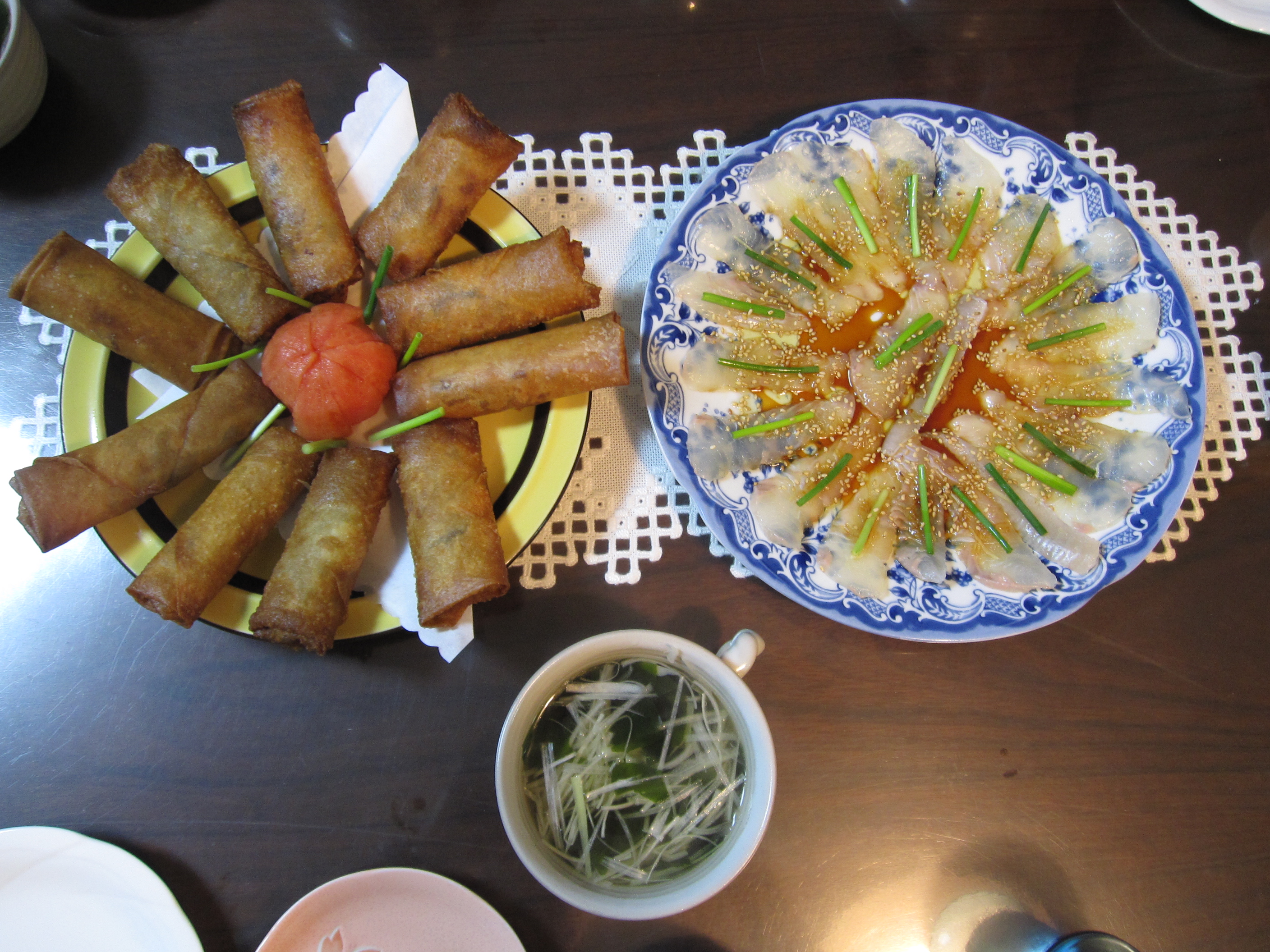
It seems like every other program on Japanese TV has something to do with food. One program that I watched featured the biography of Nobu Matsuhisa, he of the restaurant Nobu. One of the dishes he showed on TV piqued the interest of Yuki’s mom, so the next night we set out to try and replicate it…Fluke sashimi.

It’s really quite simple. Slice a piece of fluke as thinly as possible and arrange on the plate without overlapping each slice of sashimi. Mash some garlic and lightly brush a little over each slice. On top of that lay down thin sticks of ginger and chives. In a small pot heat up equal parts soy oil and sesame oil until smoking hot. With a metal spoon dish some of the hot oil on top of the fish so that it sizzles a little. Then, drizzle with some ponzu and toasted sesame seeds.

To go with it Uichiro made his special harumaki, spring rolls. He “took the two best recipes and combined them into his own which is now the best.” I won’t give you measurements so I don’t spoil his secret, but the harumaki contain shiitake, bamboo shoots, leek, pork, ginger, oil, sake, chicken stock, soy sauce, sugar, pepper, starch, and spring roll skins. Cook it all together, roll them up, then deep fry them to golden perfection and serve with Chinese Mustard.

There was also some clear broth soup with shredded green onion and wakame.

Read Full Post »

« Newer Posts - Older Posts »