Feeds:
Posts
Comments

Posts Tagged ‘olive oil’

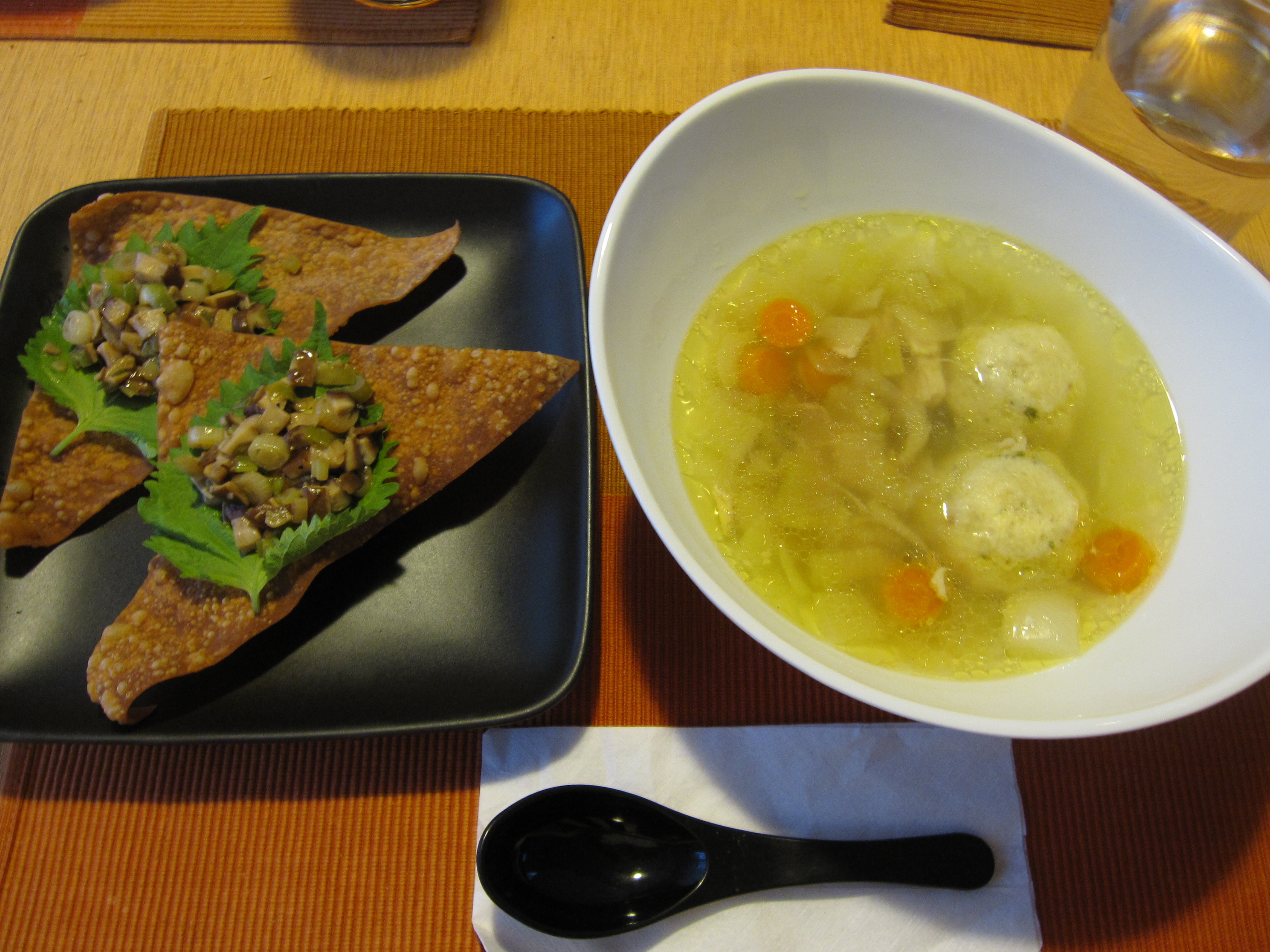
After Tuesday night’s overly complex debacle of a meal we wanted something clean and simple for dinner last night. Yuki had requested my matzo ball soup, so that’s what I gave her. (feel free to insert any number of jokes)

The ingredients I use for my chicken soup are 1 diced onion, 3 medium carrots chopped, 3 stalks of celery chopped, 5 garlic cloves peeled but left whole, and 1.5 pounds of skin-on bone-in chicken thighs.

There are two basic ways to make chicken soup. One is to throw all of the ingredients into a stockpot, cover it with cold water, and bring it all to a slow simmer for a couple of hours, usually with a whole bird instead of just thighs (I think white meat in chicken soup is a waste as it doesn’t have nearly as much flavor as dark meat). That’s they way my dad makes it and his soup tastes pretty good. I do it a little different.

I heat up my stock pot and pour in about 3 tablespoons of olive oil. Then I dump in the onion, carrots, and celery and let them sweat for about 5 minutes. I don’t want them too translucent, I just want the sweetness drawn out a little. After the veggies are slightly cooked I lay the thighs in skin-side down. A minute or two later I pour in 2 quarts of hot water, add the garlic, a bay leaf, and a couple pinches of salt.

After it’s been at a low boil for a few minutes a foamy grit will surface. I take a large spoon and skim that off. I do that 6 or 7 times. This gives the broth some clarity. The muck isn’t bad for you, it’s just bitter and unnecessary. Skimming broth is the key to a clean soup. Once the foam stops surfacing I turn the heat to medium-low, cover the pot, and let it slowly simmer for about 2 hours.

Once the soup has cooled a little I take out the chicken, skin it, and shred the meat. At this point the chicken should be relatively flavorless as hopefully all of the taste is in the broth. I like to put the chicken back in for the substance.
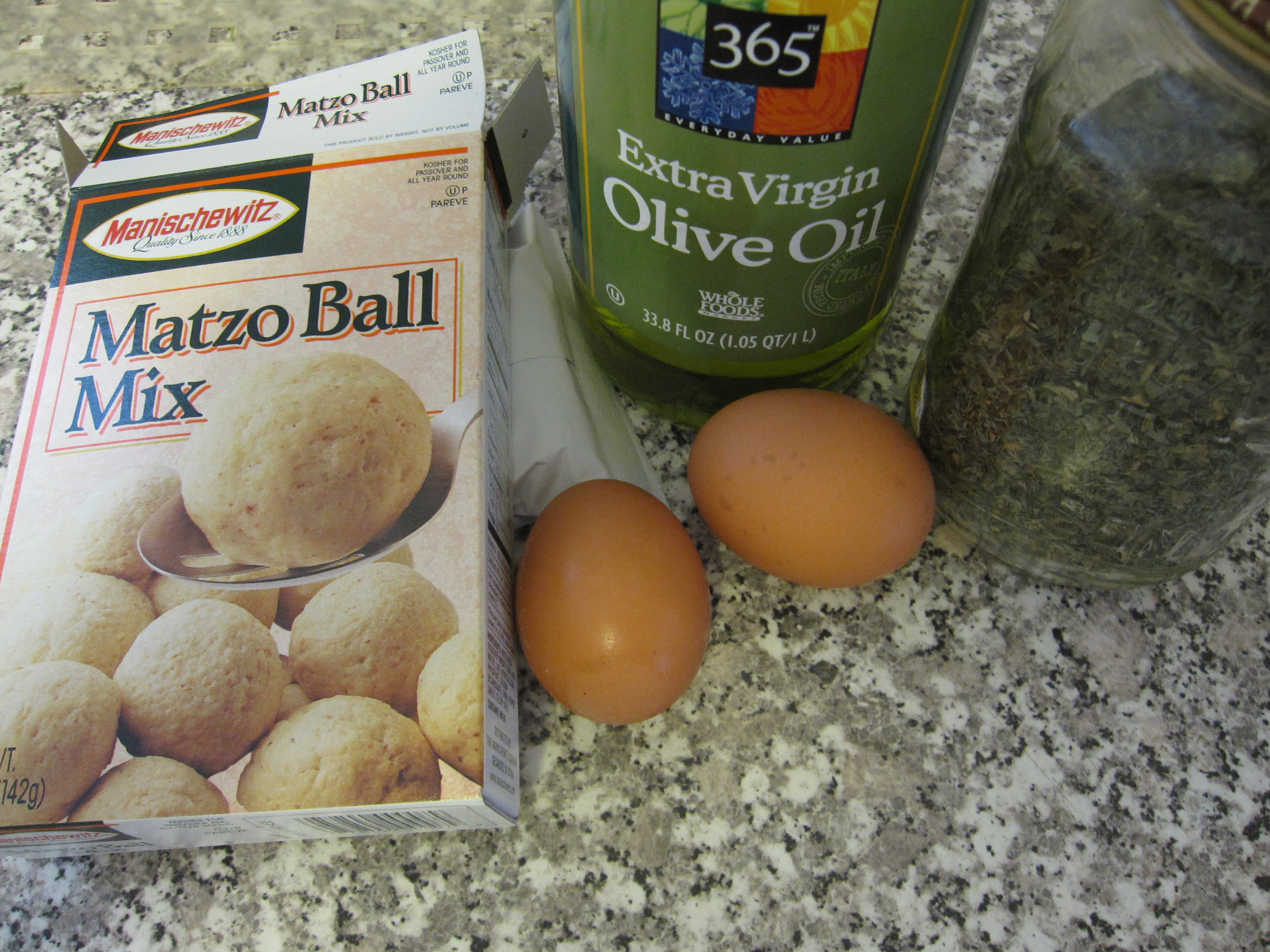
There’s absolutely nothing wrong with using the Matzo Ball Mix for your mazto balls. While it isn’t that difficult to do it from scratch, the mix ensures the perfect texture every time. You just need one packet of mix, two eggs, and two teaspoons of oil. I also add a tablespoon of dried oregano for a little more flavor.
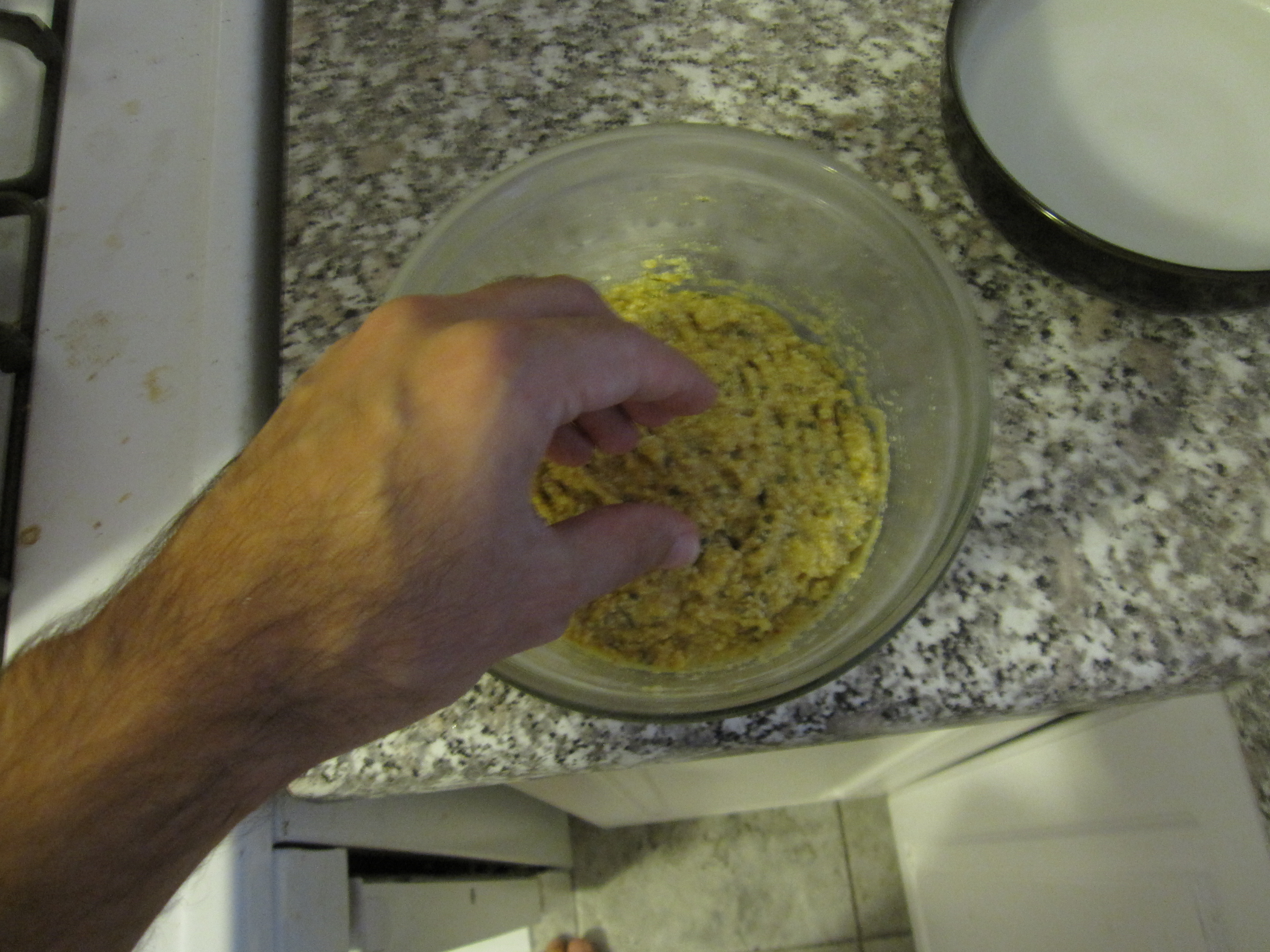
Mix everything in a bowl and put it in the fridge for 15 minutes to harden up a tad. While it’s in the fridge bring the soup to a light boil again. The package says to boil them separately in water, but matza balls should absorb some of the broth flavors.

Keeping your fingers wet, the mix is sticky, form balls about the size of a quarter and drop them into the boiling soup. There’s absolutely no need to make them any bigger. They do expand as they cook and if you make them too big the soup flavor won’t penetrate all the way through. I’ve never understood why some people make their balls so damn big. Maybe to compensate I guess. At any rate, that’s it. Let the balls cook for about 15 minutes and the soup is ready.
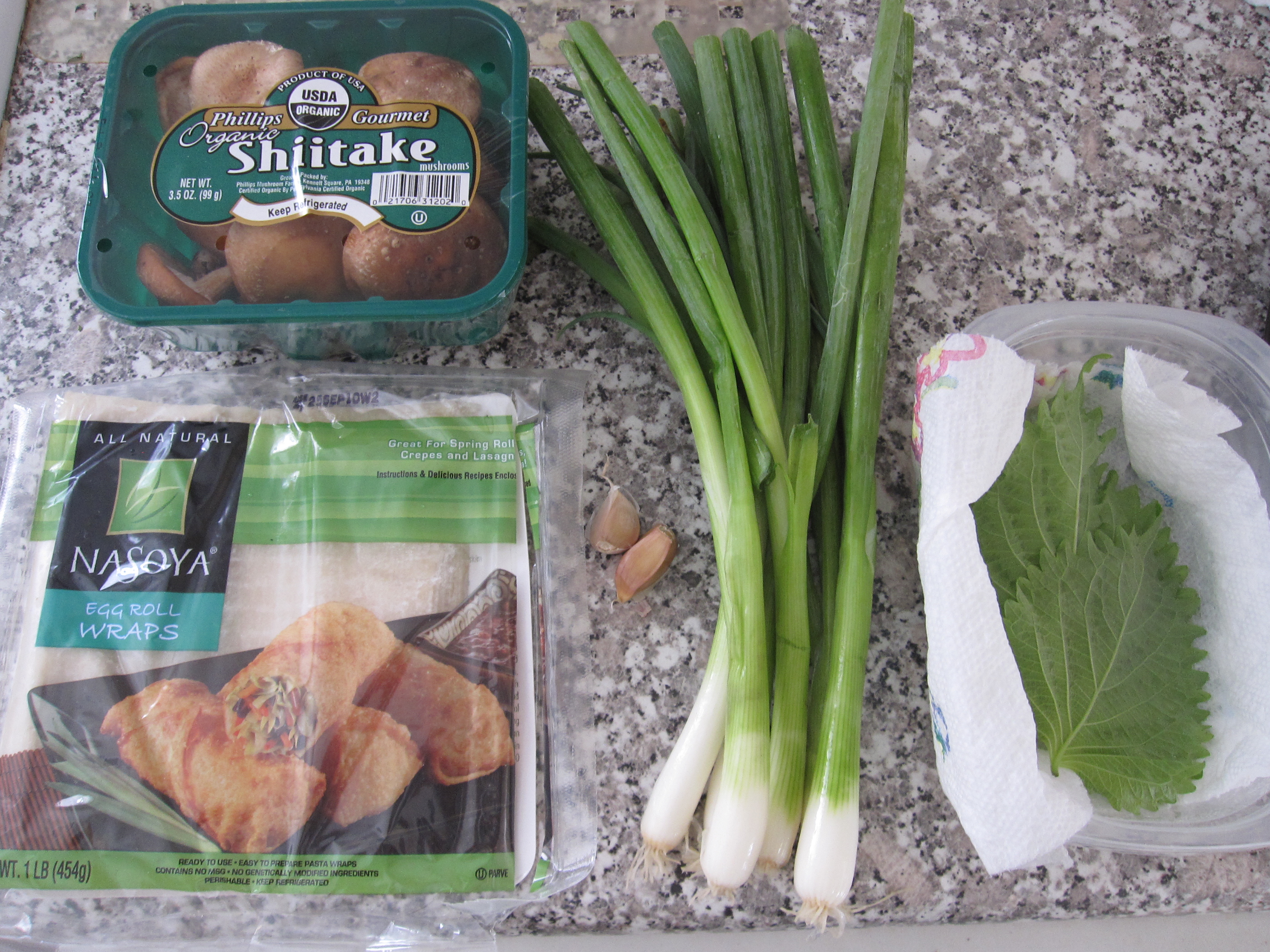
I made my wonton crisps while the soup was simmering. I used 1 package of shiitake small diced, 5 eggroll wraps cut in half diagonally, 2 cloves of garlic minced, 6 green onions sliced, and some fresh shiso leaves (the same ones our friends gave us, they are pretty damn delicious!).

I heated some oil to 375 degrees in my little Cuisinart deep fryer and fried up the skins. I let them drain on paper towels while I prepared the mushrooms.

In a heated pot I poured in 2 tablespoons of sesame oil and added the garlic. I let the garlic go for about 45 seconds and then I threw in the shiitake and green onions. I sort of stir-fried them for about 5 minutes and then poured in 1.5 tablespoons of soy sauce and a pinch of black pepper. I let the soy sauce absorb into the shiitake for about 3 minutes and then turned of the heat.

To serve, I laid the crisps down on a plate. On top of them I placed one shiso leaf. Then I spooned some shiitake mixture on top of that. That’s all she wrote, a great Jewish-Japanese dinner.

Read Full Post »

A couple of our friends are growing their own shiso. apparently their plant is going haywire and they have too much shiso for their own usage, so they gave us a bunch. I do mean a bunch! I only used half of it for the pesto. Does anyone want some? I have a feeling you’ll see at least one more shiso recipe on this blog sometime this week.

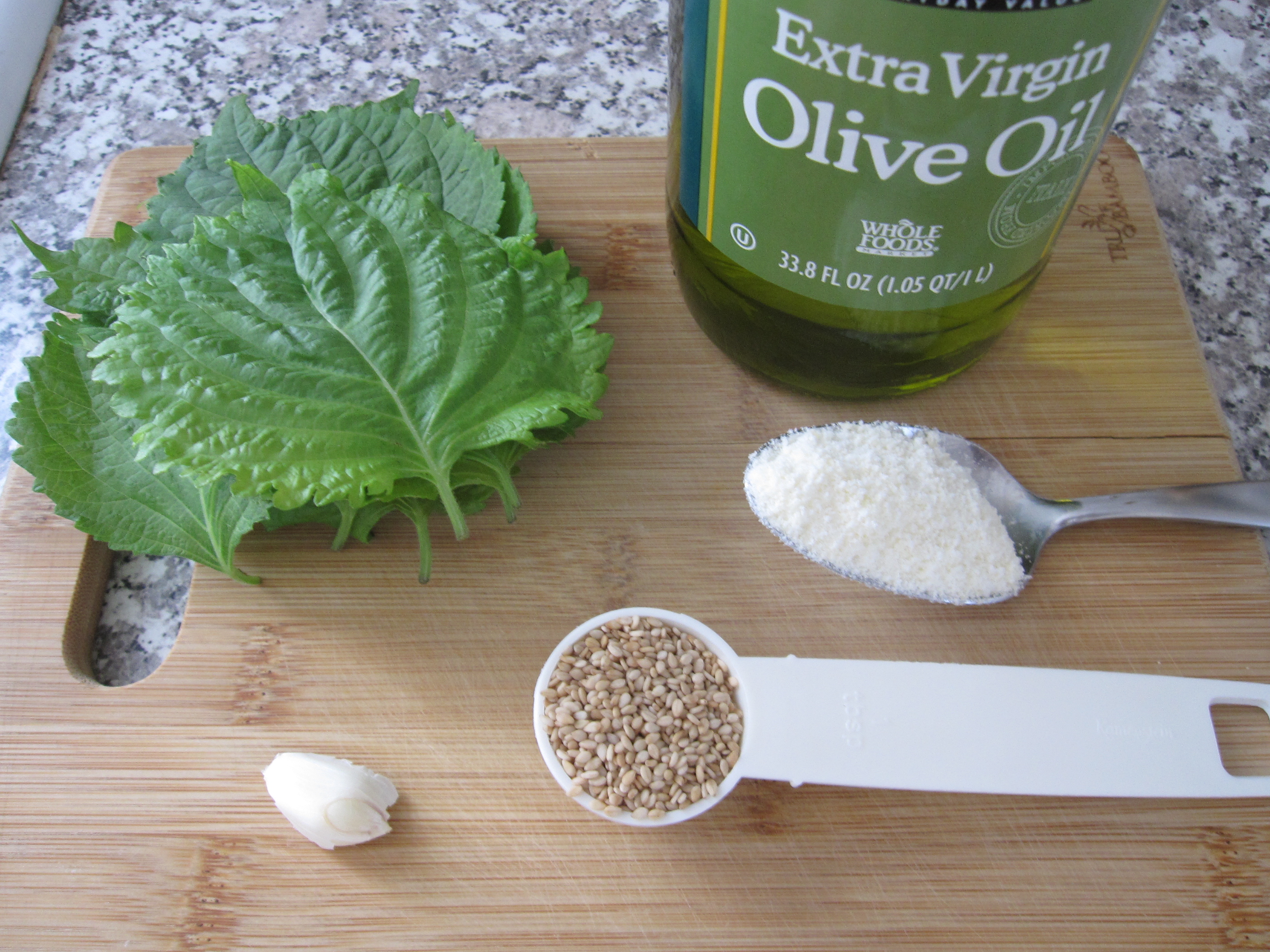
I made the pesto much like I would a regular pesto, but with a few changes. I used about 1/2 ounce of shiso leaves, one clove of garlic, 1 tablespoon of sesame seeds, 1 tablespoon of parmesan cheese, and about 1/4 cup of olive oil. I put it all in my little food processor and whipped it all up.

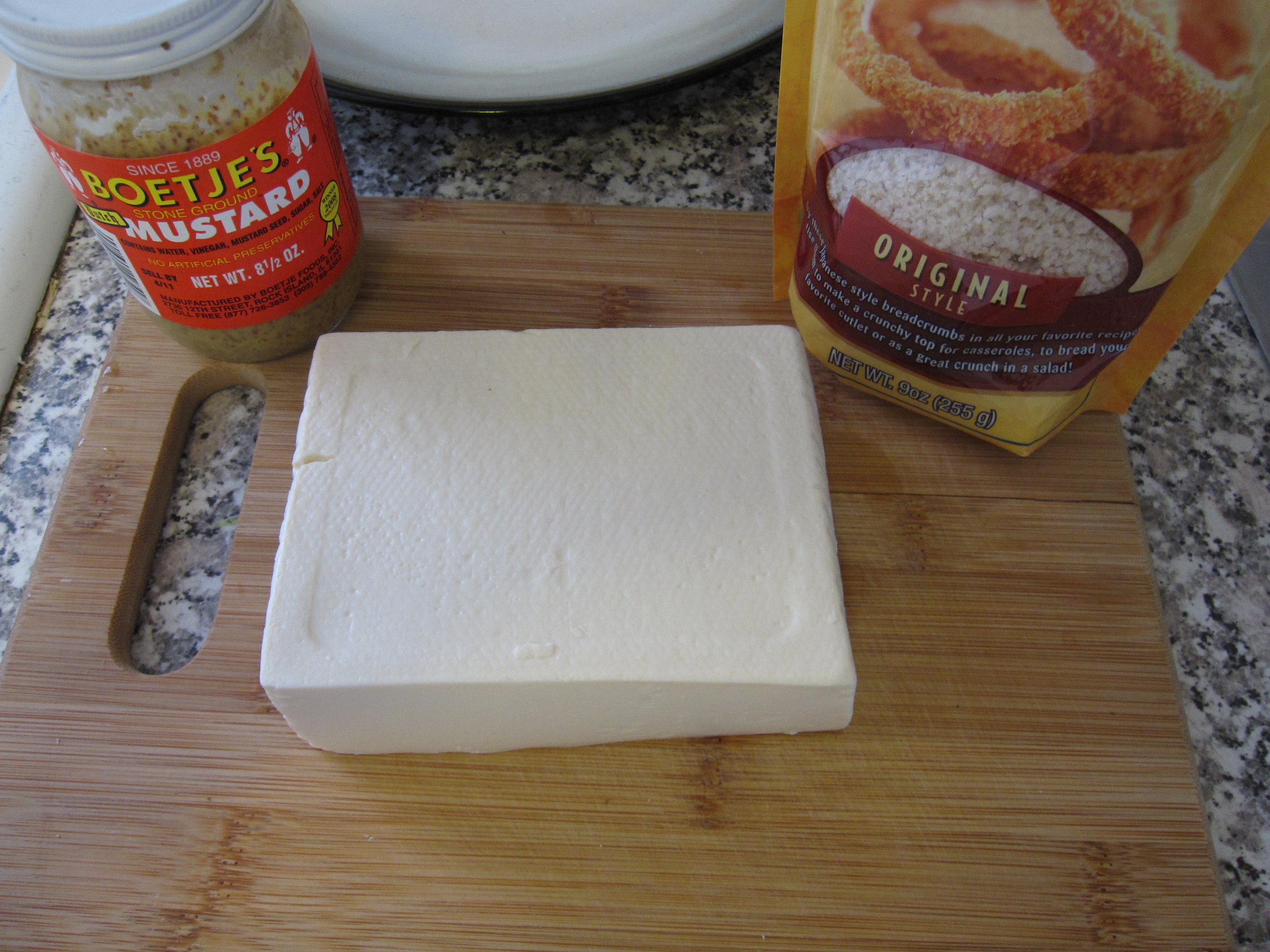
For the tofukatsu I used mustard, 1 block of silken tofu, and some panko. I pressed the water out of the tofu in the fridge for about an hour. Then, I cut it in half. I sliced the halves into 4 equal pieces to look like cutlets.

I poured some panko on a plate and then spread a thin layer of mustard on top of each tofu cutlet. I pressed the tofu, mustard side down, on the panko and spread another thin layer of mustard on the other side then flipped and pressed again. I wanted both sides of the tofu crusted in panko. In a large skilled heated to high I poured in a few tablespoons of peanut oil. I like to shallow fry in peanut oil because it has a high smoking point and doesn’t really have that strong of a flavor. I fried the tofu in two batches so as to not overcrowd the skillet. After both sides were nice and golden I laid them on a wire rack to let any excess oil drip off.

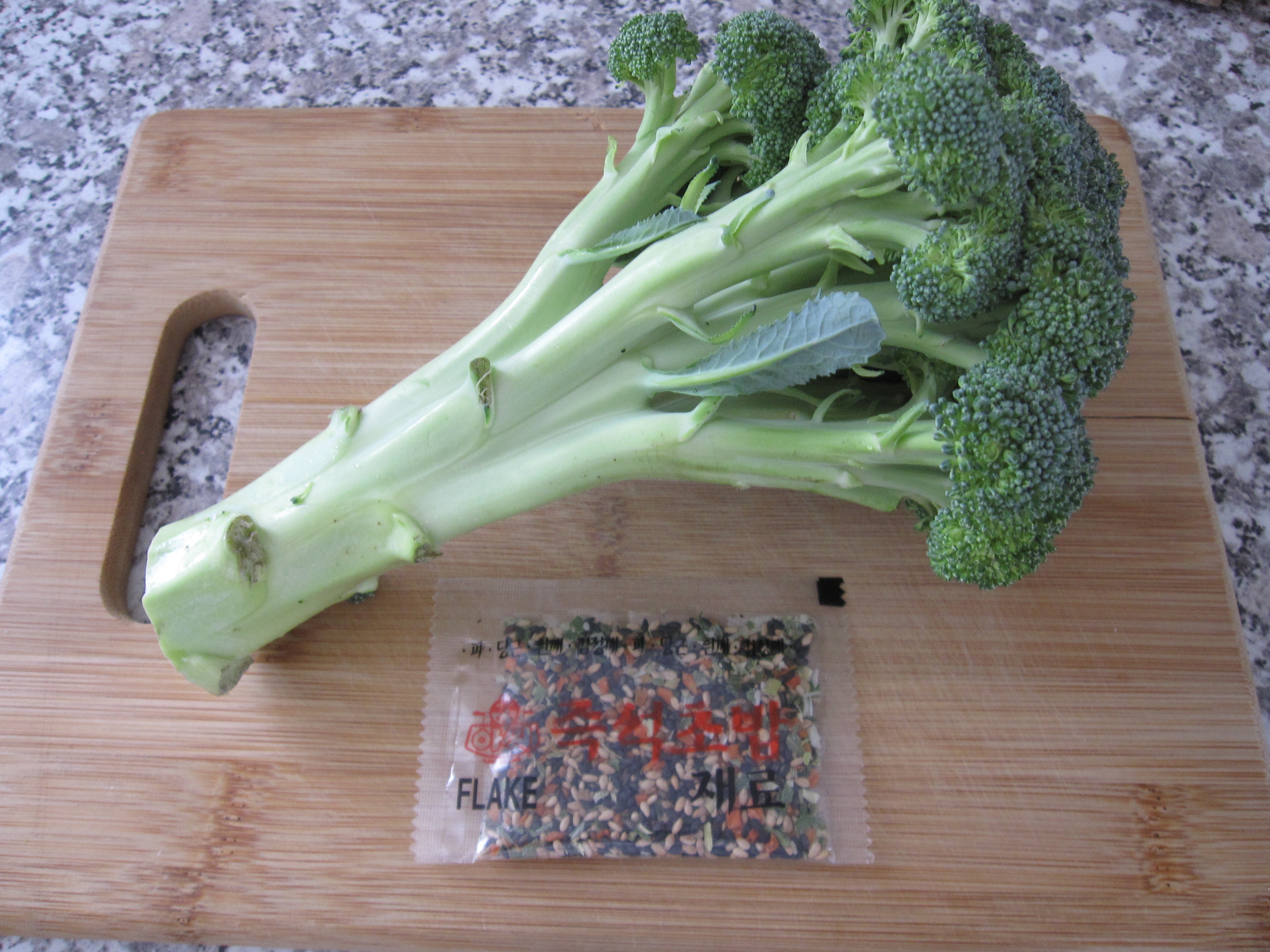
I made a couple of sides to go with the tofukatsu. One was a simple steamed head of broccoli. I cut the broccoli down into bite-sized pieces, florets and stem and them steamed it for about 4 minutes. I had a packet of mixed sesame seeds with dried carrot so I decided to sprinkle that on instead of salt and pepper.

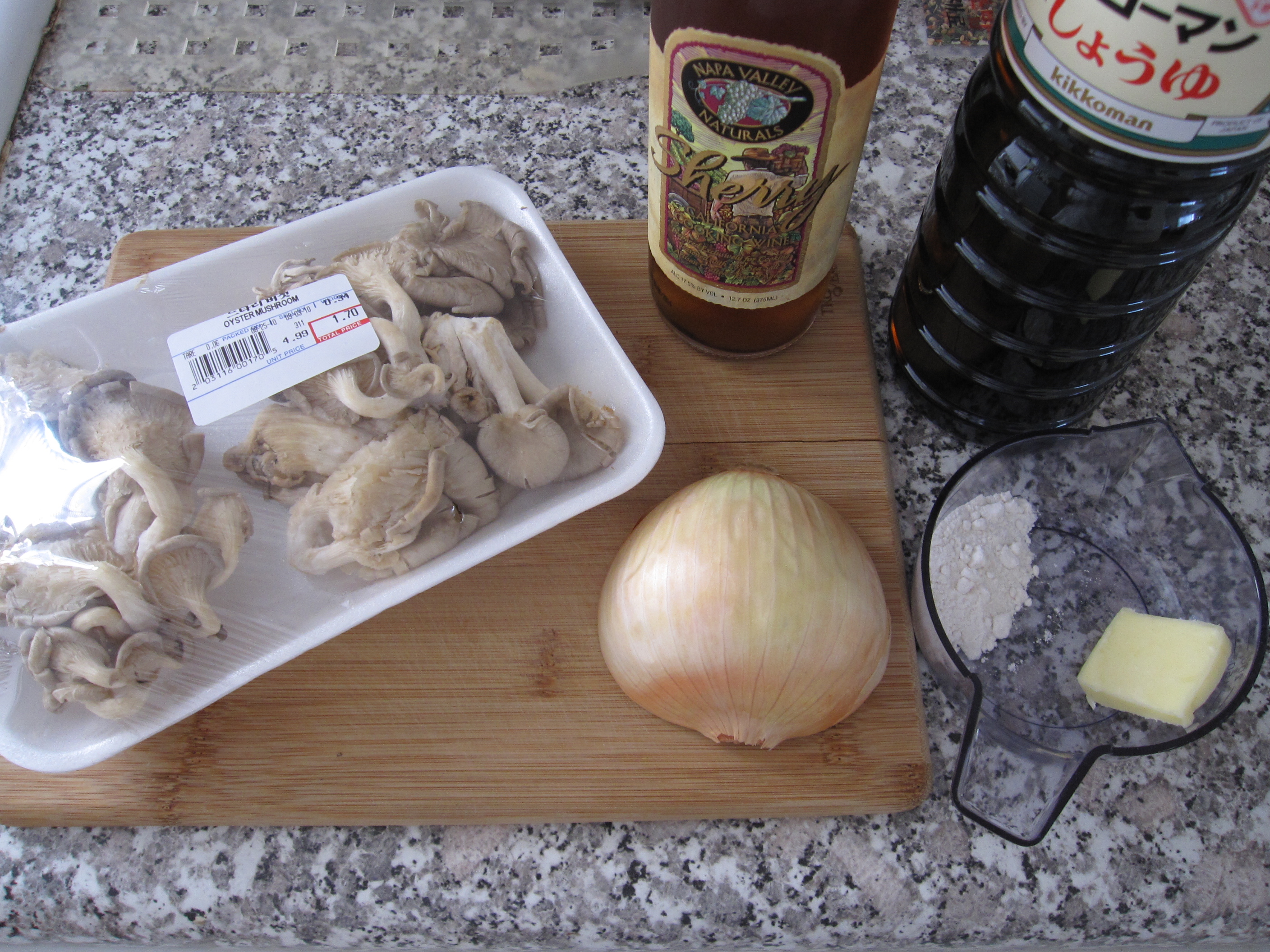
I had about 1/2 pound of oyster mushrooms in my fridge, so I decided to saute them with 1 teaspoon of sherry, 1 tablespoon of soy sauce, 1 tablespoon of flour, 1/2 tablespoon of butter, and I was going to use 1/2 onion.

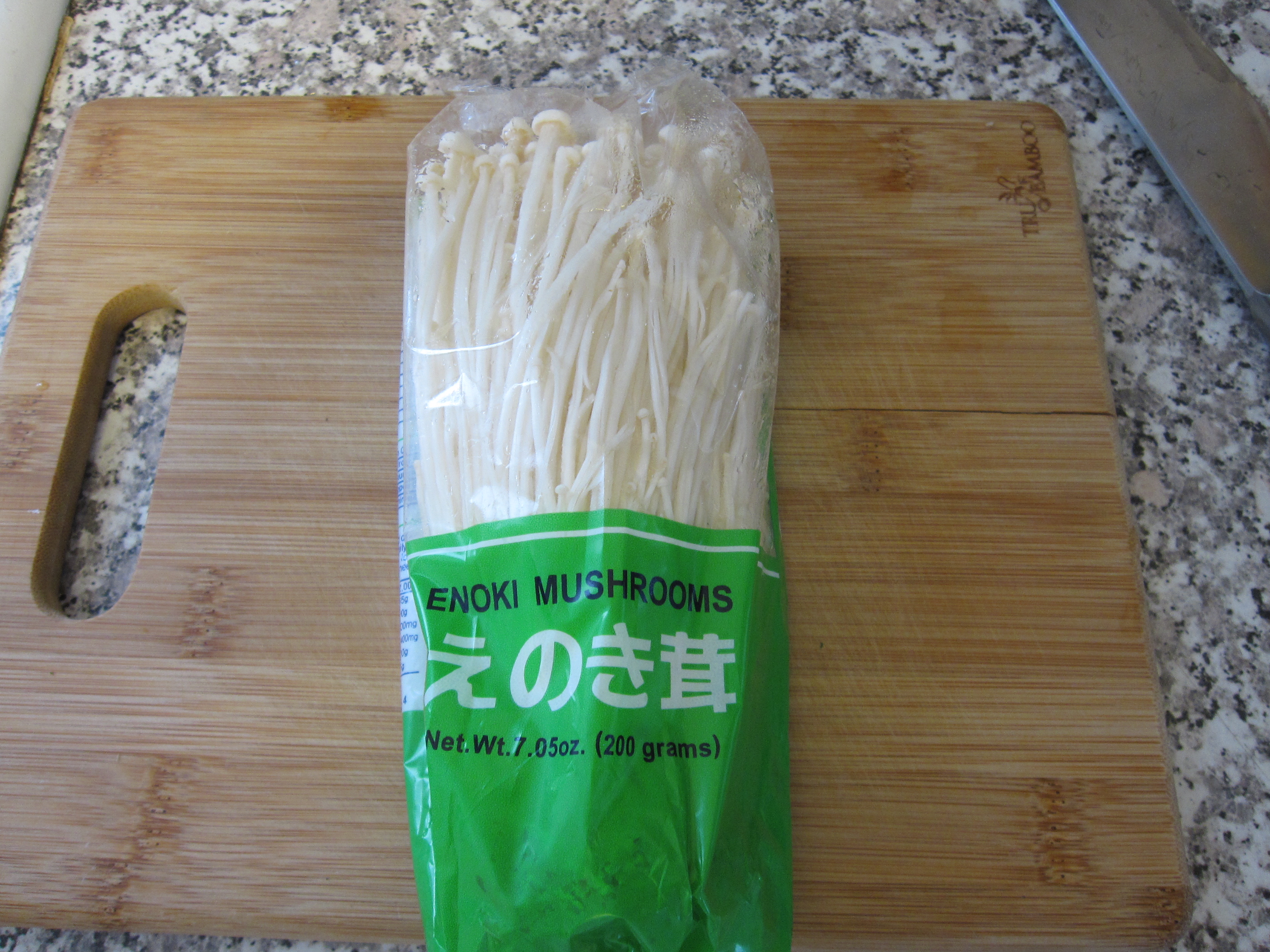
For whatever reason I wasn’t feeling the onion. No rhyme or reason, I just decided not to use the onion and instead use the enoki mushrooms that were in my fridge. I also grated a clove of garlic at the last minute too.

In a hot pan I poured in about 2 tablespoons of sesame oil and put the grated garlic in for about 30 seconds. Then, I threw in all of the mushrooms, both oyster and enoki. I let them saute for about 4 minutes and then poured in the sherry and soy sauce. Once the liquid was almost completely boiled off, about 2 minutes, I poured in the flour and butter and stirred that all in. The flour thickened up the last bit of liquid while the butter made it all silky and smooth, as butter always does.

Finally, I took a daikon radish and skinned about half of it. I grated the part that I skinned and served it just as it is.

To serve everything, I had some white rice and then put some broccoli next to it and then two pieces of tofukatsu next to that. I poured a little of the pesto on top of the tofukatsu. The grated daikon went on the plate as well. It was a little sharp, so we poured a few drops of soy sauce on it. In a separate plate I laid some mushrooms down. Next to them I put some kimchi cucumbers that we picked up at the Assi Plaza. I’m not a big fan of cucumbers, but these kimchi ones are so damn good they just might make me a believer. Bon apetit!

Read Full Post »

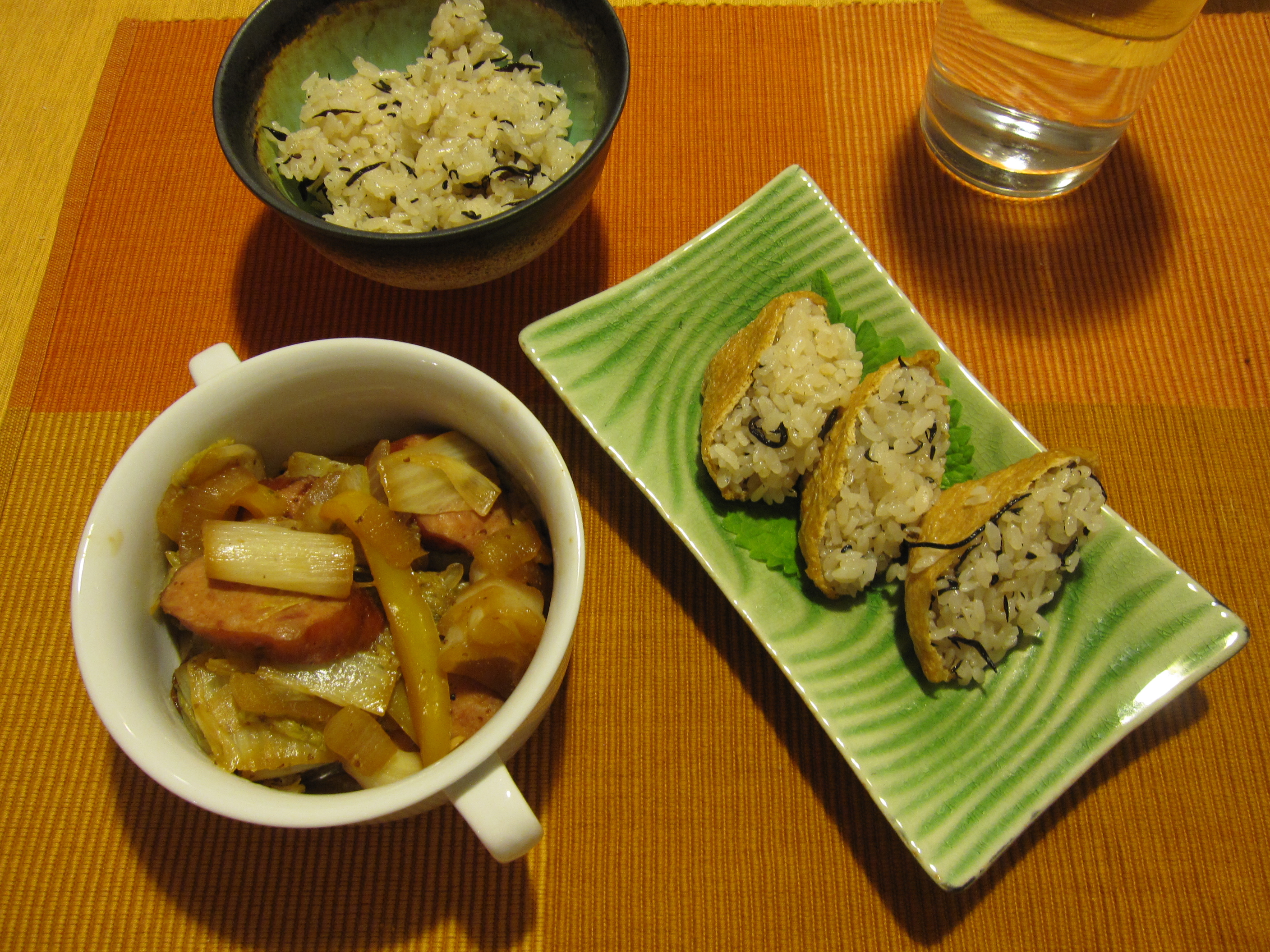
Yuki and I picked up some pre-flavored aburaage (deep-fried tofu) for inarizushi at the Assi Plaza the other day. So, last night for dinner she made some sushi rice with hijiki to stuff into them and I made a quick stew with a couple of kielbasa that I picked up from Andy’s last week. I mean really, what matches sushi better than Polish sausage?

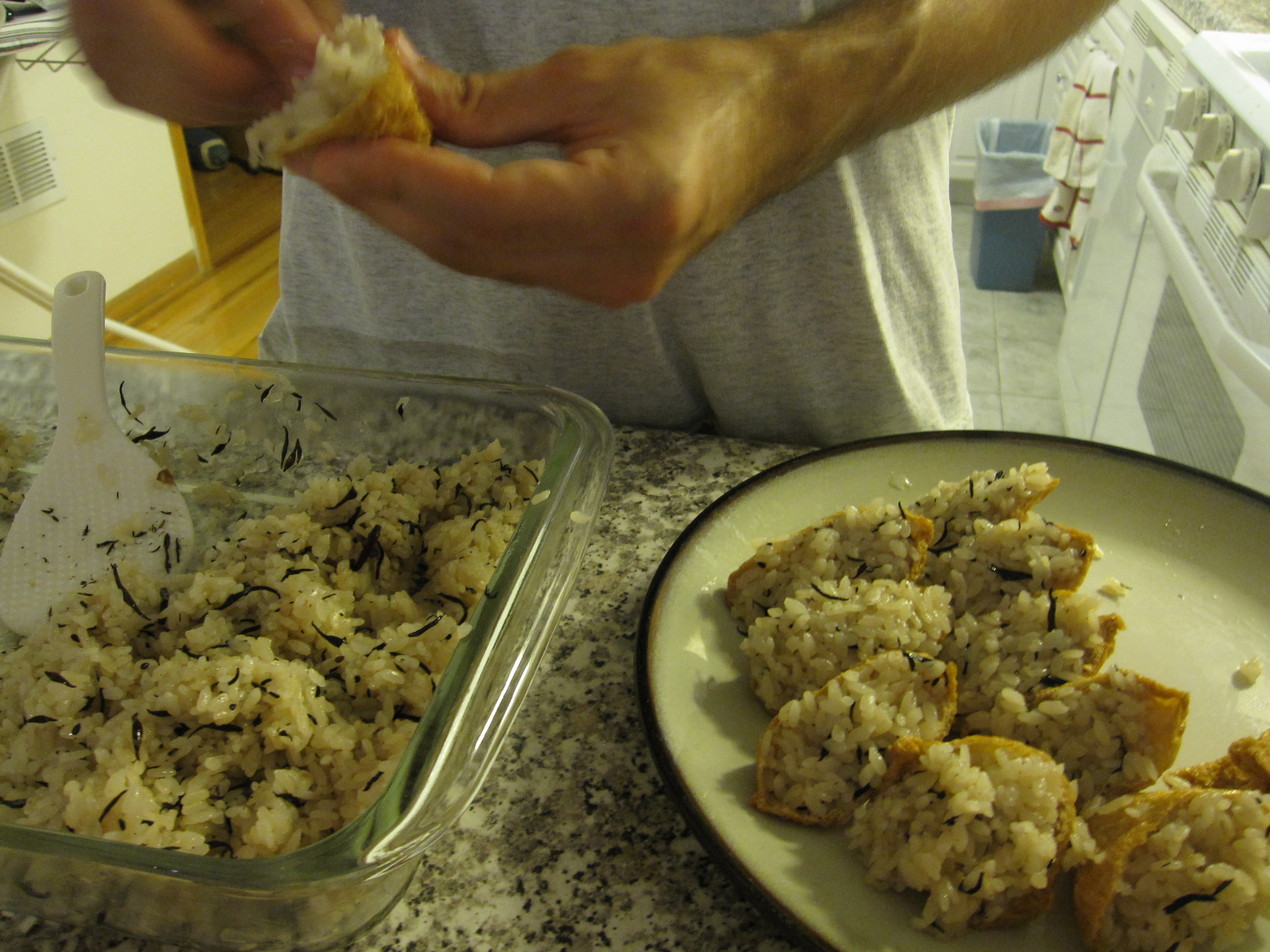
Inarizushi is really simple to make. Yuki measured out the rice to make 2 cups in our rice cooker. After she poured in the water the put about 2 tablespoons of dried hijiki in and let it sit for about 30 minutes before turning the cooker on. Once the rice was cooked she dumped it into a large glass baking dish. I stirred it around while she fanned it to release the excess moisture. Then, she poured in a mixture containing 4 tablespoons of rice vinegar, 2 tablespoons of sugar, and a pinch of salt. I mixed that all in until the rice was cooled to room temperature. Prior to that Yuki took the aburaage and boiled it for a few minutes. Aburaage is covered in oil and by boiling it you can remove most of the oil. Then, it’s simply a matter of stuffing the rice into the packets, a job that fell into my hands. Make sure to keep a bowl of water nearby to keep your fingers wet otherwise the rice will stick and you’ll never get the aburaage filled.

For the kielbasa I sliced up half an onion, 1 yellow bell pepper, 3 cloves of garlic, half a long napa cabbage, and the two kielbasa. In a pot I heated up a tablespoon of olive oil and tossed in the onion, pepper, and garlic. I let those saute down for about 5 minutes and then added the kielbasa, I let that cook for about 4 minutes. Then I tossed in the cabbage and let it wilt down for about 4 minutes. I poured in 1/4 cup dry white wine and let it boil for a few minutes until it evaporated. Finally, I poured in a mixture of 1/4 cup soy sauce and 2 tablespoons of mustard. I let that boil down for about 5 minutes and that was it, just a little black pepper to season.

To serve, we put a shiso leaf underneath the inarizushi. We also served the extra rice because we made more than we could stuff into the aburaage.

Read Full Post »

I made this delicious salmon on the grill with some cedar planks. To go with it I made a miso soup and a cherry tomato caprese. This menu was kind of all over the map, but it worked out.

I first made the caprese. I simply quartered the cherry tomatoes and cut some mozzarella di bufalo and then tossed them with a drizzle of olive oil, a drizzle of balsamic vinegar, and some sliced up basil from my back porch. A little salt and pepper to bring out the flavors and that was ready.

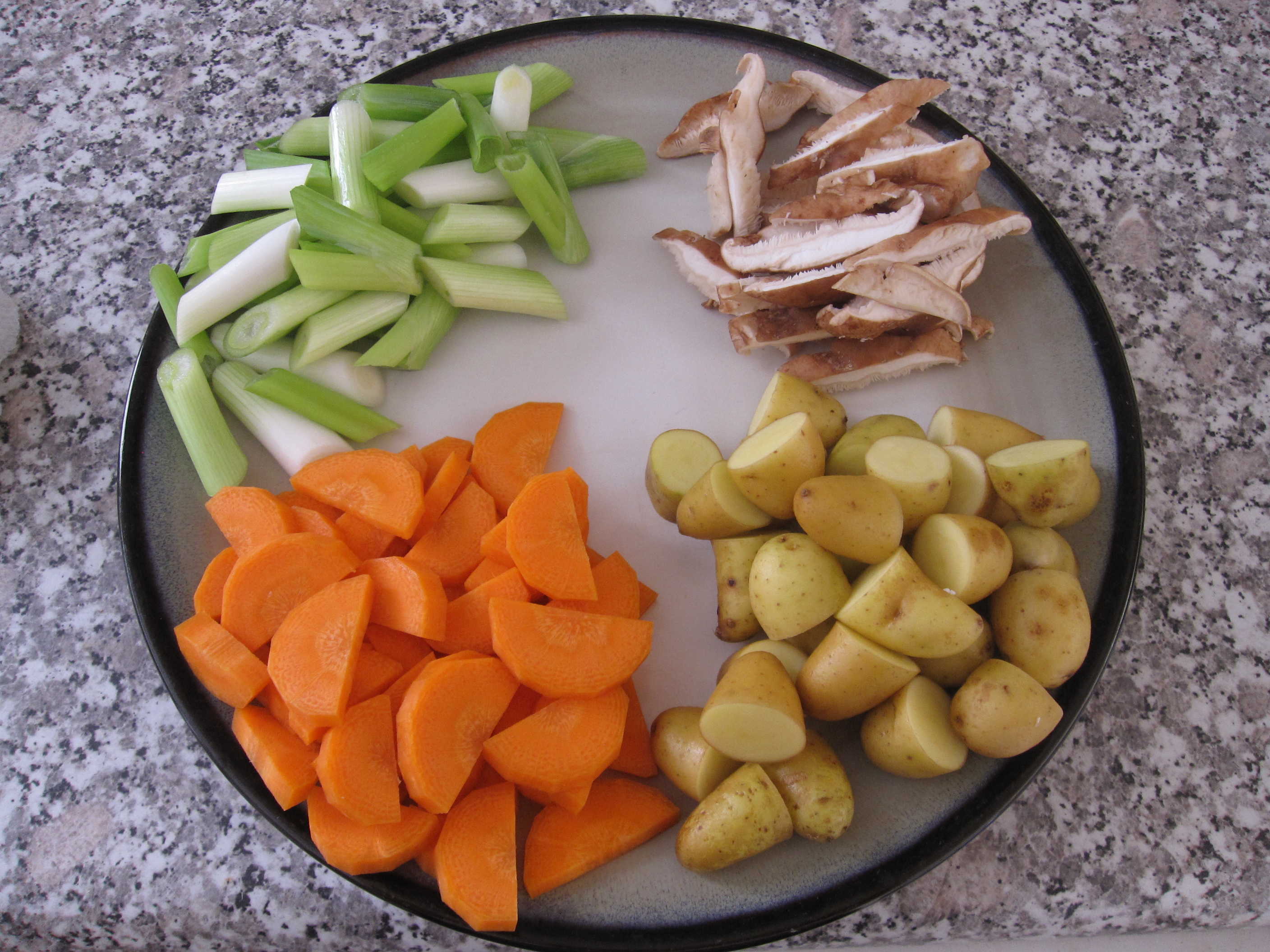
Then I got the soup rollin’. I chopped up 4 green onions, half a package of shiitake sliced, 7 fingerling potatoes cut into bite sized pieces, and a carrot cut into half-moons.

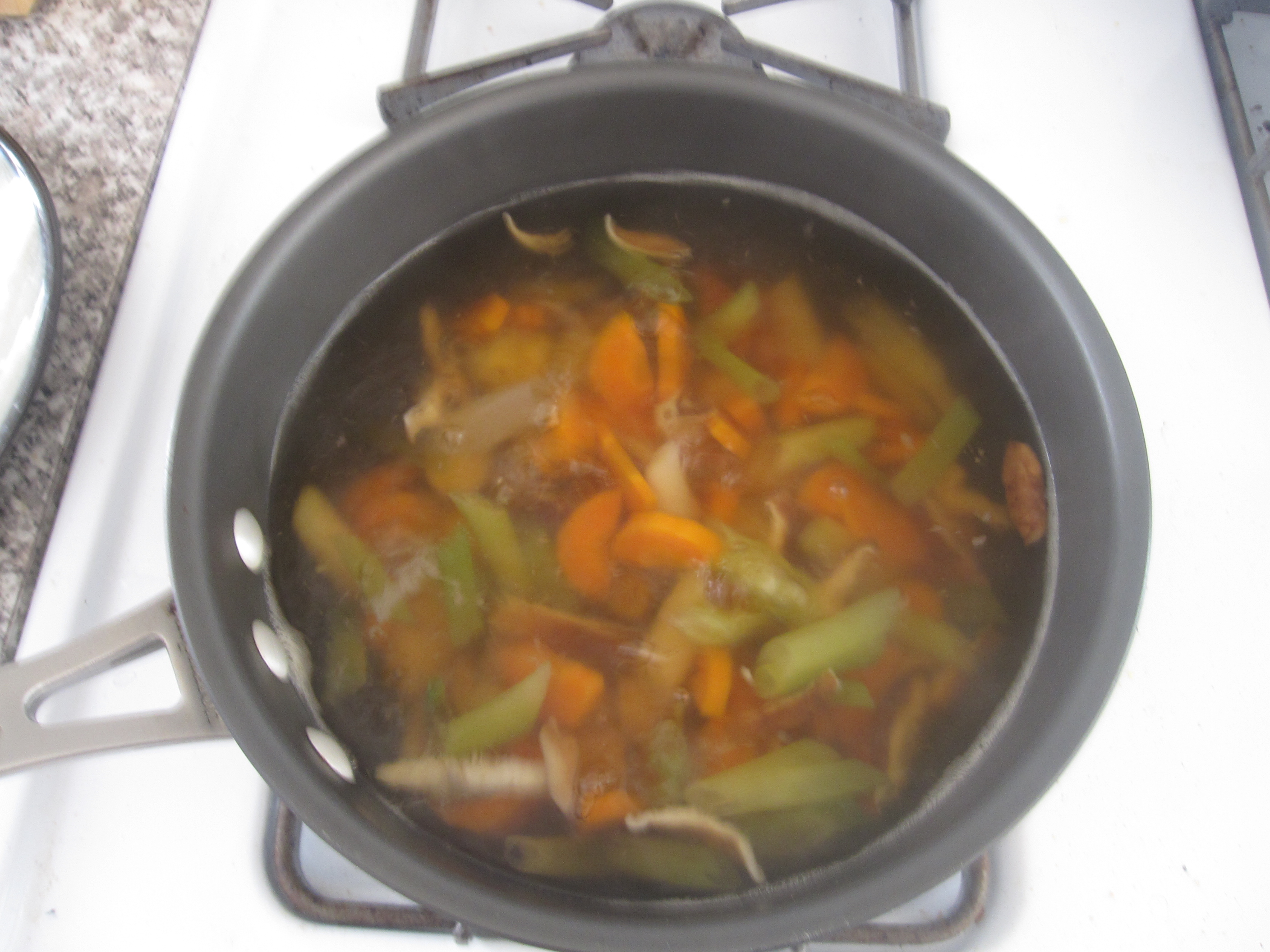
I dumped them all into about 6 cups of water and brought it all up to a boil. Once boiling I turned the heat down to medium and let it all simmer for about 10 minutes, just until the veggies were softened and tender. Then I added about a teaspoon of dashi-no-moto and turned the heat down to medium-low. I covered it and kept it warm while I grilled the salmon.

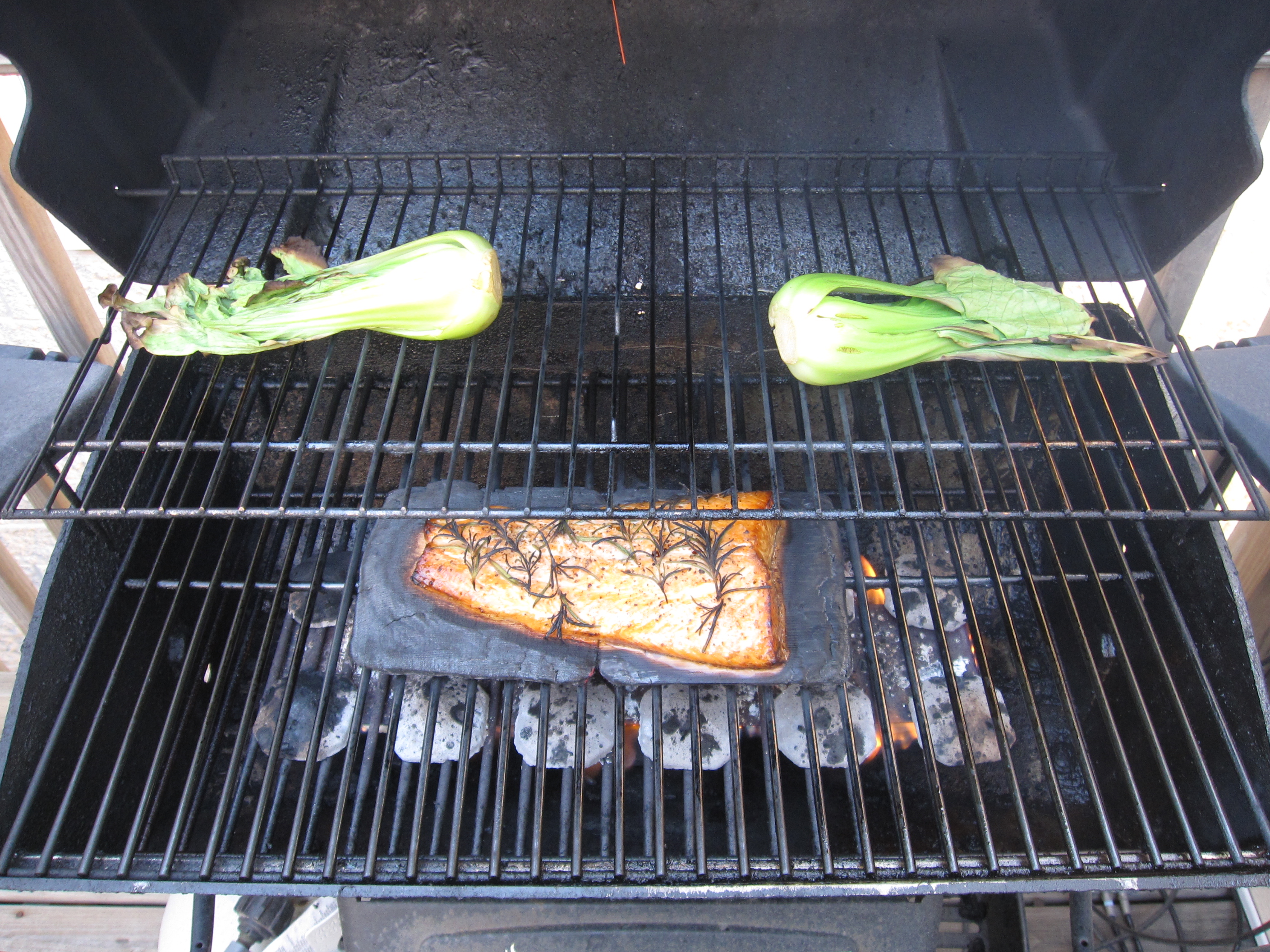
I had a beautiful piece of salmon that weighed in at 20 ounces. Perfect for 4 portions at 5 ounces each. I simply seasoned it with salt and pepper and then laid some sprigs of rosemary on top that I cut from my plant out back.

I had a couple of small cedar planks that I soaked in water for about 2 hours. You can see from the picture that they were pretty cheap as I’ve never had cedar burn up quite as quickly as these did. It did no harm to the fish though as it stayed nice and moist and absorbed some great smokey cedar flavor. I also had a couple of bok choy that I halved and grilled. I was careful to keep the green leaves away from any direct heat to keep them from burning. They still charred a little around the edges, but that just added some flavor.

When all was ready I cut the salmon up and served it on top of the bok choy. I had some white rice as well. For the soup, I found some bean sprouts in my bottom drawer so I threw them in at the last minute as they don’t need much cooking at all. Then I mixed in 2 heaping tablespoons of shiro miso and served it up.

Read Full Post »

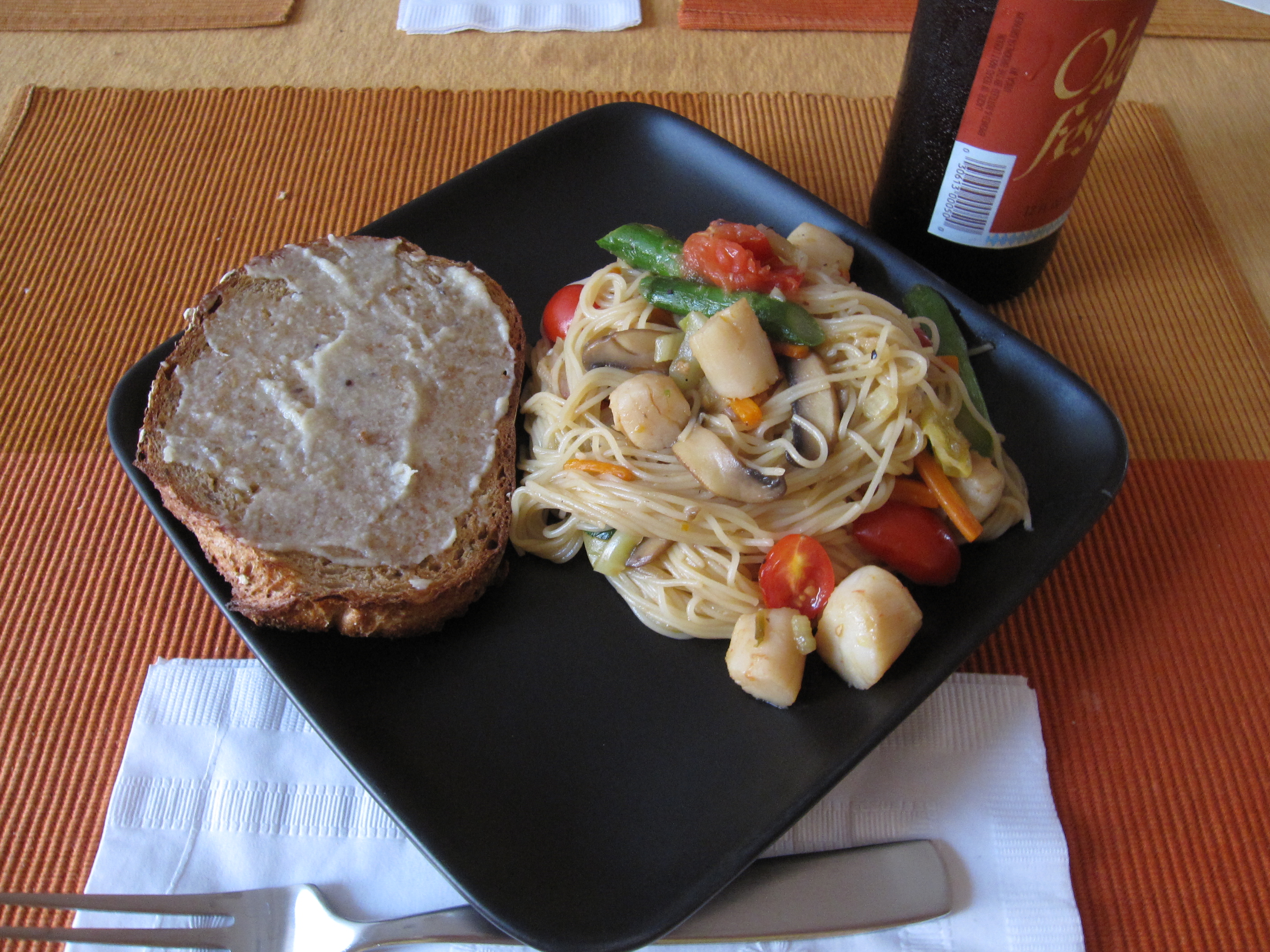
It doesn’t look like much in this picture, but last night I made some delicious pasta with scallops and vegetables. I had some things in my fridge I wanted to use up and pasta seemed like a good way to do it. While at the store I first went to the fish counter to figure out what to do. They just got in some really fresh bay scallops for $9.99 a pound, I couldn’t resist.

I had some cherry tomatoes to use up along with some asparagus, 3 cloves of garlic, a carrot, 1/2 onion, and 1/4 cup of white wine. To go with it I picked up a bulb of fennel (I only used half), some cremini mushrooms (I only used half the package), 1 pound of bay scallops. I chopped up all of the vegetables slicing the onion and fennel.

In a large hot skillet I poured in a good glug of olive oil, probably about 1/4 cup or so and then tossed in the garlic for about minute. Then I added the onion, carrot, and asparagus and let them go for about 4 minutes. Then I added the fennel and mushrooms for about another 4 minutes. Once all of the vegetables were slightly transparent I poured in the white wine and let it boil off for 3 minutes while seasoning with salt and pepper. After that I added the scallops which only needed about 2-3 minutes to cook. You never want to overcook scallops so always cook them a little less than you think.

While this was going on I cooked some angel hair pasta according to package instructions and drained them. Once the scallops were ready I tossed the cherry tomatoes in followed by the pasta and some basil I picked from my back porch. I tossed and tossed and tossed it all together so that the vegetables were incorporated throughout the pasta. Then I turned of the heat and served it up. Quick, simple, healthy, and delicious.

To eat with the pasta I toasted some bread and spread this delicious artichoke-garlic dip I have on top.

Read Full Post »

I love grilling dead animals on a stick. It’s my most sadistic past time, but I love it so. The other night I picked up a 3/4 pound cod filet and did just that.

I mixed together 2 tablespoons of shiro miso, 2 minced garlic cloves, 1 teaspoon of pure cane sugar, and both the zest and juice of 1 lime. While mixing that together into a smooth paste I decided to pour in about 1-2 tablespoons of sesame oil to add a bit of nuttiness. I cut up the cod into bite-sized morsels and tossed them in the marinade.

While the cod was taking a miso bath I made a tomato and bread soup. I used the leftover roasted cherry tomatoes with their juice from the night before, the crusty bread left from the night before, a 28 oz can of whole peeled tomatoes, a handful of basil from my back porch, and 3 garlic cloves diced.

In a hot pan I poured in about 3 tablespoons of olive oil and then added the garlic and the stems from the basil. Once that garlic started to color a bit, about 1 minute or so, I poured in the can of tomatoes. You need to be careful with that because the tomato juice will splatter. Then I filled the empty can with water and poured that in. I let it come to a boil and then simmer down for about 15 minutes. At that point it’s pretty easy to break down the tomatoes with the back of a wooden spoon. After the tomatoes were completely broken down I poured in the roasted cherry tomatoes, bread, and basil and then seasoned with salt and pepper. I let that simmer together for about 10 minutes or so. Before serving I mixed in another little glug of olive oil.

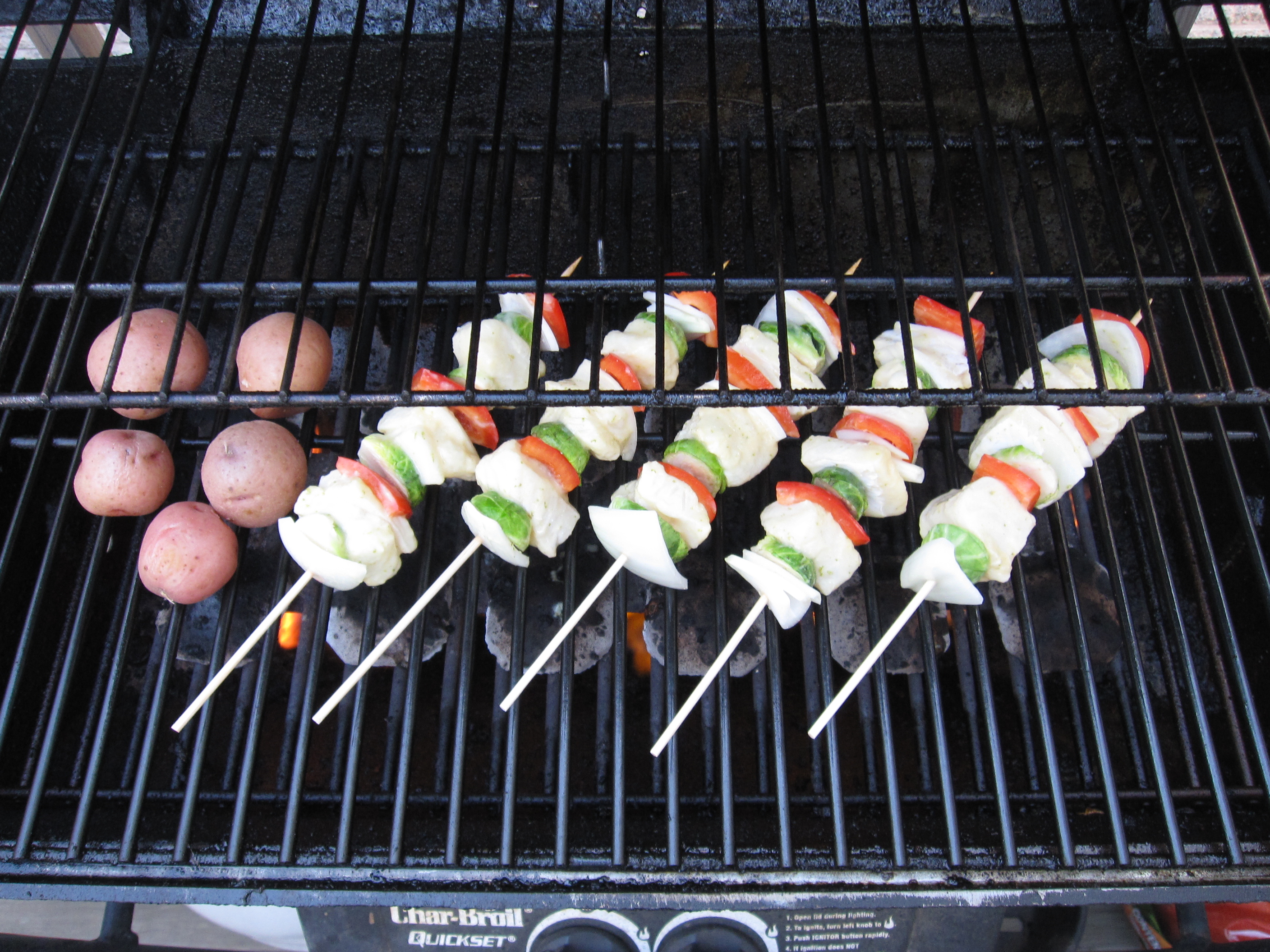
To skewer with the cod I chopped up a red bell pepper, half an onion, and the last handful of brussel sprouts from my fridge (I’ve never skewered brussel sprouts before, they’re quite nice as long as they’re cooked enough). I also picked up 5 little red creamer potatoes to grill alongside.

I skewered it all up and threw it all on the grill. I let the skewers go for about 4-5 minutes on each side. The potatoes needed about 7 or 8 minutes on each side as my grill was about medium-high.

After I rinsed the rice and put it in the rice cooker I decided to throw a tablespoon of dried hijiki seaweed in with it. I just dropped it in and let it sit in the water with the rice for about a half hour before turning on the rice cooker. It’s hard to describe the flavor of hijiki on its own. It’s kind of earthy and mushroomy which is weird because I struggle to call anything from the sea “earthy”. It’s really just umami. Damn delicious!

My only mistake was not reserving some of the marinade. The potatoes weren’t as sweet as I had hoped and I would have been much better off smashing them after grilling and topping with some of the miso. Other than that I did well.

Read Full Post »

I thought I had come up with a ground-breaking idea the other day when I conceptualized gnocchi made from tofu. Not quite sure how to go about doing it, but with a few ideas, I googled it. Much to my dismay, Craig Koketsu (chef at Park Avenue Spring and Quality Meats) had already done this. On the one hand I was a little upset because I can’t claim to be the first. On the other, it confirms my genius that a high-caliber chef had also come up with this idea. He did his as a re-imagined way to do Mabo Tofu. Mine was a Meatless Monday way to get protein into a dish. At any rate, I decided that it was best to use his recipe for the gnocchi themselves since it was already a proven method.

In a food processor I processed two 12 oz blocks of extra firm tofu along with 1 cup of tapioca flour and 1 tablespoon of salt. I’m not real sure why he used tapioca flour, but it is a finer ground than regular flour as well as being a better binder. It’s almost a cross between starch and flour. Once everything was well blended I poured it all into a large ziplock bag (I don’t have a piping bag, so I used the ziplock and snipped one of the corners off).

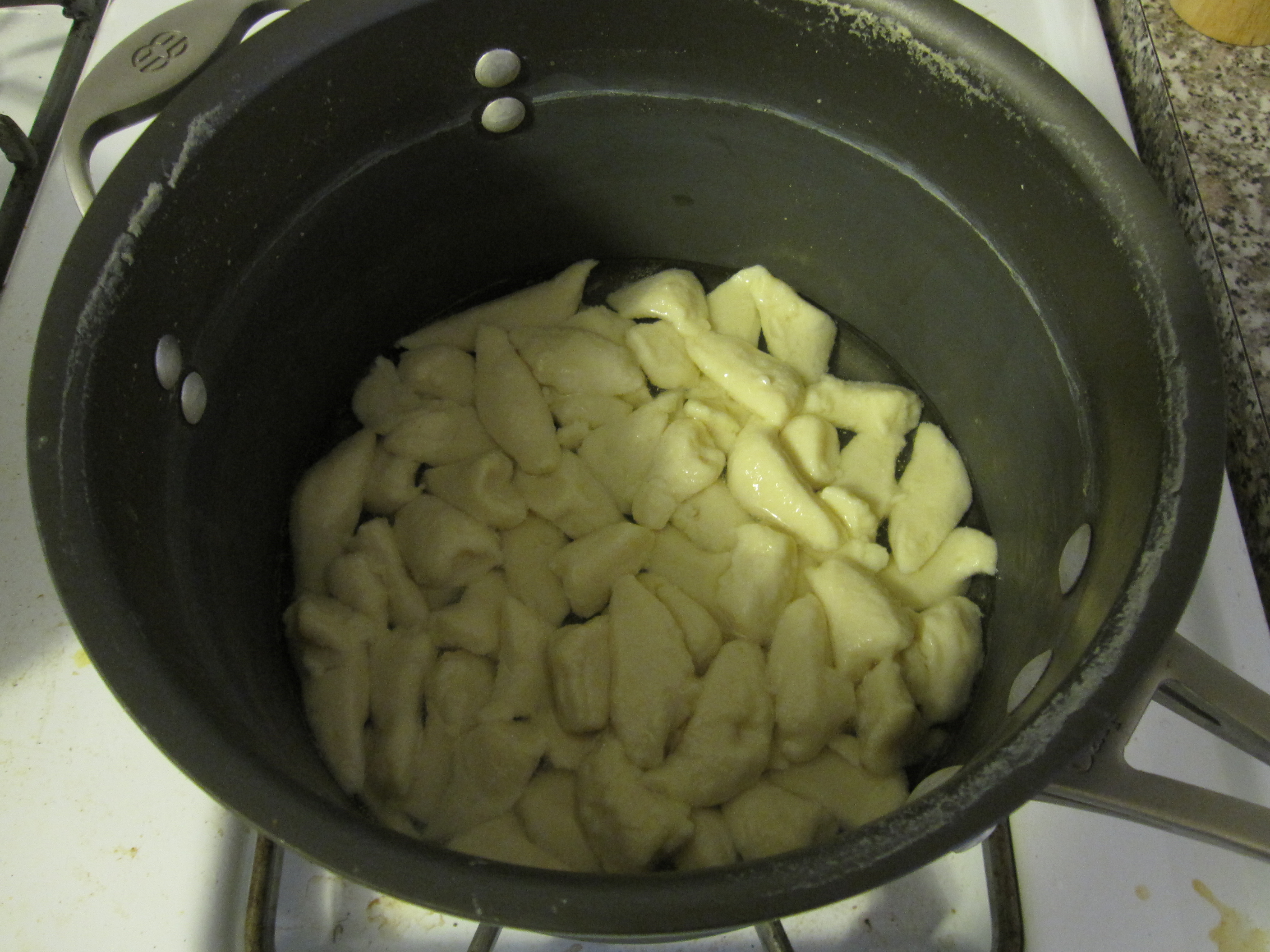
I brought a pot of water up to a high boil. After the mix had rested in the bag for about ten minutes I started to squeeze it out, snipping off approximately 1 inch lengths. I let it boil until the gnocchi had all started to float to the top. Then I drained them and chilled them in a bowl full of ice water. Once they chilled I drained them again and patted them dry, then set them aside until the sauce was ready.

To kind of bridge the gap between Italy and Asia I used a mix of vegetables that included 5 oz of sliced shiitake (instead of cremini), cherry tomatoes (during cooking I changed my mind and used a 14 oz can of diced tomatoes instead), 1 carrot chopped, 3 garlic cloves minced, some back porch basil, 1 celery rib halved and chopped, 6 green onions sliced, and a large handful of baby spinach (about 3-4 oz).

To make the sauce I heated up my pan and poured in a couple of tablespoons of olive oil. I let the garlic gently fry for about a minute and then tossed in the carrot and celery. About 5 minutes later I added the shiitake and green onion. Once they were cooked down a little, maybe 3 minutes, I poured in 1/4 cup of white wine and let that boil away. After the wine had evaporated I poured in the can of diced tomatoes and seasoned with salt and pepper. Once the juice from the can of tomatoes started to boil I threw in the spinach and turned off the heat.

In about 1/4 cup of boiling water I threw in two portions of the gnocchi and let them heat up for about 2 or 3 minutes.

To serve, I took the gnocchi out of the water with a slotted spoon and laid them on the plate. I topped them with some of the sauce. Then I garnished with parmesan cheese and basil.

All in all this dish wasn’t quite what I was hoping for. The gnocchi were great and the sauce was ok, they just didn’t quite meld together they way I had it in my head. I make sauce like this quite often, but it is definitely better with regular pasta. As far as the gnocchi, I would try a Mabo Tofu next time as I think those flavors match tofu much better. This was not a complete failure, it just wasn’t a huge success. Lesson learned.

Read Full Post »

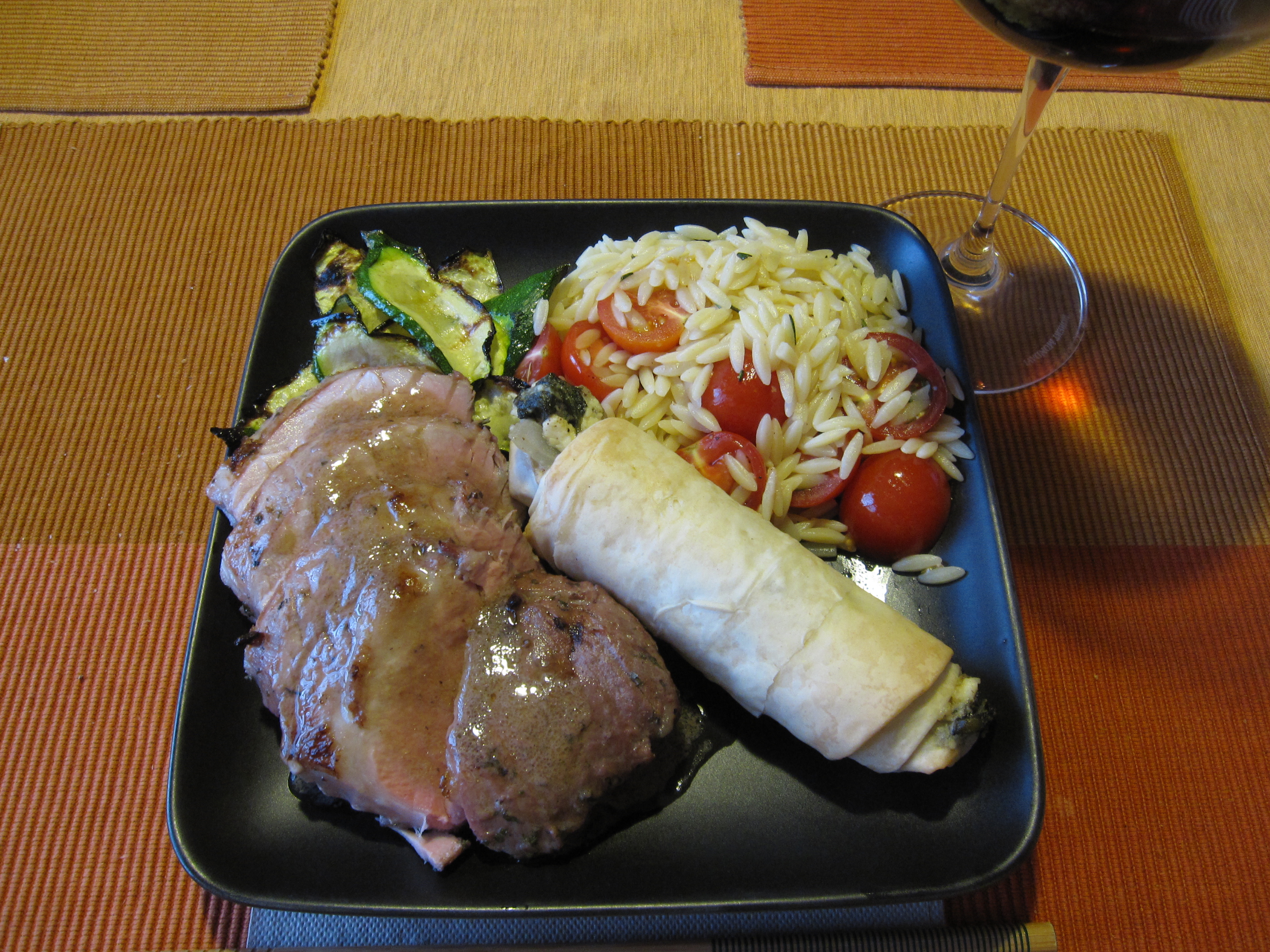
I just got the new Saveur issue the other day and it was all about Greek cuisine. This inspired me to make my own little Greek dinner last night. Since Yuki mentioned that I haven’t made pork tenderloin in a while and it was great weather to grill I put 2 and 2 together and came up with a delicious meal.

I got a beautiful 1.3 pound tenderloin. To marinade it I mixed together 1/4 cup of olive oil, 1/4 cup of red wine, the juice from 1/2 lemon, 1 tablespoon of dried oregano, 4 garlic cloves minced and mashed into a paste, 1 bay leaf that I crumbled, and a decent amount of black pepper. I let it marinate in the fridge for about 3 hours and then at room temperature for another 2 hours. Every hour or so I flipped it around so that the marinade would penetrate evenly.

I made some spanakopita for a side. I melted 1 tablespoon of butter in a pan, sautéed 1/2 diced onion for about 6 minutes, then wilted down a 5 ounce package of baby spinach. I put that in a bowl, let it cool, then seasoned it with salt and pepper, 1/4 teaspoon of ground nutmeg, and 4 ounces of feta cheese.

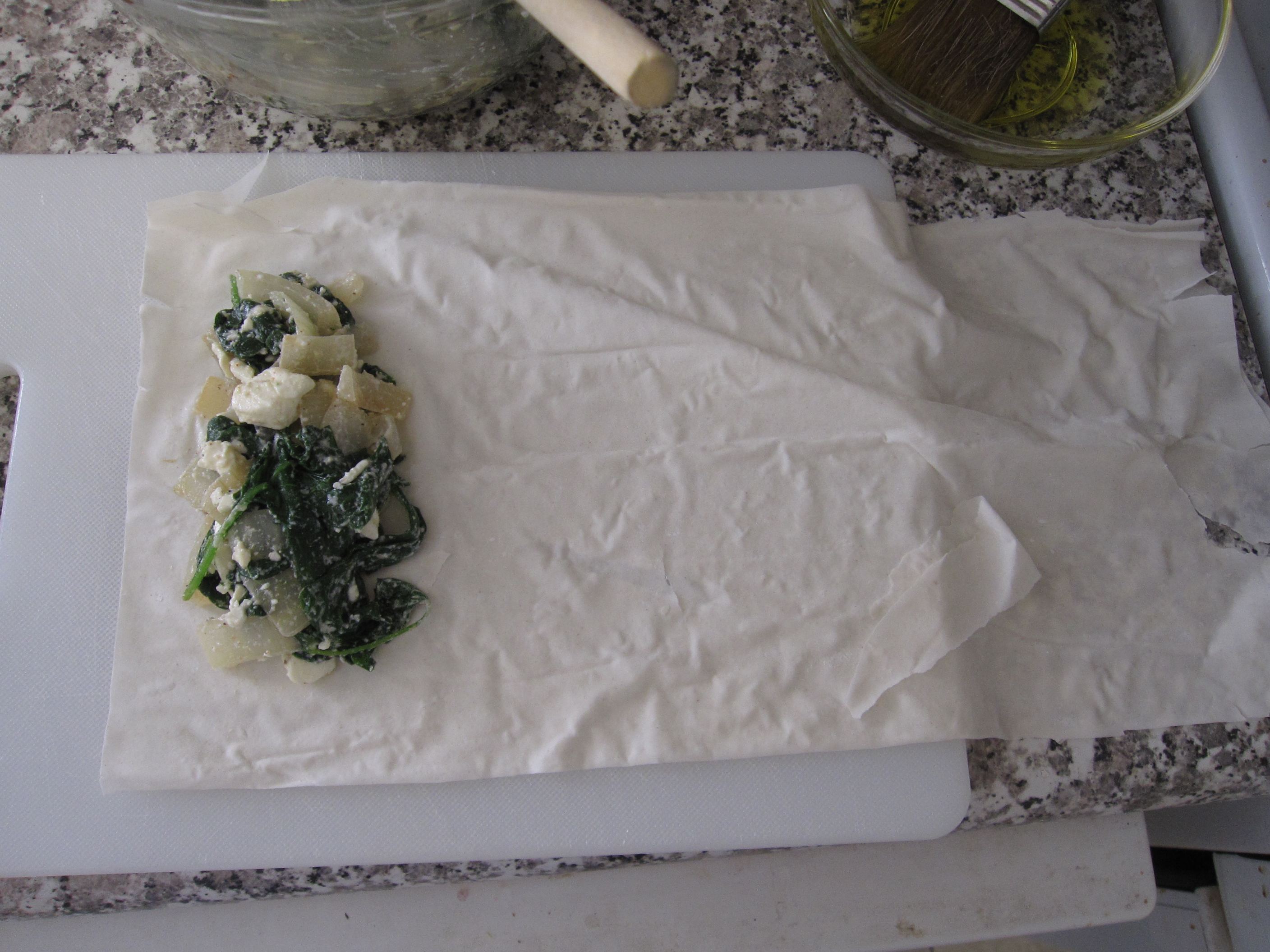
Instead of the usual triangles I decided to make them into cigars. I cut some phyllo dough into about 5.5-6 inch strips. At one end I placed some of the spinach mix. Then I folded in the edges, rolled them up, and brushed them with olive oil. I got 5 cigars out of them. So I guess you can figure about 1 ounce of spinach for each one. I put them in a 375 degree oven for about 20-25 minutes. They burst open a little while cooking, I must have rolled them a little too tight. I guess I’m used to rolling other things. If you make these, don’t make them too tight.

While the spanakopita was cooking I grilled up the tenderloin along with a zucchini that I thinly sliced. I brushed the zucchini with olive oil prior to grilling. I did it over a medium heat for about 10 minutes on each side. I don’t like cooking tenderloin all the way through like a chop, that kills the soft texture. If you have a good fresh piece of meat there should be no worry about trichinosis with a tenderloin as there isn’t much fat for the little buggers to hide in. Also, drinking alcohol helps (it helps a lot of things!). Oh, I also sprinkled some salt on both sides of the tenderloin before grilling as well. I don’t like salting marinades because that draws the moisture out of the meat. It’s best to salt just before cooking.

While the meat was grilling I boiled down the marinade to make a quick sauce. I also made some orzo with cherry tomatoes and rosemary. I simply boiled 3/4 cup of orzo in salted water according to package instructions. After draining it, I tossed it in a bowl with a handful of halved cherry tomatoes and one sprig of rosemary that was given the once-over with my knife. A little salt, pepper, and olive oil and my starch was good to go.

Last thing, I let the meat rest for 10 minutes before slicing it. That gave it time for the juice to chill out and redistribute. If meat doesn’t rest after cooking the juice will run out and your meat will go dry. No one wants dry meat. A little juice goes a long way!

PS- This came out to 3 portions instead of my usual 4. I had lunch plans today, so I didn’t need lunch for myself.

Read Full Post »

Last night was the final performance of Millenium Park’s world music series. They had two different accordion players, and I have to say, that is one bad ass instrument! Now I need to work on my air accordion skills. It’s a lot of fun packing a picnic and hanging out at the park for free music (I say free, but let’s be honest, we already paid for it with our tax dollars). At any rate, I had to make a dinner that would taste good cold. I thought that poached salmon on corn salad would do the trick. As usual, I was right.

The first thing I did was roast some cherry tomatoes. I simply drizzled them with olive oil and then put them in a 375 degree oven for about 20 minutes. I set them aside to cool down before packing it all up.

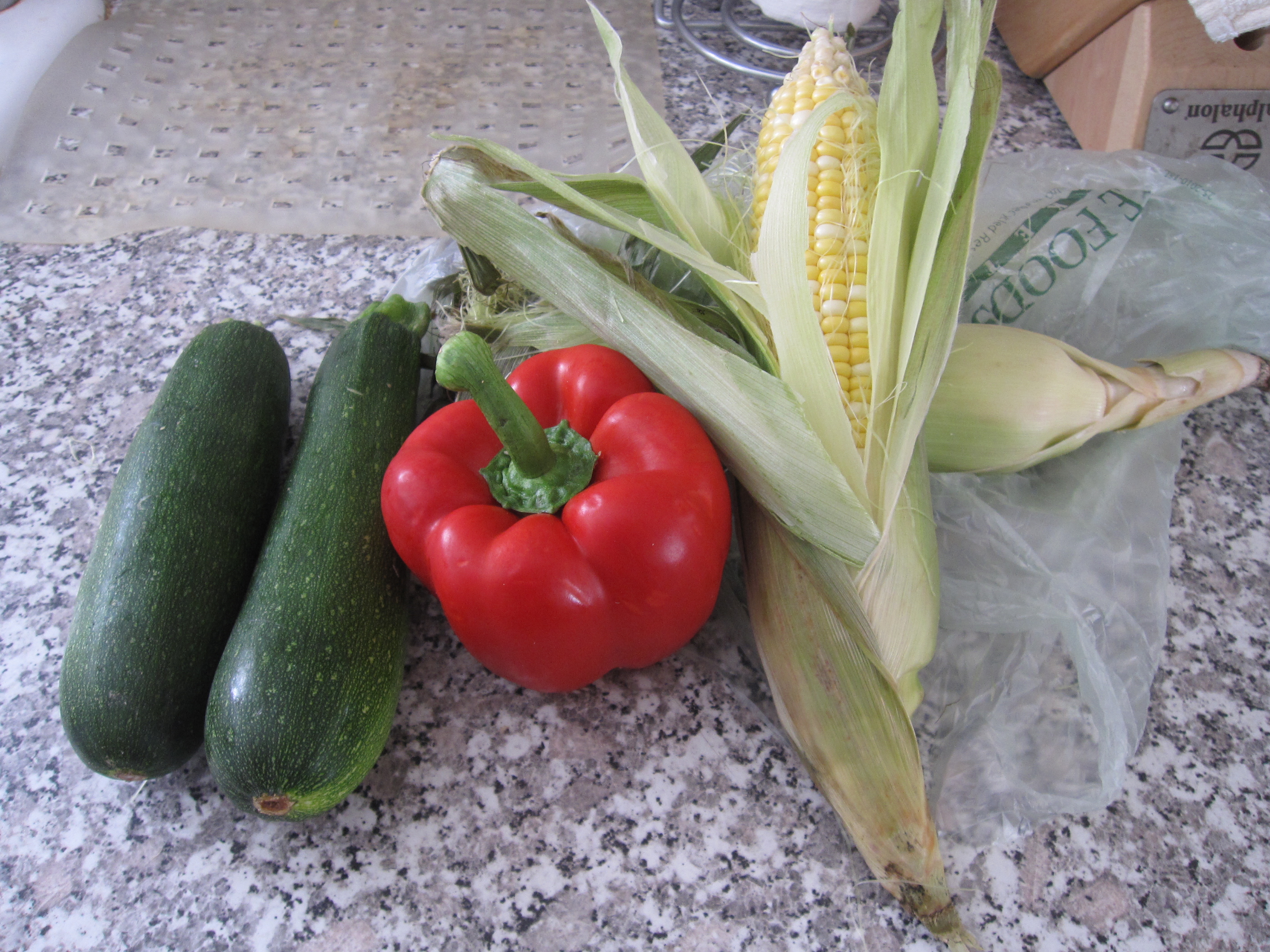
For the corn salad I used two medium-sized zucchini, one red bell pepper, and three ears of corn. I grated the zucchini into a mesh sieve, sprinkled a little salt on it, and let the juices drain for about 20 minutes. Then I squeezed it as dry as I could and set it aside for cooking. For the bell pepper, I just diced it up.

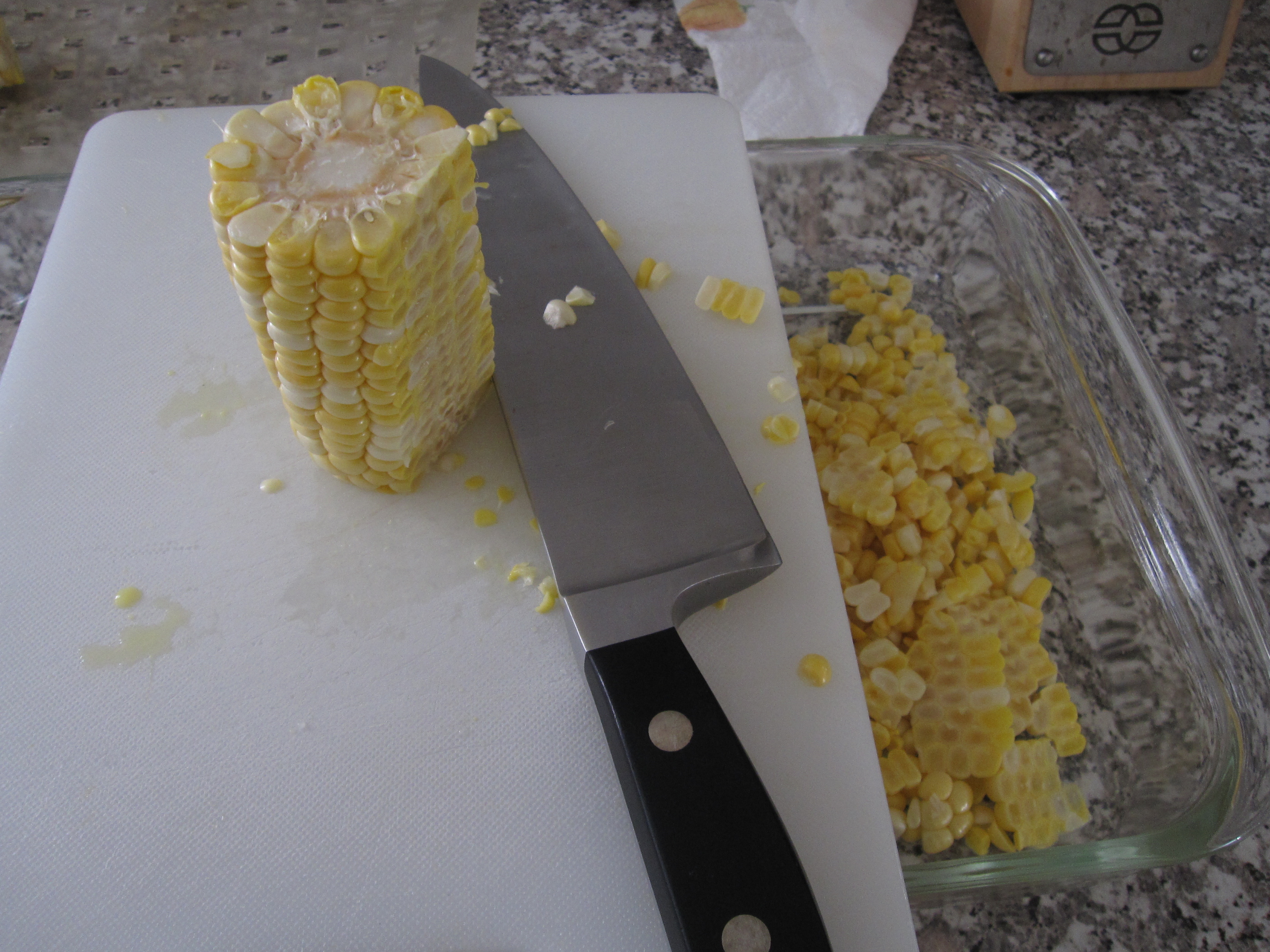
After cleaning all of the silk off the corn I separated the kernels from the ears. This can be a little messy as kernels have been known to fly around the kitchen as you slice them off, in my kitchen at least. I find the easiest way to do this is to cut the ears in half first. Then, I take my cutting board and lay it over a large baking dish. This way, when I slice the kernels off they fall right into the baking dish instead of all over my counter and floor.

Save the cleaned ears, they have tons of flavorful juice in them. I used these to help flavor the poaching liquid for the salmon.

To make the salad I first sautéed about three tablespoons of diced shallots in some olive oil for about 5 minutes. Then I poured in 1/4 cup of white wine (I used the same White Burgundy that I planned on drinking with dinner) and let that boil away for about 3 minutes. Once the wine was boiled off I dumped in the corn, bell pepper, and 1/2 cup of water. I covered the skillet and let it go until the corn was softened a little, about 5 more minutes. After that I seasoned with salt and pepper and then threw in the zucchini. I stirred it all around to separate the zucchini (it will become a zucchini ball when squeezing out the liquid), let it cook for another 5 minutes, then turned off the heat and moved on to the salmon while it cooled down.

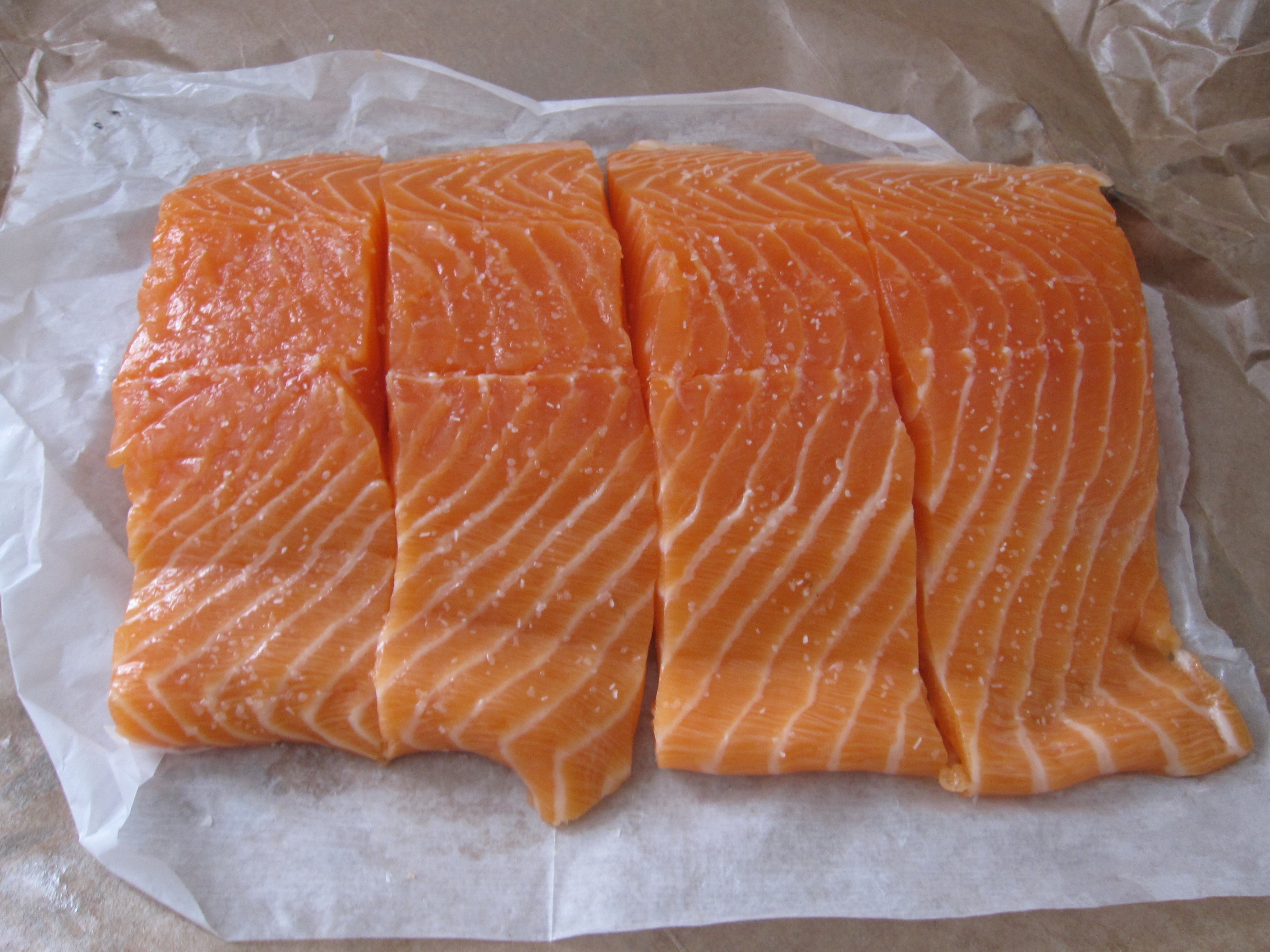
I picked up about 24 oz’s of really nice wild caught salmon, center cut so that it was uniform in thickness. I had the fishmonger skin it for me. Fishmongers have better knives for that job than I do, plus I didn’t want my garbage can to stink like rotting fish. It’s always a good idea to let the fishmonger skin and gut for you. I cut the salmon into 4 equal filets. Before putting the salmon in the poaching liquid I lightly seasoned it with salt.

For the poaching liquid I used 1 cup of the white wine, 1/4 cup of soy sauce, 3 cups of water, 1 bay leaf, about 2 tablespoons of diced shallot, and the naked corn cobs. I brought that all up to a boil and let it go for about 5 minutes or so to let all of the corn juice mix into the liquid.

Once the corn juice was incorporated I took the cobs out, gently laid the salmon in, and turned the heat down so that the liquid was at a simmer instead of a vigorous boil. It should only take about 6 or 7 minutes for the salmon to cook all the way through.

After I took the salmon out I seasoned it lightly with salt again, and a little pepper. Then I drizzled just a little olive oil on top.

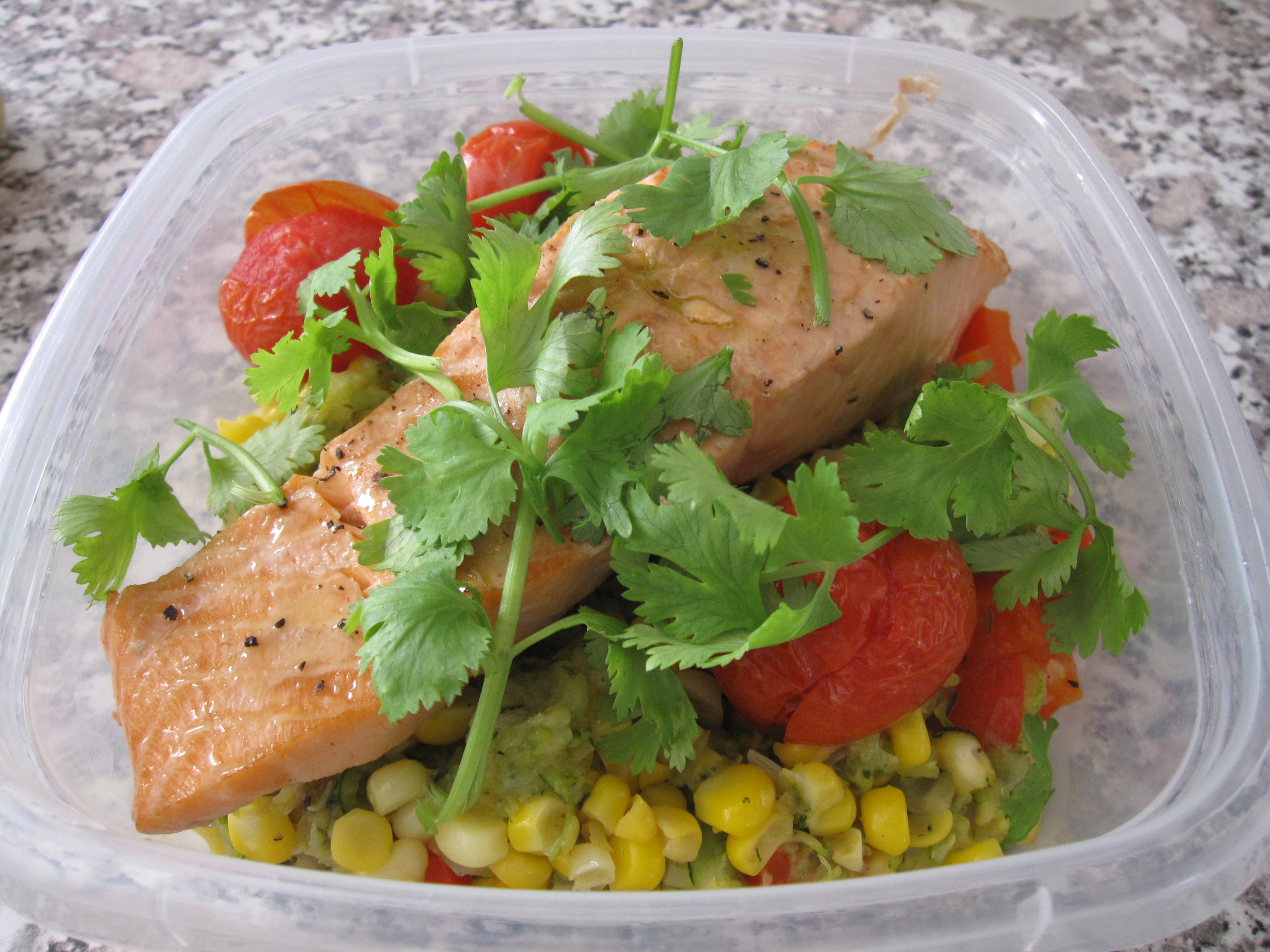
I got out my little Rubbermaid TakeAlongs and scooped a bunch of the corn salad in, topped it with a piece of salmon, laid in a few of the tomatoes, and garnished with some cilantro. I also brought some dinner rolls along. It was absolutely delicious! It also would have been tasty if I served it hot right off the stove top.

The only thing I did wrong was a miscalculation on the amount of corn salad. When I cook dinner during the week I try to make 4 portions so that Yuki and I have lunch for the next day as well. I came up one portion short on the corn. So, if you try this recipe and want 4 portions use 3 zucchini and 4 ears of corn. That should do the trick.

Read Full Post »

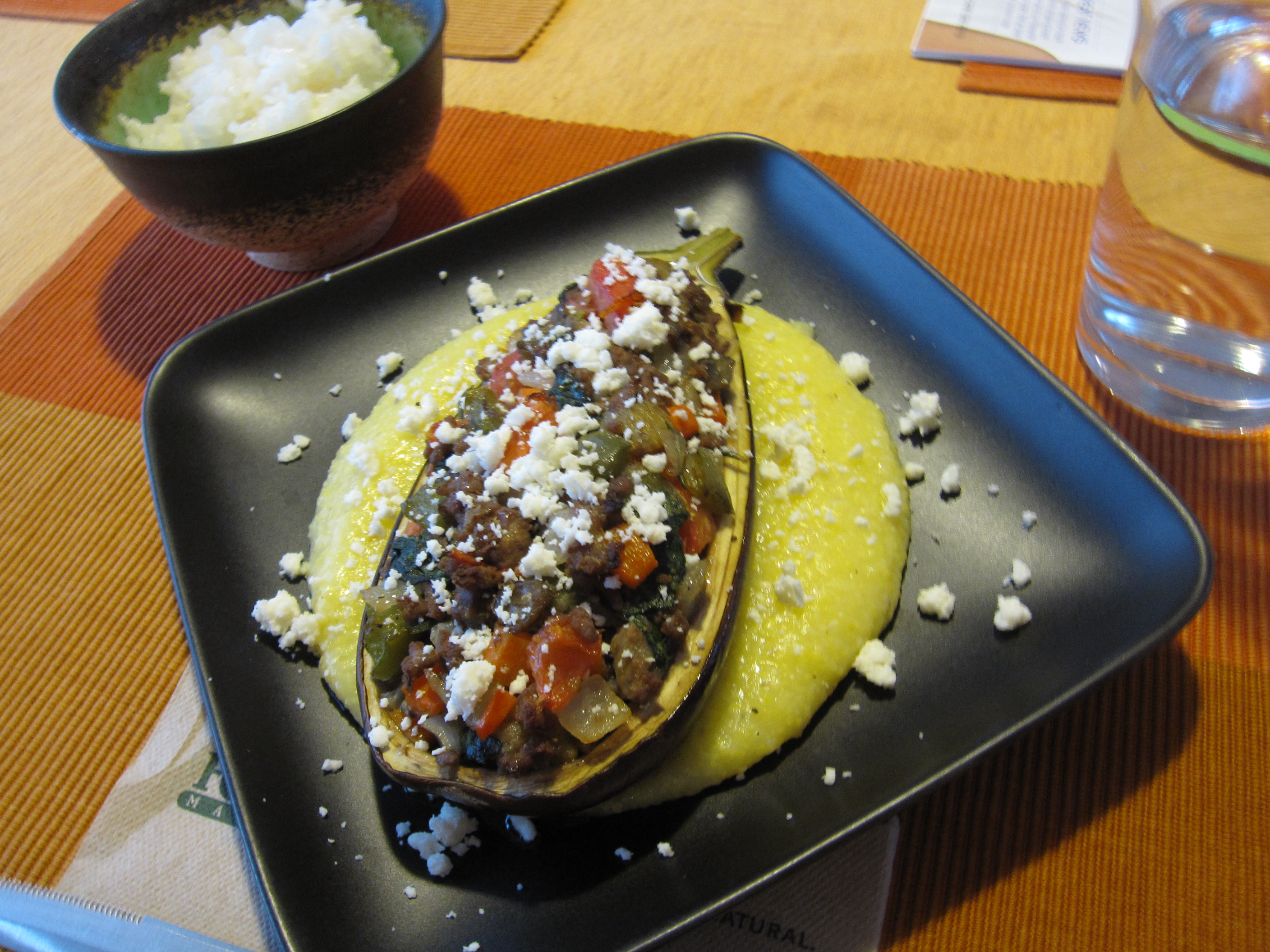
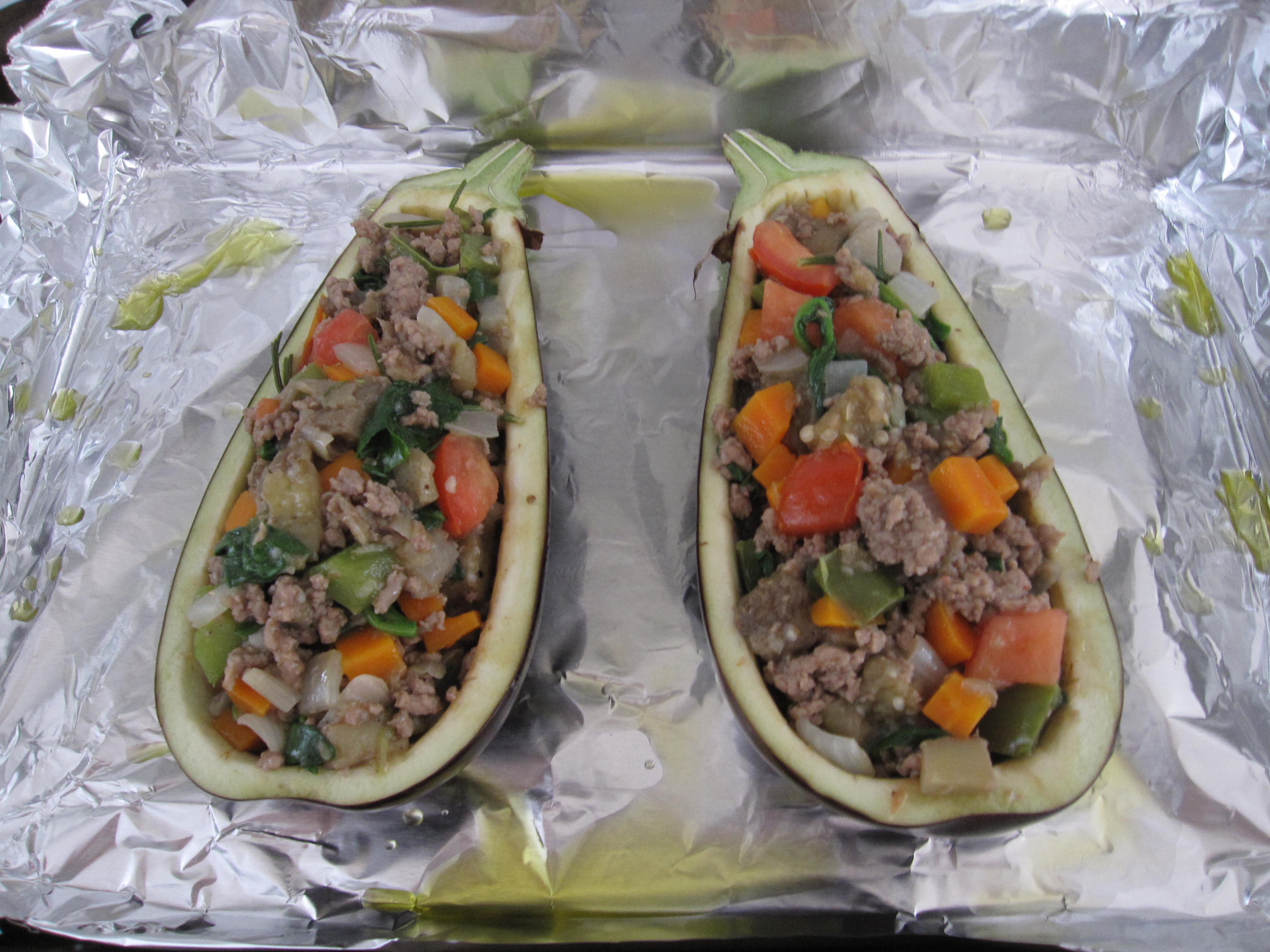
I had an eggplant left from my shopping excursion to the HMart that I wanted to use last night. Not wanting to do my typical grilled-eggplant or stir-fry I decided to stuff it instead. Ground lamb seemed like the perfect partner.
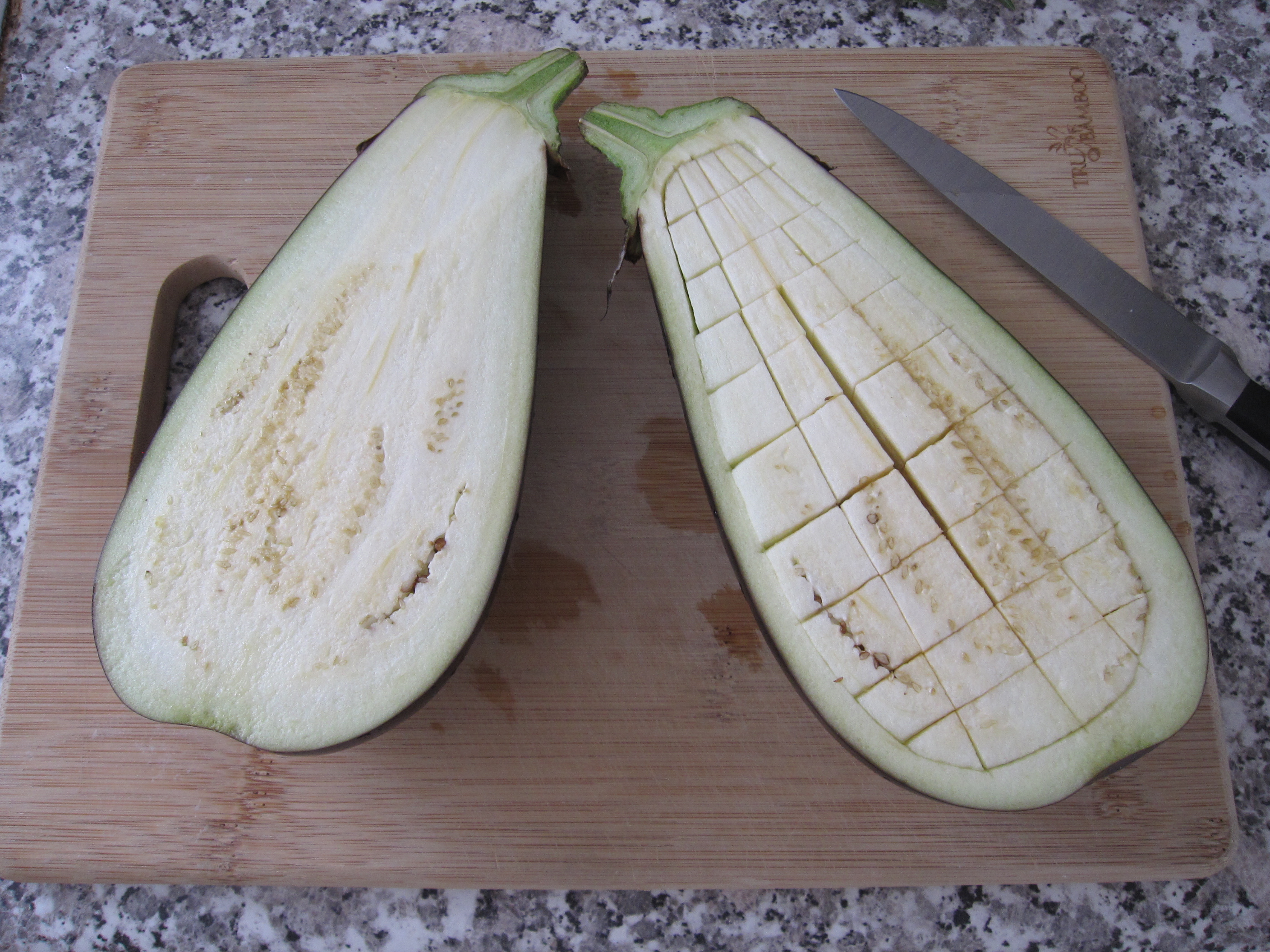
Hollowing out an eggplant is a pretty easy thing to do. First, you have to cut it in half length-wise. Then, I took my pairing knife and cut around the edges of the eggplant about a quarter-inch from the skin, carefully making sure I didn’t pierce the skin. After that I cut a bunch of lines through the width and length.

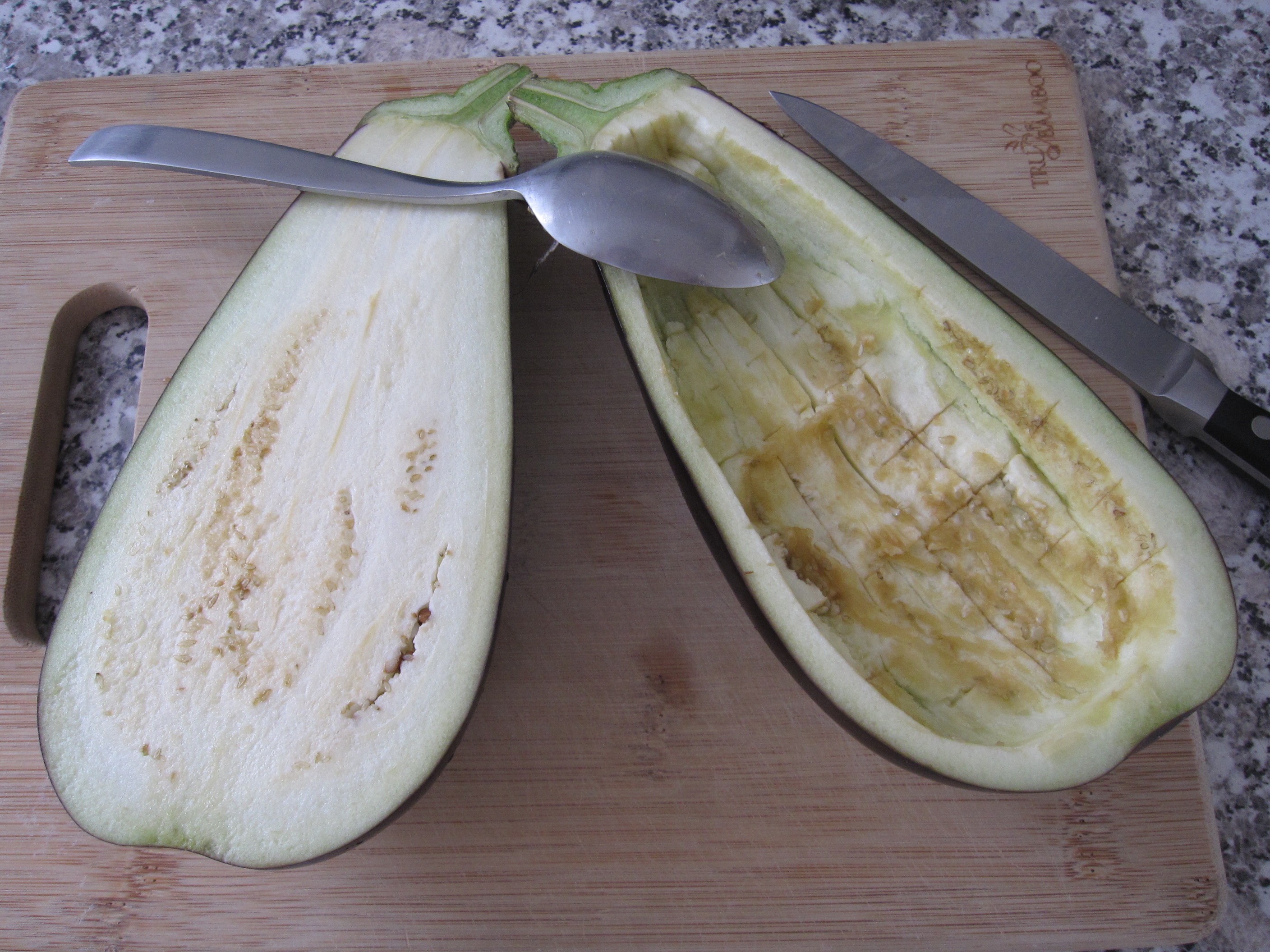
With a small spoon (a serrated grapefruit spoon would work great, but don’t worry if you don’t have one, I don’t and I made it work with a regular spoon) carefully scoop out the flesh. Save the flesh as it’s going to be used later on. I sprinkled some salt all over the inside of the eggplant and then let them drain in a colander for about a half hour while I prepped the rest of the ingredients. This removes some of the bitter juices.

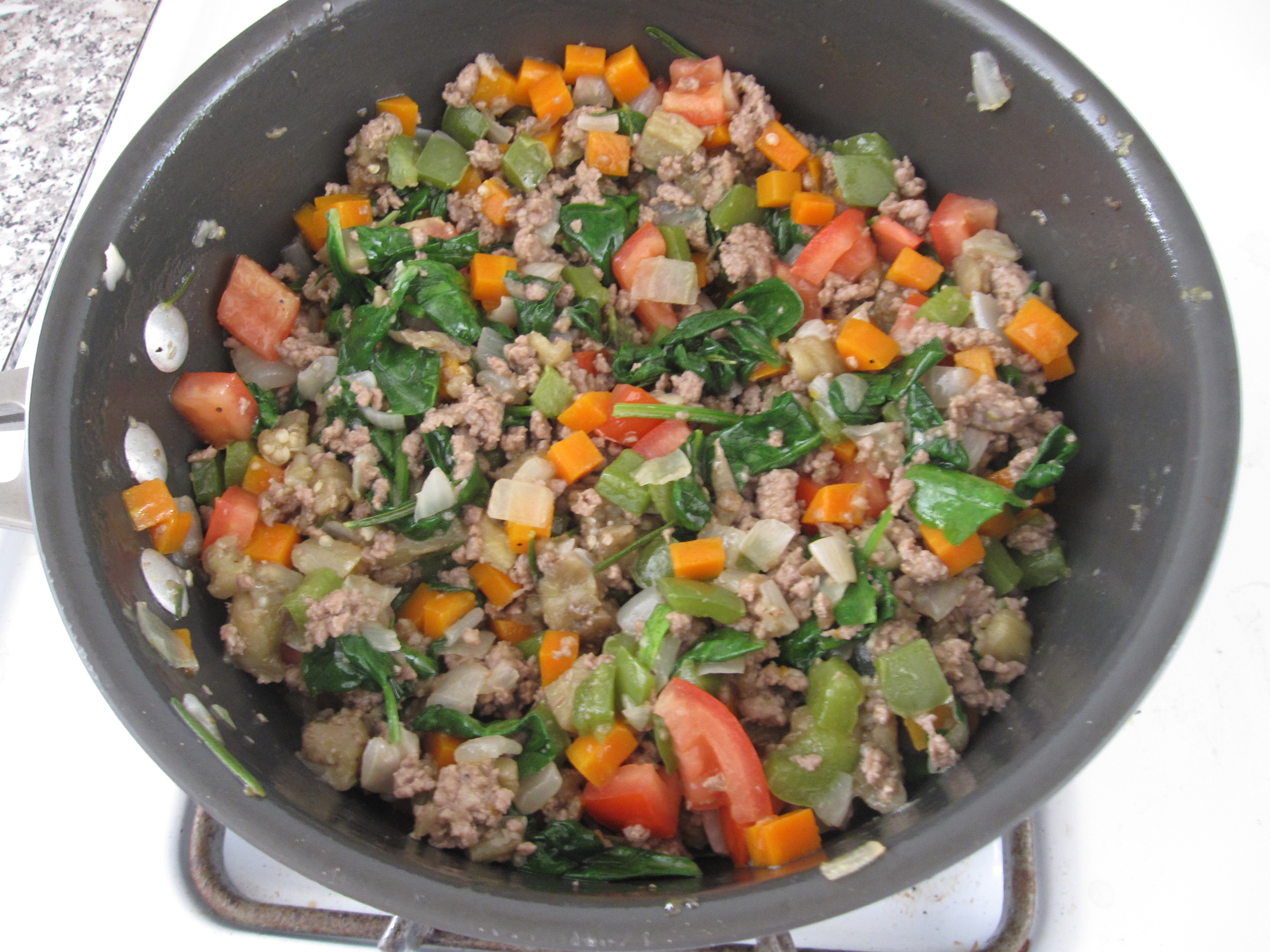
For the stuffing I diced up a green pepper, half an onion, a carrot, one tomato (I scraped out the seeds), some spinach, the eggplant flesh, three cloves of garlic, some rosemary from my back porch, a quarter cup of white wine, and 2/3’s pound of ground lamb.

I started off by sautéing the onion, green pepper, carrot, and garlic in a quarter cup of olive oil. Once the vegetables were slightly translucent, about 7 minutes, I added the eggplant flesh and let that cook down for another 7 minutes. Then I seasoned with salt and pepper and added the lamb. It took about 5 minutes or so for the lamb to be fully cooked. Once the lamb was broken down I poured in the wine, let it come to a boil, and let it simmer for another 5 minutes. Then I turned off the heat, added the rosemary, spinach, and tomato, and stirred it all together.

I wiped the salt out of the eggplant skins before stuffing them with the lamb mixture. Fill them up over the top, as much as you can before it all falls out. There will be extra stuffing, just put it in the fridge and toss it in some pasta or something for lunch the next day. I laid the stuffed eggplant halves in a lightly olive oiled baking pan and threw it in a 375 degree oven for about 30 minutes.
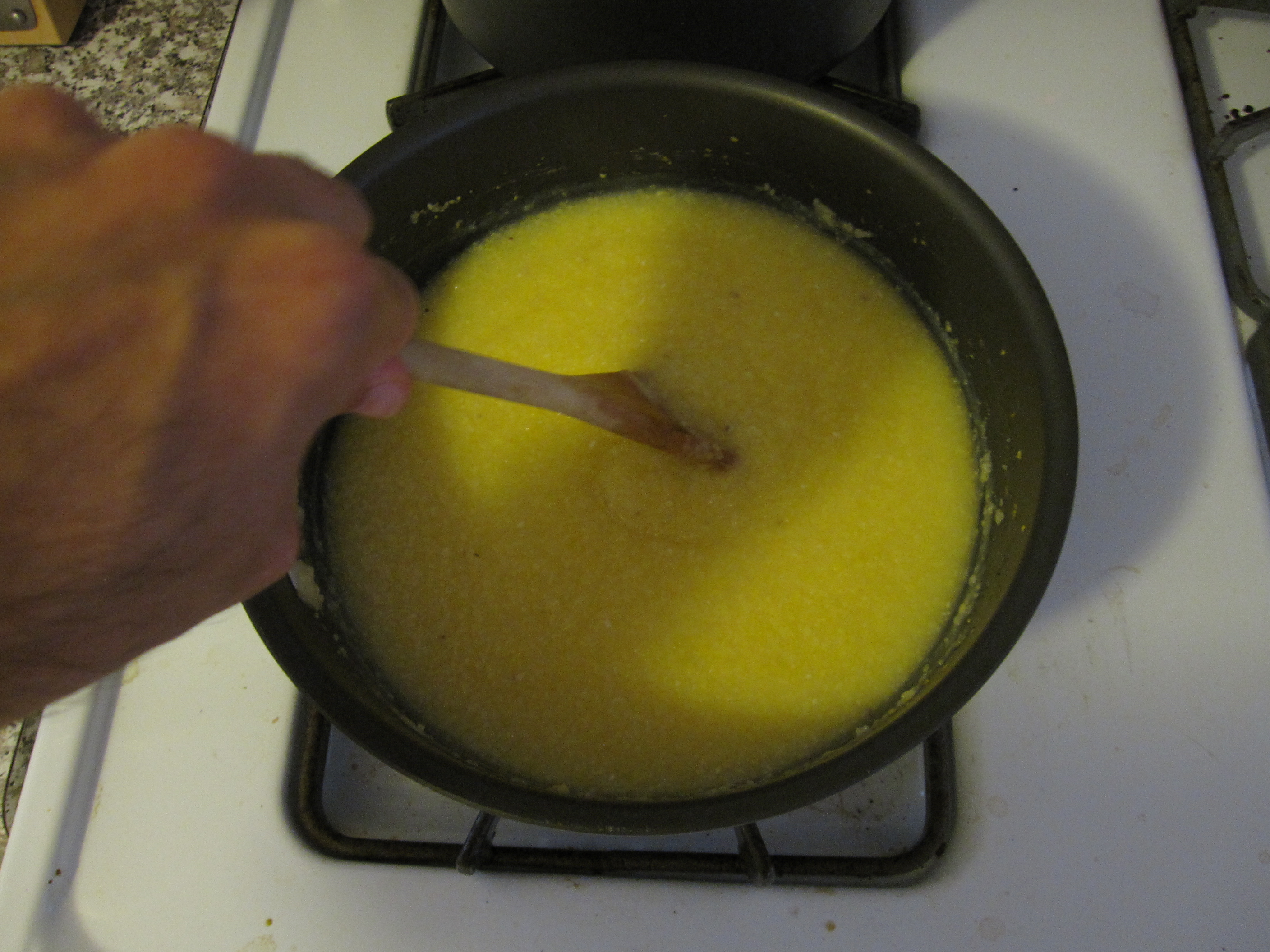
I had just enough time to make creamy polenta while the eggplant cooked. In a stock pot I poured in 4 cups of water, some salt, a bay leaf, and 1 cup of polenta. That’s enough for 4 portions. I brought it up to a boil over high heat. Once boiling I slowly poured in about a quarter cup of olive oil and turned the heat down to medium. I continuously stirred for about 25 minutes, until the polenta started to pull away from the sides of the pot. At that time the eggplant was done and I was ready to serve.

I poured some polenta in the middle of the plates, put an eggplant on the polenta, and topped it all with some crumbled cotija cheese. I served some white rice on the side.

Overall this dish was delicious. If I ever make it again I would make a couple of changes though. First, I’d add some spice to the lamb mixture, maybe some cumin, or turmeric, or garam masala. Second, I wouldn’t put a bay leaf in the polenta. That was the first time I used bay in polenta. It gave it kind of a medicinal taste. Yuki said it tasted like Walgreens. It wasn’t that bad, just not what I wanted. Otherwise I’d keep everything about the same.

Read Full Post »

« Newer Posts - Older Posts »