Feeds:
Posts
Comments

Posts Tagged ‘dashi’

Last night for dinner I made Japanese-style ginger pork with miso soup. The more I cook Japanese food the more I realize just how much healthier it is to American food. There is very little added fat and much more vegetable-to-meat ratio. Cooking Japanese-style food is extremely as well, not to mention delicious!

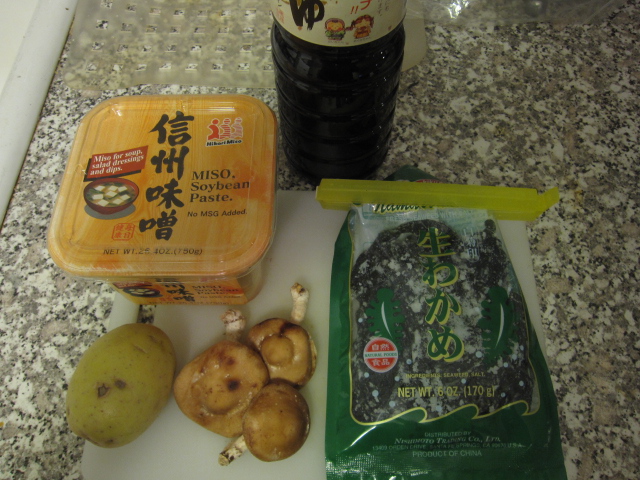
I first got my miso soup ingredients ready to go. I won’t go into great detail about making miso soup because I’ve done that a few times on this blog already. I poured about 3 cups of water into my pot and added 4 sliced shiitake, 3 chopped fingerling potatoes, 3 chopped green onions, and about 3 tablespoons of dashi soy sauce. I rinsed and soaked some salted wakame and added it to the soup at the end along with a large tablespoon of miso. The soup simmered over low while I cooked everything else, just enough time for the potatoes to cook.

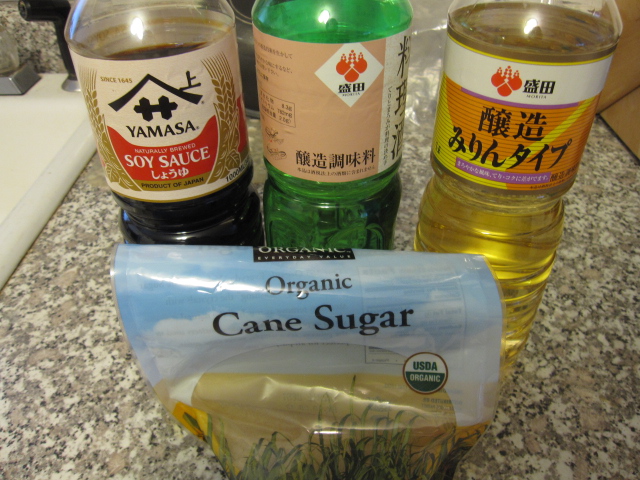
For the pork I used about 3/4 pound of snap peas, 3 ounces of bean sprouts, 1/2 onion sliced, 1 inch of ginger grated, 1 garlic clove grated, 2 tablespoons of soy sauce, 1 tablespoon of sake, 1 tablespoon of mirin, and 4 thin pork chops each about 3 ounces.

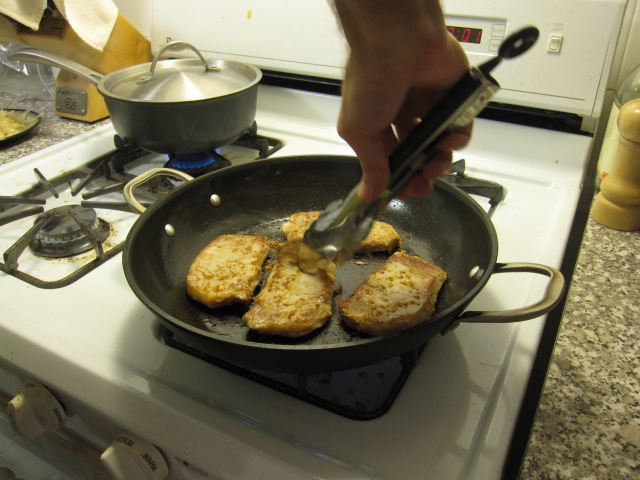
I mixed together the ginger, garlic, soy, sake, and mirin as the marinade. I let the pork sit in it for about 15 minutes or so. I heated up my large skillet and added about 1 tablespoon of vegetable oil and then cooked the onion for about 4 minutes. I took the onion out and rested it on a plate and then cooked the pork (reserving the marinade) for about 2-3 minutes per side. I rested the pork with the onion. I poured the marinade into the skillet to cook it down a little. I added about 4 tablespoons of water to help turn the marinade into a pan sauce and scrape up the bits from the pork, lots of flavor there you don’t want to lose.

Once the sauce had reduced a little bit, a minute or so, I added the snap peas and let them cook for about 5 minutes. After that I added the bean sprouts and the reserved onions.

I placed the pork on top, covered the skillet, and let it go for a few minutes while I mixed the miso into the soup. Then I plated it all up with some white rice. Yuki topped the rice with some ground sesame seeds.

So, we got 7 different vegetables into dinner with only 3 ounces of animal carcass. The only added fat was 1 tablespoon of vegetable oil split between 4 portions. No wonder America is a bunch of fat-asses while Japan is extremely fit and healthy.

Read Full Post »

Braised yakitori, kind of a misnomer. Yakitori translates to “grilled chicken”. I didn’t grill anything for this dish. Braised typically means cooking something in liquid over low heat for a long period of time. I didn’t do that either. What I did was make a standard yakitori marinade and cook some chicken thighs along with green onions in it. Why did I call this “Braised Yakitori”? Honestly, I just don’t know what else to call it.

First thing I did was make the marinade. In a small saucepan I poured in 5 tablespoons of soy sauce, 4 tablespoons of sake, 1 tablespoon of mirin, and 1 tablespoon of sugar. I brought it up to a low boil and let it gently simmer for about 5 minutes or so. I just wanted the sugar to dissolve and the marinade to thicken up slightly. After that I turned the heat off and let it cool down for about an hour, until it reached room temperature.

I minced up 2 garlic cloves and chopped up 6 green onions and 6 skinless and boneless chicken thighs. I mixed them all together in a glass dish and poured to marinade over. Covered with plastic wrap I put it in the fridge while I got the veggies and miso soup ready.

For the miso soup I only made 2 portions. We had some tomato soup leftover from Kasia’s that became lunch today, so I didn’t need to make too much. I used 1-1.5 tablespoons of miso, one yukon gold potato skinned and chopped, 3 shiitake sliced, 2 tablespoons of dashi flavored soy sauce, and some salted wakame. For the wakame, you have to rinse the salt off and then let it soak in cold water for about 10-15 minutes. I honestly cannot tell you how much I used, I just eye-balled it. You have to be careful though because it does get considerable larger as it absorbs the water.

In a small soup pan I poured in about 1.25 cups of water and added the dashi soy, potato, and shiitake. I let it simmer over a very low boil for about 20 minutes. That was just long enough for the potato to cook but not so long that it started to disintegrate.

Just before serving I put the miso in our little tea colander and swished it around for a few minutes until it all mixed into the soup. Using the colander keeps the miso from being chunky. But, this was right before serving (at which time I also added the wakame). Before I did this I made the veggies and cooked the chicken.

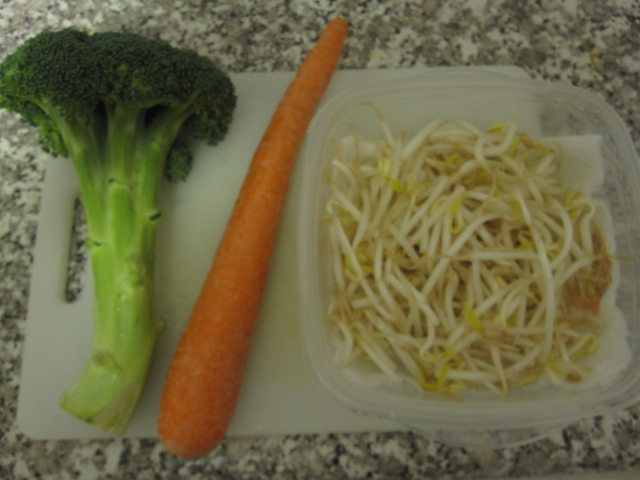
I kept the veggies very simple. I cut up 1 head of broccoli, sliced up 1 carrot, and rinsed about 2-3 ounces of bean sprouts. I got my steamer going and steamed the broccoli and carrot for about 5 minutes. After that I added the bean sprouts and let it go for another minute or so. A little sprinkle of salt and the veggies were ready.

To cook the chicken I heated up my pan and added about 2 tablespoons of sesame oil. When the oil was shimmering I just dumped everything in. It took about 9 or 10 minutes for the chicken to cook through and the sauce the thicken up a little. I seasoned with a little black pepper and that was all.

Of course, white rice accompanied the night’s chow.

Read Full Post »

Oden is Japanese home cooking at it’s finest as well as being a favorite winter-time treat. While the ingredients can vary, the basis of oden is to have a slightly salty dashi broth filled with fish cakes, daikon, konnyaku, hard-boiled eggs, and potatoes. Slowly simmered and warm in the belly, this is true comfort food. In Japan, it’s served at home, in restaurants, at street vendors, and you can even get it warm from vending machines (you can get anything in a Japanese vending machine, and I do mean anything!).

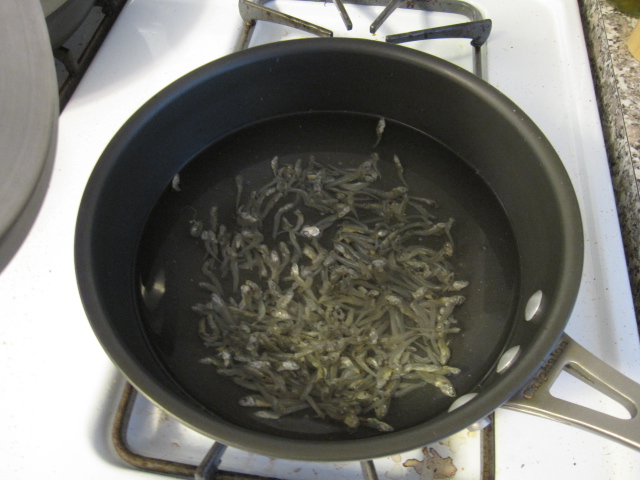
To start I made a good dashi broth. I used about 1/3 cup of dried anchovies, 3 tablespoons of mirin, 2 tablespoons of soy sauce, and 1 tablespoon of kosher salt. Most oden sets come with their own little packets of soy flavoring. They are usually pretty good, but it’s just as easy to do it yourself giving you more control over the flavor.

I let the anchovies simmer in 4 cups of boiling water for about an hour. I wanted every last bit of flavor out of the fish and into the broth.

I strained the broth and discarded the anchovies. Then I mixed in the mirin, soy, and salt.

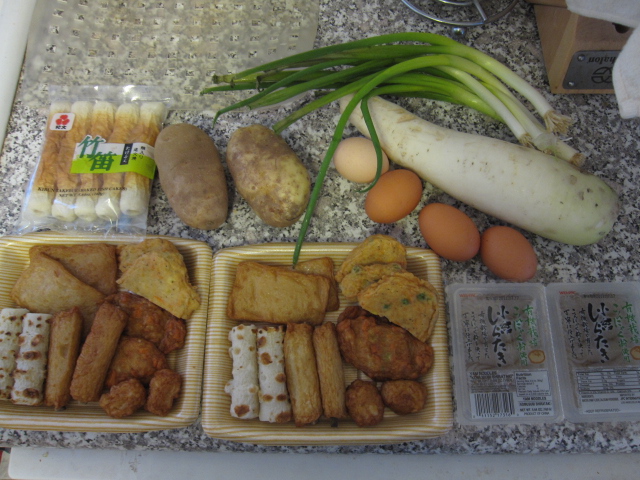
You can buy oden sets at any Japanese market and some Asian markets. We got two two-person sets that were on sale from Mitsuwa, each containing a variety of fish cakes. Some with carrot in them, some with burdock root, some grilled, most deep fried. We also had a package of chikuwa fishcakes that we used. I skinned and chopped two russet potatoes, medium boiled 4 eggs (just enough to peel the shell off, since they were going to simmer in the dashi for a while I didn’t want to overcook the yolk too much), 1 daikon skinned and chopped, a bunch of green onions chopped, and a couple packaged of shirataki konnyaku.

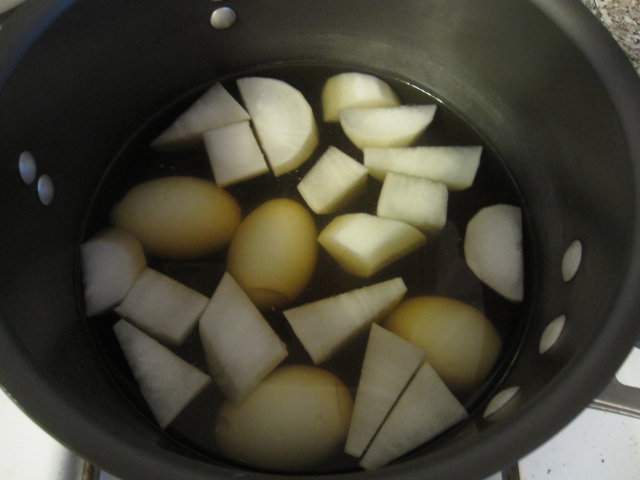
Once the dashi was ready I added the eggs and daikon and simmered them, covered, over a low heat for an hour. This allows both to absorb a lot of the dashi flavor.

Then I added the potatoes and konnyaku. If you boil the potatoes too long they will fall apart and melt into the broth. I only let them simmer for about 20 minutes. That’s also enough time for the konnyaku to take on some flavor. If you’re using sliced blocks of konnyaku instead of the shirataki noodles you’ll need to add them about 20 minutes earlier.

Since most of the fishcakes are deep fried before packaging they can sometimes have a little bit of grease residue. Because of that I boil and drain them seperately for a few minutes before adding them to the dashi, that gets rid of any unwanted oil. They also are fully cooked so just need to be heated up. After about 5 minutes in the dashi, along with the green onions, the oden is ready to go.

To serve it up I divied one of each for both of our bowls and then laddles some dashi on top. Oden is great with a cold beer and some white rice, I covered our rice with ground sesame seeds. I tell you though, oden is even better the next day. It is a stew, so once all of the flavors fully penetrate the ingredients you really have a special dish here. The daikon and egg for lunch today were outstanding!

Read Full Post »

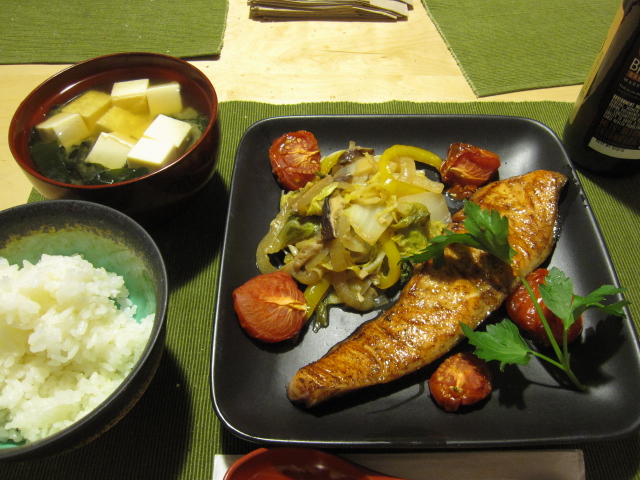
We journeyed up to Arlington Heights this weekend to stock up on Japanese ingredients, something we do at least once a month. At the Tensuke Market we saw this absolutely gorgeous salmon. They have the best seafood in town, hands down. This salmon was marbled like a real Kobe Ribeye, just made our mouths water. So, that was dinner last night.

We picked up a package of 3 quarter pound slices of filet (Yuki got lunch today, I didn’t get to enjoy that beautiful fish again). I made a quick marinade consisting of 1/2 tablespoon mirin, 1 tablespoon sake, and 1.5 tablespoons soy sauce. In a glass baking dish I let the salmon sit in the marinade while I got everything else ready.

For my veggies I used 1/2 onion sliced, 3 garlic cloves minced, 7 cherry tomatoes halved, 2/3 carton of shiitake sliced, 2 small yellow bell peppers sliced, and about 1/8 of a medium napa cabbage cut into chunks.

In a heated pan I melted about 1/2 tablespoon of butter and poured in 1 tablespoon of sesame oil. Once the butter was melted I added the onion and let it saute for about 5 minutes. Then, I added the garlic, shiitake, and bell pepper. About 5 more minutes and I poured in about 2 tablespoons of soy sauce and let that coat all of the veggies. Just before the soy was completely boiled off, about a minute or so, I added the napa cabbage. I let that wilt down a little for about 5 minutes, seasoned with a little black pepper, turned the heat to low just to keep everything warm, covered it, and let it sit while I cooked the salmon.

Oh, and during this time I had the tomatoes in the oven roasting at about 375 degrees, I did that for about 25 minutes. I also decided, at the last minute, to make a simple miso soup with some wakame and tofu. I just boiled some water with a little dashi seasoned soy, stirred in some miso, and added the tofu and wakame. That only takes a few minutes.

For the salmon I heated up my large skillet and melted a little dab of butter, just enough to lightly coat the surface of the pan. The salmon had enough fat that I didn’t want to add to much more, but I also didn’t want it to stick. So, a tiny amount of butter. I seasoned the salmon with some crushed white pepper and then seared one side for about 3 minutes. Then I flipped it all over and poured the marinade all over it. I let it cook for about 3 more minutes and then pur the salmon on a plate and served everything up, with white rice of course. I garnished with a piece of parsley (only because I have some in my fridge).

Read Full Post »

I’m just not as young as I used to be. I can tell that I was at an izakaya last night because all of that sake floating around my liver is taking its toll. However, slow-moving Saturdays usually mean fun Friday nights.

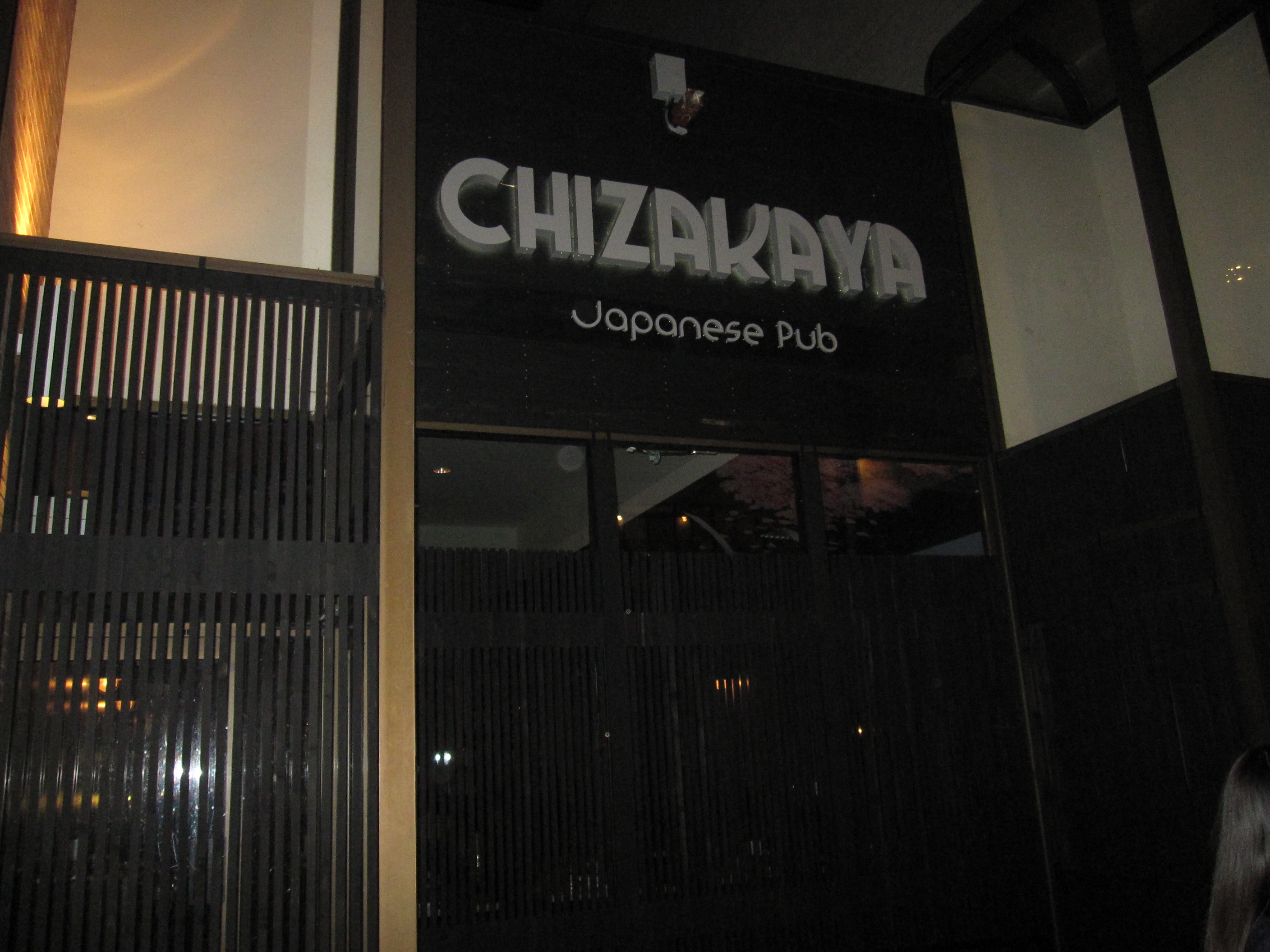
A group of Yuki’s co-workers got together last night for food and drinks at Chizakaya, a newly opened izakaya here in Chicago. Actually, it’s probably the only real izakaya in town. While there are a few places claiming to be izakayas, they’re really just sushi places. Chizakaya doesn’t serve any sushi at all. I first heard of Chizakaya a few months ago when my mom sent me an article in the Huffington Post about the very fact that there aren’t any real izakaya’s in Chicago, until now. It also mentioned that the group that opened Chizakaya came from L2O, arguably Chicago’s finest seafood restaurant. Naturally, it made the list of places I wanted to go. With Yuki’s group meeting there last night I took the opportunity and ran with it.

I got there before the rest of the group, except for the two white guys in her work team (everyone else is Japanese). We sat at the bar and had a glass of sake while waiting for everyone else. I will say that the bartender knows his sake! It’s not a huge sake list, but a very well put together one with a good variety at all price points. He also gave us each a sample of sweet potato shochu, something none of us have ever had. It’s actually quite good.

Once everyone showed up they took us to the back room at one of the two big tables. I like it much better back there because the kitchen is open and the atmosphere is a little more izakaya-like.

Our waitress was also well-trained in the art of sake flavors as well as their menu. True to being an izakaya, the menu is based on small plates and nibbles to go along with drinking. We ordered a bunch of things and just grabbed and ate as we went, along with numerous bottles of sake. Since I’m drinking for 3, I’m struggling to keep my eyes focused as I write this.
As we sat they brought out little bowls of miso soup. Really good miso, they got the ratio of miso-to-dashi right. Instead of wakame which is typically put in miso soup they used hijiki.

Japanese sweet potato fries with spiced mayo.
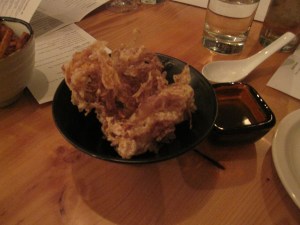
Puffed pig ears with togarashi soy dipping sauce. Move over potato chips, these little cracklins are fantastic!

Crispy pork with a slow poached egg.

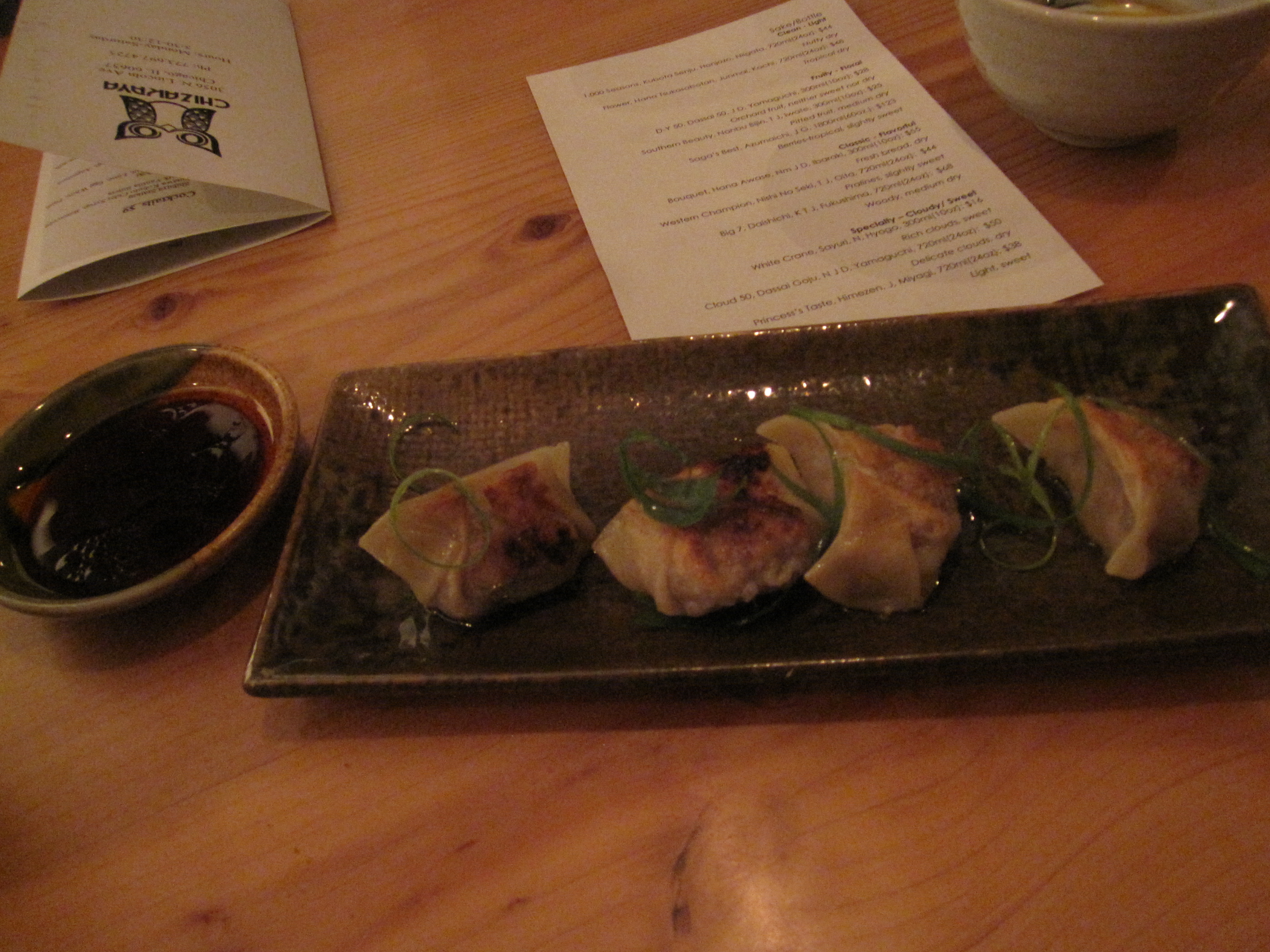
Pork shoulder gyoza. The gyoza could have been a little bit crispier, but the braised pork shoulder filling more than made up for that shortcoming.
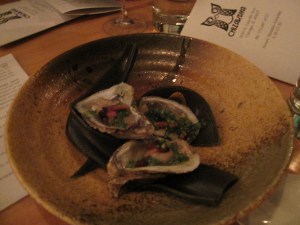
Oysters with bacon and shishito. I don’t know if the bacon was over smoked or if they added a little liquid smoke, but there was a bit too much smokiness to this one. The natural sweetness of the beautiful little oysters was lost. Cut back on the smoke and this one is a winner.

Grilled ika togarashi with a yuzu vinaigrette. This was some of the most tender squid I’ve had in Chicago.

This was one of the night’s specials, duck liver karaage with scallions. Little deep-fried nuggets of ducky deliciousness!

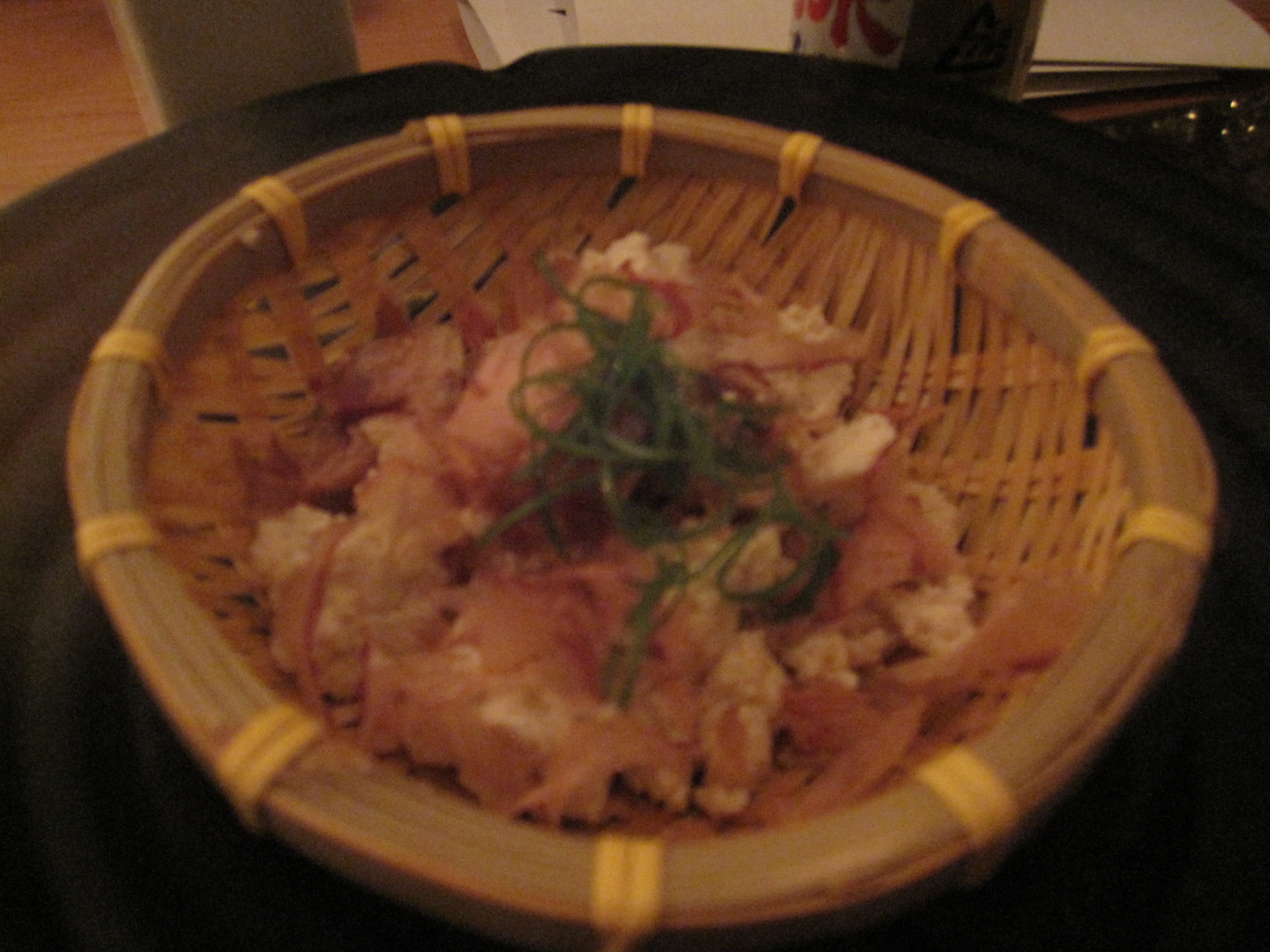
Home-made basket tofu with bonito flakes, scallions, ginger, and soy sauce. You haven’t had tofu until you’ve had a really good home-made tofu. This was a really good home-made tofu. Totally different beast than the store-bought packaged tofu. Very clean, very light, very tasty.
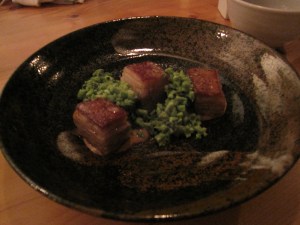
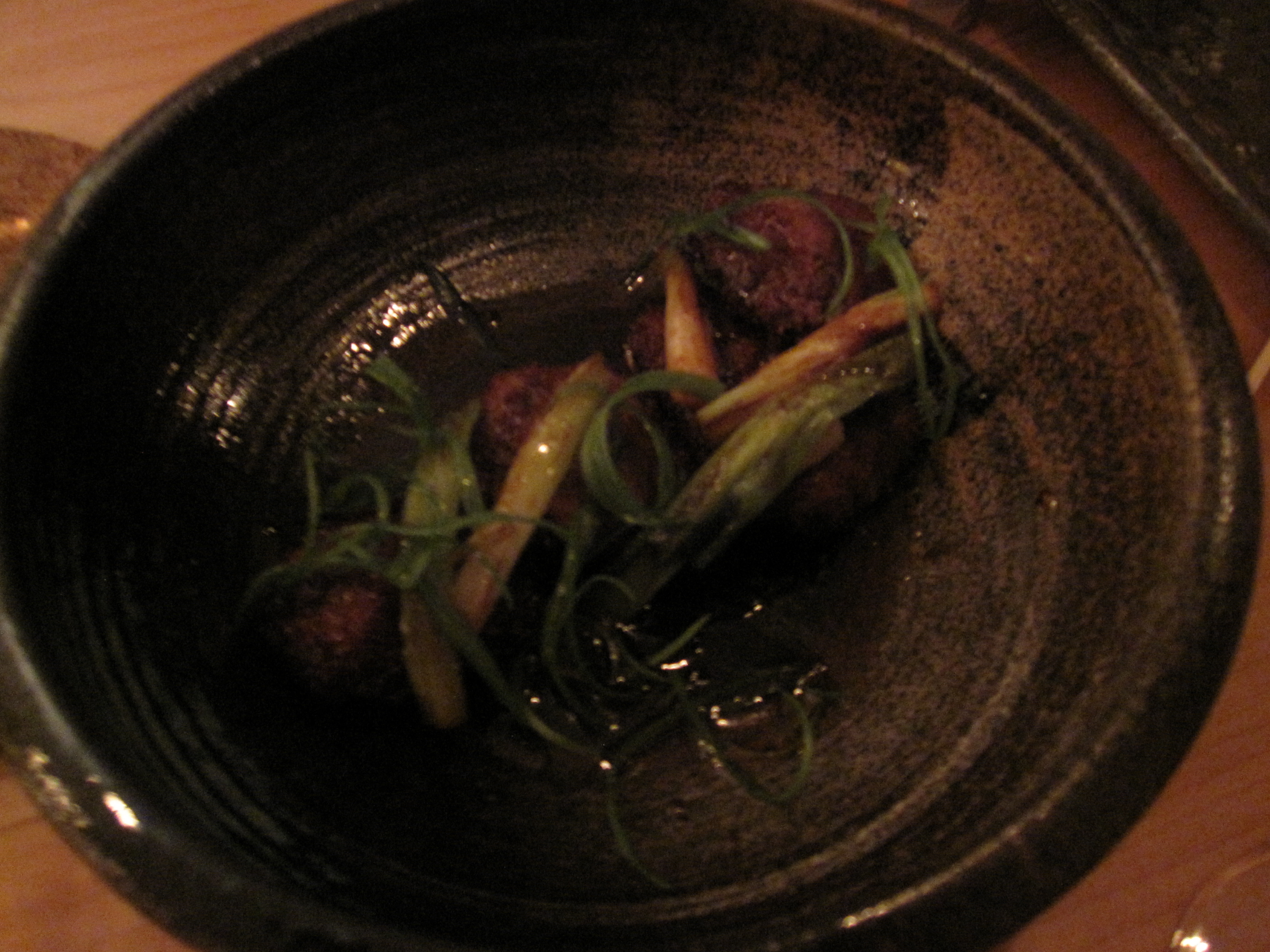
Crispy-braised lamb belly with chopped edamame. This one was another of the night’s specials and quite honestly, one of the most special dishes I’ve ever eaten! I’ve never had lamb belly before and after eating it am wondering why. You see pork belly everywhere as it’s one of the more trendy cuts of meat these days. As much as I love pork belly, and I do love pork belly, I’d drop it in a heartbeat to sink my teeth into some lamb belly. That layer of belly fat may be the most lamby of all lamb flavors that animal has. I absolutely luz it! The only thing that would have made this dish better would be to puree the edamame into a thick sauce instead of leaving it chunky. Otherwise it was perfect.

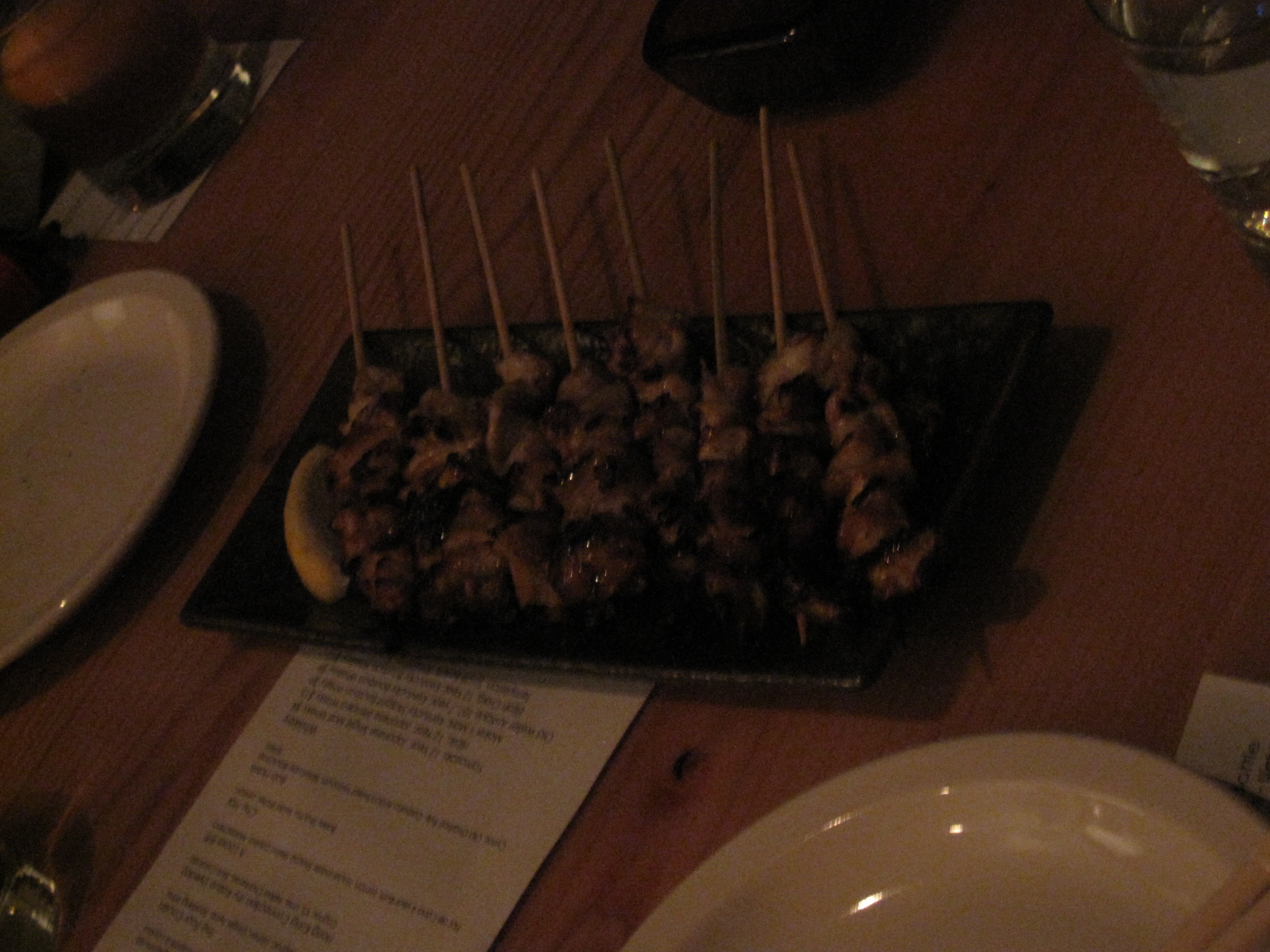
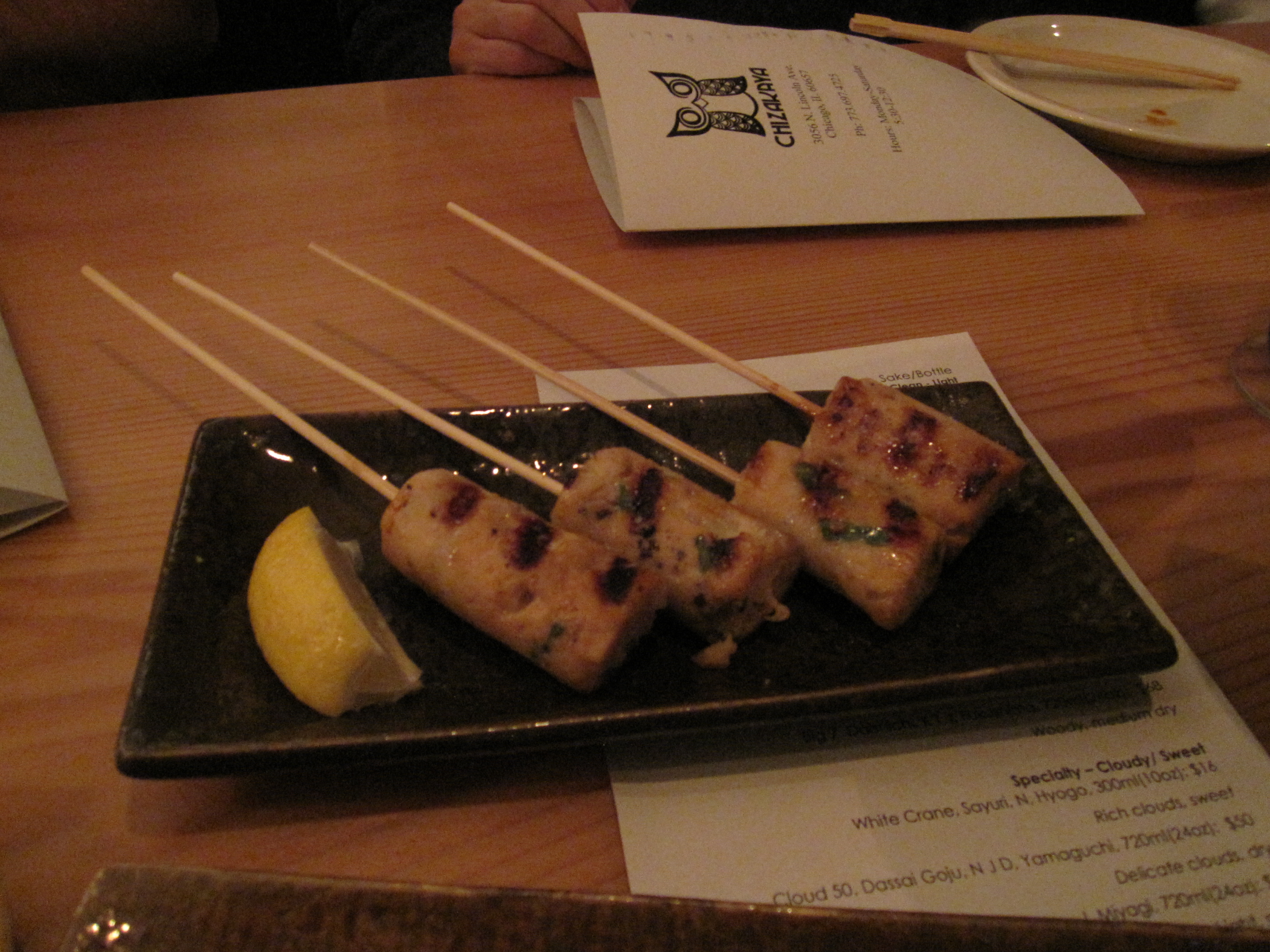
Now, I’ll show you all of the kushi-yaki (grilled skewers of meat) that we had.
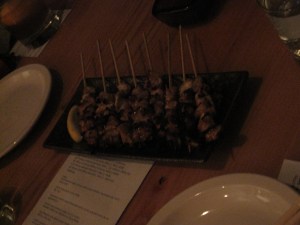
Chicken skin, mother of schmaltz how I love thee!

Chicken meatballs.
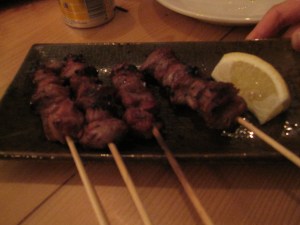
Chicken gizzards, next to liver and sweetbreads my favorite offal.

Beef heart, surprisingly tender and juicy for such a hard-working and lean muscle.

Beets with shiso, both red and golden.

We also ordered a the ramen and oden. Both of which were, quite honestly, very disappointing.
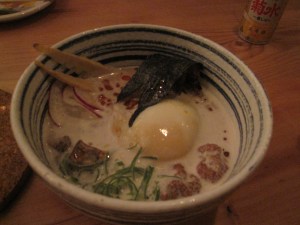
The ramen came with braised pork, fish balls, a slow poached egg, radish, bamboo shoot, shredded scallions, and some nori. The ingredients were all top-notch, but the noodles were overcooked and soft while the broth wasn’t quite were it needed to be. With everything else so high quality I wonder why they’re using regular old store-bought quality noodles. This bowl of ramen just wasn’t up to standards. If it’s ramen you want, head over to Arami instead.
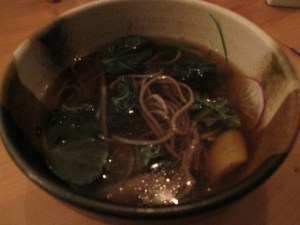
The oden wasn’t even close to what oden is. Oden should be a dashi broth filled with various fish cakes, potato, hard-boiled eggs, konyakku, etc. It’s something that we make at home a couple of times every winter. This was nowhere near oden. This was a soy-based dashi with overcooked soba noodles, a few spinach leaves, a couple of pieces of potato, some slices of radish, and a few adzuki beans. It wasn’t a terrible noodle soup, but they shouldn’t call it oden and they should be more careful with the noodles.

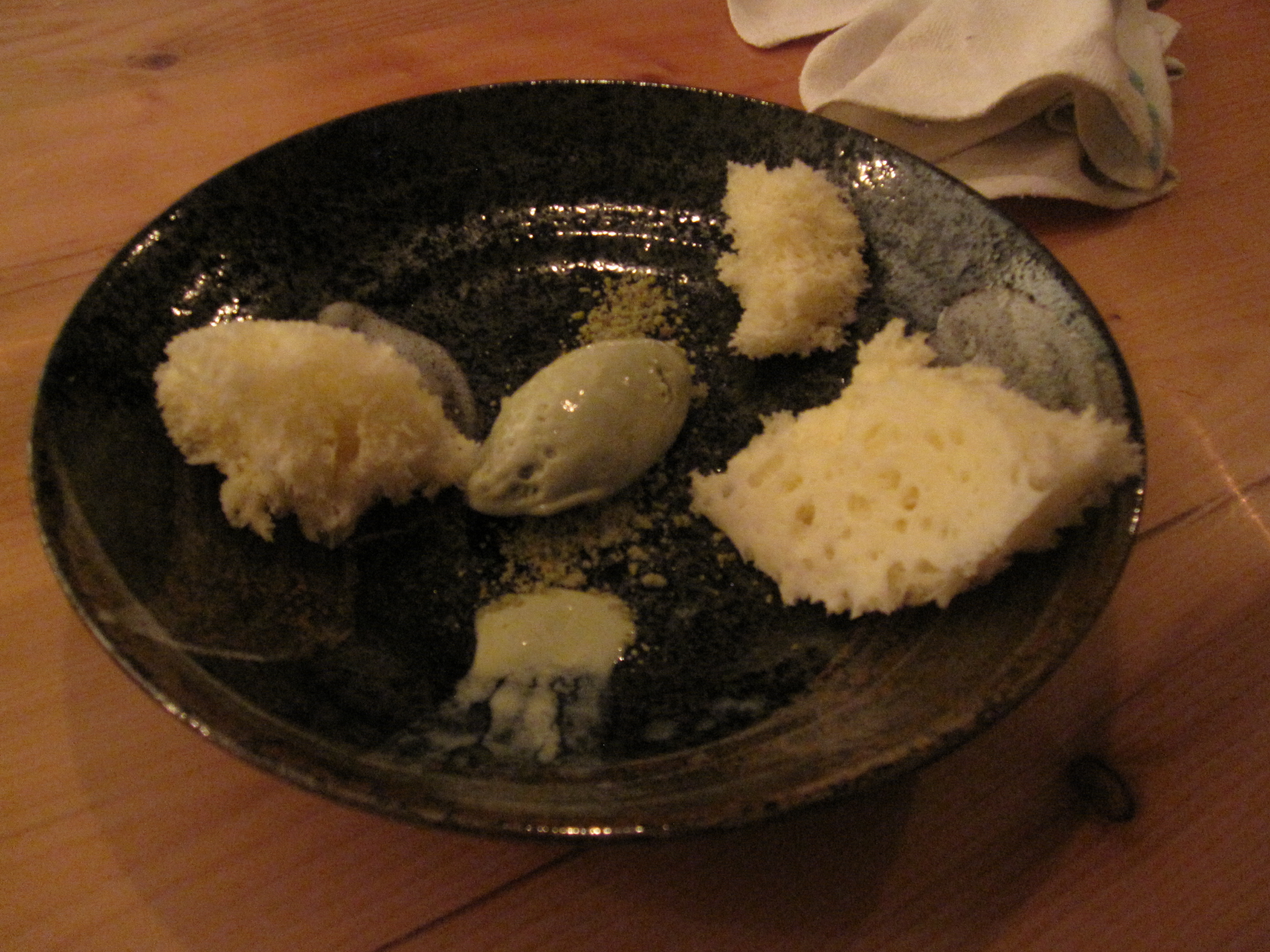
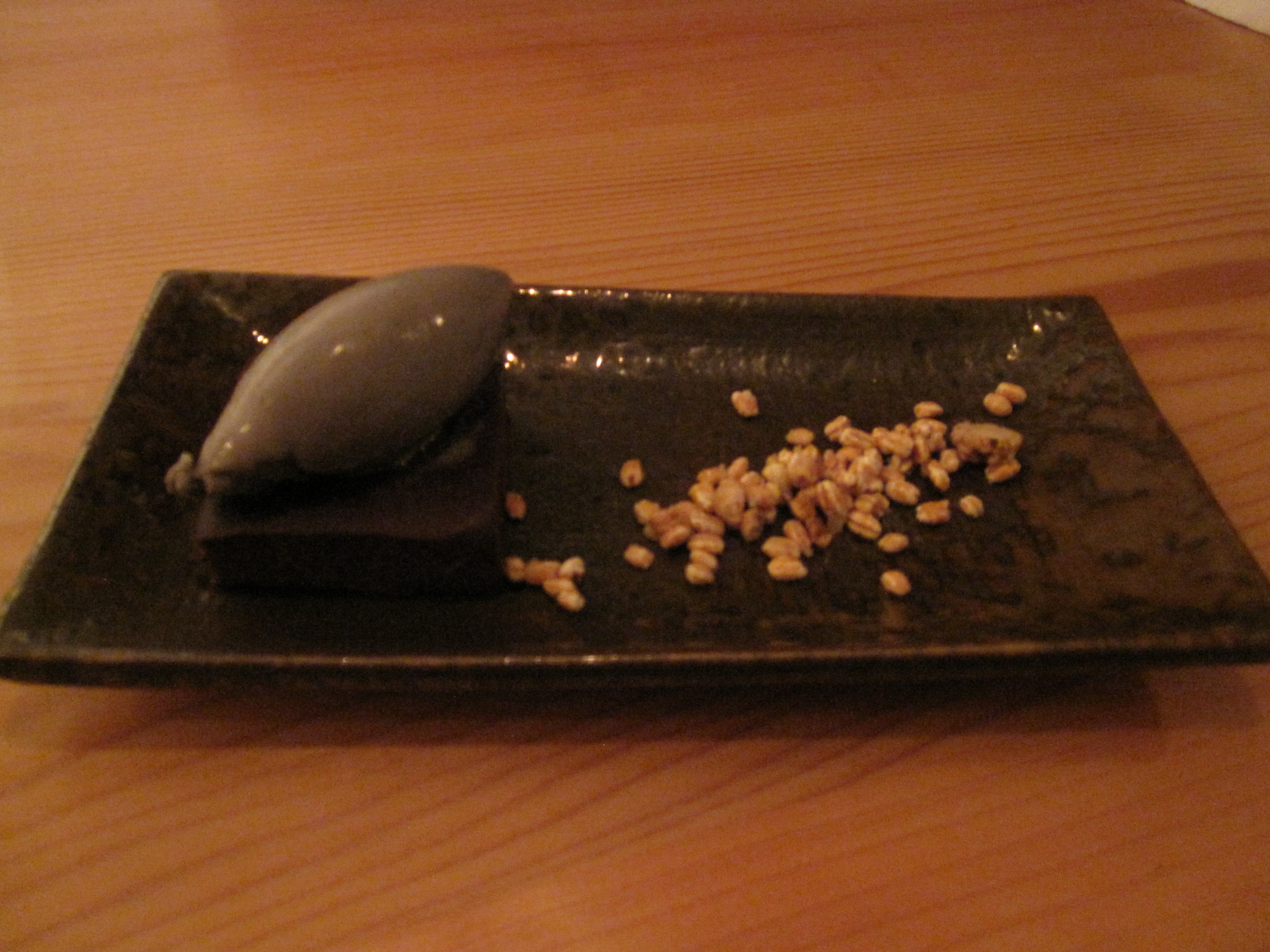
Now, on to desserts, which were all very creative and well-prepared.

Yuzu cake with green tea ice cream.
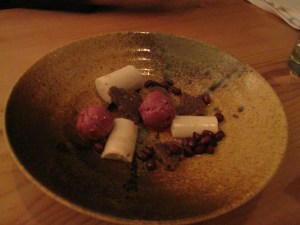
Tofu cheese cake with kuro mitsu (black honey) and adzuki bean sorbet. Usually you see adzuki bean ice cream, making it a sorbet was a nice touch.

Chocolate ganache with puffed barley and black sesame ice cream.

I will say, that all three desserts are among the best desserts I’ve ever had at a Japanese restaurant.

Overall, Chizakaya is a fun atmosphere with great food. There were a couple of lows, oversmoked bacon and poor noodle soups, but the rest of the food was outstanding. Don’t come here expecting a substantial sit-down meal. Come here expecting a great list of sake, beer, and cocktails with delicious small plates and skewers to match. In that sense, this is a true izakaya. They also use top quality ingredients from local sustainable farms, and you can taste the difference. I will definitely go back, I just have to be more mindful of the amount of sake that I guzzle.

Read Full Post »

So, I had some salt cured salmon filets that needed to get eaten up from our last bimble up to Mitsuwa. These salmon filets are great because the don’t need much cooking since they’re already salt-cured. With that, we also had a kabocha that Yuki wanted me to cook. However, I did not cook it how she requested. Too bad for her. Without further ado…

First thing I did was get the kabocha ready, I only used half of it. I seeded it, cut off most of the skin, quartered the half, and then cut the quarters themselves in half.

I set them in a baking dish, drizzled them with sesame oil, salt, and pepper. I boiled about 3/4 cup of water, poured that into the pan, and put the kabocha into a 375 degree oven for about an hour. The water should be mostly absorbed by the time cooking is done keeping the kabocha nice and moist, while the top gets a little bit golden brown.  Then I took 1/4 cup of walnuts and toasted them in a dry pan for about 6 minutes.

I coarsely ground them with my mortar and pestle and then added 4 tablespoons of ponzu. I let that sit while I cooked everything else.

For the kale I used a bunch of red kale stalks removed and leaves chopped down, 1 cup of chicken stock, 1/2 onion sliced, and three garlic cloves sliced. In a hot stock pot I poured in about 2 tablespoons of sesame oil and then added the onion and garlic. About 2 minutes later I added the kale and let that wilt for about 4 minutes. Then I poured in the chicken stock and seasoned with salt and pepper. Once the stock came to a boil I loosely covered the pot, turned the heat down to medium-low, and let it simmer for about 30-40 minutes (however much time I had left on the kabocha, it doesn’t matter as long as the kale simmers for a while).

Once the kale got going I started the miso soup. I used a heaping service spoon of shiro miso, about 4 inches of daikon sliced and quartered, one small carrot cut in half moons, 4 green onions chopped in 1 inch lengths, 1/4 cup of dashi seasoned soy sauce, and 3 shiitake sliced. In a soup pot I poured in 4 cups of water and added everything except for the miso. I brought it to a boil, then covered the pot, and turned the heat down to medium-low to let it simmer for about 15-20 minutes.

I just rubbed some sesame oil on both sides of the salmon and then seasoned with pepper. My toaster oven has a broiler setting, so I just turned that on and broiled the salmon for about 8 minutes. That was just enough time to cook it all the way through and crisp up the skin. When it was finished it was time to put everything together.

I left the salmon as is. Put some of the kale on the plate and then a couple of pieces of the kabocha. I topped the kabocha with the walnut-ponzu mixture. I mixed the miso into the soup and served that up. Then I served some white rice along with everything, mainly to balance the saltiness from the salt-cured salmon.

Read Full Post »

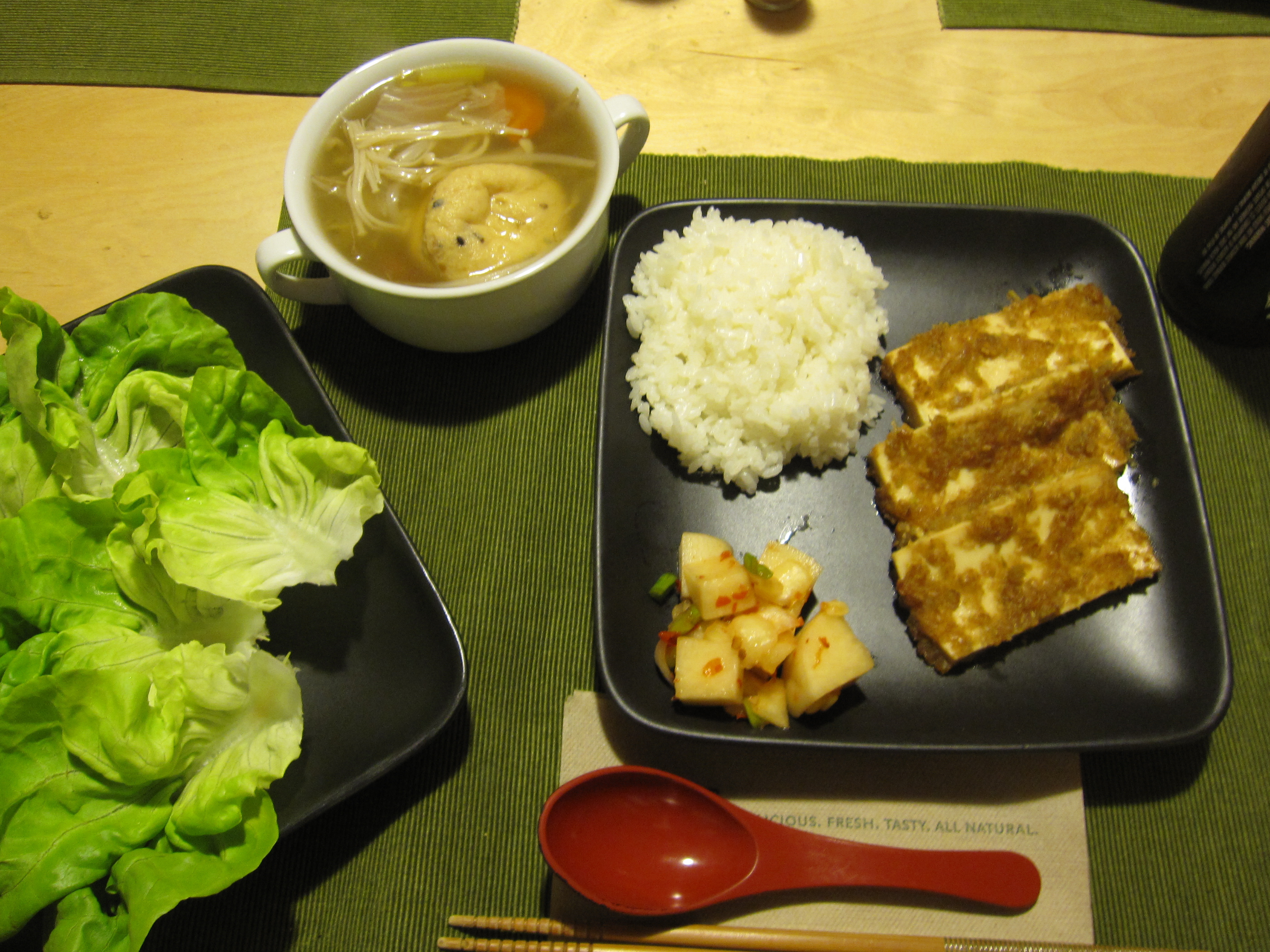
I made some daikon kimchi and really wanted to build a Meatless Monday around it. I thought I was going to make a tofu bulgolgi to stick with the Korean theme, but the marinade turned out nothing like a bulgolgi. It was very asian though so I used some ganmodoki we had bought at Mitsuwa and made a clear broth Japanese-style soup to bring more vegetables into the meal.

The daikon kimchi takes 24 hours so I had to start the Sunday. The ingredient list includes a lot of kosher salt (sea salt can be used also), 1.5 tablespoons of toban djan (I didn’t have any Korean chili paste, toban djan is Sichuan, but it is similar enough to work), 1/4 onion small diced, 1 garlic clove minced, 1 lb daikon cut into 3/4 inch cubes, 1 teaspoon fish sauce, 1 teaspoon sugar, and 2 green onions thinly sliced.

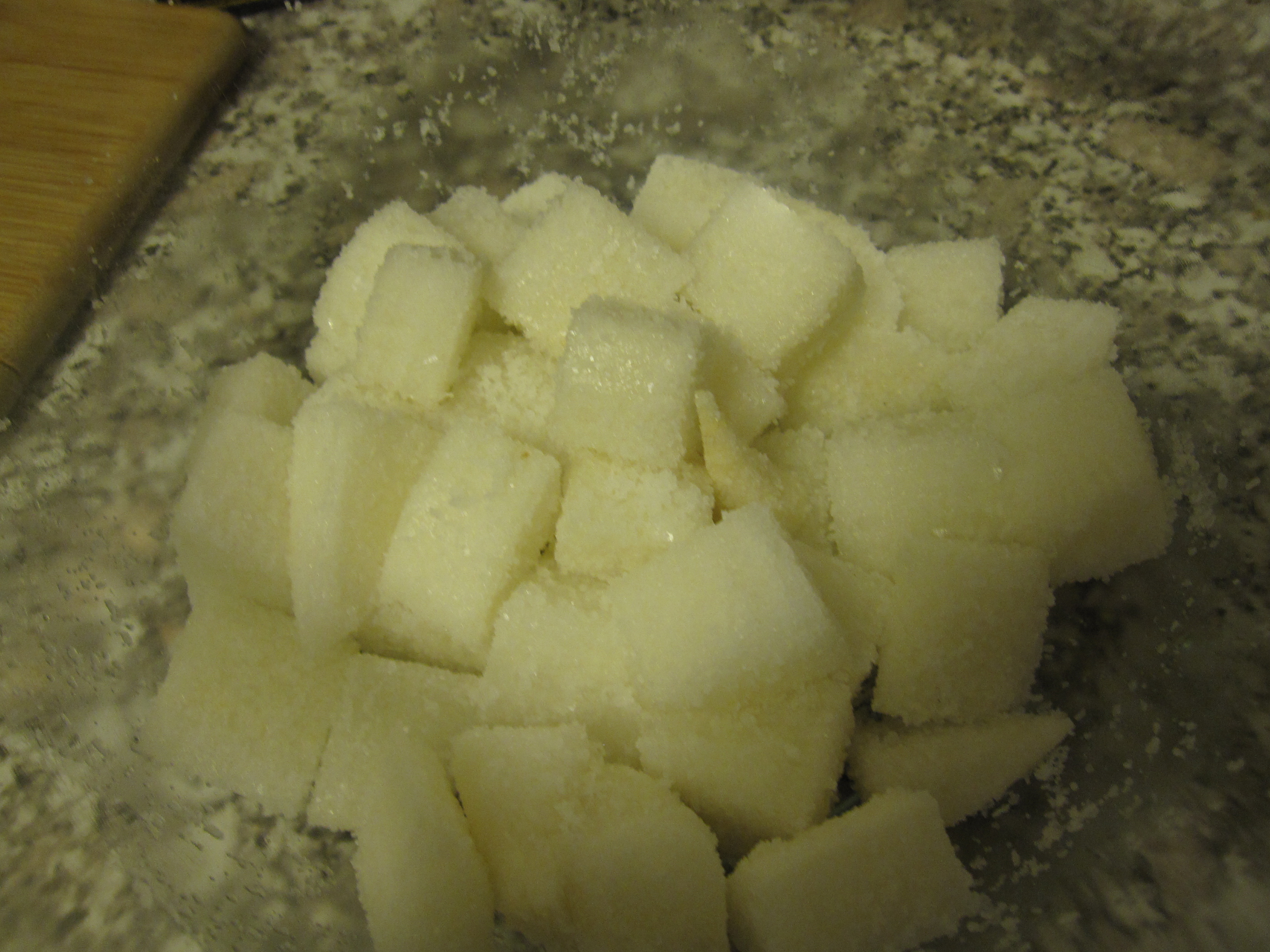
I threw the daikon into a bowl and completely coated it with salt. I left it for 2 hours and then drained off all of the liquid that accumulated at the bottom of the bowl and then rinsed and drained very well.

Then I mixed together the rest of the ingredients, tossed the daikon to coat evenly, and put into an airtight jar. I left it out for 24 hours and then put it in the fridge to chill for a couple of hours. You absolutely have to let it sit to get the flavors to penetrate and pickle, so this does take more than 24 hours to prepare. I will say, the daikon turned out way too salty when we ate it. Not sure if I added too much during the pickling process or if I just didn’t rinse it well enough, but next time I make this I will make sure it’s completely rinsed of salt and I may just add 1/2 tablespoon instead during the pickling to make sure it doesn’t get too salty. To salvage the rest of the daikon I’ll boil it in some water to make broth for noodle soup later in the week or something.

For the tofu “bulgolgi” I used 3 tablespoons of soy sauce, 1/4 granny smith apple, 1/4 onion, 1 tablespoon sugar, juice from 1/2 lemon, 1 tablespoon of sesame seeds, 1/2 inch ginger, 2 garlic cloves, 2 green onions, and 1 packet of silken tofu.

I pressed the water out of the tofu for about an hour and then sliced it into 1/4 inch pieces. I put the rest of the ingredients into my little processor and made a marinade.

I took out my glass baking dish, poured a little marinade on the bottom, lined the tofu side-by-side on top, and then covered it with the rest of the marinade. I let it sit while I prepared the soup. When the soup was almost done I drizzled a little sesame oil on top of the tofu and threw it under the broiler for about 10 minutes.

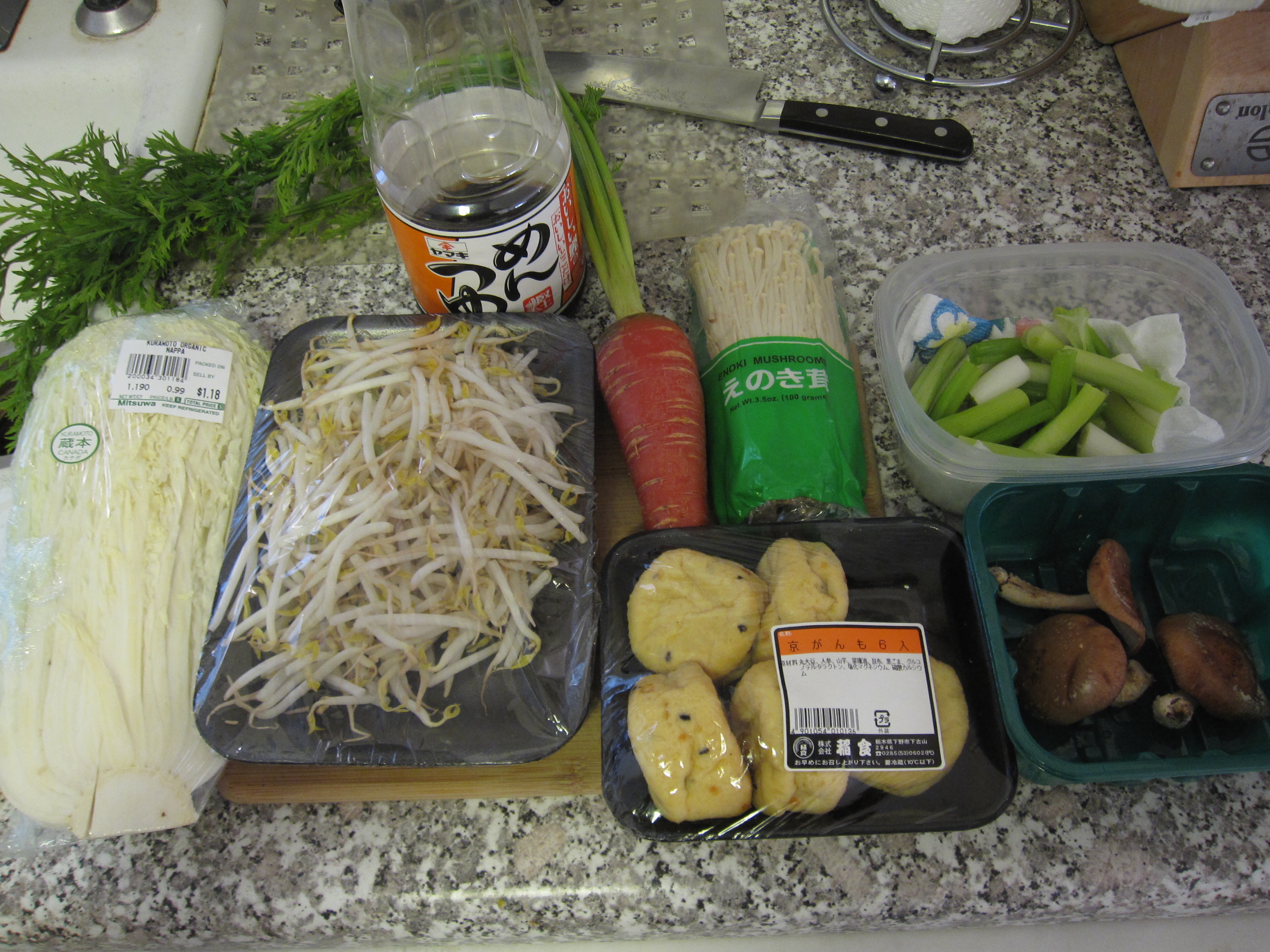
For the soup I cut up 1/4 of a napa cabbage, used some bean sprouts, 1/4 cup of dashi seasoned soy sauce, 1 carrot cut into half moons, 1/2 package of enoki mushrooms, 5 ganmodoki, the rest of our green onions (about 3), and my last three shiitake sliced.

In my soup pan I poured in about 4 cups of water and added everything except for the cabbage, bean sprouts, and enoki. I brought it up to a boil and then covered it, lowered the heat to medium-low, and let it simmer for about 15 minutes. Then I added the rest of the ingredients and let it simmer for another 5 minutes. That’s all she wrote for the soup.

I served everything with white rice and leaves of butter lettuce. That way we could make lettuce wraps bulgolgi-style.

Read Full Post »

So, Yuki had some coupons from unused miles on United Airlines. Last night we used one at Ai Sushi.  I dvr’d the Bears-Giants game and we headed down to Ontario St for some grub.

Parking was a pain because all of the meters were “For Residents Only Until Oct 4”. We did find a spot about a block away so we didn’t have to spend on valet. Tonight we could have gotten a spot right in front. Oh well, can’t blame that on the restaurant.

The interior is really nice. It has the open loft feel with exposed brick and wood beams. The art on the walls was not flashy at all and instead complimented the brick. Colors were soft and very intimate. It has a real nice setting inside.

I did use my phone’s camera, so these pics are terrible.

First thing we got was the Sunomono Moriawase. Shrimp, real crab meat, and octopus lightly cooked along with fluke sashimi in a dashi vinaigrette with daikon sticks and seaweed. It was really good, fresh fish and not to vinegary at all.

Next was one of the specials of the night, Wagyu Tobanyaki. 5 slices of real Kobe beef imported from Japan, enoki mushrooms, and shimeji mushrooms that you cook yourself on a hot stone with butter. The beef was so soft and delicious. It was definitely the real thing, none of that cow from Nebraska.

After that we each had a bowl of Kabocha Corn Soup. Simply a puree of kabocha and corn, probably with onion. It tasted like something I would make, which is to say it was pretty tasty.

Then came the Chawanmushi. A Chinese style egg custard with shiitake, shimeji, and enoki mushrooms. The custard was the perfect consistency. Not a fancy dish, but a good one.

The first maki roll we got was their Habanero Lobster. It had tempura lobster, kampyo, ginger, mango, avocado, habanero, capers, cilantro, and sour cream mayo. We’re not usually fans of rolls with more than a few ingredients, but this one was pretty good. That habanero packed a punch, but not so much that you couldn’t taste the lobster’s sweetness. It was pretty good. They also put a few slices of smoked duck on the plate. They serve smoked duck sushi and must have needed to get rid of it, but it tasted pretty good to me, so I didn’t mind.

The last thing we got was one of the night’s special rolls, Orange Maki. It had tempura shrimp and orange zest inside and was topped with salmon and black tobiko. It was really good! Light, sweet, and refreshing. I would definitely order that roll again. Also, there was more smoked duck on this plate.

We didn’t have any room for dessert and didn’t even look at the dessert menu so I can’t comment on that.

The service was professional. We never had to wait long for anything, we weren’t rushed or bothered to hurry up, and our server was very knowledgable of the menu. The only gripe I have, and it’s nitpicking, is that the food should have come out in a different order. The beef should have been last and soup served before the chawanmushi. Other than that, I have no complaints at all.

I would have to say that Ai is one of the better sushi restaurants we’ve been to in Chicago. I wouldn’t call it the best, but it is definitely worth while with some creative offerings as well as some classics, all very fresh and properly prepared. I would go back without hesitation.

Read Full Post »

Friday night, to me, was the perfect night for grilling. Mid-60’s, clear skies, light breeze. Unlike summer, which I still grill quite a bit, it wasn’t too hot to stand over a hot grill. In light of that, I had to get something on the grill. With organic air-chilled split chicken breasts on sale my mind was made up for me.

I had two big breasts that I slashed the flesh 4 times in each. I did this for two reasons, to allow the marinade to penetrate more meat and to allow them to grill more evenly since they were pretty meaty in the middle. For the marinade, in my small processor I processed up 3 garlic cloves, 2 green onions, 1 inch of ginger, and 2 tablespoons each of soy sauce, mirin, sake, and shiro miso. I rubbed it all into the chicken, covered it, and let it sit in the fridge for an hour.

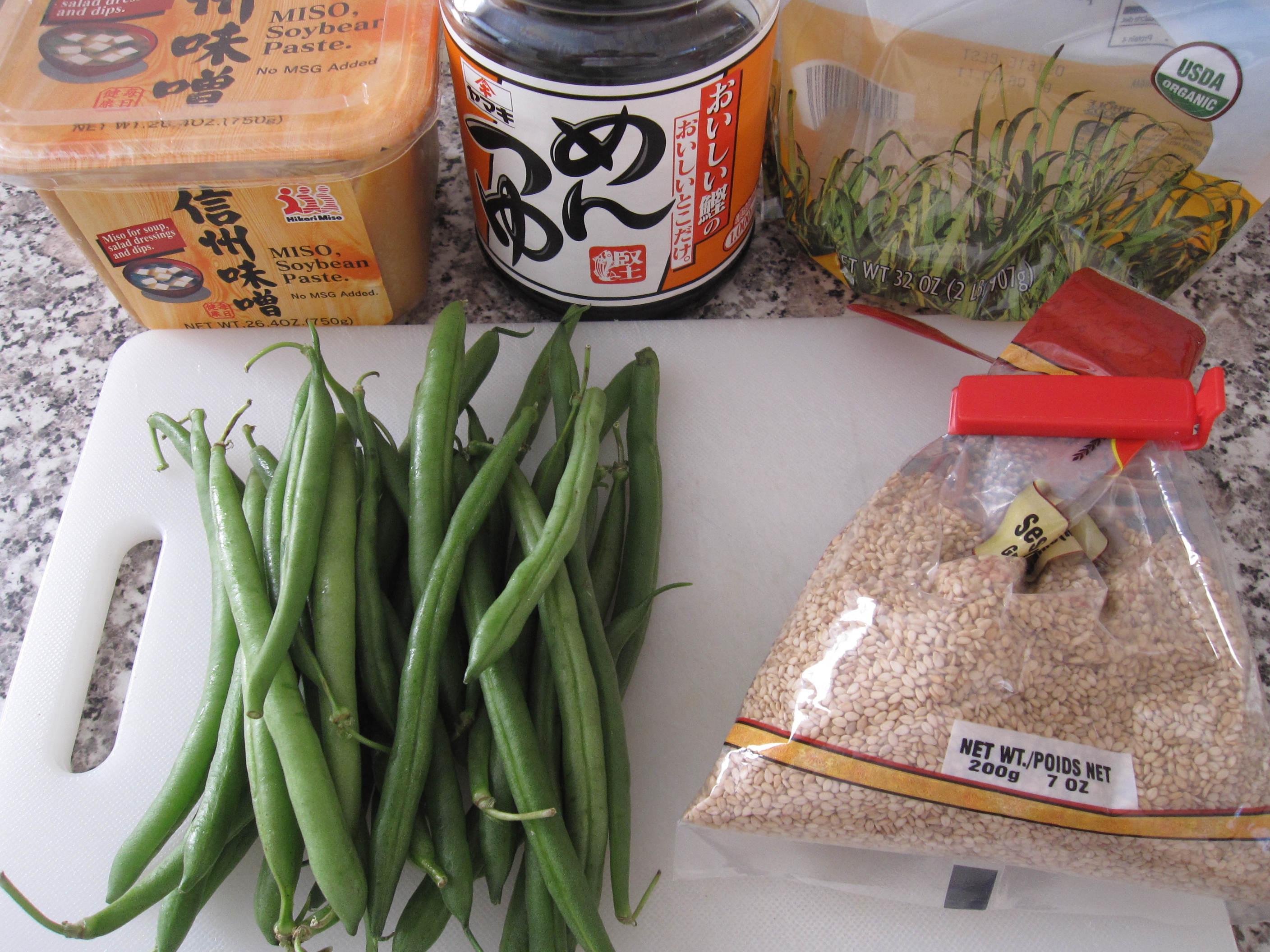
For my side I made haricots vert in miso-sesame dressing. I cleaned up 6 ounces of haricots vert and set them aside. I took 1 tablespoon of sesame seeds and dumped them into a hot skillet and let them toast until they turned a nice golden color and started to release their aroma, about 1-2 minutes. Then I ground them with my pestle and mortar and added a big pinch of sugar, 1.5 tablespoons of seasoned soy sauce (contains mirin and dashi), and 1/2 tablespoon of shiro miso. I mixed that all together and set it aside. Later on, right after taking the chicken off the grill, I steamed the haricots vert for about 4 minutes and then tossed them with the dressing.

I also made some miso soup. I boiled about 2 cups of water and added two skinned and diced yukon gold potatoes, 2 green onions sliced, and three shiitake sliced. While they were boiling I took a bunch of salted wakame and soaked it in water while also cleaning 3 ounces of bean sprouts. I also set aside 1/4 cup of the seasoned soy sauce and a large spoonful of shiro miso.

While the potatoes were cooking in the miso soup I got the grill ready and grilled up the chicken. I got the skin nice and crisp while the meat stayed juicy.

Just before taking the chicken off I poured the seasoned soy into the miso soup and added the sprouts and wakame. Right after taking the chicken off I mixed the miso into the soup and then, like I said earlier, steamed the haricots vert. I took some shichimi togarashi and crushed black and white sesame seeds and sprinkled them all over the chicken. I served everything with white rice.

Read Full Post »

Yesterday I saw some really nice coho salmon on sale that just came in that morning. Since I haven’t cooked salmon in a while I took that as a sign that it’s time to do it up again. I decided to keep it very simple and use some Japanese flavors to appease my wife.

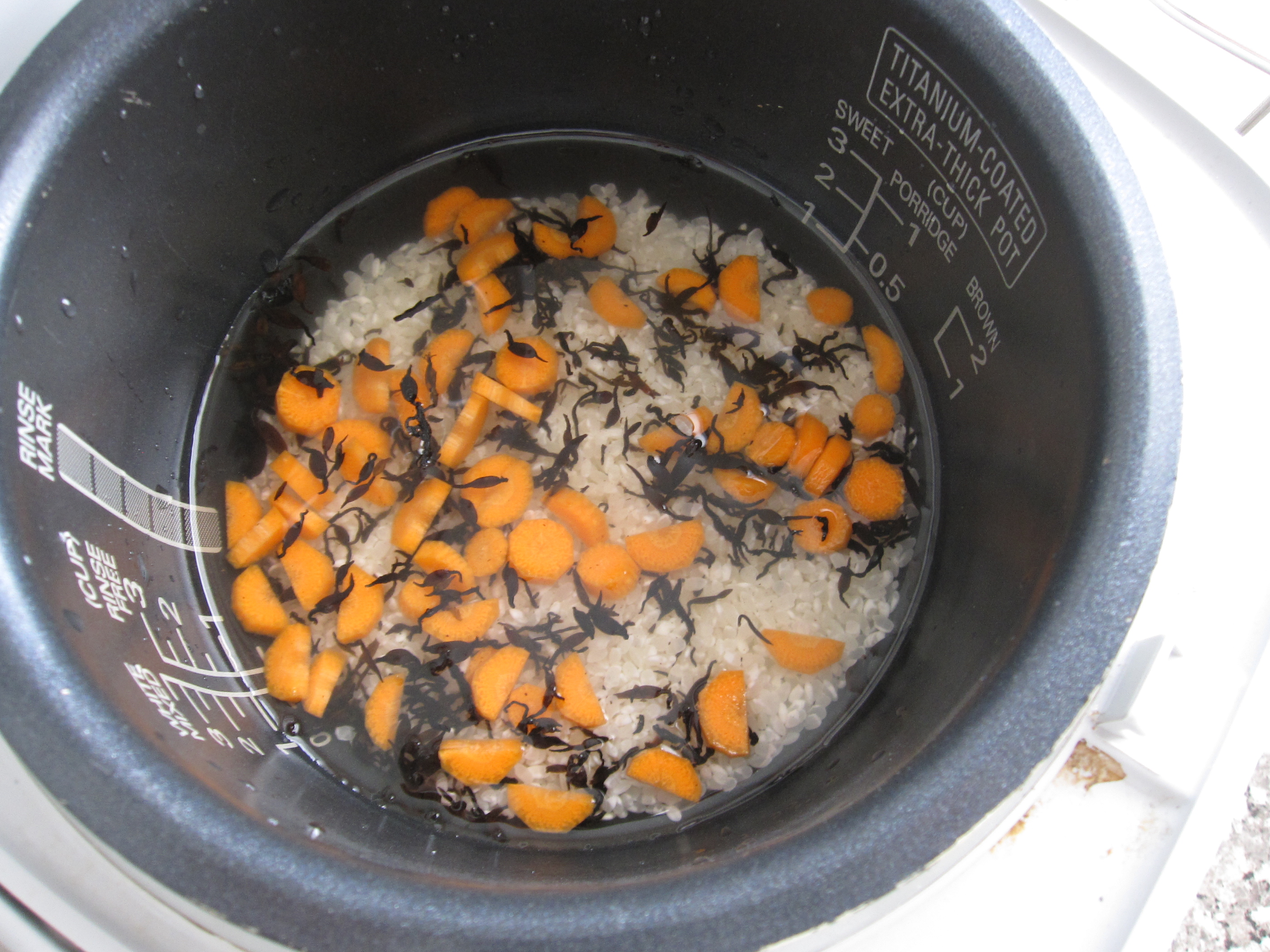
After lunch I got the rice ready. I rinsed 1 cup of rice and threw it in the rice cooker like normal, then added a couple of large pinches of dried hijiki seaweed and a diced carrot. I let it sit for about a half hour to let the hijiki re-hydrate and flavor some of the water. Then I turned on the machine and let the rice cook. When it was finished I turned it off, mixed everything together, and let it cool to room temperature.

Closer to dinner time I made my teriyaki sauce. In a small saucepan I gently heated 3 tablespoons each of soy sauce, sake, and mirin along with 1 tablespoon of sugar. I let it heat just until the sugar was completely dissolved and turned off the heat before it came to a boil. I let that cool to room temperature.

Here’s my 20 ounce filet of coho salmon. I cut it into 4 equal portions and marinated it in the teriyaki sauce for about 45 minutes at room temperature.

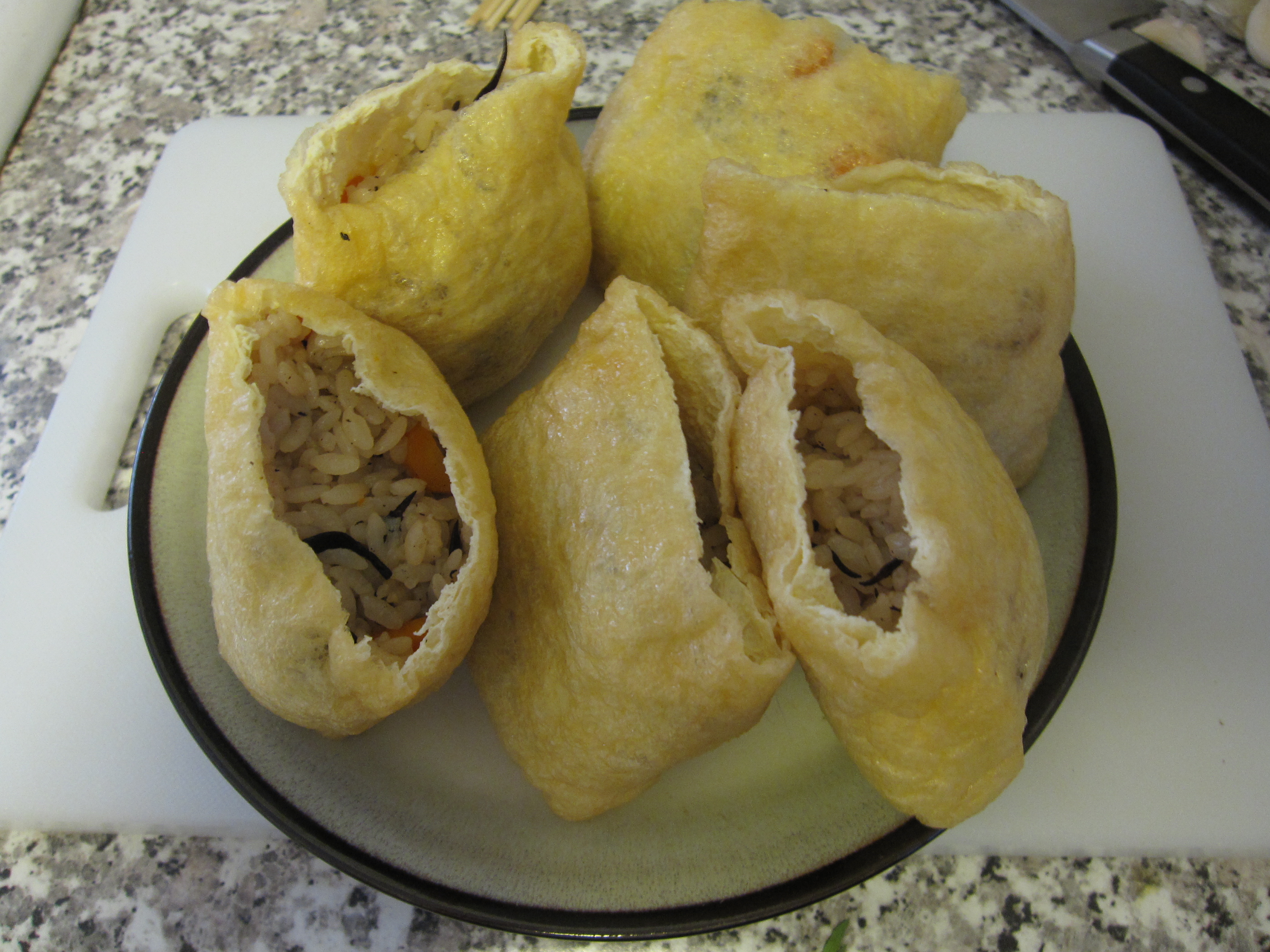
While the salmon was marinating I got the abura-age ready. I had a pack of three here. I cut them in half and rinsed them off with some boiling water. They very oily and the boiling water rinsed a majority of that oil off. Then the packages open up nicely for easy stuffing.

I stuffed them equally with the rice mixture and then sealed them. I didn’t have any toothpicks, so I cut down some bamboo skewers to do the job. In a saute pan I brought 1/4 cup of water to boil with 1/4 cup of seasoned soy. The soy is seasoned with a little dashi and mirin. Once lightly boiling I put the packets in, covered it, and turned the heat to low. This lets the broth flavor penetrate while heating up the rice. I let it go for about 10 minutes then turned off the heat and let it sit until everything was ready.

I also placed the salmon under the broiler, starting with the skin-side up. About 5 minutes later I turned it over, basted the top with the marinade left in the dish, and let it broil for another 5 minutes.

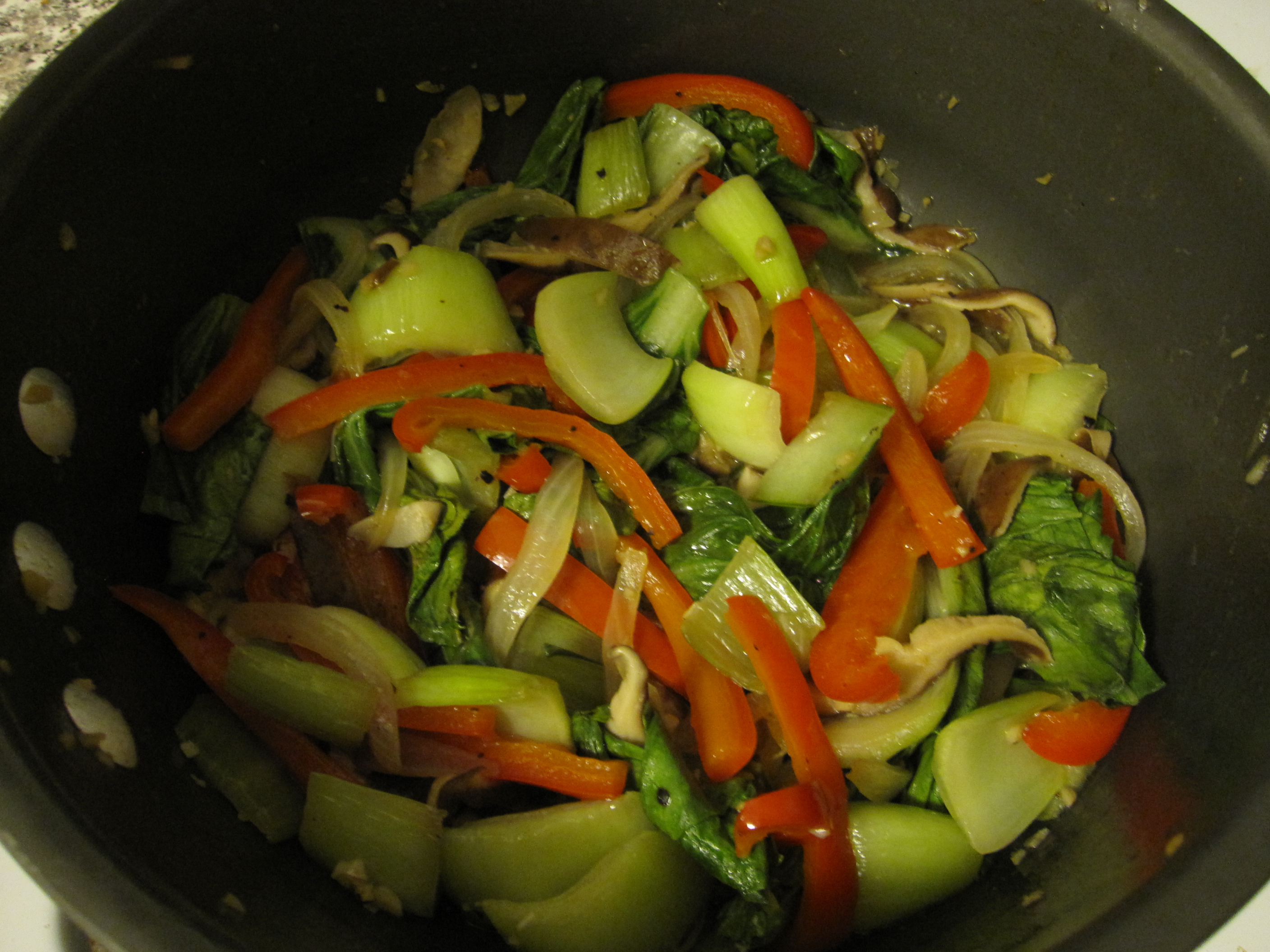
Before cooking the salmon and abura-age I got my vegetables ready. I had two large heads of baby bok choy that I separated the leaves from the stems and chopped them all down, 1/2 onion sliced, 3 garlic cloves minced, 1 package of shiitake sliced, and 1/2 a large red bell pepper sliced.

While the salmon was broiling and the abura-age packets absorbing tasty fluids I heated up a pan and poured in 2 tablespoons of sesame oil and tossed in the onions to let them saute for about 4 minutes. Then I added the peppers and garlic. After another few minutes I added the shiitake and bok choy stems for about 4 more minutes. I seasoned with pepper and poured in about 3 tablespoons of soy sauce. Once the soy boiled off I added the bok choy leaves, stirred them in, covered the pan, and turned off the heat. I just wanted the leaves to wilt a little.

I timed it all so everything would be finished at the same time. I plated it up and scarfed it down.

Read Full Post »
« Newer Posts - Older Posts »