Feeds:
Posts
Comments

Posts Tagged ‘ginger’

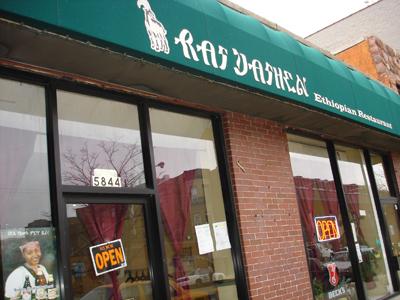
After years of wanting to head up to the far north side of Chicago for some Ethiopian food, I finally got off my ass and checked out Ras Dashen the other night. All I have to say to myself is, “What the hell took me so long?”

I had to start with some Ethiopian coffee, the mother of all beans. They serve fair-trade organic, nice and smooth cup.
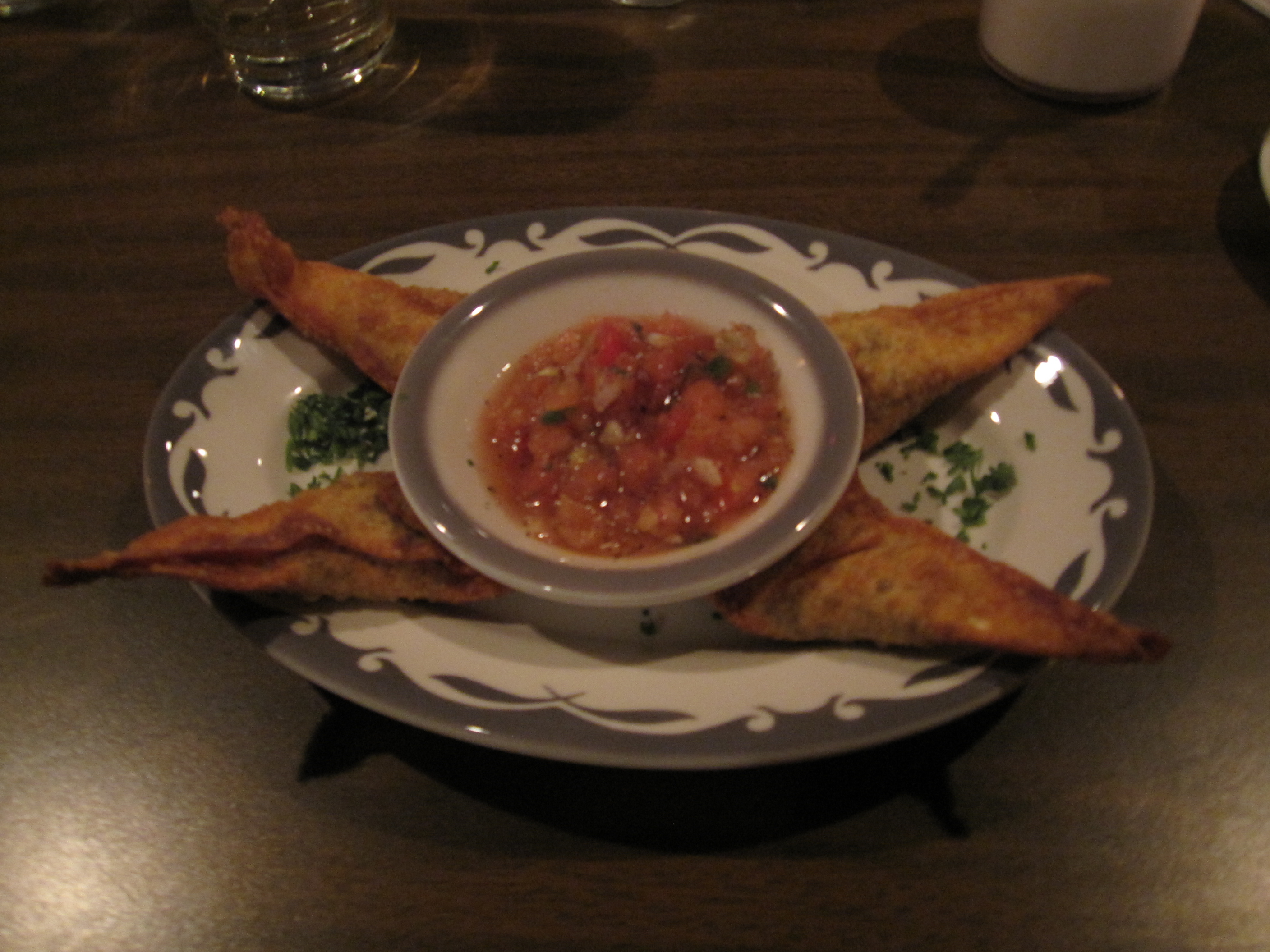
For an appetizer Yuki and I ordered some Spinach Sambusas. Lightly fried pastries filled with spinach and dipped into a spiced salsa. Very tasty, not too heavy. Think of them as Ethiopian empanadas or samosas.

Since our friends ordered the Doro Wat (chicken and egg in berbere, Ethiopia’s national dish) we had to get something different. Although, it wasn’t that different at all. We got Yebeg Wat (lamb in berbere) and Doro Alicha (chicken and egg in onions, garlic, ginger, and green peppers). We ordered the Diblik Atkilt and Misser Wat for our sides, our friends got the Misser Salata, I think. You can check out their website for descriptions of the sides. All served on top of Injera with extra on the side.

Those of you not familiar with Ethiopian cuisine, you don’t eat with utensils. The food gets dumped right on the Injera allowing the bread to soak up the sauces and juices. You rip off pieces of the Injera, using it to grab you rip pieces of meat off the bones or piles of lentils, and chow down. It’s absolutely delicious as well as being a fun, communal way to eat.

Berbere is Ethiopia’s most famous sauce. It’s a red pepper sauce with spices like ginger, coriander, cardamom, cinnamon, nutmeg, fenugreek seeds, paprika, onion, and garlic. It’s actually very similar to Indian spices, but it’s definately distinct.

Back to the meal itself, we ordered the rice pudding for dessert. It was quite nice, very mild. There was a date in the middle.

Our friends got Ras Dashen’s famous bread pudding. It’s made with varius nuts, raisins, and tons of flax seeds. It was definitely a winner in my book.

Half-way through our meal a little jazz quartet started to play. They were pretty good. Saxaphone, guitar, bass, and bongos. It wasn’t too loud so conversation was never difficult.

I guess the one disclaimer I have is what I was warned about. Once you have Ethiopian food, no matter how strong-willed you are, you will start to crave it. It was extremely reasonably priced as well for the quality and amount of food served. I have to check out a few other places before I decide just how good Ras Dashen really is, but I will say this, I would definitely go back!

Read Full Post »

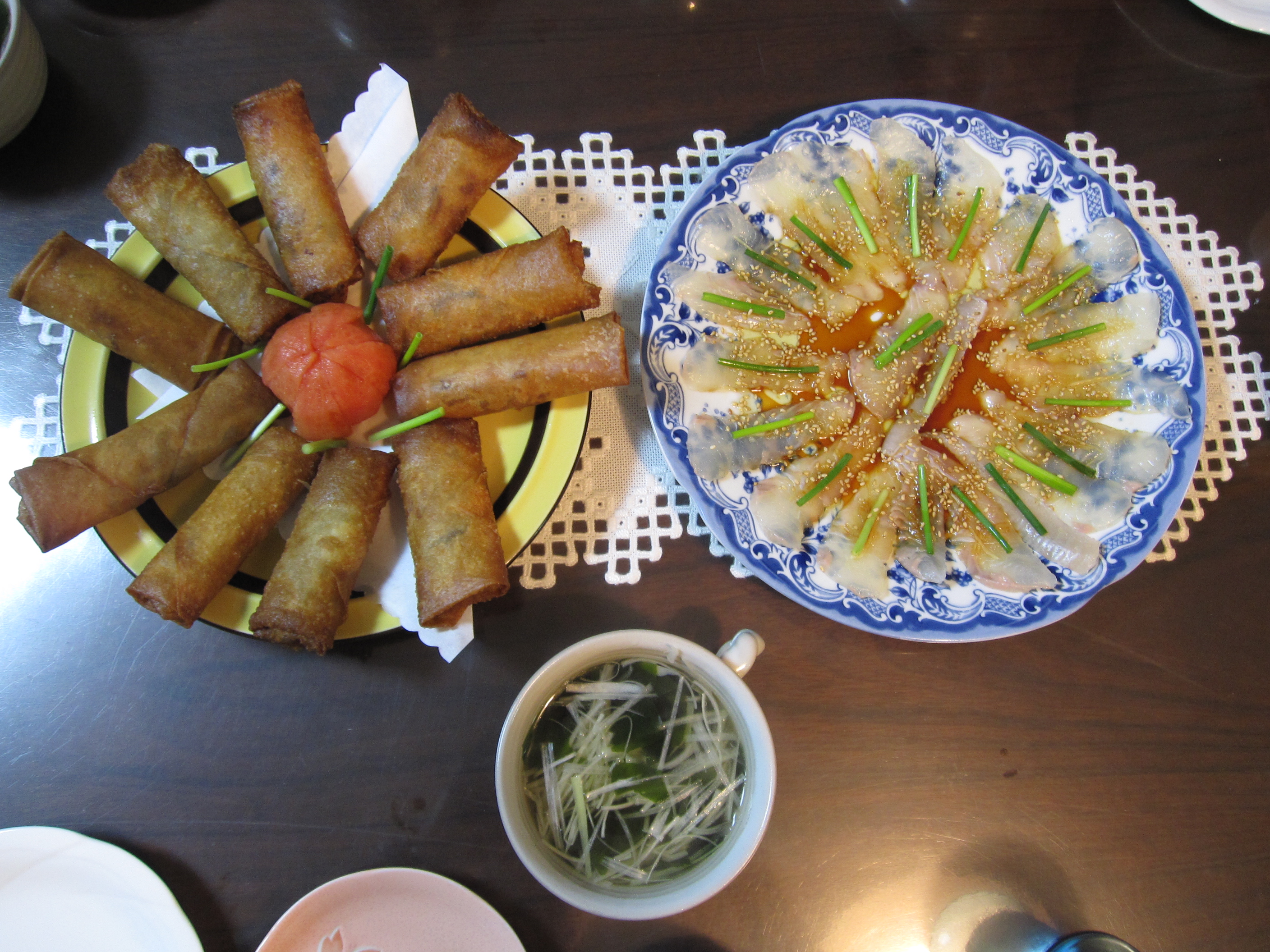
It seems like every other program on Japanese TV has something to do with food. One program that I watched featured the biography of Nobu Matsuhisa, he of the restaurant Nobu. One of the dishes he showed on TV piqued the interest of Yuki’s mom, so the next night we set out to try and replicate it…Fluke sashimi.

It’s really quite simple. Slice a piece of fluke as thinly as possible and arrange on the plate without overlapping each slice of sashimi. Mash some garlic and lightly brush a little over each slice. On top of that lay down thin sticks of ginger and chives. In a small pot heat up equal parts soy oil and sesame oil until smoking hot. With a metal spoon dish some of the hot oil on top of the fish so that it sizzles a little. Then, drizzle with some ponzu and toasted sesame seeds.

To go with it Uichiro made his special harumaki, spring rolls. He “took the two best recipes and combined them into his own which is now the best.” I won’t give you measurements so I don’t spoil his secret, but the harumaki contain shiitake, bamboo shoots, leek, pork, ginger, oil, sake, chicken stock, soy sauce, sugar, pepper, starch, and spring roll skins. Cook it all together, roll them up, then deep fry them to golden perfection and serve with Chinese Mustard.

There was also some clear broth soup with shredded green onion and wakame.

Read Full Post »

In light of my great respect for the fine art of Kaiseki, Yuki’s mom decided that she wanted to take me out for another style. That woman loves me! Frankly, I can’t blame her. At any rate, a friend of hers had recommended Ushiyama in the Meguro neighborhood of Tokyo, so we gave it a shot last night. And what a shot it was! Slam dunk!
It started off with a plate of carrots, shiitake, and mibuna with grated apple. Who would have thought of putting grated apple on mushrooms? Ushiyama, that’s who. I’m damn he did, it was amazing!
After that came a dish of four. I ate them clockwise from bottom left. Ama ebi (sweet shrimp), raw sardines with thinly sliced onion that’s been soaked in cold water to remove the sharpness, warm salted ginko nuts skewered on pine needles on top of seitan (wheat gluten) cakes on top of grilled sweet potato that was shaped like a ginko leaf, and uni in a lily blossom. No, I did not eat the maple leaf in the center of the plate nor the pine needles.

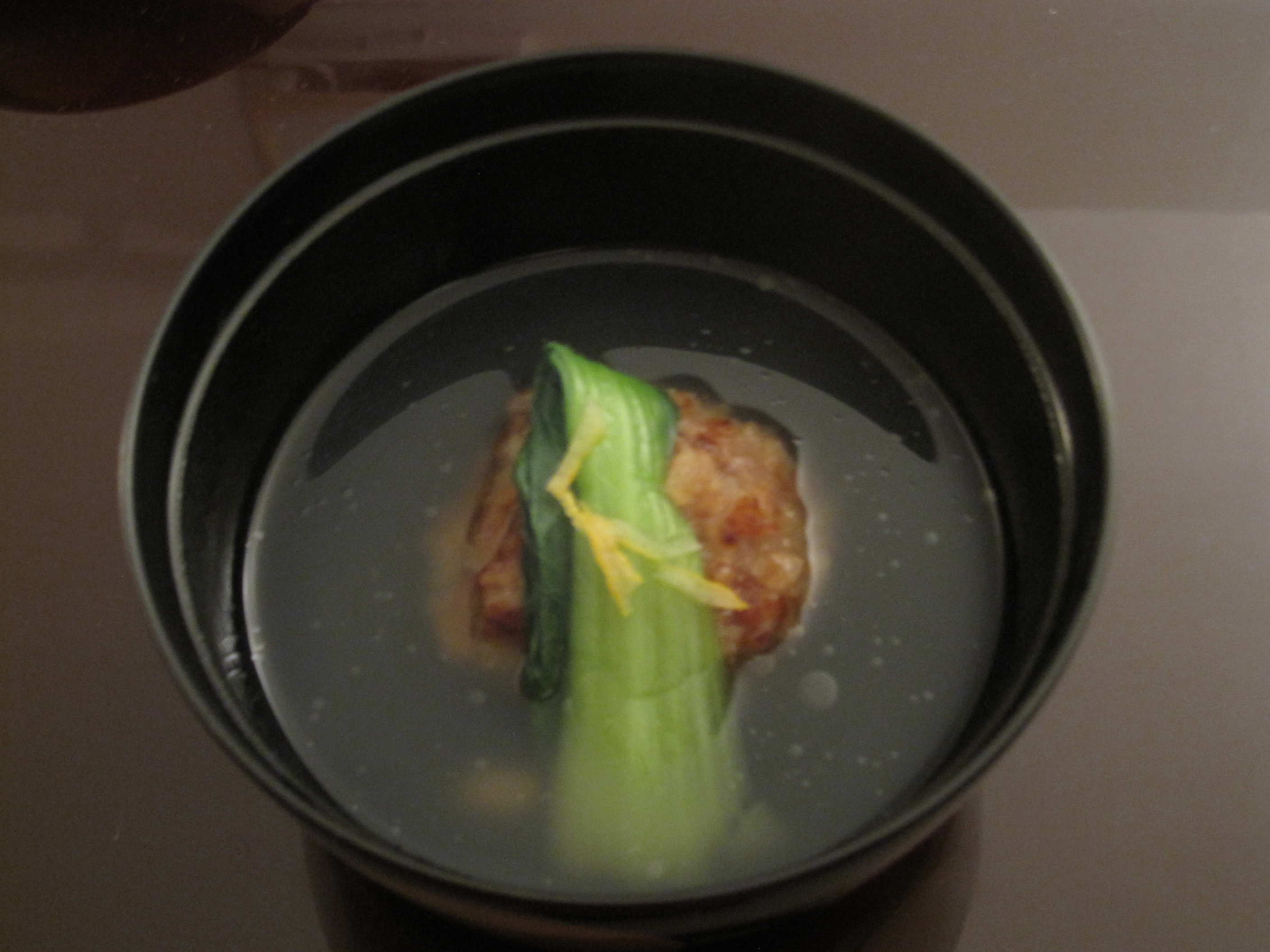
Next was the soup course. I heavily bonito flaked dashi broth that was nice and smokey with a rinkon (lotus root) and mochi dumpling and a bok choy leaf with some yuzu zest. It ranks right up there with the best soups I’ve ever eaten, next to the one I ate a few years ago at Iron Chef Michiba’s restaurant.

After the soup course was the sashimi course. It consisted of suzuki (sea bass), melt-in-your-mouth tuna, and ika (squid). It must be ika season because the ika I’ve eaten on this trip is by far the softest and sweetest I’ve ever had.

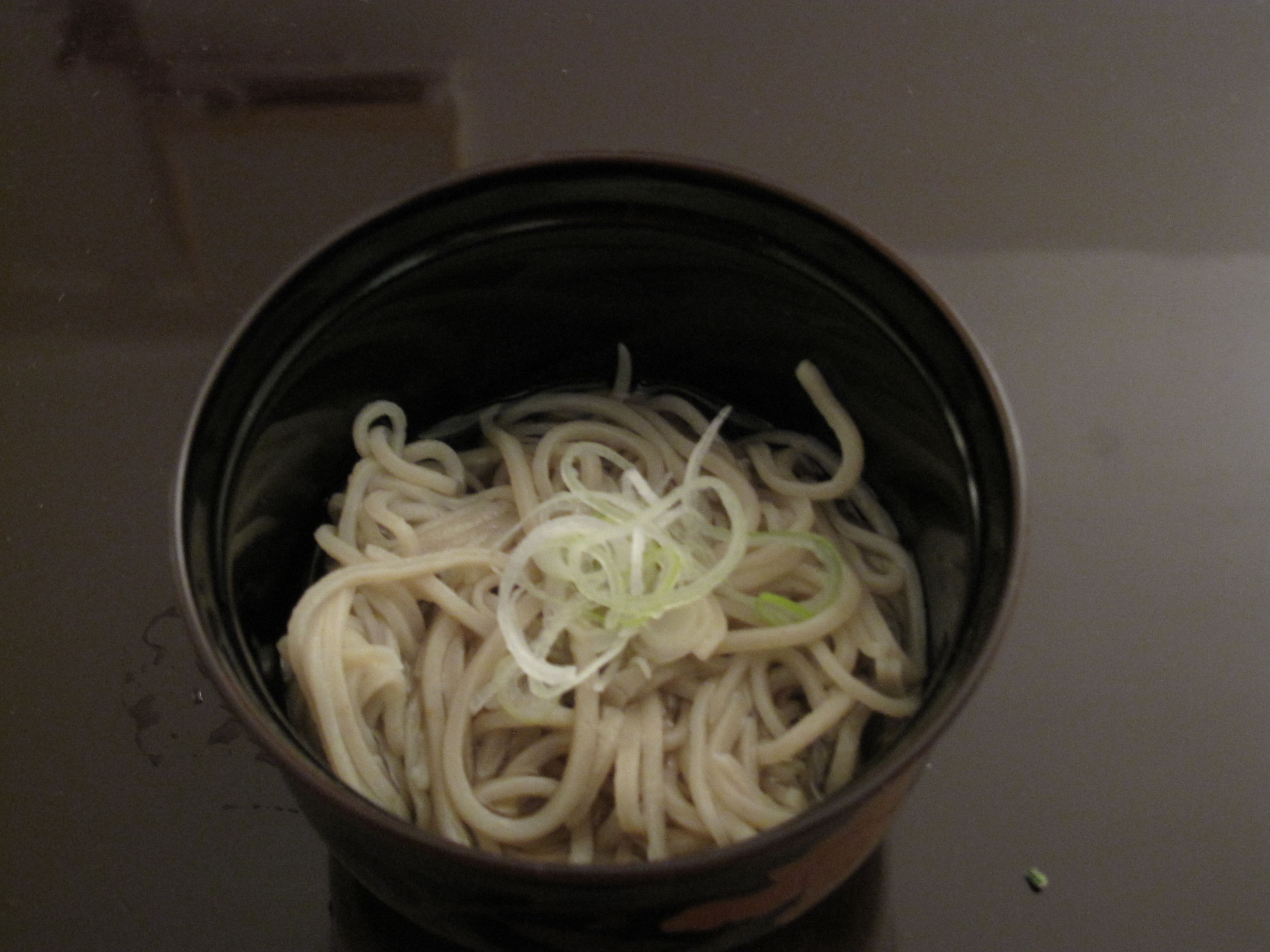
Then they served us home-made soba noodles in a light soy-dashi with some thinly sliced negi (green onions) on top. I’m telling you, there is absolutely nothing like top quality freshly made soba noodles. I don’t know if I can go back to store-bought dried soba when I get home. I mean, of course I can, but it just won’t be the same. So chewy and clean tasting.

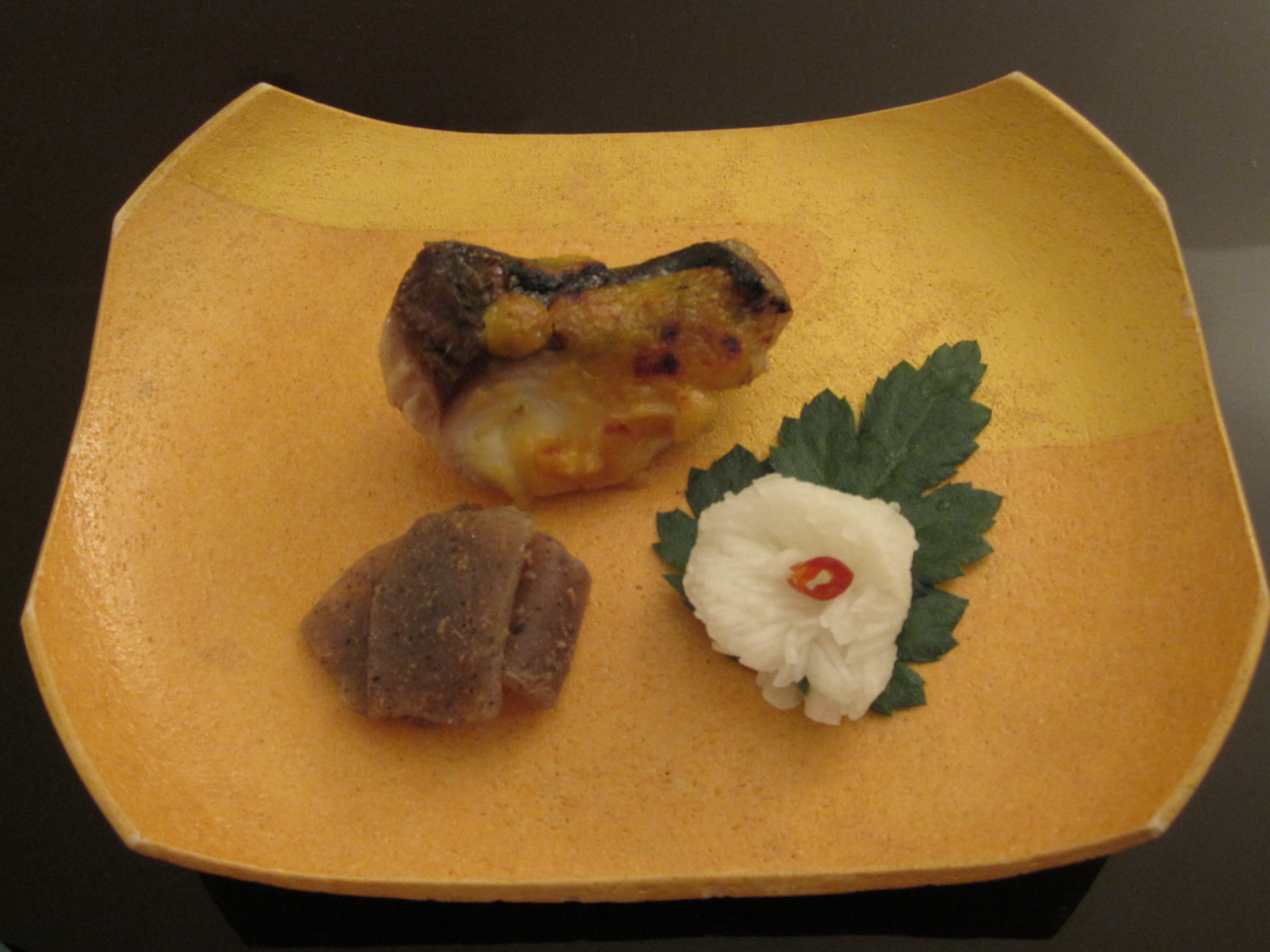
Next up was the grilled course. Sawara (a cousin of the spanish mackerel) grilled with yuzu-miso and served with yuzu-miso konnyaku and daikon that was cut into a flower with a small slice of red pepper. I’ve never had yuzu-miso before, I’m a huge fan!

After that was the simmered course which was kinmedai (splendid alfonsino) in a ginger sauce. It was served with spinach and daikon radish with chawanmushi in the middle.

For the fried course we got a dish with some tempura. Shishito pepper and ebi imo (a kind of yam) served in a light dashi with momiji oroshi and chopped chives.

Then came the rice and miso course. The rice was a glutinous rice with chirimenjako (baby sardines simmered in saltwater, dried in the sun, and covered in a sweet soy marinade), sliced shiso, and served on top of a cherry leaf. The miso had mizuna greens in it. There was also some lightly pickled cucumber and daikon on the side (yes Nick, I even ate the pickles!).

Finally, for dessert we got sweet potato mousse. It was so soft and lightly sweet, it was really more like a light sweet potato cheesecake. Served with a sweet potato chip on top.

This Kaiseki was Kyoto-style which is considered to be the most sophisticated and delicate of all styles. Hard to argue as the food was simply magnificent! Plus, all of that food for only $50 per person! I challenge anyone to find a deal half that good for a meal of that quality prepared with that caliber anywhere in the states. Thanks so much for bringing me here Tamiko!!!

Read Full Post »

So, Yuki and I took a few days to visit some of the early temples and castles in the Kansai region of Japan. Most of the structures we saw date back to the 8th century and are truly amazing! Besides the structures there were also tons of great sculptures from the same time period. However, as you all know, this blog isn’t about architecture, it’s about food. This post is to let you know about the incredible Kaiseki we ate our last night in Nara at the Ryokan (traditional Japanese Inn) we stayed at, Yoshino.

Kaiseki is the classic multi-course meal that progresses through various cooking techniques using regional, seasonal ingredients. It’s the highest art form you can find in food anywhere in the world. Focus on the subtleties of each ingredient to draw out natural flavors and not cover then with heavy sauces (sorry Frenchies, but the Japanese have your asses kicked in food culture!).

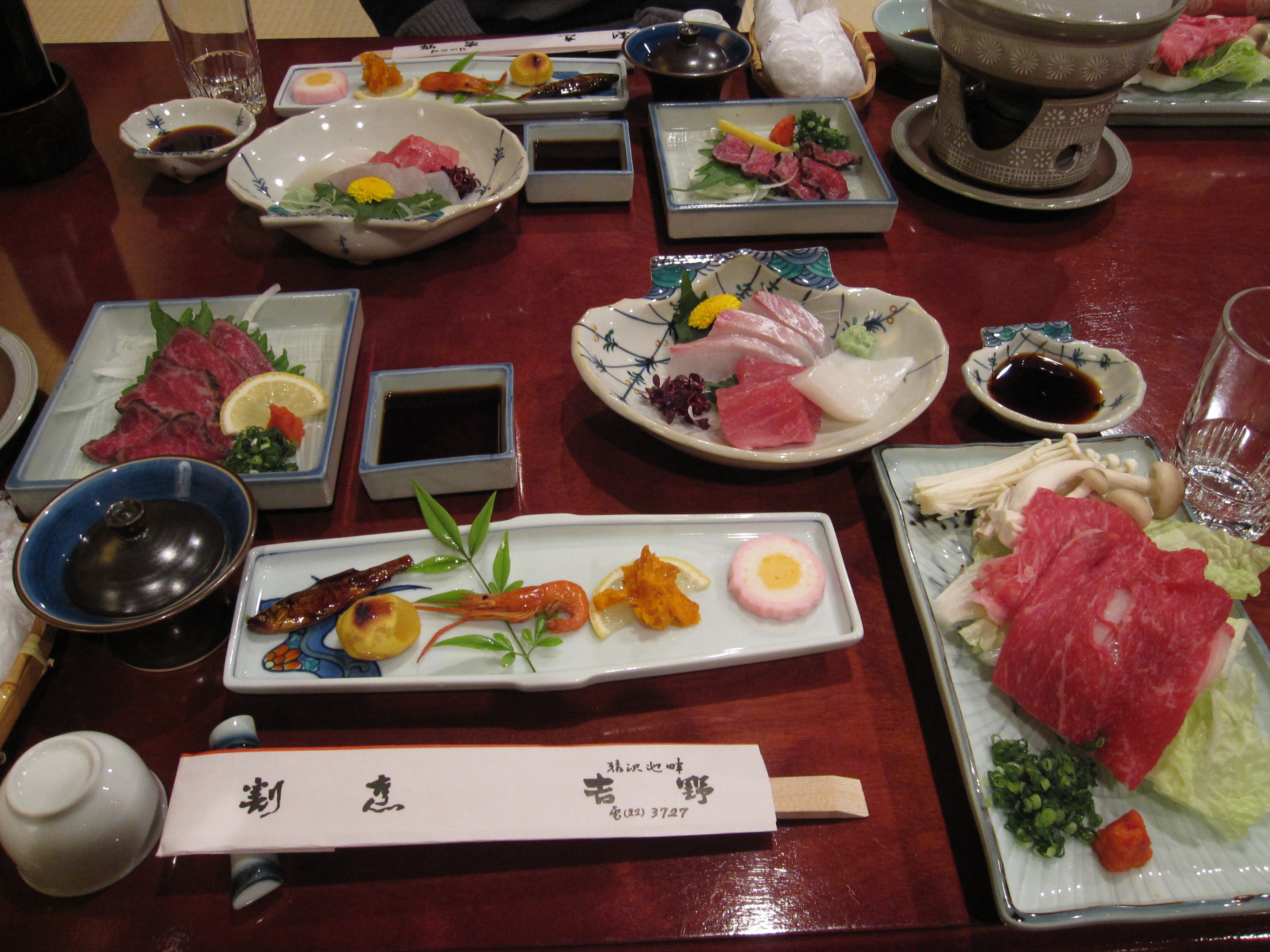
It started with that dish in the middle of the picture above. From left to right was a little fish grilled in a sweet soy marinade, a roasted chestnut, ama ebi (sweet shrimp), some sort of seafood that had a jellyfish-like texture in a miso sauce (I have absolutely no idea what it was, but it sure tasted good!), then a three-colored fish cake.

After that they brought out this dish. It was obviously a shrimp, but I’m not quite sure what else there was. I think it was a gratin made with the roe of the shrimp. Also on the plate as a macaroni salad and some lettuce with a tomato.

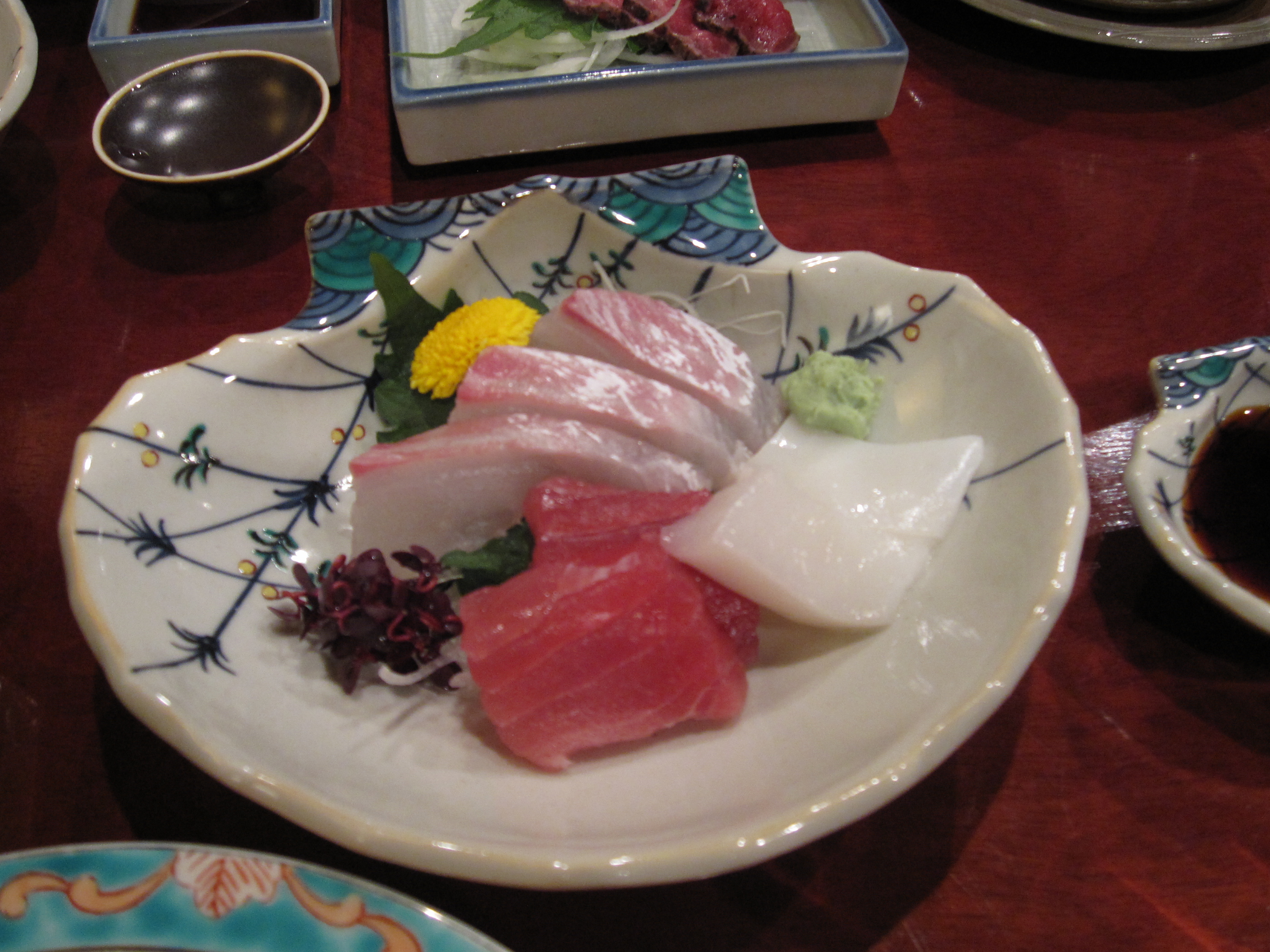
Then we moved on to the sashimi plate. It had some fantastic Chu-Toro (tuna), Tai (snapper), and the star of the plate….Ika (squid). In the States when you order Ika it’s usually very thin and a little rubbery. Not these two slices. They were about a half centimeter thick, squid steaks! Rubbery? Hell no! Each chew and the squid literally melted away in our mouths. Hands down the best squid I’ve ever eaten.

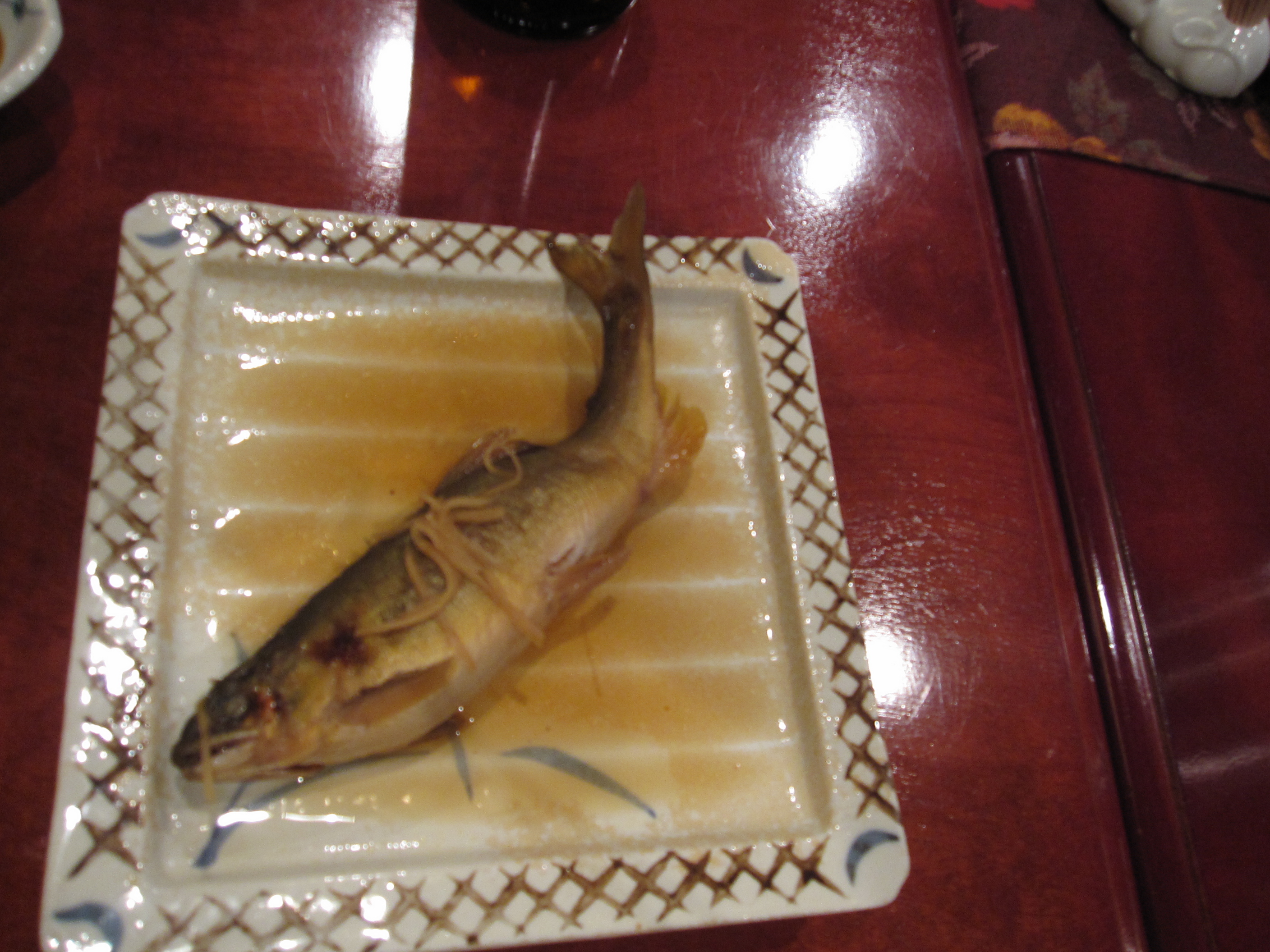
Then they brought us a plate of steamed Ayu (sweet fish). It’s a river fish that eats moss attached to stones giving it a really fresh and clean taste. It was served with a light ginger sauce. The thing that makes Ayu special is that it’s eaten when the belly is full of fish roe. There isn’t much meat, so it’s like dipping chopsticks into a bowl of fresh water caviar.

Being the meatavore that I am, the next plate was what I was most looking forward to….Beef Tataki. Lightly seared beef to give a little texture to the soft raw meat laden with mouth-watering fat. The dipping sauce is a soy-dashi mix. You see the little mound of reddish gew on the side of the dish? That’s a mix of togarahsi (Japanese red pepper) and yuzu (a small citrus fruit). You mix that into the sauce like you would wasabi for sushi, along with thinly sliced chives. With the tataki there was a small dish of sliced cucumber and I think seaweed in a vinegar sauce that cleansed the palette from the fatty beef.

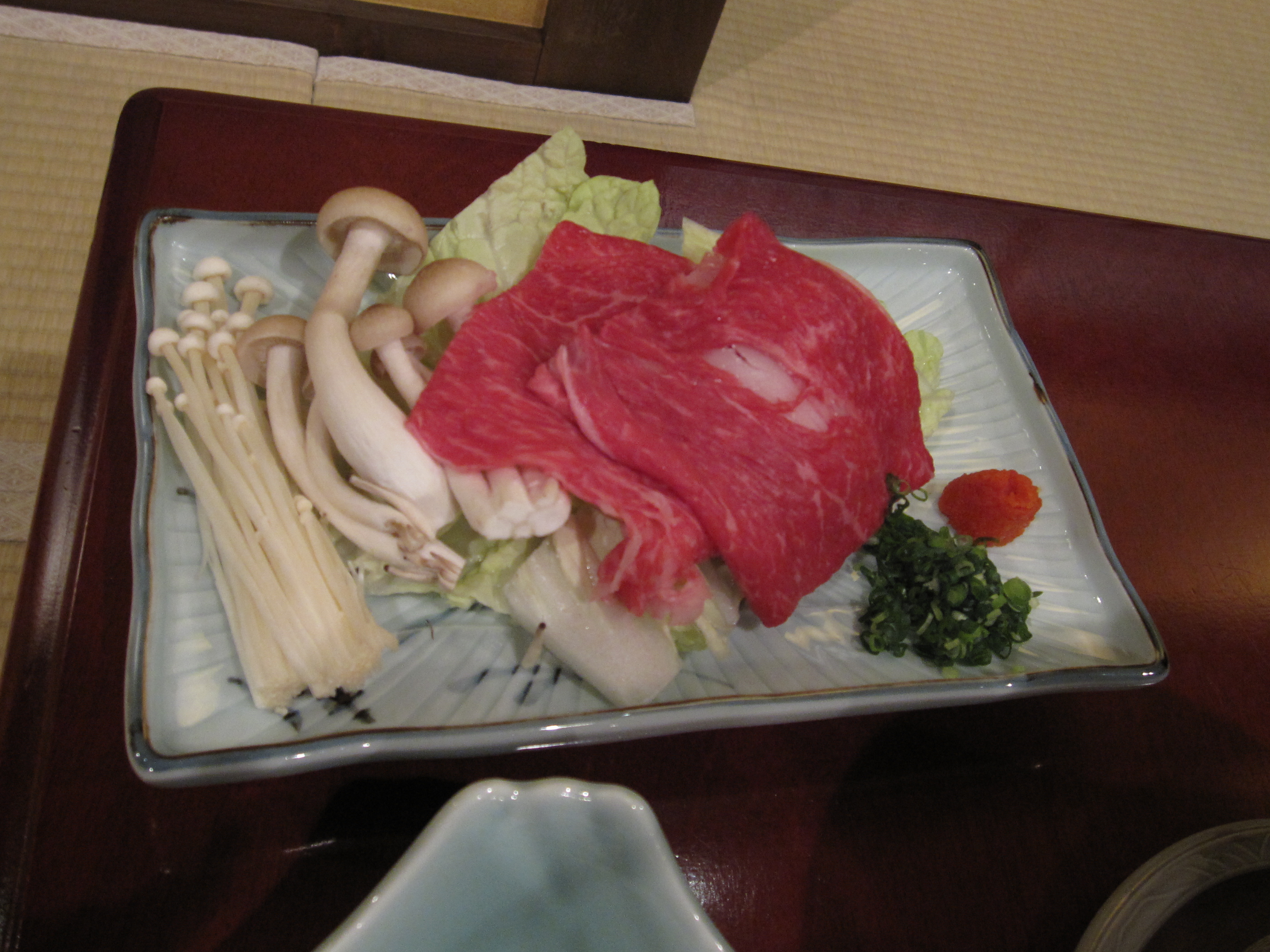
Then we ate the Shabu-shabu. Unfortunately I forgot to get a picture of the individual hotpots we used, but here’s the ingredients. The broth was a light sake base, in it we added cabbage, enoki mushrooms, and shimeji mushrooms. Once they were cooked, we sloshed the thinly sliced beef around to cook it and then dipped it all in a light soy with more of the togarashi yuzu and chives.

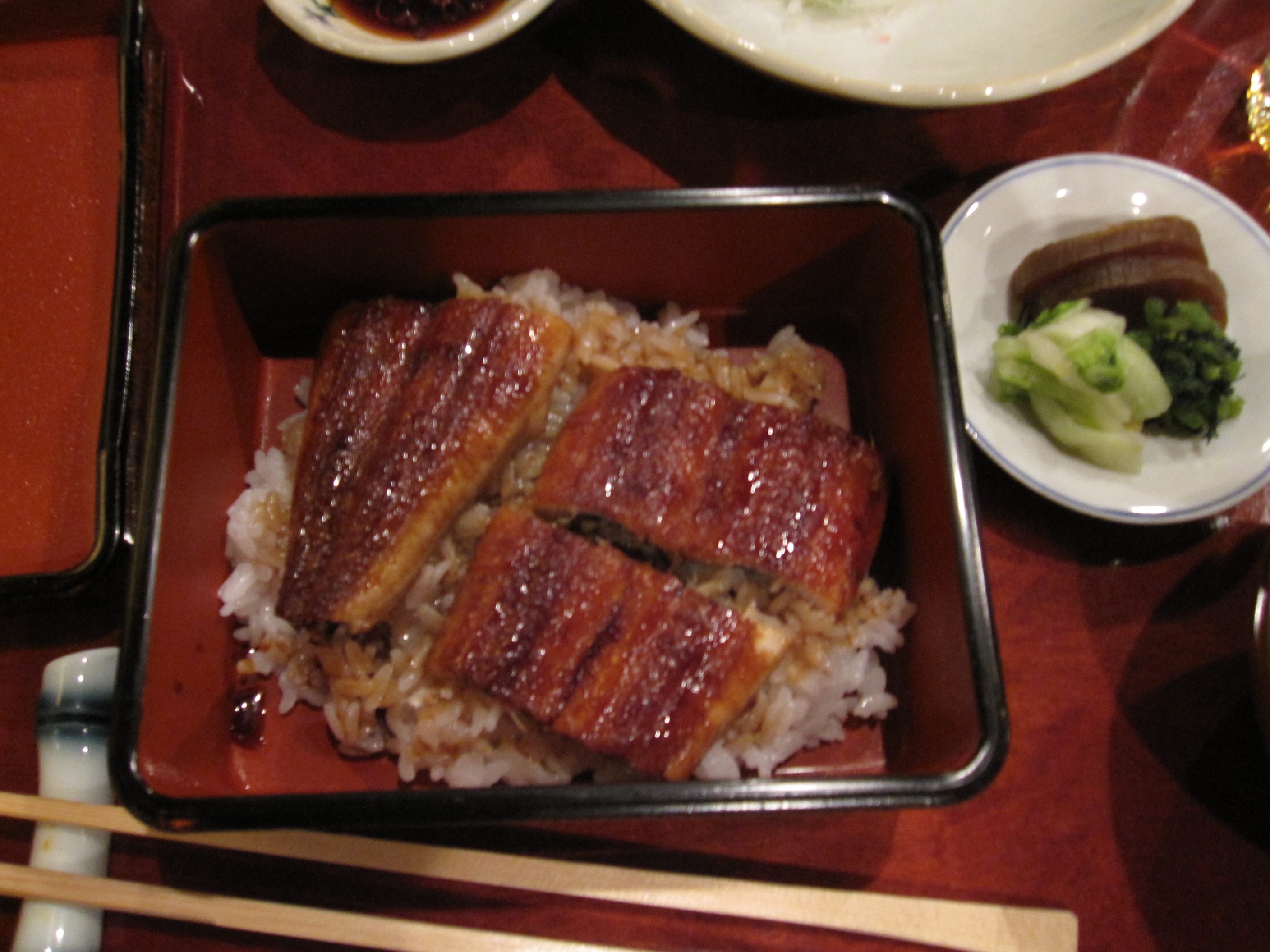
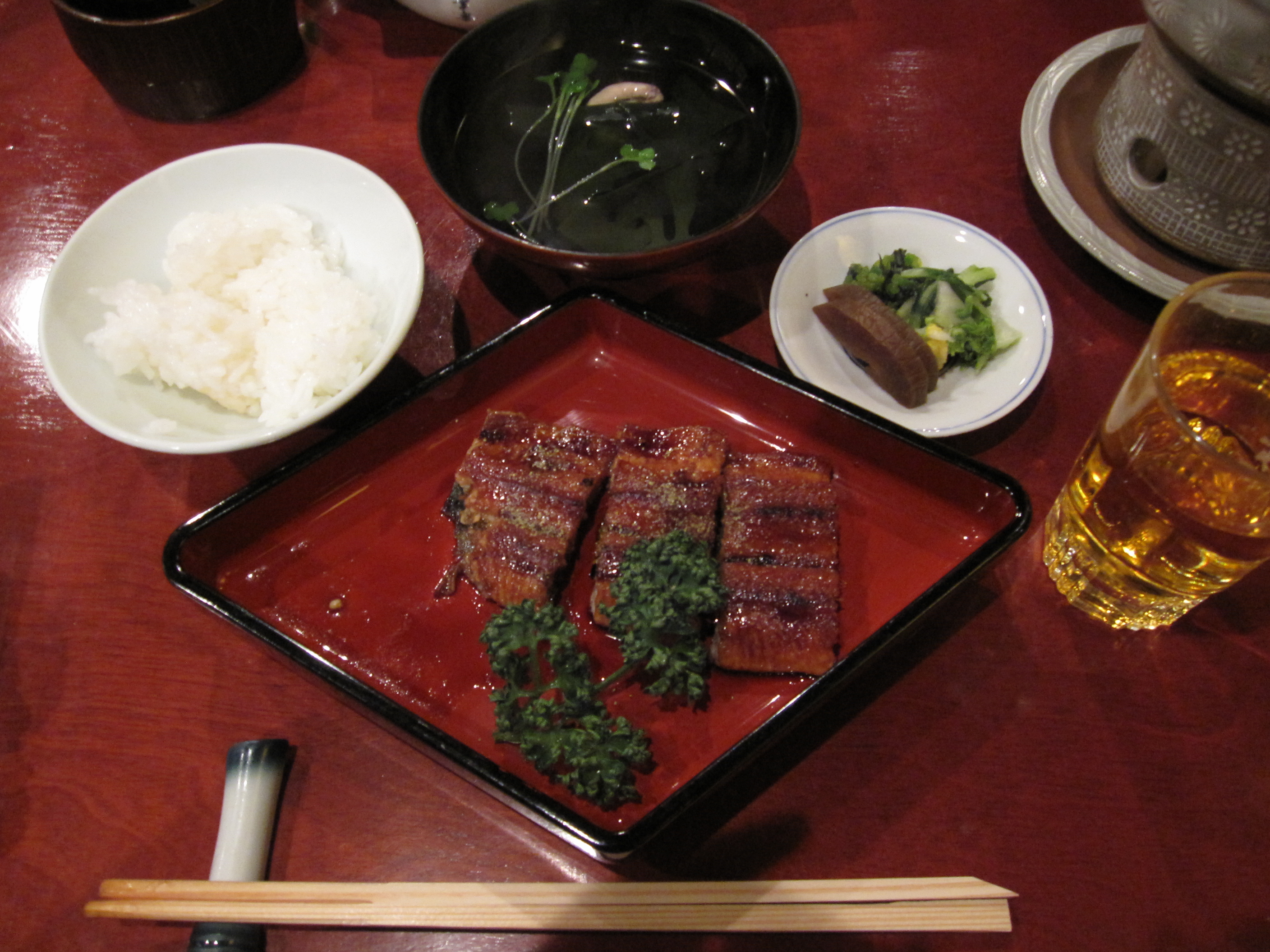
After that we got two different preparations of Unagi. To be honest, I have absolutely no clue what the difference was. One was served on top of rice, the other with rice on the side. All I can tell you is that you will never find eel of that quality anywhere in the States. It tasted like they just caught it that morning. Best eel ever! Both came with a little dish of Japanese pickles. They were probably damn good pickles, but I don’t like pickles so I let Yuki eat mine.

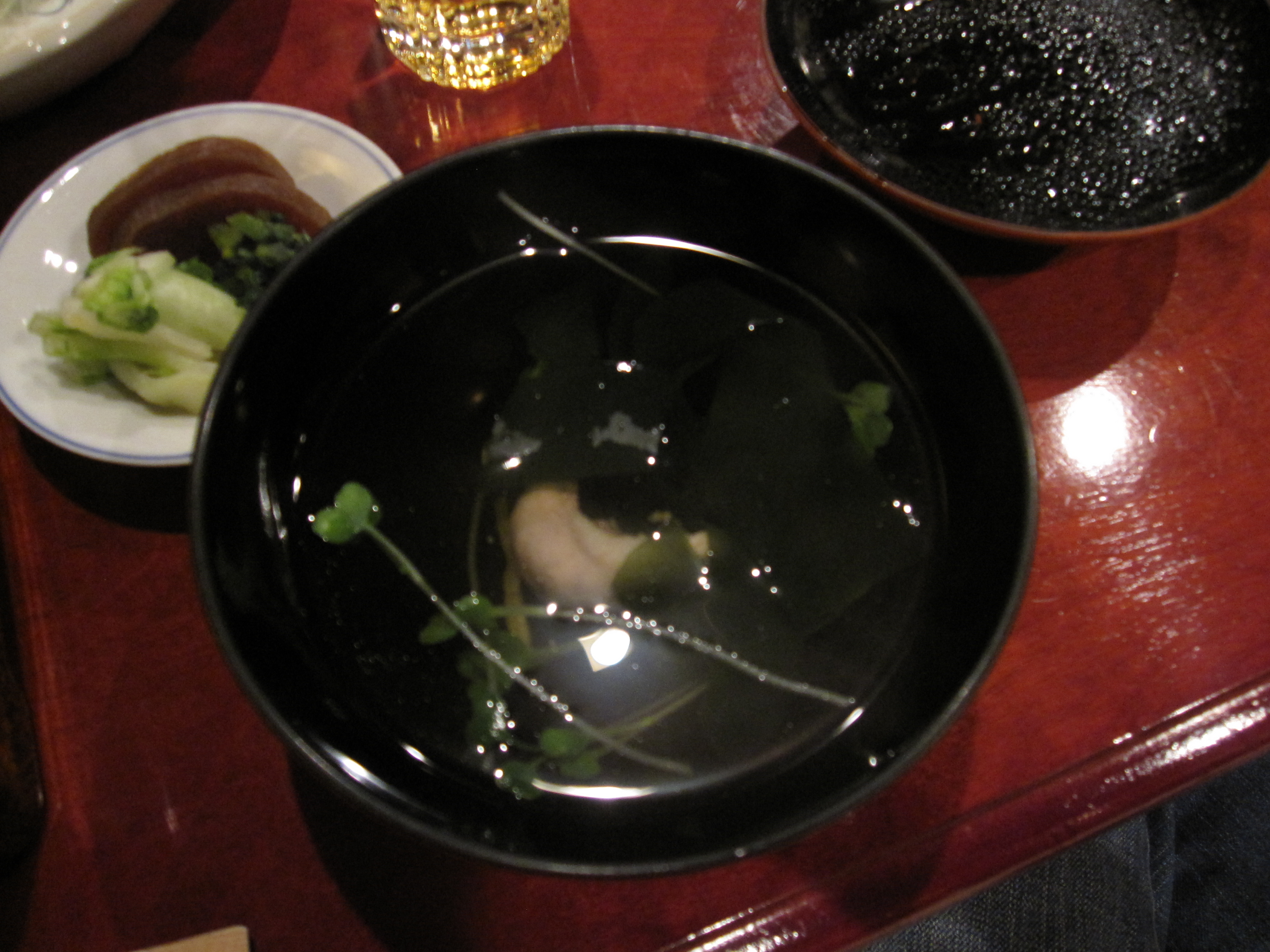
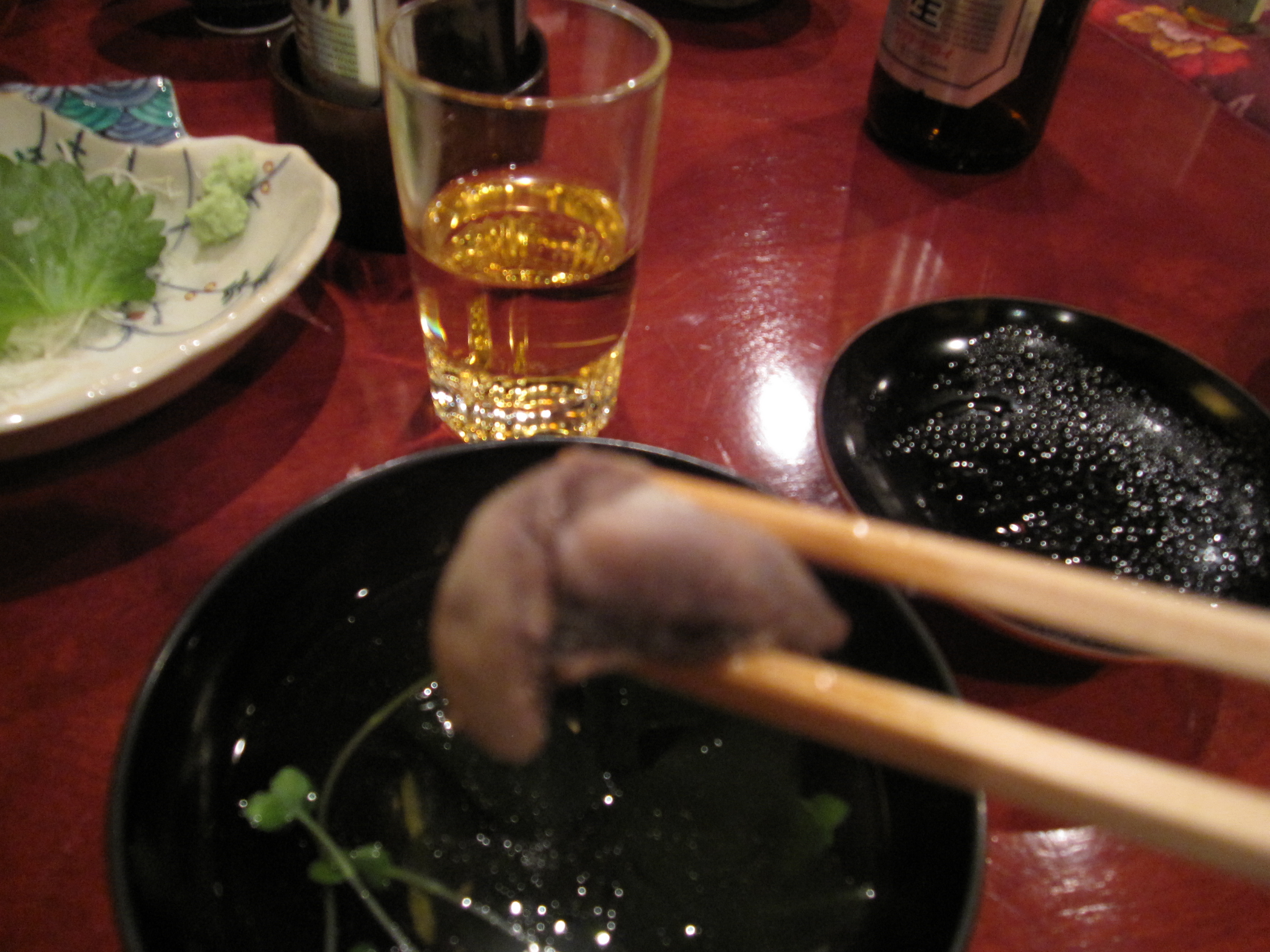
After the Unagi was a clear broth soup with an ingredient we couldn’t figure out. At first, we thought it was some sort of mushroom. It wasn’t. Then we thought it might be shiroko, fish sperm sack. It wasn’t that either. We finally found out that it was eel liver, probably from the Unagi we just ate. It had kind of a crunchy yet soft texture. Not something you’ll find on any old menu.

Finally, to finish things off was a plate with fresh persimmons and grapes. persimmons are in season right now and are everywhere while Japanese grapes are absolutely huge compared to what we get.

All in all this was my 5th Kaiseki. I wish I could afford to eat like this every night as there is always something unusual and strange to the western palette. If any of you get to Japan I highly recommend splurging at least once to experience the delicate yet sophisticated Japanese cuisine at it’s finest.

Read Full Post »

chen

Friday night Yuki’s mom went to a concert with a friend, so it was up to me to decide where we went for dinner with her dad. In my quest to eat at every Iron Chef’s restaurants I was able to convince him that we should head out to one of Chen Kenichi’s joints. It wasn’t a hard sell. So, the three of us hopped on the train to Roppongi where Chen has one of his four places.

There were a handful of pre fix options, but none of them really had what we wanted, so we ordered a bunch of dishes in typical Chinese family-style dining.

IMG_1141

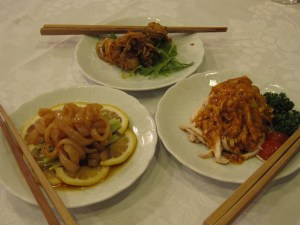
First up was a trio of cold appetizers. On the top were Scallops cooked with chili peppers. Not too spicy, just a nice, slow, gentle burn on the back of the throat. Bottom right was shredded chicken with a sweet miso sauce. Bottom left jellyfish in a light soy. All three were very complimentary of each other and made for a great start to the meal.

IMG_1143

Next up was Shark Fin Soup. Not the most politically correct dish, but hey, a little shark fin never hurt anything. A lot does, but a little doesn’t. The broth was a thick soy flavor and it had thin slices of pork in it alongside the shark fin.

IMG_1144

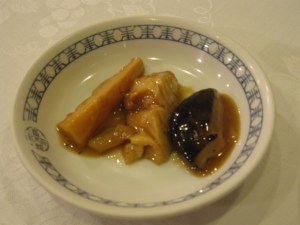
Then came Abalone, one of the sea’s finest of all creatures! Served with shiitake and bamboo shoots it was truly delicious. Judging by Uichiro’s (Yuki’s dad) reaction when he first bit into it, I’d say it was his favorite part of the meal, next to the beer.

IMG_1145

After that we had mixed seafood served on rice cakes. The restaurant manager poured the hot seafood on the rice cakes making it sizzle, much like the classic sizzling rice soup commonly found in American Chinatown restaurants. I need make a correction, I think Uichiro liked this dish more than the abalone. Hard to argue, the shrimp, scallops, and squid were cooked to perfection with all of the natural sweetness brought out.

IMG_1146

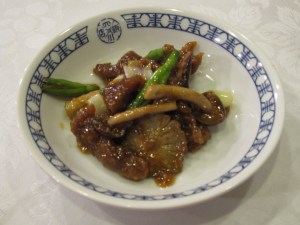
Next was probably my favorite dish of the meal, beef with mushrooms and lilies in a thick ginger soy sauce. The beef was so tender it almost melted in my mouth. The mushrooms and lilies were nice counterpoints to the salty soy. The only thing missing was white rice to balance a little more of the salt. This was definitely more of what Americans are used to than Japanese. Give me this dish and a cold beer and I’m a happy man!

IMG_1147

Here we go, the dish that brought me to Chen’s restaurant and the one that will make my brothers very envious, his famous mapotofu! There were two choices on the menu, Kenichi’s and Kenmei’s. Kenmei was Kenichi’s father, the one who brought true Szechuan cooking to Japan. It was a tough choice, but we opted for Kenichi’s since it was his restaurant and not his father’s. It wasn’t quite as hot as I expected, but it was definitely a hot and spicy dish! Packed with Szechuan peppercorns it gives an initial citrusy spice followed by a mouth-numbing burn. Yuki and I added some extra peppercorns to get the full experience, while Uichiro only ate a few pieces of tofu. I think it’s a little spicy for him. It was a little oily as it was douced in chili oil, but that’s what makes it so delicious. The funny thing is that in the middle of the night Tokyo experienced what it thinks was a small earthquake. It wasn’t an earthquake at all though, it was the effects of my trying to digest Chen’s mapotofu! I’m still not quite sure exactly what that dish did to my intestines, but it made a city of 16 million rumble a little. And somehow my chest got a little harrier.

IMG_1148

We followed the mapotofu with a mild pork and egg noodle dish. It had shiitake, green onions, chinese cabbage, sprouts, and bamboo shoots. It took a few bites to get the burn out of our mouths, but once it was gone this dish’s wonderful flavor stood out. It’s just too bad I couldn’t finish it all because we ordered one too many dishes I think. Oh well, what can you do?

IMG_1149

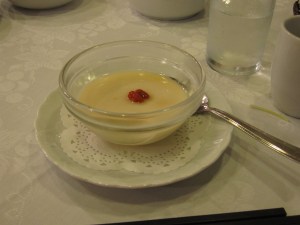
We thought we were finished when the manager brought us some complimentary dessert, Annin Tofu. Annin Tofu is a popular Chinese dessert. It’s basically just almond jelly. Very smooth, light, and creamy. It’s the perfect way to finish off a meal.

All in all, I have to say that I was a little dissapointed. After watching countless episodes of Chen creating some of the most amazing looking dishes anyone could ever think up, this meal was a very straight forward Chinese meal. Every dish was a classic that you can get at just about any Chinese restaurant. Granted, everything was perfectly balanced, but nothing was off the wall. I was kind of hoping for some Chen originals. This restaurant wasn’t the right format for him to create Iron Chef dishes. I have no regrets, but I wasn’t blown away like I was at other Iron Chef restaurants.

I have now been to three Iron Chef restaurants (4 if you count Bobby Flay, but I don’t consider him an Iron Chef and I never wanted to go to his place). I have done Sakai, Michiba, and now Chen. Next up….Kobe Masahiko.

Read Full Post »

IMG_0991

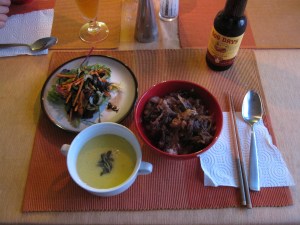
So, we just started with an idea Yuki had a while back which is to not eat meat at least one day of the week. This is a very difficult concept for me to digest seeing as beef is my favorite vegetable followed closely by lamb. However, after going through the Food, Inc. the movie website I started to get on board with the Meatless Monday thing. Last night was the first installment.

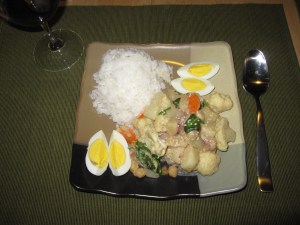
Taking a cue from Indian cooking I decided to do a sort of vegetable curry type of thing. I got some cauliflower, chickpeas, carrots, onions, potatoes, and spinach and threw them together.

I first steamed the potatoes for a few minutes before cutting them into cubes so that the cooking time in the pan would be reduced. I threw some garlic and ginger in hot soy oil for a few minutes. The dumped in the onions and carrots. About 5 minutes or so later I added half of the head of cauliflower broken into small florets. A few minutes later went in the potatoes and some salt. Once everything was heated up I added the sauce I made.

The base of the sauce was a cup of plain yogurt. I added some garam masala and mixed it in. I have absolutely no idea how much. I dumped some in, stirred it around, tasted it, dumped in some more. Just add however much you like. Then I added some finely grated lime rind, a tablespoon or so of soy sauce, a pinch of salt, the juice of one lime, and some pepper.

Once the sauce fully coated all of the veggies I threw in some spinach and turned off the heat. I only wanted the spinach to wilt a little. Then I sprinkled on some sesame seeds.

I served it with some white rice and a hard boiled egg. Since an egg was never a living bird it’s fair game for Meatless Monday’s.

I think it will be hard to cook vegetarian, but I’m up for the task. Tonight I have to do something with the other half of cauliflower and the yogurt. I’ll let you know what I come up with.

Read Full Post »

IMG_0604

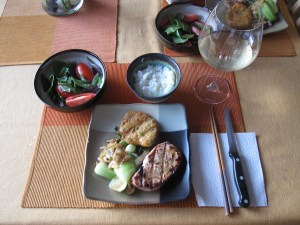
One of my favorite pieces of flesh to grill is a Kurobuta Pork Chop (aka Berkshire Pork). Those pigs are so tender and juicy, enough to make a fat man drool. About the only place I can regularly find Kurobuta is at Mitsuwa, so I almost always grab some when I’m up there.

This time I marinated it in the classic soy, sake, and mirin mix with some ginger, garlic, and stone ground mustard. Grill it up and it’s good to go.

The veggies are a saute of onion, enoki mushrooms, and bok choy in a little bit of olive oil. The other thing on the plate is a fish cake with peas and corn in it.

Round out the meal with some white rice and a simple salad of mixed greens with back porch tomatoes and you’ve got a well-rounded, fresh, tasty dinner.

Read Full Post »

IMG_0590

Here’s my first attempt at making Gyu-don, Japanese simmered thinly sliced beef with onions on rice. It’s surprisingly simple to make, yet full of flavor and easy on the wallet.

The trick is to get the beef sliced as thin as deli meat. You can get it at Mitsuwa, but I’m not sure where else to get good quality meat in this fashion. I’m sure it’s available. I do know that it’s near impossible to get such even thin slices at home with a knife no matter how sharp it is.

So, take put a little oil in a medium-sized pot and cook some ginger and garlic for a minute or two. Then add an onion thinly sliced and sweat it for a few minutes. Add a couple cups of water, a quarter cup each of soy sauce and mirin, a few pinches of sugar and let it come to a simmer. Then add your beef and let it cook until the liquid is reduced by 3/4’s.

All you have to do then is put some white rice in a bowl and top it with some Gyu-don.

I served it with a simple corn soup garnished with Thai basil and a salad that Yuki made. She tossed some mixed greens, julienned carrots, celery, and cucumber (I left the cucumber out of mine, vile phalis!) in a homemade hijiki vinaigrette. All washed down with a cold beer.

Read Full Post »

IMG_0607

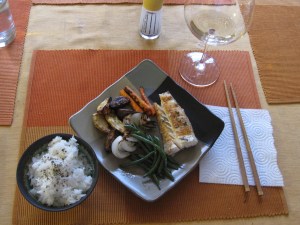
Here’s a simple grilled fish dish. I got some fantastic fresh Halibut at Isaacson’s for $12.50 a pound. My wife and I each eat about 6oz so that’s about $4.70 per person. I marinated it in soy, mirin, sake, garlic, ginger, and fresh thai basil from my porch. Also a touch of olive oil to keep it nice and moist when it’s grilled.

For veggies we got some mixed organic potatoes that almost taste like plantains when grilled with olive oil, salt, and pepper. I also olive oiled, salt, and peppered some fresh organic hericot verts, spanish onions, and carrots. All of the veggies came from the Farmer’s Market and Stanley’s.  In total, we each ate about $2.50 in veggies.

Some white rice with grated nori seaweed (the kind that wraps sushi rolls) and seasame and a glass of white wine completed the meal.

The best part is that there were no dishes to clean up since everything was cooked on the grill.

Read Full Post »

Ginger Chicken

Ginger Chicken with Shimeji Mushrooms, Hericot Verts, and Onions with Rice, Potatoes, a Fish Cake, and Seaweed Salad. Healthy, organic, well-balance, and delicious…..as usual. All done for $5.45 per person.

I think in the future I’ll refrain from giving you minute details or full-on recipes. If you want to know anything, leave me a comment and I’ll respond. Until then, support your local grocers and farmers.

Read Full Post »

« Newer Posts