Feeds:
Posts
Comments

Posts Tagged ‘soy sauce’

The other night Tamiko wanted to make Uichiro’s famous curry rice dish. I think for a couple of reasons. First, to make him a little jealous again that we’re eating so well while he’s eating take home bento boxes (although, take home bento in Japan isn’t a bad thing by any stretch of the imagination). Second, it’s just a tasty tasty dish! He sent me the recipe a long time ago and I did make it once (before I started this blog). Mine was pretty good, mainly because I’m damn good in the kitchen, but it clearly wasn’t the same as Uichiro’s. Japan uses the metric system, so I had to eyeball my measurements with the spices and whatnot as the conversion is never as smooth as it should be, for me at least. Also, since I’ve never eaten his I made it more to my tastes, which are different believe it or not.

What I’ll do for this post is first cut-and-paste the recipe he sent me. Then, I’ll go through it a little and let you know where Tamiko made the appropriate changes. Sorry, Uichiro, but I’m going to make a little fun of you as well, all in good humor. So, without further ado, here’s his recipe as he sent it to me:

Foodstuff:

ground meat with half beef and half pig meat: 300 g

chopped onion: big size one unit

chopped ginger: one piece

chopped garlic clove: one piece

chopped parsley: quantitatively

chopped raisin: 3 x 15cc spoons

chopped walnut: 4 kernels

pickled cucumber: one

curry powder: 3 x 15cc spoons

soy sauce and Worcester sauce: quantitatively

grated cheese: 3 x 15cc spoons

cinnamon, nutmeg, clove: quantitatively

boiled egg: two

Cooking:

On a cutting board mince all foodstuffs. Sautee onion to the
brown state. Sautee ginger, garlic clove and ground meat in turn with
it. After meat color is changed, then, add raisin, walnut, pickled
cucumber, parsley, soy sauce, Worcester sauce, grated cheese, cinnamon, nutmeg,
clove.  Finally, add one cup water and boil to the sapless state. Ad mix
the half with rice. Get up the half and sliced boiled egg on it.

Alright, where to start. First, Tamiko made twice as much as the recipe calls for so that the three of us had lunch the next day as well. I love that he calls the ingredients “Foodstuff”. Not exactly sure how much 300 grams is, we got 2/3’s pound of ground beef and ground pork. Going down the list is pretty self explanatory, for the most part. We forgot to get parsley at the store, so Tamiko used the 1 tablespoon of cilantro we had left in the fridge. I’ve never heard of a walnut kernal, but only a moron doesn’t know what he means. Tamiko omitted the pickles because she knows I’m not a huge fan of them, what a sweetheart! Worcester is supposed to be Worcestershire. Grate cheese refers to parmesan. As for the boiled eggs, you can hard-boil as many as you like. Just slice them up and top each plate with one.

On to the how-to portion of today’s post. Again, most of it is pretty easy to understand. Tamiko minced up everything real well, walnuts and raisins as well. She then sautéed everything according to instructions. My favorite part is boiling the water down to a sapless state. Honestly, I have never heard that phrase before in my life and probably won’t ever hear it again. He means just boil it down till it’s almost all evaporated. It is a “Dried Curry Rice” and not a wet one. Alright, that’s all I’m going to make fun of Uichiro.

Another way Tamiko’s was different is that she did not mix any of the curry into the rice. I did when I made it, but she instead just topped the rice with the curry. Either way works really well, whatever you prefer. Then, she topped the curry with the sliced egg and sprinkled the cilantro on top. It’s really a simple dish to make. But, as Tamiko likes to say, simple is best. It is also very delicious. The play between the curry and sweet raisins is beautiful. The walnuts add a nice crunch to the whole thing.

On the side we had a simple salad of lettuce, shredded celery, daikon cut into thin matchsticks, and cherry tomatoes. I whipped up a balsamic vinaigrette. One part balsamic vinegar, two parts olive oil, a pinch of salt and pepper, and whisk it up until its emulsified.

Read Full Post »

With Yuki’s dad back in Japan her mom wanted to make some home-style comfort food. Unsure of what to make I suggested Nikujaga. I’ve made Nikujaga before, and it turned out pretty tasty, but I wanted to try Tamiko’s since she has a lot more experience making it than I do.

The basics are the same…beef and potatoes simmered in dashi with soy sauce, sake, and mirin. I’m not sure what her ratio for the broth was, but it was perfect! For mine, I used yukon gold potatoes, she used fingerlings (only because that’s what we had in our kitchen). Also, she used snap peas instead of the edamame in mine. Otherwise, they were pretty similar (both had carrots, a staple in any Nikujaga), only hers was definitely more refined than mine.

For a side dish she had me grill some sawara steaks. Sawara is Spanish Mackerel and we found some really nice steaks at Tensuke Market. Tamiko simply sprinkled it with salt and pepper. All I did was throw it on the grill for about 6 minutes each side. For the sauce, she mixed yuzukosho with some mayonnaise. Yuzukosho is one of my new favorite things! It’s yuzu mixed with pepper making it a citrusy spice that keeps my taste buds begging for more!

She also made a simple miso soup with wakame and tofu. Being a Japanese comfort meal, white rice was also served.
Read Full Post »

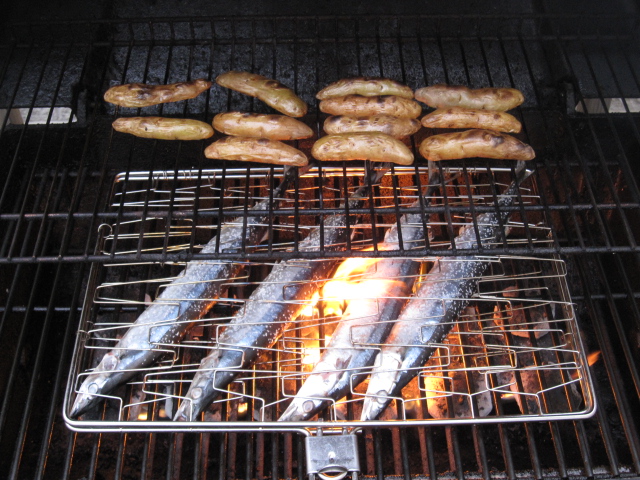
This dish is actually from this past Sunday night. Since Yuki’s parents love seafood, like most Japanese, I wanted to grill some red snapper for Tamiko on Mother’s Day. Our friends that gave us the Rick Bayless cookbook were up at Tensuke Market so I had asked them to bring me some snapper. Unfortunately, they did not have whole snapper, just filets. They did, however, have Sanma. I remember Tamiko made Sanma for me once in Japan so I thought it’d be fun to grill some up and return the favor.

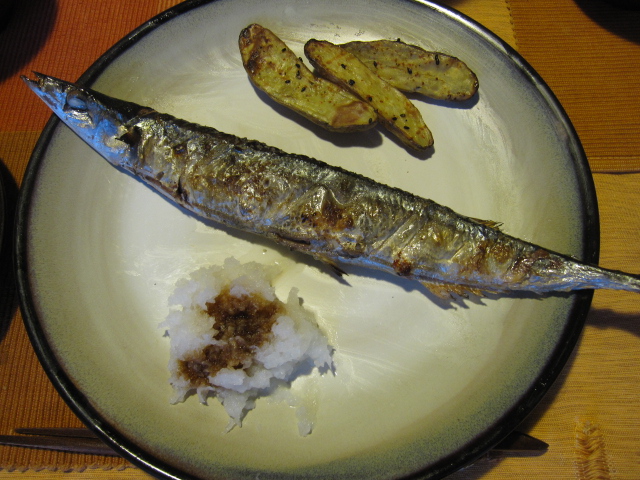
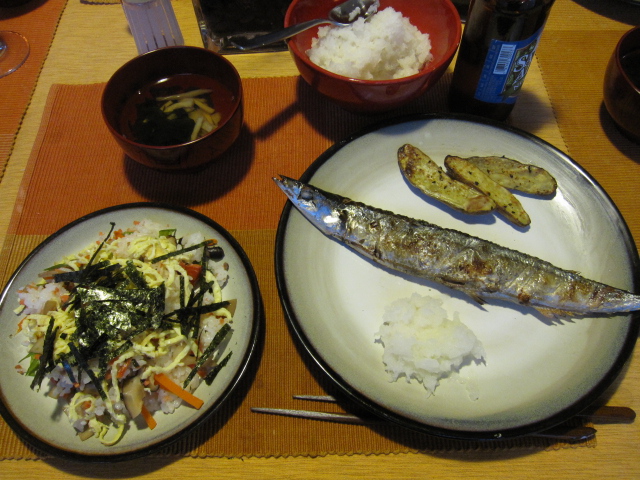
Sanma is a Pacific Saury, commonly called Mackerel Pike in English. About a foot long and slender it’s simply salted and grilled, complete with the guts. You can certainly eat the guts, as Yuki’s brother-in-law Jun does, but they’re very bitter. I don’t eat them, too bitter for me. After grilling you simply pull the skin and meat off the bones and chow down. The skin gets very crisp and tasty while the meat stay moist.

To prepare the Sanma I simply washed them down with cold water and patted them dry. Then I heavily salted both sides of the fish and let it rest for about 20 minutes. This allows the salt to stick to the fish and add the depth of flavor while keeping it a little less oily.

I had some fingerling potatoes that needed to be used up so I halved them, drizzled them with olive oil, and sprinkled some salt and shichimi togarashi on them.

I heated up the grill to med-high. The potatoes went on the top rack while the fish were on direct heat. I cooked one side of the fish for about 8 minutes then flipped it over and cooked the other side for about 6 minutes. Not sure why, but Tamiko said you should cook the first side a little longer. Since this was my first go at grilling Sanma I happily took her experienced advice. Glad I did because they cooked to perfection!

Sanma is typically eaten with grated daikon radish that has a little soy sauce poured on top of it. So, I grated some daikon and we poured a little soy.

Tamiko made Bara Sushi to accompany the Sanma. Bara loosely translates to spread out, so it’s basically just spread out sushi. She made two cups of rice and mixed some rice vinegar, sake, and mirin (maybe a little sugar too, not exactly sure what her blend of sushi rice consists of, but you can find multiple recipes for sushi rice online if you feel like trying your hand at it) into the rice. I fanned the rice down while she mixed the vinegar mix in to help rid some of the moisture. Then, she mixed in some smoked salmon, thinly sliced pea pods, thinly sliced lotus root, thinly sliced soy simmered shiitake, and carrot matchsticks. She then made some scrambled egg crepes, thinly sliced them and placed them on top. Finally, it gets garnished with thin strips of nori seaweed. It is absolutely delicious!

The soup was a simple clear dashi broth with wakame seaweed and eryngii mushrooms.

I wish more Americans would cook whole fish instead of the typical flavorless tilapia filets you see at every grocery store. Sanma is such a flavorful little fish that really would be a waste to add more than just salt. By keeping the guts inside you really get a full fish flavor, and you certainly don’t have to eat the guts. Full of omega-3’s and lower in mercury, it’s a great fish to grill up and enjoy with a cold beer or some cold sake.

Read Full Post »

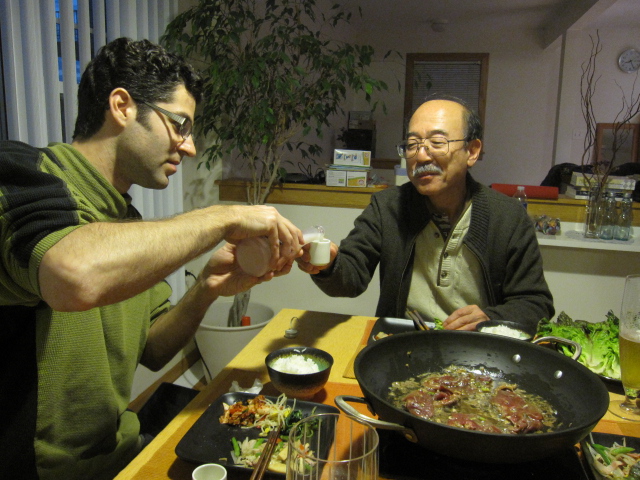
This dinner I made the other night technically isn’t Sukiyaki. Nor is it really Bulgogi. However, it’s close enough to both of the dishes that I really couldn’t think of any other way to describe it. So to all of you purists out there…deal with it!

I made this dinner after taking Yuki’s parents to the Joong Boo Korean Market. None of us were sure what we were going to do, but Uichiro had asked that I cook something. When we got to the meat counter and he saw the thin sliced ribeye he got a sparkle in his eye, looked at me, and said, “can you make Bulgogi?” I can and I did!

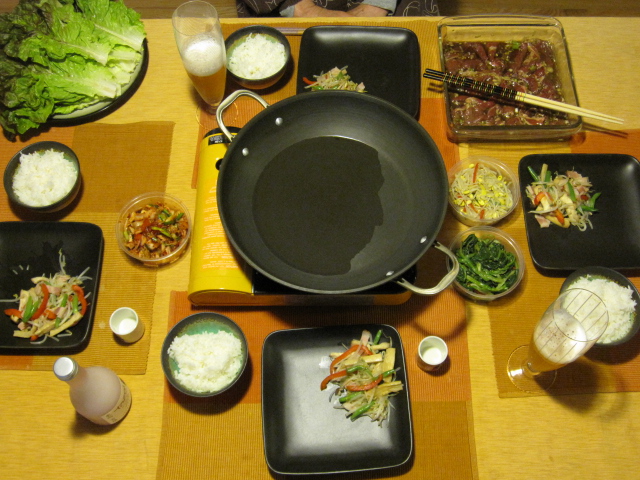
A true Bulgogi has grated asian pear in the marinade. I didn’t have any asian pears so I improvised a little, but did keep relatively close to a classic Bulgogi. We had picked up almost a pound of the thin-sliced ribeye. I also used 4 green onions thinly sliced, about 1 tablespoon of minced ginger, 1 large garlic clove minced, 4 tablespoons of apple cider vinegar, 4 tablespoons of soy sauce, 2 tablespoons of sesame oil, and some black pepper.

Before adding the meat to the marinade I gave it a real good mix and then tasted it. I decided to add about 1 tablespoon of sake and a good pinch of sugar. Then I added the meat and let it sit covered in the fridge for about an hour or so. For a marinade like this you should allow the meat to sit for at least 30 minutes, but not longer than 2 hours. If you let it sit too long the meat will absorb too much soy and become extremely salty.

While at the market we also picked up a few ready-made pickles. We got some classic cabbage kimchi, wilted water spinach, and mung bean sprouts.

If you look at the top pick of this post you’ll also see a little stir-fry on each plate. To add another dish to the meal Uichiro quickly whipped up this little number. It contained bacon, red bell pepper, haricots vert, bean sprouts, and eryngii mushrooms. Of course, we also had white rice.

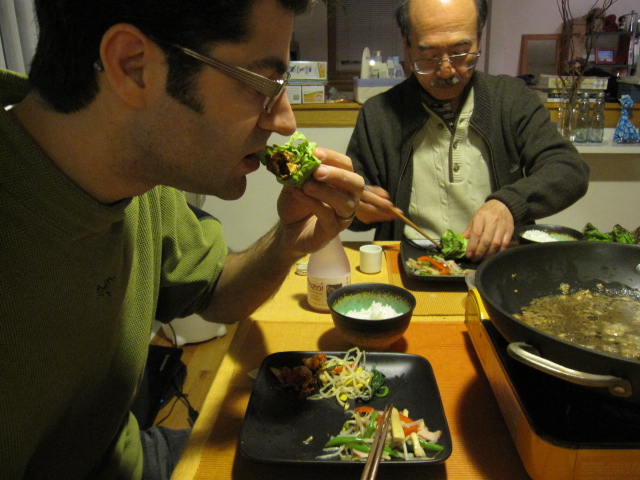
To eat it I brought out our table-top propane burner and put a large skillet on top with a little bit of vegetable oil. Once heated up we just put pieces of the ribeye in to cook. Then, we took red leaf lettuce and wrapped everything up.

While Yuki and Tamiko had some beer with dinner, Uichiro and I enjoyed some sake.

Not only is table-top cooking a lot of fun, but meals like this are extremely healthy and flavorful. That nutrition is only enhanced by the mental healing properties of good cold sake!

Read Full Post »

Sorry I haven’t put a post up in a while, been kind of busy the past week with my beautiful baby boy, Otis. Yeah, I know, badass name. He is a handsome little badass though, so it fits.

At any rate, Yuki’s parents came in from Japan a week ago to help us out. They’ve done all of the cooking and I absolutely love it! I do want to cook, and will in a day or two, but I am definitely enjoying their Japanese homestyle food. The other night they made this classic dish for us, Chikuzen Ni. Chikuzen is the old name for Kyushu, one of Japans main islands. Ni means simmered. It’s basically a simmered dish that comes from Kyushu. Tough to figure that one out, eh?

I don’t know exact measurements because I was busy changing diapers while they cooked. What they did was make a bonito dashi and added soy sauce, sake, mirin, and a touch of sugar. In that they simmered some chopped up skinless chicken thighs, carrots, gobo (burdock root, a root vegetable native to Japan and other countries in that region), lotus root, bamboo shoot, haricots vert, and konnyaku. It is absolutely heartwarming deliciousness!

To go with the Chikuzen Ni they made some pan-fried tofu. After pressing the water out of some silken tofu they chopped it up and fried it in my big skillet with some vegetable oil. After they took it out they poured in a mixture of bonito dashi, soy sauce, sake, mirin, sugar, and potato starch. Basically, it’s the same as the broth for the Chikuzen Ni. The added starch gives it a nice gelatinous texture. On top they put a little fresh grated ginger.

White rice was on the side and a cold beer was in hand.

Read Full Post »

There are two seasons in my world…winter and grill! Grill season has just begun and I could not be a happier man for that. Well, I could, but this is certainly a happy moment. I actually opened up the grill a couple of weeks ago for a skirt steak, but the weather hasn’t been good enough to really start firing it up until this weekend. I know, some people think they’re more of a man because they grill in 30 below wind chills with 2 feet of snow on the ground. Personally, I think they’re morons! Every time they lift that lid they lose every bit of heat. All you do is end up with poorly cooked food. Not now though, the time is right for my clothes to smell like grill!

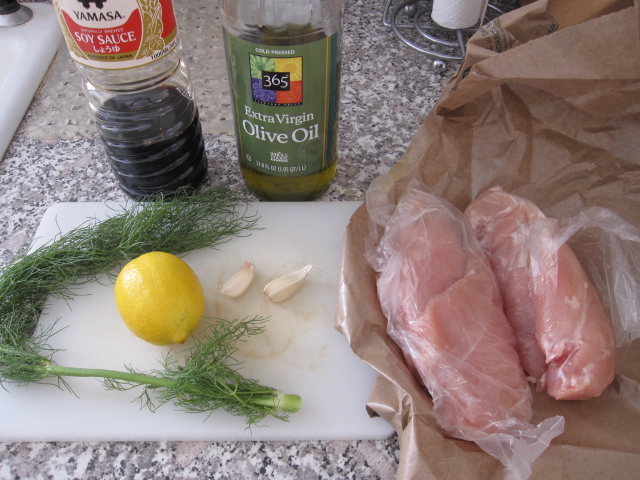
We had an appt this afternoon so I only made two portions last night since we had no need for lunch. First thing I did was get the chicken marinating. I mixed together 1 fennel frond chopped up, the juice from 1/2 lemon, 2 garlic cloves minced, and 3 tablespoons each of soy sauce and olive oil. A few cracks of black pepper and then I rubbed it all over the chicken and let it marinate, covered, in the fridge for a couple of hours.

Then I got the soup ready. I put 4 carrots chopped, 1/2 onion chopped, 1 inch of ginger diced, 3 garlic cloves diced, and 1 cup of chicken stock into my pot. I brought it all up to a boil, covered the pot, turned the heat to med-low, and let it simmer for about 20 minutes. Then I turned off the heat and let it cool down for about a half hour.

Once cooled, I poured it all into my blender and pureed it into a smooth soup. As it was blending I decided to pour in about 1/4 cup of olive oil to give it a silkier texture. Then I seasoned it with salt and pepper and set it aside. All I had to do to serve was simply heat it up again.

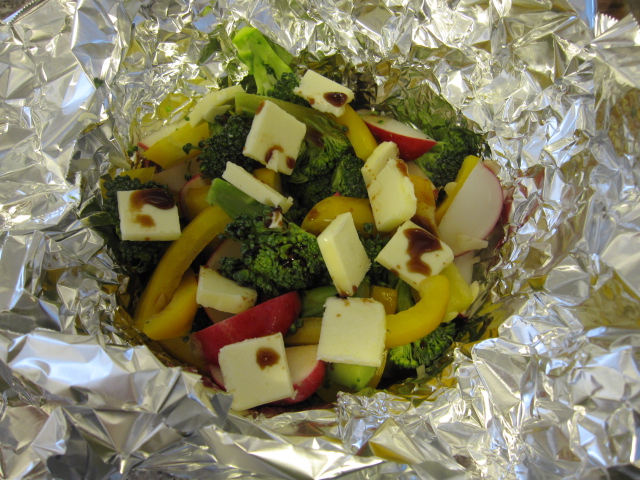
For my vegetables I used 3 radishes (I cut off the leaves) each cut into 6 wedges, 1/2 yellow bell pepper sliced with each slice halved, 2 garlic cloves diced, 1/2 head of broccoli cut into florets, and about 1/2 tablespoon of butter cut into little pats.

I mixed all of the veggies in some foil, laid the butter on top, sprinkled with a little soy sauce, and then closed it up.

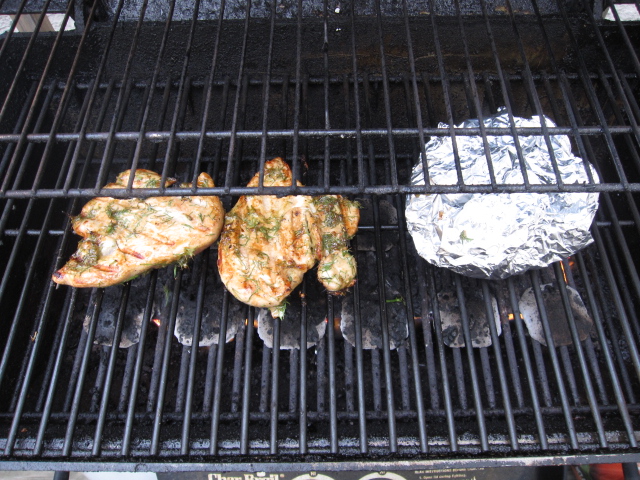
I fired up the grill at med-high heat and let the grates get nice and hot. I put the veggie packet on first and let them start to cook while I brought the chicken back to room temperature from the fridge. After about 15 minutes I put the chicken on. I cooked it for about 8 or 9 minutes on each side and that was all she wrote. Of course, each grill is different, so just make sure your chicken is firm when pressed so that you know it’s cooked through.

Some white rice and a cold beer and Spring weather is officially here!

Read Full Post »

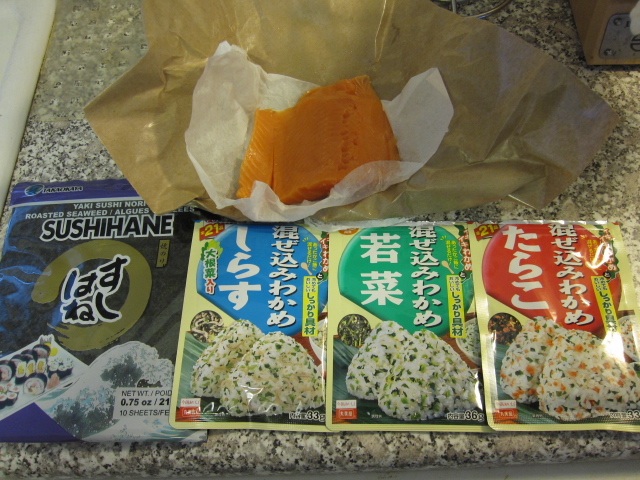
The other night we made Onigiri for dinner. Onigiri is great because you can pack in smaller amounts of protein which saves cash, while still making a very nutritious meal. It’s also fun to make and eat. We commonly make Onigiri to take with on bike rides and hikes.

Besides warm white rice the main ingredients are typically nori for wrapping and then some sort of cooked fish or dried seaweed. For the dried seaweed the idea is that the warm moist rice will kind of rehydrate it while leaving a little texture. I used some salmon and some of these rice mixes, Mazekomi, that are available at most Asian grocers. The mazekomi in our cupboard are wakame and sesame seed, wakame and cod roe, and wakame and dried sardine.

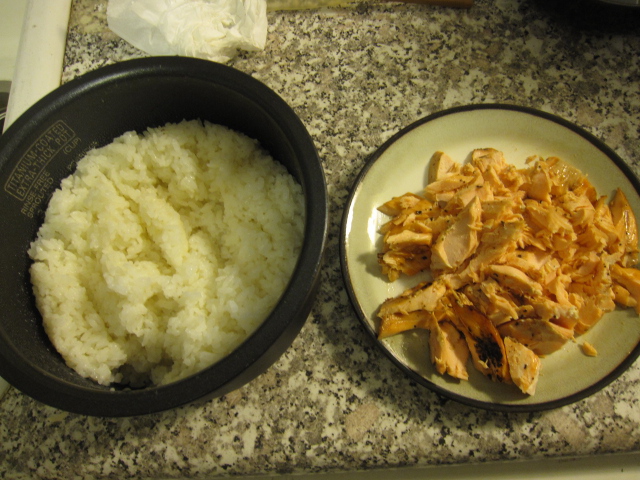
I made 2.5 cups of rice earlier in the day so that come time to make the Onigiri it’d be warm and not hot. I simply roasted the salmon with a splash of soy sauce at 350 degrees for about 15 minutes. Once it cooled down a little I broke it apart into pieces.

On a piece of plastic wrap I put down a little of the rice and spread it out. Then I topped it with some of the salmon and mazekomi. I covered it with a little more rice.

Using the plastic wrap I packed it down and formed it into a triangle. With 2.5 cups of rice you should be able to get 6-8 Onigiri no problem.

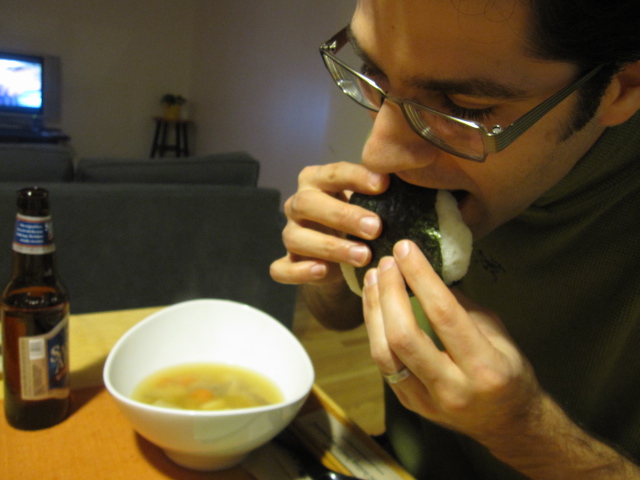
To eat it you simply wrap it with a piece of nori (if you have the regular sushi width nori sheets you’ll want to cut them in half) and let your chompers do their trick.

To go with the Onigiri I made some Miso Soup. I used about 3.5 cups of water, 3 tablespoons of dashi soy sauce, 1 tablespoon of miso, 1/2 onion sliced, some daikon chopped, 1 carrot chopped, 2 red skinned potatoes skinned and chopped, 3 shiitake sliced, and some salted wakame rinsed and soaked.

Read Full Post »

This is a classic stir-fry dish that I made. Typically it’d be made with snow peas, but I used haricots vert because I had some in my fridge that needed to be gobbled up. Other than that I stuck to the basics for this one.

My ingredients included a bunch of green onions sliced, 1 inch of ginger cut into matchsticks, 1 teaspoon of cornstarch, 1/2 pound of haricots vert, 1/2 cup of chicken stock, 2 tablespoons of soy sauce, 1 tablespoon of sriracha, and about 1 pound of shelled shrimp.

I started by mixing together the chicken stock, soy sauce, sriracha, and cornstarch. I whisked it together until the cornstarch was completely dissolved. I set that aside and heated up my large skillet. Once hot, I poured in about 2 tablespoons of vegetable oil and added the ginger. I let the ginger go for about 1 minute. Then I tossed in the haricots vert and let them cook for about 2 minutes. After that came the shrimp. I let the shrimp go for about 1 minute, during that time I re-whisked the liquid because starch won’t stay dissolved for very long. Once the shrimp were partially cooked and turning pink I poured the liquid in along with the green onions and a few cracks of black pepper. I stir fried it all together for about another minute or two and then served it up. After I plated I decided to tear up some cilantro for garnish.

Besides white rice I made some miso soup to go along with the shrimp. You’ve read about my miso soup numerous times so I won’t bore you with how I made it, I’ll just let you know what ingredients I used this time as it’s always different. For this batch I chopped up some rapini, 6 shiitake, 1/2 onion sliced, about 1/2 block of tofu cubed, 2 yukon gold potatoes skinned and cubed, 2 tablespoons of dashi soy (mixed into 3 cups of water for the broth), and about 1.5 tablespoons of shiro miso. I absolutely love potato and onion in my miso soup.

Read Full Post »

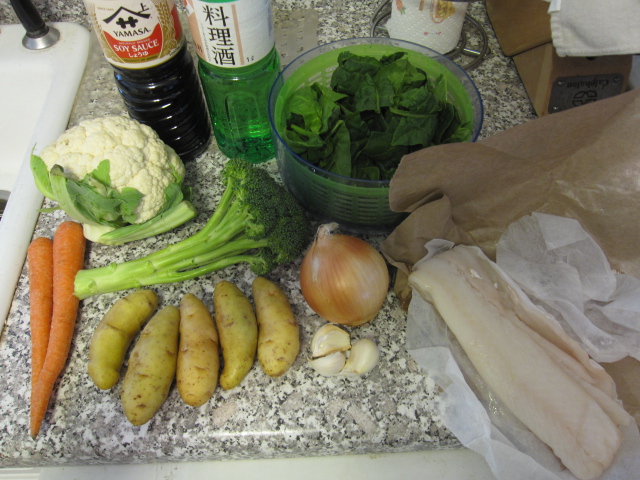
After a couple of nights eating out for Restaurant Week I decided to give our stomachs, as well as our wallets, a little bit of a break. Simple, cheap, and delicious, I made a stew with cod and vegetables. Warm stews like this are great for cold winter nights and are packed full of nutrients that won’t bulge your belly or bank account.

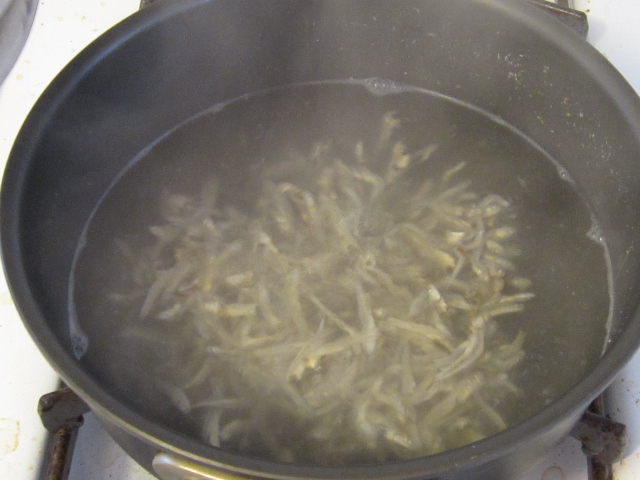
I started off with my typical dashi. I boiled 1/3 cup of dried anchovies in 3 cups of water for about 30 minutes and then strained out the fish. I really love making this dashi because it’s easy, healthy, and delicious.

The rest of my ingredients included 2 carrots chopped, 1/2 head of cauliflower broken into florets, 1 head of broccoli broken into florets with the stem chopped, 5 large fingerling potatoes chopped, 1 onion large diced, 3 garlic cloves large diced, 5 ounces of spinach rinsed, 3/4 pound of cod cut into bite-sized pieces, 3 tablespoons of soy sauce, and 2 tablespoons of sake.

I heated up a stock pot and poured in about 2 tablespoons of olive oil. Once the oil was hot and shimmering I added the onion, carrot, and garlic. I let that all sweat down for about 3 minutes and then added the broccoli and cauliflower. About 2 minutes later I poured in the dashi, soy, sake, and a bay leaf and brought that up to a boil. Once boiling I added the potatoes and turned the heat down to med-low so that it could simmer for about 10 minutes. Then I added the fish and let it simmer for another 10 minutes before throwing the spinach in. Once the spinach was in I seasoned with pepper (no need for salt because of the soy in the broth), covered the pot, and let simmer for another 10 minutes. After that all I did was adjust the seasoning and serve it up with some white rice.

Just be gentle stirring after you add the fish, cod will flake apart.

Read Full Post »

Valentine’s Day…you gotta love holidays that are created for the sole purpose of capitalist pleasure. While the origins of Saint Valentine had absolutely nothing to do with lovers, today Hallmark sells millions of cards and Jared sells tons of ugly jewelry. Restaurants are always packed with their special Valentine’s prix fixe dinners. Extremely disappointed by every meal we’ve gone out for at Valentine’s this year I took the truly romantic way through the day of lovers and put my own hard work into a beautiful meal for the love of my life. I made a Japanese flavored Osso Bucco. Let’s be honest, is there anything sexier than slow-braised oxtails?

While I have never braised oxtails (actually cow tail, not an ox) the principles of braising are the same across the board. Brown your meat, saute your mise en place, and simmer it all together for a couple of hours minimum while keeping the braising liquid about 3/4’s of the way covering your meat.

To make this one Japanese flavored I used dashi and soy instead of beef stock and wine. To start I made my dashi. I put 3 cups of water and 1/4 cup of dried anchovies in a pot, brought it to a boil, covered it, turned the heat to med-low, and let it simmer for about a half hour. Then I strained out the anchovies and set the dashi aside.

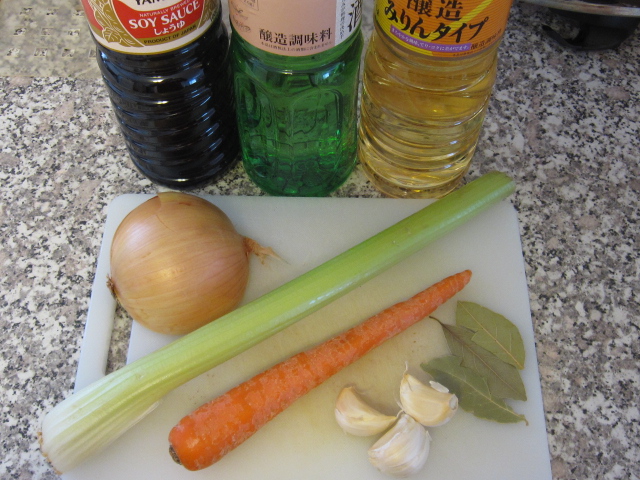
To flavor the dashi, my mise en place, I used 4 tablespoons of soy sauce, 3 tablespoons of sake, 2 tablespoons of mirin, 1/2 onion diced, 1 rib of celery diced, 1 carrot diced, 3 cloves of garlic smashed, and 3 bay leaves.

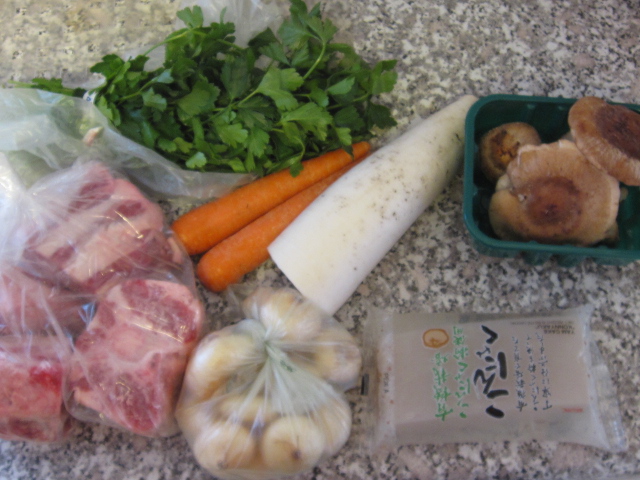
The ingredients I used to serve included 3 pounds of beef oxtail cut into 4 portions (have your butcher use his saw to get through the bone, I went to Olympic Meats for mine), about 1/4 cup of parsley chopped, 2 medium carrots chopped, 1 pound of daikon chopped, 12 cipollini onions skin peeled, 1 package of konnyaku, and 1 package of shiitake halved (large ones quartered).

To get started I heated up a few tablespoons of olive oil in my large stock pot. I dredged the oxtail pieces in flour (no need to season the flour since I used soy sauce, without soy sauce you’d probably want to season the flour with salt and pepper) and browned all sides for a couple of minutes. I did two at a time so as not to overcrowd the pot. I set the browned oxtails off the side.

Once the oxtails were all browned I added another couple of tablespoons of olive oil and added all of my mise en place. I sweated it all down for about 5 minutes. Then I put the oxtails in along with any accumulated juices on the plate and poured the reserved dashi in. Once the dashi came to a boil I let it rumble for a few minutes and skimmed the surface a few times for a clearer liquid. Once I finished skimming I added the soy, sake, and mirin. I covered the pot, turned the heat to med-low, and let it simmer for about an hour and 15 minutes.

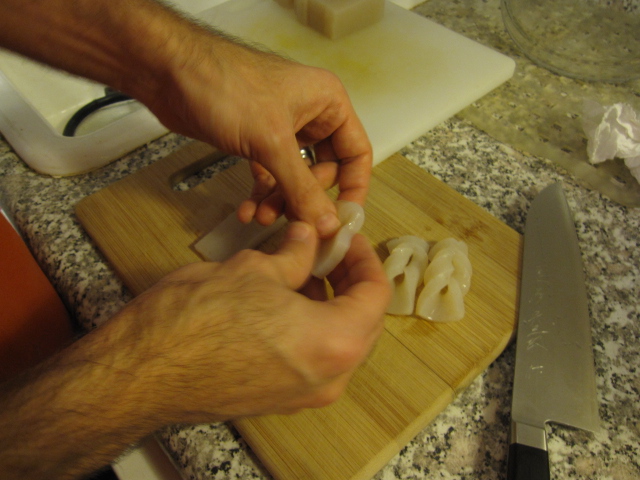
During this time is when I prepped all of my serving veggies. For the konnyaku I cut it in a very traditional Japanese way. I sliced the block into 1/4 inch strips. I put a slit in the middle of each and then folded inside of itself to make this braided shape. Not only does this add visual appeal, but I gives more surface for the konnyaku to absorb the flavors of the broth.

After the initial hour and 15 minute braising time I removed the oxtails and strained out all of the mise en place. With the back of a wooden spoon I squeezed out every last drop of flavor from the soft onion, celery, and carrot. I wiped out my stock pot, poured the strained broth back in, put the oxtails back in, put the serving veggies in, brought it up to a boil, covered the pot, turned the heat to med-low, and let it simmer for another 45 minutes. That was enough time for the daikon to absorb the broth flavors and become nice and tender.

To serve, I placed on piece of oxtail in a large bowl and surrounded it with broth and veggies. I sprinkled the parsley all over the top. On the side was white rice with ground sesame seeds and some seaweed salad (the same kind you get at your neighborhood sushi joint, I picked some up at the Mitsuwa Market).

As if I weren’t already in-love with myself, this dish made me fall heads-over-heals in-love with myself. I can only image what it did to my wife.

Read Full Post »

« Newer Posts - Older Posts »