Feeds:
Posts
Comments

Posts Tagged ‘sugar’

Surprisingly, I’ve never made cornbread before. Yuki and I were talking about it and she thought some homemade cornbread would be good, I agreed. The only thing I disagreed with was that I wanted to make cornbread muffins while she wanted a loaf. Of course, she won that one and it wasn’t even close! I did find out though just how easy it is to make delicious cornbread.

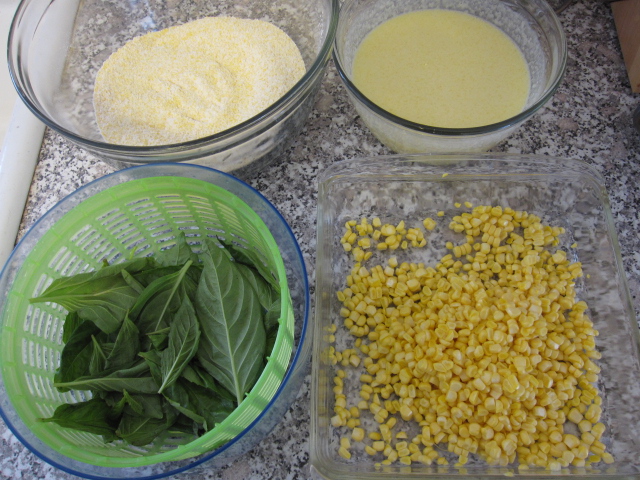
My ingredients for the cornbread included 1.5 cups of buttermilk, 1 bunch of basil chopped up, 1 cup of flour, 2 eggs, 1/2 cup of butter melted, 1/4 cup of sugar, 3 ears of corn, 1 tablespoon baking powder, 1 teaspoon salt, and 1.5 cups of polenta.

In a large glass bowl I mixed together the flour, sugar, salt, and baking powder. Then I mixed in the polenta real well. In another glass bowl I beat the eggs with the buttermilk and then added the melted butter once it had cooled to room temperature (don’t want to make cornbread with scrambled eggs!). I rinsed and chopped up the basil and cut the kernels from the corn.

I poured the liquid into the dried ingredients and mixed it until everything was incorporated while being careful not to overmix. Then I added the corn and basil and mixed that in as well. I poured that into a buttered loaf pan. It went into a 400 degree oven for about 45 minutes.

Once it cooled down it was ready to eat. It’s great cold, it’s great warm, but it’s best toasted with a little butter.

Read Full Post »

In order to solidify my role as a good Japanese housewife I decided to make another classic comfort dish from the Land of the Rising Sun. I haven’t made anything with squid in a long time and came across this recipe from a Japanese cook book that I have. Since I had a piece of daikon in my fridge that I needed to use, it all just seemed too perfect. And yes, I am perfect!

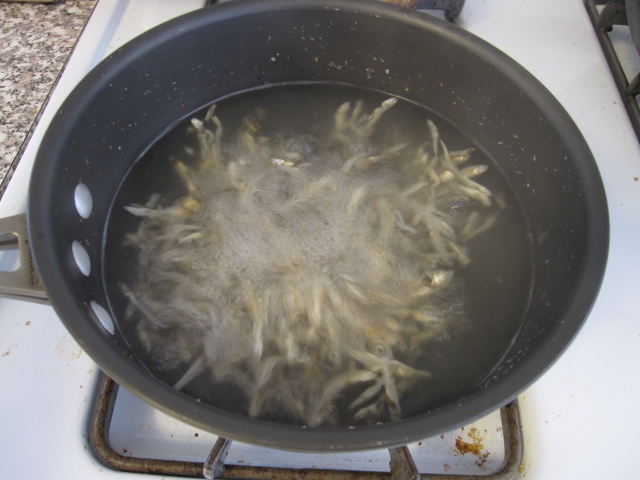
The first thing I need to do was make 3.75 cups of dashi. We don’t have any bonito flakes in our fridge, but we do have dried anchovy in our freezer that are also used for various types of dashi. In a soup pot I poured in a little more than 3.75 cups of water knowing that some would evaporate and added about 1/3 cup of the dried anchovy. I brought it to a boil, covered it, lowered the heat to med-low, and let it simmer for about 3o minutes. Then I strained out the fish and had a really nice flavorful dashi.

The rest of my ingredients for this dish included 4 tablespoons of soy sauce, 3 tablespoons of sake, 2 tablespoons of mirin, some lime zest, about 2 pounds of daikon, 1 pound of squid (body and tentacles), and 1 tablespoon of sugar.

I cut the daikon into chunks about 1.25 inches thick and rounded the edges with a pairing knife. I’m not sure why they round the edges, maybe it allows the daikon to cook more evenly or maybe it’s just an aesthetics thing, but you probably don’t need to do it if you don’t want. Being the good Japanese housewife that I am, I went all out. I put the cut daikon into cold water then drained it just before cooking. That helps keep the texture firm. I sliced the squid bodies into 1/2 inch strips and cut the tentacles in half.

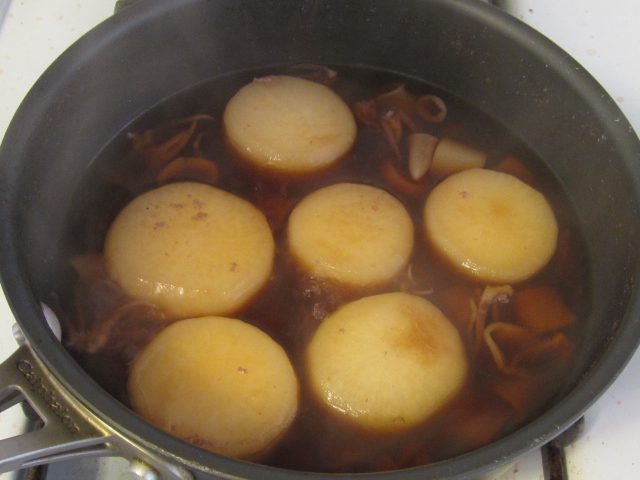
I put the daikon and squid into a heavy pot and poured the dashi in. I brought it to a boil and let it cook for about 5 minutes. Every 30 seconds or so I had to skim the surface to keep the dashi nice and clear. It’s amazing that 1 pound of squid seems to have more muck than a 3 pound chicken when boiling. So you really need to skim a lot.

Once the dashi cleared up I turned the heat to low and added the soy sauce, sake, mirin, and sugar. I covered the pan and let it simmer for about 45 minutes or so. Every few minutes I gave the pot a good shake to make sure the flavors of the dashi were well mixed.

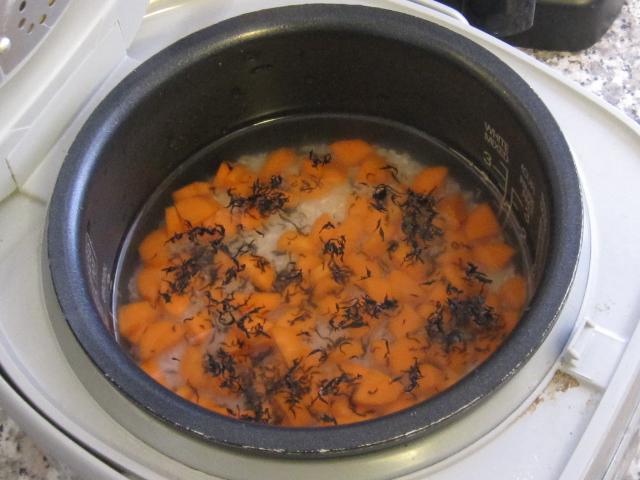
While the squid and daikon were simmering I made some hijiki-carrot rice. After rinsing 2 cups of rice and measuring out the liquid I added a tablespoon or so of dried hijiki and 1 chopped carrot. I let it sit for a half hour and then started the rice cooker. Actually, I had this ready to go before starting the squid and daikon. But I didn’t hit the start button until the simmering started for timing purposes.

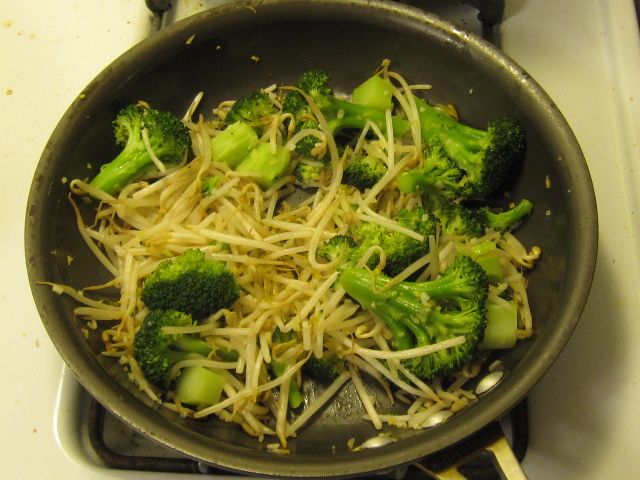
For a side dish to get more vegetables in the meal I made a simple stir-fry. I cut up 1 head of broccoli, had a couple of ounces of bean sprouts, 3 diced garlic cloves, and 1 inch of diced ginger.

I heated a skillet and added 1 tablespoon of sesame oil then added the garlic and ginger. After about 30 seconds I tossed in the broccoli and let it go for about 5 minutes before adding the bean sprouts. About 2 minutes later and it was ready to eat, just a sprinkle of salt and pepper was needed.

For serving I put some of the squid and daikon in bowls with some of the dashi. Then I grated some of the lime zest on top. Yes, as you can see in the picture I do have the hairiest arms you’ll ever see on a Japanese housewife…I hope. In Japan they’d use yuzu instead of lime, but I couldn’t find any yuzu at the store. The lime worked really well though. And the squid, oh brother the squid! It was so soft and tender it literally melted in our mouths. I haven’t had squid that good since we were in Nara, Japan over a year ago during squid season. And if you’ve never eaten daikon simmered in a soy-dashi broth you’re missing out on one of life’s finer flavors. This was the best meal I’ve cooked in a while. OIISHII!!!

Read Full Post »

Braised yakitori, kind of a misnomer. Yakitori translates to “grilled chicken”. I didn’t grill anything for this dish. Braised typically means cooking something in liquid over low heat for a long period of time. I didn’t do that either. What I did was make a standard yakitori marinade and cook some chicken thighs along with green onions in it. Why did I call this “Braised Yakitori”? Honestly, I just don’t know what else to call it.

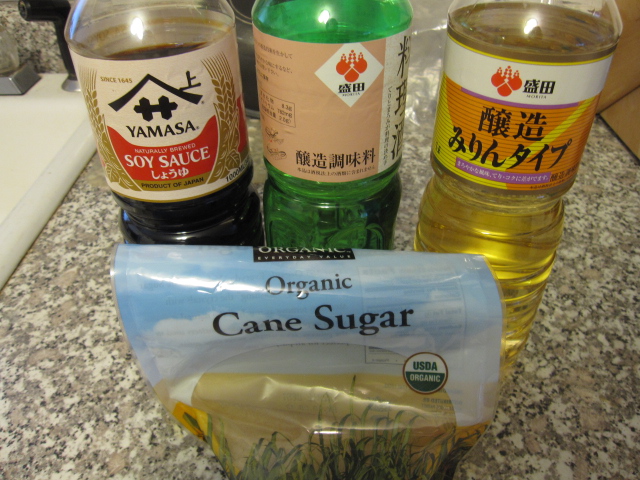
First thing I did was make the marinade. In a small saucepan I poured in 5 tablespoons of soy sauce, 4 tablespoons of sake, 1 tablespoon of mirin, and 1 tablespoon of sugar. I brought it up to a low boil and let it gently simmer for about 5 minutes or so. I just wanted the sugar to dissolve and the marinade to thicken up slightly. After that I turned the heat off and let it cool down for about an hour, until it reached room temperature.

I minced up 2 garlic cloves and chopped up 6 green onions and 6 skinless and boneless chicken thighs. I mixed them all together in a glass dish and poured to marinade over. Covered with plastic wrap I put it in the fridge while I got the veggies and miso soup ready.

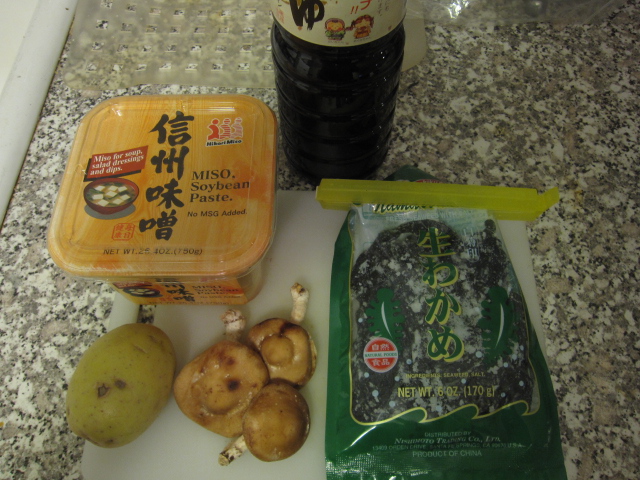
For the miso soup I only made 2 portions. We had some tomato soup leftover from Kasia’s that became lunch today, so I didn’t need to make too much. I used 1-1.5 tablespoons of miso, one yukon gold potato skinned and chopped, 3 shiitake sliced, 2 tablespoons of dashi flavored soy sauce, and some salted wakame. For the wakame, you have to rinse the salt off and then let it soak in cold water for about 10-15 minutes. I honestly cannot tell you how much I used, I just eye-balled it. You have to be careful though because it does get considerable larger as it absorbs the water.

In a small soup pan I poured in about 1.25 cups of water and added the dashi soy, potato, and shiitake. I let it simmer over a very low boil for about 20 minutes. That was just long enough for the potato to cook but not so long that it started to disintegrate.

Just before serving I put the miso in our little tea colander and swished it around for a few minutes until it all mixed into the soup. Using the colander keeps the miso from being chunky. But, this was right before serving (at which time I also added the wakame). Before I did this I made the veggies and cooked the chicken.

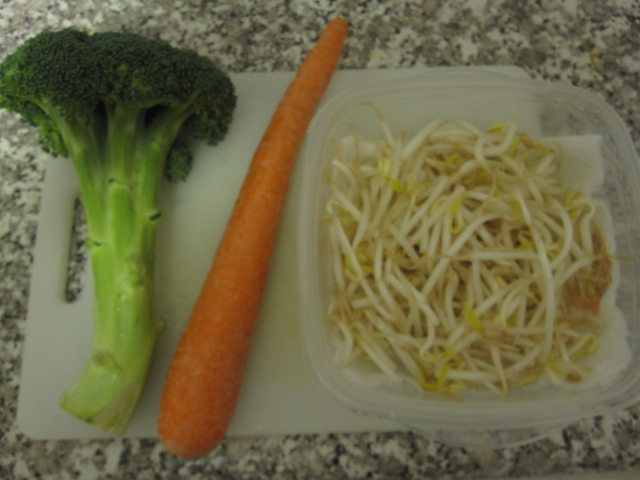
I kept the veggies very simple. I cut up 1 head of broccoli, sliced up 1 carrot, and rinsed about 2-3 ounces of bean sprouts. I got my steamer going and steamed the broccoli and carrot for about 5 minutes. After that I added the bean sprouts and let it go for another minute or so. A little sprinkle of salt and the veggies were ready.

To cook the chicken I heated up my pan and added about 2 tablespoons of sesame oil. When the oil was shimmering I just dumped everything in. It took about 9 or 10 minutes for the chicken to cook through and the sauce the thicken up a little. I seasoned with a little black pepper and that was all.

Of course, white rice accompanied the night’s chow.

Read Full Post »

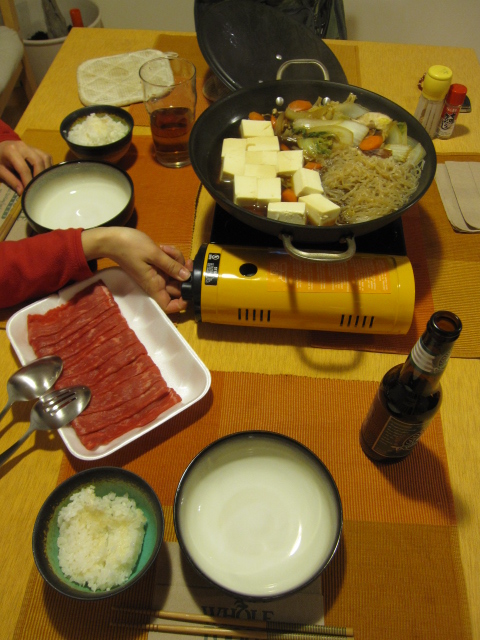
Just saying Yuki’s Sukiyaki is almost as much fun as eating it. Sukiyaki is a traditional family style one-pot meal in Japan. Vegetables are simmered in a sweet soy-based broth.

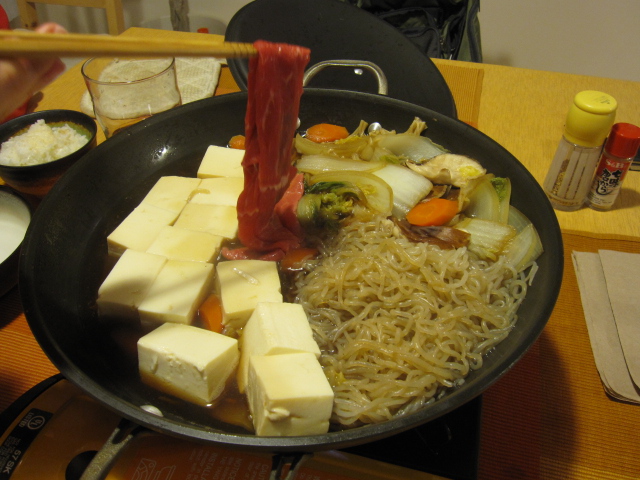
Then the pot is brought to the table and, over a table-top burner, thin slices of beef are swished around (similar to shabu-shabu) and cooked in the pot. Each individual has their own dish to put the beef and veggies in. It usually is mixed with a raw egg, but raw eggs aren’t good for prego so we omitted that.

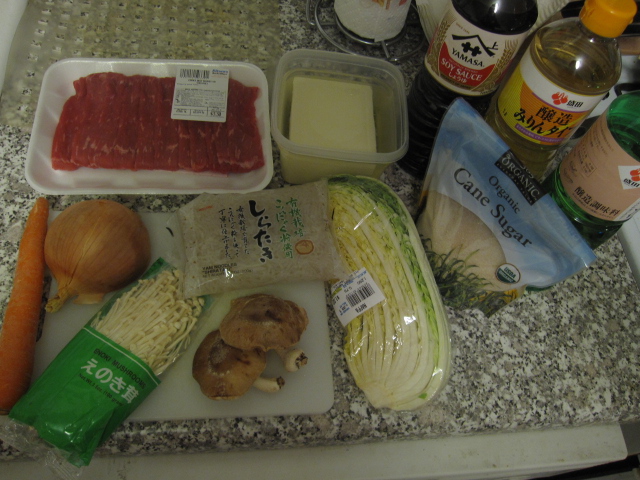
Ingredients for Yakiniku aren’t set in stone, what we used are pretty typical for the most part. I chopped up a carrot, quartered 1/2 onion, cleaned up 1 packet of enoki mushrooms, rinsed and cut up 1 packaged of konnyaku shirataki noodles, 2 large shiitake halved, 1/4 head of napa cabbage chopped, a little more than 1/2 pound of thinly sliced beef, almost 1 block of silken tofu large diced (I had previously used about 1/8th of it for miso soup, use as much as you like), about 5 tablespoons of soy sauce, 2 tablespoons mirin, 3 tablespoons sake, and 1-2 tablespoons of sugar.

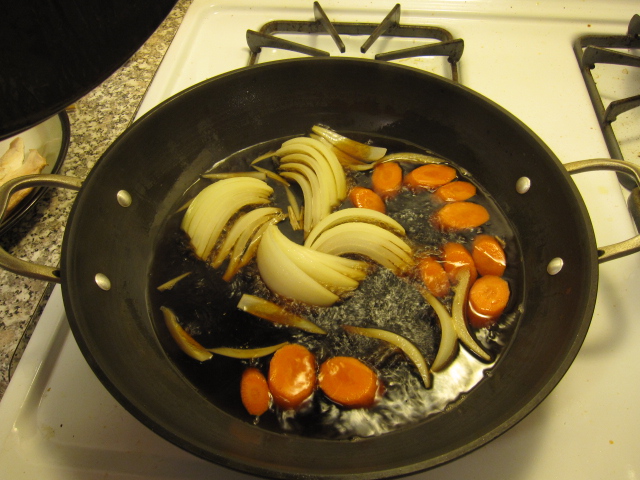
In our large pan Yuki poured in the soy, mirin, and sake along with about 1/4 cup of water. She added the sugar and brought it up to a simmer. The onion and carrot had the longest cooking time so they went in for about 5 minutes, covered.

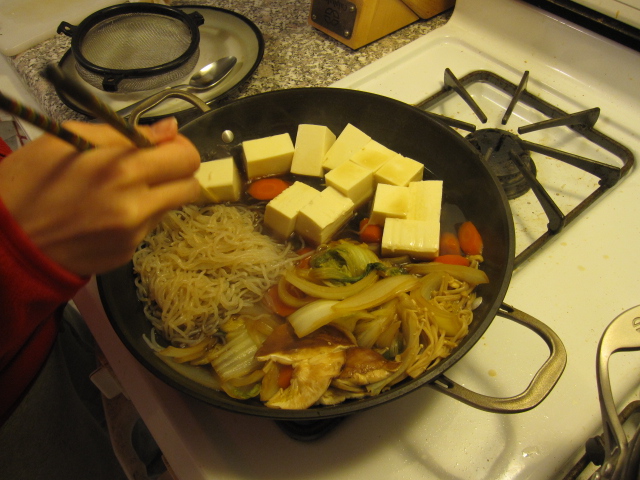
Then she added the rest of the ingredients minus the beef and let them cook for another 5 minutes or so. After that we moved the pan to our table-top burner and swished the beef in the boiling liquid. White rice on the side and cold beer in hand.

Read Full Post »

Pregnant women need to snack. Fetus’s need nutrition. Fetus’s push against the digestive tracts of pregnant women. Sometimes you just need something to accommodate all three of these statements. That’s why I created this muffin yesterday. It’s packed full of healthy grains, probiotics, fiber…you know, things that keep the pipes running smoothly. And let’s be honest here though, these muffins aren’t just for pregnant women!

I used 1.5 cups of whole wheat flour, 1/2 pound of pitted prunes chopped up, 1/4 cup of sugar, 1/2 teaspoon of salt, 2 cups of plain kefir, 1.5 teaspoons of baking powder, and 1/2 cup of rolled oats.

In a large glass bowl I first mixed together all of the dry ingredients very thoroughly. Then, 1/2 cup at a time I stirred in the kefir until I had a nice smooth batter. After that I added the prunes and mixed them in. I poured them into my 12 muffin pan that had been lightly sprayed with baking spray and tossed them into a 400 degree oven. It took about 25 minutes for them to cook. I took a good night’s sleep for them to do their trick on me. I couldn’t be happier with the results of these muffins…both of the results.

Read Full Post »

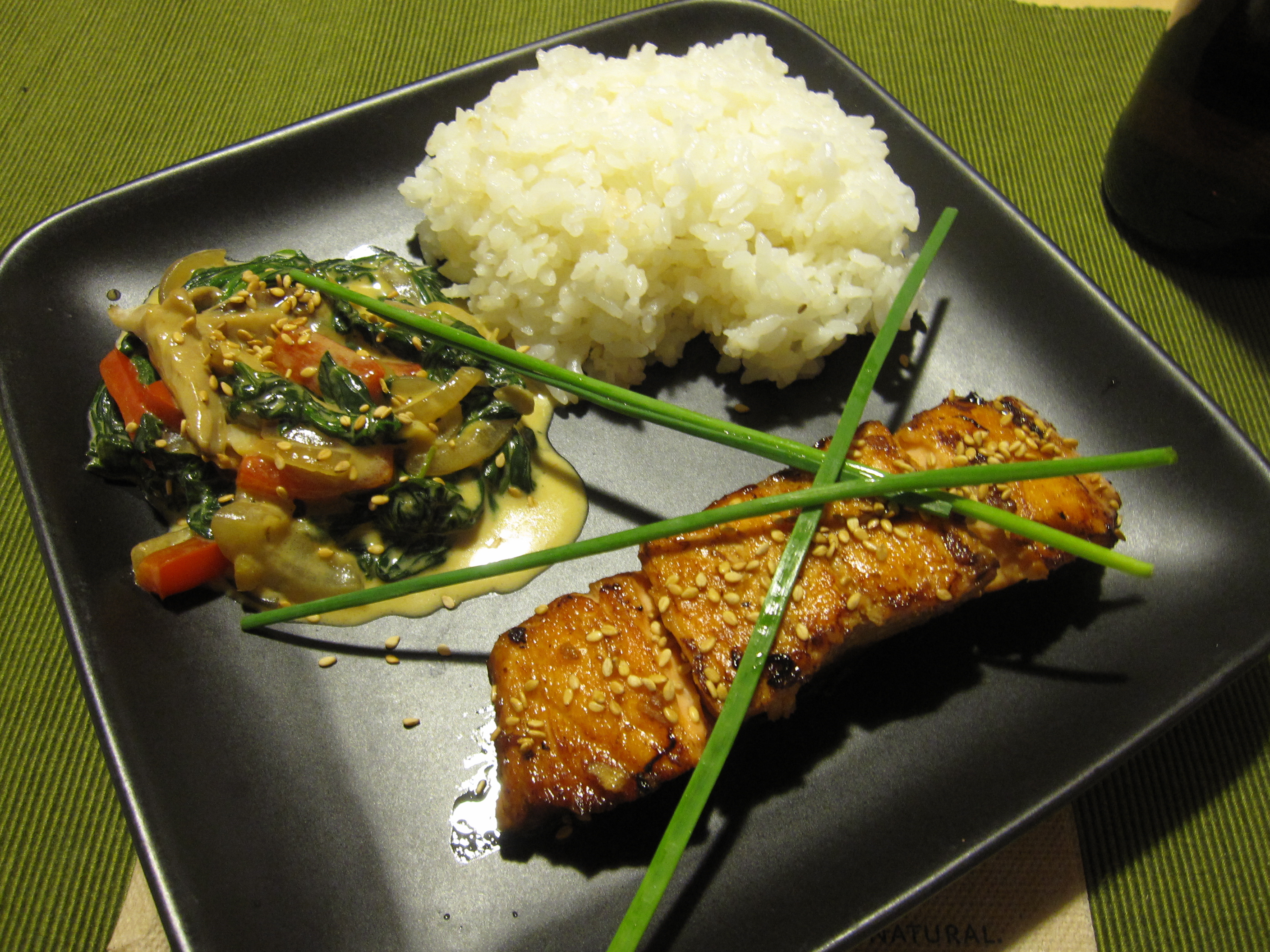
Last night I made a teriyaki-like salmon dish using maple syrup. To go with it I made sort of an Asian flavored creamed spinach with shiitake and pepper. With iron, folic acid, and omega-3’s on my mind, this dish packed them all in and then some.

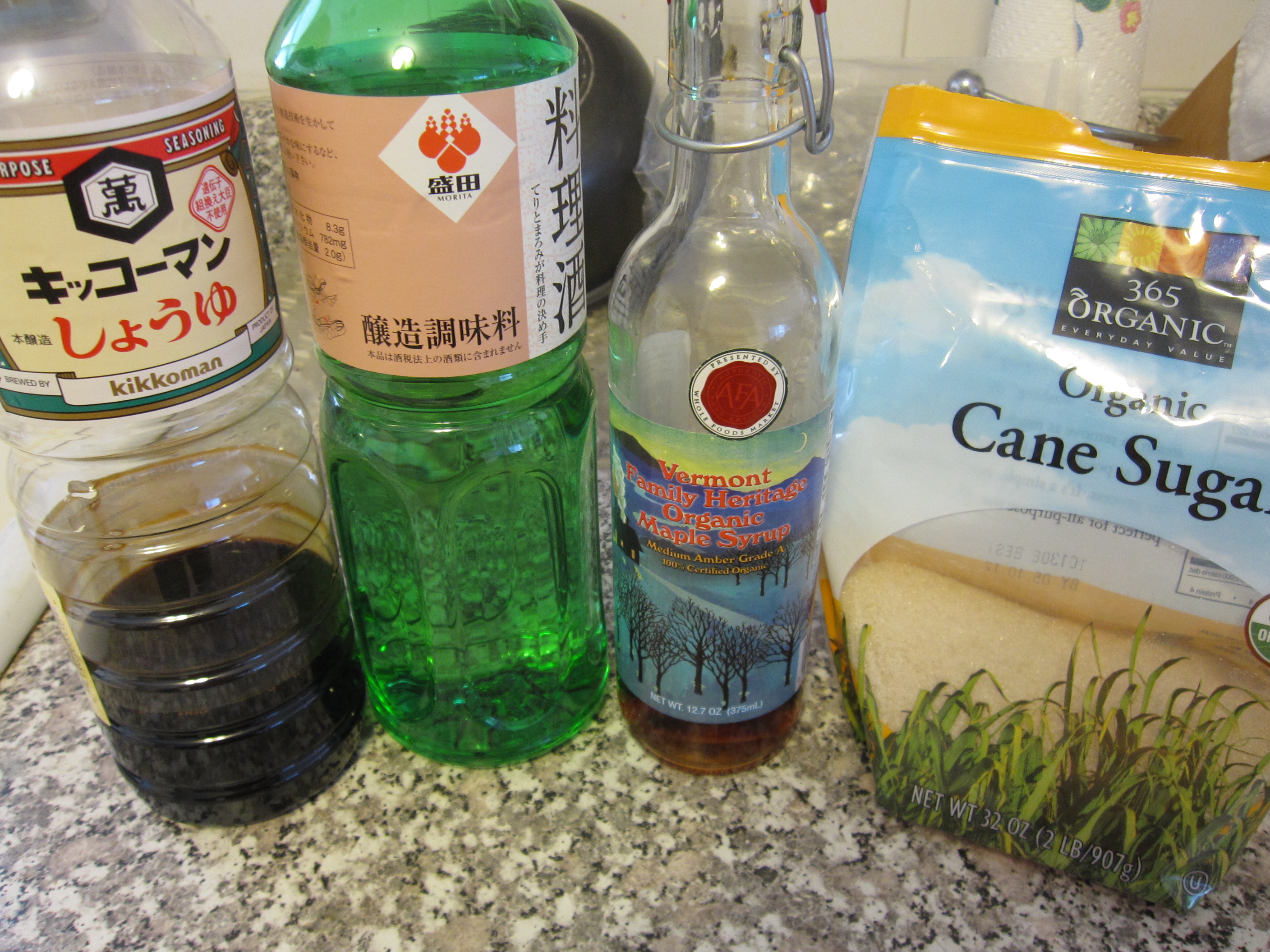
First thing I did was make the sauce. I mixed together 2 tablespoons soy sauce, 1 tablespoon sake, 1 tablespoon maple syrup, and 2 teaspoons of sugar. I set that aside and then marinated the salmon.

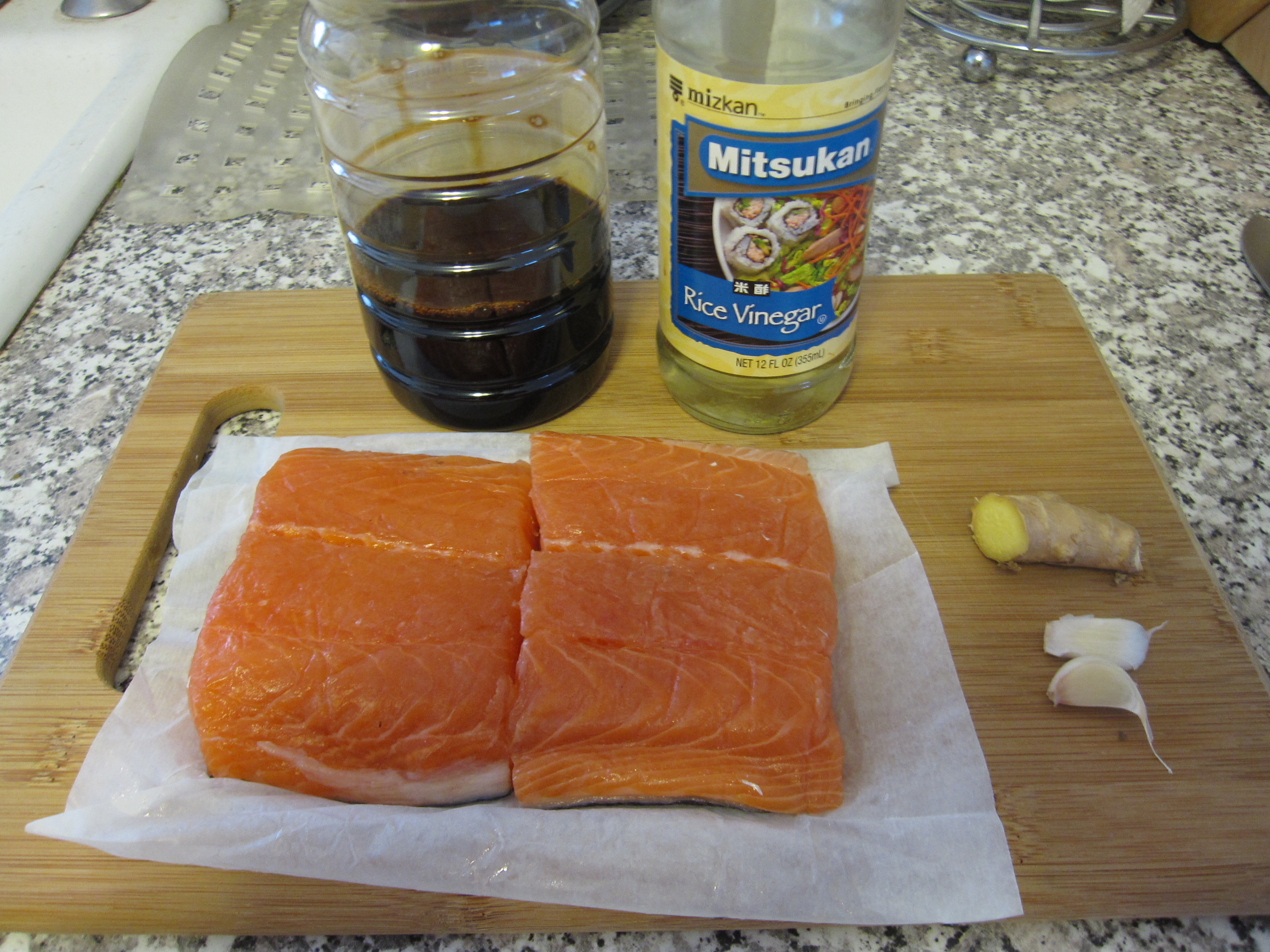
The marinade consisted of 1 tablespoon grated ginger, 2 grated garlic cloves, 2 tablespoons soy sauce, 1 tablespoon rice vinegar, and some fresh cracked black pepper. I had two 8 ounce salmon filets that I cut in half, giving me 4 4 ounce filets (check the math on that one). I coated them in the marinade, covered it up, and let it sit at room temperature for an hour.

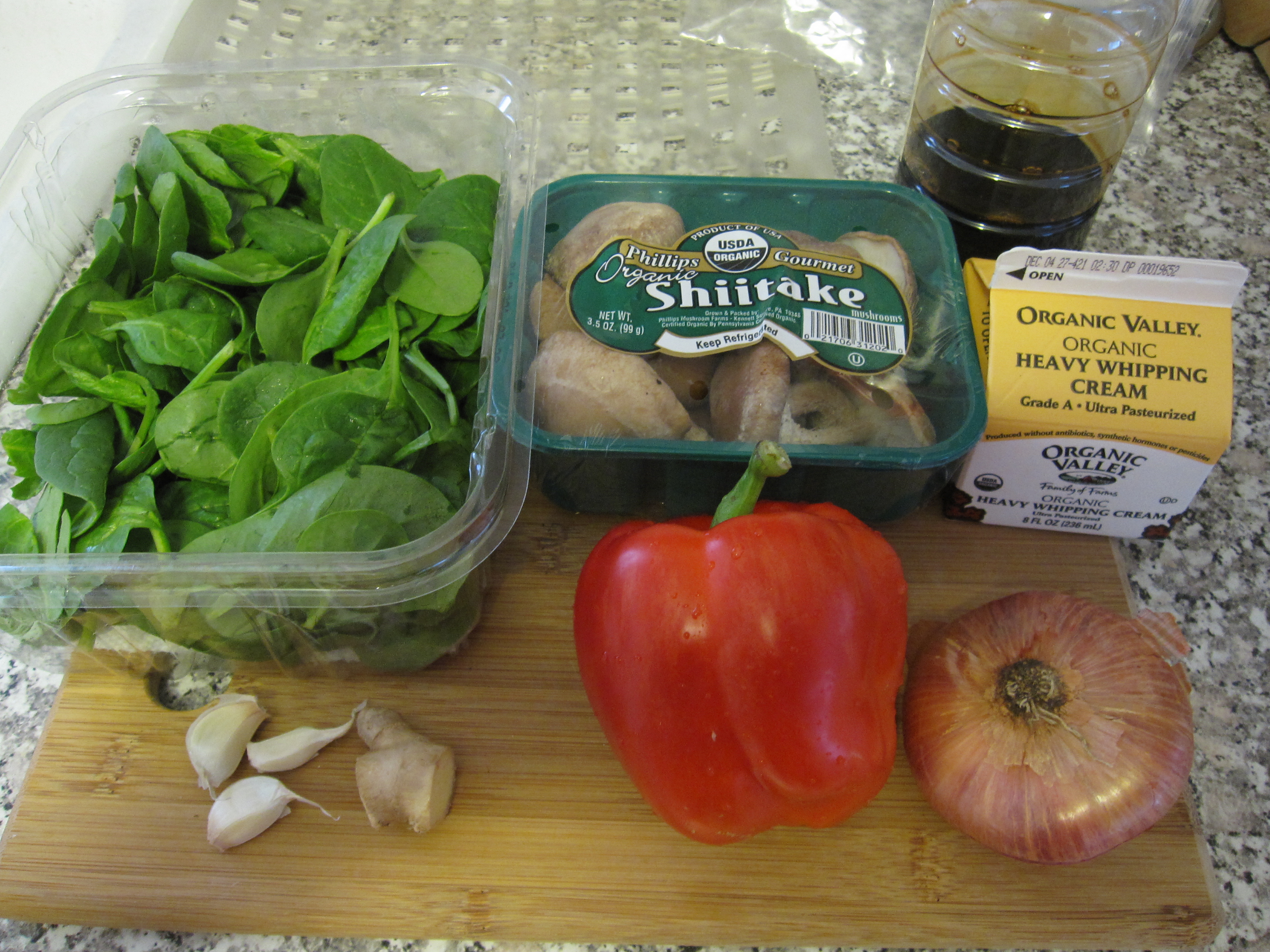
While the salmon was marinating I got the ingredients ready for the creamed spinach. I had a container of spinach, 3 garlic cloves, sliced, 1/2 inch of ginger slivered, 7 shiitake sliced, 1 red bell pepper chopped, 1 small red onion sliced, 1 tablespoon soy sauce, and 1/2 cup of heavy cream.

For the actual cooking I had to do the salmon and spinach at the same time. I’ll write about it separately, but it was a busy 10 minute stretch or so.

I heated up a large skillet over high heat and then poured in 2 tablespoons or so of sesame oil. I laid the salmon in skin-side up and let it cook for about 4 or 5 minutes, until it got a nice crust and easily released from the skillet. I poured the marinade into the maple mixture. When I flipped the salmon filets, after a couple of minutes, I poured the sauce all over each filet and let it cook for a few more minutes. Make sure you fan is on, it’ll get a little smokey. Once the sauce carmelized I turned off the heat and set the salmon on a plate.

In a separate saute pan I heated up 2 tablespoons of sesame oil and added the onion, pepper, shiitake, ginger, and garlic. I sautéed it for about 5 minutes and then added the soy sauce. About 2 minutes later I poured in the cream. Once the cream had reduced a little I added the spinach by large handfuls until it all wilted down and the cream had thickened up into a nice sauce.

Of course, some white rice on the side never hurt anyone. I garnished everything with some toasted sesame seeds and whole chives.

Read Full Post »

Another muffin here. This one used up the pomegranate and a half that I had. This continues my effort to keep healthier snack food around the house.

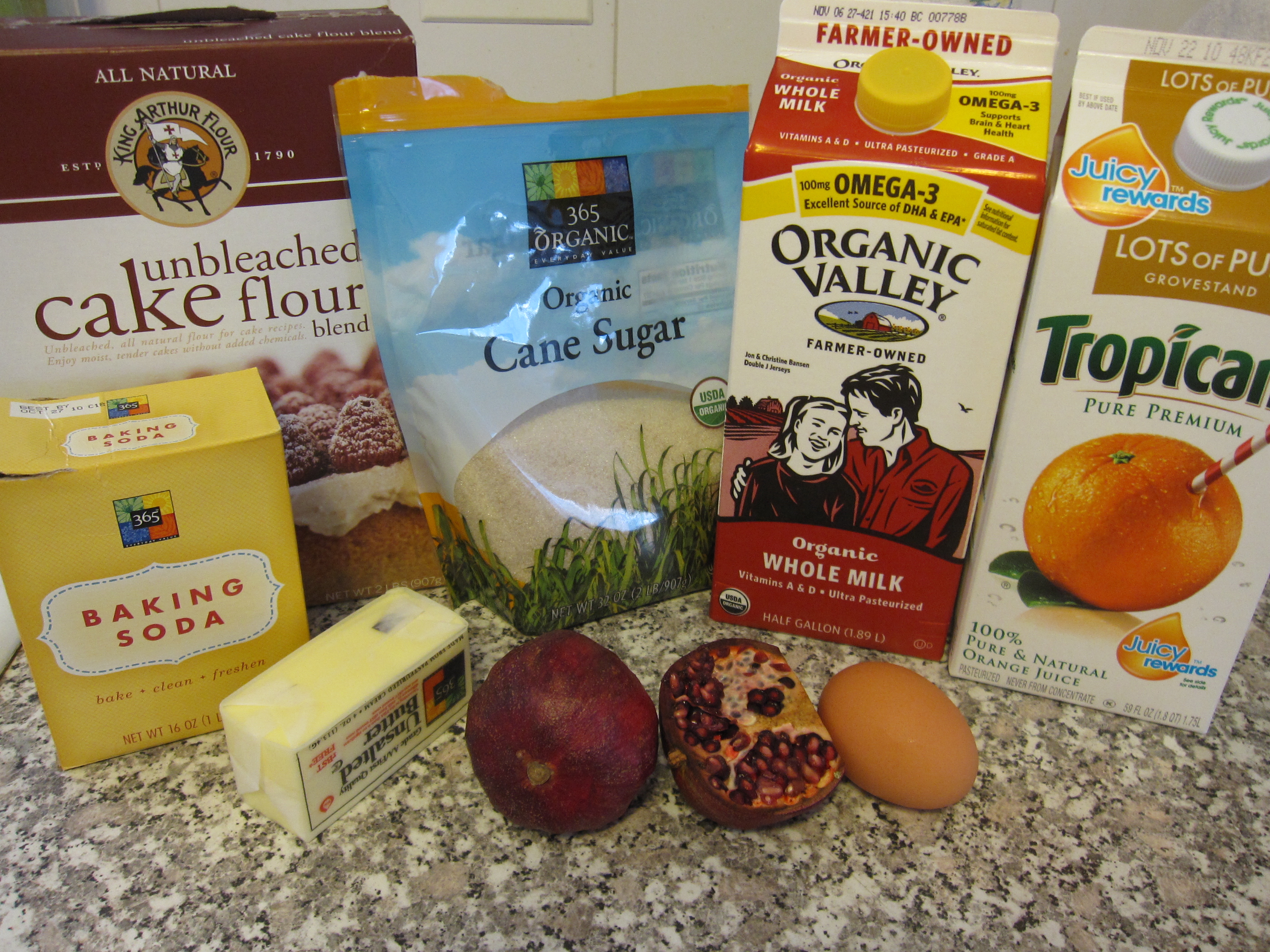
My ingredient list included 2 cups of cake flour, 1 tablespoon baking soda, 1/4 cup of butter, 2/3 cup of sugar, seeds from 1.5 pomegranates, 1 egg, 2/3 cup of milk, and 1/3 cup of orange juice.

I sifted and mixed together all of my dry ingredients in a large glass bowl. Then I mixed in the pomegranate seeds. In a separate glass bowl (I used my measuring cup) I creamed the butter with the egg and then mixed in the milk and orange juice. I little at a time I poured the liquid into the dry mix stirring it thoroughly until it was all incorporated into a nice smooth batter.

I poured the batter into my lightly buttered muffin pan and threw it into a 425 degree oven for about 13-15 minutes.

The only thing I’d do different is to add a little more sugar. I tried to keep the sugar count low, but it could definitely use a little more sweetness. Maybe a little honey instead of more sugar. Otherwise, the orange juice and pomegranate match very well.

Read Full Post »

Last night I made a fajita fiesta for dinner. We picked up a couple of pomegranates the other day and I wanted to use some in guacamole. So, I made up a Mexican meal.

The first thing I did was make a real simple corn soup. I took 4 ears of corn, 1/2 onion, and 1 garlic clove. I stripped the kernels from the ears and tossed it all (ears included so I wouldn’t lose all of the milky flavor) into a soup pan. I chopped up the onion and garlic, tossed them in the pan as well. Then I poured in 3 cups of water. I brought it to a boil, covered the pot, turned the heat down to medium-low, and let it simmer for about 7 minutes. I turned off the heat and let it cool down a bit.

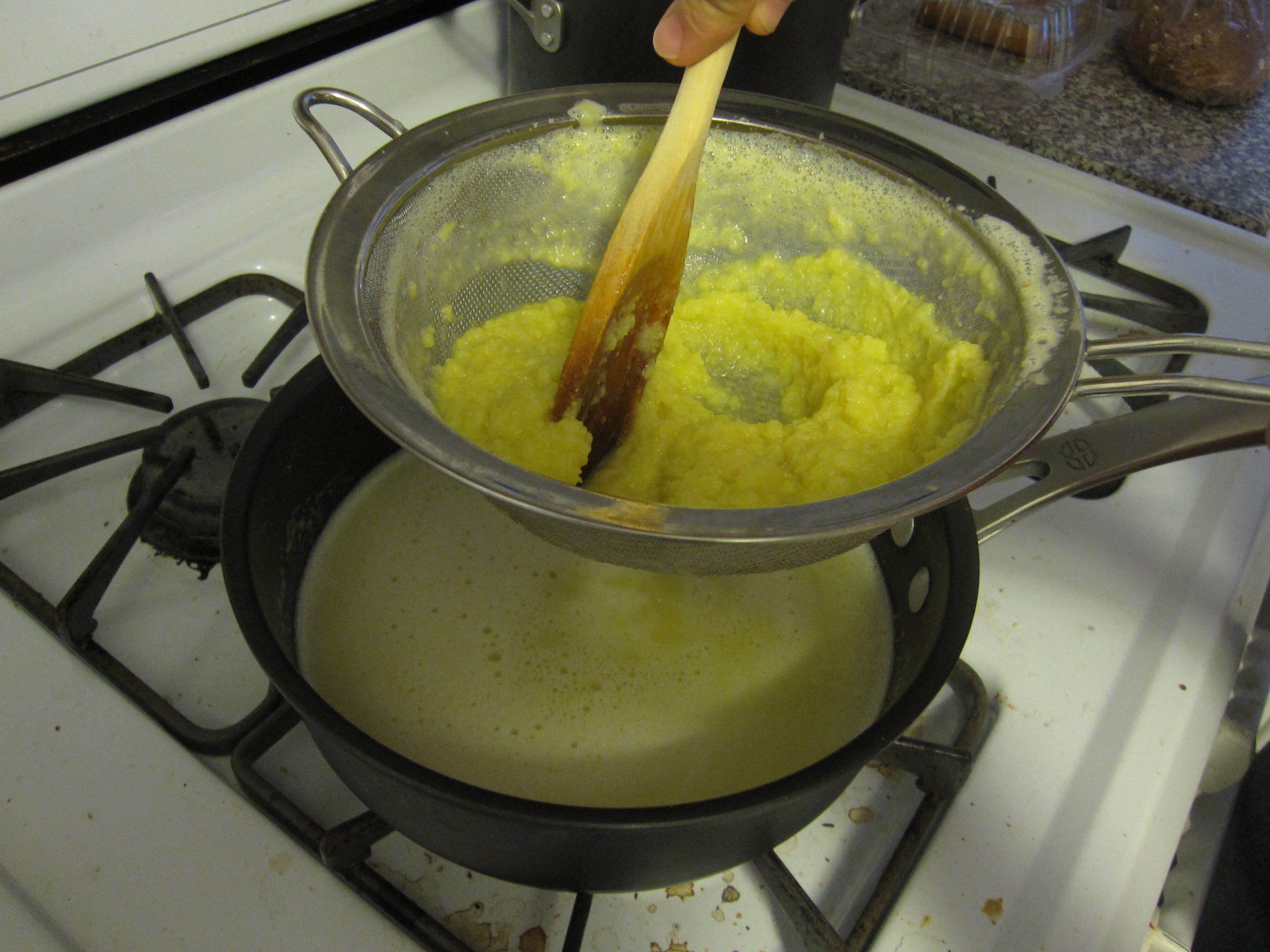
After it cooled a little I discarded the ears and poured the rest into my blender and pureed it. I wiped out the pan and strained it back in then seasoned with some salt and pepper. I let that sit covered while I prepared the rest of the dinner and just re-heated it for service, garnished with some cilantro.

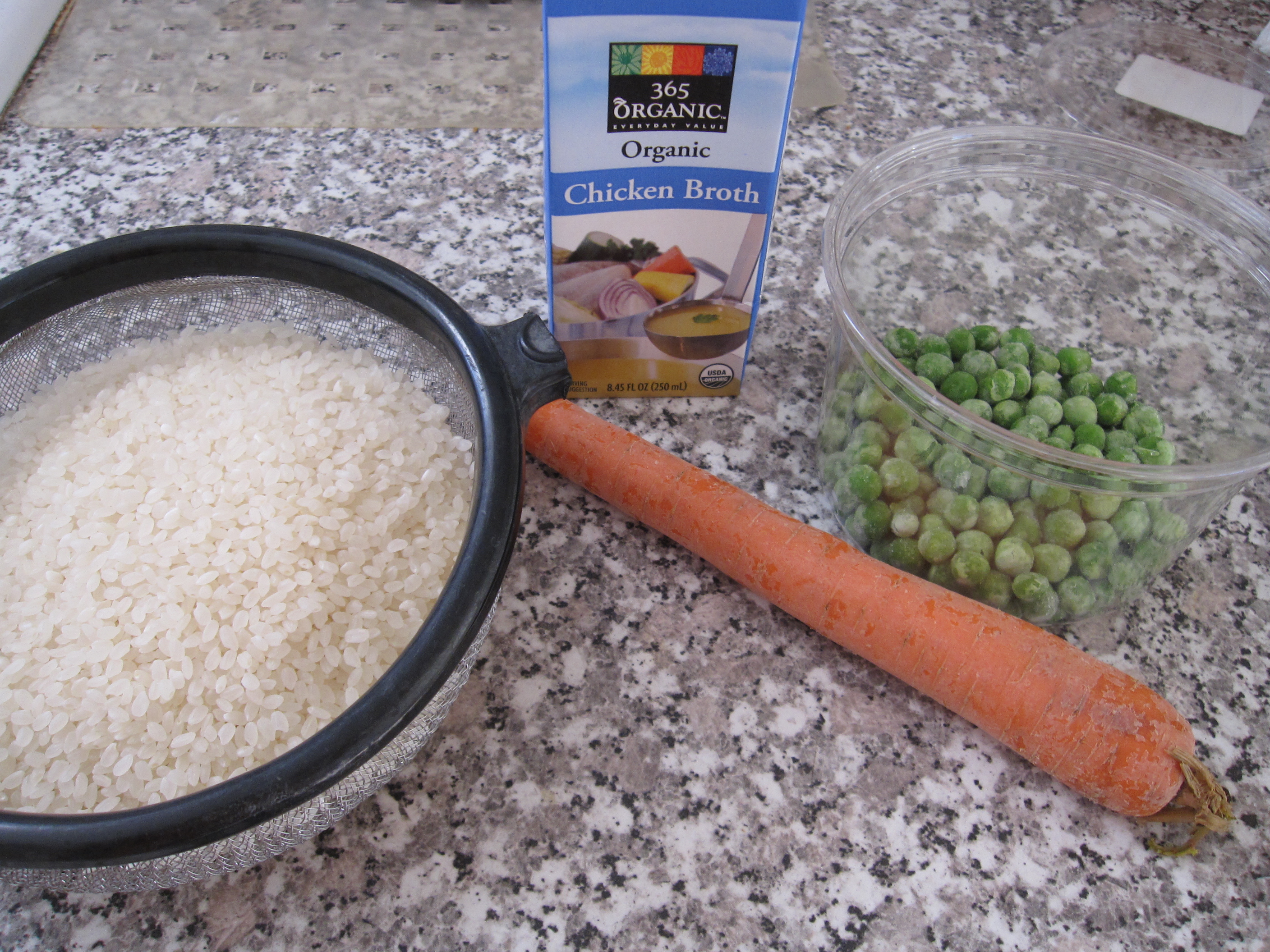
For the rice, I used my rice cooker to make 2 cups of rice, but added 1/4 cup defrosted frozen peas, and 1 carrot chopped into quarter moons. I also replaced 1 cup of the cooking water with chicken stock to deepen the flavor a little. I hit the start button and let the cooker do it’s thang.

Then I put together the guacamole. I used 3 avocados, 2 plum tomatoes (the pic shows 3, but I only used 2), 1/4 onion, 1/2 pomegranate, the juice from 1 lime, 1 garlic clove minced, and some cilantro. I actually started on the onion quite a bit earlier. To take the bite out of without cooking I diced it and soaked it in cold water for about 2 hours. That keeps it crisp but eliminates the rawness. In a glass bowl I let the minced garlic soak in the lime juice for about 10 minutes to mellow it out a bit, then I added everything else and mashed it u with a fork keeping it a little chunky. I seasoned it as needed and then set it aside (I did snack on it while I cooked).

For the fajita I used 1 teaspoon cayenne, 1 teaspoon cinnamon, 2 teaspoons dried oregano, 1 tablespoon sugar, 1 green bell pepper sliced, 1 orange bell pepper sliced, the zest and juice from 1 lime, 1/2 jalapeno sliced, 1/2 onion sliced, and 1 pound of chicken breasts sliced into thin strips.

In a glass bowl I mixed together the lime zest and juice with all of the spices and tossed the chicken in. I let it marinade for about 30 minutes. I used that time to cut the peppers and get the black beans going, but I’ll get to the beans in a minutes.

In a large saute pan I heated 2 tablespoons of vegetable oil and stir-fryed the chicken and spices for about 7 minutes. Then I added the peppers and onion and stir-fryed them with the chicken for a further 7 minutes or so. For service I garnished it all with some fresh cilantro.

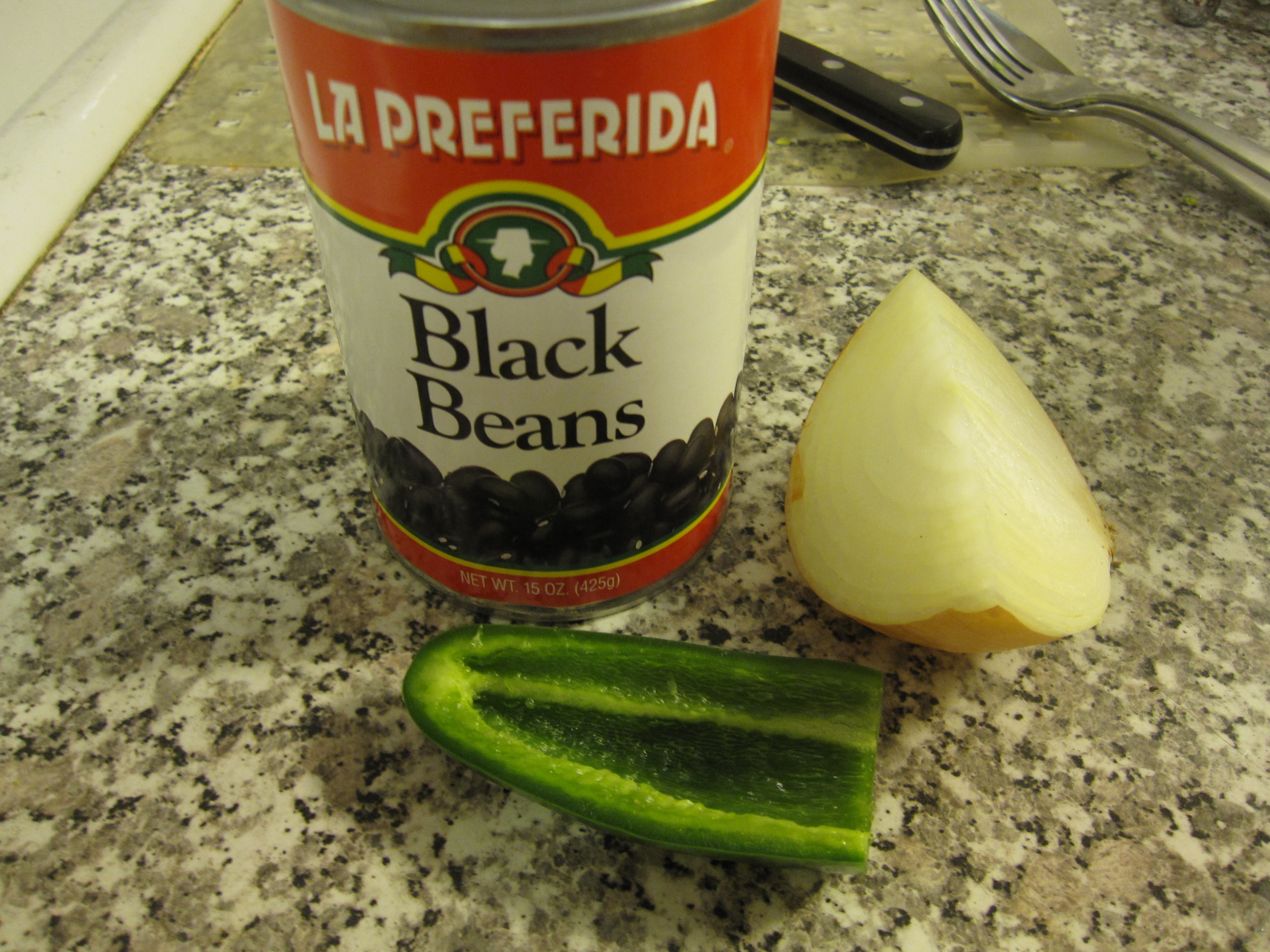
Alright, for the beans I thoroughly drained and rinsed 1 14oz can of black beans and put them in a small sauce pan with 1/4 onion small diced, and 1/2 jalapeno diced. I filled the black bean can about 1/4 full of water and poured that in. I brought it up to a slow boil and let it go while I finished up the fajitas. I seasoned it as needed.

For service I just laid everything out on the table along with some warm whole wheat tortillas. I know whole wheat is not very authentic, but I opted for the health benefits of whole wheat instead of authenticity. The only thing missing was sour cream, a mistake I will not make the next time.

Read Full Post »

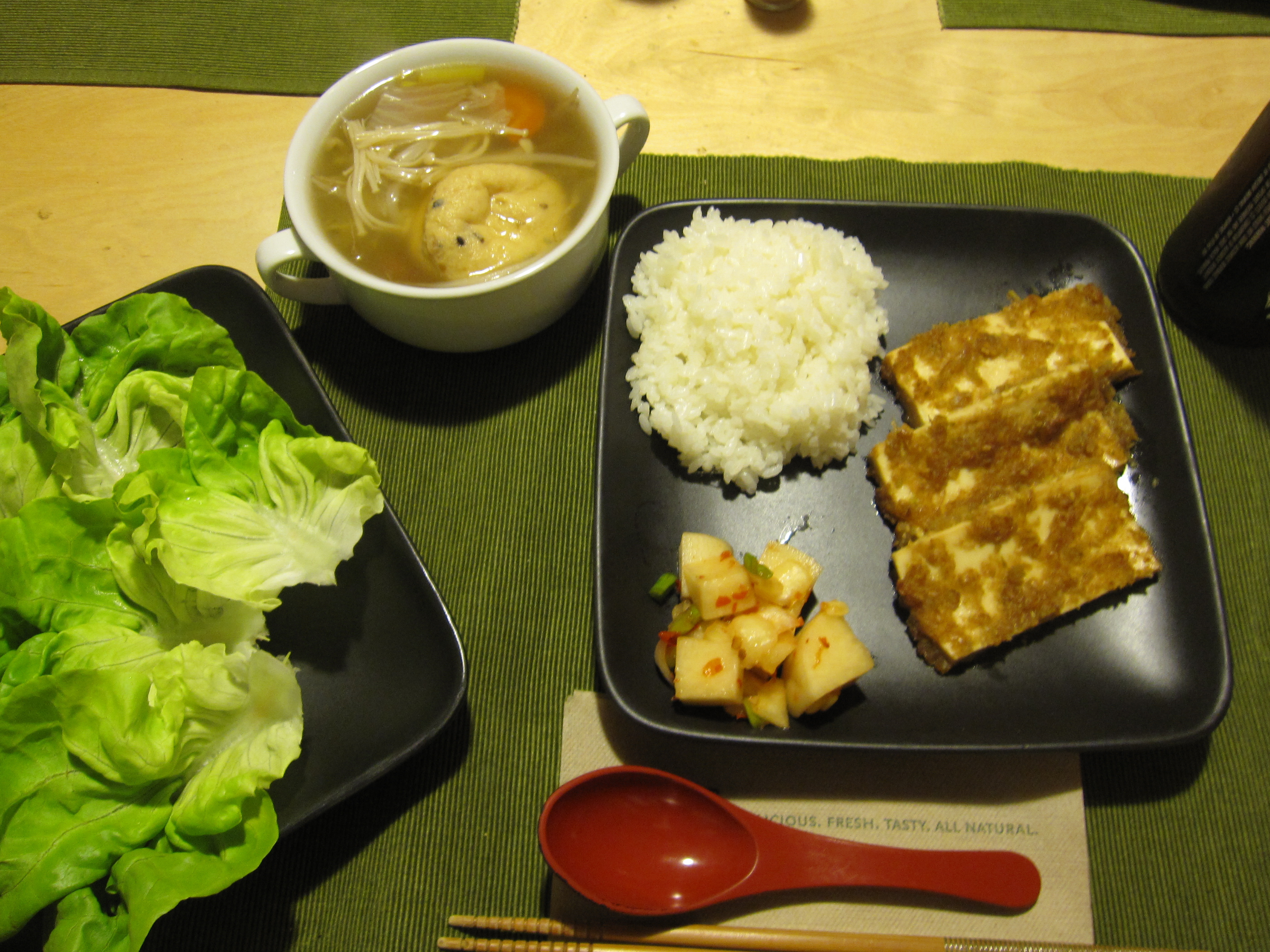
I made some daikon kimchi and really wanted to build a Meatless Monday around it. I thought I was going to make a tofu bulgolgi to stick with the Korean theme, but the marinade turned out nothing like a bulgolgi. It was very asian though so I used some ganmodoki we had bought at Mitsuwa and made a clear broth Japanese-style soup to bring more vegetables into the meal.

The daikon kimchi takes 24 hours so I had to start the Sunday. The ingredient list includes a lot of kosher salt (sea salt can be used also), 1.5 tablespoons of toban djan (I didn’t have any Korean chili paste, toban djan is Sichuan, but it is similar enough to work), 1/4 onion small diced, 1 garlic clove minced, 1 lb daikon cut into 3/4 inch cubes, 1 teaspoon fish sauce, 1 teaspoon sugar, and 2 green onions thinly sliced.

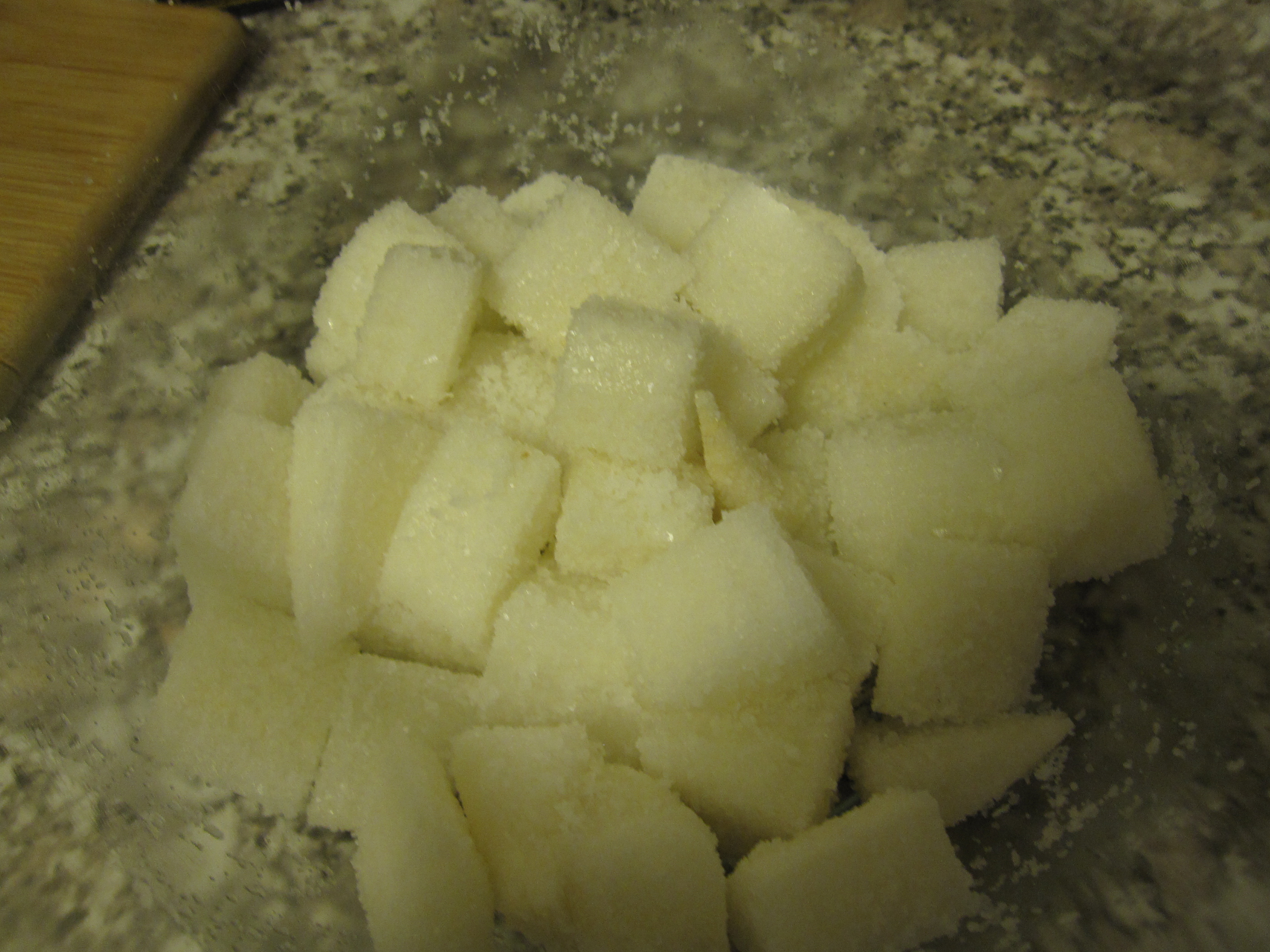
I threw the daikon into a bowl and completely coated it with salt. I left it for 2 hours and then drained off all of the liquid that accumulated at the bottom of the bowl and then rinsed and drained very well.
Then I mixed together the rest of the ingredients, tossed the daikon to coat evenly, and put into an airtight jar. I left it out for 24 hours and then put it in the fridge to chill for a couple of hours. You absolutely have to let it sit to get the flavors to penetrate and pickle, so this does take more than 24 hours to prepare. I will say, the daikon turned out way too salty when we ate it. Not sure if I added too much during the pickling process or if I just didn’t rinse it well enough, but next time I make this I will make sure it’s completely rinsed of salt and I may just add 1/2 tablespoon instead during the pickling to make sure it doesn’t get too salty. To salvage the rest of the daikon I’ll boil it in some water to make broth for noodle soup later in the week or something.

For the tofu “bulgolgi” I used 3 tablespoons of soy sauce, 1/4 granny smith apple, 1/4 onion, 1 tablespoon sugar, juice from 1/2 lemon, 1 tablespoon of sesame seeds, 1/2 inch ginger, 2 garlic cloves, 2 green onions, and 1 packet of silken tofu.

I pressed the water out of the tofu for about an hour and then sliced it into 1/4 inch pieces. I put the rest of the ingredients into my little processor and made a marinade.

I took out my glass baking dish, poured a little marinade on the bottom, lined the tofu side-by-side on top, and then covered it with the rest of the marinade. I let it sit while I prepared the soup. When the soup was almost done I drizzled a little sesame oil on top of the tofu and threw it under the broiler for about 10 minutes.

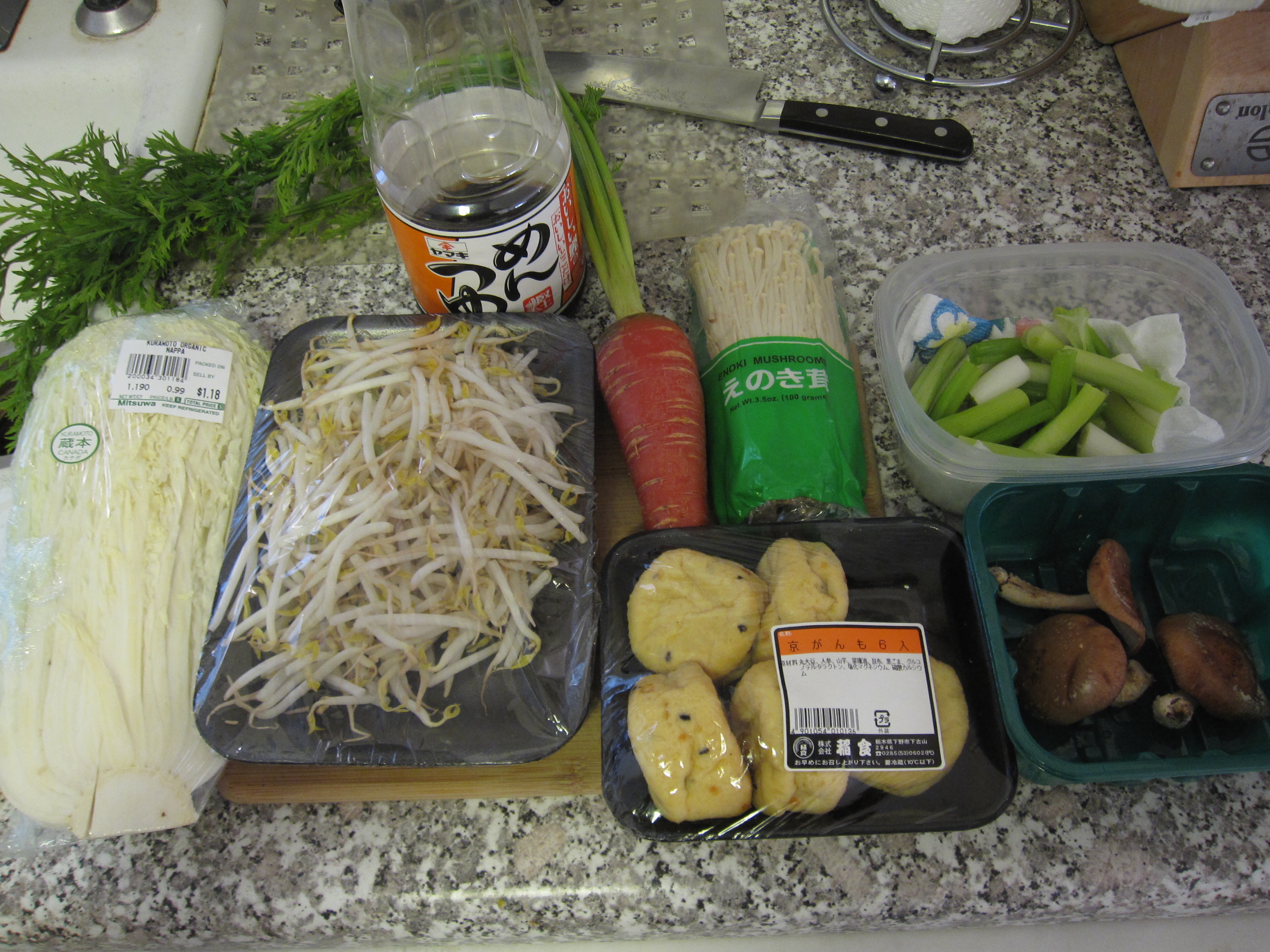
For the soup I cut up 1/4 of a napa cabbage, used some bean sprouts, 1/4 cup of dashi seasoned soy sauce, 1 carrot cut into half moons, 1/2 package of enoki mushrooms, 5 ganmodoki, the rest of our green onions (about 3), and my last three shiitake sliced.

In my soup pan I poured in about 4 cups of water and added everything except for the cabbage, bean sprouts, and enoki. I brought it up to a boil and then covered it, lowered the heat to medium-low, and let it simmer for about 15 minutes. Then I added the rest of the ingredients and let it simmer for another 5 minutes. That’s all she wrote for the soup.
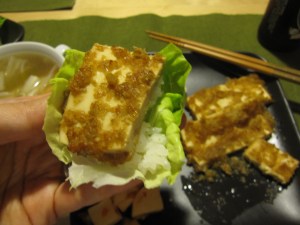
I served everything with white rice and leaves of butter lettuce. That way we could make lettuce wraps bulgolgi-style.

Read Full Post »
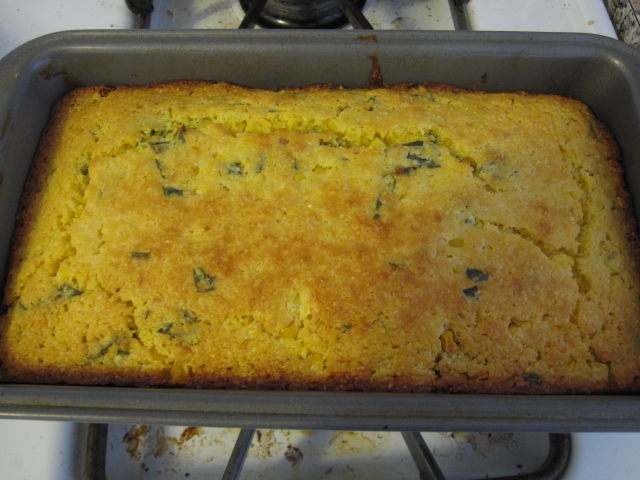
We ran out of muffins so I had to make some more yesterday. Since I still had some pumpkin left from the quinoa dish I made the other day I decided to use it up.

The ingredient list includes 1 3/4 cup of cake flour, 2/3 cup of butter at room temperature, 1 egg at room temperature, 1 teaspoon each of cinnamon and nutmeg, 1/3 cup of maple syrup, 3/4 cup pure cane sugar, 1 teaspoon baking soda, 1/4 teaspoon salt, and 1 cup of pumpkin.

First thing I had to do was cook my pumpkin. I diced up 1 cups worth and tossed it in my steamer for about 6 minutes or so, until it was soft enough to puree. Then I pureed it in my small processor and set it aside to cool down a bit.

Then, in my large glass bowl I creamed the butter with the sugar and syrup until it was nice and fluffy. I don’t have a good electric mixer, so this was tough for me. I started with a fork to get the butter nicely incorporated, then switched to a whisk to get the air whipped in. After that I added the egg and pumpkin and stirred it all together.

In my other glass bowl I sifted together the flour, salt, baking soda, and spices. In a few batches I added the flour mix into the pumpkin mix and mixed really well to make sure there were no lumps in my batter. I poured it into my muffin pan (only got 10 instead of the 12 I was expecting) and put it into a 400 degree oven for 15 minutes.

Read Full Post »
« Newer Posts - Older Posts »