Feeds:
Posts
Comments

Archive for the ‘seafood’ Category

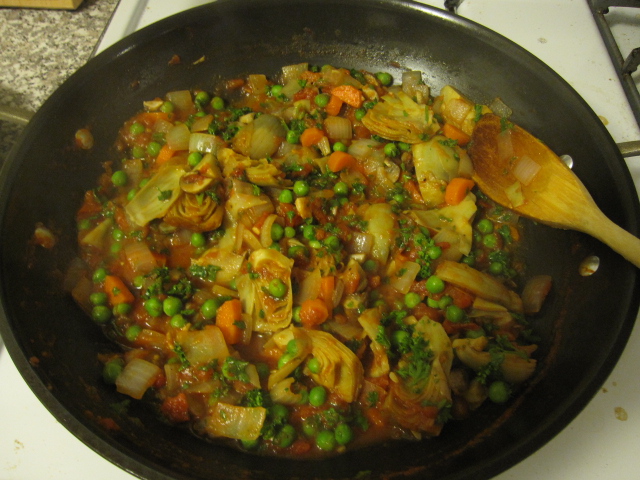
After spending hours cooking heavy foods for Passover I wanted something lighter for dinner last night. Oh, and something that I could easily whip up without spending too much time hunching over the counter. When I saw cod on sale this idea hit me. It is also a good way to use up veggies in the fridge.

My ingredients include about 1/4 cup of chopped parsley, 1 14oz can of diced tomatoes, about 1/3 cup of frozen peas thawed, 3 cremini mushrooms diced (would have used more but that’s all that I had in the fridge), 1/2 onion diced, 3 garlic cloves minced, 1 carrot diced, 1/2 bag of frozen artichokes rinsed, and about 2/3 pound of cod cut into three pieces (Yuki didn’t need lunch today, so only leftovers for me).

I heated up my large skillet and poured in about 2 tablespoons of olive oil. I added the garlic, onion, and carrot. They sweat down for about 6 minutes before I added the mushrooms. Once the mushrooms started to release their liquid, about 3 minutes or so, I poured in the can of tomatoes. When the tomatoes started to boil a little I stirred in the artichokes, laid the cod on top, seasoned with salt and pepper, covered the skillet, turned the heat down to med-low, and let it all simmer for about 8 minutes. That’s just enough time for the fish to cook through.

Then I took the fish off, carefully so it wouldn’t flake apart, and stirred its juices into the sauce. I let it boil lightly for about 3 minutes and then added the peas. When the peas were hot, about 2 minutes more, I turned off the heat and stirred in the parsley. Then I adjusted the seasoning and served it with white rice. A sprig of parsley for garnish.

Read Full Post »

I’ve been wanting to do something with artichokes for a while, but fresh one’s are pretty pricey. I found these great frozen ones at Trader Joe’s that taste great and retain all of their nutrients. I whipped this salmon dish up to get them into our guts.

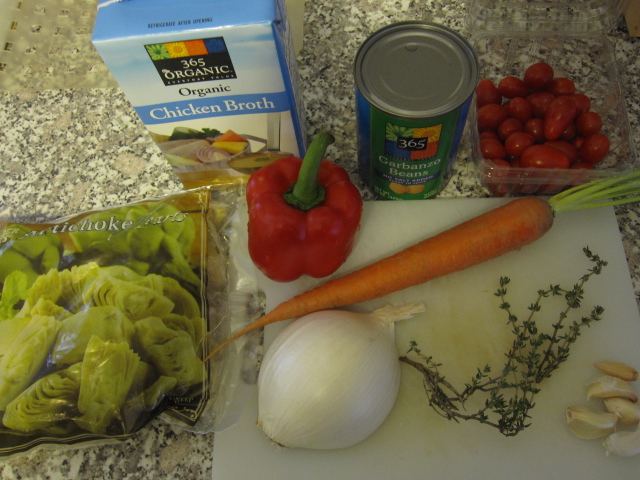
This is a really easy dish that can be made within a half hour or so. I took 1.5 cups of the frozen artichokes (about half the bag) and rinsed them real well, 1/2 cup of chicken stock, 1 red bell pepper diced, 1/2 onion diced, 1 carrot diced, 1 14oz can of chickpeas drained and rinsed, 1 container of cherry tomatoes, 1 large sprig of thyme, and 5 garlic cloves minced.

I poured about 2 tablespoons into a heated pot and added the garlic. I let that go for about 30 seconds and then added the onion. The onion sweat for about 3 minutes and then in came the bell pepper and carrot. Once that all sweat down for about 5 more minutes I poured in the chicken stock and seasoned with some salt and pepper. When the stock started to slowly boil I added the artichokes, chickpeas, tomatoes, and thyme. I covered the pot, turned the heat to med-low, and let it simmer for about 15 minutes.

For the salmon I simply used some chopped up fennel fronds and about 3/4 pound of salmon cut into 4 portions.

I seasoned the salmon with salt and pepper, then topped it with the fennel and drizzled some olive oil all over it. I threw it into a 375 degree oven and let it go for about 10 minutes just until it was cooked through.

I tasted the artichoke chickpeas mix and adjusted the seasoning accordingly then ladled a big scoop onto the middle of a plate. I placed a piece of salmon on top. White rice was on the side, along with a cold beer.

Read Full Post »

This past Friday night I made a rice noodle soup with some really nice shrimp I picked up. Being a Friday night dinner, this is a 2 person recipe as opposed to my normal 4 person.

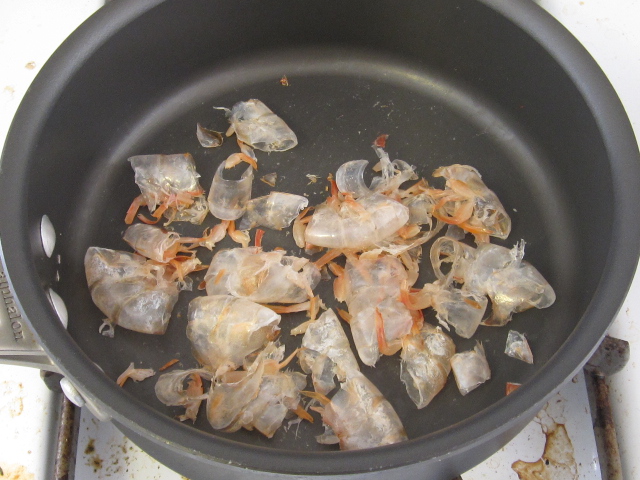
First I had to make a broth. To do that I used the shells from my shrimp (I had 10 shrimp that I shelled and butterflied), 1 stick of lemongrass cut in half both in length and width then bashed up with the back of my knife to release the oils, 1 inch of ginger sliced, 1/2 tablespoon whole black peppercorns, 3 cloves of star anise, and 1/2 tablespoon of whole coriander seeds.

I heated my pan up and added the shrimp shells dry. I let them cook, tossing them around, for about 6 minutes or so until they turned pink. As they do so they release some of their oils. While the pan was still dry I added the pepper corns and coriander and let them toast for a minute.

Then I poured in 2.5 cups of hot water while scraping up the little pieces of shell that stuck to the bottom of the pan. Once the water came up to a slight boil I added the lemongrass, ginger, and cloves. I covered the pan, turned the heat to med-low, and let it simmer for about 30 minutes. I strained the broth into a clean pan and set it aside while I prepped my veggies.

Along with my shrimp, the veggies included 1/2 a red bell pepper sliced, 3 shiitake sliced, 6 asparagus chopped, 1 tomato cut into 6 wedges, about 2 ounces of bean sprouts, and a bunch of green onions sliced.

I brought the broth back up to a slow boil and added everything except for the shrimp, tomato, and bean sprouts. I covered it back up and let it simmer over medium heat for about 10 minutes. Then I added the shrimp and tomato and let it go for another 4 minutes, just until the shrimp were cooked and turned pink. Finally, I added the bean sprouts and then turned off the heat about minute after that.

While this was going on I boiled some water in a large stock pot and cooked my rice noodles according to package instructions.

To put it together I simply placed the noodles in the bottom of a bowl and ladled the soup along with shrimp and vegetables on top. I garnished with a squeeze of sriracha, 1/2 an avocado diced, some lime juice, and chopped cilantro.

Read Full Post »

The other night we made Onigiri for dinner. Onigiri is great because you can pack in smaller amounts of protein which saves cash, while still making a very nutritious meal. It’s also fun to make and eat. We commonly make Onigiri to take with on bike rides and hikes.

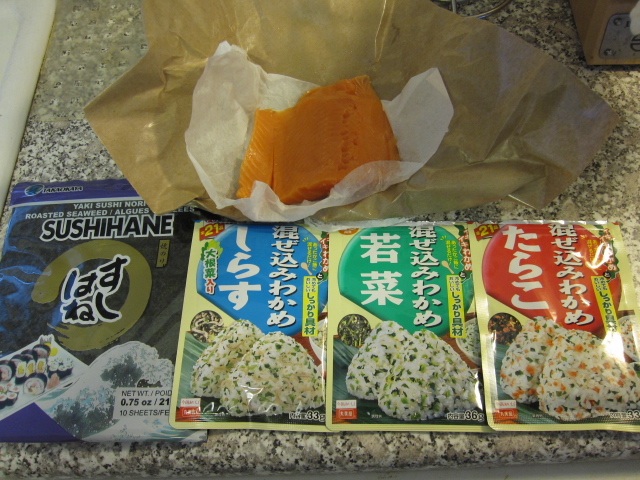
Besides warm white rice the main ingredients are typically nori for wrapping and then some sort of cooked fish or dried seaweed. For the dried seaweed the idea is that the warm moist rice will kind of rehydrate it while leaving a little texture. I used some salmon and some of these rice mixes, Mazekomi, that are available at most Asian grocers. The mazekomi in our cupboard are wakame and sesame seed, wakame and cod roe, and wakame and dried sardine.

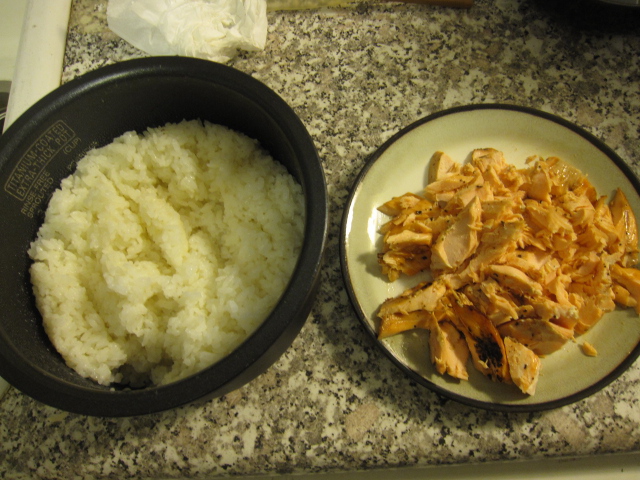
I made 2.5 cups of rice earlier in the day so that come time to make the Onigiri it’d be warm and not hot. I simply roasted the salmon with a splash of soy sauce at 350 degrees for about 15 minutes. Once it cooled down a little I broke it apart into pieces.

On a piece of plastic wrap I put down a little of the rice and spread it out. Then I topped it with some of the salmon and mazekomi. I covered it with a little more rice.

Using the plastic wrap I packed it down and formed it into a triangle. With 2.5 cups of rice you should be able to get 6-8 Onigiri no problem.

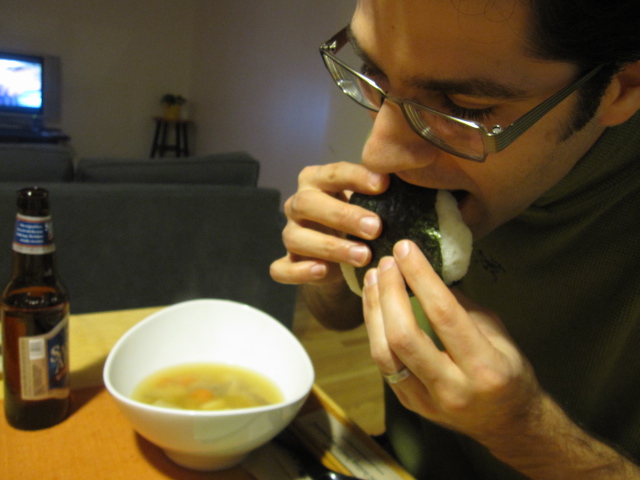
To eat it you simply wrap it with a piece of nori (if you have the regular sushi width nori sheets you’ll want to cut them in half) and let your chompers do their trick.

To go with the Onigiri I made some Miso Soup. I used about 3.5 cups of water, 3 tablespoons of dashi soy sauce, 1 tablespoon of miso, 1/2 onion sliced, some daikon chopped, 1 carrot chopped, 2 red skinned potatoes skinned and chopped, 3 shiitake sliced, and some salted wakame rinsed and soaked.

Read Full Post »

This past weekend Whole Foods had West Coast Sole filets on sale. I gots me sum soul, so I figured we oughtta eat some sole. I wanted to do something with cilantro and capers since I liked that combination at Blue 13 (Yuki actually made a dish a couple of weeks ago with those two ingredients, it was delicious but I didn’t take pics so I can’t blog it). I thought that I could do a simple riff on the classic Sole Meuniere, so that’s what I did.

The ingredient list included a few tablespoons of cilantro chopped, about 3 tablespoons of capers rinsed, a little paprika, zest and juice from 1/2 a lemon, 1/2 a tomato seeded and diced, 1/2 an avocado diced, 2 tablespoons of butter, some flour for dusting, and 4 sole filets.

I sprinkled the sole filets with salt, pepper, paprika, and some of the lemon zest and then set it aside while I diced up the tomato and avocado. Once all of my mise en place was all set I heated up my large skillet and melted 1 tablespoon of the butter. I let the butter go for a couple of minutes until it just started to turn a little brown. I didn’t want it to burn, but I wanted a little depth to the flavor. Then I dredged the sole filets in the flour and cooked them in the melted butter, about 2 minutes per side. When the fish was ready I put two filets on each plate and topped them with the avocado. After that I put the other tablespoon of butter in the skillet. Once it melted I added the tomato, capers, cilantro, lemon juice, and the rest of the lemon zest. I mixed it all around over med-high heat for about 30 seconds or s0 and then poured it right on top of the fish and avocado. Simple as that.

I served it with some white rice and some mushroom barley soup I had left from a trip to Kasia’s. Mushroom barley soup might not be the obvious choice for this dish, but it worked out alright.

Read Full Post »

This is a classic stir-fry dish that I made. Typically it’d be made with snow peas, but I used haricots vert because I had some in my fridge that needed to be gobbled up. Other than that I stuck to the basics for this one.

My ingredients included a bunch of green onions sliced, 1 inch of ginger cut into matchsticks, 1 teaspoon of cornstarch, 1/2 pound of haricots vert, 1/2 cup of chicken stock, 2 tablespoons of soy sauce, 1 tablespoon of sriracha, and about 1 pound of shelled shrimp.

I started by mixing together the chicken stock, soy sauce, sriracha, and cornstarch. I whisked it together until the cornstarch was completely dissolved. I set that aside and heated up my large skillet. Once hot, I poured in about 2 tablespoons of vegetable oil and added the ginger. I let the ginger go for about 1 minute. Then I tossed in the haricots vert and let them cook for about 2 minutes. After that came the shrimp. I let the shrimp go for about 1 minute, during that time I re-whisked the liquid because starch won’t stay dissolved for very long. Once the shrimp were partially cooked and turning pink I poured the liquid in along with the green onions and a few cracks of black pepper. I stir fried it all together for about another minute or two and then served it up. After I plated I decided to tear up some cilantro for garnish.

Besides white rice I made some miso soup to go along with the shrimp. You’ve read about my miso soup numerous times so I won’t bore you with how I made it, I’ll just let you know what ingredients I used this time as it’s always different. For this batch I chopped up some rapini, 6 shiitake, 1/2 onion sliced, about 1/2 block of tofu cubed, 2 yukon gold potatoes skinned and cubed, 2 tablespoons of dashi soy (mixed into 3 cups of water for the broth), and about 1.5 tablespoons of shiro miso. I absolutely love potato and onion in my miso soup.

Read Full Post »

After a couple of nights eating out for Restaurant Week I decided to give our stomachs, as well as our wallets, a little bit of a break. Simple, cheap, and delicious, I made a stew with cod and vegetables. Warm stews like this are great for cold winter nights and are packed full of nutrients that won’t bulge your belly or bank account.

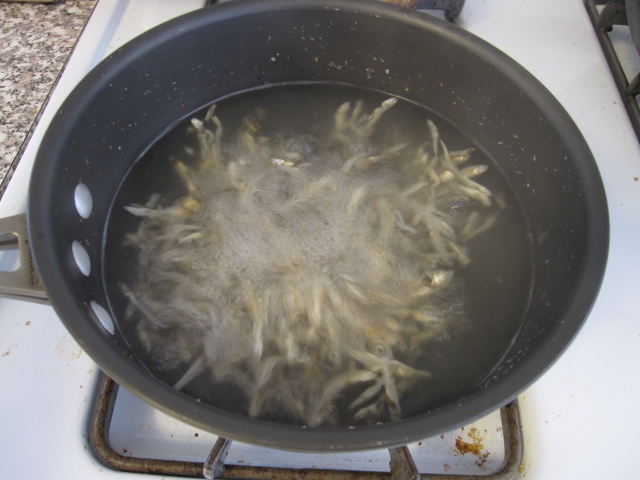
I started off with my typical dashi. I boiled 1/3 cup of dried anchovies in 3 cups of water for about 30 minutes and then strained out the fish. I really love making this dashi because it’s easy, healthy, and delicious.

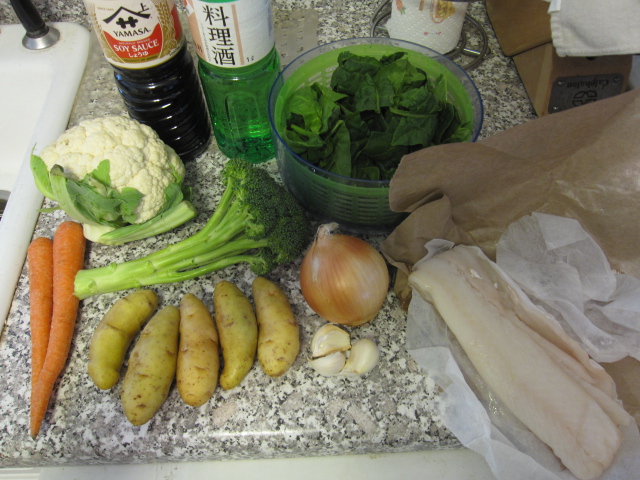
The rest of my ingredients included 2 carrots chopped, 1/2 head of cauliflower broken into florets, 1 head of broccoli broken into florets with the stem chopped, 5 large fingerling potatoes chopped, 1 onion large diced, 3 garlic cloves large diced, 5 ounces of spinach rinsed, 3/4 pound of cod cut into bite-sized pieces, 3 tablespoons of soy sauce, and 2 tablespoons of sake.

I heated up a stock pot and poured in about 2 tablespoons of olive oil. Once the oil was hot and shimmering I added the onion, carrot, and garlic. I let that all sweat down for about 3 minutes and then added the broccoli and cauliflower. About 2 minutes later I poured in the dashi, soy, sake, and a bay leaf and brought that up to a boil. Once boiling I added the potatoes and turned the heat down to med-low so that it could simmer for about 10 minutes. Then I added the fish and let it simmer for another 10 minutes before throwing the spinach in. Once the spinach was in I seasoned with pepper (no need for salt because of the soy in the broth), covered the pot, and let simmer for another 10 minutes. After that all I did was adjust the seasoning and serve it up with some white rice.

Just be gentle stirring after you add the fish, cod will flake apart.

Read Full Post »

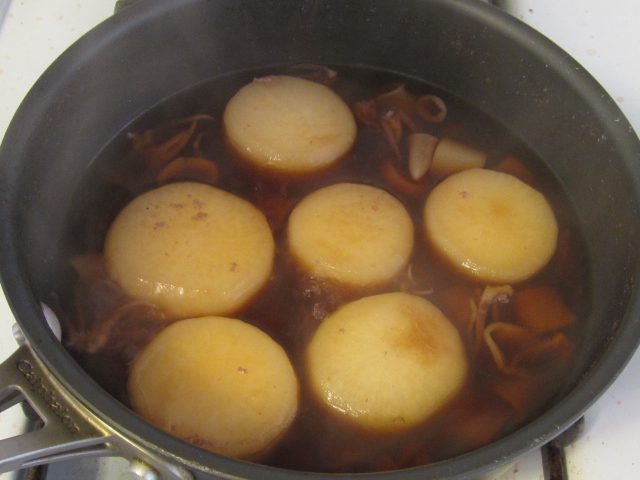
In order to solidify my role as a good Japanese housewife I decided to make another classic comfort dish from the Land of the Rising Sun. I haven’t made anything with squid in a long time and came across this recipe from a Japanese cook book that I have. Since I had a piece of daikon in my fridge that I needed to use, it all just seemed too perfect. And yes, I am perfect!

The first thing I need to do was make 3.75 cups of dashi. We don’t have any bonito flakes in our fridge, but we do have dried anchovy in our freezer that are also used for various types of dashi. In a soup pot I poured in a little more than 3.75 cups of water knowing that some would evaporate and added about 1/3 cup of the dried anchovy. I brought it to a boil, covered it, lowered the heat to med-low, and let it simmer for about 3o minutes. Then I strained out the fish and had a really nice flavorful dashi.

The rest of my ingredients for this dish included 4 tablespoons of soy sauce, 3 tablespoons of sake, 2 tablespoons of mirin, some lime zest, about 2 pounds of daikon, 1 pound of squid (body and tentacles), and 1 tablespoon of sugar.

I cut the daikon into chunks about 1.25 inches thick and rounded the edges with a pairing knife. I’m not sure why they round the edges, maybe it allows the daikon to cook more evenly or maybe it’s just an aesthetics thing, but you probably don’t need to do it if you don’t want. Being the good Japanese housewife that I am, I went all out. I put the cut daikon into cold water then drained it just before cooking. That helps keep the texture firm. I sliced the squid bodies into 1/2 inch strips and cut the tentacles in half.
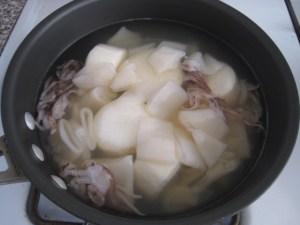
I put the daikon and squid into a heavy pot and poured the dashi in. I brought it to a boil and let it cook for about 5 minutes. Every 30 seconds or so I had to skim the surface to keep the dashi nice and clear. It’s amazing that 1 pound of squid seems to have more muck than a 3 pound chicken when boiling. So you really need to skim a lot.

Once the dashi cleared up I turned the heat to low and added the soy sauce, sake, mirin, and sugar. I covered the pan and let it simmer for about 45 minutes or so. Every few minutes I gave the pot a good shake to make sure the flavors of the dashi were well mixed.
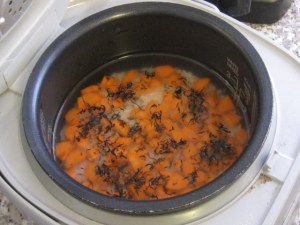
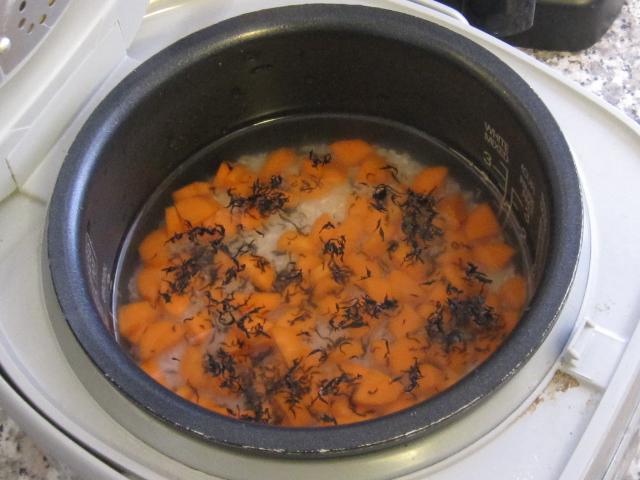
While the squid and daikon were simmering I made some hijiki-carrot rice. After rinsing 2 cups of rice and measuring out the liquid I added a tablespoon or so of dried hijiki and 1 chopped carrot. I let it sit for a half hour and then started the rice cooker. Actually, I had this ready to go before starting the squid and daikon. But I didn’t hit the start button until the simmering started for timing purposes.

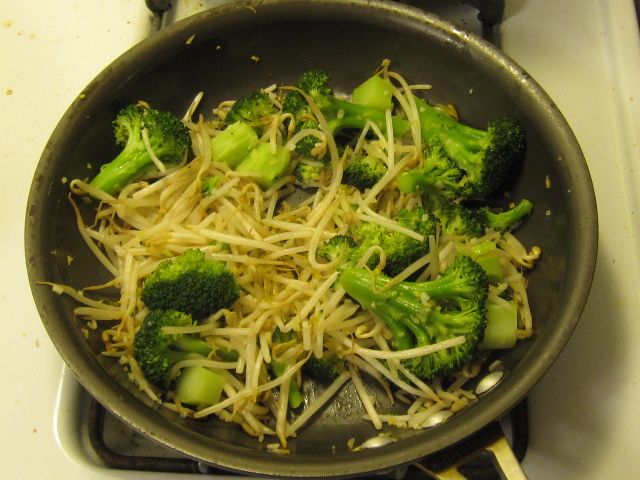
For a side dish to get more vegetables in the meal I made a simple stir-fry. I cut up 1 head of broccoli, had a couple of ounces of bean sprouts, 3 diced garlic cloves, and 1 inch of diced ginger.

I heated a skillet and added 1 tablespoon of sesame oil then added the garlic and ginger. After about 30 seconds I tossed in the broccoli and let it go for about 5 minutes before adding the bean sprouts. About 2 minutes later and it was ready to eat, just a sprinkle of salt and pepper was needed.

For serving I put some of the squid and daikon in bowls with some of the dashi. Then I grated some of the lime zest on top. Yes, as you can see in the picture I do have the hairiest arms you’ll ever see on a Japanese housewife…I hope. In Japan they’d use yuzu instead of lime, but I couldn’t find any yuzu at the store. The lime worked really well though. And the squid, oh brother the squid! It was so soft and tender it literally melted in our mouths. I haven’t had squid that good since we were in Nara, Japan over a year ago during squid season. And if you’ve never eaten daikon simmered in a soy-dashi broth you’re missing out on one of life’s finer flavors. This was the best meal I’ve cooked in a while. OIISHII!!!

Read Full Post »

This was about as simple as cooking can get while using up items that were lying around our fridge. I had about 1/4 cup left of the tomato sauce that accompanies the cabbage rolls from Kasia’s that I didn’t want to waste, so I turned it into a tasty sauce for some salmon. I grabbed the veggies I had and put together a well-rounded dinner.

I picked up 1 pound of salmon and cut it into four equal portions, I chopped up some watercress, 1/2 onion, 1 carrot, 2 small yukon gold potatoes, 2 cloves of garlic, 1/2 yellow bell pepper, and mixed together 1/4 cup of Kasia’s tomato sauce with 1 heaping tablespoon of ground horseradish.

In a small saucepan I heated the sauce gently, not to cook anything, just to have a warm sauce. When I tasted it I decided to add 1 tablespoon soy sauce. That really did the trick, it almost made the sauce taste Japanese. I mean, horseradish is basically wasabi.

For the vegetables I heated up a saute pan and added a tablespoon of vegetable oil and 1/2 tablespoon of butter. Once the butter had melted I tossed in the potatoes and let them start to crisp up for about 10 minutes while occasionally shaking them around. Then, I added the garlic and onion and let them sweat down for about 4 minutes before adding the bell pepper and carrot. I let everything saute for another 5 or 6 minutes and then added the watercress along with salt and pepper.

While that was going on I had drizzled some olive oil on the salmon and then seasoned it with salt and cracked white pepper. I put it in the oven at 375 degrees for about 10 minutes.

To serve, I put some white rice on the plate next to the veggies and salmon. I spooned some of the sauce on top of the salmon. Perfect for a cold beer to wash down. Simple, healthy, fast, and tasty.

Read Full Post »

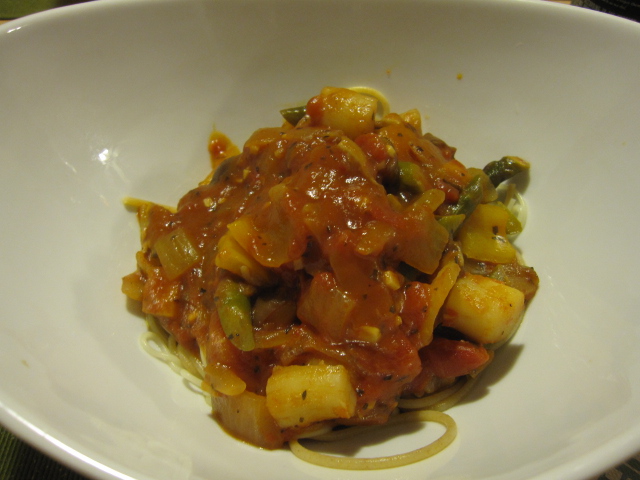
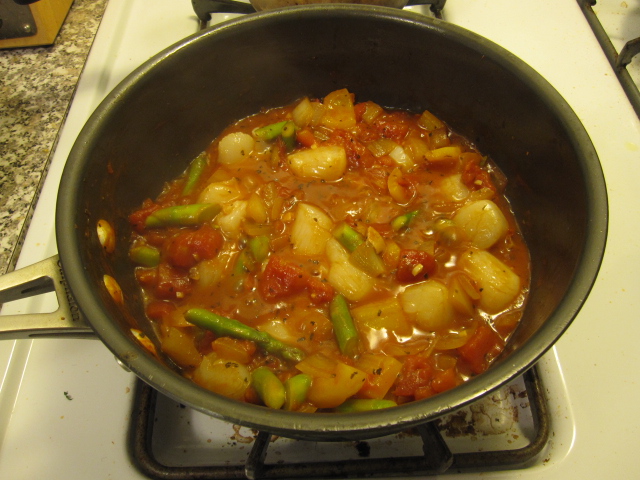
The other night I knew I wanted to make some spaghetti of some sort, but I wasnt sure what to do with it until I came across these beautiful little scallops. We haven’t had scallops in a while so I figured I’d just make a very simple tomato sauce with them and some vegetables.

Besides about 2/3 pound of scallops I chopped up 8 asparagus, 3 shiitake, 1/2 onion, 2 cloves of garlic, 1 yellow bell pepper, opened up 1 14oz can of diced tomatoes, and got out 1 tablespoon each of soy sauce and sake just to add a little umami.

This is about is simple as cooking gets. While I was boiling some salt water for the noodles, I used half angel hair and half wheat noodles, I heated up my pan and poured in about 2 tablespoons of olive oil. I sautéed the onion for about 5 minutes before adding the garlic, I let that go for another minute. After that I added the shiitake, pepper, and asparagus and let them go for another 5 minutes. I added the soy sauce and sake, let them boil off for about 1 minute, and then dumped in the tomatoes. Once the tomatoes were at a low boil I turned the heat down to medium and added the scallops. Scallops can be a little tricky here because if you overcook them they’ll become a bit rubbery. On the other hand, they do give off a lot of liquid so you need to boil some of that excess off. I let them go at a very low simmer for about 10 minutes and it worked out perfectly, but each stove top is different so you have to keep a close eye on it. At the very end of cooking I decided to add a little dried basil along with some salt and pepper.

Once I drained the noodles I just ladled the sauce on top. I had some wheat dinner rolls to eat with it.

Read Full Post »

« Newer Posts - Older Posts »