Feeds:
Posts
Comments

Belly Shack

Belly Shack has been open for, I don’t know, a little more than a year now. I remember freezing my nads off with my buddy Nick early last winter walking 2 blocks from his place for our first taste. I’ve been there at least a half-dozen times since. But this weekend Yuki and I met up with one of our friends there and they both wondered why I haven’t blogged about it yet. So ladies, here it is, my blog about Belly Shack.

Located right under the Western “L” stop this is Chef Bill Kim’s second joint. Like its counterpart, Urban Belly, Chef Kim fuses Asian and Latin seamlessly. It’s also similar to Urban Belly in that it is counter service, communal dining, and recycled fixtures. They differ in that Urban Belly is based on ramen noodles while Belly Shack is sandwiches.

During this trip I ordered the special that they had running, a pulled pork sandwich with pickles. I’m not a big pickle guy, so Yuki polished those off for me. The sandwich was fantastic though. Pulled pork served with sautéed mushrooms, bean sprouts, melted cheese, cilantro, salsa verde, and Korean chili paste. My only problem with it was that they cut the pita bread and served it like a Western-style sandwich. With all of the juice it was a sloppy sandwich. It would have been better served Middle Eastern-style stuffed into the pita. Oh well, still a delicious sandwich well worth gorging on.

Yuki ordered our favorite sandwich on their menu and one of the best sandwiches in all of Chicago, the Asian Meatball. Juicy, tender meatballs of pork and beef served inside a pita with somen noodles, bean sprouts, mint, and Korean chili paste. Just thinking about this sandwich makes my mouth water.

Our friend ordered the Korean BBQ Beef. Extremely tender beef that just falls apart. The beef has sliced scallions and fried garlic chips on top along with some ssam paste. Next to it is kimchi and some flat bread. For this dish you make your own little sandwiches, much more Asian in presentation. I have no beef with this dish, it was outstanding.

She also ordered the Togarashi Fries. French fries topped with togarashi and lime zest served with a curry mayonnaise.

Belly Shack isn’t the cheapest sandwich in town at $9 a pop, but you’ll be hard-pressed to find a more flavorful, well prepared one. This place is definitely worth the visit.

Cochinita Pibil

Ever since our gastroventure to Don Diablo a while back I’ve wanted to try my hand at making cochinita pibil. It’s something that needs to be planned ahead since it’s best if the pork shoulder marinates overnight. I just never planned ahead until this week rolled around. I got my shoulder the day before and went at it.

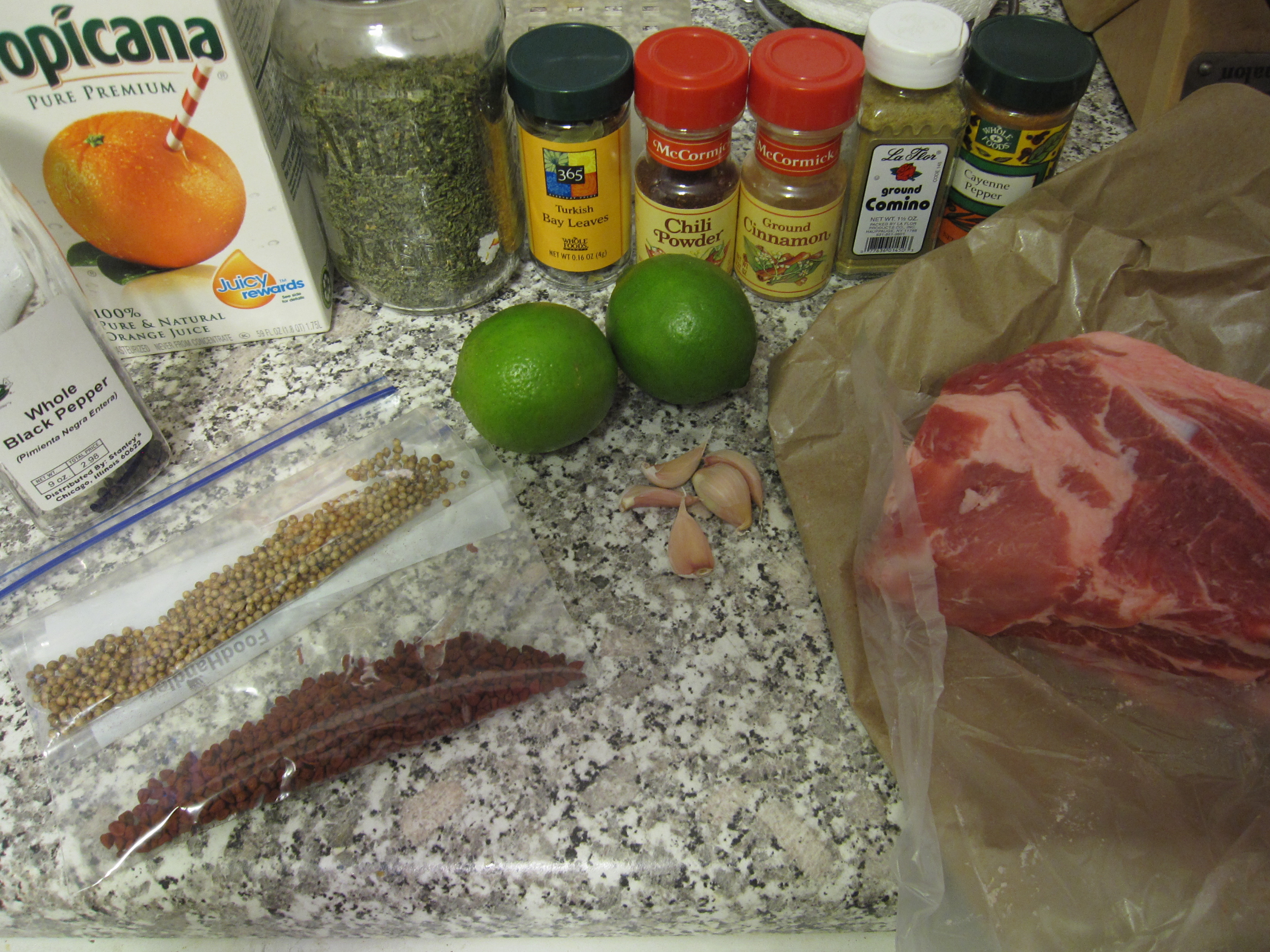
Alright, so I the shoulder I picked up weighed about 2.8 lbs, bone-in. Gotta be bone-in, there’s just no other way to go. For the marinade I crushed 2 tablespoons of achiote seeds with 1 teaspoon of coriander seeds. I found out the hard way that achiote seeds stain anything and everything. If you can find achiote past that’s a better alternative. Anyway, I mixed those in a large glass (must be a non-reactive material) bowl with 1 teaspoon each of dried oregano, chili powder, cinnamon, cumin, and cayenne. Then, I minced 5 garlic cloves, crushed up 2 bay leaves, and mixed those in. I cracked about 2 tablespoons of black pepper. Finally, I poured in 1 cup of orange juice and the juice of 2 limes. With a fork I pricked the shoulder all over, let it swim in the marinade, covered it with plastic wrap, and threw it in my fridge. This was about 2pm Monday so that I could get 24 hours of marinating time.

When marinating time was up I put the shoulder along with the marinade in a cheap foil braising pan, covered it tightly with foil wrap, and threw it in a 325 degree oven for 3 hours. Use whatever braising pan you have.

While the pork was braising I made my sides and condiments. I pickled a red onion, very easy to do and very delicious. Also, pickled red onion is the classic condiment to cochinita pibil. I quartered a red onion and then sliced each quarter into 1/8 inch slices then put them in this small glass bowl. I boiled some water and poured it on top of the onions. After ten minutes I drained the onions and put them back into the bowl. I mixed together 1/2 cup of orange juice with 1/2 cup of fresh squeezed lime juice and a pinch of salt and then poured that on top of the onions. I covered it with wrap and let it sit until dinner time.

I also made some guacamole. I was going to use 2 avocados, but when I sliced the 2nd one open it was absolutely disgusting! That’s the one problem I have with avocados, they’re such a crapshoot. I did get one good though and that was enough for our dinner. Since I only had one good one I only used 1 plum tomato. I de-seeded it and chopped it up. I mixed the tomato and avocado with the juice from 1/2 lime, 1 small garlic clove minced, a pinch of salt and pepper, and a handful of chopped cilantro.

Finally, I made a black bean and corn succotash. I first took 1 cup of dried black beans and boiled them in 6 cups of water for a few minutes, then I turned off the heat, covered the pan, and let it sit for about an hour. I drained and rinsed the beans then put them back in the pan. To that I added 1/2 onion diced, 1 jalapeno diced, and the kernels from 1 ear of corn separated. I seasoned with a little salt and pepper, poured in about 1/2 cup of chicken stock, and let it simmer for about 30 minutes while I finished off the cochinita pibil.

Once the pork was fall-off-the-bone deliciousness, I let it cool a little so that I could handle it without burning myself. Although, the pleasure of sinking my teeth into that meat would be worth the pain. Once I could handle it painlessly I pulled the meat and put it in a large skillet. I poured about 1/2-1/3 cup of the liquid in and then heated it back up.

I served everything with some watercress, ricotta ensalata cheese, and some cilantro. I had warmed corn tortillas on the side and we made some fantastic cochinita pibil tacos.

Las Tripletas

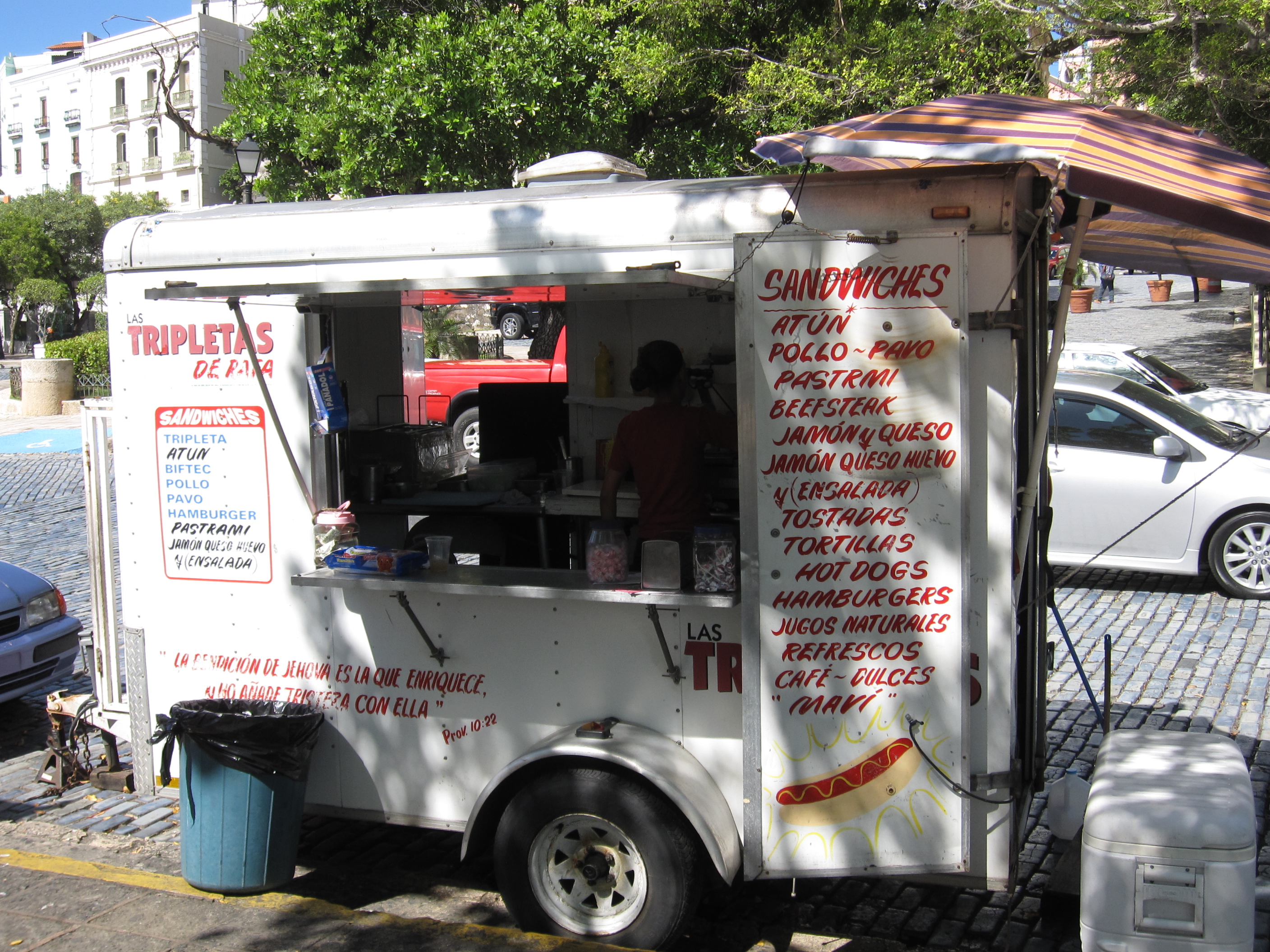
The food in San Juan, Puerto Rico is very expensive for what you get. I guess that’s expected in such a touristy city. That’s especially true when walking the streets of Old San Juan. While that part of town isn’t without its charm, rustic old world food certainly isn’t its draw. We found that the best way to fill your belly without emptying your wallet is to find a good kiosk and get your hands on a tripleta sandwich, a similar morsel to the Cuban sandwich.

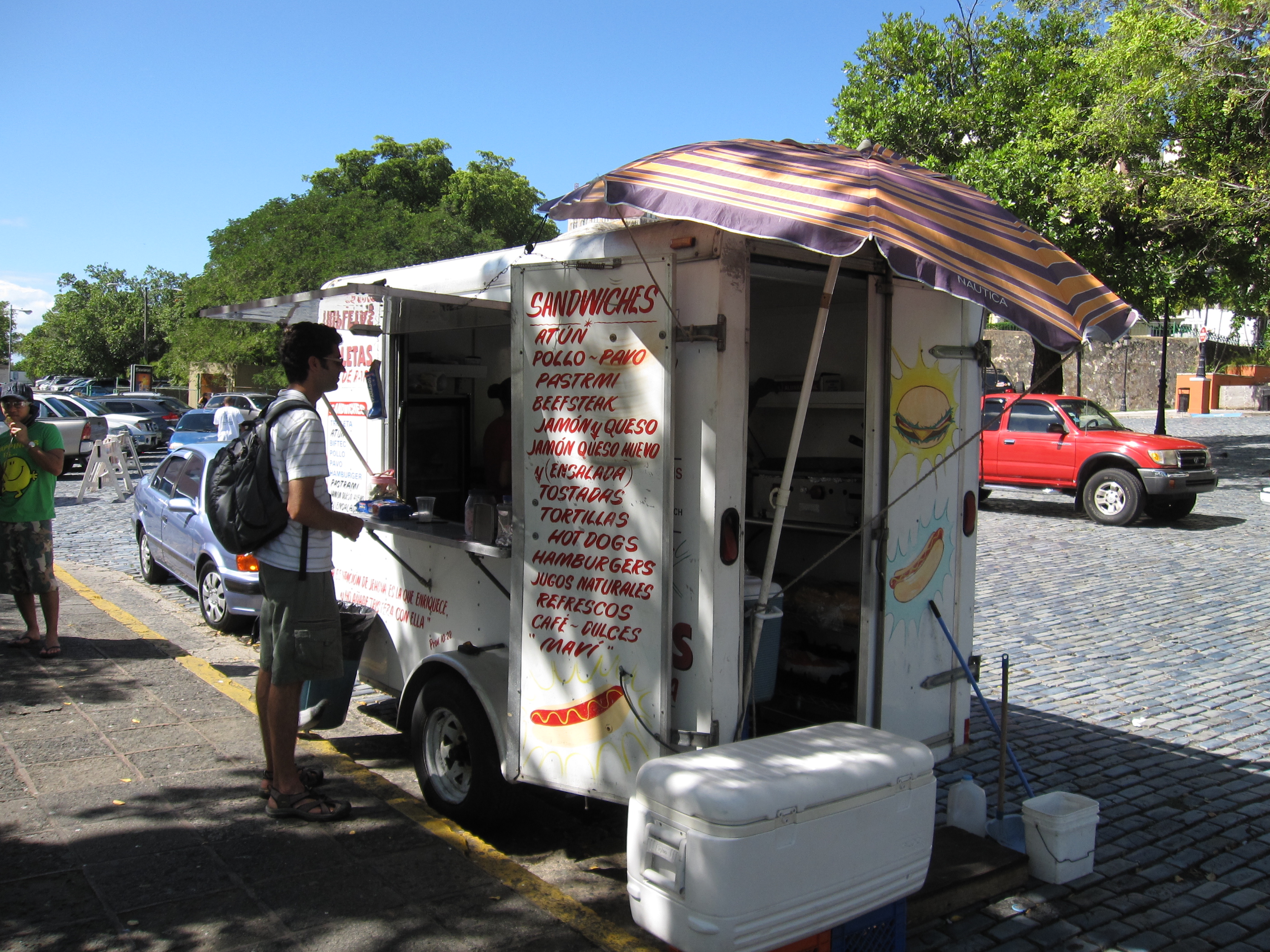
We found this Las Tripletas kiosk on the south end of Old San Juan on the cobblestone street near the cruise docks. While I was ordering the sandwich artist told me that his tripleta was much better than any Cuban I’d ever eat. When I asked why he said because his pork was wet and juicy while most Cubans had dry pork. Nothing better than a wet sloppy pork sandwich. Well, almost nothing, I can think of a few things but that’s another conversation.

Quite spacious for a little kiosk. My man here layered the lettuce, tomato, turkey, ham, and pork on the pan de agua (typical Puerto Rican baguette), then squirted some mayo all over and pressed it on his griddle panini-style.

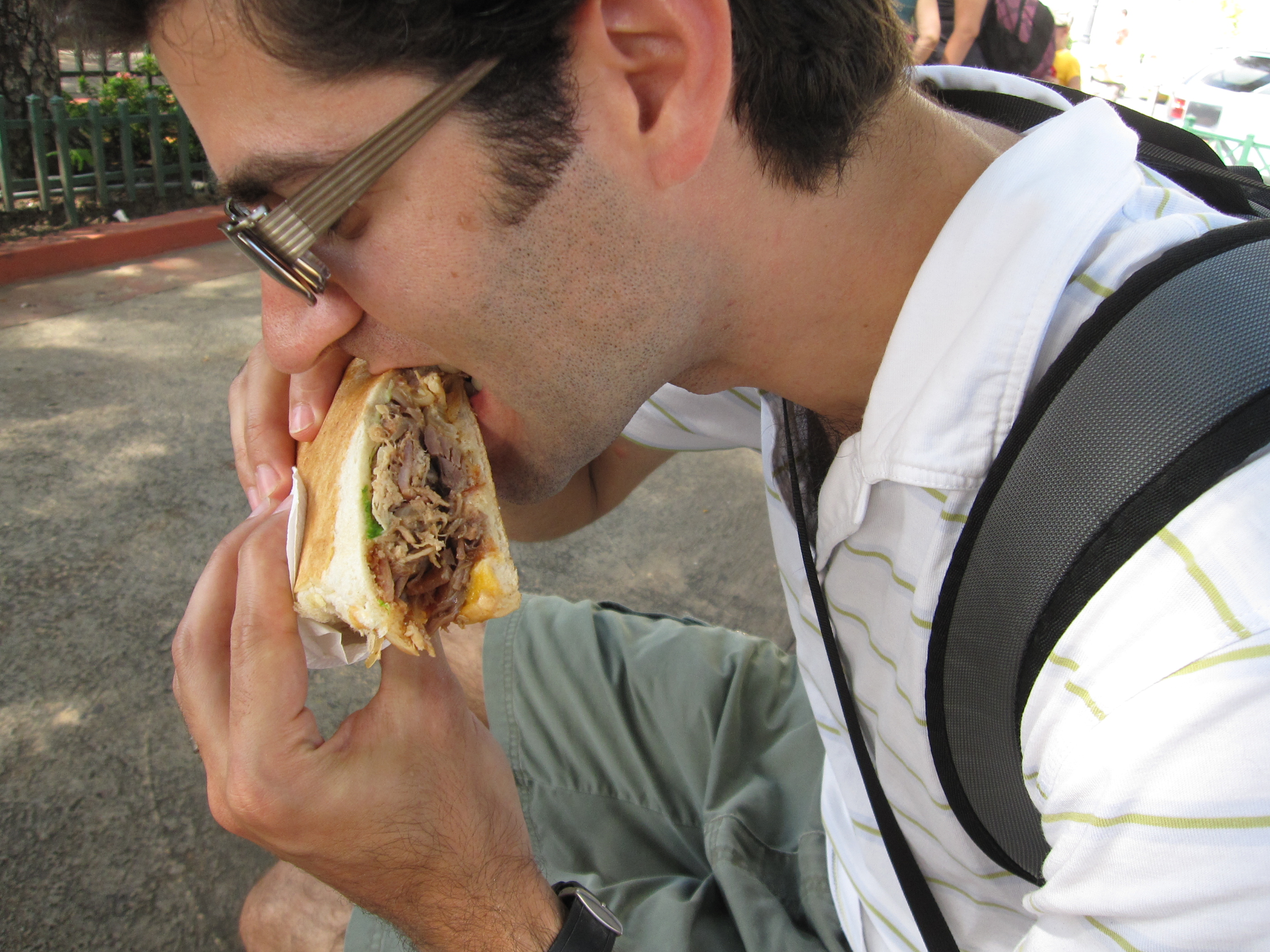
It was a damn good, juicy pork sandwich. Not bad for $5.50.

Thanksgiving

This year for Thanksgiving we didn’t really have much of a plan. There weren’t a lot of options on the table for us. We could have gone to my mom’s in Merida, Mexico, but flights were very expensive this year. We could have gone to my Grandma’s in the Quad Cities, but no one there cooks anymore, they go to a restaurant in Andalusia. Not exactly a mouth-watering proposition. Almost all of our friends were with their families. It wasn’t until 3:00 Thursday afternoon that we figured out what to do. With so little time we decided to keep it very simple. So, we headed to Stanley’s and Whole Foods to get the fixin’s we needed to make a small dinner of four portions.

First thing I made was a sweet potato puree soup. I skinned and chopped up two medium-sized sweet potatoes and tossed them into a pot with 3 garlic cloves and 2 cups of chicken stock. I brought it to a boil, covered it, and let it simmer for 20 minutes until the potato chunks were nice and soft. Once it cooled down a little I threw it all into my blender with a cup of soy milk and pureed it nice and smooth. I seasoned it with some salt, pepper, and a tablespoon of cinnamon and then poured it back into the pot ready to re-heat once everything else was done.

For the rice I simply rinsed 2 cups of rice and put it in our rice cooker. Once I poured in the water I added one diced carrot and 1.5 tablespoons of dried hijiki. I let it sit for about 30 minutes and then hit the start button. Simple as that.

For the Turkey I just got a 1.75 pound breast. I laid it in a large rimmed baking sheet and covered it with a mix of 2 tablespoons of miso, the juice from one lemon, the zest from half of the lemon, and some black pepper. After evenly coating the top of the turkey with the miso I put it on the lower 3rd rack of the oven at 400 degrees. I let it roast for about an hour. Once the hour was up I took it out and put a bunch of haricots vert all around the pan and poured 3/4 cup of chicken stock around the bird. I put that back into the oven for another 15 minutes. When I took it out I let the bird rest on a board and set the haricots vert aside. I mixed together 1 tablespoon of miso and 1/4 cup of chicken stock and poured that into the pan to mix with the rest of the juices. That was my sauce for the turkey after slicing it.

While the turkey was cooking I melted 1/4 cup of butter and slowly carmelized 1 sliced onion for about 20 minutes.

To serve, I sliced the turkey and laid it on top of the haricots vert. I spooned some sauce on top and then laid down some of the onions. I garnished it all with the other half of lemon zest. The soup and rice were on the side.

I cheated on dessert, we just picked up a pumpkin pie and some vanilla ice cream. It’s a shame we didn’t plan ahead because both Yuki and I make a mean pumpkin pie. I also make a pretty good ice cream. Oh well, we weren’t trying to impress anyone this year, so this worked out just fine. Maybe next year we’ll be more creative and extravagant. In the meantime, everything turned out really tasty and we have no complaints. It sure beats a restaurant in Andalusia.

Heladeria Lares

Lares is a crusty little mountain town in Puerto Rico. It’s famous for two things. First, in 1868 it was the birthplace of the uprising against Spanish rule, El Grito de Lares. Second, and even more historically important, in 1968 Salvador Barreto opened Heladeria Lares.

This is no ordinary ice cream parlor, no sir. This ice cream parlor not only makes regular old chocolate, vanilla, strawberry, etc. ice cream. This ice cream parlor will make ice cream out of anything!

When you walk in there are literally at least 50 different flavors to choose from. The do limit you to 3 samples though. Kind of a shame because there are so many I wanted to try, but they need to be able to sell some ice cream so I understand they don’t want customers to fill up on free samples.

I sampled the Arroz con Gandules. Rice and pigeon peas, it was actually really good.

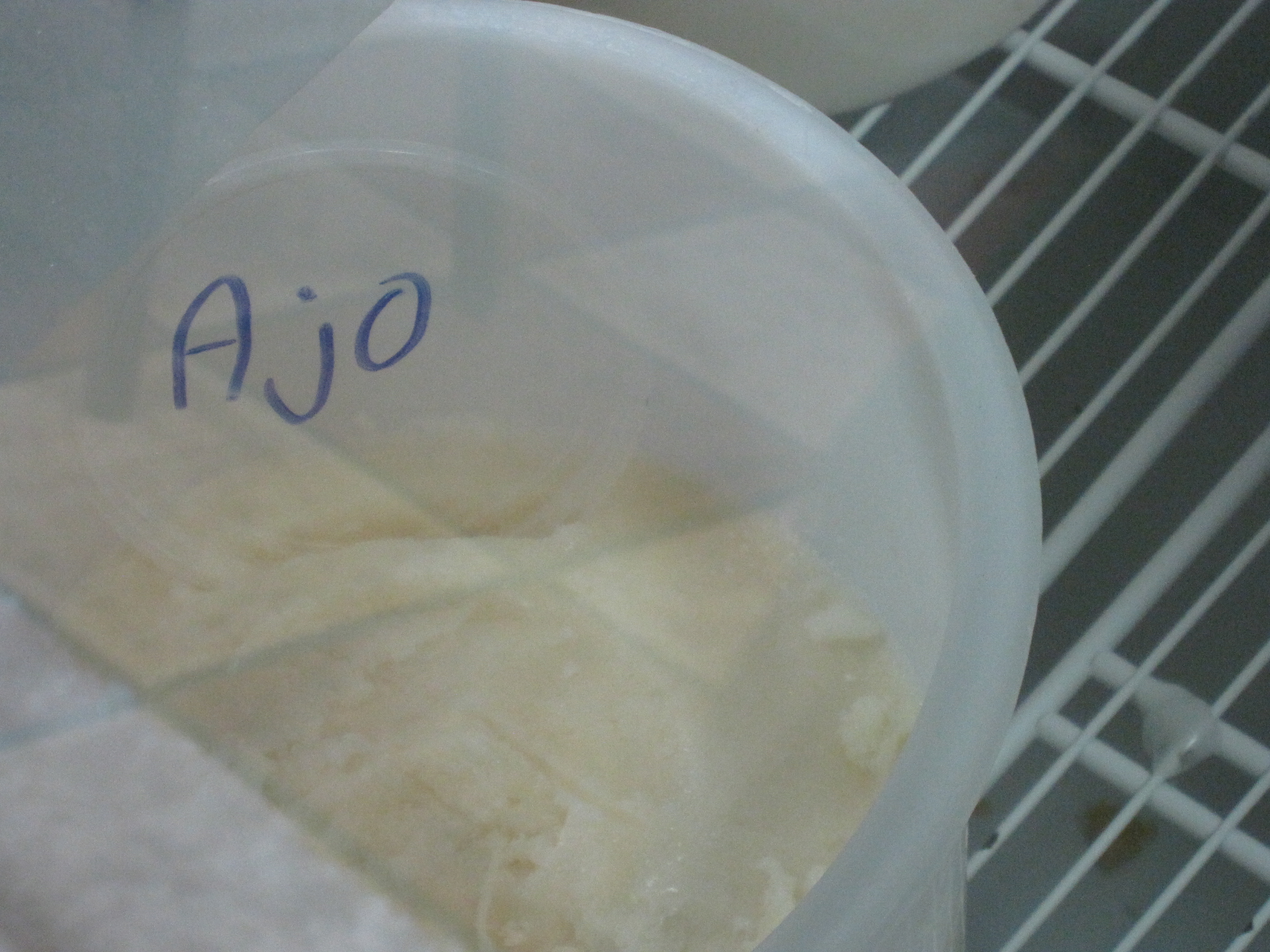
Ajo, or garlic. They did a great job of accentuating the sweetness while suppressing the sharpness of the beloved garlic clove.

Bacalao, salt codfish. This one was absolutely disgusting! Salted fish should never ever be turned into a sweet treat. It was one of the worst flavors I’ve ever had in my mouth.

I ended up getting a scoop of two flavors I didn’t try but was confident would work together, ginger and pumpkin. I was right, as usual. They gave me a little bit bigger scoop of ginger while I would have preferred more pumpkin, but hey, you can’t have your ice cream and eat it too.

Yuki got a scoop of the Arroz con Gandules and one of the sweet potato. Both excellent scoops of ice cream.

If you ever get to Lares, you have to hit Heladeria Lares up for a sweet adventure. Some of the flavors are just as terrifying to even think about as they are to eat, but mostly what they do works out just fine. With people like Bill Clinton haven eaten their ice cream, I wonder if they’ll come up with a special cigar flavor.

El Rancho Original

There are few things more satisfying in life than sinking your teeth into something truly special. Living in a fast food nation this is something that is harder and harder to come by. Yuki and I were just in Puerto Rico for 10 days, and due to American influence it’s also hard to come by there. If you look though, you can still find moment of culture, that moment of awe, that moment of pure bliss. For us, that moment was found in Guavate, better known as “The Pork Highway”.

Nestled in the mountains about 45 minutes south of San Juan, Guavate has become a destination unlike any other. I was first alerted to it by Andrew Zimmern’s Bizarre Foods Episode in Puerto Rico. As a fellow Jew who appreciates the fine art of lechon, suckling pig slowly and expertly roasted on an open fire, I knew I had to get me some.

After turning off Hwy 52 on Rt 184, we kept winding around the mountains looking for this juicy animal. We’d go by a lechonaria here, a lechonaria there, but nothing that resembled what could be called “The Pork Highway”. And then, about 15 minutes later…Xanadu! We had found the object of our desire. A strip with 7 or 8 lechonarias in full bloom. We had told ourselves that we weren’t going to just end up at the one Andrew featured, we would head to the one with the most action, the one that locals were eating at. Of course, that ended up being the one Andrew was at, El Rancho Original. More aptly put, hog heaven!

We got in line as our taste buds were salivating. The line was pretty long, but it moved quickly. El Rancho Original is cafeteria-style, so you just order what you want then pick it up at the register. All the while they have live music and a dance floor that is always packed with people, especially old people gettin down.

When we got up to order I just had to marvel at that pig on a spit with the master hacking it up with a machete. We speak very little Spanish, so they had to get a lady over who spoke more English to take our order. It all worked out as we got what we wanted. We grabbed our food, walked past the dancing into the back cafeteria, and proceeded accordingly.

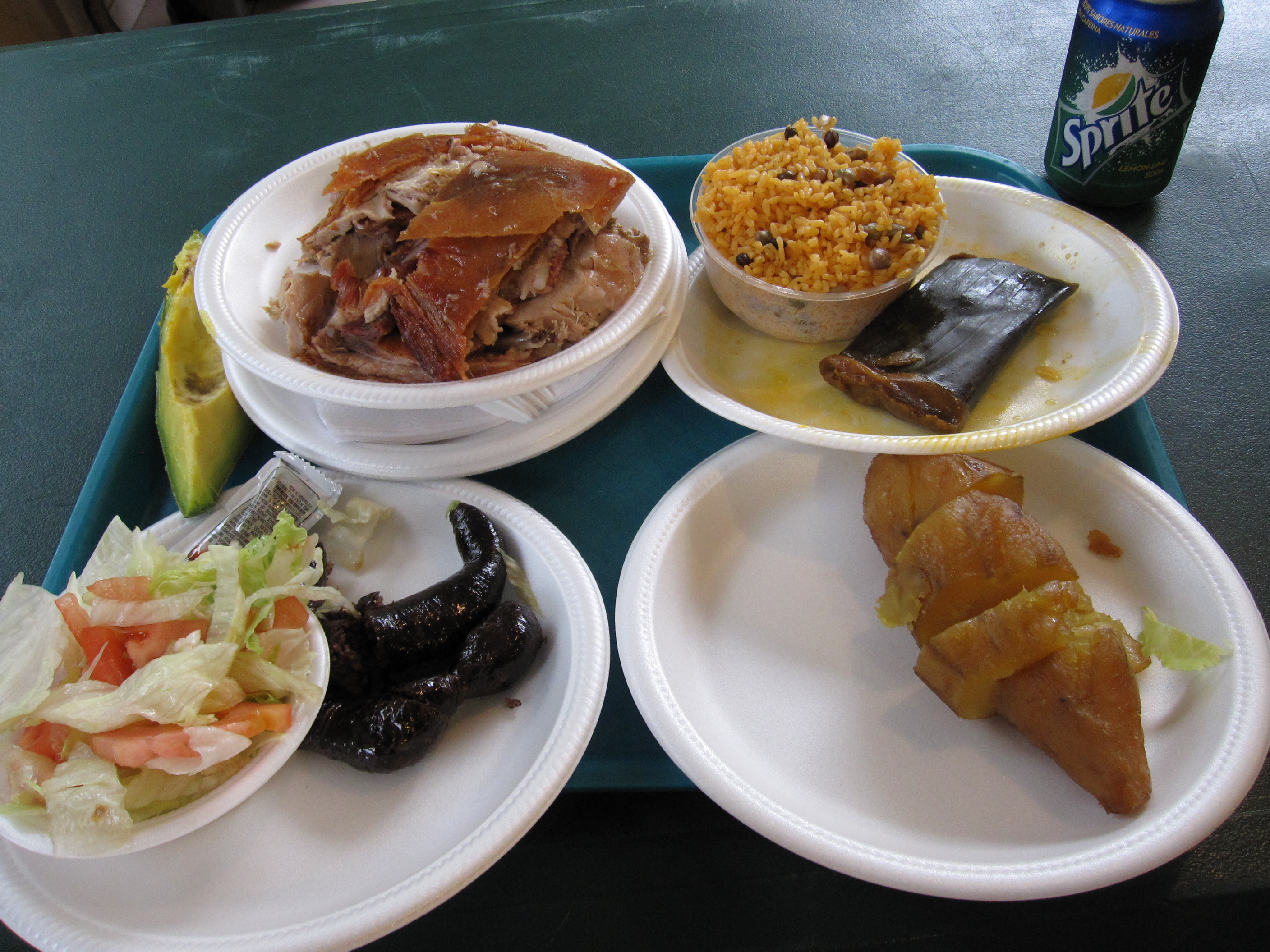
We ordered a plate full of lechon (of course), some rice and beans, this tamale-like thing of mashed pineapple and pork, a salad of lettuce and tomato to help our bowels process this overload of nutrient information, some morcilla (blood sausage, basically pigs blood with rice and spices stuffed into its intestines and grilled), sweet potato, and a big slice of avocado. It may not look like much in the photo, but believe me, it was a lot of food for two people. All for only $21! I dare you to find a deal like that in Chicago.

Mmmmmmm, crispy skin. Or, as Yuki likes to call it “meat candy”.

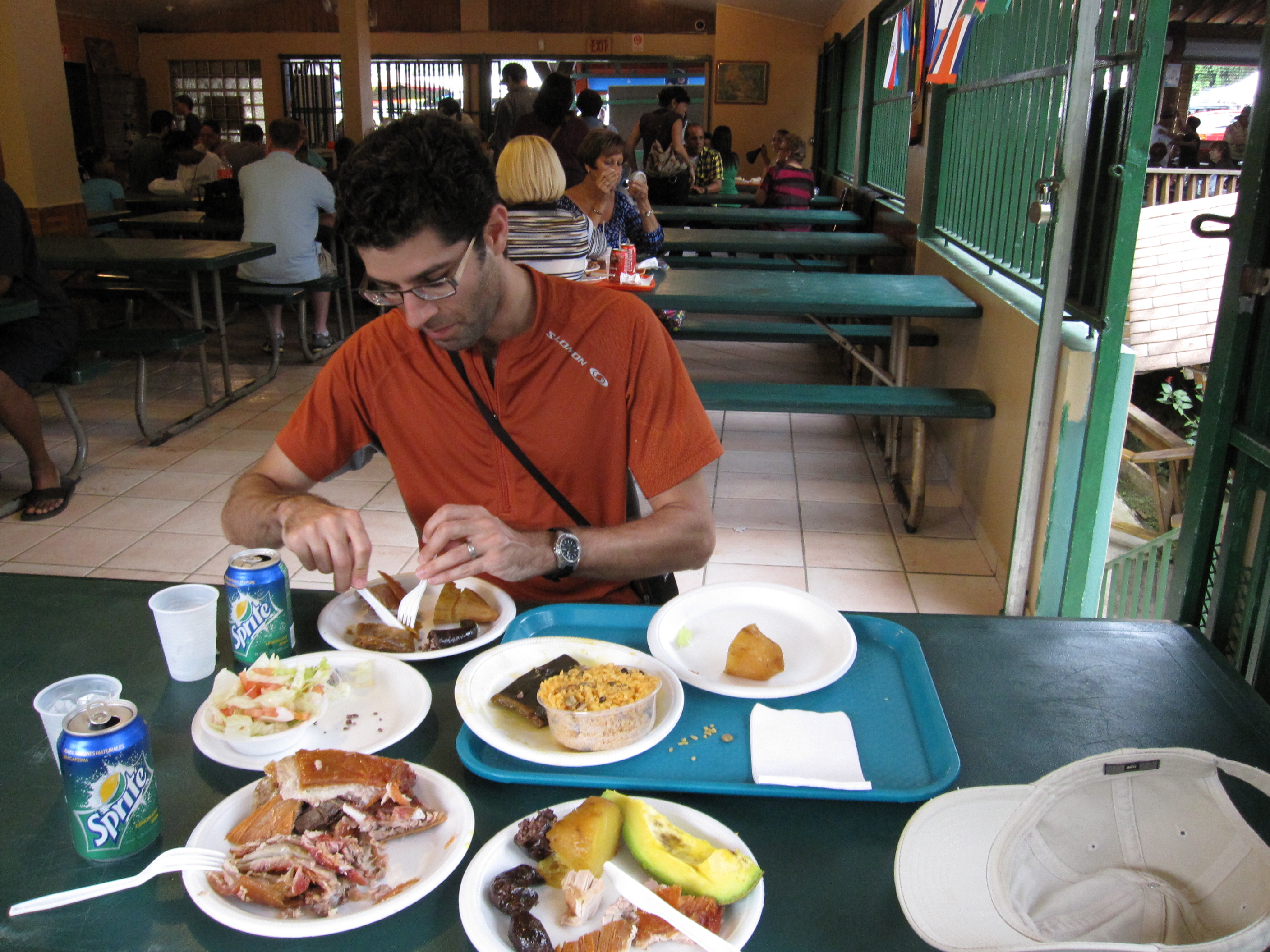
This spread was so good! It really was the best pig I’ve ever eaten. My older brother is going to be mad at me for saying this, but Jews are CRAZY!!! Along with every other culture and being who deprives themselves of such pleasure. Call me a hedonist, but that pig sure is tasty! If I could eat El Rancho Original’s lechon every day three times a day I would, as long as there was some beef and scallops peppered in there.

Pork coma. You know, a good nap is a necessary part of life.

Once the pork coma wears off you really have no choice but to start shaking your hips and moving various body parts to the rhythms of old world latin music. Or, maybe all of our bodies were just convulsing from pork overdoses. All I know is that Guavate is one of the last true Puerto Rican experiences left in this world. Something not to be missed if you’re ever in our 51st state, or commonwealth, or whatever it is.

Seafood Nabe

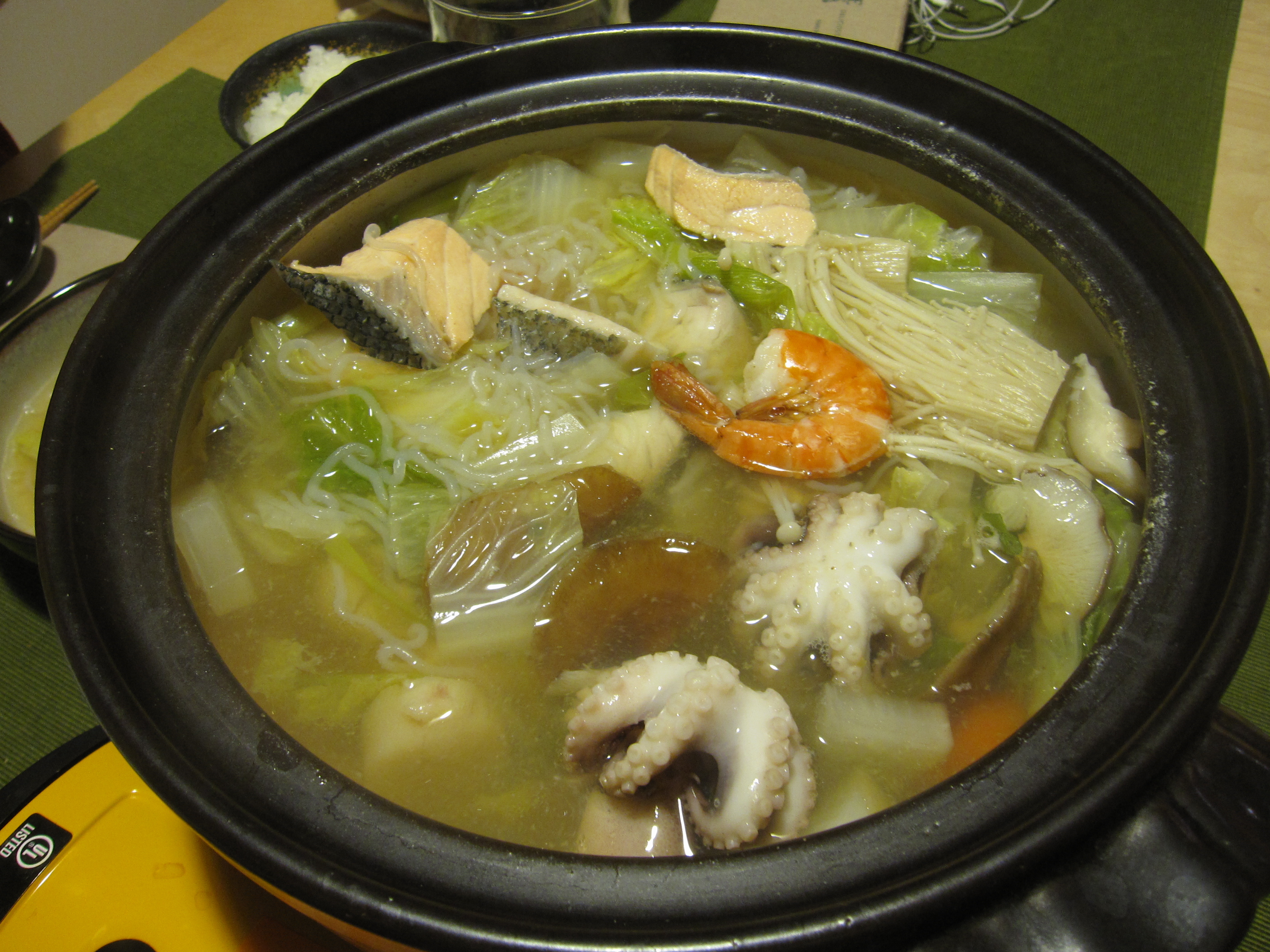
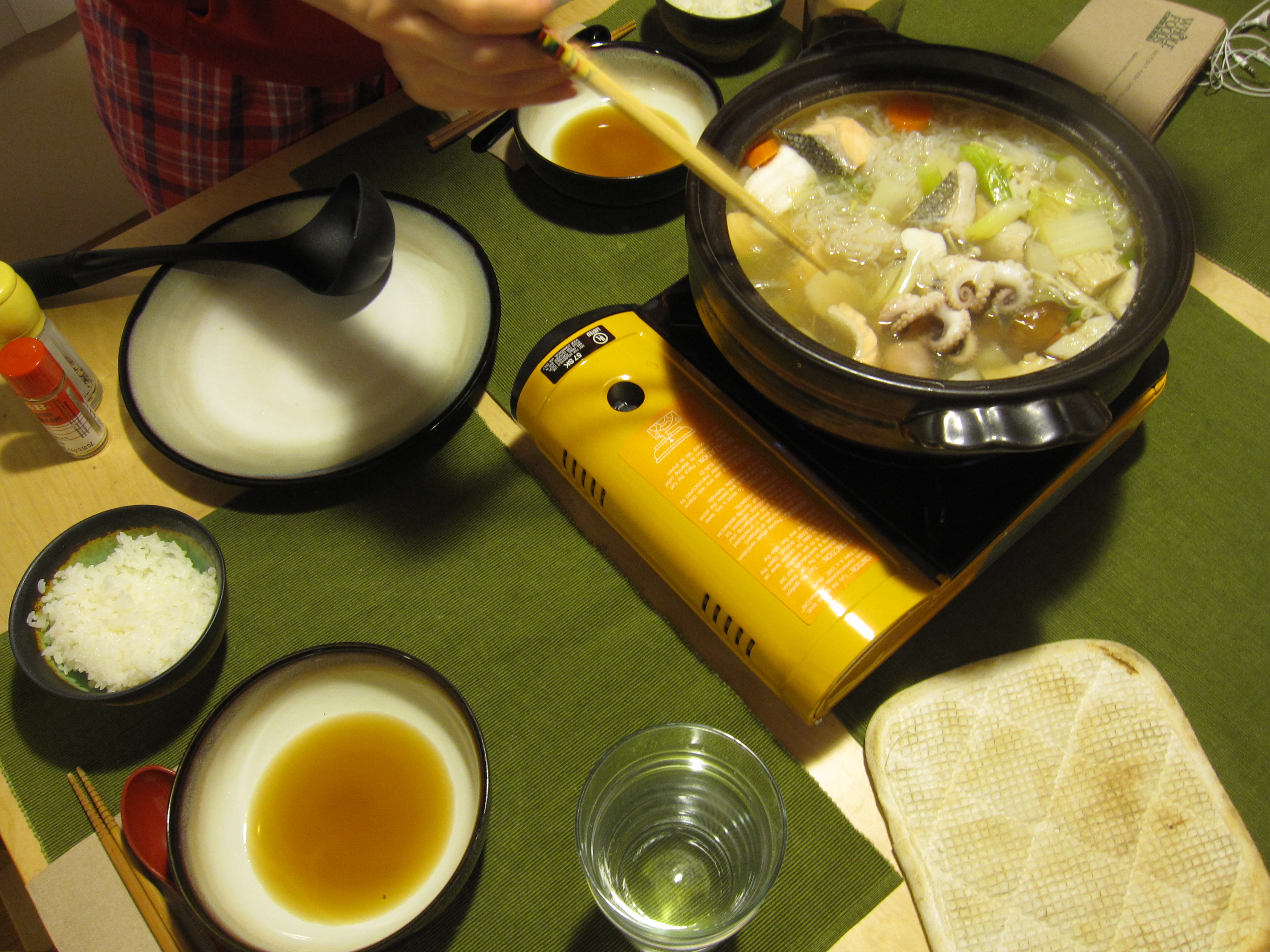
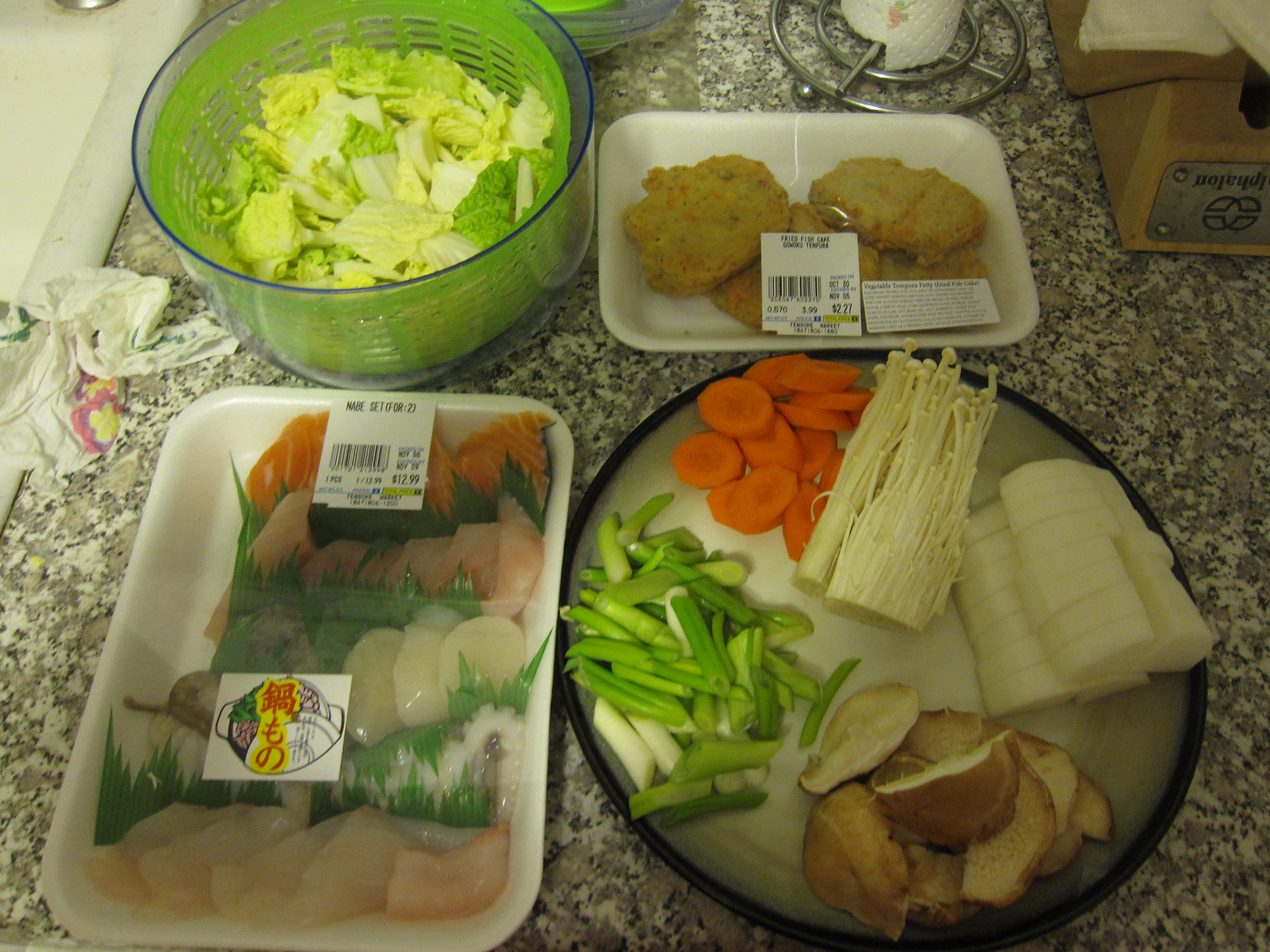
The other day we were at the Tensuke Market in Elk Grove Village, arguably the best fish market in the Chicagoland area. We were out of rice and they usually have the best deals on high quality Japanese (even though it’s all from California) rice. Sure enough, they had a great deal on some new crop. While we were there we found a package of nabe-ready seafood. Nabe is simply one-pot stew or soup cooking. Usually prepared on the stove top then brought to a table-top burner to keep warm while eating it. So, we had seafood nabe.

Yuki started by making the broth. She simply boiled about 1/4 cup of dried anchovies in about 5 or 6 cups of water for 30 minutes or so. That allows enough time for the water to take on all of that nice seafood flavor without any added oils or salts.

While the broth was boiling away I prepared the veggies. Besides the seafood package (slices of fluke, octopus, scallops, shrimp, sea bass, and salmon) I chopped up 1/4 pound of napa cabbage, 6 green onions, 1 carrot, 1 package of enoki mushrooms, 3/4 pound daikon, and 6 shiitake. There are also fish cakes in the picture, but we decided not to use them. Instead, we used 1 package of shirataki noodles which aren’t in the picture.

When the broth was ready I strained it into our earthenware clay pot and discarded the anchovies. I brought it up to a low boil and Yuki added the daikon and carrot. She let that boil for about 5 minutes or so and then added the shiitake, green onions, and cabbage. About 5 minutes later she added the rest of the ingredients.

When the stew was ready, about 5 more minutes after adding the fish, we brought it over to our table and put it on our table-top burner over low heat. We poured about 2 tablespoons of ponzu into our bowls, then ladled some broth in and started eating. We had white rice on the side.

Chizakaya

I’m just not as young as I used to be. I can tell that I was at an izakaya last night because all of that sake floating around my liver is taking its toll. However, slow-moving Saturdays usually mean fun Friday nights.

A group of Yuki’s co-workers got together last night for food and drinks at Chizakaya, a newly opened izakaya here in Chicago. Actually, it’s probably the only real izakaya in town. While there are a few places claiming to be izakayas, they’re really just sushi places. Chizakaya doesn’t serve any sushi at all. I first heard of Chizakaya a few months ago when my mom sent me an article in the Huffington Post about the very fact that there aren’t any real izakaya’s in Chicago, until now. It also mentioned that the group that opened Chizakaya came from L2O, arguably Chicago’s finest seafood restaurant. Naturally, it made the list of places I wanted to go. With Yuki’s group meeting there last night I took the opportunity and ran with it.

I got there before the rest of the group, except for the two white guys in her work team (everyone else is Japanese). We sat at the bar and had a glass of sake while waiting for everyone else. I will say that the bartender knows his sake! It’s not a huge sake list, but a very well put together one with a good variety at all price points. He also gave us each a sample of sweet potato shochu, something none of us have ever had. It’s actually quite good.

Once everyone showed up they took us to the back room at one of the two big tables. I like it much better back there because the kitchen is open and the atmosphere is a little more izakaya-like.

Our waitress was also well-trained in the art of sake flavors as well as their menu. True to being an izakaya, the menu is based on small plates and nibbles to go along with drinking. We ordered a bunch of things and just grabbed and ate as we went, along with numerous bottles of sake. Since I’m drinking for 3, I’m struggling to keep my eyes focused as I write this.
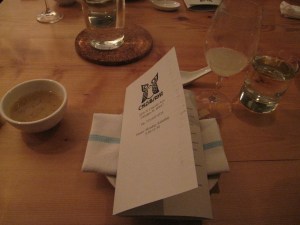
As we sat they brought out little bowls of miso soup. Really good miso, they got the ratio of miso-to-dashi right. Instead of wakame which is typically put in miso soup they used hijiki.

Japanese sweet potato fries with spiced mayo.
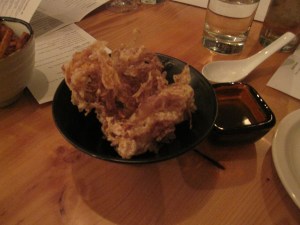
Puffed pig ears with togarashi soy dipping sauce. Move over potato chips, these little cracklins are fantastic!

Crispy pork with a slow poached egg.

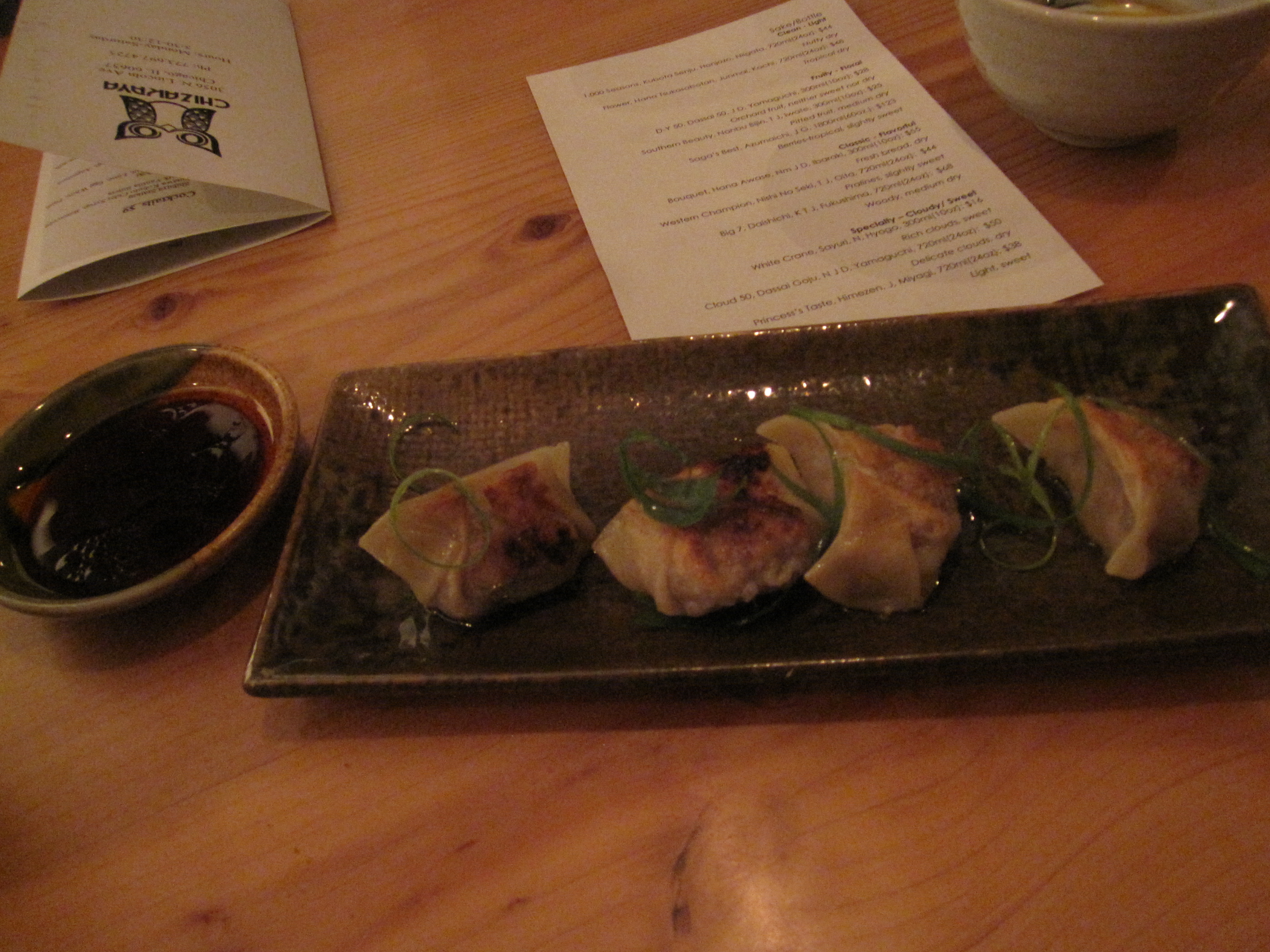
Pork shoulder gyoza. The gyoza could have been a little bit crispier, but the braised pork shoulder filling more than made up for that shortcoming.
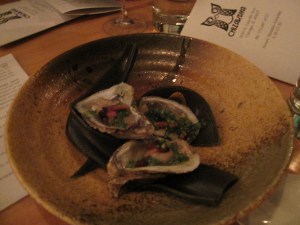
Oysters with bacon and shishito. I don’t know if the bacon was over smoked or if they added a little liquid smoke, but there was a bit too much smokiness to this one. The natural sweetness of the beautiful little oysters was lost. Cut back on the smoke and this one is a winner.

Grilled ika togarashi with a yuzu vinaigrette. This was some of the most tender squid I’ve had in Chicago.

This was one of the night’s specials, duck liver karaage with scallions. Little deep-fried nuggets of ducky deliciousness!

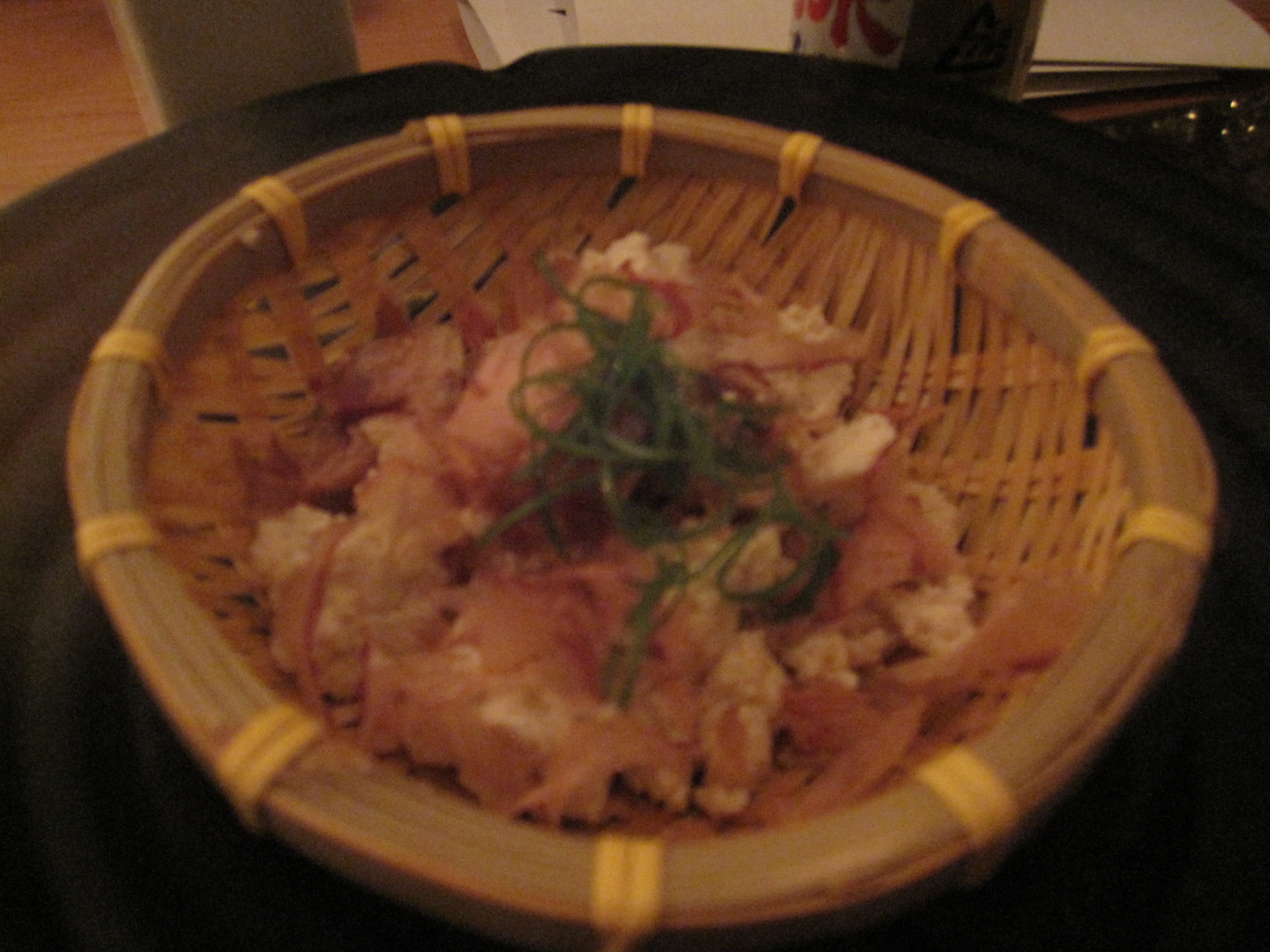
Home-made basket tofu with bonito flakes, scallions, ginger, and soy sauce. You haven’t had tofu until you’ve had a really good home-made tofu. This was a really good home-made tofu. Totally different beast than the store-bought packaged tofu. Very clean, very light, very tasty.
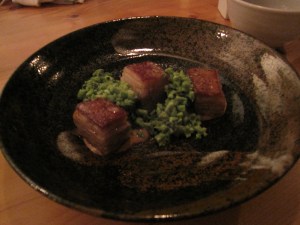
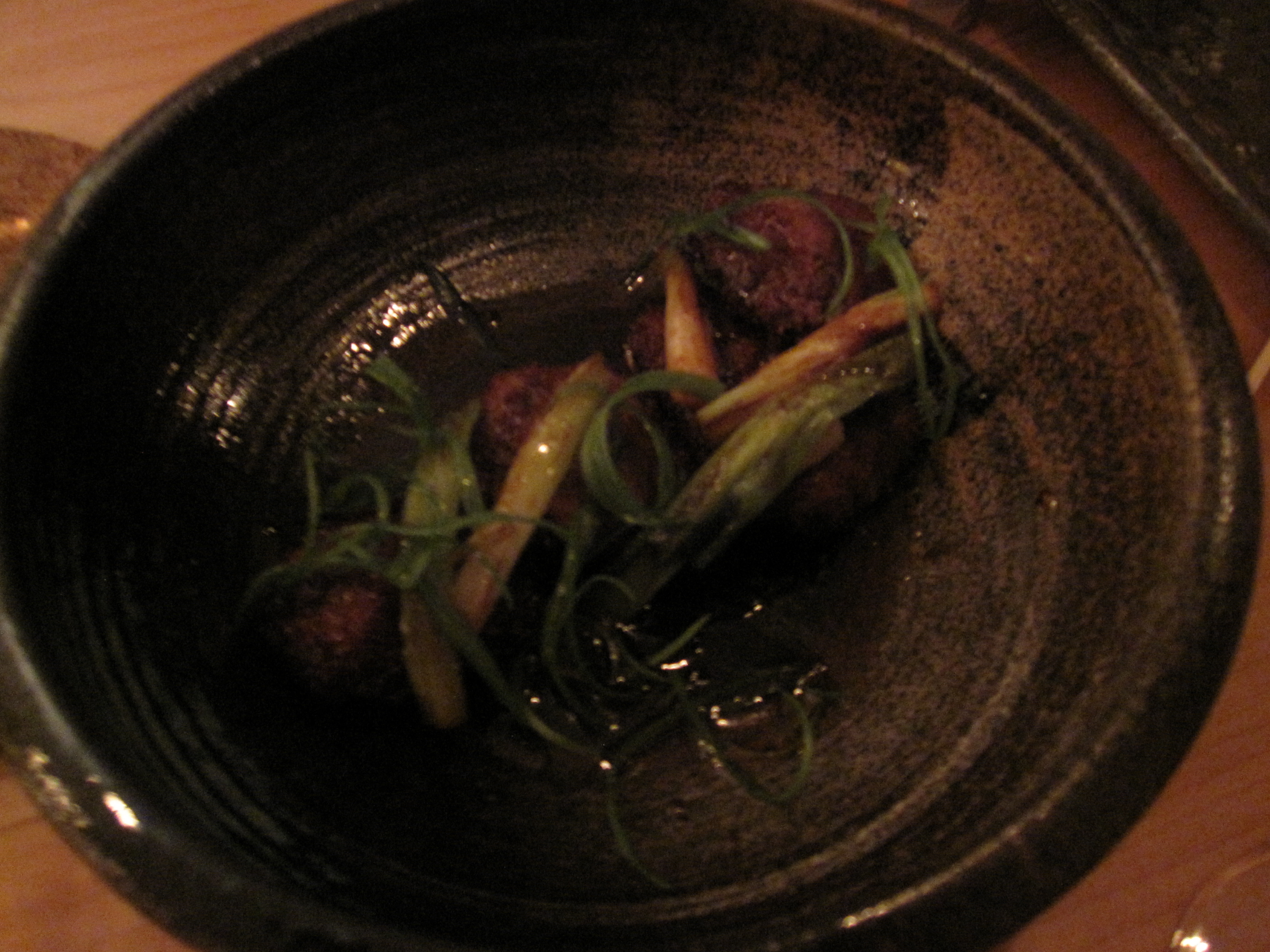
Crispy-braised lamb belly with chopped edamame. This one was another of the night’s specials and quite honestly, one of the most special dishes I’ve ever eaten! I’ve never had lamb belly before and after eating it am wondering why. You see pork belly everywhere as it’s one of the more trendy cuts of meat these days. As much as I love pork belly, and I do love pork belly, I’d drop it in a heartbeat to sink my teeth into some lamb belly. That layer of belly fat may be the most lamby of all lamb flavors that animal has. I absolutely luz it! The only thing that would have made this dish better would be to puree the edamame into a thick sauce instead of leaving it chunky. Otherwise it was perfect.

Now, I’ll show you all of the kushi-yaki (grilled skewers of meat) that we had.
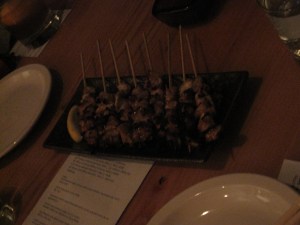
Chicken skin, mother of schmaltz how I love thee!

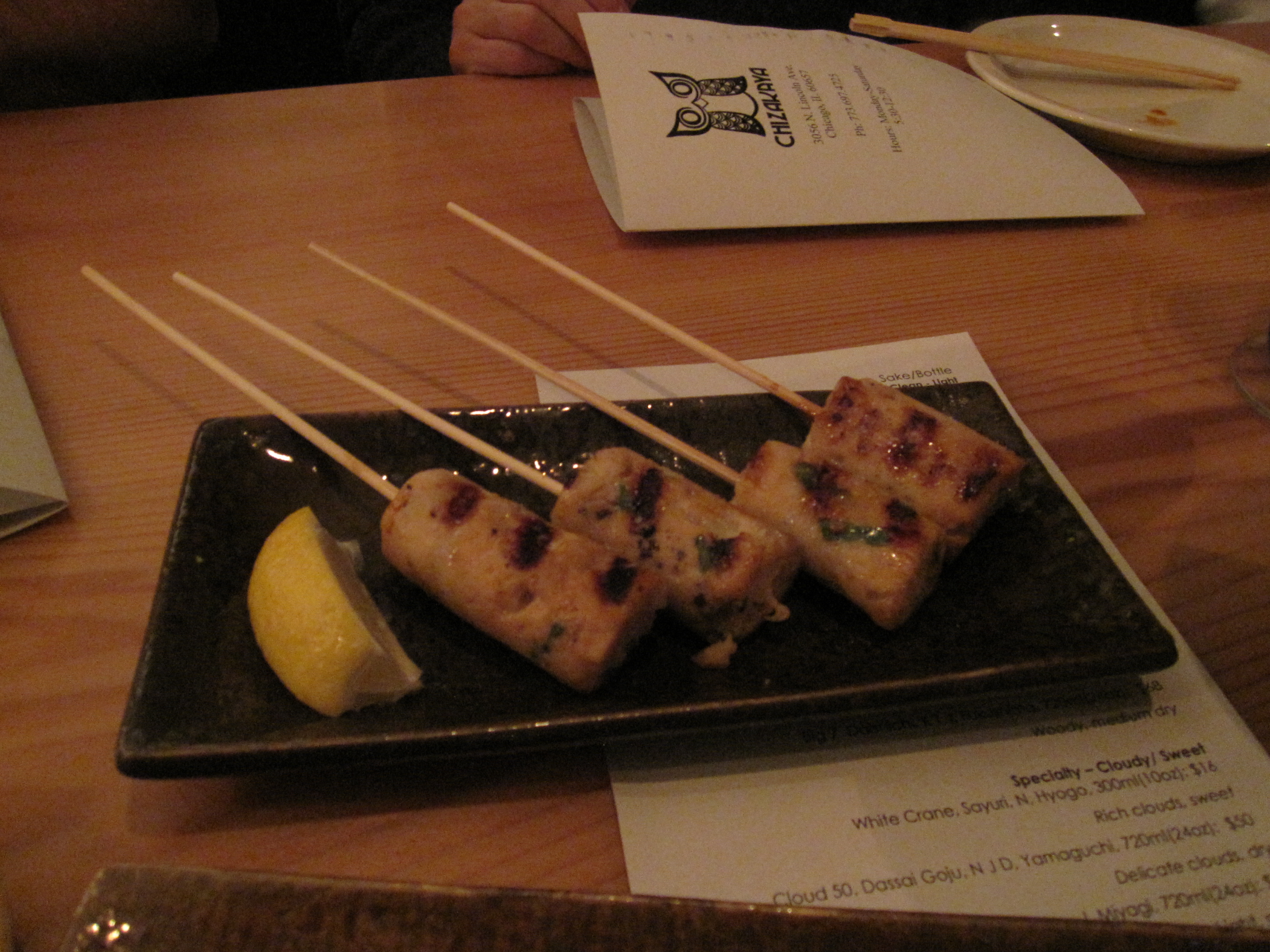
Chicken meatballs.
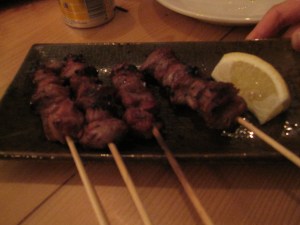
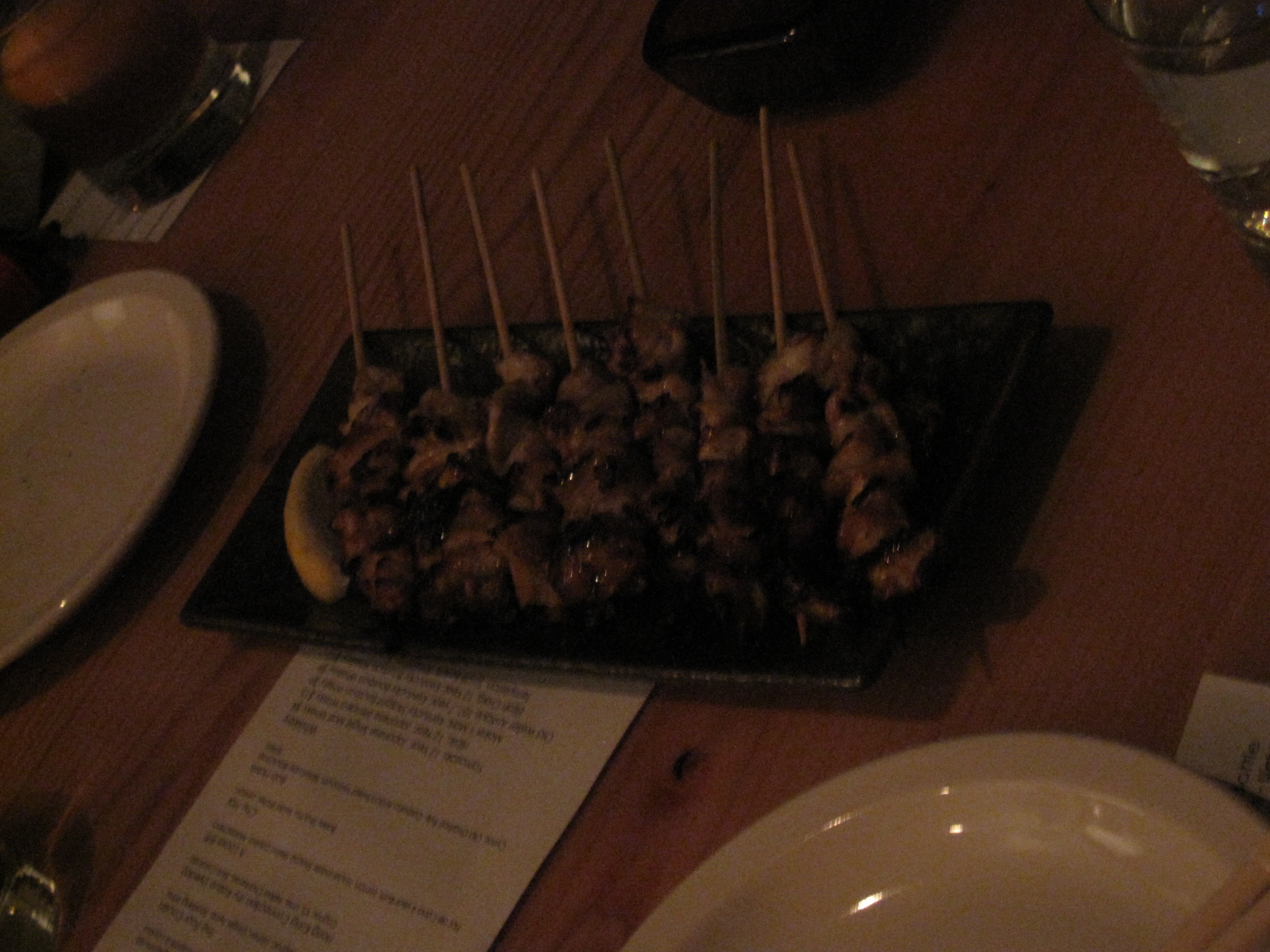
Chicken gizzards, next to liver and sweetbreads my favorite offal.

Beef heart, surprisingly tender and juicy for such a hard-working and lean muscle.

Beets with shiso, both red and golden.

We also ordered a the ramen and oden. Both of which were, quite honestly, very disappointing.
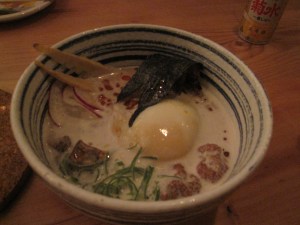
The ramen came with braised pork, fish balls, a slow poached egg, radish, bamboo shoot, shredded scallions, and some nori. The ingredients were all top-notch, but the noodles were overcooked and soft while the broth wasn’t quite were it needed to be. With everything else so high quality I wonder why they’re using regular old store-bought quality noodles. This bowl of ramen just wasn’t up to standards. If it’s ramen you want, head over to Arami instead.
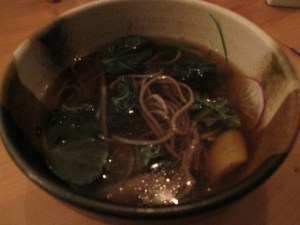
The oden wasn’t even close to what oden is. Oden should be a dashi broth filled with various fish cakes, potato, hard-boiled eggs, konyakku, etc. It’s something that we make at home a couple of times every winter. This was nowhere near oden. This was a soy-based dashi with overcooked soba noodles, a few spinach leaves, a couple of pieces of potato, some slices of radish, and a few adzuki beans. It wasn’t a terrible noodle soup, but they shouldn’t call it oden and they should be more careful with the noodles.

Now, on to desserts, which were all very creative and well-prepared.

Yuzu cake with green tea ice cream.
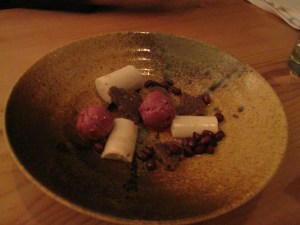
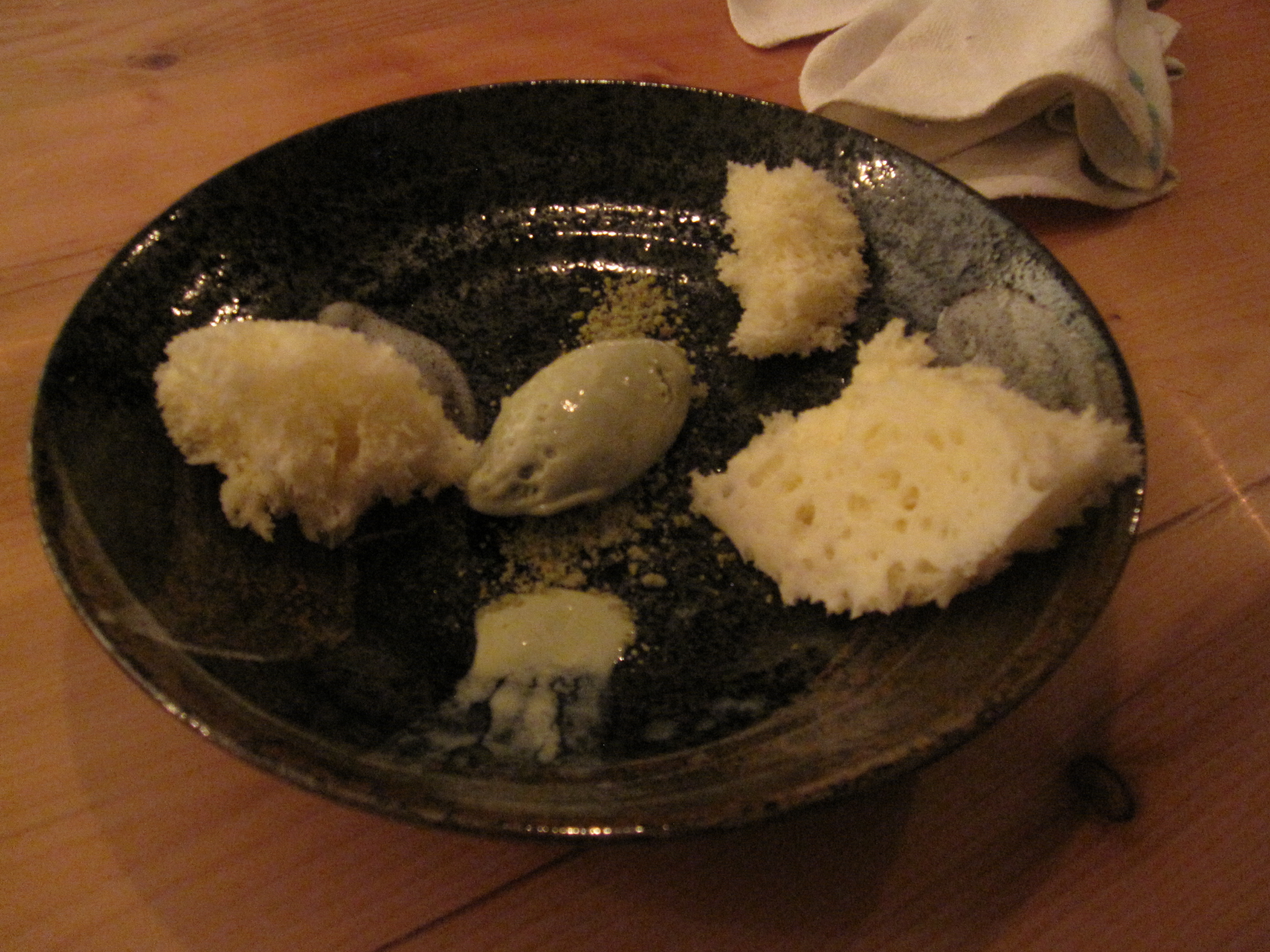
Tofu cheese cake with kuro mitsu (black honey) and adzuki bean sorbet. Usually you see adzuki bean ice cream, making it a sorbet was a nice touch.

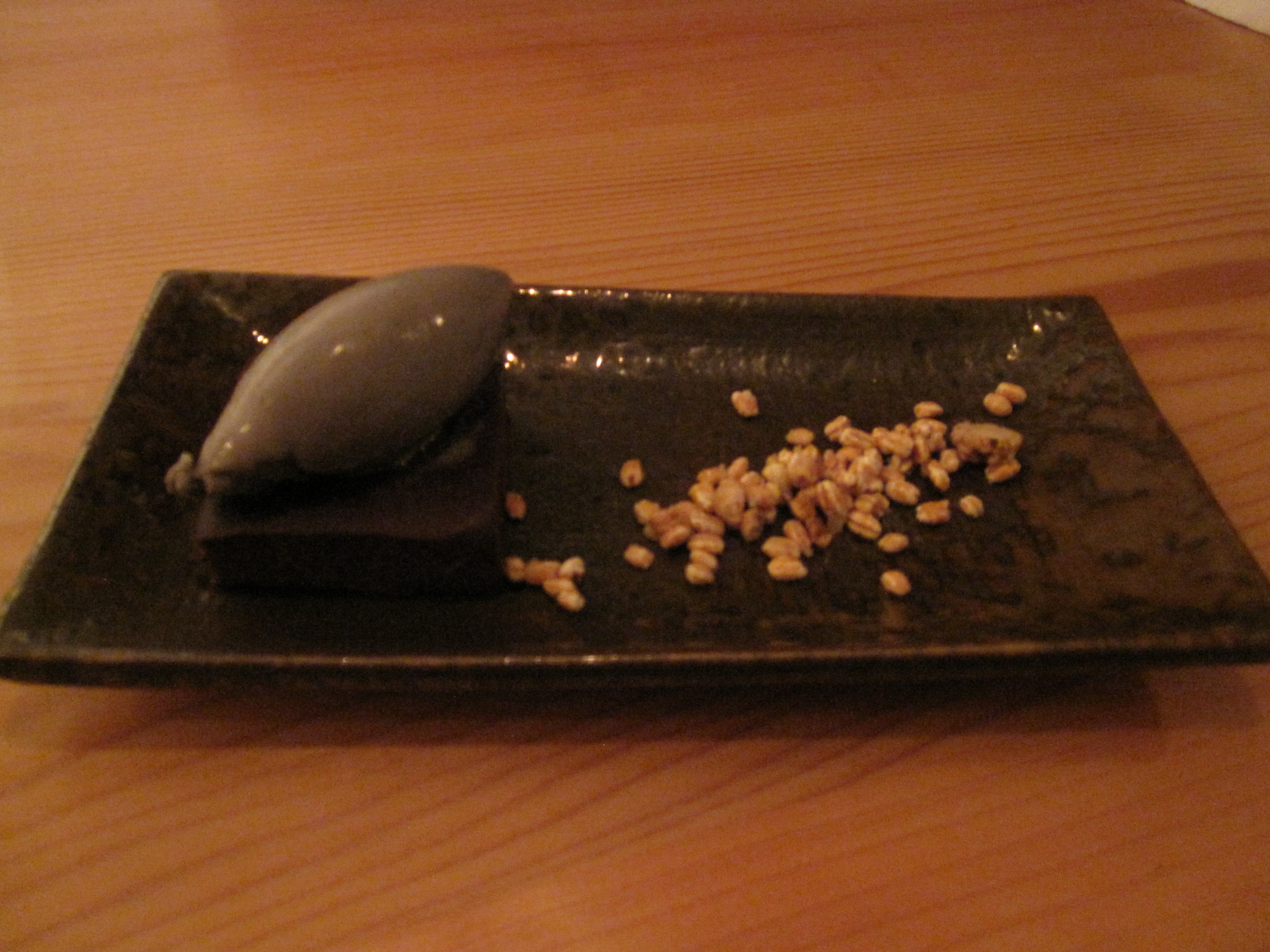
Chocolate ganache with puffed barley and black sesame ice cream.

I will say, that all three desserts are among the best desserts I’ve ever had at a Japanese restaurant.

Overall, Chizakaya is a fun atmosphere with great food. There were a couple of lows, oversmoked bacon and poor noodle soups, but the rest of the food was outstanding. Don’t come here expecting a substantial sit-down meal. Come here expecting a great list of sake, beer, and cocktails with delicious small plates and skewers to match. In that sense, this is a true izakaya. They also use top quality ingredients from local sustainable farms, and you can taste the difference. I will definitely go back, I just have to be more mindful of the amount of sake that I guzzle.

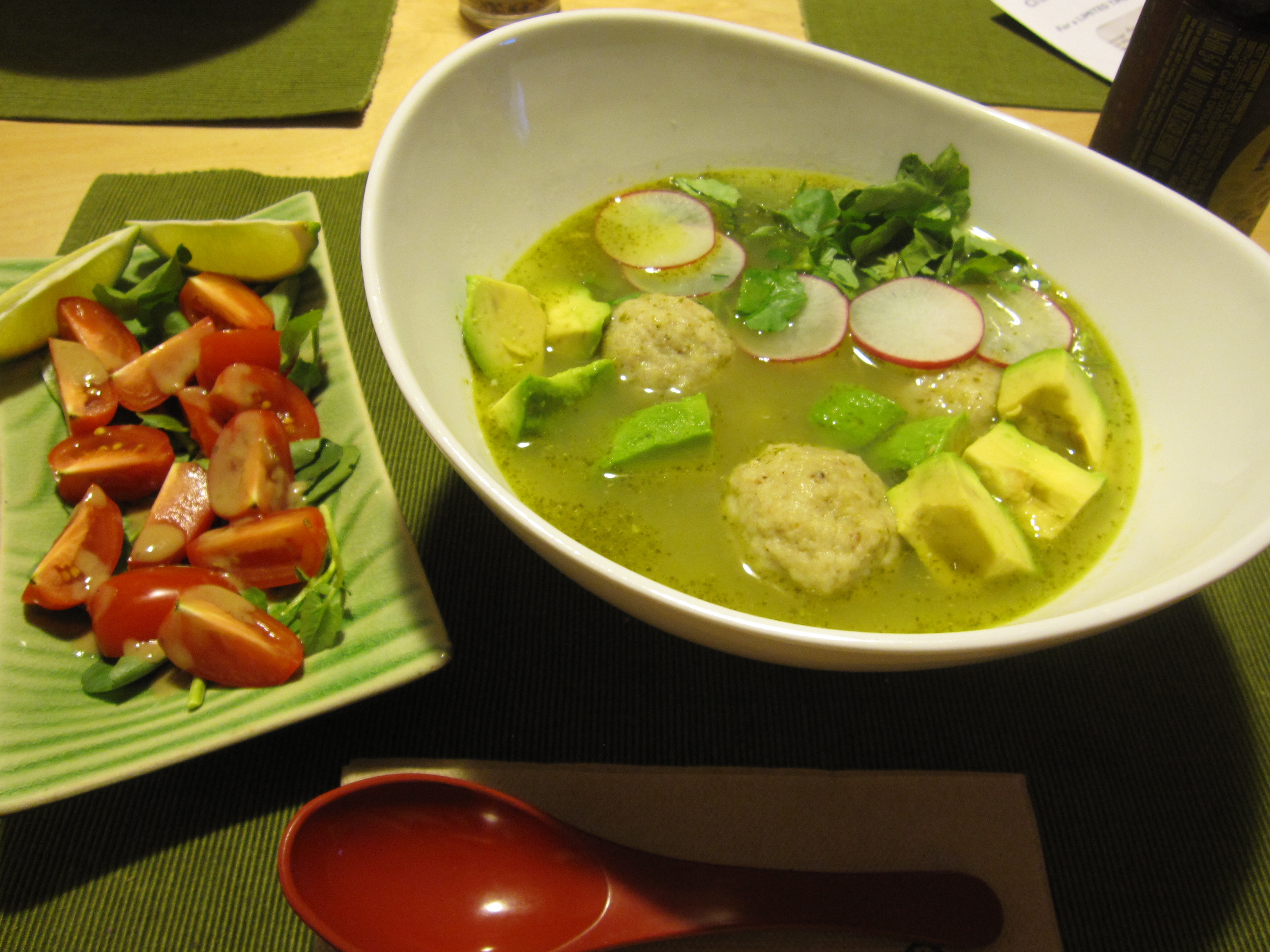
With the weather getting really cold here in Chicago already, my mind starts to go towards stews, braises, and soups. Being Jewish, a good chicken soup with matza balls is always a winner (at least the way I make it), but I wanted to do something different. Since my mom lives in Mexico I thought I’d make a Mexican-Jewish soup. I made a relatively classic chicken pozole verde but dropped some matza balls in the soup instead of tortilla chips. 

Most of the recipes I found online used a combination of store-bought chicken broth and water with chicken breasts. Making a simple chicken broth is really easy so I opted to use plain water and chicken thighs. Dark meat has much more flavor than white meat and I never use breasts when making a soup. What I did was bring 10 cups of water to a boil and then put 2 pounds of skin-on bone-in chicken thighs in. Once it came back up to a boil I turned the heat down to medium and let it simmer for about an hour. Every 10 minutes or so I skimmed the surface to remove the muck and some of the excess fat. Once I had gotten all of the chicken flavor into the broth I removed the chicken, took off the skin and bones, and shredded the meat. I set the meat aside while I prepared the verde part of the soup.

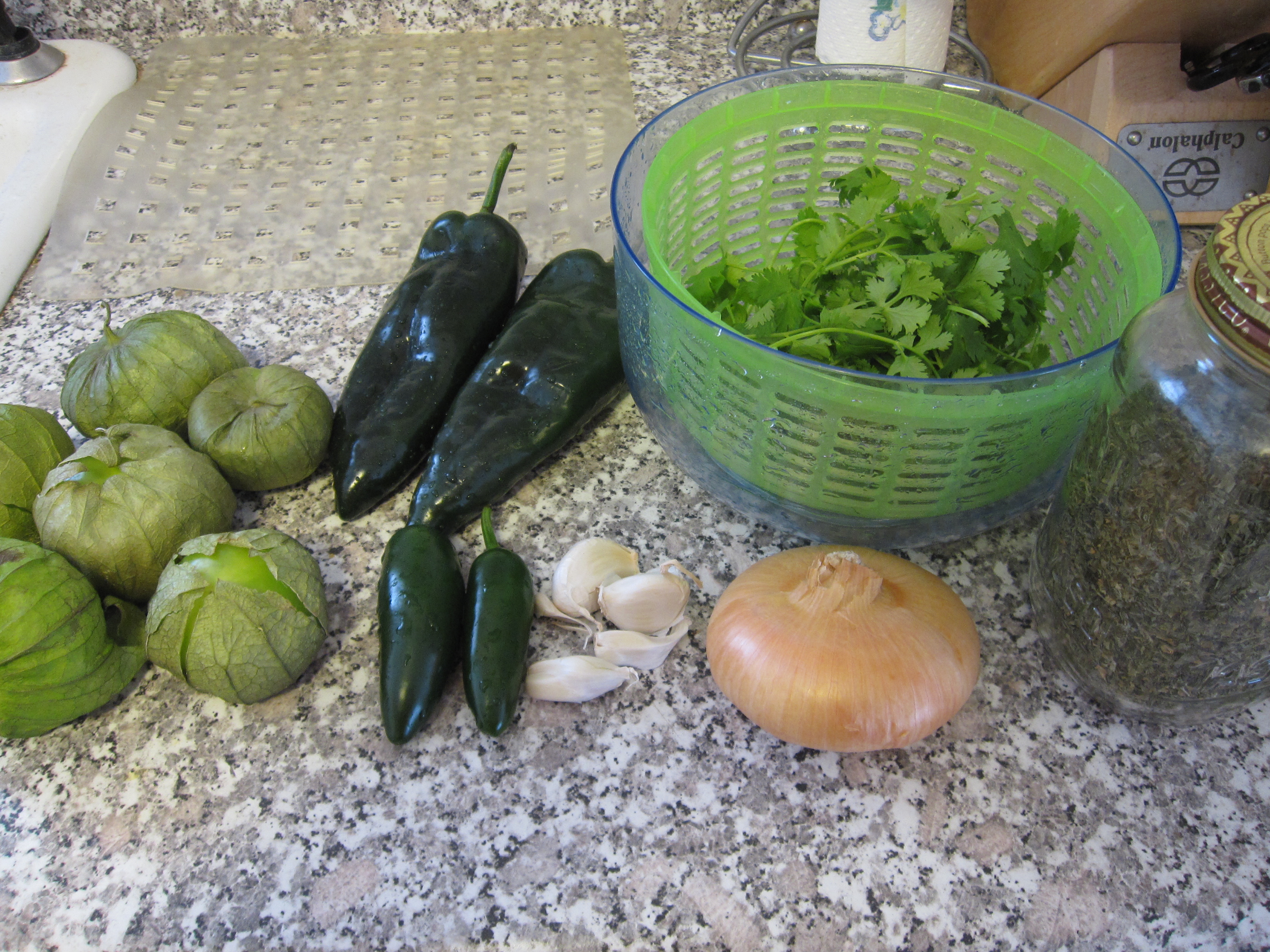
The verde part is really just a simple salsa verde, much like you’d be served at a taqueria with chips. I used 1 pound of tomatillos, 2 poblanos, 2 jalapenos, 5 garlic cloves, 1/2 cup of cilantro, 1 small onion, and 1 tablespoon of dried oregano. I gave everything a rough chop and tossed it into my processor. I processed it into a smooth salsa and added a ladle of the broth to make sure everything mixed nicely.

I heated up a soup pan and poured in 1 tablespoon of vegetable oil and then added the verde. As you can see from this picture it started off a nice bright green. About 10-15 minutes later with occasional stirring…
…you can see it took on a much more drab color. That’s what you want in order to get rid of the raw flavors of the garlic and jalapeno and whatnot. Then I poured it into the broth and made the matza balls.

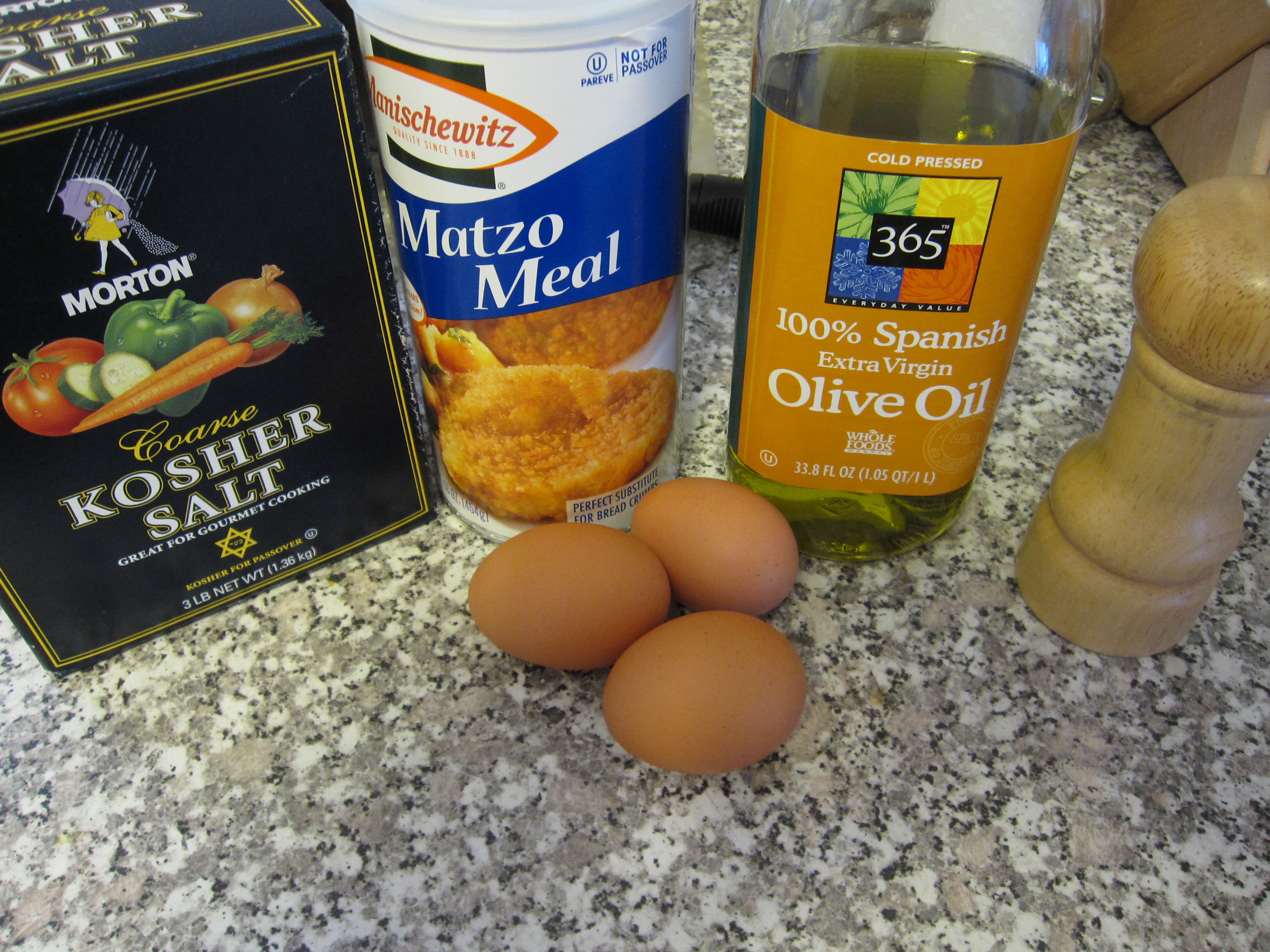
The last time I made matza balls my mom called me out for using matza ball mix. So, this time I did it from scratch. Honestly, there really isn’t much difference. I used 1 teaspoon of salt, 1 cup of matza meal, 3 eggs, 3 tablespoons of olive oil, and some cracked black pepper to taste. I mixed everything thoroughly in a glass bowl, added about 4 tablespoons of cold water and mixed that in, then covered the bowl and threw it in the fridge for about 45 minutes.

Then I got the accoutrements ready for the soup. I got out the shredded chicken, 3 radishes thinly sliced, 1 avocado, a 28 ounce can of hominy drained and rinsed, and a large handful of watercress chopped. I added the chicken and hominy to the soup and slowly brought it back up to a low boil while the rest of the ingredients stood aside and waited their turn.

When the soup was at a low boil I got the matza ball mix out and turned it into matza balls. With moist hands I rolled out balls about the size of silver dollars and dropped them in the soup. A lot of people cook theirs in plain boiling water and then add them to the soup. I’ll never understand why as that prevents them from absorbing the broth’s flavor. I want tasty balls! Once my balls were all swimming in the soup I covered it up and let them cook for about 30 minutes.

For a side I just made a simple tomato and watercress salad. I quartered a bunch of cherry tomatoes, laid them on a bed of watercress, and drizzled some sesame dressing on top.

To garnish the soup I added the sliced radish, the watercress, I diced the avocado, and squeezed some lime juice in.

Maple-Soy Salmon

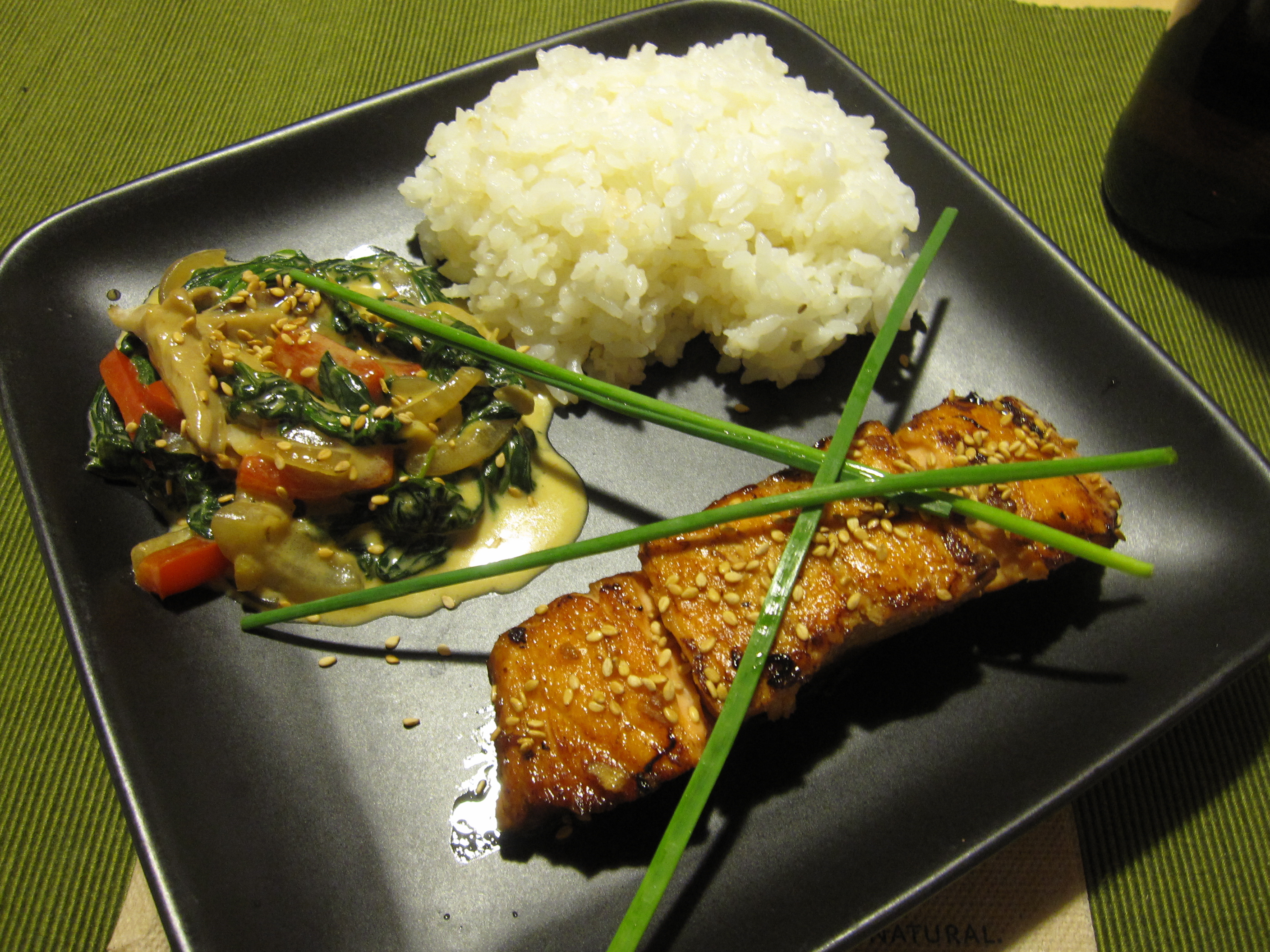
Last night I made a teriyaki-like salmon dish using maple syrup. To go with it I made sort of an Asian flavored creamed spinach with shiitake and pepper. With iron, folic acid, and omega-3’s on my mind, this dish packed them all in and then some.

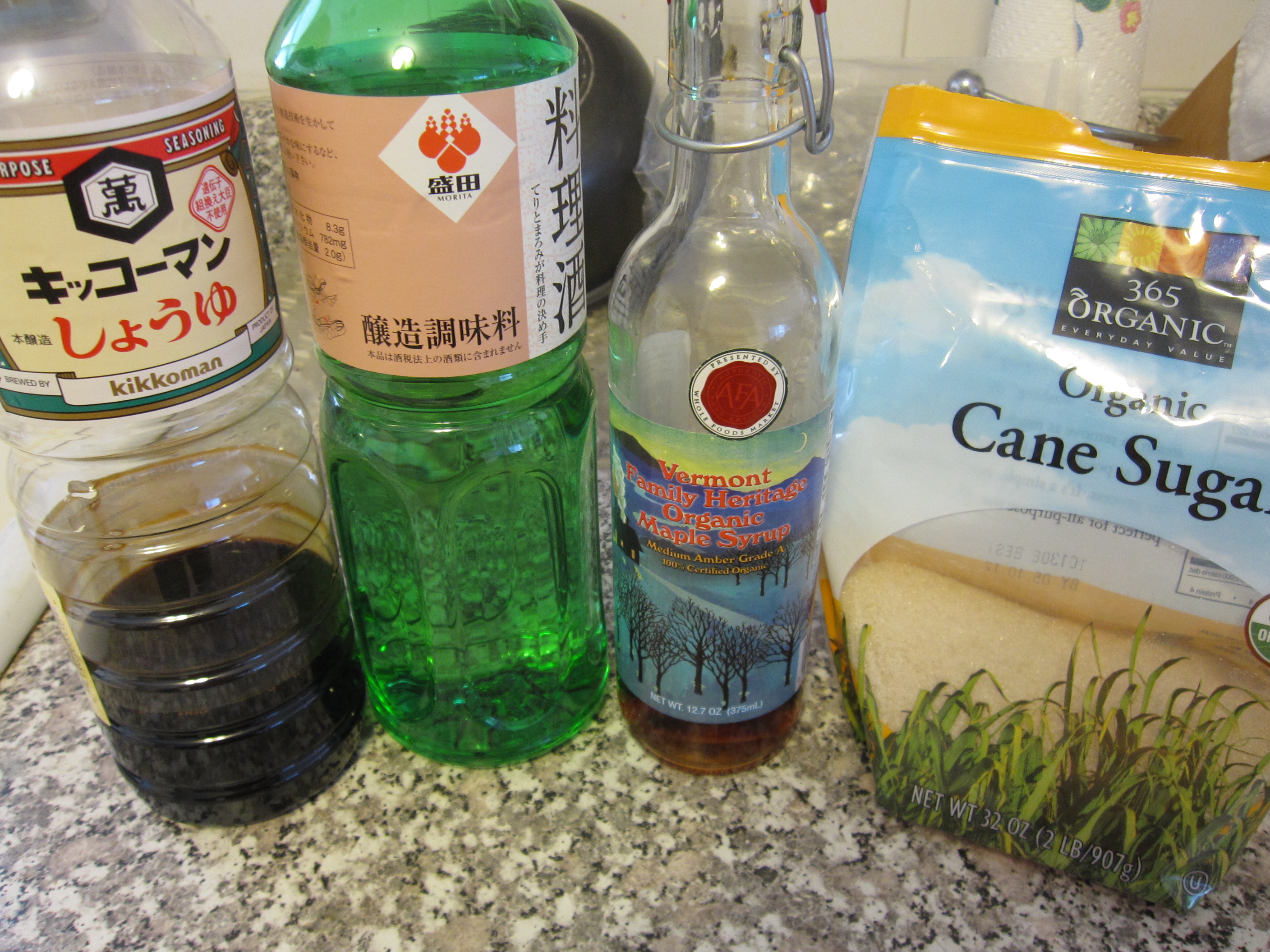
First thing I did was make the sauce. I mixed together 2 tablespoons soy sauce, 1 tablespoon sake, 1 tablespoon maple syrup, and 2 teaspoons of sugar. I set that aside and then marinated the salmon.

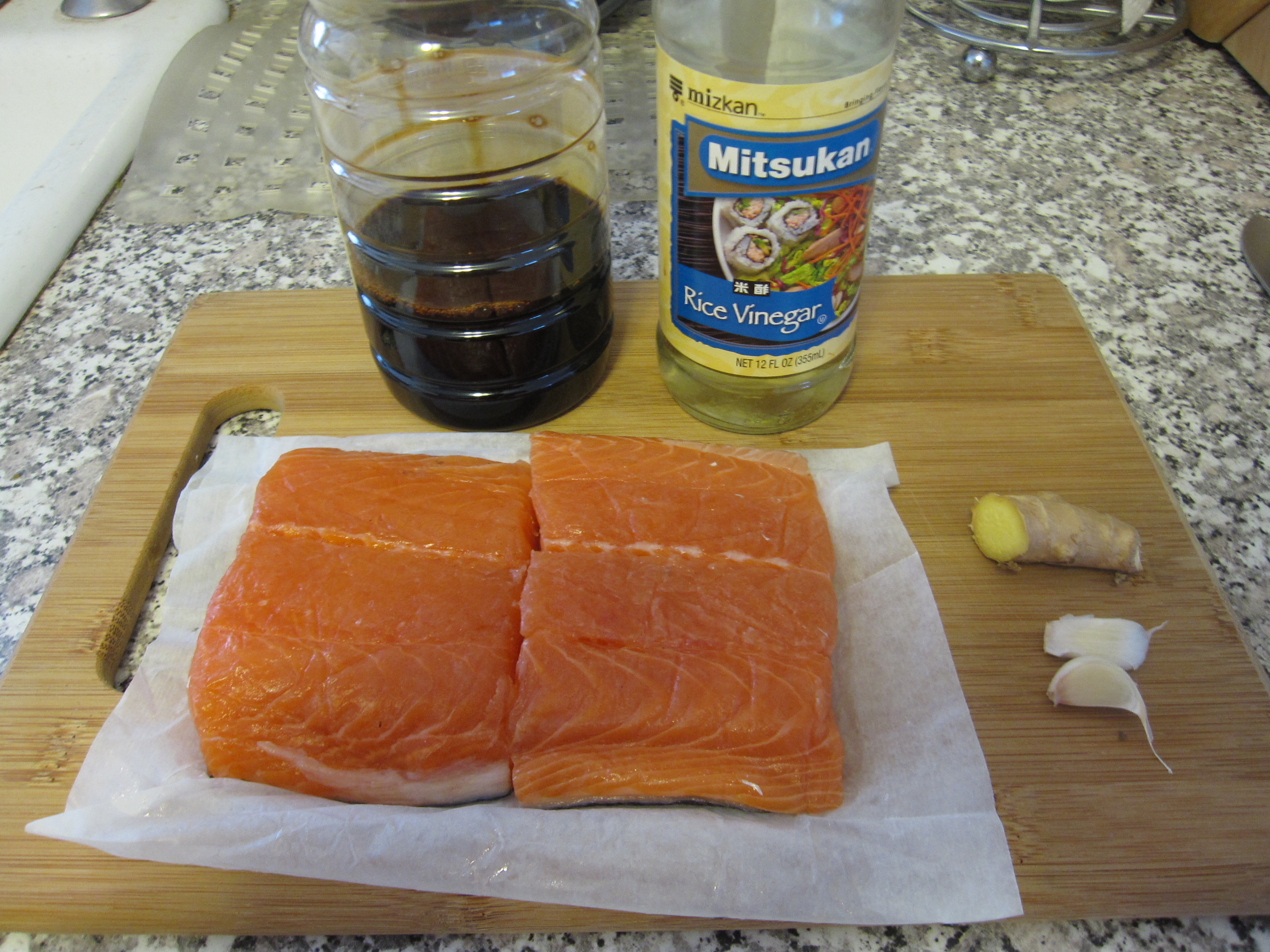
The marinade consisted of 1 tablespoon grated ginger, 2 grated garlic cloves, 2 tablespoons soy sauce, 1 tablespoon rice vinegar, and some fresh cracked black pepper. I had two 8 ounce salmon filets that I cut in half, giving me 4 4 ounce filets (check the math on that one). I coated them in the marinade, covered it up, and let it sit at room temperature for an hour.

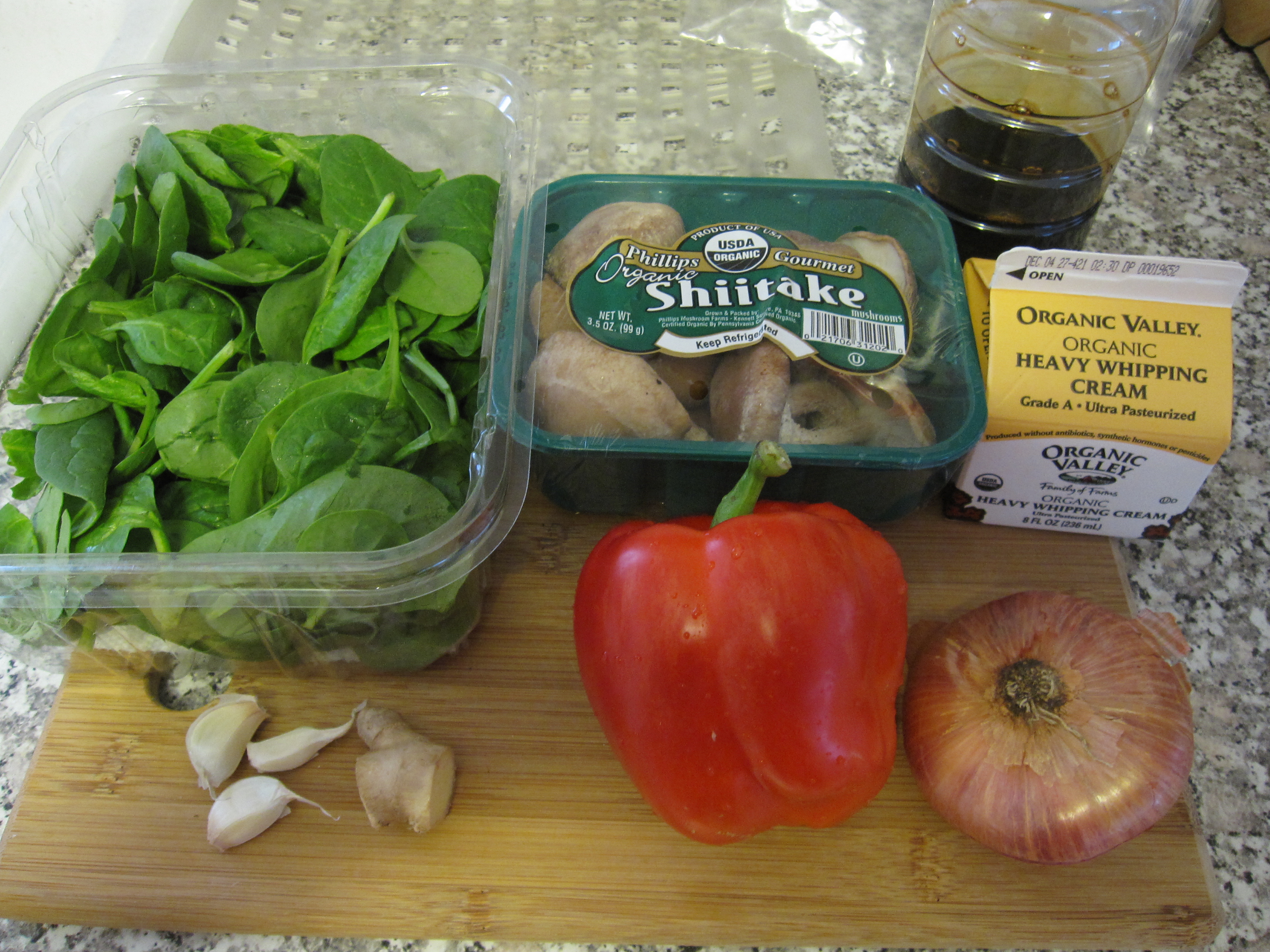
While the salmon was marinating I got the ingredients ready for the creamed spinach. I had a container of spinach, 3 garlic cloves, sliced, 1/2 inch of ginger slivered, 7 shiitake sliced, 1 red bell pepper chopped, 1 small red onion sliced, 1 tablespoon soy sauce, and 1/2 cup of heavy cream.

For the actual cooking I had to do the salmon and spinach at the same time. I’ll write about it separately, but it was a busy 10 minute stretch or so.

I heated up a large skillet over high heat and then poured in 2 tablespoons or so of sesame oil. I laid the salmon in skin-side up and let it cook for about 4 or 5 minutes, until it got a nice crust and easily released from the skillet. I poured the marinade into the maple mixture. When I flipped the salmon filets, after a couple of minutes, I poured the sauce all over each filet and let it cook for a few more minutes. Make sure you fan is on, it’ll get a little smokey. Once the sauce carmelized I turned off the heat and set the salmon on a plate.

In a separate saute pan I heated up 2 tablespoons of sesame oil and added the onion, pepper, shiitake, ginger, and garlic. I sautéed it for about 5 minutes and then added the soy sauce. About 2 minutes later I poured in the cream. Once the cream had reduced a little I added the spinach by large handfuls until it all wilted down and the cream had thickened up into a nice sauce.

Of course, some white rice on the side never hurt anyone. I garnished everything with some toasted sesame seeds and whole chives.