Feeds:
Posts
Comments

Posts Tagged ‘onion’

This dish is a simple riff on the classic Beef and Barley Stew. As cheap as stew beef is, ground beef is even cheaper. So, this is a great way to save some cash while still making a delicious and healthy dish.

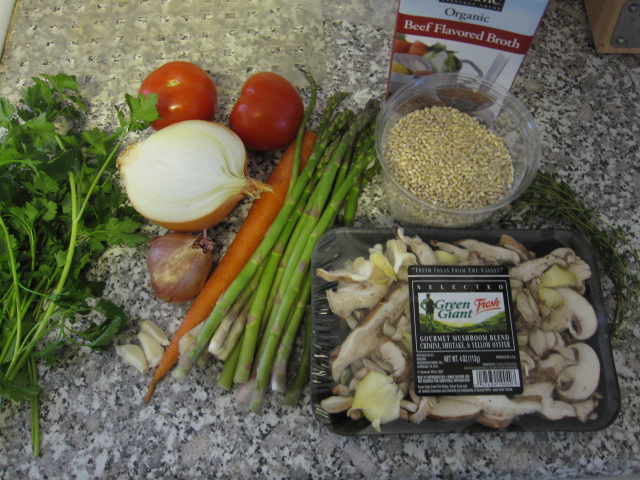
For the stew I used a handful of parsley chopped, 2 tomatoes chopped, 1/2 onion diced, 1 large shallot diced, 3 cloves of garlic minced, 1 carrot diced, 9 asparagus stalks chopped, 4 cups of beef broth, 2/3 cup of hulled barley, 4 ounces of mixed mushrooms sliced, and a big sprig of thyme.

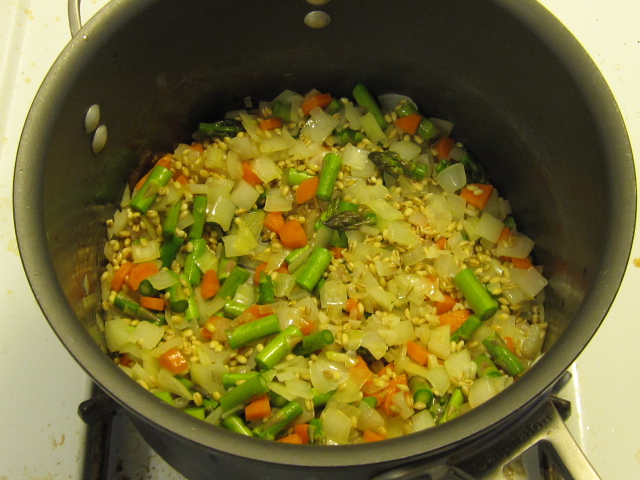
I heated up a pot and poured in about 2 tablespoons of olive oil and added the garlic. About a minute later I added the onion, carrot, and shallot. I let them sweat down for about 5 minutes and then tossed in the asparagus. I just wanted the asparagus to get nicely coated with the olive oil, so I only let it go for a minute or two before adding the barley. I let the barley sort of toast in the hot oil for a few minutes.

After that I poured in the stock and added the tomatoes and mushrooms as soon as it came up to a slow simmer. Then I dropped the thyme in, covered the pot, turned the heat to med-low, and let it simmer for about 30 minutes.

While the barley was stewing I made my meatballs. In a glass bowl I beat 1 egg. To that I added about 2 tablespoons of fresh grated Parmigiano Reggiano, fresh bread crumbs from 2 pieces of bread, 3 cloves of garlic minced, and 2/3 pound of ground beef. I mixed it all together and then formed walnut-sized meatballs.

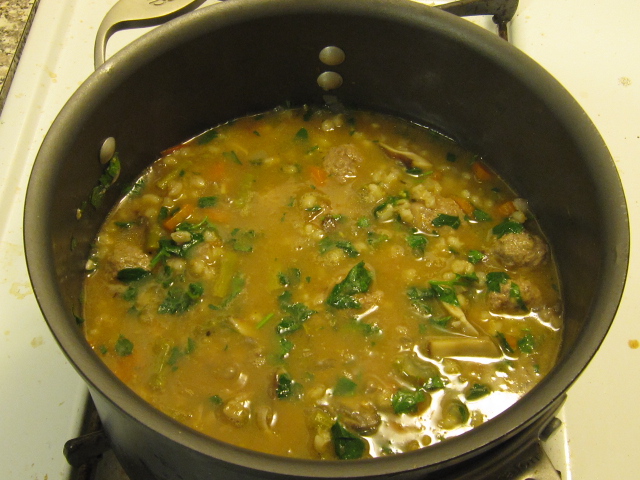
I threw the meatballs into the stew, brought it back up to a simmer, then covered it again for about 10 more minutes until the meatballs were cooked through. Then I turned off the heat, added the parsley, and seasoned with salt and pepper. I served it up with slices of french bread.

Read Full Post »

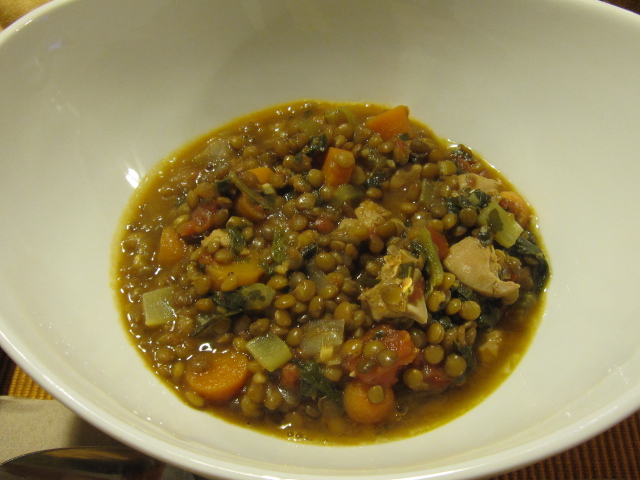
I made this dish last Monday, so I’m a little late putting up here. A couple of our friends had a party for us since we’ll be new parents in a couple of months, and we came home with leftovers. We had some vegetables from the veggie tray as well as some leftover catered Middle Eastern food. Looking in my cupboard I found some lentils and thought a simple stew would go well and help use up the ingredients.

We had brought home some celery and carrots that I diced. I also diced an onion, minced 3 garlic cloves, minced an inch of ginger, chopped up 3 skinless chicken thighs, and got out 1 cup of chicken stock, 1 14oz can of diced tomatoes, and 1 cup of lentils.

I heated up a pot and then added about 2 tablespoons of olive oil. I threw the ginger and garlic in for about 30 seconds, then added the onion, carrots, and celery. I let them sweat down for about 6 minutes and then added the lentils. I wanted the lentils to sort of saute for about 2 or 3 minutes before adding anything else.

Then I poured in the chicken stock. Once it started to boil I added the can of tomatoes and seasoned with salt and pepper. I noticed that I had a big sprig of rosemary, so I tossed that in as well. Once everything started to boil again I added the chicken. I let it come to a slow boil, covered the pot, and turned the heat to med-low. I let it stew for about 15 minutes.

I realized that I had some spinach in the fridge, so I chopped up a large handful, threw that into the stew, and let it go for another 10-15 minutes.

I served the stew with leftover hummus with pita and some Jerusalem Salad which consisted of chopped cucumber and red bell pepper with a parsley and lemon vinaigrette. I added some red leaf lettuce. The sides were all from Salam.

Read Full Post »

The other night we made Onigiri for dinner. Onigiri is great because you can pack in smaller amounts of protein which saves cash, while still making a very nutritious meal. It’s also fun to make and eat. We commonly make Onigiri to take with on bike rides and hikes.

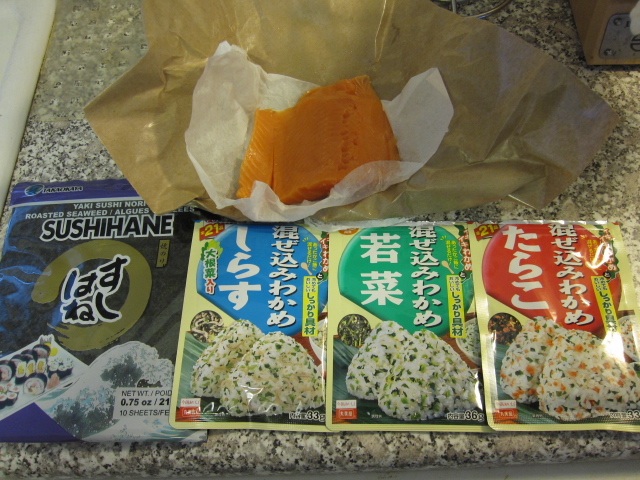
Besides warm white rice the main ingredients are typically nori for wrapping and then some sort of cooked fish or dried seaweed. For the dried seaweed the idea is that the warm moist rice will kind of rehydrate it while leaving a little texture. I used some salmon and some of these rice mixes, Mazekomi, that are available at most Asian grocers. The mazekomi in our cupboard are wakame and sesame seed, wakame and cod roe, and wakame and dried sardine.

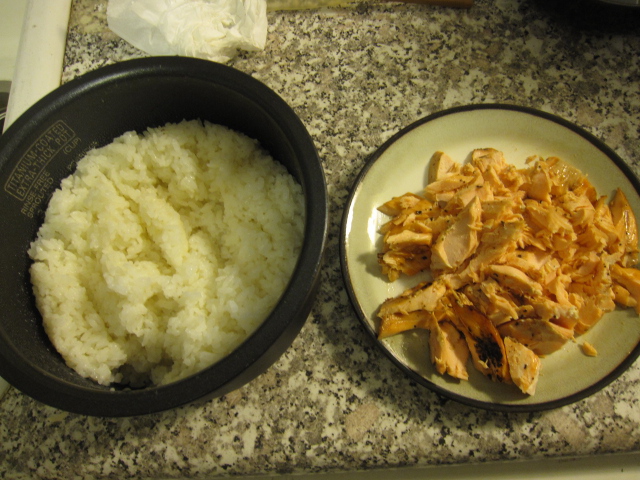
I made 2.5 cups of rice earlier in the day so that come time to make the Onigiri it’d be warm and not hot. I simply roasted the salmon with a splash of soy sauce at 350 degrees for about 15 minutes. Once it cooled down a little I broke it apart into pieces.

On a piece of plastic wrap I put down a little of the rice and spread it out. Then I topped it with some of the salmon and mazekomi. I covered it with a little more rice.

Using the plastic wrap I packed it down and formed it into a triangle. With 2.5 cups of rice you should be able to get 6-8 Onigiri no problem.

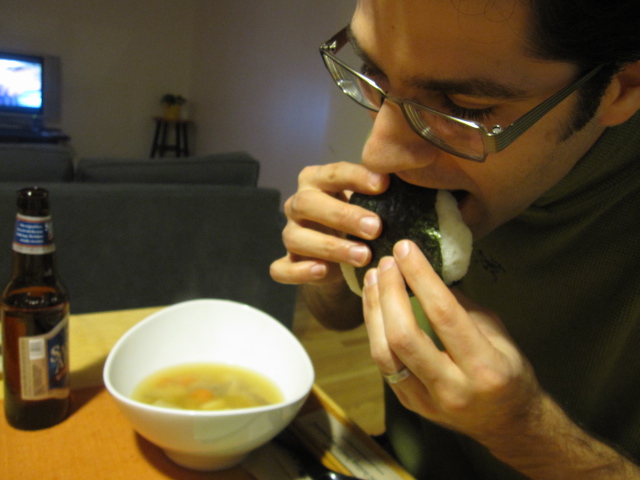
To eat it you simply wrap it with a piece of nori (if you have the regular sushi width nori sheets you’ll want to cut them in half) and let your chompers do their trick.

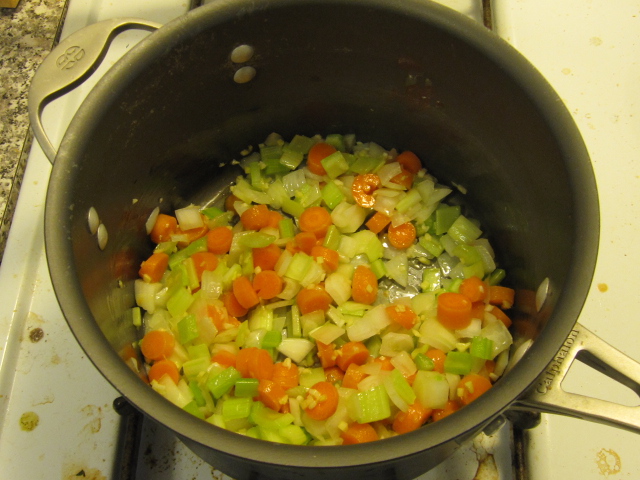
To go with the Onigiri I made some Miso Soup. I used about 3.5 cups of water, 3 tablespoons of dashi soy sauce, 1 tablespoon of miso, 1/2 onion sliced, some daikon chopped, 1 carrot chopped, 2 red skinned potatoes skinned and chopped, 3 shiitake sliced, and some salted wakame rinsed and soaked.

Read Full Post »

This is a classic stir-fry dish that I made. Typically it’d be made with snow peas, but I used haricots vert because I had some in my fridge that needed to be gobbled up. Other than that I stuck to the basics for this one.

My ingredients included a bunch of green onions sliced, 1 inch of ginger cut into matchsticks, 1 teaspoon of cornstarch, 1/2 pound of haricots vert, 1/2 cup of chicken stock, 2 tablespoons of soy sauce, 1 tablespoon of sriracha, and about 1 pound of shelled shrimp.

I started by mixing together the chicken stock, soy sauce, sriracha, and cornstarch. I whisked it together until the cornstarch was completely dissolved. I set that aside and heated up my large skillet. Once hot, I poured in about 2 tablespoons of vegetable oil and added the ginger. I let the ginger go for about 1 minute. Then I tossed in the haricots vert and let them cook for about 2 minutes. After that came the shrimp. I let the shrimp go for about 1 minute, during that time I re-whisked the liquid because starch won’t stay dissolved for very long. Once the shrimp were partially cooked and turning pink I poured the liquid in along with the green onions and a few cracks of black pepper. I stir fried it all together for about another minute or two and then served it up. After I plated I decided to tear up some cilantro for garnish.

Besides white rice I made some miso soup to go along with the shrimp. You’ve read about my miso soup numerous times so I won’t bore you with how I made it, I’ll just let you know what ingredients I used this time as it’s always different. For this batch I chopped up some rapini, 6 shiitake, 1/2 onion sliced, about 1/2 block of tofu cubed, 2 yukon gold potatoes skinned and cubed, 2 tablespoons of dashi soy (mixed into 3 cups of water for the broth), and about 1.5 tablespoons of shiro miso. I absolutely love potato and onion in my miso soup.

Read Full Post »

Very few things get my taste buds watering like a good taco. So when I asked Yuki what she wanted for dinner yesterday at breakfast and she said, “TACOS!”, I swear I was about to make love to her right there on top of our hard-boiled eggs. Tacos it is.

Before making the tacos I got my rice going. I rinsed 1.5 cups of white rice, poured in enough chicken stock to get the right amount of liquid (about 1 cup), and then tossed in 1/4 cup of thawed frozen peas and 1 diced carrot. I let it rest for a half hour and then started up the rice cooker.

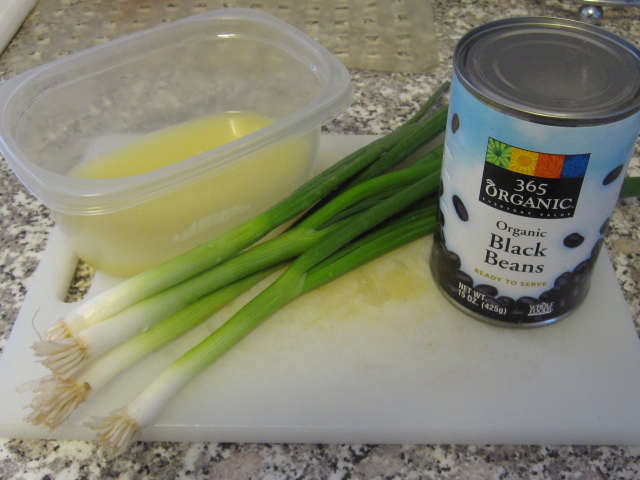
When I make tacos at home I like to have both ground beef as well as black beans for a very fulfilling taco. I don’t cook them together though. Keeping them separate allows them to retain their own flavors for full enjoyment come tortilla time. With that, to make the beans I took 1 14oz can of black beans rinsed and drained, 4 green onions chopped, and 1/2 cup of chicken stock. I put it all in a small sauce pan, brought it up to a boil, covered it, turned the heat to med-low, and let it simmer together for about 15 minutes. I seasoned with salt and pepper before serving.

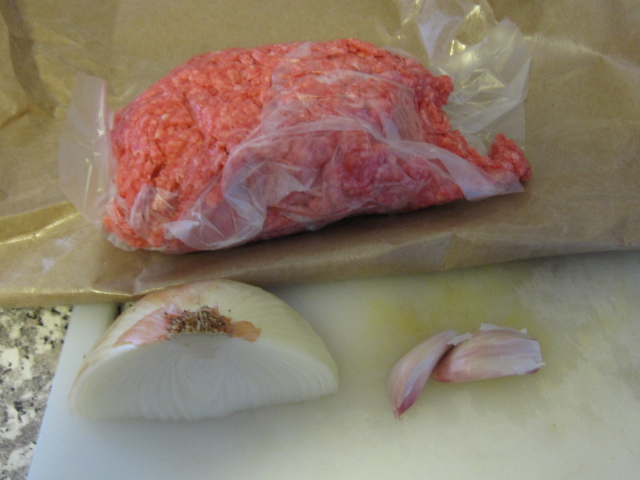
For the meat I used 1 pound of ground chuck, 1/4 onion diced, 2 garlic cloves minced, and 1 tablespoon of cumin (forgot to put in the photo).

I heated my pan and poured in just enough olive oil to lightly coat the bottom. I didn’t want the onion and garlic to stick, but the ground chuck is 20% fat so I didn’t want too much added oil. When the oil was hot I added the onion and let it sweat down for about 3 minutes. Then I added the garlic and let that go for another minute. After that came the beef. As I broke up the beef I seasoned it with the cumin, salt, and pepper. I constantly mixed it up so that it all cooked through and broke apart nicely. When it was finished cooking I poured most of the fat out leaving a little so that the meat didn’t dry out. After tasting it I decided to zest a lime and mix that into the meat. I set all of that aside and got the rest of the fixins ready.

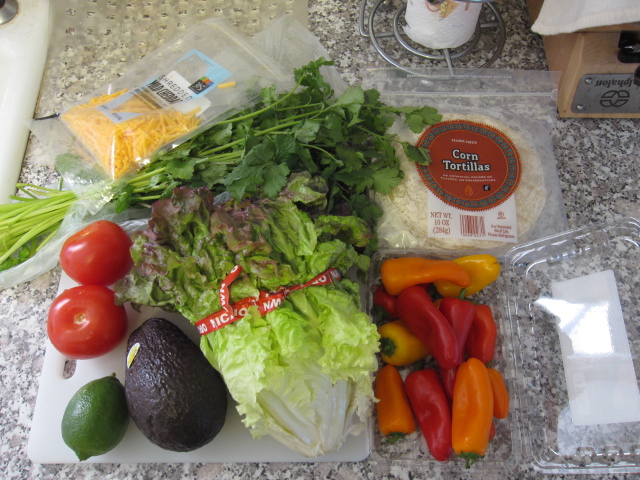
I got out the cheddar cheese that was sitting in my cheese drawer, seeded and diced two tomatoes, diced an avocado and mixed it with the juice of a lime, cut up some red leaf lettuce, chopped up some cilantro, warmed up some corn tortillas, and roasted some sweet peppers at 350 degrees for about 20 minutes. Honestly, I had everything cut up and ready to go with the peppers roasting before I started the beans and beef.

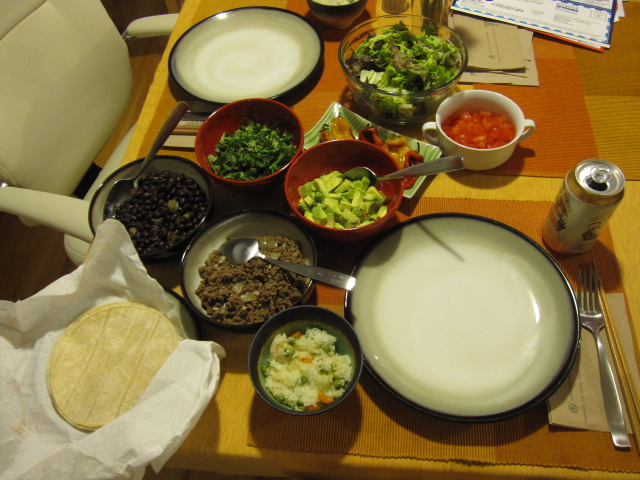
I laid everything out on the table and we away we tacoed!

Read Full Post »

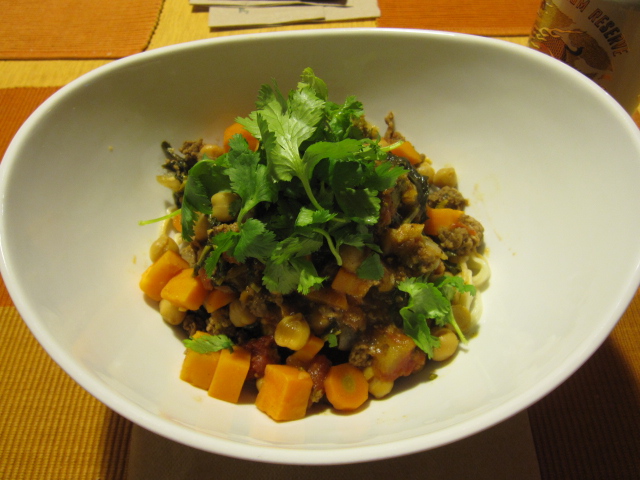
Punjabi Bolognese…sounds kind of weird, right? Well, it isn’t, its delicious! Basically, all I did was take a classic Punjabi dish called Masaledar Chholay (spicy tomato sauce with chickpeas) and add a few things, take away some of the heat, and smother some pasta with it. It really worked out well and is a nice change from regular bolognese.

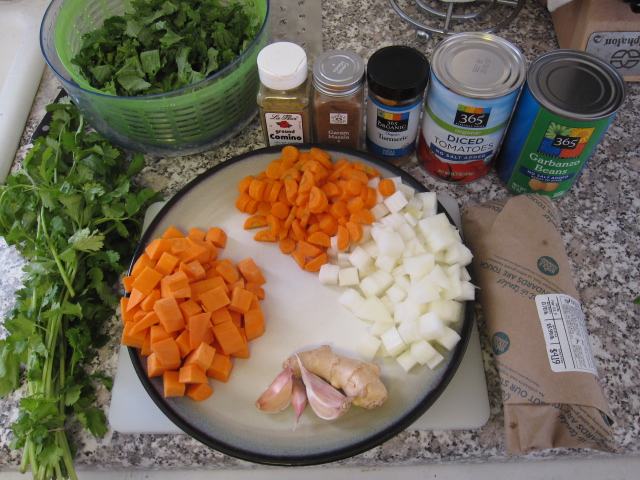
I had already started my prep when I realized that I need to take a photo. So, here are the ingredients all chopped up and ready to go. I had a handful of cilantro that I ripped up at the last minute of cooking, a bunch of rapini chopped up (not an Indian ingredient, but I thought the mustardiness would match real well, I was right of course), 1 medium sweet potato diced, 2 medium carrots diced, 1/2 onion diced, 1 inch of ginger minced, 3 garlic cloves minced, 3/4 pound of ground lamb, 1.5 tablespoons of cumin, 1 tablespoon of garam masala, 1/2 tablespoon of turmeric, 1 14oz can of diced tomatoes, and 1 14oz can of chickpeas.

In a hot pan our poured in 2 tablespoons of olive oil and added the ginger and garlic. I let them go for a minute until the oil was very fragrant. Then, I added the onion and carrots. I let them sweat down for about 5 minutes before adding the lamb. It took the lamb another 5 minutes or so to cook through as I broke it up. Once cooked through I added the spices and mixed them in.

With the meat spiced I poured in the tomatoes along with the juice in the can and let it come up to a slight boil. Then I added the rapini and sweet potato, stirred it all in, covered the pot, turned the heat down to med-low, and let it simmer for about 15 minutes.

After that I added the chickpeas, seasoned with salt and pepper, and let it simmer for another 5 minutes or so. Since I used canned chickpeas I only needed them to heat through.

While the chickpeas were heating up I boiled a mix of regular and wheat spaghetti in salt water according to package instructions. To serve I simply put the noodles in the bottom of a big bowl and ladled some of the Punjabi Bolognese on top. I garnished with the cilantro.

Read Full Post »

After a couple of nights eating out for Restaurant Week I decided to give our stomachs, as well as our wallets, a little bit of a break. Simple, cheap, and delicious, I made a stew with cod and vegetables. Warm stews like this are great for cold winter nights and are packed full of nutrients that won’t bulge your belly or bank account.

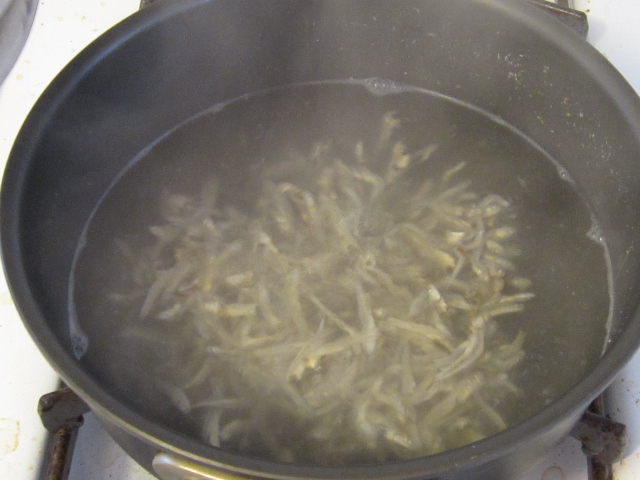
I started off with my typical dashi. I boiled 1/3 cup of dried anchovies in 3 cups of water for about 30 minutes and then strained out the fish. I really love making this dashi because it’s easy, healthy, and delicious.

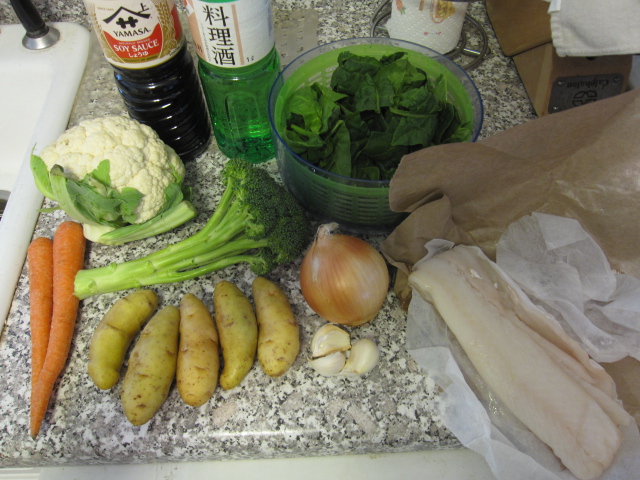
The rest of my ingredients included 2 carrots chopped, 1/2 head of cauliflower broken into florets, 1 head of broccoli broken into florets with the stem chopped, 5 large fingerling potatoes chopped, 1 onion large diced, 3 garlic cloves large diced, 5 ounces of spinach rinsed, 3/4 pound of cod cut into bite-sized pieces, 3 tablespoons of soy sauce, and 2 tablespoons of sake.

I heated up a stock pot and poured in about 2 tablespoons of olive oil. Once the oil was hot and shimmering I added the onion, carrot, and garlic. I let that all sweat down for about 3 minutes and then added the broccoli and cauliflower. About 2 minutes later I poured in the dashi, soy, sake, and a bay leaf and brought that up to a boil. Once boiling I added the potatoes and turned the heat down to med-low so that it could simmer for about 10 minutes. Then I added the fish and let it simmer for another 10 minutes before throwing the spinach in. Once the spinach was in I seasoned with pepper (no need for salt because of the soy in the broth), covered the pot, and let simmer for another 10 minutes. After that all I did was adjust the seasoning and serve it up with some white rice.

Just be gentle stirring after you add the fish, cod will flake apart.

Read Full Post »

Valentine’s Day…you gotta love holidays that are created for the sole purpose of capitalist pleasure. While the origins of Saint Valentine had absolutely nothing to do with lovers, today Hallmark sells millions of cards and Jared sells tons of ugly jewelry. Restaurants are always packed with their special Valentine’s prix fixe dinners. Extremely disappointed by every meal we’ve gone out for at Valentine’s this year I took the truly romantic way through the day of lovers and put my own hard work into a beautiful meal for the love of my life. I made a Japanese flavored Osso Bucco. Let’s be honest, is there anything sexier than slow-braised oxtails?

While I have never braised oxtails (actually cow tail, not an ox) the principles of braising are the same across the board. Brown your meat, saute your mise en place, and simmer it all together for a couple of hours minimum while keeping the braising liquid about 3/4’s of the way covering your meat.

To make this one Japanese flavored I used dashi and soy instead of beef stock and wine. To start I made my dashi. I put 3 cups of water and 1/4 cup of dried anchovies in a pot, brought it to a boil, covered it, turned the heat to med-low, and let it simmer for about a half hour. Then I strained out the anchovies and set the dashi aside.

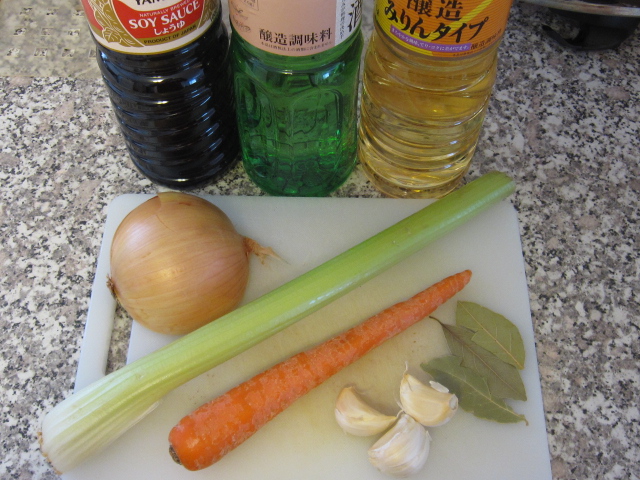
To flavor the dashi, my mise en place, I used 4 tablespoons of soy sauce, 3 tablespoons of sake, 2 tablespoons of mirin, 1/2 onion diced, 1 rib of celery diced, 1 carrot diced, 3 cloves of garlic smashed, and 3 bay leaves.

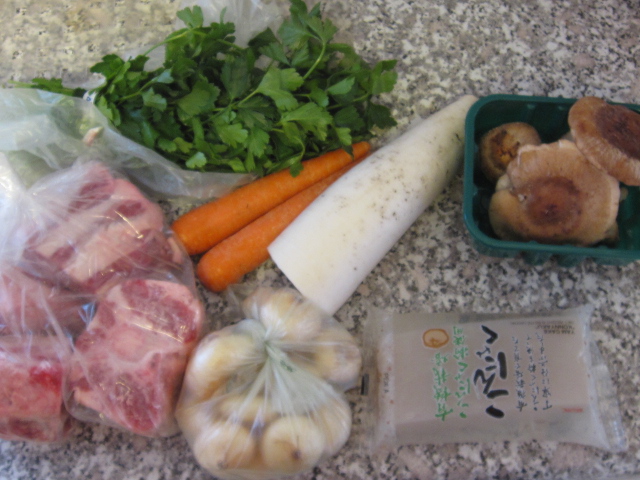
The ingredients I used to serve included 3 pounds of beef oxtail cut into 4 portions (have your butcher use his saw to get through the bone, I went to Olympic Meats for mine), about 1/4 cup of parsley chopped, 2 medium carrots chopped, 1 pound of daikon chopped, 12 cipollini onions skin peeled, 1 package of konnyaku, and 1 package of shiitake halved (large ones quartered).
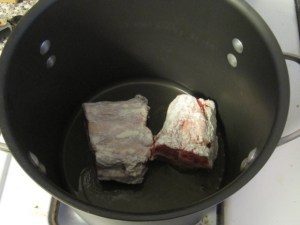
To get started I heated up a few tablespoons of olive oil in my large stock pot. I dredged the oxtail pieces in flour (no need to season the flour since I used soy sauce, without soy sauce you’d probably want to season the flour with salt and pepper) and browned all sides for a couple of minutes. I did two at a time so as not to overcrowd the pot. I set the browned oxtails off the side.

Once the oxtails were all browned I added another couple of tablespoons of olive oil and added all of my mise en place. I sweated it all down for about 5 minutes. Then I put the oxtails in along with any accumulated juices on the plate and poured the reserved dashi in. Once the dashi came to a boil I let it rumble for a few minutes and skimmed the surface a few times for a clearer liquid. Once I finished skimming I added the soy, sake, and mirin. I covered the pot, turned the heat to med-low, and let it simmer for about an hour and 15 minutes.
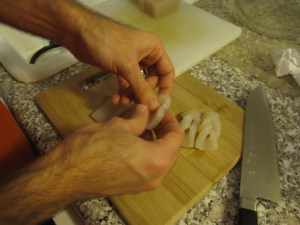
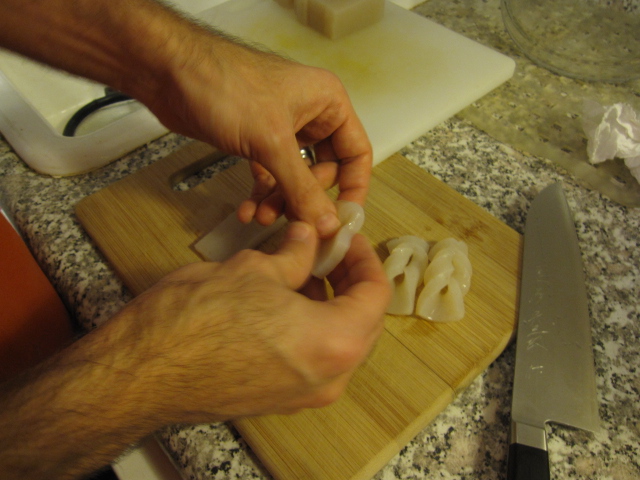
During this time is when I prepped all of my serving veggies. For the konnyaku I cut it in a very traditional Japanese way. I sliced the block into 1/4 inch strips. I put a slit in the middle of each and then folded inside of itself to make this braided shape. Not only does this add visual appeal, but I gives more surface for the konnyaku to absorb the flavors of the broth.

After the initial hour and 15 minute braising time I removed the oxtails and strained out all of the mise en place. With the back of a wooden spoon I squeezed out every last drop of flavor from the soft onion, celery, and carrot. I wiped out my stock pot, poured the strained broth back in, put the oxtails back in, put the serving veggies in, brought it up to a boil, covered the pot, turned the heat to med-low, and let it simmer for another 45 minutes. That was enough time for the daikon to absorb the broth flavors and become nice and tender.
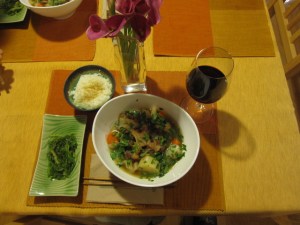
To serve, I placed on piece of oxtail in a large bowl and surrounded it with broth and veggies. I sprinkled the parsley all over the top. On the side was white rice with ground sesame seeds and some seaweed salad (the same kind you get at your neighborhood sushi joint, I picked some up at the Mitsuwa Market).

As if I weren’t already in-love with myself, this dish made me fall heads-over-heals in-love with myself. I can only image what it did to my wife.

Read Full Post »

Besides being a great Japanese housewife, I also have a little Italian bosom to me. I’m very worldly for being a midwestern Jewish man. The other night I made a classic Southern Italian Chicken and Pepper Stew along with a Tuscan-style soup. Instead of a Tuscan Bean Soup that uses cannelloni beans I used chickpeas, simply because I had a can in my cupboard.

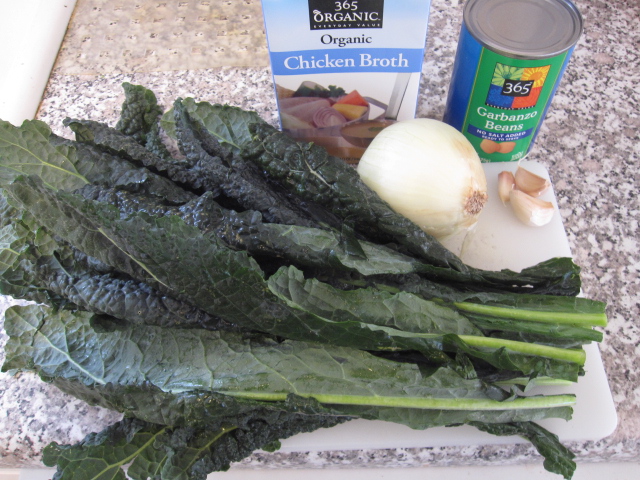
The soup couldn’t be simpler. I used 1 bunch of kale chopped, 1 onion sliced, 3 garlic cloves diced, 1 quart of chicken stock, and 1 can of chickpeas drained and rinsed.

I put everything except for the chickpeas in a pot along with a couple of bay leaves. I brought it up to a boil, covered the pot, turned the heat to med-low, and let it simmer for about 45 minutes so that the kale would get nice and tender. I didn’t add the chickpeas until a few minutes before dinner time. Since they were canned the didn’t need to be cooked, just heated. I seasoned with salt and pepper just before serving.

For the chicken I used about 1/4 cup of parsley chopped, 1/2 onion sliced, 3 cloves of garlic diced, 2 plum tomatoes skinned and diced, 1 dry pint of sweet peppers seeded and sliced, 4 thighs and 4 drumsticks skinned with the bone in, and 1/2 cup of white wine.

In my pan I heated up about 3 tablespoons of olive oil and sautéed the onion for about 6 minutes. I took the onion out, added another 3 tablespoons of olive oil, and added the chicken. I browned the chicken all over for a few minutes and then put the onion back in. I poured in the wine and let it reduce by half for about 5 minutes or so. Then I added the peppers and tomatoes, seasoned with salt and pepper, stirred it up really well, covered the pan, turned the heat down to med-low, and let it simmer for about 30 minutes. I stirred it occasionally throughout the 30 minutes. Just before serving I mixed in the parsley. Another simple, yet delicious dish.

I got some nice crusty bread to serve with everything. I did make some white rice for Yuki since she needs rice in her guts. I stuck with the bread though so I could sop up all of the juices and dip into my soup.

Read Full Post »

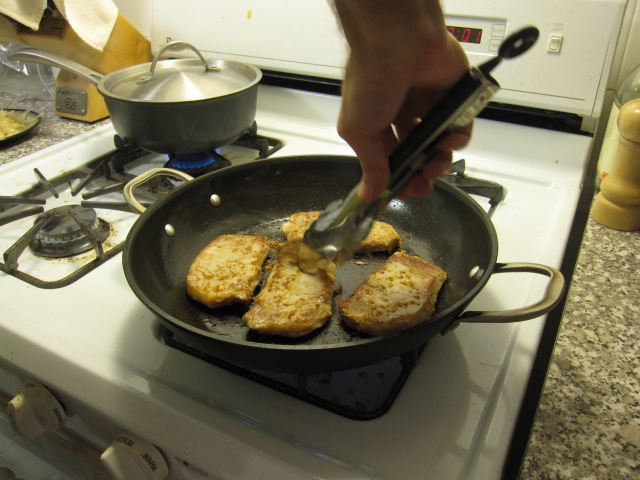
Last night for dinner I made Japanese-style ginger pork with miso soup. The more I cook Japanese food the more I realize just how much healthier it is to American food. There is very little added fat and much more vegetable-to-meat ratio. Cooking Japanese-style food is extremely as well, not to mention delicious!

I first got my miso soup ingredients ready to go. I won’t go into great detail about making miso soup because I’ve done that a few times on this blog already. I poured about 3 cups of water into my pot and added 4 sliced shiitake, 3 chopped fingerling potatoes, 3 chopped green onions, and about 3 tablespoons of dashi soy sauce. I rinsed and soaked some salted wakame and added it to the soup at the end along with a large tablespoon of miso. The soup simmered over low while I cooked everything else, just enough time for the potatoes to cook.

For the pork I used about 3/4 pound of snap peas, 3 ounces of bean sprouts, 1/2 onion sliced, 1 inch of ginger grated, 1 garlic clove grated, 2 tablespoons of soy sauce, 1 tablespoon of sake, 1 tablespoon of mirin, and 4 thin pork chops each about 3 ounces.

I mixed together the ginger, garlic, soy, sake, and mirin as the marinade. I let the pork sit in it for about 15 minutes or so. I heated up my large skillet and added about 1 tablespoon of vegetable oil and then cooked the onion for about 4 minutes. I took the onion out and rested it on a plate and then cooked the pork (reserving the marinade) for about 2-3 minutes per side. I rested the pork with the onion. I poured the marinade into the skillet to cook it down a little. I added about 4 tablespoons of water to help turn the marinade into a pan sauce and scrape up the bits from the pork, lots of flavor there you don’t want to lose.

Once the sauce had reduced a little bit, a minute or so, I added the snap peas and let them cook for about 5 minutes. After that I added the bean sprouts and the reserved onions.

I placed the pork on top, covered the skillet, and let it go for a few minutes while I mixed the miso into the soup. Then I plated it all up with some white rice. Yuki topped the rice with some ground sesame seeds.

So, we got 7 different vegetables into dinner with only 3 ounces of animal carcass. The only added fat was 1 tablespoon of vegetable oil split between 4 portions. No wonder America is a bunch of fat-asses while Japan is extremely fit and healthy.

Read Full Post »

« Newer Posts - Older Posts »