Feeds:
Posts
Comments

Posts Tagged ‘carrot’

Oden is Japanese home cooking at it’s finest as well as being a favorite winter-time treat. While the ingredients can vary, the basis of oden is to have a slightly salty dashi broth filled with fish cakes, daikon, konnyaku, hard-boiled eggs, and potatoes. Slowly simmered and warm in the belly, this is true comfort food. In Japan, it’s served at home, in restaurants, at street vendors, and you can even get it warm from vending machines (you can get anything in a Japanese vending machine, and I do mean anything!).

To start I made a good dashi broth. I used about 1/3 cup of dried anchovies, 3 tablespoons of mirin, 2 tablespoons of soy sauce, and 1 tablespoon of kosher salt. Most oden sets come with their own little packets of soy flavoring. They are usually pretty good, but it’s just as easy to do it yourself giving you more control over the flavor.
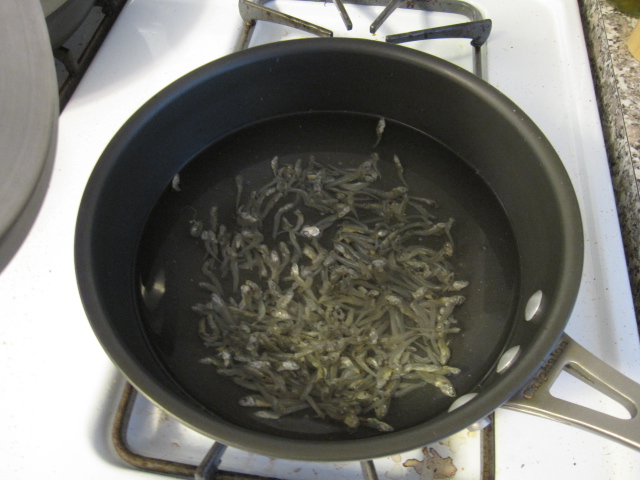
I let the anchovies simmer in 4 cups of boiling water for about an hour. I wanted every last bit of flavor out of the fish and into the broth.

I strained the broth and discarded the anchovies. Then I mixed in the mirin, soy, and salt.
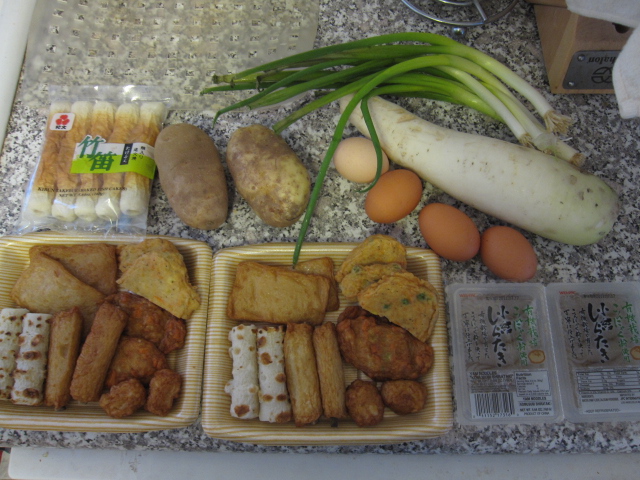
You can buy oden sets at any Japanese market and some Asian markets. We got two two-person sets that were on sale from Mitsuwa, each containing a variety of fish cakes. Some with carrot in them, some with burdock root, some grilled, most deep fried. We also had a package of chikuwa fishcakes that we used. I skinned and chopped two russet potatoes, medium boiled 4 eggs (just enough to peel the shell off, since they were going to simmer in the dashi for a while I didn’t want to overcook the yolk too much), 1 daikon skinned and chopped, a bunch of green onions chopped, and a couple packaged of shirataki konnyaku.
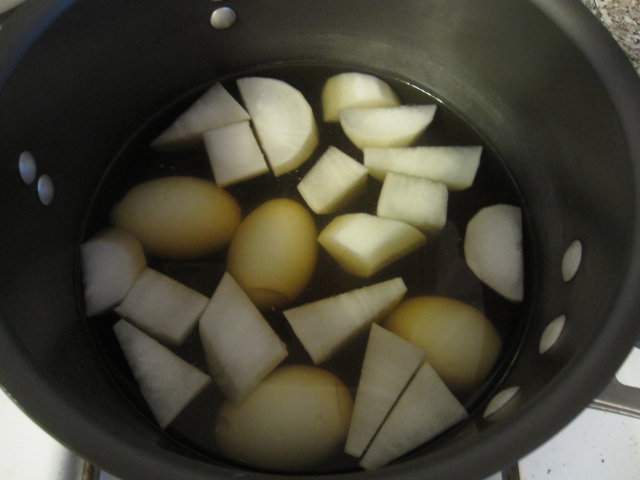
Once the dashi was ready I added the eggs and daikon and simmered them, covered, over a low heat for an hour. This allows both to absorb a lot of the dashi flavor.

Then I added the potatoes and konnyaku. If you boil the potatoes too long they will fall apart and melt into the broth. I only let them simmer for about 20 minutes. That’s also enough time for the konnyaku to take on some flavor. If you’re using sliced blocks of konnyaku instead of the shirataki noodles you’ll need to add them about 20 minutes earlier.

Since most of the fishcakes are deep fried before packaging they can sometimes have a little bit of grease residue. Because of that I boil and drain them seperately for a few minutes before adding them to the dashi, that gets rid of any unwanted oil. They also are fully cooked so just need to be heated up. After about 5 minutes in the dashi, along with the green onions, the oden is ready to go.

To serve it up I divied one of each for both of our bowls and then laddles some dashi on top. Oden is great with a cold beer and some white rice, I covered our rice with ground sesame seeds. I tell you though, oden is even better the next day. It is a stew, so once all of the flavors fully penetrate the ingredients you really have a special dish here. The daikon and egg for lunch today were outstanding!

Read Full Post »

As a big fan of the Polish Deli I’m surprised it’s taken me this long to finally get out and sample the goods at Kasia’s Deli on Hoyne and Chicago. I was actually first told about it by a tow truck driver last winter. I drive a big old green hoopty, better known as a Buick, and it’s electronics don’t do so well in Chicago’s cold winter. Last winter the beast died on me in front of my apartment and I had to get it towed to my mechanic. I hopped in the two truck and started talking food with the driver. He mentioned that he stops in at Kasia’s quite often and I ought to check it out. I held on to that advice for a year before acting on it. This past Sunday Yuki and I took a nice walk over there to grab some grub only to find out they were still closed for the holidays until yesterday. So, I went back yesterday and was rewarded with some extremely tasty viddles.

It’s not a large place by any means, but good things come in small packages. They make a nice variety of prepared food from different kinds of goulash to kielbasa with krout to pierogis to salads to all sorts of wholesome goodness. They also have some deli meats and cheeses that you can either take home sliced or have them make you a sandwich. At the far end is their homemade soups, pierogis, and blintzes. They also have a few refrigerated grocery items like milk and whatnot as well as a few dried groceries like breads and polish chocolates. The prepared food is all made in the back and is extremely cheap while using quality ingredients, just like a good Polish Deli should. So, I picked up a few things and brought them home.

Last night for dinner we had some of their mushroom and barley soup, rice with vegetables (carrots, peas, and corn), stuffed cabbage rolls (pork, mushrooms, and rice) with tomato sauce, mushroom and kraut pierogis also with tomato sauce, and some grated beets.  Everything was fantastic. Each of our plates cost about $6, that’s all. It’s damn hard to beat that for such quality food.

For breakfast this morning we had some of their blueberry blintzes. The cottage cheese and melon on our plates did not come from Kasia’s. I’ve made blintzes in the past, actually many many years ago, and these are every bit as good as anything I’ve ever made. $3 for a package of 6.

I have to say, Andy’s Deli is larger and a little better (especially because they also smoke their own meats), but since they closed their Wicker Park location a few years ago it’s not very convenient for me to get to. I will still make the occasional journey to Andy’s, but I am damn glad that Kasia’s is close by to fill the void in between. I have a feeling I’ll be heading to Kasia’s whenever I wake and know that I won’t feel like cooking dinner that night.

It was obvious that the lady behind the counter had a crush on me too (how can you blame her?). As she was bagging my food she asked me if I wanted a free T-shirt. It’s very hard to say no to a Polish woman who smells like kielbasa. Not to mention how hard it is for a Jew to say no to something free.

Read Full Post »

Last night I made a classic Beef and Barley stew. I didn’t quite make it using the classic ingredients though. Instead of potatoes I used sweet potatoes. Instead of the popular pearl barley I used hulled barley. Instead of stew meat, usually beef from the round or chuck roast, I used brisket. Oh brisket, how I love thee! I did this for health reasons as sweet potatoes have more nutrients than regular ones and hulled barley is a whole grain that still has the germ, it has 8 essential amino acids. While brisket isn’t any healtheir than typical stew meat it’s all about flavor and texture.

My ingredient list included 3 medium sized sweet potatoes skinned and chopped, 1 tablespoon of dried oregano, 2 medium sized carrots chopped, 3 stalks of celery chopped, 1 tablespoon of worcestershire sauce, 1 onion chopped, 2 cups of beef stock, 2 medium sized parsnips chopped, 5 cloves of garlic diced, 1 14oz can of peeled whole tomatoes, 1/2 cup of rinsed hulled barley, 2/3 cup of edamame, and 1 pound of brisket cubed. Not in the picture are 1 tablespoon of flour, 2 bay leaves, and 2 tablespoons of olive oil.

I started by heating up my stock pot. Once hot I poured in the olive oil, added the brisket, and sprinkled the flour on top. I stirred it all around just until the surface of the beef turned brown and no longer pink. Then I added the onion, celery, and garlic and sweated them down for about 5 minutes. After that I poured in the stock, added the bay leaves, brought it up to a boil, covered, turned the heat down, and let it simmer for about an hour.

Once the hour passed by I tossed in the barley, sweet potatoes, carrots, parsnips, worcestershire, and oregano. I let that come back to a boil and let it simmer for another 45 minutes.

Finally, I added the edamame and tomatoes with their juice. I took each tomato out one at a time and broke them up with my hands as they dropped into the stew. Once everything was mixed in I seasoned with salt and pepper and let it stew for about 15 more minutes to bring it all together.

A couple slices of toast, a bowl of hot beef and barley stew, and a nice cold beer and that’s all she wrote.

Read Full Post »

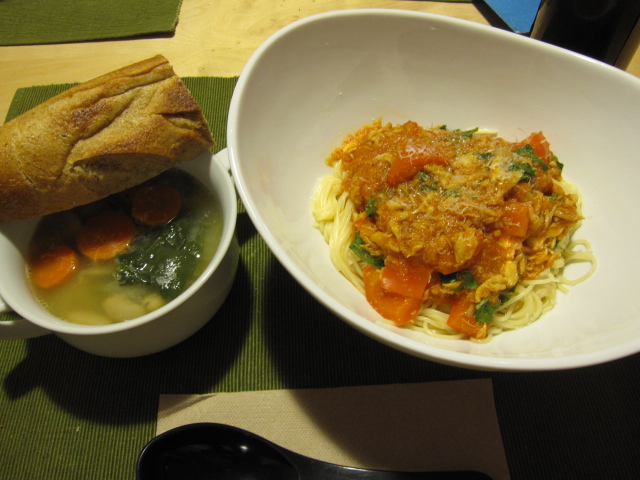
This is a dish I made last week when I noticed that blue crab meat was on sale. The meat came in little sealed containers and was much fresher than canned crab meat. I thought making a spaghetti with it would be a good way to go. I also made a simple soup to go with it, along with some wheat bread. I made this Friday night so the recipe is only portioned for 2 servings.

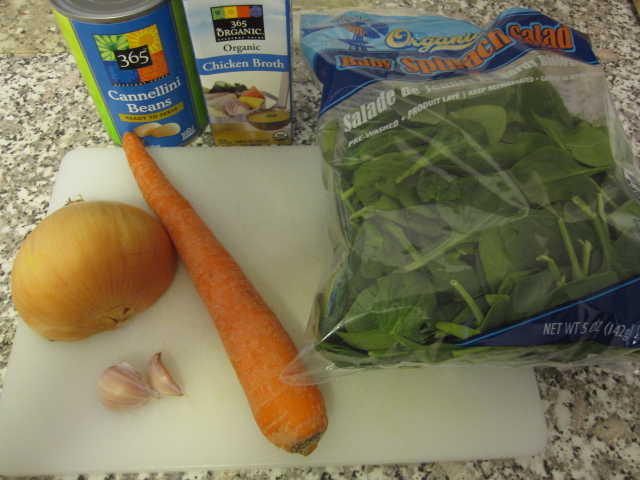
I made the soup first since I could just re-heat it when the spaghetti was ready. I used 1/2 an onion sliced, 2 garlic cloves chopped, 1 carrot chopped, 1 can of cannellini beans rinsed and drained, 1 cup of chicken stock, and a large handful of baby spinach.

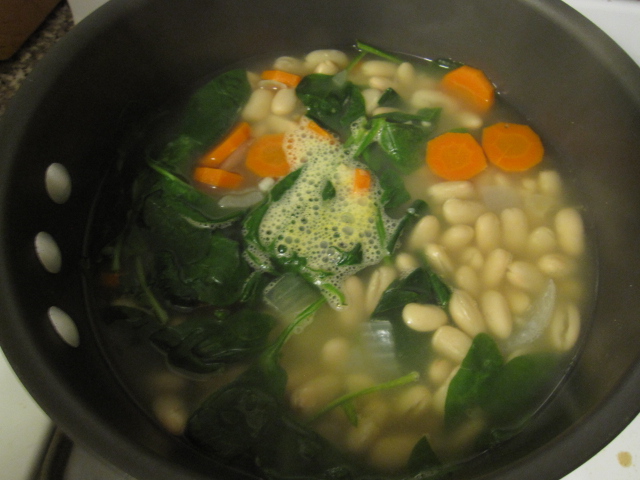
Real simple, I poured the stock in a soup pan and added the onion, carrot, and garlic. I brought it to a boil, turned the heat down, and let it simmer for about 10 minutes. Then I added the beans and spinach and turned off the heat. The beans and spinach don’t need to be cooked so I could just let them heat up when I re-heated the soup. Before serving I seasoned with salt and pepper.

The spaghetti was real simple as well. I used 1 red bell pepper chopped, 1/2 onion chopped, 1 14oz can of Italian peeled tomatoes, 1 8oz container of blue crab meat, 3 cloves of garlic chopped, and 3/4 oz of basil.

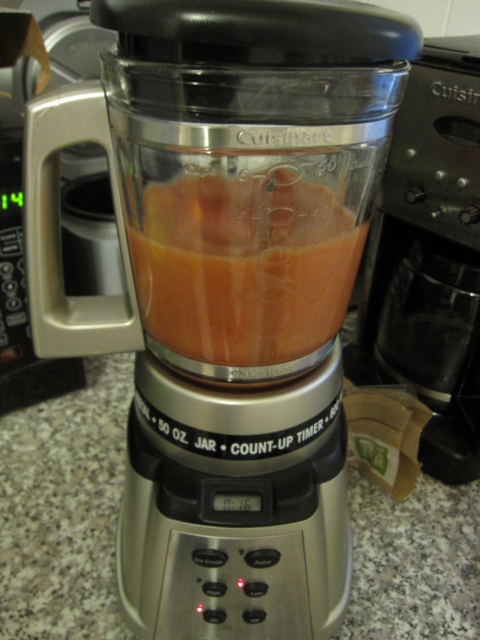
I threw the onion, tomatoes, and garlic and into my blender. I filled the tomato can about half-way with water and added that as well along with a few red pepper flakes. I let it go until I had a smooth tomato sauce.

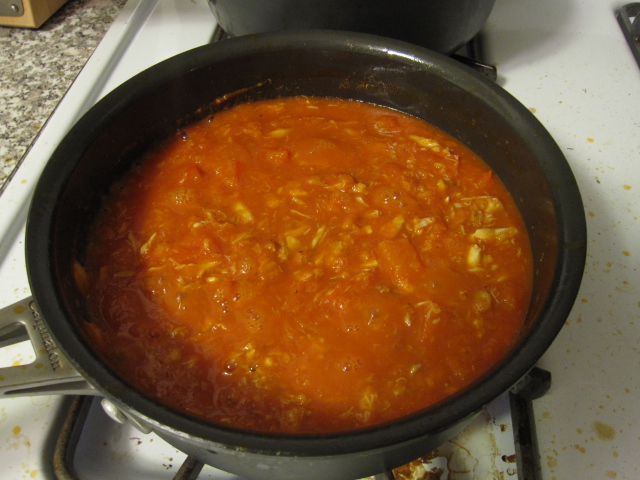
In a pan I heated up about 1 tablespoon of olive oil and sautéed the red pepper for 5 minutes. Then I poured in the tomato sauce and let that come up to a boil. Once it started bubbling I turned the heat down and let the raw onion and garlic in it cook out for about 10 minutes. While that was going on I picked through the crab meat to make sure all of the shells had been removed and then added it to the sauce with all of its juice. I cooked some spaghetti noodles according to package instructions, heated up the soup, seasoned the crab-tomato sauce with salt and pepper and added the basil, and then served it all up.

Read Full Post »

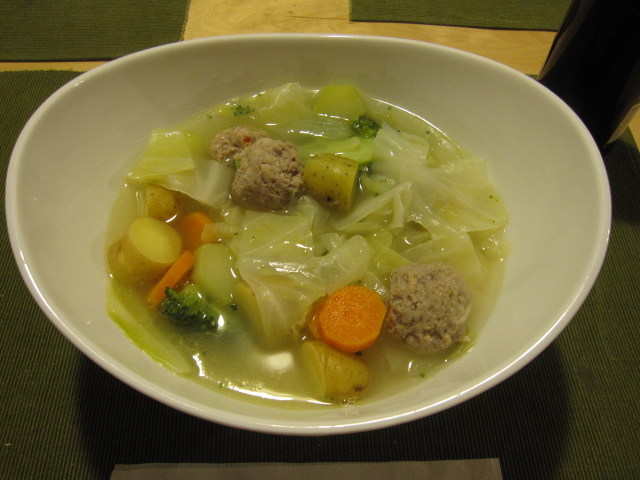
Yuki made this soup the other night. We came across uncased sausage at the store and that made her want to make this soup. It’s a very simple, very healthy, very tasty, and very quick light dinner. While she made the soup, I did all of the prep for her. I love using my santoku!

We picked up 1 pound of the sausage, I sliced 1/2 onion, chopped up 1 head of broccoli, 7 fingering potatoes, 1 carrot, 1/2 head of cabbage, sliced 2 blocks of fried tofu, and diced 3 garlic cloves. She used 1 cup of chicken stock for added broth flavor.

In a soup pot she boiled 2 cups of water with the chicken stock and added everything. She let it slowly simmer for about 15 minutes and then seasoned with salt and pepper. That’s all it took. A simple boil lets the ingredients to the talking. She had some white rice with hers while I just grabbed some bread to go along with my bowl.

Read Full Post »


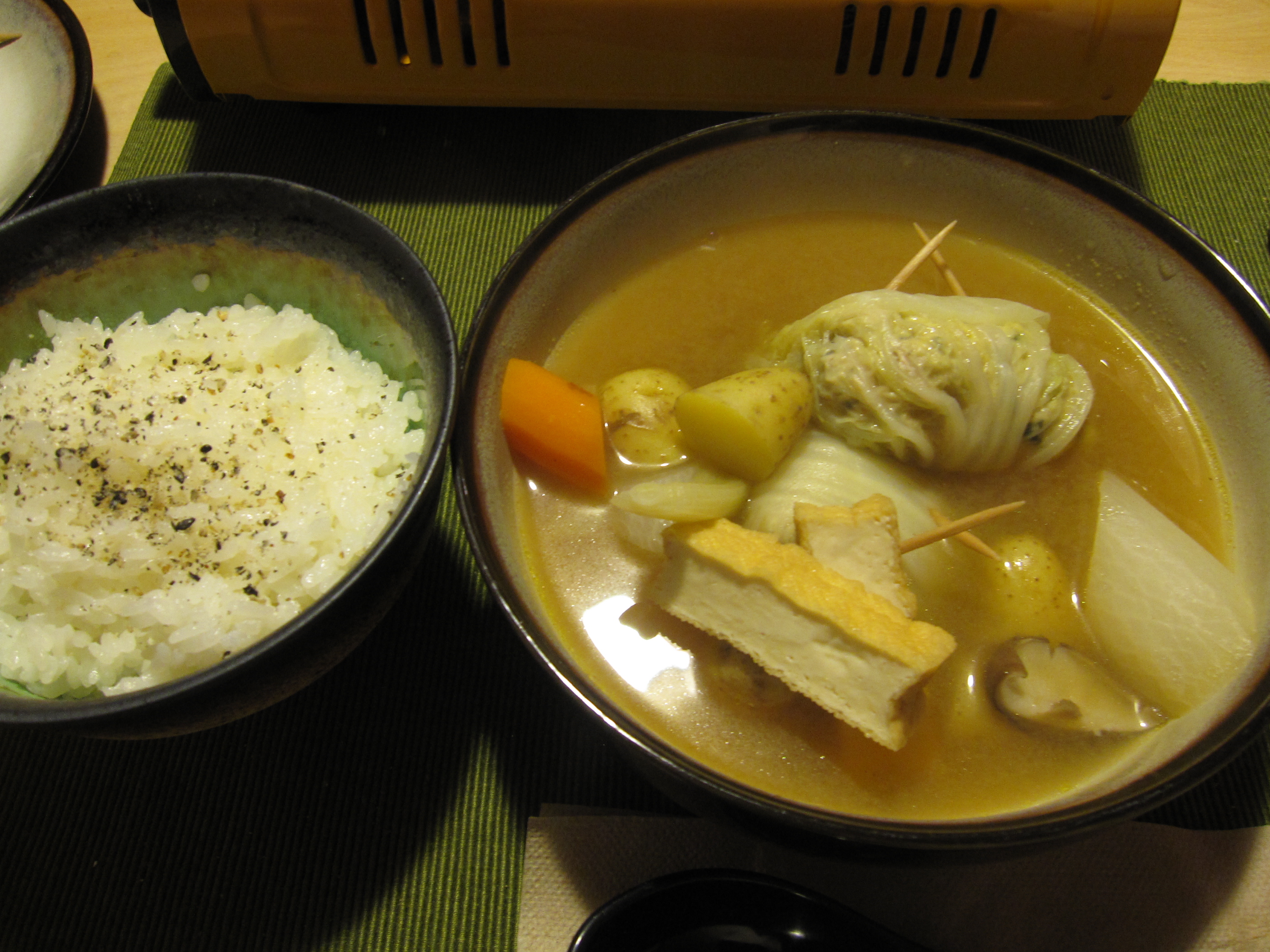
The other night I made one of Yuki’s favorites, a dish she usually makes. She, like most Japanese absolutely love nabe in the winter time and it’s hard to blame her. You just can’t beat a good table-top soup filled with meat, veggies, and a good broth. I think chicken meatballs rolled in cabbage is her favorite and one she’s made quite a few times for me, so this time I made it for her.

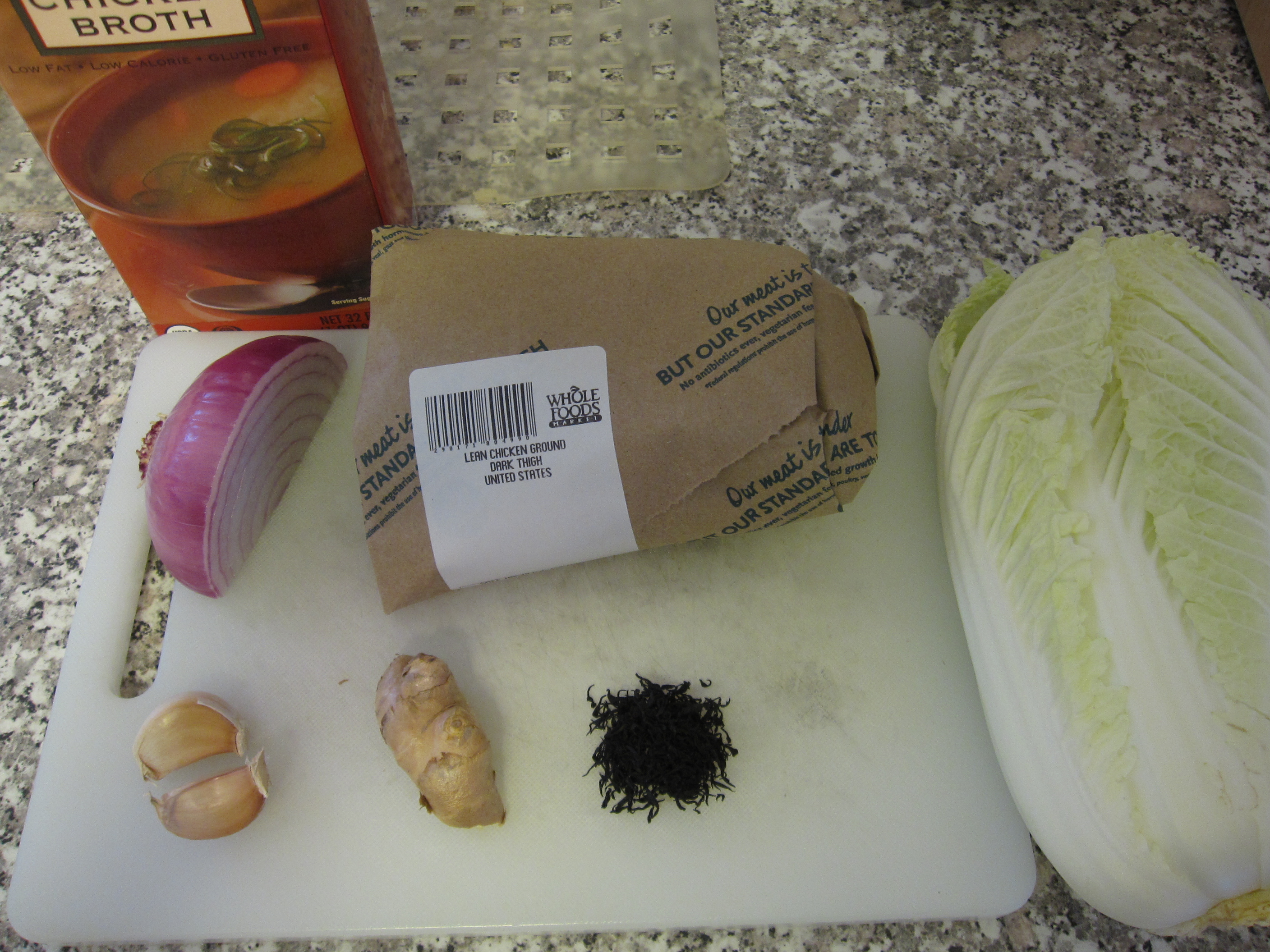
First thing I did was get the meatballs wrapped and ready to go. I used chicken stock as my base for the broth so I used 2 cups of it to soak a heaping tablespoon of dried hijiki seaweed for about 30 minutes before I could do much else. When the hijike was rehydrated I strained the broth into a soup pot. The rest of my meatball ingredients were 1/2 red onion, 2 garlic cloves, 1/2 inch of ginger, 1 pound of ground chicken thigh, and a small head of napa cabbage.

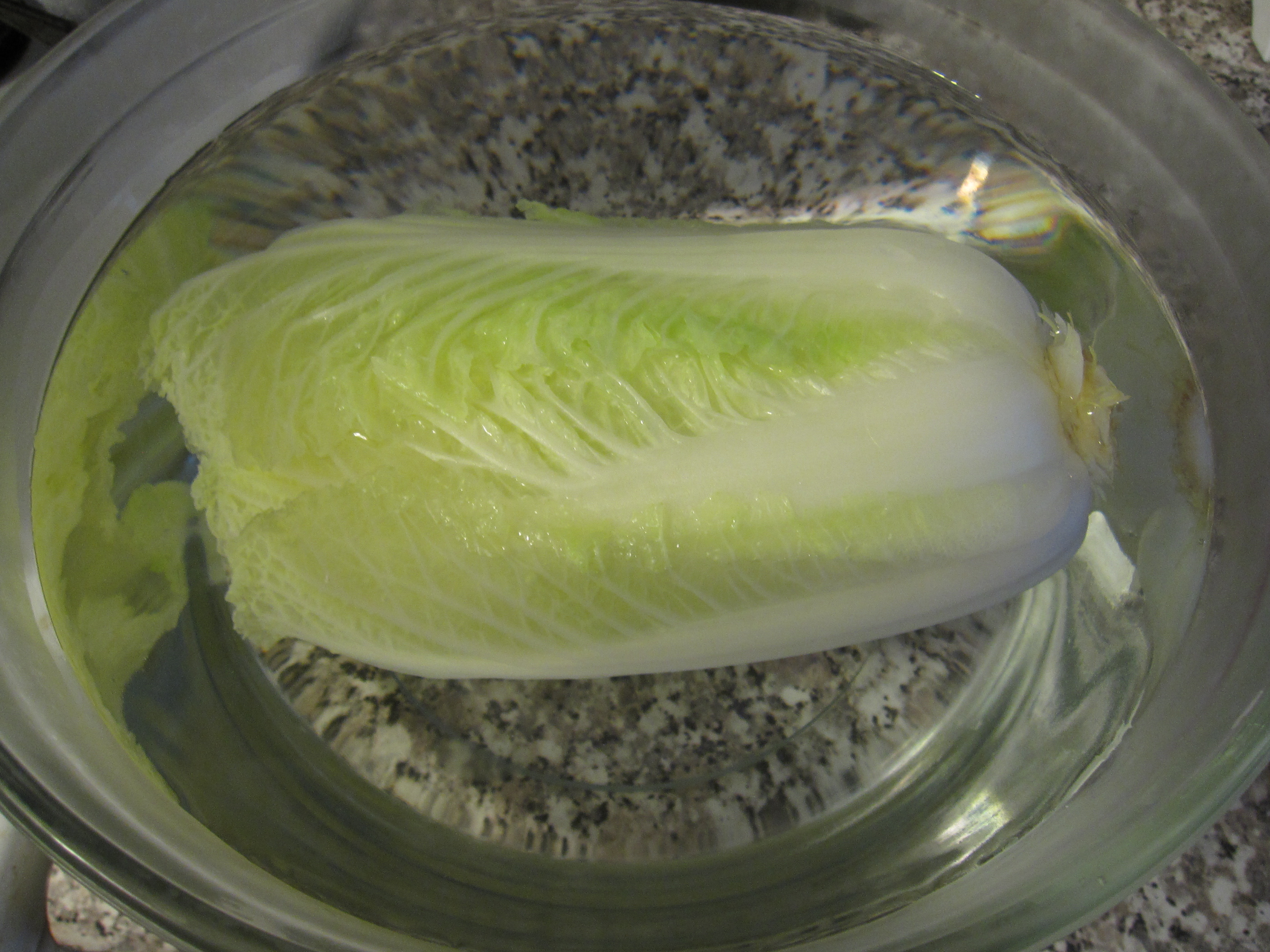
To make the cabbage more pliable I dropped it into some salted boiling water and let it boil for about 2 minutes. Then I took it out and shocked it in ice water. The boiling water softened it making it easier to roll while shocking it in ice water helps it retain its color.

In a glass bowl I grated the onion, garlic, and ginger into the chicken meat, added the hijiki, seasoned it with salt and pepper, and mixed it thoroughly. Then I rolled walnut-sized meatballs in the cabbage and secured them with toothpicks.

The rest of my ingredients for the nabe were 6 green onions chopped, 2 small carrots chopped, 1 small daikon chopped, 7 fingerling potatoes halved, 8 shiitake halved, a package of fried tofu sliced, and 1 Honey 1 Rib (yes, I am finding creative ways to finish up those ribs since I over-ordered).

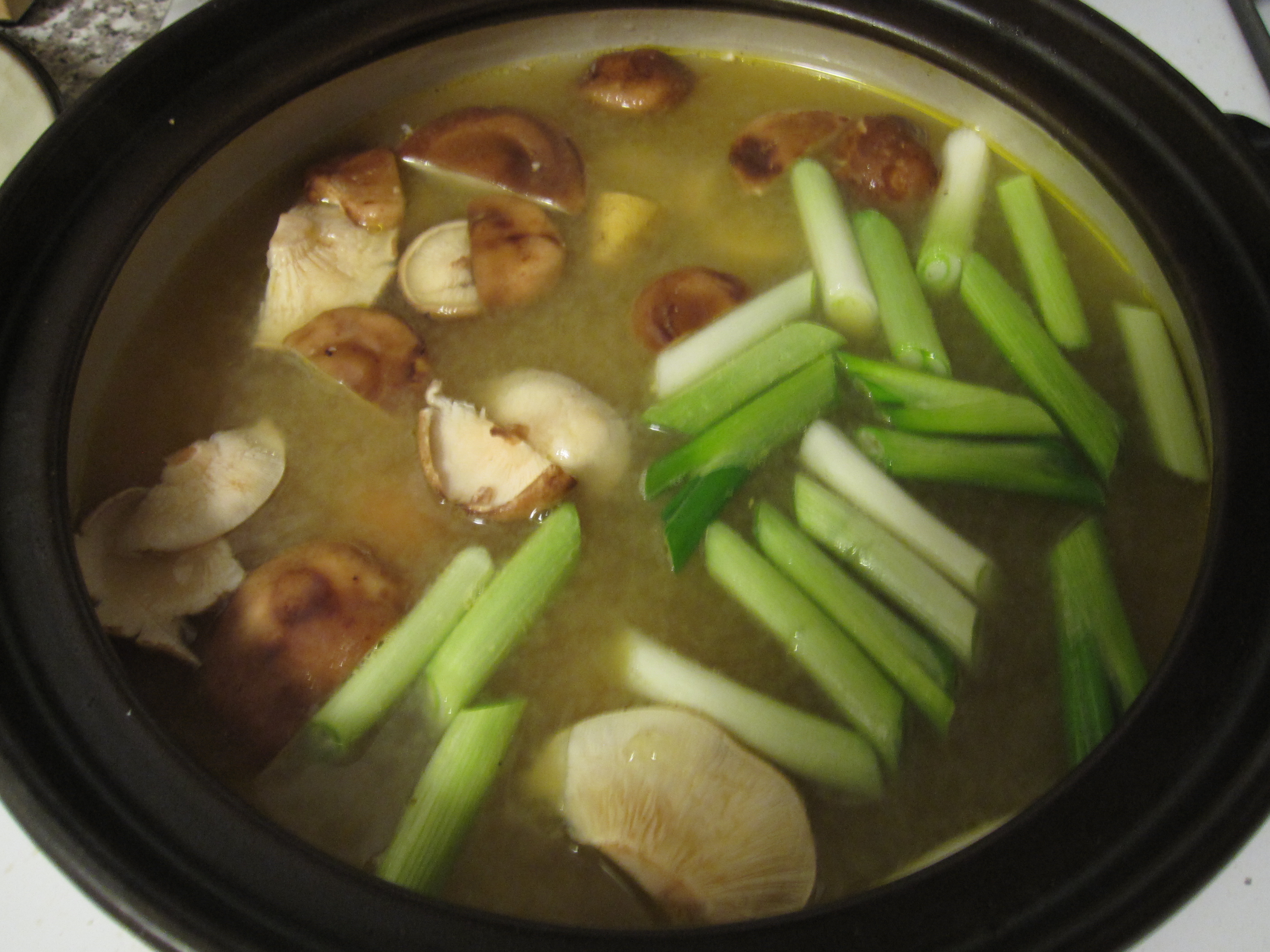
I put the rib in the chicken stock that had already soaked the hijiki and added 2 cups of water. I brought that to a boil and let the rib simmer in the broth for about 15 minutes. Then I strained the broth into our nabe (clay pot). The rib added some nice smokey depth to the broth. It also gave me some moist tender meat to nosh on while finishing up the cooking.

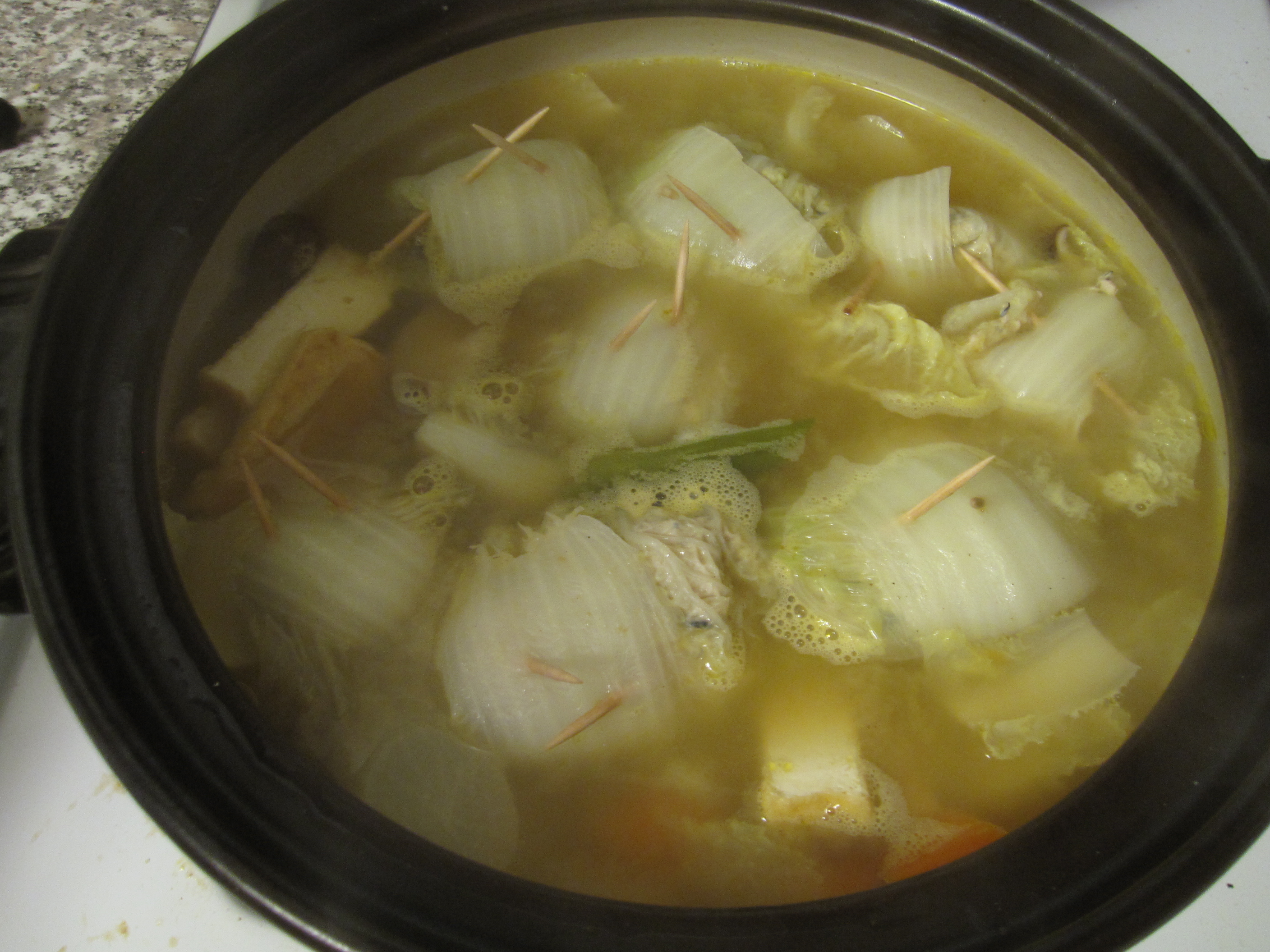
Then I brought the broth back to a slow boil and added the chicken-cabbage rolls. I let them cook for about 15 minutes to make sure they cooked all the way through. Once they were cooked I took them out and set them aside.

I kept the broth at a low boil and added all of the veggies. I let them all cook for about 10 minutes.

Once all of the veggies were cooked I added the chicken-cabbage rolls back and took the nabe to our table-top propane burner.

 To serve, I poured about a tablespoon of ponzu in each of our bowls. We helped ourselves by adding broth, meatballs, and vegetables along with a dash of togarashi. I had white rice topped with ground sesame seeds along with it.

Read Full Post »

Armed with a full slab of ribs left from Honey 1 BBQ I threw together a chili-like stew. After sitting in the fridge for a day they did get a little dry. That deep smoky meat was perfect to use.

I chopped up 1 red, 1 yellow, and 1 orange bell pepper, 1 carrot, 1 onion, I minced 3 cloves of garlic, soaked 1 cup of black beans for 1 hour after boiling for 2 minutes, 1 can of white kidney beans, 4 ounces of baby spinach, shredded the meat off 1/2 slab of ribs, the bbq sauce that came with the ribs, and used 2 cups of chicken stock.

In my large stock pot I heated up some olive oil and then sweated the peppers, onion, carrot, and garlic for about 8 minutes or so.

While that was going on I realized that I had 3 yukon gold potatoes sitting around. So, I skinned them, chopped them up, and added them to the pot. I let them cook for about 3 or 4 minutes before adding the chicken stock.

While the chicken stock was being brought up to a boil I noticed I had a couple of tomatoes. So, I chopped them up.

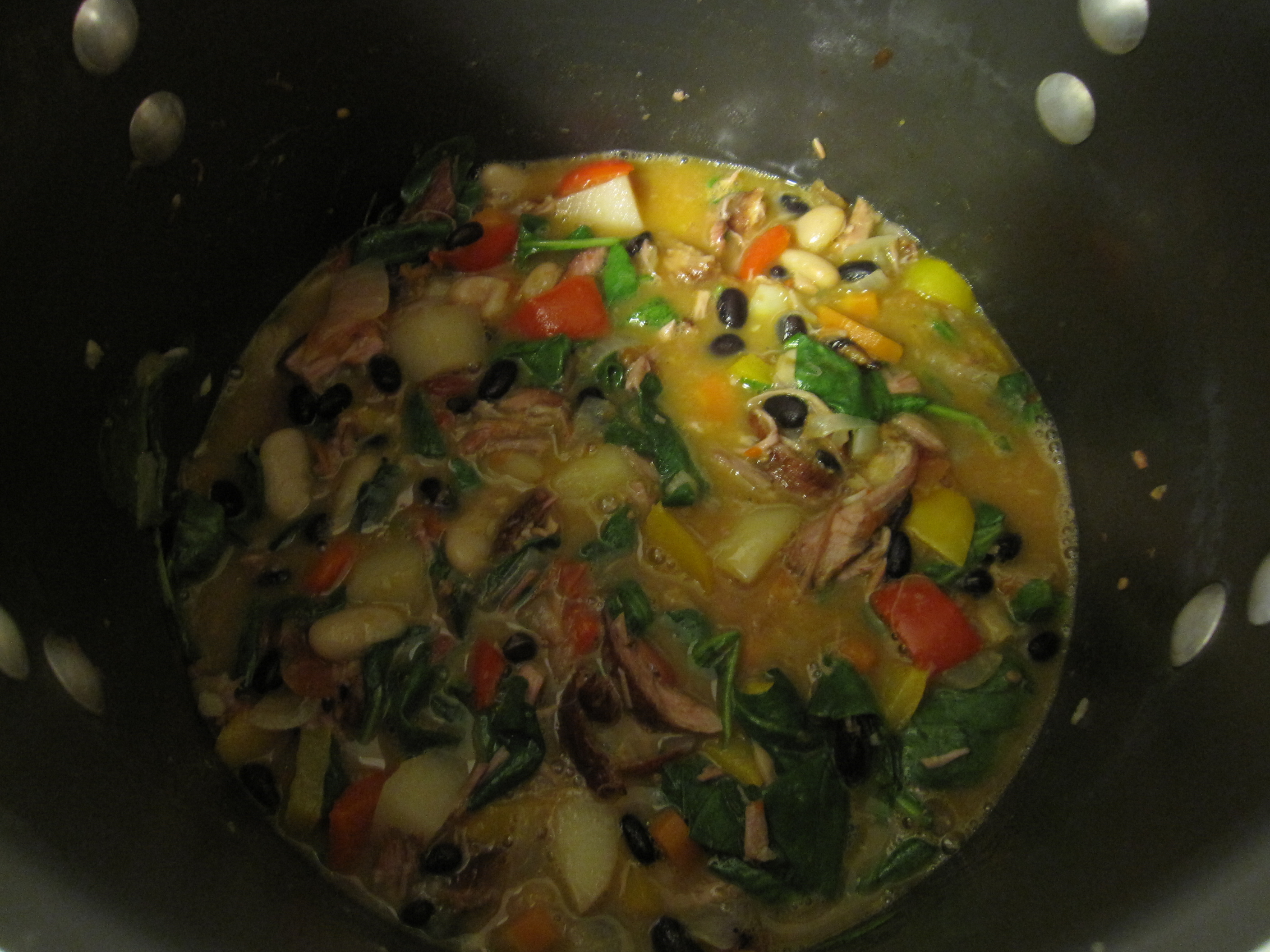
When the stock came to a slow boil I added the tomatoes along with the meat and let that simmer for about 8 minutes before adding all of the bean and the bbq sauce. I turned the heat to med-low, covered the pot, and let it go for about 15 minutes. Right before serving I added the spinach and stirred it in until it had all slightly wilted. Then I turned off the heat and served it.

I placed some toast in the bowl before scooping the stew in. Then I topped with some habanero-jack cheese and some sour cream. It tasted fantastic! I got 4 servings out of this and still have 1/2 slab of Honey 1 BBQ ribs left.

Read Full Post »

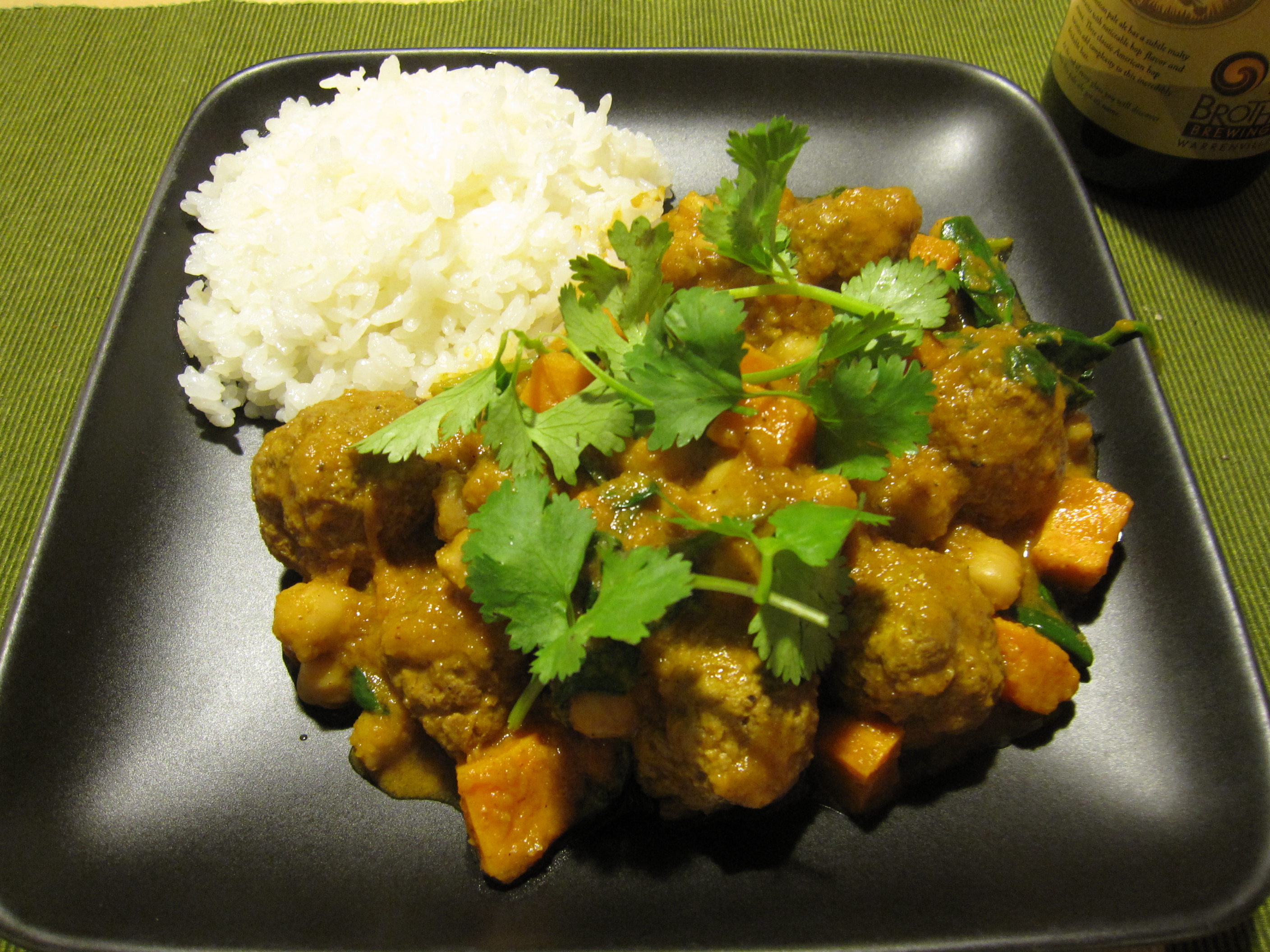
Ground lamb was on sale at the store, so I picked a pound up and made this Indian-style curry with it. Usually, curry is made with chunks of meat, I improvised since ground lamb was cheaper.

First thing I did was make the meatballs. I put the lamb in a glass dish, sprinkled 1 teaspoon of ground cumin on top, then grated in 1/2 a red onion,  2 garlic cloves, and 1/2 inch of ginger. A little salt and pepper and I mixed it all together.

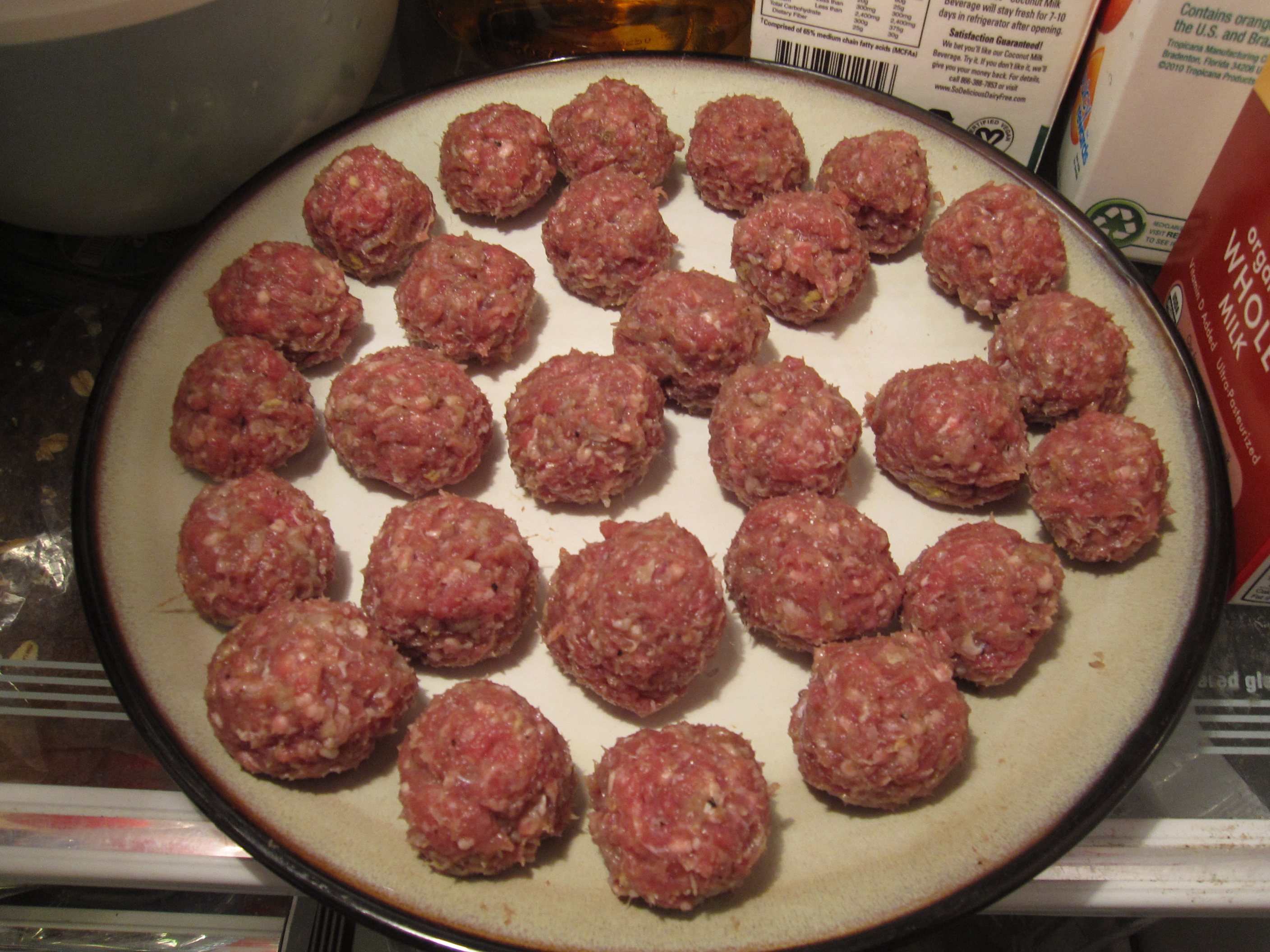
After letting the mixed meat sit for about 10 minutes I rolled it up into quarter-sized balls. I let them sit in the fridge to hold shape while I got the curry sauce ready.

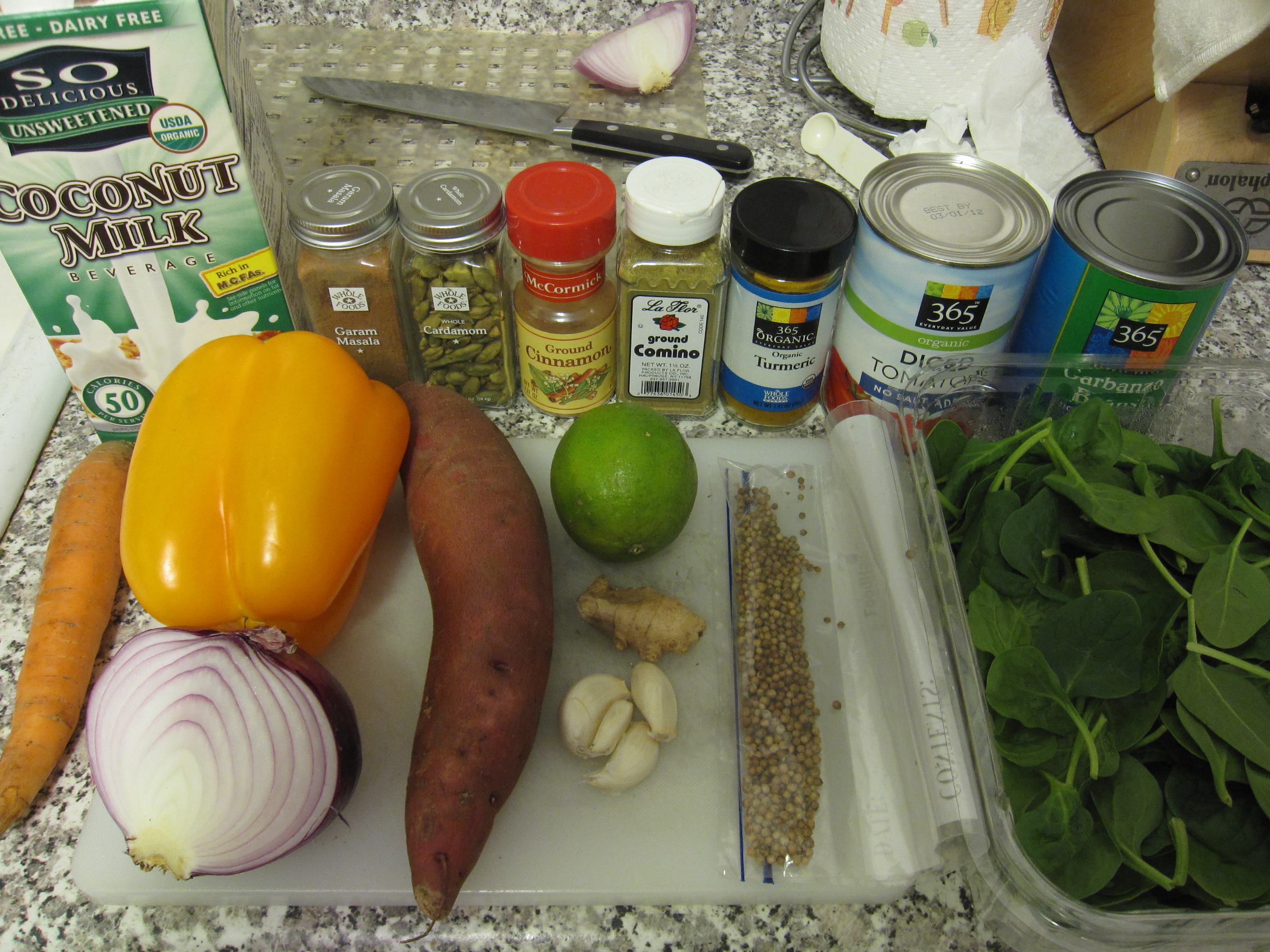
For the curry I used 1 cup of coconut milk, 1 carrot rough chopped, 1/2 red onion rough chopped, 1 medium-sized yam skinned and diced, juice from 1 lime, 1/2 inch ginger chopped, 4 garlic cloves chopped, about 3 ounces of baby spinach, 1 can of diced tomatoes, 1 can of chickpeas, 1 teaspoon each of garam masala, cinnamon, cumin, turmeric, and coriander, and the seeds from 4 cardamom pods.  There’s a big juicy orange bell pepper in the picture, but I decided not to use it for the curry.

With my pestle and mortar I ground up the coriander seeds and cardamom. I added the rest of the spices to this mixture.

I threw everything except for the yam, chickpeas, lime juice, and spinach into my blender and let her rip until I had a nice smooth sauce. I decided to add 1 tablespoon of flour while it was blending to help thicken it up while I cooked it.

I heated 1 tablespoon of ghee in a large skillet and browned the outside of the lamb balls. Once they got some color and I was sure they’d hold their shape I removed them with a slotted spoon leaving behind the ghee and lamb fat.

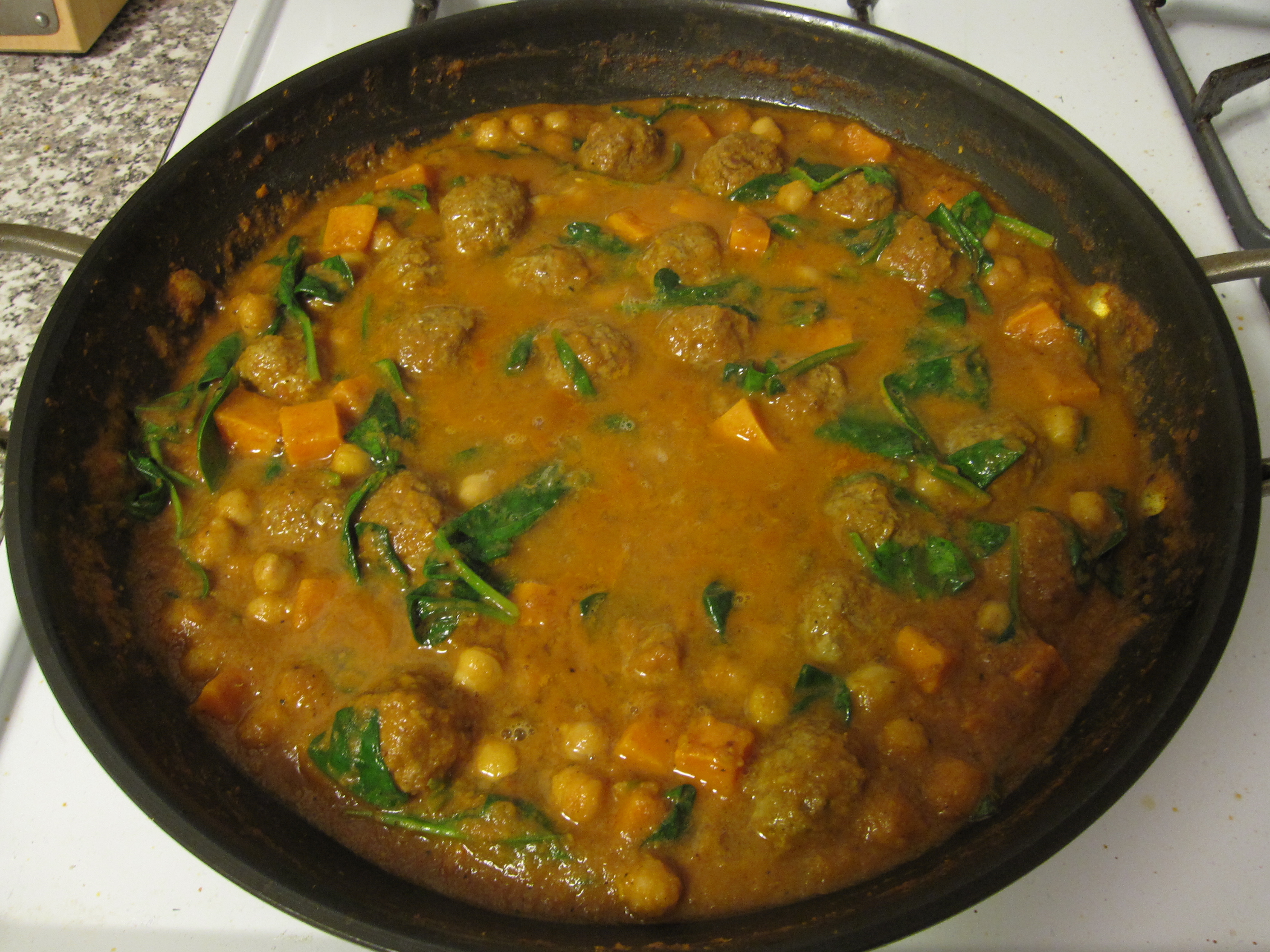
I poured in the curry sauce and let it come to a slow simmer for about 10 minutes to take the rawness from all of the veggies that were in it.

Then I added the diced yam, chickpeas, and meatballs. I let them cook in the curry for about 15 minutes to make sure the meatballs were cooked through and the yam not too hard. Just before taking the curry off the heat I added the spinach and mixed it in so that it wilted slightly. Then I turned off the heat and mixed in the lime juice while seasoning with salt and pepper.

I served it with white rice and garnished with some fresh cilantro.

Read Full Post »

I like cooking salmon in foil packets because it’s a super easy and delicious way to get a lot of vegetables in your meal with maximum flavor. The other night I made some salmon packets with Japanese flavor.

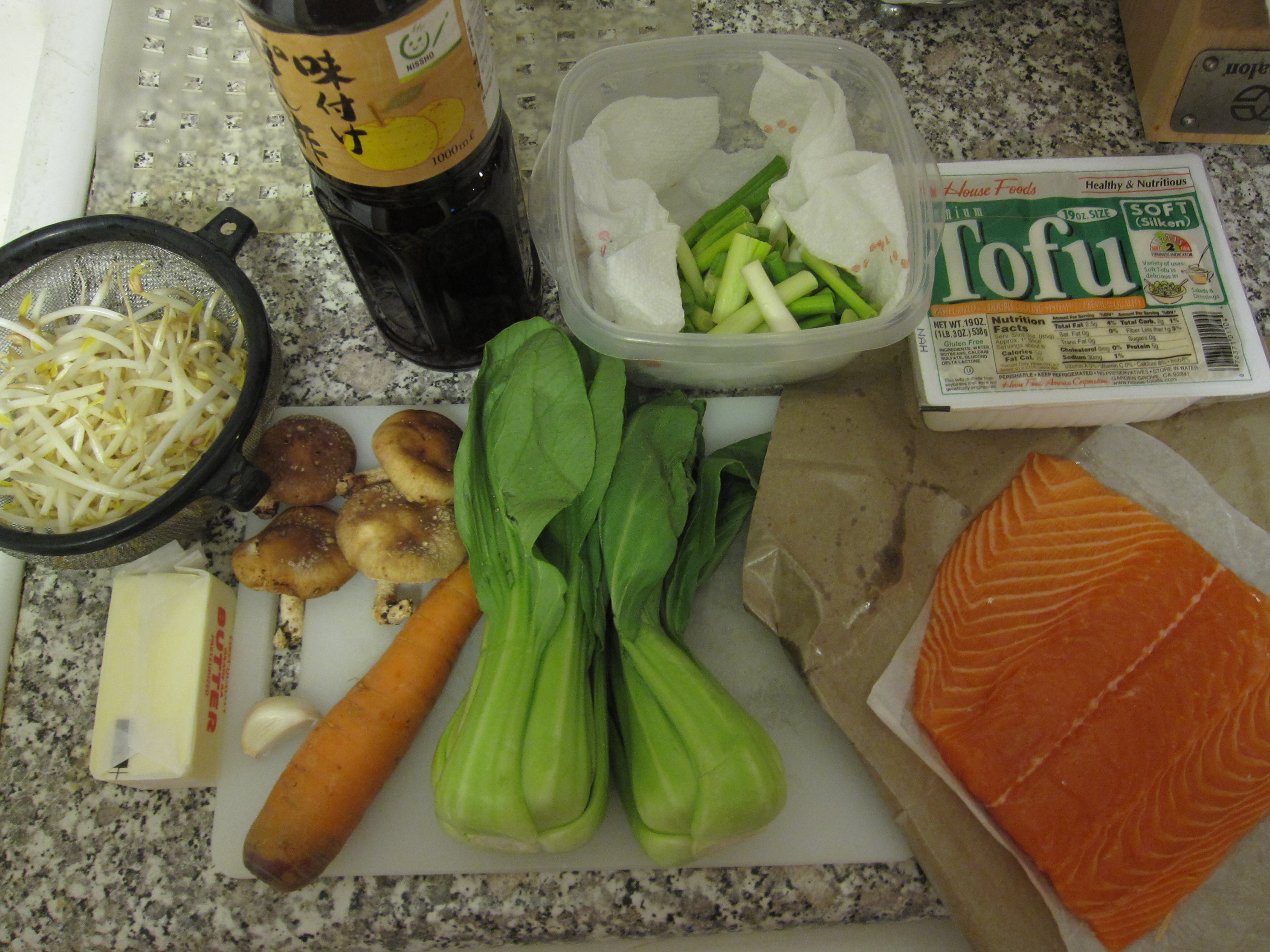
My ingredient list included some bean sprouts, butter, 1 carrot cut in to matchsticks, 1 clove of garlic slivered, 4 shiitake sliced, 4 tablespoons of ponzu, 2 large bok choy, some sliced green onions, 1/3 pack of tofu, and 1 pound of salmon cut into 4 equal portions.

I took four pieces of foil large enough to wrap everything up in and first laid down half a bok choy in each, topped that with the salmon, then divided up the rest of the veggies and threw all of that on. I cracked some black pepper, poured 1 tablespoon of ponzu in each packet, threw a small pat of butter in each, then folded them up careful to leave a little air in to allow everything to steam.

I placed the packets on a baking sheet and threw it in a 400 degree oven for 15-20 minutes. That’s all, home cooking at its easiest.

I served it with white rice. On top of the rice I sprinkled some ground sesame seeds.

Read Full Post »

Last Friday night I made this soup for dinner. It is getting really cold here in Chicago, tis the season, and I thought a nice warm soup with tasty goodness and a little spice would hit the spot. This one is real easy and can accommodate almost any vegetables you have on hand. Since it was Friday night this recipe is only for 2 portions.

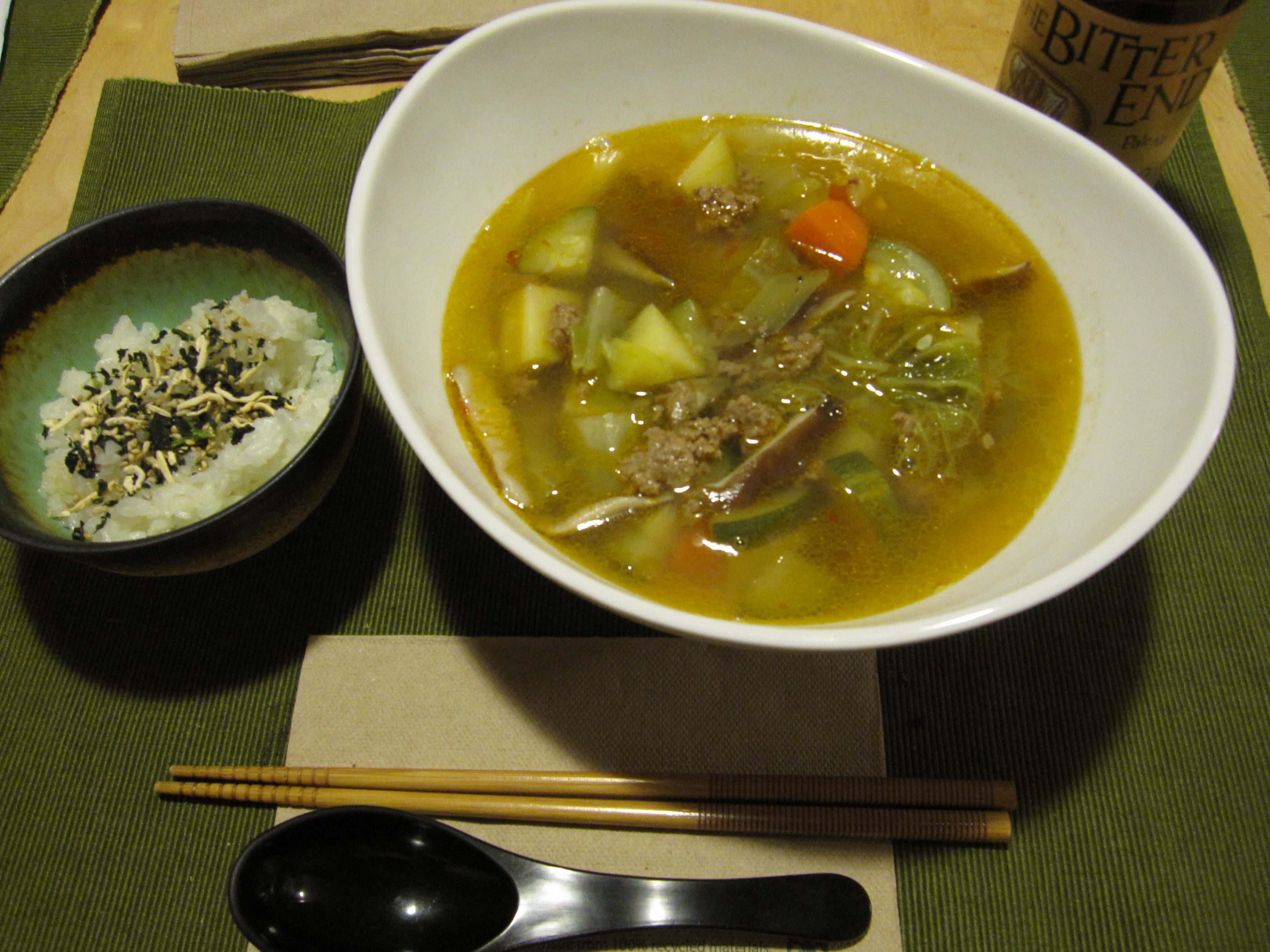
I used only about 1/3 pound of ground beef, 3 shiitake sliced, 1 clove of garlic diced, 1/2 inch of ginger slivered, 1/2  zucchini quartered and sliced, 1 carrot cut into chunks, 2 yukon gold potatoes skinned and chopped, 4 green onions cut in 1 inch lengths, 5 napa cabbage leaves chopped, 1 heaping tablespoon of Toban Djan, and 1 tablespoon of sesame oil.

In a small bowl I cut the garlic, Toban Djan, and sesame oil into the ground beef with a spoon. By doing this the beef will break apart nicely once you throw it into the soup.

I boiled 4 cups of water and tossed in the shiitake, carrot, potatoes, and green onions in. I let them simmer for about 10 minutes and then added the beef mixture. While beef was cooking I decided to pour in about 3 tablespoons of soy sauce and 1 tablespoon of sake to add a little depth to the broth. I let that simmer for about 5 minutes before adding the ginger, zucchini, and cabbage. About 5 more minutes simmering and the soup was ready.

I served it with some white rice that I sprinkled some mazekomi wakame shirasu, which is dried seaweed and little sardines. It adds some saltiness, crunch, flavor, and nutrients to rice. It’s usually used for onigiri, but I like to add to it plain rice sometimes.

Read Full Post »

« Newer Posts - Older Posts »