Feeds:
Posts
Comments

Posts Tagged ‘ginger’

In order to solidify my role as a good Japanese housewife I decided to make another classic comfort dish from the Land of the Rising Sun. I haven’t made anything with squid in a long time and came across this recipe from a Japanese cook book that I have. Since I had a piece of daikon in my fridge that I needed to use, it all just seemed too perfect. And yes, I am perfect!
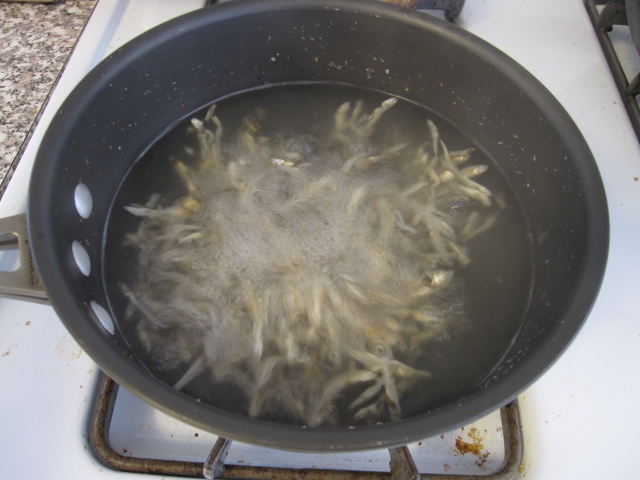
The first thing I need to do was make 3.75 cups of dashi. We don’t have any bonito flakes in our fridge, but we do have dried anchovy in our freezer that are also used for various types of dashi. In a soup pot I poured in a little more than 3.75 cups of water knowing that some would evaporate and added about 1/3 cup of the dried anchovy. I brought it to a boil, covered it, lowered the heat to med-low, and let it simmer for about 3o minutes. Then I strained out the fish and had a really nice flavorful dashi.

The rest of my ingredients for this dish included 4 tablespoons of soy sauce, 3 tablespoons of sake, 2 tablespoons of mirin, some lime zest, about 2 pounds of daikon, 1 pound of squid (body and tentacles), and 1 tablespoon of sugar.

I cut the daikon into chunks about 1.25 inches thick and rounded the edges with a pairing knife. I’m not sure why they round the edges, maybe it allows the daikon to cook more evenly or maybe it’s just an aesthetics thing, but you probably don’t need to do it if you don’t want. Being the good Japanese housewife that I am, I went all out. I put the cut daikon into cold water then drained it just before cooking. That helps keep the texture firm. I sliced the squid bodies into 1/2 inch strips and cut the tentacles in half.

I put the daikon and squid into a heavy pot and poured the dashi in. I brought it to a boil and let it cook for about 5 minutes. Every 30 seconds or so I had to skim the surface to keep the dashi nice and clear. It’s amazing that 1 pound of squid seems to have more muck than a 3 pound chicken when boiling. So you really need to skim a lot.
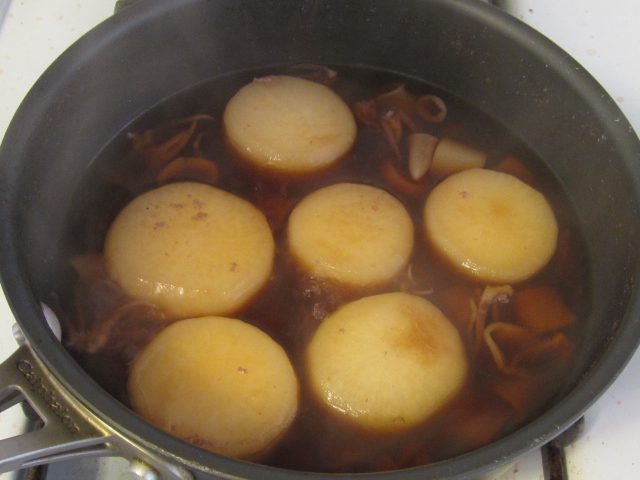
Once the dashi cleared up I turned the heat to low and added the soy sauce, sake, mirin, and sugar. I covered the pan and let it simmer for about 45 minutes or so. Every few minutes I gave the pot a good shake to make sure the flavors of the dashi were well mixed.
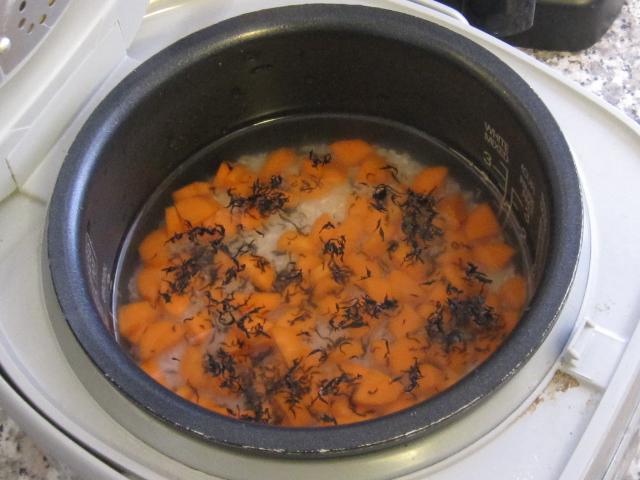
While the squid and daikon were simmering I made some hijiki-carrot rice. After rinsing 2 cups of rice and measuring out the liquid I added a tablespoon or so of dried hijiki and 1 chopped carrot. I let it sit for a half hour and then started the rice cooker. Actually, I had this ready to go before starting the squid and daikon. But I didn’t hit the start button until the simmering started for timing purposes.

For a side dish to get more vegetables in the meal I made a simple stir-fry. I cut up 1 head of broccoli, had a couple of ounces of bean sprouts, 3 diced garlic cloves, and 1 inch of diced ginger.
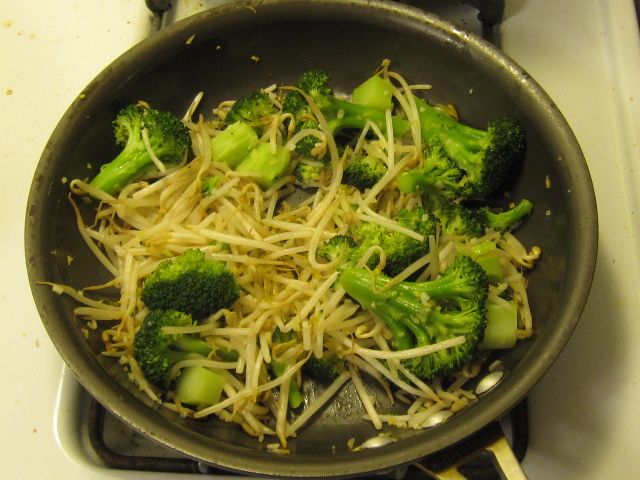
I heated a skillet and added 1 tablespoon of sesame oil then added the garlic and ginger. After about 30 seconds I tossed in the broccoli and let it go for about 5 minutes before adding the bean sprouts. About 2 minutes later and it was ready to eat, just a sprinkle of salt and pepper was needed.

For serving I put some of the squid and daikon in bowls with some of the dashi. Then I grated some of the lime zest on top. Yes, as you can see in the picture I do have the hairiest arms you’ll ever see on a Japanese housewife…I hope. In Japan they’d use yuzu instead of lime, but I couldn’t find any yuzu at the store. The lime worked really well though. And the squid, oh brother the squid! It was so soft and tender it literally melted in our mouths. I haven’t had squid that good since we were in Nara, Japan over a year ago during squid season. And if you’ve never eaten daikon simmered in a soy-dashi broth you’re missing out on one of life’s finer flavors. This was the best meal I’ve cooked in a while. OIISHII!!!

Read Full Post »

Last night for dinner I made Japanese-style ginger pork with miso soup. The more I cook Japanese food the more I realize just how much healthier it is to American food. There is very little added fat and much more vegetable-to-meat ratio. Cooking Japanese-style food is extremely as well, not to mention delicious!

I first got my miso soup ingredients ready to go. I won’t go into great detail about making miso soup because I’ve done that a few times on this blog already. I poured about 3 cups of water into my pot and added 4 sliced shiitake, 3 chopped fingerling potatoes, 3 chopped green onions, and about 3 tablespoons of dashi soy sauce. I rinsed and soaked some salted wakame and added it to the soup at the end along with a large tablespoon of miso. The soup simmered over low while I cooked everything else, just enough time for the potatoes to cook.

For the pork I used about 3/4 pound of snap peas, 3 ounces of bean sprouts, 1/2 onion sliced, 1 inch of ginger grated, 1 garlic clove grated, 2 tablespoons of soy sauce, 1 tablespoon of sake, 1 tablespoon of mirin, and 4 thin pork chops each about 3 ounces.

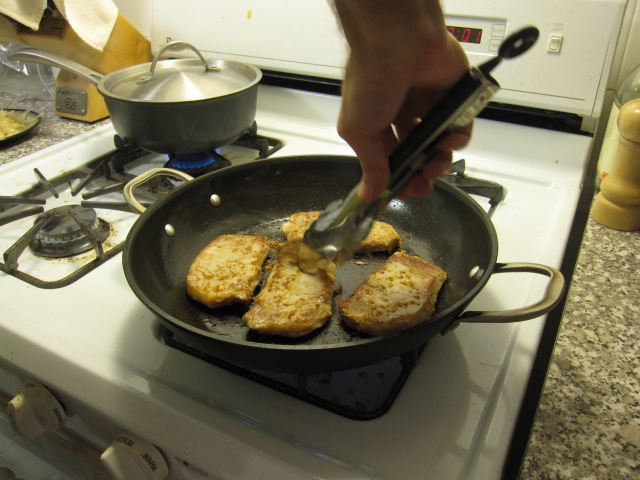
I mixed together the ginger, garlic, soy, sake, and mirin as the marinade. I let the pork sit in it for about 15 minutes or so. I heated up my large skillet and added about 1 tablespoon of vegetable oil and then cooked the onion for about 4 minutes. I took the onion out and rested it on a plate and then cooked the pork (reserving the marinade) for about 2-3 minutes per side. I rested the pork with the onion. I poured the marinade into the skillet to cook it down a little. I added about 4 tablespoons of water to help turn the marinade into a pan sauce and scrape up the bits from the pork, lots of flavor there you don’t want to lose.

Once the sauce had reduced a little bit, a minute or so, I added the snap peas and let them cook for about 5 minutes. After that I added the bean sprouts and the reserved onions.

I placed the pork on top, covered the skillet, and let it go for a few minutes while I mixed the miso into the soup. Then I plated it all up with some white rice. Yuki topped the rice with some ground sesame seeds.

So, we got 7 different vegetables into dinner with only 3 ounces of animal carcass. The only added fat was 1 tablespoon of vegetable oil split between 4 portions. No wonder America is a bunch of fat-asses while Japan is extremely fit and healthy.

Read Full Post »

Stanley’s had these cute little Boston Lettuce heads for sale. The leaves looked perfect to make a wrap with. Then I remembered talking to Yuki about how we haven’t had ginger pork in a while, actually her craving for it. Sometimes I get it. Not often, but this time I did. What better way to put some ginger and pork together than in the buttery leaves of some fresh Boston Lettuce?

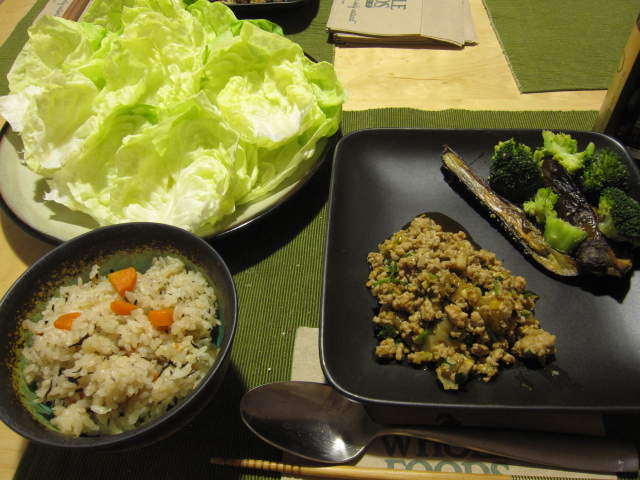
Laap is simply a Laotian ground meat dish. I can either be raw or cooked. This one is more of a Southeast Asian flavor instead of a typical laap. I used a handful of parsley chopped (cilantro would have been prefered, but I had to use up my parsley), 7 shiitake caps diced, 1 yellow bell pepper diced, 2 stalks of lemongrass tender innards thinly sliced, juice of 1 lemon (prefer lime but thought lemon would match parsley better), 1/2 inch ginger minced, 3 garlic cloves minced, 6 green onions sliced, 1 head of Boston Lettuce large outer leaves used for wraps while the small inner leaves were chopped up, 1 tablespoon fish sauce, 1 tablespoon of sesame oil, 1 tablespoon of sriracha, and 1.25 pounds of ground pork. I also used 1 tablespoon of soy sauce, but that wasn’t in the picture.

I heated up some vegetable oil and added the lemongrass, ginger, and garlic. I let them sizzle for about a minute and then added the pork. I broke the pork up as it cooked through, that took about 5 minutes. Then I added the shiitake, pepper, and green onion. I let those cooked down for about 3 minutes and then added the fish sauce, soy sauce, and sriracha. After the sauces cooked down for a few minutes I turned off the heat and stirred in the parsley, lemon juice, and sesame oil.  

For side vegetables planned on sauteing some baby eggplant and broccoli with garlic, but for some reason I ended up quartering the eggplant and roasting it at 350 degrees for about 20 minutes in sesame oil while steaming the broccoli with ground sesame seeds. I didn’t use the garlic.

The rice I made was Japanese style. Not really the best match, but not bad. In the rice cooker, once I rinsed 2 cups of rice and filled the bowl with the right amount of water I added 1 diced carrot and a few pinches of dried hijiki seaweed. I let it sit for about a half hour before turning the machine on. I made sure to mix the carrots and hijiki in well before serving.

Read Full Post »


The other night I made one of Yuki’s favorites, a dish she usually makes. She, like most Japanese absolutely love nabe in the winter time and it’s hard to blame her. You just can’t beat a good table-top soup filled with meat, veggies, and a good broth. I think chicken meatballs rolled in cabbage is her favorite and one she’s made quite a few times for me, so this time I made it for her.

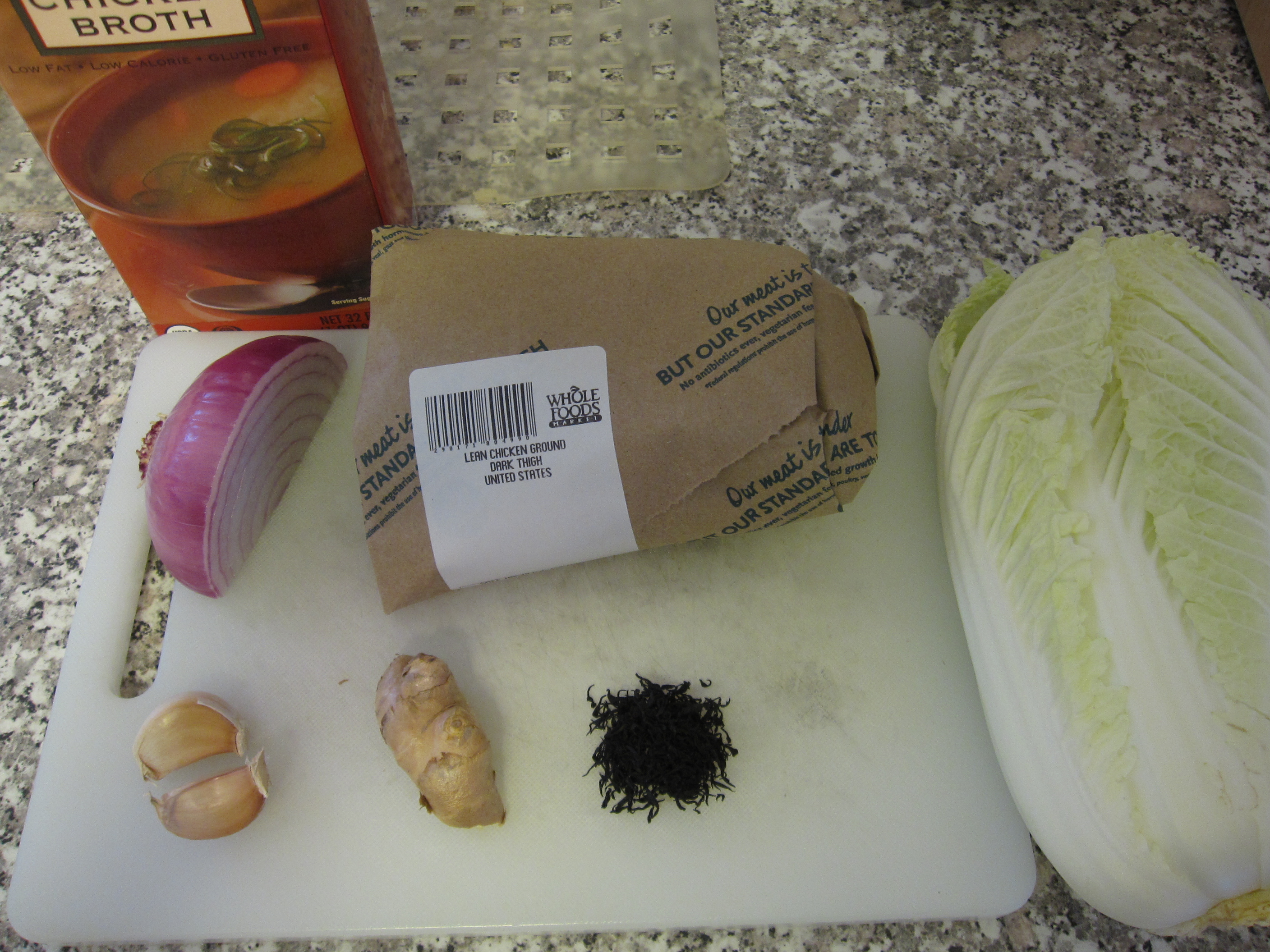
First thing I did was get the meatballs wrapped and ready to go. I used chicken stock as my base for the broth so I used 2 cups of it to soak a heaping tablespoon of dried hijiki seaweed for about 30 minutes before I could do much else. When the hijike was rehydrated I strained the broth into a soup pot. The rest of my meatball ingredients were 1/2 red onion, 2 garlic cloves, 1/2 inch of ginger, 1 pound of ground chicken thigh, and a small head of napa cabbage.

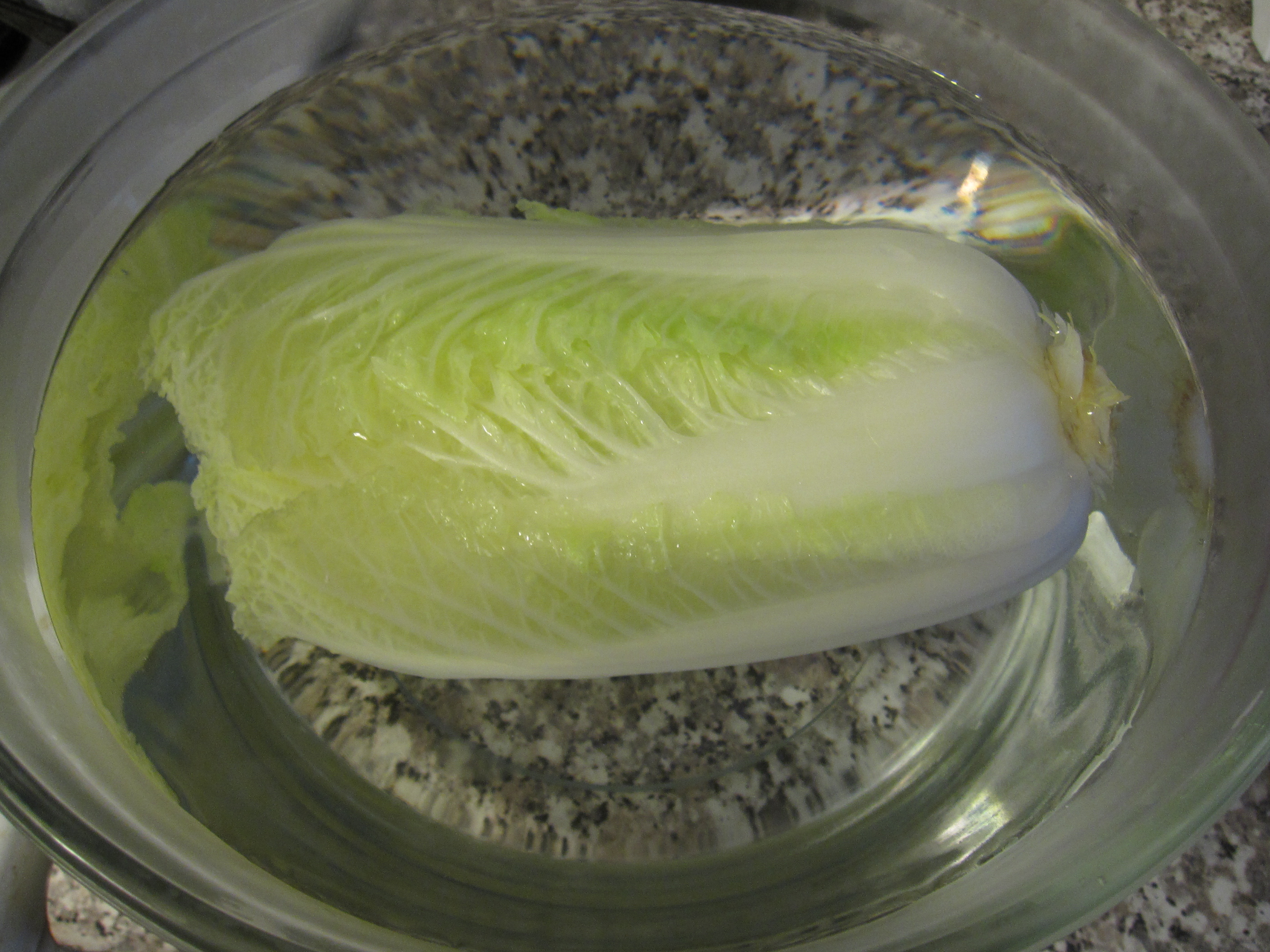
To make the cabbage more pliable I dropped it into some salted boiling water and let it boil for about 2 minutes. Then I took it out and shocked it in ice water. The boiling water softened it making it easier to roll while shocking it in ice water helps it retain its color.

In a glass bowl I grated the onion, garlic, and ginger into the chicken meat, added the hijiki, seasoned it with salt and pepper, and mixed it thoroughly. Then I rolled walnut-sized meatballs in the cabbage and secured them with toothpicks.

The rest of my ingredients for the nabe were 6 green onions chopped, 2 small carrots chopped, 1 small daikon chopped, 7 fingerling potatoes halved, 8 shiitake halved, a package of fried tofu sliced, and 1 Honey 1 Rib (yes, I am finding creative ways to finish up those ribs since I over-ordered).

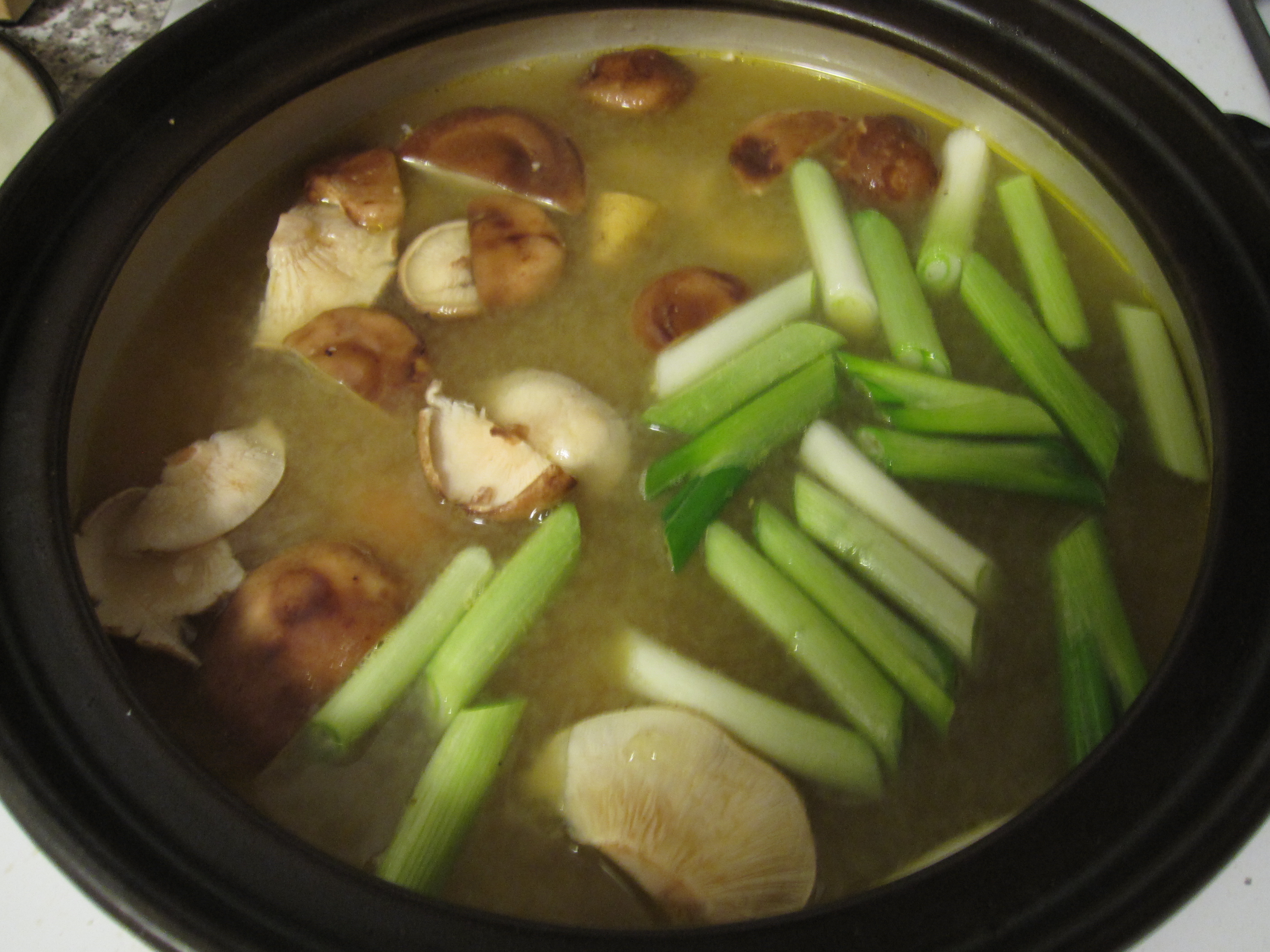
I put the rib in the chicken stock that had already soaked the hijiki and added 2 cups of water. I brought that to a boil and let the rib simmer in the broth for about 15 minutes. Then I strained the broth into our nabe (clay pot). The rib added some nice smokey depth to the broth. It also gave me some moist tender meat to nosh on while finishing up the cooking.

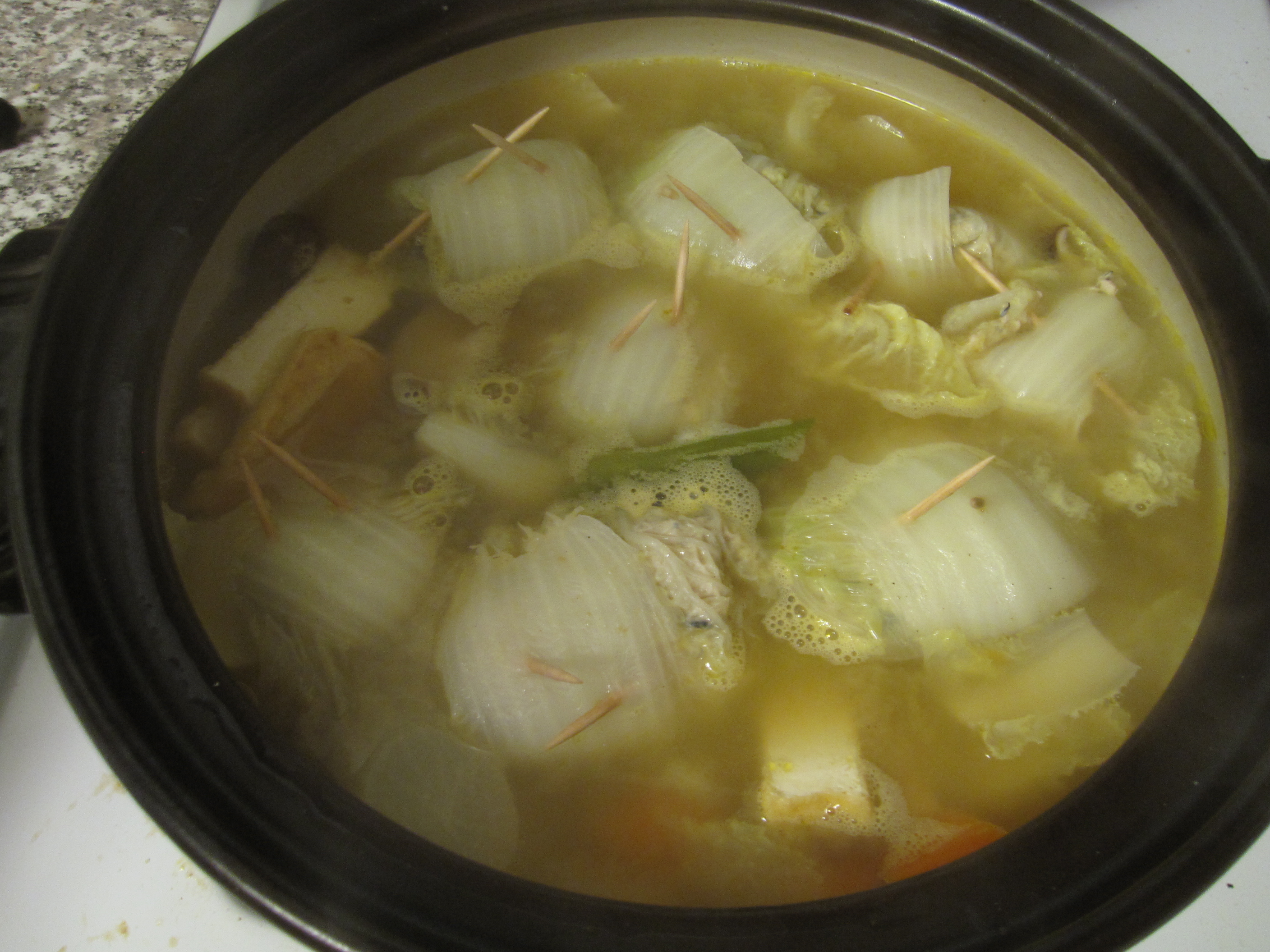
Then I brought the broth back to a slow boil and added the chicken-cabbage rolls. I let them cook for about 15 minutes to make sure they cooked all the way through. Once they were cooked I took them out and set them aside.

I kept the broth at a low boil and added all of the veggies. I let them all cook for about 10 minutes.

Once all of the veggies were cooked I added the chicken-cabbage rolls back and took the nabe to our table-top propane burner.

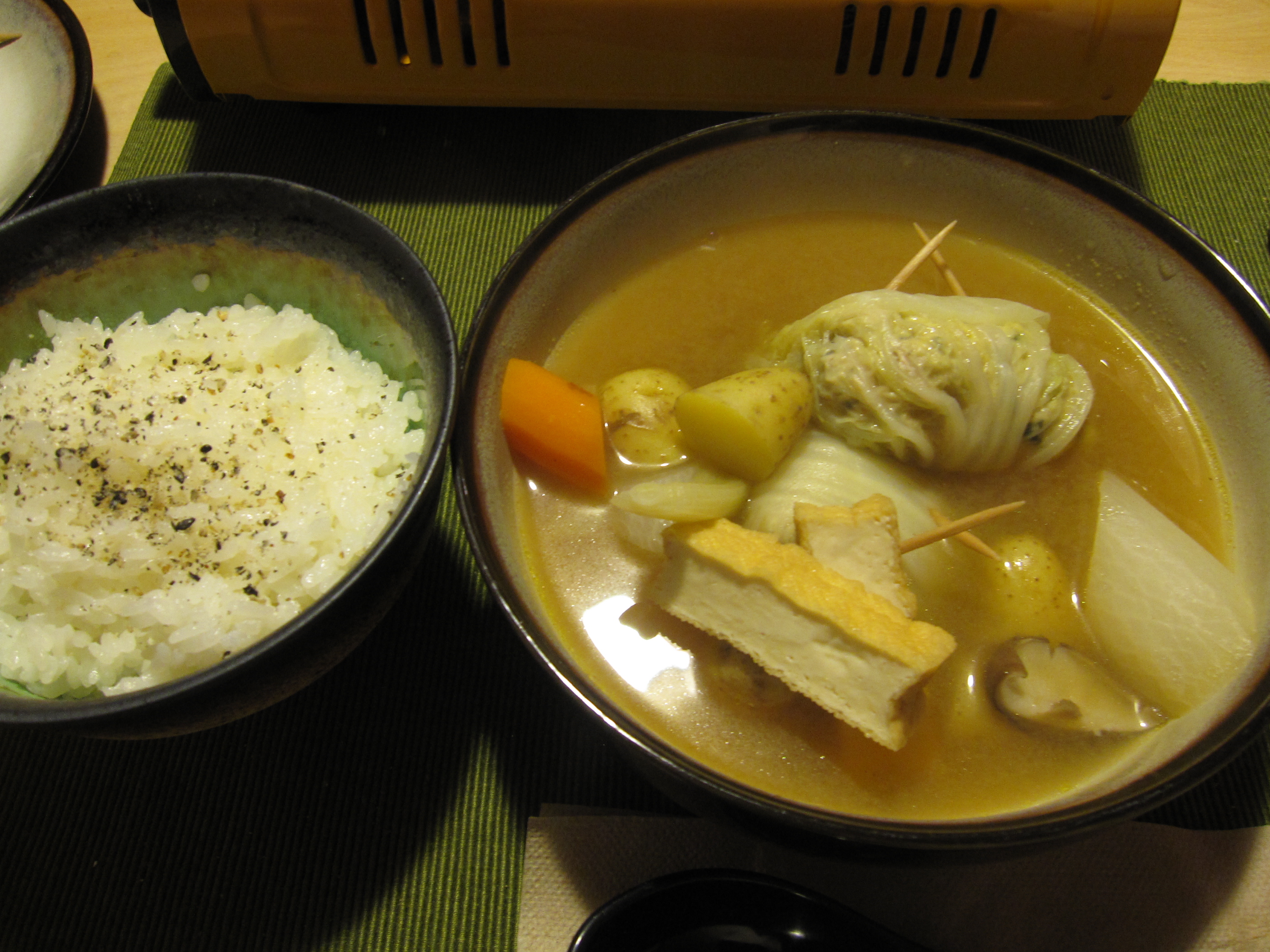
 To serve, I poured about a tablespoon of ponzu in each of our bowls. We helped ourselves by adding broth, meatballs, and vegetables along with a dash of togarashi. I had white rice topped with ground sesame seeds along with it.

Read Full Post »

Ground lamb was on sale at the store, so I picked a pound up and made this Indian-style curry with it. Usually, curry is made with chunks of meat, I improvised since ground lamb was cheaper.

First thing I did was make the meatballs. I put the lamb in a glass dish, sprinkled 1 teaspoon of ground cumin on top, then grated in 1/2 a red onion,  2 garlic cloves, and 1/2 inch of ginger. A little salt and pepper and I mixed it all together.

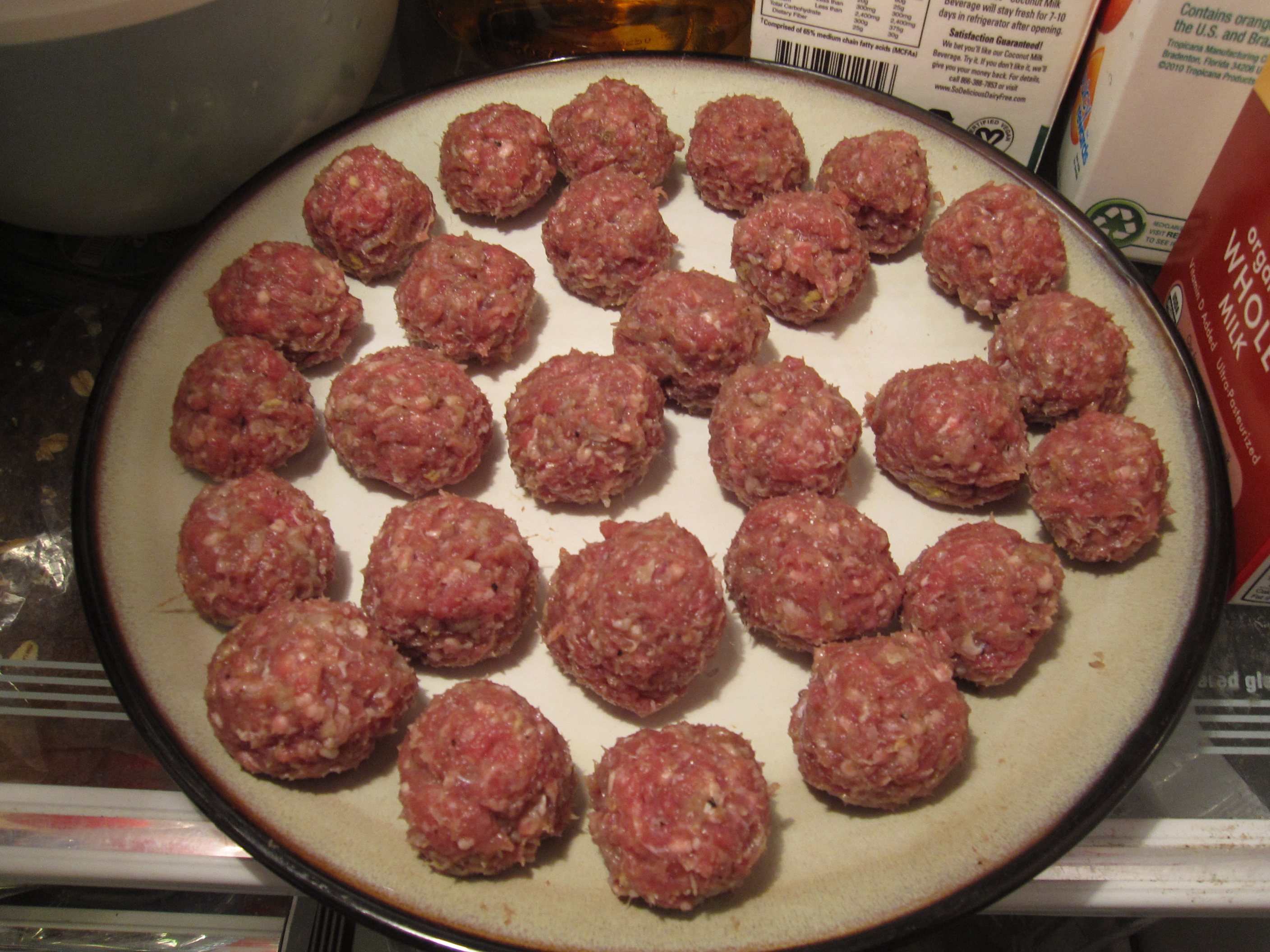
After letting the mixed meat sit for about 10 minutes I rolled it up into quarter-sized balls. I let them sit in the fridge to hold shape while I got the curry sauce ready.

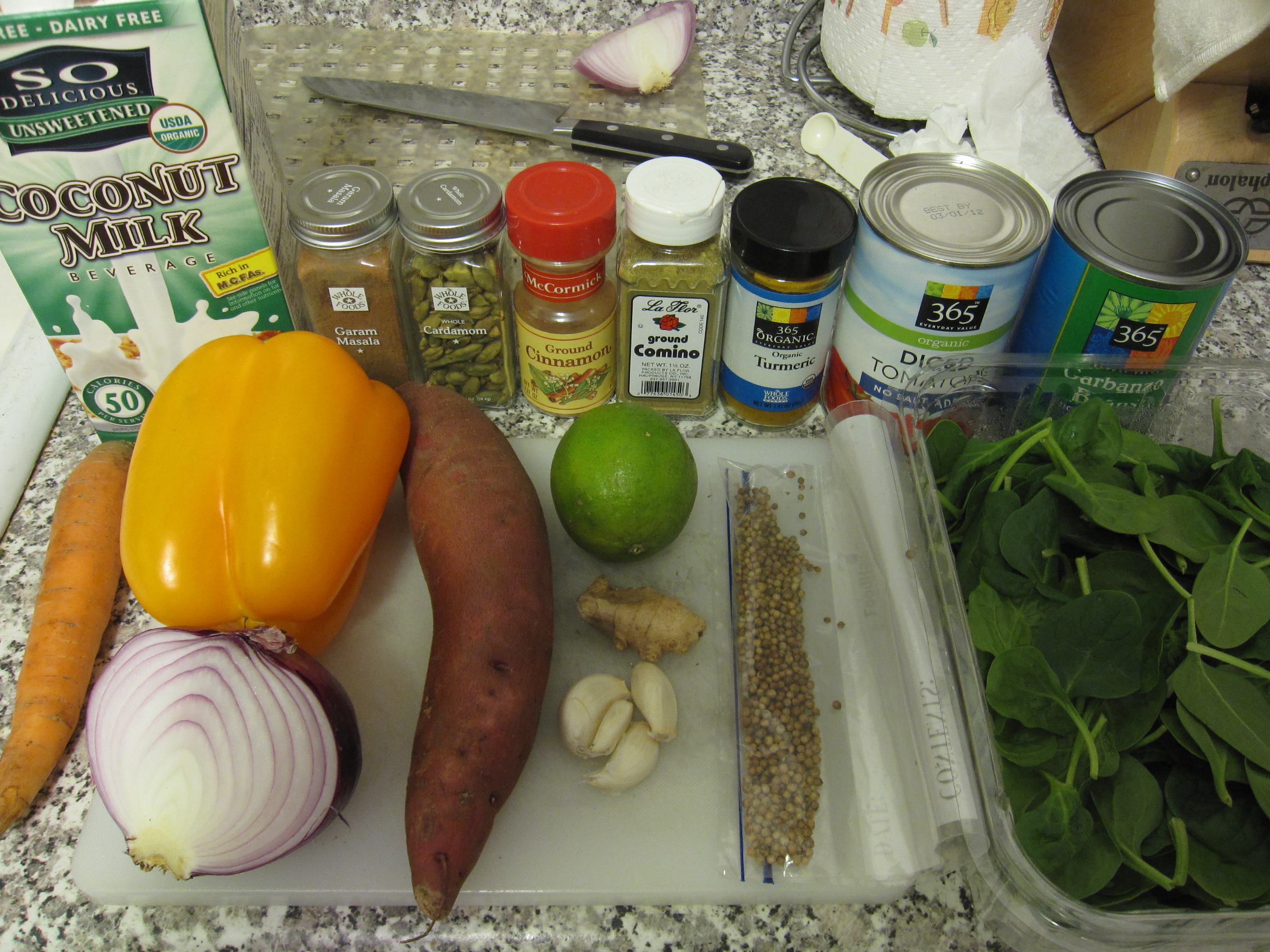
For the curry I used 1 cup of coconut milk, 1 carrot rough chopped, 1/2 red onion rough chopped, 1 medium-sized yam skinned and diced, juice from 1 lime, 1/2 inch ginger chopped, 4 garlic cloves chopped, about 3 ounces of baby spinach, 1 can of diced tomatoes, 1 can of chickpeas, 1 teaspoon each of garam masala, cinnamon, cumin, turmeric, and coriander, and the seeds from 4 cardamom pods.  There’s a big juicy orange bell pepper in the picture, but I decided not to use it for the curry.

With my pestle and mortar I ground up the coriander seeds and cardamom. I added the rest of the spices to this mixture.

I threw everything except for the yam, chickpeas, lime juice, and spinach into my blender and let her rip until I had a nice smooth sauce. I decided to add 1 tablespoon of flour while it was blending to help thicken it up while I cooked it.

I heated 1 tablespoon of ghee in a large skillet and browned the outside of the lamb balls. Once they got some color and I was sure they’d hold their shape I removed them with a slotted spoon leaving behind the ghee and lamb fat.

I poured in the curry sauce and let it come to a slow simmer for about 10 minutes to take the rawness from all of the veggies that were in it.

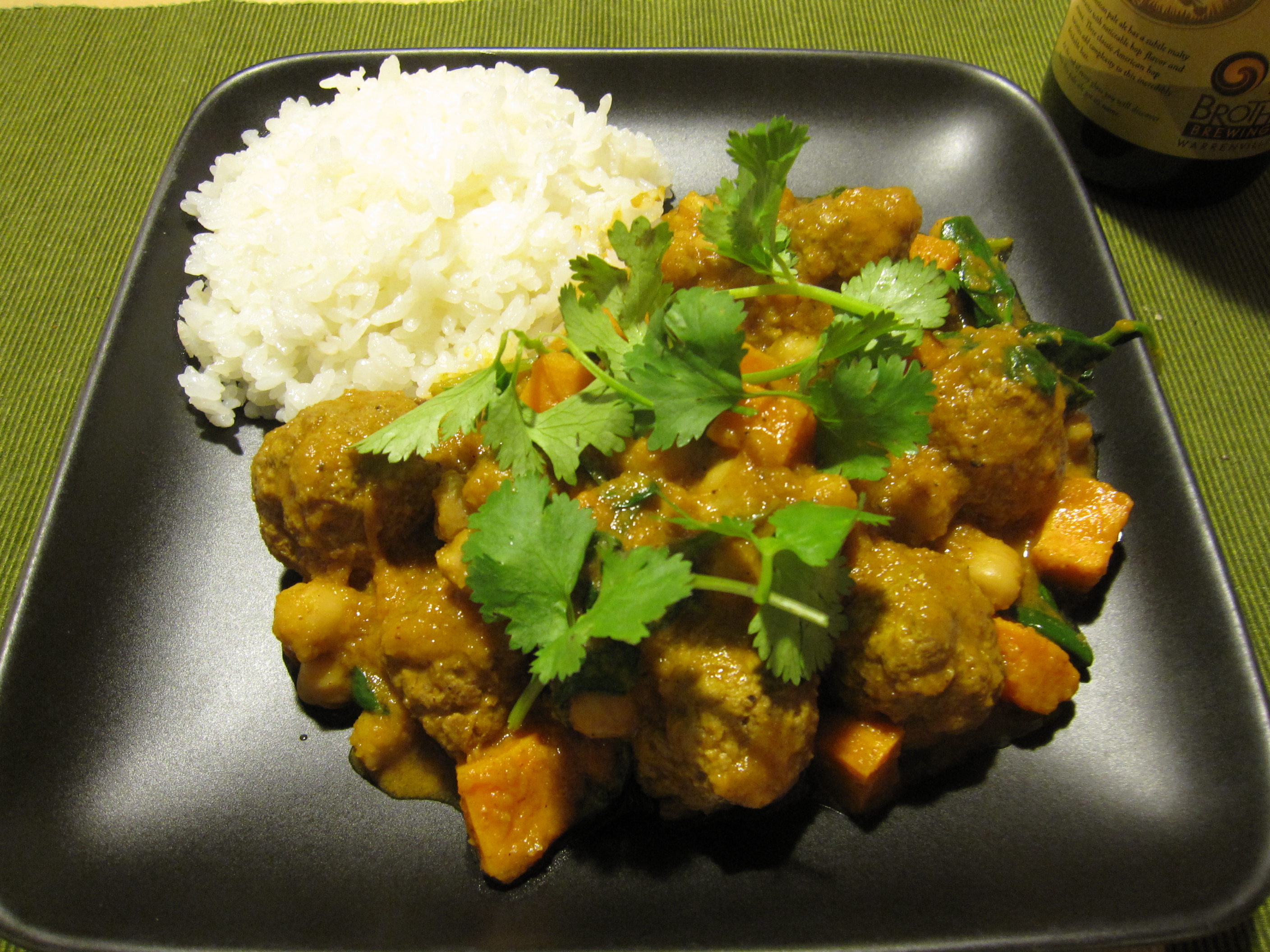
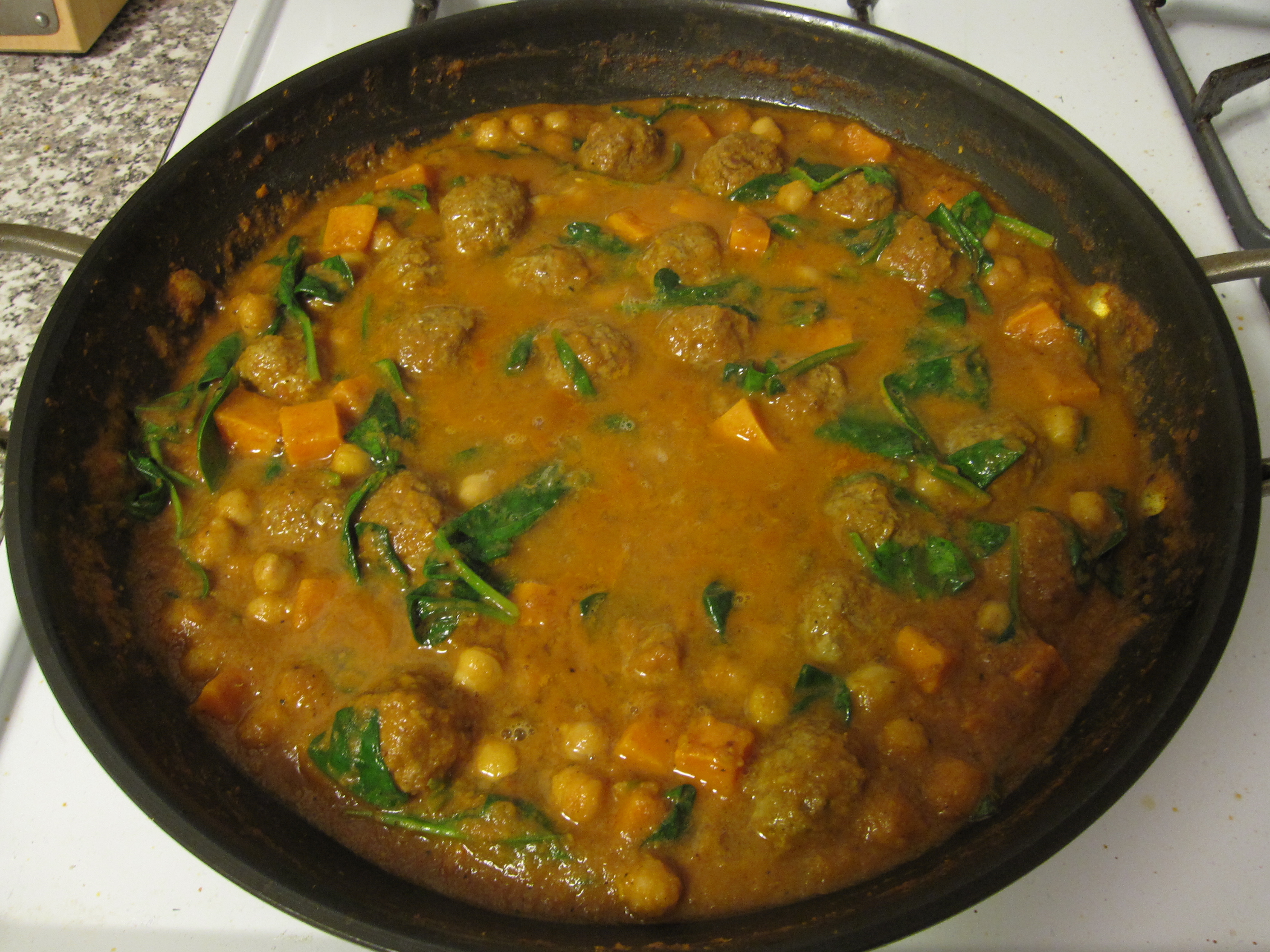
Then I added the diced yam, chickpeas, and meatballs. I let them cook in the curry for about 15 minutes to make sure the meatballs were cooked through and the yam not too hard. Just before taking the curry off the heat I added the spinach and mixed it in so that it wilted slightly. Then I turned off the heat and mixed in the lime juice while seasoning with salt and pepper.

I served it with white rice and garnished with some fresh cilantro.

Read Full Post »

Last Friday night I made this soup for dinner. It is getting really cold here in Chicago, tis the season, and I thought a nice warm soup with tasty goodness and a little spice would hit the spot. This one is real easy and can accommodate almost any vegetables you have on hand. Since it was Friday night this recipe is only for 2 portions.

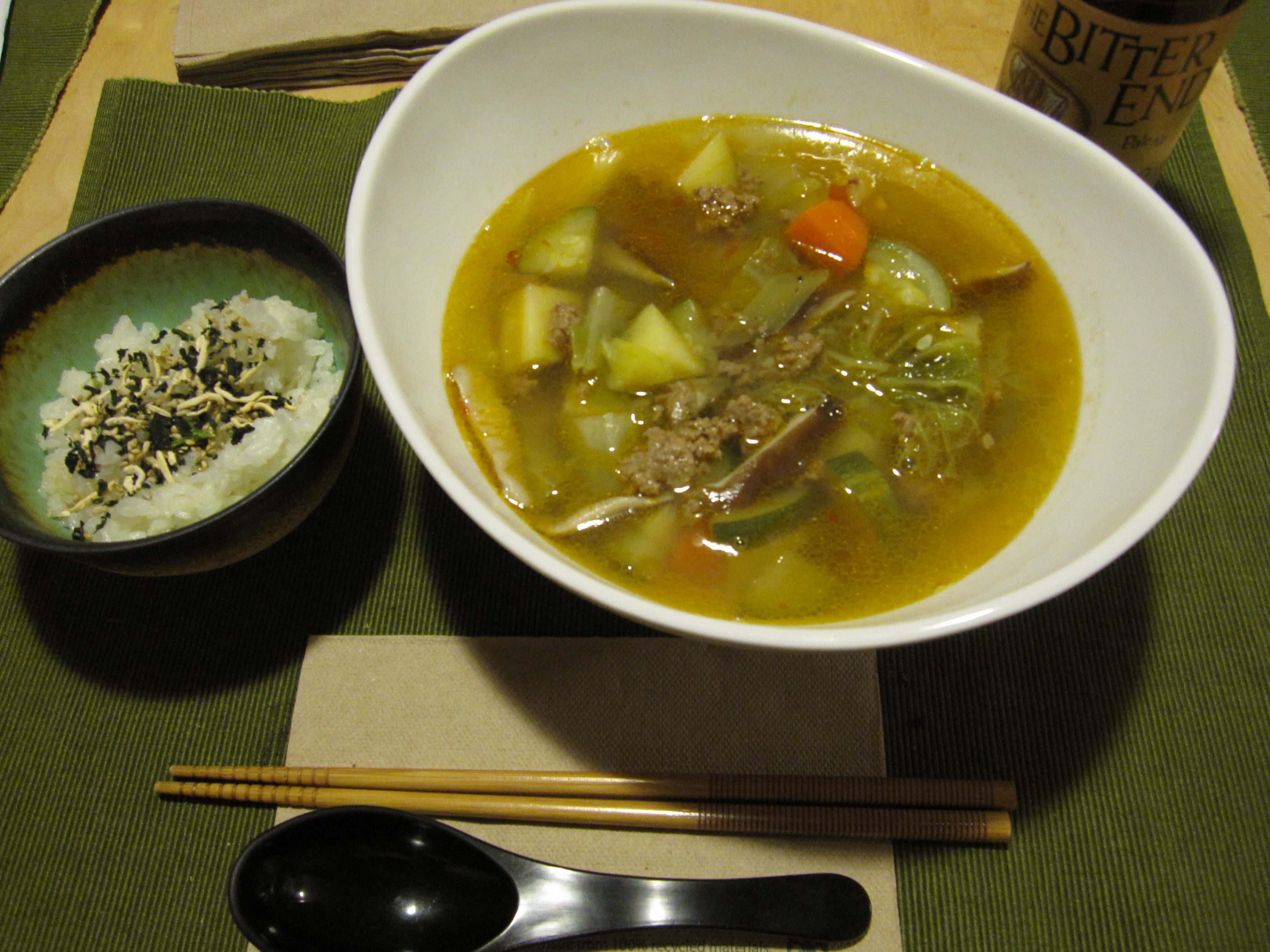
I used only about 1/3 pound of ground beef, 3 shiitake sliced, 1 clove of garlic diced, 1/2 inch of ginger slivered, 1/2  zucchini quartered and sliced, 1 carrot cut into chunks, 2 yukon gold potatoes skinned and chopped, 4 green onions cut in 1 inch lengths, 5 napa cabbage leaves chopped, 1 heaping tablespoon of Toban Djan, and 1 tablespoon of sesame oil.

In a small bowl I cut the garlic, Toban Djan, and sesame oil into the ground beef with a spoon. By doing this the beef will break apart nicely once you throw it into the soup.

I boiled 4 cups of water and tossed in the shiitake, carrot, potatoes, and green onions in. I let them simmer for about 10 minutes and then added the beef mixture. While beef was cooking I decided to pour in about 3 tablespoons of soy sauce and 1 tablespoon of sake to add a little depth to the broth. I let that simmer for about 5 minutes before adding the ginger, zucchini, and cabbage. About 5 more minutes simmering and the soup was ready.

I served it with some white rice that I sprinkled some mazekomi wakame shirasu, which is dried seaweed and little sardines. It adds some saltiness, crunch, flavor, and nutrients to rice. It’s usually used for onigiri, but I like to add to it plain rice sometimes.

Read Full Post »

Lares is a crusty little mountain town in Puerto Rico. It’s famous for two things. First, in 1868 it was the birthplace of the uprising against Spanish rule, El Grito de Lares. Second, and even more historically important, in 1968 Salvador Barreto opened Heladeria Lares.

This is no ordinary ice cream parlor, no sir. This ice cream parlor not only makes regular old chocolate, vanilla, strawberry, etc. ice cream. This ice cream parlor will make ice cream out of anything!

When you walk in there are literally at least 50 different flavors to choose from. The do limit you to 3 samples though. Kind of a shame because there are so many I wanted to try, but they need to be able to sell some ice cream so I understand they don’t want customers to fill up on free samples.

I sampled the Arroz con Gandules. Rice and pigeon peas, it was actually really good.

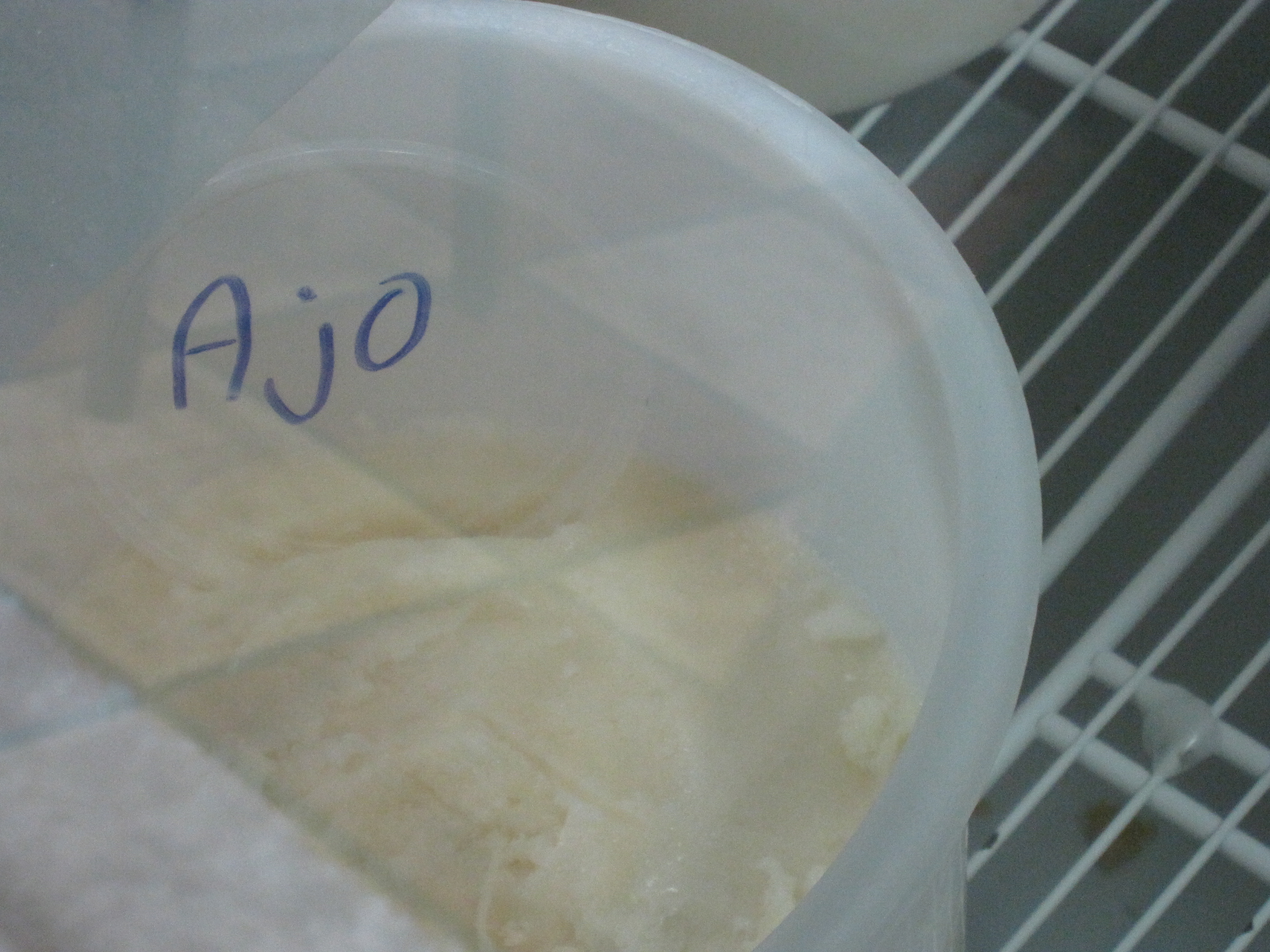
Ajo, or garlic. They did a great job of accentuating the sweetness while suppressing the sharpness of the beloved garlic clove.

Bacalao, salt codfish. This one was absolutely disgusting! Salted fish should never ever be turned into a sweet treat. It was one of the worst flavors I’ve ever had in my mouth.

I ended up getting a scoop of two flavors I didn’t try but was confident would work together, ginger and pumpkin. I was right, as usual. They gave me a little bit bigger scoop of ginger while I would have preferred more pumpkin, but hey, you can’t have your ice cream and eat it too.

Yuki got a scoop of the Arroz con Gandules and one of the sweet potato. Both excellent scoops of ice cream.

If you ever get to Lares, you have to hit Heladeria Lares up for a sweet adventure. Some of the flavors are just as terrifying to even think about as they are to eat, but mostly what they do works out just fine. With people like Bill Clinton haven eaten their ice cream, I wonder if they’ll come up with a special cigar flavor.

Read Full Post »

I’m just not as young as I used to be. I can tell that I was at an izakaya last night because all of that sake floating around my liver is taking its toll. However, slow-moving Saturdays usually mean fun Friday nights.

A group of Yuki’s co-workers got together last night for food and drinks at Chizakaya, a newly opened izakaya here in Chicago. Actually, it’s probably the only real izakaya in town. While there are a few places claiming to be izakayas, they’re really just sushi places. Chizakaya doesn’t serve any sushi at all. I first heard of Chizakaya a few months ago when my mom sent me an article in the Huffington Post about the very fact that there aren’t any real izakaya’s in Chicago, until now. It also mentioned that the group that opened Chizakaya came from L2O, arguably Chicago’s finest seafood restaurant. Naturally, it made the list of places I wanted to go. With Yuki’s group meeting there last night I took the opportunity and ran with it.

I got there before the rest of the group, except for the two white guys in her work team (everyone else is Japanese). We sat at the bar and had a glass of sake while waiting for everyone else. I will say that the bartender knows his sake! It’s not a huge sake list, but a very well put together one with a good variety at all price points. He also gave us each a sample of sweet potato shochu, something none of us have ever had. It’s actually quite good.

Once everyone showed up they took us to the back room at one of the two big tables. I like it much better back there because the kitchen is open and the atmosphere is a little more izakaya-like.

Our waitress was also well-trained in the art of sake flavors as well as their menu. True to being an izakaya, the menu is based on small plates and nibbles to go along with drinking. We ordered a bunch of things and just grabbed and ate as we went, along with numerous bottles of sake. Since I’m drinking for 3, I’m struggling to keep my eyes focused as I write this.

As we sat they brought out little bowls of miso soup. Really good miso, they got the ratio of miso-to-dashi right. Instead of wakame which is typically put in miso soup they used hijiki.

Japanese sweet potato fries with spiced mayo.

Puffed pig ears with togarashi soy dipping sauce. Move over potato chips, these little cracklins are fantastic!

Crispy pork with a slow poached egg.

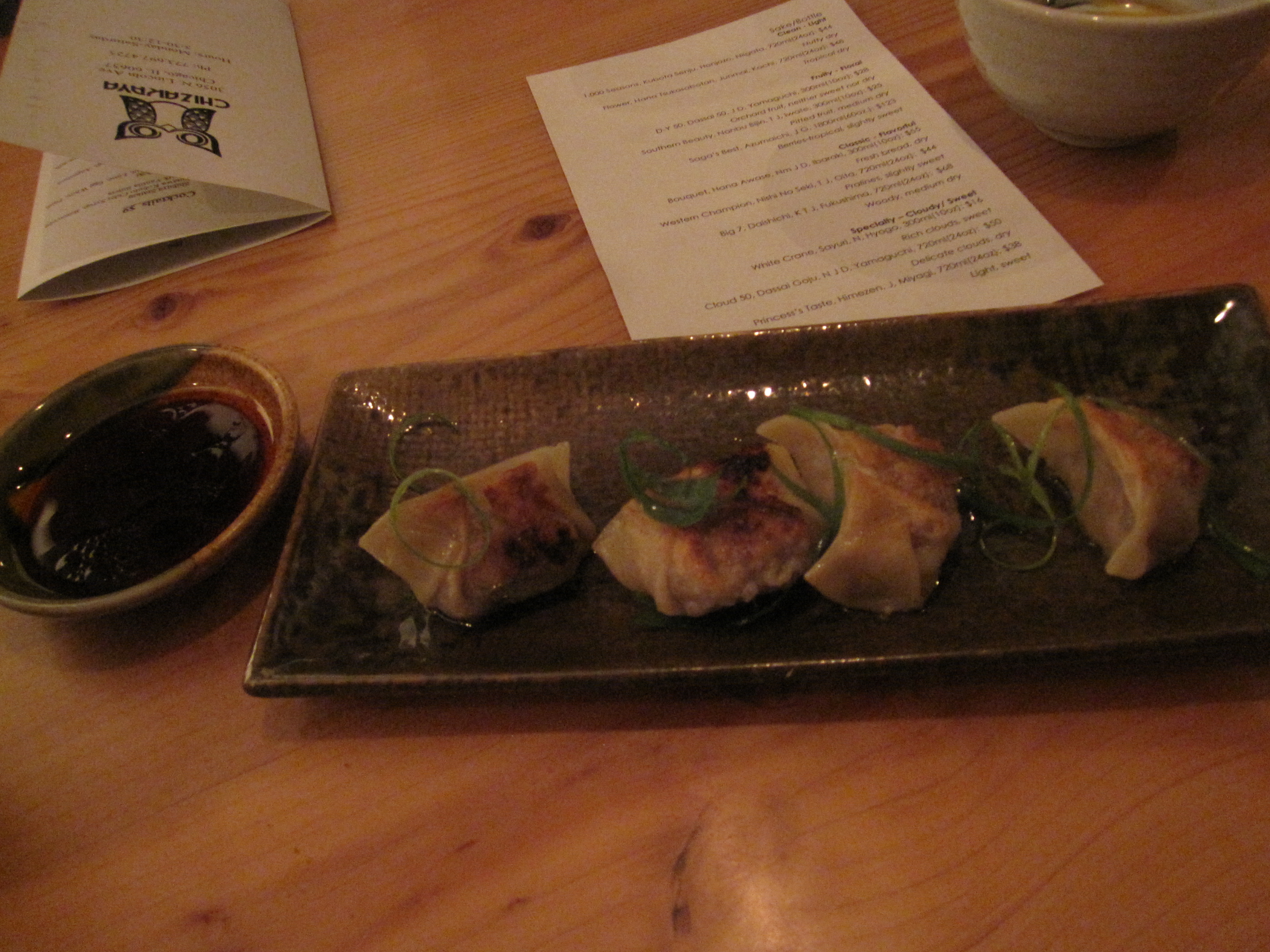
Pork shoulder gyoza. The gyoza could have been a little bit crispier, but the braised pork shoulder filling more than made up for that shortcoming.

Oysters with bacon and shishito. I don’t know if the bacon was over smoked or if they added a little liquid smoke, but there was a bit too much smokiness to this one. The natural sweetness of the beautiful little oysters was lost. Cut back on the smoke and this one is a winner.

Grilled ika togarashi with a yuzu vinaigrette. This was some of the most tender squid I’ve had in Chicago.

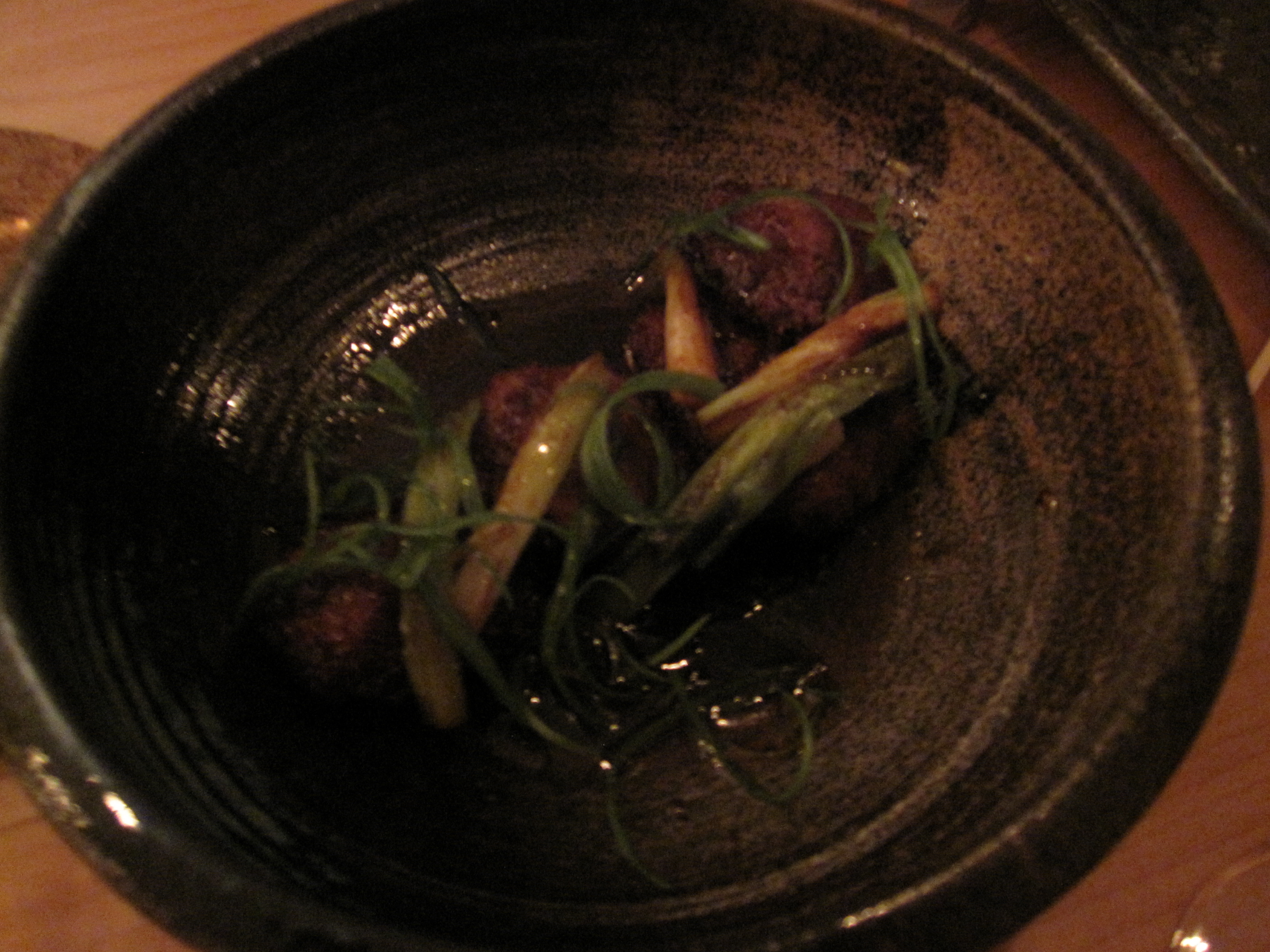
This was one of the night’s specials, duck liver karaage with scallions. Little deep-fried nuggets of ducky deliciousness!

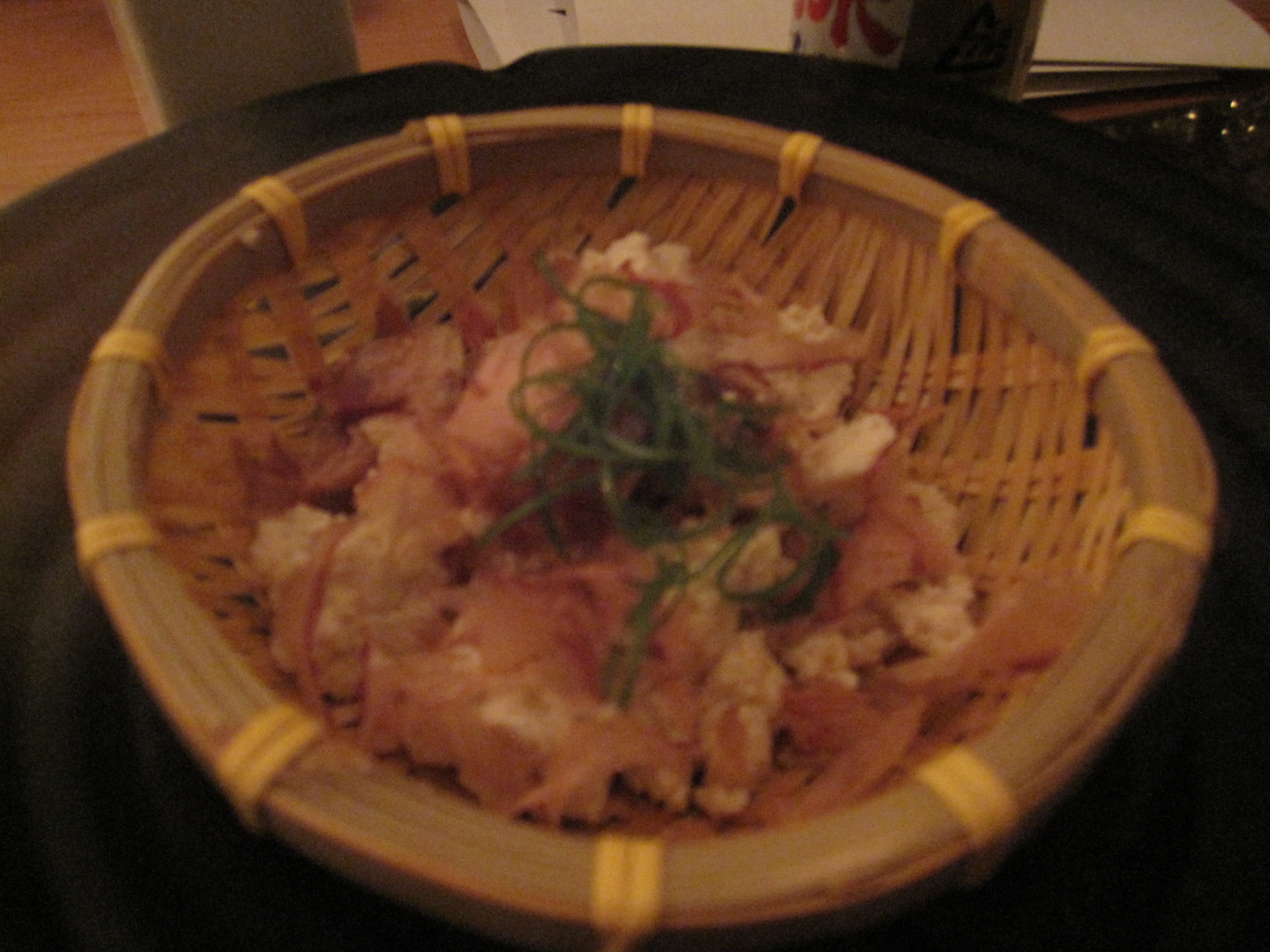
Home-made basket tofu with bonito flakes, scallions, ginger, and soy sauce. You haven’t had tofu until you’ve had a really good home-made tofu. This was a really good home-made tofu. Totally different beast than the store-bought packaged tofu. Very clean, very light, very tasty.

Crispy-braised lamb belly with chopped edamame. This one was another of the night’s specials and quite honestly, one of the most special dishes I’ve ever eaten! I’ve never had lamb belly before and after eating it am wondering why. You see pork belly everywhere as it’s one of the more trendy cuts of meat these days. As much as I love pork belly, and I do love pork belly, I’d drop it in a heartbeat to sink my teeth into some lamb belly. That layer of belly fat may be the most lamby of all lamb flavors that animal has. I absolutely luz it! The only thing that would have made this dish better would be to puree the edamame into a thick sauce instead of leaving it chunky. Otherwise it was perfect.

Now, I’ll show you all of the kushi-yaki (grilled skewers of meat) that we had.

Chicken skin, mother of schmaltz how I love thee!

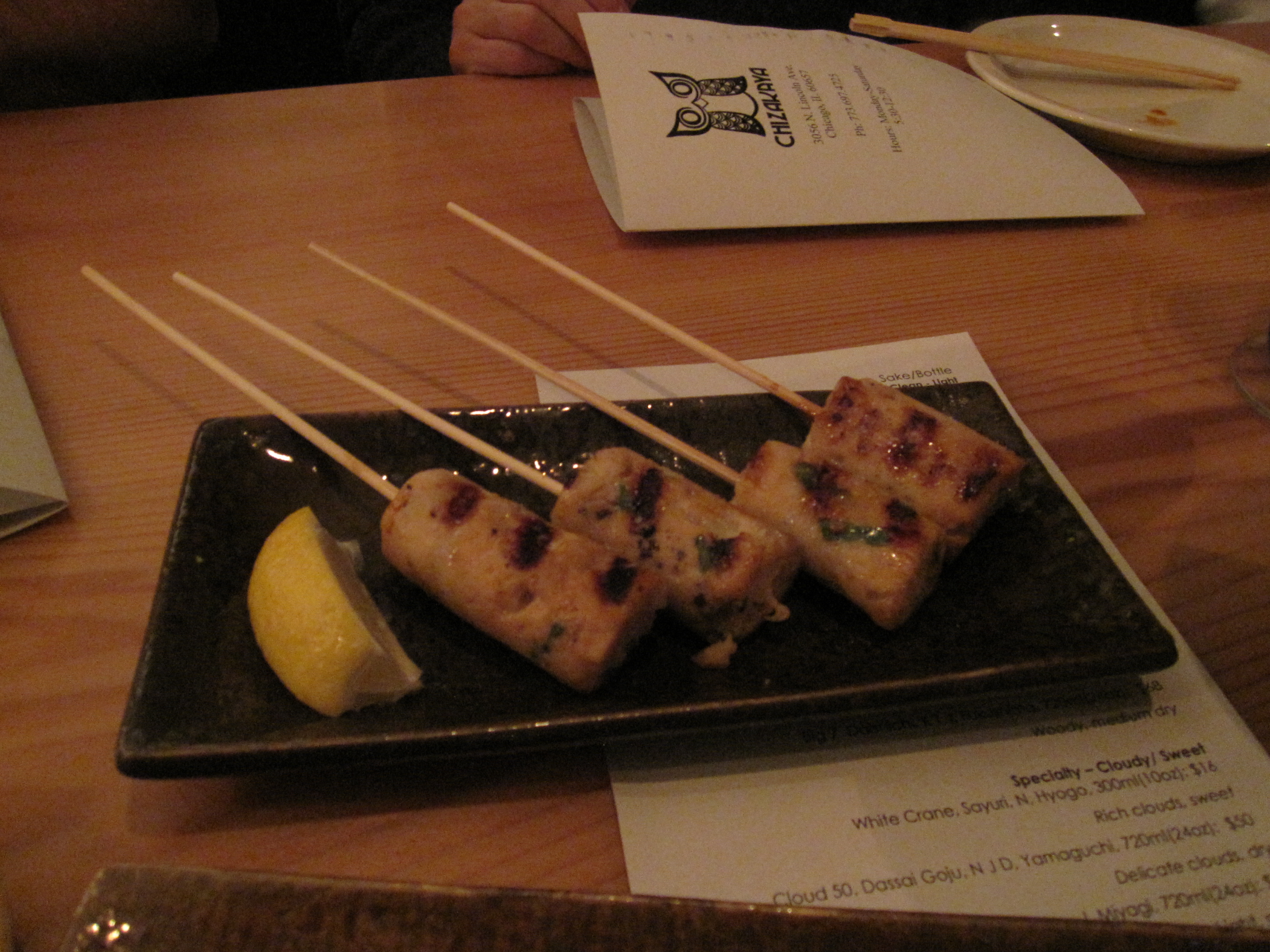
Chicken meatballs.

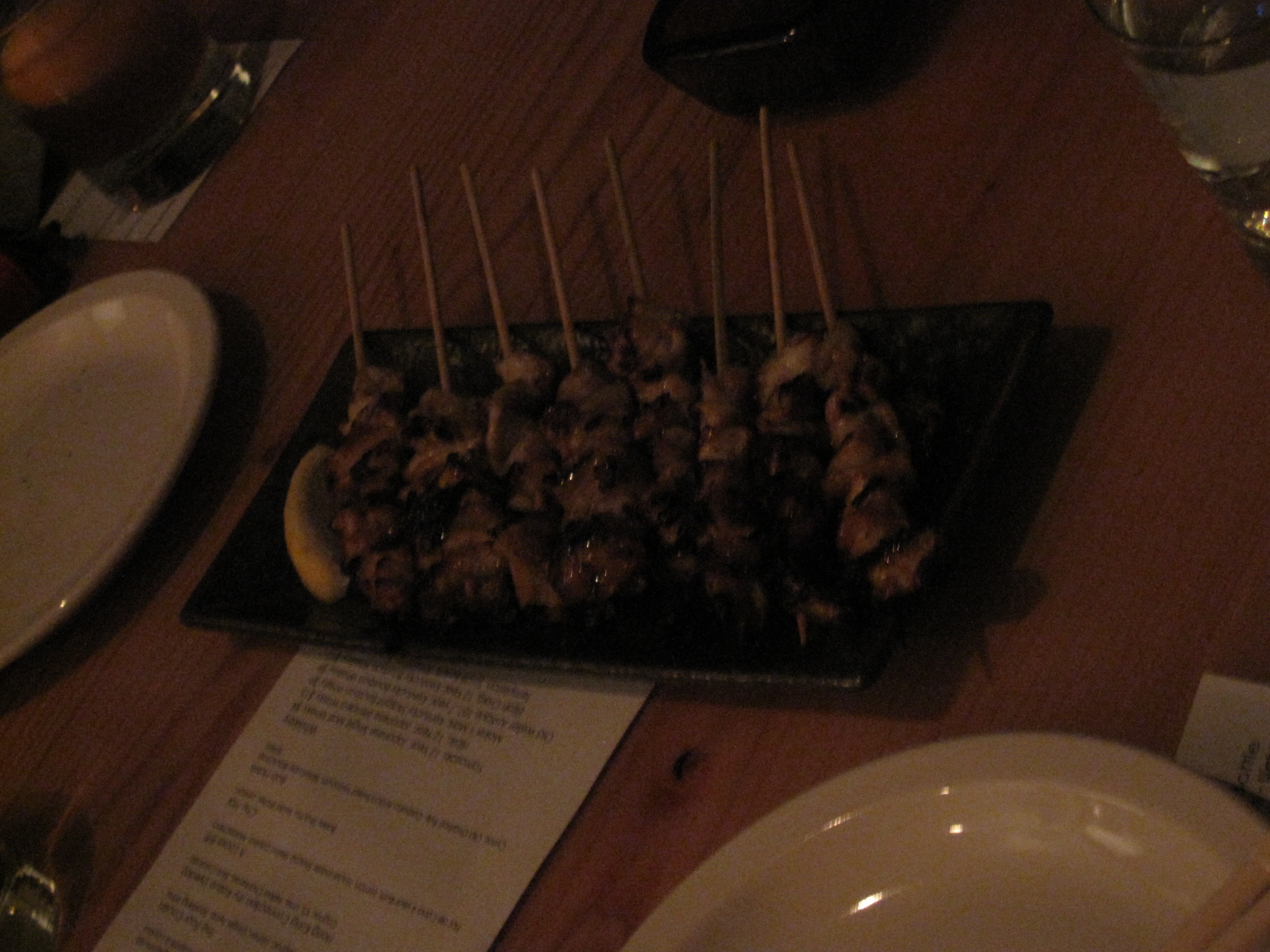
Chicken gizzards, next to liver and sweetbreads my favorite offal.

Beef heart, surprisingly tender and juicy for such a hard-working and lean muscle.

Beets with shiso, both red and golden.

We also ordered a the ramen and oden. Both of which were, quite honestly, very disappointing.

The ramen came with braised pork, fish balls, a slow poached egg, radish, bamboo shoot, shredded scallions, and some nori. The ingredients were all top-notch, but the noodles were overcooked and soft while the broth wasn’t quite were it needed to be. With everything else so high quality I wonder why they’re using regular old store-bought quality noodles. This bowl of ramen just wasn’t up to standards. If it’s ramen you want, head over to Arami instead.

The oden wasn’t even close to what oden is. Oden should be a dashi broth filled with various fish cakes, potato, hard-boiled eggs, konyakku, etc. It’s something that we make at home a couple of times every winter. This was nowhere near oden. This was a soy-based dashi with overcooked soba noodles, a few spinach leaves, a couple of pieces of potato, some slices of radish, and a few adzuki beans. It wasn’t a terrible noodle soup, but they shouldn’t call it oden and they should be more careful with the noodles.

Now, on to desserts, which were all very creative and well-prepared.

Yuzu cake with green tea ice cream.

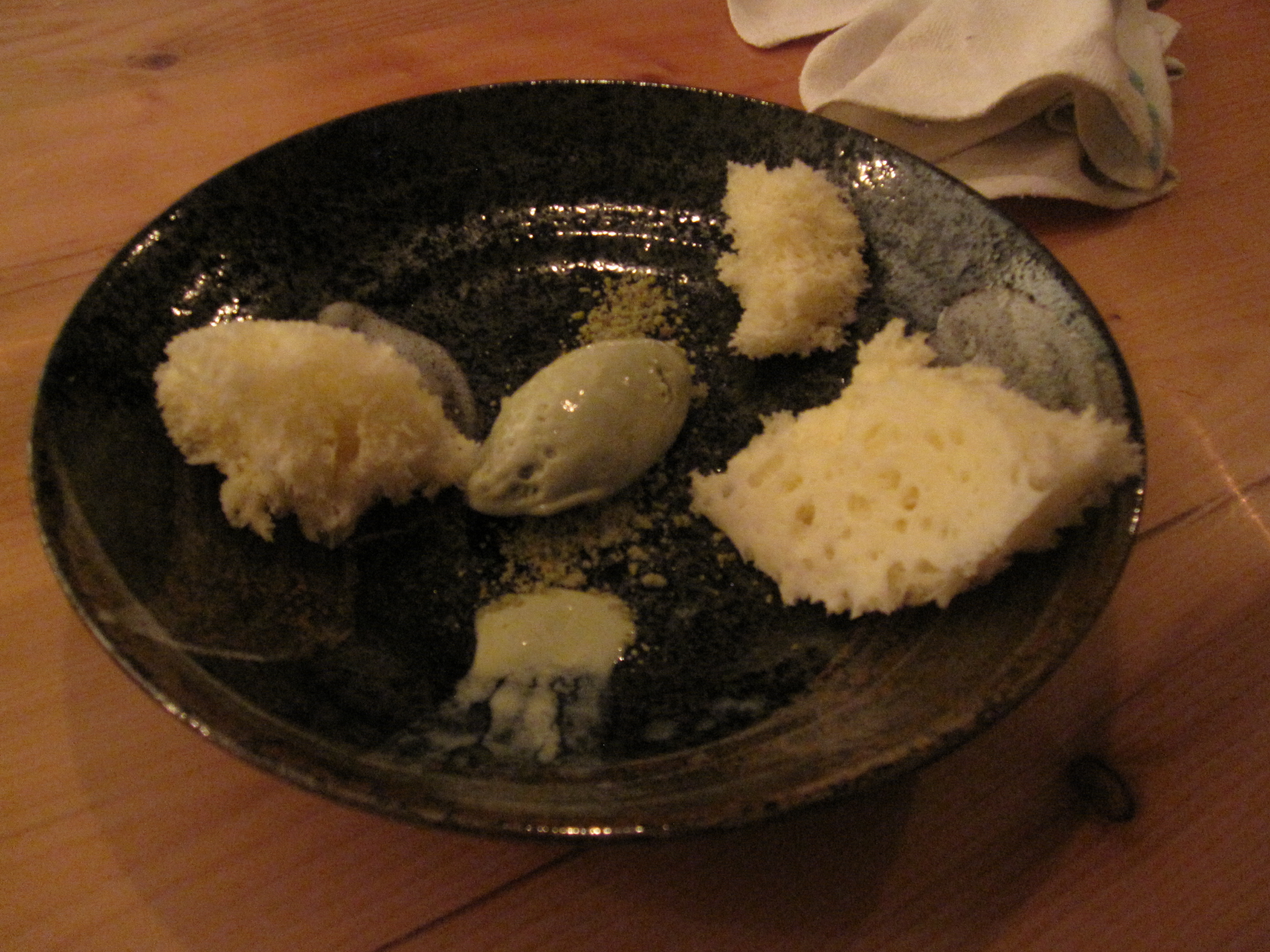
Tofu cheese cake with kuro mitsu (black honey) and adzuki bean sorbet. Usually you see adzuki bean ice cream, making it a sorbet was a nice touch.

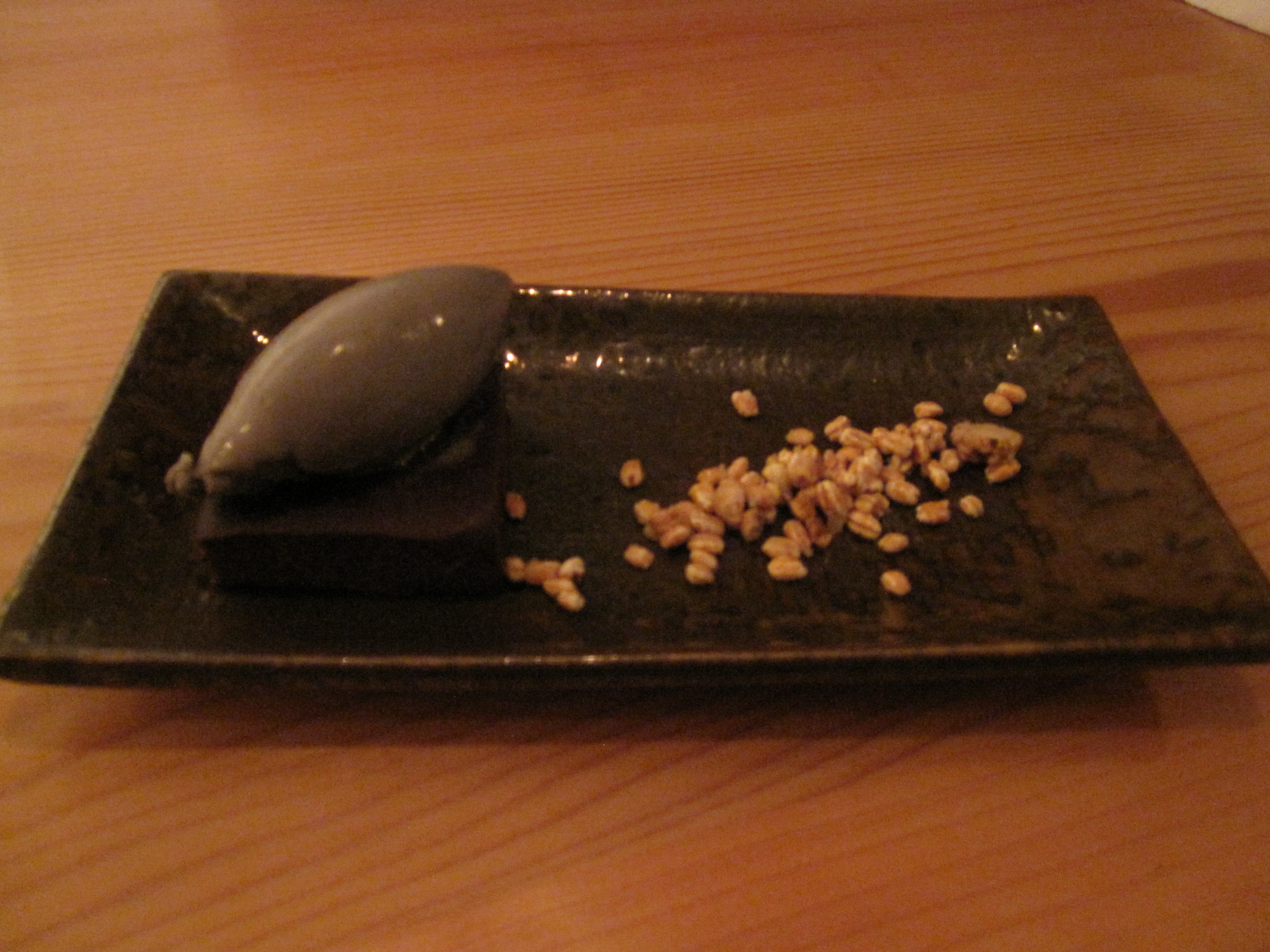
Chocolate ganache with puffed barley and black sesame ice cream.

I will say, that all three desserts are among the best desserts I’ve ever had at a Japanese restaurant.

Overall, Chizakaya is a fun atmosphere with great food. There were a couple of lows, oversmoked bacon and poor noodle soups, but the rest of the food was outstanding. Don’t come here expecting a substantial sit-down meal. Come here expecting a great list of sake, beer, and cocktails with delicious small plates and skewers to match. In that sense, this is a true izakaya. They also use top quality ingredients from local sustainable farms, and you can taste the difference. I will definitely go back, I just have to be more mindful of the amount of sake that I guzzle.

Read Full Post »

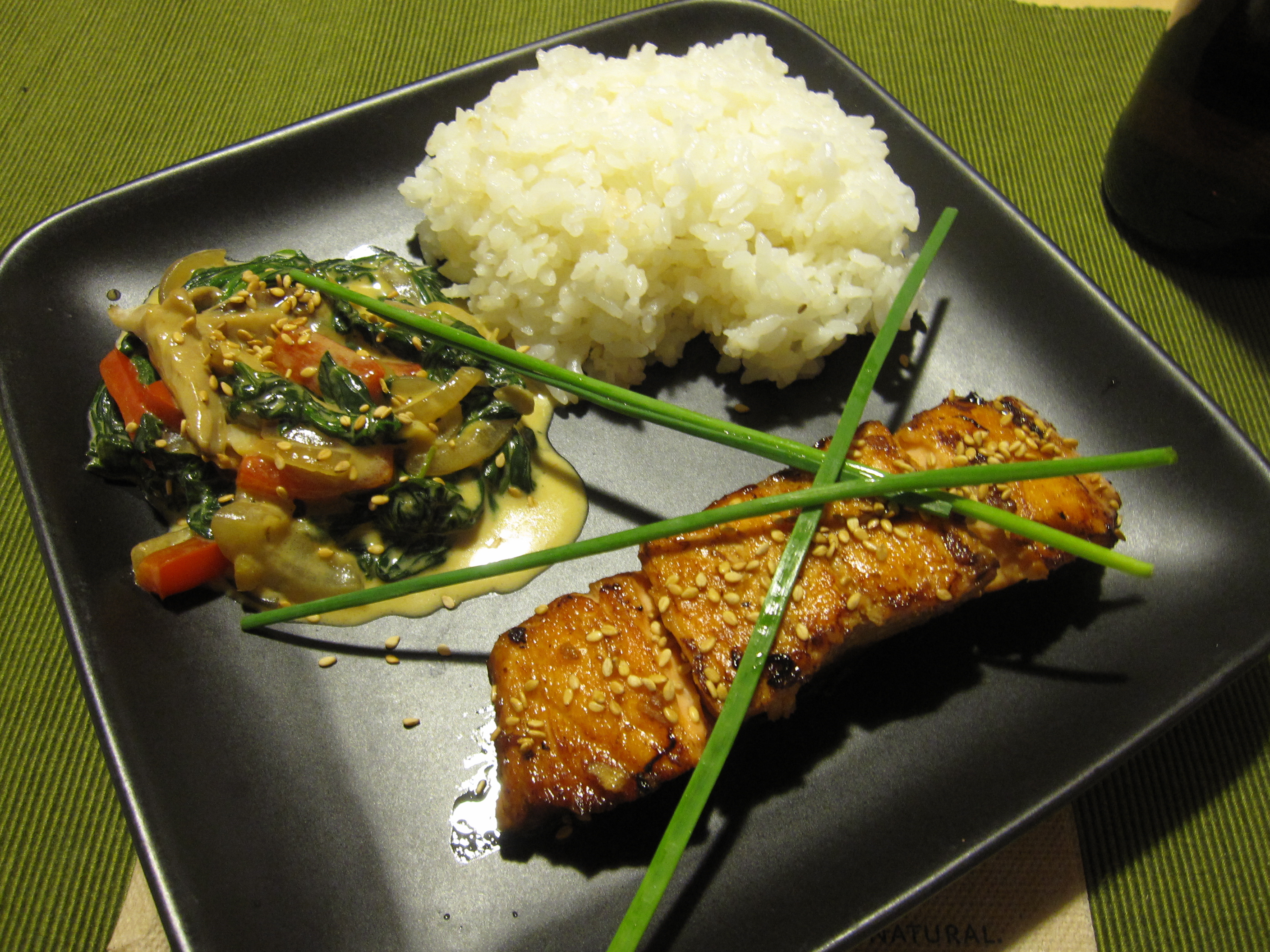
Last night I made a teriyaki-like salmon dish using maple syrup. To go with it I made sort of an Asian flavored creamed spinach with shiitake and pepper. With iron, folic acid, and omega-3’s on my mind, this dish packed them all in and then some.

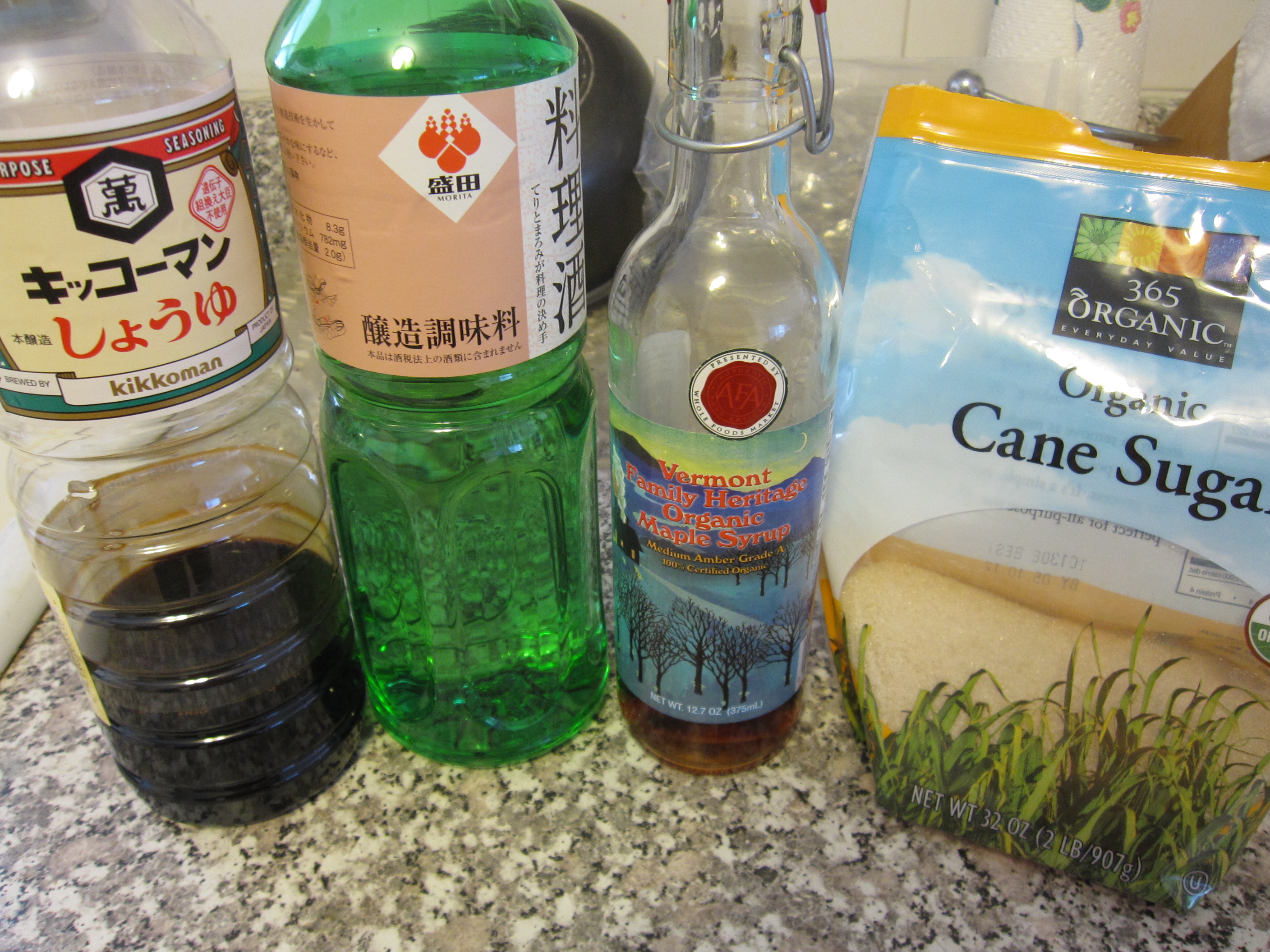
First thing I did was make the sauce. I mixed together 2 tablespoons soy sauce, 1 tablespoon sake, 1 tablespoon maple syrup, and 2 teaspoons of sugar. I set that aside and then marinated the salmon.

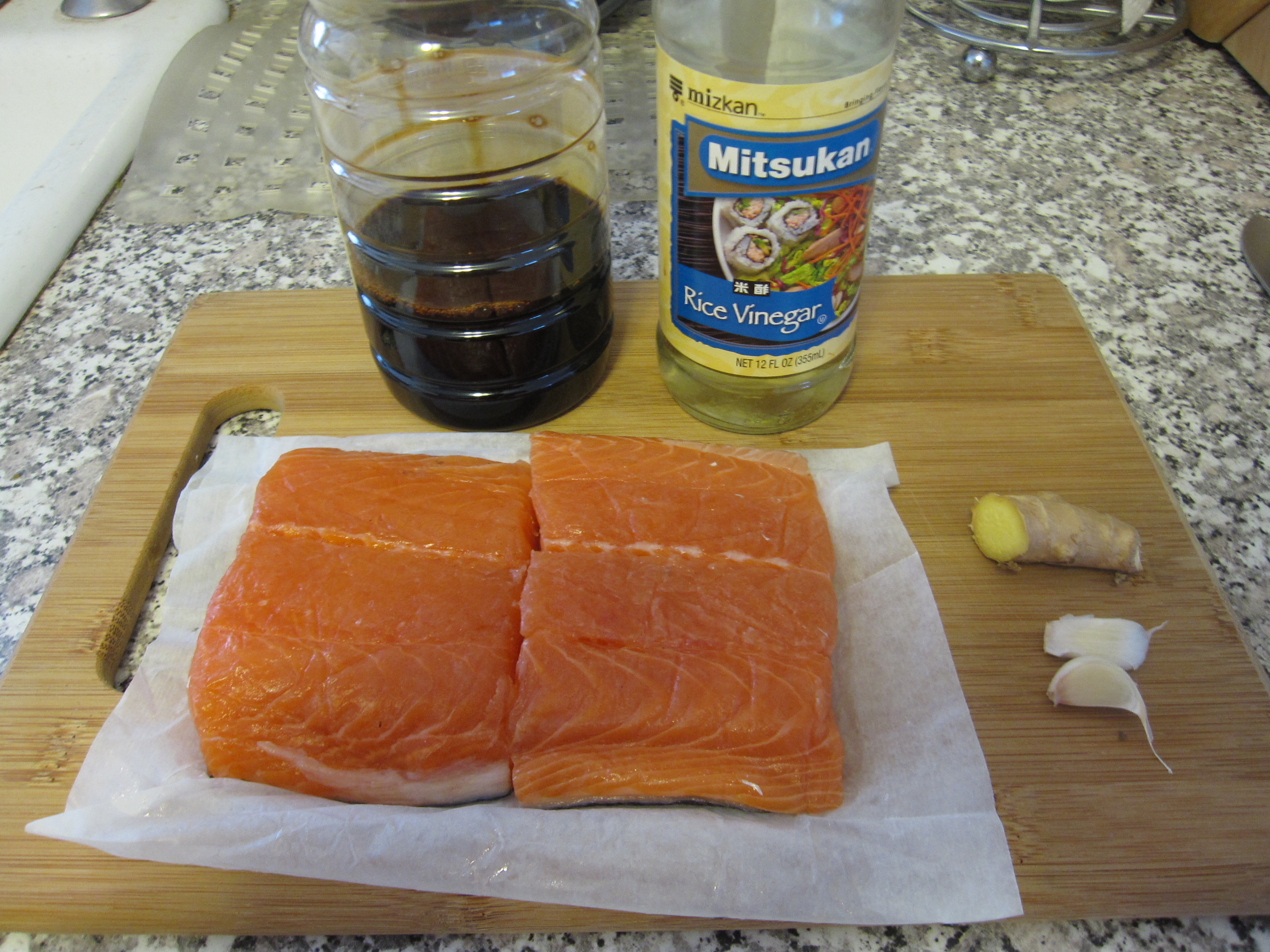
The marinade consisted of 1 tablespoon grated ginger, 2 grated garlic cloves, 2 tablespoons soy sauce, 1 tablespoon rice vinegar, and some fresh cracked black pepper. I had two 8 ounce salmon filets that I cut in half, giving me 4 4 ounce filets (check the math on that one). I coated them in the marinade, covered it up, and let it sit at room temperature for an hour.

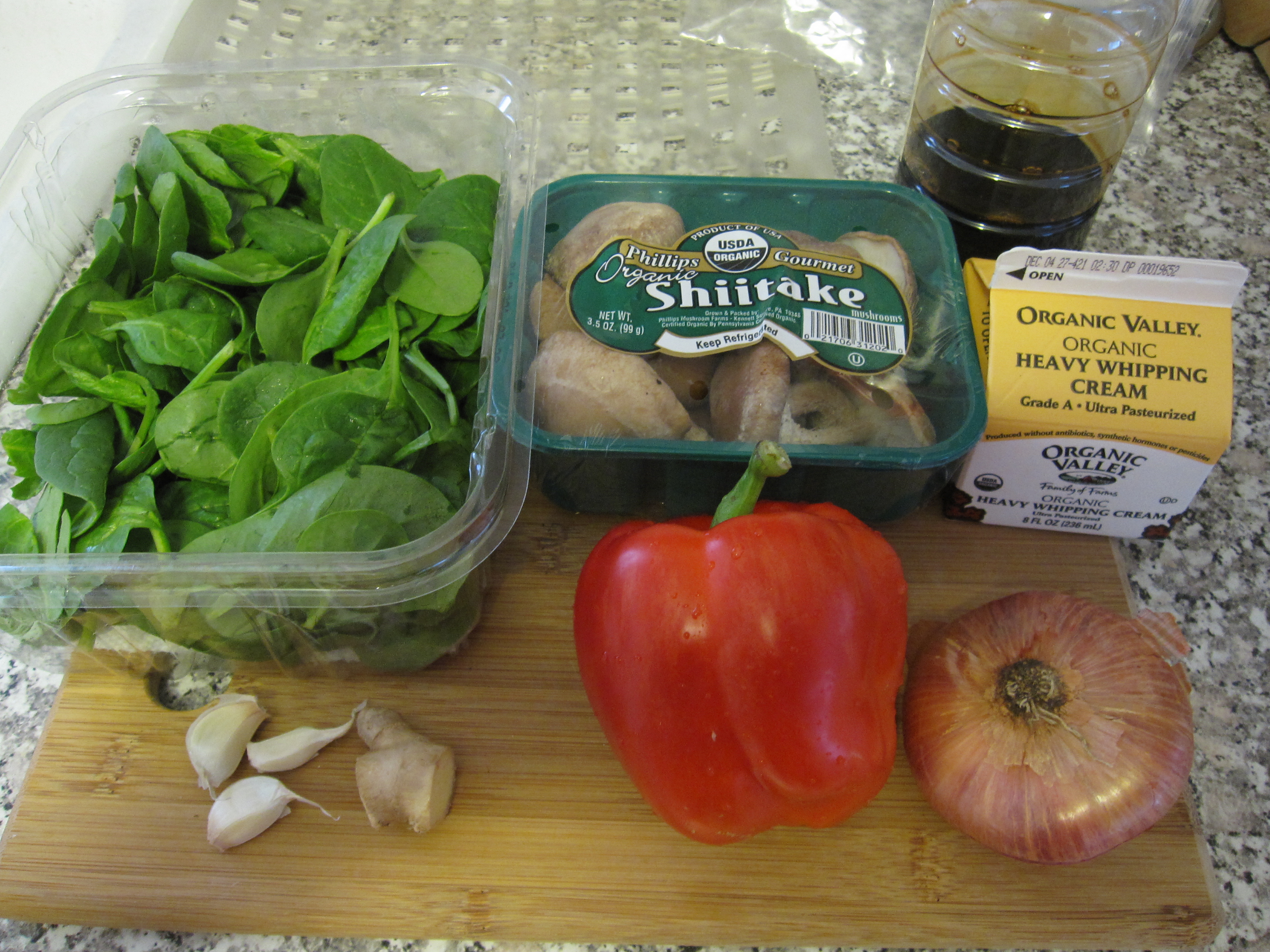
While the salmon was marinating I got the ingredients ready for the creamed spinach. I had a container of spinach, 3 garlic cloves, sliced, 1/2 inch of ginger slivered, 7 shiitake sliced, 1 red bell pepper chopped, 1 small red onion sliced, 1 tablespoon soy sauce, and 1/2 cup of heavy cream.

For the actual cooking I had to do the salmon and spinach at the same time. I’ll write about it separately, but it was a busy 10 minute stretch or so.

I heated up a large skillet over high heat and then poured in 2 tablespoons or so of sesame oil. I laid the salmon in skin-side up and let it cook for about 4 or 5 minutes, until it got a nice crust and easily released from the skillet. I poured the marinade into the maple mixture. When I flipped the salmon filets, after a couple of minutes, I poured the sauce all over each filet and let it cook for a few more minutes. Make sure you fan is on, it’ll get a little smokey. Once the sauce carmelized I turned off the heat and set the salmon on a plate.

In a separate saute pan I heated up 2 tablespoons of sesame oil and added the onion, pepper, shiitake, ginger, and garlic. I sautéed it for about 5 minutes and then added the soy sauce. About 2 minutes later I poured in the cream. Once the cream had reduced a little I added the spinach by large handfuls until it all wilted down and the cream had thickened up into a nice sauce.

Of course, some white rice on the side never hurt anyone. I garnished everything with some toasted sesame seeds and whole chives.

Read Full Post »

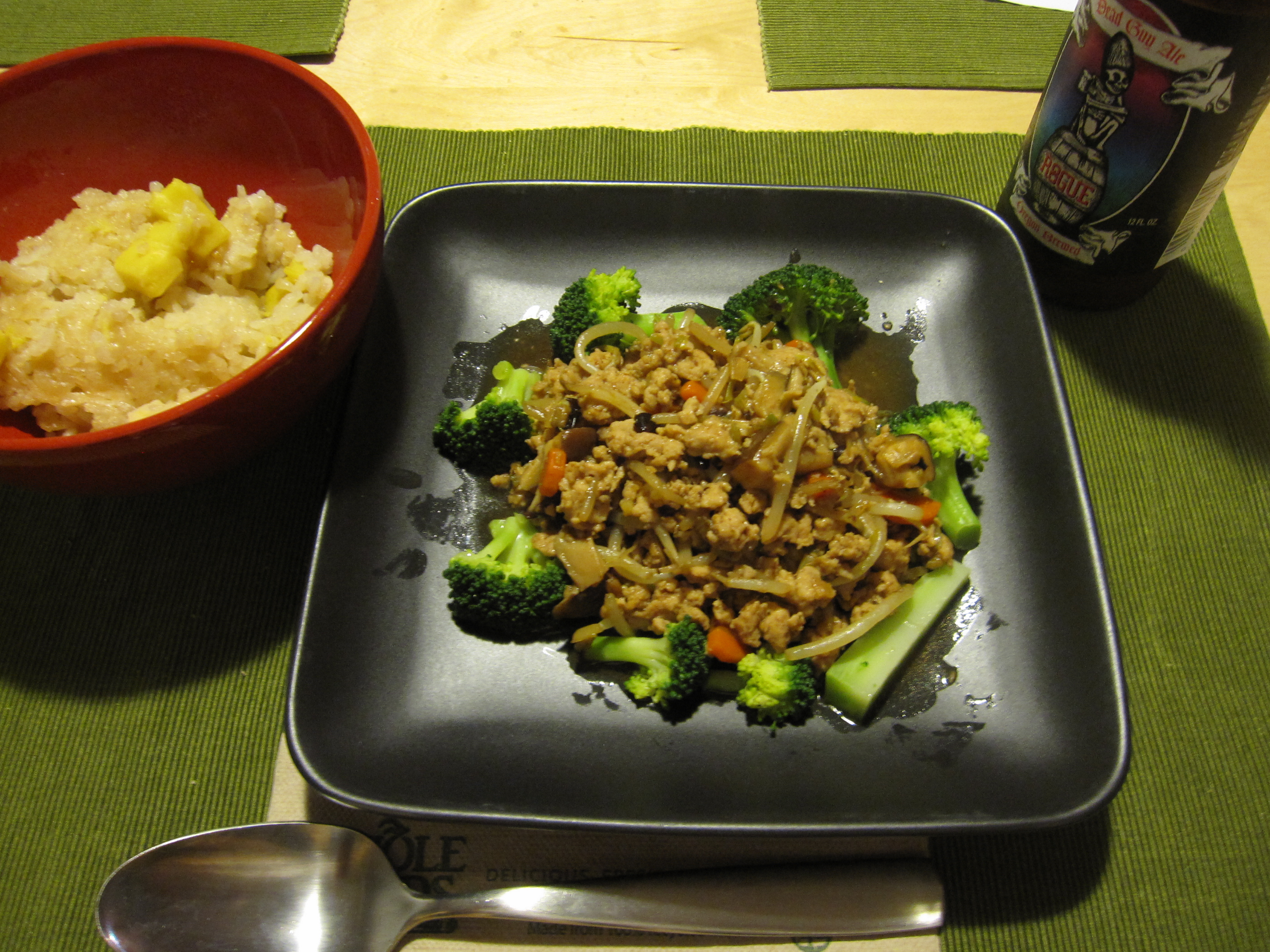
For dinner last night I made a simple Chinese-flavored ground chicken stir-fry. For the sauce, I used fermented black bean and garlic sauce. It’s a real easy way to get a lot of flavor into a quick, healthy dish.

My ingredients included 1 carrot cut into half moons, 1/2 pound bean sprouts, 2 tablespoons soy sauce, 10 green onions thinly sliced, 3 tablespoons of black bean and garlic sauce, a package of shiitake diced, 1 head of broccoli cut into florets, 1/2 inch ginger, minced, 3 cloves garlic minced, and 1 pound of ground chicken thigh.

First thing I did was to mix up the sauce. In a small dish I mixed the soy and black bean sauce. After tasting it, I decided to add a little sweetness so I mixed in 1 tablespoon of mirin. I set that aside and heated up a saute pan.

Once hot, I poured in about 2 tablespoons of sesame oil and then added the ginger and garlic. I let them sizzle for about 30 seconds and then added the carrot and green onions. I sautéed them for about 3 minutes and then added the chicken. I broke up the chicken as it cooked for about 7 or 8 minutes and then added the shiitake. Once the shiitake were coated with the rest of the ingredients I added the sauce and mixed it around. At this time I put the broccoli into my steamer. Broccoli only needs about 4 minutes to steam to a nice al dente and at this point all I need to do with the stir-fry was let the sauce boil down a little and add some pepper and the bean sprouts. So, that’s what I did. Easy as that.

The other day Yuki had made some sweet potato rice that we didn’t finish. Instead of making new rice I decided to use that up. White rice probably would have matched better with the slightly salty dish, but the sweetness of the sweet potatoes wasn’t that bad of a match, and it added a higher nutritional value to the meal. So did my beer.

Read Full Post »

« Newer Posts - Older Posts »