Feeds:
Posts
Comments

Posts Tagged ‘salmon’

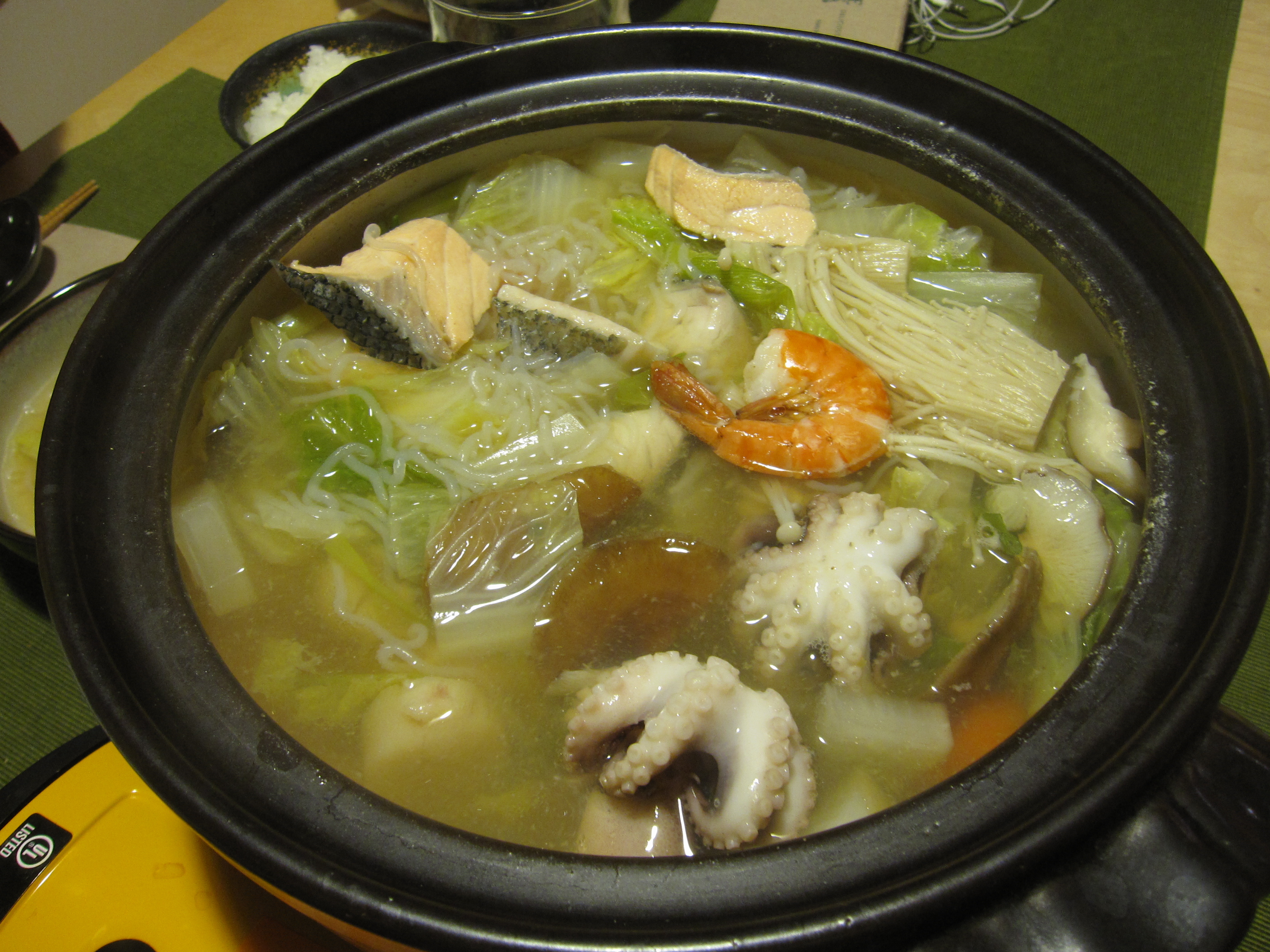
The other day we were at the Tensuke Market in Elk Grove Village, arguably the best fish market in the Chicagoland area. We were out of rice and they usually have the best deals on high quality Japanese (even though it’s all from California) rice. Sure enough, they had a great deal on some new crop. While we were there we found a package of nabe-ready seafood. Nabe is simply one-pot stew or soup cooking. Usually prepared on the stove top then brought to a table-top burner to keep warm while eating it. So, we had seafood nabe.

Yuki started by making the broth. She simply boiled about 1/4 cup of dried anchovies in about 5 or 6 cups of water for 30 minutes or so. That allows enough time for the water to take on all of that nice seafood flavor without any added oils or salts.
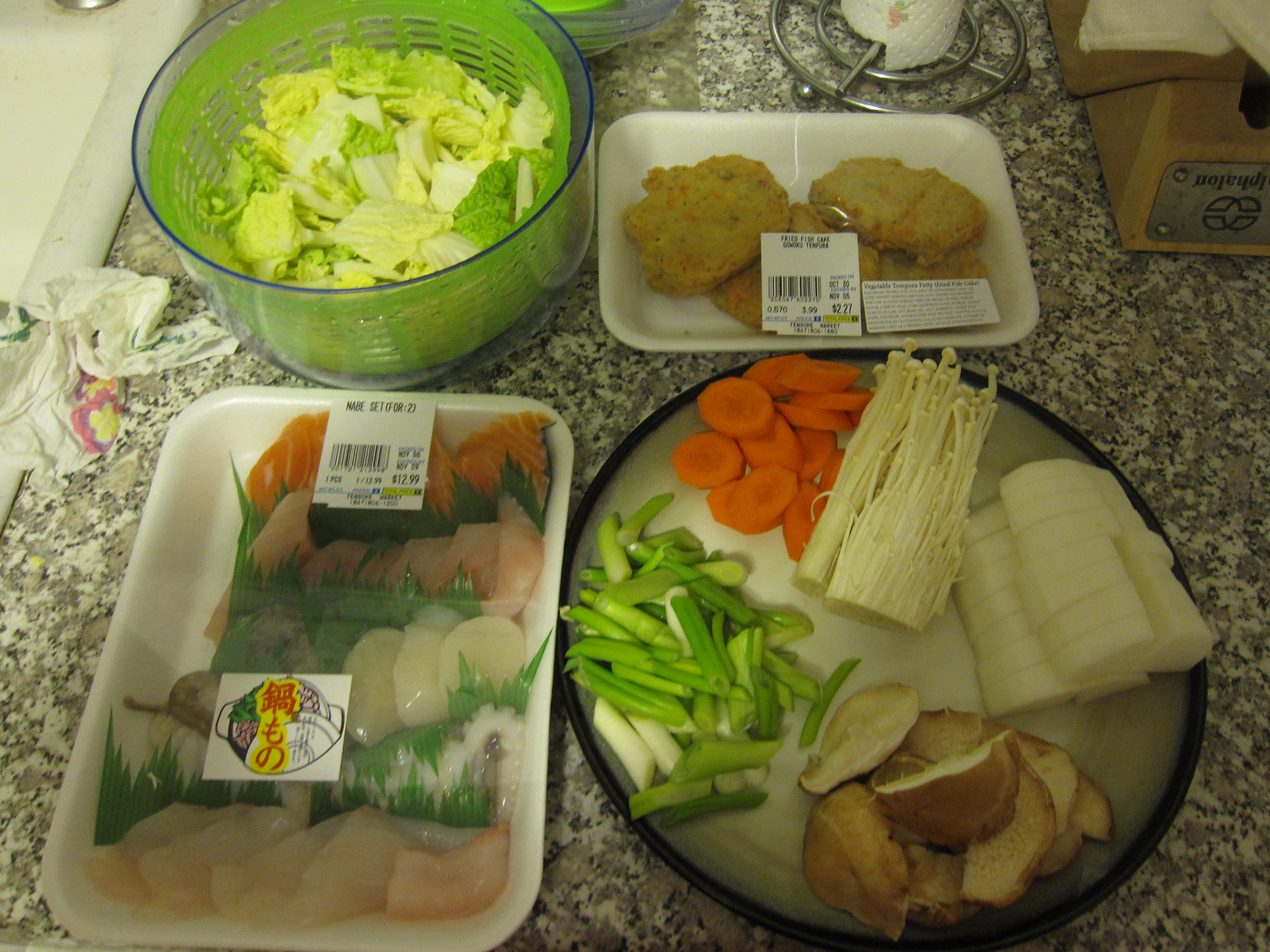
While the broth was boiling away I prepared the veggies. Besides the seafood package (slices of fluke, octopus, scallops, shrimp, sea bass, and salmon) I chopped up 1/4 pound of napa cabbage, 6 green onions, 1 carrot, 1 package of enoki mushrooms, 3/4 pound daikon, and 6 shiitake. There are also fish cakes in the picture, but we decided not to use them. Instead, we used 1 package of shirataki noodles which aren’t in the picture.

When the broth was ready I strained it into our earthenware clay pot and discarded the anchovies. I brought it up to a low boil and Yuki added the daikon and carrot. She let that boil for about 5 minutes or so and then added the shiitake, green onions, and cabbage. About 5 minutes later she added the rest of the ingredients.
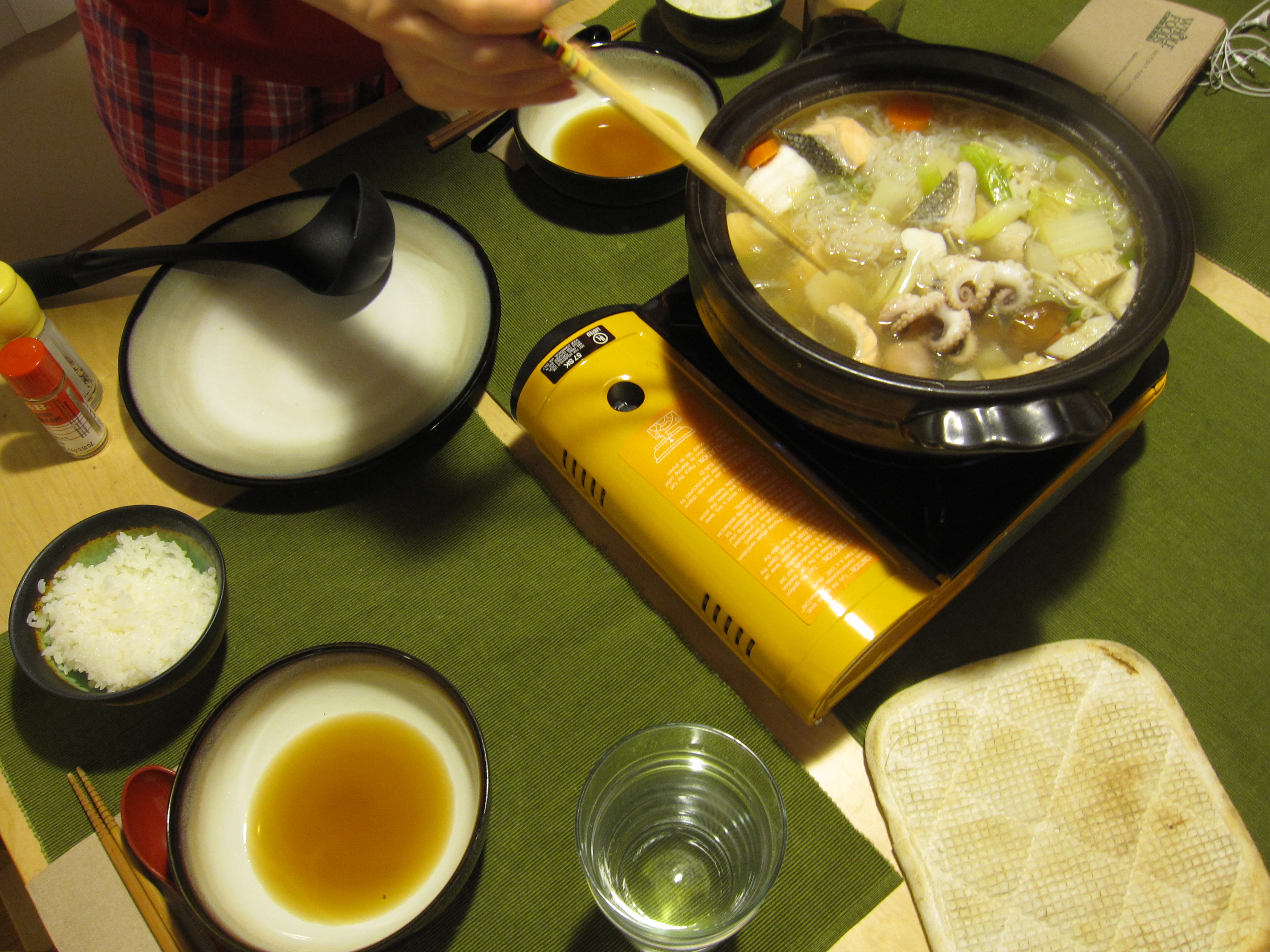
When the stew was ready, about 5 more minutes after adding the fish, we brought it over to our table and put it on our table-top burner over low heat. We poured about 2 tablespoons of ponzu into our bowls, then ladled some broth in and started eating. We had white rice on the side.
Read Full Post »

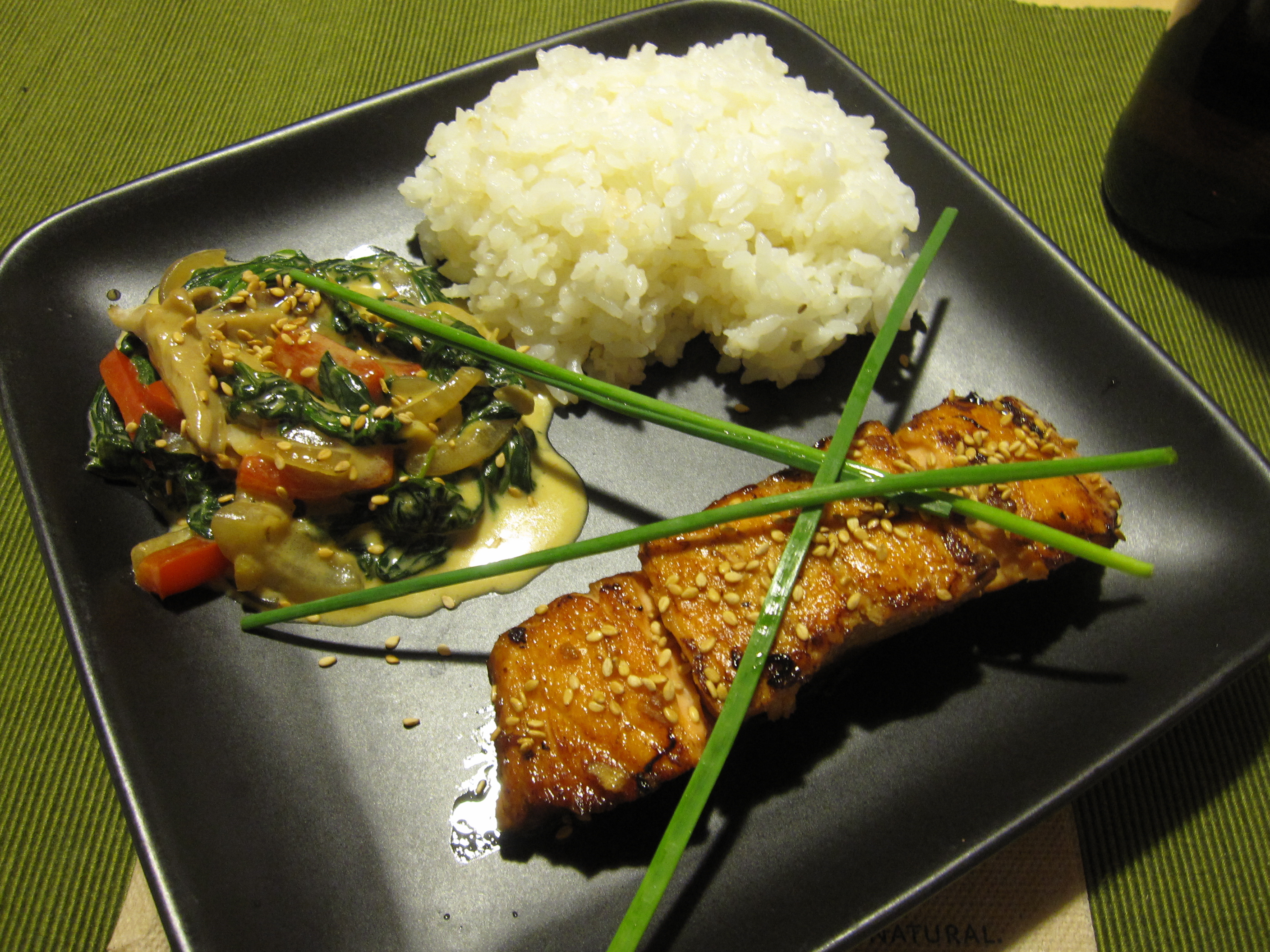
Last night I made a teriyaki-like salmon dish using maple syrup. To go with it I made sort of an Asian flavored creamed spinach with shiitake and pepper. With iron, folic acid, and omega-3’s on my mind, this dish packed them all in and then some.

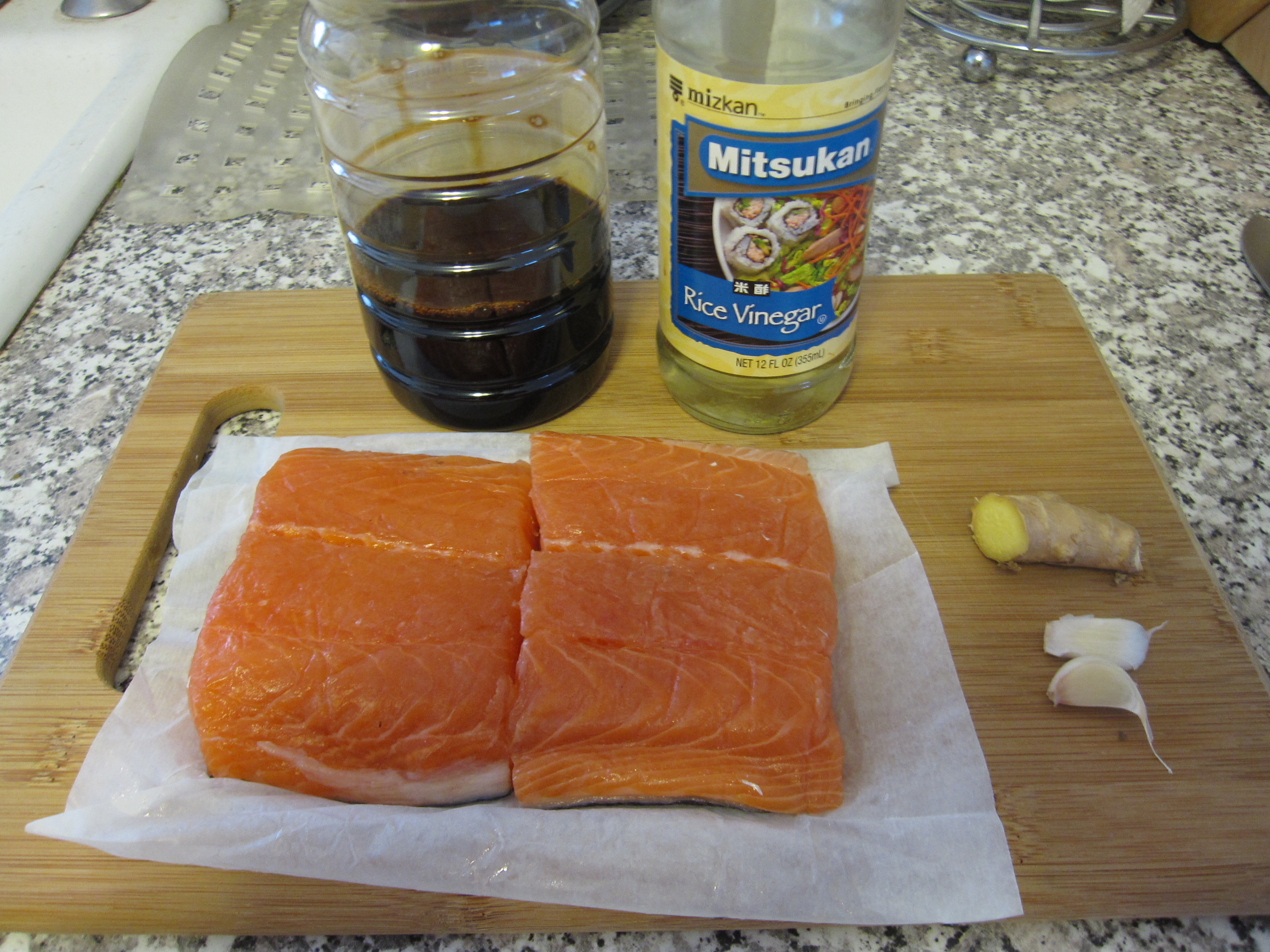
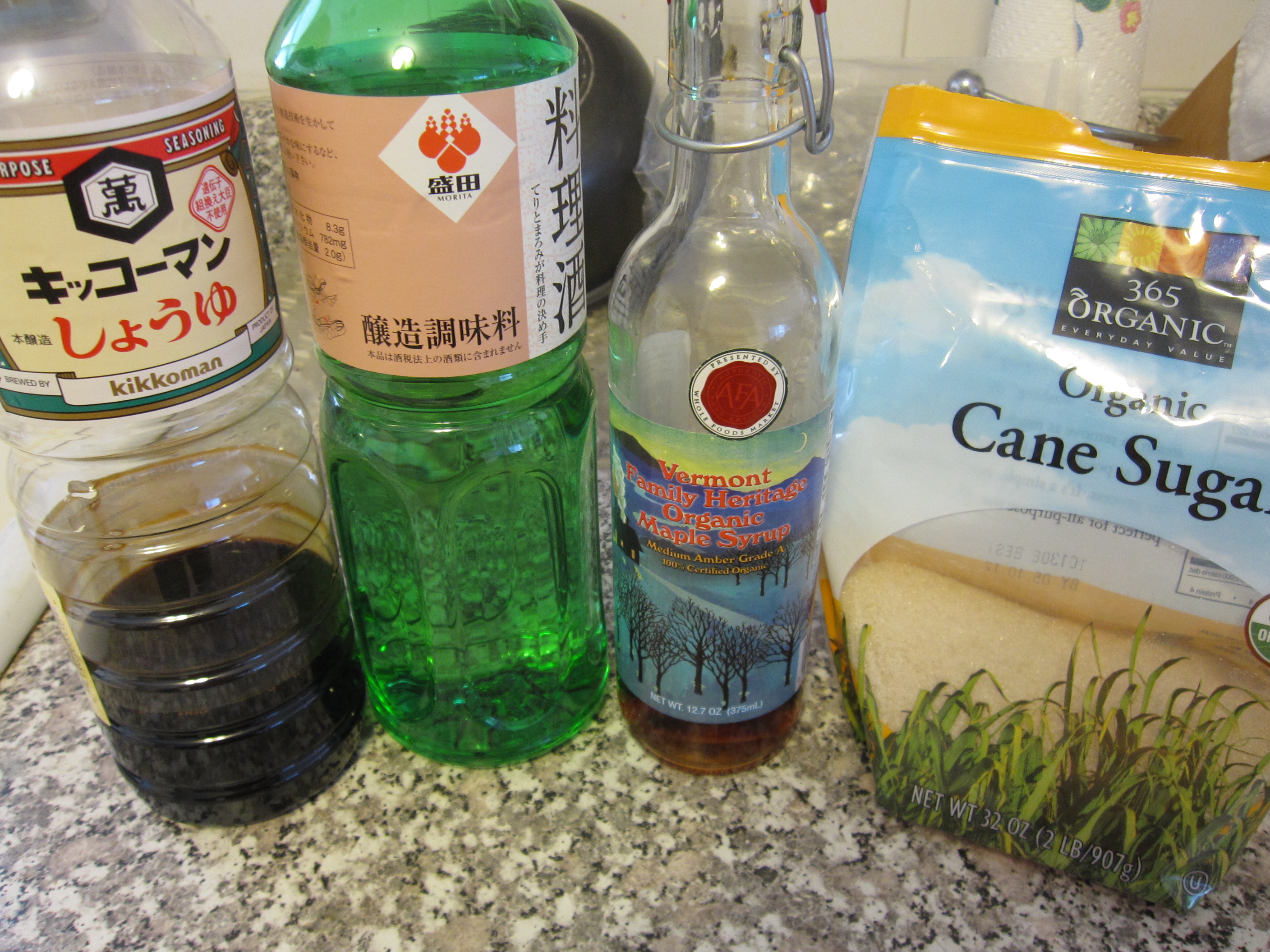
First thing I did was make the sauce. I mixed together 2 tablespoons soy sauce, 1 tablespoon sake, 1 tablespoon maple syrup, and 2 teaspoons of sugar. I set that aside and then marinated the salmon.

The marinade consisted of 1 tablespoon grated ginger, 2 grated garlic cloves, 2 tablespoons soy sauce, 1 tablespoon rice vinegar, and some fresh cracked black pepper. I had two 8 ounce salmon filets that I cut in half, giving me 4 4 ounce filets (check the math on that one). I coated them in the marinade, covered it up, and let it sit at room temperature for an hour.

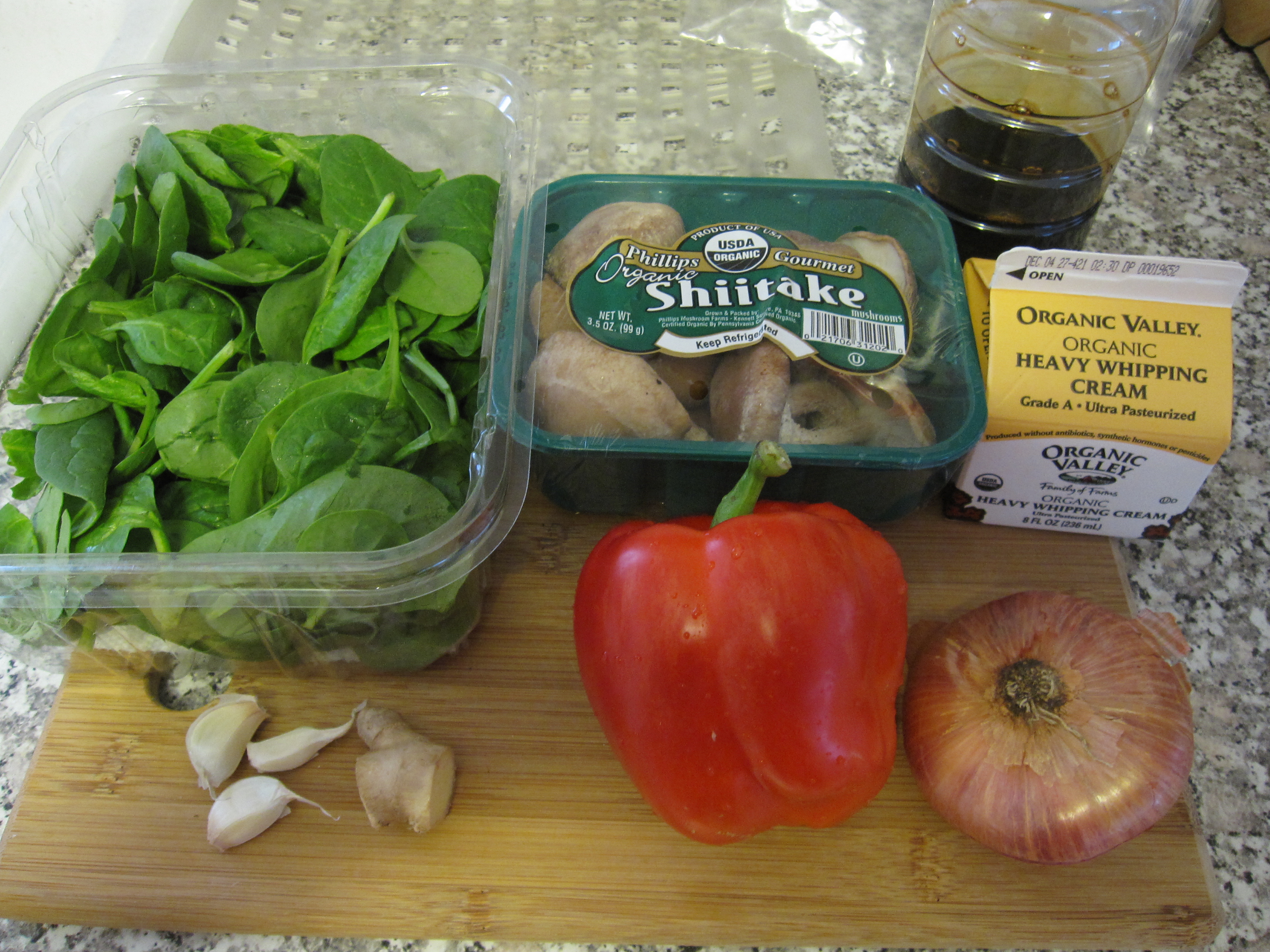
While the salmon was marinating I got the ingredients ready for the creamed spinach. I had a container of spinach, 3 garlic cloves, sliced, 1/2 inch of ginger slivered, 7 shiitake sliced, 1 red bell pepper chopped, 1 small red onion sliced, 1 tablespoon soy sauce, and 1/2 cup of heavy cream.

For the actual cooking I had to do the salmon and spinach at the same time. I’ll write about it separately, but it was a busy 10 minute stretch or so.

I heated up a large skillet over high heat and then poured in 2 tablespoons or so of sesame oil. I laid the salmon in skin-side up and let it cook for about 4 or 5 minutes, until it got a nice crust and easily released from the skillet. I poured the marinade into the maple mixture. When I flipped the salmon filets, after a couple of minutes, I poured the sauce all over each filet and let it cook for a few more minutes. Make sure you fan is on, it’ll get a little smokey. Once the sauce carmelized I turned off the heat and set the salmon on a plate.

In a separate saute pan I heated up 2 tablespoons of sesame oil and added the onion, pepper, shiitake, ginger, and garlic. I sautéed it for about 5 minutes and then added the soy sauce. About 2 minutes later I poured in the cream. Once the cream had reduced a little I added the spinach by large handfuls until it all wilted down and the cream had thickened up into a nice sauce.

Of course, some white rice on the side never hurt anyone. I garnished everything with some toasted sesame seeds and whole chives.

Read Full Post »

So, I had some salt cured salmon filets that needed to get eaten up from our last bimble up to Mitsuwa. These salmon filets are great because the don’t need much cooking since they’re already salt-cured. With that, we also had a kabocha that Yuki wanted me to cook. However, I did not cook it how she requested. Too bad for her. Without further ado…

First thing I did was get the kabocha ready, I only used half of it. I seeded it, cut off most of the skin, quartered the half, and then cut the quarters themselves in half.

I set them in a baking dish, drizzled them with sesame oil, salt, and pepper. I boiled about 3/4 cup of water, poured that into the pan, and put the kabocha into a 375 degree oven for about an hour. The water should be mostly absorbed by the time cooking is done keeping the kabocha nice and moist, while the top gets a little bit golden brown.  Then I took 1/4 cup of walnuts and toasted them in a dry pan for about 6 minutes.

I coarsely ground them with my mortar and pestle and then added 4 tablespoons of ponzu. I let that sit while I cooked everything else.

For the kale I used a bunch of red kale stalks removed and leaves chopped down, 1 cup of chicken stock, 1/2 onion sliced, and three garlic cloves sliced. In a hot stock pot I poured in about 2 tablespoons of sesame oil and then added the onion and garlic. About 2 minutes later I added the kale and let that wilt for about 4 minutes. Then I poured in the chicken stock and seasoned with salt and pepper. Once the stock came to a boil I loosely covered the pot, turned the heat down to medium-low, and let it simmer for about 30-40 minutes (however much time I had left on the kabocha, it doesn’t matter as long as the kale simmers for a while).

Once the kale got going I started the miso soup. I used a heaping service spoon of shiro miso, about 4 inches of daikon sliced and quartered, one small carrot cut in half moons, 4 green onions chopped in 1 inch lengths, 1/4 cup of dashi seasoned soy sauce, and 3 shiitake sliced. In a soup pot I poured in 4 cups of water and added everything except for the miso. I brought it to a boil, then covered the pot, and turned the heat down to medium-low to let it simmer for about 15-20 minutes.

I just rubbed some sesame oil on both sides of the salmon and then seasoned with pepper. My toaster oven has a broiler setting, so I just turned that on and broiled the salmon for about 8 minutes. That was just enough time to cook it all the way through and crisp up the skin. When it was finished it was time to put everything together.

I left the salmon as is. Put some of the kale on the plate and then a couple of pieces of the kabocha. I topped the kabocha with the walnut-ponzu mixture. I mixed the miso into the soup and served that up. Then I served some white rice along with everything, mainly to balance the saltiness from the salt-cured salmon.

Read Full Post »

So, Yuki had some coupons from unused miles on United Airlines. Last night we used one at Ai Sushi.  I dvr’d the Bears-Giants game and we headed down to Ontario St for some grub.

Parking was a pain because all of the meters were “For Residents Only Until Oct 4”. We did find a spot about a block away so we didn’t have to spend on valet. Tonight we could have gotten a spot right in front. Oh well, can’t blame that on the restaurant.

The interior is really nice. It has the open loft feel with exposed brick and wood beams. The art on the walls was not flashy at all and instead complimented the brick. Colors were soft and very intimate. It has a real nice setting inside.

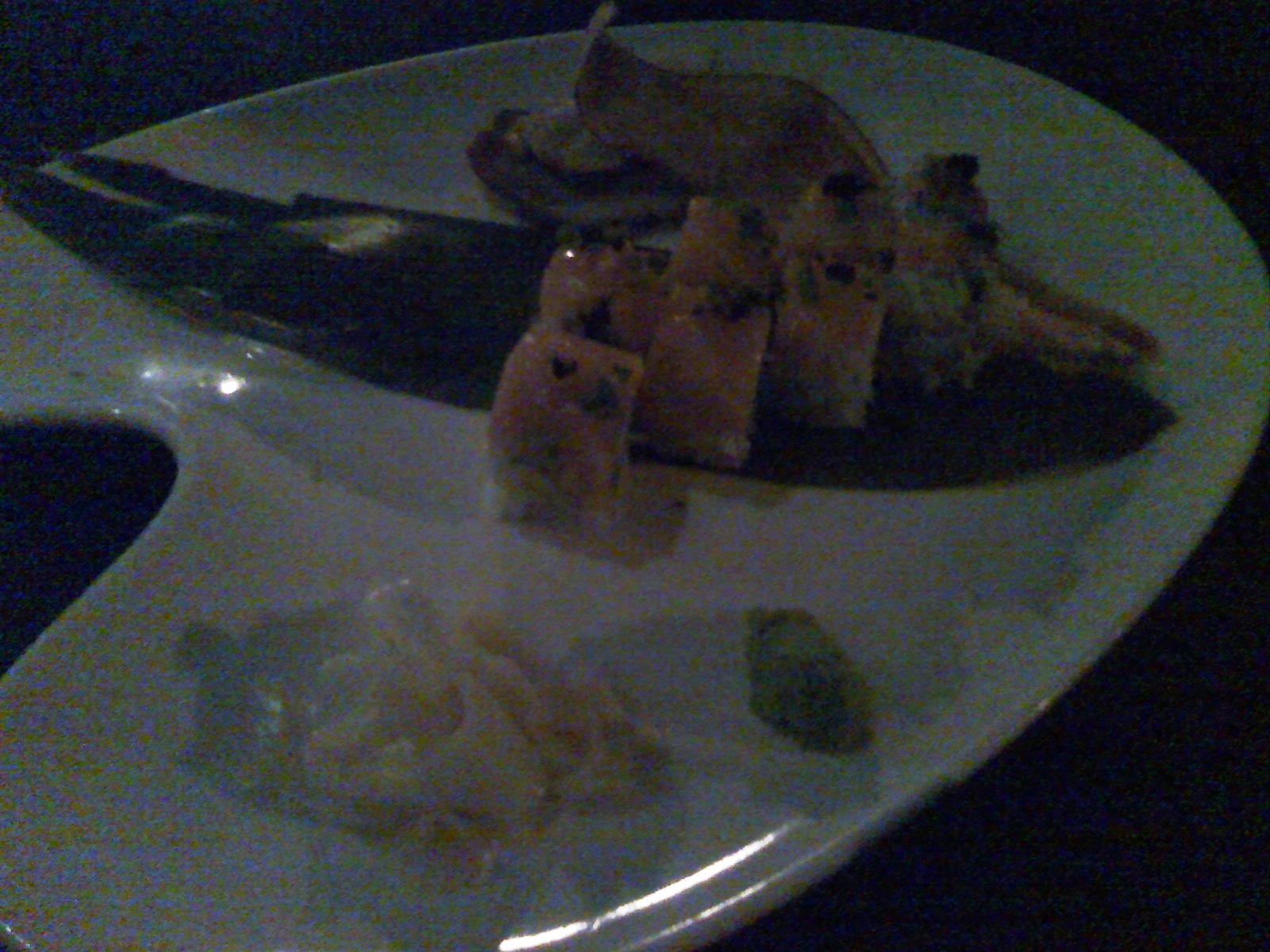
I did use my phone’s camera, so these pics are terrible.

First thing we got was the Sunomono Moriawase. Shrimp, real crab meat, and octopus lightly cooked along with fluke sashimi in a dashi vinaigrette with daikon sticks and seaweed. It was really good, fresh fish and not to vinegary at all.

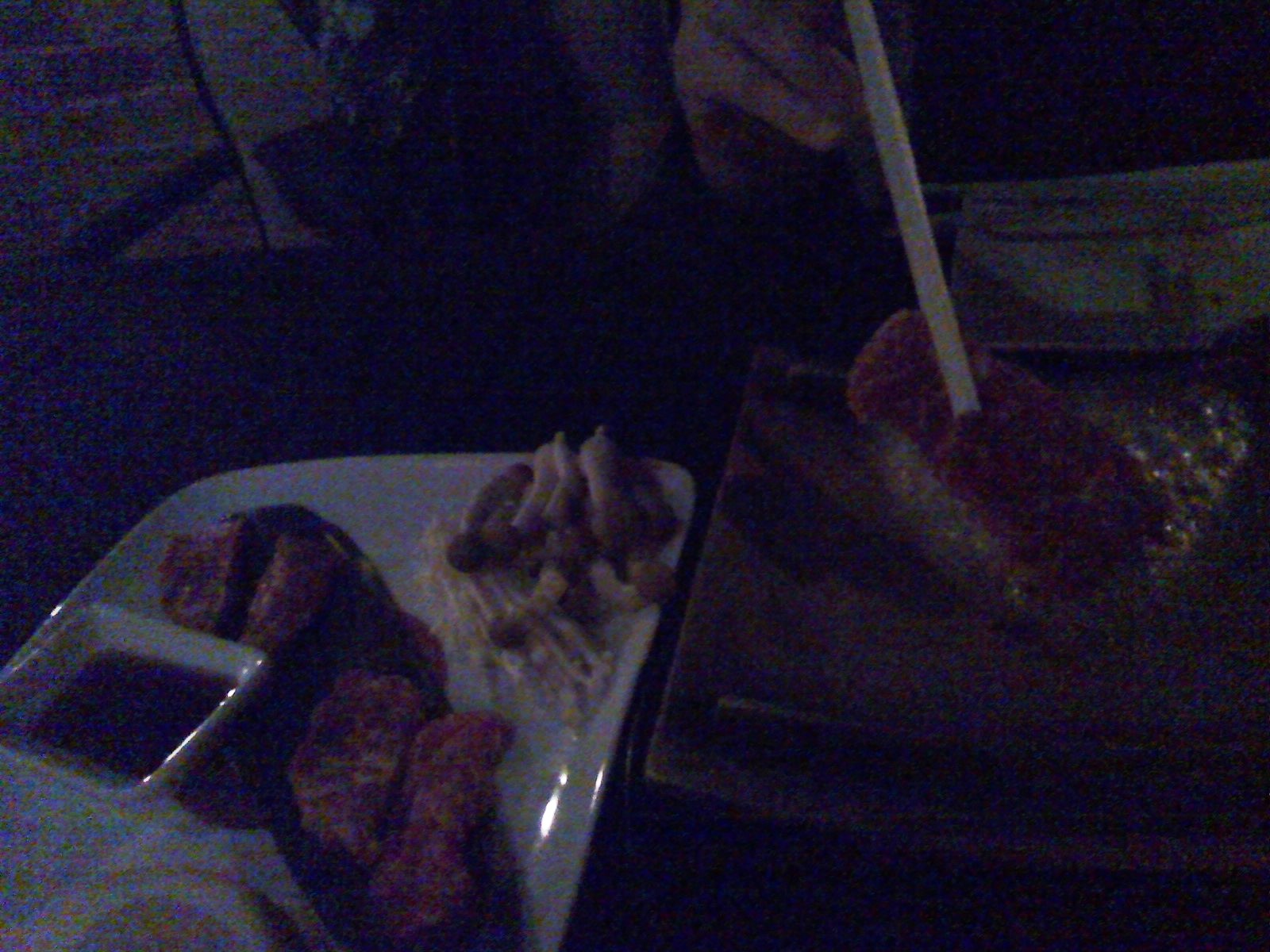
Next was one of the specials of the night, Wagyu Tobanyaki. 5 slices of real Kobe beef imported from Japan, enoki mushrooms, and shimeji mushrooms that you cook yourself on a hot stone with butter. The beef was so soft and delicious. It was definitely the real thing, none of that cow from Nebraska.

After that we each had a bowl of Kabocha Corn Soup. Simply a puree of kabocha and corn, probably with onion. It tasted like something I would make, which is to say it was pretty tasty.

Then came the Chawanmushi. A Chinese style egg custard with shiitake, shimeji, and enoki mushrooms. The custard was the perfect consistency. Not a fancy dish, but a good one.

The first maki roll we got was their Habanero Lobster. It had tempura lobster, kampyo, ginger, mango, avocado, habanero, capers, cilantro, and sour cream mayo. We’re not usually fans of rolls with more than a few ingredients, but this one was pretty good. That habanero packed a punch, but not so much that you couldn’t taste the lobster’s sweetness. It was pretty good. They also put a few slices of smoked duck on the plate. They serve smoked duck sushi and must have needed to get rid of it, but it tasted pretty good to me, so I didn’t mind.

The last thing we got was one of the night’s special rolls, Orange Maki. It had tempura shrimp and orange zest inside and was topped with salmon and black tobiko. It was really good! Light, sweet, and refreshing. I would definitely order that roll again. Also, there was more smoked duck on this plate.

We didn’t have any room for dessert and didn’t even look at the dessert menu so I can’t comment on that.

The service was professional. We never had to wait long for anything, we weren’t rushed or bothered to hurry up, and our server was very knowledgable of the menu. The only gripe I have, and it’s nitpicking, is that the food should have come out in a different order. The beef should have been last and soup served before the chawanmushi. Other than that, I have no complaints at all.

I would have to say that Ai is one of the better sushi restaurants we’ve been to in Chicago. I wouldn’t call it the best, but it is definitely worth while with some creative offerings as well as some classics, all very fresh and properly prepared. I would go back without hesitation.

Read Full Post »

Last night I made another Japanese flavored spaghetti dish using sake hogushi and aonori. Sake hogushi is simply cooked salmon that’s been flaked into small “crumbs” and jarred. Aonori is a type of nori, Japanese algae, that’s been ground into a powder. The two ingredients can be used in a variety of ways like being sprinkled on white rice, mixed into cream sauces or dressings, or used like I did last night to name a few. Great ingredients to have on hand and available at any Asian grocer.

First thing I did was get my side vegetables ready. I had three beefsteak tomatoes and 1 large Japanese eggplant. I sliced the top off the tomatoes, sliced the eggplant in half length-wise, and then cut the eggplant into 2-3 inch pieces. I coated the tops of the vegetables with panko, then drizzled some olive oil on top, then sprinkled some aonori on top of that. I roasted them in a 350 degree oven for about 35-40 minutes, just enough time for me to get the rest of dinner ready.

To make the spaghetti I used butter, the sake hogushi, half on onion sliced, 7 button mushrooms sliced, and 4 garlic cloves. In a large hot skillet I poured about 2 tablespoons of olive oil and then melted 1 tablespoon of butter in that. I added the onion and let it sweat for about 4 minutes. Then, I added the garlic and mushrooms. At the same time I cooked my noodles in boiling water until al dente. The garlic and mushrooms needed about 5 minutes which was about the same amount of time the noodles took. After draining the noodles (I reserved about 1/3 cup of the water) I added about 1/4 cup of soy sauce along with 1/2 cup of the sake hogushi to the onions, garlic, and mushrooms. I let the soy come to boil for about 2 minutes and then added the noodles and reserved water with some black pepper. I let the noodles coat with the sauce and most of the liquid boil off then turned off the heat and covered the skillet.

Then, I took two baby bok choy that I had seperated the leaves of and put them in my steamer for about 4 minutes. That’s just enough time to cook the stems without having the leaves wilt too much.

To serve, I put the baby bok choy on the plate then the spaghetti on top of that. I sprinkled it with some aonori and then put a tomato and some eggplant on the side.
Read Full Post »

Yesterday I saw some really nice coho salmon on sale that just came in that morning. Since I haven’t cooked salmon in a while I took that as a sign that it’s time to do it up again. I decided to keep it very simple and use some Japanese flavors to appease my wife.
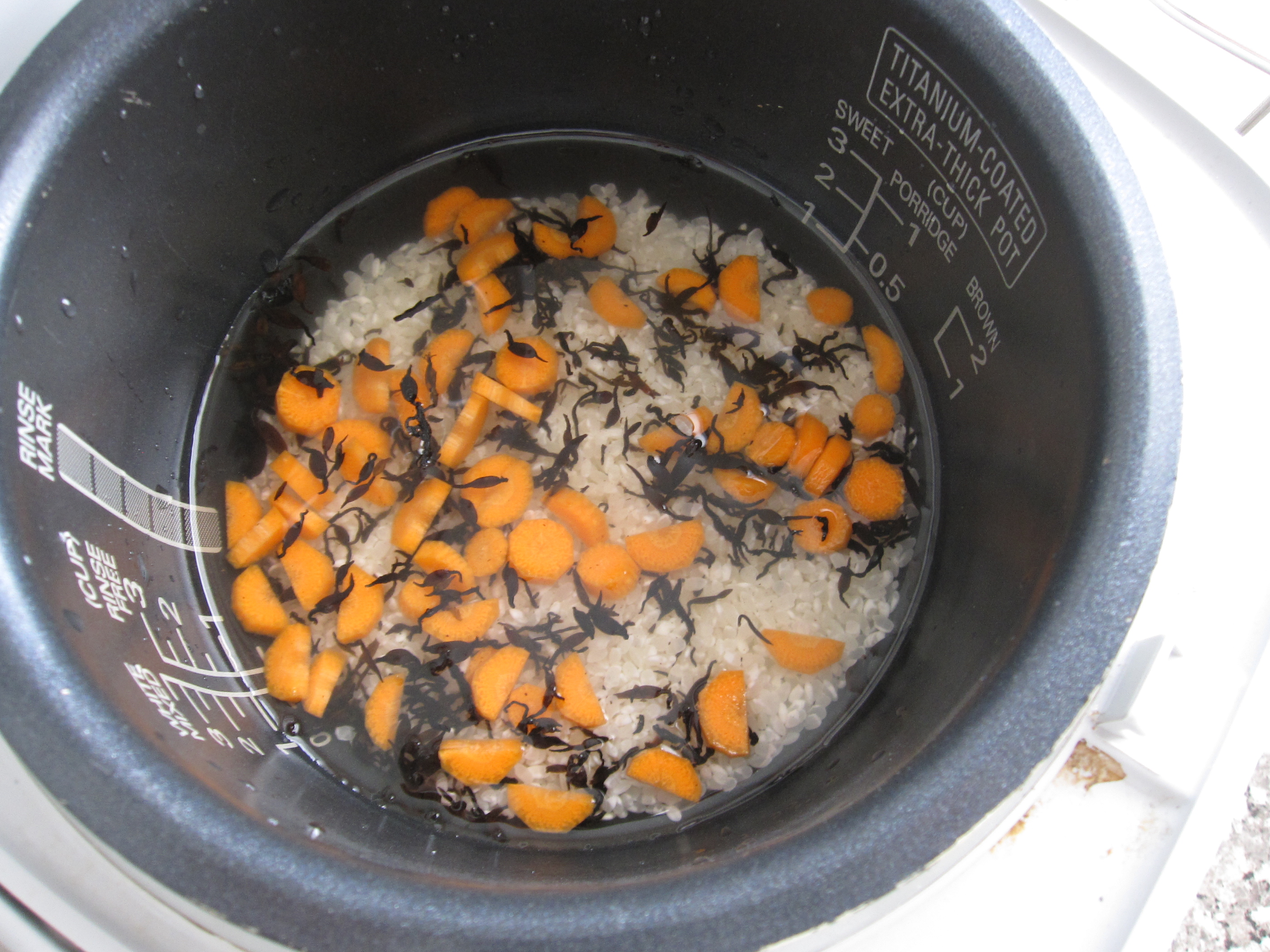
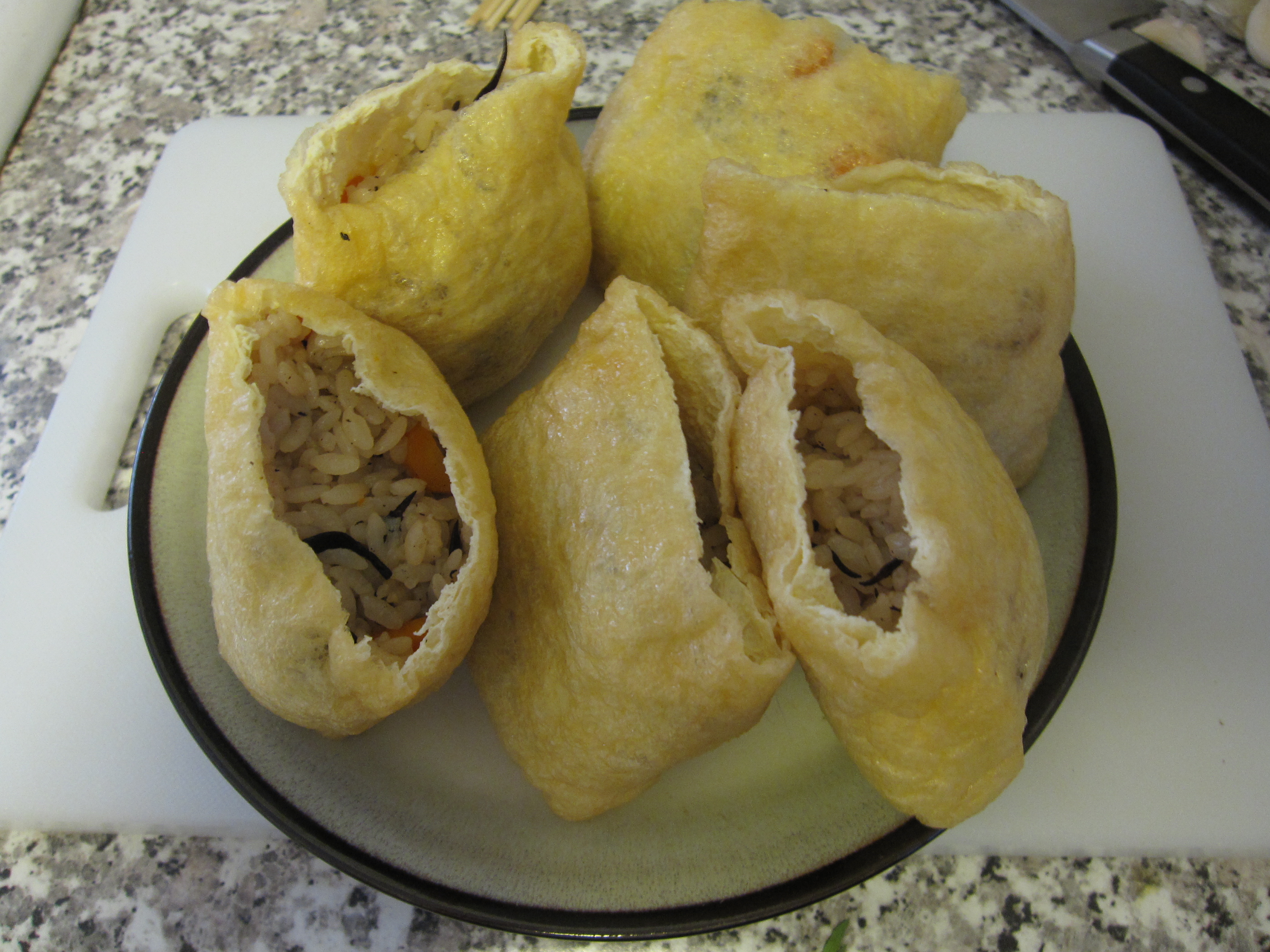
After lunch I got the rice ready. I rinsed 1 cup of rice and threw it in the rice cooker like normal, then added a couple of large pinches of dried hijiki seaweed and a diced carrot. I let it sit for about a half hour to let the hijiki re-hydrate and flavor some of the water. Then I turned on the machine and let the rice cook. When it was finished I turned it off, mixed everything together, and let it cool to room temperature.
Closer to dinner time I made my teriyaki sauce. In a small saucepan I gently heated 3 tablespoons each of soy sauce, sake, and mirin along with 1 tablespoon of sugar. I let it heat just until the sugar was completely dissolved and turned off the heat before it came to a boil. I let that cool to room temperature.

Here’s my 20 ounce filet of coho salmon. I cut it into 4 equal portions and marinated it in the teriyaki sauce for about 45 minutes at room temperature.

While the salmon was marinating I got the abura-age ready. I had a pack of three here. I cut them in half and rinsed them off with some boiling water. They very oily and the boiling water rinsed a majority of that oil off. Then the packages open up nicely for easy stuffing.

I stuffed them equally with the rice mixture and then sealed them. I didn’t have any toothpicks, so I cut down some bamboo skewers to do the job. In a saute pan I brought 1/4 cup of water to boil with 1/4 cup of seasoned soy. The soy is seasoned with a little dashi and mirin. Once lightly boiling I put the packets in, covered it, and turned the heat to low. This lets the broth flavor penetrate while heating up the rice. I let it go for about 10 minutes then turned off the heat and let it sit until everything was ready.

I also placed the salmon under the broiler, starting with the skin-side up. About 5 minutes later I turned it over, basted the top with the marinade left in the dish, and let it broil for another 5 minutes.

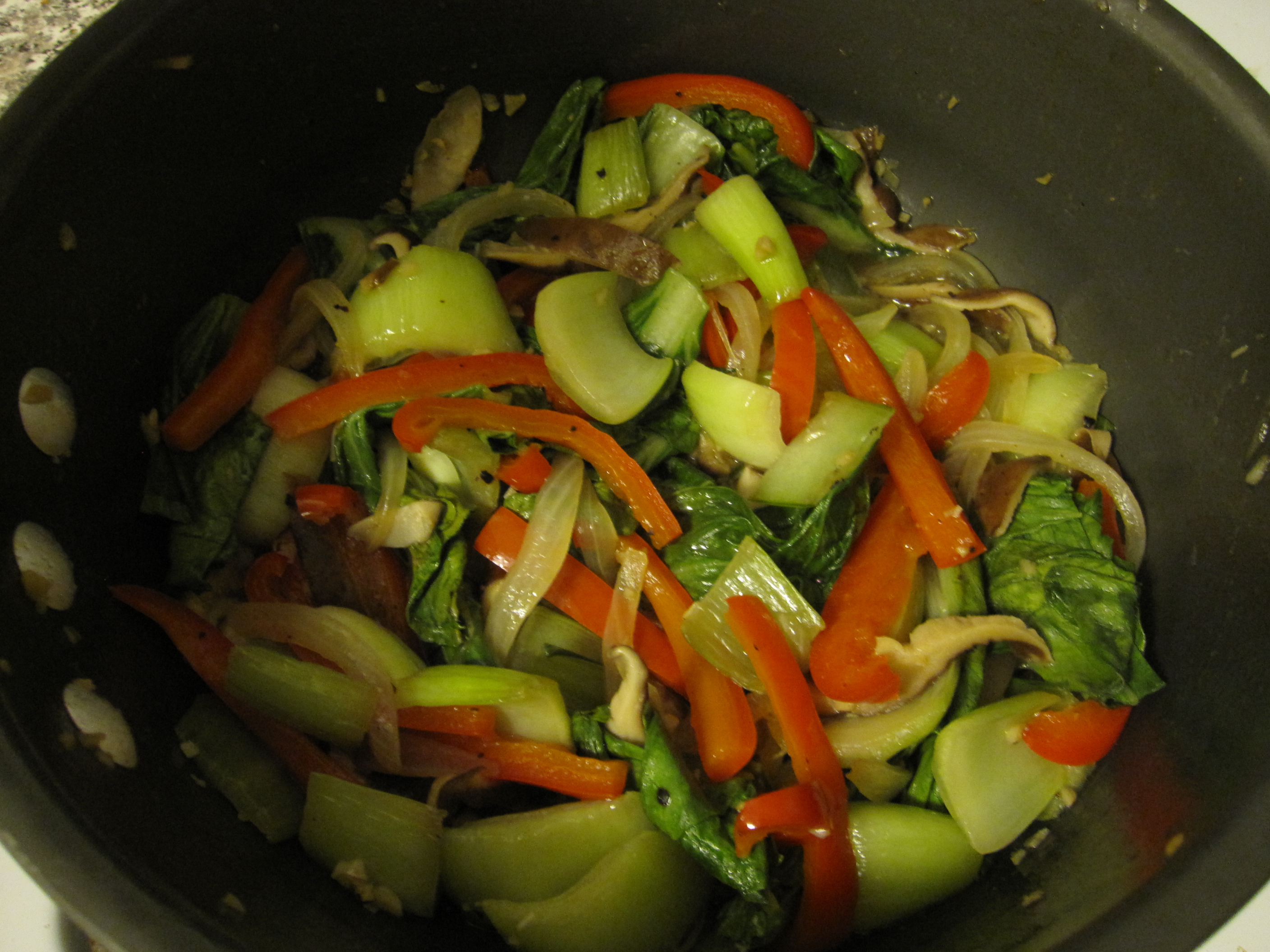
Before cooking the salmon and abura-age I got my vegetables ready. I had two large heads of baby bok choy that I separated the leaves from the stems and chopped them all down, 1/2 onion sliced, 3 garlic cloves minced, 1 package of shiitake sliced, and 1/2 a large red bell pepper sliced.

While the salmon was broiling and the abura-age packets absorbing tasty fluids I heated up a pan and poured in 2 tablespoons of sesame oil and tossed in the onions to let them saute for about 4 minutes. Then I added the peppers and garlic. After another few minutes I added the shiitake and bok choy stems for about 4 more minutes. I seasoned with pepper and poured in about 3 tablespoons of soy sauce. Once the soy boiled off I added the bok choy leaves, stirred them in, covered the pan, and turned off the heat. I just wanted the leaves to wilt a little.

I timed it all so everything would be finished at the same time. I plated it up and scarfed it down.

Read Full Post »

I made this delicious salmon on the grill with some cedar planks. To go with it I made a miso soup and a cherry tomato caprese. This menu was kind of all over the map, but it worked out.

I first made the caprese. I simply quartered the cherry tomatoes and cut some mozzarella di bufalo and then tossed them with a drizzle of olive oil, a drizzle of balsamic vinegar, and some sliced up basil from my back porch. A little salt and pepper to bring out the flavors and that was ready.

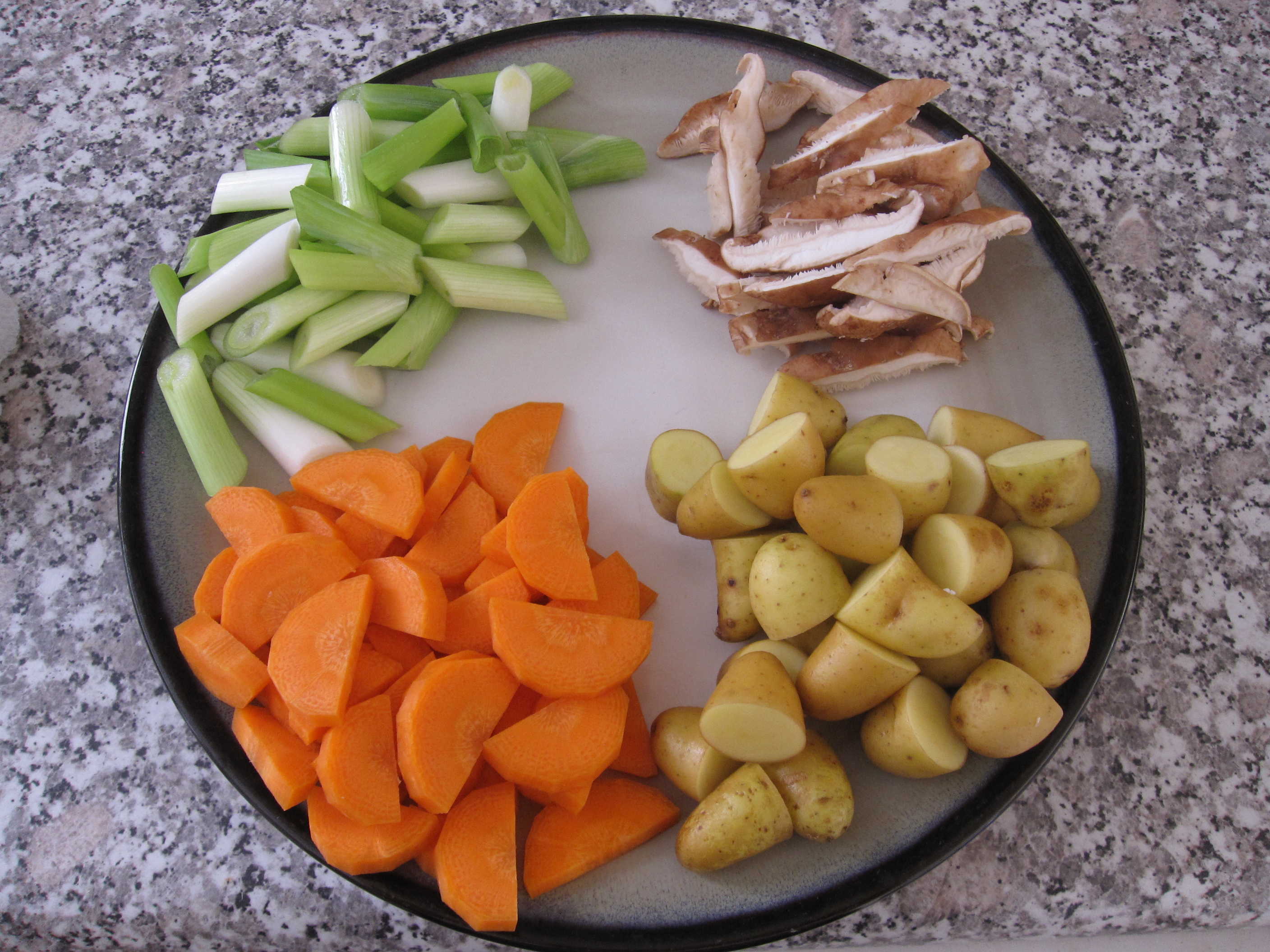
Then I got the soup rollin’. I chopped up 4 green onions, half a package of shiitake sliced, 7 fingerling potatoes cut into bite sized pieces, and a carrot cut into half-moons.

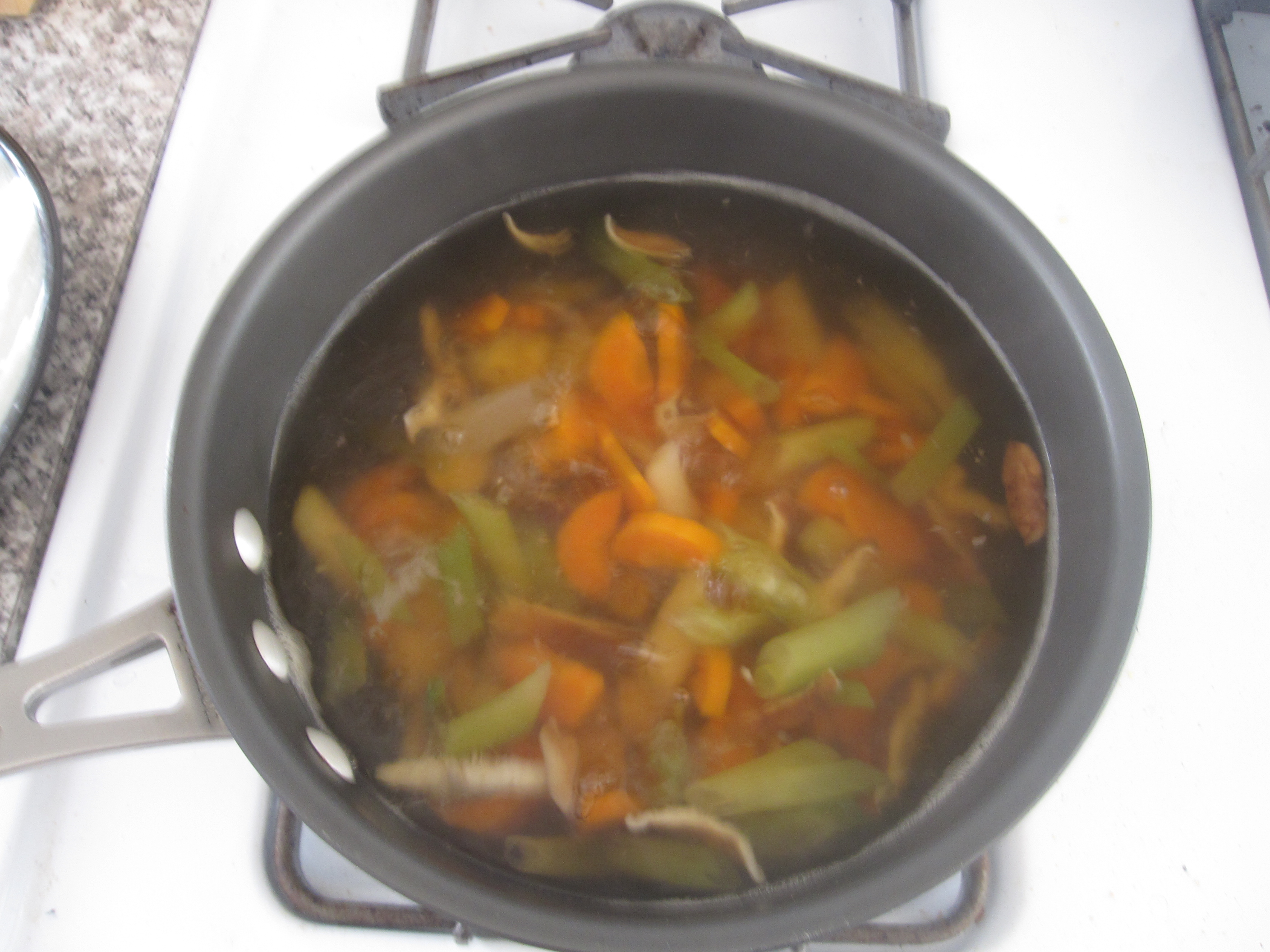
I dumped them all into about 6 cups of water and brought it all up to a boil. Once boiling I turned the heat down to medium and let it all simmer for about 10 minutes, just until the veggies were softened and tender. Then I added about a teaspoon of dashi-no-moto and turned the heat down to medium-low. I covered it and kept it warm while I grilled the salmon.

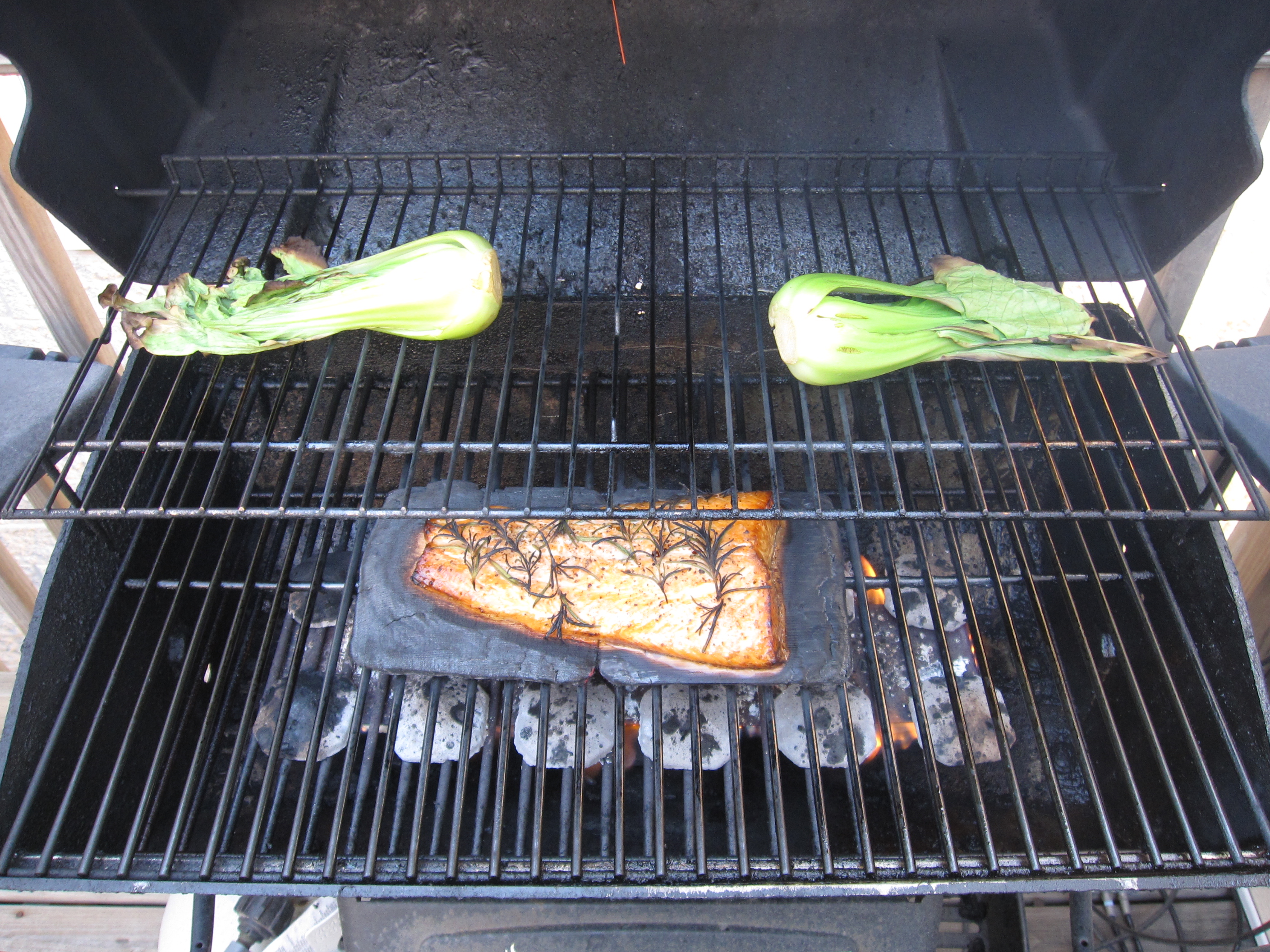
I had a beautiful piece of salmon that weighed in at 20 ounces. Perfect for 4 portions at 5 ounces each. I simply seasoned it with salt and pepper and then laid some sprigs of rosemary on top that I cut from my plant out back.

I had a couple of small cedar planks that I soaked in water for about 2 hours. You can see from the picture that they were pretty cheap as I’ve never had cedar burn up quite as quickly as these did. It did no harm to the fish though as it stayed nice and moist and absorbed some great smokey cedar flavor. I also had a couple of bok choy that I halved and grilled. I was careful to keep the green leaves away from any direct heat to keep them from burning. They still charred a little around the edges, but that just added some flavor.

When all was ready I cut the salmon up and served it on top of the bok choy. I had some white rice as well. For the soup, I found some bean sprouts in my bottom drawer so I threw them in at the last minute as they don’t need much cooking at all. Then I mixed in 2 heaping tablespoons of shiro miso and served it up.

Read Full Post »

Last night was the final performance of Millenium Park’s world music series. They had two different accordion players, and I have to say, that is one bad ass instrument! Now I need to work on my air accordion skills. It’s a lot of fun packing a picnic and hanging out at the park for free music (I say free, but let’s be honest, we already paid for it with our tax dollars). At any rate, I had to make a dinner that would taste good cold. I thought that poached salmon on corn salad would do the trick. As usual, I was right.

The first thing I did was roast some cherry tomatoes. I simply drizzled them with olive oil and then put them in a 375 degree oven for about 20 minutes. I set them aside to cool down before packing it all up.

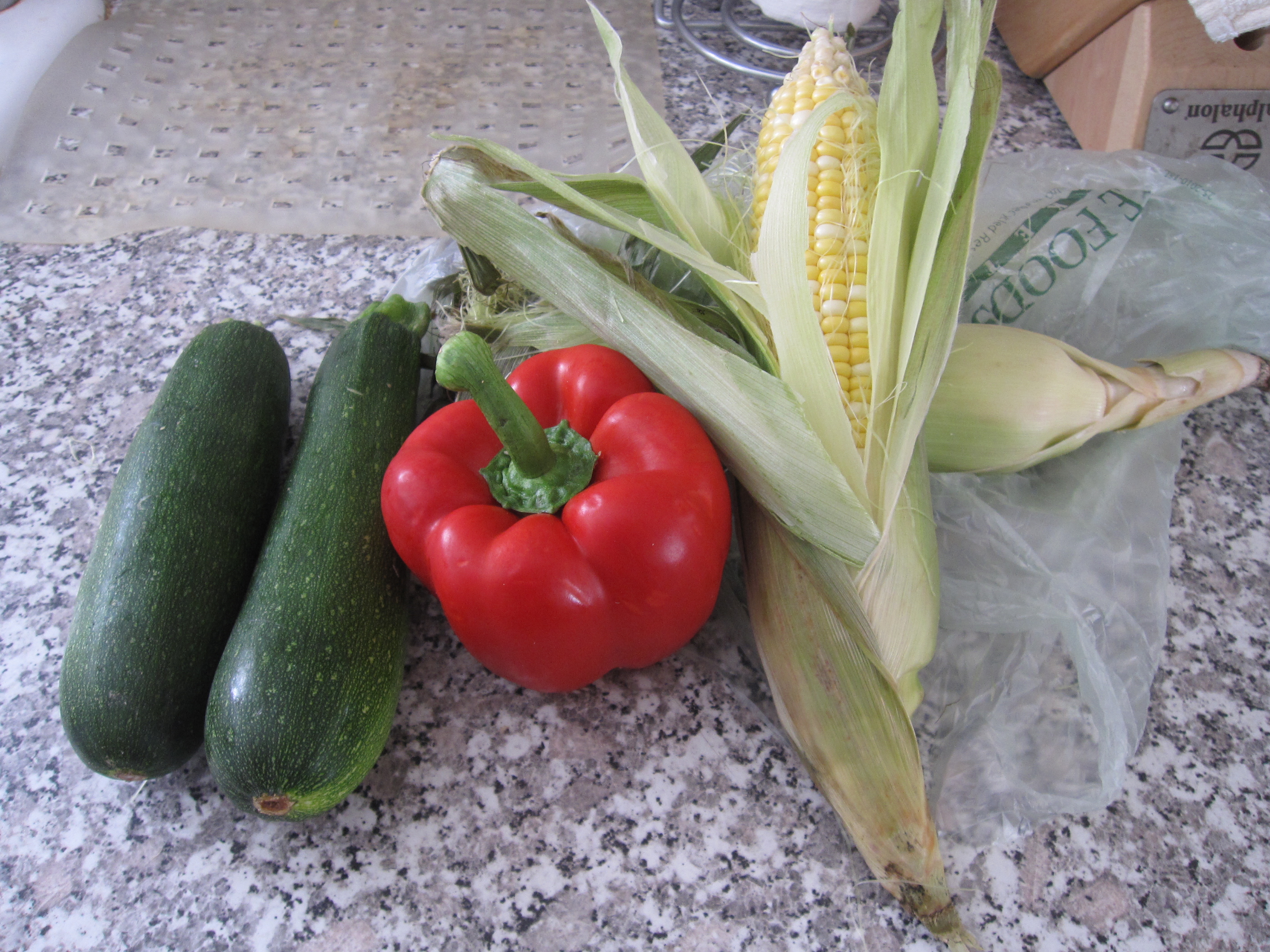
For the corn salad I used two medium-sized zucchini, one red bell pepper, and three ears of corn. I grated the zucchini into a mesh sieve, sprinkled a little salt on it, and let the juices drain for about 20 minutes. Then I squeezed it as dry as I could and set it aside for cooking. For the bell pepper, I just diced it up.

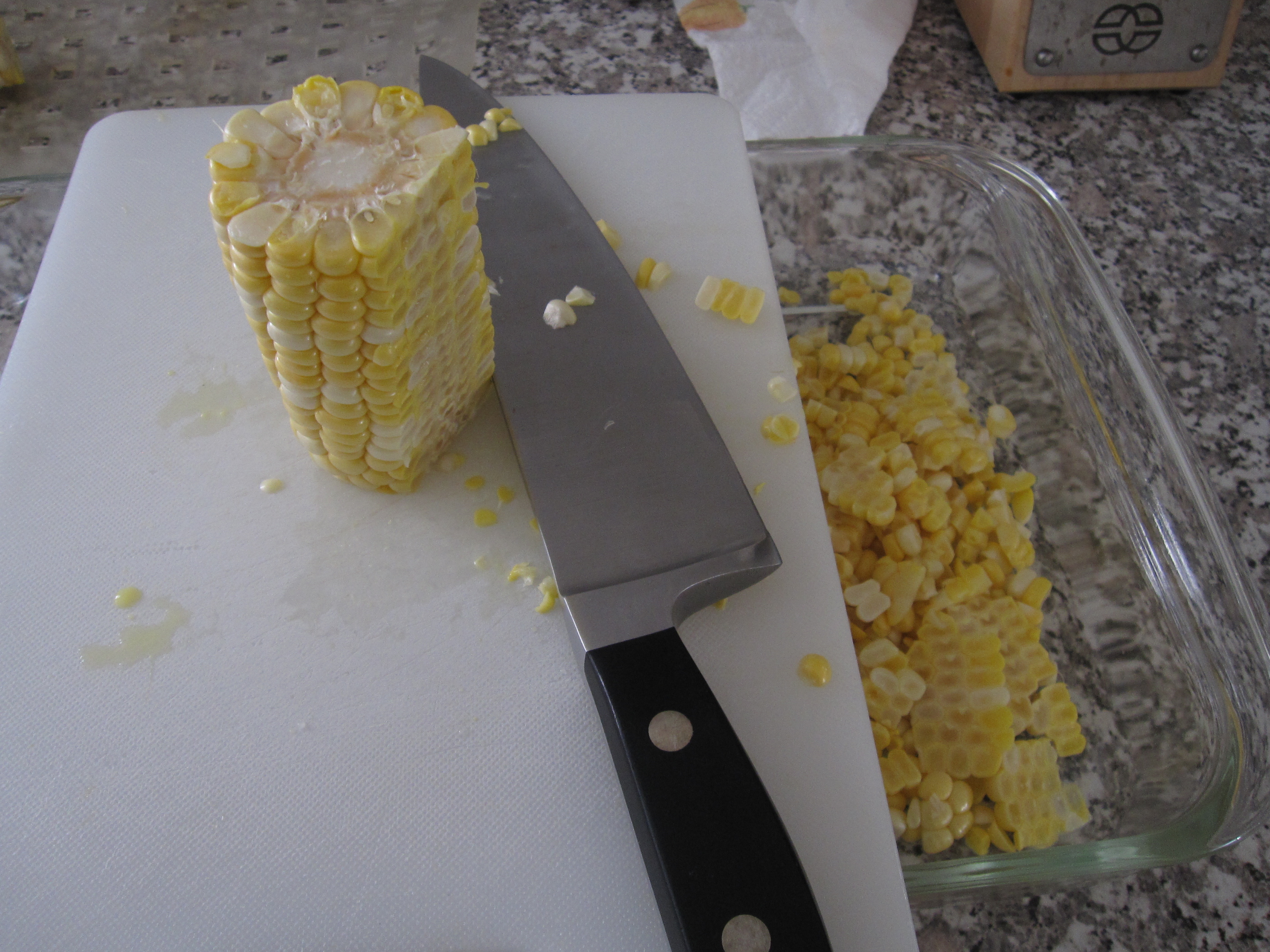
After cleaning all of the silk off the corn I separated the kernels from the ears. This can be a little messy as kernels have been known to fly around the kitchen as you slice them off, in my kitchen at least. I find the easiest way to do this is to cut the ears in half first. Then, I take my cutting board and lay it over a large baking dish. This way, when I slice the kernels off they fall right into the baking dish instead of all over my counter and floor.

Save the cleaned ears, they have tons of flavorful juice in them. I used these to help flavor the poaching liquid for the salmon.

To make the salad I first sautéed about three tablespoons of diced shallots in some olive oil for about 5 minutes. Then I poured in 1/4 cup of white wine (I used the same White Burgundy that I planned on drinking with dinner) and let that boil away for about 3 minutes. Once the wine was boiled off I dumped in the corn, bell pepper, and 1/2 cup of water. I covered the skillet and let it go until the corn was softened a little, about 5 more minutes. After that I seasoned with salt and pepper and then threw in the zucchini. I stirred it all around to separate the zucchini (it will become a zucchini ball when squeezing out the liquid), let it cook for another 5 minutes, then turned off the heat and moved on to the salmon while it cooled down.

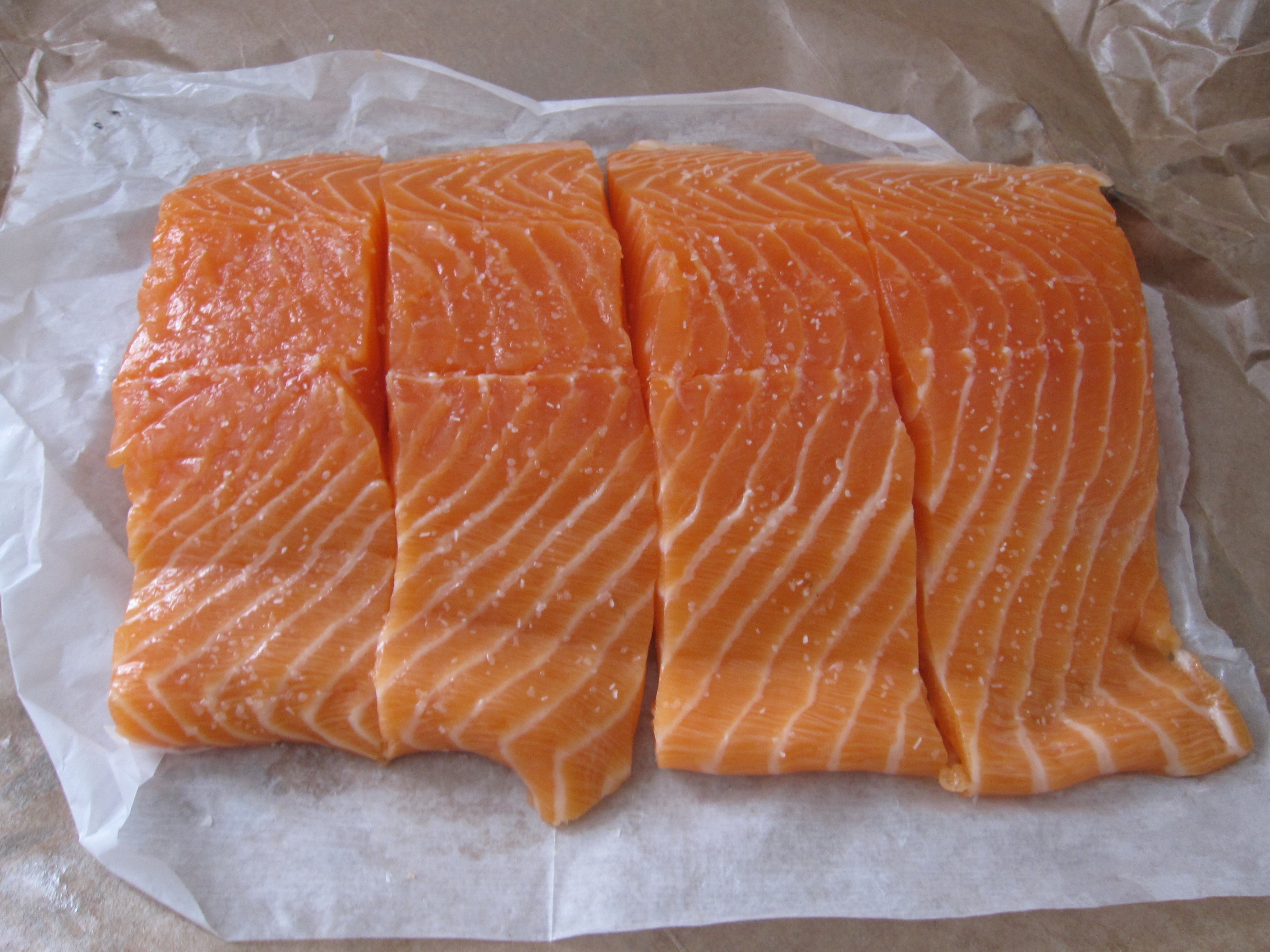
I picked up about 24 oz’s of really nice wild caught salmon, center cut so that it was uniform in thickness. I had the fishmonger skin it for me. Fishmongers have better knives for that job than I do, plus I didn’t want my garbage can to stink like rotting fish. It’s always a good idea to let the fishmonger skin and gut for you. I cut the salmon into 4 equal filets. Before putting the salmon in the poaching liquid I lightly seasoned it with salt.

For the poaching liquid I used 1 cup of the white wine, 1/4 cup of soy sauce, 3 cups of water, 1 bay leaf, about 2 tablespoons of diced shallot, and the naked corn cobs. I brought that all up to a boil and let it go for about 5 minutes or so to let all of the corn juice mix into the liquid.

Once the corn juice was incorporated I took the cobs out, gently laid the salmon in, and turned the heat down so that the liquid was at a simmer instead of a vigorous boil. It should only take about 6 or 7 minutes for the salmon to cook all the way through.

After I took the salmon out I seasoned it lightly with salt again, and a little pepper. Then I drizzled just a little olive oil on top.

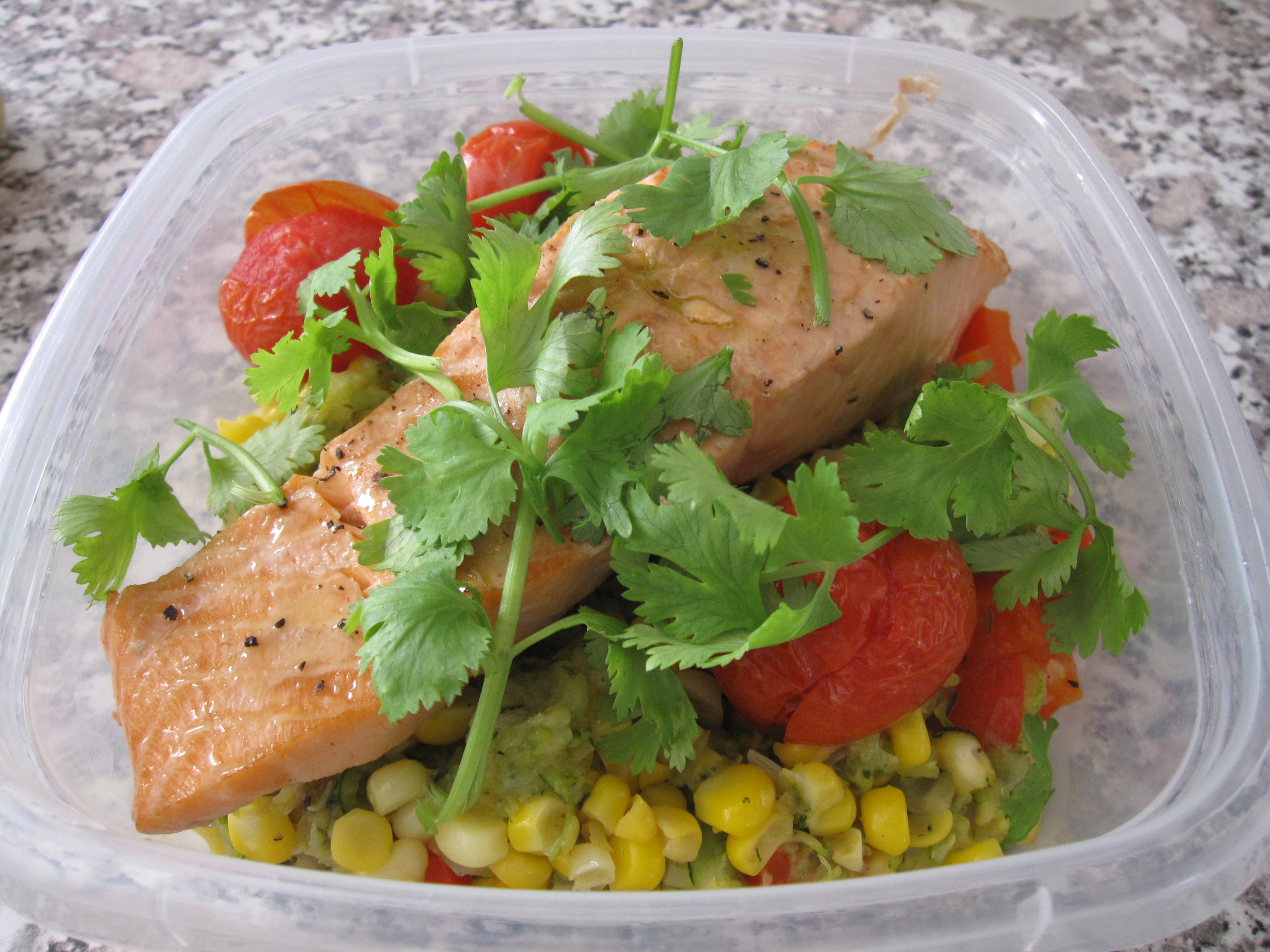
I got out my little Rubbermaid TakeAlongs and scooped a bunch of the corn salad in, topped it with a piece of salmon, laid in a few of the tomatoes, and garnished with some cilantro. I also brought some dinner rolls along. It was absolutely delicious! It also would have been tasty if I served it hot right off the stove top.

The only thing I did wrong was a miscalculation on the amount of corn salad. When I cook dinner during the week I try to make 4 portions so that Yuki and I have lunch for the next day as well. I came up one portion short on the corn. So, if you try this recipe and want 4 portions use 3 zucchini and 4 ears of corn. That should do the trick.

Read Full Post »

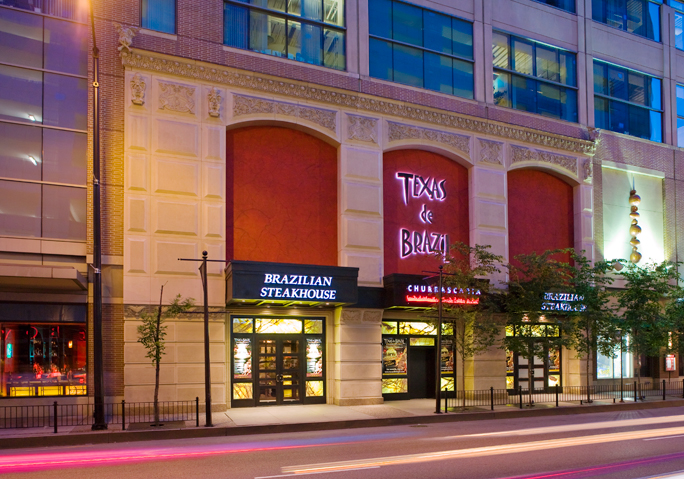
Alright, finally my last Restaurant Week experience. Yuki and I took advantage of the Art Institute’s free month in February this past Sunday. Afterwords we had planned on meeting up with a couple of friends, one in from Japan, for dinner downtown. We walked by Texas de Brazil and it looked damn tasty. So, I asked the hostess if they were participating in restaurant week, and when she said yes I made a reservation for us. What they normally charge for $50, we got for $32. Not a bad deal at all, not bad. Those of you have been to a Churrascaria before know what I’m talking about.

Again, the pics were taken with my cell, so they’re not the best quality. Also, if you’re a vegetarian or a little squeemish, don’t look any further. There are chunks of bloody animal carcass on my plate. Consider yourself warned.

We started off with a round of caipirinha’s. While the bartender whipped those up we headed over to the sushi and salad bars.

I apologize, I ate the sushi and most of my first run to the salad bar before snapping a pic. I have to say, the sushi was quite good. There were three different maki rolls, tuna and avocado, california, and salmon. The salad bar was outrageous! Check out their website for a complete list of items. My favorites were the tuna tataki, pomegranate quinoa, and the cheeses. Everything was top quality. They did not skimp at all. The soup was lobster bisque, which for some reason none of us tried. Why is that?

Once we finished the first round at the salad bar the meat-a-thon began! Flip the token to green and meat just started flying everywhere! Highlights were the garlic beef (of course), bacon-wrapped filet (of course), and the sausages (of course). I asked the gaucho what the sausage was spiced with and his answer was brilliant, “Brazillian spices”. Great, now I know how to make them at home. Other tasty bits were the lamb chops, leg of lamb, and flank steak. Just like the salad bar the meat was all top quality. They definitely did not buy their meats from Jewel! While mauling the meat we were served mashed potatoes, little cheese puffs, and fried plantians as well.

After ingesting about two and three fifths of large farm animals I thought it would be best to get some leafy greens in my stomach. I made another run to the salad bar and just grabbed some mixed greens and topped them with what they call “Brazillian Dressing”, just some small diced tomatoes and peppers in lime juice. Had I not gone for the salad I don’t even want to think about what would have happened to my intestines.

Dessert was also offered with our meal. We had our choice of a banana’s foster cheese cake or key lime pie. So, we got two of each.

I tell ya, as much fun as Churrascarias are and as delicious as they are, I don’t think I can go to one again. I always end up eating so much meat it’s not even funny. Don’t get me wrong, I love meat, it’s my favorite vegetable. Let’s be honest though, a 150 pound man should not swallow 207 pounds of dead animal in one sitting! It’s just not right! I almost couldn’t get up from the chair after the night’s festivities came to a halt. It also ruined my normal cycles for a few days, but that’s a whole different story in itself.

Read Full Post »

salmon

The other night I made another finance-efficient dinner that tasted outstanding; Cedar Plank Grilled Salmon with Soba Noodles, Roasted Orange Pepper, Pea Pods, and Shitake-Green Onion Salsa. Simple, well-balanced, healthy, organic, and delish!

I got the salmon at Isaacson & Stein Fish Company. It was wild caught at $9.95 per pound. Between my wife and I we only needed 3/4 of a pound, so the fish cost $6 even for both of us. I’ll take fresh wild caught over farmed any day of the week! Grilling it on a Cedar Plank, cost of $1.00, really adds a nice smoky wood flavor to salmon. The beauty of cedar plank grilling is that because the wood needs to be soaked in water for a couple of hours prior to grilling, the fish gets steamed while it’s grilled keeping it nice and moist.

The pepper cost me 37 cents at Stanley’s. Roasting peppers let’s the sugars come out resulting in a sweeter, softer pepper flavor. Since I roasted it on my grill I also got a bit of smokiness to it as well. While at Stanley’s I also got 4 bunches of green onions for $1.00. I only used a half bunch for this dish. The pea pods were also from Stanley’s and cost me 57 cents. You can buy soba noodles from almost any grocery store and shouldn’t cost more than a couple of bucks for 3 servings.

Shitakes can be expensive when purchased fresh, up to $5-6 a container. I do sometimes use fresh shitakes, but for this dish I used some dried ones we had in our pantry that cost $1.o0 for dozen. I only used 4, soaking them in hot water for a couple of hours. Save the water afterwords. It absorbs some of the shitake flavor and makes a great stock for later use.

When you add it all up the entire dish for 2 people only cost $10.34, or $5.17 per person. OK, I also added some Thai Basil to the Salmon when grilling, but I got that from my back porch garden. I also probably used a few pennies worth of Extra Virgin Olive Oil, salt, and pepper. Still, it’s less than five and a half bucks per person. What restaurant can give you a dish of this quality for that price? NONE! Cook at home, cook fresh, cook organic!

Read Full Post »

« Newer Posts